
Analysis of the Material Removal Process in Precision Milling of AZ91D Magnesium Alloy


Abstract
1. Introduction
2. Materials and Methods
3. Results and Discussion
4. Conclusions
- (1)
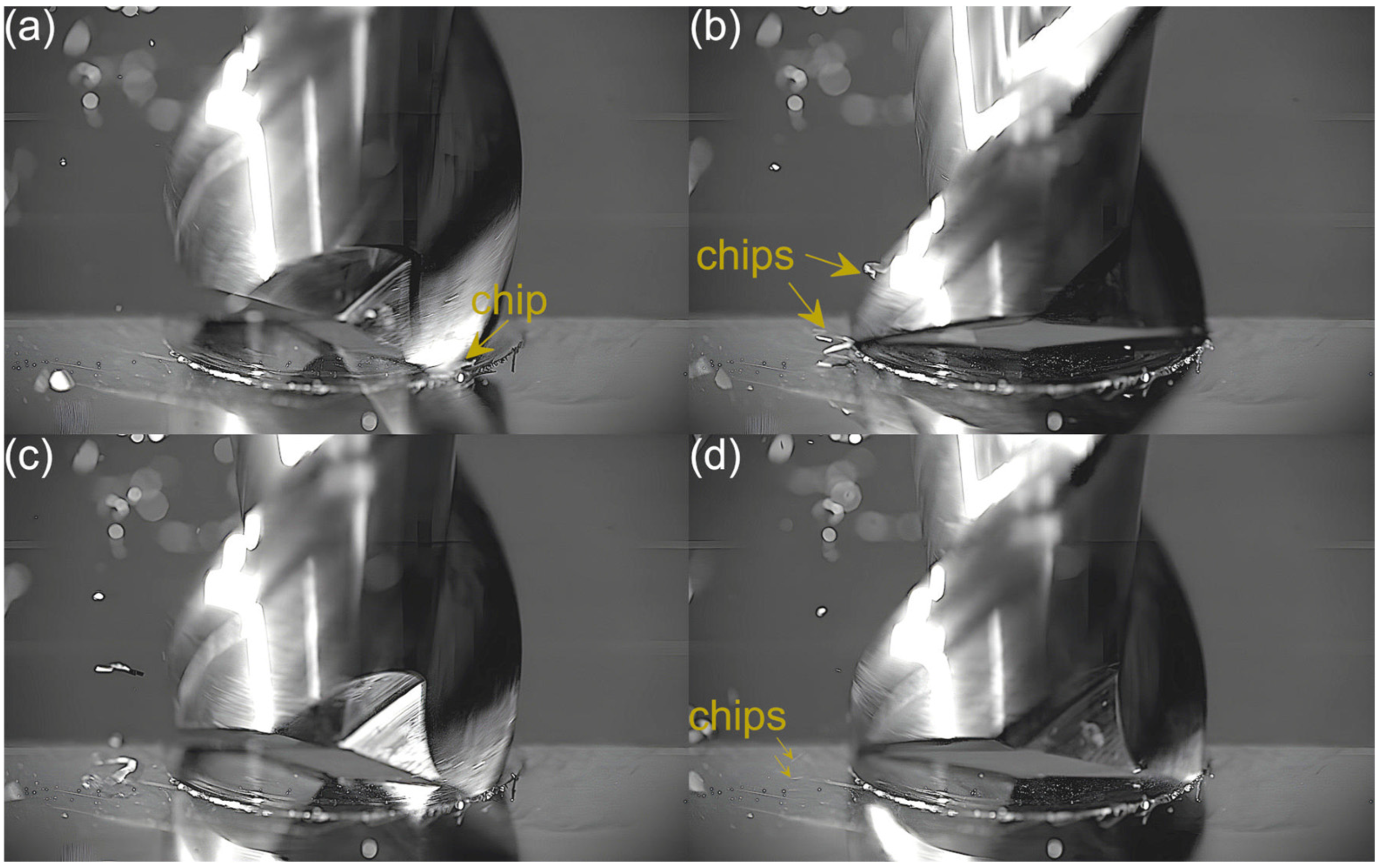
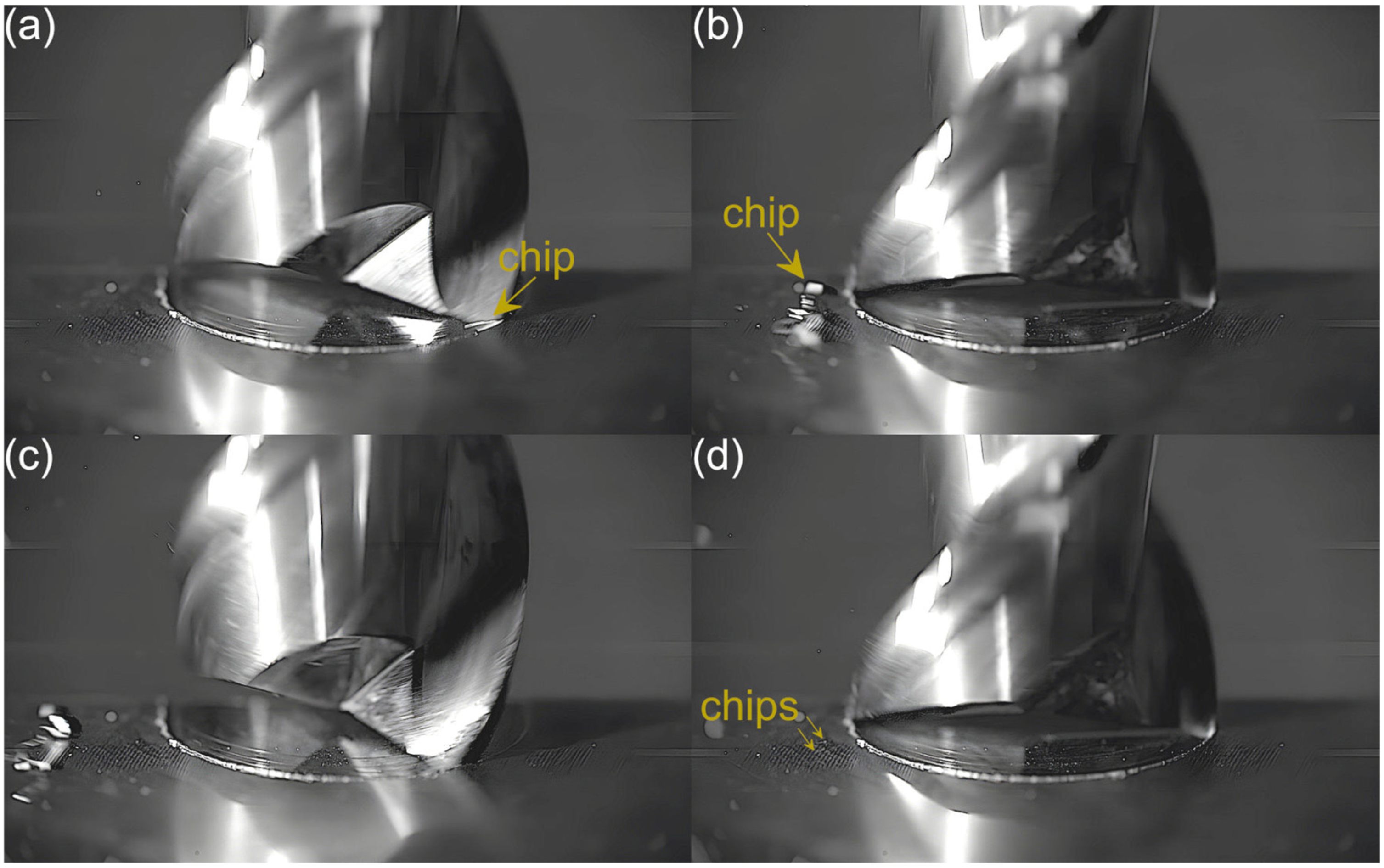
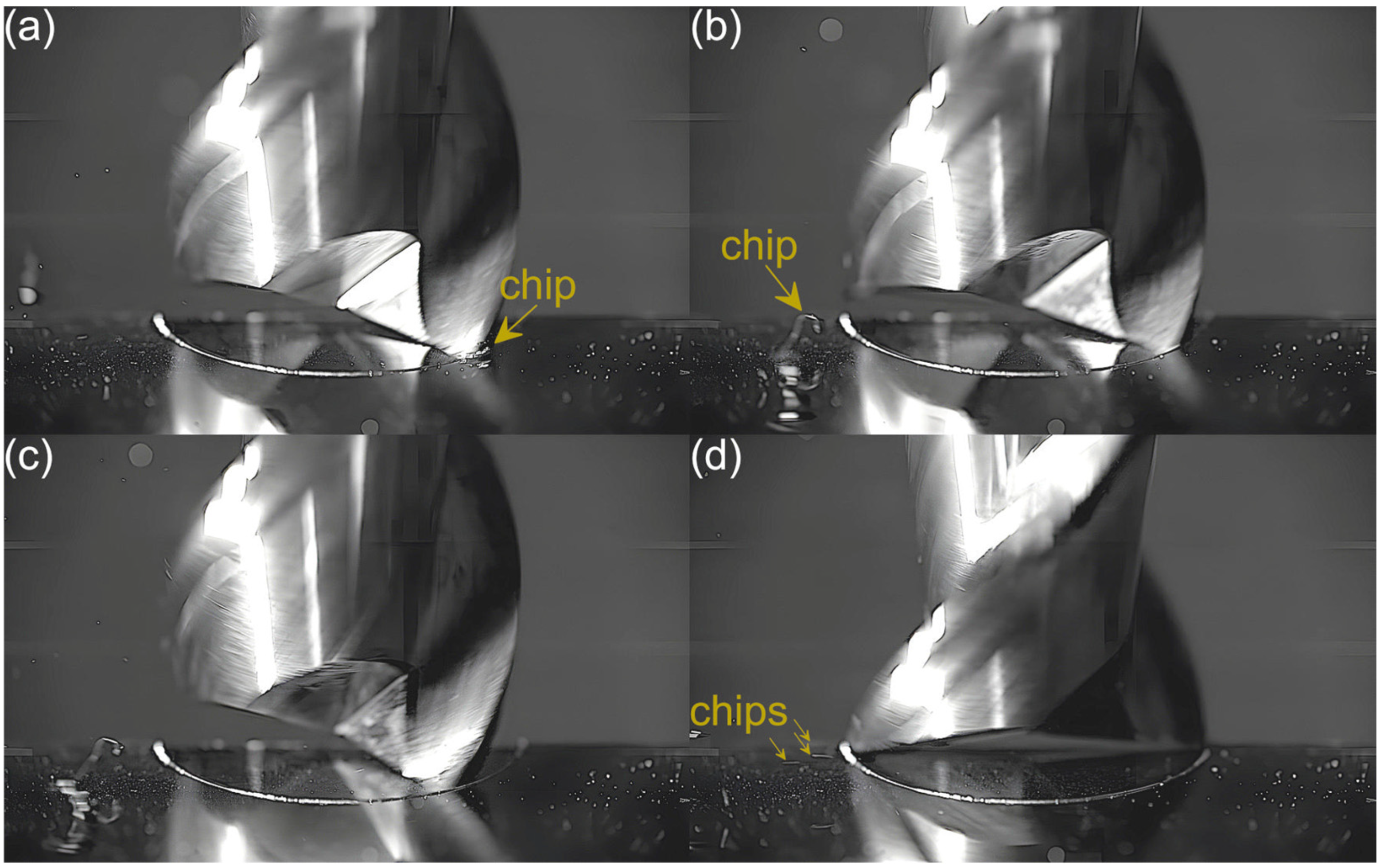
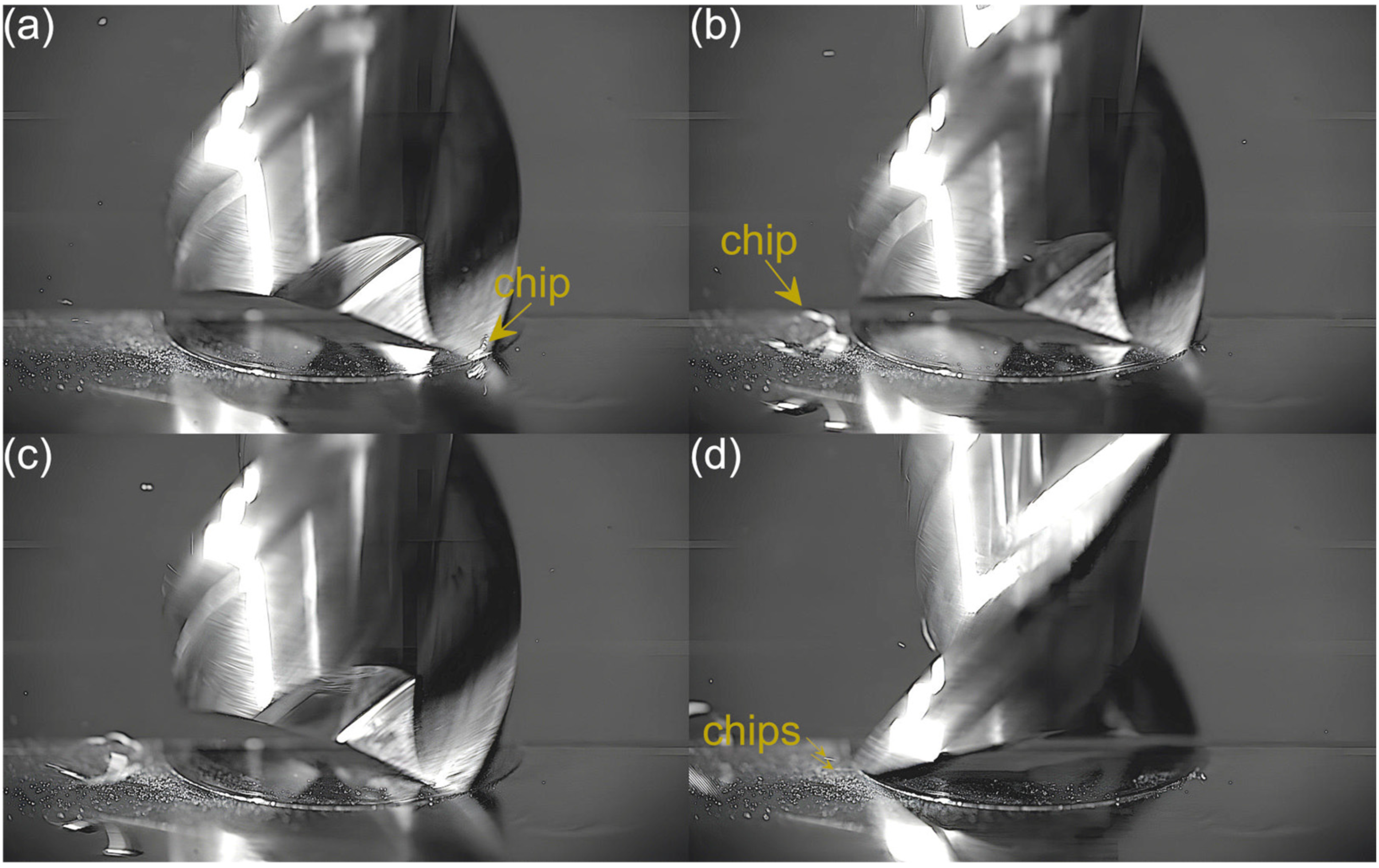
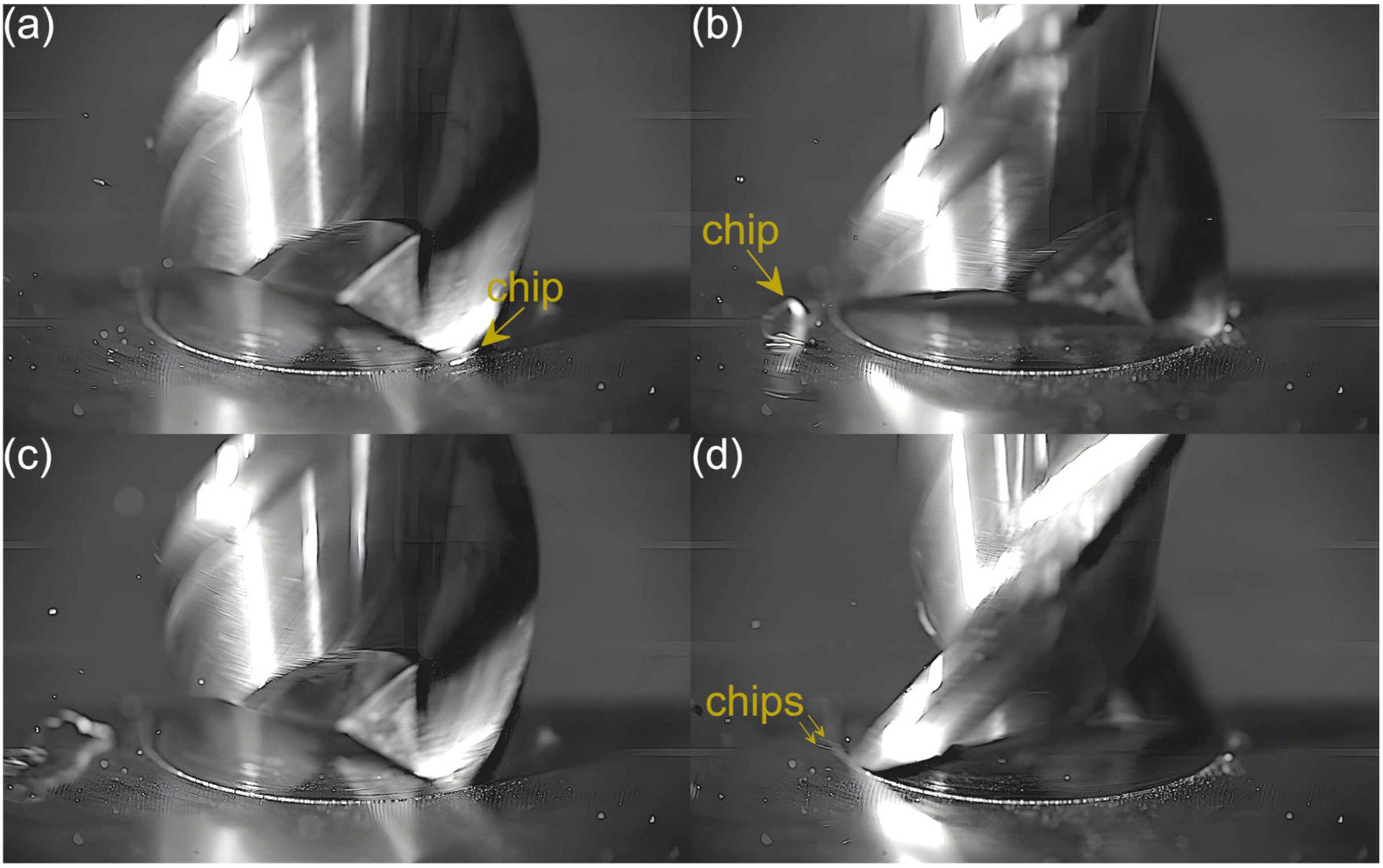
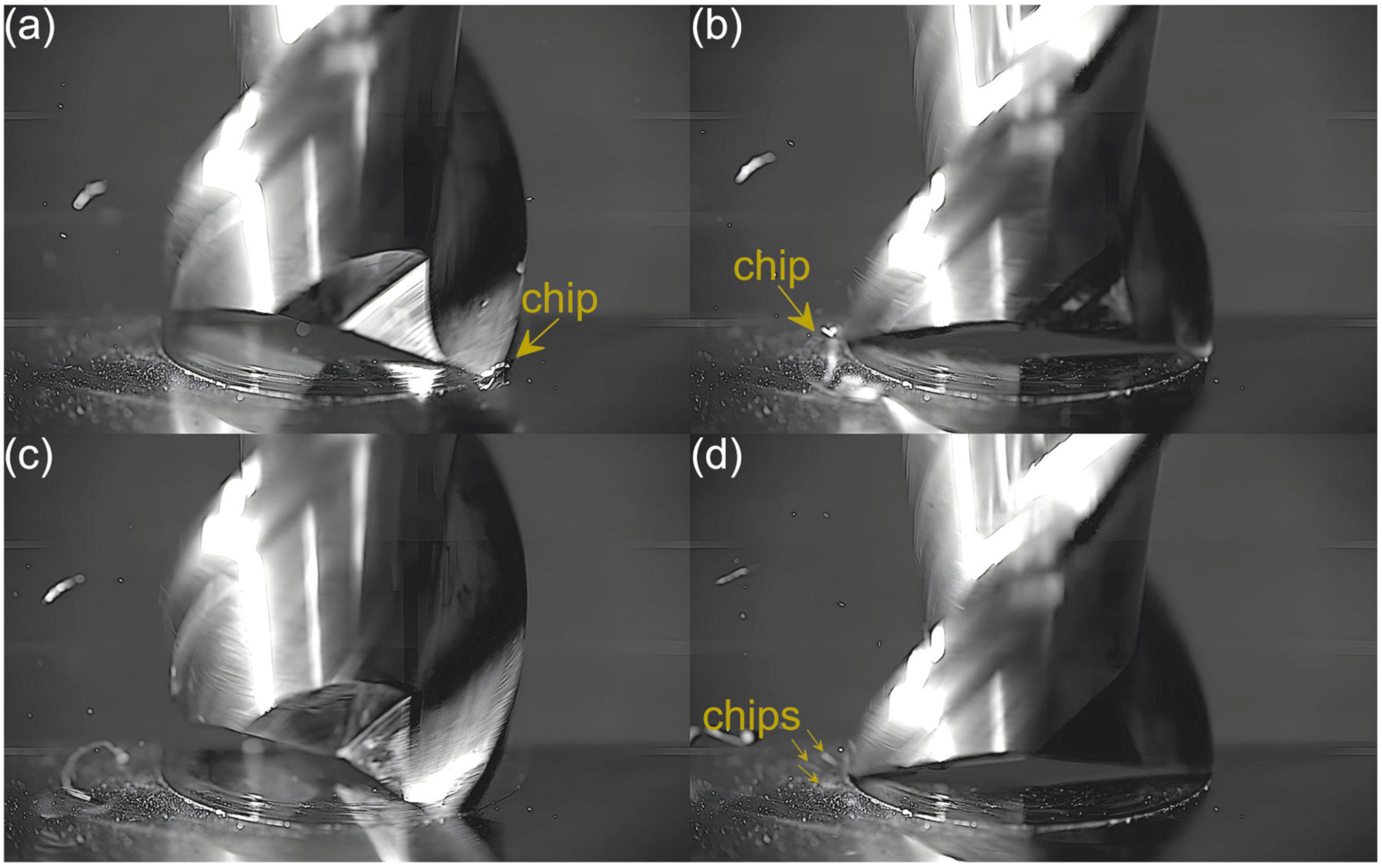
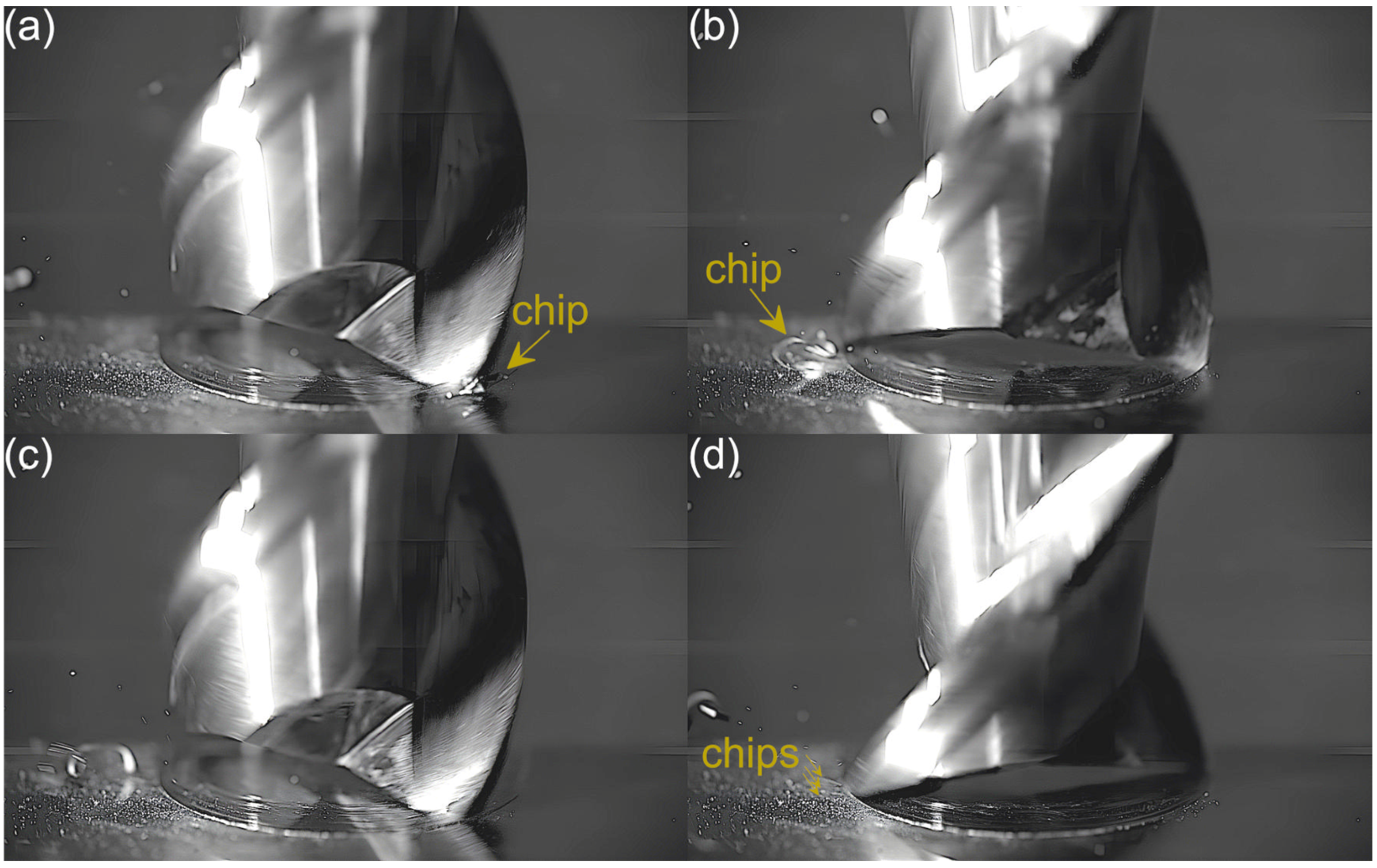
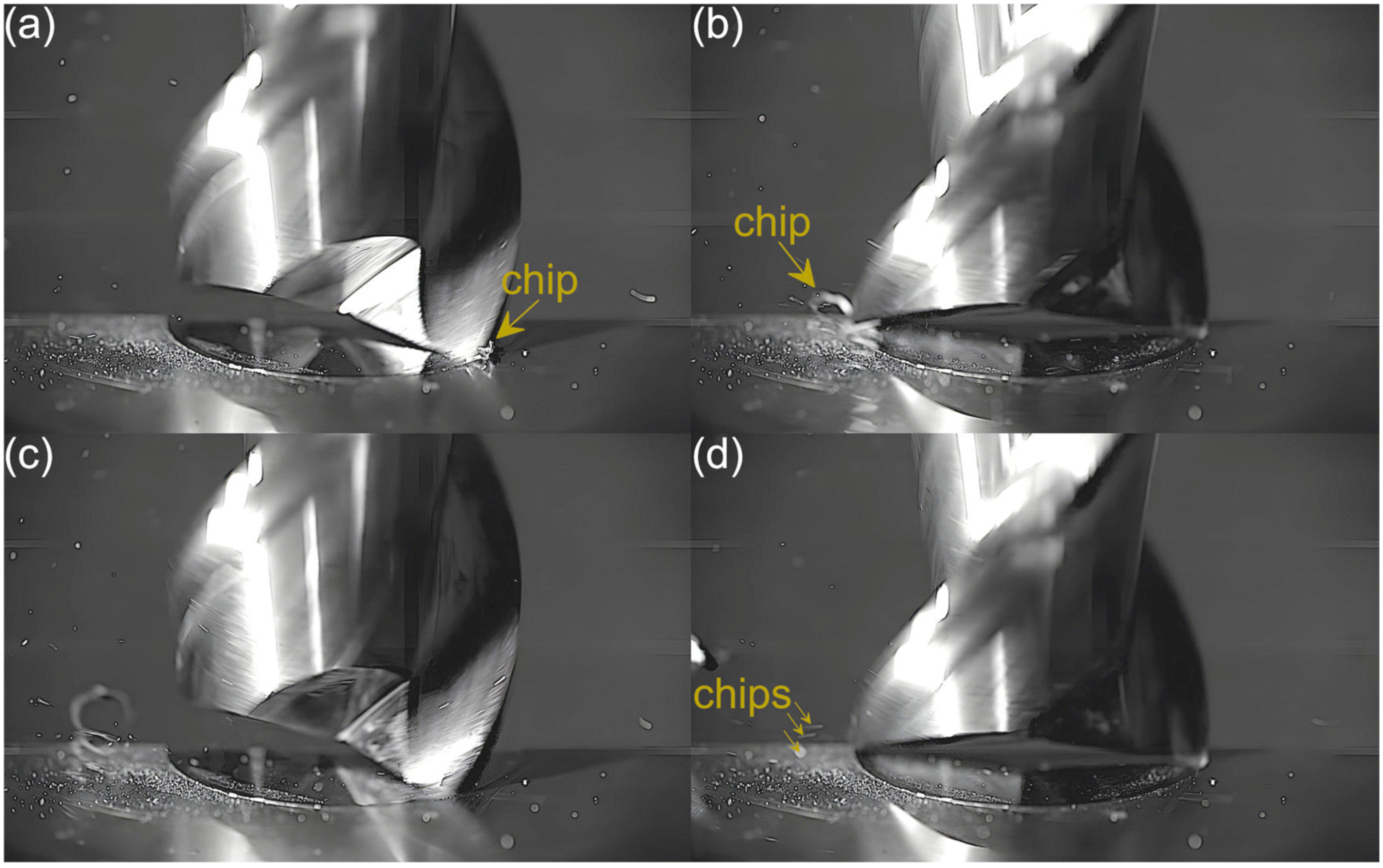
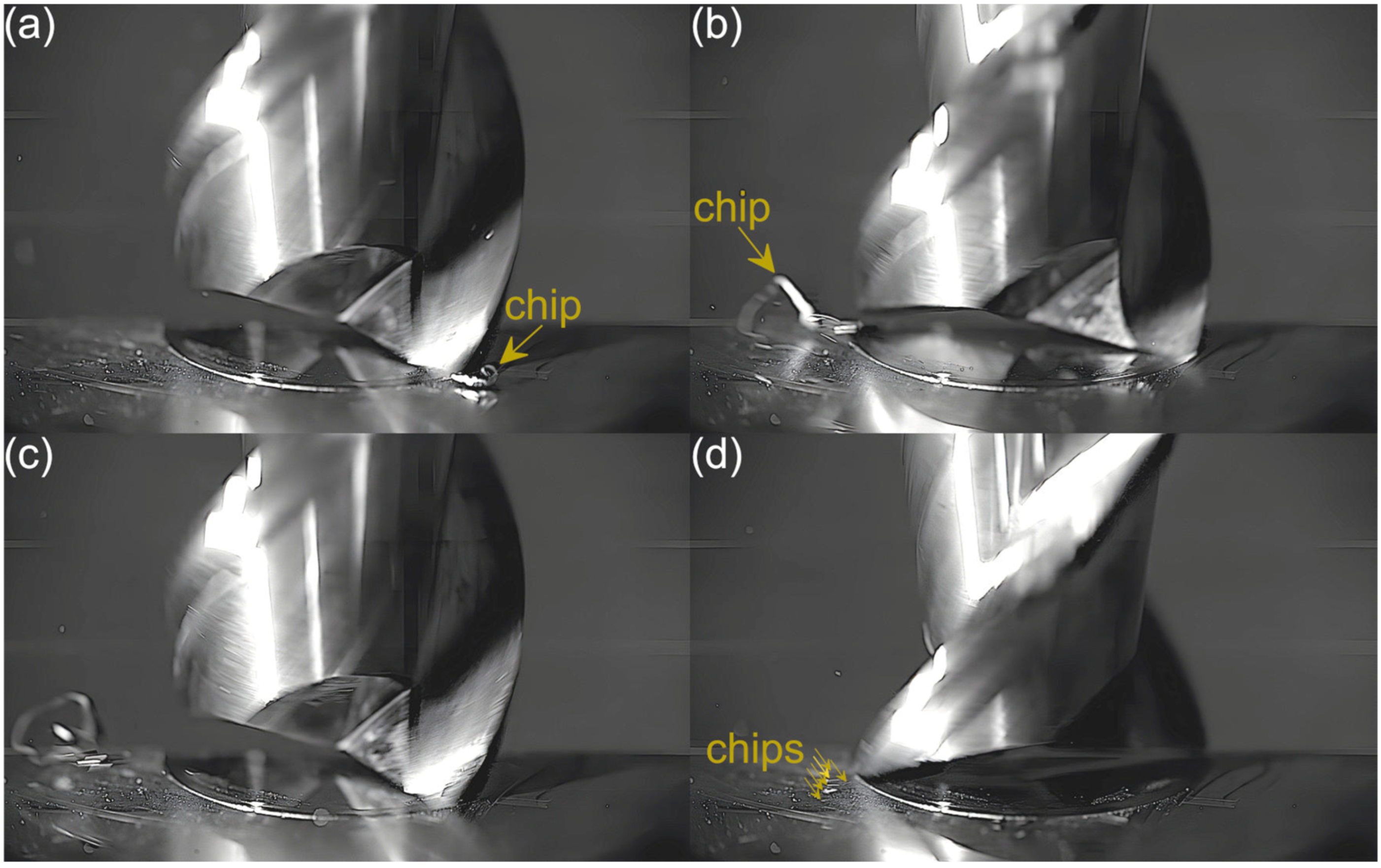
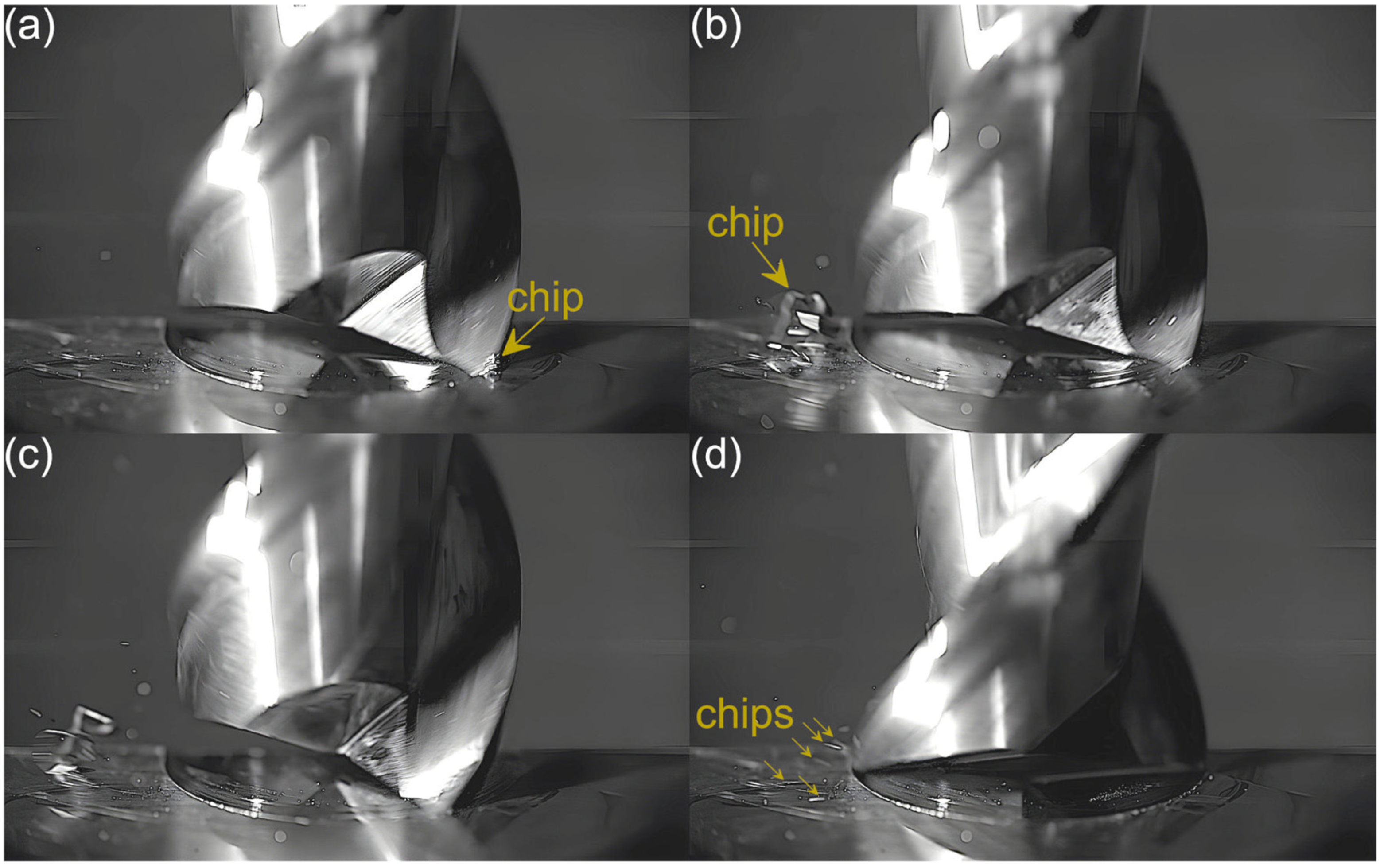
- Both the cutting flutes of the end mill did not perform at a uniform rate, as the material was mainly removed by the first flute. In effect, the size of chips formed by the flutes differed to a relatively great extent. Although the study confirmed the presence of a small radial run-out of the end mill, its value seems too low to fully explain the non-uniform performance of the two cutting flutes. The differences are so large that the ploughing phenomenon does not seem to explain them either.
- (2)
- The chip size increased with feed per tooth, which resulted from the removal of increasing undeformed chip thickness of material. However, this is mainly visible for chips formed by the first flute, because chips formed by the second flute are very fine despite the increase in feed.
- (3)
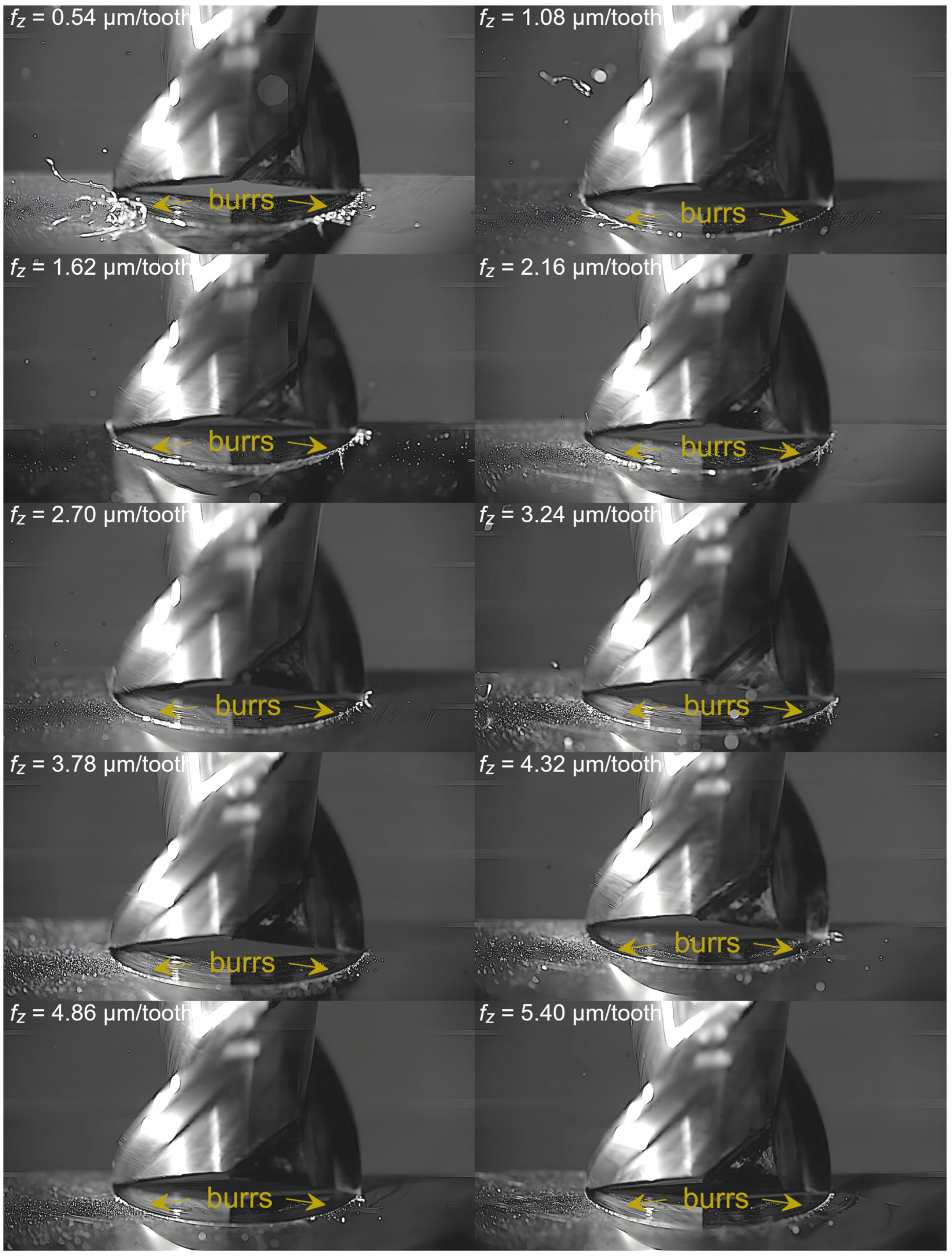
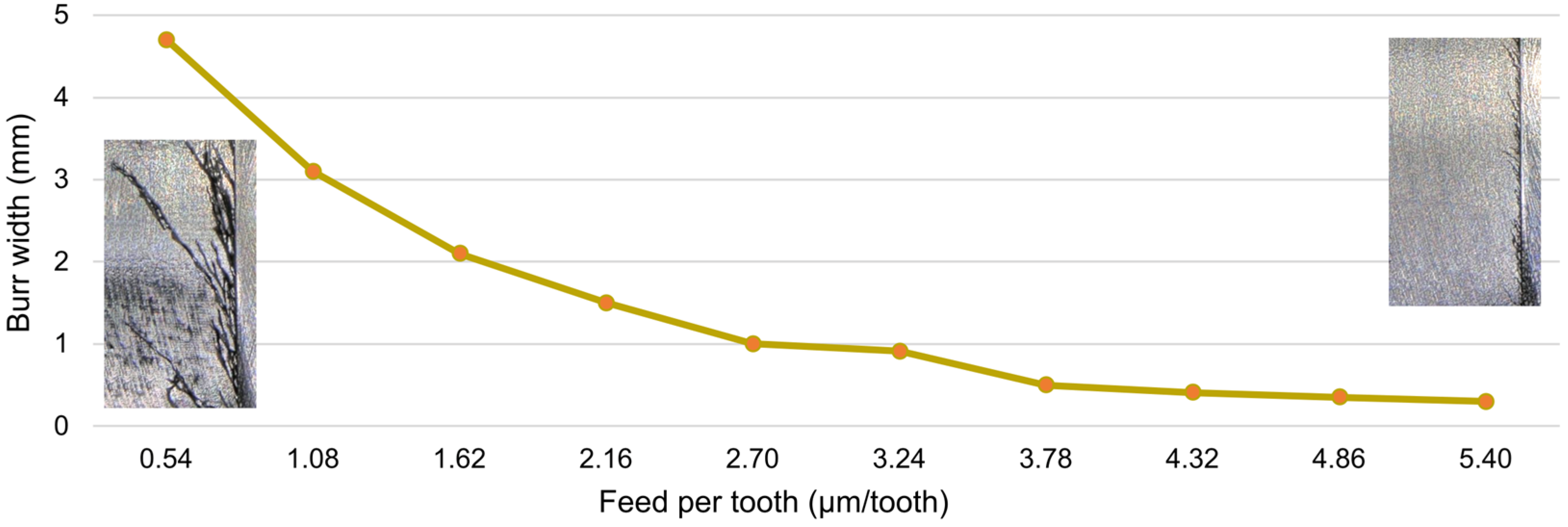
- The use of low feed per tooth in the machining process led to the formation of very big burrs, which indicates the presence of intensive plastic deformation and material ploughing. However, already at a feed per tooth of approx. 2.7 µm/tooth there was a significant reduction in burrs, so it can be assumed that this is a transition zone between the ploughing dominant zone and shearing dominant zone.
- (4)
- The shearing process by the first cutting flute initiated at a feed per tooth of 0.54 µm/tooth and thus at a ratio of fz/rn = 0.1. Nevertheless, given the non-uniform performance of the cutting flutes, this value cannot be taken to be the minimum undeformed chip thickness.
Funding
Data Availability Statement
Conflicts of Interest
References
- Tekumalla, S.; Gupta, M. An Insight into Ignition Factors and Mechanisms of Magnesium Based Materials: A Review. Mater. Des. 2017, 113, 84–98. [Google Scholar] [CrossRef]
- Marakini, V.; Pai, P.S.; Bolar, G.; Achar, B.P. Cryogenic and Conventional Milling of AZ91 Magnesium Alloy. J. Magnes. Alloy 2024, 12, 2503–2519. [Google Scholar] [CrossRef]
- Sahoo, P.; Patra, K.; Szalay, T.; Dyakonov, A.A. Determination of Minimum Uncut Chip Thickness and Size Effects in Micro-Milling of P-20 Die Steel Using Surface Quality and Process Signal Parameters. Int. J. Adv. Manuf. Technol. 2020, 106, 4675–4691. [Google Scholar] [CrossRef]
- Aslantas, K.; Alatrushi, L.K.H.; Bedir, F.; Kaynak, Y.; Yılmaz, N. An Experimental Analysis of Minimum Chip Thickness in Micro-Milling of Two Different Titanium Alloys. Proc. Inst. Mech. Eng. Part B J. Eng. Manuf. 2020, 234, 1486–1498. [Google Scholar] [CrossRef]
- de Oliveira, F.B.; Rodrigues, A.R.; Coelho, R.T.; de Souza, A.F. Size Effect and Minimum Chip Thickness in Micromilling. Int. J. Mach. Tools Manuf. 2015, 89, 39–54. [Google Scholar] [CrossRef]
- Matuszak, J.; Kawalec, A.; Gdula, M. Analysis of the Deburring Efficiency of EN-AW 7075 Aluminum Alloy Parts with Complex Geometric Shapes Considering the Tool Path Strategy During Multi-Axis Brushing. Materials 2024, 17, 6267. [Google Scholar] [CrossRef]
- Żyłka, Ł.; Kurzydłowski, K.; Łępicka, M.; Rodziewicz, M.; Babiarz, R.; Pytel, M. Comparative Analysis of CFG Grinding of Inconel 718 Using Electrocorundum and Sintered Alumina Wheels: Grinding Forces, Surface Roughness, and Surface Morphology. Int. J. Adv. Manuf. Technol. 2025, 1–18. [Google Scholar] [CrossRef]
- Lisowicz, J.; Krupa, K.; Leksycki, K.; Rusinek, R.; Wojciechowski, S. Analysis of Tool Wear in Finish Turning of Titanium Alloy Ti-6Al-4V Under Minimum Quantity Lubrication Conditions Observed with Recurrence Quantification Analysis. Materials 2024, 18, 79. [Google Scholar] [CrossRef]
- Zawada-Michałowska, M.; Pieśko, P.; Mrówka-Nowotnik, G.; Nowotnik, A.; Legutko, S. Effect of the Technological Parameters of Milling on Residual Stress in the Surface Layer of Thin-Walled Plates. Materials 2024, 17, 1193. [Google Scholar] [CrossRef]
- Wang, W.; Liu, W.; Zhang, Y.; Liu, Y.; Zhang, P.; Jia, Z. Precise Measurement of Geometric and Physical Quantities in Cutting Tools Inspection and Condition Monitoring: A Review. Chin. J. Aeronaut. 2024, 37, 23–53. [Google Scholar] [CrossRef]
- Modarelli, M.J.C.; Kot-Thompson, D.M.; Hoshino, K. 5-Axis CNC Micro-Milling Machine for Three-Dimensional Microfluidics. Lab Chip 2025, 25, 127–142. [Google Scholar] [CrossRef]
- Guo, S.; Zhang, J.; Jiang, X.; Yin, P.; Lei, W. Mini Milling Cutter Measurement Based on Machine Vision. Procedia Eng. 2011, 15, 1807–1811. [Google Scholar] [CrossRef]
- Zhao, L.; Cheng, J.; Yin, Z.; Yang, H.; Chen, M.; Yuan, X. Research on Precision Automatic Tool Setting Technology for KDP Crystal Surface Damage Mitigation Based on Machine Vision. J. Manuf. Process. 2021, 64, 750–757. [Google Scholar] [CrossRef]
- Yoshimitsu, S.; Iwashita, D.; Shimana, K.; Kobaru, Y.; Yamashita, S. Monitoring of Cutting State in End-Milling Based on Measurement of Tool Behavior Using CCD Image. Int. J. Autom. Technol. 2019, 13, 133–140. [Google Scholar] [CrossRef]
- Schindlbeck, C.; Janz, A.; Pape, C.; Reithmeier, E. Increasing Milling Precision for Macro-Micro-Manipulators with Disturbance Rejection Control via Visual Feedback. In Proceedings of the 2017 IEEE/RSJ International Conference on Intelligent Robots and Systems (IROS), Vancouver, BC, Canada, 24–28 September 2017; IEEE: New York, NY, USA, 2017; pp. 4686–4693. [Google Scholar]
- Struzikiewicz, G.; Sioma, A. Application of Infrared and High-Speed Cameras in Diagnostics of CNC Milling Machines: Case Study. Proc. SPIE 11176, Photonics Appl. Astron. Commun. Ind. High-Energy Phys. Exp. 2019, 111760C, 81–86. [Google Scholar] [CrossRef]
- Möller, C.; Schmidt, H.C.; Shah, N.H.; Wollnack, J. Enhanced Absolute Accuracy of an Industrial Milling Robot Using Stereo Camera System. Procedia Technol. 2016, 26, 389–398. [Google Scholar] [CrossRef]
- Klancnik, S.; Senveter, J. Computer-Based Workpiece Detection on CNC Milling Machine Tools Using Optical Camera and Neural Networks. Adv. Prod. Eng. Manag. 2010, 5, 59–68. [Google Scholar]
- Müller, F.; Barnikol, M.; Funk, M.; Schmitz, M.; Mühlhäuser, M. CaMea: Camera-Supported Workpiece Measurement for CNC Milling Machines. ACM Int. Conf. Proceeding Ser. 2018, 345–350. [Google Scholar] [CrossRef]
- Saif, Y.; Yusof, Y.; Latif, K.; Kadir, A.Z.A.; Ahmed, M.b.l.; Adam, A.; Hatem, N.; Memon, D.A. Roundness Holes’ Measurement for Milled Workpiece Using Machine Vision Inspection System Based on IoT Structure: A Case Study. Meas. J. Int. Meas. Confed. 2022, 195, 111072. [Google Scholar] [CrossRef]
- Póka, G.; Balázs, B.Z. A Robust Digital Image Processing Method for Measuring the Planar Burr Length at Milling. J. Manuf. Process. 2022, 80, 706–717. [Google Scholar] [CrossRef]
- Czyżycki, J.; Twardowski, P.; Znojkiewicz, N. Analysis of the Displacement of Thin-Walled Workpiece Using a High-Speed Camera during Peripheral Milling of Aluminum Alloys. Materials 2021, 14, 4771. [Google Scholar] [CrossRef] [PubMed]
- Kovalev, I. Development of a Module for Analyzing Milling Defects Using Computer Vision Defects Using Computer Vision. In Proceedings of the 2021 International Russian Automation Conference, Sochi, Russia, 5–11 September 2021; pp. 986–990. [Google Scholar] [CrossRef]
- Guo, M.; Tian, Z.; Feng, X.; Huang, Y.; Zhang, G.; Rong, Y. CFD-Based Method for Hydrostatic Bearings Performance: Static Characteristics with Various Recess Shapes. Int. J. Hydromechatron. 2024, 7, 176–192. [Google Scholar] [CrossRef]
- Naldi, C.; Martino, G.; Dongellini, M.; Gian, C.; Morini, G.L. Experimental Analysis of a Thermal Storage with a PCM-Loaded Finned Heat Exchanger. Int. J. Hydromechatron. 2025, 7, 250–263. [Google Scholar] [CrossRef]
- Nie, G.; Yang, Z.; Zhang, D.; Zhang, X.; Outeiro, J.; Ding, H. Dynamics of Chip Formation during the Cutting Process Using Imaging Techniques: A Review. Int. J. Mech. Syst. Dyn. 2022, 2, 27–49. [Google Scholar] [CrossRef]
- Filep, T.; Andó, M.; Szekeres, B.J. Image-Based Chip Detection during Turning. Int. J. Adv. Manuf. Technol. 2024, 135, 3219–3227. [Google Scholar] [CrossRef]
- Denkena, B.; Breidenstein, B.; Krödel, A.; Prasanthan, V. Chip Formation in Machining Hybrid Components of SAE1020 and SAE5140. Prod. Eng. 2021, 15, 187–197. [Google Scholar] [CrossRef]
- Schneider, F.; Effgen, C.; Kirsch, B.; Aurich, J.C. Manufacturing and Preparation of Micro Cutting Tools: Influence on Chip Formation and Surface Topography When Micro Cutting Titanium. Prod. Eng. 2019, 13, 731–741. [Google Scholar] [CrossRef]
- Denkena, B.; Krödel, A.; Ellersiek, L. Influence of Metal Working Fluid on Chip Formation and Mechanical Loads in Orthogonal Cutting. Int. J. Adv. Manuf. Technol. 2022, 118, 3005–3013. [Google Scholar] [CrossRef]
- Liu, Q.; Liao, Z.; Cheng, J.; Xu, D.; Chen, M. Mechanism of Chip Formation and Surface-Defects in Orthogonal Cutting of Soft-Brittle Potassium Dihydrogen Phosphate Crystals. Mater. Des. 2021, 198, 109327. [Google Scholar] [CrossRef]
- Molnar, T.G.; Berezvai, S.; Kiss, A.K.; Bachrathy, D.; Stepan, G. Experimental Investigation of Dynamic Chip Formation in Orthogonal Cutting. Int. J. Mach. Tools Manuf. 2019, 145, 103429. [Google Scholar] [CrossRef]
- Berezvai, S.; Bachrathy, D.; Stepan, G. High-Speed Camera Measurements in the Mechanical Analysis of Machining. Procedia CIRP 2018, 77, 155–158. [Google Scholar] [CrossRef]
- Cotterell, M.; Ares, E.; Yanes, J.; López, F.; Hernandez, P.; Peláez, G. Temperature and Strain Measurement during Chip Formation in Orthogonal Cutting Conditions Applied to Ti-6Al-4V. Procedia Eng. 2013, 63, 922–930. [Google Scholar] [CrossRef]
- Harzallah, M.; Pottier, T.; Gilblas, R.; Landon, Y.; Mousseigne, M.; Senatore, J. A Coupled In-Situ Measurement of Temperature and Kinematic Fields in Ti-6Al-4V Serrated Chip Formation at Micro-Scale. Int. J. Mach. Tools Manuf. 2018, 130–131, 20–35. [Google Scholar] [CrossRef]
- Che, J.; Wang, H.; Zhang, Y.; Liu, Y.; Du, M.; Ma, S. Experimental and Numerical Studies on Chip Formation Mechanism and Working Performance of the Milling Tool with Single Abrasive Grain. J. Pet. Sci. Eng. 2020, 195, 107645. [Google Scholar] [CrossRef]
- Wang, H.; Satake, U.; Enomoto, T. Serrated Chip Formation Mechanism in Orthogonal Cutting of Cortical Bone at Small Depths of Cut. J. Mater. Process. Technol. 2023, 319, 118097. [Google Scholar] [CrossRef]
- Davis, B.; Dabrow, D.; Ju, L.; Li, A.; Xu, C.; Huang, Y. Study of Chip Morphology and Chip Formation Mechanism during Machining of Magnesium-Based Metal Matrix Composites. J. Manuf. Sci. Eng. Trans. ASME 2017, 139, 091008. [Google Scholar] [CrossRef]
- Davis, B.; Dabrow, D.; Newell, R.; Miller, A.; Schueller, J.K.; Xiao, G.; Liang, S.Y.; Hartwig, K.T.; Ruzycki, N.J.; Sohn, Y.; et al. Chip Morphology and Chip Formation Mechanisms during Machining of ECAE-Processed Titanium. J. Manuf. Sci. Eng. Trans. ASME 2018, 140, 031008. [Google Scholar] [CrossRef]
- Moraiti, M.; Belis, T.; Pappa, M.; Kyratsis, P.; Maravelakis, E.; Antoniadis, A. Chip Formation Characteristics in High Speed Machining Utilizing High Speed Microvideography. Acad. J. Manuf. Eng. 2014, 12, 6–13. [Google Scholar]
- Li, C.; Chen, J.; Li, S.; Xu, M.; Liu, X.; Wei, R.; Li, C.; Ko, T.J. Study of Chip Adhesion Behavior in Titanium Alloy Dry Milling Process Based on Image Extraction Technology. Int. J. Adv. Manuf. Technol. 2023, 126, 2633–2645. [Google Scholar] [CrossRef]
- Fecova, V.; Michalik, P.; Zajac, J.; Mihok, J.; Berthoty, J. The Chip in the up and down Milling Process. Adv. Mater. Res. 2014, 856, 379–383. [Google Scholar] [CrossRef]
- Azmi, A.I.; Lin, R.J.T.; Bhattacharyya, D. High-Speed Photographic Study of Chip Formation during End Milling of GFRP Composites. Adv. Mater. Res. 2014, 845, 915–919. [Google Scholar] [CrossRef]
- Bhagat, K.C.; Kumar, A.; Thakur, A.; Gangopadhyay, S. Analysis of Cutting Forces and Surface Quality during Micro Milling of AZ31B Magnesium Alloy. Int. J. Adv. Manuf. Technol. 2024, 134, 3465–3480. [Google Scholar] [CrossRef]
- Erçetin, A.; Aslantas, K.; Özgün, Ö. Micro-End Milling of Biomedical TZ54 Magnesium Alloy Produced through Powder Metallurgy. Mach. Sci. Technol. 2020, 24, 924–947. [Google Scholar] [CrossRef]
- Ercetin, A.; Aslantaş, K.; Özgün, Ö.; Perçin, M.; Chandrashekarappa, M.P.G. Optimization of Machining Parameters to Minimize Cutting Forces and Surface Roughness in Micro-Milling of Mg13Sn Alloy. Micromachines 2023, 14, 1590. [Google Scholar] [CrossRef]
- Suneesh, E.; Sivapragash, M. Multi-Response Optimisation of Micro-Milling Performance While Machining a Novel Magnesium Alloy and Its Alumina Composites. Measurement 2021, 168, 108345. [Google Scholar] [CrossRef]
- Yao, Y.; Zhu, H.; Huang, C.; Wang, J.; Zhang, P.; Yao, P. Investigation on Chip Formation and Surface Integrity in Micro End Milling of Maraging Steel. Int. J. Adv. Manuf. Technol. 2019, 102, 1973–1984. [Google Scholar] [CrossRef]
- Balázs, B.Z.; Geier, N.; Takács, M.; Davim, J.P. A Review on Micro-Milling: Recent Advances and Future Trends. Int. J. Adv. Manuf. Technol. 2021, 112, 655–684. [Google Scholar] [CrossRef]
- Serje, D.; Pacheco, J.; Diez, E. Micromilling Research: Current Trends and Future Prospects. Int. J. Adv. Manuf. Technol. 2020, 111, 1889–1916. [Google Scholar] [CrossRef]
- Sahoo, P.; Patra, K. Mechanistic Modeling of Cutting Forces in Micro-End-Milling Considering Tool Run out, Minimum Chip Thickness and Tooth Overlapping Effects. Mach. Sci. Technol. 2019, 23, 407–430. [Google Scholar] [CrossRef]
- Wang, G.; Yu, T.; Zhou, X.; Guo, R.; Chen, M. Investigation on Minimum Uncut Chip Thickness and Size Effect in Micro Milling of Glow Discharge Polymer (GDP). J. Manuf. Process. 2022, 84, 786–797. [Google Scholar] [CrossRef]
- Chen, W.; Teng, X.; Huo, D.; Wang, Q. An Improved Cutting Force Model for Micro Milling Considering Machining Dynamics. Int. J. Adv. Manuf. Technol. 2017, 93, 3005–3016. [Google Scholar] [CrossRef]
- Yuan, Y.; Jing, X.; Ehmann, K.F.; Cao, J.; Li, H.; Zhang, D. Modeling of Cutting Forces in Micro End-Milling. J. Manuf. Process. 2018, 31, 844–858. [Google Scholar] [CrossRef]
- Takács, M.; Ver, B. Actual Feed Rate per Tooth at Micro Milling. Mater. Sci. Forum 2007, 537–538, 695–700. [Google Scholar] [CrossRef]



| Test No. | Feed per Tooth (µm/tooth) | Cutting Speed (m/min) | Axial Depth of Cut (mm) | Radial Depth of Cut (mm) |
|---|---|---|---|---|
| 1 | 0.54 | 800 | 0.15 | 16 |
| 2 | 1.08 | 800 | 0.15 | 16 |
| 3 | 1.62 | 800 | 0.15 | 16 |
| 4 | 2.16 | 800 | 0.15 | 16 |
| 5 | 2.70 | 800 | 0.15 | 16 |
| 6 | 3.24 | 800 | 0.15 | 16 |
| 7 | 3.78 | 800 | 0.15 | 16 |
| 8 | 4.32 | 800 | 0.15 | 16 |
| 9 | 4.86 | 800 | 0.15 | 16 |
| 10 | 5.40 | 800 | 0.15 | 16 |
Disclaimer/Publisher’s Note: The statements, opinions and data contained in all publications are solely those of the individual author(s) and contributor(s) and not of MDPI and/or the editor(s). MDPI and/or the editor(s) disclaim responsibility for any injury to people or property resulting from any ideas, methods, instructions or products referred to in the content. |
© 2025 by the author. Licensee MDPI, Basel, Switzerland. This article is an open access article distributed under the terms and conditions of the Creative Commons Attribution (CC BY) license (https://creativecommons.org/licenses/by/4.0/).
Share and Cite
Korpysa, J. Analysis of the Material Removal Process in Precision Milling of AZ91D Magnesium Alloy. Micromachines 2025, 16, 1283. https://doi.org/10.3390/mi16111283
Korpysa J. Analysis of the Material Removal Process in Precision Milling of AZ91D Magnesium Alloy. Micromachines. 2025; 16(11):1283. https://doi.org/10.3390/mi16111283
Chicago/Turabian StyleKorpysa, Jarosław. 2025. "Analysis of the Material Removal Process in Precision Milling of AZ91D Magnesium Alloy" Micromachines 16, no. 11: 1283. https://doi.org/10.3390/mi16111283
APA StyleKorpysa, J. (2025). Analysis of the Material Removal Process in Precision Milling of AZ91D Magnesium Alloy. Micromachines, 16(11), 1283. https://doi.org/10.3390/mi16111283