Microstructure-Driven Loss Mechanisms and Tensor-Based FEM Calibration


Abstract
1. Introduction
2. Theoretical Framework: Viscoelastic Damping and Voigt Notation
2.1. Physical Relevance of Stiffness-Tensor Rotation for (111) 3C-SiC
2.2. Modeling Anisotropic Damping in Viscoelastic Materials Using the Voigt Framework
2.3. Tensor and Voigt Notation
- –
- Isotropic case: (single scalar applied uniformly),
- –
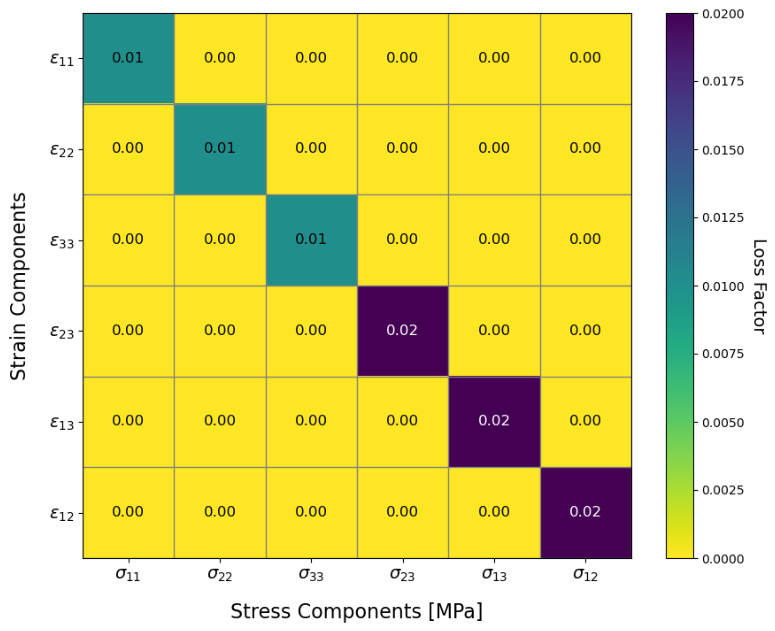
- Anisotropic case: (Voigt notation), allowing directional damping.
2.4. Isotropic Versus Anisotropic Loss Factors
2.5. From Voigt Notation to FEM-Based Eigenfrequency Analysis
3. FEM Model and Calibration Procedure
3.1. Device Geometry and Experimental Dataset
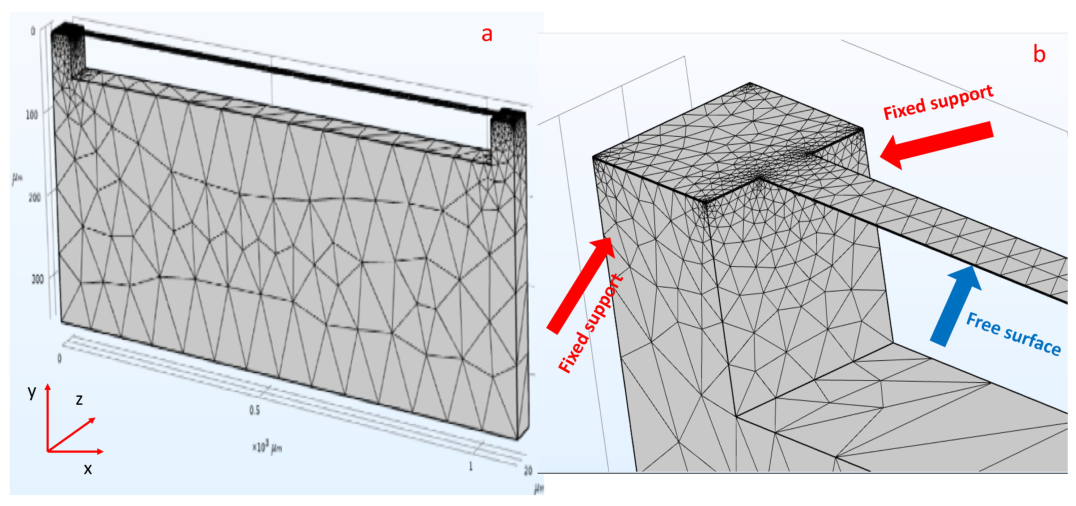
3.2. Finite Element Model
- Geometry: A 3D model of the double-clamped beam is constructed with the same length as the fabricated devices and a rectangular cross-section. The anchors and, when necessary, a portion of the silicon substrate are included to reproduce the stiffness and the stress transfer at the clamping points.
- Boundary conditions: The entire beam–anchor–substrate assembly is included in the FEM model. The clamped boundary condition is applied at the bottom surface of the silicon substrate support, whereas all remaining exposed surfaces of the beam and anchor regions are defined as traction-free.
- Material properties: The 3C-SiC film is described as a cubic crystal in (111) orientation. The anisotropic stiffness matrix C in Voigt notation is defined from literature elastic constants for 3C-SiC and rotated to match the (111) growth direction. The density is set according to reported values for 3C-SiC epitaxial layers. Residual tensile stress is included as a predefined initial stress field, consistent with the experimental characterization of each wafer. The tensile prestress values used in the FEM model are not assumed but experimentally measured for each wafer. Residual stress is first obtained from curvature-based wafer-bow measurements using Stoney’s Equation [16], performed on full 3-inch wafers prior to device fabrication. This method provides a direct estimate of the average biaxial film stress and yields the values reported in Table 3. To validate these results, the prestress is independently cross-checked by micro-Raman spectroscopy, using the shift of the transverse optical (TO) phonon mode of 3C–SiC as a stress calibration reference. The two methods agree within 8–12%, which we report as the uncertainty on the prestress values. Because residual tensile stress strongly affects the eigenfrequencies of high-aspect-ratio beams, incorporating experimentally measured stress values is essential for ensuring the accuracy of the FEM simulations.
- Mesh: A swept or mapped mesh is used along the beam length, with finer refinement in the regions of maximum curvature near the clamped ends.
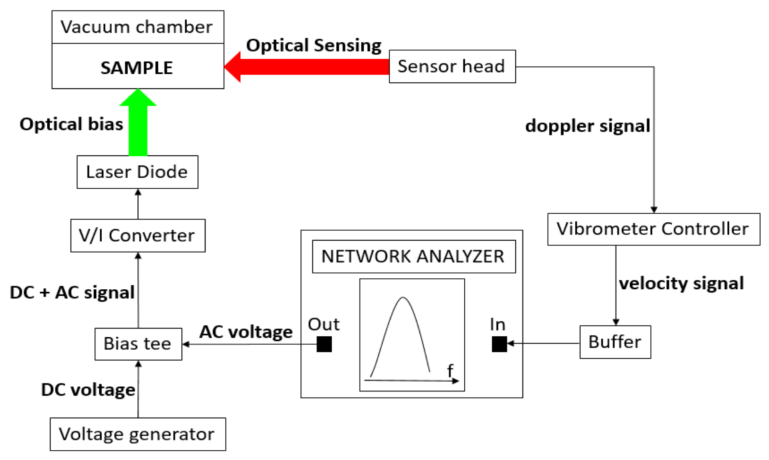
3.3. Experimental Conditions
3.4. Implementation of Isotropic and Anisotropic Damping
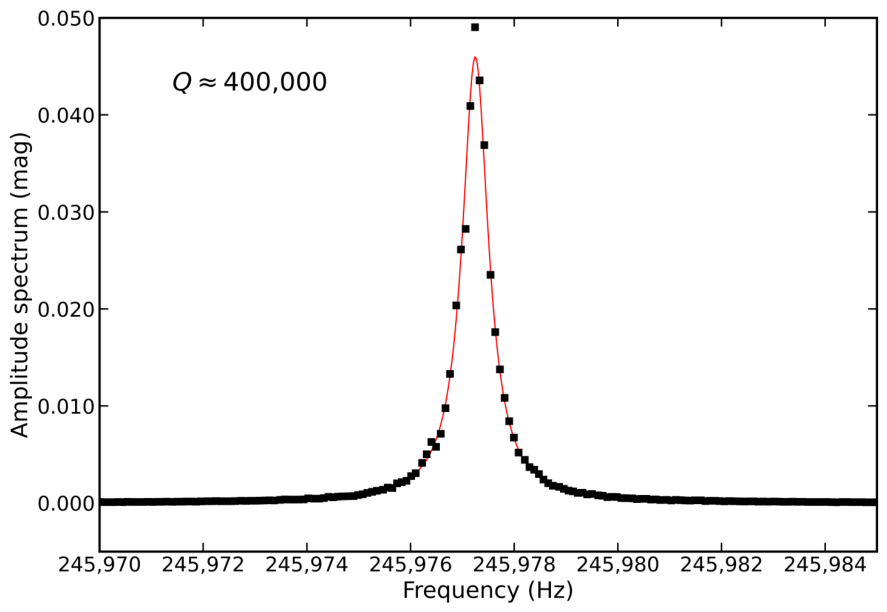
3.5. Calibration Procedure and Extraction of Q-Factors
4. Results and Discussion
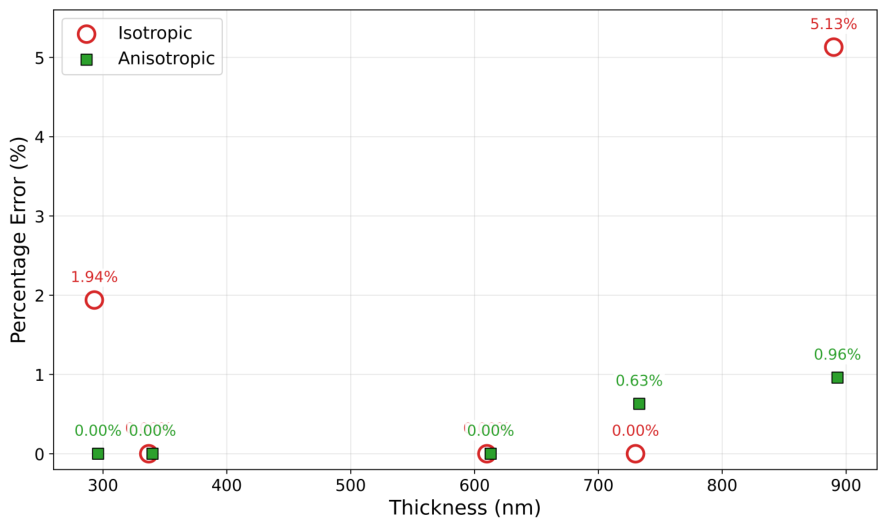
4.1. Experimental vs FEM Q-Factor Comparison
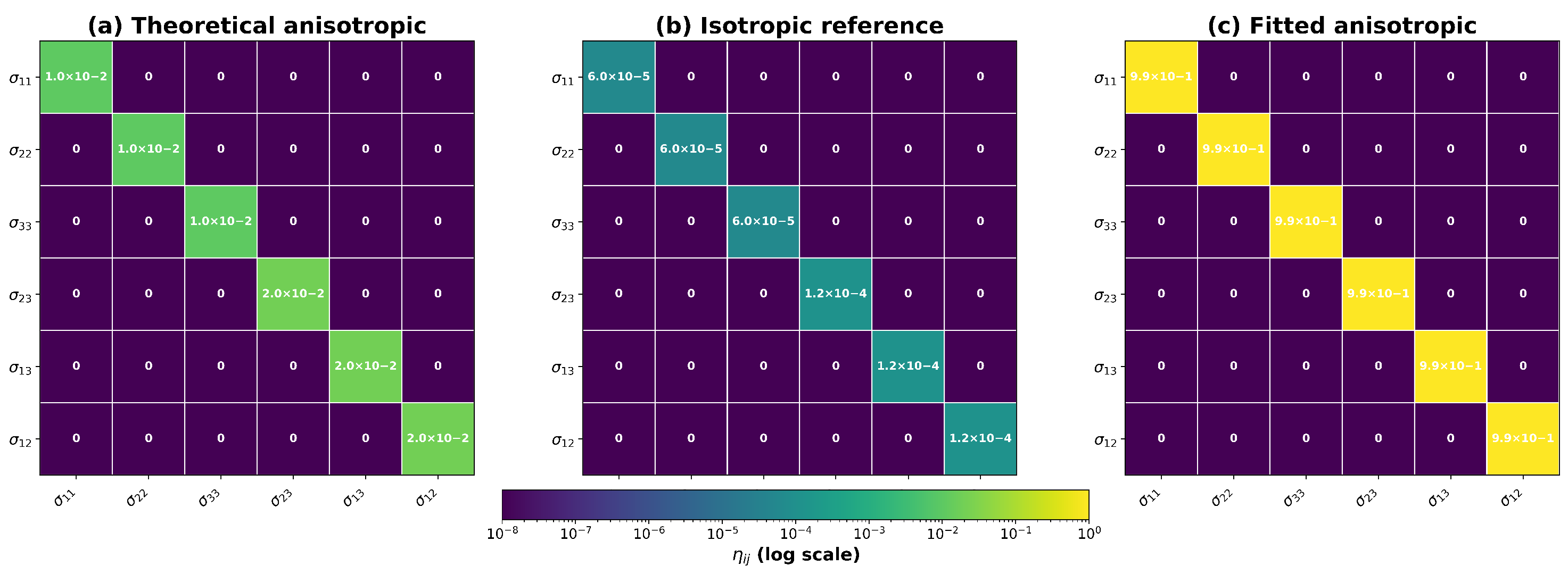
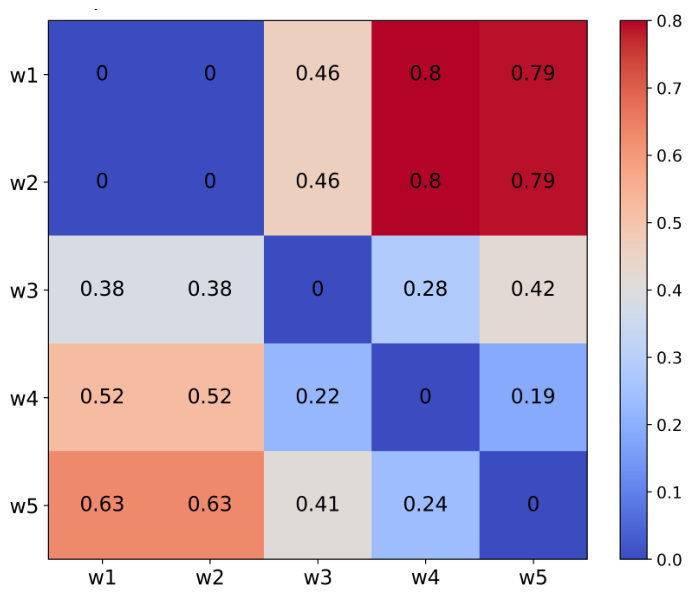
4.2. Anisotropic Loss-Factor Matrices and Comparative Analysis
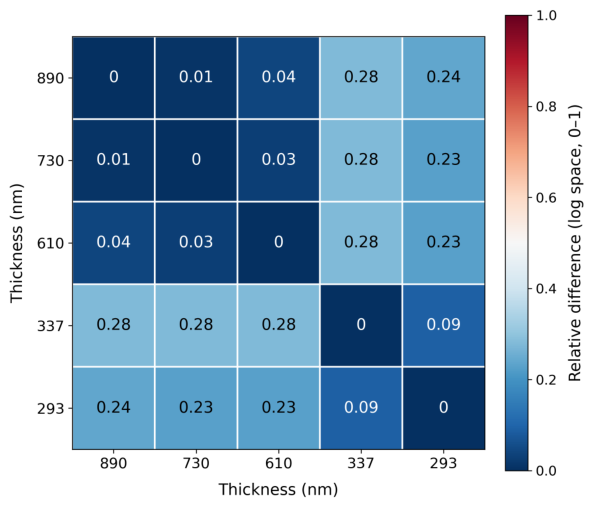
4.3. Eigenvalue Analysis and Thickness Dependence
- 1.
- Construct the eigenvalue vectors
- 2.
- Compute the Euclidean distance between the two vectors
- 3.
- Normalize the distance to the range using
4.4. Microstructure-Driven Interpretation of Damping Transition
5. Conclusions
- The anisotropic model reproduces the measured Q-factors with lower average prediction errors than a conventional isotropic loss-factor model. Across the investigated wafers, the anisotropic formulation provides either comparable or improved agreement with the experimental data, with the largest benefit observed for the thickest films ().
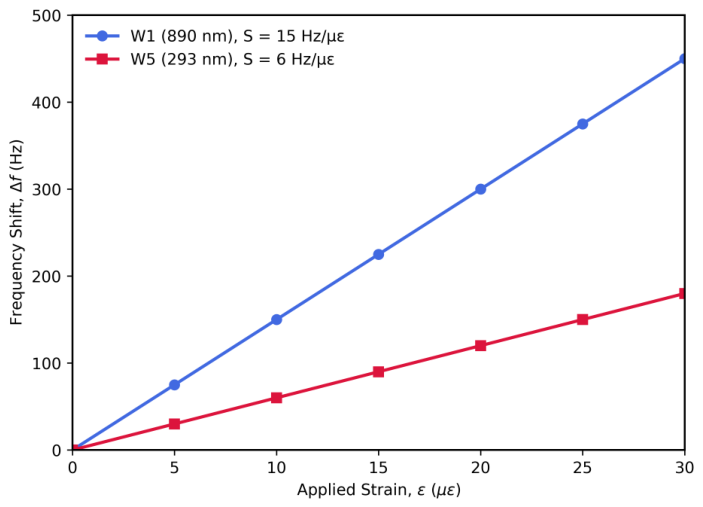
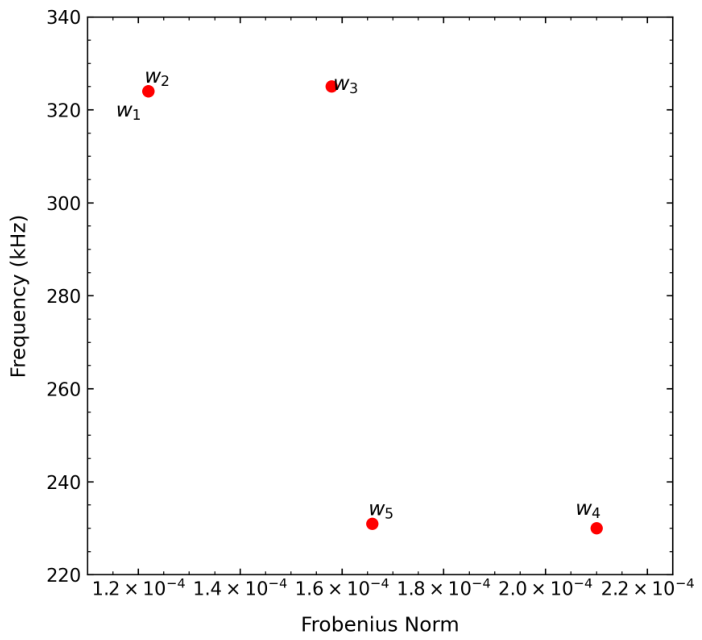
- The Frobenius norm of the fitted loss-factor matrices correlates with the resonance frequency and with the tensile/compressive load sensitivity of the beams, indicating that stronger overall damping is associated with lower frequencies and larger frequency shifts under applied strain.
- An eigenvalue analysis of the loss-factor matrices reveals a redistribution of dissipation from shear-dominated modes in thin films towards normal-strain-dominated modes in thick films. A transition in the dominant loss mechanism is observed around a film thickness of approximately 600 nm, consistent with the clustering behavior identified through the eigenvalue and similarity-map analysis.
- Relative-difference matrices and similarity heatmaps provide a compact way of comparing loss tensors across wafers, clearly separating two groups corresponding to thick and thin films and placing the intermediate-thickness wafer at the boundary between these regimes.
Author Contributions
Funding
Institutional Review Board Statement
Informed Consent Statement
Data Availability Statement
Conflicts of Interest
References
- La Via, F.; Alquier, D.; Giannazzo, F.; Kimoto, T.; Neudeck, P.; Ou, H.; Roncaglia, A.; Saddow, S.E.; Tudisco, S. Emerging SiC Applications beyond Power Electronic Devices. Micromachines 2023, 14, 1200. [Google Scholar] [CrossRef] [Scilit] [PubMed]
- Kermany, A.R.; Brawley, G.; Mishra, N.; Sheridan, E.; Bowen, W.P.; Iacopi, F. Microresonators with Q-factors over a million from highly stressed epitaxial silicon carbide on silicon. Appl. Phys. Lett. 2014, 104, 081901. [Google Scholar] [CrossRef] [Scilit]
- Romero, E.; Valenzuela, V.M.; Kermany, A.R.; Sementilli, L.; Iacopi, F.; Bowen, W.P. Engineering the dissipation of crystalline micromechanical resonators. Phys. Rev. Appl. 2020, 13, 044007. [Google Scholar] [CrossRef] [Scilit]
- Garofalo, A.; Muoio, A.; Sapienza, S.; Ferri, M.; Belsito, L.; La Via, F. Model of Quality Factor for (111) 3C-SiC Double-Clamped Beams. Micromachines 2025, 16, 148. [Google Scholar] [CrossRef] [Scilit] [PubMed]
- Muoio, A.; Garofalo, A.; De Luca, S.; La Via, F. Modeling and Experimental Validation of Anisotropic Damping in 3C-SiC Resonators for MEMS Applications. In Proceedings of the 2025 IEEE International Workshop on Metrology for Green Technologies, Renewable Energy and Ecological Sustainability (MetroGREENST), Giardini di Naxos, Italy, 24–26 September 2025; pp. 141–146. [Google Scholar]
- Imboden, M.; Mohanty, P. Dissipation in nanoelectromechanical systems. Phys. Rep. 2014, 534, 89–146. [Google Scholar] [CrossRef] [Scilit]
- Kimoto, T.; Cooper, J.A. Fundamentals of Silicon Carbide Technology; Wiley: Hoboken, NJ, USA, 2014. [Google Scholar]
- Huang, J.; Chen, Y.; Wang, C.; Li, P.; Tong, K.; Kang, M.; Jin, T.; Hu, W.; Chen, J.; Ma, M.; et al. Unveiling anisotropic behavior in 3C-SiC by in-situ nano-scratching. Sci. China Mat. 2023, 11, 4326–4333. [Google Scholar] [CrossRef] [Scilit]
- Lifshitz, R.; Roukes, M.L. Thermoelastic Damping in Micro- and Nanomechanical Systems. Phys. Rev. B 2000, 61, 5600–5609. [Google Scholar] [CrossRef] [Scilit]
- Zener, C. Internal Friction in Solids II: General Theory of Thermoelastic Internal Friction. Phys. Rev. 1938, 53, 90–96. [Google Scholar] [CrossRef] [Scilit]
- Varshney, D.; Shriya, S.; Varshney, M.; Singh, N.; Khenata, R. Elastic and thermodynamical properties of 3C-SiC. J. Theor. Appl. Phys. 2015, 9, 221–249. [Google Scholar] [CrossRef] [Scilit]
- Carcione, J.M. Wave Fields in Real Media: Wave Propagation in Anisotropic, Anelastic, Porous and Electromagnetic Media; Elsevier: Amsterdam, The Netherlands, 2014; pp. 1–66. [Google Scholar]
- Nowick, A.S. Anelastic Relaxation in Crystalline Solids; Academic: Columbia, NY, USA, 1972. [Google Scholar]
- Muoio, A.; Garofalo, A.; Sapienza, S.; La Via, F. Numerical Simulations of 3C-SiC High-Sensitivity Strain Meters. Micromachines 2025, 16, 989. [Google Scholar] [CrossRef] [Scilit] [PubMed]
- COMSOL Multiphysics®, version 6.2; COMSOL AB: Stockholm, Sweden, 2023.
- Stoney, G.G. The Tension of Metallic Films Deposited by Electrolysis. Proc. R. Soc. A 1909, 82, 172–175. [Google Scholar] [CrossRef] [Scilit]
- Miller, J.M.L.; Ansari, A.; Heinz, D.B.; Chen, Y.; Flader, I.B.; Shin, D.D.; Villanueva, L.G.; Kenny, T.W. Effective quality factor tuning mechanisms in micromechanical resonators. Appl. Phys. Rev. 2018, 5, 041307. [Google Scholar] [CrossRef] [Scilit]
- Scuderi, V.; Calabretta, C.; Anzalone, R.; Mauceri, M.; La Via, F. Characterization of 4H- and 6H-Like Stacking Faults in Cross Section of 3C-SiC Epitaxial Layer by Room-Temperature μ-Photoluminescence and μ-Raman Analysis. Materials 2020, 13, 2018. [Google Scholar] [CrossRef] [Scilit] [PubMed]
- Fedorov, S.A.; Engelsen, N.J.; Ghadimi, A.H.; Bereyhi, M.J.; Schilling, R.; Wilson, D.J.; Kippenberg, T.J. Generalized Dissipation Dilution. Phys. Rev. B 2019, 99, 054107. [Google Scholar] [CrossRef] [Scilit]
- La Via, F.; Litrico, G.; Anzalone, R.; Severino, A.; Salanitri, M.; Coffa, S. High growth rate 3C-SiC growth: From hetero-epitaxy to homo-epitaxy. MRS Adv. 2016, 1, 1787–1798. [Google Scholar] [CrossRef] [Scilit]
- Severino, A.; Anzalone, R.; Camarda, M.; Piluso, N.; La Via, F. Structural Characterization of Heteroepitaxial 3C-SiC. Mater. Sci. Forum 2012, 711, 27–32. [Google Scholar] [CrossRef] [Scilit]
- Ghaffari, S.; Chandorkar, S.A.; Wang, S.; Ng, E.J.; Ahn, C.H.; Hong, V.; Yang, Y.; Kenny, T.W. Quantum Limit of Quality Factor in Silicon Micro and Nano Mechanical Resonators. Sci. Rep. 2013, 3, 3244. [Google Scholar] [CrossRef] [Scilit] [PubMed]
- Tsaturyan, Y.; Barg, A.; Polzik, E.S.; Schliesser, A. Ultracoherent nanomechanical resonators via soft clamping and dissipation dilution. Nat. Nanotechnol. 2017, 12, 776–783. [Google Scholar] [CrossRef] [Scilit] [PubMed]
- Beccari, A.; Visani, D.A.; Fedorov, S.A.; Bereyhi, M.J.; Boureau, V.; Engelsen, N.J.; Kippenberg, T.J. Strained crystalline nanomechanical resonators with quality factors above 10 billion. Nat. Phys. 2022, 18, 436–441. [Google Scholar] [CrossRef] [Scilit]
- Villanueva, L.G.; Schmid, S. Evidence of surface loss as ubiquitous limiting damping mechanism in SiN micro- and nanomechanical resonators. Phys. Rev. Lett. 2014, 113, 227201. [Google Scholar] [CrossRef] [Scilit] [PubMed]





| Feature | Isotropic Model | Anisotropic Model |
|---|---|---|
| Loss factor | Single scalar | matrix |
| Directionality | Uniform in all directions | Direction-dependent |
| Crystal orientation | Not accounted for | Stiffness tensor rotated to (111) frame |
| Q-factor prediction | Mode-independent | Mode-dependent |
| Shear–normal coupling | Absent | Captured via off-diagonal |
| Wafer | Thickness (nm) | (nm) | Frequency (kHz) | (kHz) |
|---|---|---|---|---|
| w1 | 890 | 7 | 324 | |
| w2 | 730 | 7 | 324 | |
| w3 | 610 | 7 | 325 | |
| w4 | 337 | 7 | 230 | |
| w5 | 293 | 7 | 231 |
| Wafer | E (GPa) | (GPa) | Prestress (MPa) | (MPa) | Frobenius Norm () |
|---|---|---|---|---|---|
| w1 | 340 | 1010 | 1.23 | ||
| w2 | 290 | 982 | 1.23 | ||
| w3 | 260 | 738 | 1.59 | ||
| w4 | 190 | 3.5 | 2.11 | ||
| w5 | 178 | 0.23 | 0.02 | 1.66 |
| Wafer | () | Err%iso | Err%iso | Err%aniso | Err%aniso | Sens.(Hz/) | ||||
|---|---|---|---|---|---|---|---|---|---|---|
| w1 | 6.24 | 6.56 | 5.13 | 6.18 | 0.96 | 15 | 1 | |||
| w2 | 6.36 | 6.36 | 0.00 | 6.32 | 0.63 | 12 | 1 | |||
| w3 | 4.31 | 4.31 | 0.00 | 4.31 | 0.00 | 10 | 1 | |||
| w4 | 4.86 | 4.86 | 0.00 | 4.86 | 0.00 | 8 | 1 | |||
| w5 | 4.12 | 4.20 | 1.94 | 4.12 | 0.00 | 6 | 1 |
Disclaimer/Publisher’s Note: The statements, opinions and data contained in all publications are solely those of the individual author(s) and contributor(s) and not of MDPI and/or the editor(s). MDPI and/or the editor(s) disclaim responsibility for any injury to people or property resulting from any ideas, methods, instructions or products referred to in the content. |
© 2026 by the authors. Licensee MDPI, Basel, Switzerland. This article is an open access article distributed under the terms and conditions of the Creative Commons Attribution (CC BY) license.
Share and Cite
Muoio, A.; Garofalo, A.; La Via, F. Microstructure-Driven Loss Mechanisms and Tensor-Based FEM Calibration. Micromachines 2026, 17, 850. https://doi.org/10.3390/mi17070850
Muoio A, Garofalo A, La Via F. Microstructure-Driven Loss Mechanisms and Tensor-Based FEM Calibration. Micromachines. 2026; 17(7):850. https://doi.org/10.3390/mi17070850
Chicago/Turabian StyleMuoio, Annamaria, Angela Garofalo, and Francesco La Via. 2026. "Microstructure-Driven Loss Mechanisms and Tensor-Based FEM Calibration" Micromachines 17, no. 7: 850. https://doi.org/10.3390/mi17070850
APA StyleMuoio, A., Garofalo, A., & La Via, F. (2026). Microstructure-Driven Loss Mechanisms and Tensor-Based FEM Calibration. Micromachines, 17(7), 850. https://doi.org/10.3390/mi17070850