Studying the Performance of SnS-Based Zn (0%, 2% and 4%)-Doped Methanol Sensors Under the Optimal Temperature of 240 °C


Abstract
1. Introduction
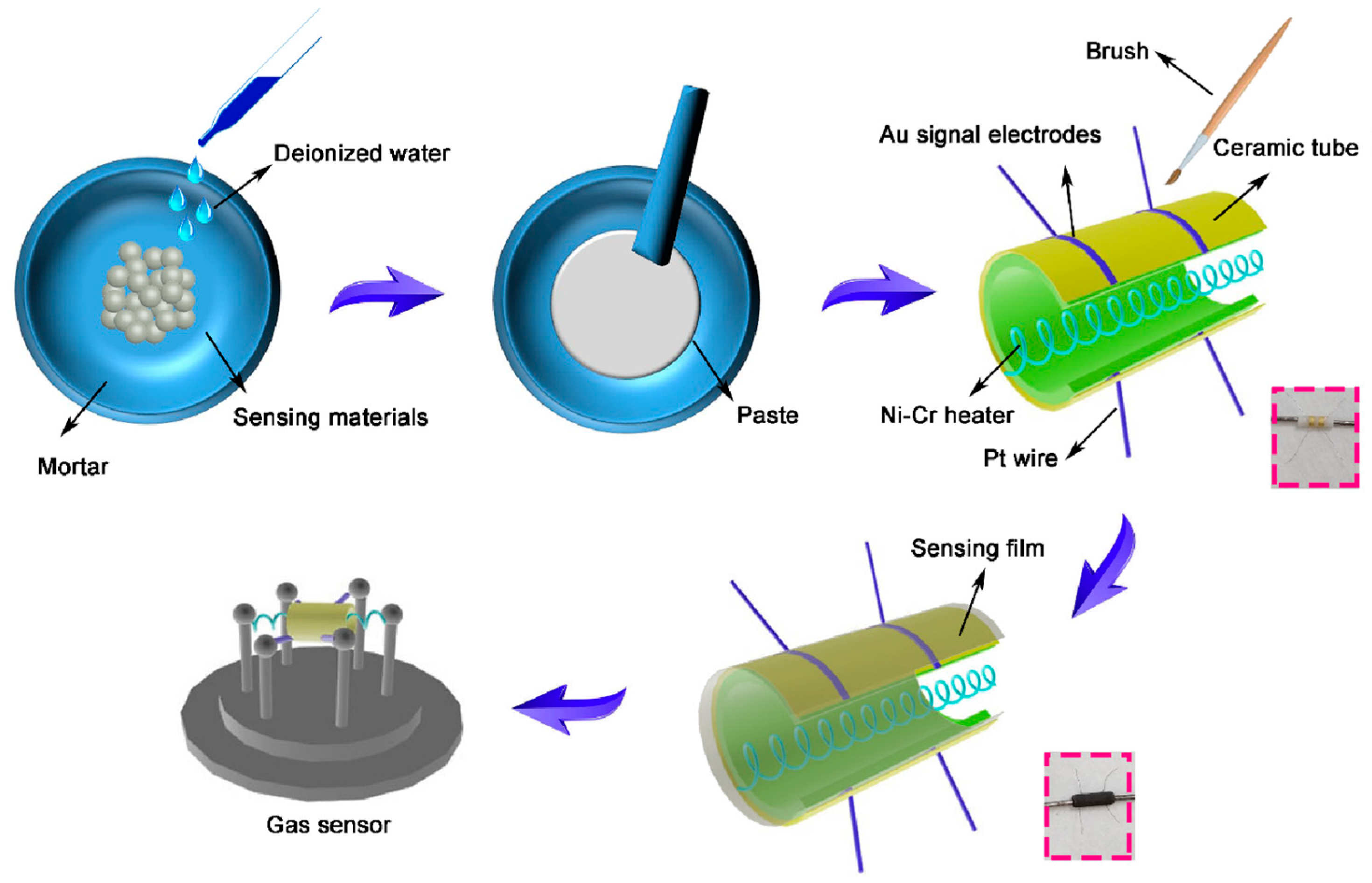
2. Materials and Methods
3. Results
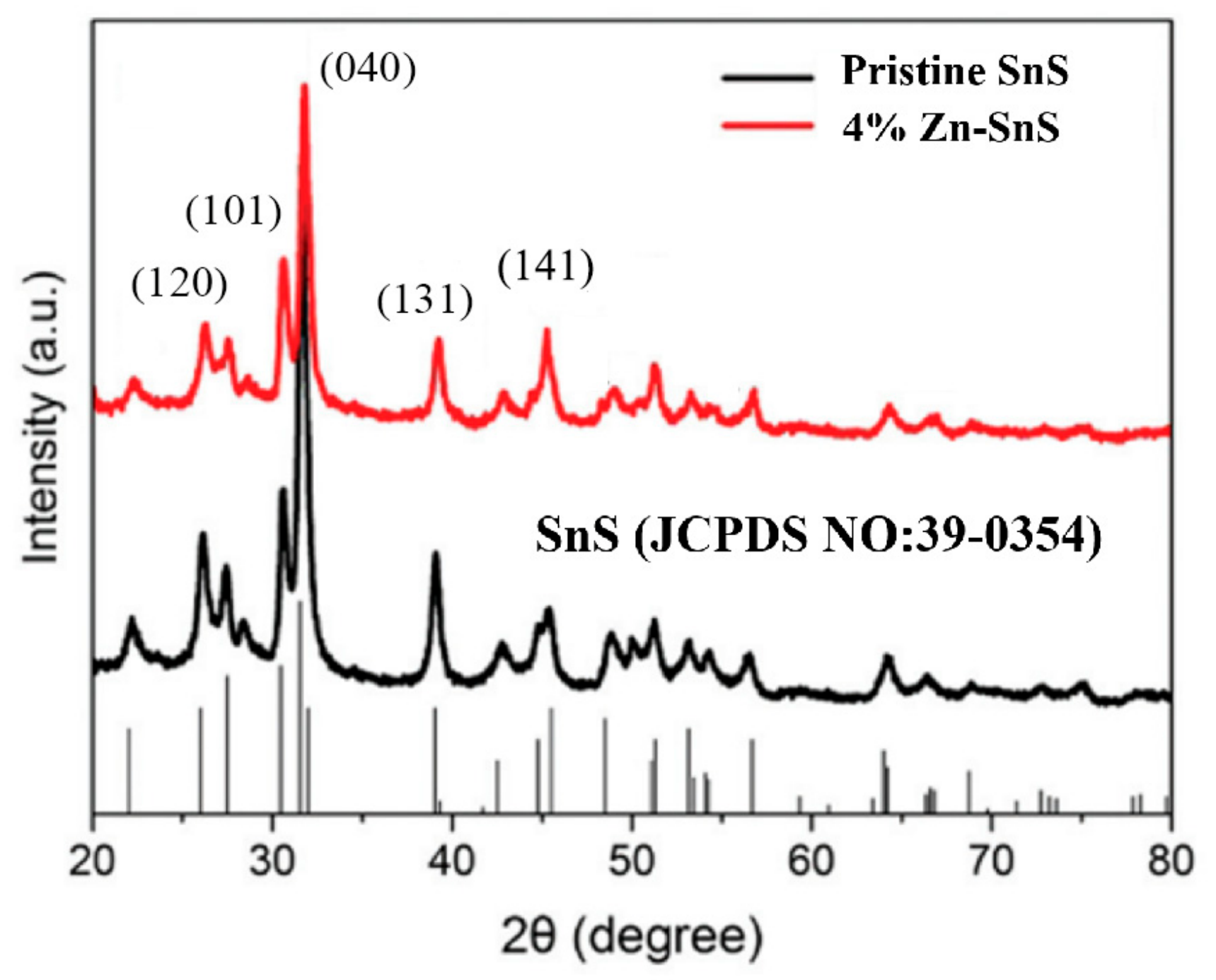
3.1. XRD Analysis
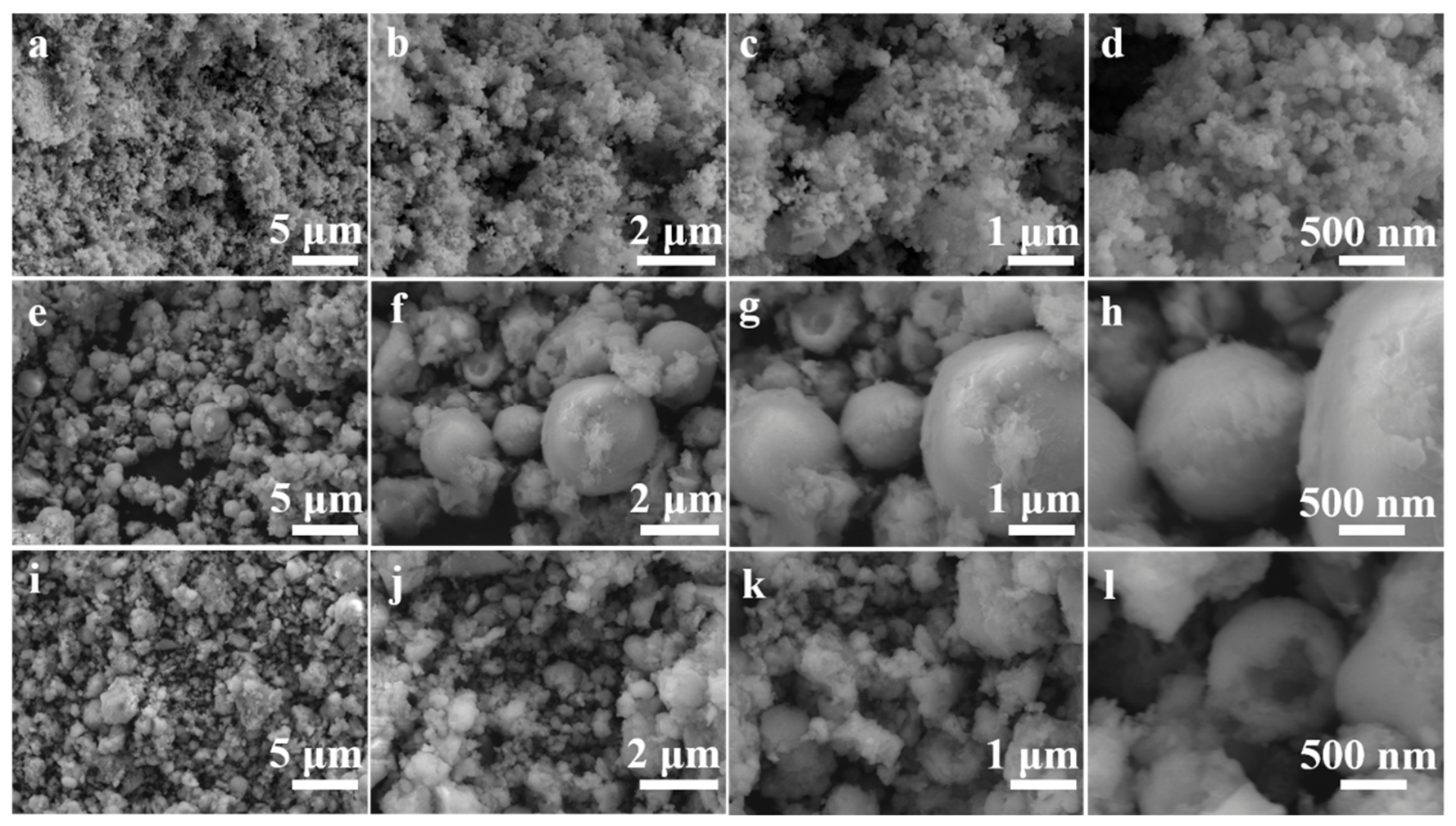
3.2. SEM Analysis
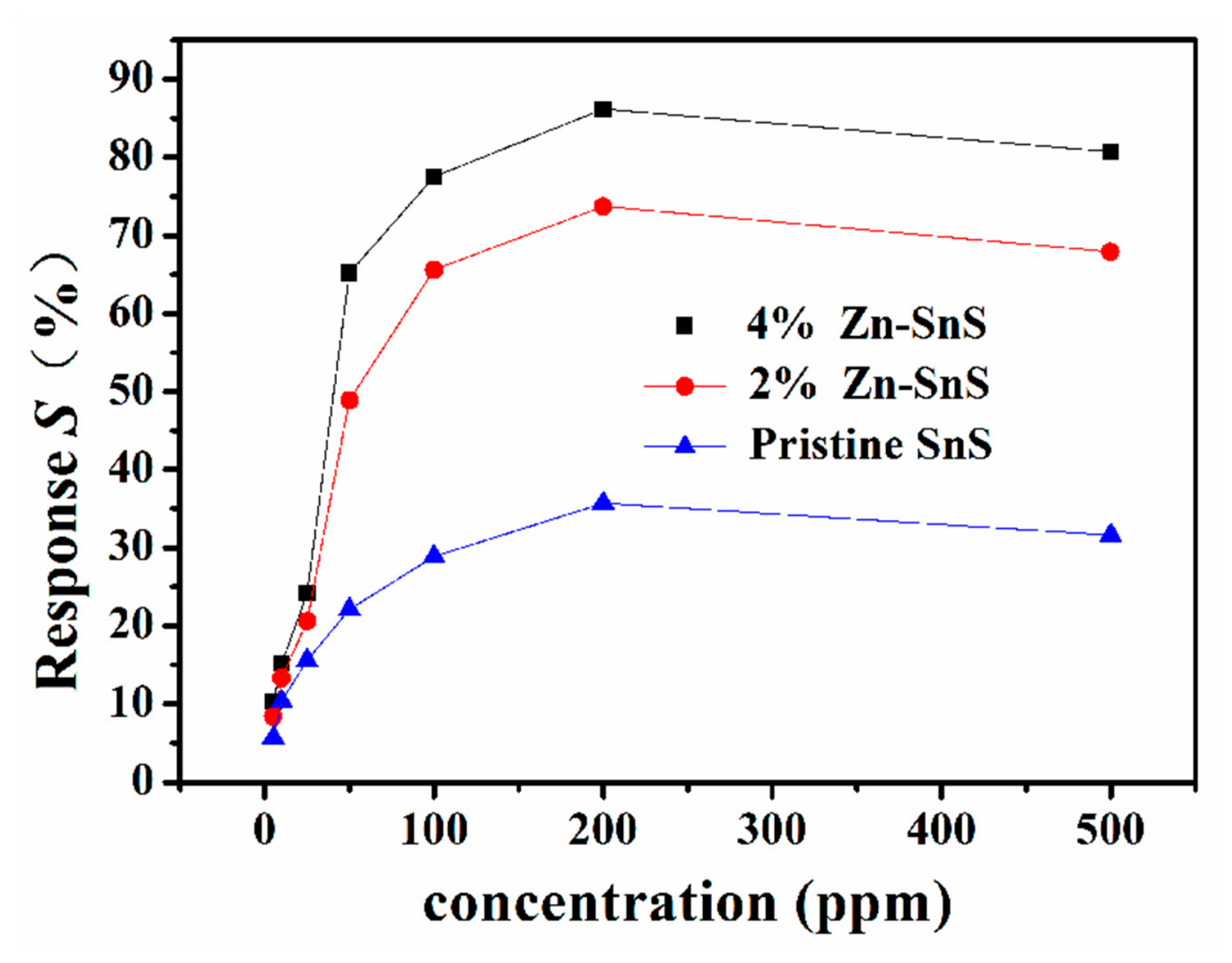
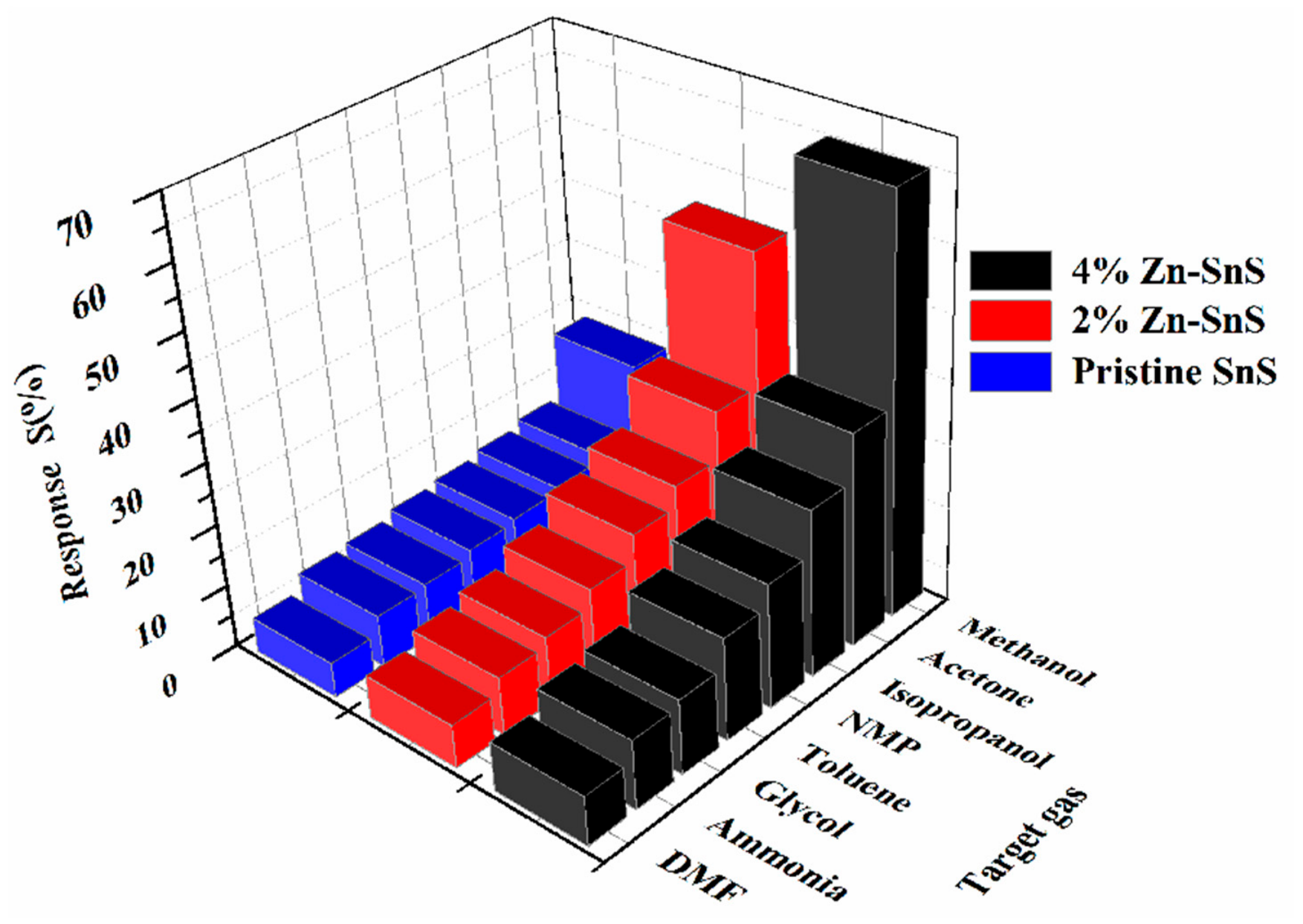
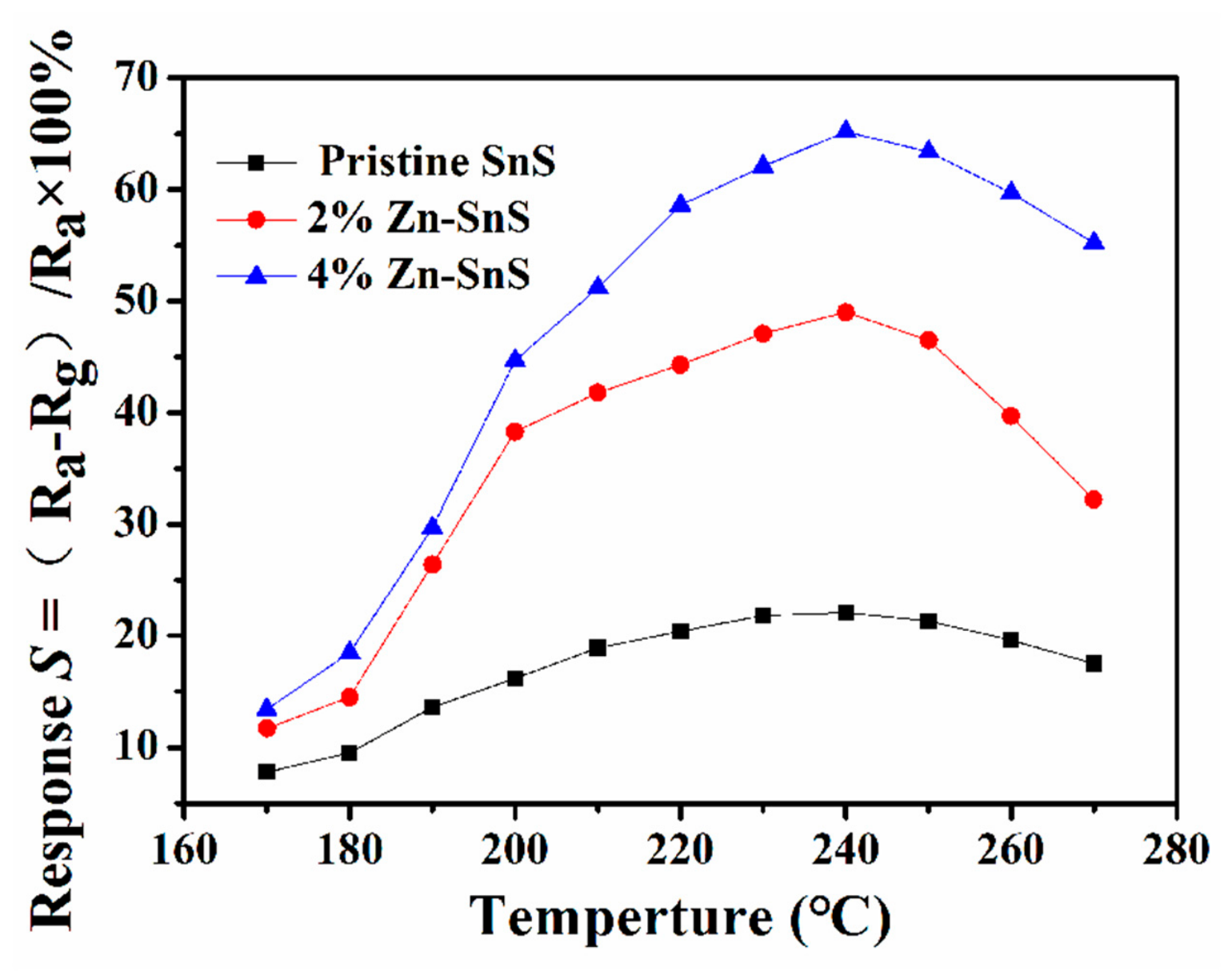
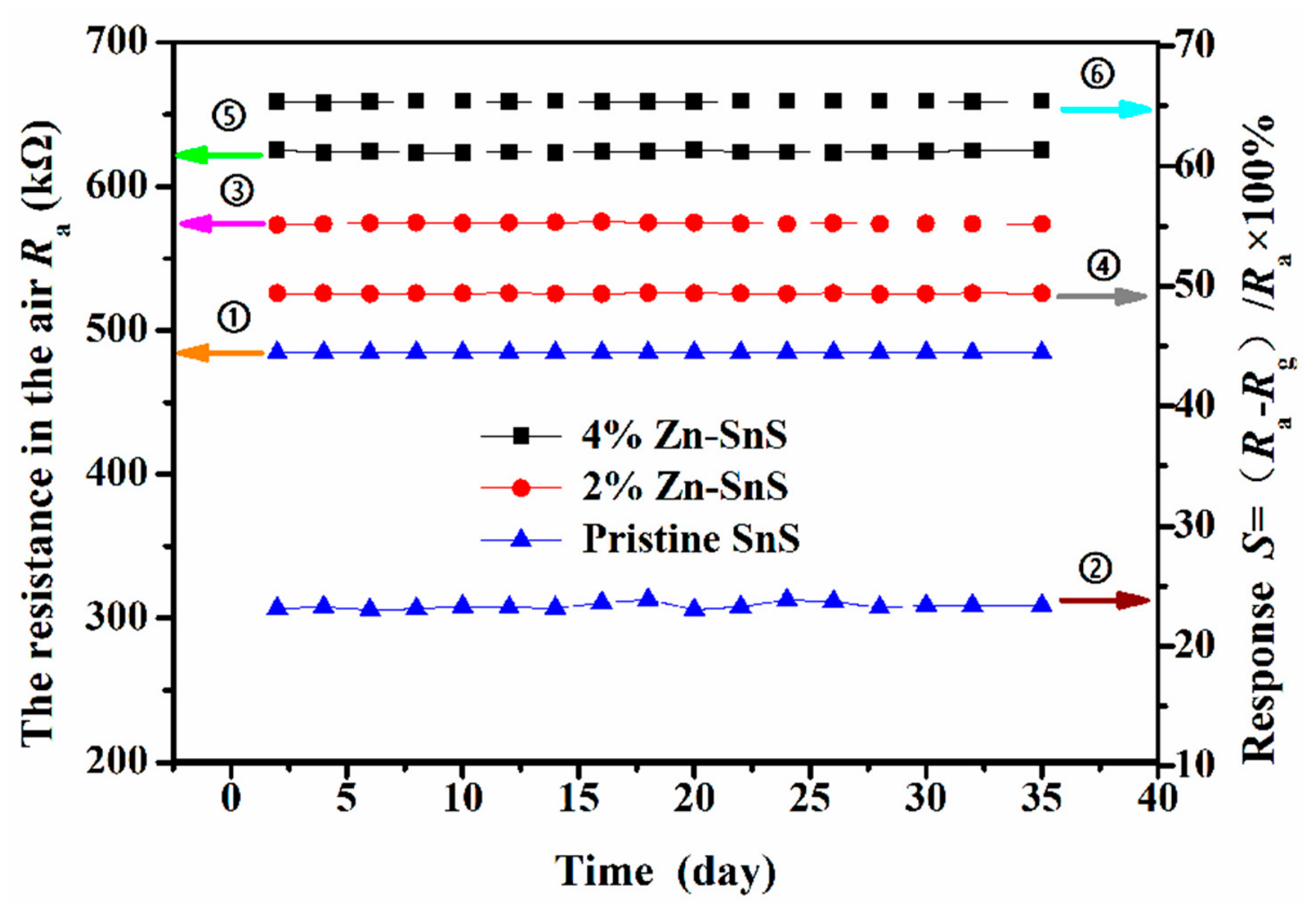
3.3. Gas-Sensing Performance
4. Conclusions
Author Contributions
Funding
Institutional Review Board Statement
Informed Consent Statement
Data Availability Statement
Acknowledgments
Conflicts of Interest
References
- Li, J.; Dong, C.J.; Zhang, Y.Y.; Lv, S.Y.; Wang, J.; Pan, S.; Wang, C.G.; Sun, P.; Zheng, J.; Liu, F.M.; et al. Mixed potential type methanol gas sensor based on Gd2Zr2O7 solid state electrolyte and ZnSb2O6 sensing electrode. Sens. Actuators B 2023, 397, 134630. [Google Scholar]
- Santos, T.R.C.; Bassi, M.J.; França, M.M.; Majewski, J.K.; Barcote, M.V.W.; Stanislawczuk, A.E.P.; Roman, L.S. Gas Sensor Based on Highly Effective Slot-Die Printed PEDOT:PSS@ZnO Hybrid Nanocomposite for Methanol Detection. ACS Appl. Mater. Interfaces 2024, 6, 13065–13073. [Google Scholar]
- Lin, T.; Lv, X.; Hu, Z.; Xu, A.; Feng, C. Semiconductor metal oxides as chemoresistive sensors for detecting volatile organic compounds. Sensors 2019, 19, 233. [Google Scholar] [CrossRef] [PubMed]
- Sinha, M.; Mahapatra, R.; Mondal, B.; Ghosh, R. A High-Sensitivity Gas Sensor Toward Methanol Using ZnO Microrods: Effect of Operating Temperature. J. Electron. Mater. 2017, 46, 2476–2482. [Google Scholar] [CrossRef]
- Han, D.; Song, P.; Zhang, S.; Zhang, H.; Xu, Q.; Wang, Q. Enhanced methanol gas-sensing performance of Ce-doped In2O3 porous nanospheres prepared by hydrothermal method. Sens. Actuators B 2015, 216, 488–496. [Google Scholar]
- Qiu, P.L.; Qin, Y.X.; Xia, Q. Ultrasensitive gas sensor developed from SnS/TiO2-based memristor for dilute methanol detection at room temperature. Sens. Actuators B 2023, 392, 134038. [Google Scholar]
- Guo, J.; Zhang, J.; Ju, D.; Xu, H.; Cao, B. Three-dimensional SnO2 microstructures assembled by porous nanosheets and their superior performance for gas sensing. Powder Technol. 2013, 250, 40–45. [Google Scholar] [CrossRef]
- Jia, T.K.; Fu, F.; Li, J.L.; Deng, Z.; Long, F.; Yu, D.S.; Cui, Q.; Wang, W.M. Rational construction of direct Z-scheme SnS/g-C3N4 hybrid photocatalyst for significant enhancement of visible-light photocatalytic activity. Appl. Surf. Sci. 2020, 499, 143941. [Google Scholar] [CrossRef]
- Yao, K.L.; Li, J.; Shan, S.Y.; Jia, Q.M. One-step synthesis of urchinlike SnS/SnS2 heterostructures with superior visible-light photocatalytic performance. Catal. Commun. 2017, 101, 51–56. [Google Scholar] [CrossRef]
- Juntrapirom, S.; Tantraviwat, D.; Suntalelat, S.; Thongsook, O.; Phanichphant, S.; Inceesungvorn, B. Visible light photocatalytic performance and mechanism of highly efficient SnS/BiOI heterojunction. J. Colloid Interface Sci. 2017, 504, 711–720. [Google Scholar] [CrossRef] [PubMed]
- Wang, J.; Lian, G.; Xu, Z.H. Growth of Large-Size SnS Thin Crystals Driven by Oriented Attachment and Applications to Gas Sensors and Photodetectors. ACS Appl. Mater. Interfaces 2016, 8, 9545–9551. [Google Scholar] [CrossRef] [PubMed]
- Ma, Y.T.; Ma, S.Y.; Tang, J.; Wu, Z.G.; Shi, J.; Zhao, Y.; Pei, S.T. Constructed heterostructured SnS@MoO3 hollow nanotubes and detected sensing properties towards TEA. Vacuum 2021, 184, 109939. [Google Scholar] [CrossRef]
- Wang, J.; Deng, H.Y.; Li, X.; Yang, C.; Xia, Y. Visible-light photocatalysis enhanced room-temperature formaldehyde gas sensing by MoS2/rGO hybrids. Sens. Actuators B 2020, 304, 127317. [Google Scholar] [CrossRef]
- Ma, Y.T.; Chen, X.W.; Cao, H.X. Gas-sensitive properties of the Sb-SnS nanosheets self-assembly construction honeycomb-like stucture with NaCl as template. Vacuum 2025, 234, 114062. [Google Scholar] [CrossRef]
- Ma, Y.T.; Ma, S.Y.; Tang, J.; Wu, Z.G.; Shi, J.; Zhao, Y.; Pei, S.T. One-pot hydrothermal method synthesised SnS/rGO nanocomposite under PVDF bonding for high-performance acetone gas sensor. Mater. Sci. Eng. B 2021, 263, 114861. [Google Scholar] [CrossRef]
- Qin, Y.X.; Qiu, P.L.; Bai, Y.N. First-principles calculations combined with experiments to study the gas-sensing performance of Zn-substituted SnS. Phys. Chem. Chem. Phys. 2020, 22, 17513–17522. [Google Scholar] [CrossRef] [PubMed]
- Mirzaei, A.; Leonardi, S.G.; Neri, G. Detection of hazardous volatile organic compounds (VOCs) by metal oxide nanostructures-based gas sensors: A review. Ceram. Int. 2016, 42, 15119–15141. [Google Scholar] [CrossRef]
- Huang, Z.; Wei, D.; Wang, T.; Jiang, W.; Liu, F.; Chuai, X.; Liang, X.; Gao, Y.; Sun, P.; Yan, X.; et al. Excellent gas sensing of hierarchical urchin-shaped Zn doped cadmium sulfide. J. Alloys Compd. 2019, 773, 299–304. [Google Scholar] [CrossRef]



Disclaimer/Publisher’s Note: The statements, opinions and data contained in all publications are solely those of the individual author(s) and contributor(s) and not of MDPI and/or the editor(s). MDPI and/or the editor(s) disclaim responsibility for any injury to people or property resulting from any ideas, methods, instructions or products referred to in the content. |
© 2026 by the authors. Licensee MDPI, Basel, Switzerland. This article is an open access article distributed under the terms and conditions of the Creative Commons Attribution (CC BY) license.
Share and Cite
Ma, Y.; Yuan, X.; Kong, F. Studying the Performance of SnS-Based Zn (0%, 2% and 4%)-Doped Methanol Sensors Under the Optimal Temperature of 240 °C. Micromachines 2026, 17, 707. https://doi.org/10.3390/mi17060707
Ma Y, Yuan X, Kong F. Studying the Performance of SnS-Based Zn (0%, 2% and 4%)-Doped Methanol Sensors Under the Optimal Temperature of 240 °C. Micromachines. 2026; 17(6):707. https://doi.org/10.3390/mi17060707
Chicago/Turabian StyleMa, Yaotong, Xiaofeng Yuan, and Fanting Kong. 2026. "Studying the Performance of SnS-Based Zn (0%, 2% and 4%)-Doped Methanol Sensors Under the Optimal Temperature of 240 °C" Micromachines 17, no. 6: 707. https://doi.org/10.3390/mi17060707
APA StyleMa, Y., Yuan, X., & Kong, F. (2026). Studying the Performance of SnS-Based Zn (0%, 2% and 4%)-Doped Methanol Sensors Under the Optimal Temperature of 240 °C. Micromachines, 17(6), 707. https://doi.org/10.3390/mi17060707