Article

Synthesis and Characterization of CNC/CNF/rGO Composite Films for Advanced Functional Applications


by
Ghazaleh Ramezani
1,
Ion Stiharu
1,*,
Theo G. M. van de Ven
2,
Hossein Ramezani
3 and
Vahe Nerguizian
4
1
Department of Mechanical and Industrial Engineering, Concordia University, Montreal, QC H3G 1M8, Canada
2
Department of Chemistry, McGill University, Montreal, QC H4A 3J1, Canada
3
Department of Mechanical Engineering, Clemson University, Clemson, SC 29634, USA
4
Département de Génie Électrique, École de Technologie Supérieure, Montreal, QC H3C 1K3, Canada
*
Author to whom correspondence should be addressed.
Micromachines 2026, 17(3), 387; https://doi.org/10.3390/mi17030387
Submission received: 13 February 2026 / Revised: 13 March 2026 / Accepted: 14 March 2026 / Published: 23 March 2026
(This article belongs to the Section D: Materials and Processing)

Abstract

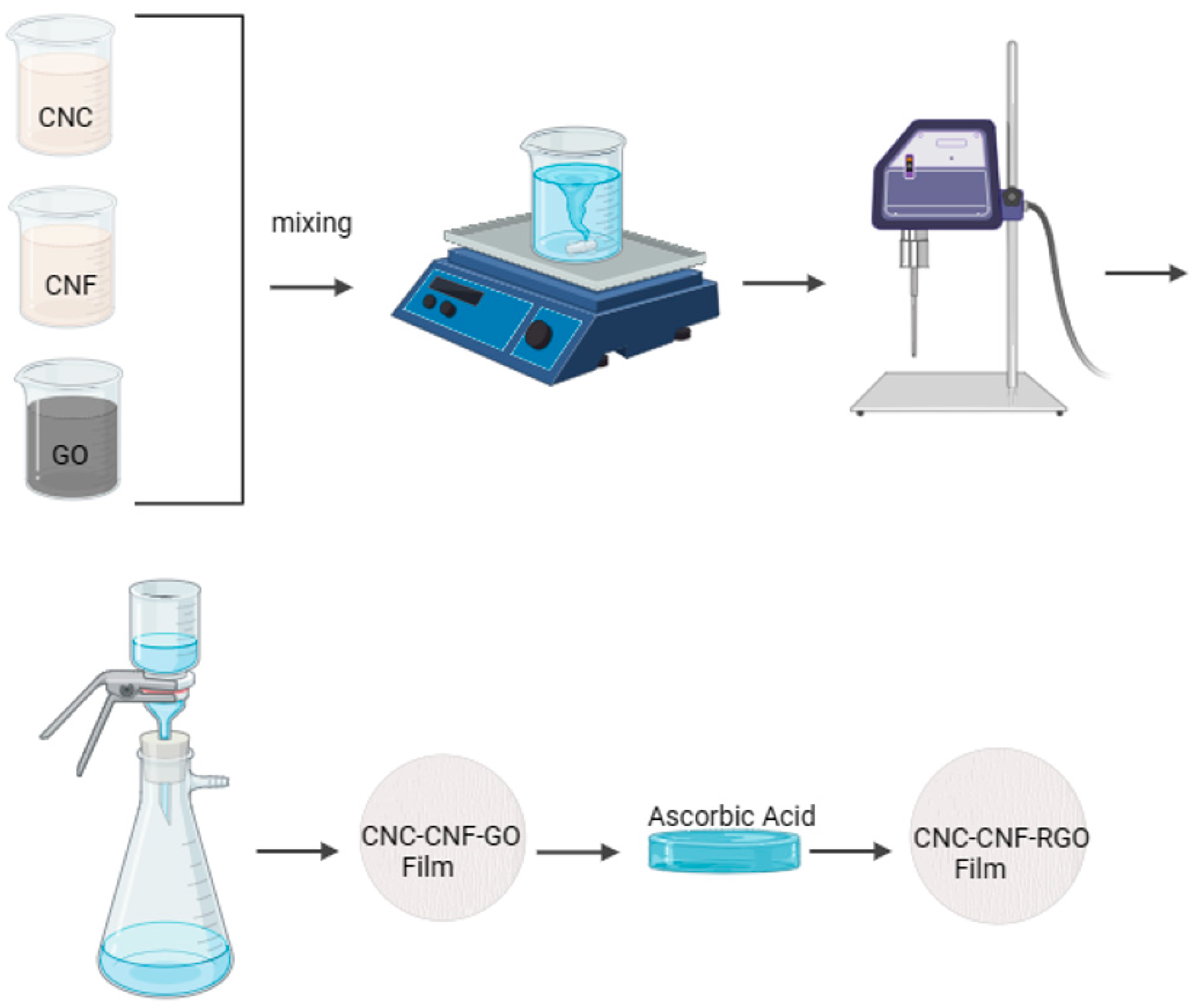
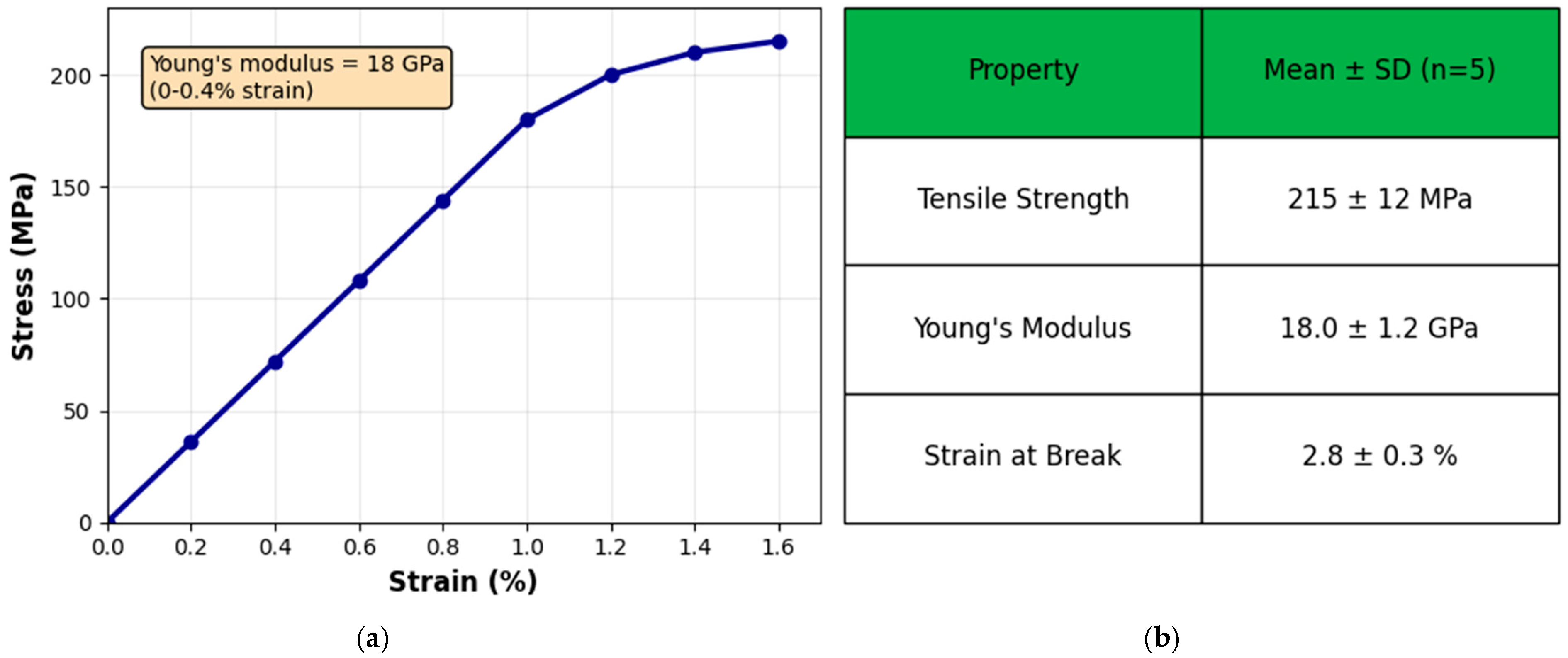
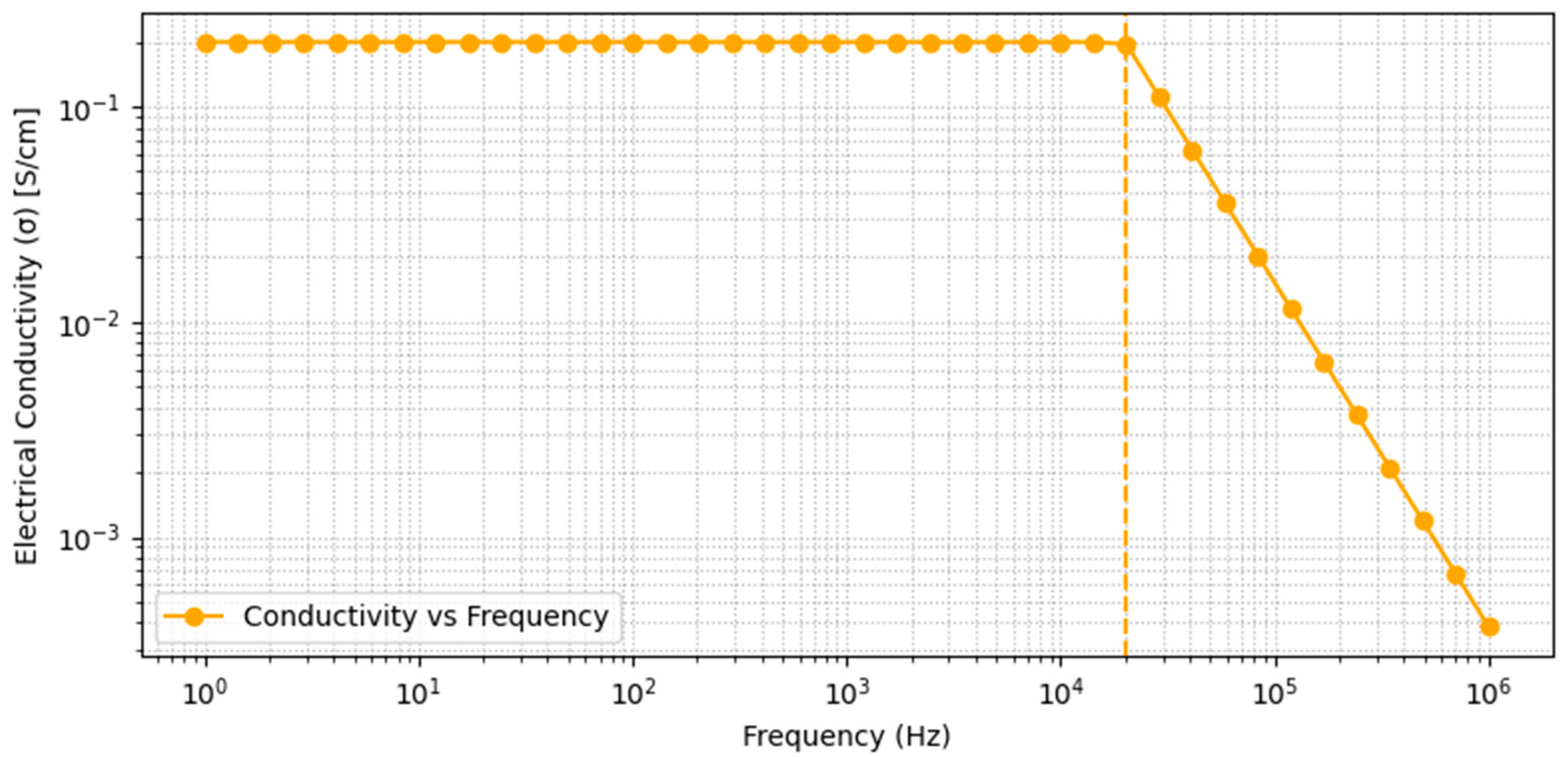
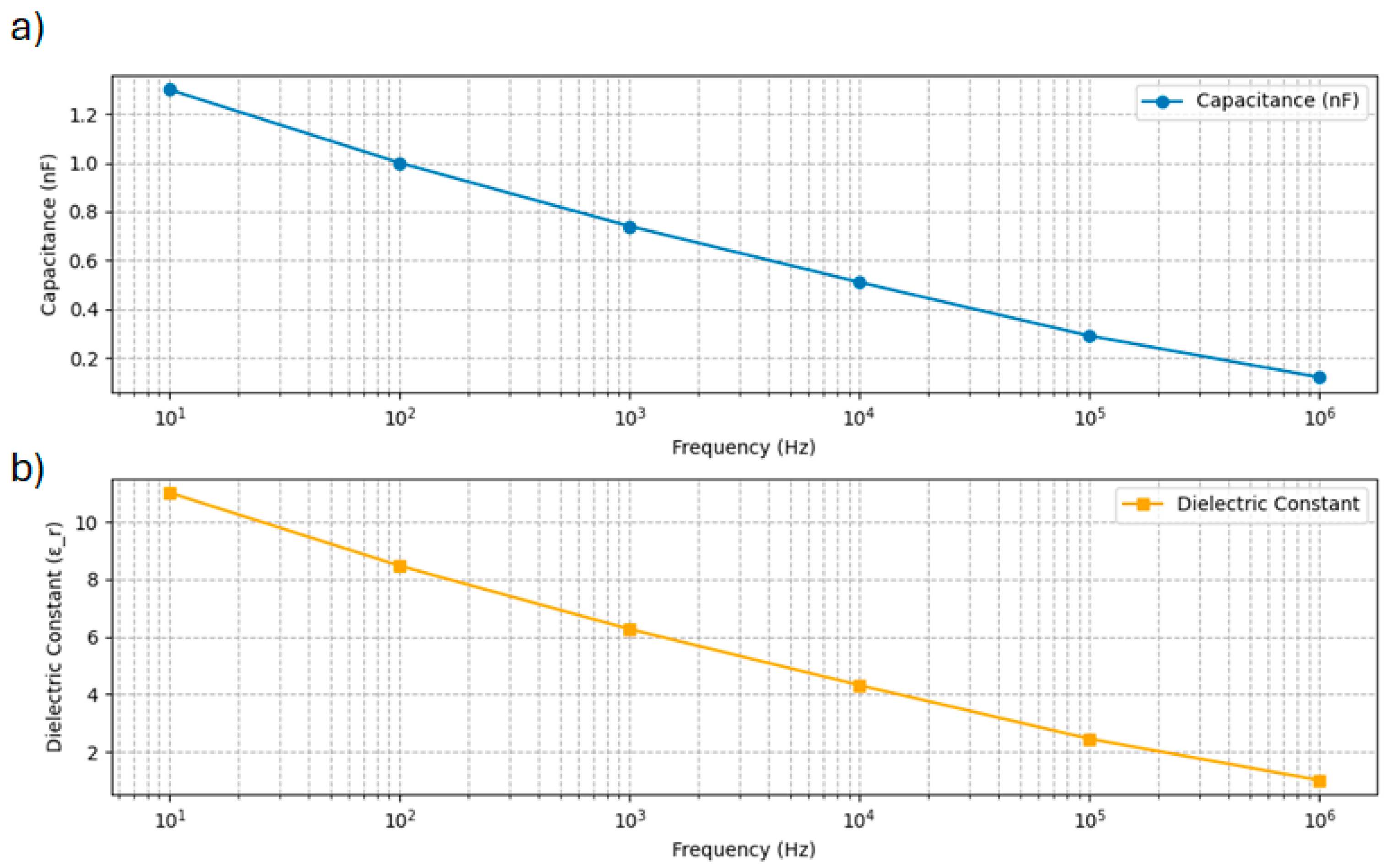
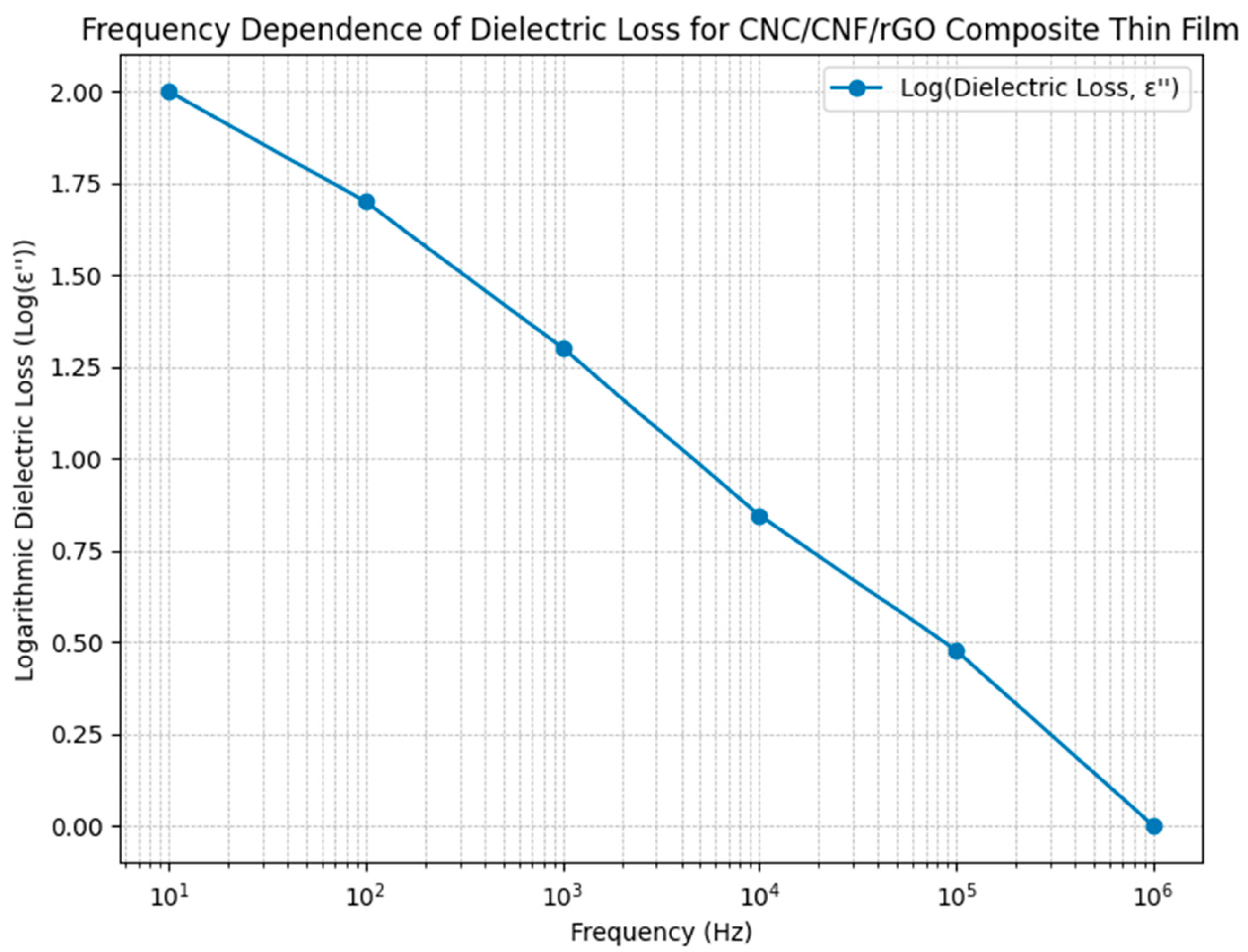
Developing advanced functional materials requires the synergistic integration of nanoscale reinforcements with tailored properties. In this work, composite films of cellulose nanocrystals (CNCs), cellulose nanofibrils (CNFs), and reduced graphene oxide (rGO) were synthesized using a combination of solution casting, high shear homogenization, vacuum filtration, and environmentally friendly chemical reduction. The resulting CNC/CNF/rGO films exhibited a robust hierarchical structure with strong interfacial interactions, enabling exceptional mechanical properties, specifically a tensile strength of 215 MPa and a Young’s modulus of 18 GPa, alongside a continuous conductive network confirmed by frequency-independent electrical conductivity up to 30 kHz. Comprehensive dielectric characterization revealed frequency-dependent permittivity and low dielectric loss, aligning with Maxwell–Wagner theoretical predictions for heterogeneous composites. The composites also demonstrated thermal stability, with electrical conductivity increasing monotonically from 0 °C to 200 °C. These findings highlighted the CNC/CNF/rGO films’ suitability for applications in flexible electronics, electromagnetic shielding, packaging, and high-performance structural materials. Future optimization and modeling approaches, including fractional calculus, are recommended to further enhance multifunctionality and exploit the unique synergistic interactions intrinsic to nanocellulose–graphene oxide platforms.
Keywords: cellulose nanocrystals; cellulose nanofibrils; reduced graphene oxide; composite films; mechanical properties; electrical conductivity; dielectric spectroscopy cellulose nanocrystals; cellulose nanofibrils; reduced graphene oxide; composite films; mechanical properties; electrical conductivity; dielectric spectroscopy