To isolate and quantify the influence of key parameters—the tubular front cavity diameter, length, and wind incidence angle—on flow-induced noise generation, a controlled duct flow experiment was first conducted. This environment allows for precise regulation of flow velocity and turbulence characteristics, enabling a fundamental investigation into the underlying flow-cavity interaction mechanisms. Subsequently, to validate the generality of the findings under conditions more representative of real-world applications (e.g., open-field, non-uniform flow), parallel experiments were performed in an anechoic chamber using a free-field wind source. This two-pronged experimental approach ensures that the identified design principles are robust and not artifacts of a specific test configuration.
2.1. Experimental Setup and Sample
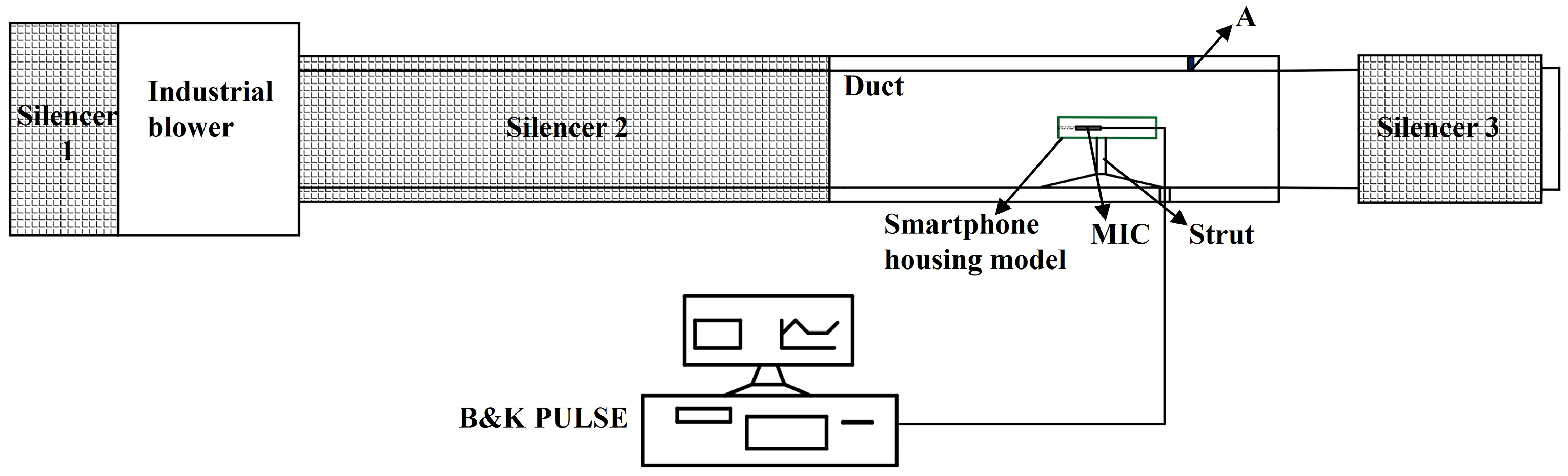
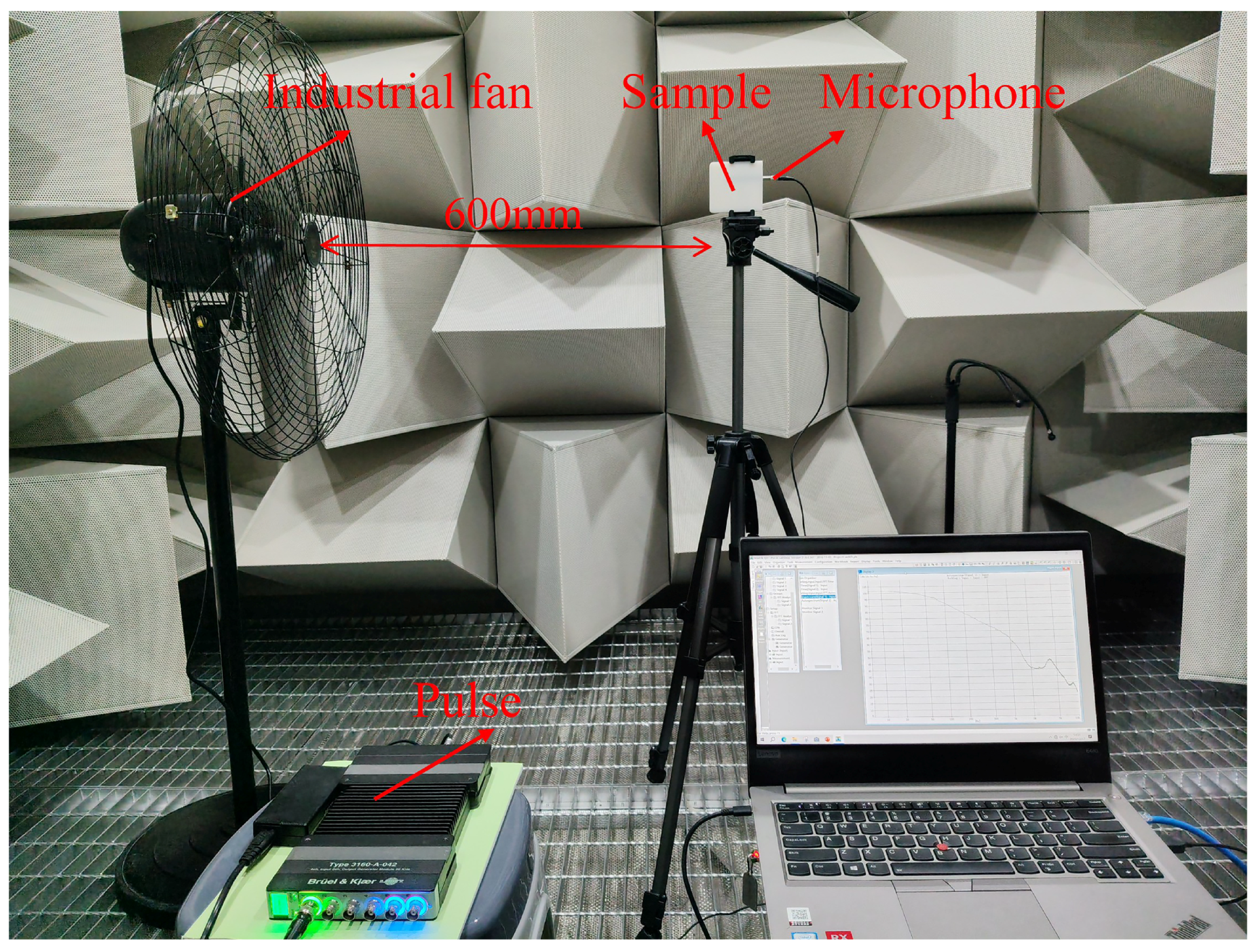
A centrifugal blower-ducted experimental system was designed and constructed to achieve precise airflow velocity control, as illustrated in
Figure 1, comprising a modular airflow generation and acoustic measurement assembly designed to simulate realistic smartphone microphone exposure under controlled wind conditions. Key components include:
Airflow Source: The centrifugal industrial blower (Type: YKL9-26-4.5A-X, Zhejiang Keli Fan Co., Ltd., Shaoxing (Shangyu Economic Development Zone), Zhejiang Province, China) employs a variable frequency drive (VFD) system (Type: JCDK2.2, Shaoxing Shangyu Jinzong Electrical Control System Co., Ltd., Shaoxing (Shangyu District), Zhejiang Province, China) with a frequency modulation range of 10–50 Hz to precisely regulate airflow velocity, achieving controlled flow rate between 0.13 m3/s and 0.67 m3/s. A three-stage silencer configuration—comprising two perforated-plate silencers in series upstream and a third unit downstream—effectively suppresses blower-generated broadband noise, achieving a background sound pressure level (SPL) below 20 dB@1 kHz at the test section.
Duct: The duct with smooth walls consists of a rectangular polymethyl methacrylate (PMMA) duct with an internal cross-section of 250 mm × 250 mm and a length of 1000 mm, featuring a 12 mm wall thickness. This optically transparent enclosure accommodates a smartphone housing model positioned centrally via a custom-designed strut mounting system.
Acquisition System: A Bruel & Kjær PULSE (Type: 3160-A-042, (B&K), Nærum, Denmark) system with 1/4 inch microphones (Type: MPA401, BSWA Technology Co., Ltd., Beijing, China) samples acoustic data. A handheld digital manometer, operating on the pitot tube principle (model KLH-5000, Suzhou Kelihua Electronics Co., Ltd., Suzhou, China), was used to measure the wind speed (maintained for 10 s prior to data acquisition).
The industrial blower is connected to silencer 2 via a transition duct with variable diameters. Downstream, silencer 3 is connected to the duct outlet using a matched-diameter duct, ensuring geometric continuity (tolerance: ±0.5 mm inner diameter).
To ensure the reliability of the experimental data, each cavity configuration was measured at least six times under identical flow conditions. The power spectral density (PSD) curves presented in this work are the ensemble averages of these repeated measurements, which effectively suppress random fluctuations and highlight the deterministic trends associated with geometric and flow parameters. Statistical analysis revealed that the standard deviation of PSD levels across the six repetitions remained below 1.5 dB throughout the frequency range of 20 Hz to 20 kHz, confirming that the observed differences between configurations are statistically significant. Prior to each test session, the measurement microphones were calibrated using a BSWA CA111 Sound Calibrator (94 dB and 114 dB at 1000 Hz, BSWA Technology Co., Ltd., Beijing, China, Class 1 per IEC 60942:2003 [
20]). These procedures collectively validate the robustness and reproducibility of the reported results.
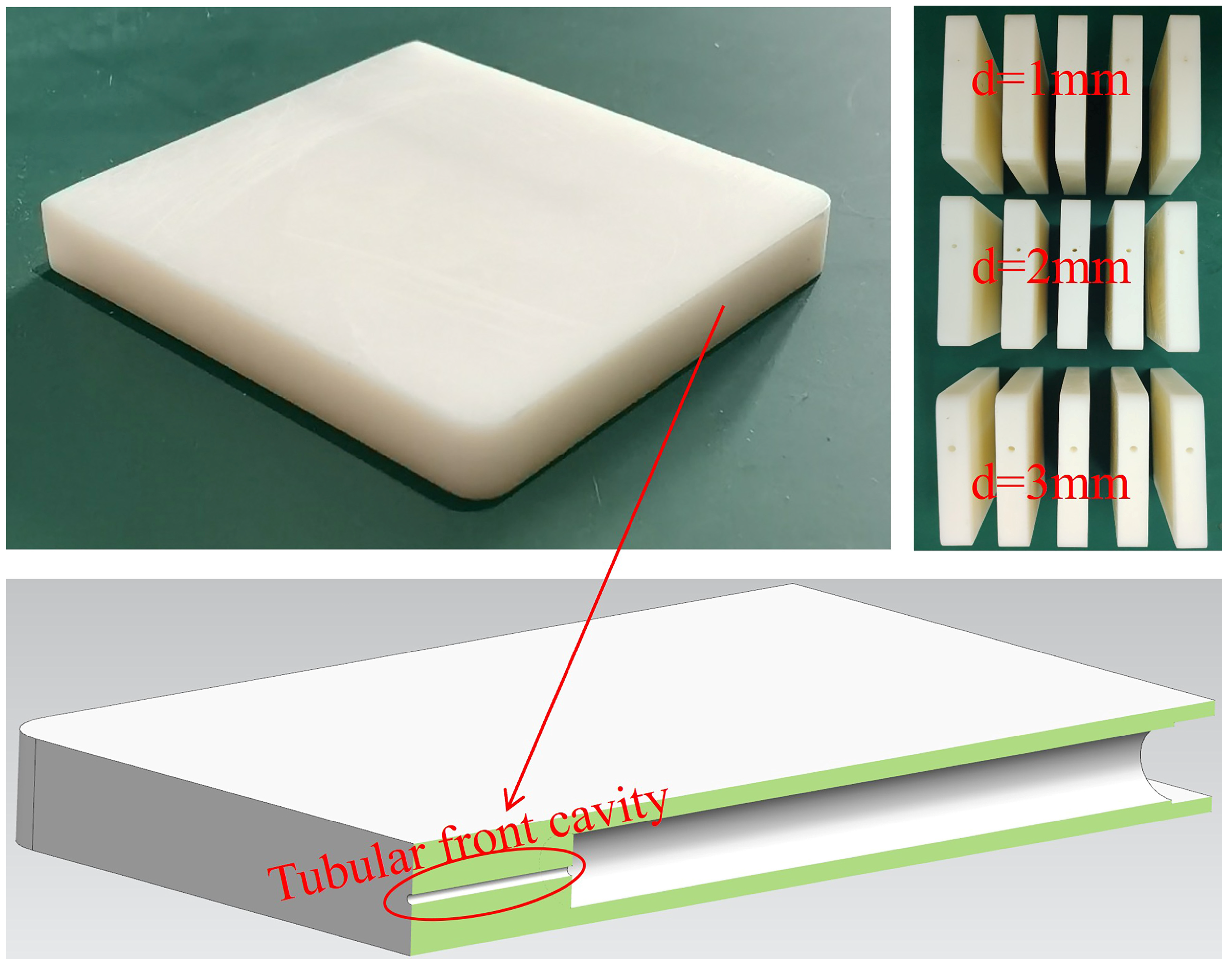
The smartphone housing model (L × W × H, 80 mm × 73 mm × 11 mm) is rigidly centered in the duct via struts, with its cavity inlet directly facing the flow at adjustable angles. This configuration permits flow-induced noise characterization for internal microphones across the variable diameter and length of the tubular front cavity, as well as inflow angles. A series of tubular front cavity samples with varied diameters and lengths was custom-fabricated (tolerance: ±0.1 mm, PMMA material) for parametric analysis, as schematically illustrated in
Figure 2. The experimental matrix comprises 15 samples covering three diameters (d = 1/2/3 mm), each with five lengths (L = 1/4/8/16/24 mm). The smartphone housing model and the integrated tubular cavities were fabricated using 3D printing with 8228Pro resin (ABS-like Photopolymer Resin), a rigid and non-porous photopolymer. After printing, the inner walls of the cavities were carefully polished to achieve a smooth surface finish. This process ensures that the cavity walls are acoustically hard and rigid, with no porous or sound-absorbing characteristics.
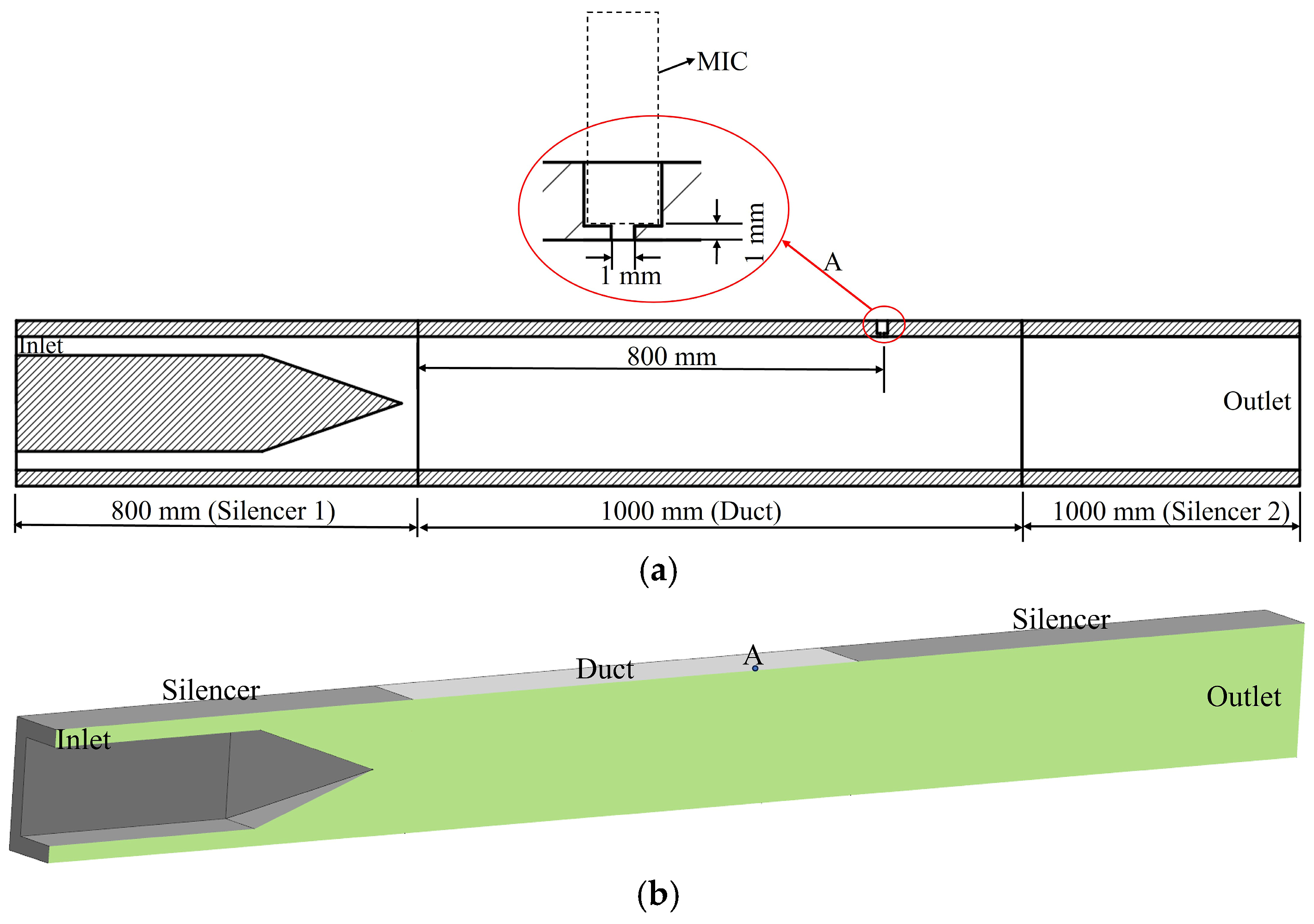
Prior to the experiments, the pressure spectrum on the duct wall was measured and compared with simulation results to validate whether turbulent fluctuating pressure could be generated as anticipated. The measurement point on the pipe wall is indicated as Point A. A microphone was flush-mounted at Point A on the sidewall. To prevent spatial averaging of the fluctuating pressure by the microphone diaphragm, the microphone was not directly exposed to the pipe flow. Instead, a 1 mm diameter, 1 mm deep pinhole was positioned directly in front of the microphone diaphragm center on the wall at Point A.
2.2. Measured and Predicted Pressure Spectrum at the Wall of the Duct
To verify whether the experimental setup could generate the anticipated turbulent pressure fluctuations within the duct, the wall pressure spectrum was predicted using computational fluid dynamics (CFD) and compared with the measurements at Point A. Considering both computational efficiency and result accuracy, the computational domain for the CFD simulations comprised the duct section from the midsection of Silencer 2 to the outlet of Silencer 3 (
Figure 3). Specifically, this included the 800 mm rear portion of Silencer 2, the full 1000 mm duct, and the complete 1000 mm length of Silencer 3.
The CFD simulations were performed using ANSYS Fluent (version: 2024R1) with a two-step strategy to ensure both numerical stability and physical accuracy. First, a steady RANS simulation employing the SST k-ω turbulence model was conducted to obtain a fully converged mean flow field. This steady solution was then used as the initial condition for a transient Large Eddy Simulation (LES). The LES was run for a sufficiently long physical time to allow the flow to develop into a statistically stationary turbulent state, effectively eliminating any residual influence from the RANS initialization.
A high-quality mesh was generated with particular attention to near-wall resolution. The grid was carefully refined to maintain the dimensionless wall distance y+ below unity (y+ ≈ 1) for all simulated conditions, satisfying the stringent requirements of wall-resolved LES. In the steady SST k-ω simulation, convergence was assumed when residuals for all governing equations fell below 10−6. For the transient LES, convergence within each time step was ensured by performing sub-iterations until residuals dropped by at least one order of magnitude, thereby maintaining numerical stability and temporal accuracy.
A traditional grid independence study was not performed for the transient LES, as the computational cost of running multiple finely resolved LES cases would be prohibitive. Instead, the mesh was constructed strictly adhering to best-practice guidelines for wall-resolved LES (y
+ ≈ 1). Crucially, the numerical model was configured with physical dimensions and boundary conditions identical to those of the experimental setup. As shown in
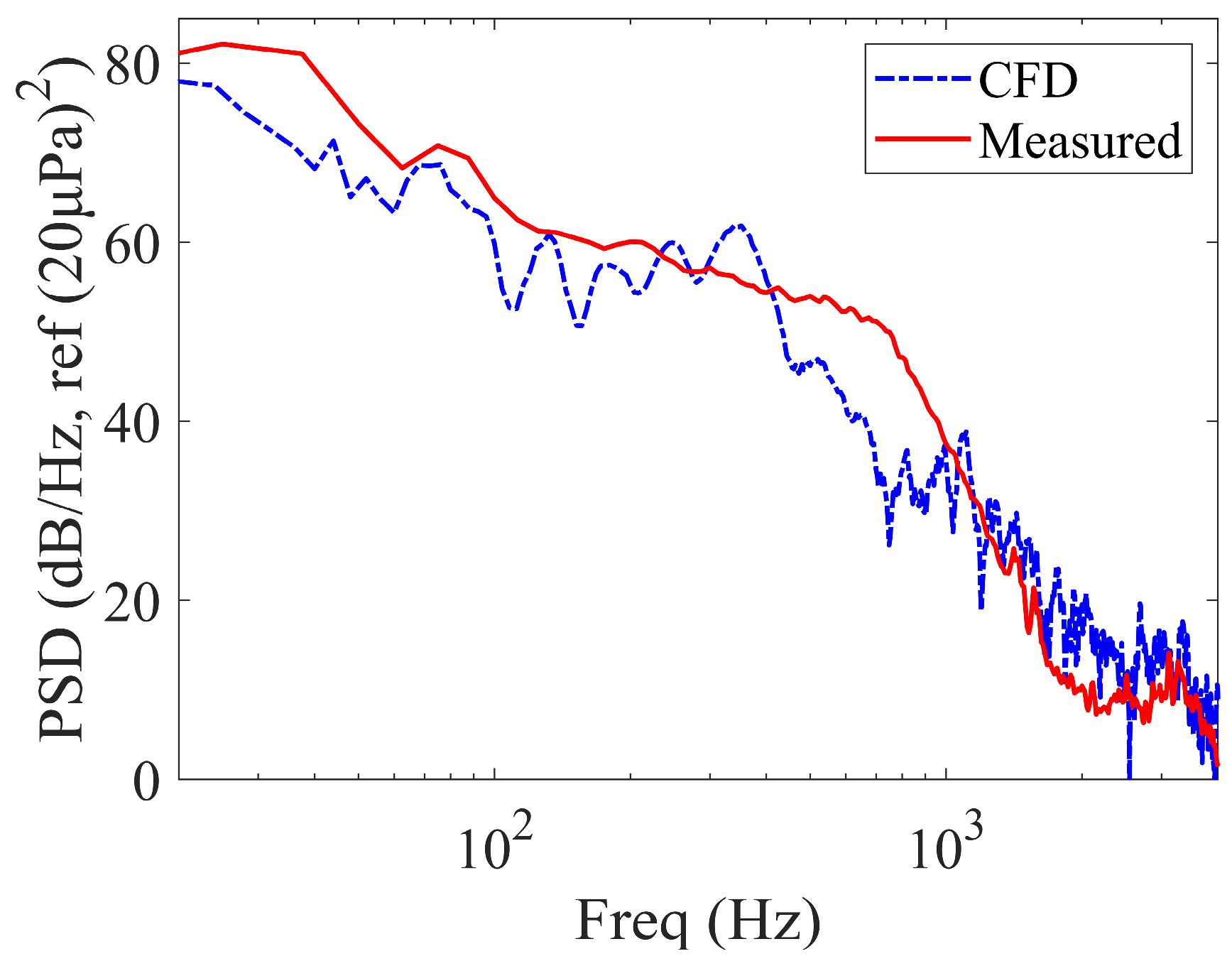
Figure 4, the excellent agreement between the LES predictions and experimental measurements provides the most direct and robust validation possible—demonstrating that the current mesh resolution and numerical scheme are fully capable of capturing the relevant physical phenomena.
Based on the fluid domain model shown in
Figure 3a, the outer end face of the sidewall orifice (diameter: 1 mm) was designated as the pressure measurement point (see the fluid domain in
Figure 3b). In the CFD simulation, an inlet velocity of 12 m/s was defined to match the experimental condition (resulting in an average velocity of 6 m/s at the duct). The walls were treated as no-slip boundaries. The area-averaged static pressure at the 1 mm orifice (Point A) was then extracted for analysis. A comparison of the power spectral density (PSD) obtained from experiments and CFD simulations is presented in
Figure 4.
As shown in
Figure 4, the measured and simulated PSD of turbulent pressure fluctuations on the duct wall exhibit good agreement. The spectrum displays a plateau trend within the energy-containing range (≤40 Hz). The frequency band from 40 Hz to 800 Hz corresponds to the inertial subrange, while frequencies > 800 Hz fall within the dissipation range. Beyond 2 kHz, the curve levels off, indicating the background noise floor. The measured and simulated results collectively demonstrate that the experimental apparatus employed in this study successfully generates the required turbulent pressure fluctuations within the duct.
2.3. Experimental Results and Discussions
To investigate the mechanisms governing flow-induced noise in microphones with tubular front cavities, a series of wind tunnel experiments was conducted by varying both structural and non-structural parameters. The structural parameters include the diameter and length of the tubular front cavity, while the non-structural parameters involve the wind speed and wind incidence angle. By independently controlling these variables, the experimental results provide insight into the relative contributions of internal acoustic dissipation and external flow excitation to the overall noise characteristics.
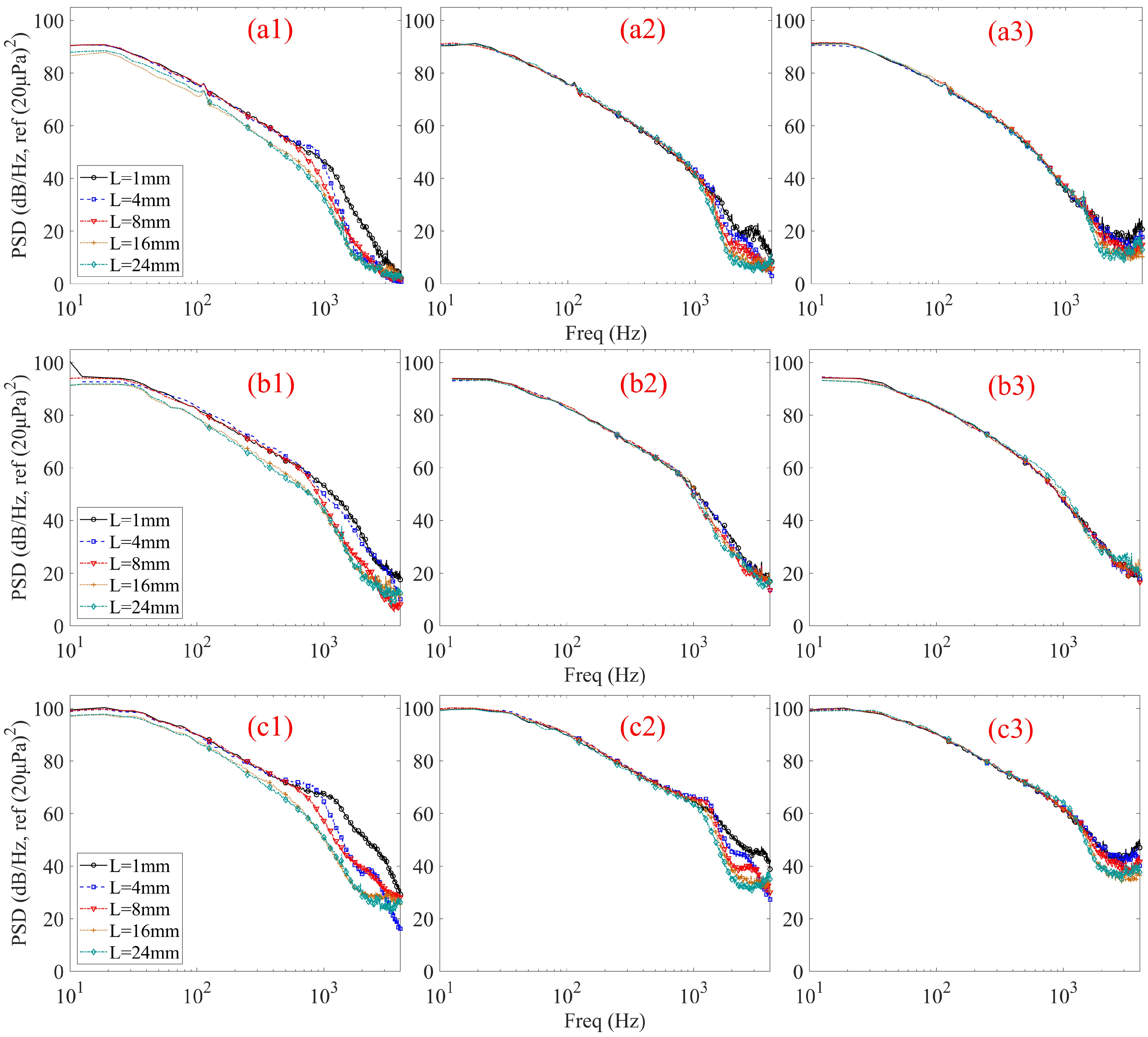
Figure 5 illustrates the flow-induced noise PSD for different tubular front cavity lengths under three cavity diameters at a zero incidence angle and three wind speeds. At the lower wind speed of 4 m/s (
Figure 5(a1–a3)), the influence of the tubular front cavity length exhibits a clear dependence on the cavity diameter. For the 1 mm diameter case (
Figure 5(a1)), increasing the tubular front cavity length leads to a noticeable reduction in PSD in the mid- to high-frequency range, particularly above several hundred hertz, accompanied by an earlier spectral roll-off. This indicates that, for small diameters, the internal duct length plays a significant role in attenuating flow-induced pressure fluctuations even under relatively weak turbulent excitation. When the cavity diameter increases to 2 mm (
Figure 5(a2)), the effect of the tubular front cavity length becomes markedly weaker. The PSD curves corresponding to different cavity lengths almost collapse over the entire frequency range, with only minor deviations at high frequencies. For the 3 mm diameter case (
Figure 5(a3)), the PSD spectra for all cavity lengths are nearly indistinguishable, indicating that variations in the tubular front cavity length no longer exert a meaningful influence on the flow-induced noise characteristics. At a wind speed of 6 m/s (
Figure 5(b1–b3)), similar trends are observed, while the overall PSD levels increase due to the stronger turbulent excitation. For the 1 mm diameter case (
Figure 5(b1)), a clear dependence on the tubular front cavity length persists across the mid- to high-frequency range. As the cavity length increases, the PSD level shows a progressive reduction, particularly above several hundred hertz, accompanied by an earlier and steeper spectral roll-off. This behavior suggests enhanced viscous and thermal boundary-layer losses, as well as increased attenuation of flow-induced pressure fluctuations along the tubular front cavity wall. In contrast, for the 2 mm diameter (
Figure 5(b2)), the influence of cavity length is significantly reduced, and for the 3 mm diameter (
Figure 5(b3)), the PSD spectra corresponding to different lengths are almost indistinguishable. At the highest wind speed of 8 m/s (
Figure 5(c1–c3)), the same diameter-dependent behavior is consistently observed. For the 1 mm diameter case (
Figure 5(c1)), increasing the tubular front cavity length remains effective in suppressing mid- and high-frequency noise, despite the intensified turbulent fluctuations. However, for the 2 mm and 3 mm diameter cases (
Figure 5(c2,c3)), the effect of cavity length is again minimal, demonstrating that the insensitivity to cavity length is robust with respect to changes in flow velocity once the cavity diameter becomes sufficiently large.
Collectively, the data in
Figure 5 reveal a clear and consistent pattern across all tested flow velocities: the influence of the tubular front cavity length on noise suppression exhibits a strong dependence on the tubular front cavity diameter. The effectiveness of a long, slender cavity (e.g., 1 mm diameter) in suppressing wind noise aligns with the underlying principle of turbulence energy dissipation. This can be interpreted through the lens of the energy gradient theory [
3]: by increasing the flow path and surface area, the elongated cavity enhances viscous and thermal dissipation, effectively diminishing the transverse energy gradients within the flow that are critical for sustaining turbulence and pressure fluctuations. This mechanism shares a conceptual synergy with the noise suppression observed in porous windscreens [
5,
7,
8], where the material structure dissipates turbulent kinetic energy. Consequently, while increasing cavity length is a potent geometric strategy for small-diameter cavities across a wide range of flow velocities, its utility diminishes rapidly as the diameter increases. For larger diameters, where internal dissipation becomes negligible relative to external flow excitation, noise reduction efforts must shift focus toward optimizing inlet geometry or implementing external flow control.
The observed diameter-dependent noise suppression can be interpreted using duct acoustics theory. For a circular tube of diameter d, the cut-off frequency for the first higher-order mode (1,1) is given by
fc = 1.84c
0/(πd), where c
0 is the speed of sound. For d = 1 mm,
fc ≈ 200 kHz, well above the frequency range of interest, indicating that plane wave propagation dominates. In this regime, the attenuation due to viscous and thermal losses at the boundary layer is governed by the boundary layer thickness, which scales with
(where
is the kinematic viscosity and
is the angular frequency). This relationship is a cornerstone of classical acoustics (see [
21]) and underpins the enhanced dissipation with increasing tube length. For d = 3 mm, however, the boundary layer thickness is small relative to the diameter, and internal losses are negligible. Instead, external flow excitation at the inlet dominates, consistent with the spectral collapse observed in
Figure 5. This physical interpretation—invoking cut-off frequencies, plane wave dominance, and boundary layer dissipation—is fundamentally consistent with the theoretical framework detailed by Rienstra and Hirschberg [
8] and provides a robust basis for understanding the experimental trends.
It is important to distinguish between the attenuation of flow-induced pressure fluctuations and that of acoustic signals. While idealized plane-wave theory suggests minor viscothermal losses for acoustic signals in such short tubes, this simplification neglects aperture diffraction and impedance mismatch at the cavity interfaces, which inherently introduce acoustic Transmission Loss (TL). Measuring flow-induced noise (turbulent boundary layer pressure fluctuations) in miniature geometries is experimentally challenging and exceedingly difficult to simulate accurately using current CFD tools, making it the primary empirical focus of this study. Conversely, acoustic TL can be effectively modeled using finite element tools (e.g., COMSOL 6.3). Because a comparative experiment isolating acoustic TL under simultaneous flow was not conducted in this study, any resulting improvement in the operational Signal-to-Noise Ratio (SNR) remains a hypothesis. The preservation of acoustic transparency cannot be definitively claimed here and serves as a critical area for future dual-excitation studies.
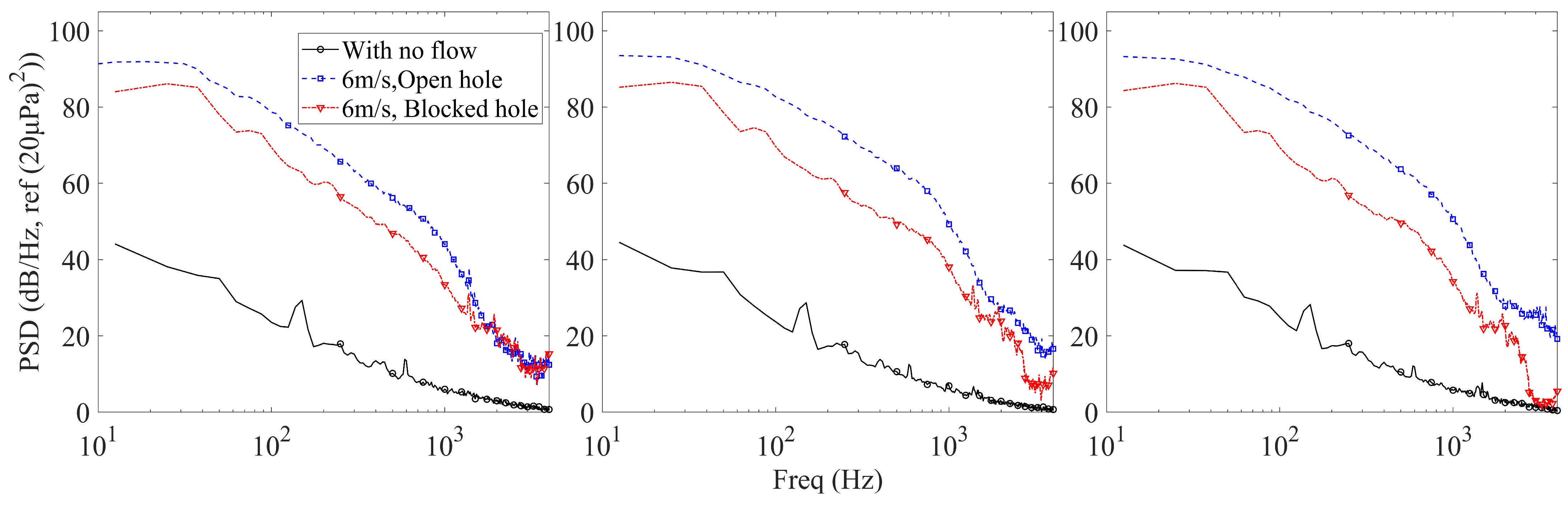
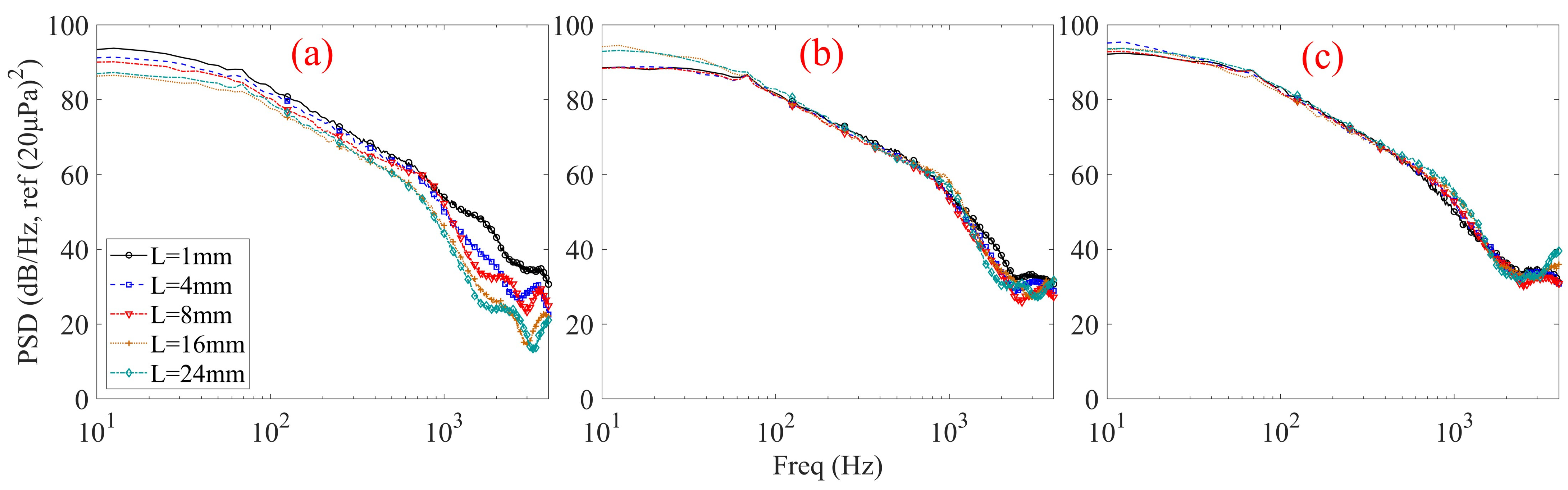
To clarify the origin of the high-frequency spectral plateau, additional baseline measurements were performed and are shown in
Figure 6. For each front-cavity diameter (1–3 mm, length 24 mm), three conditions were compared: no flow, 6 m/s with an open hole, and 6 m/s with a blocked hole.
Under the no-flow condition, the measured spectrum represents the inherent noise floor of the microphone and acquisition system. When the pickup hole is blocked while maintaining a 6 m/s external flow, the microphone is acoustically isolated from direct aerodynamic excitation. In this case, the measured spectrum mainly reflects the intrinsic system noise together with any structure-borne vibration transmitted through the housing.
As shown in
Figure 6, above approximately 2 kHz, the PSD curves under different operating conditions converge toward a relatively flat plateau. Importantly, this plateau level is close to that measured under the no-flow condition, indicating that the measurement in this frequency range is primarily noise-floor-limited rather than flow-excitation-dominated. In contrast, in the low- and mid-frequency range (below approximately 1–2 kHz), the open-hole condition exhibits significantly higher PSD levels than both the no-flow and blocked-hole conditions, confirming that aerodynamic pressure fluctuations dominate in this frequency range.
The variation in the high-frequency plateau level among different cavity diameters does not imply a change in intrinsic microphone noise, but rather reflects differences in acoustic transmission characteristics of the front cavity. The front cavity behaves as an acoustic impedance element whose geometry influences high-frequency attenuation and reflection. Changes in diameter modify the acoustic resistance and reactive components of the cavity, thereby altering the effective coupling between the microphone diaphragm and both internal electrical noise and any residual external disturbances. Consequently, slight shifts in the measured plateau level can occur due to geometry-dependent transmission effects and measurement system sensitivity limits, even though the intrinsic microphone noise remains unchanged.
These additional baseline comparisons therefore demonstrate that the spectral plateau above 2 kHz is predominantly governed by the inherent noise characteristics of the measurement system, while the wind-induced noise contribution is mainly concentrated in the low- and mid-frequency bands.
While the results presented above focus on axial inflow conditions (
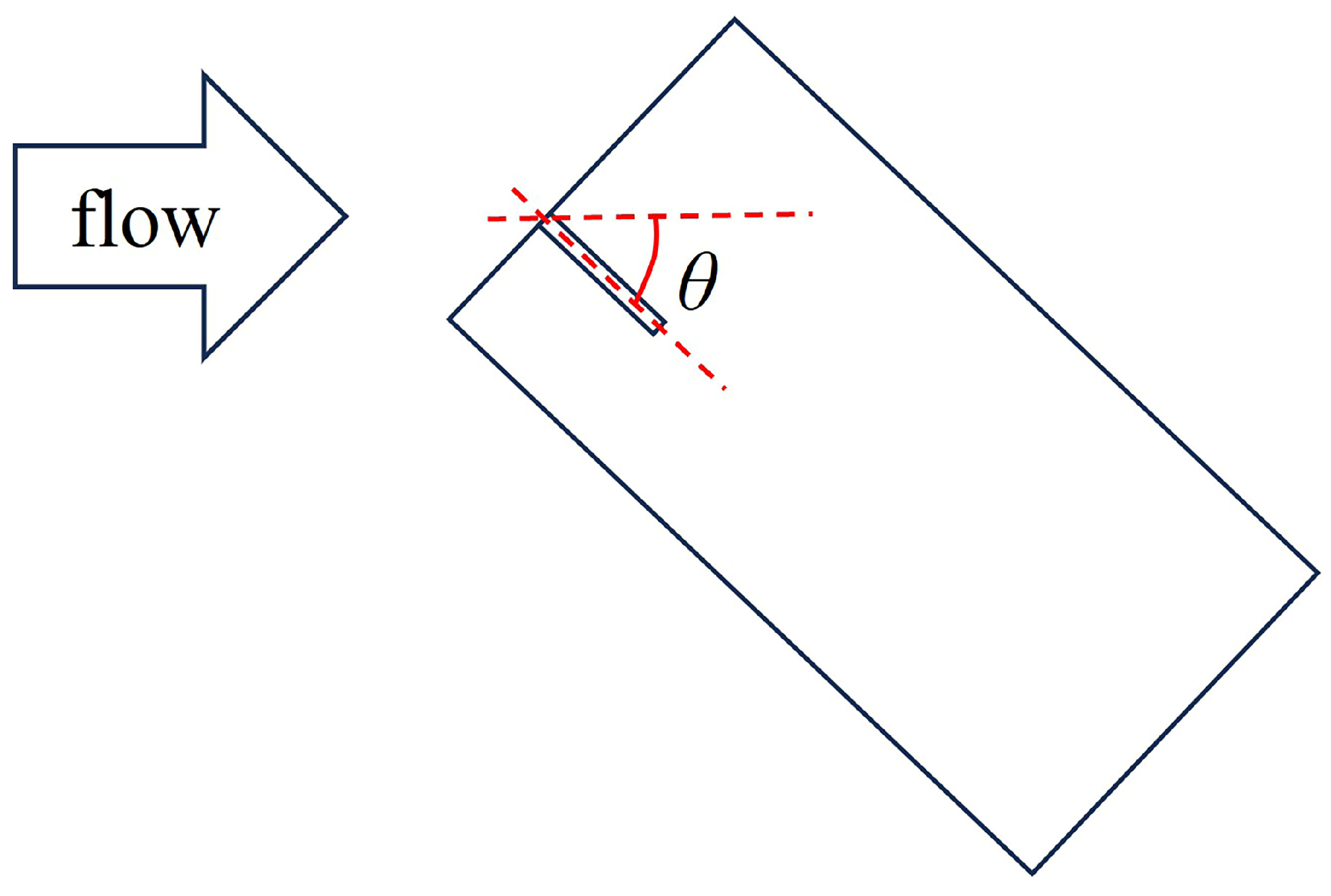
θ = 0°), practical operating environments for portable electronic devices are rarely characterized by purely axial wind exposure. In realistic scenarios, wind can impinge on the microphone inlet from arbitrary directions, leading to additional flow separation, shear-layer distortion, and enhanced vortex shedding at the cavity entrance. Therefore, to further elucidate the role of non-structural flow parameters, the influence of wind incidence angle on flow-induced noise is examined. Flow-induced noise data were collected under five wind incidence angles: 0°, 30°, 45°, 60°, and 90° (a schematic of angle
θ is provided in
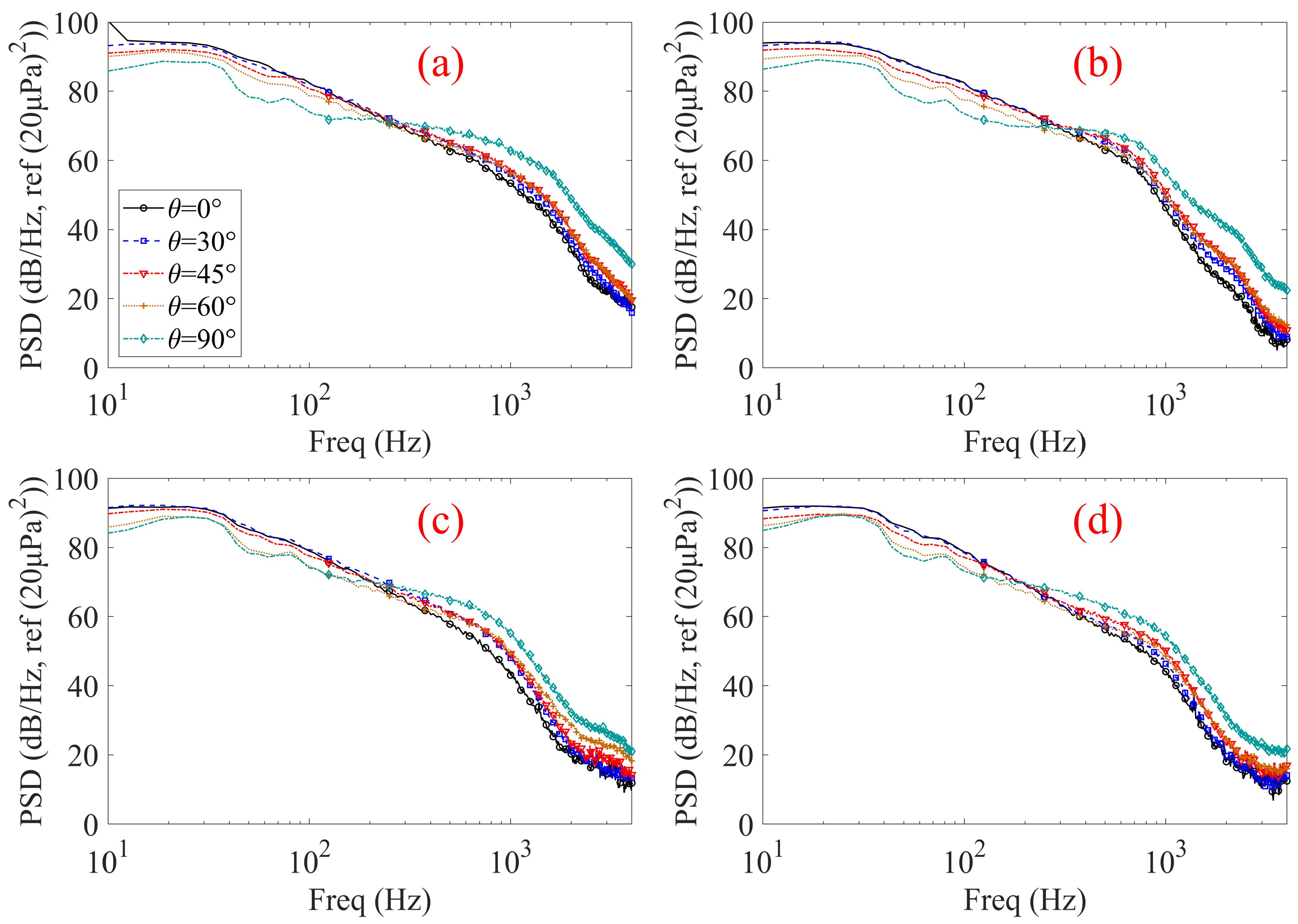
Figure 7). Additionally, measurements were performed at three different wind speeds, corresponding to average velocities at the measurement point: 4 m/s, 6 m/s, and 8 m/s, as shown in
Figure 8.
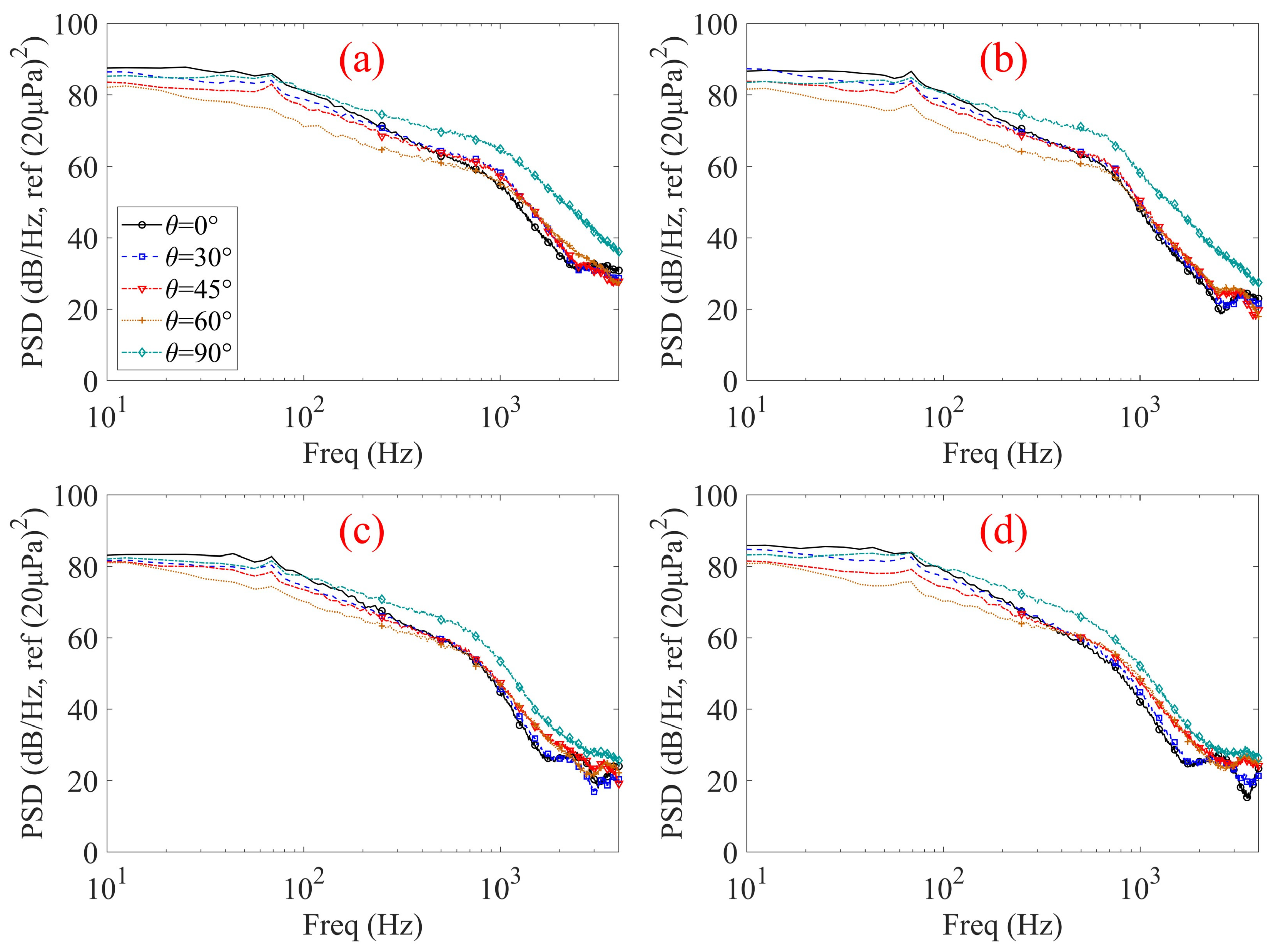
The measured PSD results shown in
Figure 8 demonstrate that the flow-induced noise at the internal microphone position is strongly influenced by both the wind incidence angle and the geometric parameters of the microphone front cavity inlet. For all inlet configurations shown in
Figure 8a–d, the PSD exhibits a pronounced low-frequency dominance and a monotonic decay with increasing frequency, which is characteristic of turbulence-induced pressure fluctuations.
For the shortest cavity configuration (L = 1 mm,
Figure 8a), a strong dependence on wind incidence angle is observed. As the wind incidence angle increases from axial flow (
θ = 0°) to transverse flow (
θ = 90°), the PSD level rises progressively, particularly in the mid-to-high frequency range. This behavior can be attributed to enhanced unsteady shear-layer interaction and vortex shedding at the cavity inlet opening under oblique and transverse inflow conditions, which promotes stronger turbulence–acoustic coupling and more efficient transmission of external pressure fluctuations into the tubular front cavity. When the tubular front cavity length is increased to 8 mm (
Figure 8b), the overall spectral shape remains similar; however, the PSD levels are systematically reduced and the sensitivity to wind incidence angle becomes weaker. This indicates that increasing the cavity length begins to suppress the transmission of flow-induced pressure fluctuations, especially at higher frequencies. A more pronounced attenuation effect is observed for the 16 mm cavity (
Figure 8c). Compared with the shorter configurations, the PSD levels are further reduced across the measured frequency range, and the separation between curves corresponding to different incidence angles becomes noticeably smaller. This suggests that the extended cylindrical duct acts as an effective passive acoustic filter, where viscous and thermal boundary-layer losses, together with multiple internal reflections, progressively dissipate incoming turbulent pressure fluctuations. For the longest cavity configuration (L = 24 mm,
Figure 8d), the flow-induced noise exhibits the weakest dependence on wind incidence angle. The PSD curves corresponding to different angles are closely clustered, indicating that sufficiently long tubular front cavities can effectively decouple the internal acoustic field from the external flow directionality. Under this condition, high-frequency components are strongly attenuated, and the directional dependence imposed by the external flow is largely suppressed before reaching the internal microphone location.
Overall, these results highlight the critical role of microphone inlet geometry in mitigating flow-induced noise and demonstrate that increasing the tubular front cavity length is an effective design strategy for reducing flow-induced disturbances in compact electronic devices, particularly under realistic, non-axial wind exposure conditions.
The above theoretical analysis indicates that, for the small-diameter elongated cavities considered in this study, the attenuation of acoustic signals is negligible compared to the suppression of wind-induced pressure fluctuations. Consequently, an improvement in the signal-to-noise ratio (SNR) is expected in windy environments. However, direct experimental validation of microphone sensitivity and SNR under combined acoustic and flow excitation lies beyond the scope of the present work, which focuses on the fundamental mechanisms of wind noise suppression.