Processing Characteristics of Ultra-Precision Cutting of 4H-SiC Wafers by Dicing Blade


Abstract
1. Introduction
2. Laboratory Equipment and Process Experiments
3. Experimental Results and Discussion
3.1. Single-Channel Cutting Process Analysis

3.2. Influence of Process Parameters on the Quality of Chipping
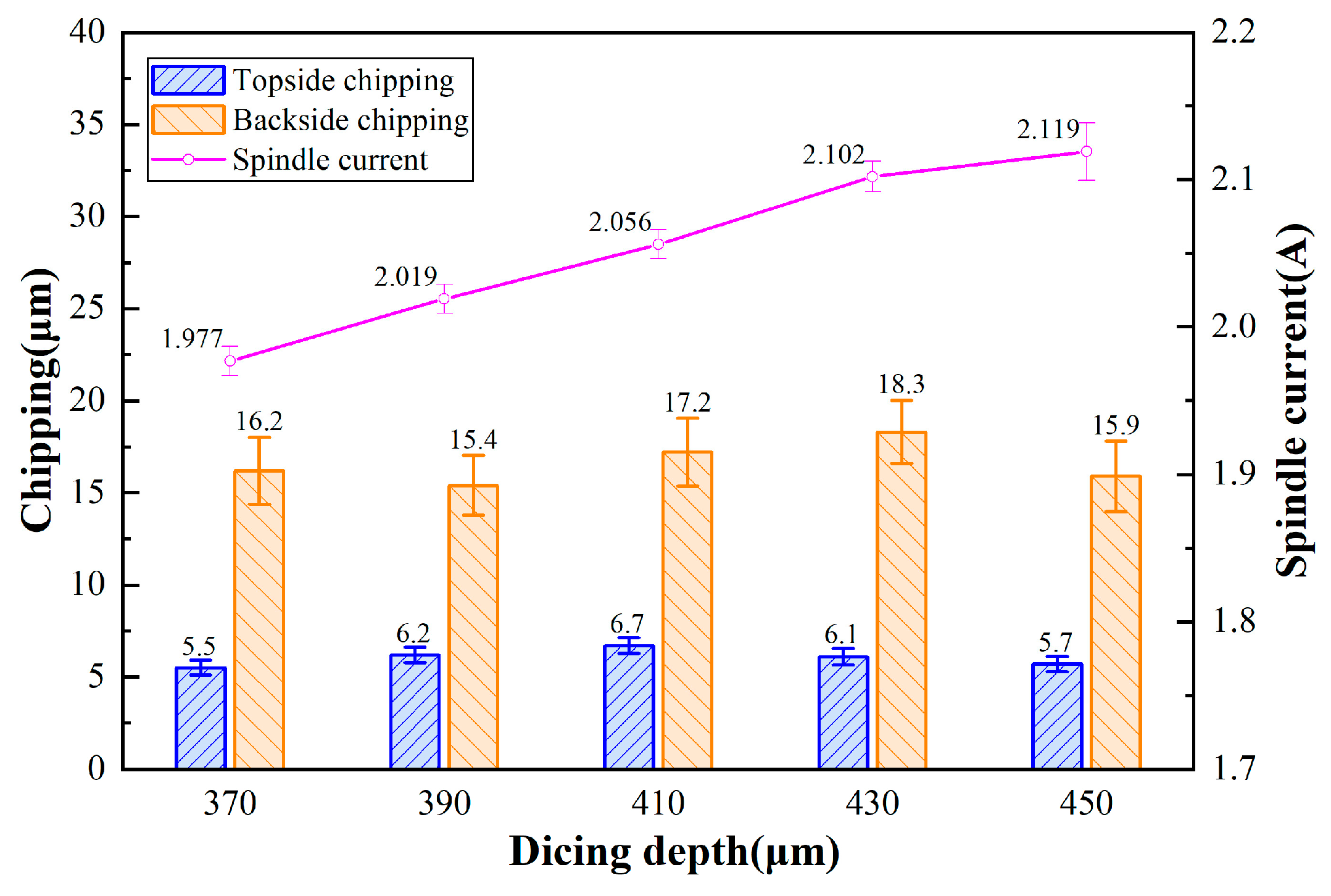
3.2.1. Effect of Depth of Cut on Chipping Quality
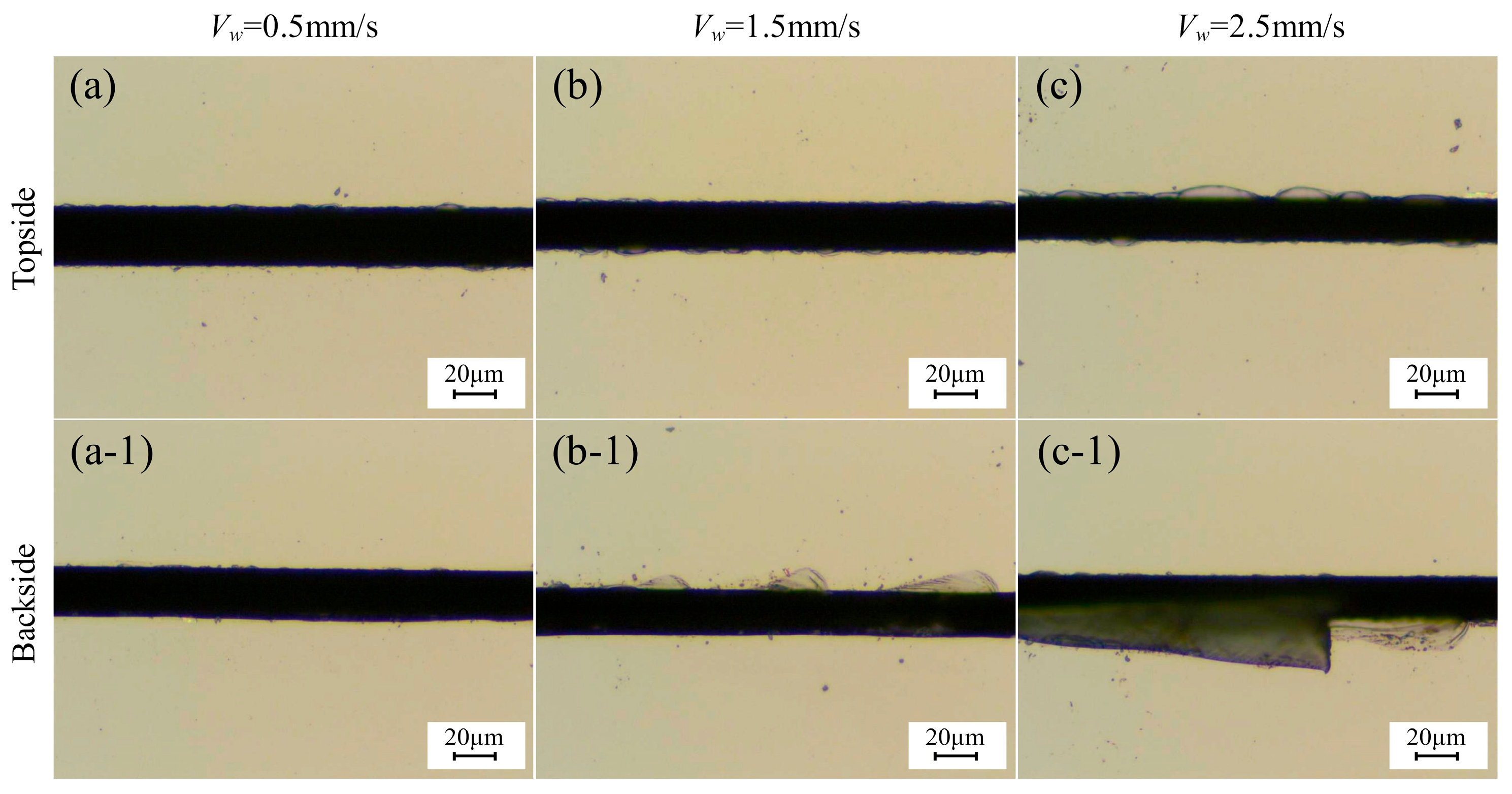
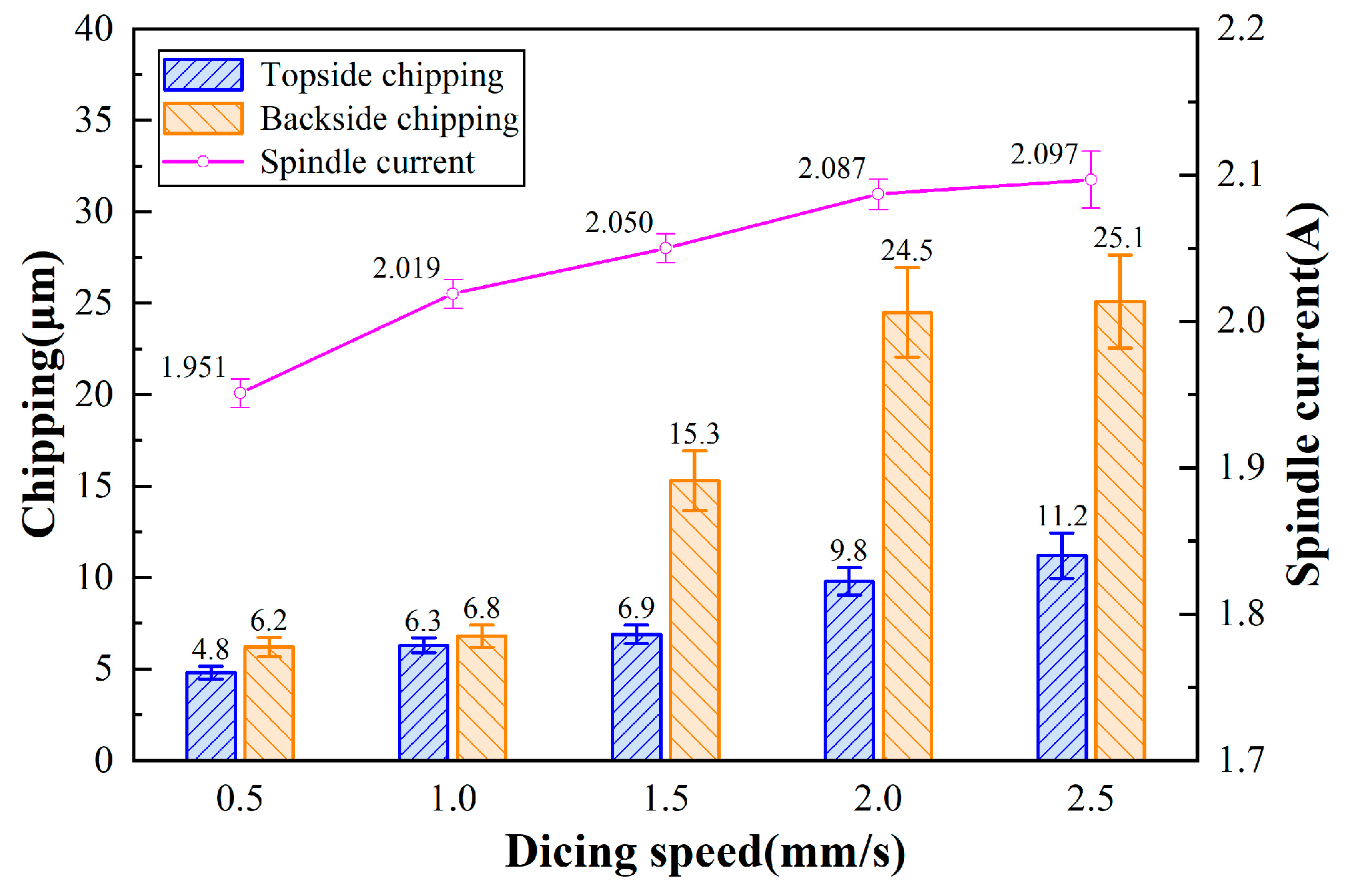
3.2.2. Effect of Feed Speed of Cut on Chipping Quality
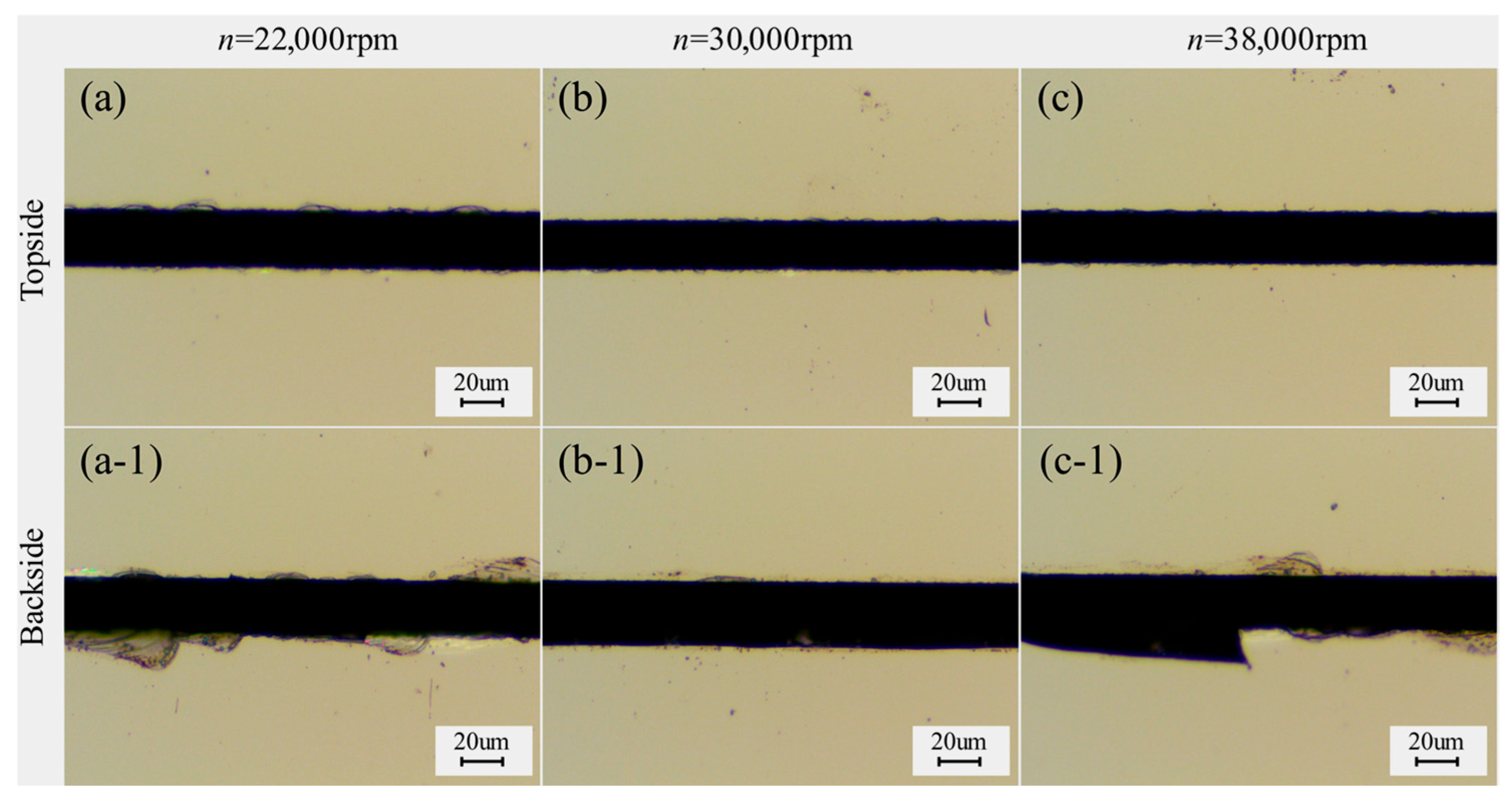
3.2.3. Effect of Spindle Speed of Cut on Chipping Quality
3.3. Effect of Abrasive Grain Size on Chipping Quality
3.4. Chipping Formation and Material Removal Mechanisms
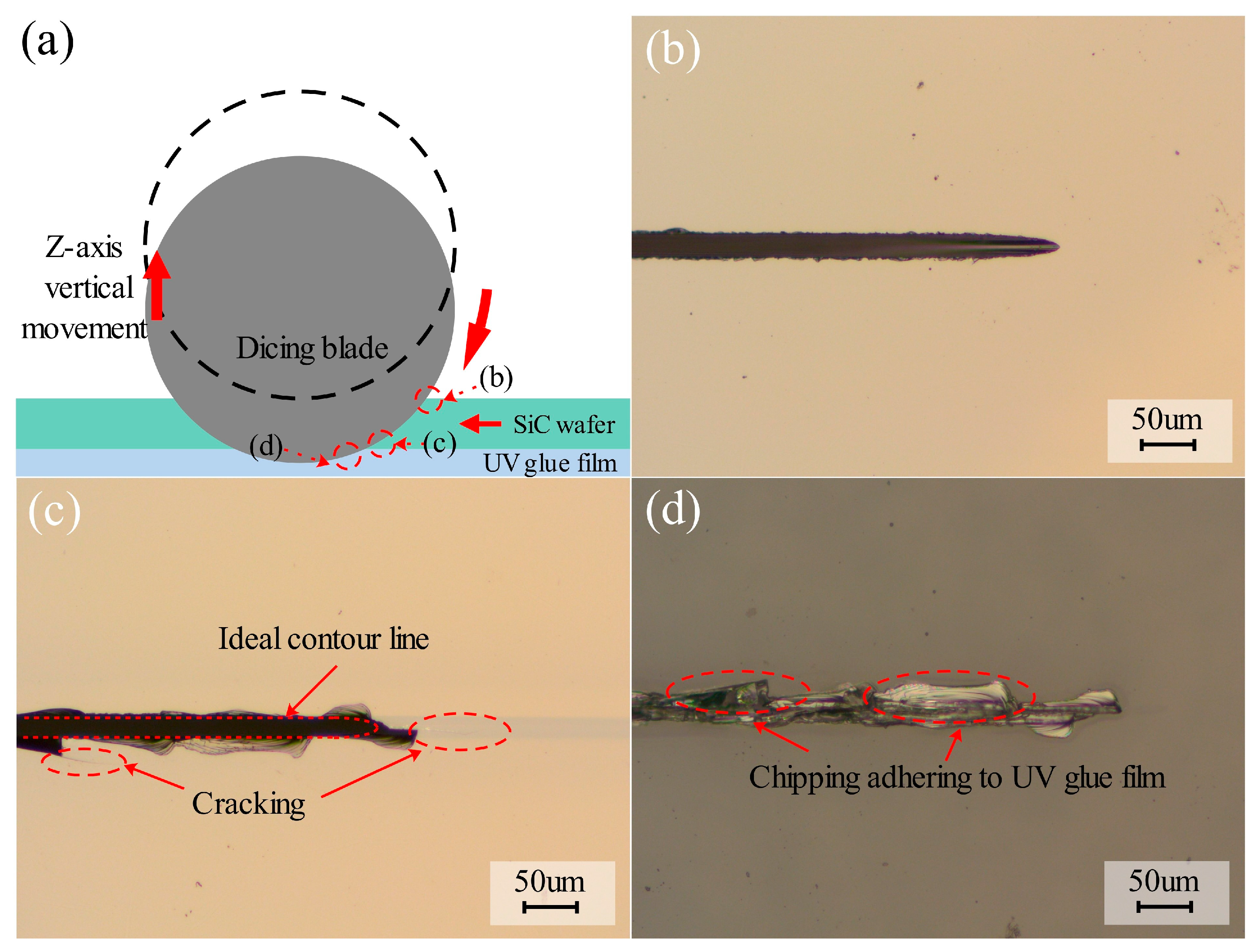
- Evidence for Front-Side Impact Mechanism: As shown in Figure 16b, the end of the cutting channel exhibits a smooth, continuous semi-circular arc profile that strictly follows the blade curvature. This feature indicates that the material removal on the front side is dominated by the high-speed impact and micro-cutting of abrasive grains.
- Evidence for Backside Bending Fracture: In contrast, the backside morphology in Figure 16c displays a distorted, non-circular profile. Macroscopic cracks extending along the cutting direction are clearly visible (marked as “Cracking”). This visual phenomenon supports the conclusion that the backside material fractured unstably due to the bending stress concentration at the wafer bottom.
- Evidence for Crush-Down Mechanism: Figure 16d clearly shows large 4H-SiC fragments embedded into the adhesive layer of the UV film (circled in red). This confirms that the brittle debris was pressed downwards by the blade into the soft film.


4. Conclusions
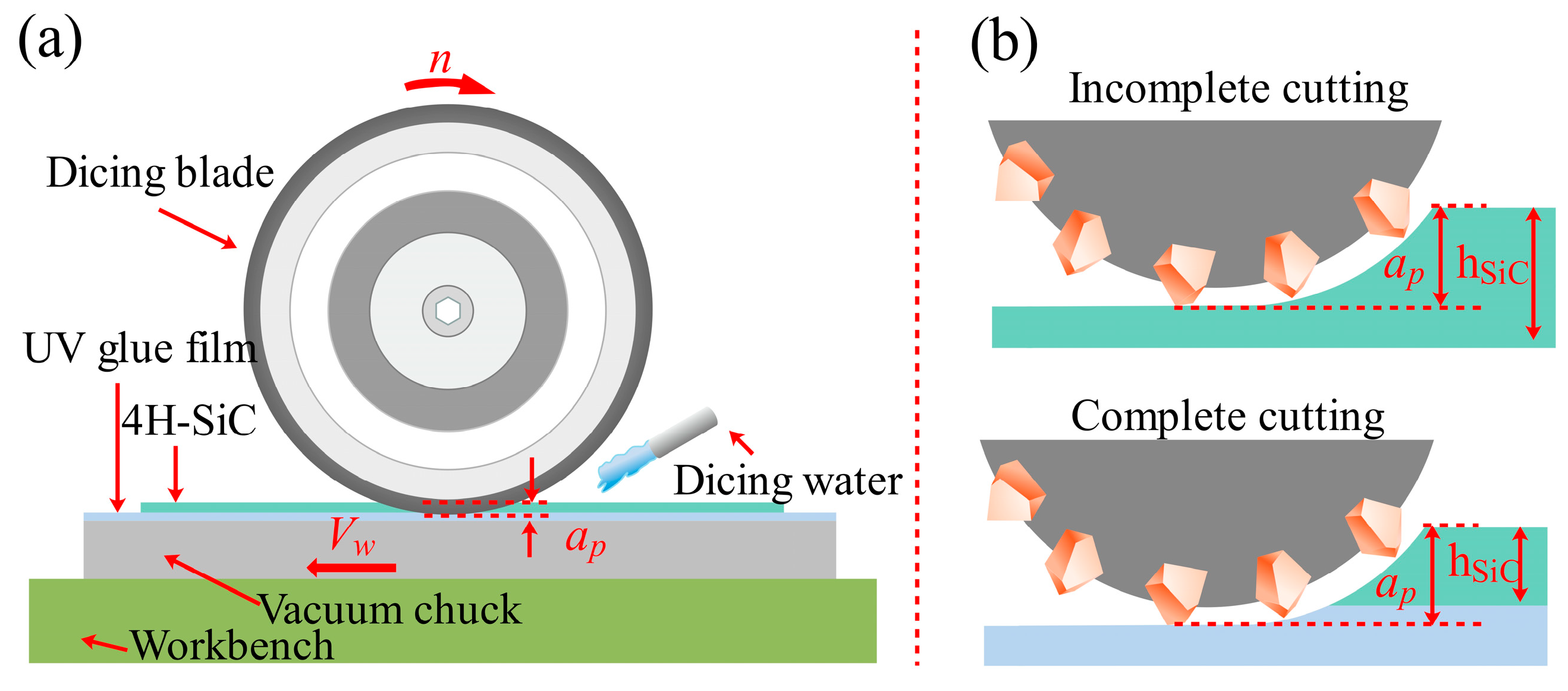
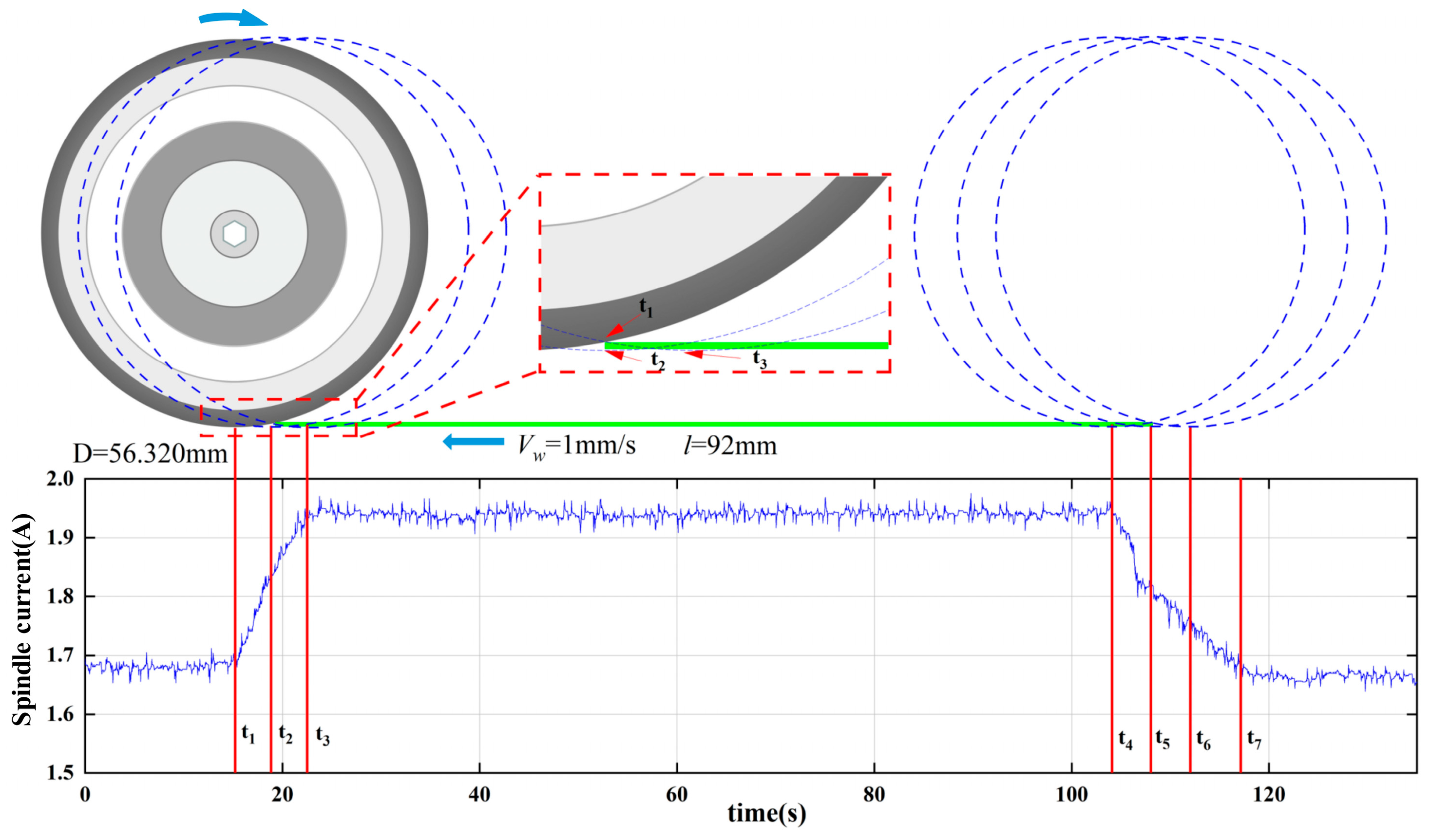
- The process of spindle current change for a single channel of 4H-SiC cut by the dicing blade can be divided into seven key points. Among them, the lowest point of the dicing blade occurs at contact with the workpiece. To the stage of completely cutting into the workpiece, the area of the contact arc does not change, the spindle current continues to increase, and the growth rate slows down, which is attributed to significant interference between the blade sidewall and the workpiece.
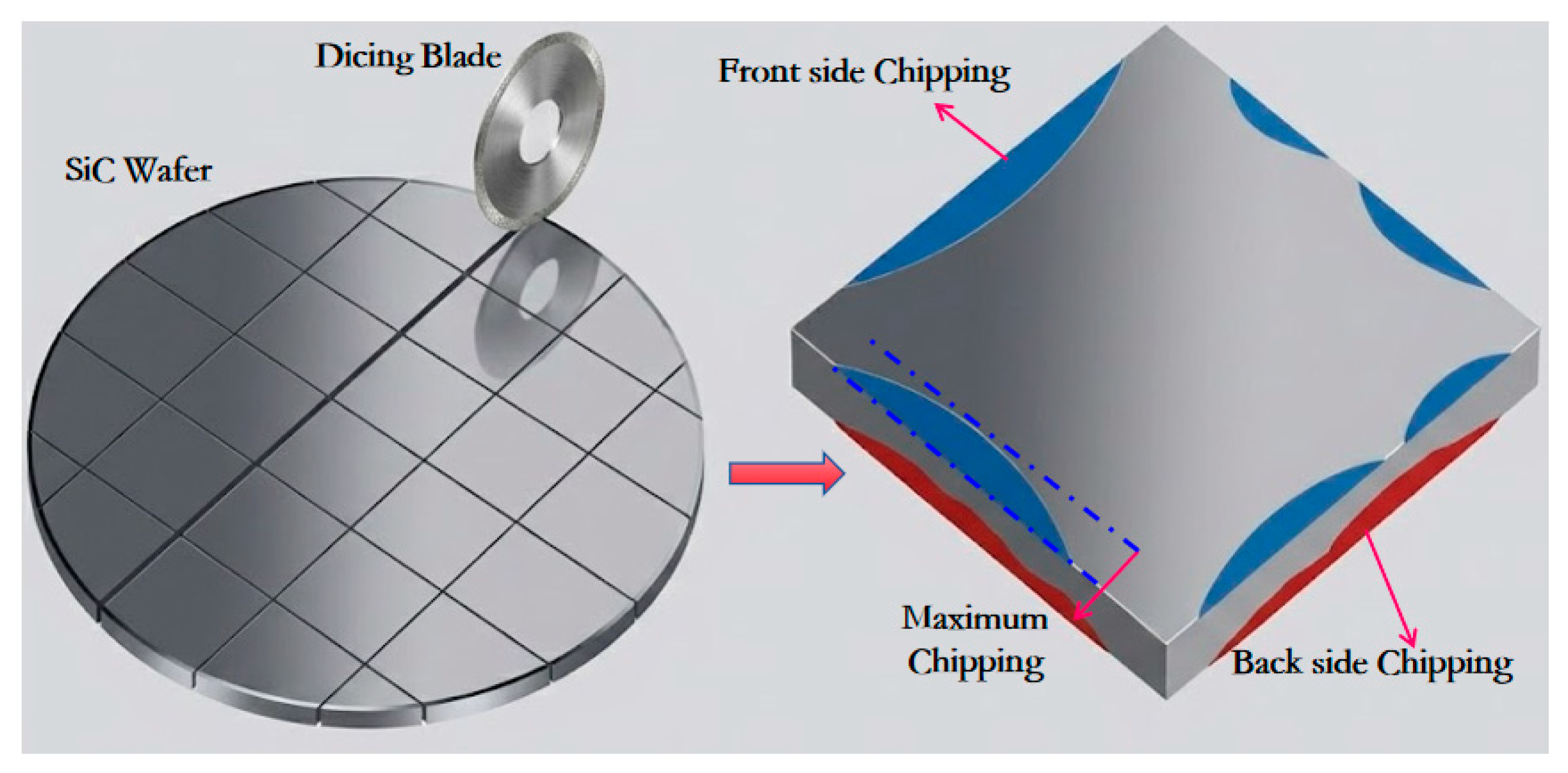
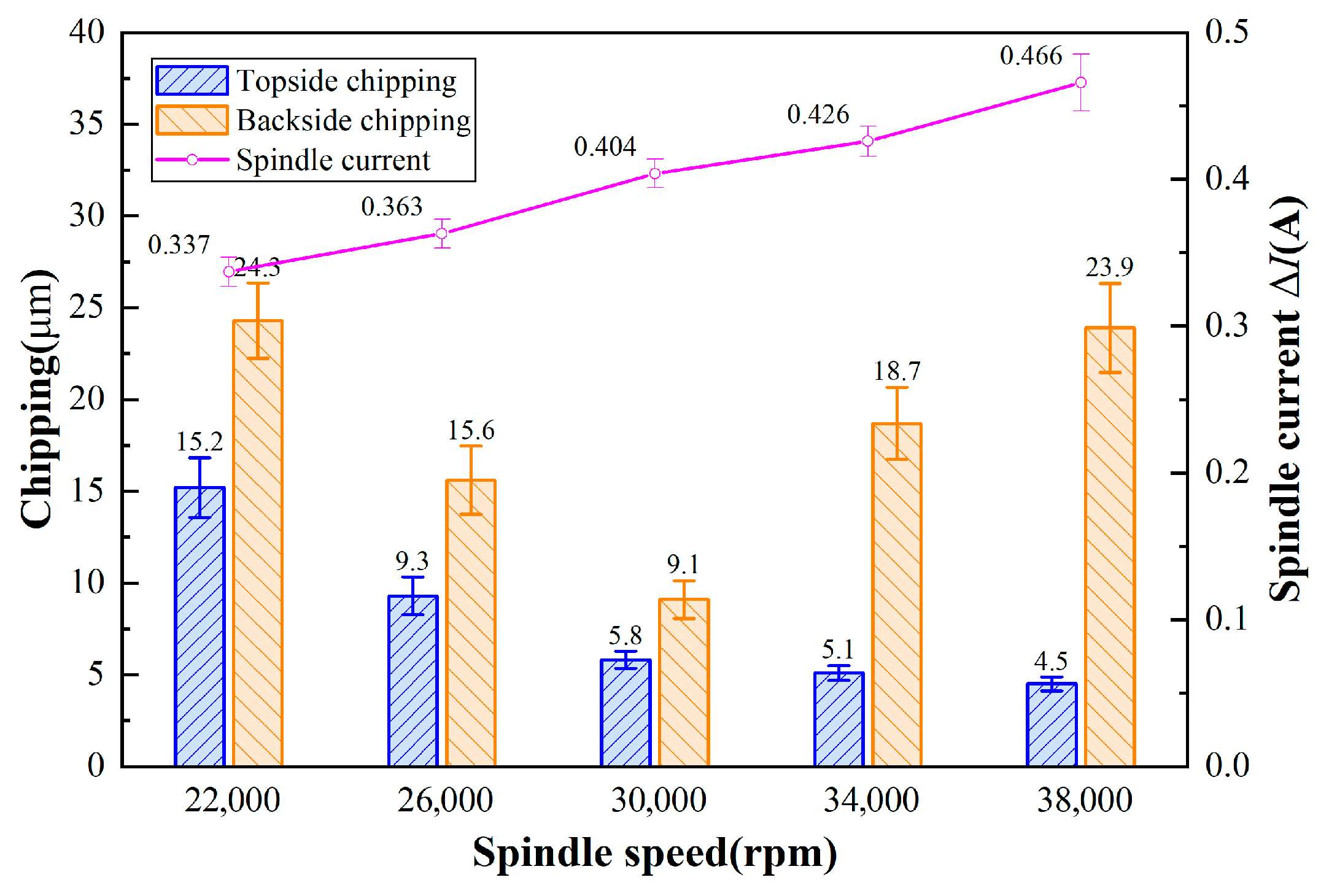
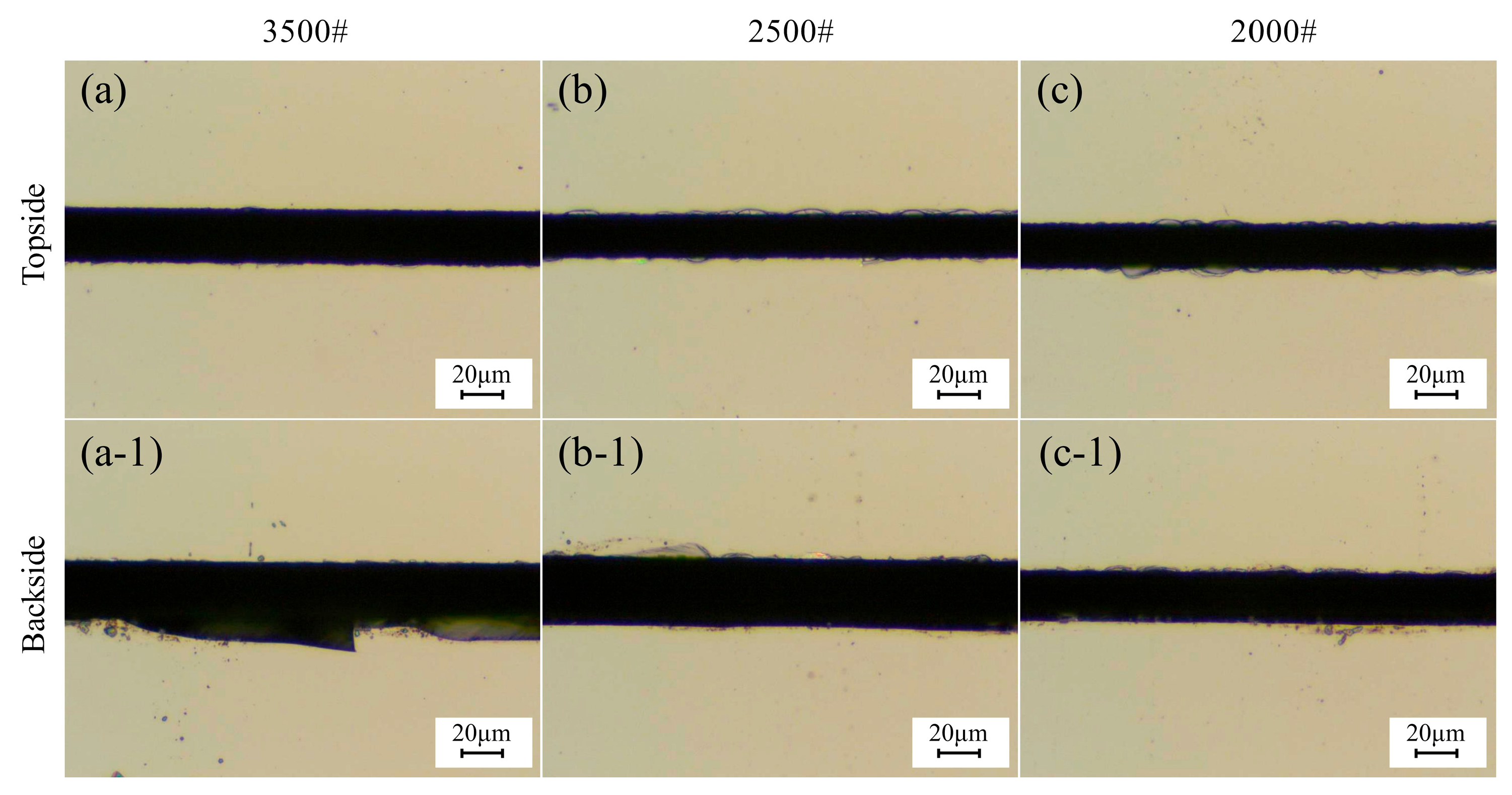
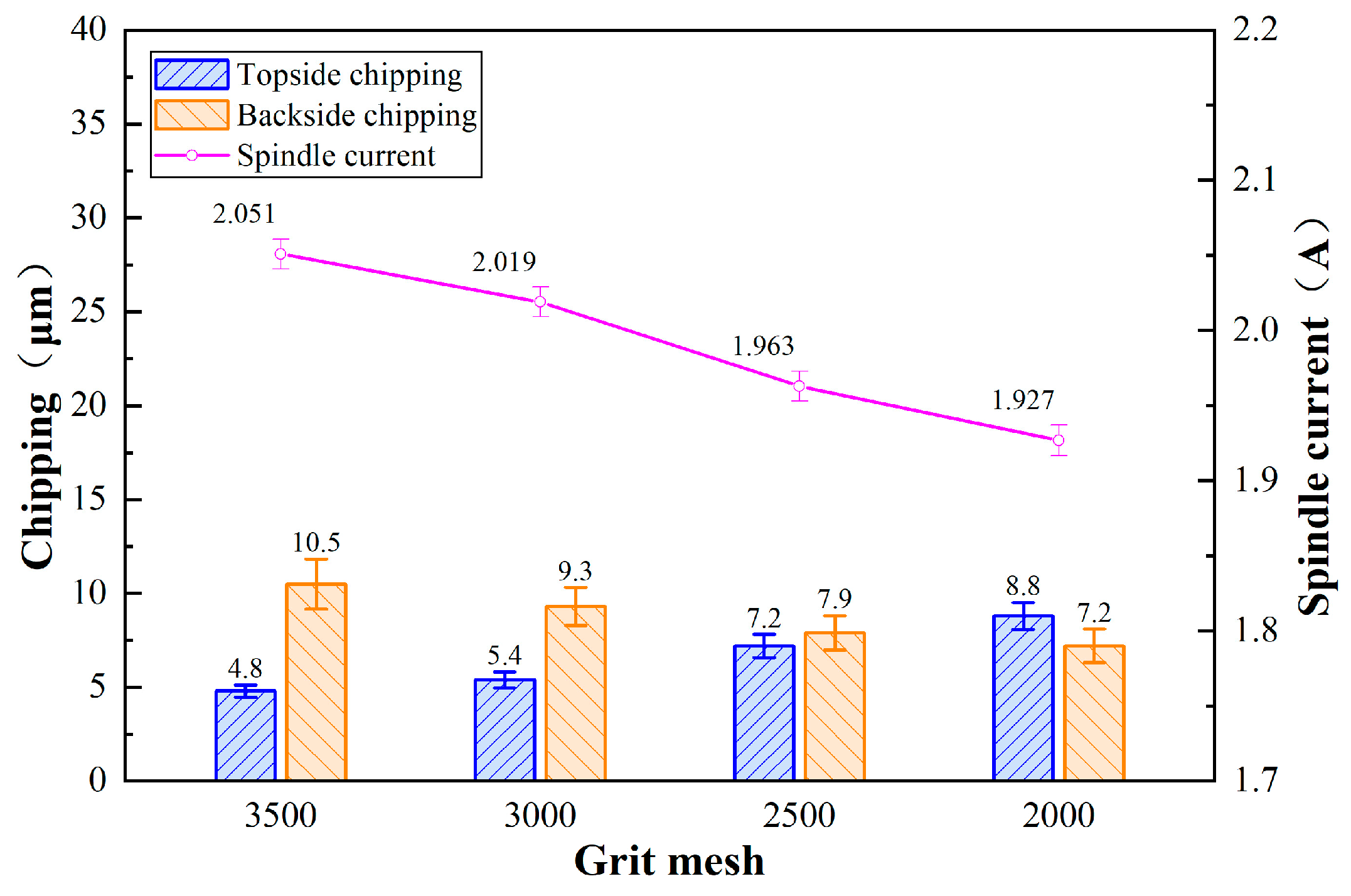
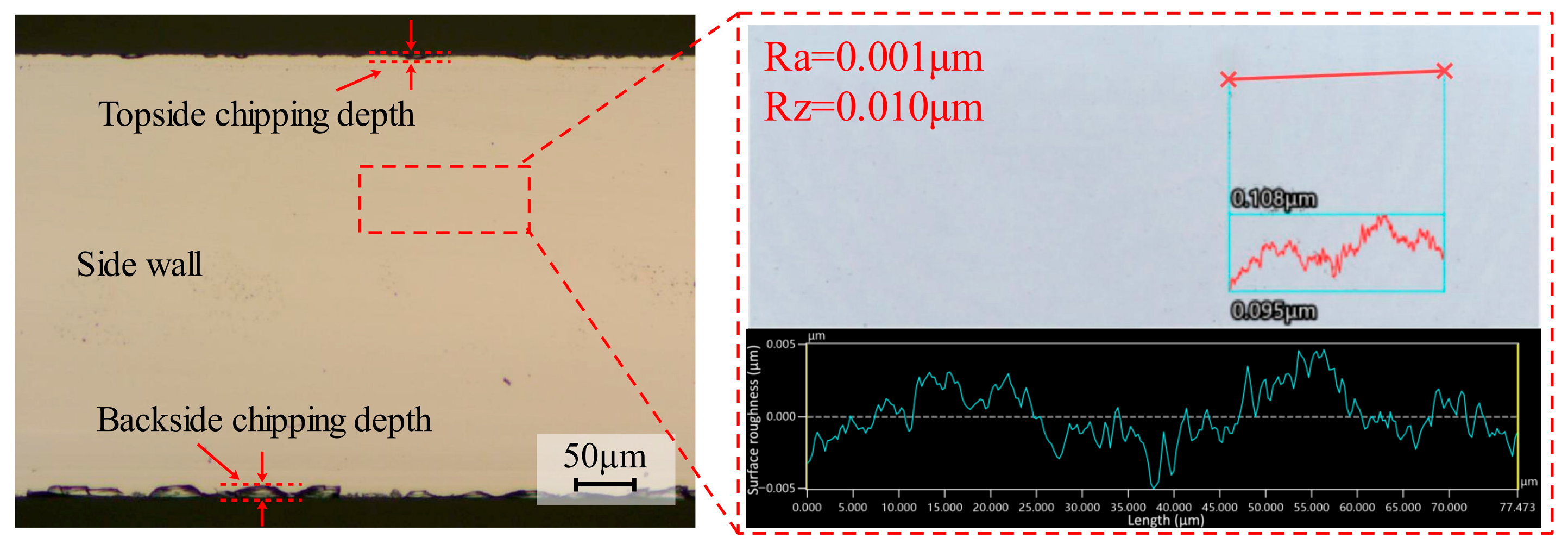
- As spindle speed increases, the average value of the size of the front-side chipping decreases, while the average value of the size of the back avalanche decreases and then increases. The first decrease is due to the depth of cut of a single abrasive grain to reduce the stress applied to the workpiece, and then increased on the one hand, which may be due to the high-speed cutting water into the cutting area of the opportunity to reduce on the other hand, as the vibration generated by a high spindle speed is relatively greater. The abrasive grain size is directly proportional to the front-side chipping size and inversely proportional to the backside chipping size. This is because larger abrasive grains have a more pronounced protrusion height, creating larger chip pockets. Consequently, chips are more easily discharged from the cutting zone, reducing the vertical force exerted on the back of the workpiece.
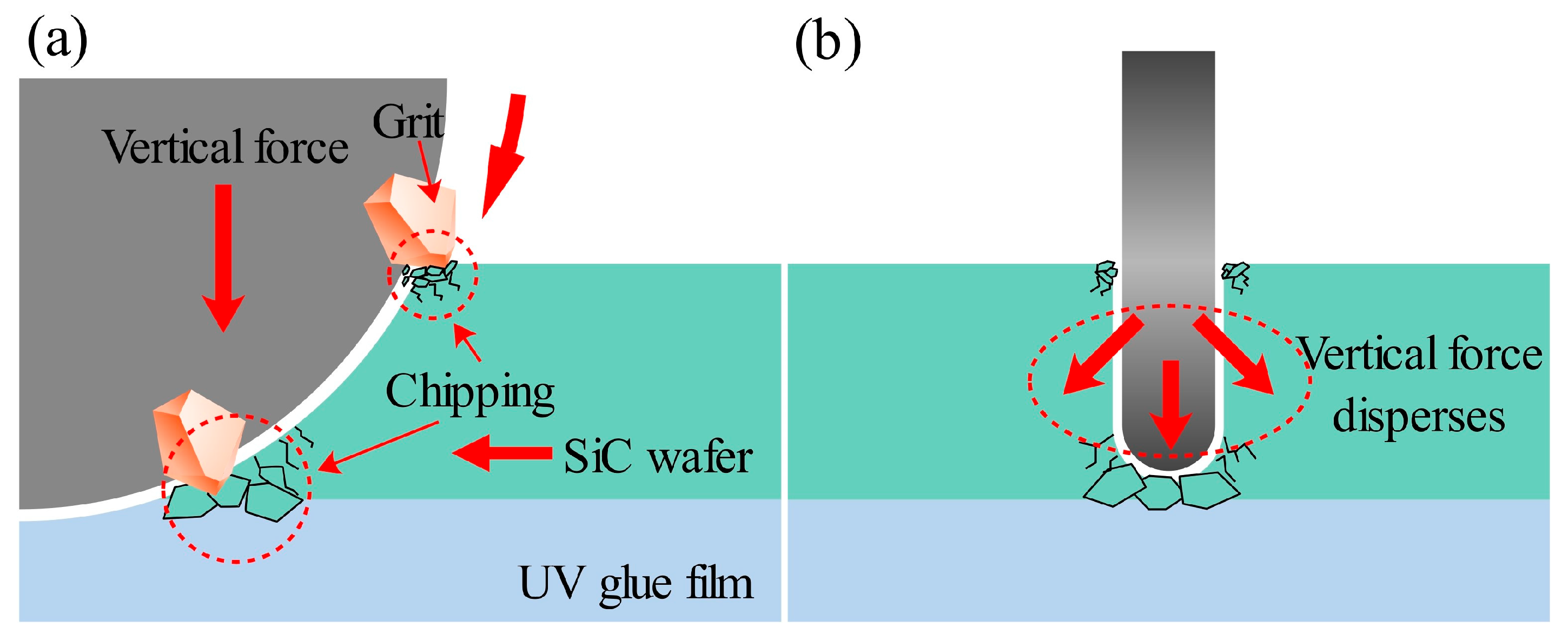
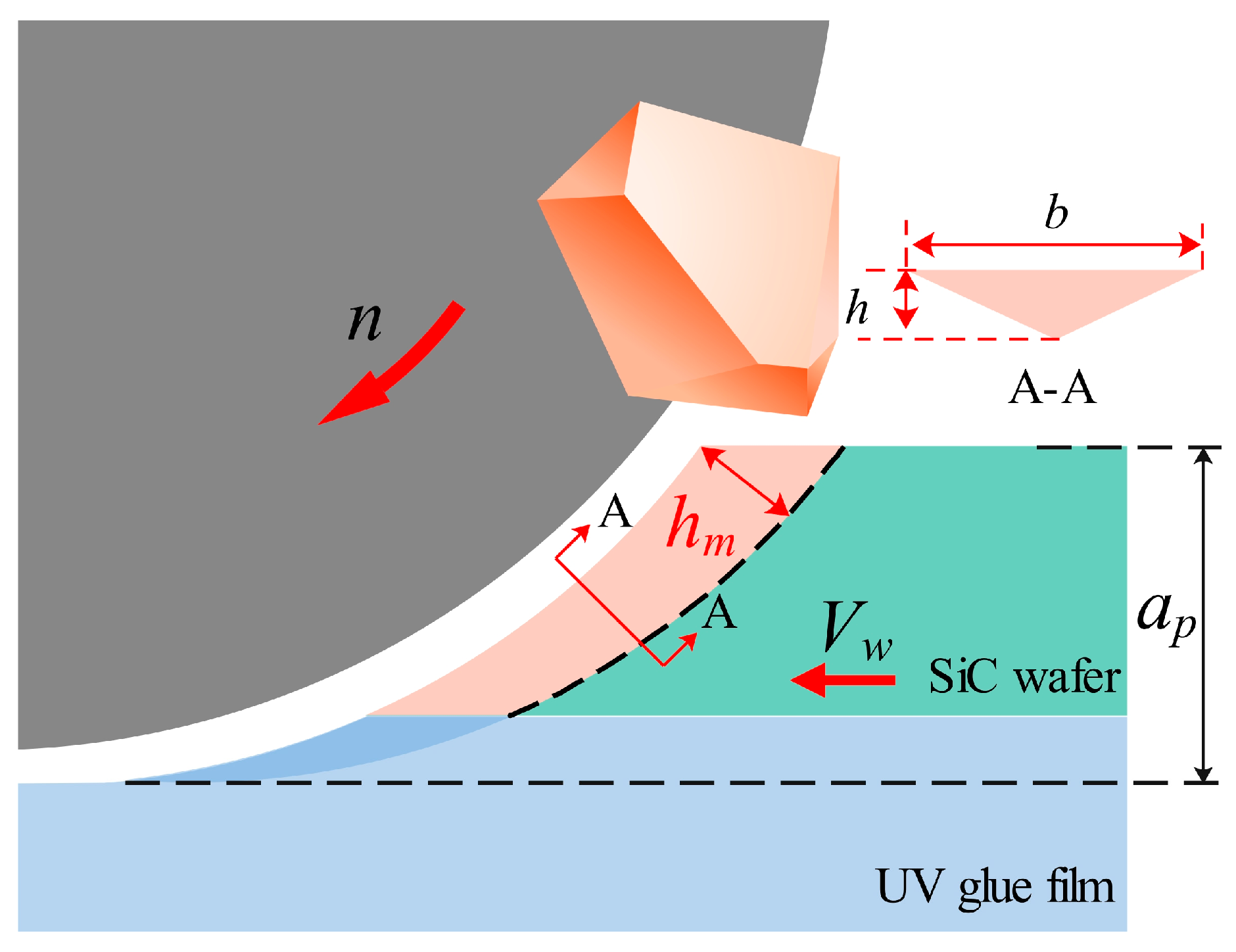
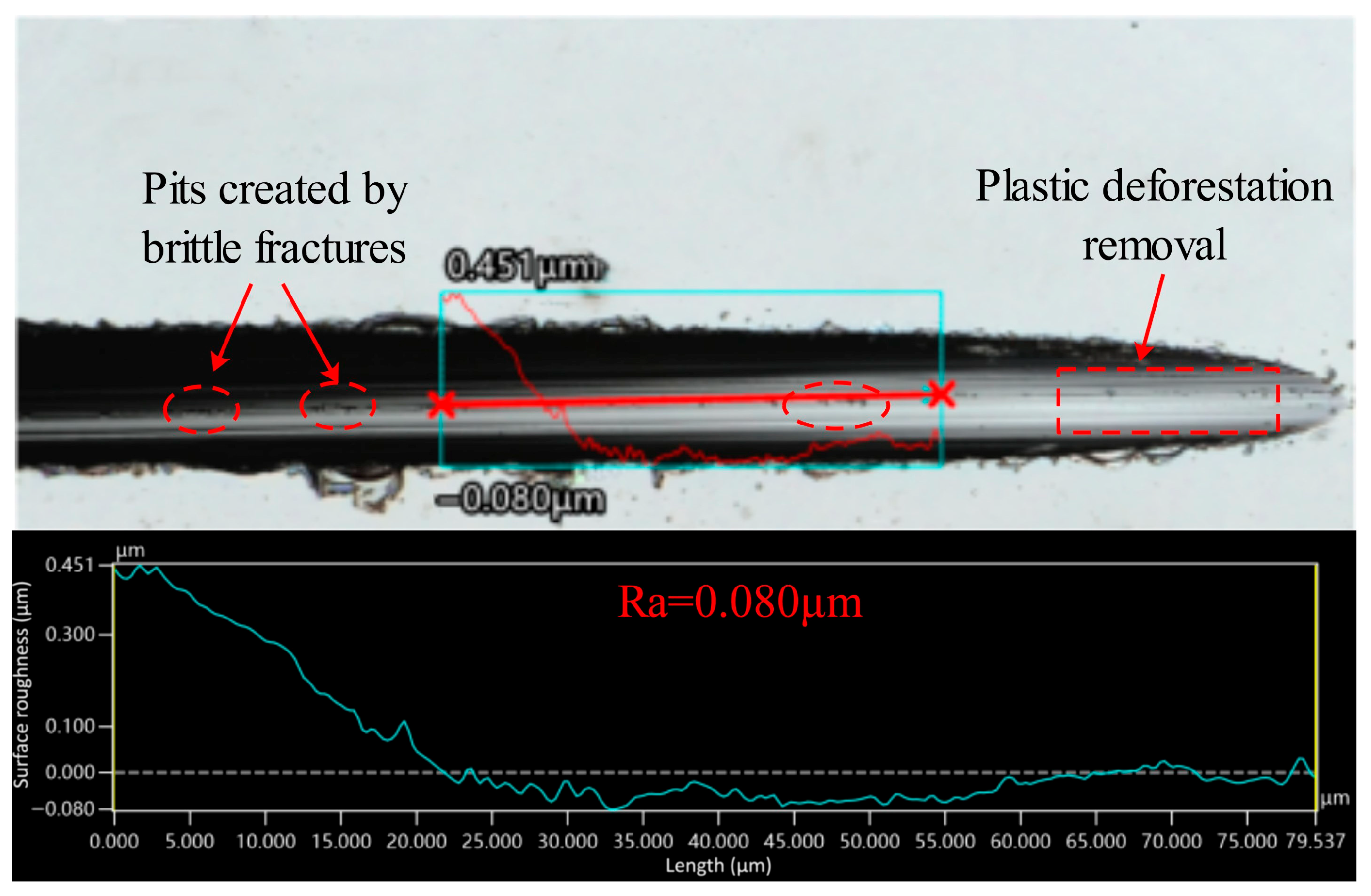
- The formation mechanism of front-side chipping involves the impact of the diamond grits with the workpiece, while the mechanism for the formation of back chipping is caused by the cracks generated inside the workpiece. In the case of using the optimal process parameters, the calculated maximum undeformed chip thickness is 11.0 nm, which is lower than the calculated critical chip depth of 16.2 nm. Uniform grinding marks and pronounced plastic flow characteristics were observed on the cutting contact arc surface, and the material removal process is dominated by plastic deformation.
Author Contributions
Funding
Data Availability Statement
Conflicts of Interest
References
- Roccaforte, F.; Fiorenza, P.; Greco, G.; Lo Nigro, R.; Giannazzo, F.; Iucolano, F.; Saggio, M. Emerging trends in wide band gap semiconductors (SiC and GaN) technology for power devices. Microelectron. Eng. 2018, 187–188, 66–77. [Google Scholar] [CrossRef]
- She, X.; Huang, A.Q.; Lucia, Ó.; Ozpineci, B. Review of Silicon Carbide Power Devices and Their Applications. IEEE Trans. Ind. Electron. 2017, 64, 8193–8205. [Google Scholar] [CrossRef]
- Kassakian, J.G.; Jahns, T.M. Evolving and Emerging Applications of Power Electronics in Systems. IEEE J. Emerg. Sel. Top. Power Electron. 2013, 1, 47–58. [Google Scholar] [CrossRef]
- Langpoklakpam, C.; Liu, A.-C.; Chu, K.-H.; Hsu, L.-H.; Lee, W.-C.; Chen, S.-C.; Sun, C.-W.; Shih, M.-H.; Lee, K.-Y.; Kuo, H.-C. Review of Silicon Carbide Processing for Power MOSFET. Crystals 2022, 12, 245. [Google Scholar] [CrossRef]
- Zhang, Z.; Wen, Z.; Shi, H.; Song, Q.; Xu, Z.; Li, M.; Hou, Y.; Zhang, Z. Dual Laser Beam Asynchronous Dicing of 4H-SiC Wafer. Micromachines 2021, 12, 1331. [Google Scholar]
- Wang, L.; Zhang, C.; Liu, F.; Zheng, H.; Cheng, G.J. Ultrafast pulsed laser stealth dicing of 4H-SiC wafer: Structure evolution and defect generation. J. Manuf. Process. 2022, 81, 562–570. [Google Scholar]
- Wen, Q.; Yang, Y.; Lu, J.; Huang, H.; Cui, C. Study on picosecond laser stealth dicing of 4H-SiC along [112¯0] and [11¯00] crystal orientations on Si-face and C-face. Opt. Laser Technol. 2023, 162, 109300. [Google Scholar] [CrossRef]
- Lewke, D.; Dohnke, K.O.; Zühlke, H.U.; Cerezuela Barreto, M.; Schellenberger, M.; Bauer, A.J.; Ryssel, H. Thermal Laser Separation—A Novel Dicing Technology Fulfilling the Demands of Volume Manufacturing of 4H-SiC Devices. Mater. Sci. Forum 2015, 821–823, 528–532. [Google Scholar] [CrossRef]
- Lewke, D.; Koitzsch, M.; Dohnke, K.O.; Schellenberger, M.; Zuehlke, H.-U.; Rupp, R.; Pfitzner, L.; Ryssel, H. High quality and high speed cutting of 4H-SiC JFET wafers including PCM structures by using Thermal Laser Separation. MRS Online Proc. Libr. 2014, 1693, 55–60. [Google Scholar] [CrossRef]
- Dohnke, K.O.; Kaspar, K.; Lewke, D. Comparison of Different Novel Chip Separation Methods for 4H-SiC. Mater. Sci. Forum 2015, 821–823, 520–523. [Google Scholar] [CrossRef]
- Li, M.; Mu, D.; Huang, S.; Wu, Y.; Meng, H.; Xu, X.; Huang, H. Ultrathin diamond blades for dicing single crystal SiC developed using a novel bonding method. J. Manuf. Process. 2022, 84, 88–99. [Google Scholar] [CrossRef]
- Aurich, J.C.; Kirsch, B.; Setti, D.; Axinte, D.; Beaucamp, A.; Butler-Smith, P.; Yamaguchi, H. Abrasive processes for micro parts and structures. CIRP Ann. 2019, 68, 653–676. [Google Scholar] [CrossRef]
- Wang, W.; Lu, X.; Wu, X.; Zhang, Y.; Wang, R.; Yang, D.; Pi, X. Chemical–Mechanical Polishing of 4H Silicon Carbide Wafers. Adv. Mater. Interfaces 2023, 10, 2202369. [Google Scholar] [CrossRef]
- Tsukimoto, S.; Ise, T.; Maruyama, G.; Hashimoto, S.; Sakurada, T.; Senzaki, J.; Kato, T.; Kojima, K.; Okumura, H. Local Strain Distribution and Microstructure of Grinding-Induced Damage Layers in SiC Wafer. J. Electron. Mater. 2018, 47, 6722–6730. [Google Scholar] [CrossRef]
- Liu, C.; Ke, J.; Yin, T.; Yip, W.S.; Zhang, J.; To, S.; Xu, J. Cutting mechanism of reaction-bonded silicon carbide in laser-assisted ultra-precision machining. Int. J. Mach. Tools Manuf. 2024, 203, 104219. [Google Scholar] [CrossRef]
- Huang, W.; Yan, J. Mechanisms of tool-workpiece interaction in ultraprecision diamond turning of single-crystal SiC for curved microstructures. Int. J. Mach. Tools Manuf. 2023, 191, 104063. [Google Scholar] [CrossRef]
- Kimoto, T. Bulk and epitaxial growth of silicon carbide. Prog. Cryst. Growth Charact. Mater. 2016, 62, 329–351. [Google Scholar] [CrossRef]
- Cvetković, S.; Morsbach, C.; Rissing, L. Ultra-precision dicing and wire sawing of silicon carbide (SiC). Microelectron. Eng. 2011, 88, 2500–2504. [Google Scholar] [CrossRef]
- Fujita, T.; Izumi, Y.; Watanabe, J. Ultrafine ductile-mode dicing technology for SiC substrate with metal film using PCD blade. J. Adv. Mech. Des. Syst. Manuf. 2019, 13, JAMDSM0073. [Google Scholar] [CrossRef]
- Chu, J.P.; Lai, B.Z.; Yiu, P.; Shen, Y.L.; Chang, C.W. Metallic glass coating for improving diamond dicing performance. Sci. Rep. 2020, 10, 12432. [Google Scholar] [CrossRef]
- Xie, Y.; Deng, D.; Pi, G.; Huang, X.; Zhao, C. Fabrication of silicon carbide microchannels by thin diamond wheel grinding. Int. J. Adv. Manuf. Technol. 2020, 111, 309–323. [Google Scholar] [CrossRef]
- Wang, X.; Yuan, Z.; Zhuang, P.; Wu, T.; Feng, S. Study on precision dicing process of SiC wafer with diamond dicing blades. Nanotechnol. Precis. Eng. 2021, 4, 033004. [Google Scholar] [CrossRef]
- Feng, Y.; Li, K.; Dou, Z.; Zhang, Z.; Guo, B. High-Speed Dicing of SiC Wafers with 0.048 mm Diamond Blades via Rolling-Slitting. Materials 2022, 15, 8083. [Google Scholar] [CrossRef] [PubMed]
- Lei, W.-S.; Kumar, A.; Yalamanchili, R. Die singulation technologies for advanced packaging: A critical review. J. Vac. Sci. Technol. B 2012, 30, 040801. [Google Scholar] [CrossRef]
- Meng, B.; Zhang, Y.; Zhang, F. Material removal mechanism of 6H-SiC studied by nano-scratching with Berkovich indenter. Appl. Phys. A 2016, 122, 247. [Google Scholar] [CrossRef]
- Tang, K.; Ou, W.; Mao, C.; Liang, J.; Zhang, M.; Zhang, M.; Hu, Y. Material Removal Characteristics of Single-Crystal 4H-SiC Based on Varied-Load Nanoscratch Tests. Chin. J. Mech. Eng. 2023, 36, 111. [Google Scholar] [CrossRef]
- Wang, P.; Ge, P.; Ge, M.; Bi, W.; Meng, J. Material removal mechanism and crack propagation in single scratch and double scratch tests of single-crystal silicon carbide by abrasives on wire saw. Ceram. Int. 2019, 45, 384–393. [Google Scholar] [CrossRef]
- Agarwal, S.; Rao, P.V. Experimental investigation of surface/subsurface damage formation and material removal mechanisms in SiC grinding. Int. J. Mach. Tools Manuf. 2008, 48, 698–710. [Google Scholar] [CrossRef]
- Huang, Y.; Zhou, Y.; Li, J.; Zhu, F. Materials removal mechanism and multi modes feature for silicon carbide during scratching. Int. J. Mech. Sci. 2022, 235, 107719. [Google Scholar] [CrossRef]
- Wu, Z.; Zhang, L.; Yang, S. Effect of abrasive grain position patterns on the deformation of 6H-silicon carbide subjected to nano-grinding. Int. J. Mech. Sci. 2021, 211, 106779. [Google Scholar] [CrossRef]
- Wu, Z.; Zhang, L.; Yang, S.; Wu, C. Effects of grain size and protrusion height on the surface integrity generation in the nanogrinding of 6H-SiC. Tribol. Int. 2022, 171, 107563. [Google Scholar] [CrossRef]
- Huang, H.; Lawn, B.R.; Cook, R.F.; Marshall, D.B. Critique of materials-based models of ductile machining in brittle solids. J. Am. Ceram. Soc. 2020, 103, 6096–6100. [Google Scholar] [CrossRef]
- Malkin, S.; Guo, C. Grinding Technology: Theory and Application of Machining with Abrasives; Industrial Press Inc.: Norwalk, CT, USA, 2008. [Google Scholar]



| 3000-R-70 DCB | |
|---|---|
| Outer diameter (mm) | 56.320 |
| Bond | Nickel bond |
| Grit concentration | 70 |
| Avg. grit size | Grade 3000 (4.5–5.5 μm) |
| Blade exposure(μm) | 660 |
| Blade thickness(μm) | 23 |
| Conditions | Feature |
|---|---|
| Incomplete cutting | ap: 80, 150, 220, 290, 360 μm |
| Complete cutting | ap: 370, 380, 390, 400, 410 μm |
| Vw: 0.5, 1, 1.5, 2, 2.5 mm/s | |
| n: 22,000, 26,000, 30,000, 34,000, 38,000 rpm |
Disclaimer/Publisher’s Note: The statements, opinions and data contained in all publications are solely those of the individual author(s) and contributor(s) and not of MDPI and/or the editor(s). MDPI and/or the editor(s) disclaim responsibility for any injury to people or property resulting from any ideas, methods, instructions or products referred to in the content. |
© 2026 by the authors. Licensee MDPI, Basel, Switzerland. This article is an open access article distributed under the terms and conditions of the Creative Commons Attribution (CC BY) license.
Share and Cite
Wang, Y.; Li, Z.; Chen, F.; Xu, Z. Processing Characteristics of Ultra-Precision Cutting of 4H-SiC Wafers by Dicing Blade. Micromachines 2026, 17, 187. https://doi.org/10.3390/mi17020187
Wang Y, Li Z, Chen F, Xu Z. Processing Characteristics of Ultra-Precision Cutting of 4H-SiC Wafers by Dicing Blade. Micromachines. 2026; 17(2):187. https://doi.org/10.3390/mi17020187
Chicago/Turabian StyleWang, Yufang, Zhixiong Li, Fengjun Chen, and Zhiqiang Xu. 2026. "Processing Characteristics of Ultra-Precision Cutting of 4H-SiC Wafers by Dicing Blade" Micromachines 17, no. 2: 187. https://doi.org/10.3390/mi17020187
APA StyleWang, Y., Li, Z., Chen, F., & Xu, Z. (2026). Processing Characteristics of Ultra-Precision Cutting of 4H-SiC Wafers by Dicing Blade. Micromachines, 17(2), 187. https://doi.org/10.3390/mi17020187