Article

Modeling and Experimental Verification of Time-Controlled Grinding Removal Function for Optical Components


1
College of Intelligent Science and Technology, National University of Defense Technology, Changsha 410073, China
2
Hunan Key Laboratory of Ultra-Precision Machining Technology, Changsha 410073, China
3
Laboratory of Science and Technology on Integrated Logistics Support, National University of Defense Technology, Changsha 410073, China
*
Author to whom correspondence should be addressed.
Micromachines 2023, 14(7), 1384; https://doi.org/10.3390/mi14071384
Submission received: 8 June 2023 / Revised: 29 June 2023 / Accepted: 5 July 2023 / Published: 6 July 2023
(This article belongs to the Section D: Materials and Processing)

Abstract

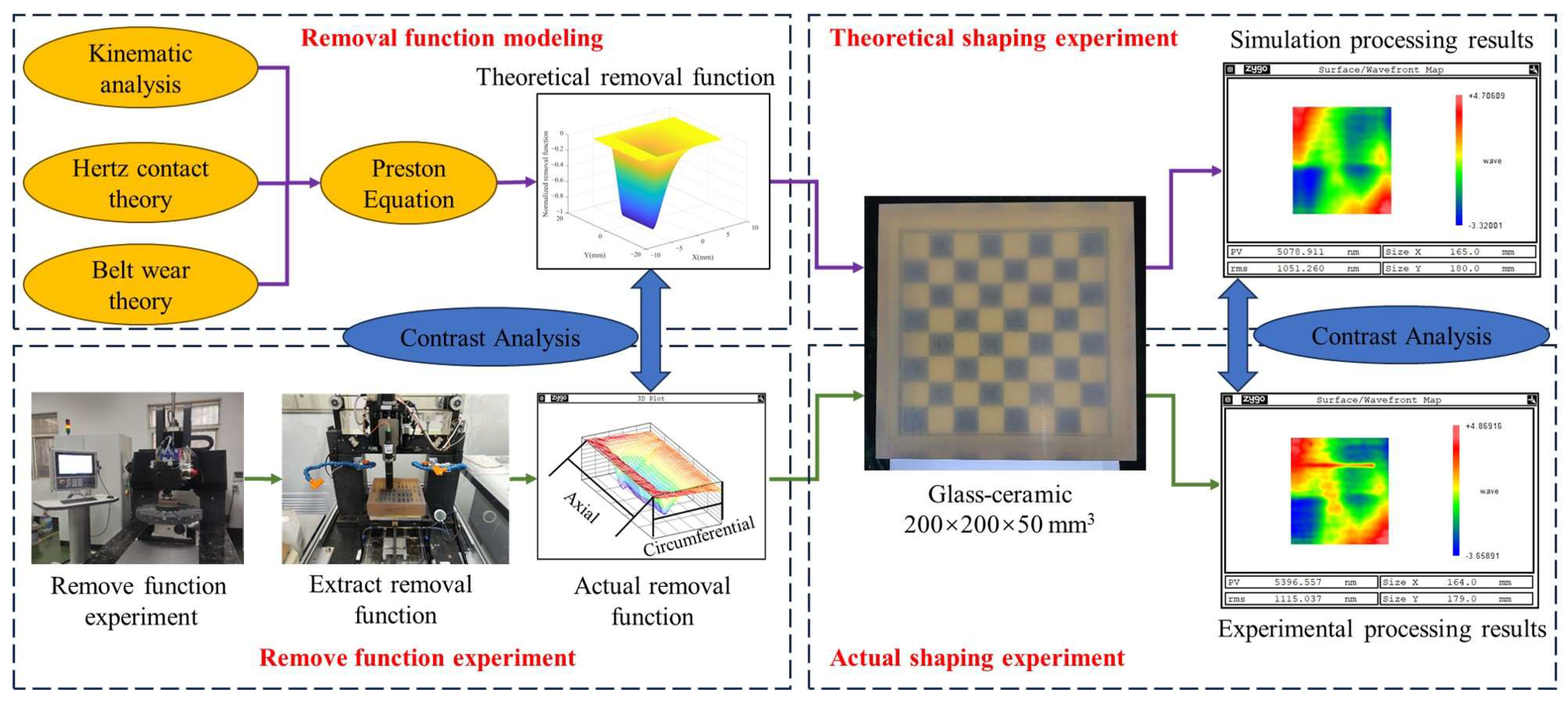
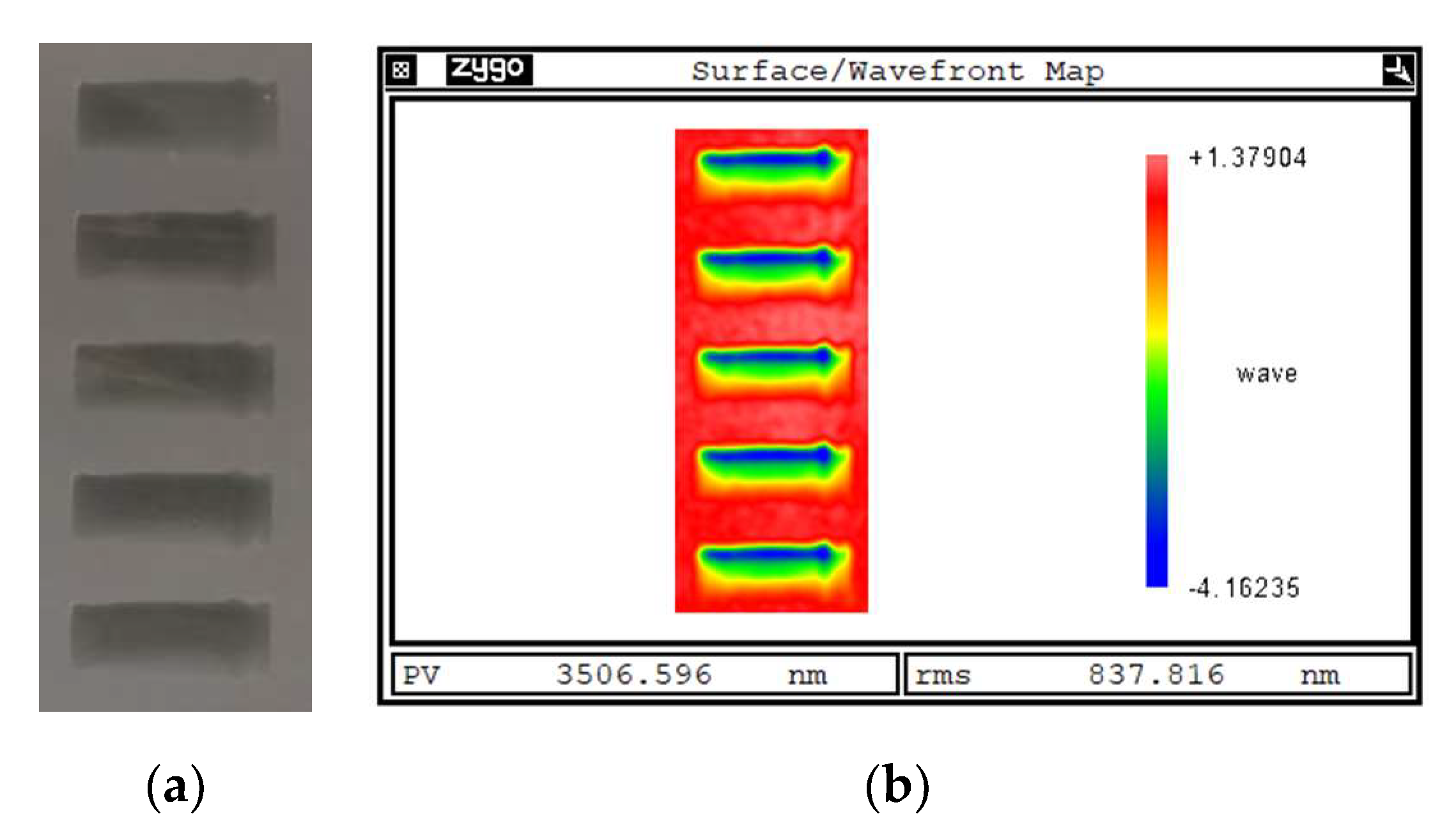
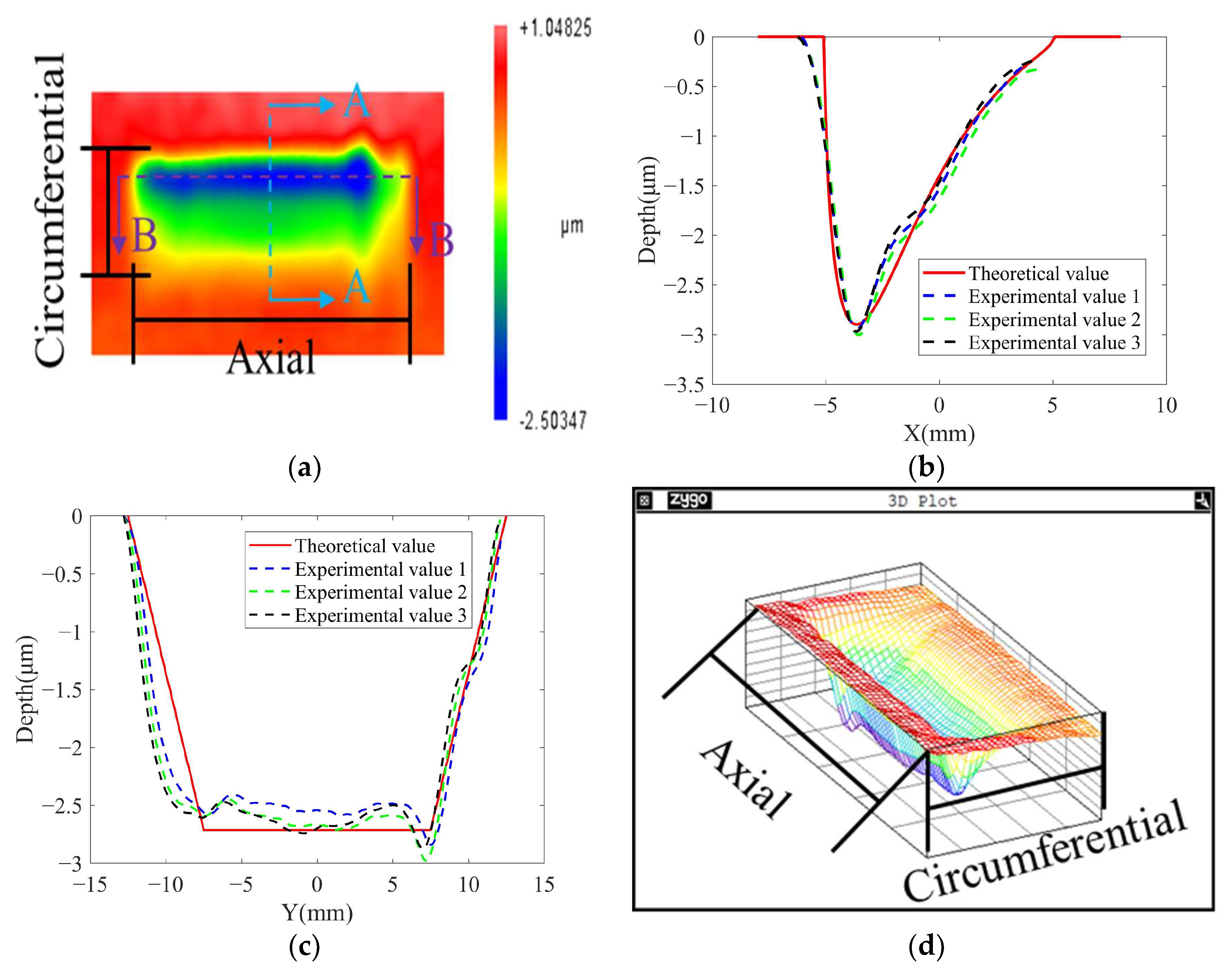
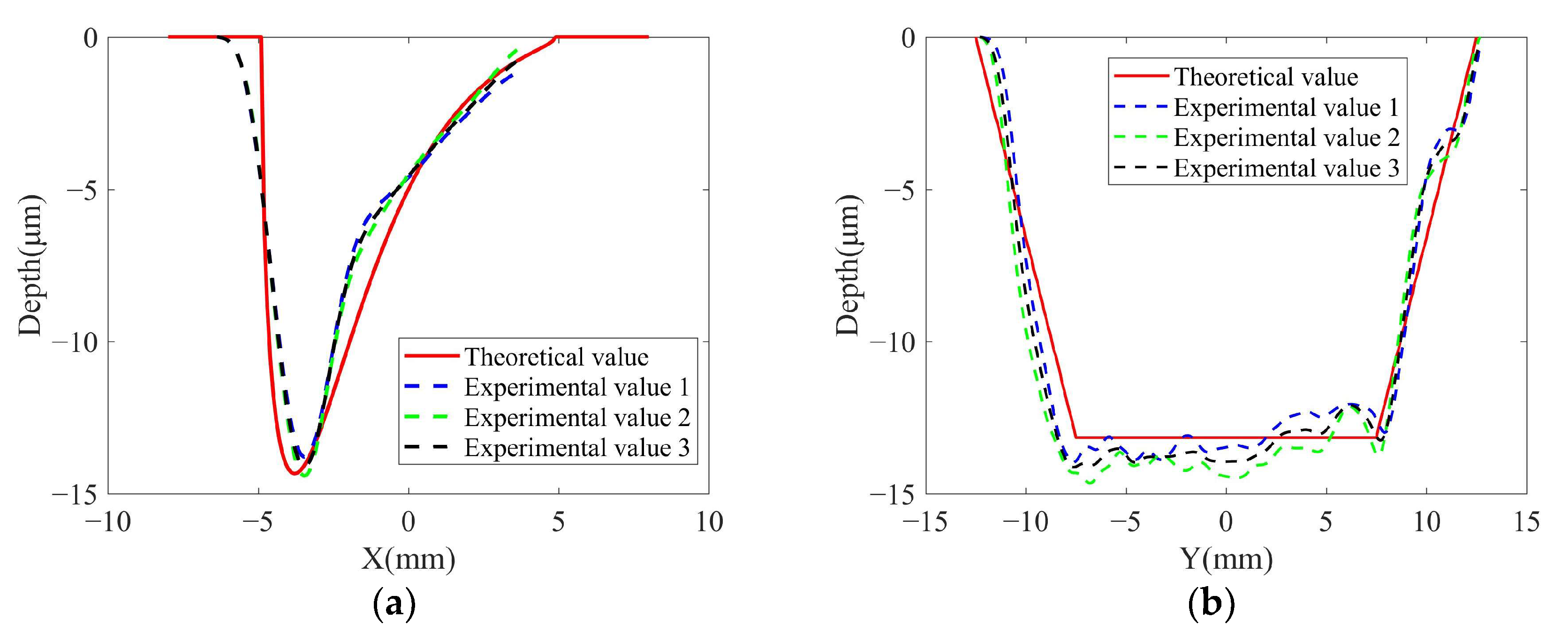
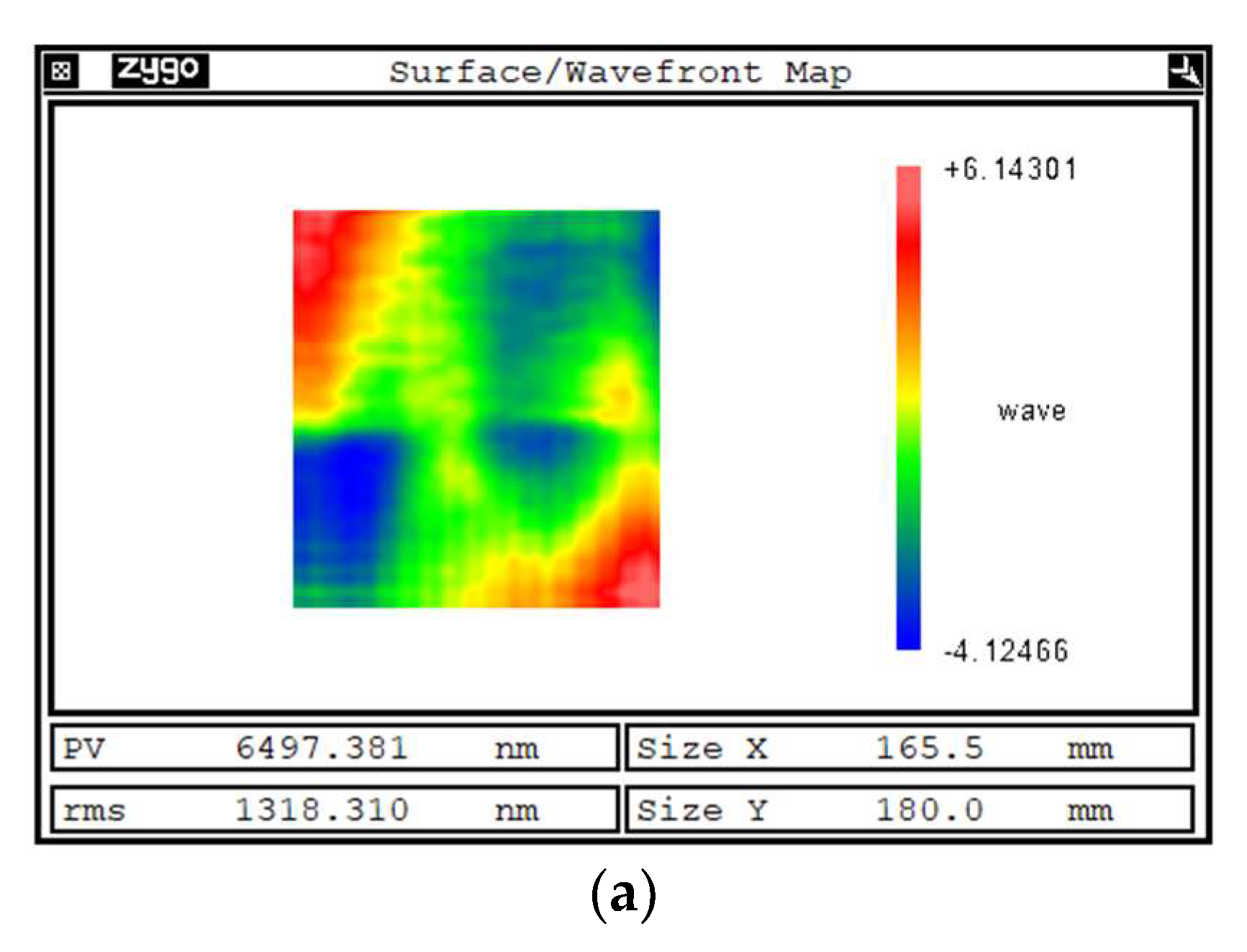
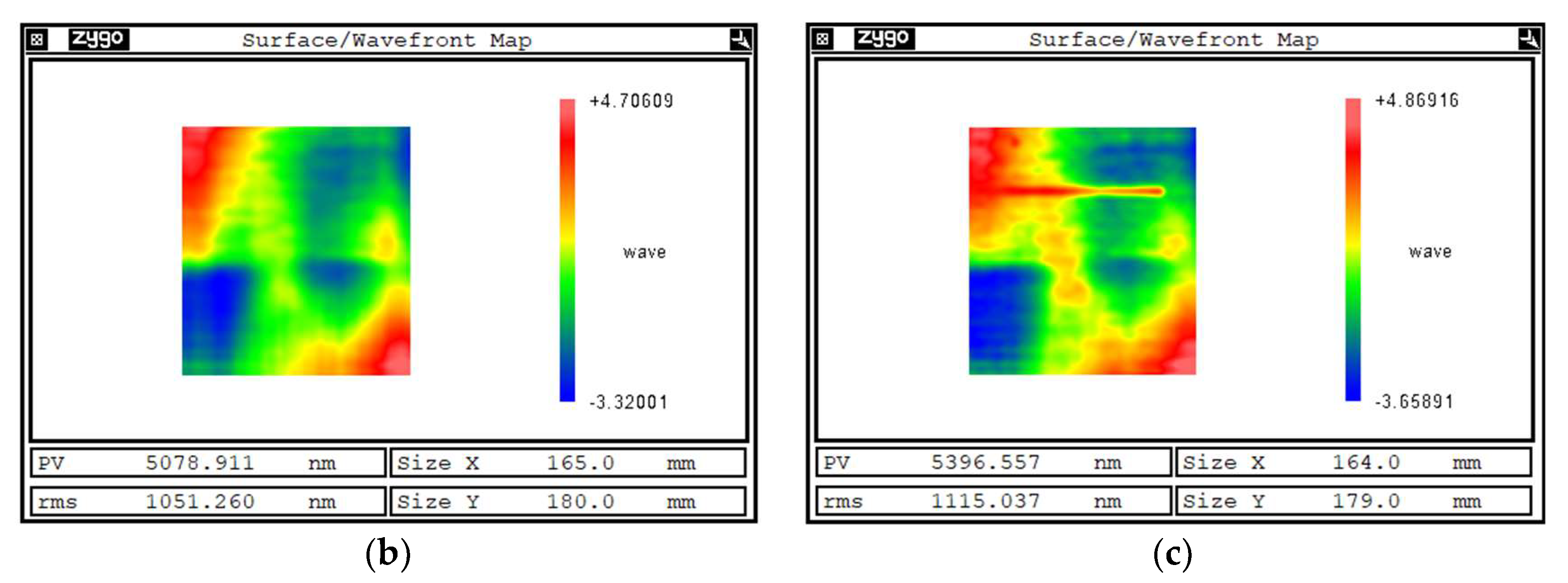
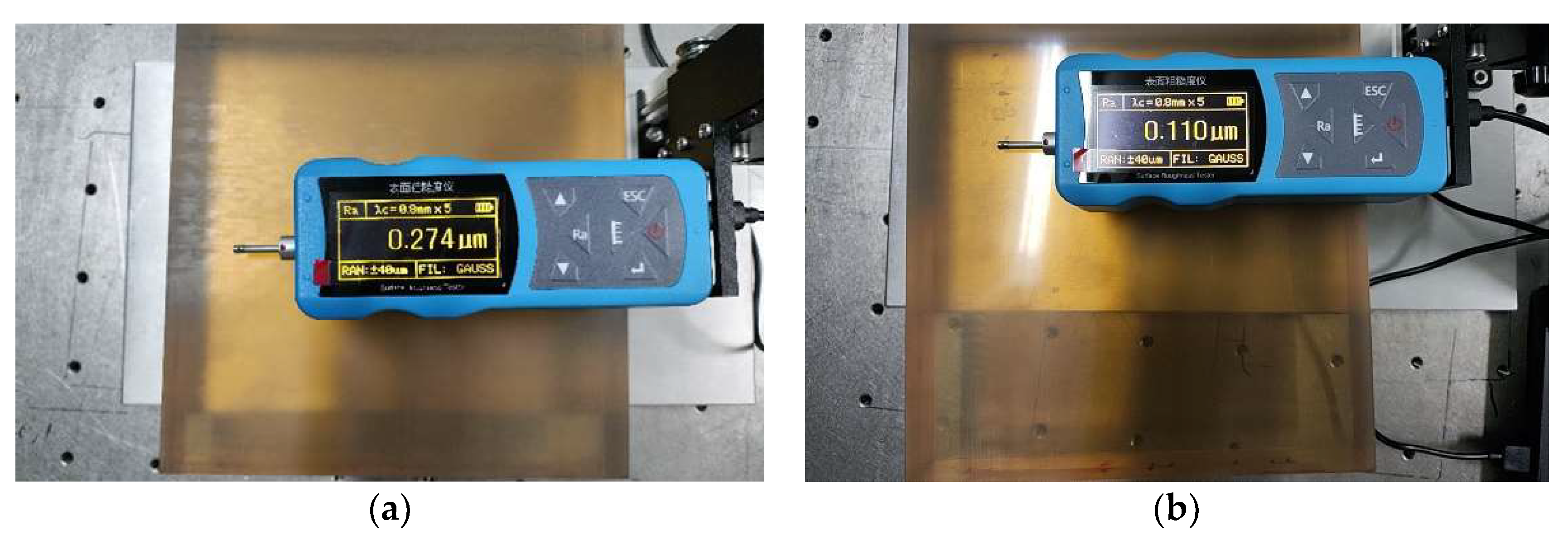
As a flexible grinding method with high efficiency, abrasive belt grinding has been widely used in the machining of mechanical parts. However, abrasive belt grinding has not been well applied in the field of ultra-precision optical processing, due to the lack of a stable and controllable removal function. In this paper, based on the idea of deterministic machining, the time-controlled grinding (TCG) method based on the abrasive belt as a machining tool was applied to the deterministic machining of optical components. Firstly, based on the Preston equation, a theoretical model of the TCG removal function was established. Secondly, removal function experiments were carried out to verify the validity and robustness of the theoretical removal model. Further, theoretical and actual shaping experiments were carried out on 200 mm × 200 mm flat glass-ceramic. The results show that the surface shape error converged from 6.497 μm PV and 1.318 μm RMS to 5.397 μm PV and 1.115 μm RMS. The theoretical and experimental results are consistent. In addition, the surface roughness improved from 271 to 143 nm Ra. The results validate the concept that the removal function model established in this paper can guide the actual shaping experiments of TCG, which is expected to be applied to the deterministic machining of large-diameter optical components.
Keywords: time-controlled grinding; abrasive belt; removal function; optical components; deterministic machining time-controlled grinding; abrasive belt; removal function; optical components; deterministic machining