Article

Design and Analysis of a Low-Voltage VCO: Reliability and Variability Performance

by
Tayebeh Azadmousavi
1 and
Ebrahim Ghafar-Zadeh
2,*
1
Department of Electrical Engineering, University of Bonab, Bonab 55517-61167, Iran
2
Biologically Inspired Sensors and Actuators (BioSA), Department of Electrical Engineering and Computer Science (EECS), Lassonde School of Engineering, York University, Toronto, ON M3J 1P3, Canada
*
Author to whom correspondence should be addressed.
Micromachines 2023, 14(11), 2118; https://doi.org/10.3390/mi14112118
Submission received: 9 October 2023 / Revised: 12 November 2023 / Accepted: 15 November 2023 / Published: 18 November 2023

Abstract

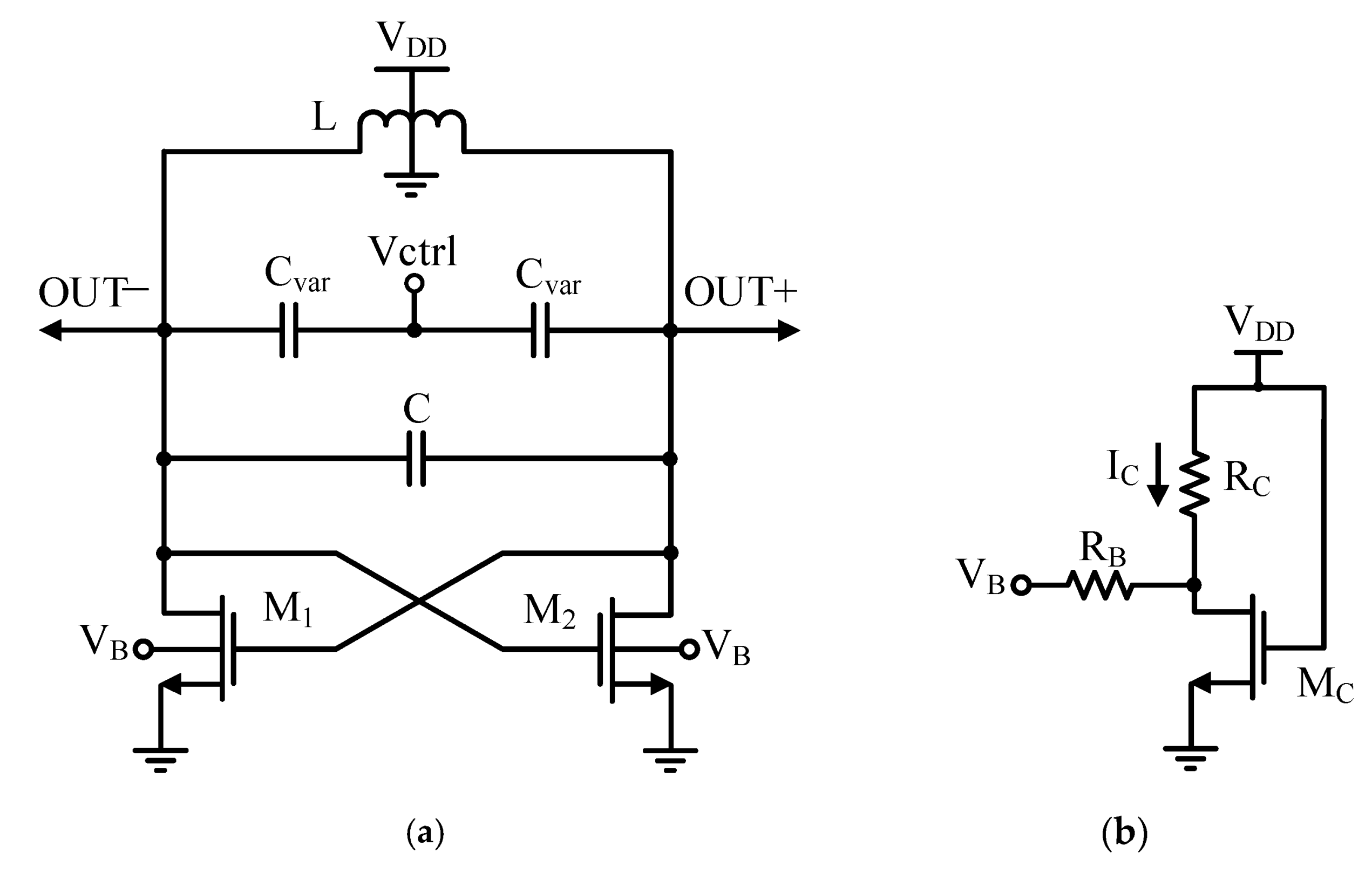
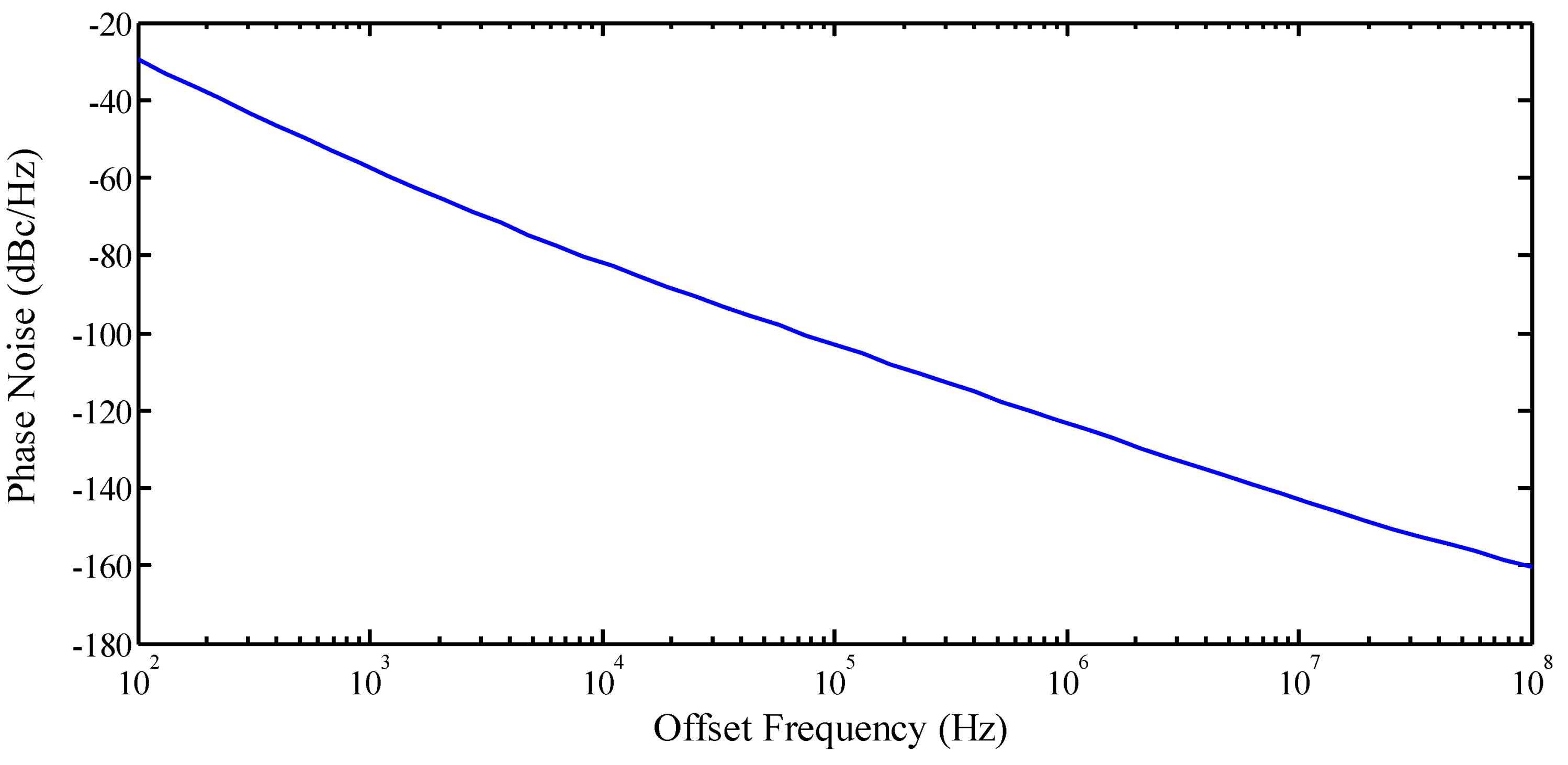
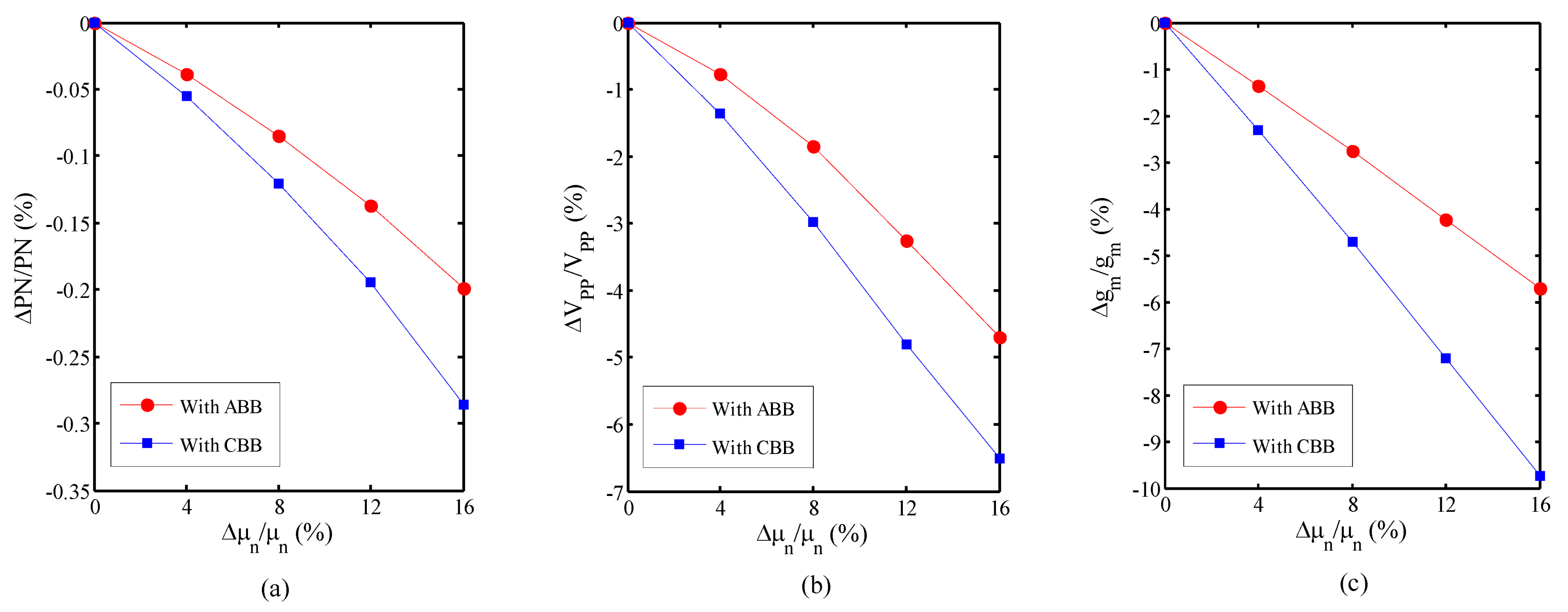
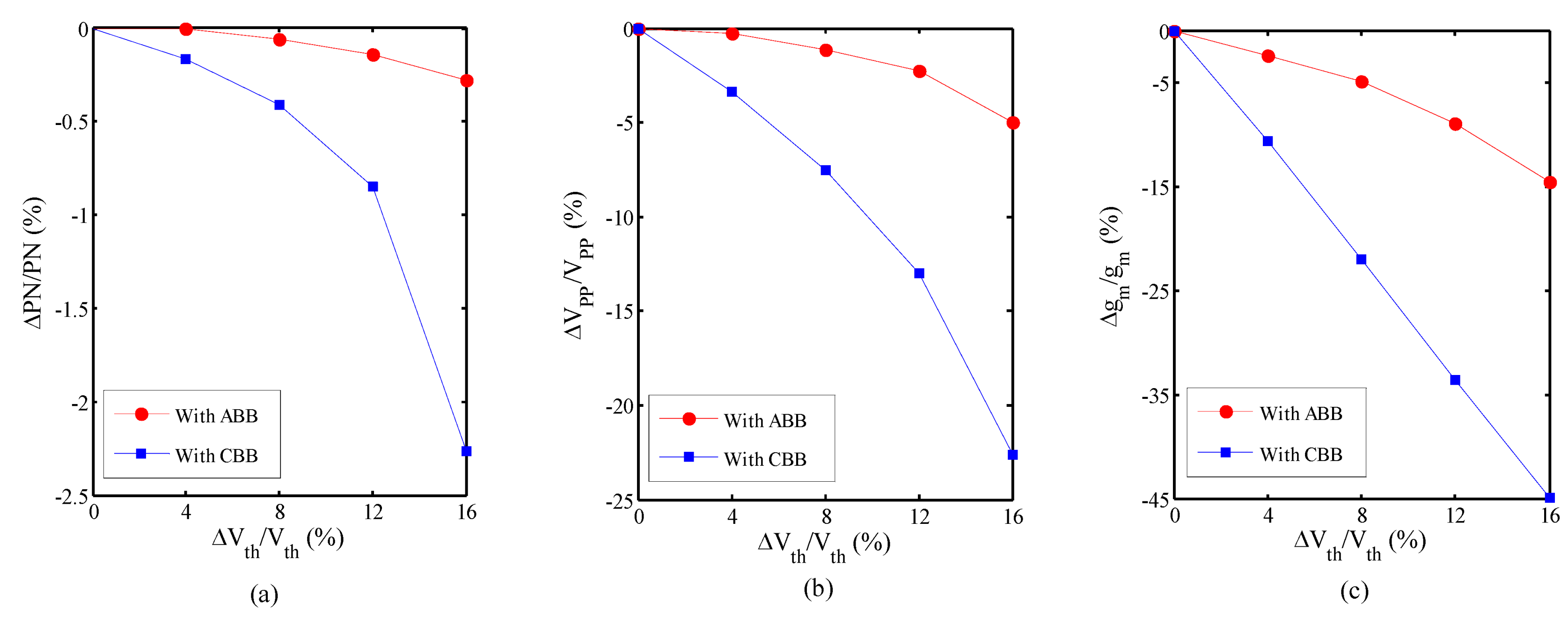
This paper investigates an adaptive body biasing (ABB) circuit to improve the reliability and variability of a low-voltage inductor–capacitor (LC) voltage-controlled oscillator (VCO). The ABB circuit provides VCO resilience to process variability and reliability variation through the threshold voltage adjustment of VCO’s transistors. Analytical equations considering the body bias effect are derived for the most important relations of the VCO and then the performance is verified using the post-layout simulation results. Under a 0.16% threshold voltage shift, the sensitivity of the normalized phase noise and transconductance of the VCO with the ABB circuit compared to the constant body bias (CBB) decreases by around 8.4 times and 3.1 times, respectively. Also, the sensitivity of the normalized phase noise and transconductance of the proposed VCO under 0.16% mobility variations decreases by around 1.5 times and 1.7 times compared to the CBB, respectively. The robustness of the VCO is also examined using process variation analysis through Monte Carlo and corner case simulations. The post-layout results in the 180 nm CMOS process indicate that the proposed VCO draws a power consumption of only 398 µW from a 0.6 V supply when the VCO frequency is 2.4 GHz. It achieves a phase noise of −123.19 dBc/Hz at a 1 MHz offset and provides a figure of merit (FoM) of −194.82 dBc/Hz.
Keywords: VCO; threshold voltage; electron mobility; low voltage; phase noise VCO; threshold voltage; electron mobility; low voltage; phase noise