Article

Seamless MEMS-INS/Geomagnetic Navigation System Based on Deep-Learning Strong Tracking Square-Root Cubature Kalman Filter


The State Key Laboratory of Dynamic Measurement Technology, and The School of Instrument and Electronics, North University of China, Taiyuan 030051, China
*
Author to whom correspondence should be addressed.
Micromachines 2023, 14(10), 1935; https://doi.org/10.3390/mi14101935
Submission received: 28 September 2023 / Revised: 11 October 2023 / Accepted: 14 October 2023 / Published: 15 October 2023
(This article belongs to the Special Issue MEMS Inertial Device, 2nd Edition)

Abstract

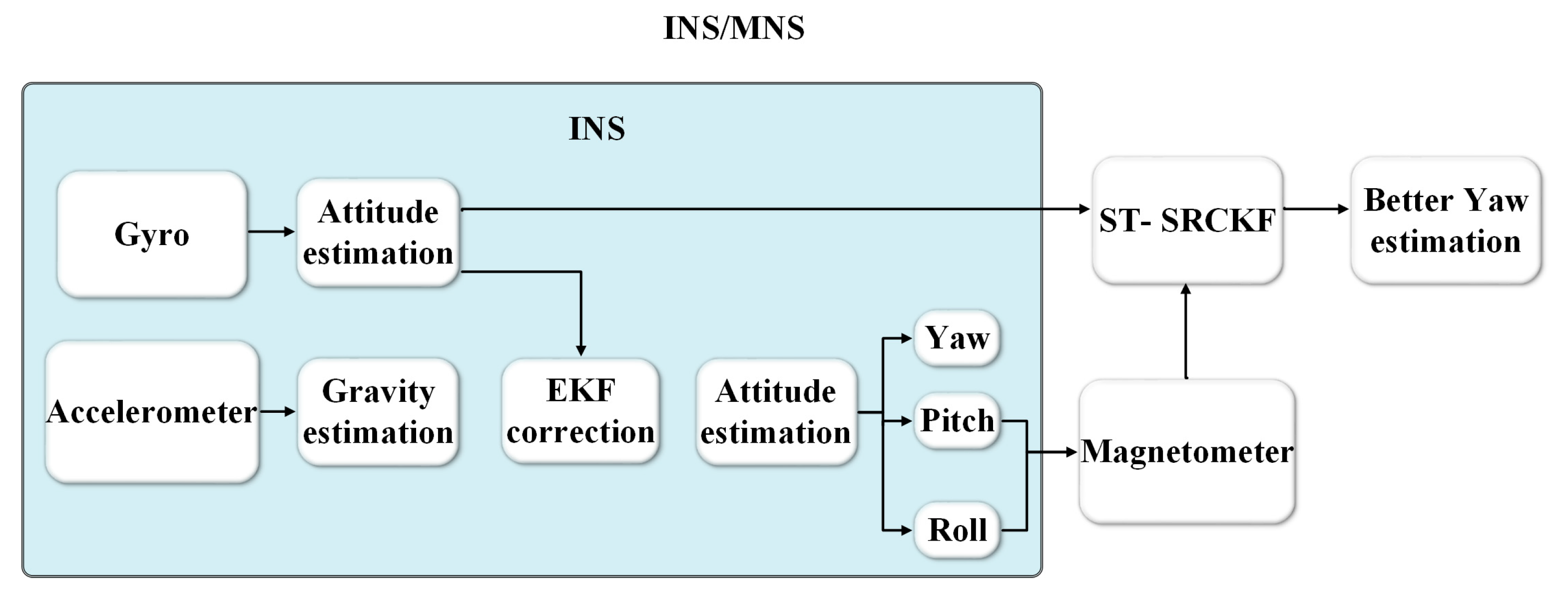
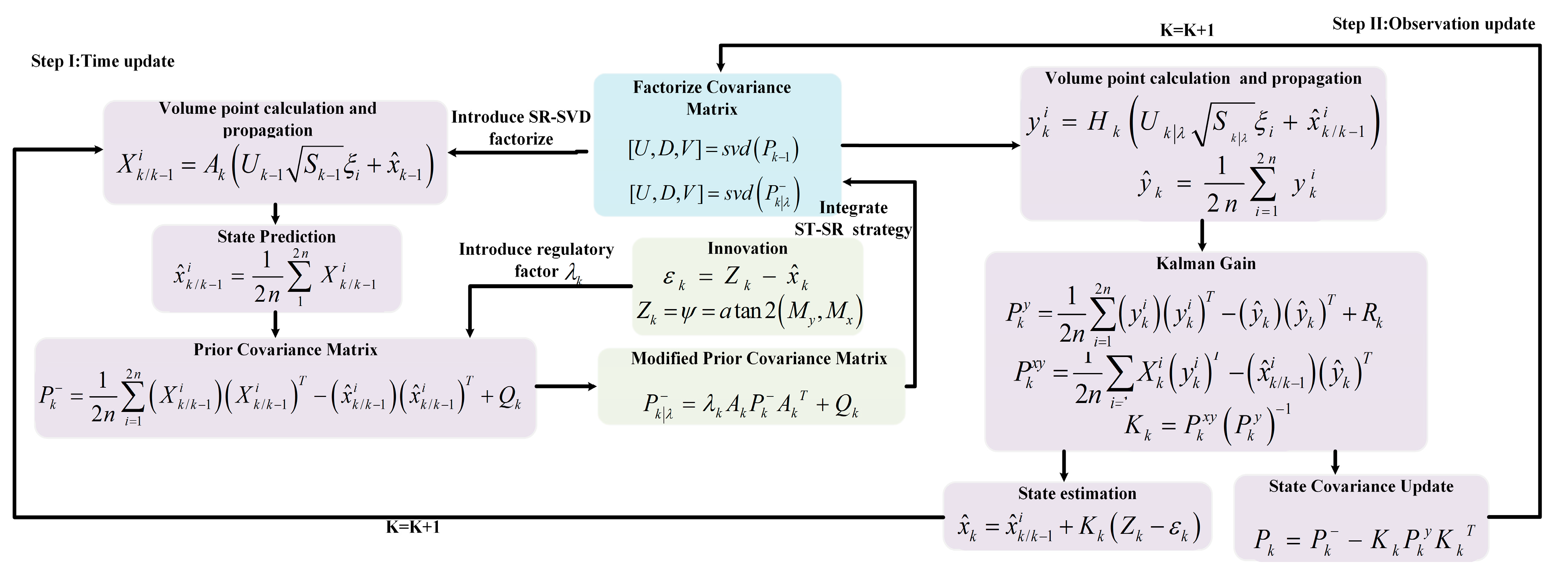
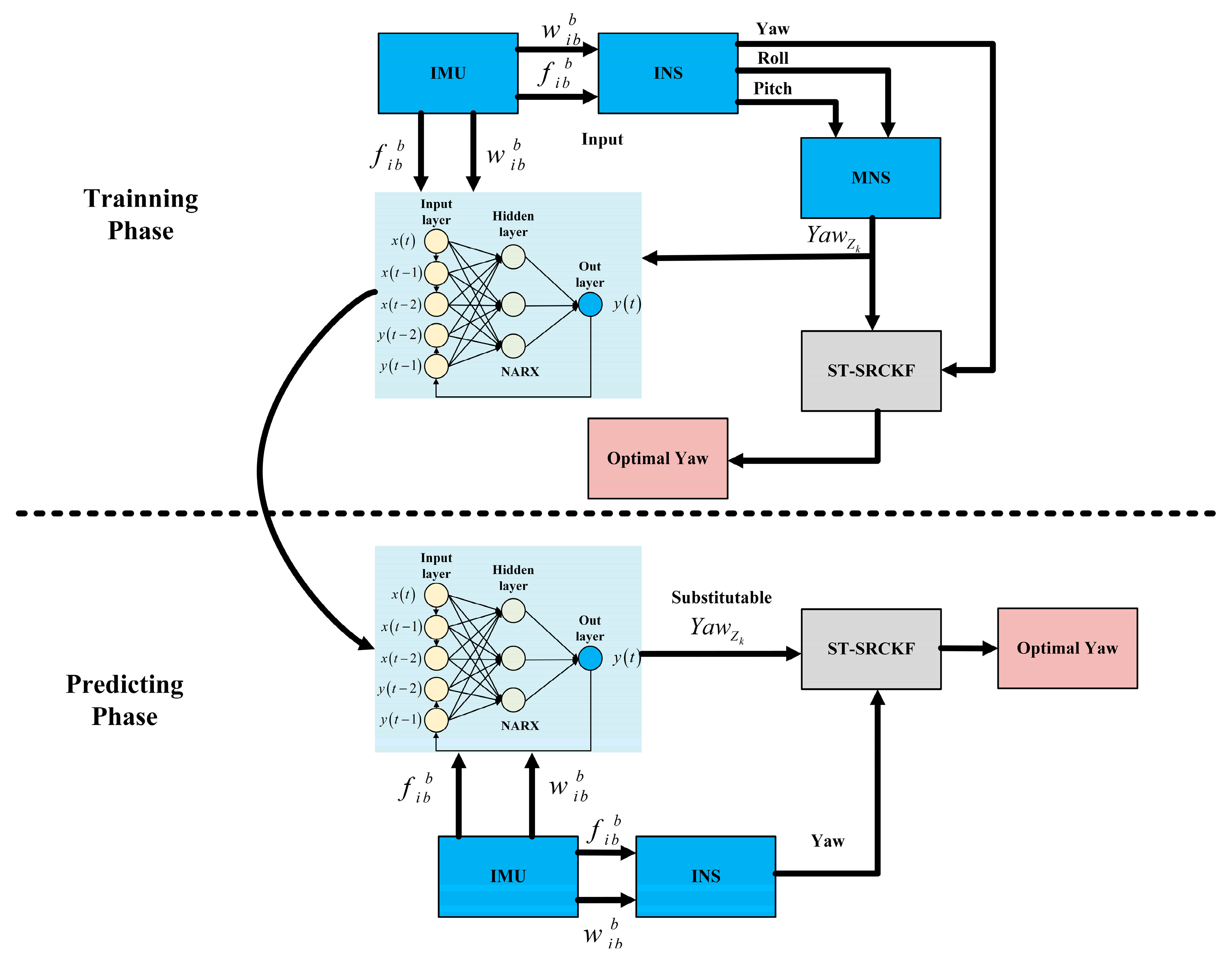
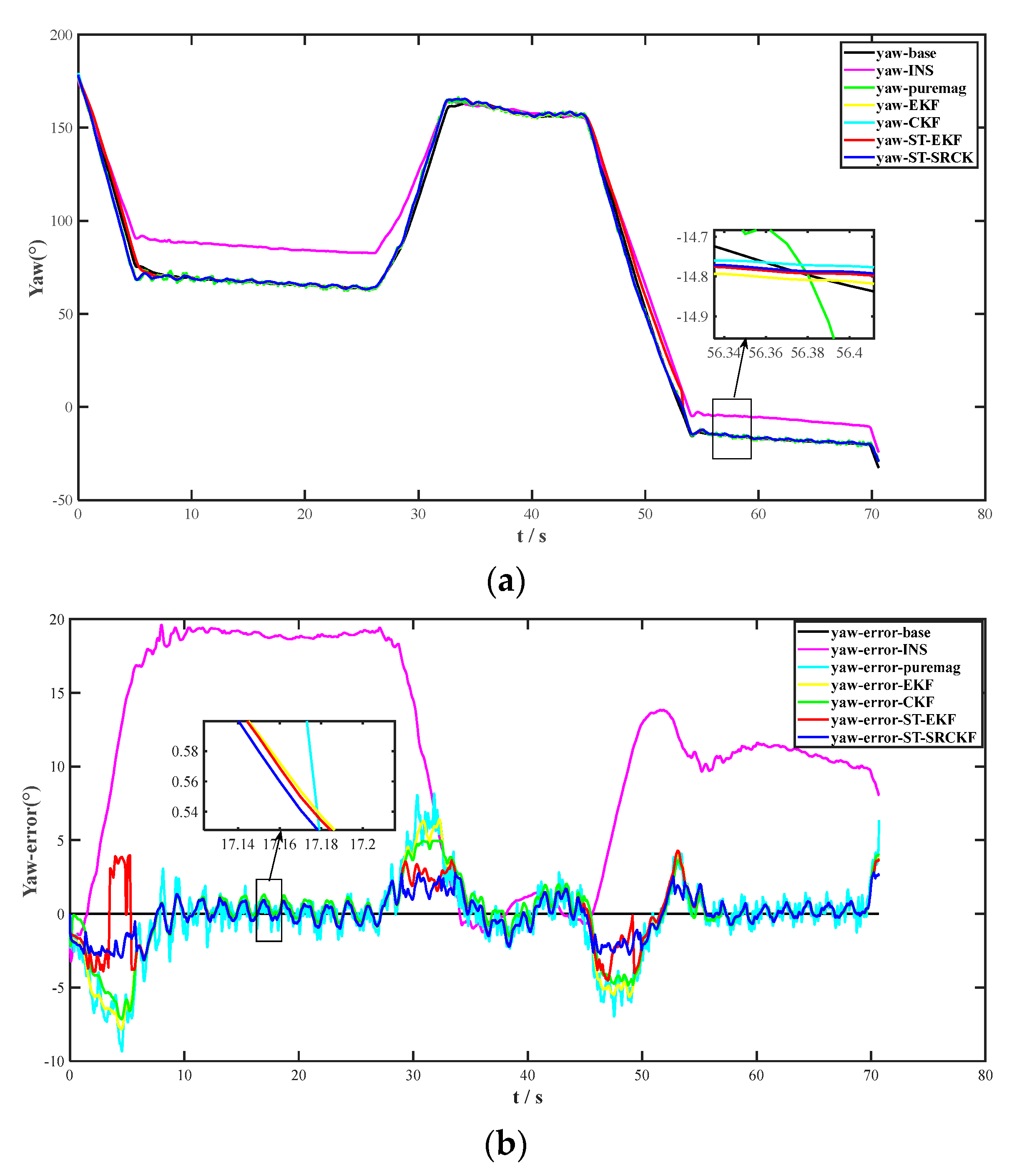
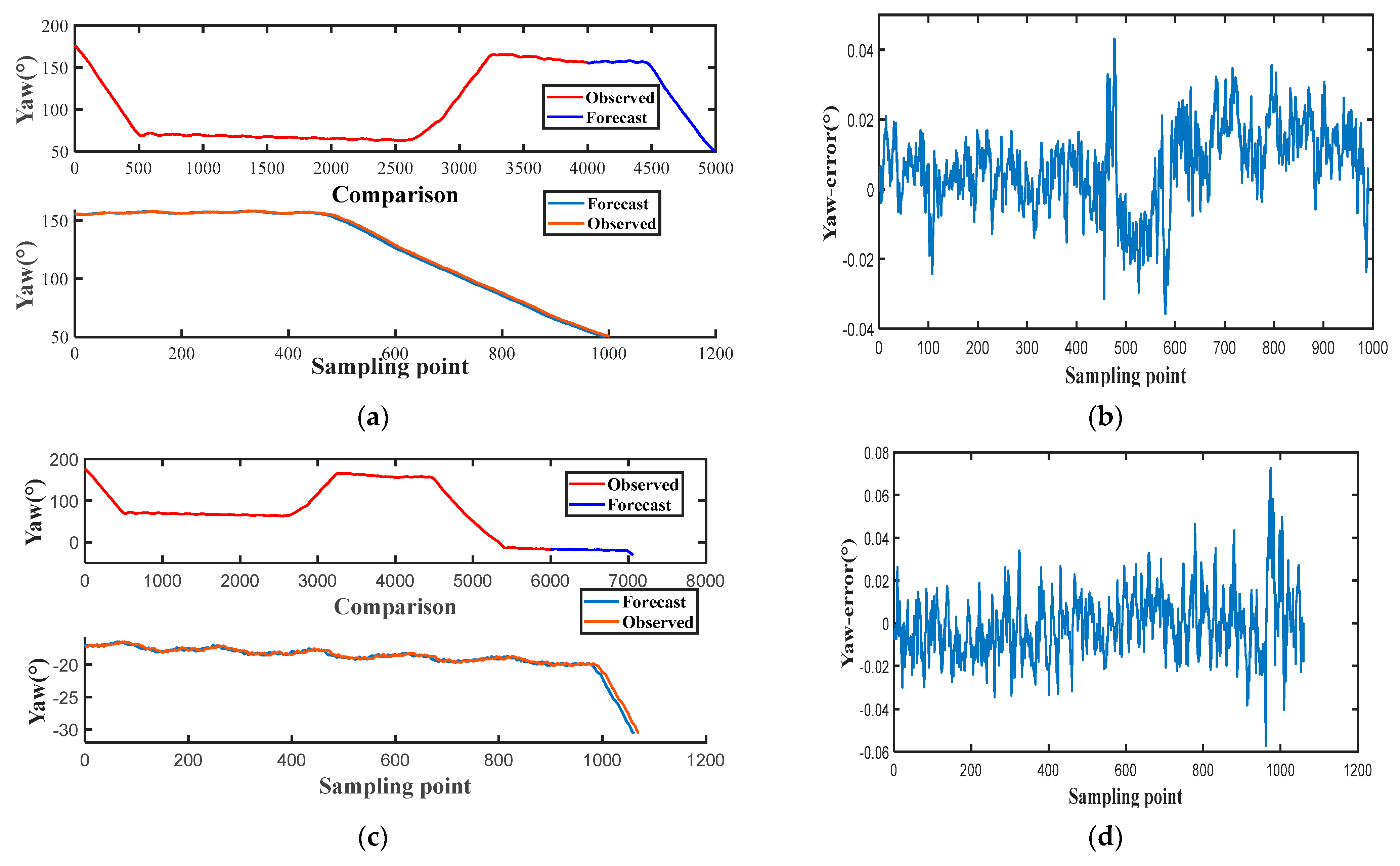
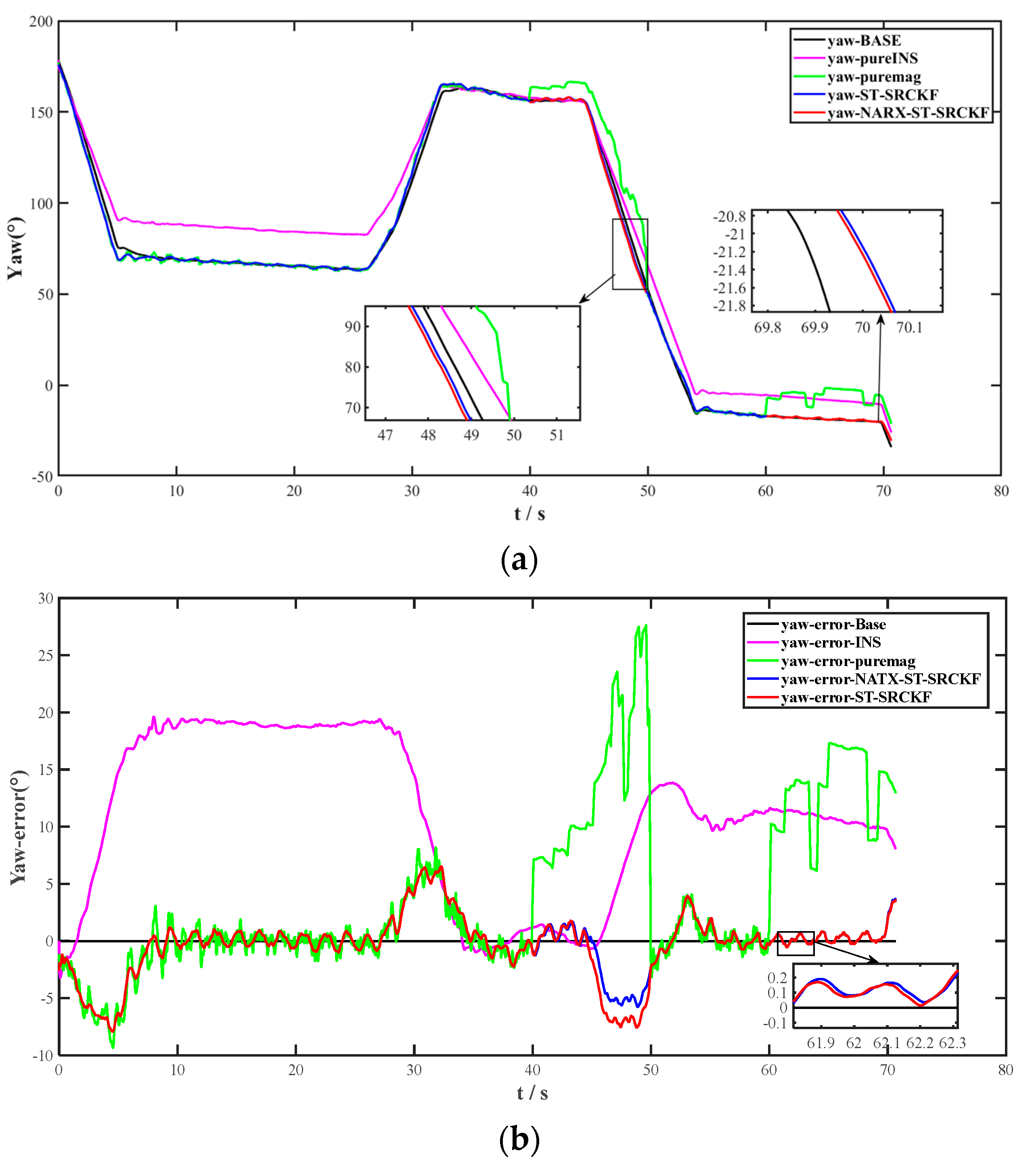
To suppress inertial navigation system drift and improve the seamless navigation capability of microelectromechanical system-inertial navigation systems/geomagnetic navigation systems (MEMS-INS/MNS) in geomagnetically unlocked environments, this paper proposes a hybrid seamless MEMS-INS/MNS strategy combining a strongly tracked square-root cubature Kalman filter with deep self-learning (DSL-STSRCKF). The proposed DSL-STSRCKF method consists of two innovative steps: (i) The relationship between the deep Kalman filter gain and the optimal estimation is established. In this paper, combining the two auxiliary methods of strong tracking filtering and square-root filtering based on singular value decomposition, the heading accuracy error of ST-SRCKF can reach 1.29°, which improves the heading accuracy by 90.10% and 9.20% compared to the traditional single INS and the traditional integrated navigation algorithm and greatly improves the robustness and computational efficiency. (ii) Providing deep self-learning capability for the ST-SRCKF by introducing a nonlinear autoregressive neural network (NARX) with exogenous inputs, which means that the heading accuracy can still reach 1.33° even during the MNS lockout period, and the heading accuracy can be improved by 89.80% compared with the single INS, realizing the continuous high-precision navigation estimation.
Keywords: deep self-learning; microelectromechanical system; cubature Kalman filtering; strong tracking filter; square-root filter; geomagnetic navigation; inertial navigation; integrated navigation deep self-learning; microelectromechanical system; cubature Kalman filtering; strong tracking filter; square-root filter; geomagnetic navigation; inertial navigation; integrated navigation