Article

From Bioinspired Topographies toward Non-Wettable Neural Implants

by
Ali Sharbatian
1,2,
Kalyani Devkota
1,2,
Danesh Ashouri Vajari
1,2,*,† and
Thomas Stieglitz
1,2,3,†
1
Laboratory for Biomedical Microtechnology, Department of Microsystems Engineering (IMTEK), University of Freiburg, 79110 Freiburg, Germany
2
BrainLinks BrainTools, Institute for Machine-Brain Interfacing Technology (IMBIT), University of Freiburg, 79110 Freiburg, Germany
3
Bernstein Center Freiburg, University of Freiburg, 79104 Freiburg, Germany
*
Author to whom correspondence should be addressed.
These authors contributed equally to this work.
Micromachines 2023, 14(10), 1846; https://doi.org/10.3390/mi14101846
Submission received: 15 June 2023 / Revised: 21 September 2023 / Accepted: 26 September 2023 / Published: 27 September 2023

Abstract

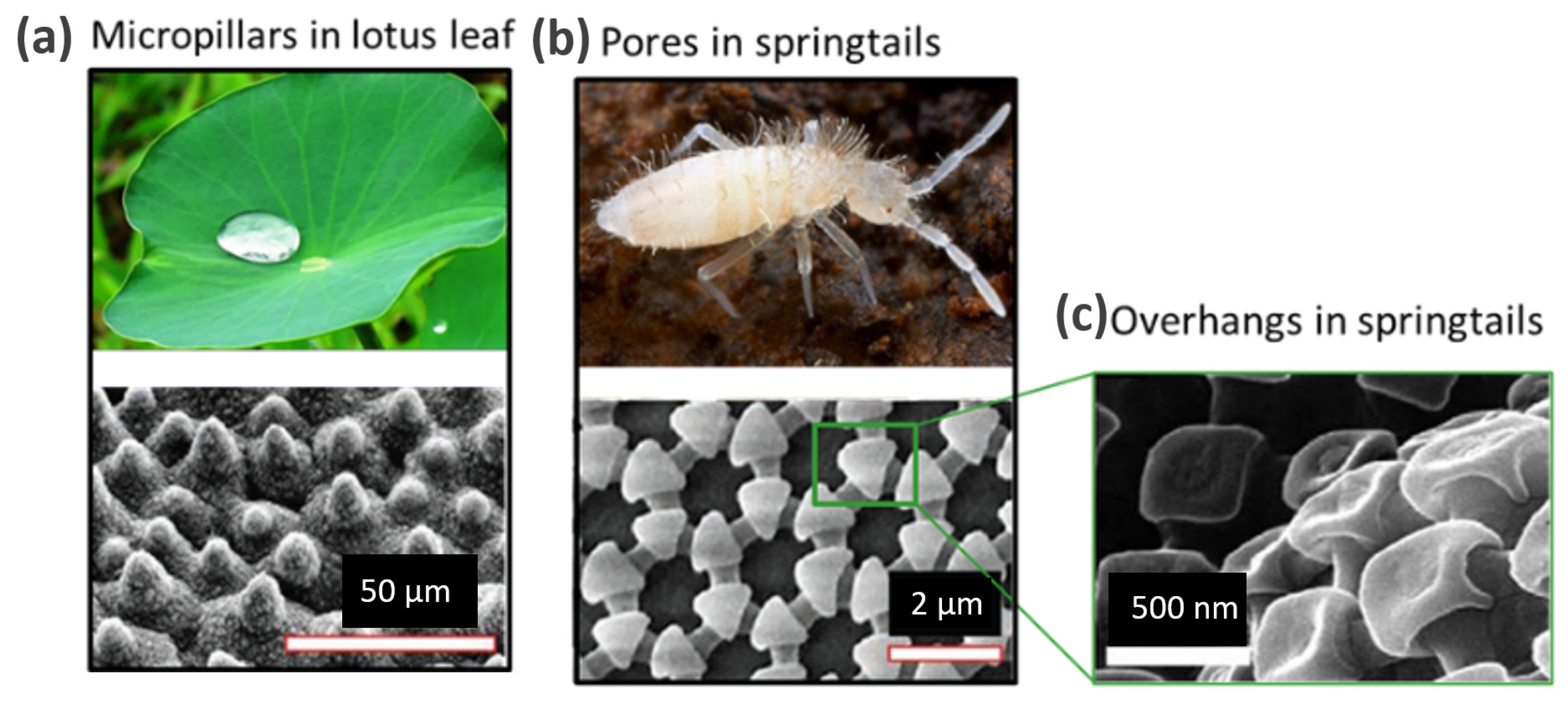
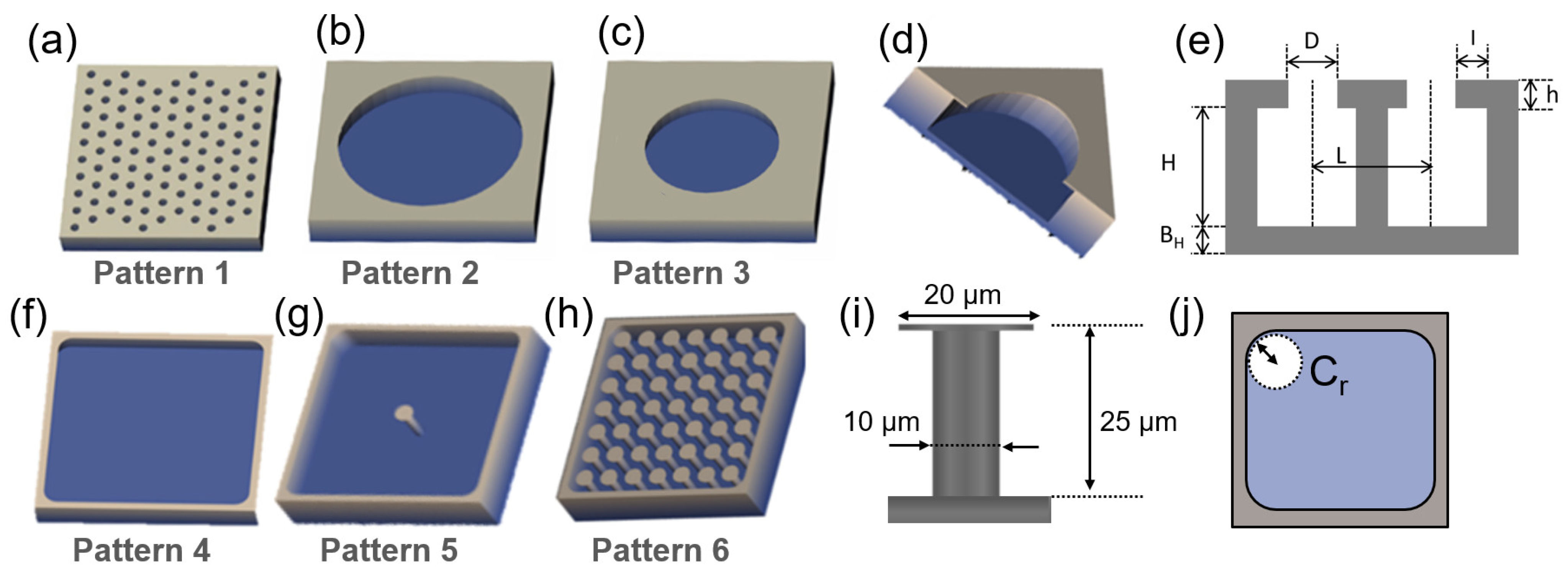
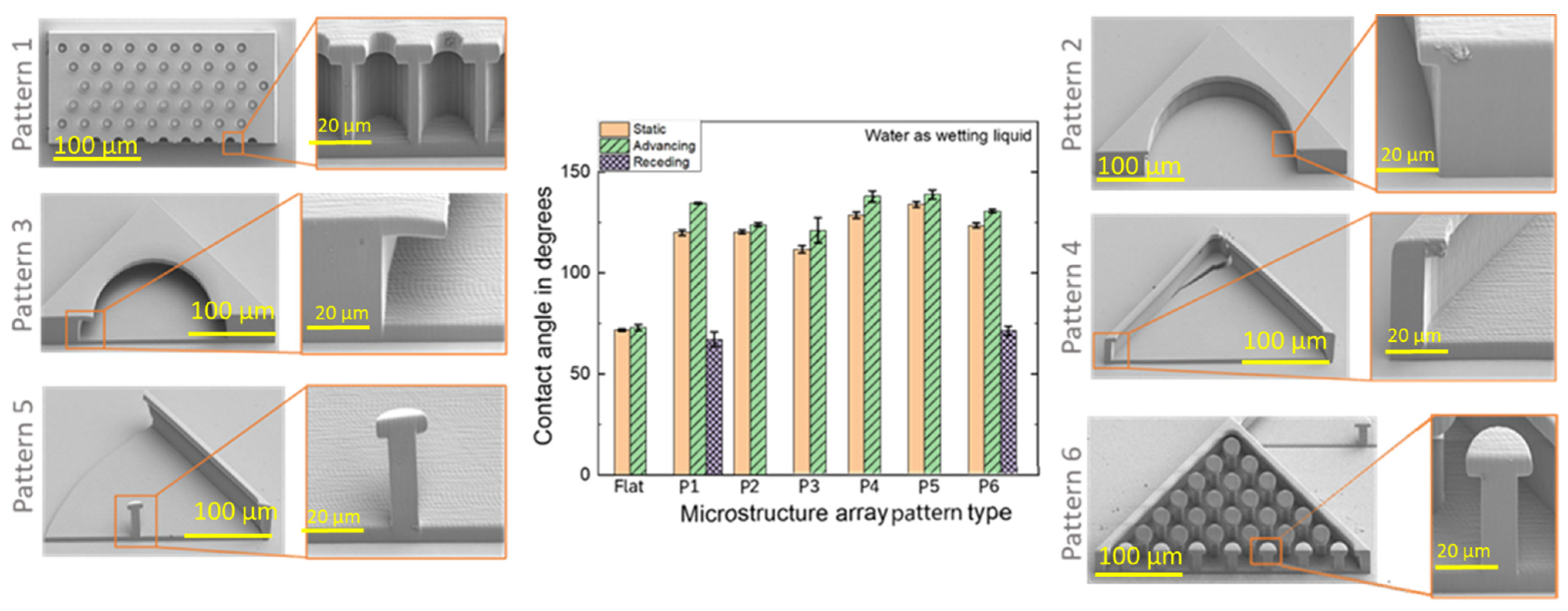
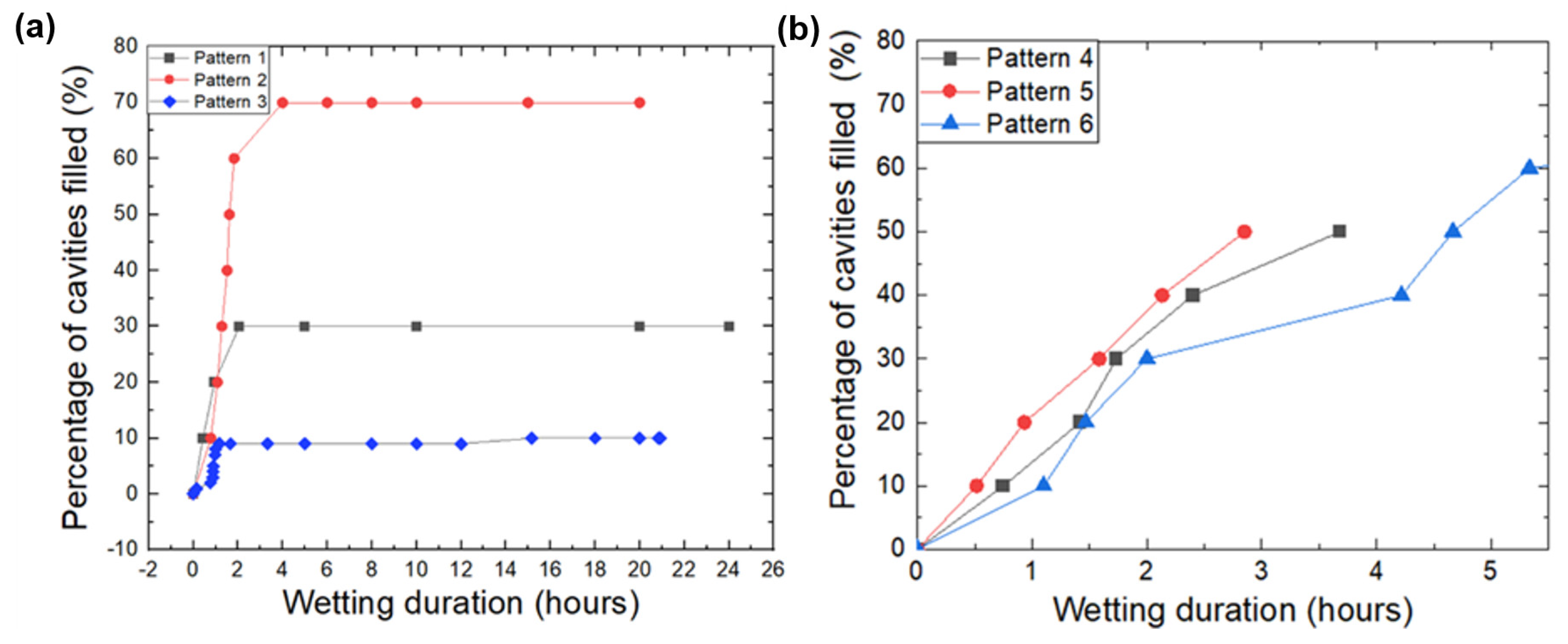
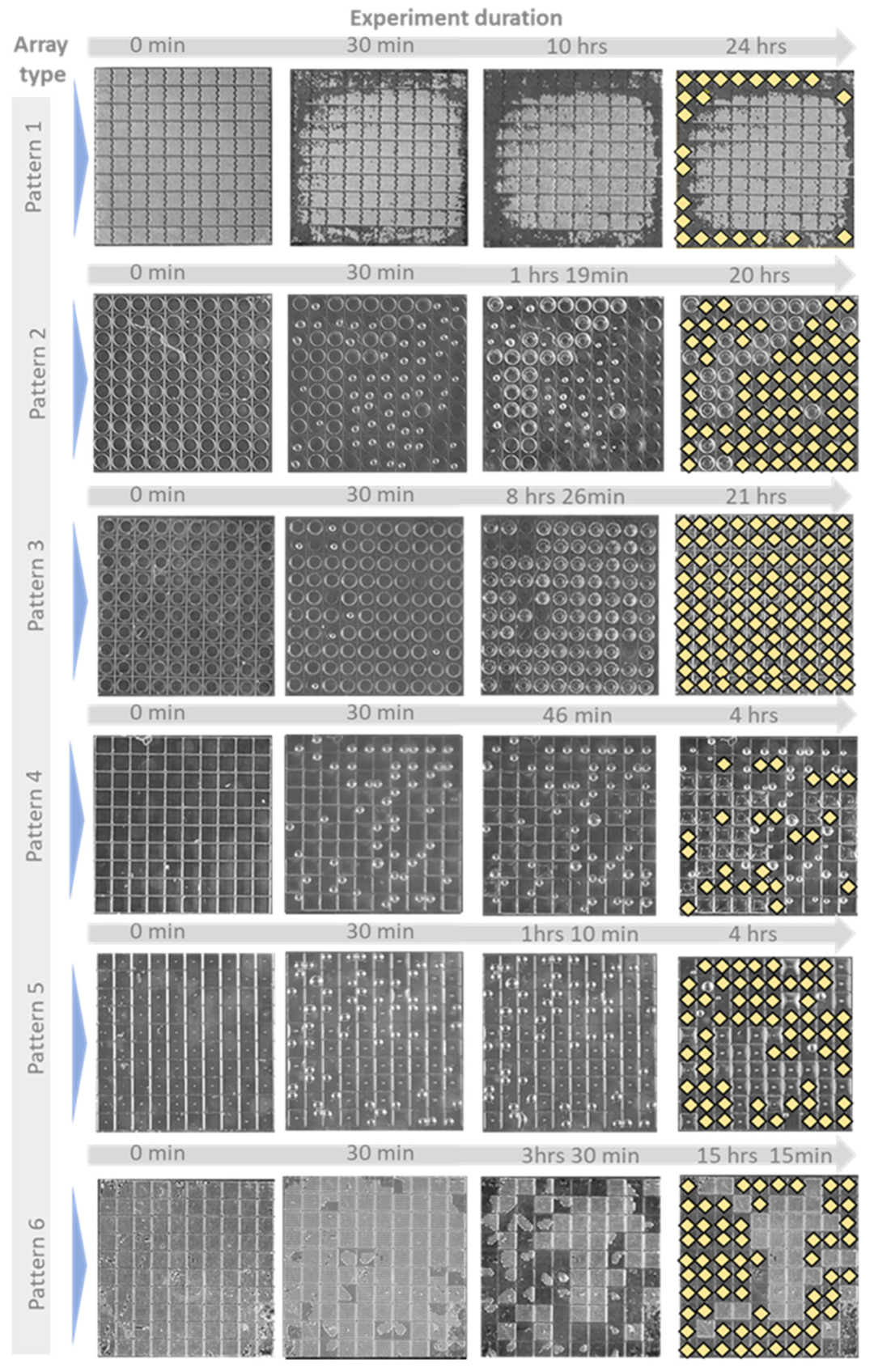
The present study investigates different design strategies to produce non-wettable micropatterned surfaces. In addition to the classical method of measuring the contact angle, the non-wettability is also discussed by means of the immersion test. Inspired by non-wettable structures found in nature, the effects of features such as reentrant cavities, micropillars, and overhanging layers are studied. We show that a densely populated array of small diameter cavities exhibits superior non-wettability, with 65% of the cavities remaining intact after 24 h of full immersion in water. In addition, it is suggested that the wetting transition time is influenced by the length of the overhanging layer as well as by the number of columns within the cavity. Our findings indicate a non-wetting performance that is three times longer than previously reported in the literature for a small, densely populated design with cavities as small as 10 μm in diameter. Such properties are particularly beneficial for neural implants as they may reduce the interface between the body fluid and the solid state, thereby minimiing the inflammatory response following implantation injury. In order to assess the effectiveness of this approach in reducing the immune response induced by neural implants, further in vitro and in vivo studies will be essential.
Keywords: non-wettability; microcavity; micropillars; air-pocket; overhang layer non-wettability; microcavity; micropillars; air-pocket; overhang layer