Article

Shape Morphable Hydrogel/Elastomer Bilayer for Implanted Retinal Electronics

1
Macromolecular Science and Engineering, University of Michigan, Ann Arbor, MI 48109, USA
2
Department of Materials Science and Engineering, University of Michigan, Ann Arbor, MI 48109, USA
3
Department of Chemical Engineering, University of Michigan, Ann Arbor, MI 48109, USA
4
Department of Biomedical Engineering, University of Michigan, Ann Arbor, MI 48109, USA
5
Department of Chemistry, University of Michigan, Ann Arbor, MI 48109, USA
6
Biointerfaces Institute, University of Michigan, Ann Arbor, MI 48109, USA
7
Department of Ophthalmology and Visual Sciences, University of Michigan, Ann Arbor, MI 48109, USA
*
Authors to whom correspondence should be addressed.
Micromachines 2020, 11(4), 392; https://doi.org/10.3390/mi11040392
Submission received: 1 March 2020 / Revised: 3 April 2020 / Accepted: 6 April 2020 / Published: 9 April 2020
(This article belongs to the Special Issue Micro/Nanofabrication for Retinal Implants)

Abstract

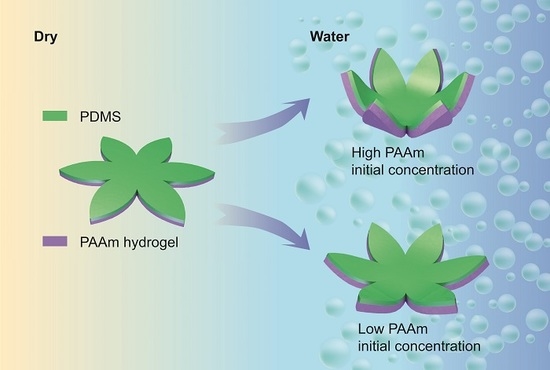
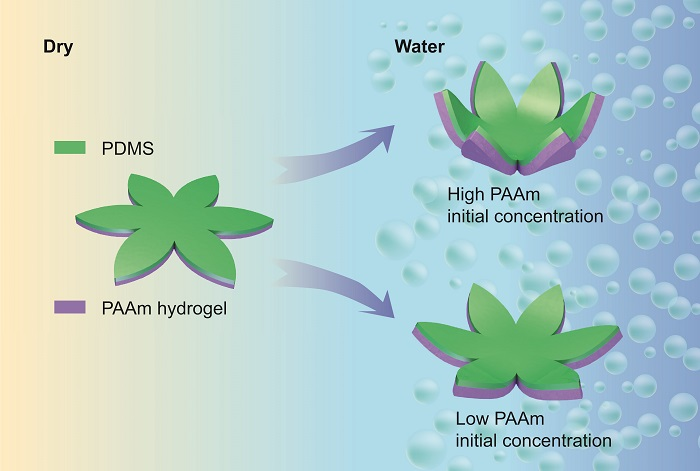
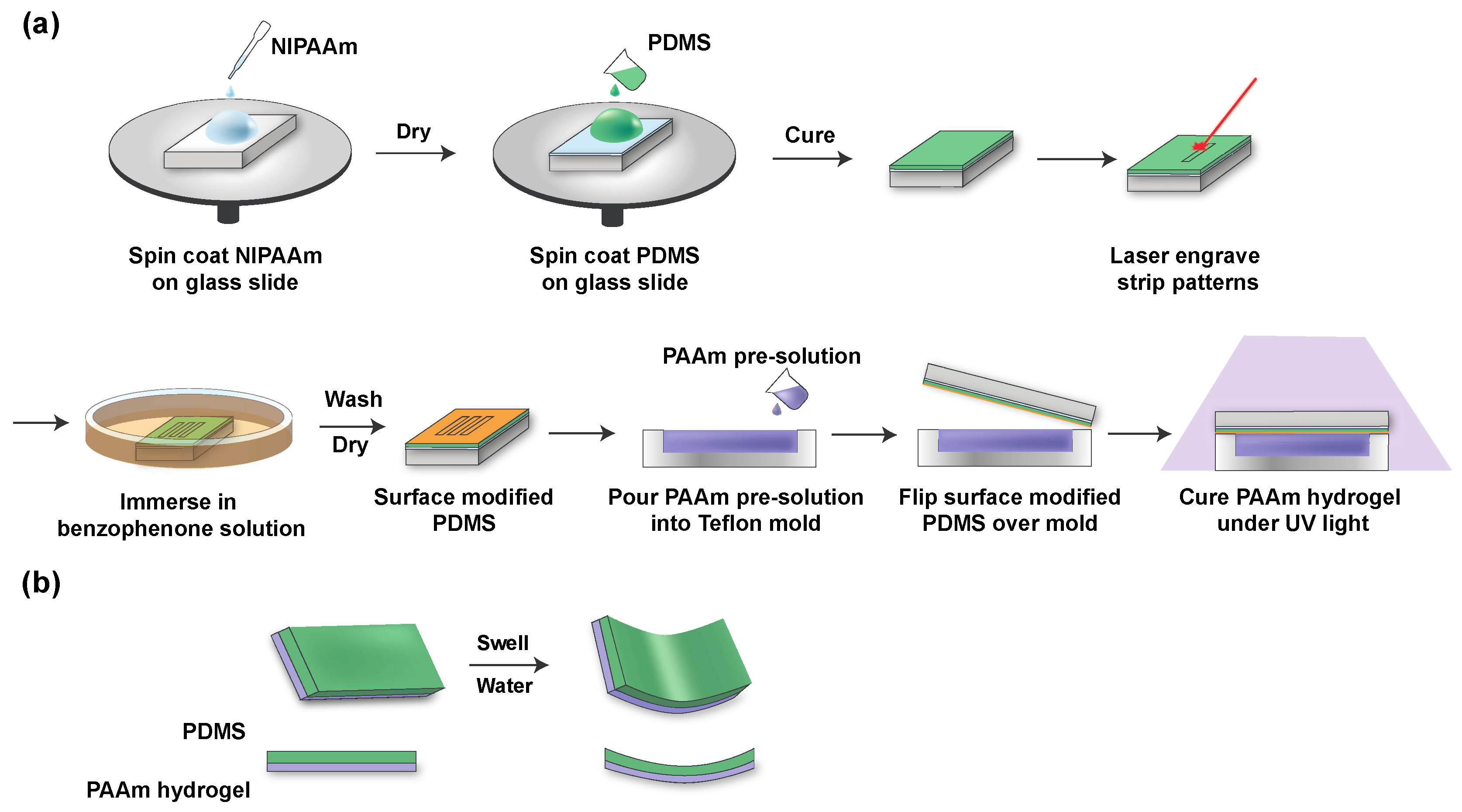
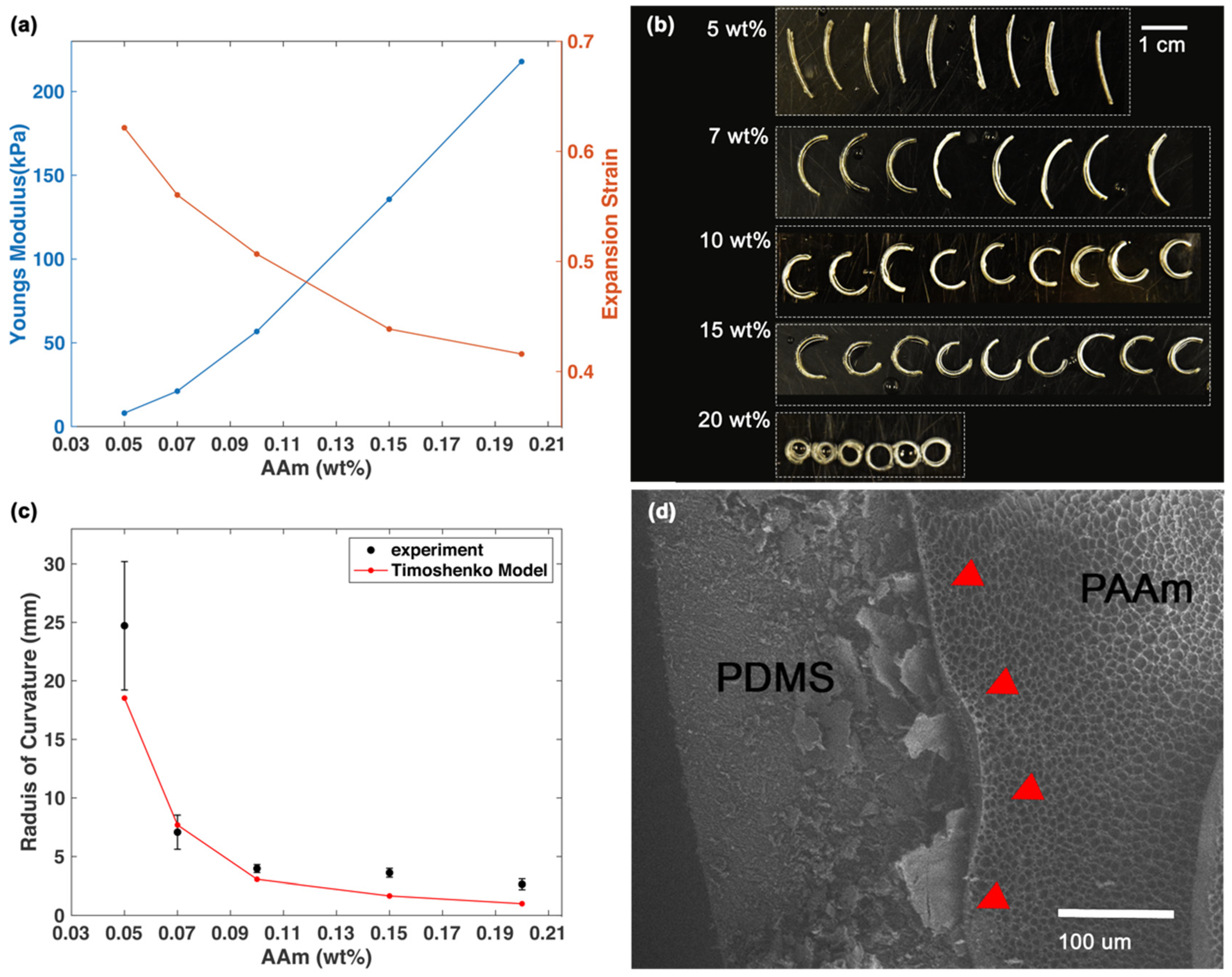
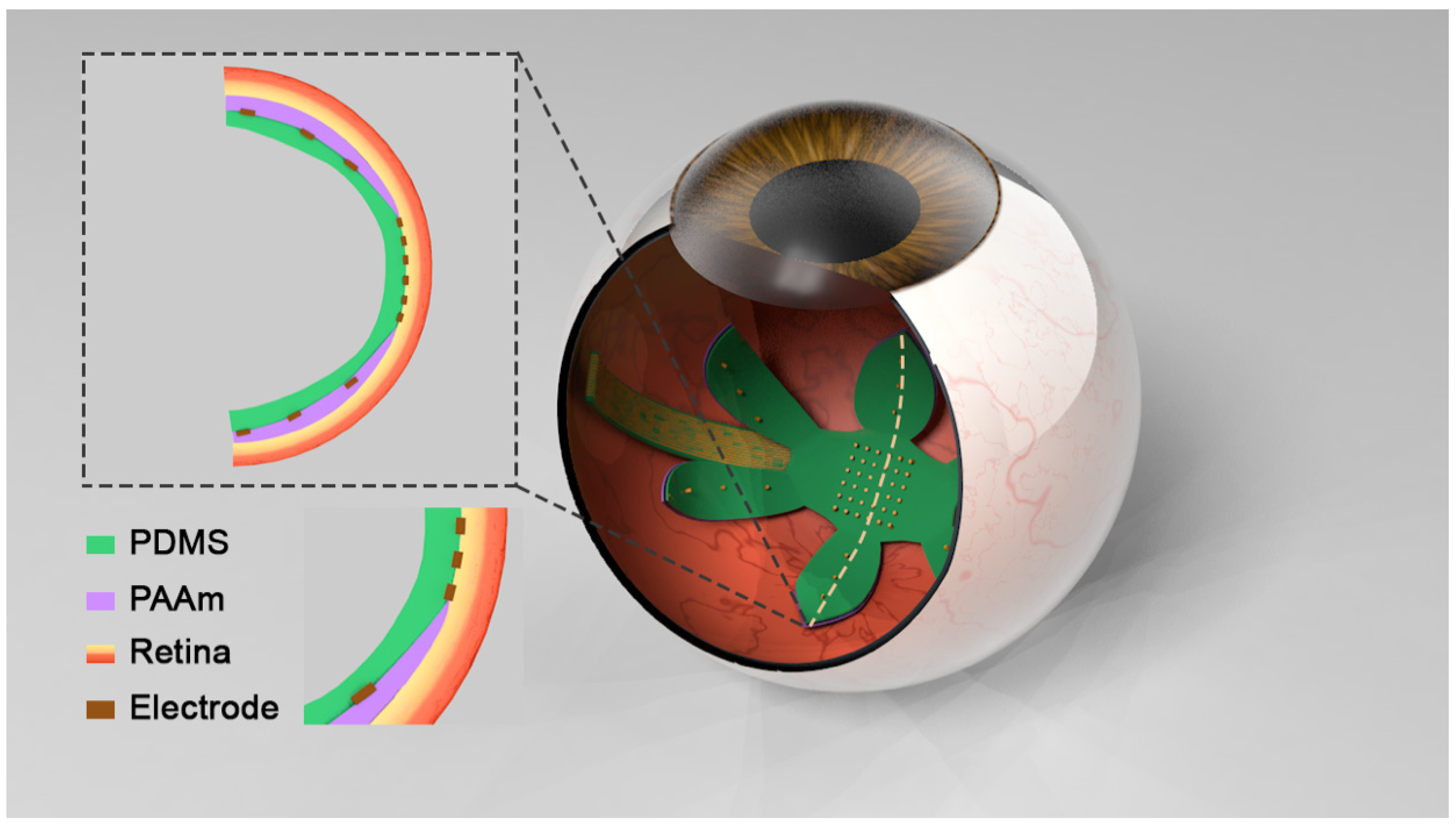
Direct fabrication of a three-dimensional (3D) structure using soft materials has been challenging. The hybrid bilayer is a promising approach to address this challenge because of its programable shape-transformation ability when responding to various stimuli. The goals of this study are to experimentally and theoretically establish a rational design principle of a hydrogel/elastomer bilayer system and further optimize the programed 3D structures that can serve as substrates for multi-electrode arrays. The hydrogel/elastomer bilayer consists of a hygroscopic polyacrylamide (PAAm) layer cofacially laminated with a water-insensitive polydimethylsiloxane (PDMS) layer. The asymmetric volume change in the PAAm hydrogel can bend the bilayer into a curvature. We manipulate the initial monomer concentrations of the pre-gel solutions of PAAm to experimentally and theoretically investigate the effect of intrinsic mechanical properties of the hydrogel on the resulting curvature. By using the obtained results as a design guideline, we demonstrated stimuli-responsive transformation of a PAAm/PDMS flower-shaped bilayer from a flat bilayer film to a curved 3D structure that can serve as a substrate for a wide-field retinal electrode array.
Keywords: hydrogel; bilayer; responsive materials; retinal prosthesis; shape memory materials hydrogel; bilayer; responsive materials; retinal prosthesis; shape memory materials
Graphical Abstract