Article

Development of A New Type of 2-DOF Piezo-Actuated Pseudo-Decoupled Compliant Mechanism for Elliptical Vibration Machining


School of Mechanical and Aerospace Engineering, Jilin University, Changchun 130022, China
*
Author to whom correspondence should be addressed.
Micromachines 2019, 10(2), 122; https://doi.org/10.3390/mi10020122
Submission received: 19 January 2019 / Revised: 2 February 2019 / Accepted: 11 February 2019 / Published: 13 February 2019

Abstract

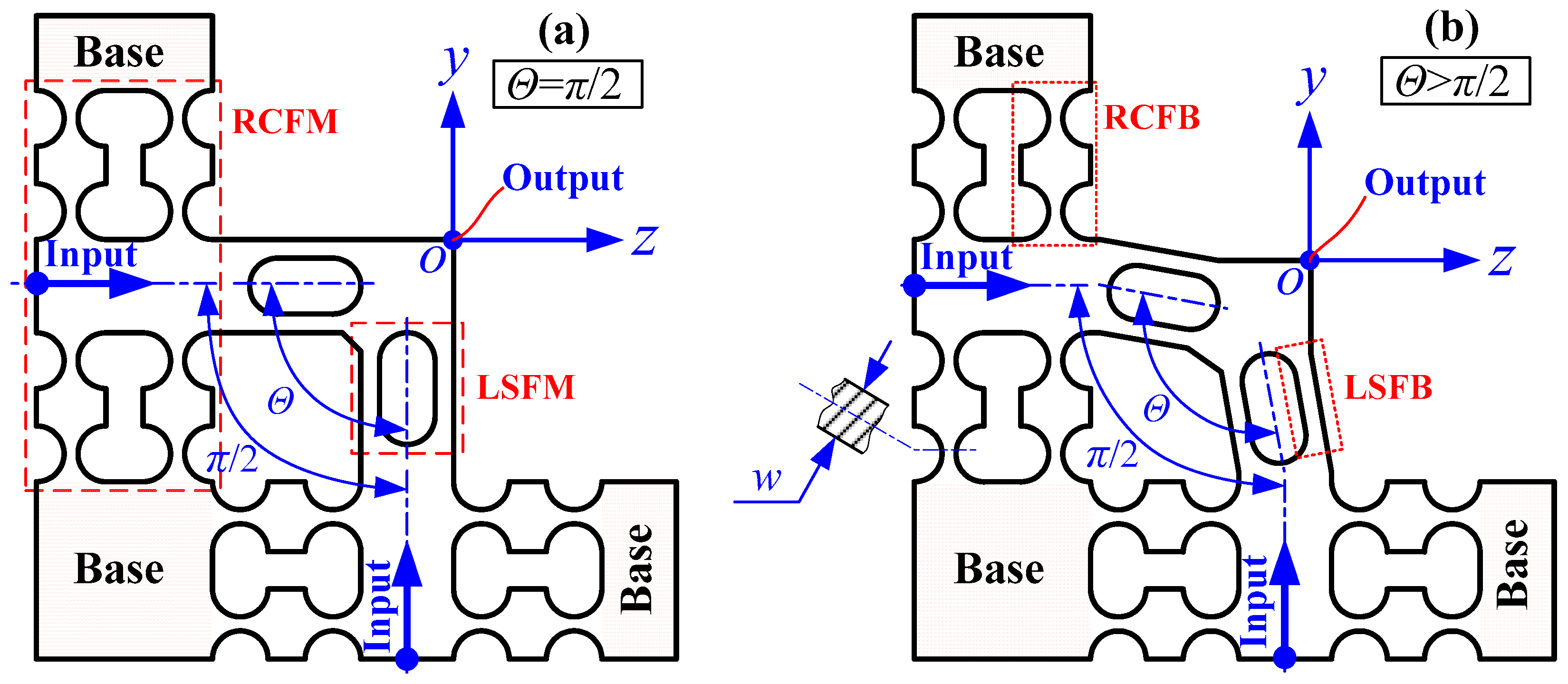
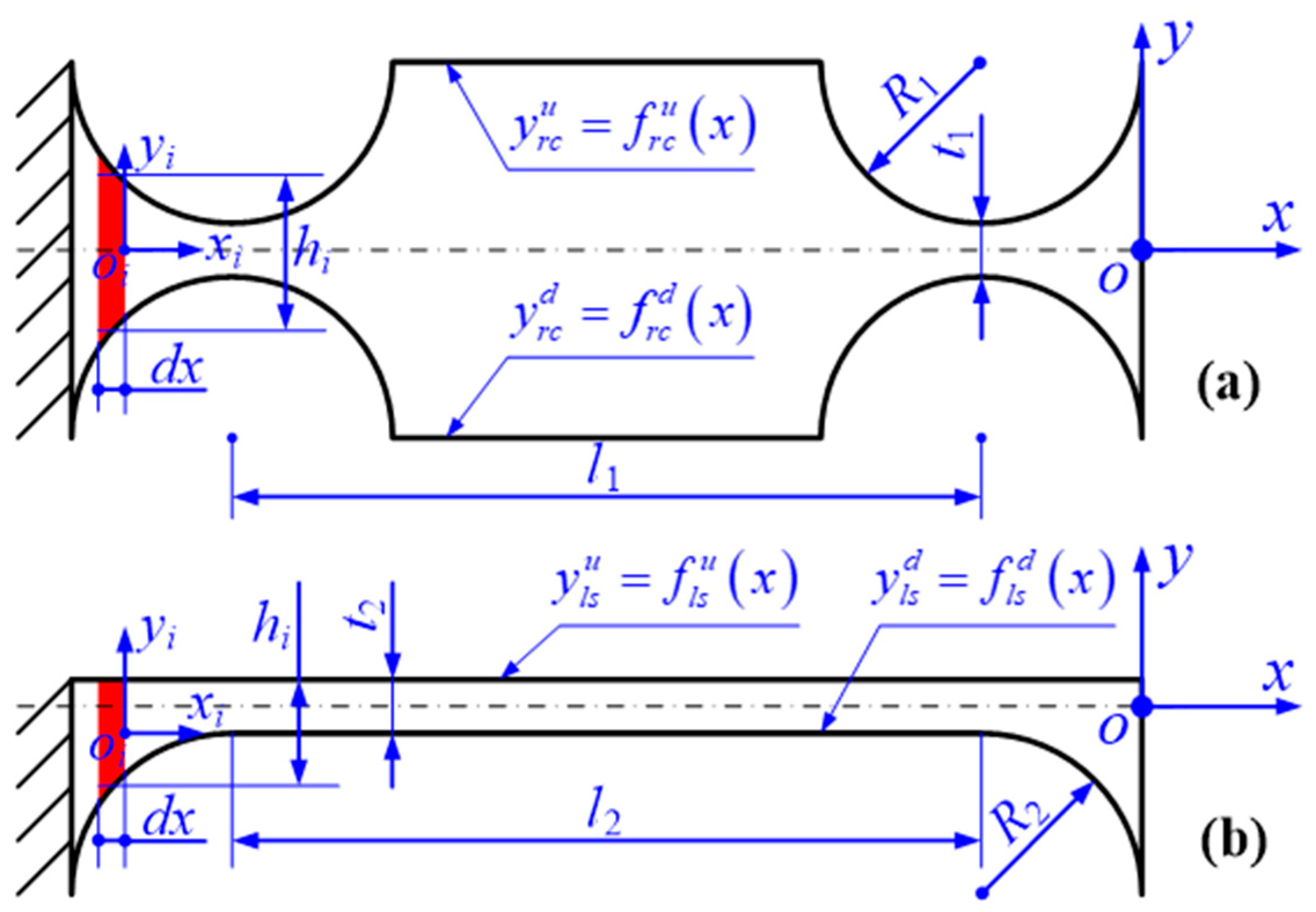
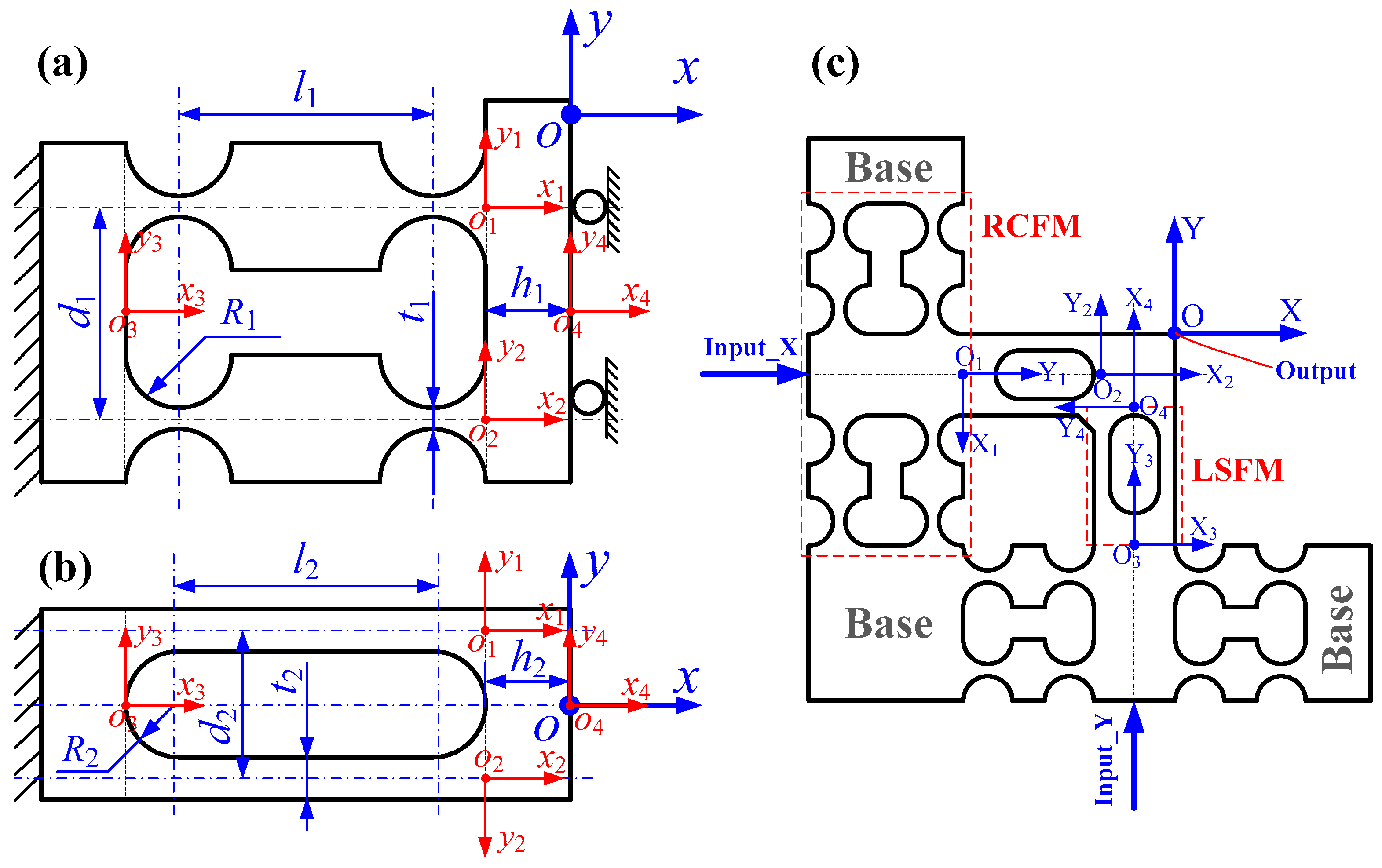
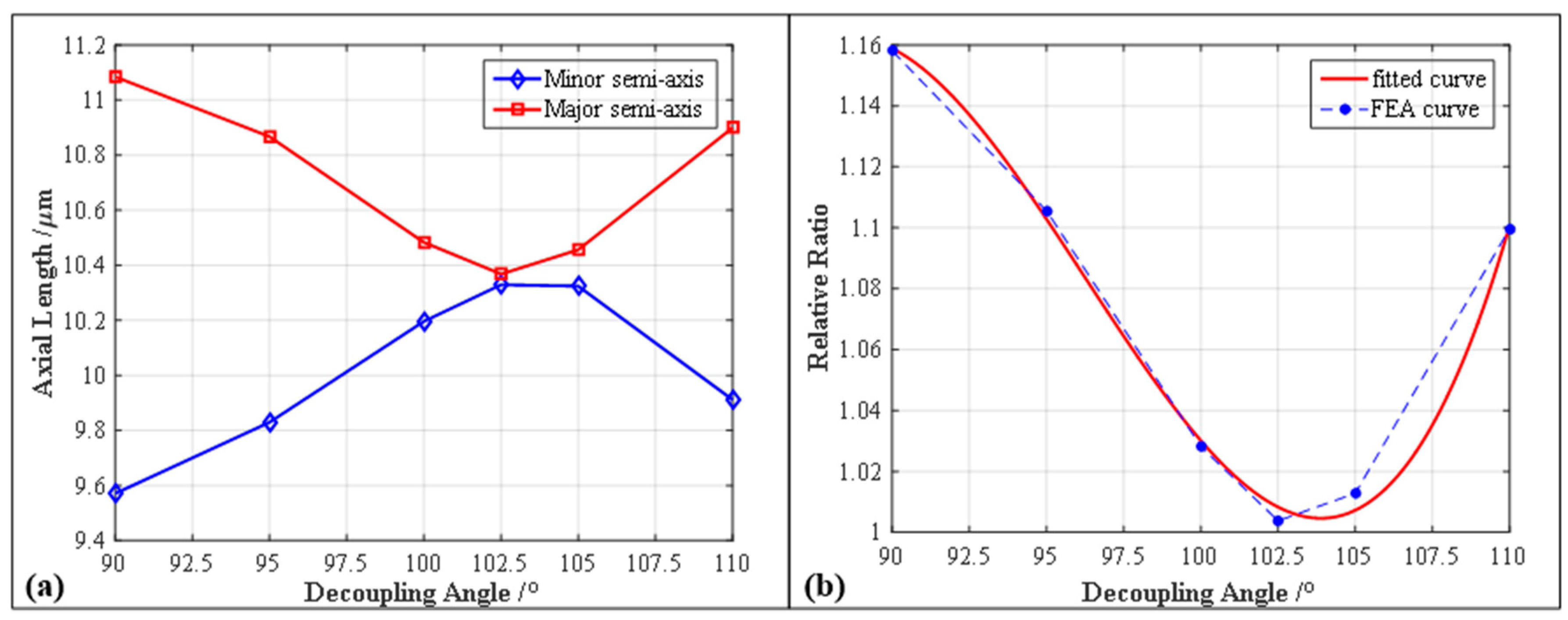
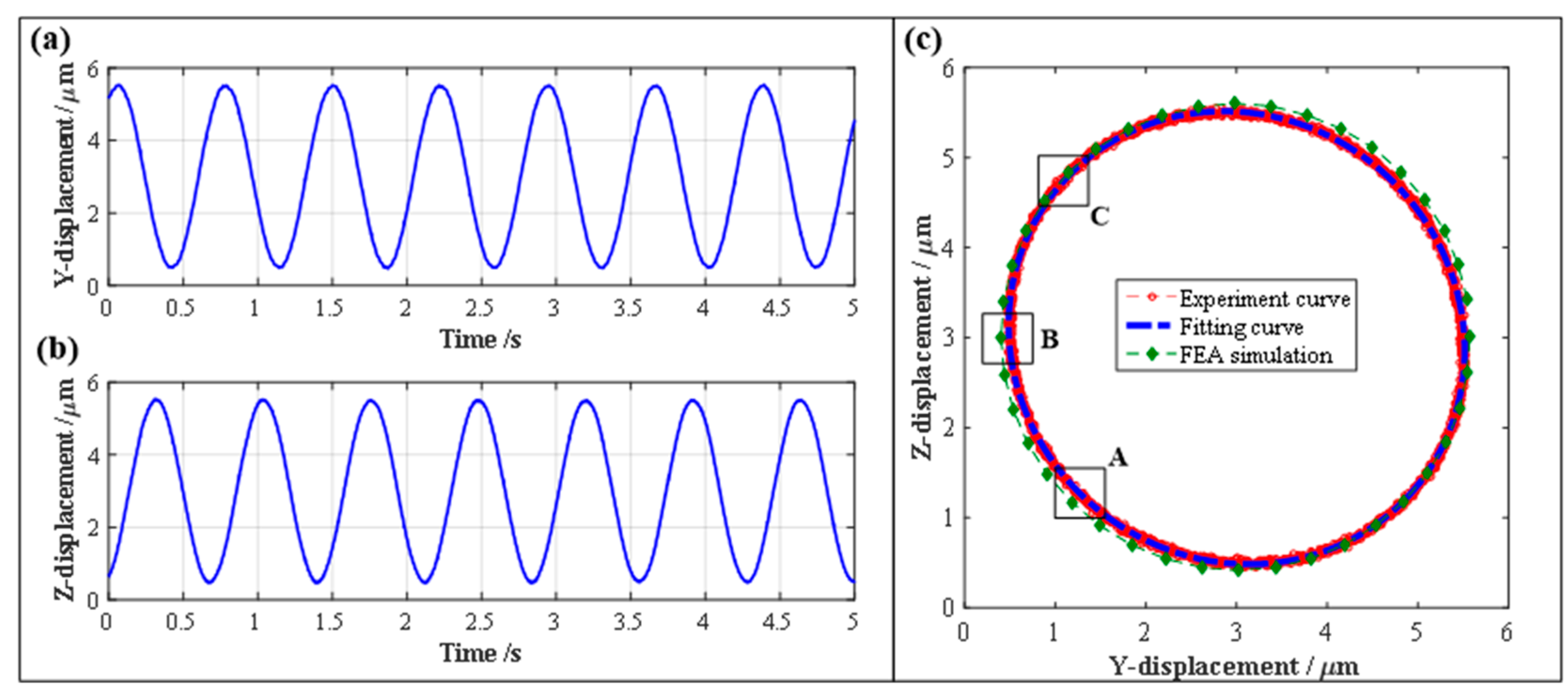
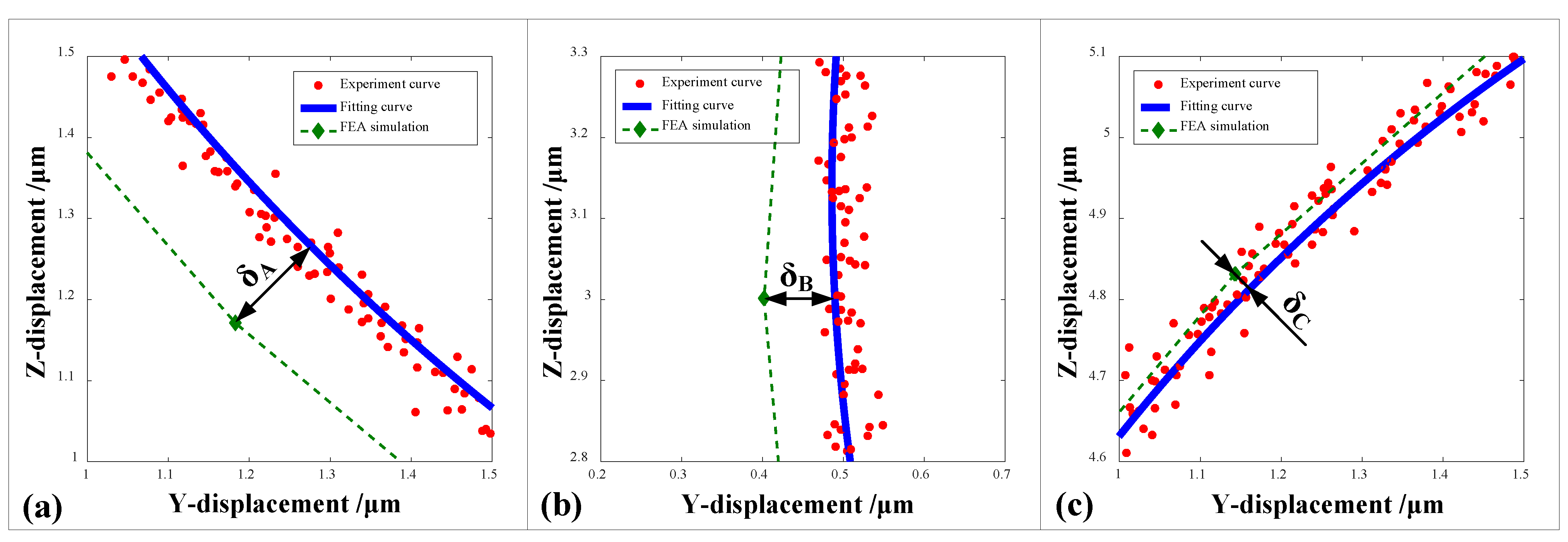
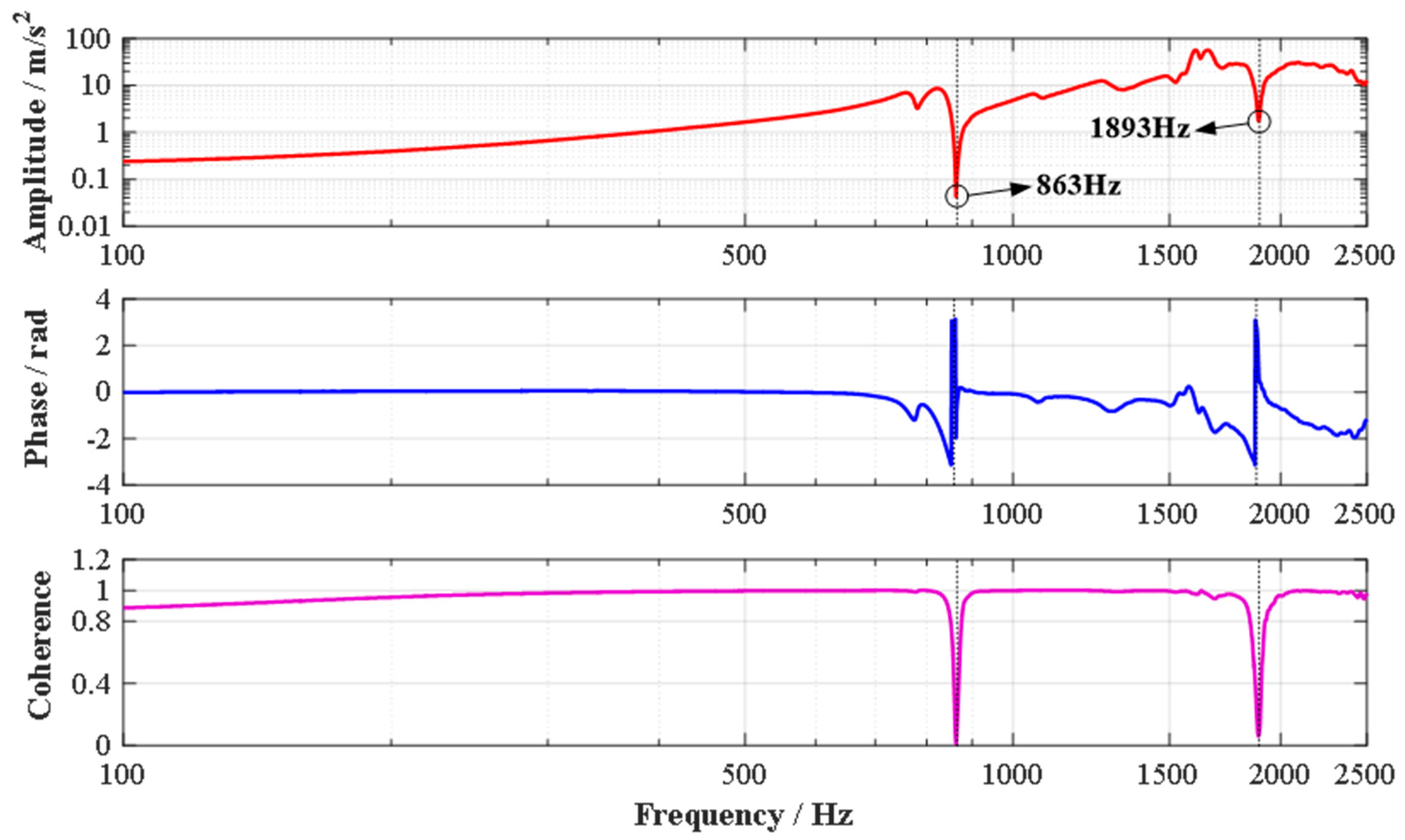
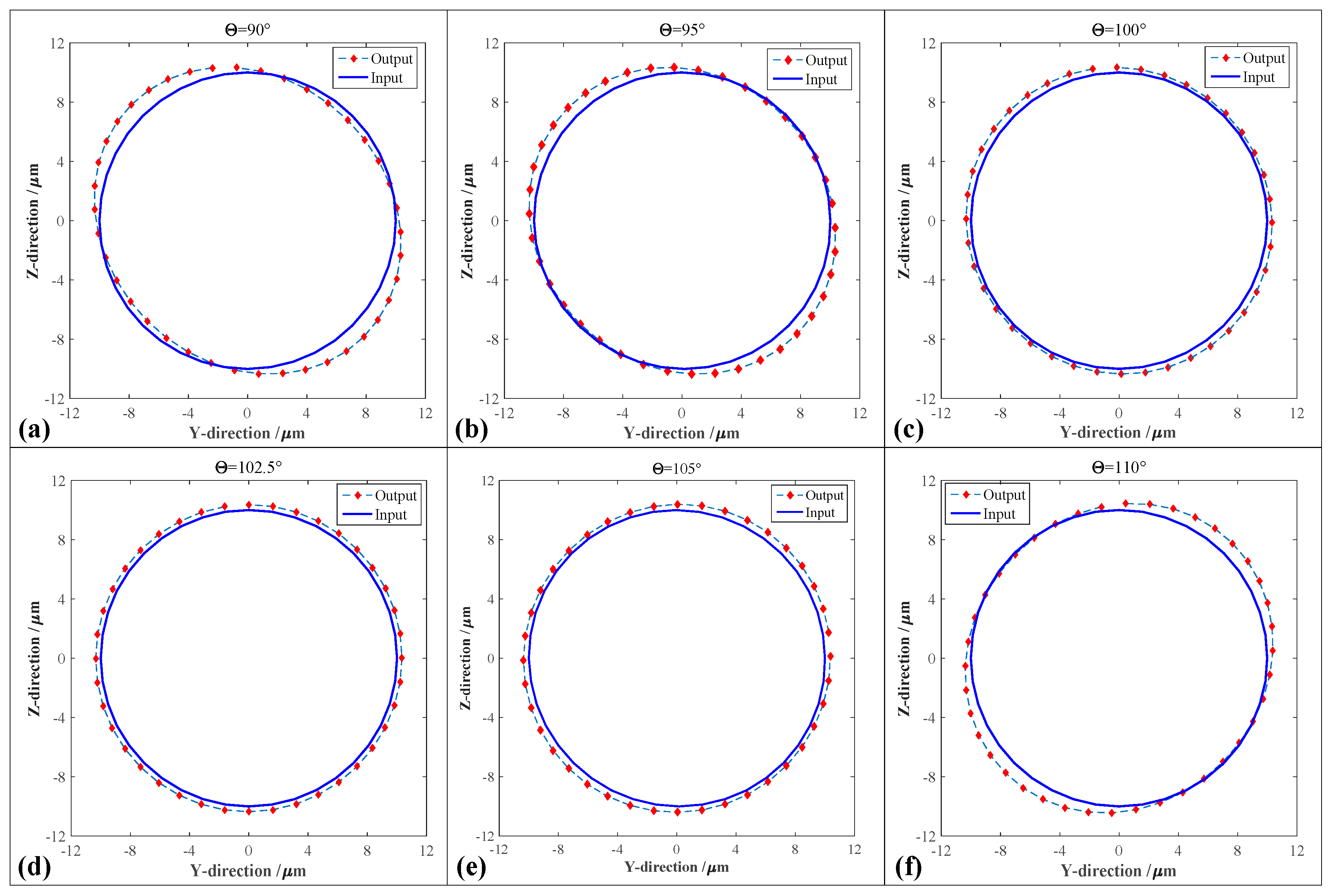
Currently, the elliptical vibration cutting/coining (EVC2) has been widely employed in fabricating various functional microstructure surfaces applied in many significant engineering fields. Therefore, for this study, a novel type of two-degree-of-freedom (2-DOF) piezoelectrically actuated pseudo-decoupled compliant mechanisms (PDCMs) with non-orthogonal decoupling structures, which can exactly generate the strict ellipse trajectories, was developed for improving the forming accuracies of the EVC2 microstructures. First, the compliance matrices of 2-DOF PDCMs were theoretically modeled using the popular finite beam-based matrix modeling (FBMM) and the matrix-based compliance modeling (MCM) methods, then finite element analysis (FEA) was adopted to verify the effectiveness of the built compliance model for the 2-DOF PDCM with arbitrary structure parameters. Second, the static FEA method was employed to systematically reveal the dependencies of the tracking accuracies of the elliptical trajectories on the decoupling structures of 2-DOF PDCMs. Moreover, their main dynamic performances were also investigated through the FEA-based harmonic response analysis and modal analysis. On these bases, the critical angle of the decoupling structure was optimally set at 102.5° so that the PDCMs had minimum shape distortions of the ellipse trajectories. Thirdly, a series of experiments was conducted on this PDCM system for practically investigating its kinematic and dynamic performances. The actual aspect ratio between the major axis and minor axis of the ellipse trajectory was approximately 1.057, and the first-order and second-order resonant frequencies were 863 Hz and 1893 Hz, respectively. However, the obtained testing results demonstrated well the effectiveness and feasibility of 2-DOF PDCM systems in precisely tracking the ellipse trajectories with different geometric parameters. Several critical conclusions on this study are summarized in detail in the final section of this paper.
Keywords: compliant mechanism; CM; elliptical vibration machining; EVM) pseudo-decoupled; tracking accuracy; elliptical trajectory; flexure hinges compliant mechanism; CM; elliptical vibration machining; EVM) pseudo-decoupled; tracking accuracy; elliptical trajectory; flexure hinges