
Targeted Secretion Inhibitors—Innovative Protein Therapeutics

Abstract
1. Introduction
2. Natural History of the Neurotoxins
3. Clinical Use of the Botulinum Neurotoxins
3.1. History and Background
3.2. The Clinical Products
3.3. Neuromuscular Uses
3.4. Autonomic and other Non-Neuromuscular Uses
4. Newer Applications and Future Developments
5. Molecular Basis of Neurotoxin Action
5.1. SNARE Cleavage and Role of SNARE Proteins
5.2. Molecular Basis of Neurotoxin Action

| Domain/Fragment | Serotypes studied |
|---|---|
| BoNT | A, B, E |
| LC | A, B, C, D, E, F, G, TeNT |
| HC or HC | A, B, C1, D, F, G, TeNT |
| LHN | A, B |
6. Recombinant Engineering and Application of Neurotoxin Pharmacology
6.1. Re-Targeting of Neurotoxin Protease: The Rationale Behind TSIs
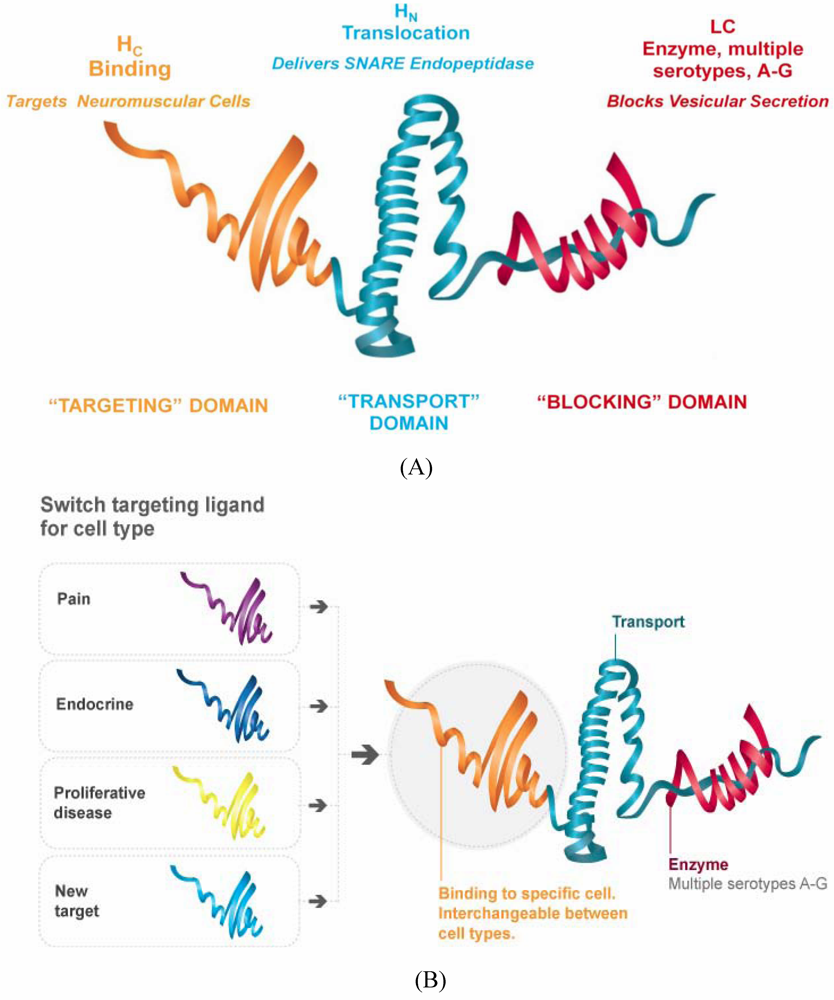
6.2. Re-Targeting of Neurotoxin Protease: Development of Recombinant Platform
6.3. Re-Targeting of Neurotoxin Protease: Proof-of-Concept
6.4. Clinical Opportunities for TSIs
| Neuronal targeting | Non-neuronal targeting |
|---|---|
| Pain | Endocrine diseases |
| Idiopathic Overactive Bladder | Inflammation |
| Neuropathic Overactive Bladder | Mucus hypersecretion |
| Cancer |
7. Conclusions
References and Notes
- Dressler, D. Botulinum toxin drugs: Future developments. J. Neural. Transm. 2008, 115, 575–577. [Google Scholar]
- Schiavo, G.; Matteoli, M.; Montecucco, C. Neurotoxins affecting neuroexocytosis. Physiol. Rev. 2000, 80, 717–766. [Google Scholar]
- Hill, K.K.; Smith, T.T.; Helma, C.H.; Ticknor, L.O.; Foley, B.T.; Svensson, R.T.; Brown, J.L.; Johnson, E.A.; Smith, L.A.; Okinaka, R.T.; Jackson, P.J.; Marks, J.D. Genetic diversity among botulinum neurotoxin-producing clostridial strains. J. Bacteriol. 2007, 189, 818–832. [Google Scholar]
- Foran, P.G.; Mohammed, N.; Lisk, G.O.; Nagwaney, S.; Lawrence, G.W.; Johnson, E.; Smith, L.; Aoki, K.R.; Dolly, J.O. Evaluation of the therapeutic usefulness of botulinum neurotoxin B, C1, E and F compared with the long lasting type A. J. Biol. Chem. 2003, 278, 1363–1371. [Google Scholar] [PubMed]
- Keller, J.E. Recovery from botulinum neurotoxin poisoning in vivo. Neuroscience 2006, 139, 629–637. [Google Scholar]
- Habig, W.H.; Bigalke, H.; Bergey, G.K.; Neale, E.A.; Hardigree, M.C.; Nelson, P.G. Tetanus toxin in dissociated spinal cord cultures: long-term characterization of form and action. J. Neurochem. 1986, 47, 930–937. [Google Scholar]
- Arnon, S.S.; Schechter, R.; Inglesby, T.V.; Henderson, D.A.; Bartlett, J.G.; Ascher, M.S.; Eitzen, E.; Fine, A.D.; Hauer, J.; Leyton, M.; Lillibridge, S.; Osterholme, M.T.; O’Toole, T.; Parker, G. Botulinum toxin as a biological weapon medical and public health management. JAMA 2001, 285, 1059–1070. [Google Scholar]
- Sobel, J. Botulism. Clin Infect. Dis. 2005, 41, 1167–1173. [Google Scholar]
- Erbguth, F.J. From poison to remedy: The chequered history of botulinum toxin. J. Neural. Transm. 2007, 115, 559–565. [Google Scholar]
- Scott, A.B. Botulinum toxin injection into extraocular muscles as an alternative to strabismus surgery. J. Pediat. Opthalmol. Strabismus 1980, 17, 21–25. [Google Scholar]
- Scott, A.B. Botulinum toxin injection into extraocular muscles as an alternative to strabismus surgery. Opthalmology 1980, 87, 1044–1049. [Google Scholar]
- Jankovic, J. Disease-oriented approach to botulinum toxin use. Toxicon 2009, 54, 614–623. [Google Scholar]
- Moore, A.P. Expanding clinical uses of botulinum neurotoxins. In Treatments from Toxins; Foster, K.A., Hambleton, P., Shone, C.C., Eds.; CRC Press: Boca Raton, FL, USA, 2007; pp. 163–194. [Google Scholar]
- Carruthers, J.D.A.; Carruthers, J.A. Treatment of glabellar frown lines with C. botulinum-A exotoxin. J. Derm. Surg. Oncol. 1992, 18, 17–21. [Google Scholar] [CrossRef]
- Glaser, D.A. Botulinum neurotoxin for dermatologic and cosmetic disorders. In Botulinum Toxin Therapeutic Clinical Practice & Science; Jankovic, J., Albanese, A., Atassi, M.Z., Dolly, J.O., Hallett, M., Mayer, N.H., Eds.; Saunders Elsevier: Philadelphia, PA, USA, 2008; pp. 324–338. [Google Scholar]
- Jankovic, J.; Vuong, K.D.; Ahsan, J. Comparison of efficacy and immunogenicity of original versus current botulinum toxin in cervical dystonia. Neurology 2003, 60, 1186–1188. [Google Scholar]
- Hambleton, P.; Capel, B.; Bailey, N.; Tse, C.K.; Dolly, J.O. Production, purification and toxoiding of clostridium botulinum A toxin. In Biomedical Aspects of Botulism; Lewis, G., Ed.; Academic Press: New York, NY, USA, 1981; pp. 247–260. [Google Scholar]
- Frevert, J. Xeomin is free from complexing proteins. Toxicon 2009, 54, 697–701. [Google Scholar]
- Carruthers, A.; Carruthers, J. Botulinum toxin products overview. Skin Ther. Lett. 2008, 13, 1–4. [Google Scholar]
- Arezzo, J.C. Neurobloc®/Myobloc®: Unique features and findings. Toxicon 2009, 54, 690–696. [Google Scholar]
- Mezaki, T.; Kaji, R.; Kohara, N.; Fujii, H.; Katayama, M.; Shimizu, T.; Kimura, J.; Brin, M.F. Comparison of therapeutic efficacies of type A and F botulinum toxins for blepharospasm. Neurology 1995, 45, 506–508. [Google Scholar]
- Eleopra, R.; Tugnoli, V.; Rossetto, O.; De Grandis, D.; Montecucco, C. Different time courses of recovery after poisoning with botulinum neurotoxin serotypes A and E in humans. Neurosci. Lett. 1998, 256, 135–138. [Google Scholar]
- Eleopra, R.; Tugnoli, V.; Quatrale, R.; Rossetto, O.; Montecucco, C.; Dressler, D. Clinical use of non-A botulinum toxins: Botulinum toxin type C and botulinum toxin type F. Neurotox. Res. 2006, 9, 127–131. [Google Scholar]
- Eleopra, R.; Tugnoli, V.; Montecucco, C. Biology and clinical pharmacology of botulinum neurotoxin type C and other non-A/ non-B botulinum neurotoxins. In Botulinum Toxin Therapeutic Clinical Practice & Science; Jankovic, J., Albanese, A., Atassi, M.Z., Dolly, J.O., Hallett, M., Mayer, N.H., Eds.; Saunders Elsevier: Philadelphia, PA, USA, 2008; pp. 77–84. [Google Scholar]
- Eleopra, R.; Tugnoli, V.; Quatrale, R.; Rossetto, O.; Montecucco, C. Different types of botulinum toxin in humans. Mov. Disord. 2004, 19, S53–S59. [Google Scholar]
- Jankovic, J. Botulinum toxin in clinical practice. J. Neurol. Neurosurg. Psychiatry 2004, 75, 951–957. [Google Scholar]
- Jabbari, B. Botulinum neurotoxins in the treatment of refractory pain. Nat. Clin. Pract. Neurol. 2008, 4, 676–685. [Google Scholar]
- Dressler, D.; Cornella, C.L. Comparative clinical trials of botulinum neurotoxins. In Botulinum Toxin Therapeutic Clinical Practice & Science; Jankovic, J., Albanese, A., Atassi, M.Z., Dolly, J.O., Hallett, M, Mayer, N.H., Eds.; Saunders Elsevier: Philadelphia, PA, USA, 2008; pp. 398–405. [Google Scholar]
- Aoki, K.R. Future aspects of botulinum neurotoxins. J. Neural. Transm. 2008, 115, 567–573. [Google Scholar]
- Foster, K. A. Botulinum neurotoxin - from laboratory to bedside. Neurotox. Res. 2006, 9, 133–140. [Google Scholar]
- Carruthers, A.; Carruthers, J. History of the cosmetic use of botulinum A exotoxin. Dermatol. Surg. 1998, 24, 1168–1170. [Google Scholar]
- Barnes, M.P. Introduction to clinical use of botulinum neurotoxins. In Treatments from Toxins; Foster, K.A., Hambleton, P., Shone, C.C., Eds.; CRC Press: Boca Raton, FL, USA, 2007; pp. 139–162. [Google Scholar]
- Simpson, D.M.; Gracies, J.-M.; Graham, H.K.; Miyasaki, J.M.; Naumann, M.; Russman, B.; Simpson, L.L.; So, Y. Assessment: Botulinum neurotoxin for the treatment of spasticity (an evidence-based review): Report of the therapeutic and technology assessment subcommittee of the American Academy of Neurology. Neurology 2009, 70, 1691–1698. [Google Scholar]
- Elia, A. Clinical trials of botulinum toxin in adult spasticity. In Botulinum Toxin Therapeutic Clinical Practice & Science; Jankovic, J., Albanese, A., Atassi, M.Z., Dolly, J.O., Hallett, M., Mayer, N.H., Eds.; Saunders Elsevier: Philadelphia, PA, USA, 2008; pp. 148–158. [Google Scholar]
- Leonard, J.; Graham, H.K. Treatment of motor disorders in cerebral palsy with botulinum neurotoxin. In Botulinum Toxin Therapeutic Clinical Practice & Science; Jankovic, J., Albanese, A., Atassi, M.Z., Dolly, J.O., Hallett, M., Mayer, N.H., Eds.; Saunders Elsevier: Philadelphia, PA, USA, 2008; pp. 172–192. [Google Scholar]
- Esquenazi, A.; Mayer, N.H. Clinical experience and recent advances in the management of gait disorders with botulinum neurotoxin. In Botulinum Toxin Therapeutic Clinical Practice & Science; Jankovic, J., Albanese, A., Atassi, M.Z., Dolly, J.O., Hallett, M., Mayer, N.H., Eds.; Saunders Elsevier: Philadelphia, PA, USA, 2008; pp. 192–203. [Google Scholar]
- Pickett, A. Re-engineering clostridial neurotoxins for the treatment of chronic pain: Current status and future prospects. Bio. Drugs 2010, 24, 173–182. [Google Scholar]
- Dodick, D.W.; Turkel, C.C.; DeGryse, R.E.; Aurora, S.K.; Silberstein, S.D.; Lipto, R.B.; Diener, H.C.; Brin, M.F. OnabotulinumtoxinA for treatment of chronic migraine: Pooled results from the double-blind, randomized, placebo-controlled phases of the PREEMPT clinical program. Headache 2010, 50, 921–936. [Google Scholar] [PubMed]
- Purkiss, J.R.; Welch, M.; Doward, S.; Foster, K.A. Capsaicin stimulates release of substance P from dorsal root ganglion neurons via two distinct mechanisms. Biochem. Pharmacol. 2000, 59, 1403–1406. [Google Scholar] [PubMed]
- Welch, M.; Purkiss, J.R.; Foster, K.A. Sensitivity of embryonic rat dorsal root ganglia neurons to Clostridium botulinum neurotoxins. Toxicon 2000, 38, 245–258. [Google Scholar]
- Cui, M.; Khanijou, S.; Rubino, J.; Aoki, K.R. Subcutaneous administration of botulinum toxin A reduces formalin-induced pain. Pain 2004, 107, 125–133. [Google Scholar]
- Aoki, K.R. Evidence for antinociceptive activity of botulinum toxin type A in pain management. Headache 2003, 43, S9–S15. [Google Scholar]
- Naumann, M.; So, Y.; Argoff, C.E.; Childers, M.K.; Dykstra, D.D.; Gronseth, G.S.; Jabbari, B.; Kaufmann, H.C.; Schurch, B.; Silberstein, S.D.; Simpson, B.M. Assessment: Botulinum neurotoxin in the treatment of autonomic disorders and pain (an evidence-based review): Report of the Therapeutics and Technology Assessment Subcommittee of the American Academy of Neurology. Neurology 2008, 70, 1707–1714. [Google Scholar]
- Naumann, M.; Jost, W.H.; Toyka, K.V. Botulinum toxin in the treatment of neurological disorders of the autonomic nervous system. Arch. Neurol. 1999, 56, 914–916. [Google Scholar]
- Mummadi, R.; Pasricha, P.J. Botulinum toxin therapy in gastrointestinal disorders. In Botulinum Toxin Therapeutic Clinical Practice & Science; Jankovic, J., Albanese, A., Atassi, M.Z., Dolly, J.O., Hallett, M., Mayer, N.H., Eds.; Saunders Elsevier: Philadelphia, PA, USA, 2008; pp. 223–230. [Google Scholar]
- Garcia-Compean, G.; Garza, H.M. Intragastric injection of botulinum toxin for the treatment of obesity. Where are we? World J. Gastroenterol. 2008, 14, 1805–1809. [Google Scholar] [CrossRef] [PubMed]
- Apostolidis, A.; Dasgupta, P.; Fowler, C.J. Proposed mechanism for the efficacy of injected botulinum toxin in the treatment of human detrusor overactivity. Eur. Urol. 2006, 49, 644–650. [Google Scholar]
- Brin, M.F. Development of future indications for BOTOX®. Toxicon 2009, 54, 668–674. [Google Scholar]
- Henkel, J.S.; Jacobson, M.; Tepp, W.; Pier, C.; Johnson, E.A.; Barbieri, J.T. Catalytic properties of botulinum neurotoxin subtypes A3 and A4. Biochemistry 2009, 48, 2522–2528. [Google Scholar]
- Kalb, S.R.; Smith, T.J.; Moura, H.; Hill, K.; Lou, J.; Geren, I.N.; Garcia-Rodriguez, C.; Marks, J.D.; Smith, L.A.; Pirkle, J.L.; Barr, J.R. The use of endopep-MS to detect multiple subtypes of botulinum neurotoxins A, B, E, and F. Int. J. Mass Spec. 2008, 278, 101–108. [Google Scholar]
- Kaji, R.; Youhei, M.; Akihiro, G.; Kozaki, S. Experience with A2NTX in dystonia and spasticity. Toxicon 2008, 51, 30. [Google Scholar]
- Misra, V.P. The changed image of botulinum toxin: Its unlicensed use is increasing dramatically, ahead of robust evidence. Brit. Med. J. 2002, 325, 1188. [Google Scholar]
- Information for Healthcare Professionals: OnabotulinumtoxinA (marketed as Botox/Botox Cosmetic), AbobotulinumtoxinA (marketed as Dysport) and RimabotulinumtoxinB (marketed as Myobloc). Available online: http://www.fda.gov/Drugs/DrugSafety/PostmarketDrugSafetyInformationforPatientsandProviders/DrugSafetyInformationforHeathcareProfessionals/ucm174949.htm (Accessed on 7 October 2010).
- Sollner, T.; Whiteheart, S.W.; Brunner, M.; Erdjument-Bromage, H.; Geromanis, S.; Tempst, P.; Rothman, J.E. SNAP receptors implicated in vesicle targeting and fusion. Nature 1993, 362, 318–324. [Google Scholar]
- Hong, W. SNAREs and traffic. Biochim. Biophys. Acta 2005, 1744, 120–144. [Google Scholar]
- Jahn, R.; Scheller, R.H. SNAREs—Engines for membrane fusion. Nature Rev. 2006, 7, 631–643. [Google Scholar]
- Duman, J.G.; Forte, J.G. What is the role of SNARE proteins in membrane fusion? Am. J. Physiol. Cell Physiol. 2003, 285, C237–C249. [Google Scholar] [PubMed]
- Mima, J.; Hickey, C.M.; Xu, H.; Jun, Y.; Wickner, W. Reconstituted membrane fusion requires regulatory lipids, SNAREs and synergistic SNARE chaperones. EMBO J. 2008, 27, 2031–2042. [Google Scholar] [CrossRef] [PubMed]
- Ohya, T.; Miaczynska, M.; Coskun, U.; Lommer, B.; Runge, A.; Drechsel, D.; Kalaidzidis, Y.; Zerial, M. Reconstitution of Rab- and SNARE-dependent membrane fusion by synthetic endosomes. Nature 2009, 459, 1091–1097. [Google Scholar] [PubMed]
- Bonifacino , J.S.; Glick, B.S. The mechanisms of vesicle budding and fusion. Cell 2004, 116, 153–166. [Google Scholar] [CrossRef] [PubMed]
- Chen, F.; Foran, P.; Shone, C.C.; Foster, K.A.; Melling, J.; Dolly, J.O. Botulinum neurotoxin B inhibits insulin-stimulated glucose uptake into 3T3-L1 adipocytes and cleaves cellubrevin unlike type A toxin which failed to proteolyze the SNAP-23 present. Biochemistry 1997, 36, 5719–5728. [Google Scholar]
- Apostolidis, A.; Popat, R.; Yiangou, Y.; Cockayne, D.; Ford, A.P.D.W.; Davis, J.B.; Dasgupta, P.; Fowler, C.J.; Anand, P. Decreased sensory receptors P2X3 and TRPV1 in suburothelial nerve fibres following intradetrusor injections of botulinum toxin for human detrusor overactivity. J. Urol. 2005, 174, 977–983. [Google Scholar]
- Morenilla-Palao, C.; Planells-Cases, R.; Garcia-Sanz, N.; Ferrer-Montiel, A. Regulated exocytosis contributes to protein kinase C potentiation of vanilloid receptor activity. J. Biol. Chem. 2004, 279, 25665–25672. [Google Scholar]
- Montal, M. Botulinum neurotoxin: A marvel of protein design. Ann. Rev. Biochem. 2010, 79, 591–617. [Google Scholar]
- Montecucco, C. How do tetanus and botulinum toxins bind to neuronal membranes? Trends Biochem. Sci. 1986, 11, 314–317. [Google Scholar] [CrossRef]
- Dong, M.; Yeh, F.; Tepp, W.H.; Dean, C.; Johnson, E.A.; Janz, R.; Chapman, E.R. SV2 is the protein receptor for botulinum neurotoxin A. Science 2006, 312, 592–596. [Google Scholar]
- Dong, M.; Lui, H.; Tepp, W.H.; Johnson, E.A.; Janz, R.; Chapman, E.R. Glycosylated SV2A and SV2B mediate the entry of botulinum neurotoxin E into neurons. Mol. Biol. Cell 2008, 19, 5226–5237. [Google Scholar]
- Fu, Z.; Chen, G.; Barbieri, J.T.; Kim, J.J.; Baldwin, M.R. Glycosylated SV2 and gangliosides as dual receptors for botulinum neurotoxin serotype F. Biochemistry 2009, 48, 5631–5641. [Google Scholar]
- Nishiki, T.; Tokuyama, Y.; Kamata, Y.; Nemoto, Y.; Yoshida, A.; Sato, K.; Sekiguchi, M.; Takahashi, M.; Kozaki, S. The high affinity binding of Clostridium botulinum type B neurotoxin to synaptotagmin II associated with gangliosides GT1b/GD1a. FEBS Lett. 1996, 378, 253–257. [Google Scholar]
- Dong, M.; Richards, D.A.; Goodnough, M.C.; Tepp, W.H.; Johnson, E.A.; Chapman, E.R. Synaptotagmins I and II mediate entry of botulinum neurotoxin B into cells. J. Cell Biol. 2003, 162, 1293–1303. [Google Scholar]
- Rummel, A.; Karnath, T.; Henke, T.; Bigalke, H.; Binz, T. Synaptotagmins I and II act as nerve cell receptors for botulinum neurotoxin G. J. Biol. Chem. 2004, 279, 30865–30870. [Google Scholar]
- Rummel, A.; Eichner, T.; Weil, T.; Karnath, T.; Gutraiti, A.; Mahrhold, S.; Sandhoff, K.; Proia, R.L.; Acharya, K.; Bigalke, H.; Binz, T. BoNT receptor binding identification of the protein receptor binding site of botulinum neurotoxins B and G drives the double-receptor concept. Proc. Natl. Acad. Sci. USA 2007, 104, 359–364. [Google Scholar]
- Dong, M.; Tepp, W.H.; Liu, H.; Johnson, E.A.; Chapman, E.R. Mechanism of botulinum neurotoxin B and G entry into hippocampal neurons. J. Cell Biol. 2007, 179, 1511–1522. [Google Scholar]
- Keller, J.E.; Cai, F.; Neale, E.A. Uptake of botulinum neurotoxin into cultured neurons. Biochemistry 2004, 43, 526–532. [Google Scholar]
- Simpson, L.L. Identification of the major steps in botulinum toxin action. Annu. Rev. Pharmacol. Toxicol. 2004, 44, 167–193. [Google Scholar]
- Simpson, L.L. Kinetic studies on the interaction between botulinum toxin type A and the cholinergic neuromuscular junction. J. Pharmacol. Exp. Ther. 1980, 212, 16–21. [Google Scholar]
- Hughes, B.; Whaler, B.C. Influence of nerve-ending activity and of drugs on the rate of paralysis of rat diaphragm preparations by Cl. botulinum type A toxin. J. Physiol 1962, 160, 221–233. [Google Scholar] [PubMed]
- Eleopra, R.; Tugnoli, V.; De Grandis, D. The variability in the clinical effect induced by botulinum toxin type A: The role of muscle activity in humans. Mov. Disord. 1997, 12, 89–94. [Google Scholar]
- Koriazova, L.K.; Montal, M. Translocation of botulinum neurotoxin light chain protease through the heavy chain channel. Nat. Struct. Biol. 2003, 10, 13–18. [Google Scholar]
- Keller, J.E.; Neale, E.A.; Oyler, G.; Adler, M. Persistence of botulinum neurotoxin action in cultured spinal cord cells. FEBS Lett. 1999, 456, 137–142. [Google Scholar]
- Gutierrez, L.M.; Viniegra, S.; Rueda, J.; Ferrer-Montiel, A.V.; Canaves, J.M.; Montal, M.A. Peptide that mimics the C-terminal sequence of SNAP-25 inhibits secretory vesicle docking in chromaffin cells. J. Biol. Chem. 1997, 272, 2634–2639. [Google Scholar]
- Ferrer-Montiel, A.V.; Gutiérrez, L.M.; Apland, J.P.; Canaves, J.M.; Gil, A.; Viniegra, S.; Biser, J.A.; Adler, M.; Montal, M. The 26-mer peptide released from SNAP-25 cleavage by botulinum neurotoxin E inhibits vesicle docking. FEBS Lett. 1998, 435, 84–88. [Google Scholar] [CrossRef] [PubMed]
- Lacy, D.B.; Tepp, W.; Cohen, A.C.; Das Gupta, B.R.; Stevens, R.C. Structure of botulinum neurotoxin type A and implications for toxicity. Nat. Struct. Biol. 1998, 5, 898–902. [Google Scholar]
- Kumaran, D.; Eswaramoorthy, S.; Furey, W.; Navaza, J.; Sax, M.; Swaminathan, S. Domain organization in Clostridium botulinum neurotoxin type E is unique: Its implication in faster translocation. J. Mol. Biol. 2009, 386, 233–245. [Google Scholar] [CrossRef] [PubMed]
- Fischer, A.; Garcia-Rodriguez, C.; Geren, I.; Lou, J.; Marks, J.D.; Nakagawa, T.; Montal, M. Molecular architecture of botulinum neurotoxin E revealed by single particle electron microscopy. J. Biol. Chem. 2008, 283, 3997–4003. [Google Scholar]
- Galloux, M.; Vitrac, H.; Montagner, C.; Raffestin, S.; Popoff, M.R.; Chenal, A.; Forge, V.; Gillet, D. Membrane interaction of botulinum neurotoxin A translocation (T) domain: The belt region is a regulatory loop for membrane interaction. J. Biol. Chem. 2008, 283, 27668–27676. [Google Scholar]
- Brunger, A.T.; Breidenbach, M.A.; Jin, R.; Fischer, A.; Santos, J.S.; Montal, M. Botulinum neurotoxin heavy chain belt as an intramolecular chaperone for the light chain. PloS Pathog. 2007, 3, 1191–1194. [Google Scholar]
- Li, L.; Singh, B.R. Spectroscopic analysis of pH-induced changes in the molecular features of type A botulinum neurotoxin light chain. Biochemistry 2000, 39, 6466–6474. [Google Scholar]
- Foran, P.; Shone, C.C.; Dolly, J.O. Differences in the protease activities of tetanus and botulinum B toxins revealed by the cleavage of vesicle-associated membrane protein and various sized fragments. Biochemistry 1994, 33, 15365–15374. [Google Scholar]
- Schmidt, J.J.; Bostian, K.A. Proteolysis of synthetic peptides by type A botulinum neurotoxin. J. Protein Chem. 1995, 14, 703–708. [Google Scholar]
- Rossetto, O.; Schiavo, G.; Montecucco, C.; Poulain, B.; Deloye, F.; Lozzi , L.; Shone, C.C. SNARE motif and neurotoxins. Nature 1994, 372, 415–416. [Google Scholar] [PubMed]
- Chen, S.; Kim, J.J.; Barbieri, J.T. Mechanism of substrate recognition by botulinum neurotoxin serotype A. J. Biol. Chem. 2007, 282, 9621–9627. [Google Scholar]
- Breidenbach, M.A.; Brunger, A.T. Substrate recognition strategy for botulinum neurotoxin serotype A. Nature 2004, 432, 925–929. [Google Scholar]
- Foster, KA. Engineered toxins: New therapeutics. Toxicon 2009, 54, 587–592. [Google Scholar]
- Chaddock, J.A.; Marks, P.M.H. Clostridial neurotoxins: Structure-function led design of new therapeutics. Cell Mol. Life Sci. 2006, 63, 540–551. [Google Scholar]
- Chaddock, J.A.; Herbert, M.H.; Ling, R.; Alexander, F.C.; Fooks, S.J.; Revell, F.; Quinn, C.P.; Shone, C.C.; Foster, K.A. Expression and purification of catalytically active, non toxic endopeptidase derivatives of Clostridium botulinum toxin type A. Protein Exp. Purif. 2002, 25, 219–228. [Google Scholar]
- Sutton, J.M.; Wayne, J.; Scott-Tucker, A.; O’Brien, S.M.; Marks, P.M.; Alexander, F.C.; Shone, C.C.; Chaddock, J.A. Preparation of specifically activatable endopeptidase derivatives of Clostridium botulinum toxins type A, B and C and their applications. Protein Exp. Purif. 2005, 40, 31–41. [Google Scholar]
- Masuyer, G.; Thiyagarajan, N.; James, P.L.; Marks, P.M.H.; Chaddock, J.A.; Acharya, K.R. Crystal structure of a catalytically active, non-toxic endopeptidase derivative of Clostridium botulinum toxin A. Biochem. Biophys. Res. Commun. 2009, 381, 50–53. [Google Scholar]
- Masuyer, G.; Beard, M.; Cadd, V.A.; Chaddock, J.A.; Acharya, K.A. Structure and activity of a functional derivative of Clostridium botulinum neurotoxin B. J. Struct. Bio. 2010. [Google Scholar]
- Foster, K.A. Harnessing Toxins. Manuf. Chem. 2006, October, 23–26. [Google Scholar]
- Bizzini, B. Investigation of the mode of action of tetanus toxin with the acid of hybrid molecules consisting in part of tetanus toxin-derived fragments. In Bacterial Proteins Toxins; Alouf , J., Ed.; Academic Press : London, UK, 1984; pp. 427–434. [Google Scholar]
- Chaddock, J.A.; Purkiss, J.R.; Duggan, M.J.; Quinn, C.P.; Shone, C.C.; Foster, K.A. A conjugate composed of nerve growth factor coupled to a non-toxic derivative of Clostridium botulinum neurotoxin type A can inhibit neurotransmitter release in vitro. Growth Factor 2000, 18, 147–155. [Google Scholar] [CrossRef]
- Chaddock, J.A.; Purkiss, J.R.; Friis, L.M.; Broadbridge, J.D.; Duggan, M.J.; Fooks, S.J.; Shone, C.C.; Quinn, C.P.; Foster, K.A. Inhibition of vesicular secretion both neuronal and nonneuronal cells by a retargeted endopeptidase derivative of Clostridium botulinum neurotoxin type A. Infect. Immun. 2000, 68, 2587–2593. [Google Scholar]
- Duggan, M.J.; Quinn, C.P.; Chaddock, J.A.; Purkiss, J.R.; Alexander, F.C.G.; Doward, S.; Fooks, S.J.; Friis, L.; Hall, Y.; Kirby, E.R.; Leeds, N.J.; Moulsdale, H.J.; Dickenson, A.; Green, G.M.; Rahman, W.; Suzuki, R.; Shone, C.C.; Foster, K.A. Inhibition of release of neurotransmitters from rat dorsal root ganglia by a novel conjugate of a Clostridium botulinum toxin A endopeptidase fragment and Erythrina cristagalli lectin. J. Biol. Chem. 2002, 277, 34846–34852. [Google Scholar] [PubMed]
- Chaddock, J.A.; Purkiss, J.R.; Alexander, F.C.; Doward, S.; Fooks, S.J.; Friis, L.M.; Hall, Y.H.; Kirby, E.R.; Leeds, N.; Moulsdale, H.J.; Dickenson, A.; Green, G.M.; Rahman, W.; Suzuki, R.; Duggan, M.J.; Quinn, C.P.; Shone, C.C.; Foster, K.A. Retargeted clostridial endopeptidases: Inhibition of nociceptive neurotransmitter release in vitro and antinociceptive activity in in vivo models of pain. Mov. Disord. 2004, 19, S42–S47. [Google Scholar] [PubMed]
- Weller, U.; Dauzenroth, M.E.; Gansel, M.; Dreyer, F. Cooperative action of the light chain of tetanus toxin and the heavy chain of botulinum toxin type A on the transmitter release of mammalian motor endplates. Neurosci. Lett. 1991, 122, 132–134. [Google Scholar]
- Wang, J.; Meng, J.; Lawrence, G.W.; Zurawski, T.H.; Sasse, A.; Bodeker, M.O.; Gilmore, M.A.; Fernandez-Salas, E.; Francis, J.; Steward, L.E.; Aoki, K.R.; Dolly, J.O. Novel Chimeras of botulinum neurotoxin A and E unveil contributions from the binding, translocation and protease domains to their functional characteristics. J. Biol. Chem. 2008, 283, 16993–17002. [Google Scholar] [PubMed]
- Meng, J.; Ovsepian, S.V.; Wang, J.; Pickering, M.; Sasse, A.; Aoki, K.R.; Lawrence, G.W.; Dolly, J.O. Activation of TRPV1 mediates calcitonin gene-related peptide release, which excites trigeminal sensory neurons and is attenuated by a retargeted botulinum toxin with anti-nociceptive potential. J. Neurosci. 2009, 29, 4981–4992. [Google Scholar]
- Rummel, A.; Mahrhold, S.; Bigalke, H.; Binz, T. The HCC-domain of botulinum neurotoxin A and B exhibits a singular ganglioside binding site displaying serotype specific carbohydrate interaction. Mol. Microbiol. 2004, 51, 631–643. [Google Scholar]
- Rummel, A. Transport protein which is used to introduce chemical compounds into nerve cells. International patent WO 2006/027207, 6 September 2005. [Google Scholar]
- Ravichandran, V.; Chawla, A.; Roche, P.A. Identification of a novel syntaxin- and synaptobrevin/ VAMP-binding protein, SNAP-23, expressed in non-neuronal tissues. J. Biol. Chem. 1996, 271, 13300–13303. [Google Scholar] [PubMed]
- Vaidyanathan, V.V.; Yoshino, K.; Jahnz, M.; Dörries, C.; Bade, S.; Nauenburg, S.; Niemann, H.; Binz, T. Proteolysis of SNAP-25 isoforms by botulinum neurotoxin types A, C, and E: Domains and amino acid residues controlling the formation of enzyme-substrate complexes and cleavage. J. Neurochem. 1999, 72, 327–337. [Google Scholar] [PubMed]
- Chen, S.; Barbieri, J.T. Engineering botulinum neurotoxins to extend therapeutic intervention. Proc. Natl. Acad. Sci. USA 2009, 106, 9180–9184. [Google Scholar]
- A study of the safety and efficacy of AGN-214868 in patients with postherpetic neuralgia. ClinicalTrials.gov, Identifier: NCT01129531.
- Safety and efficacy study of AGN-214868 in patients with idiopathic overactive bladder and urinary incontinence. ClinicalTrials.gov, Identifier: NCT01157377.
© 2010 by the authors; licensee MDPI, Basel, Switzerland This article is an open-access article distributed under the terms and conditions of the Creative Commons Attribution license (http://creativecommons.org/licenses/by/3.0/).
Share and Cite
Keith, F.; John, C. Targeted Secretion Inhibitors—Innovative Protein Therapeutics. Toxins 2010, 2, 2795-2815. https://doi.org/10.3390/toxins2122795
Keith F, John C. Targeted Secretion Inhibitors—Innovative Protein Therapeutics. Toxins. 2010; 2(12):2795-2815. https://doi.org/10.3390/toxins2122795
Chicago/Turabian StyleKeith, Foster, and Chaddock John. 2010. "Targeted Secretion Inhibitors—Innovative Protein Therapeutics" Toxins 2, no. 12: 2795-2815. https://doi.org/10.3390/toxins2122795
APA StyleKeith, F., & John, C. (2010). Targeted Secretion Inhibitors—Innovative Protein Therapeutics. Toxins, 2(12), 2795-2815. https://doi.org/10.3390/toxins2122795