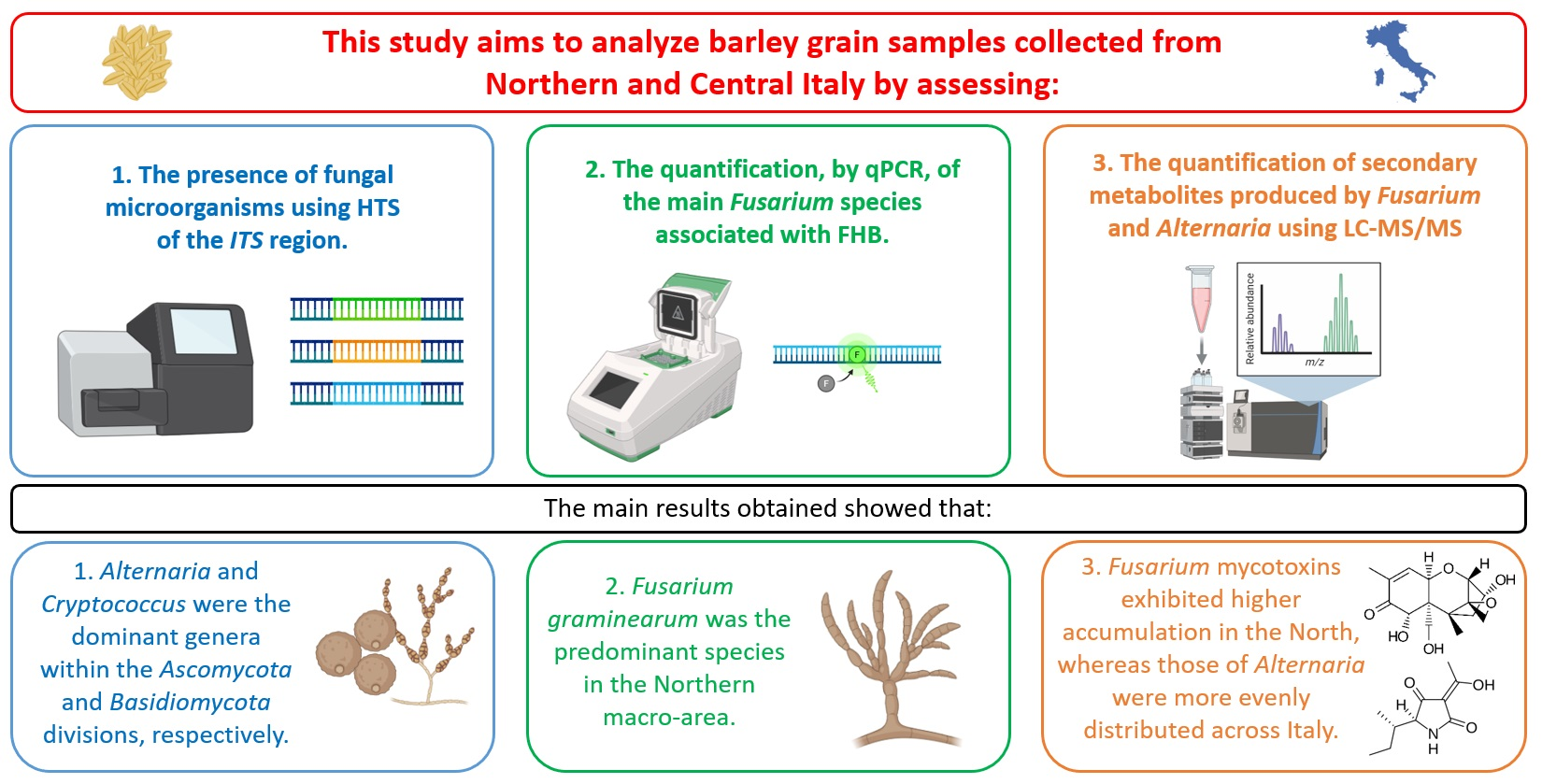
High-Throughput Sequencing Study of the Mycobiota of Barley Grain Collected in Northern and Central Italy and Accumulation of Fungal Secondary Metabolites

 ,
,  ,
,  , , , , and
Abstract
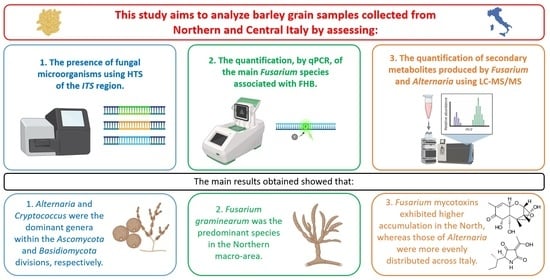
1. Introduction
2. Results
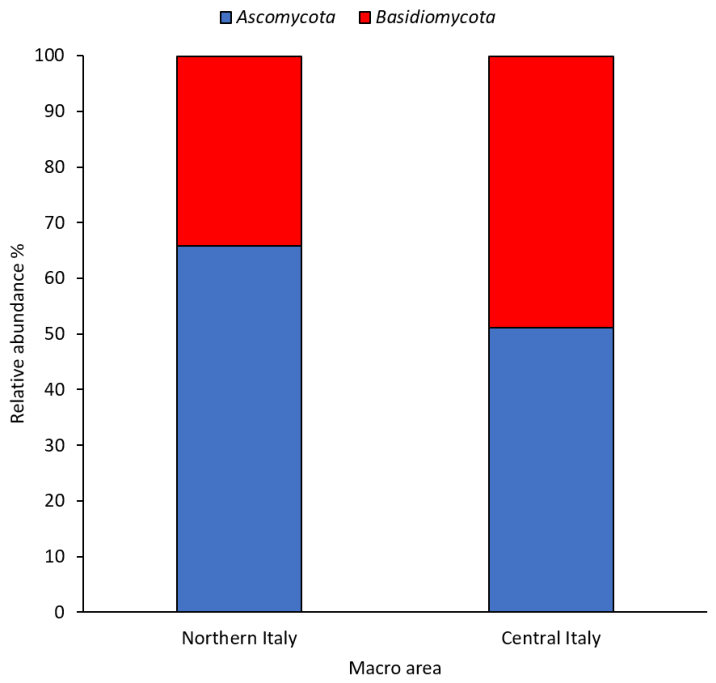
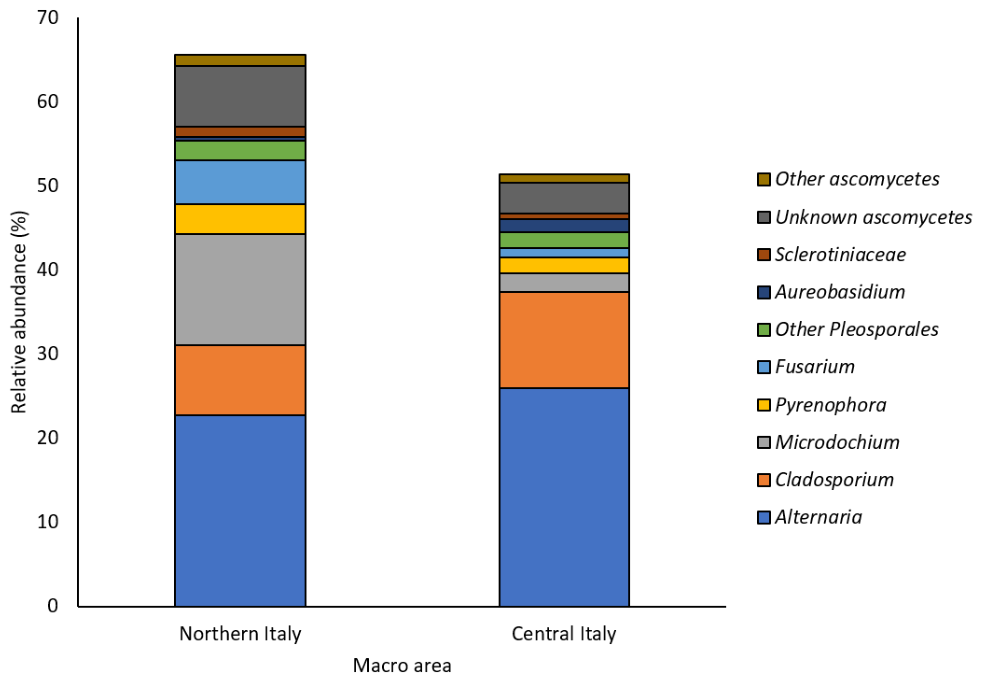
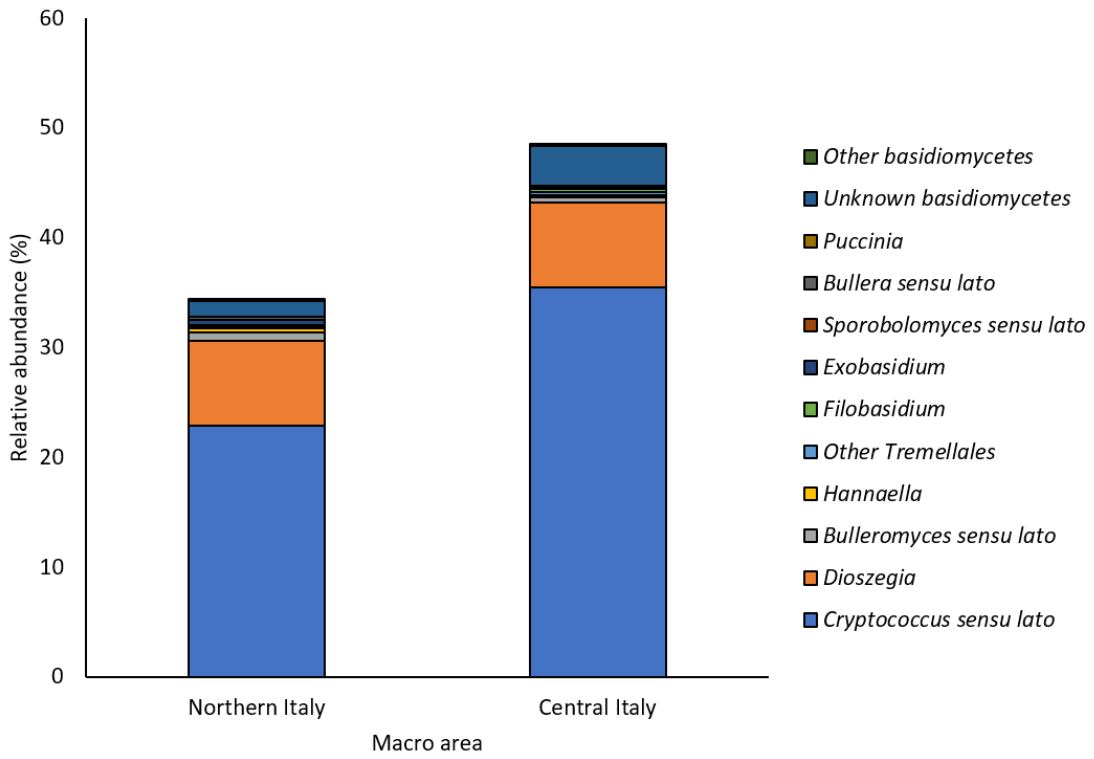
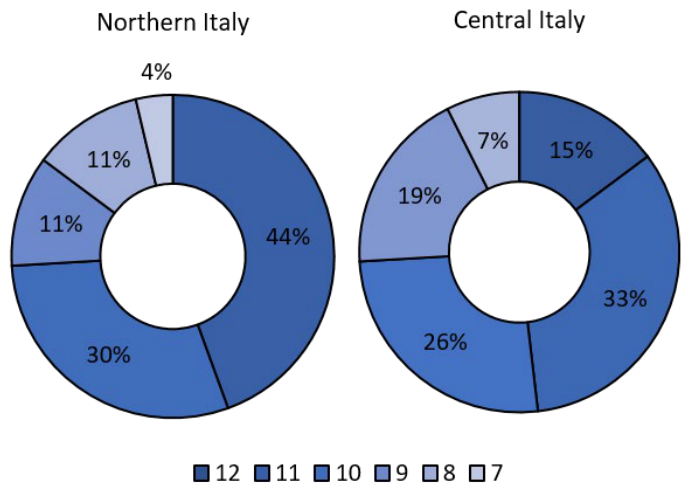
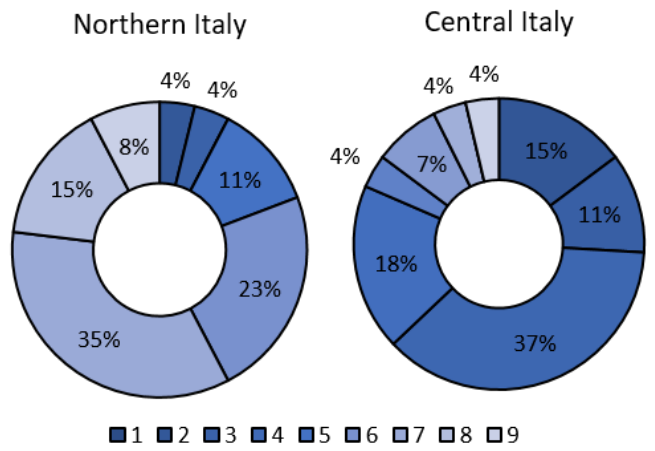
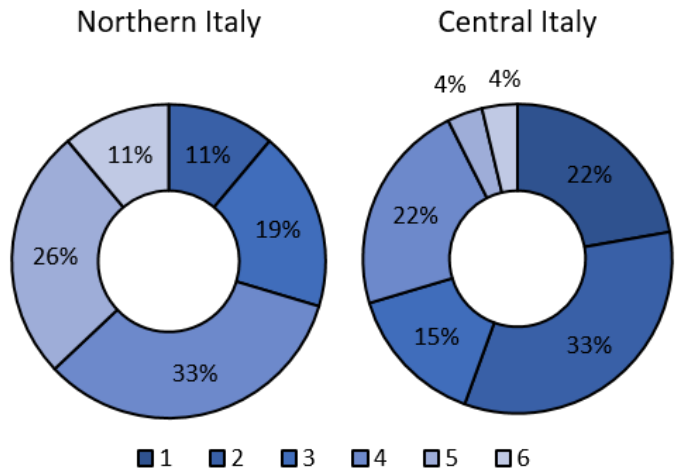
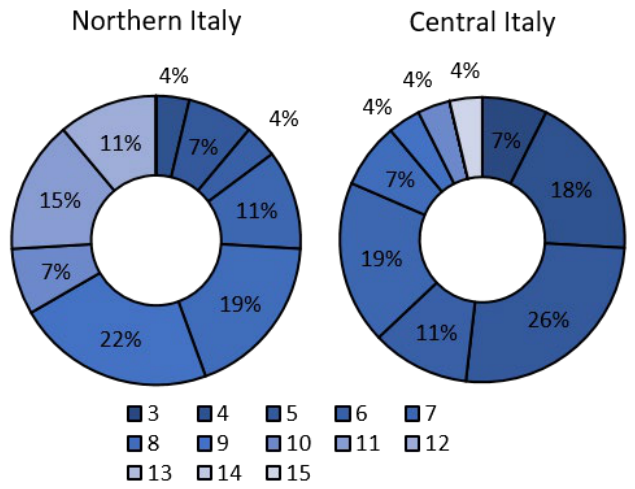
2.1. Fungal Microorganisms Associated with the Barley Grain Samples Determined by High-Throughput Sequencing of the ITS Region of Ribosomal Fungal DNA
2.2. Relationship Between Potentially Pathogenic Fungal Genera and Other Components of the Barley Mycobiota
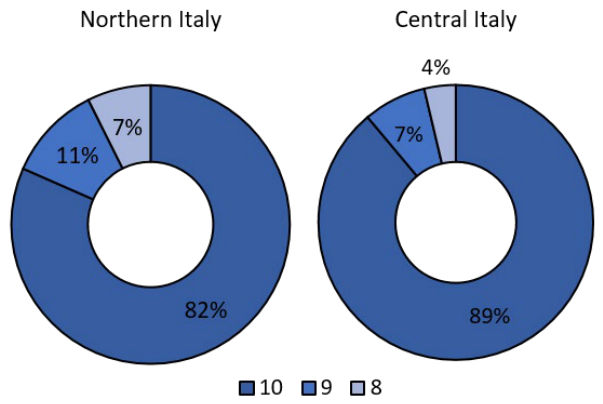
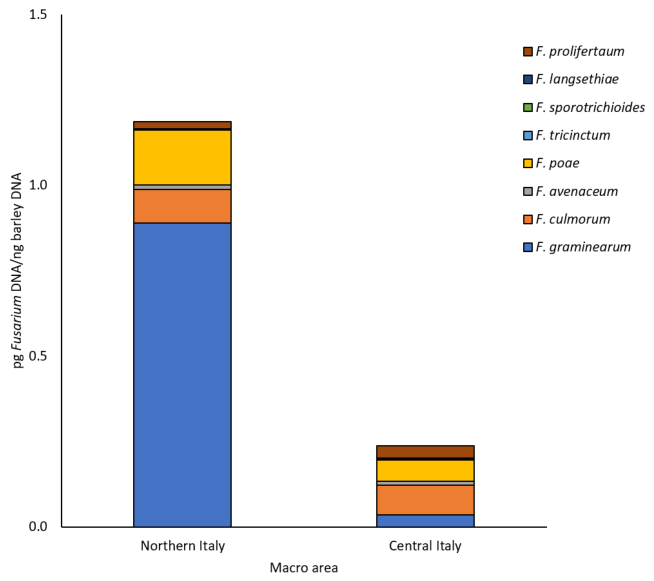
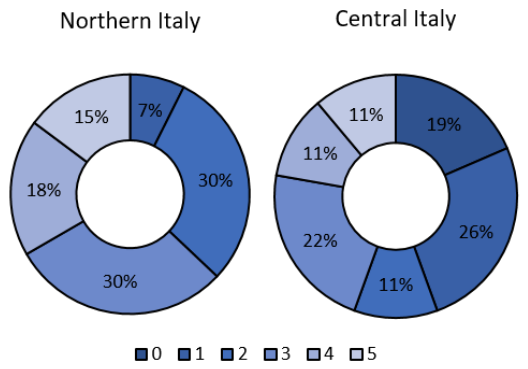
2.3. DNA Accumulation of Eight Fusarium Species in Barley Grains
2.4. Accumulation of Secondary Metabolites of Fusarium and Alternaria in Barley Grain
2.5. Correlation Between Alternaria and Fusarium Accumulation and Their Secondary Metabolites
3. Discussion
4. Conclusions
5. Materials and Methods
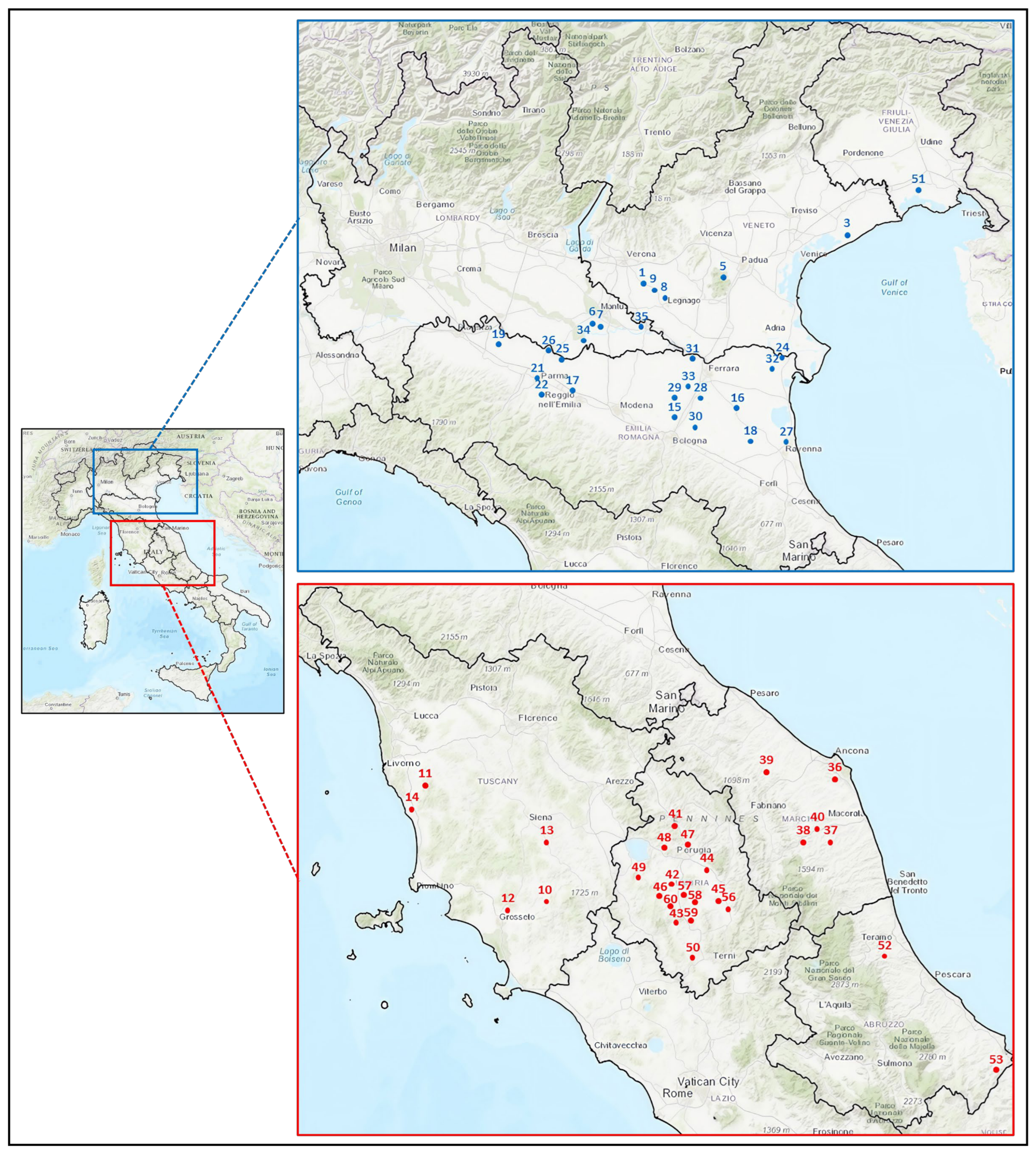
5.1. Barley Grain Sampling
5.2. Total DNA Extraction from Barley Samples
5.3. DNA-Based Mycobiota Determination by High-Throughput Sequencing of the Fungal Internal Transcribed Spacer Region
5.4. DNA Quantification of Eight Fusarium Species in Barley Grains by Real-Time Quantitative PCR
5.5. Detection and Quantification in Barley Grains of Fungal Secondary Metabolites Produced by Fusarium and Alternaria by LC-MS/MS
5.6. Statistical Analysis
Supplementary Materials
Author Contributions
Funding
Institutional Review Board Statement
Informed Consent Statement
Data Availability Statement
Acknowledgments
Conflicts of Interest
References
- FAOSTAT. 2025. Available online: www.fao.org/faostat (accessed on 23 June 2025).
- Sayre-Chavez, B.; Bettenhausen, H.; Windes, S.; Aron, P.; Cistué, L.; Fisk, S.; Helgerson, L.; Heuberger, A.L.; Tynan, S.; Hayes, P.; et al. Genetic basis of barley contributions to beer flavor. J. Cereal Sci. 2022, 104, 103430. [Google Scholar] [CrossRef] [Scilit]
- Narwal, S.; Kumar, D.; Sheoran, S.; Verma, R.P.S.; Gupta, R.K. Hulless barley as a promising spore source to improve the nutritional quality of wheat products. J. Food Sci. Technol. 2017, 54, 2638–2644. [Google Scholar] [CrossRef] [Scilit] [PubMed]
- Comby, M.; Lacoste, S.; Baillieul, F.; Profizi, C.; Dupont, J. Spatial and temporal variation of cultivable communities of co-occurring endophytes and pathogens in wheat. Front. Microbiol. 2016, 7, 403. [Google Scholar] [CrossRef] [Scilit] [PubMed]
- Babalola, O.O.; Fadiji, A.E.; Enagbonma, B.J.; Alori, E.T.; Ayilara, M.S.; Ayangbenro, A.S. The nexus between plant and plant microbiome: Revelation of the networking strategies. Front. Microbiol. 2020, 11, 548037. [Google Scholar] [CrossRef] [Scilit] [PubMed]
- Kazartsev, I.A.; Gagkaeva, T.Y.; Gavrilova, O.P.; Gannibal, P.B. Fungal microbiome of barley grain revealed by NGS and mycological analysis. Foods Raw Mater. 2020, 8, 286–297. [Google Scholar] [CrossRef] [Scilit]
- Llorens, E.; Sharon, O.; Camañes, G.; García-Agustín, P.; Sharon, A. Endophytes from wild cereals protect wheat plants from drought by alteration of physiological responses of the plants to water stress. Environ. Microbiol. 2019, 21, 3299–3312. [Google Scholar] [CrossRef] [Scilit] [PubMed]
- Rodriguez, R.J.; Woodward, C.; Redman, R.S. Adaptation and survival of plants in high stress habitats via fungal endophyte conferred stress tolerance. In Symbioses and Stress; Seckbach, J., Grube, M., Eds.; Springer: Dordrecht, The Netherlands, 2016; pp. 461–476. [Google Scholar]
- Christian, N.; Herre, E.A.; Mejia, L.C.; Clay, K. Exposure to the leaf litter microbiome of healthy adults protects seedlings from pathogen damage. Proc. R. Soc. B 2017, 284, 20170641. [Google Scholar] [CrossRef] [Scilit] [PubMed]
- Steinrucken, T.V.; Bissett, A.; Powell, J.R.; Raghavendra, A.K.H.; van Klinken, R.D. Endophyte community composition is associated with dieback occurrence in an invasive tree. Plant Soil 2016, 405, 311–323. [Google Scholar] [CrossRef] [Scilit]
- De Curtis, F.; De Cicco, V.; Lima, G. Efficacy of biocontrol yeasts combined with calcium silicate or sulphur for controlling durum wheat powdery mildew and increasing grain yield components. Field Crop Res. 2012, 134, 36–46. [Google Scholar] [CrossRef] [Scilit]
- Casini, G.; Yaseen, T.; Abdelfattah, A.; Santoro, F.; Varvaro, L.; Drago, S.; Schena, L. Endophytic fungal communities of ancient wheat varieties. Phytopathol. Mediterr. 2019, 58, 151–162. [Google Scholar] [CrossRef] [Scilit]
- Hu, Y.; Jia, F.; Liu, Z.; Zhang, Y.; Li, L. Impact of storage time on microbial communities and flavor profiles in highland barley grains. J. Stored Prod. Res. 2024, 107, 102321. [Google Scholar] [CrossRef] [Scilit]
- Cao, D.; Lou, Y.; Jiang, X.; Zhang, D.; Liu, J. Fungal diversity in barley under different storage conditions. Front. Microbiol. 2022, 13, 895975. [Google Scholar] [CrossRef] [Scilit] [PubMed]
- Tkalec, V.; Mahnic, A.; Gselman, P.; Rupnik, M. Analysis of seed-associated bacteria and fungi on staple crops using the cultivation and metagenomic approaches. Folia Microbiol. 2022, 67, 351–361. [Google Scholar] [CrossRef] [Scilit] [PubMed]
- Østlie, H.M.; Porcellato, D.; Kvam, G.; Wicklund, T. Investigation of the microbiota associated with ungerminated and germinated Norwegian barley cultivars with focus on lactic acid bacteria. Int. J. Food Microbiol. 2021, 341, 109059. [Google Scholar] [CrossRef] [Scilit] [PubMed]
- Bziuk, N.; Maccario, L.; Straube, B.; Wehner, G.; Sørensen, S.J.; Schikora, A.; Smalla, K. The treasure inside barley seeds: Microbial diversity and plant beneficial bacteria. Environ. Microbiome 2021, 16, 20. [Google Scholar] [CrossRef] [Scilit] [PubMed]
- Sultan, A.; Frisvad, J.C.; Andersen, B.; Svensson, B.; Finnie, C. Investigation of the indigenous fungal community populating barley grains: Secretomes and xylanolytic potential. J. Proteom. 2017, 169, 153–164. [Google Scholar] [CrossRef] [Scilit] [PubMed]
- Kaur, M.; Bowman, J.P.; Stewart, D.C.; Evans, D.E. The fungal community structure of barley malts from diverse geographical regions correlates with malt quality parameters. Int. J. Food Microbiol. 2015, 215, 71–78. [Google Scholar] [CrossRef] [Scilit] [PubMed]
- Balducci, E.; Tini, F.; Roherig, L.; Beccari, G.; Onofri, A.; Montanari, M.; Alberti, I.; Prodi, A.; Havis, N.D.; Benincasa, P.; et al. Survey for Pyrenophora teres and Ramularia collo-cygni in barley grain from Italy. Phytopathol. Mediterr. 2025, 64, 255–269. [Google Scholar] [CrossRef] [Scilit]
- Tini, F.; Covarelli, L.; Ricci, G.; Balducci, E.; Orfei, M.; Beccari, G. Management of Pyrenophora teres f. teres, the causal agent of net form net blotch of barley, in a two-year field experiment in Central Italy. Pathogens 2022, 11, 291. [Google Scholar] [CrossRef] [Scilit] [PubMed]
- Beccari, G.; Senatore, M.T.; Tini, F.; Sulyok, M.; Covarelli, L. Fungal community, Fusarium head blight complex and secondary metabolites associated with malting barley grains harvested in Umbria, Central Italy. Int. J. Food Microbiol. 2018, 273, 33–42. [Google Scholar] [CrossRef] [Scilit] [PubMed]
- Beccari, G.; Prodi, A.; Tini, F.; Bonciarelli, U.; Onofri, A.; Oueslati, S.; Limayma, M.; Covarelli, L. Changes in the Fusarium head blight complex of malting barley in a three-year field experiment in Italy. Toxins 2017, 9, 120. [Google Scholar] [CrossRef] [Scilit] [PubMed]
- Beccari, G.; Caproni, L.; Tini, F.; Uhlig, S.; Covarelli, L. Presence of Fusarium species and other toxigenic fungi in malting barley and multi-mycotoxin analysis by liquid chromatography-high-resolution mass spectrometry. J. Agric. Food Chem. 2016, 64, 4390–4399. [Google Scholar] [CrossRef] [Scilit] [PubMed]
- Chen, W.; Turkington, T.K.; Lévesque, C.A.; Bamforth, J.M.; Patrick, S.K.; Lewis, C.T.; Chapados, J.T.; Gaba, D.; Tittlemier, S.A.; MacLeod, A.; et al. Geography and agronomical practices drive diversification of the epiphytic mycoflora associated with barley and its malt end product in western Canada. Agric. Ecosyst. Environ. 2016, 226, 43–55. [Google Scholar] [CrossRef] [Scilit]
- Jayathissa, A.U.; Tucker, J.R.; Badea, A.; Fernando, W.G.D.; Bakker, M.G. Impacts of pathogen strain and barley cultivar on Fusarium head blight in barley and during malting. Plant Pathol. 2024, 73, 1874–1885. [Google Scholar] [CrossRef] [Scilit]
- Karlsson, I.; Persson, P.; Friberg, H. Fusarium Head Blight from a microbiome perspective. Front. Microbiol. 2021, 12, 628373. [Google Scholar] [CrossRef] [Scilit] [PubMed]
- Castañares, E.; da Cruz Cabral, L.; Dinolfo, M.I.; Andersen, B.; Stenglein, S.A.; Patriarca, A. Alternaria in malting barley: Characterization and distribution in relation with climatic conditions and barley cultivars. Int. J. Food Microbiol. 2021, 357, 109367. [Google Scholar] [CrossRef] [Scilit] [PubMed]
- Masiello, M.; Somma, S.; Susca, A.; Ghionna, V.; Logrieco, A.F.; Franzoni, M.; Ravaglia, S.; Meca, G.; Moretti, A. Molecular identification and mycotoxin production by Alternaria species occurring on durum wheat, showing black point symptoms. Toxins 2020, 12, 275. [Google Scholar] [CrossRef] [Scilit] [PubMed]
- Carmona, M.; Barreto, D.; Moschini, R.; Reis, E. Epidemiology and control of seed-borne Drechslera teres on barley. Cereal Res. Commun. 2008, 36, 637–645. [Google Scholar]
- European Commission Regulation (EC). Commission Regulation (EU) 2023/915 of 25 April 2023 on maximum levels for certain contaminants in food and repealing Regulation (EC) No. 1881/2006. Off. J. Eur. Union 2023, L119/103. Available online: https://eur-lex.europa.eu/eli/reg/2023/915/oj/eng (accessed on 10 August 2026).
- European Commission Regulation (EC) No. 2024/1022 of 8 April 2024 amending Regulation (EU) 2023/915 as regards maximum levels of deoxynivalenol in food. Off. J. Eur. Union 2024, 2024/1022. Available online: https://eur-lex.europa.eu/eli/reg/2024/1022/oj/eng (accessed on 10 August 2026).
- European Commission Regulation (EC) No. 2024/1038 of 9 April 2024 amending Regulation (EU) 2023/915 as regards maximum levels of T-2 and HT-2 toxins in food. Off. J. Eur. Union 2024, 2024/1038. Available online: https://eur-lex.europa.eu/eli/reg/2024/1038/oj (accessed on 10 August 2026).
- European Commission Recommendation (EC). No. 2022/553 on monitoring the presence of Alternaria toxins in food. Off. J. Eur. Union 2022, L107/90-92. Available online: https://eur-lex.europa.eu/eli/reco/2022/553/oj (accessed on 10 August 2026).
- Castañares, E.; Dinolfo, M.I.; Manno, C.; Conti, V.; Dirassar, M.; Pesquero, N.; Cristos, D.; Patriarca, A.; Stengein, S. Alternaria and Fusarium across malting barley process: A comprehensive study of mycotoxins and quality effects. Food Control 2026, 191, 112418. [Google Scholar] [CrossRef] [Scilit]
- Lee, H.J.; Ryu, D. Worldwide occurrence of mycotoxins in cereals and cereal-derived food products: Public health perspectives of their co-occurrence. J. Agric. Food Chem. 2017, 65, 7034–7051. [Google Scholar] [CrossRef] [Scilit] [PubMed]
- Beccari, G.; Prodi, A.; Senatore, M.T.; Balmas, V.; Tini, F.; Onofri, A.; Pedini, L.; Sulyok, M.; Brocca, L.; Covarelli, L. Cultivation area affects the presence of fungal communities and secondary metabolites in Italian durum wheat grains. Toxins 2020, 12, 97. [Google Scholar] [CrossRef] [Scilit] [PubMed]
- Senatore, M.T.; Prodi, A.; Tini, F.; Balmas, V.; Infantino, A.; Onofri, A.; Cappelletti, E.; Oufensou, S.; Sulyok, M.; Covarelli, L.; et al. Different diagnostic approaches for the characterization of the fungal community and Fusarium species complex composition of Italian durum wheat grain and correlation with secondary metabolite accumulation. J. Sci. Food Agric. 2023, 103, 4503–4521. [Google Scholar] [CrossRef] [Scilit] [PubMed]
- Karlsson, I.; Edel-Hermann, V.; Gautheron, N.; Durling, M.B.; Kolseth, A.K.; Steinberg, C.; Persson, P.; Friberg, H. Genus-specific primers for study of Fusarium communities in field samples. Appl. Environ. Microbiol. 2016, 82, 491–501. [Google Scholar] [CrossRef] [Scilit] [PubMed]
- Hu, T.; Chitnis, N.; Monos, D.; Dinh, A. Next-generation sequencing technologies: An overview. Hum. Immunol. 2021, 82, 801–811. [Google Scholar] [CrossRef] [Scilit] [PubMed]
- Shi, Y.; Cheng, Y.; Wang, Y.; Zhang, G.; Gao, R.; Xiang, C.; Feng, J.; Lou, D.; Liu, Y. Investigation of the fungal community structures of imported wheat using high-throughput sequencing technology. PLoS ONE 2017, 12, e0171894. [Google Scholar] [CrossRef] [Scilit] [PubMed]
- Schoch, C.L.; Seifert, K.A.; Huhndorf, S.; Robert, V.; Spouge, J.L.; Levesque, C.A.; Chen, W. Fungal barcoding consortium, nuclear ribosomal internal transcribed spacer (ITS) region as a universal DNA barcode marker for fungi. Proc. Natl. Acad. Sci. USA 2012, 109, 6241–6246. [Google Scholar] [CrossRef] [Scilit] [PubMed]
- Ceballos-Escalera, A.; Richards, J.; Arias, M.B.; Inward, D.J.G.; Vogler, A.P. Metabarcoding of insect-associated fungal communities: A comparison of internal transcribed spacer (ITS) and large-subunit (LSU) rRNA markers. MycoKeys 2022, 88, 1–33. [Google Scholar] [CrossRef] [Scilit] [PubMed]
- Kauserud, H. ITS alchemy: On the use of ITS as a DNA marker in fungal ecology. Fungal Ecol. 2023, 65, 101274. [Google Scholar] [CrossRef] [Scilit]
- Nizamani, M.H.; Zhang, Q.; Muhae-Ud-Din, G.; Wang, Y. High-throughput sequencing in plant disease management: A comprehensive review of benefits, challenges, and future perspectives. Phytopathol. Res. 2023, 5, 44. [Google Scholar] [CrossRef] [Scilit]
- Saeed, M.; Jamil, Z.; Shehzad, T.; ul Hasan, S.Z.; Bibi, R.; Malik, S.N.; Matee-ur-Rehman, H.; Ahmed, R. Role of next-generation sequencing (NGS) in plant disease management: A review. J. Appl. Res. Plant Sci. 2023, 4, 512–517. [Google Scholar] [CrossRef] [Scilit]
- Fratianni, S.; Acquaotta, F. The climate of Italy. In: Landscapes and landforms of Italy. In World Geographic Landscapes; Soldati, M., Marchetti, M., Eds.; Springer: Cham, Switzerland, 2017. [Google Scholar]
- Scarpino, V.; Blandino, M. Effects of durum wheat cultivars with different degrees of FHB susceptibility grown under different meteorological conditions on the contamination of regulated, modified and emerging mycotoxins. Microorganisms 2021, 9, 408. [Google Scholar] [CrossRef] [Scilit] [PubMed]
- Hawksworth, D.L.; Crous, P.W.; Redhead, S.A.; Reynolds, D.R.; Samson, R.A.; Seifert, K.A.; Taylor, J.W.; Wingfield, M.J.; Abaci, O.; Aime, M.C.; et al. The Amsterdam declaration on fungal nomenclature. IMA Fungus 2011, 2, 105–112. [Google Scholar] [CrossRef] [Scilit] [PubMed]
- McNeill, J.; Barrie, F.R.; Buck, W.R.; Demoulin, V.; Greuter, W.; Hawksworth, D.L.; Herendeen, P.S.; Knapp, S.; Marhold, K.; Prado, J.; et al. International Code of Nomenclature for Algae, Fungi, and Plants (Melbourne Code); Regnum Vegetabile 154; Koeltz Scientific Books: Königstein, Germany, 2012. [Google Scholar]
- Wang, Q.M.; Bai, F.Y. Molecular phylogeny of basidiomycetous yeasts in the Cryptococcus luteolus lineage (Tremellales) based on nuclear rRNA and mitochondrial cytochrome b gene sequence analyses: Proposal of Derxomyces gen. nov. and Hannaella gen. nov., and description of eight novel Derxomyces species. FEMS Yeast Res. 2008, 38, 799–814. [Google Scholar]
- Viscarra Rossel, R.A.; Yang, Y.; Bissett, A.; Behrens, T.; Dixon, K.; Nevil, P.; Li, S. Environmental controls of soil fungal abundance and diversity in Australia’s diverse ecosystems. Soil Biol. Biochem. 2022, 170, 108694. [Google Scholar] [CrossRef] [Scilit]
- Niu, M.; Huang, S.; Hu, W.; Wang, Y.; Xu, W.; Wei, W.; Zhang, Q.; Wang, Z.; Zhang, D.; Jin, R.; et al. Characteristics of bacterial and fungal communities and their associations with sugar compounds in atmospheric aerosols at a rural site in Northern China. Biogeosciences 2023, 20, 4915–4930. [Google Scholar] [CrossRef] [Scilit]
- Justé, A.; Malfliet, S.; Lenaerts, M.; de Cooman, L.; Aerts, G.; Willems, K.A.; Lievens, B. Microflora during malting of barley: Overview and impact on malt quality. Brew. Sci. 2011, 64, 22–31. [Google Scholar]
- Felšöciová, S.; Kowalczewski, P.Ł.; Krajcovic, T.; Drab, S.; Kacaniova, M. Effect of long-term storage on mycobiota of barley grain and malt. Plants 2021, 10, 1655. [Google Scholar] [CrossRef] [Scilit] [PubMed]
- Chen, W.; Cheung, H.Y.K.; McMillan, M.; Turkington, T.K.; Izydorczyk, M.S.; Gräfenhan, T. The dynamics of indigenous epiphytic bacterial and fungal communities of barley grains through the commercial malting process in Western Canada. Curr. Res. Food Sci. 2022, 5, 1352–1364. [Google Scholar] [CrossRef] [Scilit] [PubMed]
- Agostinetto, L.; Casa, R.T.; Bogo, A.; Alves Neto, L.; Vieira Júnior, J.A.L.; Fingstag, M.D.; Rosa, J.M. Viability of seed-borne fungi Alternaria alternata, Bipolaris sorokiniana and Drechslera teres in barley seeds in the south of Brazil. Summa Phytopathol. 2020, 46, 26–30. [Google Scholar] [CrossRef] [Scilit]
- Manno, C.; Dinolfo, M.I.; Poo, J.I.; González, G.; Castañares, E.; Stenglein, S.A. Natural occurrence of Alternaria and Fusarium and their mycotoxins in malting barley grains from Argentina. Int. J. Food Microbiol. 2026, 449, 111599. [Google Scholar] [CrossRef] [Scilit] [PubMed]
- Bretträger, M.; Becker, T.; Gastl, M. Screening of mycotoxigenic fungi in barley and barley malt (Hordeum vulgare L.) using real-time PCR: A comparison between molecular diagnostic and culture technique. Foods 2022, 11, 1149. [Google Scholar] [CrossRef] [Scilit] [PubMed]
- Lu, M.; Guo, J.; Tian, X.; Luo, Y.; Yang, Q. A comprehensive study on multi-mycotoxin screening, changes of mycotoxin residues and fungal community analysis from barley germination to malt. Int. J. Food Microbiol. 2022, 372, 109678. [Google Scholar] [CrossRef] [Scilit] [PubMed]
- Orina, A.S.; Gavrilova, O.P.; Gogina, N.N.; Gannibal, P.B.; Gagkaeva, T.Y. Natural occurrence of Alternaria fungi and associated mycotoxins in small-grain cereals from the Urals and West Siberian regions of Russia. Toxins 2021, 13, 681. [Google Scholar] [CrossRef] [Scilit] [PubMed]
- Peternel, R.; Culig, J.; Hrga, I. Atmospheric concentrations of Cladosporium spp. and Alternaria spp. spores in Zagreb (Croatia) and effects of some meteorological factors. Ann. Agric. Environ. Med. 2004, 11, 303–307. [Google Scholar] [PubMed]
- Oh, D.; Ryu, J.-H.; Oh, S.; Jeong, H.; Park, J.; Jeong, R.-D.; Kim, W.; Cho, J. Optical sensing for evaluating the severity of disease caused by Cladosporium sp. in barley under warmer conditions. Plant Pathol. J. 2018, 34, 236–240. [Google Scholar] [CrossRef] [Scilit] [PubMed]
- Shah, D.A.; Pucci, N.; Infantino, A. Regional and varietal differences in the risk of wheat seed infection by fungal species associated with Fusarium head blight in Italy. Eur. J. Plant Pathol. 2005, 112, 13–21. [Google Scholar] [CrossRef] [Scilit]
- Schöneberg, T.; Martin, C.; Wettstein, F.E.; Bucheli, T.D.; Bertossa, M.; Musa, T.; Keller, B.; Vogelgsang, S. Fusarium and mycotoxin spectra in Swiss barley are affected by various cropping techniques. Food Add. Contam. Part A 2016, 33, 1608–1619. [Google Scholar] [CrossRef] [Scilit] [PubMed]
- Nielsen, L.K.; Cook, D.J.; Edwards, S.G.; Ray, R.V. The prevalence and impact of Fusarium head blight pathogens and mycotoxins on malting barley quality in UK. Int. J. Food Microbiol. 2014, 179, 38–49. [Google Scholar] [CrossRef] [Scilit] [PubMed]
- Petrucci, A.; Khairullina, A.; Sarrocco, S.; Jensen, D.F.; Jensen, B.; Jørgensen, H.J.L.; Collinge, D.B. Understanding the mechanisms underlying biological control of Fusarium diseases in cereals. Eur. J. Plant Pathol. 2023, 167, 453–476. [Google Scholar] [CrossRef] [Scilit]
- Wachowska, U.; Jedryczka, M.; Irzykowski, W.; Glowacka, K. Use of Aureobasidium pullulans to control Fusarium Head Blight on winter wheat ears caused by Fusarium culmorum. Commun. Agric. Appl. Biol. Sci. 2013, 78, 545–549. [Google Scholar]
- Wachowska, U.; Glowacka, K. Antagonistic interactions between Aureobasidium pullulans and Fusarium culmorum, a fungal pathogen of winter wheat. BioControl 2013, 59, 635–645. [Google Scholar] [CrossRef] [Scilit]
- Wachowska, U.; Sulyok, M.; Wiwart, M.; Suchowilska, E.; Kandler, W.; Krska, R. The application of antagonistic yeasts and bacteria: An assessment of in vivo and under field conditions pattern of Fusarium mycotoxins in winter wheat grain. Food Control 2022, 138, 109039. [Google Scholar] [CrossRef] [Scilit]
- Rungjindamai, N.; Jones, E.B.G. Why are there so few Basidiomycota and basal fungi as endophytes? A review. J. Fungi 2024, 10, 67. [Google Scholar] [CrossRef] [Scilit] [PubMed]
- Bianco, A.; Fancello, F.; Balmas, V.; Zara, G.; Dettori, M.; Budroni, M. The microbiome of Sardinian barley and malt. J. Inst. Brew. 2018, 124, 344–351. [Google Scholar] [CrossRef] [Scilit]
- Korhola, M.; Hakonen, R.; Juuti, K.; Edelmann, M.; Kariluoto, S.; Nystrom, L.; Sontag-Strohm, T.; Piironen, V. Production of folate in oat bran fermentation by yeasts isolated from barley and diverse foods. J. Appl. Microbiol. 2014, 117, 679–689. [Google Scholar] [CrossRef] [Scilit] [PubMed]
- Nicolaisen, M.; Justensen, A.F.; Knorr, K.; Wang, J.; Pinnschmidt, H.O. Fungal communities in wheat grain show significant co-existence patterns among species. Fungal Ecol. 2014, 11, 145–153. [Google Scholar] [CrossRef] [Scilit]
- Karlsson, I.; Friberg, H.; Steinberg, C.; Persson, P. Fungicide effects on fungal community composition in the wheat phyllosphere. PLoS ONE 2014, 9, e111786. [Google Scholar] [CrossRef] [Scilit] [PubMed]
- Hallas-Møller, M.; Burow, M.; Henrissat, B.; Salomon Johansen, K. Cryptococcus neoformans: Plant-microbe interactions and ecology. Trends Microbiol. 2024, 32, 984–995. [Google Scholar] [CrossRef] [Scilit] [PubMed]
- Sláviková, E.; Vadkertiová, R.; Vránová, D. Yeasts colonizing the leaves of fruit trees. Ann. Microbiol. 2009, 59, 419–424. [Google Scholar] [CrossRef] [Scilit]
- Fonseca, A.; Boekhout, T.; Fell, J.W. Cryptococcus vuillemin (1901). In The Yeasts, Fifth Edition: A Taxonomic Study; Kurtzman, C.P., Fell, J.W., Boekhout, T., Eds.; Elsevier Science: New York, NY, USA, 2011; pp. 1661–1737. [Google Scholar]
- Schisler, D.A.; Janisiewicz, W.J.; Boekhout, T.; Kurtzman, C.P. Agriculturally important yeasts: Biological control of field and postharvest diseases using yeast antagonists, and yeasts as pathogens of plants. In The Yeasts, Fifth Edition: A Taxonomic Study; Kurtzman, C.P., Fell, J.W., Boekhout, T., Eds.; Elsevier Science: New York, NY, USA, 2011; pp. 45–52. [Google Scholar]
- Khan, N.I.; Schisler, D.A.; Boehm, M.J.; Slininger, P.J.; Bothast, R.J. Selection and evaluation of microorganisms for biocontrol of Fusarium head blight of wheat incited by Gibberella zeae. Plant Dis. 2001, 85, 1253–1258. [Google Scholar] [CrossRef] [Scilit] [PubMed]
- Khan, N.I.; Schisler, D.A.; Boehm, P.J.; Lipps, P.E.; Slinger, P.J. Field testing of antagonists of Fusarium head blight incited by Gibberella zeae. Biol. Control 2004, 29, 245–255. [Google Scholar] [CrossRef] [Scilit]
- Kolombet, L.V.; Starshov, A.A.; Schisler, D.A. Biological efficiency of Trichoderma asperellum GJS 03-35 and yeast Cryptococcus nadoensis OH 182.9 as biocontrol agents against Fusarium head blight of wheat. Mikol. Fitopatol. 2005, 39, 80–88. [Google Scholar]
- Yuen, G.Y.; Jochum, C.C.; Halley, S.A.; Sweets, L.E.; Kirk, W.; Schisler, D.A. 2010 Uniform biological control trials-preliminary results. In The 2010 National Fusarium Head Blight Forum; Canty, S., Clark, A., Anderson-Scully, A., Ellis, D., Sanford, D.V., Eds.; University of Kentucky: Milwaukee, WI, USA, 2010; pp. 112–115. [Google Scholar]
- Schisler, D.A.; Core, A.B.; Boehm, M.J.; Horst, L.; Krause, C.; Dunlap, C.A.; Rooney, A.P. Population dynamics of the Fusarium head blight biocontrol agent Cryptococcus flavescens OH 182.9 on wheat anthers and heads. Biol. Control 2014, 70, 17–27. [Google Scholar] [CrossRef] [Scilit]
- Zhang, X.; Sun, Y.; Yang, Q.; Chen, L.; Li, W.; Zhang, H. Control of postharvest black rot caused by Alternaria alternata in strawberries by the combination of Cryptococcus laurentii and benzo-(1,2,3)-thiadiazole-7-carbothioic acid S-methyl ester. Biol. Control 2015, 90, 96–101. [Google Scholar] [CrossRef] [Scilit]
- Lai, J.; Cao, X.; Yu, T.; Wang, Q.; Zhang, Y.; Zheng, X.; Lu, H. Effect of Cryptococcus laurentii on inducing disease resistance in cherry tomato fruit with focus on the expression of defense-related genes. Food Chem. 2018, 254, 208–216. [Google Scholar] [CrossRef] [Scilit] [PubMed]
- Chen, X.; Li, J.; Zhang, L.; Xu, X.; Wang, A.; Yang, Y. Control of postharvest radish decay using a Cryptococcus albidus yeast coating formulation. Crop Prot. 2012, 41, 88–95. [Google Scholar] [CrossRef] [Scilit]
- Sapkota, R.; Jørgensen, L.N.; Boeglin, L.; Nicolaisen, M. Fungal communities of spring barley from seedling emergence to harvest during severe Puccinia hordei epidemic. Microb. Ecol. 2023, 85, 617–627. [Google Scholar] [CrossRef] [Scilit] [PubMed]
- Sapkota, R.; Knorr, K.; Jørgensen, L.N.; O’Hanlon, K.A.; Nicolaisen, M. Host genotype is an important determinant of the cereal phyllosphere mycobiome. New Phytol. 2015, 207, 1134–1144. [Google Scholar] [CrossRef] [Scilit] [PubMed]
- Zsolt, J. Egy új élesztő: Dioszegia hungarica nov. gen. et sp. Bot. Közlem. 1957, 47, 63–66. [Google Scholar]
- Phaff, H.J.; Fell, J.W. Cryptococcus Kützing emend. Phaff et Spencer. In The Yeasts: A Taxonomic Study, 2nd ed.; Lodder, J., Ed.; North-Holland: Amsterdam, The Netherlands, 1970; pp. 1088–1145. [Google Scholar]
- Takashima, M.; Nakase, T. Molecular phylogeny of the genus Cryptococcus and related species based on the sequences of 18S rDNA and internal transcribed spacer regions. Microbiol. Cult. Collect. 1999, 15, 35–47. [Google Scholar]
- Takashima, M.; Deák, T.; Nakase, T. Emendation of Dioszegia with redescription of Dioszegia hungarica and two new combinations, Dioszegia aurantiaca and Dioszegia crocea. J. Gen. Appl. Microbiol. 2001, 47, 75–84. [Google Scholar] [CrossRef] [Scilit] [PubMed]
- Wang, Q.-M.; Jia, J.-H.; Bai, F.Y. Diversity of basidiomycetous phylloplane yeasts belonging to the genus Dioszegia (Tremellales) and description of Dioszegia athyri sp. nov., Dioszegia butyracea sp. nov. and Dioszegia xingshanensis sp. nov. Antonie Van Leeuwenhoek 2008, 93, 391–399. [Google Scholar] [CrossRef] [Scilit] [PubMed]
- Inácio, J.; Portugal, L.; Spencer-Martins, I.; Fonseca, A. Phylloplane yeasts from Portugal: Seven novel anamorphic species in the Tremellales lineage of the Hymenomycetes (Basidiomycota) producing orange-coloured colonies. FEMS Yeast Res. 2005, 5, 1167–1183. [Google Scholar] [CrossRef] [Scilit] [PubMed]
- Takashima, M.; Nakase, T. Dioszegia Zsolt emend. Takashima, Deák & Nakase (2001). In The Yeasts: A Taxonomic Study, 5th ed.; Kurtzman, C.P., Fell, J.W., Boekhout, T., Eds.; Elsevier: Amsterdam, The Netherlands, 2011; Volume 2, pp. 1747–1757. [Google Scholar]
- Trochine, A.; Turchetti, B.; Vaz, A.B.M.; Brandão, L.; Rosa, L.H.; Buzzini, P.; Rosa, C.A.; Libkind, D. Description of Dioszegia patagonica sp. nov., a novel carotenogenic yeast isolated from cold environments. Int. J. Syst. Evol. Microbiol. 2017, 67, 4332–4339. [Google Scholar] [CrossRef] [Scilit] [PubMed]
- Liu, X.-Z.; Wang, Q.-M.; Theelen, B.; Groenewald, M.; Bai, F.-Y.; Boekhout, T. Phylogeny of tremellomycetous yeasts and related dimorphic and filamentous basidiomycetes reconstructed from multiple gene sequence analyses. Stud. Mycol. 2015, 81, 1–26. [Google Scholar] [CrossRef] [Scilit] [PubMed]
- Qiao, Y.-Z.; Liu, S.; Niu, Q.-H.; Hui, F.-L. Three new Dioszegia species (Bulleribasidiaceae, Tremellales) discovered in the phylloplane in China. MycoKeys 2024, 101, 313–328. [Google Scholar] [CrossRef] [Scilit] [PubMed]
- Park, R.F.; Golegaonkar, P.G.; Derevnina, L.; Sandhu, K.S.; Karaoglu, H.; Elmansour, H.M.; Dracatos, P.M.; Singh, D. Leaf rust of cultivated barley: Pathology and control. Annu. Rev. Phytopathol. 2015, 53, 565–589. [Google Scholar] [CrossRef] [Scilit] [PubMed]
- Figueroa, M.; Hammond-Kosack, K.E.; Solomon, P.S. A review of wheat diseases—A field perspective. Mol. Plant Pathol. 2018, 19, 1523–1536. [Google Scholar] [CrossRef] [Scilit] [PubMed]
- Leonard, K.J.; Szabo, L.J. Stem rust of small grains and grasses caused by Puccinia graminis. Mol. Plant Pathol. 2005, 6, 99–111. [Google Scholar] [CrossRef] [Scilit] [PubMed]
- Becker, L.E.; Cubeta, M.A. The contribution of beneficial wheat seed fungal communities beyond disease-causing fungi: Advancing heritable mycobiome-based plant breeding. Environ. Microbiol. Rep. 2024, 16, e70004. [Google Scholar] [CrossRef] [Scilit] [PubMed]
- Furtado, E.B.; Guatimosim, E.; de Barros, D.R.; Mallmann, C.A.; de Araújo Filho, J.V.; Martins, S.O.; Tessmann, D.J.; Rombaldi, C.V.; de Lima Schlösser, L.M.; Favaretto, A.; et al. Fusarium Head Blight in barley from subtropical southern Brazil: Associated Fusarium species and grain contamination levels of deoxynivalenol and nivalenol. Plants 2025, 14, 2327. [Google Scholar] [CrossRef] [Scilit] [PubMed]
- da Silva, L.A.G.A.; Piacentini, K.C.; Caramês, E.T.D.S.; Silva, N.C.C.; Wawroszová, S.; Běláková, S.; Rocha, L.O. Quantitative PCR (qPCR) for estimating the presence of Fusarium and its mycotoxins in barley grains. Food Add. Contam. Part A 2023, 40, 1369–1387. [Google Scholar] [CrossRef] [Scilit] [PubMed]
- Valenti, I.; Tini, F.; Sevarika, M.; Agazzi, A.; Beccari, G.; Bellezza, I.; Ederli, L.; Grottelli, S.; Pasquali, M.; Romani, R.; et al. Impact of enniatin and deoxynivalenol co-occurrence on plant, microbial, insect, animal and human systems: Current knowledge and future perspectives. Toxins 2023, 15, 271. [Google Scholar] [CrossRef] [Scilit] [PubMed]
- Piacentini, K.C.; Rocha, L.O.; Savi, G.D.; Carnielli-Queiroz, L.; Almeida, F.G.; Minella, E.; Corrêa, B. Occurrence of deoxynivalenol and zearalenone in brewing barley grains from Brazil. Mycotoxin Res. 2018, 34, 173–178. [Google Scholar] [CrossRef] [Scilit] [PubMed]
- Gozzi, M.; Blandino, M.; Bruni, R.; Capo, L.; Righetti, L.; Dall’Asta, C. Mycotoxin occurrence in kernels and straws of wheat and barley. Mycotoxin Res. 2024, 40, 203–210. [Google Scholar] [CrossRef] [Scilit] [PubMed]
- Moretti, A.; Pascale, M.; Logrieco, A.F. Mycotoxin risks under a climate change scenario in Europe. Trends Food Sci. Technol. 2019, 84, 38–40. [Google Scholar] [CrossRef] [Scilit]
- Coulet, F.; Hymery, N.; Coton, E.; Coton, M. Enniatins mycotoxins in food: A systematic review of global occurrence, biosynthesis and toxicological impacts on in vitro human cell models. Compr. Rev. Food Sci. Food Saf. 2025, 24, e70270. [Google Scholar] [CrossRef] [Scilit] [PubMed]
- Beccari, G.; Colasante, V.; Tini, F.; Senatore, M.T.; Prodi, A.; Sulyok, M.; Covarelli, L. Causal agents of Fusarium Head Blight of durum wheat (Triticum durum Desf.) in Central Italy and their in vitro biosynthesis of secondary metabolites. Food Microbiol. 2018, 70, 17–27. [Google Scholar] [CrossRef] [Scilit] [PubMed]
- Orlando, B.; Grignon, G.; Vitry, C.; Kashefifard, K.; Valade, R. Fusarium species and enniatin mycotoxins in wheat, durum wheat, triticale and barley harvested in France. Mycotoxin Res. 2019, 35, 369–380. [Google Scholar] [CrossRef] [Scilit] [PubMed]
- Qu, Z.; Ren, X.; Du, Z.; Hou, J.; Li, Y.; Yao, Y.; An, Y. Fusarium mycotoxins: The major food contaminants. mLife 2024, 3, 176–206. [Google Scholar] [CrossRef] [Scilit] [PubMed]
- Ekwomadu, T.I.; Akinola, S.A.; Mwanza, M. Fusarium mycotoxins, their metabolites (free, emerging, and masked), food safety concerns, and health impacts. Int. J. Environ. Res. Public Health 2021, 18, 11741. [Google Scholar] [CrossRef] [Scilit] [PubMed]
- Alassane-Kpembi, I.; Schatzmayr, G.; Taranu, I.; Marin, D.; Puel, O.; Oswald, I.P. Mycotoxins co-contamination: Methodological aspects and biological relevance of combined toxicity studies. Crit. Rev. Food Sci. Nutr. 2017, 57, 3489–3507. [Google Scholar] [CrossRef] [Scilit] [PubMed]
- Castañares, E.; Pavicich, M.A.; Dinolfo, M.I.; Moreyra, F.; Stenglein, S.A.; Patriarca, A. Natural occurrence of Alternaria mycotoxins in malting barley grains in the main producing region of Argentina. J. Sci. Food Agric. 2019, 100, 1004–1011. [Google Scholar] [CrossRef] [Scilit] [PubMed]
- Habschied, K.; Mastanjevic, K.; Babic, J.; Krska, R.; Sulyok, M.; Lalic, A.; Simic, G.; Kovac, T. Co-occurrence of Fusarium and Alternaria metabolites in brewing barley monitored during two consecutive years. Biomolecules 2024, 14, 1156. [Google Scholar] [CrossRef] [Scilit] [PubMed]
- Marin, D.E.; Grosu, I.A.; Pistol, G.C.; Bulgaru, C.V.; Pertea, A.M.; Taranu, I. The combined effect of two Alternaria mycotoxins (alternariol and alternariol monomethyl ether) on porcine epithelial intestinal cells. Agriculture 2024, 14, 1478. [Google Scholar] [CrossRef] [Scilit]
- Vejdovszky, K.; Hahn, K.; Braun, D.; Warth, B.; Marko, D. Synergistic estrogenic effects of Fusarium and Alternaria mycotoxins in vitro. Arch. Toxicol. 2017, 91, 2675–2687. [Google Scholar] [CrossRef] [Scilit] [PubMed]
- Beccari, G.; Arellano, C.; Covarelli, L.; Tini, F.; Sulyok, M.; Cowger, C. Effect of wheat infection timing on Fusarium head blight causal agents and secondary metabolites in grain. Int. J. Food Microbiol. 2019, 290, 214–225. [Google Scholar] [CrossRef] [Scilit] [PubMed]
- Ihrmark, K.; Bödeker, I.T.; Cruz-Martinez, K.; Friberg, H.; Kubartova, A.; Schenck, J.; Strid, Y.; Stenlid, J.; Brandström-Durling, M.; Clemmensen, K.E.; et al. New primers to amplify the fungal ITS2 region-evaluation by 454-sequencing of artificial and natural communities. FEMS Microbiol. Ecol. 2012, 82, 666–677. [Google Scholar] [CrossRef] [Scilit] [PubMed]
- White, T.J.; Bruns, S.L.; Taylor, J.W. Amplification and direct sequencing of fungal ribosomal RNA genes for phylogenetics. In PCR Protocols: A Guide to Methods and Applications; Innis, M.A., Gelfand, D.H., Sninsky, J.J., White, T.J., Eds.; Academic Press: San Diego, CA, USA, 1990; pp. 315–322. [Google Scholar]
- Clemmensen, K.E.; Ihrmark, K.; Durling, M.B.; Lindahl, B.D. Sample preparation for fungal community analysis by high-throughput sequencing of barcode amplicons. Methods Mol. Biol. 2016, 1399, 61–88. [Google Scholar] [CrossRef] [Scilit] [PubMed]
- Brandström-Durling, M.; Clemmensen, K.E.; Stenlid, J.; Lindahl, B. SCATA—An Efficient Bioinformatic Pipeline for Species Identification and Quantification After High-Throughput Sequencing of Tagged Amplicons. 2011. Available online: https://scata.mykopat.slu.se (accessed on 1 April 2021).
- Tedersoo, L.; Bahram, M.; Zinger, L.; Nilsson, R.H.; Kennedy, P.G.; Yang, T.; Anslan, S.; Mikryukov, V. Best practices in metabarcoding fungi: From experimental design to results. Mol. Ecol. 2022, 31, 2769–2795. [Google Scholar] [CrossRef] [Scilit] [PubMed]
- Wang, Q.; Garrity, G.M.; Tiedje, J.M.; Cole, J.R. Naïve Bayesian classifier for rapid assignment of rRNA sequences into the new bacterial taxonomy. Appl. Environ. Microbiol. 2007, 73, 5261–5267. [Google Scholar] [CrossRef] [Scilit] [PubMed]
- Covarelli, L.; Beccari, G.; Prodi, A.; Generotti, S.; Etruschi, F.; Juan, C.; Ferrer, E.; Mañes, J. Fusarium species, chemotype characterisation and trichothecene contamination of durum and soft wheat in an area of Central Italy. J. Sci. Food Agric. 2015, 95, 540–551. [Google Scholar] [CrossRef] [Scilit] [PubMed]
- Covarelli, L.; Beccari, G.; Prodi, A.; Generotti, S.; Etruschi, F.; Meca, G.; Juan, C.; Mañes, J. Biosynthesis of beauvericin and enniatins in vitro by wheat Fusarium species and natural grain contamination in an area of Central Italy. Food Microbiol. 2015, 46, 618–626. [Google Scholar] [CrossRef] [Scilit] [PubMed]
- Brandfass, C.; Karlovsky, P. Upscaled CTAB-based DNA extraction and Real-Time PCR assays for Fusarium culmorum and F. graminearum DNA in plant material with reduced sampling error. Int. J. Mol. Sci. 2008, 9, 2306–2321. [Google Scholar] [CrossRef] [Scilit] [PubMed]
- Nicolaisen, M.; Supronien, S.; Nielsen, L.K.; Lazzaro, I.; Spliid, N.H.; Justesen, A.F. Real-time PCR for quantification of eleven individual Fusarium species in cereals. J. Microbiol. Methods 2009, 76, 234–240. [Google Scholar] [CrossRef] [Scilit] [PubMed]
- Sulyok, M.; Stadler, D.; Steiner, D.; Krska, R. Validation of an LC-MS/MS-based dilute-and-shoot approach for the quantification of >500 mycotoxins and other secondary metabolites in food crops: Challenges and solutions. Anal. Bioanal. Chem. 2020, 412, 2607–2620. [Google Scholar] [CrossRef] [Scilit] [PubMed]
- Drakopoulos, D.; Sulyok, M.; Krska, R.; Logrieco, A.F.; Vogelgsang, S. Raised concerns about the safety of barley grains and straw: A Swiss survey reveals a high diversity of mycotoxins and other fungal metabolites. Food Control 2021, 125, 107919. [Google Scholar] [CrossRef] [Scilit]
- Onofri, A.; Pannacci, E. Spreadsheet tools for biometry classes in crop science programs. Commun. Biometry Crop Sci. 2014, 9, 43–53. [Google Scholar]



| Alt | Cla | Mic | Pyr | Fus | Other Ple | Aur | Scl | Unk Asc | Other Asc | Cry | Dio | Bul | Han | Other Tre | Fil | Exo | Spo | Bull | Puc | Unk Bas | Other Bas | |
|---|---|---|---|---|---|---|---|---|---|---|---|---|---|---|---|---|---|---|---|---|---|---|
| Alt a | 1 | |||||||||||||||||||||
| Cla b | 0.35 | 1 | ||||||||||||||||||||
| Mic c | −0.31 | −0.23 | 1 | |||||||||||||||||||
| Pyr d | −0.04 | 0.12 | −0.09 | 1 | ||||||||||||||||||
| Fus e | −0.21 | −0.09 | 0.40 | −0.11 | 1 | |||||||||||||||||
| Other Ple f | 0.57 | 0.12 | 0.09 | −0.15 | 0.09 | 1 | ||||||||||||||||
| Aur g | 0.11 | 0.34 | −0.47 | 0.05 | −0.22 | −0.28 | 1 | |||||||||||||||
| Scl h | −0.15 | 0.14 | −0.08 | 0.18 | 0.09 | −0.15 | −0.07 | 1 | ||||||||||||||
| Unk Asc i | 0.07 | −0.17 | 0.30 | 0.45 | 0.21 | 0.12 | −0.41 | −0.01 | 1 | |||||||||||||
| Other Asc j | 0.24 | 0.15 | 0.02 | −0.04 | 0.27 | 0.19 | 0.00 | 0.08 | 0.17 | 1 | ||||||||||||
| Cry k | −0.53 | −0.33 | −0.31 | −0.36 | −0.24 | −0.39 | 0.10 | −0.08 | −0.46 | −0.50 | 1 | |||||||||||
| Dio l | −0.09 | −0.29 | 0.01 | −0.02 | −0.15 | −0.15 | 0.05 | −0.03 | −0.13 | 0.32 | −0.21 | 1 | ||||||||||
| Bull m | −0.41 | −0.11 | 0.14 | −0.14 | 0.27 | −0.15 | −0.03 | 0.39 | −0.17 | 0.01 | 0.11 | 0.08 | 1 | |||||||||
| Han n | −0.26 | −0.23 | 0.13 | −0.09 | 0.19 | −0.11 | −0.08 | 0.25 | −0.02 | 0.12 | 0.03 | 0.18 | 0.50 | 1 | ||||||||
| Other Tre o | 0.15 | −0.07 | −0.27 | 0.00 | −0.09 | −0.31 | 0.15 | 0.07 | −0.12 | −0.08 | 0.12 | −0.02 | −0.18 | −0.02 | 1 | |||||||
| Fil p | 0.29 | 0.28 | −0.42 | 0.20 | −0.20 | −0.04 | 0.65 | −0.18 | −0.22 | −0.03 | −0.06 | 0.02 | −0.32 | −0.30 | 0.27 | 1 | ||||||
| Exo q | −0.18 | −0.19 | 0.53 | 0.05 | 0.24 | 0.04 | −0.31 | 0.16 | 0.14 | 0.28 | −0.35 | 0.37 | 0.26 | 0.26 | −0.13 | −0.30 | 1 | |||||
| Spo r | −0.29 | 0.08 | −0.26 | 0.09 | −0.10 | −0.34 | 0.26 | 0.37 | −0.23 | −0.26 | 0.30 | −0.11 | 0.57 | 0.06 | −0.04 | 0.00 | −0.06 | 1 | ||||
| Bul s | −0.10 | −0.27 | 0.16 | −0.02 | 0.06 | 0.16 | −0.21 | −0.06 | 0.13 | 0.07 | −0.13 | 0.33 | 0.34 | 0.09 | −0.13 | −0.20 | 0.37 | −0.04 | 1 | |||
| Puc t | −0.07 | 0.02 | −0.23 | −0.14 | −0.22 | −0.07 | 0.03 | 0.00 | −0.19 | 0.18 | 0.06 | 0.46 | 0.06 | 0.03 | −0.13 | −0.07 | −0.20 | 0.05 | 0.16 | 1 | ||
| Unk Bas u | −0.30 | −0.14 | −0.44 | −0.19 | −0.34 | −0.47 | 0.28 | 0.06 | −0.42 | −0.16 | 0.52 | 0.24 | 0.30 | 0.07 | 0.09 | 0.07 | −0.37 | 0.46 | 0.03 | 0.55 | 1 | |
| Other Bas v | −0.19 | −0.20 | −0.05 | 0.50 | −0.17 | −0.19 | 0.05 | −0.06 | 0.35 | 0.18 | −0.09 | 0.27 | −0.10 | −0.02 | −0.05 | −0.07 | 0.07 | −0.06 | 0.12 | 0.14 | 0.03 | 1 |
| Categories of Secondary Metabolites | Positive Samples (n = 27) | Incidence Positive Samples (%) | Average Positive Samples (µg/kg) ± Standard Error | Total Average (µg/kg) ± Standard Error | Multiple Comparison Test (Total Average) | ||
|---|---|---|---|---|---|---|---|
| Fusarium secondary metabolites | |||||||
| Trichothecenes, culmorin and culmorin-related compounds | |||||||
| Northern Italy | 25 | 93 | 642 | ±182 | 595 | ±171 | a |
| Central Italy | 15 | 56 | 71.3 | ±20.1 | 39.6 | ±13.0 | b |
| Zearalenone | |||||||
| Northern Italy | 6 | 22 | 8.00 | ±5.52 | 1.85 | ±1.31 | a |
| Central Italy | 2 | 7 | 14.4 | ±8.82 | 0.21 | ±0.21 | a |
| Depsipeptides | |||||||
| Northern Italy | 27 | 100 | 90.4 | ±16.1 | 90.4 | ±16.1 | a |
| Central Italy | 27 | 100 | 44.1 | ±18.7 | 44.1 | ±18.7 | b |
| Other Fusarium secondary metabolites | |||||||
| Northern Italy | 25 | 93 | 1536 | ±421 | 1422 | ±398 | a |
| Central Italy | 21 | 78 | 223 | ±100 | 182 | ±82.5 | b |
| Alternaria secondary metabolites | |||||||
| Northern Italy | 27 | 100 | 262 | ±57.0 | 262 | ±57.0 | a |
| Central Italy | 27 | 100 | 265 | ±53.4 | 265 | ±53.4 | a |
| Secondary Metabolites | Positive Samples (n = 27) | Incidence Positive Samples (%) | Average Positive Samples (µg/kg) ± Standard Error | Total Average (µg/kg) ± Standard Error | Max Value (µg/kg) | Multiple Comparison Test (Total Average) | ||
|---|---|---|---|---|---|---|---|---|
| Fusarium secondary metabolites | ||||||||
| Trichothecenes, culmorin and culmorin-related compounds | ||||||||
| Deoxynivalenol | ||||||||
| Northern Italy | 25 | 93 | 493 | ±130 | 456 | ±127 | 3183 | a |
| Central Italy | 11 | 41 | 62.2 | ±17.5 | 25.3 | ±9.17 | 193.5 | b |
| 15-Acetyldeoxynivalenol | ||||||||
| Northern Italy | 9 | 33 | 166 | ±40.5 | 55.2 | ±22.0 | 445 | a |
| Central Italy | 0 | 0 | 0.00 | - | 0.00 | - | 0.00 | b |
| 3-Acetyldeoxynivalenol | ||||||||
| Northern Italy | 9 | 33 | 49.3 | ±17.2 | 16.4 | ±7.16 | 173 | a |
| Central Italy | 1 | 4 | 33.4 | - | 1.24 | ±1.24 | 33.4 | a |
| Nivalenol | ||||||||
| Northern Italy | 7 | 26 | 29.3 | ±6.11 | 7.59 | ±2.92 | 63.2 | a |
| Central Italy | 5 | 19 | 31.9 | ±2.78 | 5.91 | ±2.48 | 37.5 | a |
| Deoxynivalenol-3-glucoside | ||||||||
| Northern Italy | 19 | 70 | 76.6 | ±21.3 | 56.8 | ±16.6 | 410 | a |
| Central Italy | 5 | 19 | 22.8 | ±6.32 | 4.2 | ±2.04 | 46.0 | b |
| Culmorin | ||||||||
| Northern Italy | 21 | 78 | 408 | ±88.5 | 317 | ±86.3 | 1662 | a |
| Central Italy | 7 | 26 | 167 | ±27.8 | 43.2 | ±18.5 | 398 | b |
| 15-Hydroxyculmorin | ||||||||
| Northern Italy | 23 | 85 | 437 | ±124 | 373 | ±127 | 2699 | a |
| Central Italy | 7 | 26 | 185 | ±56.7 | 48.1 | ±21.1 | 447 | b |
| 15-Hydroxyculmorone | ||||||||
| Northern Italy | 8 | 30 | 54.1 | ±15.2 | 16.0 | ±6.48 | 140 | a |
| Central Italy | 1 | 4 | 10.4 | - | 0.38 | ±0.38 | 10.4 | b |
| 5-Hydroxyculmorin | ||||||||
| Northern Italy | 15 | 56 | 1072 | ±307 | 596 | ±198 | 4716 | a |
| Central Italy | 3 | 11 | 347 | ±87.8 | 38.6 | ±22.9 | 497 | b |
| HT-2 toxin | ||||||||
| Northern Italy | 1 | 4 | 28.6 | - | 1.06 | (±1.06) | 28.6 | a |
| Central Italy | 3 | 11 | 25.1 | ±2.72 | 2.78 | (±1.72) | 40.6 | a |
| T-2 toxin | ||||||||
| Northern Italy | 3 | 11 | 8.87 | ±1.48 | 0.99 | (±0.56) | 11.5 | a |
| Central Italy | 1 | 4 | 2.71 | - | 0.10 | (±0.10) | 2.71 | a |
| Secondary Metabolites | Positive Samples (n = 27) | Incidence Positive Samples (%) | Average Positive Samples (µg/kg) ± Standard Error | Total Average (µg/kg) ± Standard Error | Max Value (µg/kg) | Multiple Comparison Test (Total Average) | ||
|---|---|---|---|---|---|---|---|---|
| Fusarium secondary metabolites | ||||||||
| Depsipeptides | ||||||||
| Beauvericin | ||||||||
| Northern Italy | 16 | 59 | 1.29 | ±0.43 | 0.76 | ±0.36 | 5.45 | a |
| Central Italy | 9 | 33 | 0.81 | ±0.46 | 0.27 | ±0.21 | 4.43 | a |
| Total Enniatins | ||||||||
| Northern Italy | 27 | 100 | 99.8 | ±21.0 | 99.8 | ±21.0 | 437 | a |
| Central Italy | 27 | 100 | 33.6 | ±11.1 | 33.6 | ±11.1 | 276 | b |
| Enniatin A | ||||||||
| Northern Italy | 25 | 93 | 0.73 | ±0.38 | 0.68 | ±0.37 | 7.48 | a |
| Central Italy | 12 | 44 | 0.32 | ±0.15 | 0.15 | ±0.10 | 1.58 | a |
| Enniatin A1 | ||||||||
| Northern Italy | 26 | 96 | 7.15 | ±2.67 | 6.89 | ±2.64 | 44.4 | a |
| Central Italy | 22 | 81 | 2.43 | ±1.30 | 1.98 | ±1.19 | 20.6 | b |
| Enniatin B | ||||||||
| Northern Italy | 27 | 100 | 31.5 | ±7.00 | 31.5 | ±7.00 | 170 | a |
| Central Italy | 27 | 100 | 11.3 | ±3.01 | 11.3 | ±3.01 | 72.1 | b |
| Enniatin B1 | ||||||||
| Northern Italy | 27 | 100 | 55.1 | ±11.9 | 55.1 | ±11.9 | 218 | a |
| Central Italy | 26 | 96 | 19.19 | ±6.99 | 18.5 | ±6.0 | 172 | b |
| Enniatin B2 | ||||||||
| Northern Italy | 23 | 85 | 6.65 | ±1.69 | 5.66 | ±1.51 | 38.5 | a |
| Central Italy | 21 | 78 | 2.19 | ±0.50 | 1.70 | ±0.43 | 9.93 | b |
| Enniatin B3 | ||||||||
| Northern Italy | 18 | 67 | 0.04 | ±0.007 | 0.03 | ±0.006 | 0.08 | a |
| Central Italy | 13 | 48 | 0.02 | ±0.002 | 0.01 | ±0.002 | 0.04 | b |
| Secondary Metabolites | Positive Samples (n = 27) | Incidence Positive Samples (%) | Average Positive Samples (µg/kg) ± Standard Error | Total Average (µg/kg) ± Standard Error | Max Value (µg/kg) | Multiple Comparison Test (Total Average) | ||
|---|---|---|---|---|---|---|---|---|
| Fusarium secondary metabolites | ||||||||
| Others | ||||||||
| Aurofusarin | ||||||||
| Northern Italy | 12 | 44 | 67.3 | ±15.6 | 29.9 | ±9.43 | 189 | a |
| Central Italy | 7 | 26 | 62.0 | ±29.5 | 16.1 | ±8.96 | 235 | a |
| Chrysogin | ||||||||
| Northern Italy | 24 | 89 | 61.1 | ±11.9 | 54.3 | ±11.2 | 273 | a |
| Central Italy | 8 | 30 | 34.0 | ±9.64 | 10.1 | ±3.97 | 75.1 | b |
| Moniliformin | ||||||||
| Northern Italy | 12 | 44 | 67.3 | ±15.6 | 29.9 | ±9.8 | 189 | a |
| Central Italy | 7 | 26 | 62.0 | ±22.5 | 16.1 | ±9.3 | 235 | a |
| Secondary Metabolites | Positive Samples (n = 27) | Incidence Positive Samples (%) | Average Positive Samples (µg/kg) ± Standard Error | Total Average (µg/kg) ± Standard Error | Max Value (µg/kg) | Multiple Comparison Test (Total Average) | ||
|---|---|---|---|---|---|---|---|---|
| Alternaria secondary metabolites | ||||||||
| Tenuazonic acid | ||||||||
| Northern Italy | 6 | 22 | 169 | ±55.3 | 37.6 | ±15.3 | 384 | a |
| Central Italy | 7 | 26 | 129 | ±46.2 | 33.5 | ±32.4 | 325 | a |
| Alternariol | ||||||||
| Northern Italy | 3 | 11 | 3.53 | ±2.81 | 0.39 | ±0.33 | 9.15 | a |
| Central Italy | 2 | 7 | 2.26 | ±0.92 | 0.17 | ±0.13 | 3.18 | a |
| Alternariol monomethyl ether | ||||||||
| Northern Italy | 1 | 4 | 5.51 | - | 0.20 | ±0.20 | 5.51 | a |
| Central Italy | 1 | 4 | 0.26 | - | 0.01 | ±0.01 | 0.26 | a |
| Altersetin | ||||||||
| Northern Italy | 11 | 41 | 2.85 | ±0.82 | 1.16 | ±0.42 | 10.70 | a |
| Central Italy | 3 | 11 | 1.81 | - | 0.20 | ±0.11 | 1.81 | b |
| Tentoxin | ||||||||
| Northern Italy | 23 | 85 | 5.62 | ±0.78 | 4.79 | ±0.77 | 15.8 | a |
| Central Italy | 14 | 52 | 6.82 | ±0.27 | 3.54 | ±1.50 | 39.2 | a |
| Infectopyrone | ||||||||
| Northern Italy | 27 | 100 | 221 | ±49.5 | 221 | ±49.5 | 1393 | a |
| Central Italy | 27 | 100 | 224 | ±43.6 | 224 | ±43.6 | 639 | a |
| Macrosporin | ||||||||
| Northern Italy | 12 | 44 | 0.37 | ±0.09 | 0.17 | ±0.05 | 1.16 | a |
| Central Italy | 17 | 63 | 0.738 | ±0.26 | 0.46 | ±0.18 | 4.77 | a |
| Secondary Metabolites | r |
|---|---|
| Total Fusarium secondary metabolites | 0.76 |
| Deoxynivalenol | 0.76 |
| 15-Acetyldeoxynivalenol | 0.71 |
| 3-Acetyldeoxynivalenol | 0.74 |
| Deoxynivalenol-3-glucoside | 0.74 |
| Nivalenol | 0.28 |
| Culmorin | 0.73 |
| 15-Hydroxyculmorin | 0.71 |
| 15-Hydroxyculmoron | 0.70 |
| 5-Hydroxyculmorin | 0.75 |
| HT-2 toxin | 0.19 |
| T-2 toxin | 0.33 |
| Beauvericin | 0.36 |
| Enniatins | 0.30 |
| Aurofusarin | 0.07 |
| Chrysogin | 0.71 |
| Moniliformin | 0.68 |
| Total Alternaria secondary metabolites | 0.34 |
| Tenuazonic acid | 0.17 |
| Alternariol | −0.01 |
| Alternariol monomethyl ether | −0.06 |
| Altersetin | −0.02 |
| Tentoxin | 0.46 |
| Infectopyrone | 0.33 |
| Macrosporin | 0.31 |
| Fusarium Species | Secondary Metabolites | r |
|---|---|---|
| F. graminearum | Deoxynivalenol | 0.87 |
| Nivalenol | 0.24 | |
| F. culmorum | Deoxynivalenol | −0.004 |
| Nivalenol | 0.10 | |
| F. avenaceum | Enniatins | −0.02 |
| Moniliformin | 0.34 | |
| F. poae | Nivalenol | 0.10 |
| F. langsethiae | T2 + HT2 | 0.51 |
Disclaimer/Publisher’s Note: The statements, opinions and data contained in all publications are solely those of the individual author(s) and contributor(s) and not of MDPI and/or the editor(s). MDPI and/or the editor(s) disclaim responsibility for any injury to people or property resulting from any ideas, methods, instructions or products referred to in the content. |
© 2026 by the authors. Licensee MDPI, Basel, Switzerland. This article is an open access article distributed under the terms and conditions of the Creative Commons Attribution (CC BY) license.
Share and Cite
Covarelli, L.; Beccari, G.; Balducci, E.; Karlsson, I.; Persson, P.; Friberg, H.; Sulyok, M.; Prodi, A.; Montanari, M.; Tini, F. High-Throughput Sequencing Study of the Mycobiota of Barley Grain Collected in Northern and Central Italy and Accumulation of Fungal Secondary Metabolites. Toxins 2026, 18, 363. https://doi.org/10.3390/toxins18090363
Covarelli L, Beccari G, Balducci E, Karlsson I, Persson P, Friberg H, Sulyok M, Prodi A, Montanari M, Tini F. High-Throughput Sequencing Study of the Mycobiota of Barley Grain Collected in Northern and Central Italy and Accumulation of Fungal Secondary Metabolites. Toxins. 2026; 18(9):363. https://doi.org/10.3390/toxins18090363
Chicago/Turabian StyleCovarelli, Lorenzo, Giovanni Beccari, Emilio Balducci, Ida Karlsson, Paula Persson, Hanna Friberg, Michael Sulyok, Antonio Prodi, Massimo Montanari, and Francesco Tini. 2026. "High-Throughput Sequencing Study of the Mycobiota of Barley Grain Collected in Northern and Central Italy and Accumulation of Fungal Secondary Metabolites" Toxins 18, no. 9: 363. https://doi.org/10.3390/toxins18090363
APA StyleCovarelli, L., Beccari, G., Balducci, E., Karlsson, I., Persson, P., Friberg, H., Sulyok, M., Prodi, A., Montanari, M., & Tini, F. (2026). High-Throughput Sequencing Study of the Mycobiota of Barley Grain Collected in Northern and Central Italy and Accumulation of Fungal Secondary Metabolites. Toxins, 18(9), 363. https://doi.org/10.3390/toxins18090363