
Differential Thermal Inactivation Enables Simultaneous Quantitation of Ricin and Abrin


Abstract
1. Introduction
2. Results
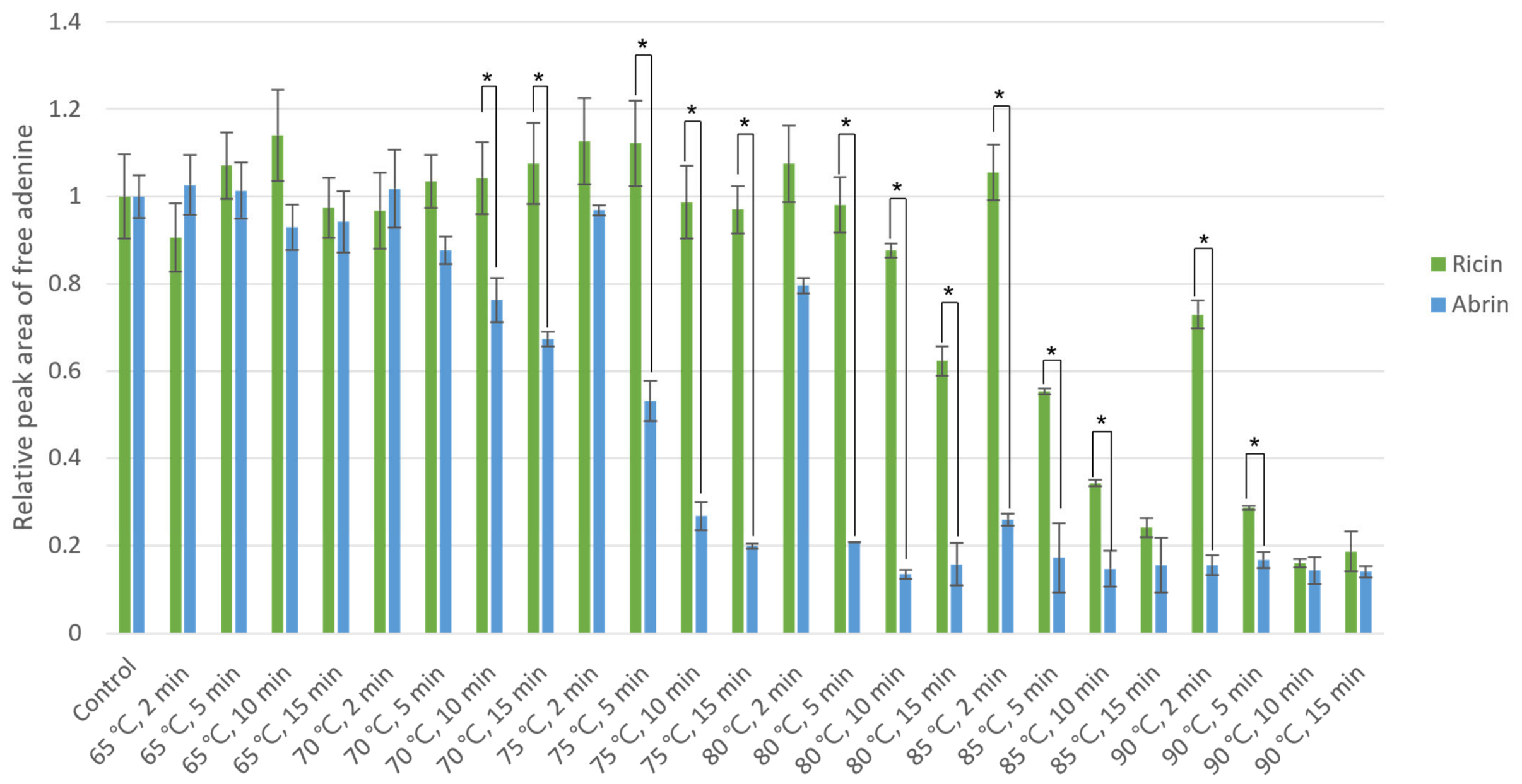
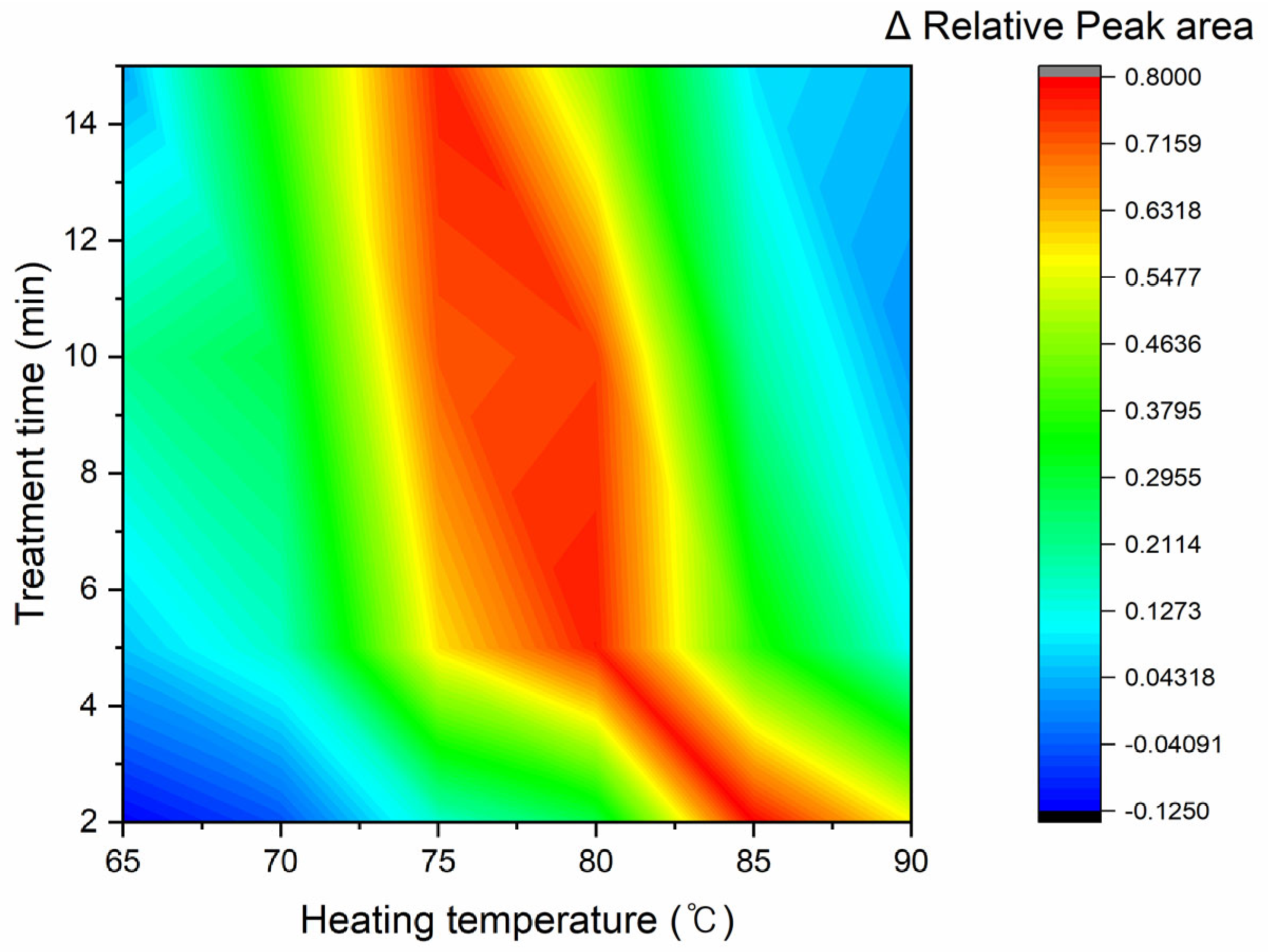
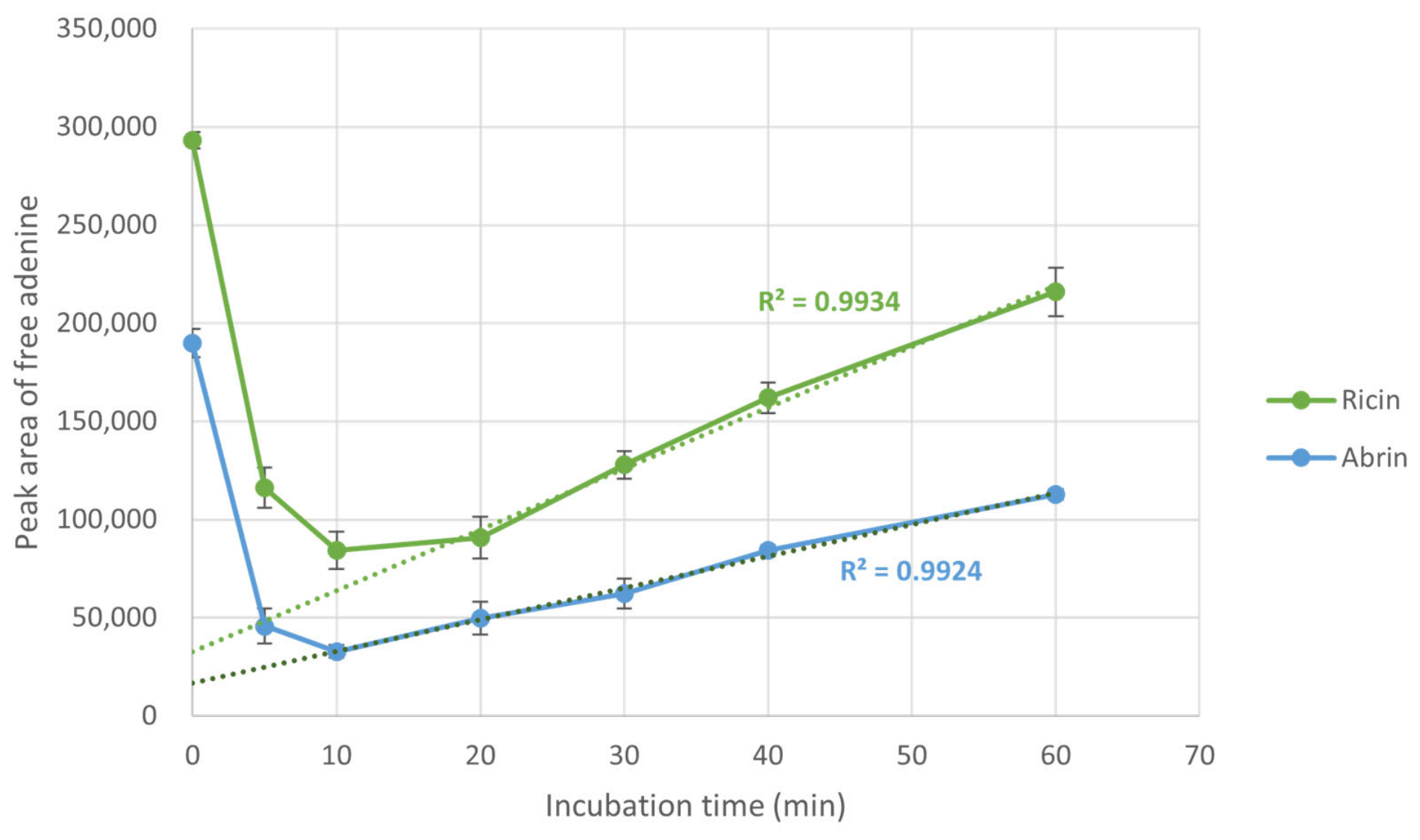
2.1. Comparing the Thermal Stability of Ricin and Abrin
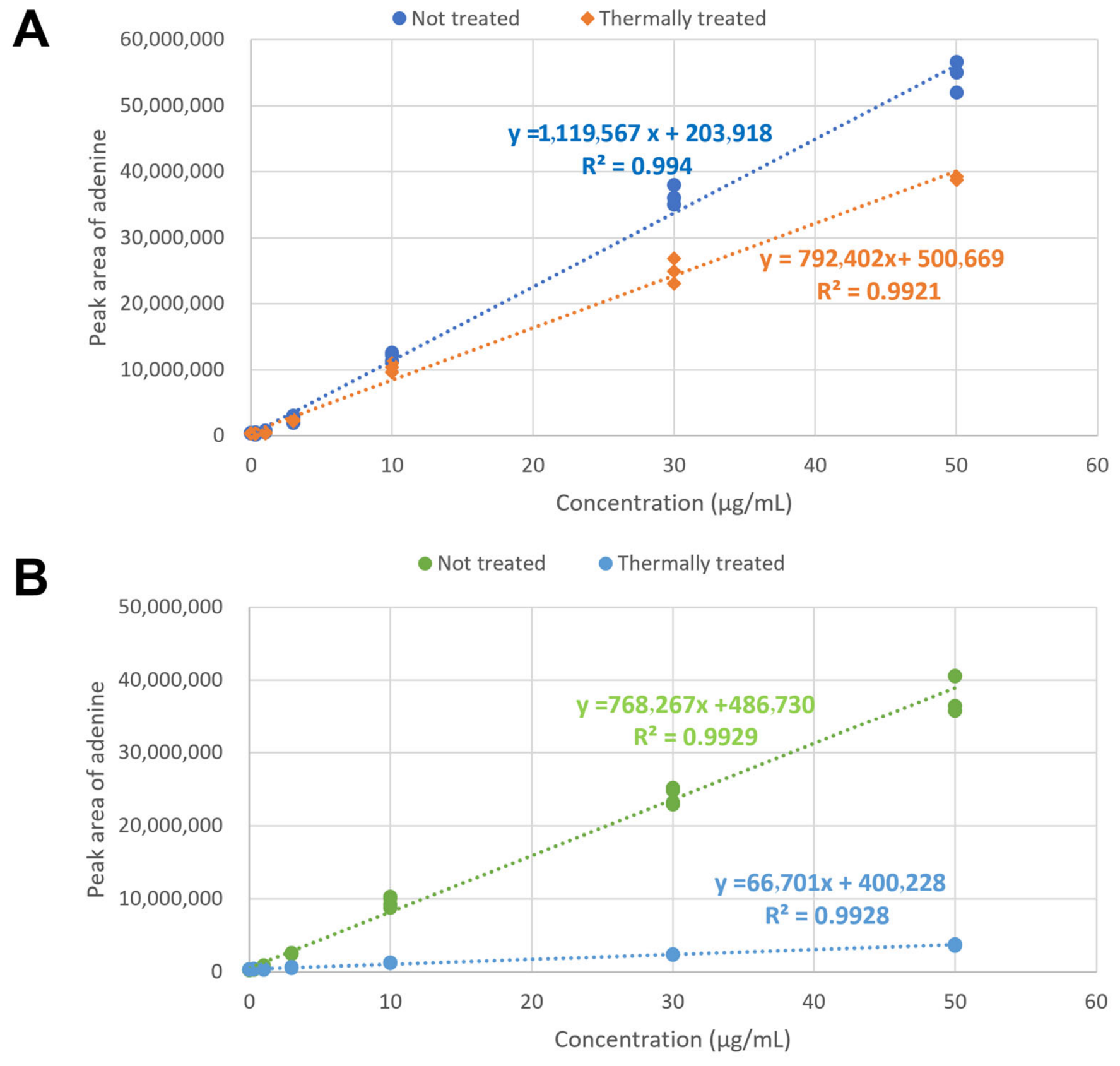
2.2. Equation for Calculating Ricin and Abrin Concentrations
3. Discussion
4. Conclusions
5. Materials and Methods
5.1. Preparation of Ricin and Abrin
5.2. Adenine Depurination Assay
5.3. Thermal Inactivation
5.4. LC-MS/MS Analysis of Free Adenine
6. Patents
Supplementary Materials
Funding
Institutional Review Board Statement
Informed Consent Statement
Data Availability Statement
Acknowledgments
Conflicts of Interest
Abbreviations
| SRL | Sarcin/Ricin Loop |
| OPCW | Organisation for Prohibition of Chemical Weapons |
| MWCO | Molecular weight cut-off |
| RIP | Ribosome-inactivating protein |
References
- Lord, J.M.; Roberts, L.M.; Robertus, J.D. Ricin: Structure, mode of action, and some current applications. FASEB J. 1994, 8, 201–208. [Google Scholar] [CrossRef] [Scilit]
- Endo, Y.; Tsurugi, K. RNA N-glycosidase activity of ricin A-chain. Mechanism of action of the toxic lectin ricin on eukaryotic ribosomes. J. Biol. Chem. 1987, 262, 8128–8130. [Google Scholar] [CrossRef] [Scilit]
- Sandvig, K.; van Deurs, B. Entry of ricin and Shiga toxin into cells: Molecular mechanisms and medical perspectives. EMBO J. 2000, 19, 5943–5950. [Google Scholar] [CrossRef] [Scilit]
- Li, X.P.; Barrientos, G.A.; Kahn, J.N.; Tumer, N.E. Ribosome Depurination Is Not Sufficient for Ricin-Mediated Cell Death in Saccharomyces cerevisiae. Infect. Immun. 2006, 74, 4190–4201. [Google Scholar] [CrossRef] [Scilit]
- Organisation for the Prohibition of Chemical Weapons (OPCW). Annex on Chemicals: Schedule 1; OPCW: The Hague, The Netherlands, 2024. [Google Scholar]
- Bozza, W.P.; Tolleson, W.H.; Rossetto, O.; Retamal, I.N. Ricin detection: Tracking active toxin. Biotechnol. Adv. 2015, 33, 117–123. [Google Scholar] [CrossRef] [Scilit]
- Duriez, E.; Fenaille, F.; Tabet, J.C.; Lamourette, P.; Hilaire, D.; Becher, F. Detection of ricin in complex matrices by intact cell-based assay and liquid chromatography tandem mass spectrometry. Anal. Chem. 2008, 80, 7265–7272. [Google Scholar] [CrossRef] [Scilit]
- Pauly, D.; Worbs, S.; Kirchner, S.; Shatohina, O.; Dorner, M.B.; Dorner, B.G. Real-time cytotoxicity assay for rapid and sensitive detection of ricin from complex matrices. PLoS ONE 2012, 7, e35360. [Google Scholar] [CrossRef] [Scilit] [PubMed]
- Kalb, S.R.; Barr, J.R. Mass spectrometric detection of ricin and its activity in food and clinical samples. Anal. Chem. 2009, 81, 2037–2042. [Google Scholar] [CrossRef] [Scilit]
- Kalb, S.R.; Schieltz, D.M.; Becher, F.; Astot, C.; Fredriksson, S.Å.; Barr, J.R. Recommended Mass Spectrometry-Based Strategies to Identify Ricin-Containing Samples. Toxins 2015, 7, 4881–4894. [Google Scholar] [CrossRef] [Scilit]
- Becher, F.; Duriez, E.; Volland, H.; Tabet, J.C.; Ezan, E. Detection of functional ricin by immunoaffinity and liquid chromatography-tandem mass spectrometry. Anal. Chem. 2007, 79, 659–665. [Google Scholar] [CrossRef] [Scilit]
- Hale, M.L. Microtiter-based assay for evaluating the biological activity of ribosome-inactivating proteins. Pharmacol. Toxicol. 2001, 88, 255–260. [Google Scholar] [CrossRef] [Scilit]
- He, X.; McMahon, S.; Henderson, T.D.; Griffey, S.M.; Cheng, L.W. Effect of food matrices on the biological activity of ricin. J. Food Prot. 2008, 71, 2053–2058. [Google Scholar] [CrossRef] [Scilit]
- Zajaczkowski, W.; Bojarska, E.; Furtak, E.; Bijak, M.; Szelenberger, R.; Niemcewicz, M.; Podogrocki, M.; Stela, M.; Cichon, N. Ricin and Abrin in Biosecurity: Detection Technologies and Strategic Responses. Toxins 2025, 17, 494. [Google Scholar] [CrossRef] [Scilit]
- Dong, L.; Liu, T.; Li, J.; Wang, C.; Lv, J.; Wang, J.; Wang, J.; Gao, S.; Kang, L.; Xin, W. Establishment and Comparison of Detection Method for Ricin and Abrin based on their Depurination Activities. Toxins 2025, 17, 177. [Google Scholar] [CrossRef] [Scilit]
- Worbs, S.; Kampa, B.; Skiba, M.; Hansbauer, E.-M.; Stern, D.; Volland, H.; Becher, F.; Simon, S.; Dorner, M.B.; Dorner, B.G. Differentiation, Quantification and Identification of Abrin and Abrus precatorius Agglutinin. Toxins 2021, 13, 284. [Google Scholar] [CrossRef] [Scilit]
- Worbs, S.; Skiba, M.; Söderström, S.N.; Rapinoja, M.-L.; Zenely, R.; Russmann, H.; Schimmel, H.; Vanninen, P.; Dorner, B.G. Characterization of Ricin and R. communis Agglutinin Reference Materials. Toxins 2015, 7, 4906–4934. [Google Scholar] [CrossRef] [Scilit]
- Drinkard, K.; Barr, J.; Kalb, S. Mass Spectrometric Detection and Differentiation of Enzymatically active Abrin and Ricin Combined with a Novel Affinity Enrichment Technique. Chem. Res. Toxlcol. 2024, 37, 1218–1228. [Google Scholar] [CrossRef] [Scilit]
- Jackson, L.; Tolleson, W.; Chirtel, S. Thermal inactivation of ricin using infant formula as a food matrix. J. Agric. Food Chem. 2006, 54, 7300–7304. [Google Scholar] [CrossRef] [Scilit]
- Jackson, L.; Tolleson, W.; Chirtel, S. Influence of food matrices on the stability and bioavailability of abrin after thermal processing. Toxins 2018, 10, 466. [Google Scholar] [CrossRef] [Scilit]
- Sánchez, M.; Sciré, A.; Tanfani, F.; Ausili, A. The thermal unfolding of the ribosome-inactivating protein saporin-S6 characterized by infrared spectroscopy. Biophys. Acta Proteins Proteom. 2015, 1854, 1357–1364. [Google Scholar] [CrossRef] [Scilit]
- Daniel, R.M.; Dines, M.; Petach, H.H. The denaturation and degradation of stable enzymes at high temperatures. Biochem. J. 1996, 317, 1–11. [Google Scholar] [CrossRef] [Scilit]
- Barnes, D.J.; Baldwin, B.S.; Braasch, D.A. Degradation of ricin in castor seed meal by temperature and chemical treatment. Ind. Crops Prod. 2009, 29, 509–515. [Google Scholar] [CrossRef] [Scilit]
- Tam, C.C.; Henderson, T.D., II; Stanker, L.H.; He, X.; Cheng, L.W. Abrin Toxicity and Bioavailability after Temperature and pH Treatment. Toxins 2017, 9, 320. [Google Scholar] [CrossRef] [Scilit]
- Woo, B.H.; Lee, J.T.; Lee, K.C. Purification of Sepharose-Unbinding Ricin from Castor Beads (Ricinus communis) by Hydroxyapatite Chromatography. Protein Expr. Purif. 1998, 13, 150–154. [Google Scholar] [CrossRef] [Scilit]
- An, R.; Dong, P.; Komiyama, M.; Pan, X.; Liang, X. Inhibition of nonenzymatic depurination of nucleic acids by polycations. FEBS Open Bio 2017, 7, 1707–1714. [Google Scholar] [CrossRef] [Scilit] [PubMed]



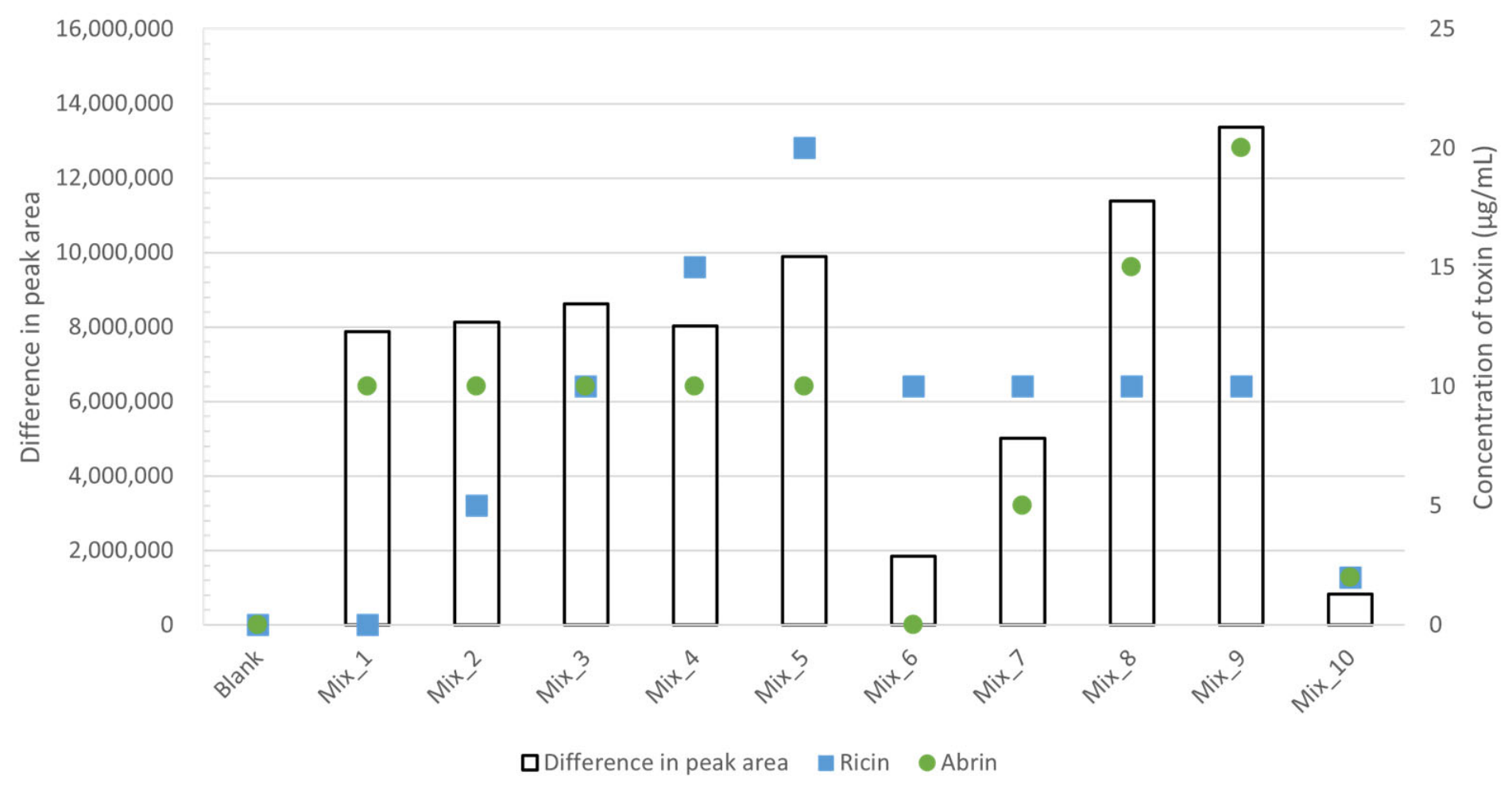
| Sample ID | Spiked Ricin (µg/mL) | Spiked Abrin (µg/mL) | Calculated Ricin Concentration * (µg/mL) | Calculated Abrin Concentration * (µg/mL) |
|---|---|---|---|---|
| Mix_1 | 0 | 10 | ||
| Mix_2 | 5 | 10 | ||
| Mix_3 | 10 | 10 | ||
| Mix_4 | 15 | 10 | ||
| Mix_5 | 20 | 10 | ||
| Mix_6 | 10 | 0 | ||
| Mix_7 | 10 | 5 | ||
| Mix_8 | 10 | 15 | ||
| Mix_9 | 10 | 20 | ||
| Mix_10 | 2 | 2 |
Disclaimer/Publisher’s Note: The statements, opinions and data contained in all publications are solely those of the individual author(s) and contributor(s) and not of MDPI and/or the editor(s). MDPI and/or the editor(s) disclaim responsibility for any injury to people or property resulting from any ideas, methods, instructions or products referred to in the content. |
© 2026 by the author. Licensee MDPI, Basel, Switzerland. This article is an open access article distributed under the terms and conditions of the Creative Commons Attribution (CC BY) license.
Share and Cite
Jeong, W.-H. Differential Thermal Inactivation Enables Simultaneous Quantitation of Ricin and Abrin. Toxins 2026, 18, 233. https://doi.org/10.3390/toxins18050233
Jeong W-H. Differential Thermal Inactivation Enables Simultaneous Quantitation of Ricin and Abrin. Toxins. 2026; 18(5):233. https://doi.org/10.3390/toxins18050233
Chicago/Turabian StyleJeong, Woo-Hyeon. 2026. "Differential Thermal Inactivation Enables Simultaneous Quantitation of Ricin and Abrin" Toxins 18, no. 5: 233. https://doi.org/10.3390/toxins18050233
APA StyleJeong, W.-H. (2026). Differential Thermal Inactivation Enables Simultaneous Quantitation of Ricin and Abrin. Toxins, 18(5), 233. https://doi.org/10.3390/toxins18050233