Article

Curcumin Mitigates Fumonisin B1-Induced Ovarian Toxicity in Peak-Laying Ducks via Hormone Metabolic Protection and Enhanced Reproductive Resilience

1
State Key Laboratory of Swine and Poultry Breeding Industry and Guangdong Provincial Key Laboratory of Animal Nutrition and Regulation, College of Animal Science, South China Agricultural University, Guangzhou 510642, China
2
International Livestock Research Institute, Nairobi 00100, Kenya
3
Department of Pathology, University of Agriculture Faisalabad, Faisalabad 38040, Pakistan
4
Gurdon Institute and the Department of Genetics, University of Cambridge, Cambridge CB2 1QN, UK
*
Authors to whom correspondence should be addressed.
These authors contributed equally to this work. Author order was determined by descending grade level.
Toxins 2026, 18(1), 34; https://doi.org/10.3390/toxins18010034
Submission received: 23 October 2025 / Revised: 11 December 2025 / Accepted: 8 January 2026 / Published: 9 January 2026

Abstract

The objective of this study was to evaluate the protective effect of curcumin (Cur) on reproductive toxicity induced by fumonisin B1 (FB1) in laying ducks during the peak egg-laying period. A total of seventy-two 50-week-old Cherry Valley ducks were randomly assigned to four groups: control, FB1 (30 mg/kg), Cur (200 mg/kg), and Cur + FB1 (200 mg/kg + 30 mg/kg). The experiment lasted for 35 days. Our results showed that cur supplementation effectively restored the reductions in final body weight (p = 0.005) and oviduct length (p = 0.020) induced by FB1 exposure. Residual FB1 concentrations in serum, liver, and ovaries were markedly increased in the FB1-treated group, while Cur significantly decreased the FB1 residual in duck liver (p < 0.05). Meanwhile, Cur supplementation markedly counteracted the FB1-induced reductions in serum total protein, albumin, triglycerides, and high-density lipoprotein induced by FB1 exposure. Cur supplementation effectively regulated FB1-induced oxidative stress, inflammation, and endocrine disruption. Specifically, Cur lowered FB1-induced malondialdehyde levels (p < 0.010), attenuated interleukin-1β increase (p = 0.083), and reversed the reduction in immunoglobulin G levels. FB increased the levels of hormones associated with duck reproduction, including estradiol, follicle-stimulating hormone, and luteinizing hormone; in contrast, curcumin supplementation decreased the levels of these hormones (p < 0.010). Histopathological analysis revealed that Cur significantly alleviated the inflammation and necrosis in the liver, kidneys, ovaries, and oviducts induced by FB1. In conclusion, dietary Cur supplementation effectively alleviated FB1-induced reproductive toxicity in laying ducks by enhancing antioxidant capacity, improving lipid metabolism, and restoring hormonal homeostasis.
Key Contribution: Curcumin exerts a protective effect against FB1-induced reproductive system impairment in laying hens through the modulation of lipid metabolism and antioxidant signaling pathways.

1. Introduction

Mycotoxin contamination has increasingly emerged as a critical constraint impairing quality and impeding sustainable development within the global feed and livestock production sectors. It poses a severe threat to the quality of livestock and poultry products, offspring development and human health, through impairment of the reproductive system and contamination of the food chain, respectively [1]. Fumonisins constitute a class of mycotoxins produced by specific species of Fusarium fungi, which are frequently detected in corn and other cereal grains, thereby exerting significant adverse health effects on both animals and humans [2]. Among fumonisins, fumonisin B1 (FB1), is the most prevalent and toxic congener, exhibiting primary toxicity toward the liver, kidneys, and reproductive organs in animals [3,4]. Notably, poultry exhibit heightened susceptibility to the toxicological effects of FB1 [5].
Studies have demonstrated that chickens exposed to FB1 through their diet experience growth retardation, tissue lesions, and disrupted intestinal microbiota [6]. Moreover, when laying hens are fed FB1-contaminated feed, both egg production and quality are significantly reduced [7]. FB1 disrupts the structural integrity and physiological function of reproductive organs. It reduces primary follicle count and increases the number of atretic follicles. Additionally, FB1 impairs hormone biosynthesis by inhibiting granulosa cell proliferation, thereby compromising the overall integrity of the reproductive system [8]. Prolonged exposure of pregnant animals to FB1 can trigger embryonic growth retardation and may further culminate in embryonic and fetal malformations or functional deficits [9]. Dietary administration of 10 mg/kg FB1 impairs egg-laying rate and egg weight in laying quails [10]. Additionally, FB1 has been found to reduce testicular weight, impair spermatogenesis, and significantly diminish semen quality in boars by reducing sperm viability and increasing sperm deformity rates [11].
Accumulating evidence demonstrates that plant-derived bioactive compounds, such as quercetin and resveratrol, protect against mycotoxin-induced toxicity [12,13]. Notably, curcumin (Cur), a polyphenolic compound from the Zingiberaceae plant Curcuma longa L., exerts pleiotropic effects on various molecular targets and key signaling pathways [14]. Recent studies have demonstrated that Cur can effectively counteract the toxic effects induced by various mycotoxins. Specifically, it had been proved that Cur can effectively alleviate the adverse effects caused by FB1 through the modulation of IRE1/MKK7/JNK/Caspase3 pathway [15,16]. Curcumin alleviates Aflatoxin B1-induced hepatic toxicity in ducks by inhibiting endoplasmic reticulum stress and restoring lipid metabolism balance [17]. An in vivo study also showed that Cur alleviated Aflatoxin B1-induced renal toxicity in ducks by inhibiting mitochondrial-mediated oxidative stress and regulating abnormal iron phagocytosis and exocytosis [18]. Additionally, dietary supplementation with Cur has been reported to mitigate adverse physiological outcomes in intrauterine growth retardation (IUGR) weaned piglets, which effectively reduces lipid oxidation, lowers plasma inflammatory factor levels, and enhances antioxidant capacity [19]. Although Cur has been shown to protect hepatic and renal function, its protective effects and underlying mechanisms against FB1-induced reproductive toxicity remain inadequately understood.
As curcumin has proven multiple effects in alleviating oxidative stress and protecting mitochondrial function, we hypothesize that it may also mitigate the reproductive impairment in breeder ducks caused by FB1. Therefore, we conducted this study with the aim of evaluating the potential therapeutic effects of Cur on FB1-induced reproductive impairment in ducks with serum biocharacters, antioxidants, inflammatory, and immune indicators, and hormone levels.

2. Results

2.1. Determination of the Content of Fermentation Product FB1

The FB1 content of the fermentation product was determined, and its concentration was 16.235 mg/g (Table 1).

2.2. The Effect of FB1 and Cur on the Growth Performance in Peak-Laying Ducks

Dietary exposure to FB1 resulted in a significant reduction in the final weight of laying ducks, whereas Cur supplementation mitigated this FB1-induced decrease (p = 0.005, Table 2). No significant differences were observed in feed intake or average egg production among the four experimental groups.

2.3. FB1 Residues of FB1 Exposure and Cur Treatment Ducks

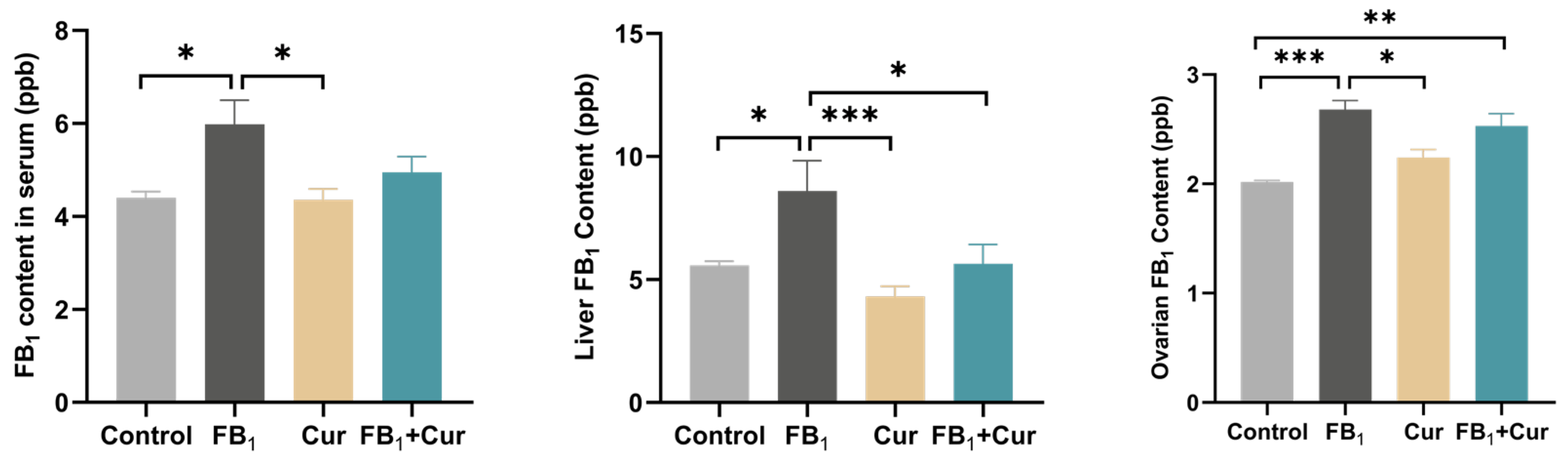
The results showed that Cur supplementation significantly reduced the FB1-induced elevation of FB1 levels in the liver of laying ducks (p < 0.050). However, it had no significant effect on the FB1-induced increase in the blood and ovaries (Figure 1).

2.4. The Effect of FB1 and Cur on Organ Parameters in Peak-Laying Ducks

Experimental findings indicated no significant differences in organ indices between FB1-exposed laying ducks and the control group (Table 3). However, Cur supplementation significantly increased oviduct length (p = 0.020) and reduced the relative weight of the oviduct isthmus (p = 0.0003) compared to the FB1-exposed group. Additionally, FB1 exposure showed a trend toward increased ovarian relative weight (p = 0.074) (Table 4).

2.5. The Effect of FB1 and Cur on Serum Biochemical Indices in Peak-Laying Ducks

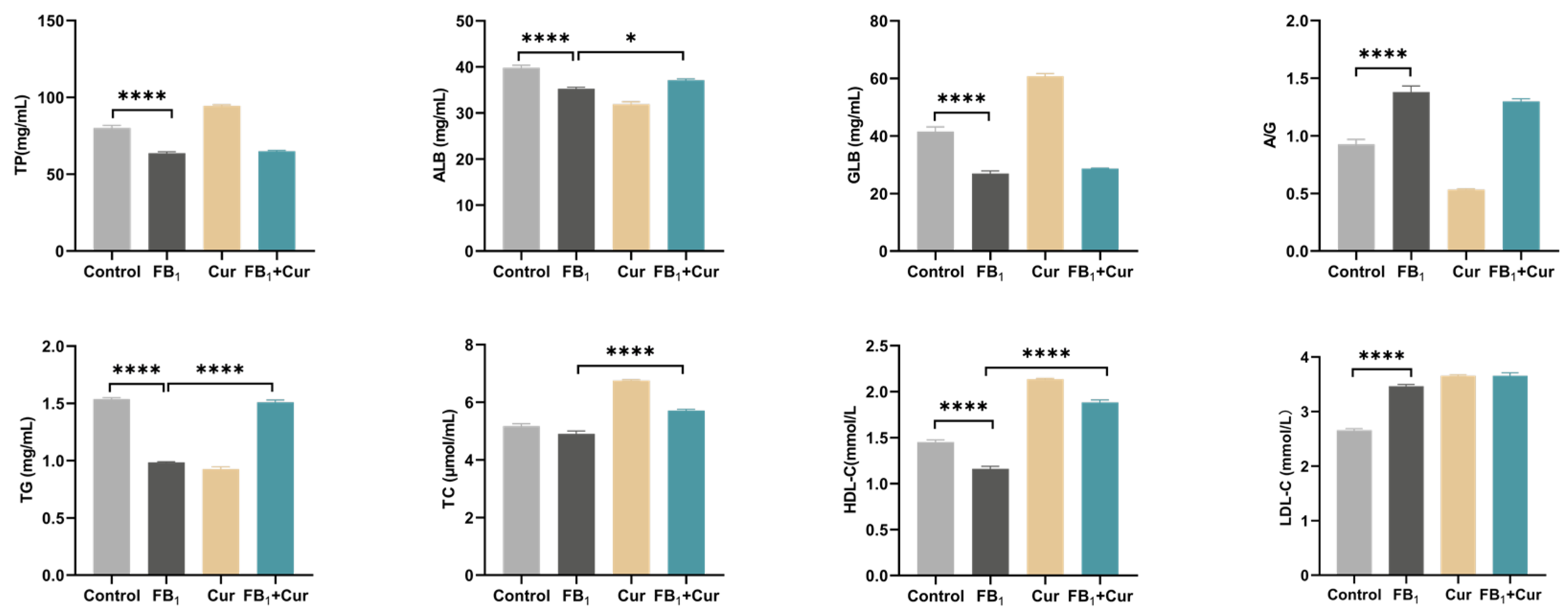
Dietary FB1 exposure significantly decreased serum total protein (TP), albumin (ALB), and globulin (GLB) levels, while increasing the A/G ration. In contrast, Cur supplementation significantly increased serum ALB levels. Results showed that dietary FB1 exposure significantly decreased triglyceride (TG) and high-density lipoprotein cholesterol (HDL-C) levels, while increased low-density lipoprotein cholesterol (LDL-C) levels. Cur supplementation attenuated these FB1-induced alterations by inhibiting the decline in TG and HDL-C levels. Additionally, Cur supplementation increased serum TC levels (Figure 2).

2.6. The Effect of FB1 and Cur on Antioxidant Indices in Peak-Laying Ducks

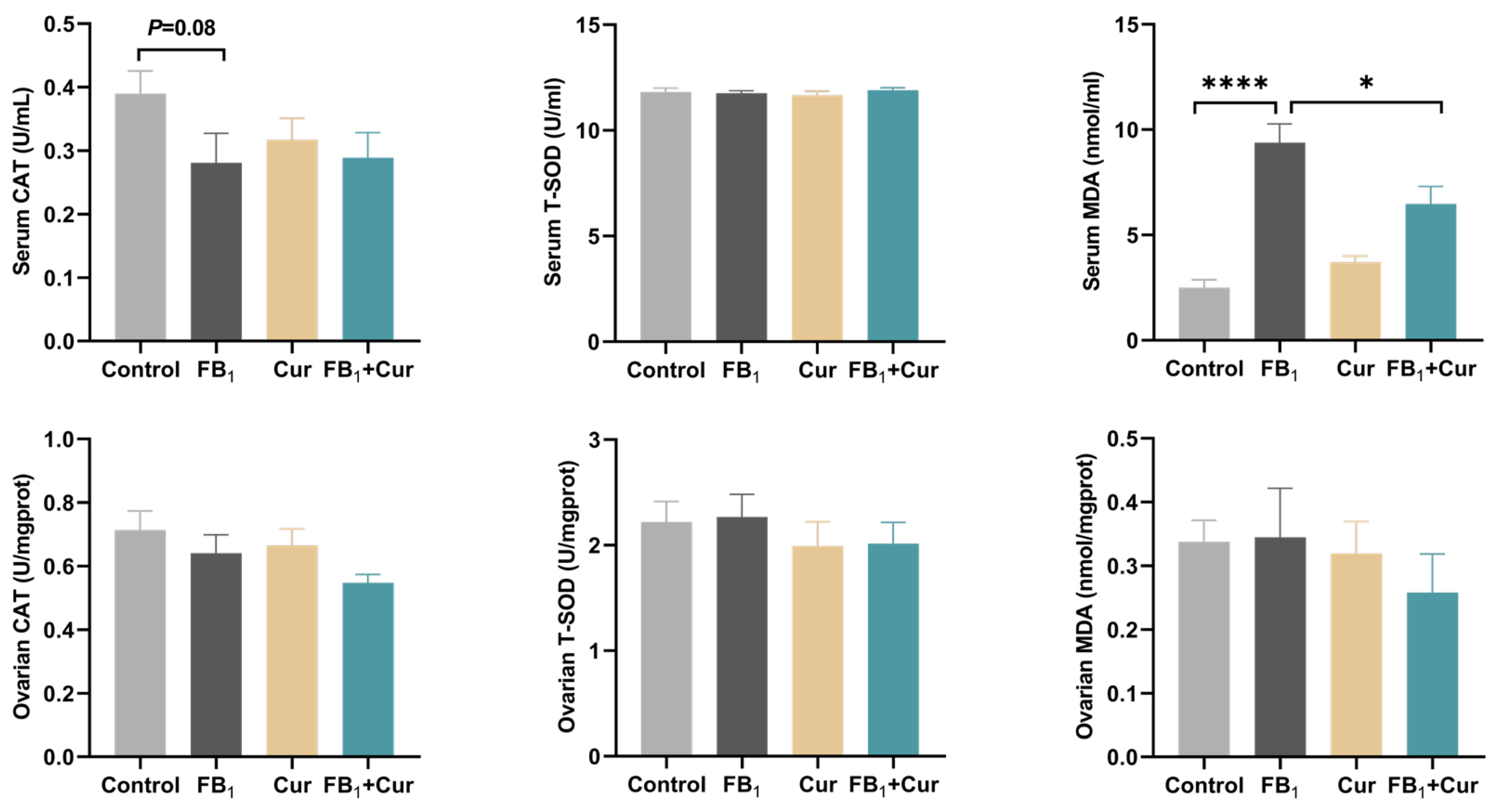
FB1 exposure tended to decrease catalase (CAT) activity (p = 0.08) in duck serum and increase malondialdehyde (MDA) levels (p < 0.0001), a biomarker of lipid peroxidation. Notably, Cur supplementation mitigated the FB1-induced elevation of MDA levels (p < 0.05, Figure 3). In contrast, neither FB1 exposure nor Cur supplementation significantly affected the antioxidant indices in the ovary.

2.7. The Effect of FB1 and Cur on Sex Hormone Indices in Peak-Laying Ducks

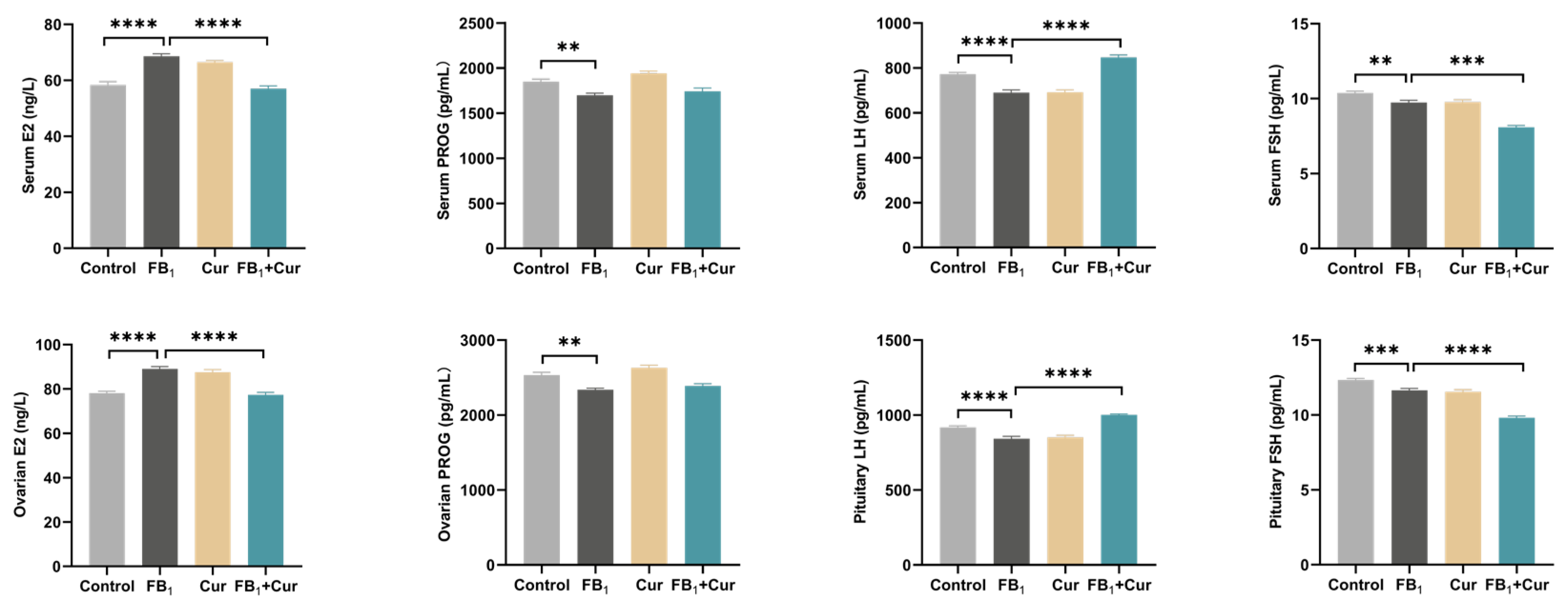
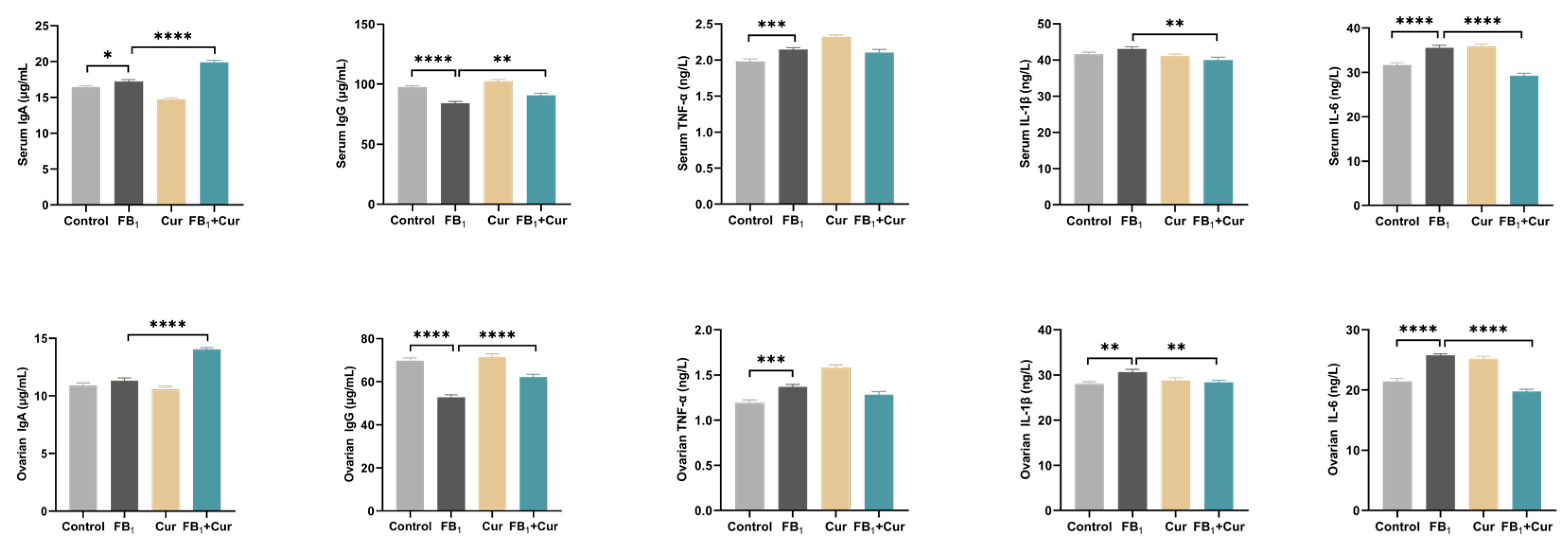
Results showed that Cur supplementation attenuated the FB1-induced elevation of estradiol (E2) levels in serum and ovaries and reversed the FB1-induced reduction in luteinizing hormone (LH) levels in serum and pituitary glands. However, Cur supplementation had no significant effect on the FB1-induced reduction in progesterone (PROG) levels in serum and ovaries, nor on the reduction in follicle-stimulating hormone (FSH) levels in serum and pituitary glands (Figure 4).

2.8. The Effect of FB1 and Cur on Immune and Inflammatory Indices in Peak-Laying Ducks

This study found that dietary Cur supplementation reversed the FB1-induced reduction in immunoglobulin G (IgG) levels and attenuated the FB1-induced elevation of the interleukin-1β (IL-1β) and interleukin-6 (IL-6). However, Cur supplementation had no significant effect on the FB1-induced increase in tumor necrosis factor-α (TNF-α) levels. Additionally, Cur supplementation significantly increased immunoglobulin A (IgA) levels (Figure 5).

2.9. The Effect of FB1 and Cur on Pathological Sections in Peak-Laying Ducks

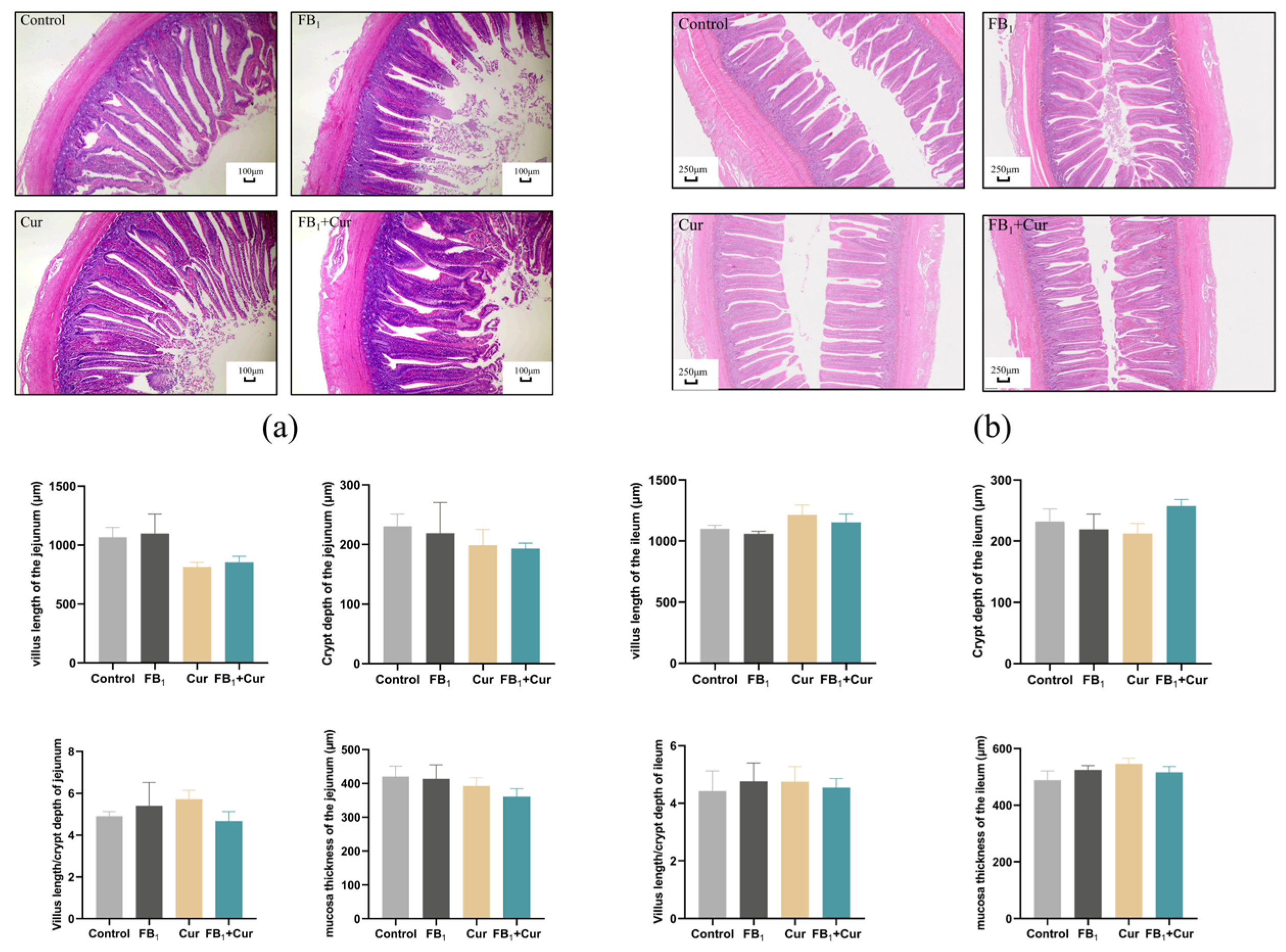
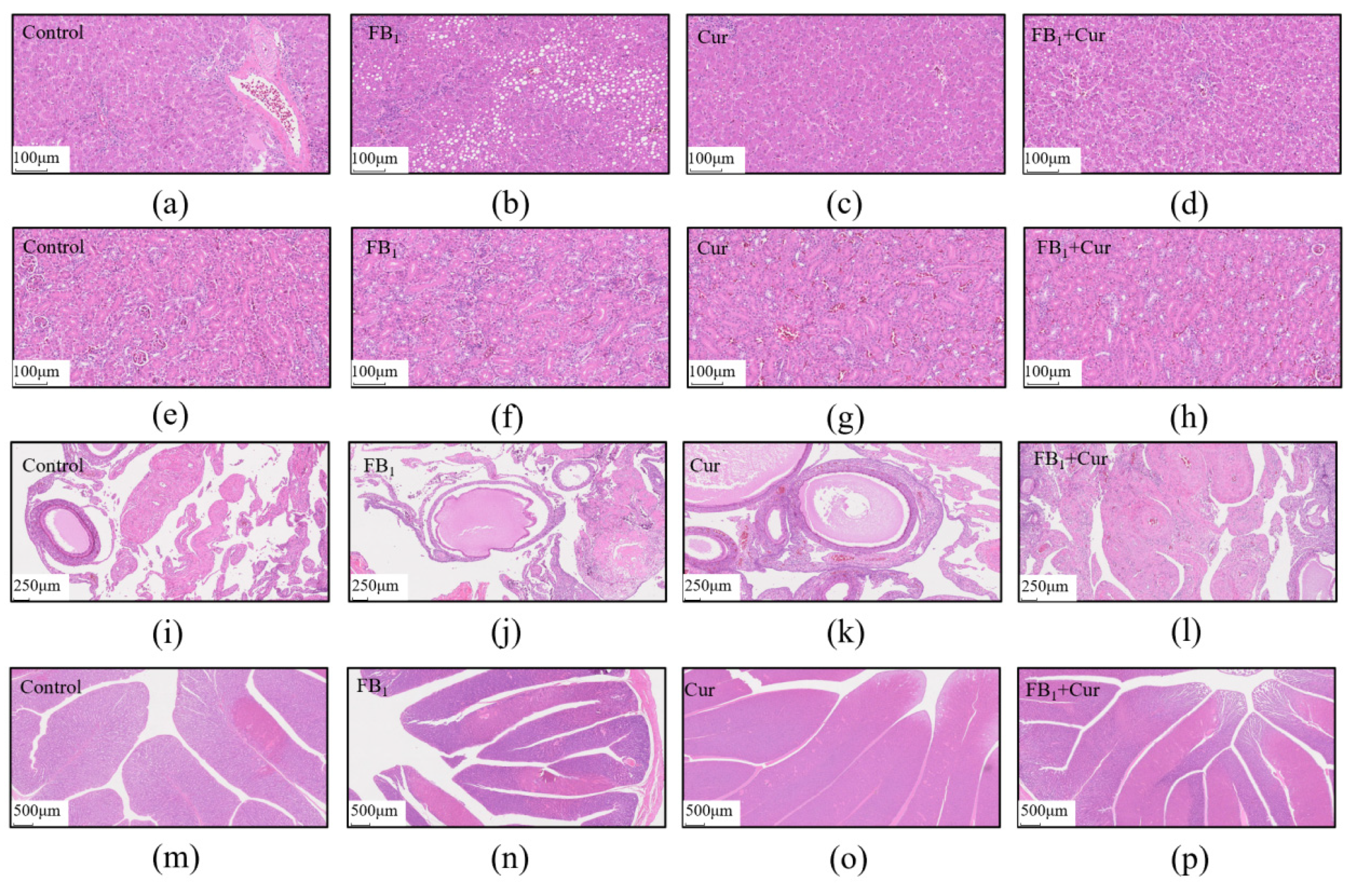
Dietary FB1 exposure and Cur supplementation did not significantly impact the intestinal development of the adult ducks (Figure 6), including jejunal and ileal villus length, crypt depth, and muscle thickness. However, FB1 caused hepatic steatosis in ducks, as evidenced by the presence of lipid vacuoles of varying sizes in hepatocyte cytoplasm in hepatic tissue sections (Figure 7a–d). Conversely, Cur supplementation significantly ameliorated the occurrence of these hepatic lipid vacuoles. No significant differences were observed in kidney tissue sections (Figure 7e–h).
Ovarian histopathological sections revealed that Cur supplementation could alleviate the separation of the follicular granulosa layer from the follicular membrane, as well as the concurrent localized fibrotic lesions in the FB1 group (Figure 7i–l). Histopathological examination of the oviducts demonstrated that FB1 induced partial epithelial detachment and the formation of hemorrhagic foci. In contrast, Cur effectively inhibited epithelial detachment and the development of additional pathological lesions (Figure 7m–p).

3. Discussion

Mycotoxin contamination is a widespread and critical issue in animal husbandry, often impairing reproductive performance in livestock and poultry. Using plant extracts to mitigate the adverse effects of mycotoxins in feed is a promising and sustainable strategy. In this study, we systematically evaluated the effects of Cur on growth performance, organ development, serum biochemical parameters, histopathological changes, antioxidant capacity, hormone levels, and immune-inflammatory responses in peak-laying Cherry Valley ducks exposed to FB1. FB1 exposure significantly reduced the final body weight of laying ducks. FB1 disrupts sphingolipid metabolism by inhibiting sphingosine synthase activity, suppressing cell proliferation and inducing apoptosis, leading to growth retardation and histopathological damage [20,21,22]. Consistent with these findings, Butkeraitis et al. reported that FB1 significantly decreased feed intake in laying quails, reducing weight gain [23]. Studies also show that FB1 can delay early embryonic development in ducks by inhibiting ceramide synthases and folate transporters, disrupting the sphingolipid metabolic pathway [24]. In our study, Cur promoted growth by improving lipid metabolism and regulating hormone levels. Previous studies research suggests that Cur may counteract FB1-induced growth inhibition through two mechanisms: (1) activation of the AMPK/mTOR signaling pathway to enhance protein synthesis, and (2) suppression of pro-inflammatory cytokines (e.g., TNF-α) to reduce energy expenditure [25]. Furthermore, Cur has been shown to improve production performance, antioxidant enzyme activity, and immune function in laying hens under high-temperature stress by modulating lipid metabolic pathways [26].
FB1 is difficult to eliminate metabolically due to its stable structure and lack of recognition sites for metabolic enzymes, resulting in its accumulation in poultry tissues and organs [27]. The efficiency of toxin transformation and residual deposition depends on the poultry’s health and liver biotransformation capacity [28]. This study shows that FB1 primarily accumulates in the liver when transported through the circulatory system, with lower deposition in the ovaries. A study on 21-day-old chickens fed 20 mg/kg diet of FB1 + FB2 for 4 and 9 days found that FB1 accumulation in the liver significantly increased, with concentrations at 20.3 and 32.1 ng/g, respectively [29]. After 12 days of feeding 85-day-old male mule ducks with FB1, the residual FB1 levels in their livers were significantly higher compared to the control group [30]. These results suggest that prolonged exposure leads to FB1 accumulation in the liver. Furthermore, feeding 10 mg/kg of FB1 to 10-day-old broilers for 21 days raised FB1 residues in the gizzard [31]. Cur, an effective detoxifying substance, has been shown to reduce AFB1 residues in the liver and muscles of broilers [32]. This study also indicates that Cur can decrease FB1 accumulation in the liver. Curcumin, a polyphenolic compound, forms hydrophobic interactions with FB1’s long-chain carboxylic acid and hydroxyl groups, disrupting its structure [33,34]. Additionally, Curcumin upregulates the expression and activity of liver CYP450 enzymes and glucuronosyltransferase, which hydroxylate and glucuronidate FB1, increasing its water solubility and facilitating its excretion via urine or bile [35,36].
Ovary structure, follicle count, and fallopian tube development are closely linked to production performance. In this study, feeding laying hens with FB1 tended to lead to an increase in ovary weight. Similarly, after 4 weeks of FB1 feeding, female rats exhibited increased ovary weight and decreased follicle number, impairing reproductive function [37]. The observed phenomena in the FB1-fed hens may be due to the separation of the granular and capsule layers in the ovary, along with local fibrotic lesions. Additionally, elevated E2 levels promote ovarian stromal cells proliferation, while insufficient LH levels hinder ovulation, exacerbating follicular retention and increasing ovary weight [38]. These findings align with this study, where FB1 significantly elevated E2 levels in serum and ovaries while reducing LH levels. Cur has been shown to regulate both hormones, impairing the release of mature follicles and promoting the retention of immature follicles, disrupting follicle development homeostasis and leading to a slight increase in ovary weight. Notably, Cur supplementation alleviates these pathological changes, not by altering weight, but through hormonal regulation and pathological improvement. This suggests its potential to mitigate organ dysfunction caused by mycotoxins.
Data indicate that an FB1 level of 32 mg/kg in the diet increases total cholesterol (TC) and LDL levels in duck serum, and at 128 mg/kg, it raises TP content. These findings are consistent with our results, where FB1 in feed decreases serum TP levels and increases LDL-C levels [39]. Tardieu et al. also demonstrated that FB1 elevates LDL levels in turkey serum [40]. Additionally, this study observed a decrease in ALB, TG, and HDL-C levels, confirming FB1’s toxic effect on liver synthesis and lipid metabolism. FB1 disrupts lipoprotein metabolism and reverses cholesterol transport via the sphingolipid signaling pathway [41]. Cur supplementation significantly increases serum ALB levels, alleviates the reduction in TG and HDL-C, and raises TC. Similarly, Cur has been shown to reduce TG, TC, and LDL-C levels in the serum of laying quails [42], and Kong et al. research indicates that Cur supplementation decreases TC, TG, and AST levels in laying hens [43]. These effects are attributed to Cur promoting the transfer of cholesterol from cells to HDL particles, enhancing fatty acid oxidation, reducing lipid accumulation, and alleviating lipid metabolism disorders caused by FB1 [44,45].
FB1 can cause diffuse vacuolation and focal mononuclear cell infiltration in the liver of laying hens [46]. Similarly, when different doses of FB1 (0–4.374 mg/kg BW) were administered to mice for 8 weeks, liver tissue exhibited pathological changes, including necrotic inflammation, vacuolar degeneration, and fragmented necrosis [47]. FB1 exposure also disrupts the homeostasis of the liver cytochrome P450 system and activates endoplasmic reticulum stress, leading to liver damage [48]. Cur alleviates liver steatosis caused by FB1 by reducing residual FB1 in the liver. Although Cur does not significantly reduce FB1 residues in serum and ovaries, it mitigates granulosa cell shedding and the shedding of oviduct epithelium These findings suggest that Cur exerts its protective effects not by enhancing FB1 metabolism or excretion, but by directly interfering with its toxic signaling pathways such as stress and lipid metabolism. Studies show that curcumin can inhibit oxidative stress and AFB1-induced liver damage in ducks [49]. In line with this, Chen et al. demonstrated that Cur inhibits the endoplasmic reticulum stress pathway activated by FB1, reducing apoptosis in PK-15 cells, further supporting this hypothesis [15]. FB1 primarily damages ovarian structure and function, leading to a decrease in primary follicles, an increase in degenerated follicles, and impaired hormone synthesis due to inhibited granulosa cell proliferation [50]. This study found that FB1 not only reduced E2 levels and increased LH levels but also decreased PROG and FSH levels. However, Cur did not regulate this pathway. During the peak laying period, FSH, LH, and progesterone secretion levels gradually increased [51,52]. We hypothesize that FB1 damages the ovary, delaying or blocking follicle development and reducing progesterone synthesis [53]. It may also disrupt the hypothalamic-pituitary-gonadal axis, leading to decreased FSH secretion and affecting reproductive function in laying ducks [54].
Exposure to FB1 reduces serum CAT activity and increases MDA levels, highlighting oxidative stress as a key toxic mechanism. Supplementation with 200 mg/kg Cur in laying hens decreases liver TG content and MDA levels, suggesting that Cur improves lipid metabolism and oxidative status in the liver [55]. Cur also protects the ileum of ducks from AFB1-induced damage and oxidative stress by reducing plasma AFB1-DNA adducts [56]. Furthermore, dietary Cur supplementation mitigates H2O2-induced oxidative damage and reproductive decline in roosters [57]. Its antioxidant activity, attributed to phenolic hydroxyl groups, helps neutralize free radicals and scavenge reactive oxygen species (ROS) [58]. These findings indicate that curcumin, as an antioxidant, alleviates stress and enhances poultry health. Additionally, FB1 exposure significantly elevates TNF-α and IL-1β levels in serum and ovaries, contributing to intestinal inflammation in broilers [59,60]. Cur inhibits the secretion of these pro-inflammatory cytokines, aligning with Li et al.’s results, which show that Cur alleviates AFB1-induced liver damage in chickens by regulating pro-inflammatory factors (TNF-α, iNOS, IL-6, and IL-1β) [61]. Cur exerts anti-inflammatory effects by inhibiting inflammatory signaling pathways, demonstrating its ability to alleviate FB1-induced tissue damage through a synergistic “antioxidant-anti-inflammatory” effect [62].

4. Conclusions

Dietary FB1 exposure results in toxin residues in the tissues and organs of peak-laying ducks, which induce body weight reduction and dysregulation of hormone levels and inflammatory factors, ultimately contributing to hepatic and ovarian damage. In contrast, Cur supplementation effectively mitigates FB1-induced toxicity by improving body weight, restoring hormone homeostasis in peak-laying ducks. Our study provides fundamental research This study provides for the application of plant extracts in alleviating mycotoxin-induced damage in breeder ducks.

5. Materials and Methods

This study was conducted at the Teaching and Research Base of South China Agricultural University, Guangzhou, China. This experiment was approved by the Animal Protection and Use Committee of South China Agricultural University (Approval No.: 2025G007).

5.1. Animals, Diets and Experimental Treatments

A total of seventy-two peak-laying Cherry Valley ducks, with an average body weight of 3.23 ± 0.345 kg and 50 weeks of age, were selected based on similar health status and randomly assigned to four experimental groups: Control, FB1 (30 mg/kg diet), Cur (200 mg/kg diet), and FB1 + Cur (30 mg/kg diet FB1 + 200 mg/kg diet Cur). Each group consisted of six replicates, with three ducks per replicate housed in individual cage. The feeding trial lasted for 42 days, including a 7-day pre-feeding period and a 35-day experimental feeding period.
The FB1 used in this study was produced by fermenting rice with Fusarium verticillioides at 25 °C for 28 days under light-protected conditions. The FB1 content was quantified using high-performance liquid chromatography–tandem mass spectrometry (HPLC-MS/MS) [63], and the FB1 supplementation level adhered to dietary hygiene standards (≤60 mg/kg) (NY/T 1970). Cur was purchased from Macklin Biochemical Technology Co., Ltd. (Shanghai, China). Both FB1 and Cur were incorporated into the basal diet according to the experimental design, with the diet formulation provided in Table 5. Throughout the experiment, all ducks had ad libitum access to feed and water. Feed was withdrawn at 22:00 in the evening prior to trial termination. Lighting was provided from 06:00 to 22:00 daily, and the health status of the ducks was monitored daily to ensure their well-being.

5.2. FB1 Fermentation, Extraction, and Content Determination in Feeds

A 250 mL conical flask was used, into which 50 g of rice and 20 mL of ultrapure water were added. The rice was soaked overnight, followed by autoclaving at 121 °C for 1 h for sterilization. After cooling in a laminar flow hood, the rice mass was loosened with a glass rod, and fungal mycelium plugs from potato dextrose agar (PDA) medium were inoculated into the rice. The plugs were thoroughly mixed to ensure complete contact between the mycelium and the medium. The inoculated rice was then cultured under dark conditions at 25 °C for 28 days, with daily manual agitation during the initial cultivation phase to maintain continuous contact between the mycelium and the rice. After cultivation, the rice was harvested, dried at 55 °C, and sieved through a 40-mesh sieve. The dried rice was stored at −20 °C for future use.
A 1.0 ± 0.01 g aliquot of the pulverized rice was accurately weighed into a 15 mL centrifuge tube, and 7.5 mL of acetonitrile-water (50:50, v/v) was added as the extraction solvent. The mixture was vortexed for 10 min then centrifuged at 3000 rpm for 5 min. The supernatant was collected, and the extraction process was repeated once. The two supernatants were combined and mixed to a final volume of 14 mL. A 2 mL aliquot of the combined supernatant was transferred to a fumonisin purification tube (SBEQ-CA8805-H, CNW QuEChERS Custom Purification Tubes containing 200 mg MgSO4, 100 mg Sodium citrate, 100 mg NaCl, and 100 mg C18). The mixture was vortexed and shaken for 2 min to ensure complete mixing. The fumonisin purification tubes were obtained from Anpel Laboratory Technologies (Shanghai, China). The supernatant was then centrifuged at 3000 rpm for 5 min, and the resulting supernatant was dried under nitrogen at 40 °C using a nitrogen evaporator. After re-solubilization with the extractant solvent, the sample was used for FB1 content determination. The HPLC-MS/MS operation parameters were as follows: Chromatographic Conditions: (Mobile Phase A: 1 mL formic acid and 1 mL of a 100 mmol/L ammonium acetate solution, diluted to 1 L with water; Mobile Phase B: 900 mL methanol mixed with 1 mL formic acid, then diluted to 1 L with water; Column: C18 reversed-phase liquid chromatography column; Column temperature: 40 °C; Flow rate: 0.3 mL/min; Injection volume: 1 µL; Elution Program: Gradient elution was performed as outlined in Table 6). Mass Spectrometric Conditions: (Ionization: Electrospray ionization (ESI) in both positive (ESI+) and negative (ESI−) ion modes; Detection: Multiple reaction monitoring (MRM); Capillary voltages: 0.6 kV (ESI+) and 2.5 kV (ESI−); Ion source temperature: 150 °C; Desolvation temperature: 500 °C; Nitrogen flow rate: 1000 L/h).

5.3. Growth and Production Performance

The body weight of all ducks was recorded before and after the experimental trial. Daily feed intake was monitored by weighing the provided feed, and residual feed was weighed weekly. Eggs were collected daily starting at 06:00, with the final collection occurring at 09:00 on the last day of the trial. The number of eggs laid per replicate pen was recorded.

5.4. Blood Characteristics

On day 36 of the experiment, 12 ducks with average body weight were selected from each treatment group. Blood samples were collected via jugular vein puncture into tubes and centrifuged at 3000× g for 15 min to obtain serum. The serum was aliquoted into 1.5 mL microcentrifuge tubes and stored at −20 °C until biochemical analysis. Serum concentrations of TP, ALB, GLB, TC, TG, LDL-C, and HDL-C were measured using an automatic biochemical analyzer (Guangzhou Daan Gene Biotechnology Co., Ltd., Guangzhou, China).

5.5. Relative Organ Index

After serum collection, the ducks were euthanized by carbon dioxide inhalation and cervical dislocation, performed by trained personnel. The weights of the liver, kidney, spleen, and pancreas were recorded. Reproductive organs were dissected, and their lengths were measured. For ovaries and oviducts, the weights of the whole organs as well as the dilated segment, isthmus, and uterine region were recorded.
Relative weight = (Organ weight)/(Final BW) × 100.
Relative length = (Organ length)/(Full Length) × 100.

5.6. Antioxidative Assays

Ovarian, and pituitary tissues were isolated, placed into cryopreservation tubes, snap-frozen in liquid nitrogen, and stored at −80 °C for later analysis. Antioxidant parameters, including CAT (A007-1), total superoxide dismutase (T-SOD, A001-3), and MDA (A003-1) were assayed using kits from Nanjing Jiancheng Bioengineering Institute (Nanjing, China).

5.7. ELISA Kit Detection Indicators

Immune indicators (IgG, IgA), inflammatory cytokines (TNF-α, IL-1β, IL-6), sex hormones (FSH (13649), LH (13645), E2 (14364), PROG (13643)) were quantified using enzyme-linked immunosorbent assay (ELISA) kits (Yancheng, China). All assays were performed following the manufacturers’ instructions. FB1 residues in the serum, liver, and ovarian tissues were determined using an ELISA kit (Shanghai Hengyuan Biotechnology Co., Ltd., Shanghai, China) according to the manufacturer’s instructions.

5.8. H&E Staining

Liver, kidneys, ovaries, and intestinal samples (1 cm from the mid-jejunum and mid-ileum) were collected, rinsed three times with phosphate-buffered saline (PBS), and fixed in 4% formaldehyde solution. The fixed samples were processed through a graded ethanol dehydration series, paraffin embedding, sectioning, and mounting on glass slides. The sections were dewaxed in xylene, rehydrated through ethanol, stained with hematoxylin and eosin (H&E), and mounted with neutral balsam for histological examination [64].

5.9. Statistical Analysis

Data were collected and analysis using t-test in GraphPad Prism 9.4.1 (GraphPad Software, San Diego, CA, USA). Differences between treatments were evaluated using the t-test. Statistical significance was set at p ≤ 0.05, with * indicating p < 0.05, ** indicating p < 0.01, *** indicating p < 0.001, and **** indicating p < 0.0001. Measurements of intestinal villus length, crypt depth, and muscularis propria thickness were performed using ImageJ software (v 1.8.0, National Institutes of Health, Bethesda, MD, USA).

Author Contributions

Conceptualization, L.W. and W.W.; Methodology, L.W., R.L. and X.L.; Software, L.W. and A.M.S.; Validation, R.L., Z.H. and Q.D.; Formal Analysis, L.W., R.L. and Z.H.; investigation, R.L., Z.H., X.L., J.L. and J.C.; Resources, Q.C. and W.W., Data Curation, Q.D., J.L. and J.C.; Writing—Original Draft Preparation, L.W.; Writing—Review and Editing, Q.C., A.M.S., L.A.B., M.K.S. and W.W.; Visualization, X.L.; Supervision, L.Y., Q.C. and W.W.; Project Administration, L.Y. and W.W., Funding Acquisition, L.Y. and W.W. All authors have read and agreed to the published version of the manuscript.

Funding

This study was sponsored by National Key Research Program (2023YFD1301005), Guangdong Province Natural Science Funds for Distinguished Young Scholar (2022B1515020016), the National Science Fund for Outstanding Young Scholars (32222080), the Funds for International Cooperation and Exchange of the National Natural Science Foundation of China (W2412010), China Agriculture Research System (CARS-42-15), Guangdong Basic and Applied Basic Research Foundation (2022B1515130003).

Institutional Review Board Statement

The animal experiments were conducted in strict accordance with the guidelines recommended and approved by the Animal Protection and Use Committee of South China Agricultural University (Approval No.: 2025G007).

Informed Consent Statement

Not applicable.

Data Availability Statement

The original contributions presented in this study are included in the article. Further inquiries can be directed to the corresponding authors.

Conflicts of Interest

We declare that we have no financial and personal relationships with other people or organizations that can inappropriately influence our work, and there is no professional or other personal interest of any nature or kind in any product, service and/or company that could be construed as influencing the content of this paper.

References

  1. Lu, P.S.; Sun, S.C. Mycotoxin toxicity and its alleviation strategy on female mammalian reproduction and fertility. J. Adv. Res. 2025, 1, 022. [Google Scholar] [CrossRef]
  2. Ciacci-Zanella, J.R.; Jones, C. Fumonisin B1, a mycotoxin contaminant of cereal grains, and inducer of apoptosis via the tumour necrosis factor pathway and caspase activation. Food Chem. Toxicol. 1999, 37, 703–712. [Google Scholar] [CrossRef]
  3. Voss, K.A.; Riley, R.T.; Norred, W.P.; Bacon, C.W.; Meredith, F.I.; Howard, P.C.; Plattner, R.D.; Collins, T.F.; Hansen, D.K.; Porter, J.K. An overview of rodent toxicities: Liver and kidney effects of fumonisins and Fusarium moniliforme. Environ. Health Perspect. 2001, 109, 259–266. [Google Scholar]
  4. Ma, J.; Huang, R.; Zhang, H.; Liu, D.; Dong, X.; Xiong, Y.; Xiong, X.; Lan, D.; Fu, W.; He, H.; et al. The Protective Effect of Quercetin against the Cytotoxicity Induced by Fumonisin B1 in Sertoli Cells. Int. J. Mol. Sci. 2024, 25, 8764. [Google Scholar] [CrossRef] [PubMed]
  5. Schrenk, D.; Bignami, M.; Bodin, L.; Chipman, J.K.; Del Mazo, J.; Grasl-Kraupp, B.; Hogstrand, C.; Leblanc, J.C.; Nielsen, E.; Ntzani, E.; et al. Assessment of information as regards the toxicity of fumonisins for pigs, poultry and horses. EFSA J. 2022, 20, e07534. [Google Scholar] [CrossRef] [PubMed]
  6. Yu, S.; Jia, B.; Lin, H.; Zhang, S.; Yu, D.; Liu, N.; Wu, A. Effects of Fumonisin B and Hydrolyzed Fumonisin B on Growth and Intestinal Microbiota in Broilers. Toxins 2022, 14, 163. [Google Scholar] [CrossRef] [PubMed]
  7. Dazuk, V.; Boiago, M.M.; Rolim, G.; Paravisi, A.; Copetti, P.M.; Bissacotti, B.F.; Morsch, V.M.; Vedovatto, M.; Gazoni, F.L.; Matte, F.; et al. Laying hens fed mycotoxin-contaminated feed produced by Fusarium fungi (T-2 toxin and fumonisin B1) and Saccharomyces cerevisiae lysate: Impacts on poultry health, productive efficiency, and egg quality. Microb. Pathog. 2020, 149, 104517. [Google Scholar] [CrossRef]
  8. Li, W.; Zhao, H.; Zhuang, R.; Wang, Y.; Cao, W.; He, Y.; Jiang, Y.; Rui, R.; Ju, S. Fumonisin B1 exposure adversely affects porcine oocyte maturation in vitro by inducing mitochondrial dysfunction and oxidative stress. Theriogenology 2021, 164, 1–11. [Google Scholar] [CrossRef]
  9. Lumsangkul, C.; Chiang, H.I.; Lo, N.W.; Fan, Y.K.; Ju, J.C. Developmental Toxicity of Mycotoxin Fumonisin B1 in Animal Embryogenesis: An Overview. Toxins 2019, 11, 114. [Google Scholar] [CrossRef]
  10. Ogido, R.; Oliveira, C.A.; Ledoux, D.R.; Rottinghaus, G.E.; Corrêa, B.; Butkeraitis, P.; Reis, T.A.; Gonçales, E.; Albuquerque, R. Effects of prolonged administration of aflatoxin B1 and fumonisin B1 in laying Japanese quail. Poult. Sci. 2004, 83, 1953–1958. [Google Scholar] [CrossRef]
  11. Gbore, F.A.; Egbunike, G.N. Testicular and epididymal sperm reserves and sperm production of pubertal boars fed dietary fumonisin B(1). Anim. Reprod. Sci. 2008, 105, 392–397. [Google Scholar] [CrossRef] [PubMed]
  12. Jin, Q.; Chen, M.; Jin, Z.; Jiang, Y.; Hong, H.; Qian, Y.; Liu, W.; Gao, X.; Jiang, L.; Xu, J.; et al. Quercetin alleviates gliotoxin-induced duckling tissue injury by inhibiting oxidative stress, inflammation and increasing heterophil extracellular traps release. Food Chem. Toxicol. 2023, 176, 113748. [Google Scholar] [CrossRef] [PubMed]
  13. Xia, S.; Yan, C.; Gu, J.; Yuan, Y.; Zou, H.; Liu, Z.; Bian, J. Resveratrol Alleviates Zearalenone-Induced Intestinal Dysfunction in Mice through the NF-κB/Nrf2/HO-1 Signalling Pathway. Foods 2024, 13, 1217. [Google Scholar] [CrossRef]
  14. Cai, Y.; Huang, C.; Zhou, M.; Xu, S.; Xie, Y.; Gao, S.; Yang, Y.; Deng, Z.; Zhang, L.; Shu, J.; et al. Role of curcumin in the treatment of acute kidney injury: Research challenges and opportunities. Phytomedicine 2022, 104, 154306. [Google Scholar] [CrossRef]
  15. Chen, J.; Xiong, D.; Long, M. Curcumin Attenuates Fumonisin B1-Induced PK-15 Cell Apoptosis by Upregulating miR-1249 Expression to Inhibit the IRE1/MKK7/JNK/CASPASE3 Signaling Pathway. Antioxidants 2025, 14, 168. [Google Scholar] [CrossRef] [PubMed]
  16. Huang, W.; Cao, Z.; Zhang, J.; Ji, Q.; Li, Y. Aflatoxin B(1) promotes autophagy associated with oxidative stress-related PI3K/AKT/mTOR signaling pathway in mice testis. Environ. Pollut. 2019, 255, 113317. [Google Scholar] [CrossRef]
  17. Su, Q.; Pan, H.; Hong, P.; You, Y.; Wu, Y.; Zou, J.; Sun, J.; Rao, G.; Liao, J.; Tang, Z.; et al. Protective effect of curcumin against endoplasmic reticulum stress and lipid metabolism disorders in AFB1-intoxicated duck liver. Mycotoxin Res. 2025, 41, 359–372. [Google Scholar] [CrossRef]
  18. Liu, H.; He, Y.; Gao, X.; Li, T.; Qiao, B.; Tang, L.; Lan, J.; Su, Q.; Ruan, Z.; Tang, Z.; et al. Curcumin alleviates AFB1-induced nephrotoxicity in ducks: Regulating mitochondrial oxidative stress, ferritinophagy, and ferroptosis. Mycotoxin Res. 2023, 39, 437–451. [Google Scholar] [CrossRef]
  19. Niu, Y.; He, J.; Zhao, Y.; Shen, M.; Zhang, L.; Zhong, X.; Wang, C.; Wang, T. Effect of Curcumin on Growth Performance, Inflammation, Insulin level, and Lipid Metabolism in Weaned Piglets with IUGR. Animals 2019, 9, 1098. [Google Scholar] [CrossRef]
  20. Yoshida, K.; Morishima, Y.; Ano, S.; Sakurai, H.; Kuramoto, K.; Tsunoda, Y.; Yazaki, K.; Nakajima, M.; Sherpa, M.T.; Matsuyama, M.; et al. ELOVL6 deficiency aggravates allergic airway inflammation through the ceramide-S1P pathway in mice. J. Allergy Clin. Immunol. 2023, 151, 1067–1080. [Google Scholar] [CrossRef]
  21. Deepthi, B.V.; Somashekaraiah, R.; Poornachandra Rao, K.; Deepa, N.; Dharanesha, N.K.; Girish, K.S.; Sreenivasa, M.Y. Lactobacillus plantarum MYS6 Ameliorates Fumonisin B1-Induced Hepatorenal Damage in Broilers. Front. Microbiol. 2017, 8, 2317. [Google Scholar] [CrossRef] [PubMed]
  22. Lee, S.; Kim, D.H.; Keum, M.C.; Han, E.; An, B.K.; Chang, H.H.; Choi, Y.H.; Moon, B.H.; Lee, K.W. Effects of fumonisin B1 and mycotoxin binders on growth performance, tibia characteristics, gut physiology, and stress indicators in broiler chickens raised in different stocking densities. Poult. Sci. 2018, 97, 845–854. [Google Scholar] [CrossRef] [PubMed]
  23. Butkeraitis, P.; Oliveira, C.A.; Ledoux, D.R.; Ogido, R.; Albuquerque, R.; Rosmaninho, J.F.; Rottinghaus, G.E. Effect of dietary fumonisin B1 on laying Japanese quail. Br. Poult. Sci. 2004, 45, 798–801. [Google Scholar] [CrossRef] [PubMed]
  24. Lumsangkul, C.; Tso, K.H.; Fan, Y.K.; Chiang, H.I.; Ju, J.C. Mycotoxin Fumonisin B1 Interferes Sphingolipid Metabolisms and Neural Tube Closure during Early Embryogenesis in Brown Tsaiya Ducks. Toxins 2021, 13, 743. [Google Scholar] [CrossRef]
  25. Liu, Z.; Cui, C.; Xu, P.; Dang, R.; Cai, H.; Liao, D.; Yang, M.; Feng, Q.; Yan, X.; Jiang, P. Curcumin Activates AMPK Pathway and Regulates Lipid Metabolism in Rats Following Prolonged Clozapine Exposure. Front. Neurosci. 2017, 11, 558. [Google Scholar] [CrossRef]
  26. Wu, X.; Du, X.; Pian, H.; Yu, D. Effect of Curcumin on Hepatic mRNA and lncRNA Co-Expression in Heat-Stressed Laying Hens. Int. J. Mol. Sci. 2024, 25, 5393. [Google Scholar] [CrossRef]
  27. Aoyanagi, M.; Budiño, F.E.L.; Raj, J.; Vasiljević, M.; Ali, S.; Ramalho, L.N.Z.; Ramalho, F.S.; Corassin, C.H.; Ghantous, G.F.; Oliveira, C.A.F. Efficacy of Two Commercially Available Adsorbents to Reduce the Combined Toxic Effects of Dietary Aflatoxins, Fumonisins, and Zearalenone and Their Residues in the Tissues of Weaned Pigs. Toxins 2023, 15, 629. [Google Scholar] [CrossRef]
  28. Neeff, D.V.; Ledoux, D.R.; Rottinghaus, G.E.; Bermudez, A.J.; Dakovic, A.; Murarolli, R.A.; Oliveira, C.A. In vitro and in vivo efficacy of a hydrated sodium calcium aluminosilicate to bind and reduce aflatoxin residues in tissues of broiler chicks fed aflatoxin B1. Poult. Sci. 2013, 92, 131–137. [Google Scholar] [CrossRef]
  29. Laurain, J.; Tardieu, D.; Matard-Mann, M.; Rodriguez, M.A.; Guerre, P. Fumonisin B1 Accumulates in Chicken Tissues over Time and This Accumulation Was Reduced by Feeding Algo-Clay. Toxins 2021, 13, 701. [Google Scholar] [CrossRef]
  30. Peillod, C.; Laborde, M.; Travel, A.; Mika, A.; Bailly, J.D.; Cleva, D.; Boissieu, C.; Le Guennec, J.; Albaric, O.; Labrut, S.; et al. Toxic Effects of Fumonisins, Deoxynivalenol and Zearalenone Alone and in Combination in Ducks Fed the Maximum EUTolerated Level. Toxins 2021, 13, 152. [Google Scholar] [CrossRef]
  31. Chen, Y.; Qu, G.; Quan, H.; Wang, Y.; Wang, C.; Haque, M.A.; He, C. A Novel Cost-Effective Nanobody against Fumonisin B1 Contaminations: Efficacy Test in Dairy Milk and Chickens. Toxins 2022, 14, 821. [Google Scholar] [CrossRef] [PubMed]
  32. Ashry, A.; Taha, N.M.; Lebda, M.A.; Abdo, W.; El-Diasty, E.M.; Fadl, S.E.; Morsi Elkamshishi, M. Ameliorative effect of nanocurcumin and Saccharomyces cell wall alone and in combination against aflatoxicosis in broilers. BMC Vet. Res. 2022, 18, 178. [Google Scholar] [CrossRef] [PubMed]
  33. Gupta, S.C.; Prasad, S.; Kim, J.H.; Patchva, S.; Webb, L.J.; Priyadarsini, I.K.; Aggarwal, B.B. Multitargeting by curcumin as revealed by molecular interaction studies. Nat. Prod. Rep. 2011, 28, 1937–1955. [Google Scholar] [CrossRef] [PubMed]
  34. Yim-im, W.; Sawatdichaikul, O.; Semsri, S.; Horata, N.; Mokmak, W.; Tongsima, S.; Suksamrarn, A.; Choowongkomon, K. Computational analyses of curcuminoid analogs against kinase domain of HER2. BMC Bioinform. 2014, 15, 261. [Google Scholar] [CrossRef]
  35. Ben-Horin, S.; Salomon, N.; Karampekos, G.; Viazis, N.; Lahat, A.; Ungar, B.; Eliakim, R.; Kuperstein, R.; Kriger-Sharabi, O.; Reiss-Mintz, H.; et al. Curcumin-QingDai Combination for Patients With Active Ulcerative Colitis: A Randomized, Double-Blinded, Placebo-Controlled Trial. Clin. Gastroenterol. Hepatol. 2024, 22, 347–356. [Google Scholar] [CrossRef]
  36. Guo, Y.; Long, C.; Ni, J.; Zeng, J.; Wang, J.; Dai, Y.; Zhao, J. Glucuronidation dynamics of curcumin and tetrahydrocurcumin for differential structures and chemical reactivities in human liver microsome and uridine diphosphate glucuronosyltransferase 2B7. Food Chem. 2024, 448, 138929. [Google Scholar] [CrossRef]
  37. Alhelaisi, A.; Alrezaki, A.; Nahdi, S.; Aldahmash, W.; Alwasel, S.; Harrath, A.H. Early-Life Exposure to the Mycotoxin Fumonisin B1 and Developmental Programming of the Ovary of the Offspring: The Possible Role of Autophagy in Fertility Recovery. Toxics 2023, 11, 980. [Google Scholar] [CrossRef]
  38. Bhutani, K.K.; Jadhav, A.N.; Kalia, V. Effect of Symplocos racemosa Roxb. on gonadotropin release in immature female rat s and ovarian histology. J. Ethnopharmacol. 2004, 94, 197–200. [Google Scholar] [CrossRef]
  39. Tran, S.T.; Tardieu, D.; Auvergne, A.; Bailly, J.D.; Babilé, R.; Durand, S.; Benard, G.; Guerre, P. Serum sphinganine and the sphinganine to sphingosine ratio as a biomarker of dietary fumonisins during chronic exposure in ducks. Chem. Biol. Interact. 2006, 160, 41–50. [Google Scholar] [CrossRef]
  40. Tardieu, D.; Bailly, J.D.; Skiba, F.; Métayer, J.P.; Grosjean, F.; Guerre, P. Chronic toxicity of fumonisins in turkeys. Poult. Sci. 2007, 86, 1887–1893. [Google Scholar] [CrossRef]
  41. Vaidya, M.; Jentsch, J.A.; Peters, S.; Keul, P.; Weske, S.; Gräler, M.H.; Mladenov, E.; Iliakis, G.; Heusch, G.; Levkau, B. Regulation of ABCA1-mediated cholesterol efflux by sphingosine-1-phosphate signaling in macrophages. J. Lipid Res. 2019, 60, 506–515. [Google Scholar] [CrossRef]
  42. Liu, Y.; Song, M.; Bai, H.; Wang, C.; Wang, F.; Yuan, Q. Curcumin improves the egg quality, antioxidant activity, and intestinal microbiota of quails during the late laying period. Poult. Sci. 2024, 103, 103233. [Google Scholar] [CrossRef] [PubMed]
  43. Kong, L.; Zhang, Q.; Wang, Z.; Okasha, H.; Song, Z. Research note: Dietary curcumin cocrystals enhance egg quality and lipid metabolism in laying hens. Poult. Sci. 2025, 104, 105540. [Google Scholar] [CrossRef] [PubMed]
  44. Dong, S.Z.; Zhao, S.P.; Wu, Z.H.; Yang, J.; Xie, X.Z.; Yu, B.L.; Nie, S. Curcumin promotes cholesterol efflux from adipocytes related to PPARgamma-LXRalpha-ABCA1 passway. Mol. Cell. Biochem. 2011, 358, 281–285. [Google Scholar] [CrossRef] [PubMed]
  45. Duan, H.; Yang, S.; Yang, S.; Zeng, J.; Yan, Z.; Zhang, L.; Ma, X.; Dong, W.; Zhang, Y.; Zhao, X.; et al. The mechanism of curcumin to protect mouse ovaries from oxidative damage by regulating AMPK/mTOR mediated autophagy. Phytomedicine 2024, 128, 155468. [Google Scholar] [CrossRef]
  46. Kulcsár, S.; Turbók, J.; Kövér, G.; Balogh, K.; Zándoki, E.; Gömbös, P.; Ali, O.; Szabó, A.; Mézes, M. The Effect of Combined Exposure of Fusarium Mycotoxins on Lipid Peroxidation, Antioxidant Defense, Fatty Acid Profile, and Histopathology in Laying Hens’ Liver. Toxins 2024, 16, 179. [Google Scholar] [CrossRef]
  47. Chen, Z.; Zhang, F.; Jiang, L.; Chen, Z.; Sun, H. Toxic Effects of Mycotoxin Fumonisin B1 at Six Different Doses on Female BALB/c Mice. Toxins 2021, 14, 21. [Google Scholar] [CrossRef]
  48. Zhu, L.; Li, J.; Yang, S.; Deng, X.; Wang, Z.; Cao, C. Fumonisin B1 induces endoplasmic reticulum damage and inflammation by activating the NXR response and disrupting the normal CYP450 system, leading to liver damage in juvenile quail. J. Food Sci. 2024, 89, 5967–5979. [Google Scholar] [CrossRef]
  49. Qiao, B.; He, Y.; Gao, X.; Liu, H.; Rao, G.; Su, Q.; Ruan, Z.; Tang, Z.; Hu, L. Curcumin attenuates AFB1-induced duck liver injury by inhibiting oxidative stress and lysosomal damage. Food Chem. Toxicol. 2023, 172, 113593. [Google Scholar] [CrossRef]
  50. Gerez, J.R.; Camacho, T.; Brunaldi Marutani, V.H.; Nascimento de Matos, R.L.; Hohmann, M.S.; Verri Júnior, W.A.; Bracarense, A. Ovarian toxicity by fusariotoxins in pigs: Does it imply in oxidative stress? Theriogenology 2021, 165, 84–91. [Google Scholar] [CrossRef]
  51. Zhao, J.; Pan, H.; Liu, Y.; He, Y.; Shi, H.; Ge, C. Interacting Networks of the Hypothalamic-Pituitary-Ovarian Axis Regulate Layer Hens Performance. Genes 2023, 14, 141. [Google Scholar] [CrossRef]
  52. Yang, Z.; Zhang, J.; Yuan, Q.; Wang, X.; Zeng, W.; Mi, Y.; Zhang, C. Flavonoid Fisetin Alleviates Ovarian Aging of Laying Chickens by Enhancing Antioxidant Capacity and Glucose Metabolic Homeostasis. Antioxidants 2024, 13, 1432. [Google Scholar] [CrossRef] [PubMed]
  53. Li, C.; Cao, Y.; Ren, Y.; Zhao, Y.; Wu, X.; Si, S.; Li, J.; Li, Q.; Zhang, N.; Li, D.; et al. The adiponectin receptor agonist, AdipoRon, promotes reproductive hormone secretion and gonadal development via the hypothalamic-pituitary-gonadal axis in chickens. Poult. Sci. 2023, 102, 102319. [Google Scholar] [CrossRef] [PubMed]
  54. Ahmed, A.A.; Ma, W.; Ni, Y.; Wang, S.; Zhao, R. Corticosterone in ovo modifies aggressive behaviors and reproductive performances through alterations of the hypothalamic-pituitary-gonadal axis in the chicken. Anim. Reprod. Sci. 2014, 146, 193–201. [Google Scholar] [CrossRef]
  55. Li, C.; Gao, J.; Guo, S.; He, B.; Ma, W. Effects of Curcumin on the Egg Quality and Hepatic Lipid Metabolism of Laying Hens. Animals 2023, 14, 138. [Google Scholar] [CrossRef] [PubMed]
  56. Jin, S.; Yang, H.; Jiao, Y.; Pang, Q.; Wang, Y.; Wang, M.; Shan, A.; Feng, X. Dietary Curcumin Alleviated Acute Ileum Damage of Ducks (Anas platyrhynchos) Induced by AFB1 through Regulating Nrf2-ARE and NF-κB Signaling Pathways. Foods 2021, 10, 1370. [Google Scholar] [CrossRef]
  57. Wu, H.; Ye, N.; Huang, Z.; Lei, K.; Shi, F.; Wei, Q. Dietary curcumin supplementation relieves hydrogen peroxide-induced testicular injury by antioxidant and anti-apoptotic effects in roosters. Theriogenology 2023, 197, 46–56. [Google Scholar] [CrossRef]
  58. Du, Y.; Duan, X.; Liu, H.; Tang, Z.; Li, X.; Ren, T.; Chu, X.; Wang, Y.; Xu, W.; Wang, H.; et al. Synergistic Amino and Hydroxyl Groups That Enhance SOD-Like Activity in Curcumin Carbon Dots for Improved Colitis Treatment. ACS Appl. Mater. Interfaces 2025, 17, 48075–48093. [Google Scholar] [CrossRef]
  59. Grenier, B.; Schwartz-Zimmermann, H.E.; Gruber-Dorninger, C.; Dohnal, I.; Aleschko, M.; Schatzmayr, G.; Moll, W.D.; Applegate, T.J. Enzymatic hydrolysis of fumonisins in the gastrointestinal tract of broiler chickens. Poult. Sci. 2017, 96, 4342–4351. [Google Scholar] [CrossRef]
  60. Liu, J.D.; Shanmugasundaram, R.; Doupovec, B.; Schatzmayr, D.; Murugesan, G.R.; Applegate, T.J. Short-term exposure to fumonisins and deoxynivalenol, on broiler growth performance and cecal Salmonella load during experimental Salmonella Enteritidis infection. Poult. Sci. 2023, 102, 102677. [Google Scholar] [CrossRef]
  61. Li, S.; Liu, R.; Xia, S.; Wei, G.; Ishfaq, M.; Zhang, Y.; Zhang, X. Protective role of curcumin on aflatoxin B1-induced TLR4/RIPK pathway mediated-necroptosis and inflammation in chicken liver. Ecotoxicol. Environ. Saf. 2022, 233, 113319. [Google Scholar] [CrossRef] [PubMed]
  62. Wang, L.; Zheng, W.; Men, Q.; Ren, X.; Song, S.; Ai, C. Curcumin-loaded polysaccharide microparticles alleviated DSS-induced ulcerative colitis by improving intestinal microecology and regulating MAPK/NF-κB/Nrf2/NLRP3 pathways. Int. J. Biol. Macromol. 2024, 281, 136687. [Google Scholar] [CrossRef] [PubMed]
  63. Zhang, Z.; Fang, Q.; Xie, T.; Gong, X. Mechanism of ceramide synthase inhibition by fumonisin B(1). Structure 2024, 32, 1419–1428. [Google Scholar] [CrossRef]
  64. Chen, Z.; Gu, J.; Lin, S.; Xu, Z.; Xu, H.; Zhao, J.; Feng, P.; Tao, Y.; Chen, S.; Wang, P. Saffron essential oil ameliorates CUMS-induced depression-like behavior in mice via the MAPK-CREB1-BDNF signaling pathway. J. Ethnopharmacol. 2023, 300, 115719. [Google Scholar] [CrossRef] [PubMed]
Figure 1. FB1 residues of FB1 exposure and Cur treatment in peak-laying ducks. FB1 = Fumonisin B1; Cur = curcumin. p < 0.05 is represented by *, p < 0.01 by **, p < 0.001 by ***.
Toxins 18 00034 g001
Figure 2. Blood biochemical indices of FB1 exposure and Cur treatment in peak-laying ducks. TP = total protein; ALB = albumin; GLB = globulin; A/G = albumin/globulin; TG = triglyceride; TC = total cholesterol; HDL-C = high-density lipoprotein cholesterol; LDL-C = low-density lipoprotein cholesterol., p < 0.05 is represented by *, p < 0.0001 by ****.
Toxins 18 00034 g002
Figure 3. Serum and ovarian antioxidant indices of FB1 exposure and Cur treatment in peak-laying ducks. CAT = catalase; T-SOD = Total superoxide dismutase; MDA = malondialdehyde. p < 0.05 is represented by *, p < 0.0001 by ****.
Toxins 18 00034 g003
Figure 4. Hormonal indices of FB1 exposure and Cur treatment in peak-laying ducks. E2 = estradiol; PROG = progesterone; LH = luteinizing hormone; FSH = follicle-stimulating hormone. p < 0.01 is represented by **, p < 0.001 by ***, p < 0.0001 by ****.
Toxins 18 00034 g004
Figure 5. Immune and inflammatory indices of FB1 exposure and Cur treatment in peak-laying ducks. IgA = immune globulin A; IgG = immune globulin G; TNF-α = tumor necrosis factor; IL-1β = Interleukin-1β; IL-6 = Interleukin-6. p < 0.05 is represented by *, p < 0.01 by **, p < 0.001 by ***, p < 0.0001 by ****.
Toxins 18 00034 g005
Figure 6. Intestinal morphology of FB1 exposure and Cur treatment in peak-laying ducks. (a) Pathological section of the jejunum, magnification, 4×; scale bar, 100 μm. (b) Pathological section of the ileum, magnification, 4×; scale bar, 250 μm.
Toxins 18 00034 g006
Figure 7. Pathological damage of FB1 exposure and Cur treatment in peak-laying ducks. (ad) Liver pathological section, magnification, 10×; scale bar, 100 μm. (eh) Kidney pathological section, magnification, 10×; scale bar, 100 μm. (il) Ovarian pathological section, magnification, 10×; scale bar, 250 μm. (mp) Oviducts pathological section, magnification, 4×; scale bar, 500 μm.
Toxins 18 00034 g007
Table 1. The content of the fermentation product FB1 (mg/g).
ItemContent
FB116.235 ± 0.006
Table 2. Growth performance of FB1 exposure and Cur treatment in peak-laying ducks.
ItemTreatmentSEMp-Value
ControlFB1CurFB1 + Cur
Initial weight (kg)3.2363.2973.2193.3220.0240.335
Final weight (kg)3.289 a2.993 b3.139 ab3.200 a0.0620.005
Feed intake (g/day)209.590210.666203.047213.1942.1620.648
Average egg production5.5205.5475.4806.1600.1620.423
FB1 = Fumonisin B1; Cur = curcumin. a,b Different superscripts within a row indicate significant differences at p ≤ 0.05.
Table 3. Organ indices of FB1 exposure and Cur treatment in peak-laying ducks (g/kg).
ItemTreatmentSEMp-Value
ControlFB1CurFB1 + Cur
liver16.50316.46217.04415.7310.2690.732
kidney6.336 ab5.856 b6.596 a5.886 b0.1800.006
spleen0.6120.4860.6270.5450.0320.435
pancreas2.2272.1132.1262.2190.0300.759
FB1 = Fumonisin B1; Cur = curcumin. a,b Different superscripts within a row indicate significant differences at p ≤ 0.05.
Table 4. Reproduction organ indices of FB1 exposure and Cur treatment in peak-laying ducks.
ItemTreatmentSEMp-Value
ControlFB1CurFB1 + Cur
Ovary (g/kg)2.0662.2762.0422.3160.0700.074
Oviductal length (cm/cm)20.967 ab20.696 b21.934 ab22.909 a0.5030.020
Relative length (cm/cm)
Oviductal bulge9.5868.8929.7189.6530.1920.251
Oviductal isthmus2.7102.9342.7252.5730.0750.128
Oviductal uterine segment6.4726.7576.6116.7510.0680.892
Relative weights (g/kg)
Oviductal bulge0.6510.6470.6570.6490.0020.795
Oviductal isthmus0.234 ab0.246 a0.204 c0.220 bc0.0090.000
Oviductal uterine segment0.1140.1130.1070.1190.0020.195
FB1 = Fumonisin B1; Cur = curcumin. a–c Different superscripts within a row indicate significant differences at p ≤ 0.05.
Table 5. Feed formulation and nutritional composition.
IngredientContent (100%)
Corn52.550
Soybean meal35.860
Soybean oil1.600
Stone powder7.380
Calcium hydrogen phosphate1.920
NaCl0.260
D, L-Methionine0.170
L-Lysine hydrochloride0.100
L-Threonine0.010
Multivitamin 10.050
Multimineral 20.100
Nutrients 3
Crude protein19.26
Crude fiber5.17
Crude ash11.88
Calcium3.65
Phosphorus0.67
1 Product analysis Guaranteed value of 1 kg premix: vitamin A 4 × 10⁷ IU, Vitamin D3 1 × 10⁷ IU, Vitamin E 1 × 10⁵ mg, Vitamin K 3.2 × 10⁵ mg, Vitamin B 1.1 × 10⁵ mg, Vitamin B2 30,000 mg, Vitamin B6 20,000 mg, Vitamin B12 100 mg, biotin 500 g, D-pantopanic acid 60,000 mg, folic acid 5000 mg, nicotinamide 2 × 10⁵ mg, ethoxyquinoline 500 mg. 2 Guaranteed value of trace element analysis for poultry products: Fe2+ 100–110 g/kg, Cu 8–12 g/kg, Mn 120–130 g/kg, Co 0.4–0.6 g/kg, Se 0.3–0.5 g/kg, I 0.7–0.9 g/kg. 3 is the measured value.
Table 6. Mobile phase gradient elution procedure.
Time (min)A (%)B (%)
0955
2955
48020
12595
12.1199
13199
13.5955
16955
Disclaimer/Publisher’s Note: The statements, opinions and data contained in all publications are solely those of the individual author(s) and contributor(s) and not of MDPI and/or the editor(s). MDPI and/or the editor(s) disclaim responsibility for any injury to people or property resulting from any ideas, methods, instructions or products referred to in the content.