Review

Pre-Harvest Aflatoxin Contamination in Crops and Climate Change Factors: A European Overview


by
Ainhoa Bereziartua
1,2,
Anke Huss
3,
Jannigje G. Kers
3,
Lidwien A. M. Smit
3,
Roel Vermeulen
3 and
Daniel Martins Figueiredo
3,*
1
Department of Preventive Medicine and Public Health, University of the Basque Country (UPV/EHU), 48940 Leioa, Basque Country, Spain
2
Biogipuzkoa Health Research Institute, 20014 San Sebastián, Basque Country, Spain
3
Institute for Risk Assessment Sciences (IRAS), Utrecht University, Postbus 80125, 3508 TC Utrecht, The Netherlands
*
Author to whom correspondence should be addressed.
Toxins 2025, 17(7), 344; https://doi.org/10.3390/toxins17070344

Submission received: 23 May 2025 / Revised: 26 June 2025 / Accepted: 5 July 2025 / Published: 8 July 2025
(This article belongs to the Section Mycotoxins)

Abstract

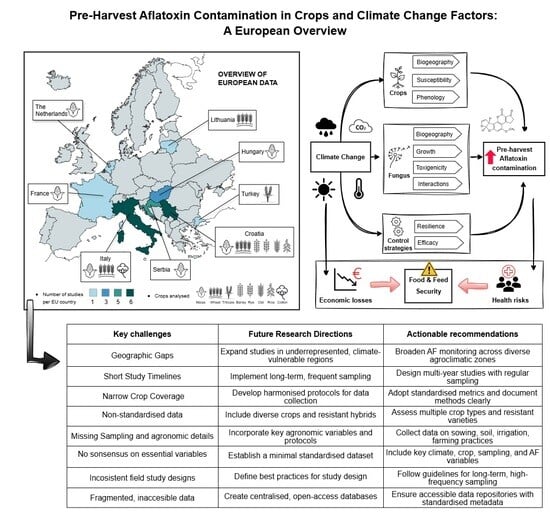
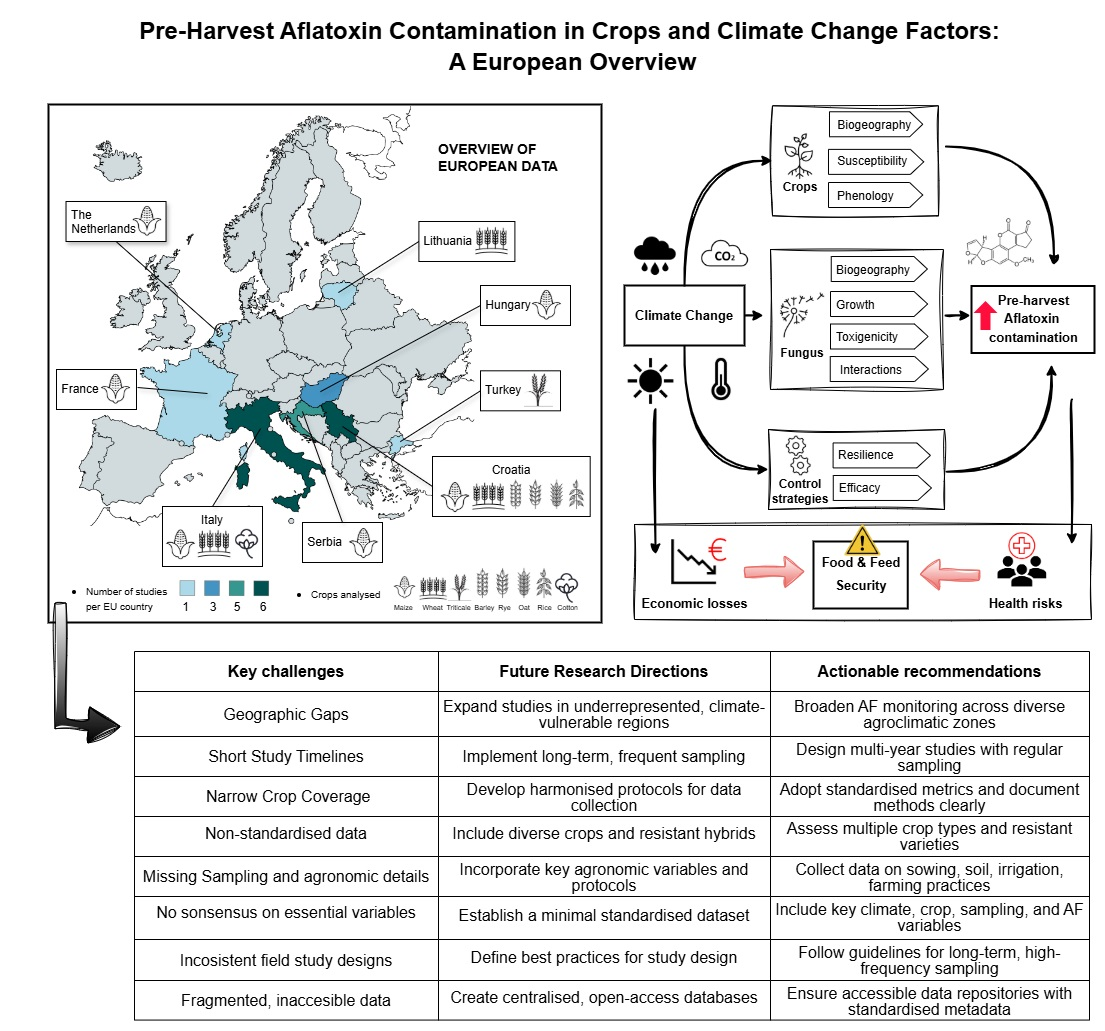
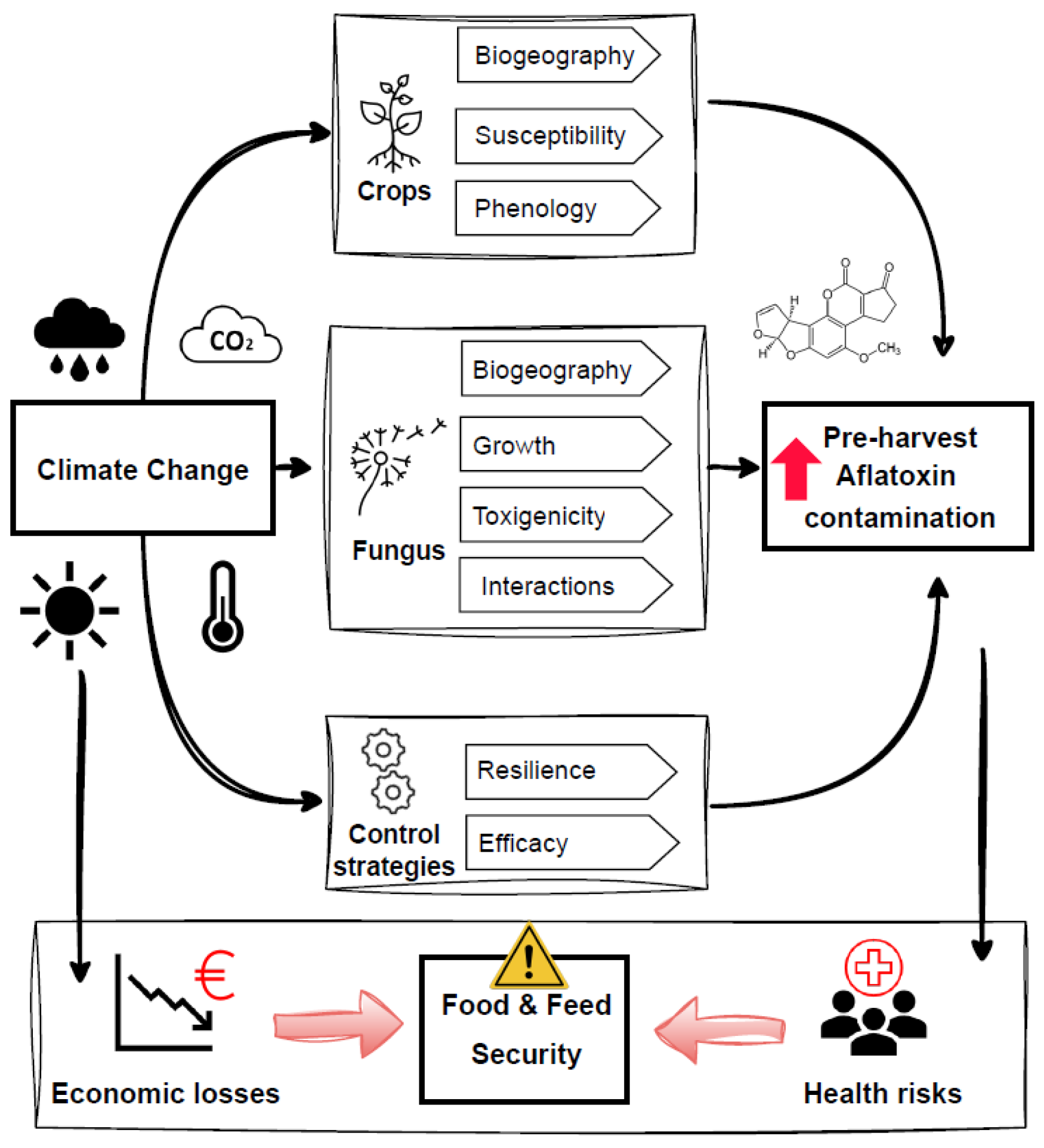
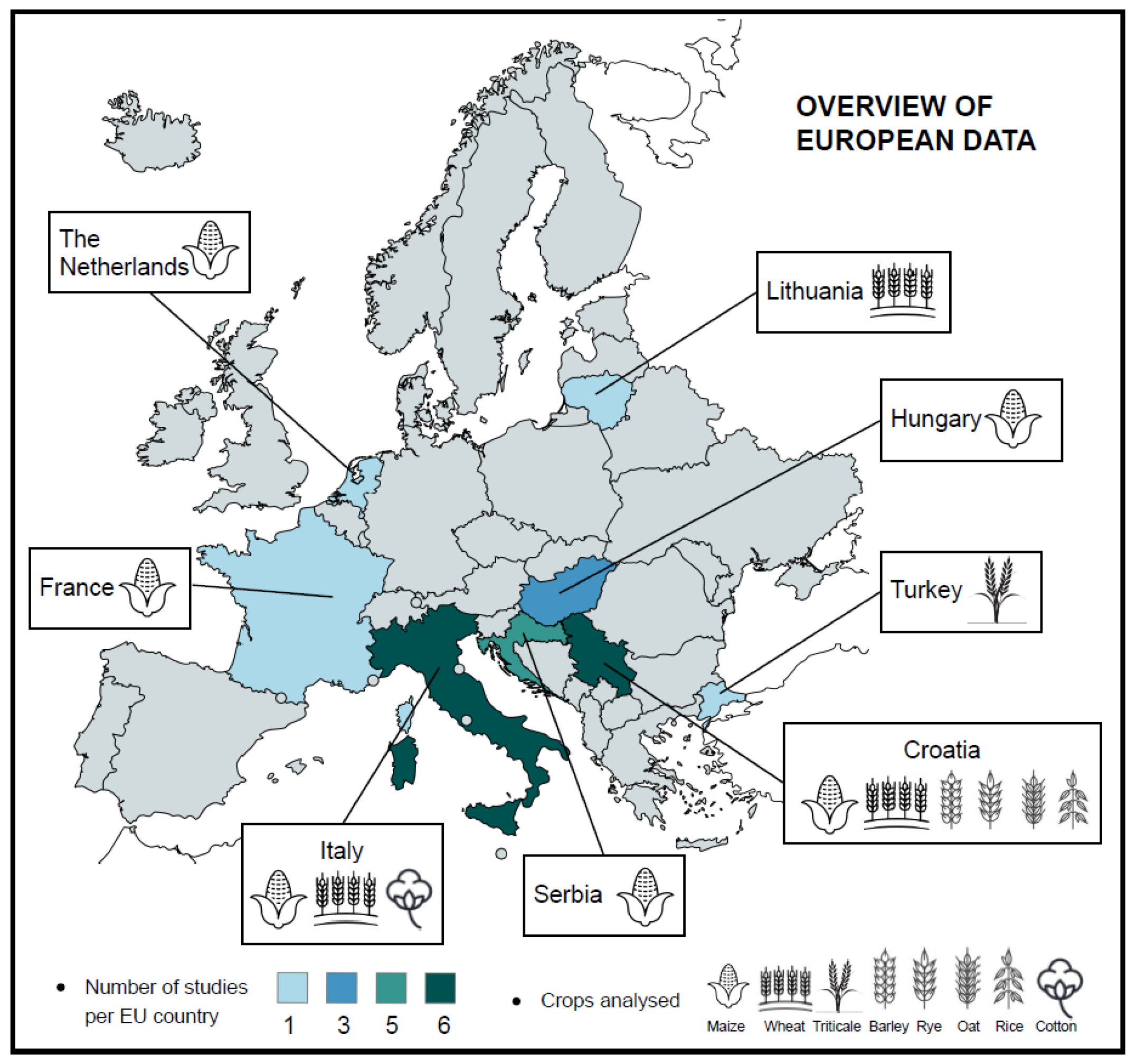
Aflatoxin (AF) contamination of crops during the pre-harvest period is a significant global concern for food and feed safety (FFS). In Europe, climate change presents a growing threat to agricultural products by increasing the risk of AF contamination. This umbrella review evaluates the scope and quality of pre-harvest data on climate-related AF contamination in Europe, addressing key questions: What insights do researchers provide on the relationship between climate change and pre-harvest AF contamination, and what data are lacking? Which crops are the focus of current research, and where in Europe are these studies concentrated? How is the data presented, and is it standardized? We conducted an umbrella literature review, extracting relevant studies from PubMed and Scopus up to 14 October 2024. Our findings indicate that rising temperatures, droughts, and shifting rainfall patterns increasingly favor the growth of aflatoxigenic fungi and pre-harvest AF contamination in European crops, posing risks to FFS and agricultural stability. However, inconsistencies in data collection and reporting limit cross-regional comparisons and hinder the development of effective mitigation strategies. Standardizing methodologies and improving data accessibility will enhance predictive modeling, strengthen risk assessments, and support targeted adaptation efforts, providing actionable insights for policymakers and agricultural stakeholders.
Keywords: aflatoxin; pre-harvest contamination; climate change; environmental factors; food safety; data standardisation; Europe aflatoxin; pre-harvest contamination; climate change; environmental factors; food safety; data standardisation; Europe
Graphical Abstract