Article

Staphylococcal Enterotoxins Modulate Platelet Response During Storage of Platelet Concentrates and Impair Silkworm Survival


by
Sylvia Ighem Chi
1,2,
Chelsea McGregor
3,
Nicolas Pineault
2,3 and
Sandra Ramirez-Arcos
1,2,*
1
Medical Microbiology, Canadian Blood Services, Ottawa, ON K1G 4J5, Canada
2
Department of Biochemistry, Microbiology and Immunology, University of Ottawa, Ottawa, ON K1G 4J5, Canada
3
Research, Canadian Blood Services, Ottawa, ON K1G 4J5, Canada
*
Author to whom correspondence should be addressed.
Toxins 2025, 17(12), 593; https://doi.org/10.3390/toxins17120593
Submission received: 31 October 2025 / Revised: 1 December 2025 / Accepted: 3 December 2025 / Published: 11 December 2025

Abstract

Platelet concentrates (PCs) are used to treat patients with platelet deficiencies. PCs are stored at 20–24 °C under agitation for up to 7 days to maintain platelet functionality, but these conditions are amenable for proliferation of contaminants such as Staphylococcus aureus, posing a risk for transfusion-transmitted infections. We investigated the contribution of staphylococcal enterotoxins (SEs) type G (SEG) and type H (SEH) to platelet activation, cytokine release, microRNA (miRNA) modulation, and in vivo virulence. PCs were inoculated with wildtype S. aureus CBS2016-05 or SE-deficient mutants (Δseg, Δseh, ΔΔsegh) and monitored during storage. Flow cytometry revealed progressive elevation of platelet activation markers CD62P and Annexin V in contaminated PCs, with significantly higher expression in wildtype compared to SE-mutant strains. Cytokine profiling demonstrated that SEs modulate pro- and anti-inflammatory mediators, notably CCL2, TGF-β1, IFN-γ, and TNF-α, implicating SEG in their regulation. Next-generation sequencing and RT-qPCR validation identified transient induction of immune-related microRNAs miR-98-5p, miR-146a-5p, miR-221-3p, miR-320a-3p, with SE-dependent expression patterns. In a silkworm infection model, wildtype S. aureus-contaminated PCs exhibited significantly higher lethality than SE-deficient strains, confirming toxin-mediated virulence. Collectively, these findings reveal that SEs exacerbate platelet activation and immune dysregulation during storage, enhancing bacterial pathogenicity. This study identifies platelet-derived cytokine and miRNA signatures as potential biomarkers of bacterial contamination and underscores the need to mitigate SE-driven platelet dysfunction to improve transfusion safety.
Key Contribution: This research provides novel insights into how Staphylococcus aureus contamination of platelet concentrates (PCs) affects platelet biology and transfusion safety, with specific emphasis on staphylococcal enterotoxins (SEs). We report the first evidence of SE-dependent platelet activation, identified toxin-mediated cytokine patterns, and discovered SE-driven microRNAs (miRNA) modulation during PC storage. We also revealed toxin-mediated virulence in vivo using the Bombyx mori (silkworm) infection model and reported the translational relevance to transfusion safety. The study establishes cytokine and miRNA signatures as promising molecular indicators of S. aureus-contaminated PCs.

1. Introduction

Platelet concentrates (PCs) are critical transfusion products in hemostatic support, but they remain vulnerable to bacterial contamination, which can lead to transfusion-transmitted infections and compromise PC safety [1]. Among PC contaminants, Staphylococcus aureus is frequently isolated during routine screening and can cause fatalities [2,3,4,5,6,7]. S. aureus is known to interact with platelets, triggering activation and aggregation via both direct binding and indirect coagulation pathways (through fibrinogen bridges) [8,9,10]. The activation of platelets by S. aureus in contaminated PCs during storage has been reported [11]. However, the specific virulent modulators are yet to be uncovered.
Superantigenic toxins, such as those produced by S. aureus, represent virulence factors that may further modulate host immune responses and cellular physiology, but their role in platelet–bacterium interactions in the unique milieu of stored PCs is poorly understood. The S. aureus superantigen, toxic shock syndrome toxin 1 (TSST-1) has been reported to influence platelet function [12]. However, the specific effects of staphylococcal enterotoxins (SEs) remain understudied, particularly in the context of PC contamination. We have previously demonstrated that S. aureus can secrete exotoxins including SEs during storage of PCs [13,14]. SEs are superantigens capable of inducing massive cytokine release through non-specific activation of T lymphocytes [15]. Although classical SEs (e.g., SEA, SEB) are widely recognized for their roles in S. aureus virulence, several non-classical enterotoxins, including SEG and SEH, are increasingly detected among clinical isolates and have been implicated in immune activation and disease severity [16,17]. Previously, our work has focused on the mechanisms of adaptation employed by S. aureus in the immune challenging PC milieu, and this present study aimed to investigate how platelets respond to S. aureus virulence, especially the exposure to SEs in the PC bag. Whole-genome sequencing of S. aureus CBS2016-05, a PC–associated clinical isolate, has confirmed that it encoded enterotoxins, seg and seh, and lacks the classical SE genes [18]. Furthermore, our previous study demonstrated that SEG and SEH are secreted and detectable in PCs during storage [19]. The rationale for choosing S. aureus CBS2016-05 as well as SEG and SEH for the present study is based on the above findings from previous work, which provide direct evidence that these toxins are secreted and stable in the PC storage milieu. This observation allowed us to interrogate platelet responses to SEs that are not only clinically relevant but also experimentally validated under PC storage conditions. Moreover, because SEG and SEH remain comparatively understudied relative to the classical SEs, examining their specific contributions offers an opportunity to expand our understanding of how diverse SE families modulate platelet activation and inflammatory pathways. While SEs have been extensively studied in the context of immune activation, their effects on platelet function remain underexplored. Platelets are increasingly recognized as immune cells, participating not only in hemostasis but also in innate and adaptive immunity through secretion of cytokines, expression of adhesion molecules (such as P-selectin), and release of extracellular vesicles [20]. There is evidence showing that bacterial toxins modulate platelet responses, influencing thrombo-inflammation, and sepsis outcomes [21].
MicroRNAs (miRNAs) are emerging as sensitive regulators of platelet biology and mediators of immune signaling responses in sepsis and infectious inflammation [22,23]. Platelet-derived miRNAs regulate post-transcriptional gene expression in vascular and immune contexts, with miR-221 and miR-146a being particularly linked to inflammatory signaling [24,25]. Annexin-V binding is widely used as a marker of platelet activation and apoptosis-like events [26]. However, the contribution of SEs to platelet miRNA and platelet activation marker expression is not well characterized.
Silkworm (Bombyx mori) larvae provide a practical in vivo model for studying S. aureus virulence because its conserved innate immune pathways, including Toll signaling, hemocyte-mediated responses, and antimicrobial peptide production, parallel mammalian innate immunity [27,28]. Although it lacks adaptive immunity, the model enables controlled, high-throughput assessment of bacterial virulence and toxin effects before mammalian studies. Silkworms have been successfully used to assess the pathogenicity of S. aureus toxins [28], yet the specific role of SEs in host lethality remains insufficiently investigated. This study aimed to examine the effects of SEG and SEH on (1) surface expression of P-selectin, (2) cytokine secretion from platelets, (3) platelet miRNA profiles, and (4) S. aureus virulence in silkworms. We hypothesized that SE exposure would induce a pro-inflammatory phenotype in platelets and impair silkworm survival in a S. aureus strain-dependent manner.

2. Results

2.1. Staphylococcus aureus Heightens Platelet Activation During Storage of S. aureus-Contaminated PCs

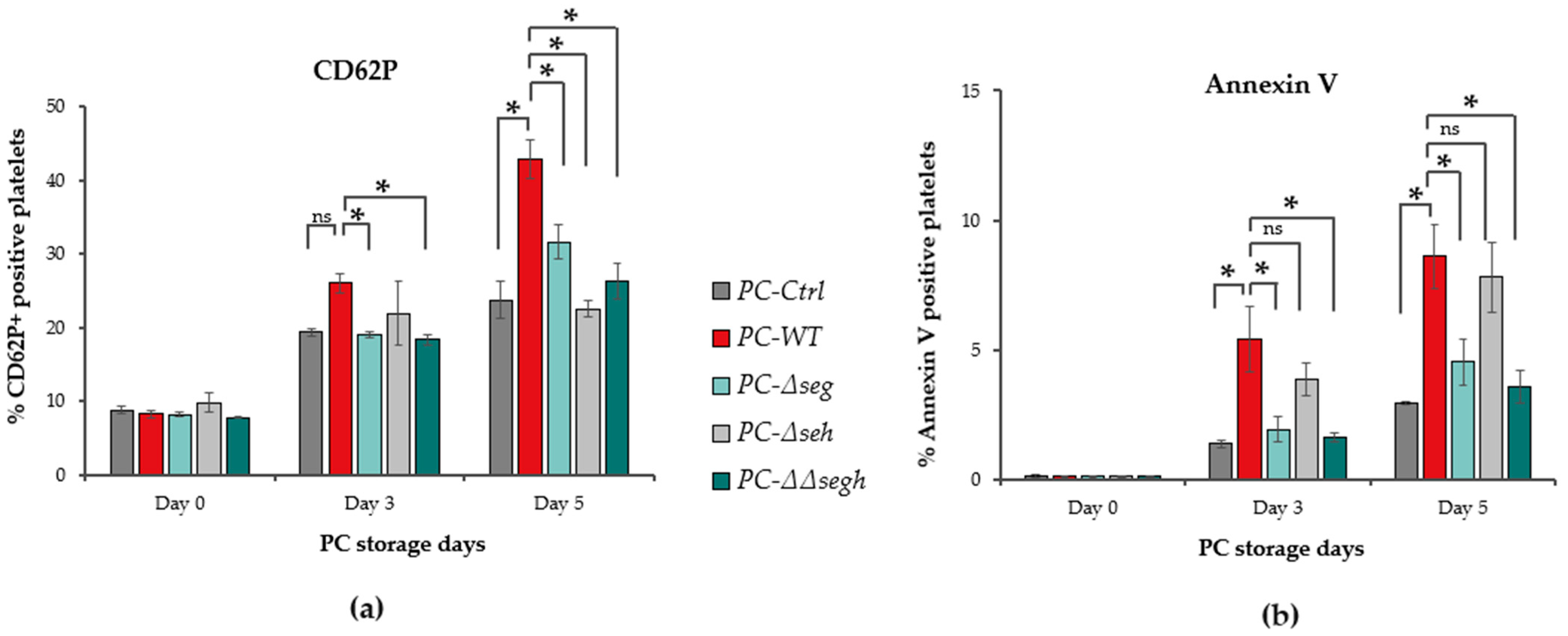
The expression of platelet activation markers CD62P (P-selectin) and Annexin V were assessed in PCs contaminated with wildtype S. aureus CBS2016-05 (PC-WT) and corresponding toxin deficient strains (PC-Δseg, PC-Δseh and PC-ΔΔsegh) in comparison with non-spiked PC (PC-Ctrl), tested at days 0, 3 and 5 of PC storage. Flow cytometric data revealed the following: (1) progressive increased expression of CD62P and Annexin V markers from days 0 to 5 in all test samples (Figure 1). (2) There were no statistical differences at day 0 for both markers, as well as day 3 for CD62P (~0.5 fold, p = 0.06) (Figure 1a); however, Annexin V had increased expression in PC-WT compared to PC-Ctrl at day 3 (~1.8 fold, p = 0.022) and day 5 (p = 0.03 and 2.2 fold, p = 0.04) (Figure 1b). (3) When comparing PCs inoculated with PC-WT and its SE-mutant counterparts (PC-Δseg, PC-Δseh and PC-ΔΔsegh), a significant decrease was observed for CD62P (Figure 1a) and Annexin V (Figure 1b) in the SE-mutant spiked PCs compared to PC-WT for all (p < 0.05) except PC-Δseh at day 3 (p = 0.07). These results are indicative of increased platelet activation and procoagulant activity over time during PCs storage. Importantly, the presence of S. aureus in PCs can exacerbate the activation of platelets during storage. Furthermore, the observed decline of activation markers in PCs contaminated with enterotoxin deficient strains show that these toxins play a key role in platelet activation.

2.2. Staphylococcal Enterotoxins Exacerbate a Pro-Inflammatory Profile in Platelets During PC Storage

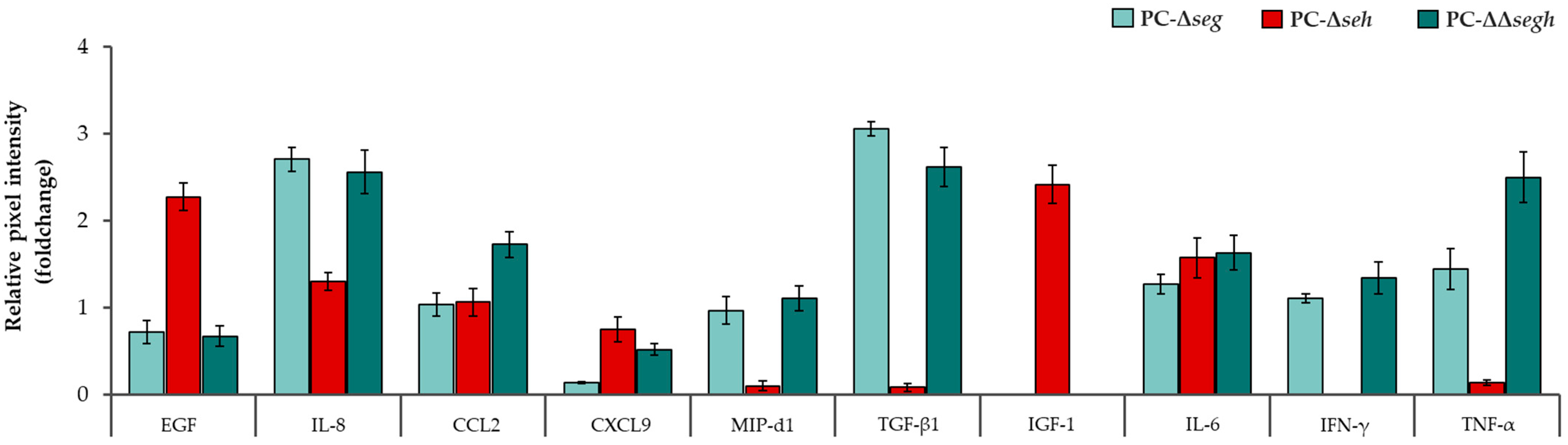
Platelet concentrate samples inoculated with PC-WT and derivative toxin mutant strains (PC-Δseg, PC-Δseh and PC-ΔΔsegh) were evaluated in comparison with PC-Ctrl at days 0, 2 and 3 for cytokine production using an array dot membrane cytokine kit. Densitometric analyses revealed an overall storage time-dependent increase in cytokine production in PCs as most expressed cytokines were abundant at day 3 compared to day 0. Interestingly, the exposure of platelets to PC-WT increased secretion of the anti-inflammatory cytokines CCL2 (C-C class chemokine 2), EGF (Epidermal growth factor), OPN (Osteopontin) and TGF-β1 (Transforming growth factor β1), and pro-inflammatory mediators IL-8 (Interleukin 8), MIP-3α (Macrophage inflammatory protein-3α), IFN-γ (Interferon γ) and TNF-α (Tumor necrosis factor α) as opposed to the background PC-Ctrl, at days 2 and 3 of storage (Table 1). The following observations were noted when investigating cytokine production in PC-Δseg, PC-Δseh and PC-ΔΔsegh with PC-WT as baseline at day 2 of PCs storage: (1) Both anti-and pro-inflammatory cytokines were elevated in all PCs spiked with SE-deficient strains compared to the wildtype (Figure 2). (2) The single (Δseg) and double mutant (ΔΔsegh) inoculated PCs show similar expression profiles for most of the differentially expressed cytokines. (3) Figure 2 shows some discrepancies between the single mutants Δseg and Δseh contaminated PCs: while EGF and IGF-1 were more than two-fold increased in PC-Δseh relative to PC-WT, a similar trend was observed for IL-8 and TGF-β1 in PC-Δseg. (4) Importantly, four pro-inflammatory mediators (MIP-d1, TGF-β1, IFN-γ, TNF-α) were significantly reduced in PC-Δseh compared to PC-Δseg. (5) Additionally, IGF-1, which had elevated levels in the PC-Δseh, is not impacted in both PC-Δseg and PC-ΔΔsegh samples. These results indicate that the secretion of different SEs in PCs during storage, individually or collectively, lead to the release of numerous paracrine factors including cytokines and chemokines from platelets. SEG likely plays a key role in the secretion of MIP-d1, TGF-β1, IFN-γ and TNF-α, while SEH influence expression of IGF-1 and EGF.

2.3. Platelet microRNA Profile Is Altered by Staphylococcal Enterotoxins During PC Storage

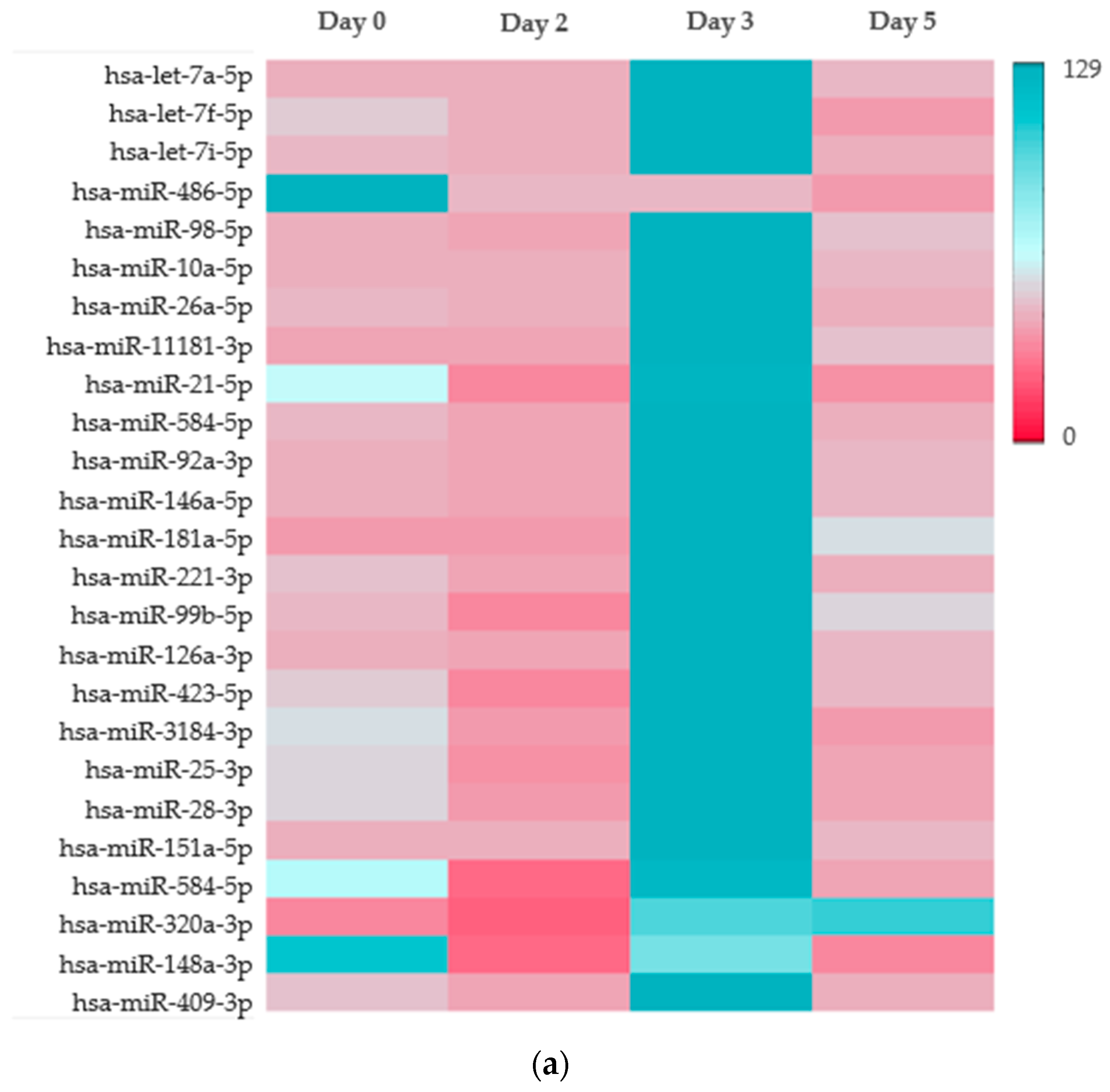
Platelet miRNAs extracted from days 0, 2, 3 and 5 PCs that were inoculated with PC-WT were sequenced together with the corresponding non-contaminated controls (PC-Ctrl). The miRNAseq data revealed the following: Firstly, the miRNAseq data show overall stable expression of the let-7 family members (let-7a and let-7f) and hsa-miR-486-5p, which were consistently among the topmost 15 expressed miRNAs in PC-Ctrl as well as PC-WT throughout storage, indicating baseline or constitutive expression in PCs (Figures S1 and S2). Secondly, specific miRNAs including miR-221, miR-26a, miR-98, and miR-21 showed marked increases in expression in PC-WT, particularly on day 3 (Figure S2 Left), suggesting activation in response to bacterial contamination or storage-associated stress. While the line plots (Figure S1 Right) indicate a sharp increase in several miRNAs during storage of PC-Ctrl (notably let-7 family members and miR-486-5p), graph plots of spiked PCs (Figure S2 Right) revealed remarkable upregulation of the same miRNAs peaking on day 3, followed by a decline by day 5, implying a transient response phase. Thirdly, differential expression analysis of various miRNAs in S. aureus spiked versus non-spiked PCs reveal a distinct upregulation of multiple miRNAs including miR-98, miR-151a, miR-146a and miR-320a on Day 3 (Figure 3a, Table S1). It is worth noting that the sharp increase is transient as expression levels return close to baseline level by Day 5, suggesting a time-specific miRNA response. Some miRNAs such as miR-486, miR-409, and miR-148a also showed higher expression at Day 0, indicating elevated baseline levels or early response.
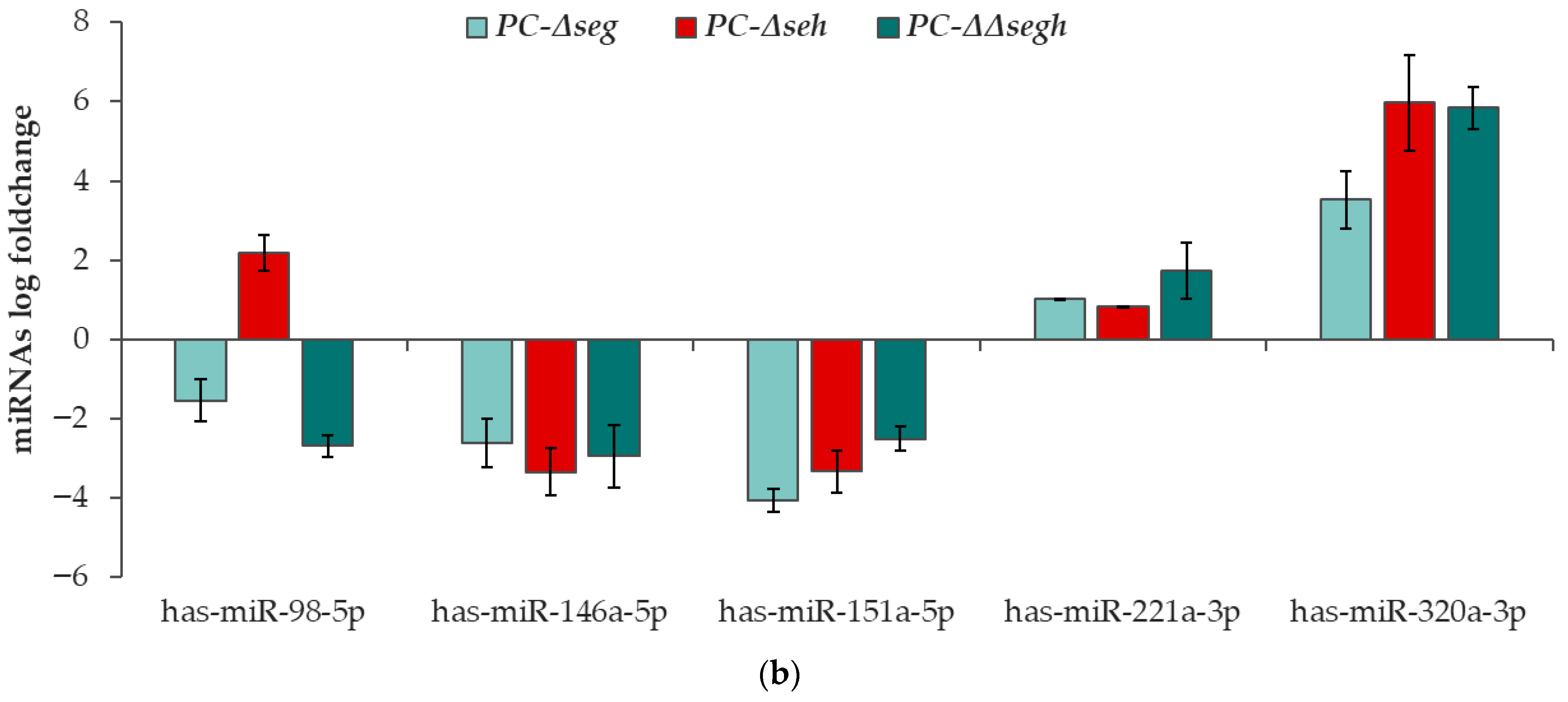
Five differentially expressed miRNAs (miR-98, miR-146a, miR-151a, miR-221, and miR-320a) were selected based on their known immune regulatory roles in infections for RT-qPCR validation. Levels were compared between PCs contaminated with wildtype and SE-deficient strains (Figure 3b). RT-qPCR data revealed significant upregulation of hsa-miR-320a-3p (~3 to 6 folds) in all SE-mutant spiked PCs and miR-221a (~1.8 fold in PC-ΔΔsegh) compared to PC-WT, while miR-98 was only elevated in PC-Δseh, indicating that SEH plays a role in modulating these miRNAs and that both SEG and SEH may play keys in the regulation of miR-320a during platelet contamination. On the contrary, miR-146a and miR-151a were significantly downregulated in all mutant-contaminated PCs (~−4.0 to −2.1 folds) and miR-98 was decreased in both PC-Δseg and PC-ΔΔsegh compared to PC-WT. These results confirm the impact of SEs on expression levels of miRNA in PC.

2.4. Staphylococcal Enterotoxins Increase Silkworm Mortality

Fifth-instar silkworm larvae injected with PCs inoculated with wildtype or SE-mutant S. aureus strains showed strain-dependent mortality. The LD50 value for the wildtype strain was approximately 3.31 × 10⁶ CFU/larvae, 1-log lower than the LD50 values obtained for the SE-deletion mutants PC-Δseg, PC-Δseh and PC-ΔΔsegh, (approximately 2.30 × 10⁷, 3.50 × 10⁷ and 8.90 × 10⁷ CFU/larvae, respectively) (Table 2), which indicates that these SEs play an essential role the virulence of S. aureus in a silkworm model. Furthermore, the virulence of these bacterial strains in contaminated PCs resulted in high mortality rate in injected larvae with only 27% survival for PC-WT compared to 37% for PC-Δseg, 30% for PC-Δseh and 40% for PC-ΔΔsegh, respectively (Table 2). Significantly higher silkworm survival rates were observed in PC-ΔΔsegh in comparison to PC-WT (p = 0.026, Table 2).

3. Discussion

In this study, we investigated the contribution of SEG and SEH to platelet responses within the biologically relevant context of bacterial contamination in PCs. This approach was informed by our previous genomic analysis showing that PC-associated S. aureus strains exhibit altered virulence and secretion profiles, and by our earlier demonstration that SEG and SEH are secreted and detectable in PCs during storage [18,19]. Using the wildtype strain and SE-deficient mutants we assessed the net SE-dependent effects under conditions that mirror transfusion contamination. Data presented herein revealed a multifaceted effect of S. aureus contamination on platelet activation and function during PC storage, implicating both classical platelet activation pathways and staphylococcal toxin-dependent modulation. First, the progressive increase in CD62P (P-selectin) and Annexin V exposure over days 0 to 5 in all conditions underscores that platelets undergo baseline storage-induced stress and activation; however, PCs contaminated with wildtype S. aureus exhibited a significantly accelerated or amplified activation relative to non-spiked controls. The mitigated activation observed with SE-deficient mutants PC-Δseg, PC-Δseh and PC-ΔΔsegh show that SEs contribute quantitatively to platelet activation. Although the precise mechanisms by which SEs influence platelet activation remain to be fully defined, several biologically plausible pathways may underlie the responses observed in this study. Platelets express functional pattern-recognition receptors, including TLR2 and TLR4, which have been implicated in activation by bacterial components [29]. SE exposure could therefore engage TLR-dependent signaling and promote downstream inflammatory or activation cascades. Additionally, because SEs act as superantigens in immune cells and bind MHC-II on antigen-presenting cells, it is conceivable that SEs could initiate analogous MHC- or superantigen-like interactions on platelet surfaces, contributing to activation or granule release. Intracellular signaling pathways such as cAMP modulation, MAPK phosphorylation, and related kinase networks may also be involved, as these pathways are known regulators of platelet activation dynamics [30]. Furthermore, our observations are consistent with prior reports that S. aureus can directly activate platelets via bacterial adhesins and fibrinogen bridging (e.g., ClfA, FnBPA) or coagulation cascade engagement [9,10], and indirectly via superantigen toxins like TSST-1 and staphylococcal enterotoxin type B (SEB) [12,17]. Like the other classical SEs, SEG and SEH potentially cause indirect activation of platelet via the well-established superantigenic pathway. In particular, the ability of S. aureus to accelerate platelet reactivity has been observed in infective endocarditis patients (compared to coagulase-negative staphylococci), further supporting that bacterial presence augments platelet hyperreactivity in vivo [31]. The fact that SE-deficient mutants show reduced activation implies a previously underappreciated role for enterotoxins in modulating platelet membrane changes or intracellular signaling.
In addition to platelet activation, our cytokine profiling results indicate that wildtype S. aureus contamination during PC storage triggers release of both anti- and pro-inflammatory mediators, including CCL2, EGF, TGF-β1, IL-8, IFN-γ, TNF-α, and MIP-3α. Interestingly, mutation of individual SEs altered the cytokine milieu: for example, SEG deletion increased levels of MIP-d1, TGF-β1, IFN-γ, and TNF-α relative to the wildtype baseline, while SEH deletion impacted EGF and IGF-1 expression. These findings suggest that SEs differentially regulate platelet-cytokine crosstalk in S. aureus-contaminated PCs. Although platelets are not traditionally seen as classical cytokine-producers, accumulating evidence supports their capacity to store or synthesize immunomodulatory mediators PF4 and TGF-β in response to stress or infection [32,33,34]. Our results extend this concept into the context of bacterial contamination of PCs. The toxin-dependent modulation of cytokines may also reflect indirect effects.
Complementing our studies on platelet activation and cytokine profile, we presented miRNA sequencing and validation data providing a novel insight into how S. aureus and SEs reshape platelet regulatory networks under stress. We observed stable baseline expression of highly abundant miRNAs (let-7 family, miR-486-5p), serving as internal reference points. Previous studies report constitutive expression throughout PC storage for miRNAs belonging to the let-7 family [35,36]. Our study is the first to reveal constant baseline expression for circulating miR-486-5p in stored PCs. This miRNA has been implicated in several signaling pathways and is suggested to play a key role in non-malignant diseases [37]; therefore, miR-486-5p may serve as a potential marker for assessing the platelet viability in PCs. Additionally, the transient upregulation observed for miRNAs like miR-221-3p, miR-26a-5p, miR-98-5p, and miR-21-5p, when comparing PCs contaminated with S. aureus with PC control, is a hallmark of a temporally restricted adaptive or stress response [38]. The brief spike, peaking around day 3 and declining by day 5, probably allows cells to rapidly adjust their gene expression to cope with stressors from the PC storage environment. Each of these specific miRNAs targets different cellular pathways to facilitate survival, reduce damage, and promote recovery. For instance, research indicates that miR-98-5p has protective functions, particularly against oxidative stress and apoptosis [39], and miR-221-3p is associated with regulating inflammation and cell proliferation, which are crucial processes during a stress response [40]. Detecting high levels of these miRNAs at day 3 of storage could indicate bacterial contamination of PCs. Furthermore, differential expression of miRNAs including miR-98-5p, miR-146a-5p, miR-151a-5p, miR-221-3p, and miR-320a-3p between wildtype and SE-mutant inoculated PC samples further indicates that SEs modulate platelet miRNA responses. For instance, miR-320a-3p is known to be abundant in prolonged stored PCs [35], its down regulation in S. aureus wildtype PCs and markedly elevated expression (~3 to 6 folds) in SE-mutant PCs, together with altered expression of miR-221 and miR-146a, implicate SEs in suppression or fine-tuning of inflammatory miRNA networks in platelets. These miRNAs are known to regulate immune and inflammatory pathways and have been implicated in sepsis and bacterial infection settings (modulation of NF-κB, TLR signaling) [41,42,43]. Indeed, aberrant platelet miRNA expression has been correlated with sepsis severity (miR-26b) [44], further supporting the biological relevance of our findings.
Importantly, the functional virulence assay in silkworm larvae reinforces the biological significance of our in vitro observations showing that contaminated PCs harboring wildtype S. aureus exerted significantly higher lethality (lower LD50) compared to SE-deletion mutants. We have previously demonstrated that S. aureus CBS2016-05 increases mortality rate of silkworms [45] and this study revealed that the presence of SEs in PCs contributes to virulence in silkworm larvae, possibly by modulation of the host–pathogen interactions. The latter merits further investigation in future work. This connection between platelet-dependent modulation and in vivo virulence underscores the translational relevance of our in vitro observations.
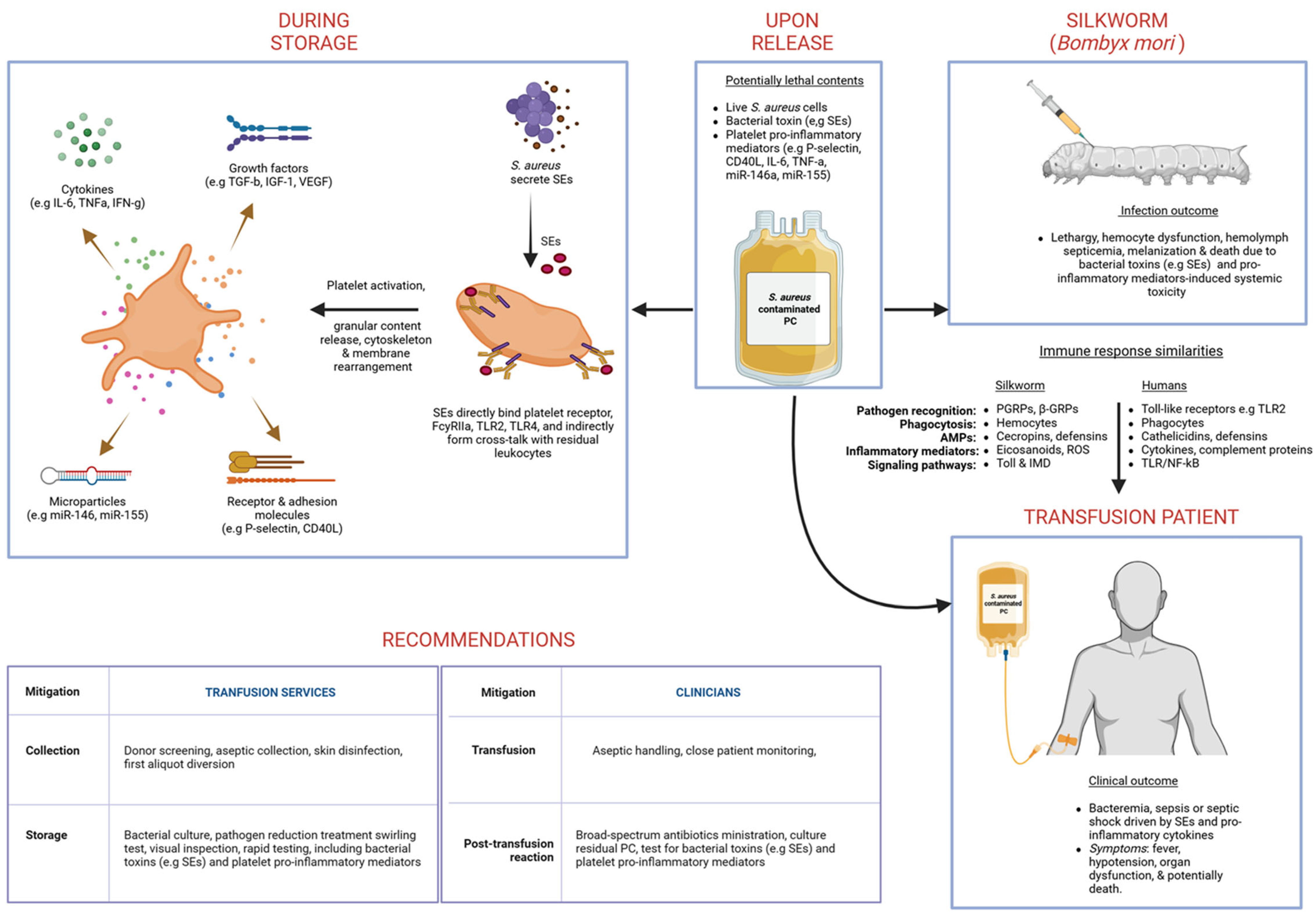
Altogether (Figure 4), our integrated dataset indicates that (i) S. aureus contamination accelerates platelet activation and procoagulant properties during PC storage; (ii) SEs modulate platelet-driven cytokine release and miRNA regulatory networks; and (iii) these molecular alterations can influence bacterial virulence outcomes. From a transfusion safety perspective, this work highlights that SEs may exacerbate platelet damage or prothrombotic potential and raise the possibility of miRNA or cytokine signatures as early biomarkers of contaminated PCs, which could be incorporated into screening protocols as early indicators of bacterial contamination or SE activity. Furthermore, inhibiting SEs either directly or as part of enhanced pathogen reduction strategies may mitigate platelet activation and inflammatory responses, thereby improving the efficacy and safety of PC transfusions.
Nonetheless, some limitations of our studies should be considered and merit-mention. First, while we show association between SE presence and miRNA/cytokine modulation, the mechanistic pathways remain to be delineated; for example, whether SEs act via receptor binding on platelets, indirect plasma mediators, or via platelet internalization. Second, our silkworm model, while convenient with rapid infection kinetics, ethical simplicity and suitability for high-throughput virulence screening, is an invertebrate proxy and does not fully recapitulate human pathophysiology. For example, silkworms rely solely on innate immunity and lack adaptive immune components such as T cells, B cells, and antibody-mediated responses [46]. Moreover, several mammalian-specific pathways involved in inflammation, cytokine signaling, and platelet–pathogen interactions are not fully represented in invertebrate hosts. As such, our findings from the silkworm killing assay only provide an indication of relative virulence rather than a direct surrogate for human pathophysiology. Future work should test mammalian models or human cell-based systems to dissect signaling pathways like TLRs, inflammasome, MAPK, and evaluate candidate miRNA or protein biomarkers for detection of bacterial contamination in PCs. Finally, this research was performed using wildtype and SE-deficient strains to assess the net SE-dependent effects under conditions that mirror transfusion contamination; therefore, we acknowledge that other bacterial components may contribute to the observed responses; however, this whole-bacterium model provides essential ecological validity. Future studies will complement these findings using purified SEG and SEH to define direct toxin-specific mechanisms and to delineate direct versus synergistic toxin effects.

4. Conclusions

In summary, contamination of PCs with S. aureus markedly intensifies platelet activation and procoagulant phenotypes during storage, and staphylococcal enterotoxins further modulate platelet-driven cytokine secretion and miRNA regulatory networks. These perturbations correlate with enhanced bacterial virulence in vivo, emphasizing the dual threat of bacterial contamination of PCs: direct pathogen burden and platelet-mediated exacerbation of pathogenicity. Our findings suggest that targeting enterotoxin-mediated signaling, or monitoring miRNA/cytokine signatures, may provide novel strategies for early detection or mitigation of contaminated PCs. Further mechanistic and translational validation is warranted to harness these insights toward safer transfusion practices.

5. Materials and Methods

5.1. Staphylococcus aureus Isolates and Inoculation of PCs

S. aureus strain CBS2016-05 [2] and derivation SE-mutants (CBS2016-05Δseg, CBS2016-05Δseh and CBS2016-05ΔΔsegh) used in this study were generated as previously described [14]. PC units were manufactured at the Canadian Blood Services NetCAD Facility (Vancouver, BC, Canada) in agreement with standard procedures. The PCs were shipped to the Canadian Blood Services Microbiology laboratory in Ottawa, Canada.
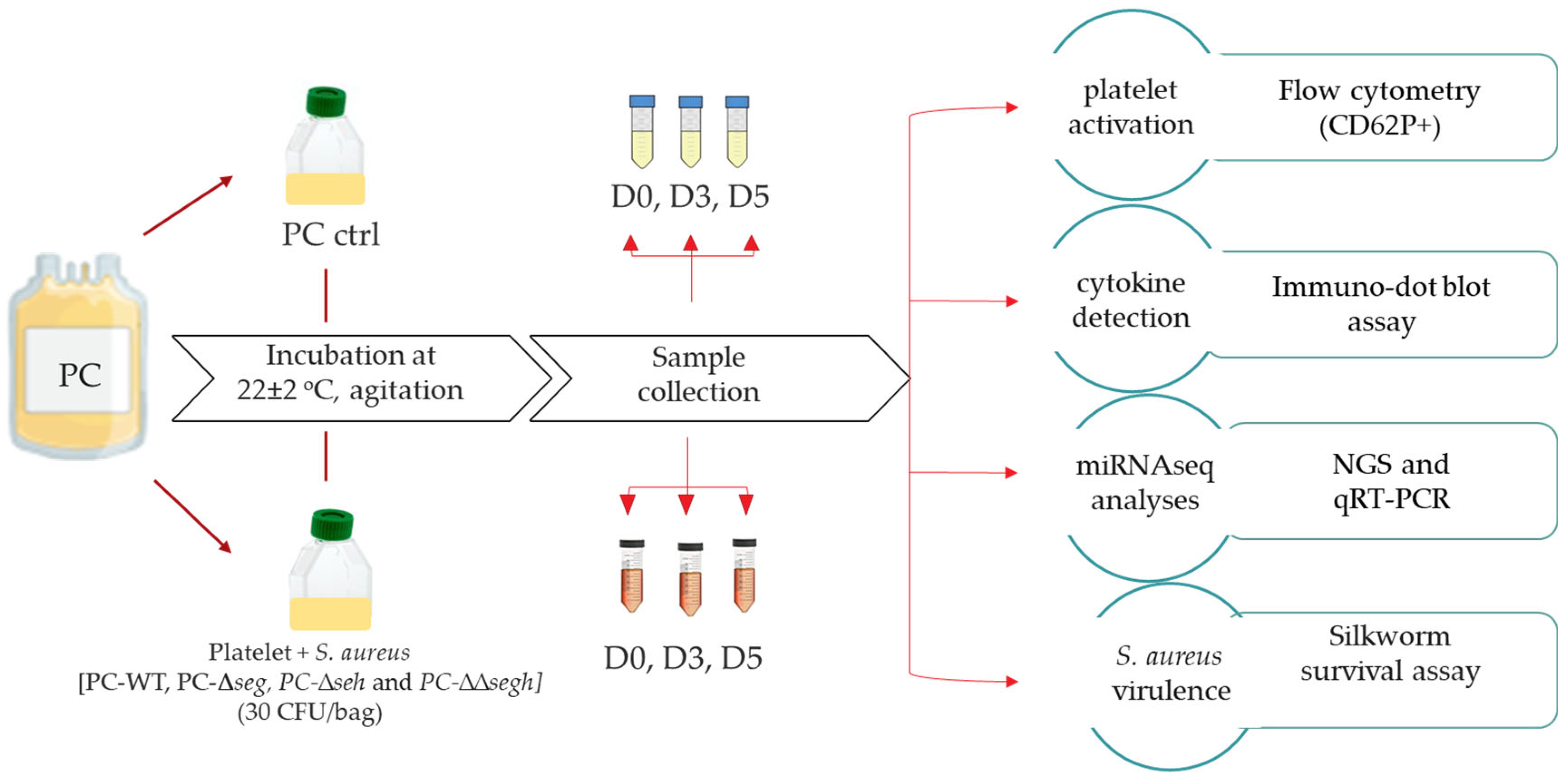
The experimental approach of the study is described in Figure 5. PCs were spiked with S. aureus CBS2016-05 wildtype (PC-WT), CBS2016-05Δseg (PC-Δseg), CBS2016-05Δseh (PC-Δseh), and CBS2016-05ΔΔsegh (PC-ΔΔsegh) at an initial inoculum of 30 CFU/PC unit. This study is premised on our previous findings on PCs contaminated with the same S. aureus wildtype strain used in this current study, which demonstrate that SEG and SEH are expressed at both RNA and protein levels in PCs during storage [18,19]. Non-spiked PC (PC-Ctrl) was used as control. Both PC-Ctrl and S. aureus inoculated PCs were incubated under PC storage conditions at 20 ± 2 °C with gentle agitation. Samples were collected at different timepoints (days 0, 2, 3 and 5) for downstream analyses. Day 0 refers to the timepoint when PCs were inoculated with S. aureus and is the baseline sampling time immediately after bacterial contamination. All subsequent sampling timepoints (e.g., day 1, day 2) represent timepoints relative to this baseline. These experiments were repeated for three biological replicates.

5.2. Flow Cytometric Analyses of P-Selectin and Annexin V Expression

Platelet activation was assessed using an Attune™ Flow Cytometer (Thermo Fisher Scientific, Mississauga, ON, Canada) following standard instrument setup and sample staining procedures. PC samples inoculated with wildtype S. aureus, (PC-WT), PC-Δseg, PC-Δseh, and PC-ΔΔsegh, as well as PC-Ctrl were analyzed at storage days 0, 3 and 5, for activation markers CD62P and phosphatidylserine residue (Annexin V binding), with CD41a serving as a platelet identifier. Platelet counts were obtained from Sysmex cell counter data provided by NetCAD, and working suspensions were prepared at a concentration of 2 × 10⁶ platelets per 100 μL. For the CD41a + CD62P panel, platelets were diluted in phosphate-buffered saline (PBS), while for the CD41a + Annexin V panel, platelets were suspended in 1× Annexin binding buffer prepared (Thermo Fisher Scientific, Mississauga, ON, Canada). Fluorescence-minus-one (FMO) and isotype controls (for CD41a + CD62P panel only) were included for gating optimization using non-spiked control samples. Staining with FITC-conjugated anti–P-selectin antibody (BD Biosciences, Mississauga, ON, Canada) and Annexin-V-APC (BD Pharmingen, San Jose, CA, USA) was performed in the dark at room temperature for 20 min, followed by the addition of 500 μL PBS to each sample prior to measurements. Forward scatter (FSC) and side scatter (SSC) parameters were used to gate platelet populations, and fluorescence signals were collected using appropriate channels for APC and Alexa Fluor 488. Data were analyzed to determine the proportion of CD41a-positive platelets positive for the expression of activation markers CD62P and Annexin V.

5.3. Platelet Cytokine Detection and Quantification

PCs were sampled for cytokine detection at day 0, 2 and 3 of storage, and centrifuged at 10,000 rpm for 10 min at 4 °C before freezing the supernatant at −80 °C. Frozen PC supernatants were thawed on ice, centrifuged at 6500 rpm for 5 min at 4 °C, and the clear supernatants were analyzed using a membrane-based cytokine antibody array kit and manual (RayBio® C-Series Human Cytokine Antibody Array C5, R&D Systems, Norcross, GA, USA) as per the manufacturer’s manual. Briefly, the array membranes were first blocked with blocking buffer for 30 min at room temperature, followed by incubation with the PC supernatant samples diluted 1:2, for 5 h at room temperature or overnight at 4 °C under gentle rocking. Following incubation, membranes were washed three times and further incubated with biotinylated antibody cocktail for 2 h at room temperature or overnight at 4 °C, washed as above, and then incubated with HRP–streptavidin (1:1000 dilution) for 2 h at room temperature. After a final wash, chemiluminescent signals were developed by adding Detection Buffers and visualized using a chemiluminescence imaging system (ChemiDoc, Hercules, CA, USA). Upon completion of the protocol, the cytokine dot blot membranes were analyzed on UN-SCAN-IT Gel Analysis Software, v 7.1 (Silk Scientific, UT, USA, 2025, Provo, UT, USA) measuring the dot signal intensities in pixels. The mean pixel value for each expressed cytokine was considered after deducting the background signal and mean value of the negative control spots in each membrane analyzed. For relative cytokine expression quantification, samples collected at different storage timepoints of the same PC were normalized to day 0 or the fresh PC. Then, the same PC spiked individually with S. aureus wildtype and derivative SE mutants were compared relative to the non-spiked PC as background control.

5.4. MicroRNA Next Generation Sequencing and Differential Expression Analysis

5.4.1. Platelet miRNA Extraction from PCs

miRNA was extracted from PC-WT and PC-Ctrl samples collected at days 0, 2, 3 and 5 using the miRNeasy Serum/Plasma Advanced Kit (Qiagen, Toronto, ON, Canada) according to the manufacturer’s protocol, with synthetic cel-miR-39 RNA spike-in (Qiagen, Toronto, ON, Canada) added as an exogenous control. Briefly, 400 μL of thawed PC was lysed with Buffer RPL, mixed with Buffer RPP, and centrifuged to remove precipitates. The clarified lysate was combined with isopropanol, and RNA was purified through successive washes with Buffers RWT, RPE, and 80% ethanol. The RNA pellet was air-dried and eluted in 20 μL nuclease-free water. RNA yield and quality were assessed using BioAnalyzer and Qubit fluorometric quantification.

5.4.2. Small RNA Library Preparation and Sequencing

Small RNA libraries were prepared using the Lexogen Small RNA-Seq Library Prep Kit (Lexogen, Vienna, Austria) following the manufacturer’s instructions. Briefly, adapter ligation, reverse transcription, and PCR amplification were performed to generate indexed (SRi7001-SRi7024) libraries, which were purified using magnetic beads. Library quality was confirmed by fragment analysis, and sequencing was performed on an Illumina platform at StemCore Laboratories (Ottawa, ON, Canada).

5.4.3. Bioinformatic Analysis

Sequencing data were retrieved from Illumina BaseSpace and processed using the nf-core/smrna pipeline v2.2.4 [47]. Reads were aligned to the human mature and hairpin miRNA reference sequences from miRBase [48] using Bowtie [49]. Count matrices were generated, normalized and differential expression analyzed with DESeq2 [50], applying fold change shrinkage with apeglm [51].

5.5. Quantitative Real-Time PCR of Validation of miRNA Data

MiRNAs extracted from PC samples spiked with wildtype S. aureus, (PC-WT), PC-Δseg, PC-Δseh, and PC-ΔΔsegh, as well as PC-Ctrl at days 0, 3 and 5, were analyzed using the miRCURY LNA Custom PCR Assay (Qiagen, Toronto, ON, Canada) following the manufacturer’s protocol. Briefly, reverse transcription was performed using the miRCURY LNA RT Kit to polyadenylate and convert miRNA into cDNA. The resulting cDNA was amplified using the miRCURY LNA SYBR Green PCR Master Mix and custom LNA primers specific to selected miRNAs (miR-146a, miR-98, miR-191, miR-221, miR-320a, miR-103a, miR-155a, and miR-151a) (Qiagen, Toronto, ON, Canada). Reactions were run in duplicate on a CFX96 Touch™ Real-Time PCR Detection System (Bio-Rad, Hercules, CA, USA). MiR-191 and miR-103a served as positive controls, and nuclease-free water as the negative control. Quantification cycle (Cq) values were used to calculate relative transcript copy numbers following melt curve analysis.

5.6. Silkworm Survival Assay

Silkworm survival assay was performed according to procedures reported in Kumaran and Ramirez-Arcos, 2025 [45]. Briefly, Bombyx mori eggs (obtained from Coastal Silk) were hatched at room temperature, and larvae were reared on artificial silkworm chow (Coastal Silk) supplemented with 300 mg/kg vancomycin. Fifth-instar silkworm larvae (day 1–2 post-molt) were transferred to vancomycin-free chow for at least 24 h before experimental use. For lethal dose 50 (LD50) bacterial load determination, S. aureus CBS2016-05 wildtype and derivative mutant strains PC-Δseg, PC-Δseh, PC-ΔΔsegh were grown to stationary phase in trypticase soy broth medium at 37 °C and resuspended in insect saline (0.6% NaCl). Ten-fold serial dilutions were injected (30 µL per larva) into the hemolymph of ten larvae per dilution. Mortality was recorded over 72 h at 37 °C, with death defined as lack of movement upon probing. Insect saline–injected larvae served as controls. Bacterial loads were confirmed by plating on trypicase soy agar, and LD50 values were calculated by probit regression using MedCalc v23.2.6 (MedCalc Software, Ostend, Belgium). Subsequently, the above wildtype and SE-mutant strains were spiked into PCs and incubated for 5 days at 20 ± 2 °C/agitation. 30 µL of PCs containing bacterial loads corresponding to the respective established LD50 values, were used to inject groups of ten larvae as reported above. Kaplan–Meier survival analysis was performed.

5.7. Statistical Analyses

All experiments were performed in triplicate unless otherwise stated. Data were analyzed using GraphPad Prism (version 9.0.0). Quantitative results are expressed as mean ± standard deviation (SD). One-way ANOVA followed by Tukey’s multiple comparison test was used to assess differences in CD62P and Annexin V expressions among groups (PC-Ctrl, PC-WT, PC-Δseg, PC-Δseh, and PC-ΔΔsegh) across storage days (0, 3, and 5). Cytokine array densitometry data were analyzed using two-way ANOVA to evaluate the effects of bacterial strain and storage time. DESeq2 was used for differential expression analysis of miRNA sequenced data. miRNAs with fold change ≥ 2 and adjusted p < 0.05 (FDR corrected) were considered significantly differentially expressed. The ΔΔCt method and Student’s t-test were employed for RT-qPCR data. Silkworm virulence assays were assessed using Kaplan–Meier survival analysis. LD50 values were calculated using nonlinear regression. Differences were considered statistically significant at p < 0.05.

Supplementary Materials

The following supporting information can be downloaded at: https://www.mdpi.com/article/10.3390/toxins17120593/s1, Figure S1: 15 most highly expressed miRNA in non-spiked platelet concentrates (PC-Ctrl) during storage from days 0 to day 5 at 22 ± 2 °C under gentle agitation; Figure S2: 15 most highly expressed miRNA in PCs contaminated with S. aureus strain CBS2016-05 wildtype (PC-WT) during storage from days 0 to day 5 at 22 ± 2 °C under gentle agitation.

Author Contributions

Conceptualization, S.R.-A. and S.I.C.; methodology, S.I.C. and C.M.; software, C.M.; validation, S.I.C. and C.M.; formal analysis, S.I.C.; resources, S.R.-A.; data curation, S.I.C.; C.M.; writing—original draft preparation, S.I.C.; writing—review and editing, S.R.-A., C.M. and N.P.; supervision, S.R.-A.; funding acquisition, S.R.-A. All authors have read and agreed to the published version of the manuscript.

Funding

S.R.-A. received intramural grant IG2019-SR from Medical Affairs and Innovation (MAI) of Canadian Blood Services to financially support this project, and S.I.C. was a recipient of a post-doctoral fellowship from MAI, Canadian Blood Services.

Institutional Review Board Statement

Ethical approval for this study was granted by the Canadian Blood Services Research Ethical Board (REB 2015.024 approved on 10 June 2015 AND REB 2017.033, approved on 12 May 2017).

Informed Consent Statement

Not applicable.

Data Availability Statement

The original contributions presented in this study are included in the article and Supplementary Material. Further inquiries can be directed to the corresponding author.

Acknowledgments

The authors thank volunteer blood donors and staff at the NetCAD Facility in Vancouver, BC, Canada for PC production.

Conflicts of Interest

The authors declare no conflicts of interest.

Abbreviations

The following abbreviations are used in this manuscript:
ANOVAAnalysis of Variance
CCL2C-C Motif Chemokine Ligand 2
CD62PCluster of Differentiation 62P (P-selectin)
CXCL9C-X-C Motif Chemokine Ligand 9
ΔΔseghDouble SEG/SEH-deficient mutant strain
ΔsegSEG-deficient mutant strain
ΔsehSEH-deficient mutant strain
EGFEpidermal Growth Factor
FDRFalse Discovery Rate
IFN-γInterferon gamma
IGF-1Insulin-like Growth Factor 1
IL-8Interleukin 8
LD50Median Lethal Dose
MAPKMitogen-Activated Protein Kinase
miRNAMicroRNA
MIP-3αMacrophage Inflammatory Protein 3 alpha
NF-κBNuclear Factor Kappa-light-chain-enhancer of Activated B cells
OPNOsteopontin
PBSPhosphate-Buffered Saline
PCPlatelet Concentrate
RT-qPCRReverse Transcription Quantitative Polymerase Chain Reaction
S. aureusStaphylococcus aureus
SDStandard Deviation
SEStaphylococcal Enterotoxin
SEGStaphylococcal Enterotoxin G
SEHStaphylococcal Enterotoxin H
TGF-β1Transforming Growth Factor beta 1
TLRToll-like Receptor
TNF-αTumor Necrosis Factor alpha

References

  1. Chi, S.I.; Ramirez-Arcos, S. Platelet concentrates safety: A focus on the challenging pathogen Staphylococcus aureus—A narrative review. Ann. Blood 2025, 10, 5. [Google Scholar] [CrossRef]
  2. Loza-Correa, M.; Kou, Y.; Taha, M.; Kalab, M.; Ronholm, J.; Schlievert, P.M.; Cahill, M.P.; Skeate, R.; Cserti-Gazdewich, C.; Ramirez-Arcos, S. Septic transfusion case caused by a platelet pool with visible clotting due to contamination with Staphylococcus aureus. Transfusion 2017, 57, 1299–1303. [Google Scholar] [CrossRef]
  3. Richard, P.; Pouchol, E.; Sandid, I.; Aoustin, L.; Lefort, C.; Chartois, A.G.; Baima, A.; Malard, L.; Bacquet, C.; Ferrera-Tourenc, V.; et al. Implementation of amotosalen plus ultraviolet A-mediated pathogen reduction for all platelet concentrates in France: Impact on the risk of transfusion-transmitted infections. Vox Sang. 2024, 119, 212–218. [Google Scholar] [CrossRef] [PubMed]
  4. Matsumoto, M.; Kozakai, M.; Furuta, R.A.; Matsubayashi, K.; Satake, M. Association of Staphylococcus aureus in platelet concentrates with skin diseases in blood donors: Limitations of cultural bacterial screening. Transfusion 2022, 62, 621–632. [Google Scholar] [CrossRef]
  5. Brailsford, S.R.; Tossell, J.; Morrison, R.; McDonald, C.P.; Pitt, T.L. Failure of bacterial screening to detect Staphylococcus aureus: The English experience of donor follow-up. Vox Sang. 2018, 113, 540–546. [Google Scholar] [CrossRef]
  6. Freudenburg-de, G.W.; Spelmink, S.; Heijnen, J.; de Korte, D. Transfusion transmitted bacterial infections (TTBI) involving contaminated platelet concentrates: Residual risk despite intervention strategies. Ann. Blood 2022, 7, 26. [Google Scholar] [CrossRef]
  7. Haass, K.A.; Sapiano, M.R.P.; Savinkina, A.; Kuehnert, M.J.; Basavaraju, S.V. Transfusion-Transmitted Infections Reported to the National Healthcare Safety Network Hemovigilance Module. Transfus. Med. Rev. 2019, 33, 84–91. [Google Scholar] [CrossRef]
  8. Alfar, H.R.; Whiteheart, S.W. Bacterial interactions with platelets: Defining key themes. Front. Immunol. 2025, 16, 1610289. [Google Scholar] [CrossRef] [PubMed]
  9. Waller, A.K.; Birch, K.; Gibbins, J.M.; Clarke, S.R. Activation of Human Platelets by Staphylococcus aureus Secreted Protease Staphopain A. Pathogens 2022, 11, 1237. [Google Scholar] [CrossRef]
  10. Fitzgerald, J.R.; Loughman, A.; Keane, F.; Brennan, M.; Knobel, M.; Higgins, J.; Visai, L.; Speziale, P.; Cox, D.; Foster, T.J. Fibronectin-binding proteins of Staphylococcus aureus mediate activation of human platelets via fibrinogen and fibronectin bridges to integrin GPIIb/IIIa and IgG binding to the FcgammaRIIa receptor. Mol. Microbiol. 2006, 59, 212–230. [Google Scholar] [CrossRef]
  11. Yousuf, B.; Pasha, R.; Pineault, N.; Ramirez-Arcos, S. Modulation of Staphylococcus aureus gene expression during proliferation in platelet concentrates with focus on virulence and platelet functionality. PLoS ONE 2024, 19, e0307920. [Google Scholar] [CrossRef]
  12. Guo, M.; Yi, T.; Wang, Q.; Wang, D.; Feng, P.; Kesheng, D.; Chunyan, H. TSST-1 protein exerts indirect effect on platelet activation and apoptosis. Platelets 2022, 33, 998–1008. [Google Scholar] [CrossRef]
  13. Chi, S.I.; Kumaran, D.; Zeller, M.P.; Ramirez-Arcos, S. Transfusion of a platelet pool contaminated with exotoxin-producing Staphylococcus aureus: A case report. Ann. Blood 2022, 7, 43. [Google Scholar] [CrossRef]
  14. Chi, S.I.; Ramirez-Arcos, S. Staphylococcal Enterotoxins Enhance Biofilm Formation by Staphylococcus aureus in Platelet Concentrates. Microorganisms 2022, 11, 89. [Google Scholar] [CrossRef] [PubMed]
  15. Fraser, J.D.; Proft, T. The bacterial superantigen and superantigen-like proteins. Immunol. Rev. 2008, 225, 226–243. [Google Scholar] [CrossRef]
  16. Jarraud, S.; Mougel, C.; Thioulouse, J.; Lina, G.; Meugnier, H.; Forey, F.; Nesme, X.; Etienne, J.; Vandenesch, F. Relationships between Staphylococcus aureus genetic background, virulence factors, agr groups (alleles), and human disease. Infect. Immun. 2002, 70, 631–641. [Google Scholar] [CrossRef]
  17. Omoe, K.; Imanishi, K.; Hu, D.L.; Kato, H.; Fugane, Y.; Abe, Y.; Hamaoka, S.; Watanabe, Y.; Nakane, A.; Uchiyama, T.; et al. Characterization of novel staphylococcal enterotoxin-like toxin type P. Infect. Immun. 2005, 73, 5540–5546. [Google Scholar] [CrossRef]
  18. Chi, S.I.; Flint, A.; Weedmark, K.; Pagotto, F.; Ramirez-Arcos, S. Comparative genome analyses of Staphylococcus aureus from platelet concentrates reveal rearrangements involving loss of type VII secretion genes. Access Microbiol. 2024, 6, 000820.v4. [Google Scholar] [CrossRef] [PubMed]
  19. Chi, S.I.; Yousuf, B.; Paredes, C.; Bearne, J.; McDonald, C.; Ramirez-Arcos, S. Proof of concept for detection of staphylococcal enterotoxins in platelet concentrates as a novel safety mitigation strategy. Vox Sang. 2023, 118, 543–550. [Google Scholar] [CrossRef] [PubMed]
  20. Semple, J.W.; Italiano, J.E., Jr.; Freedman, J. Platelets and the immune continuum. Nat. Rev. Immunol. 2011, 11, 264–274. [Google Scholar] [CrossRef] [PubMed]
  21. Assinger, A. Platelets and infection—An emerging role of platelets in viral infection. Front. Immunol. 2014, 5, 649. [Google Scholar] [CrossRef] [PubMed]
  22. Bindayna, K. MicroRNA as Sepsis Biomarkers: A Comprehensive Review. Int. J. Mol. Sci. 2024, 25, 6476. [Google Scholar] [CrossRef]
  23. Xie, J.; Tang, L.; Zhang, W.; Wang, C. The MicroRNA network in sepsis: From biomarker discovery to novel targeted therapeutic strategies. Crit. Rev. Clin. Lab. Sci. 2025, 1–26, Online ahead of print. [Google Scholar]
  24. Arnaldo, L.; Mena, J.; Serradell, M.; Gaig, C.; Adamuz, D.; Vilas, D.; Samaniego, D.; Ispierto, L.; Montini, A.; Mayà, G.; et al. Platelet miRNAs as early biomarkers for progression of idiopathic REM sleep behavior disorder to a synucleinopathy. Sci. Rep. 2025, 15, 12136. [Google Scholar] [CrossRef]
  25. Landry, P.; Plante, I.; Ouellet, D.L.; Perron, M.P.; Rousseau, G.; Provost, P. Existence of a microRNA pathway in anucleate platelets. Nat. Struct. Mol. Biol. 2009, 16, 961–966. [Google Scholar] [CrossRef]
  26. Lhermusier, T.; Chap, H.; Payrastre, B. Platelet membrane phospholipid asymmetry: From the characterization of a scramblase activity to the identification of an essential protein mutated in Scott syndrome. J. Thromb. Haemost. 2011, 9, 1883–1891. [Google Scholar] [CrossRef]
  27. Montali, A.; Berini, F.; Brivio, M.F.; Mastore, M.; Saviane, A.; Cappellozza, S.; Marinelli, F.; Tettamanti, G. A Silkworm Infection Model for In Vivo Study of Glycopeptide Antibiotics. Antibiotics 2020, 9, 300. [Google Scholar] [CrossRef] [PubMed]
  28. Kaito, C.; Sekimizu, K. A silkworm model of pathogenic bacterial infection. Drug Discov. Ther. 2007, 1, 89–93. [Google Scholar]
  29. Amelirad, A.; Shamsasenjan, K.; Akbarzadehlaleh, P.; Pashoutan, S.D. Signaling Pathways of Receptors Involved in Platelet Activation and Shedding of These Receptors in Stored Platelets. Adv. Pharm. Bull. 2019, 9, 38–47. [Google Scholar] [CrossRef] [PubMed]
  30. Krakauer, T. Update on staphylococcal superantigen-induced signaling pathways and therapeutic interventions. Toxins 2013, 5, 1629–1654. [Google Scholar] [CrossRef]
  31. Polzin, A.; Dannenberg, L.; M’Pembele, R.; Mourikis, P.; Naguib, D.; Zako, S.; Helten, C.; Petzold, T.; Levkau, B.; Hohlfeld, T.; et al. Staphylococcus aureus increases platelet reactivity in patients with infective endocarditis. Sci. Rep. 2022, 12, 12933. [Google Scholar] [CrossRef]
  32. Urbán-Solano, A.; Flores-Gonzalez, J.; Cruz-Lagunas, A.; Pérez-Rubio, G.; Buendia-Roldan, I.; Ramón-Luing, L.A.; Chavez-Galan, L. High levels of PF4, VEGF-A, and classical monocytes correlate with the platelets count and inflammation during active tuberculosis. Front. Immunol. 2022, 13, 1016472. [Google Scholar] [CrossRef]
  33. Hu, Y.; Dai, S.; Qiao, C.; Ye, Y.; Ren, J.; Wang, K.; Li, L.; Liu, Z. Platelets in infection: Intrinsic roles and functional outcomes. Front. Immunol. 2025, 16, 1616783. [Google Scholar] [CrossRef]
  34. Gregg, E.O.; Yarwood, L.; Wagstaffe, M.J.; Pepper, D.S.; Macdonald, M.C. Immunomodulatory properties of platelet factor 4: Prevention of concanavalin A suppressor-induction in vitro and augmentation of an antigen-specific delayed-type hypersensitivity response in vivo. Immunology 1990, 70, 230–234. [Google Scholar]
  35. Pontes, T.B.; Moreira-Nunes, C.d.F.; Maués, J.H.; Lamarão, L.M.; de Lemos, J.A.; Montenegro, R.C.; Burbano, R.M. The miRNA Profile of Platelets Stored in a Blood Bank and Its Relation to Cellular Damage from Storage. PLoS ONE 2015, 10, e0129399. [Google Scholar] [CrossRef]
  36. Shi, J.; Xu, A.; Ai, J.; Chen, J.; Luo, Y. Expression of microRNAs during apheresis platelet storage up to day 14 in a blood bank in China. Transfus. Clin. Biol. 2024, 31, 95–101. [Google Scholar] [CrossRef]
  37. Douvris, A.; Viñas, J.; Burns, K.D. miRNA-486-5p: Signaling targets and role in non-malignant disease. Cell. Mol. Life Sci. 2022, 79, 376. [Google Scholar] [CrossRef]
  38. Olejniczak, M.; Kotowska-Zimmer, A.; Krzyzosiak, W. Stress-induced changes in miRNA biogenesis and functioning. Cell. Mol. Life Sci. 2018, 75, 177–191. [Google Scholar] [CrossRef] [PubMed]
  39. Guo, Z.; Zhong, W.; Zou, Z. miR-98-5p Prevents Hippocampal Neurons from Oxidative Stress and Apoptosis by Targeting STAT3 in Epilepsy in vitro. Neuropsychiatr. Dis. Treat. 2023, 19, 2319–2329. [Google Scholar] [CrossRef] [PubMed]
  40. Hu, K.; Liu, L.; Tang, S.; Zhang, X.; Chang, H.; Chen, W.; Fan, T.; Zhang, L.; Shen, B.; Zhang, Q. MicroRNA-221-3p inhibits the inflammatory response of keratinocytes by regulating the DYRK1A/STAT3 signaling pathway to promote wound healing in diabetes. Commun. Biol. 2024, 7, 300. [Google Scholar] [CrossRef] [PubMed]
  41. Zhang, F.; Zhou, Y.; Ding, J. The current landscape of microRNAs (miRNAs) in bacterial pneumonia: Opportunities and challenges. Cell. Mol. Biol. Lett. 2022, 27, 70. [Google Scholar] [CrossRef]
  42. Valsamaki, A.; Vazgiourakis, V.; Mantzarlis, K.; Stamatiou, R.; Makris, D. MicroRNAs in Sepsis. Biomedicines 2024, 12, 2049. [Google Scholar] [CrossRef]
  43. Antonakos, N.; Gilbert, C.; Théroude, C.; Schrijver, I.T.; Roger, T. Modes of action and diagnostic value of miRNAs in sepsis. Front. Immunol. 2022, 13, 951798. [Google Scholar] [CrossRef]
  44. Szilágyi, B.; Fejes, Z.; Póliska, S.; Pócsi, M.; Czimmerer, Z.; Patsalos, A.; Fenyvesi, F.; Rusznyák, Á.; Nagy, G.; Kerekes, G.; et al. Reduced miR-26b Expression in Megakaryocytes and Platelets Contributes to Elevated Level of Platelet Activation Status in Sepsis. Int. J. Mol. Sci. 2020, 21, 866. [Google Scholar] [CrossRef]
  45. Kumaran, D.; Ramirez-Arcos, S. The platelet concentrate storage environment may enhance the ability of Cutibacterium acnes to establish chronic infections. Transfusion 2025, 65, 1851–1860. [Google Scholar] [CrossRef]
  46. Chen, K.; Lu, Z. Immune responses to bacterial and fungal infections in the silkworm, Bombyx mori. Dev. Comp. Immunol. 2018, 83, 3–11. [Google Scholar] [CrossRef] [PubMed]
  47. Ewels, P.A.; Peltzer, A.; Nahnsen, S.; Fillinger, S.; Wilm, A.; Patel, H.; Di Tommaso, P.; Alneberg, J.; Garcia, M.U. The nf-core framework for community-curated bioinformatics pipelines. Nat. Biotechnol. 2020, 38, 276–278. [Google Scholar] [CrossRef] [PubMed]
  48. Kozomara, A.; Birgaoanu, M.; Griffiths-Jones, S. miRBase: From microRNA sequences to function. Nucleic Acids Res. 2019, 47, D155–D162. [Google Scholar] [CrossRef] [PubMed]
  49. Langmead, B. Aligning short sequencing reads with Bowtie. In Current Protocols in Bioinformatics; John Wiley & Sons, Inc.: Hoboken, NJ, USA, 2010; Chapter 11, Unit-11.7. [Google Scholar]
  50. Love, M.I.; Huber, W.; Anders, S. Moderated estimation of fold change and dispersion for RNA-seq data with DESeq2. Genome Biol. 2014, 15, 550. [Google Scholar] [CrossRef]
  51. Zhu, A.; Ibrahim, J.G.; Love, M.I. Heavy-tailed prior distributions for sequence count data: Removing the noise and preserving large differences. Bioinformatics 2019, 35, 2084–2092. [Google Scholar] [CrossRef]
Figure 1. Expression of platelet activation markers increases over time during PC storage. (a) CD62P (b) Annexin V are heightened in S. aureus inoculated PCs. However, a decrease is observed in SE mutants compared to WT spiked PCs. Error bars; SEM. Significant if * p ≤ 0.05, ns; non-significant, n = 3.
Toxins 17 00593 g001
Figure 2. Release of inflammatory modulators in SEs mutants compared to WT-spiked PCs. SEH potentially influence expression of EGF and IGF-1, while SEG plays a key role in the release of MIP-d1, TGF-β1, IFN-g, TNF-a. IL-6, IL-8, (Interleukins 6, 8), IFN-g (interferon-gamma), TNF-α (tumor necrosis factor α), CCL2 (C-C class chemokine 2), CXCL9: (C-X-C motif ligand 9), MIP-d1 (Macrophage Inflammatory Protein-1 delta), EGF (Epidermal growth factor), TGF-β1 (Transforming growth factor β). Error bars; SEM. Significant p ≤ 0.05, n = 3.
Toxins 17 00593 g002
Figure 3. (a): Heatmap showing 25 differentially expressed miRNA in S. aureus spiked platelet concentrates (PC-WT) in comparison to non-spiked control (PC-Ctrl). (b): RT-qPCR evaluation of differentially expressed miRNAs (hsa-miR-98-5p, hsa-miR-146a-5p, hsa-miR-151a-5p, hsa-miR-221a-3p and hsa-miR-320a-3p) in PCs contaminated with SEs deficient mutant strains (PC-Δseg, PC-Δseh and PC-ΔΔsegh) versus PCs spiked with the wildtype strain (PC-WT) in comparison to non-spiked control (PC-Ctrl). Error bars; SEM. Significant p ≤ 0.05, n = 3.
Toxins 17 00593 g003aToxins 17 00593 g003b
Figure 4. Summary of findings and significance in transfusion medicine. This figure was created using © 2025 BioRender (https://BioRender.com).
Toxins 17 00593 g004
Figure 5. Experimental approach.
Toxins 17 00593 g005
Table 1. Cytokines released in S. aureus CBS2016-05 contaminated PCs (PC-SA) versus PC control (PC-Ctrl). N = 3.
Cytokine Mean
(Dot Pixel Range)
Day 0Day 2Day 3
PC-CtrlPC-SAPC-CtrlPC-SAPC-CtrlPC-SA
IL-815.83–20.0116.34–25.68 18.24–28.66 55.45–58.4631.21–45.7981.91–98.29
IL-32.19–3.091.75–2.093.82–4.097.19–11.4 4.86–6.118.28–12.41
CCL218.64–19.85 19.11–21.8022.01–25.8531.52–34.6626.48–31.3622.22–32.39
EGF15.97–20.3713.53–18.8135.22–40.49 62.29–69.3953.6–61.5396.59–103.33
MIP-d131.73–35.1131.38–34.58 32.41–38.1558.17–62.5343.96–44.9778.17–84.63
TGF-β12.30–4.414.10–4.508.26–12.89 44.4–58.0010.34–14.7134.82–37.75
MIP-3α1.97–2.70 2.95–3.644.92–5.8714.52–16.65 6.96–11.7220.95–27.41
IFN-γ2.53–4.922.73–3.166.57–9.8117.35–26.1829.15–39.7940.04–60.40
IGF-10.82–1.95 0.69–1.96 7.71–9.6312.75–13.4910.11– 13.7130.7–31.08
TNF-α1.91–3.48 0.45–1.25 1.25–3.96 49.78–62.1227.01–35.3462.88–76.85
IL-61.23–5.242.61–1.266.72–8.3510.06–12.855.98–7.474.70–6.11
CXCL12.42–3.891.54–3.094.90–6.998.01–9.837.04–10.8619.54–22.4
G-CSF3.86–4.821.39–4.20 3.86–5.318.24–11.096.17–7.8216.25–20.99
CXCL133.69–4.391.77–2.035.10–6.2910.64–12.066.29–8.2315.29–17.91
OPN68.12–74.04 82.95–97.4160.47–69.01128.51–137.64156.36–157.52151.69–195.98
Table 2. Silkworm killing assay. Increase survival of silkworms injected with PCs inoculated with SE mutants. SEs heighten S. aureus virulence. * Significant difference between LD50 of WT and ∆∆segh (p < 0.05) (n = 3).
S. aureus StrainPC-WTPC-ΔsegPC-ΔsehPC-Δsegh
LD50 [CFU/larvae]~3.31 × 106~2.31 × 10⁷~3.51 × 10⁷~8.9 × 10⁷ *
Silkworm survival from injection with S. aureus-spiked PCs (%)27373040 *
Disclaimer/Publisher’s Note: The statements, opinions and data contained in all publications are solely those of the individual author(s) and contributor(s) and not of MDPI and/or the editor(s). MDPI and/or the editor(s) disclaim responsibility for any injury to people or property resulting from any ideas, methods, instructions or products referred to in the content.