Article

Modulation of Ricin Intoxication by the Autophagy Inhibitor EACC


by
Kirsten Sandvig
1,2,*,
Simona Kavaliauskiene
1,3,
Anne Grethe Myrann
1,
Tore Geir Iversen
1 and
Tore Skotland
1
1
Department of Molecular Cell Biology, Institute for Cancer Research, Oslo University Hospital, The Norwegian Radium Hospital, 0379 Oslo, Norway
2
Department of Biosciences, University of Oslo, 0315 Oslo, Norway
3
Institute for Experimental Medical Research, University of Oslo and Oslo University Hospital Ullevål, 0450 Oslo, Norway
*
Author to whom correspondence should be addressed.
Toxins 2022, 14(5), 360; https://doi.org/10.3390/toxins14050360

Submission received: 27 April 2022 / Revised: 16 May 2022 / Accepted: 19 May 2022 / Published: 22 May 2022

Abstract

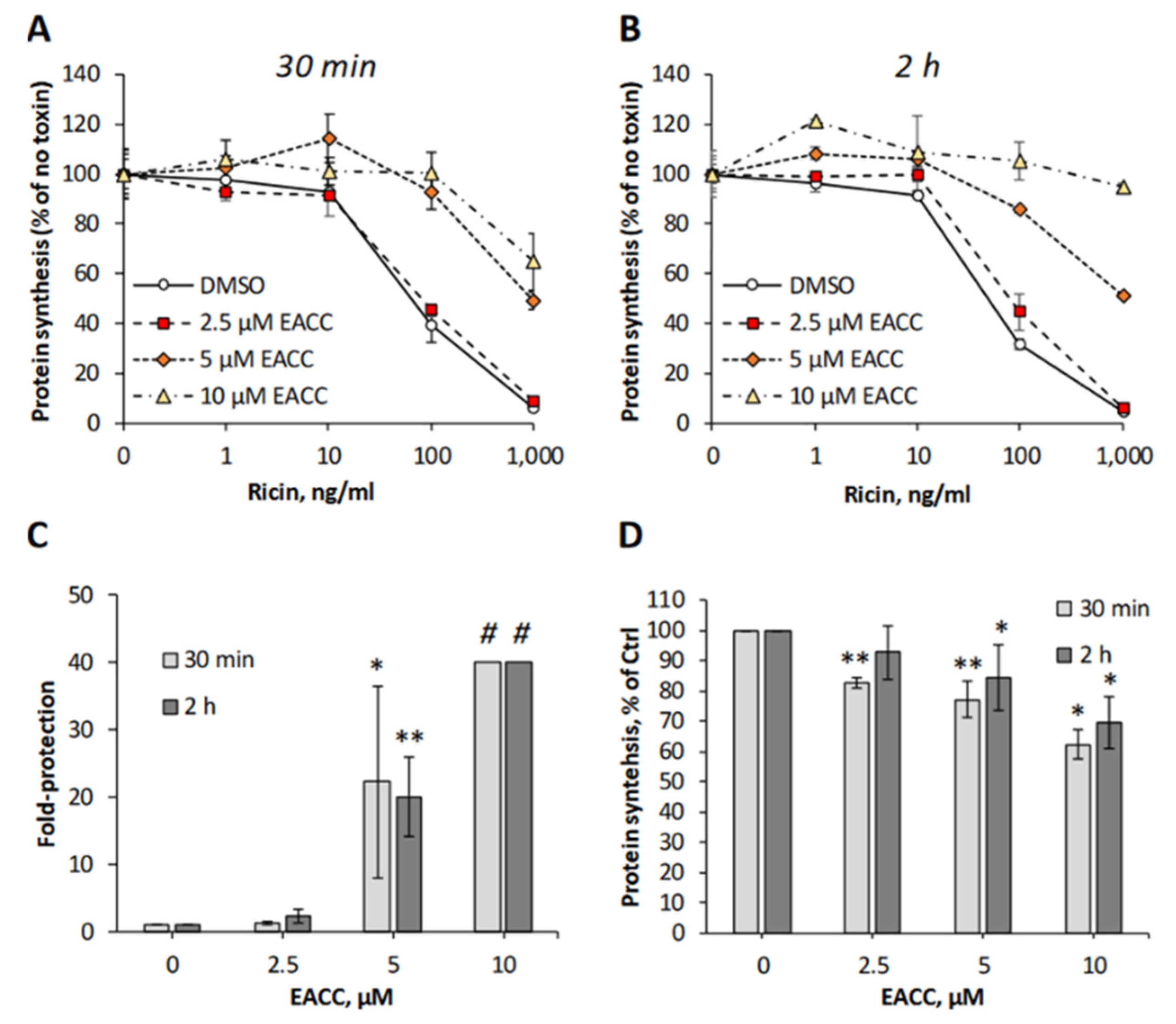
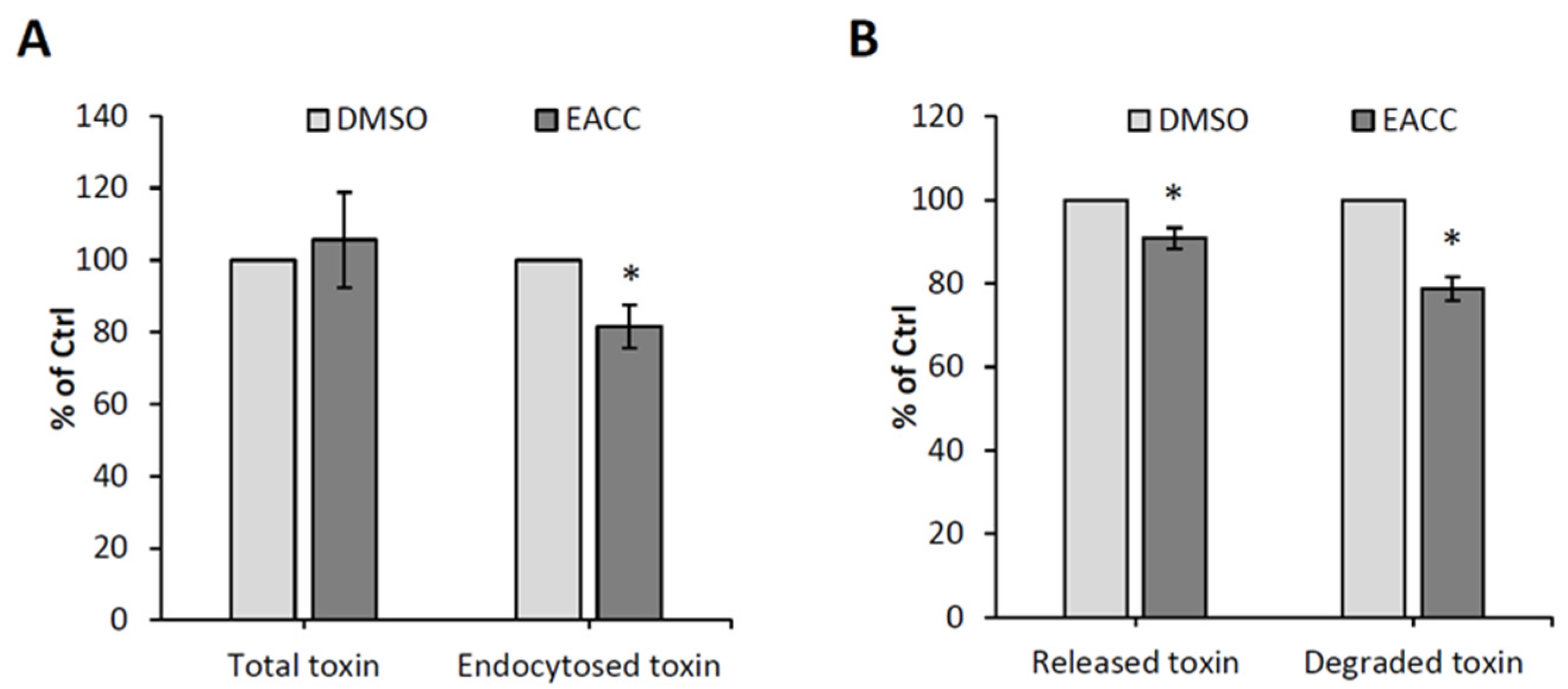
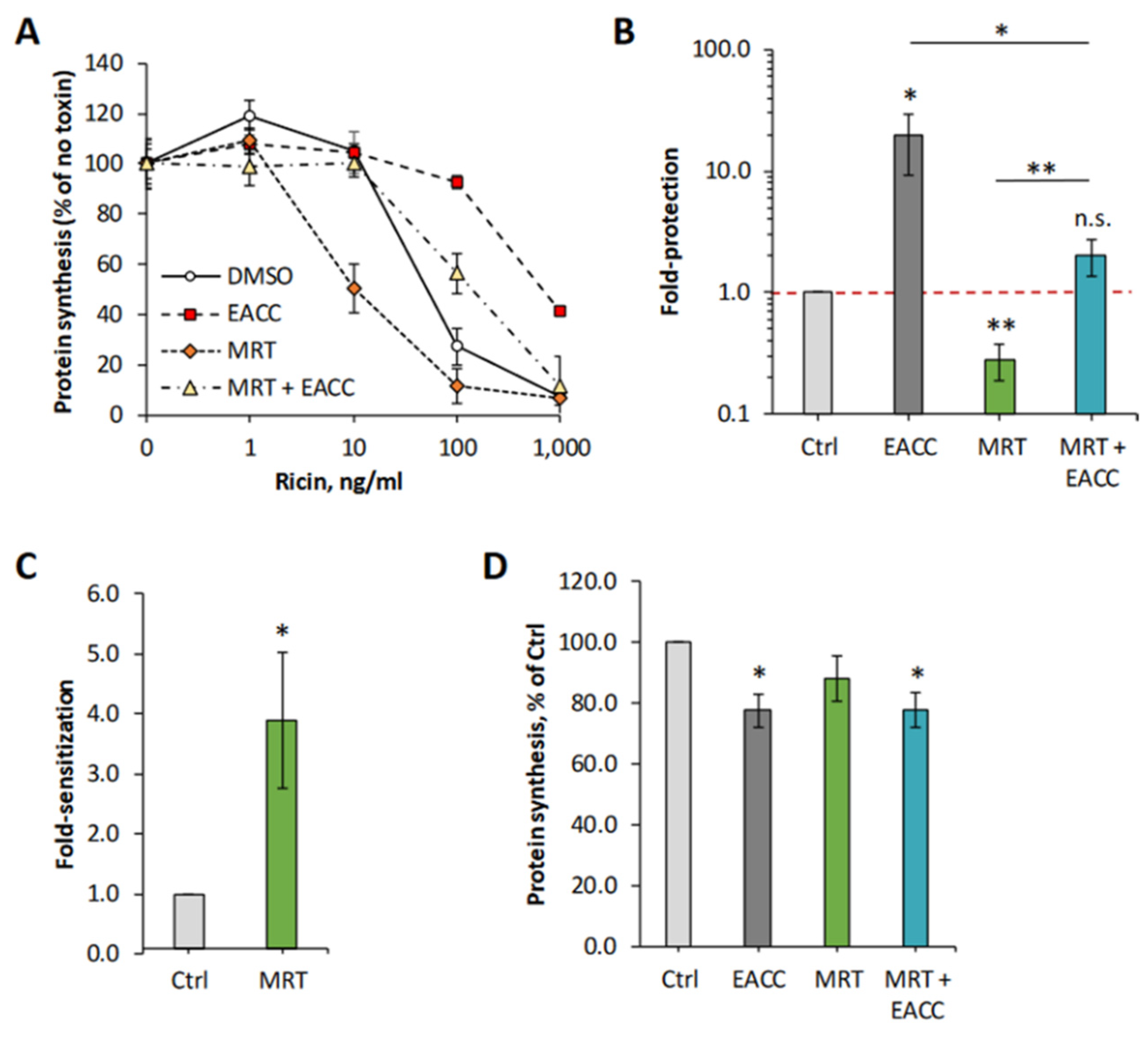
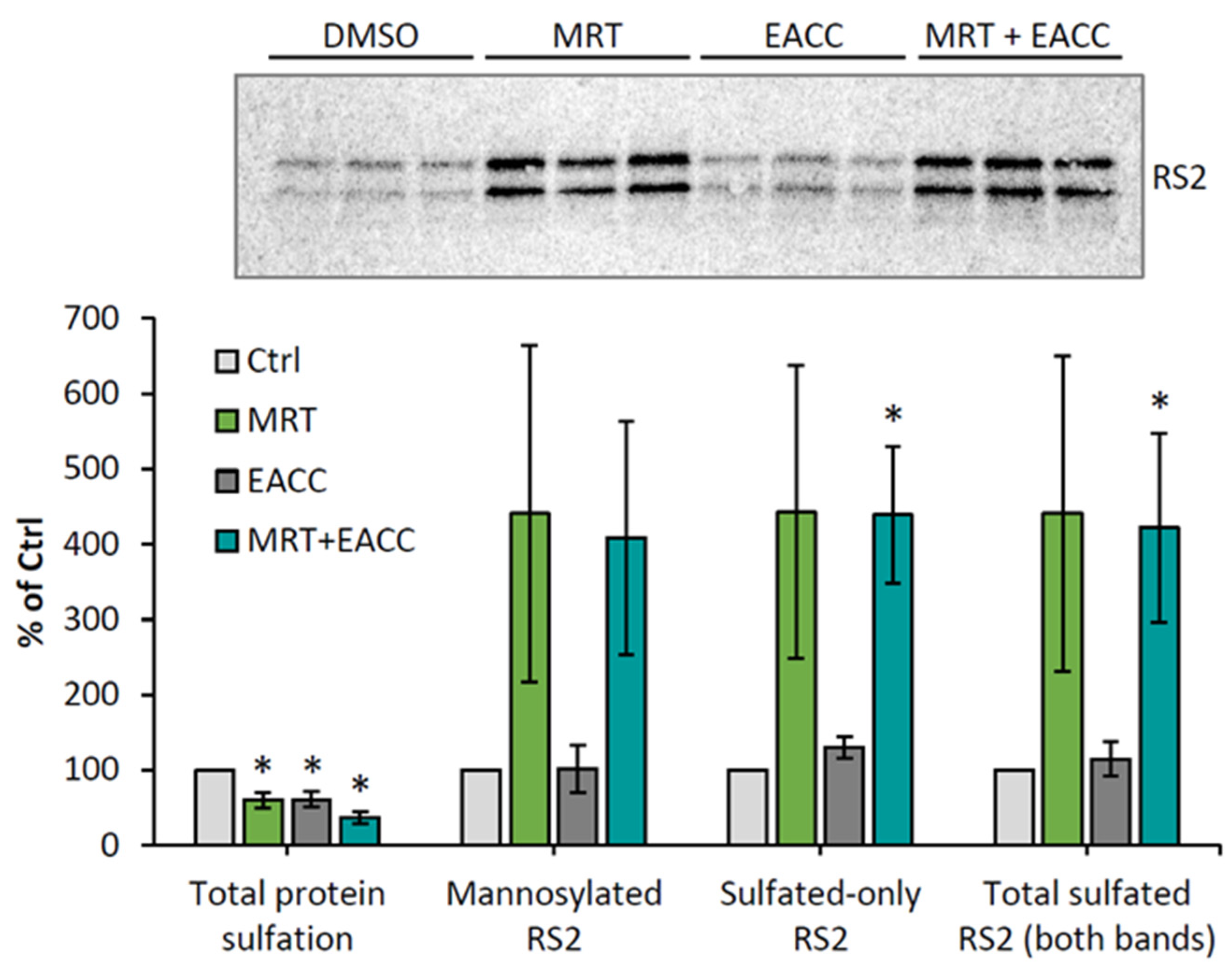
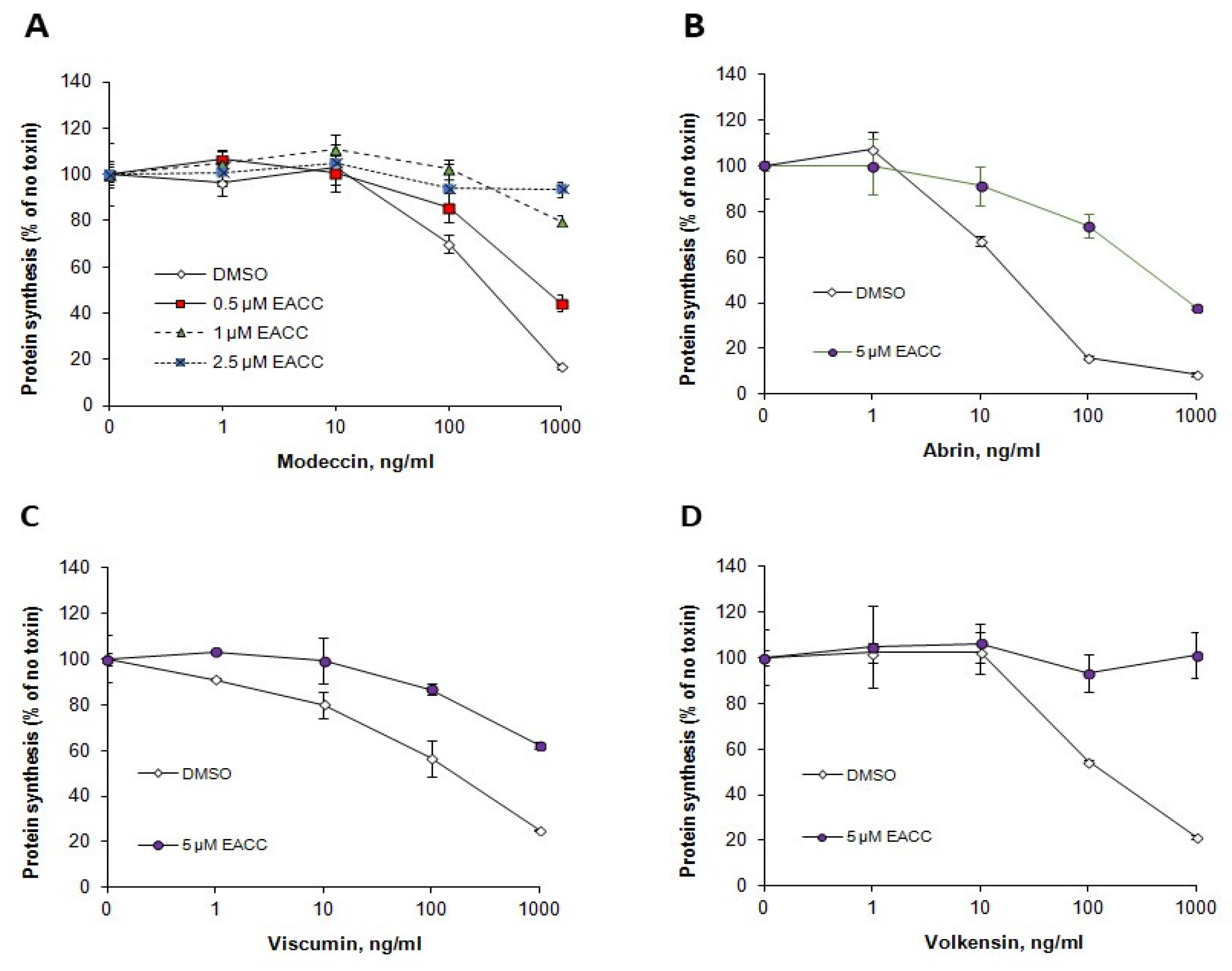
The compound EACC (ethyl (2-(5-nitrothiophene-2-carboxamido) thiophene-3-carbonyl) carbamate) was recently reported to inhibit fusion of autophagosomes with lysosomes in a reversible manner by inhibiting recruitment of syntaxin 17 to autophagosomes. We report here that this compound also provides a strong protection against the protein toxin ricin as well as against other plant toxins such as abrin and modeccin. The protection did not seem to be caused by inhibition of endocytosis and retrograde transport, but rather by inhibited release of the enzymatically active A-moiety to the cytosol. The TANK-binding kinase 1 (TBK1) has been reported to phosphorylate syntaxin 17 and be required for initiation of autophagy. The inhibitor of TBK1, MRT68601, induced in itself a strong sensitization to ricin, apparently by increasing transport to the Golgi apparatus. Importantly, MRT68601 increased Golgi transport of ricin even in the presence of EACC, but EACC was still able to inhibit intoxication, supporting the idea that EACC protects at a late step along the retrograde pathway. These results also indicate that phosphorylation of syntaxin 17 is not required for the protection observed.
Keywords: ricin; abrin; volkensin; viscumin; modeccin; plant toxins; autophagy; Golgi apparatus; endoplasmic reticulum; retrograde transport ricin; abrin; volkensin; viscumin; modeccin; plant toxins; autophagy; Golgi apparatus; endoplasmic reticulum; retrograde transport