Article

Synthesis of Rice Husk-Based MCM-41 for Removal of Aflatoxin B1 from Peanut Oil

1
Key Laboratory of Carbohydrate Chemistry and Biotechnology, Ministry of Education, Jiangnan University, Wuxi 214122, China
2
National Engineering Research Center of Cereal Fermentation and Food Biomanufacturing, Jiangnan University, Wuxi 214122, China
3
Jiangsu Provincial Engineering Research Center for Bioactive Product Processing, Jiangnan University, Wuxi 214122, China
4
School of Food Science and Technology, Jiangnan University, Wuxi 214122, China
5
Wuxi Zodolabs Biotech Co., Ltd., Wuxi 214174, China
6
Wuxi Xinwu Environmental Protection Technology Co., Ltd., Wuxi 214028, China
*
Author to whom correspondence should be addressed.
Toxins 2022, 14(2), 87; https://doi.org/10.3390/toxins14020087

Submission received: 7 September 2021 / Revised: 9 January 2022 / Accepted: 19 January 2022 / Published: 23 January 2022
(This article belongs to the Section Mycotoxins)

Abstract

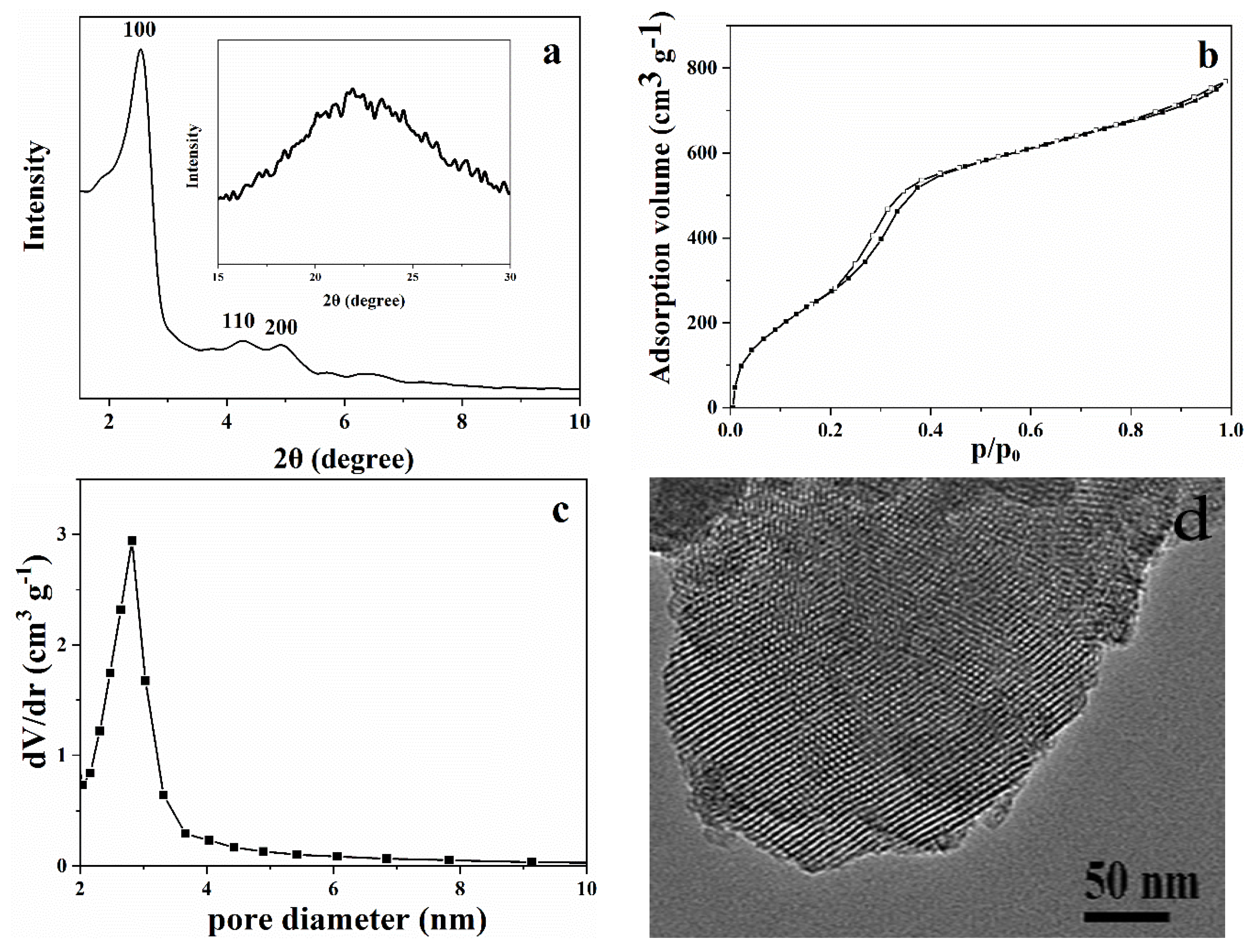
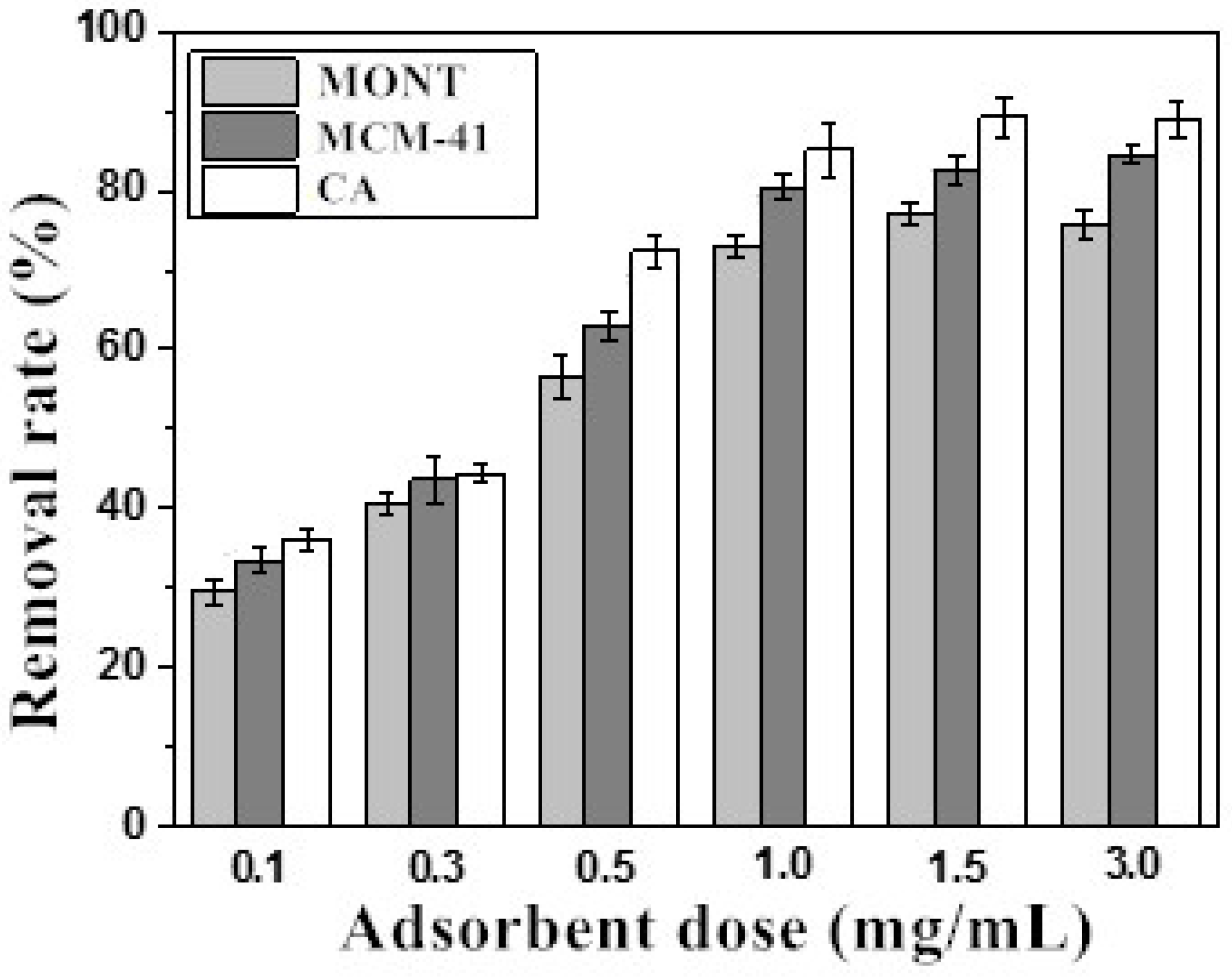
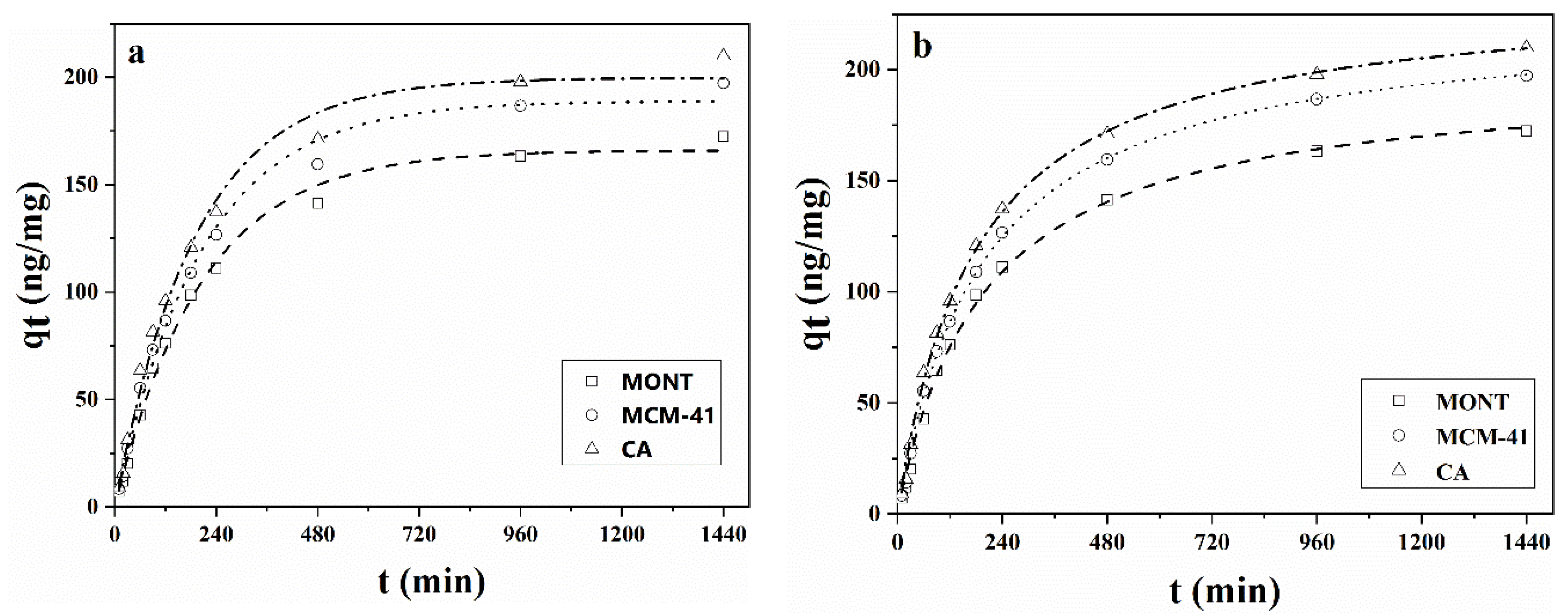
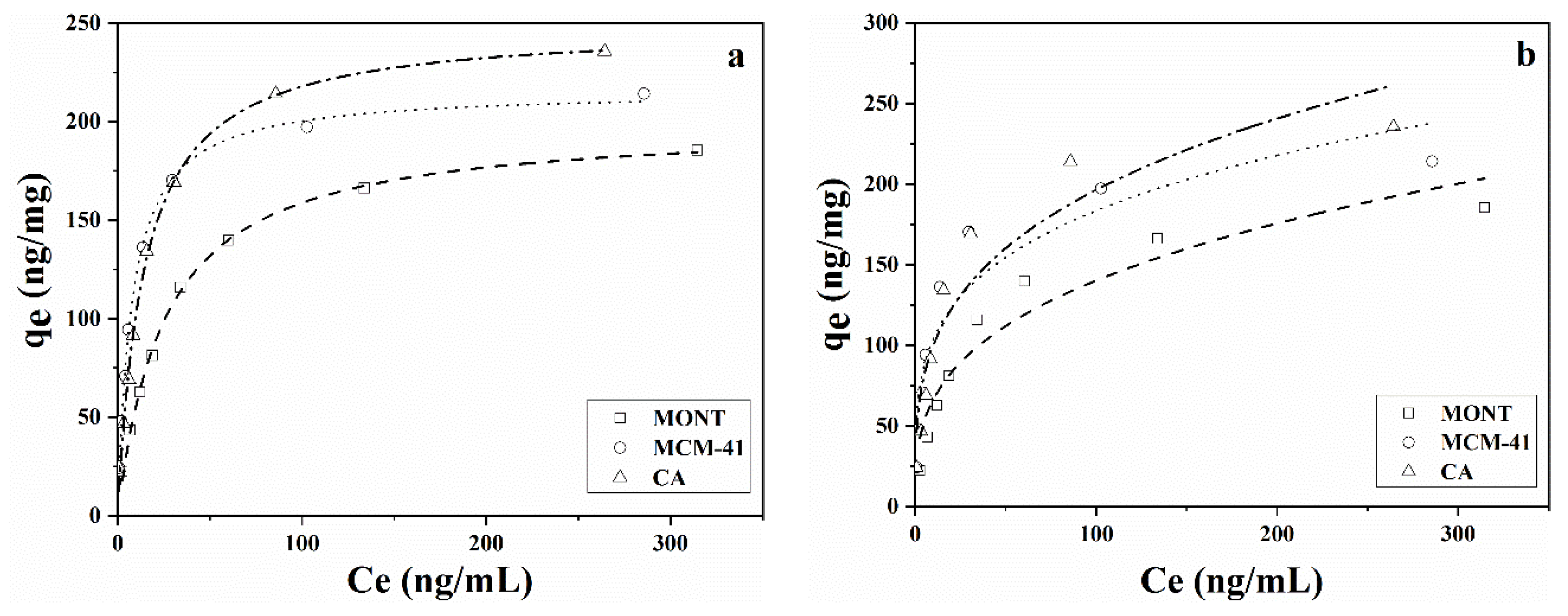
Edible oils, especially peanut oil, usually contain aflatoxin B1 (AFB1) at extremely high concentrations. This study focused on the synthesis of rice husk-based mesoporous silica (MCM-41) for the removal of AFB1 from peanut oil. MCM-41 was characterized by X-ray diffraction, N2 physisorption, and transmission electron microscope. MCM-41 was shown to have ordered channels with high specific surface area (1246 m2/g), pore volume (1.75 cm3/g), and pore diameter (3.11 nm). Under the optimal concentration of 1.0 mg/mL of the adsorbent dose, the adsorption behavior of MCM-41, natural montmorillonite (MONT), and commercial activated carbon (CA) for AFB1 were compared. The adsorption of AFB1 in peanut oil onto the three adsorbents was slower compared to that of AFB1 in an aqueous solution. In addition, the pseudo-second-order kinetic model better fit the adsorption kinetics of AFB1, while the adsorption mechanism followed the Langmuir adsorption isotherm on the three adsorbents. The calculated maximum adsorbed amounts of AFB1 on MONT, MCM-41, and CA were 199.41, 215.93, and 248.93 ng/mg, respectively. These results suggested that MCM-41 without modification could meet market demand and could be considered a good candidate for the removal of AFB1 from peanut oil. This study provides insights that could prove to be of economic and practical value.
Keywords: rice husk-based MCM-41; aflatoxin B1; adsorption; peanut oil; economic value rice husk-based MCM-41; aflatoxin B1; adsorption; peanut oil; economic value