Review

Malaysian Cobra Venom: A Potential Source of Anti-Cancer Therapeutic Agents


by
Syafiq Asnawi Zainal Abidin
1,2,
Yee Qian Lee
2,
Iekhsan Othman
1,2 and
Rakesh Naidu
2,*
1
Liquid Chromatography Mass Spectrometry (LCMS) Platform, Monash University Malaysia, Jalan Lagoon Selatan, Bandar Sunway 47500, Selangor Darul Ehsan, Malaysia
2
Jeffrey Cheah School of Medicine and Health Sciences, Monash University Malaysia, Jalan Lagoon Selatan, Bandar Sunway 47500, Selangor Darul Ehsan, Malaysia
*
Author to whom correspondence should be addressed.
Toxins 2019, 11(2), 75; https://doi.org/10.3390/toxins11020075

Submission received: 17 December 2018 / Revised: 22 January 2019 / Accepted: 24 January 2019 / Published: 1 February 2019
(This article belongs to the Special Issue Venom and Toxin as Targeted Therapy)

Abstract

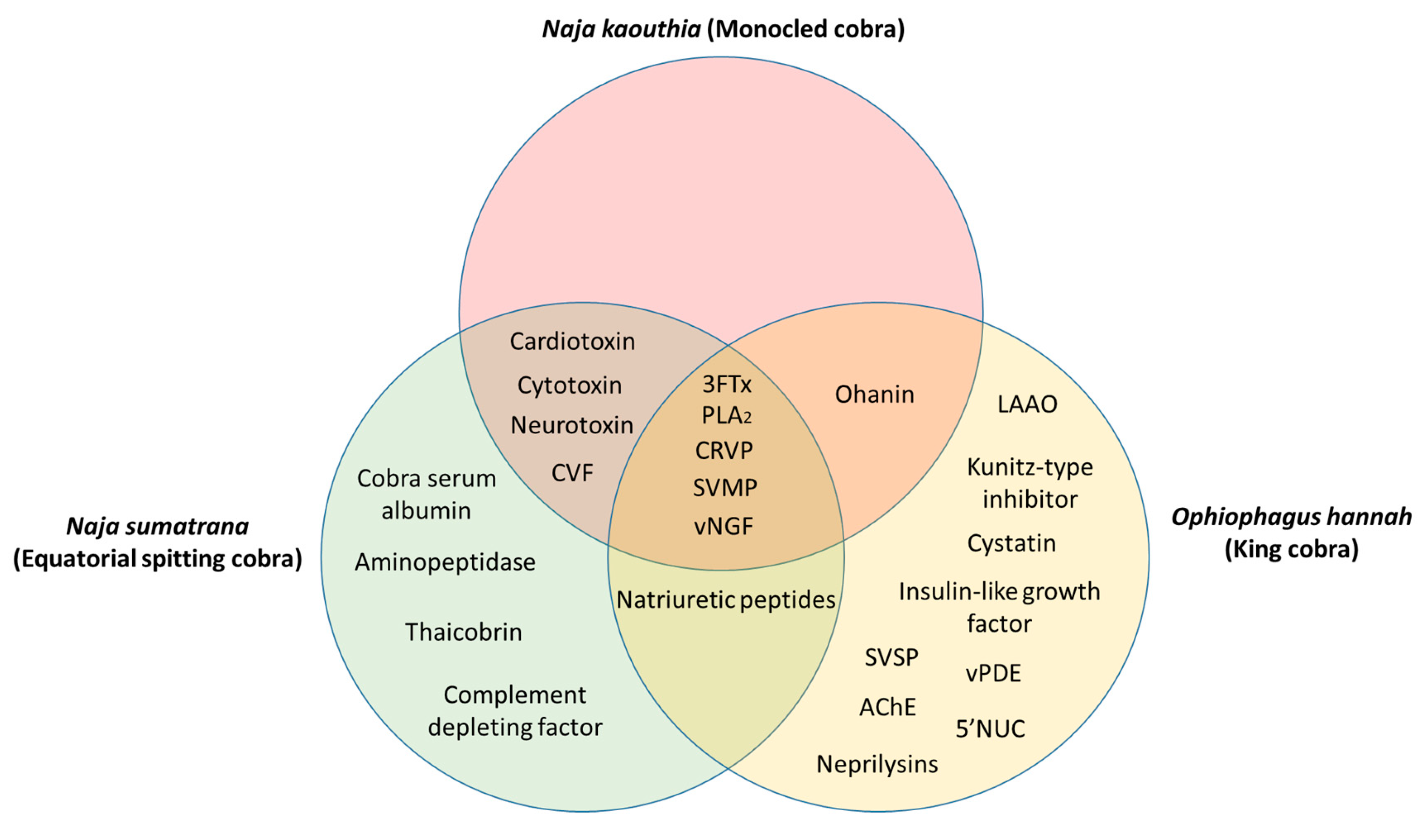
Cancer is a deadly disease and there is an urgent need for the development of effective and safe therapeutic agents to treat it. Snake venom is a complex mixture of bioactive proteins that represents an attractive source of novel and naturally-derived anticancer agents. Malaysia is one of the world’s most biodiverse countries and is home to various venomous snake species, including cobras. Naja kaouthia, Naja sumatrana, and Ophiophagus hannah are three of the most common cobra species in Malaysia and are of medical importance. Over the past decades, snake venom has been identified as a potential source of therapeutic agents, including anti-cancer agents. This present review highlights the potential anticancer activity of the venom and purified venom protein of N. kaouthia, N. sumatrana, and O. hannah. In conclusion, this review highlights the important role of the venom from Malaysian cobras as an important resource that researchers can exploit to further investigate its potential in cancer treatment.
Keywords: snake venom; Malaysian cobras; N. kaouthia; N. sumatrana; O. hannah; anticancer snake venom; Malaysian cobras; N. kaouthia; N. sumatrana; O. hannah; anticancer