Thymoquinone in Atherosclerosis: A Multi-Target Nutraceutical Modulating Inflammation, Oxidative Stress, and Lipid Metabolism

Abstract
1. Introduction
2. Methods
3. Characteristics of Thymoquinone
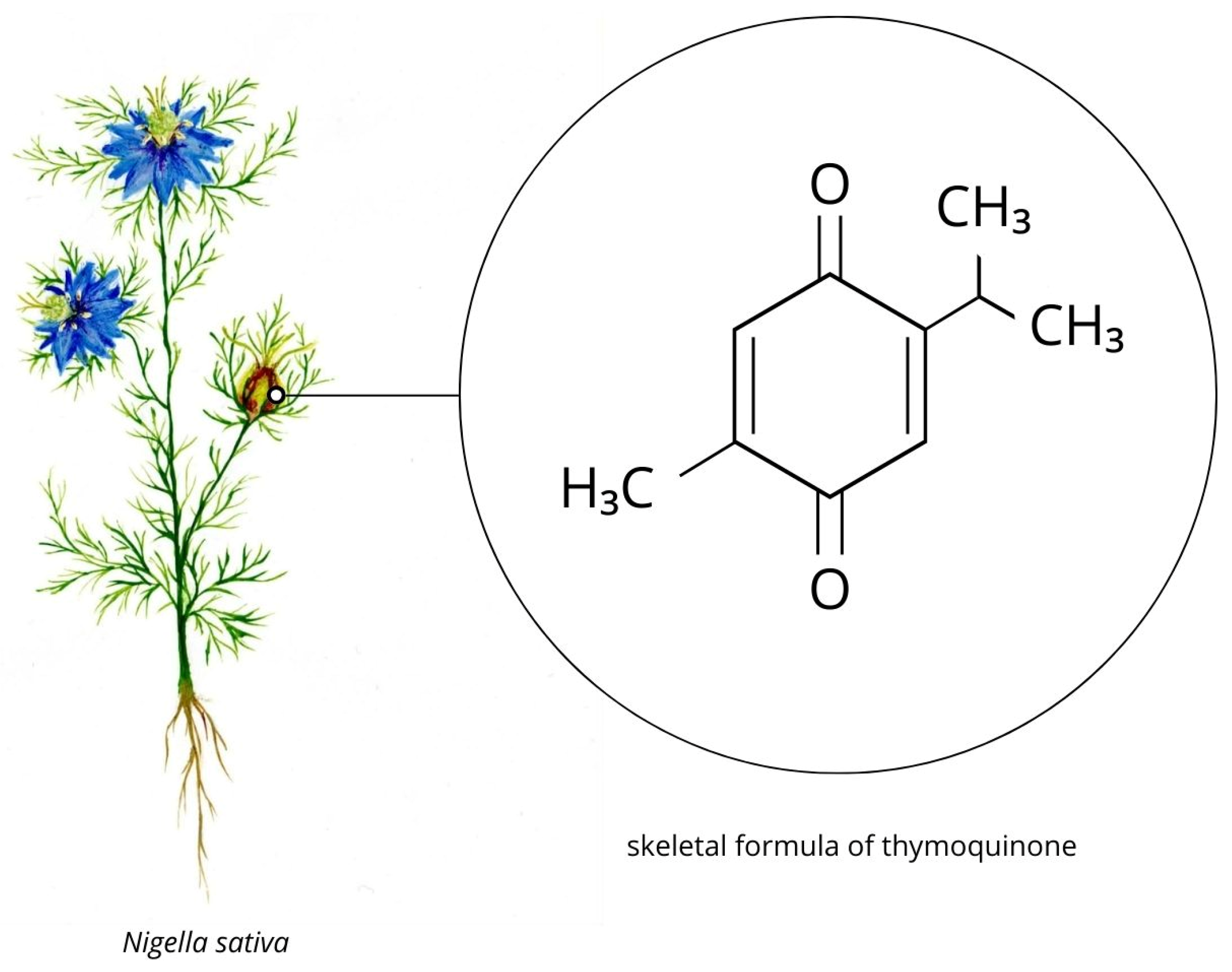
3.1. Physicochemical Properties of Thymoquinone
3.2. Pharmacokinetics of Thymoquinone
4. Safety Profile of Thymoquinone
4.1. Pharmacological Interactions
4.2. Toxicity of Thymoquinone
5. Mechanisms of Thymoquinone in Atherosclerosis
5.1. Endothelial Dysfunction and Vascular Damage
5.2. Lipid Metabolism and Lipid Accumulation
5.3. Oxidative Stress and Redox Imbalance
5.4. Inflammation and Pro-Inflammatory Pathways
5.5. Foam Cell Formation and Plaque Progression
5.6. Plaque Instability and Thrombosis
6. Limitations and Research Gaps
7. Conclusions
Author Contributions
Funding
Institutional Review Board Statement
Informed Consent Statement
Data Availability Statement
Conflicts of Interest
Abbreviations
| CVD | cardiovascular diseases |
| COX-2 | cyclooxygenase-2 |
| HCAEC | human coronary artery endothelial cells |
| HDL | high-density lipoprotein |
| HDL-C | high-density lipoprotein cholesterol |
| ICAM-1 | intercellular adhesion molecule-1 |
| IFN-γ | interferon gamma |
| IL | interleukin |
| LDL | low-density lipoprotein |
| LDL-C | low-density lipoprotein cholesterol |
| LOX-1 | lectin-like oxidized low-density lipoprotein receptor-1 |
| MAPK | mitogen-activated protein kinase |
| MCP-1 | monocyte chemoattractant protein-1 |
| MDA | malondialdehyde |
| NF-κB | nuclear factor kappa B |
| NLC | nanostructured lipid carriers |
| NLRP3 | NLR family pyrin domain containing 3 |
| NO | nitric oxide |
| NOAEL | no observed adverse effect level |
| NSE | Nigella sativa extract |
| PAI-1 | plasminogen activator inhibitor-1 |
| PEG | polyethylene glycol |
| ROS | reactive oxygen species |
| SOD | superoxide dismutase |
| STZ | streptozotocin |
| TC | total cholesterol |
| TF | tissue factor |
| TG | triglycerides |
| TNF-α | tumor necrosis factor alpha |
| TQ | thymoquinone |
| VLDL | very low-density lipoprotein |
| LD50 | median lethal dose |
References
- Barquera, S.; Pedroza-Tobías, A.; Medina, C.; Hernández-Barrera, L.; Bibbins-Domingo, K.; Lozano, R.; Moran, A.E. Global overview of the epidemiology of atherosclerotic cardiovascular disease. Arch. Med. Res. 2015, 46, 328–338. [Google Scholar] [CrossRef]
- Lechner, K.; von Schacky, C.; McKenzie, A.L.; Worm, N.; Nixdorff, U.; Lechner, B.; Kränkel, N.; Halle, M.; Krauss, R.M.; Scherr, J. Lifestyle factors and high-risk atherosclerosis: Pathways and mechanisms beyond traditional risk factors. Eur. J. Prev. Cardiol. 2019, 27, 394–406. [Google Scholar] [CrossRef]
- Bekbossynova, M.; Saliev, T.; Ivanova-Razumova, T.; Andossova, S.; Kali, A.; Myrzakhmetova, G. Beyond Cholesterol: Emerging Risk Factors in Atherosclerosis. J. Clin. Med. 2025, 14, 2352. [Google Scholar] [CrossRef] [PubMed]
- Jebari-Benslaiman, S.; Galicia-García, U.; Larrea-Sebal, A.; Olaetxea, J.R.; Alloza, I.; Vandenbroeck, K.; Benito-Vicente, A.; Martín, C. Pathophysiology of Atherosclerosis. Int. J. Mol. Sci. 2022, 23, 3346. [Google Scholar] [CrossRef]
- World Health Organization. Cardiovascular Diseases (CVDs). Available online: https://www.who.int/news-room/fact-sheets/detail/cardiovascular-diseases-%28cvds%29 (accessed on 29 December 2025).
- Song, P.; Fang, Z.; Wang, H.; Cai, Y.; Rahimi, K.; Zhu, Y.; Rudan, I. Global and regional prevalence, burden, and risk factors for carotid atherosclerosis: A systematic review, meta-analysis, and modelling study. Lancet Glob. Health 2020, 8, e721–e729. [Google Scholar] [CrossRef]
- Darakhshan, S.; Pour, A.B.; Colagar, A.H.; Sisakhtnezhad, S. Thymoquinone and its therapeutic potentials. Pharmacol. Res. 2015, 95, 138–158. [Google Scholar] [CrossRef]
- Eid, E.E.M.; Almaiman, A.A.; Alshehade, S.A.; Alsalemi, W.; Kamran, S.; Suliman, F.O.; Alshawsh, M.A. Characterization of Thymoquinone-Sulfobutylether-β-Cyclodextrin Inclusion Complex for Anticancer Applications. Molecules 2023, 28, 4096. [Google Scholar] [CrossRef] [PubMed]
- Farkhondeh, T.; Samarghandian, S.; Shahri, A.M.P.; Samini, F. The Neuroprotective Effects of Thymoquinone: A Review. Dose-Response 2018, 16, 1559325818761455. [Google Scholar] [CrossRef]
- Shaddel, R.; Rashidinejad, A.; Karimkhani, M.M.; Tarhan, O.; Jafari, S.M. Nanodelivery systems of thymoquinone for improving its bioavailability and efficiency in the food and biomedical applications. Ind. Crops Prod. 2025, 234, 121555. [Google Scholar] [CrossRef]
- Goyal, S.N.; Prajapati, C.P.; Gore, P.R.; Patil, C.R.; Mahajan, U.B.; Sharma, C.; Talla, S.P.; Ojha, S.K. Therapeutic Potential and Pharmaceutical Development of Thymoquinone: A Multitargeted Molecule of Natural Origin. Front. Pharmacol. 2017, 8, 656. [Google Scholar] [CrossRef] [PubMed]
- Hall, A.G.; King, J.C. The Molecular Basis for Zinc Bioavailability. Int. J. Mol. Sci. 2023, 24, 6561. [Google Scholar] [CrossRef]
- Kurowska, N.; Madej, M.; Strzałka-Mrozik, B. Thymoquinone: A Promising Therapeutic Agent for the Treatment of Colorectal Cancer. Curr. Issues Mol. Biol. 2024, 46, 121–139. [Google Scholar] [CrossRef] [PubMed]
- Almajali, B.; Al-Jamal, H.A.N.; Taib, W.R.W.; Ismail, I.; Johan, M.F.; Doolaanea, A.A.; Ibrahim, W.N. Thymoquinone, as a Novel Therapeutic Candidate of Cancers. Pharmaceuticals 2021, 14, 369. [Google Scholar] [CrossRef] [PubMed]
- Tekbaş, A.; Bremer-Streck, S.; Wissenbach, D.K.; Peters, F.T.; von Lilienfeld-Toal, M.; Soonawalla, Z.; Rauchfuß, F.; Settmacher, U.; Dahmen, U. Gas Chromatography–Mass Spectrometry Detection of Thymoquinone in Oil and Serum for Clinical Pharmacokinetic Studies. Int. J. Mol. Sci. 2023, 24, 16431. [Google Scholar] [CrossRef] [PubMed]
- Elmowafy, M.; Samy, A.; Raslan, M.A.; Salama, A.; Said, R.A.; Abdelaziz, A.E.; El-Eraky, W.; Awdan, S.E.; Viitala, T. Enhancement of Bioavailability and Pharmacodynamic Effects of Thymoquinone Via Nanostructured Lipid Carrier (NLC) Formulation. AAPS PharmSciTech 2016, 17, 663–672. [Google Scholar] [CrossRef]
- Ibrahim, K.G.; Hudu, S.A.; Jega, A.Y.; Taha, A.; Yusuf, A.P.; Usman, D.; Adeshina, K.A.; Umar, Z.U.; Nyakudya, T.T.; Erlwanger, K.H. Thymoquinone: A comprehensive review of its potential role as a monotherapy for metabolic syndrome. Iran. J. Basic Med. Sci. 2024, 27, 1214–1227. [Google Scholar] [CrossRef]
- Khalife, K.H.; Lupidi, G. Nonenzymatic reduction of thymoquinone in physiological conditions. Free. Radic. Res. 2007, 41, 153–161. [Google Scholar] [CrossRef]
- Albassam, A.; Ahad, A.; Alsultan, A.; Williams, L. Inhibition of cytochrome P450 enzymes by thymoquinone in human liver microsomes. Saudi Pharm. J. 2018, 26, 673–677. [Google Scholar] [CrossRef]
- Elbarbry, F.; Ung, A.; Abdelkawy, K. Studying the Inhibitory Effect of Quercetin and Thymoquinone on Human Cytochrome P450 Enzyme Activities. Pharmacogn. Mag. 2018, 13, S895–S899. [Google Scholar] [CrossRef]
- Costa, R.; Ferreira, C.; Alves, A.; Nunes, S.; Reis, F.; Malva, J.; Viana, S. Lipid-lowering statins and polyphenol-based supplementation: A scoping review on drug-food interaction potential. Front. Pharmacol. 2025, 16, 1541871. [Google Scholar] [CrossRef]
- Kumari, P.; Dang, S. Evaluation of enhanced cytotoxicity effect of repurposed drug simvastatin/thymoquinone combination against breast cancer cell line. Cardiovasc. Hematol. Agents Med. Chem. 2024, 22, 348–366. [Google Scholar] [CrossRef]
- Kumari, P.; Ali, J.; Baboota, S.; Tyagi, A.; Dang, S. Synergistic anti-breast cancer activity of simvastatin and thymoquinone encapsulated in nanostructured lipid carriers for enhanced therapeutic outcomes. J. Microencapsul. 2025, 42, 682–701. [Google Scholar] [CrossRef]
- Zisaki, A.; Miskovic, L.; Hatzimanikatis, V. Antihypertensive drugs metabolism: An update to pharmacokinetic profiles and computational approaches. Curr. Pharm. Des. 2015, 21, 806–822. [Google Scholar] [CrossRef] [PubMed]
- Wichaiyo, S. Clinical pharmacology of antiplatelet drugs: Implications for personalized therapy. Eur. J. Clin. Pharmacol. 2026, 82, 86. [Google Scholar] [CrossRef] [PubMed]
- Wang, Z.; Wang, Z.; Wang, X.; Lv, X.; Yin, H.; Jiang, L.; Liu, Y. Potential food-drug interaction risk of thymoquinone with warfarin. Chem.-Biol. Interact. 2022, 365, 110070. [Google Scholar] [CrossRef]
- Salimi, A.; Khezri, S.; Helmi, K.; Maleki, P.; Alehashem, S.H.S.; Razmjou, M. Evaluation of toxicity of thymoquinone, as a bioactive compound of Nigella sativa using isolated mitochondria from different organs. Toxin Rev. 2024, 43, 400–410. [Google Scholar] [CrossRef]
- Yazan, L.S.; Azlan, S.N.M.; Ansar, F.H.Z.; Gopalsamy, B. Acute Toxicity Study of Intravenous Administration of Thymoquinone-Loaded Nanostructured Lipid Carrier (TQ-NLC) in Sprague Dawley Rats. Malays. J. Med. Health Sci. 2019, 15, 51–57. [Google Scholar]
- Ong, Y.S.; Saiful Yazan, L.; Ng, W.K.; Noordin, M.M.; Sapuan, S.; Foo, J.B.; Tor, Y.S. Acute and subacute toxicity profiles of thymoquinone-loaded nanostructured lipid carrier in BALB/c mice. Int. J. Nanomed. 2016, 11, 5905–5915. [Google Scholar] [CrossRef]
- Thomas, J.V.; Mohan, M.E.; Prabhakaran, P.; Maliakel, B.; Im, K. A phase I clinical trial to evaluate the safety of thymoquinone-rich black cumin oil (BlaQmax®) on healthy subjects: Randomized, double-blinded, placebo-controlled prospective study. Toxicol. Rep. 2022, 9, 999–1007. [Google Scholar] [CrossRef]
- Kwaśniewska, K.; Fic, W.; Polak-Szczybyło, E. Vitamins as Modulators of Neurodegenerative Disease Pathways: Mechanisms and Therapeutic Perspectives. Nutrients 2026, 18, 995. [Google Scholar] [CrossRef]
- Ahmad, A.; Alqahtani, S.; Jan, B.L.; Raish, M.; Rabba, A.K.; Alkharfy, K.M. Gender effect on the pharmacokinetics of thymoquinone: Preclinical investigation and in silico modeling in male and female rats. Saudi Pharm. J. 2020, 28, 403–408. [Google Scholar] [CrossRef]
- Abukhader, M.; Khater, S.H.; Al-Matubsi, H.Y. Acute Effects of Thymoquinone on the Pregnant Rat and Embryo-Fetal Development. Drug Chem. Toxicol. 2013, 36, 27–34. [Google Scholar] [CrossRef]
- Abdollahzade Fard, A.; Saboory, E.; Tahmazi, Y.; Rasmi, Y.; Dindarian, S.; Parsamanesh, N. Effect of Orally-Administrated Thymoquinone during Pregnancy on Litter Size, Pentylenetetrazol-Induced Seizure, and Body Weight in Rat Offspring. Iran. J. Basic Med. Sci. 2021, 24, 30–37. [Google Scholar] [CrossRef]
- Abd-Elkareem, M.; Abd El-Rahman, M.A.M.; Khalil, N.S.A.; Amer, A.S. Antioxidant and cytoprotective effects of Nigella sativa L. seeds on testes of rats with monosodium glutamate-induced toxicity. Sci. Rep. 2021, 11, 13519. [Google Scholar] [CrossRef]
- Bule, M.; Nikfar, S.; Amini, M.; Abdollahi, M. Antidiabetic effects of thymoquinone: A systematic review and meta-analysis of animal studies. Food Res. Int. 2020, 127, 108736. [Google Scholar] [CrossRef]
- Abulfadl, Y.S.; El-Maraghy, N.N.; Ahmed, A.A.E.; Nofal, S.; Badary, O.A. Protective effect of thymoquinone against D-galactose and aluminum chloride–induced neurotoxicity in rats: Biochemical, histological, and behavioral changes. Neurol. Res. 2018, 40, 324–333. [Google Scholar] [CrossRef] [PubMed]
- Alkharfy, K.M.; Ahmad, A.; Jan, B.L.; Raish, M. Thymoquinone reduces mortality and suppresses early acute inflammatory markers of sepsis in a murine model. Biomed. Pharmacother. 2018, 98, 801–805. [Google Scholar] [CrossRef]
- Ahmad, A.; Alkharfy, K.M.; Jan, B.L.; Ahad, A.; Ansari, M.A.; Al-Jenoobi, F.I.; Raish, M. Thymoquinone treatment modulates the Nrf2/HO-1 signaling pathway and abrogates the inflammatory response in an animal model of lung fibrosis. Exp. Lung Res. 2020, 46, 53–63. [Google Scholar] [CrossRef]
- Majdalawieh, A.F.; Yousef, S.M.; Abu-Yousef, I.A. Thymoquinone, the main constituent of Nigella sativa seeds, as a potential prophylactic and therapeutic option for atherosclerosis. Eur. J. Pharmacol. 2021, 909, 174420. [Google Scholar] [CrossRef] [PubMed]
- Alberts, A.; Moldoveanu, E.-T.; Niculescu, A.-G.; Grumezescu, A.M. Nigella sativa: A comprehensive review of its therapeutic potential, pharmacological properties, and clinical applications. Int. J. Mol. Sci. 2024, 25, 13410. [Google Scholar] [CrossRef] [PubMed]
- Khan, Y.S.; Farhana, A.; Mohammed, G.E.Y.; Osman, A.A.; Alsrhani, A.; Shahid, S.M.A.; Kuddus, M.; Rasheed, Z. Thymoquinone upregulates microRNA-199a-3p expression and downregulates COX-2 expression and PGE production via deactivation of p38/ERK/JNK-MAPK and p65/p50-NF-κB signaling in human lung cancer cells. Biology 2025, 14, 1348. [Google Scholar] [CrossRef]
- Leong, X.F.; Choy, K.W.; Alias, A. Anti-inflammatory actions of thymoquinone in atherosclerosis: A mini-review. Front. Pharmacol. 2021, 12, 758929. [Google Scholar] [CrossRef]
- Mehta, J.L.; Sanada, N.; Hu, C.P.; Chen, J.; Dandapat, A.; Sugawara, F.; Satoh, H.; Inoue, K.; Kawase, Y.; Jishage, K.; et al. Deletion of LOX-1 reduces atherosclerosis in LDLR-knockout mice fed a high-cholesterol diet. Circ. Res. 2007, 100, 1634–1642. [Google Scholar] [CrossRef] [PubMed]
- Xu, J.; Zhu, L.; Liu, H.; Li, M.; Liu, Y.; Yang, F.; Pei, Z. Thymoquinone reduces cardiac damage caused by hypercholesterolemia in apolipoprotein E-deficient mice. Lipids Health Dis. 2018, 17, 173. [Google Scholar] [CrossRef]
- Tousoulis, D.; Davies, G.; Stefanadis, C.; Toutouzas, P.; Ambrose, J.A. Inflammatory and thrombotic mechanisms in coronary atherosclerosis. Heart 2003, 89, 993–997. [Google Scholar] [CrossRef] [PubMed]
- Muralidharan-Chari, V.; Kim, J.; Abuawad, A.; Naeem, M.; Cui, H.; Mousa, S.A. Thymoquinone modulates blood coagulation in vitro via its effects on inflammatory and coagulation pathways. Int. J. Mol. Sci. 2016, 17, 474. [Google Scholar] [CrossRef]
- Amartey, J.; Gapper, S.; Hussein, N.; Morris, K.; Withycombe, C.E. Nigella sativa extract and thymoquinone regulate inflammatory cytokine and TET-2 expression in endothelial cells. Artery Res. 2019, 25, 157–163. [Google Scholar] [CrossRef]
- Huwait, E.; Al-Gharawi, N.; Al-Ghamdi, M.A.; Gari, M.; Prola, A.; Natesan Pushparaj, P.; Kalamegam, G. Thymoquinone (TQ) inhibits inflammation and THP-1 macrophage migration: Mechanistic analyses of atherosclerosis prevention using in vitro and in silico approaches. Curr. Issues Mol. Biol. 2022, 44, 1740–1753. [Google Scholar] [CrossRef] [PubMed]
- Yuhainis Firus Khan, A.; Mohtar, F.; Rahman, T.A.; Muid, S.A.; Froemming, G.R.A.; Nawawi, H. In vitro investigation of Nigella sativa and thymoquinone activity on endothelial activation and monocyte adhesion. J. Appl. Biomed. 2023, 21, 73–79. [Google Scholar] [CrossRef]
- Idris-Khodja, N.; Schini-Kerth, V. Thymoquinone improves aging-related endothelial dysfunction in rat mesenteric artery. Naunyn-Schmiedeberg’s Arch. Pharmacol. 2012, 385, 749–758. [Google Scholar] [CrossRef]
- Ragheb, A.; Elbarbry, F.; Prasad, K.; Mohamed, A.; Ahmed, M.S.; Shoker, A. Attenuation of the development of hypercholesterolemic atherosclerosis by thymoquinone. Int. J. Angiol. 2008, 17, 186–192. [Google Scholar] [CrossRef] [PubMed]
- Pei, Z.W.; Guo, Y.; Zhu, H.L.; Dong, M.; Zhang, Q.; Wang, F. Thymoquinone protects against hyperlipidemia-induced cardiac injury in low-density lipoprotein receptor (LDL-R)-deficient mice through anti-inflammatory and anti-pyroptotic actions. BioMed Res. Int. 2020, 2020, 4878704. [Google Scholar] [CrossRef] [PubMed]
- Nader, M.A.; El-Agamy, D.S.; Suddek, G.M. Protective effects of propolis and thymoquinone on development of atherosclerosis in cholesterol-fed rabbits. Arch. Pharmacal Res. 2010, 33, 637–643. [Google Scholar] [CrossRef] [PubMed]
- Mostafa, M.D.; Amer, M.E.; ElKomy, M.A.; Othman, A.I.; El-Missiry, M.A. Thymoquinone controlled obesity and improved cognitive and memory functions in high-fat-diet-fed rats through modulation of oxidative stress, inflammation, and apoptosis. Sci. Rep. 2025, 15, 20171. [Google Scholar] [CrossRef]
- Atta, M.S.; El-Far, A.H.; Farrag, F.A.; Abdel-Daim, M.M.; Al Jaouni, S.K.; Mousa, S.A. Thymoquinone attenuates cardiomyopathy in streptozotocin-treated diabetic rats. Oxidative Med. Cell. Longev. 2018, 2018, 7845681. [Google Scholar] [CrossRef]
- Farag, M.M.; Khalifa, A.A.; Elhadidy, W.F.; Rashad, R.M. Dose-dependent thymoquinone alleviates isoproterenol-induced myocardial injury in rats through integrated modulation of oxidative stress, inflammation, apoptosis, autophagy, and fibrosis. Naunyn-Schmiedeberg’s Arch. Pharmacol. 2021, 394, 1787–1801. [Google Scholar] [CrossRef]
- Ojha, S.; Azimullah, S.; Mohanraj, R.; Sharma, C.; Yasin, J.; Arya, D.S.; Adem, A. Thymoquinone protects against myocardial injury by mitigating oxidative stress and inflammation. Evid.-Based Complement. Altern. Med. 2015, 2015, 143629. [Google Scholar] [CrossRef]
- Xiao, J.; Ke, Z.P.; Shi, Y.; Zeng, Q.; Cao, Z. Cardioprotective effect of thymoquinone on ischemia-reperfusion injury in isolated rat heart via regulation of apoptosis and autophagy. J. Cell. Biochem. 2018, 119, 7212–7217. [Google Scholar] [CrossRef]


| Ref. | Category | Key Information |
|---|---|---|
| [9] | Chemical name | 2-isopropyl-5-methylbenzo-1,4-quinone |
| [9] | Molecular formula | C10H12O2 |
| [9,10,11] | Physicochemical properties | Molecular weight—164.20 g·mol−1 Half-life—approx. 217 min Melting point—49–50 °C Solubility in aqueous environment—549–669 mg/mL High stability at low pH Photosensitive molecule |
| [13] | Pharmacokinetics | Low bioavailability Slow absorption Rapid metabolism |
| [13,19,20,21,22,23,24,25,26,27,32,33] | Safety | Potential interactions with anti-atherosclerotic drugs LD50 ~790 mg/kg (oral) LD50 ~57 mg/kg (intraperitoneal) NOAEL ~10 mg/kg Teratogenicity |
| Limitations | Lack of clinical studies Only preclinical studies available No standardized safe dose for humans |
| Ref. | Study Model | TQ Dose/Concentration | Method of administration | Duration | Key Findings |
|---|---|---|---|---|---|
| [16] | Rats | 20 mg/kg | Oral administration | 48 h | Nanostructured lipid carriers (NLC) increased bioavailability 2.03–3.97-fold and prolonged half-life compared to TQ suspension. |
| [19] | Human liver microsomes | 1, 10, 100 µM | In vitro | Short incubation | Inhibition of CYP450 enzymes (CYP2C9, CYP1A2, CYP3A4, CYP2D6), suggesting potential drug interactions. |
| [28] | Female rats (acute toxicity) | 25 mg/kg (i.v., TQ-NLC) | Intravenous administration | 14 days | No systemic toxicity observed; only local inflammation at injection site. |
| [29] | BALB/c mice (acute & subacute toxicity) | Acute: 5–300 mg/kg; Subacute: 1–100 mg/kg | Oral administration | 14/28 days | Pure TQ showed higher toxicity than NLC; subacute doses up to 100 mg/kg were safe. |
| [30] | Humans (phase I clinical trial) | 200 mg/day (5% TQ oil) | Oral administration | 90 days | No adverse effects; no changes in renal and hepatic parameters; confirmed safety. |
| [45] | ApoE−/− mice (atherosclerosis model) | 20 mg/kg (oral) | Oral administration | 8 weeks | ↓ LOX-1 expression, ↓ TC and LDL, ↓ macrophage accumulation, ↑ antioxidant enzymes. |
| [47] | In vitro | 10–50 µM | In vitro | 6–24 h | Minimal effect on coagulation; inhibition of TNF-α/NF-κB signaling. |
| [48] | Human endothelial cells | 1–10 µM | In vitro | 24 h | ↓ MCP-1, VEGF, NLRP3, IL-1β; ↑ TET-2 expression. |
| [53] | LDL-R−/− mice (high-fat diet) | 50 mg/kg (oral) | Oral administration | 8 weeks | ↓ TC, LDL-C, IL-1β, IL-6, TNF-α; inhibition of NLRP3 inflammasome. |
| [49] | THP-1 macrophages | 5–20 µM | In vitro | 24 h | ↓ ICAM-1, MCP-1 expression and monocyte migration; no effect on viability. |
| [50] | HCAEC endothelial cells | 4.5–36 µM | In vitro | 24 h | ↓ ICAM-1, VCAM-1 expression; reduced monocyte adhesion and endothelial activation. |
| [51] | Wistar rats (aging model) | 10–30 mg/kg | Oral administration | 2–4 weeks | Improved endothelial-dependent vasodilation; ↓ ROS; normalization of NO synthase. |
| [52] | Rabbits (1% cholesterol diet) | 10–20 mg/kg | Oral administration | 8 weeks | ↓ total cholesterol; reduced lipid accumulation in aorta. |
| [54] | Rabbits (high-cholesterol diet) | 10 mg/kg | Oral administration | 8 weeks | ↓ TC and LDL; ↑ HDL; reduced atherosclerotic lesions and foam cells. |
| [45] | Mice (genetic model) | 20 mg/kg | Oral administration | 8 weeks | ↓ TC, LDL; ↓ inflammation; improved cardiac function. |
| [55] | Rats (diet-induced obesity) | 50 mg/kg (oral) | Oral administration | 4 weeks | ↓ body weight, ↓ TG, ↓ LDL; ↑ HDL; normalization of leptin and adiponectin. |
| [59] | Isolated rat heart (Langendorff) | 10–20 µM | Ex vivo perfusion | Acute (I/R model) | Cardioprotection; ↓ apoptosis (↓ Bax, ↑ Bcl-2); improved cardiac function. |
| [56] | Rats (STZ-induced diabetes) | 50 mg/kg | Oral administration | 4 weeks | ↑ SOD and catalase; ↓ MDA; ↓ fibrosis and apoptosis. |
| [57] | Rats (isoproterenol injury) | 20–50 mg/kg | Oral administration | 14 days | Dose-dependent ↓ myocardial necrosis, ↓ inflammation and fibrosis. |
| [58] | Wistar rats (myocardial infarction) | 20 mg/kg | Oral administration | 21 days | Cardioprotection; ↓ lipid peroxidation and inflammatory cytokines. |
Disclaimer/Publisher’s Note: The statements, opinions and data contained in all publications are solely those of the individual author(s) and contributor(s) and not of MDPI and/or the editor(s). MDPI and/or the editor(s) disclaim responsibility for any injury to people or property resulting from any ideas, methods, instructions or products referred to in the content. |
© 2026 by the authors. Licensee MDPI, Basel, Switzerland. This article is an open access article distributed under the terms and conditions of the Creative Commons Attribution (CC BY) license.
Share and Cite
Fic, W.; Kwaśniewska, K.; Polak-Szczybyło, E. Thymoquinone in Atherosclerosis: A Multi-Target Nutraceutical Modulating Inflammation, Oxidative Stress, and Lipid Metabolism. Nutrients 2026, 18, 1480. https://doi.org/10.3390/nu18091480
Fic W, Kwaśniewska K, Polak-Szczybyło E. Thymoquinone in Atherosclerosis: A Multi-Target Nutraceutical Modulating Inflammation, Oxidative Stress, and Lipid Metabolism. Nutrients. 2026; 18(9):1480. https://doi.org/10.3390/nu18091480
Chicago/Turabian StyleFic, Weronika, Karolina Kwaśniewska, and Ewelina Polak-Szczybyło. 2026. "Thymoquinone in Atherosclerosis: A Multi-Target Nutraceutical Modulating Inflammation, Oxidative Stress, and Lipid Metabolism" Nutrients 18, no. 9: 1480. https://doi.org/10.3390/nu18091480
APA StyleFic, W., Kwaśniewska, K., & Polak-Szczybyło, E. (2026). Thymoquinone in Atherosclerosis: A Multi-Target Nutraceutical Modulating Inflammation, Oxidative Stress, and Lipid Metabolism. Nutrients, 18(9), 1480. https://doi.org/10.3390/nu18091480