Sustaining Muscle, Cardiovascular Health, and the Environment: Is Plant-Based Protein the Key?
 , , , ,
  , and
, and
Abstract
1. Introduction
2. Materials and Methods
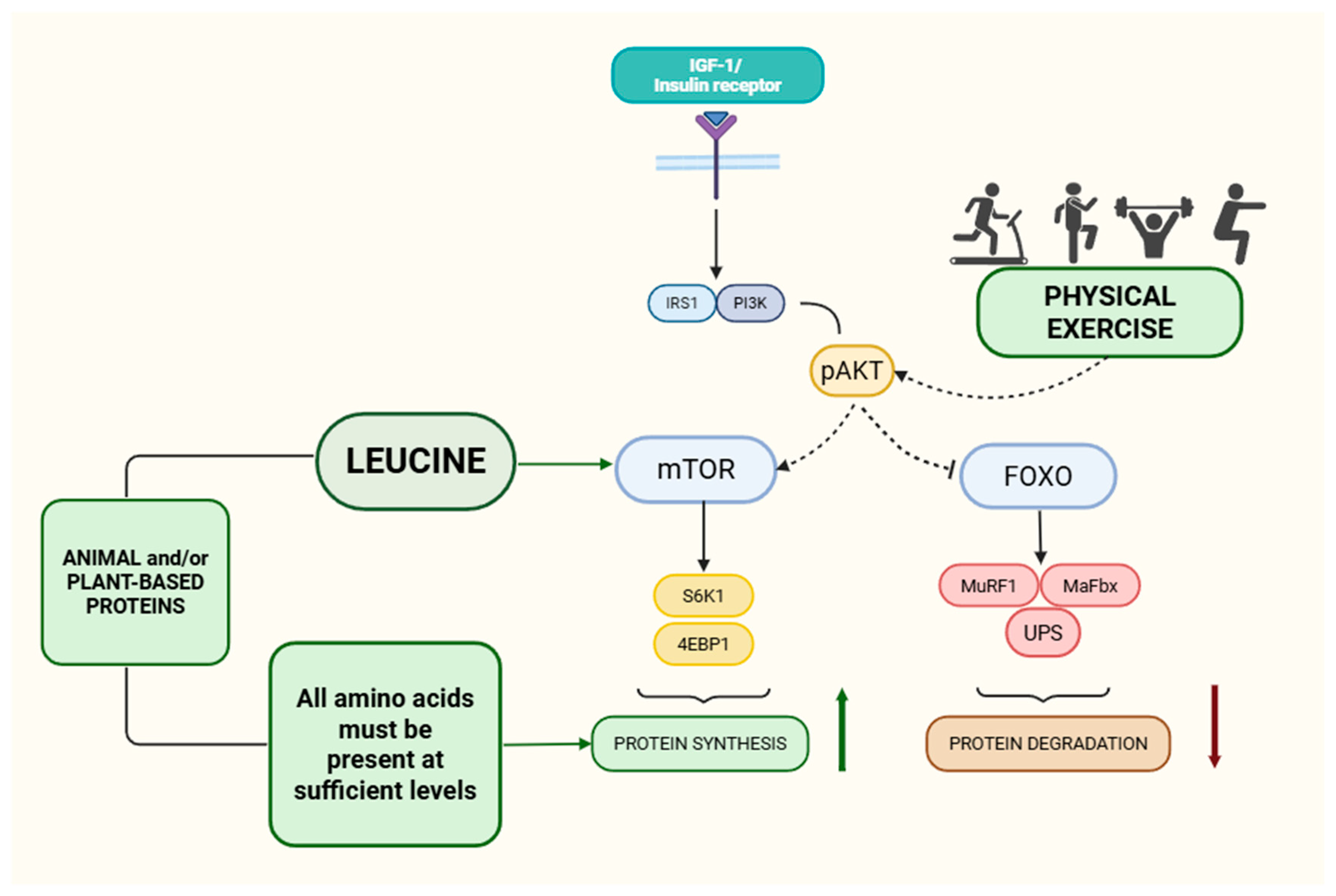
3. Regulation of Muscle Protein Synthesis at Rest and After Exercise in Young and Older Adults
4. Protein Digestion, Absorption and Quality: Animal Versus Plant Sources
5. Acute Muscle Protein Synthetic Responses: Plant Versus Animal-Based Proteins
6. Long-Term Effects of Plant Versus Animal-Based Protein on Muscle Mass and Function
7. Cardiometabolic Health, Environmental Sustainability and Protein Sources
8. Practical Implications and Future Perspectives
9. Conclusions
Author Contributions
Funding
Institutional Review Board Statement
Informed Consent Statement
Data Availability Statement
Conflicts of Interest
Abbreviations
| MPS | Muscle Protein Synthesis |
| EAA | Essential Amino Acid |
| mTORC1 | Mammalian target of Rapamycin Complex 1 |
| PROT-AGE | Protein- Aging Study Group |
| ESPEN | European Society for Clinical Nutrition and Metabolism |
| AMPK | Adenosine 5′-monophosphate -activated protein kinase |
| IGF-1 | Insulin- like Growth Factor 1 |
| IRS-1 | Insulin Receptor Substrate-1 |
| PI3K | Phosphoinositide 3-Kinase |
| p-Akt | Phosphorylated Protein Kinase B |
| FOXO | FOXO, forkhead box O |
| S6K1 | Ribosomal Protein S6 Kinase 1 |
| 4E-BP1 | Eukaryotic Initiation Factor 4E-Binding Protein 1 |
| MURF1 | Muscle RING-Finger Protein-1 |
| MAFbx | Muscle Atrophy F-Box |
| UPS | Ubiquitin–Proteasome System |
| FAO | Food and Agriculture Organization |
| PDCAAS | Protein Digestibility-Corrected Amino Acid Score |
| DIAAS | Digestible Indispensable Amino Acid Score |
| MET | Methionine |
| CYS | Cysteine |
| LDL | Low-Density Lipoprotein |
| HDL | High-Density Lipoprotein |
| EAT | EAT Lancet Diet or Planetary Health Diet |
| CVD | Cardiovascular Disease |
| GHG | Greenhouse Gas |
References
- Paulussen, K.J.M.; McKenna, C.F.; Beals, J.W.; Wilund, K.R.; Salvador, A.F.; Burd, N.A. Anabolic Resistance of Muscle Protein Turnover Comes in Various Shapes and Sizes. Front. Nutr. 2021, 8, 615849. [Google Scholar] [CrossRef] [PubMed] [PubMed Central]
- Moore, D.R. Keeping Older Muscle “Young” through Dietary Protein and Physical Activity. Adv. Nutr. 2014, 5, 599S–607S. [Google Scholar] [CrossRef]
- Biolo, G.; Pišot, R.; Mazzucco, S.; Di Girolamo, F.G.; Situlin, R.; Lazzer, S.; Grassi, B.; Reggiani, C.; Passaro, A.; Rittweger, J.; et al. Anabolic resistance assessed by oral stable isotope ingestion following bed rest in young and older adult volunteers: Relationships with changes in muscle mass. Clin. Nutr. 2017, 36, 1420–1426. [Google Scholar] [CrossRef]
- Biolo, G.; Cederholm, T.; Muscaritoli, M. Muscle contractile and metabolic dysfunction is a common feature of sarcopenia of aging and chronic diseases: From sarcopenic obesity to cachexia. Clin. Nutr. 2014, 33, 737–748. [Google Scholar] [CrossRef] [PubMed]
- Hoffer, L.J.; Bistrian, B.R.; Young, V.R.; Blackburn, G.L.; Matthews, D.E. Metabolic effects of very low calorie weight reduction diets. J. Clin. Investig. 1984, 73, 750–758. [Google Scholar] [CrossRef] [PubMed] [PubMed Central]
- Biolo, G.; Ciocchi, B.; Lebenstedt, M.; Barazzoni, R.; Zanetti, M.; Platen, P.; Heer, M.; Guarnieri, G. Short-term bed rest impairs amino acid-induced protein anabolism in humans. J. Physiol. 2004, 558, 381–388. [Google Scholar] [CrossRef] [PubMed] [PubMed Central]
- Campbell, W.W.; Deutz, N.E.P.; Volpi, E.; Apovian, C.M. Nutritional Interventions: Dietary Protein Needs and Influences on Skeletal Muscle of Older Adults. J. Gerontol. A Biol. Sci. Med. Sci. 2023, 78, 67–72. [Google Scholar] [CrossRef] [PubMed] [PubMed Central]
- Bauer, J.; Biolo, G.; Cederholm, T.; Cesari, M.; Cruz-Jentoft, A.J.; Morley, J.E.; Phillips, S.; Sieber, C.; Stehle, P.; Teta, D.; et al. Evidence-Based Recommendations for Optimal Dietary Protein Intake in Older People: A Position Paper From the PROT-AGE Study Group. J. Am. Med. Dir. Assoc. 2013, 14, 542–559. [Google Scholar] [CrossRef]
- Deutz, N.E.P.; Bauer, J.M.; Barazzoni, R.; Biolo, G.; Boirie, Y.; Bosy-Westphal, A.; Cederholm, T.; Cruz-Jentoft, A.; Krznariç, Z.; Nair, K.S.; et al. Protein intake and exercise for optimal muscle function with aging: Recommendations from the ESPEN Expert Group. Clin. Nutr. 2014, 33, 929–936. [Google Scholar] [CrossRef] [PubMed]
- Tilman, D.; Clark, M. Global diets link environmental sustainability and human health. Nature 2014, 515, 518–522. [Google Scholar] [CrossRef] [PubMed]
- Willett, W.; Rockström, J.; Loken, B.; Springmann, M.; Lang, T.; Vermeulen, S.; Garnett, T.; Tilman, D.; DeClerck, F.; Wood, A.; et al. Food in the Anthropocene: The EAT-Lancet Commission on healthy diets from sustainable food systems. Lancet 2019, 393, 447–492. [Google Scholar] [CrossRef] [PubMed]
- Song, M.; Fung, T.T.; Hu, F.B.; Willett, W.C.; Longo, V.D.; Chan, A.T.; Giovannucci, E.L. Association of Animal and Plant Protein Intake with All-Cause and Cause-Specific Mortality. JAMA Intern. Med. 2016, 176, 1453–1463. [Google Scholar] [CrossRef]
- Huang, J.; Liao, L.M.; Weinstein, S.J.; Sinha, R.; Graubard, B.I.; Albanes, D. Association Between Plant and Animal Protein Intake and Overall and Cause-Specific Mortality. JAMA Intern. Med. 2020, 180, 1173–1184. [Google Scholar] [CrossRef] [PubMed] [PubMed Central]
- Naghshi, S.; Sadeghi, O.; Willett, W.C.; Esmaillzadeh, A. Dietary intake of total, animal, and plant proteins and risk of all cause, cardiovascular, and cancer mortality: Systematic review and dose-response meta-analysis of prospective cohort studies. BMJ 2020, 370, m2412. [Google Scholar] [CrossRef] [PubMed] [PubMed Central]
- Glenn, A.J.; Wang, F.; Tessier, A.-J.; Manson, J.E.; Rimm, E.B.; Mukamal, K.J.; Sun, Q.; Willett, W.C.; Rexrode, K.M.; Jenkins, D.J.; et al. Dietary plant-to-animal protein ratio and risk of cardiovascular disease in 3 prospective cohorts. Am. J. Clin. Nutr. 2024, 120, 1373–1386. [Google Scholar] [CrossRef] [PubMed] [PubMed Central]
- Merlo, M.; Hennessy, T.; Buckley, C.; O’Mahony, J. A comparison of animal and plant-based proteins from an economic, environmental, and nutritional perspective in the Republic of Ireland. Agric. Syst. 2024, 221, 104143. [Google Scholar] [CrossRef]
- FAO. Dietary Protein Quality Evaluation in Human Nutrition. 2013. Available online: https://openknowledge.fao.org/handle/20.500.14283/i3124e (accessed on 9 February 2026).
- van Vliet, S.; Burd, N.A.; van Loon, L.J.C. The Skeletal Muscle Anabolic Response to Plant- versus Animal-Based Protein Consumption. J. Nutr. 2015, 145, 1981–1991. [Google Scholar] [CrossRef] [PubMed]
- Xipsiti, M. Protein quality evaluation: FAO perspective. Front. Nutr. 2024, 11, 1446879. [Google Scholar] [CrossRef] [PubMed] [PubMed Central]
- Katsanos, C.S.; Kobayashi, H.; Sheffield-Moore, M.; Aarsland, A.; Wolfe, R.R. A high proportion of leucine is required for optimal stimulation of the rate of muscle protein synthesis by essential amino acids in the elderly. Am. J. Physiol. Endocrinol. Metab. 2006, 291, E381–E387. [Google Scholar] [CrossRef] [PubMed]
- Zaromskyte, G.; Prokopidis, K.; Ioannidis, T.; Tipton, K.D.; Witard, O.C. Evaluating the Leucine Trigger Hypothesis to Explain the Post-prandial Regulation of Muscle Protein Synthesis in Young and Older Adults: A Systematic Review. Front. Nutr. 2021, 8, 685165. [Google Scholar] [CrossRef] [PubMed] [PubMed Central]
- Casperson, S.L.; Sheffield-Moore, M.; Hewlings, S.J.; Paddon-Jones, D. Leucine supplementation chronically improves muscle protein synthesis in older adults consuming the RDA for protein. Clin. Nutr. 2012, 31, 512–519. [Google Scholar] [CrossRef] [PubMed] [PubMed Central]
- Churchward-Venne, T.A.; Burd, N.A.; Mitchell, C.J.; West, D.W.D.; Philp, A.; Marcotte, G.R.; Baker, S.K.; Baar, K.; Phillips, S.M. Supplementation of a suboptimal protein dose with leucine or essential amino acids: Effects on myofibrillar protein synthesis at rest and following resistance exercise in men. J. Physiol. 2012, 590, 2751–2765. [Google Scholar] [CrossRef] [PubMed] [PubMed Central]
- Burd, N.A.; West, D.W.D.; Moore, D.R.; Atherton, P.J.; Staples, A.W.; Prior, T.; Tang, J.E.; Rennie, M.J.; Baker, S.K.; Phillips, S.M. Enhanced amino acid sensitivity of myofibrillar protein synthesis persists for up to 24 h after resistance exercise in young men. J. Nutr. 2011, 141, 568–573. [Google Scholar] [CrossRef] [PubMed]
- Moore, D.R.; Robinson, M.J.; Fry, J.L.; Tang, J.E.; Glover, E.I.; Wilkinson, S.B.; Prior, T.; Tarnopolsky, M.A.; Phillips, S.M. Ingested protein dose response of muscle and albumin protein synthesis after resistance exercise in young men. Am. J. Clin. Nutr. 2009, 89, 161–168. [Google Scholar] [CrossRef] [PubMed]
- Atherton, P.J.; Smith, K. Muscle protein synthesis in response to nutrition and exercise. J. Physiol. 2012, 590, 1049–1057. [Google Scholar] [CrossRef] [PubMed] [PubMed Central]
- Biolo, G.; Tipton, K.D.; Klein, S.; Wolfe, R.R. An abundant supply of amino acids enhances the metabolic effect of exercise on muscle protein. Am. J. Physiol. 1997, 273, E122–E129. [Google Scholar] [CrossRef] [PubMed]
- Biolo, G.; Williams, B.D.; Fleming, R.Y.; Wolfe, R.R. Insulin action on muscle protein kinetics and amino acid transport during recovery after resistance exercise. Diabetes 1999, 48, 949–957. [Google Scholar] [CrossRef] [PubMed]
- Koopman, R.; Beelen, M.; Stellingwerff, T.; Pennings, B.; Saris, W.H.M.; Kies, A.K.; Kuipers, H.; van Loon, L.J.C. Coingestion of carbohydrate with protein does not further augment postexercise muscle protein synthesis. Am. J. Physiol. Endocrinol. Metab. 2007, 293, E833–E842. [Google Scholar] [CrossRef] [PubMed]
- Groen, B.B.L.; Horstman, A.M.H.; Hamer, H.M.; de Haan, M.; van Kranenburg, J.; Bierau, J.; Poeze, M.; Wodzig, W.K.W.H.; Rasmussen, B.B.; van Loon, L.J.C. Increasing Insulin Availability Does Not Augment Postprandial Muscle Protein Synthesis Rates in Healthy Young and Older Men. J. Clin. Endocrinol. Metab. 2016, 101, 3978–3988. [Google Scholar] [CrossRef] [PubMed]
- Di Donato, D.M.; West, D.W.D.; Churchward-Venne, T.A.; Breen, L.; Baker, S.K.; Phillips, S.M. Influence of aerobic exercise intensity on myofibrillar and mitochondrial protein synthesis in young men during early and late postexercise recovery. Am. J. Physiol. Endocrinol. Metab. 2014, 306, E1025–E1032. [Google Scholar] [CrossRef] [PubMed] [PubMed Central]
- Sjøberg, K.A.; Frøsig, C.; Kjøbsted, R.; Sylow, L.; Kleinert, M.; Betik, A.C.; Shaw, C.S.; Kiens, B.; Wojtaszewski, J.F.P.; Rattigan, S.; et al. Exercise Increases Human Skeletal Muscle Insulin Sensitivity via Coordinated Increases in Microvascular Perfusion and Molecular Signaling. Diabetes 2017, 66, 1501–1510. [Google Scholar] [CrossRef] [PubMed]
- Areta, J.L.; Burke, L.M.; Ross, M.L.; Camera, D.M.; West, D.W.D.; Broad, E.M.; Jeacocke, N.A.; Moore, D.R.; Stellingwerff, T.; Phillips, S.M.; et al. Timing and distribution of protein ingestion during prolonged recovery from resistance exercise alters myofibrillar protein synthesis. J. Physiol. 2013, 591, 2319–2331. [Google Scholar] [CrossRef] [PubMed] [PubMed Central]
- Fyfe, J.J.; Bishop, D.J.; Stepto, N.K. Interference between concurrent resistance and endurance exercise: Molecular bases and the role of individual training variables. Sports Med. 2014, 44, 743–762. [Google Scholar] [CrossRef] [PubMed]
- Donges, C.E.; Burd, N.A.; Duffield, R.; Smith, G.C.; West, D.W.D.; Short, M.J.; Mackenzie, R.; Plank, L.D.; Shepherd, P.R.; Phillips, S.M.; et al. Concurrent resistance and aerobic exercise stimulates both myofibrillar and mitochondrial protein synthesis in sedentary middle-aged men. J. Appl. Physiol. 2012, 112, 1992–2001. [Google Scholar] [CrossRef] [PubMed]
- Ely, I.A.; Phillips, B.E.; Smith, K.; Wilkinson, D.J.; Piasecki, M.; Breen, L.; Larsen, M.S.; Atherton, P.J. A focus on leucine in the nutritional regulation of human skeletal muscle metabolism in ageing, exercise and unloading states. Clin. Nutr. 2023, 42, 1849–1865. [Google Scholar] [CrossRef] [PubMed]
- Kitajima, Y.; Yoshioka, K.; Suzuki, N. The ubiquitin-proteasome system in regulation of the skeletal muscle homeostasis and atrophy: From basic science to disorders. J. Physiol. Sci. 2020, 70, 40. [Google Scholar] [CrossRef] [PubMed] [PubMed Central]
- Wackerhage, H.; Schoenfeld, B.J.; Hamilton, D.L.; Lehti, M.; Hulmi, J.J. Stimuli and sensors that initiate skeletal muscle hypertrophy following resistance exercise. J. Appl. Physiol. 2019, 126, 30–43. [Google Scholar] [CrossRef] [PubMed]
- Trommelen, J.; Betz, M.W.; van Loon, L.J.C. The Muscle Protein Synthetic Response to Meal Ingestion Following Resistance-Type Exercise. Sports Med. 2019, 49, 185–197. [Google Scholar] [CrossRef] [PubMed]
- Pinckaers, P.J.M.; Trommelen, J.; Snijders, T.; van Loon, L.J.C. The Anabolic Response to Plant-Based Protein Ingestion. Sports Med. 2021, 51, 59–74. [Google Scholar] [CrossRef] [PubMed] [PubMed Central]
- Gorissen, S.H.M.; Trommelen, J.; Kouw, I.W.K.; Holwerda, A.M.; Pennings, B.; Groen, B.B.L.; Wall, B.T.; Churchward-Venne, T.A.; Horstman, A.M.H.; Koopman, R.; et al. Protein Type, Protein Dose, and Age Modulate Dietary Protein Digestion and Phenylalanine Absorption Kinetics and Plasma Phenylalanine Availability in Humans. J. Nutr. 2020, 150, 2041–2050. [Google Scholar] [CrossRef] [PubMed] [PubMed Central]
- Li, C.-Y.; Fang, A.-P.; Ma, W.-J.; Wu, S.-L.; Li, C.-L.; Chen, Y.-M.; Zhu, H.-L. Amount Rather than Animal vs Plant Protein Intake Is Associated with Skeletal Muscle Mass in Community-Dwelling Middle-Aged and Older Chinese Adults: Results from the Guangzhou Nutrition and Health Study. J. Acad. Nutr. Diet. 2019, 119, 1501–1510. [Google Scholar] [CrossRef] [PubMed]
- Istfan, N.; Murray, E.; Janghorbani, M.; Evans, W.J.; Young, V.R. The nutritional value of a soy protein concentrate (STAPRO-3200) for long-term protein nutritional maintenance in young men. J. Nutr. 1983, 113, 2524–2534. [Google Scholar] [CrossRef] [PubMed]
- Messina, M.; Lynch, H.; Dickinson, J.M.; Reed, K.E. No Difference Between the Effects of Supplementing with Soy Protein Versus Animal Protein on Gains in Muscle Mass and Strength in Response to Resistance Exercise. Int. J. Sport Nutr. Exerc. Metab. 2018, 28, 674–685. [Google Scholar] [CrossRef] [PubMed]
- Tang, J.E.; Moore, D.R.; Kujbida, G.W.; Tarnopolsky, M.A.; Phillips, S.M. Ingestion of whey hydrolysate, casein, or soy protein isolate: Effects on mixed muscle protein synthesis at rest and following resistance exercise in young men. J. Appl. Physiol. 2009, 107, 987–992. [Google Scholar] [CrossRef] [PubMed]
- Honnens De Lichtenberg Broge, E.; Wendin, K.; Rasmussen, M.A.; Bredie, W.L.P. Changes in perception and liking for everyday food odors among older adults. Food Qual. Prefer. 2021, 93, 104254. [Google Scholar] [CrossRef]
- Fluitman, K.S.; Hesp, A.C.; Kaihatu, R.F.; Nieuwdorp, M.; Keijser, B.J.F.; Ijzerman, R.G.; Visser, M. Poor Taste and Smell Are Associated with Poor Appetite, Macronutrient Intake, and Dietary Quality but Not with Undernutrition in Older Adults. J. Nutr. 2021, 151, 605–614. [Google Scholar] [CrossRef]
- Schiffman, S.; Graham, B.G. Taste and smell perception affect appetite and immunity in the elderly. Eur. J. Clin. Nutr. 2000, 54, S54–S63. [Google Scholar] [CrossRef] [PubMed]
- Sergi, G.; Bano, G.; Pizzato, S.; Veronese, N.; Manzato, E. Taste loss in the elderly: Possible implications for dietary habits. Crit. Rev. Food Sci. Nutr. 2017, 57, 3684–3689. [Google Scholar] [CrossRef] [PubMed]
- Gorissen, S.H.M.; Crombag, J.J.R.; Senden, J.M.G.; Waterval, W.A.H.; Bierau, J.; Verdijk, L.B.; van Loon, L.J.C. Protein content and amino acid composition of commercially available plant-based protein isolates. Amino Acids 2018, 50, 1685–1695. [Google Scholar] [CrossRef] [PubMed] [PubMed Central]
- Wolfe, R.R. Branched-chain amino acids and muscle protein synthesis in humans: Myth or reality? J. Int. Soc. Sports Nutr. 2017, 14, 30. [Google Scholar] [CrossRef] [PubMed] [PubMed Central]
- Mathai, J.K.; Liu, Y.; Stein, H.H. Values for digestible indispensable amino acid scores (DIAAS) for some dairy and plant proteins may better describe protein quality than values calculated using the concept for protein digestibility-corrected amino acid scores (PDCAAS). Br. J. Nutr. 2017, 117, 490–499. [Google Scholar] [CrossRef] [PubMed]
- Moore, D.R.; Churchward-Venne, T.A.; Witard, O.; Breen, L.; Burd, N.A.; Tipton, K.D.; Phillips, S.M. Protein ingestion to stimulate myofibrillar protein synthesis requires greater relative protein intakes in healthy older versus younger men. J. Gerontol. A Biol. Sci. Med. Sci. 2015, 70, 57–62. [Google Scholar] [CrossRef] [PubMed]
- Breen, L.; Phillips, S.M. Skeletal muscle protein metabolism in the elderly: Interventions to counteract the ‘anabolic resistance’ of ageing. Nutr. Metab. 2011, 8, 68. [Google Scholar] [CrossRef] [PubMed] [PubMed Central]
- Witard, O.C.; Jackman, S.R.; Breen, L.; Smith, K.; Selby, A.; Tipton, K.D. Myofibrillar muscle protein synthesis rates subsequent to a meal in response to increasing doses of whey protein at rest and after resistance exercise. Am. J. Clin. Nutr. 2014, 99, 86–95. [Google Scholar] [CrossRef] [PubMed]
- Mamerow, M.M.; Mettler, J.A.; English, K.L.; Casperson, S.L.; Arentson-Lantz, E.; Sheffield-Moore, M.; Layman, D.K.; Paddon-Jones, D. Dietary protein distribution positively influences 24-h muscle protein synthesis in healthy adults. J. Nutr. 2014, 144, 876–880. [Google Scholar] [CrossRef] [PubMed] [PubMed Central]
- Young, V.R.; Pellett, P.L. Plant proteins in relation to human protein and amino acid nutrition. Am. J. Clin. Nutr. 1994, 59, 1203S–1212S. [Google Scholar] [CrossRef] [PubMed]
- Houston, D.K.; Nicklas, B.J.; Ding, J.; Harris, T.B.; Tylavsky, F.A.; Newman, A.B.; Lee, J.S.; Sahyoun, N.R.; Visser, M.; Kritchevsky, S.B.; et al. Dietary protein intake is associated with lean mass change in older, community-dwelling adults: The Health, Aging, and Body Composition (Health ABC) Study. Am. J. Clin. Nutr. 2008, 87, 150–155. [Google Scholar] [CrossRef]
- Boye, J.; Wijesinha-Bettoni, R.; Burlingame, B. Protein quality evaluation twenty years after the introduction of the protein digestibility corrected amino acid score method. Br. J. Nutr. 2012, 108, S183–S211. [Google Scholar] [CrossRef] [PubMed]
- Herreman, L.; Nommensen, P.; Pennings, B.; Laus, M.C. Comprehensive overview of the quality of plant- And animal-sourced proteins based on the digestible indispensable amino acid score. Food Sci. Nutr. 2020, 8, 5379–5391. [Google Scholar] [CrossRef] [PubMed] [PubMed Central]
- Rutherfurd, S.M.; Fanning, A.C.; Miller, B.J.; Moughan, P.J. Protein digestibility-corrected amino acid scores and digestible indispensable amino acid scores differentially describe protein quality in growing male rats. J. Nutr. 2015, 145, 372–379. [Google Scholar] [CrossRef] [PubMed]
- Fanelli, N.S.; Bailey, H.M.; Guardiola, L.V.; Stein, H.H. Values for Digestible Indispensable Amino Acid Score (DIAAS) Determined in Pigs Are Greater for Milk Than for Breakfast Cereals, but DIAAS Values for Individual Ingredients Are Additive in Combined Meals. J. Nutr. 2021, 151, 540–547. [Google Scholar] [CrossRef] [PubMed]
- Cervantes-Pahm, S.K.; Liu, Y.; Stein, H.H. Digestible indispensable amino acid score and digestible amino acids in eight cereal grains. Br. J. Nutr. 2014, 111, 1663–1672. [Google Scholar] [CrossRef] [PubMed]
- Hall, C.; Hillen, C.; Garden Robinson, J. Composition, Nutritional Value, and Health Benefits of Pulses. Cereal Chem. 2017, 94, 11–31. [Google Scholar] [CrossRef]
- Ajomiwe, N.; Boland, M.; Phongthai, S.; Bagiyal, M.; Singh, J.; Kaur, L. Protein Nutrition: Understanding Structure, Digestibility, and Bioavailability for Optimal Health. Foods 2024, 13, 1771. [Google Scholar] [CrossRef] [PubMed] [PubMed Central]
- Boirie, Y.; Dangin, M.; Gachon, P.; Vasson, M.-P.; Maubois, J.-L.; Beaufrère, B. Slow and fast dietary proteins differently modulate postprandial protein accretion. Proc. Natl. Acad. Sci. USA 1997, 94, 14930–14935. [Google Scholar] [CrossRef] [PubMed] [PubMed Central]
- Wilkinson, S.B.; Tarnopolsky, M.A.; MacDonald, M.J.; Macdonald, J.R.; Armstrong, D.; Phillips, S.M. Consumption of fluid skim milk promotes greater muscle protein accretion after resistance exercise than does consumption of an isonitrogenous and isoenergetic soy-protein beverage. Am. J. Clin. Nutr. 2007, 85, 1031–1040. [Google Scholar] [CrossRef] [PubMed]
- Van Der Heijden, I.; Monteyne, A.J.; West, S.; Morton, J.P.; Langan-Evans, C.; Hearris, M.A.; Abdelrahman, D.R.; Murton, A.J.; Stephens, F.B.; Wall, B.T. Plant Protein Blend Ingestion Stimulates Postexercise Myofibrillar Protein Synthesis Rates Equivalently to Whey in Resistance-Trained Adults. Med. Sci. Sports Exerc. 2024, 56, 1467–1479. [Google Scholar] [CrossRef] [PubMed] [PubMed Central]
- Pinckaers, P.J.M.; Kouw, I.W.K.; Hendriks, F.K.; van Kranenburg, J.M.; de Groot, L.C.; Verdijk, L.B.; Snijders, T.; van Loon, L.J. No differences in muscle protein synthesis rates following ingestion of wheat protein, milk protein, and their protein blend in healthy, young males. Br. J. Nutr. 2021, 126, 1832–1842. [Google Scholar] [CrossRef] [PubMed]
- Pinckaers, P.J.M.; Kouw, I.W.K.; Gorissen, S.H.M.; Houben, L.H.P.; Senden, J.M.; Wodzig, W.K.H.W.; de Groot, L.C.P.G.M.; Verdijk, L.B.; Snijders, T.; van Loon, L.J.C. The Muscle Protein Synthetic Response to the Ingestion of a Plant-based Protein Blend Does Not Differ from an Equivalent Amount of Milk Protein in Healthy Young Males. J. Nutr. 2023, 152, 2734–2743. [Google Scholar] [CrossRef] [PubMed] [PubMed Central]
- Lim, C.; Janssen, T.A.H.; Currier, B.S.; Paramanantharajah, N.; McKendry, J.; Abou Sawan, S.A.; Phillips, S.M. Muscle Protein Synthesis in Response to Plant-Based Protein Isolates with and Without Added Leucine Versus Whey Protein in Young Men and Women. Curr. Dev. Nutr. 2024, 8, 103769. [Google Scholar] [CrossRef] [PubMed] [PubMed Central]
- Yang, Y.; Churchward-Venne, T.A.; Burd, N.A.; Breen, L.; Tarnopolsky, M.A.; Phillips, S.M. Myofibrillar protein synthesis following ingestion of soy protein isolate at rest and after resistance exercise in elderly men. Nutr. Metab. 2012, 9, 57. [Google Scholar] [CrossRef] [PubMed] [PubMed Central]
- Gorissen, S.H.; Horstman, A.M.; Franssen, R.; Crombag, J.J.; Langer, H.; Bierau, J.; Respondek, F.; van Loon, L.J. Ingestion of Wheat Protein Increases In Vivo Muscle Protein Synthesis Rates in Healthy Older Men in a Randomized Trial. J. Nutr. 2016, 146, 1651–1659. [Google Scholar] [CrossRef] [PubMed]
- Domić, J.; Pinckaers, P.J.; Grootswagers, P.; Siebelink, E.; Gerdessen, J.C.; van Loon, L.J.; de Groot, L.C. A Well-Balanced Vegan Diet Does not Compromise Daily Mixed Muscle Protein Synthesis Rates when Compared with an Omnivorous Diet in Active Older Adults: A Randomized Controlled Cross-Over Trial. J. Nutr. 2025, 155, 1141–1150. [Google Scholar] [CrossRef] [PubMed]
- Hartman, J.W.; Tang, J.E.; Wilkinson, S.B.; Tarnopolsky, M.A.; Lawrence, R.L.; Fullerton, A.V.; Phillips, S.M. Consumption of fat-free fluid milk after resistance exercise promotes greater lean mass accretion than does consumption of soy or carbohydrate in young, novice, male weightlifters. Am. J. Clin. Nutr. 2007, 86, 373–381. [Google Scholar] [CrossRef] [PubMed]
- Chen, S.; Lin, X.; Ma, J.; Li, M.; Chen, Y.; Fang, A.-P.; Zhu, H.-L. Dietary protein intake and changes in muscle mass measurements in community-dwelling middle-aged and older adults: A prospective cohort study. Clin. Nutr. 2023, 42, 2503–2511. [Google Scholar] [CrossRef] [PubMed]
- Niklewicz, A.; Hannibal, L.; Warren, M.; Ahmadi, K.R. A systematic review and meta-analysis of functional vitamin B12 status among adult vegans. Nutr. Bull. 2024, 49, 463–479. [Google Scholar] [CrossRef] [PubMed]
- Kaviani, M.; Shaw, K.; Chilibeck, P.D. Benefits of Creatine Supplementation for Vegetarians Compared to Omnivorous Athletes: A Systematic Review. Int. J. Environ. Res. Public Health 2020, 17, 3041. [Google Scholar] [CrossRef]
- Blancquaert, L.; Baguet, A.; Bex, T.; Volkaert, A.; Everaert, I.; Delanghe, J.; Petrovic, M.; Vervaet, C.; De Henauw, S.; Constantin-Teodosiu, D.; et al. Changing to a vegetarian diet reduces the body creatine pool in omnivorous women, but appears not to affect carnitine and carnosine homeostasis: A randomised trial. Br. J. Nutr. 2018, 119, 759–770. [Google Scholar] [CrossRef] [PubMed]
- Lee, Y.Q.; Chia, A.; Sim, X.; van Dam, R.M.; Chong, M.F.-F. Substituting animal protein foods with plant protein foods influences vitamin B12 and folate statuses in a multiethnic Asian population. Eur. J. Nutr. 2025, 64, 294. [Google Scholar] [CrossRef] [PubMed]


| Protein Source | Origin | Approx. Digestibility | Relative Absorption Speed | Typical DIAAS | Limiting Indispensable AA | Protein Density (g/100 Food g %) | Approx. Leucine Content (g/100 g Protein %) | Note |
|---|---|---|---|---|---|---|---|---|
| Whey protein isolate (powder) | Animal | 95–99% | Fast | ≈1.09 | None | ≈85–90 | ≈11–12 | Very high-quality, leucine-rich “fast” protein. |
| Casein/caseinate (powder) | Animal | 95–98% | Slow | ≈1.2–1.3 | None | ≈85–90 | ≈8–9 | “Slow” protein; sustained AA and leucine release. |
| Cow’s milk (whole/skim) | Animal | 95–97% | Mixed (fast + slow) | ≈1.10–1.18 | None | ≈3–4 | ≈9–10 | 80% casein, 20% whey: high leucine fraction. |
| Yogurt/fermented milk | Animal | 95–97% | Intermediate | ≈1.0–1.1 | None | ≈5–10 | ≈9–10 | Similar AA profile to milk; density depends on style (regular vs. Greek). |
| Egg (whole, cooked) | Animal | 95–98% | Intermediate | ≈1.10–1.13 | None | ≈12–13 | ≈8–9 | Classical reference protein; good leucine density. |
| Lean meat (beef, pork, lamb) | Animal | 90–97% | Intermediate–slow | ≈1.10–1.20 | None | ≈20–25 | ≈7–8 | High-quality protein; leucine usually ~7–8% of protein. |
| Poultry (chicken, turkey) | Animal | 90–97% | Intermediate | ≈1.05–1.10 | None | ≈22–24 | ≈8–9 | Skinless breasts are particularly leucine dense. |
| Fish (white fish, tuna) | Animal | 90–97% | Intermediate | ≈1.0–1.1 | None | ≈20–24 | ≈8–9 | Easily digested, good leucine fraction. |
| Soy protein isolate | Plant | 90–97% | Intermediate | ≈0.90 | Met + Cys | ≈80–90 | ≈7.5–8.5 | Most “animal-like” plant-based protein; good leucine, sulfur AAs limiting. |
| Tofu/tempeh (cooked) | Plant | 85–95% | Intermediate –slow | ≈0.90–0.97 | Met + Cys | ≈8–12 (tofu), 18–20 (tempeh) | ≈7.5–8.5 | Same AA pattern as soy; density depends on water content. |
| Pea protein isolate (powder) | Plant | 90–97% | Intermediate –fast | ≈0.82–1.00 | Met + Cys | ≈75–85 | ≈7.5–8.5 | Good-quality plant-based protein; leucine moderate–high. |
| Whole lentils/beans/chickpeas (cooked) | Plant | 80–90% | Slow | ≈0.55–0.85 | Met + Cys | ≈7–9 | ≈7–8 | Typical legume pattern: leucine adequate, sulfur AAs limiting. |
| Whole grains (wheat, oats, rice; cooked) | Plant | 70–90% | Slow | ≈0.40–0.60 | Lysine | ≈2–5 | ≈6–7 | Leucine is generally sufficient relative to needs; lysine is limiting. |
| Nuts and seeds (almonds, peanuts, etc.) | Plant | 70–85% | Slow | ≈0.40–0.45 | Lysine | ≈15–25 | ≈7–9 | Energy-dense; moderate protein and leucine density. |
| Anabolic Efficiency ↔ Sustainability A Multi-Level Framework for Protein Nutrition | |
|---|---|
| Moderators | |
| 1. MEAL—LEVEL Acute MPS optimization → Maximizes anabolic efficiency per meal
|
|
| ↓ | |
| 2. DAILY INTAKE LEVEL Total Protein Sufficiency → Compensates for lower protein quality
| |
| ↓ | |
| 3. DIETARY PATTERN LEVEL Sustainability Integration → Prioritizes sustainability and long-term health
| |
| ↓ | |
| 4. LONG-TERM OUTCOMES When intake and training are adequate
| |
| Each level builds on the one above. Moderators (right) apply across all levels. | |
| Domain | Animal-Based Protein | Plant-Based Protein |
| Recommendation for protein intake | Supports achievement of recommended intakes (≥1.0–1.2 g/kg/day; ≥1.2–1.5 g/kg/day in illness) with lower food volume | Can meet recommended intakes when total protein intake is adequate and meals are appropriately planned |
| Per-meal protein distribution | Facilitates achievement of ~0.4 g/kg/meal and sufficient leucine content (~2.5–3 g/meal) | Comparable per-meal targets apply; may require higher protein doses, protein blending, or leucine fortification |
| Protein quality and digestibility | Generally high digestibility and favorable indispensable amino acid profile | Lower digestibility and limiting amino acids; quality improves with complementary protein sources and fortification |
| Muscle protein synthesis | Effectively stimulates postprandial muscle protein synthesis at moderate doses | Comparable stimulation achievable with higher doses and/or leucine or EAA enrichment |
| Muscle mass and function | Effective for maintenance of muscle mass and function | Similar long-term outcomes when total intake and resistance exercise are sufficient |
| Cardiometabolic health | Health effects depend on protein source and overall dietary pattern | Diets emphasizing plant-based protein sources are associated with favorable cardiometabolic outcomes |
| Environmental sustainability | Higher environmental footprint | Lower environmental footprint |
| Clinical and practical application | Particularly useful in frail, sarcopenic, or acutely ill individuals with low appetite or energy intake | Appropriate for older adults, provided protein quantity, amino acid adequacy, and physical activity are ensured |
Disclaimer/Publisher’s Note: The statements, opinions and data contained in all publications are solely those of the individual author(s) and contributor(s) and not of MDPI and/or the editor(s). MDPI and/or the editor(s) disclaim responsibility for any injury to people or property resulting from any ideas, methods, instructions or products referred to in the content. |
© 2026 by the authors. Licensee MDPI, Basel, Switzerland. This article is an open access article distributed under the terms and conditions of the Creative Commons Attribution (CC BY) license.
Share and Cite
Cannito, T.; Ivetac, A.; Fiotti, N.; Mearelli, F.; Di Bella, S.; Girolamo, F.G.D.; Biolo, G. Sustaining Muscle, Cardiovascular Health, and the Environment: Is Plant-Based Protein the Key? Nutrients 2026, 18, 1446. https://doi.org/10.3390/nu18091446
Cannito T, Ivetac A, Fiotti N, Mearelli F, Di Bella S, Girolamo FGD, Biolo G. Sustaining Muscle, Cardiovascular Health, and the Environment: Is Plant-Based Protein the Key? Nutrients. 2026; 18(9):1446. https://doi.org/10.3390/nu18091446
Chicago/Turabian StyleCannito, Teresa, Alja Ivetac, Nicola Fiotti, Filippo Mearelli, Stefano Di Bella, Filippo Giorgio Di Girolamo, and Gianni Biolo. 2026. "Sustaining Muscle, Cardiovascular Health, and the Environment: Is Plant-Based Protein the Key?" Nutrients 18, no. 9: 1446. https://doi.org/10.3390/nu18091446
APA StyleCannito, T., Ivetac, A., Fiotti, N., Mearelli, F., Di Bella, S., Girolamo, F. G. D., & Biolo, G. (2026). Sustaining Muscle, Cardiovascular Health, and the Environment: Is Plant-Based Protein the Key? Nutrients, 18(9), 1446. https://doi.org/10.3390/nu18091446