Article

Ultra-Processed Food Intake Is Not Associated with Systemic Inflammation in People with HIV

by
Ziad Koberssy
1,
Aaron A. Fletcher
1,
Joviane Daher
1,
Jennifer E. Murphy
2,
Jhony Baissary
1,
Ornina Atieh
1,
Kate Ailstock
3,
Morgan Cummings
3,
Nicholas T. Funderburg
3 and
Grace A. McComsey
1,2,*
1
School of Medicine, Case Western Reserve University, Cleveland, OH 44106, USA
2
Clinical Research Center, University Hospitals Cleveland Medical Center, Cleveland, OH 44106, USA
3
Division of Medical Laboratory Science, School of Health and Rehabilitation Sciences, The Ohio State University, Columbus, OH 43210, USA
*
Author to whom correspondence should be addressed.
Nutrients 2026, 18(8), 1211; https://doi.org/10.3390/nu18081211
Submission received: 17 March 2026 / Revised: 3 April 2026 / Accepted: 9 April 2026 / Published: 11 April 2026
(This article belongs to the Section Nutritional Immunology)

Abstract

Background/Objectives: People with HIV (PWH) remain at high risk for cardiovascular and metabolic complications despite effective antiretroviral therapy (ART). Diet quality is an important modifiable factor that may influence these complications. Diets high in ultra-processed foods (UPF) have been linked to adverse metabolic and inflammatory profiles in the general population, but their impact on PWH remains poorly understood. The NOVA 4 classification categorizes foods by degree of processing, from unprocessed/minimally processed (NOVA 1) to UPF (NOVA 4). Methods: We conducted a cross-sectional study of adults with virologically suppressed HIV on stable ART. Assessments included dietary intake consisting of 24 h recalls analyzed with Nutrition Data System for Research software (NDSR) and classified into NOVA categories by a registered dietitian and the following characteristics: body composition (total and regional fat by DEXA and CT scan abdomen), cardiometabolic variables (glucose, HbA1C, HOMA-IR, lipids, blood pressure), and biomarkers of inflammation, immune activation, and gut integrity quantified by ELISA. Patients were stratified into NOVA 4 groups based on the median and quartile proportions of total energy intake from NOVA 4 foods. Associations between dietary NOVA and outcomes were analyzed using generalized additive models (GAMs) adjusted for age, sex, race, and CD4 count. Results: Among 222 PWH (mean age 45.4 ± 14.2 years; 31% female; 66% non-white; BMI 30.61 ± 7.91 kg/m2), median NOVA 4 intake was 45.6% of total energy intake. Participants with higher vs. lower NOVA 4 intake showed differences in diet quality, but in GAMs, higher NOVA 4 intake was not associated with higher levels of inflammatory, cardiometabolic, gut integrity, and body composition variables. Conclusions: In PWH, UPF consumption was high but not associated with markers of cardiometabolic health, systemic inflammation, or gut integrity. This may reflect the multifactorial nature of the heightened inflammation in PWH, potentially obscuring the effect of diet.

1. Introduction

People living with Human Immunodeficiency Virus (HIV) (PWH) are experiencing increased longevity due to widespread access to modern, effective antiretroviral therapy (ART). However, this improvement in life expectancy has been accompanied by a persistently elevated burden of cardiovascular disease (CVD) compared with the general population. The mechanisms underlying this excess risk are multifactorial and include traditional cardiovascular risk factors, chronic immune activation and systemic inflammation, adverse metabolic effects of ART, and broader social and structural determinants of health [1,2]. Persistent inflammation, even in the setting of virologic suppression, is recognized as a central driver of cardiometabolic morbidity in PWH.
In this context, increasing attention has been directed toward modifiable risk factors in PWH, including dietary intake and overall diet quality. Diet is a key determinant of cardiometabolic health, and in recent years, the role of ultra-processed foods (UPF) has garnered growing interest. UPF are industrially manufactured products formulated from refined food components, additives, and processing aids, designed to enhance palatability, convenience, and shelf stability [3]. To characterize dietary intake beyond nutrient composition alone, several food and beverages classification systems have been proposed and developed, but the most extensively used system is the NOVA classification system [4], which categorizes foods into four groups according to their degree of industrial processing, ranging from unprocessed or minimally processed foods (group 1) to ultra-processed foods (group 4) [5].
Contemporary dietary patterns have increasingly shifted toward ready-to-eat and convenience foods, with UPF now accounting for a substantial proportion of total energy intake in many populations. High UPF consumption has been consistently associated with adverse health outcomes in the general population, including increased risk of cardiovascular events, metabolic dysfunction, and all-cause mortality [3,6,7]. Several biological mechanisms have been proposed to explain these associations, including disruption of the gut microbiome, impaired gut barrier integrity, altered satiety signaling, hormonal dysregulation, and exposure to food additives [8]. These pathways may promote chronic inflammation, oxidative stress, and endothelial dysfunction, leading to atherogenesis and CVD.
Despite growing evidence in HIV-uninfected populations, data examining the relationship between UPF intake and inflammation in PWH remains limited. Existing dietary studies in HIV have largely relied on nutrient-based analyses or composite diet quality indices, which may not fully capture the health effects of food processing. The NOVA framework offers a complementary approach by focusing on the degree of industrial processing, thereby capturing dietary exposures not reflected in traditional nutritional metrics.
Although few studies have directly evaluated UPF consumption in PWH, available evidence suggests that diet quality in this population is frequently suboptimal, with a substantial proportion classified as having “poor” or “suboptimal” dietary patterns [9]. Given the convergence of persistent immune activation, elevated baseline cardiovascular risk, and suboptimal diet quality, understanding the role of food processing in shaping inflammatory and cardiometabolic profiles in PWH is of particular importance.
Accordingly, the objective of this study was to evaluate the association between the degree of dietary food processing and markers of systemic inflammation, gut integrity, cardiovascular risk, and body composition in virologically suppressed PWH. We hypothesized that a higher proportion of energy intake derived from ultra-processed foods would be associated with an unfavorable inflammatory profile, greater cardiovascular burden, and adverse body composition. Additionally, we aimed to characterize overall diet quality in this population using the NOVA classification system.

2. Materials and Methods

2.1. Study Design and Population

This is a cross-sectional study at the University Hospitals Cleveland Medical Center (UHCMC), Cleveland, Ohio. We included adult individuals with a virologically suppressed HIV infection (Viral load < 400 copies/mL for 6 months or more) under a stable ART regimen. All participants completed a baseline clinical assessment, detailed history taking, specific metabolic, vascular, gut integrity, and inflammatory marker measurements.

2.2. Ethical Considerations

The Institutional Review Boards (IRB) of University Hospitals Cleveland Medical Center approved our study. An IRB-approved written informed consent was obtained from all participants prior to any study-related activity.

2.3. Study Measurements

2.3.1. Baseline Characteristics of Participants

Well-trained healthcare professionals collected comprehensive data on participants using standardized questionnaires, including demographic characteristics, lifestyle factors (smoking, alcohol consumption, physical activity), and medical history.

2.3.2. Dietary Measures

We assessed dietary intake using 24 h food and supplement recalls, conducted by trained personnel from a specialized nutrition research core under the supervision of a registered dietitian. Nutrition Data System for Research software (NDSR version 2018) was used to analyze nutritional data and collect nutritional variables including: total energy, fat, carbohydrate, protein, saturated fatty acids (SFA), monounsaturated fatty acids (MUFA), polyunsaturated fatty acids (PUFA), dietary fiber, soluble dietary fiber, insoluble dietary fiber, added sugars (by available carbohydrate), and added sugars (by total sugars). We also used the Healthy Eating Index (HEI) scores automatically calculated by the NDSR software based on each participant’s reported intake. To evaluate the level of food processing, we applied the NOVA classification system, which categorizes foods into one of the four groups according to the extent and purpose of industrial processing [10]. Following categorization, the percentage of total energy intake derived from each group was calculated. Dietary intake was summarized, and the percentage of total energy derived from NOVA 1 and NOVA 4 foods was calculated relative to total energy intake across all NOVA categories (NOVA 1–4). Based on the NOVA 4 median in our sample, we divided participants into two groups: unhealthy and healthier.

2.3.3. Body Composition

Body composition was assessed by a whole-body dual-energy X-ray absorptiometry (DXA) along with a non-contrast helical computed tomography (CT) of the abdomen as previously detailed [11]. DXA scans were conducted using a standardized anteroposterior protocol on a single device (Lunar Prodigy Advance, GE Healthcare, Chicago, IL, USA) to quantify fat distribution (total body, limb, and trunk) and lean body mass (LBM). For abdominal fat assessment, CT imaging was performed with 3 mm slice increments spanning from the diaphragm to the symphysis pubis. A single axial image at the L4–L5 vertebral level was selected to estimate abdominal adipose tissue (AT) areas, including visceral (VAT), expressed in cm2. A single radiologist interpreted all imaging results to ensure consistency across measurements.

2.3.4. Metabolic and Cardiovascular Biomarkers

All participants underwent blood pressure and anthropometric measurements, including hip and waist circumference, weight, and height. Serum metabolic measurements included levels of glucose, glycated hemoglobin A1C (HbA1C), triglycerides (TG), insulin levels to compute the homeostasis model assessment of insulin resistance (HOMA-IR), total cholesterol, very-low-density lipoprotein (VLDL), low-density lipoprotein (LDL), high-density lipoprotein (HDL), and non-HDL cholesterol. We used the EndoPAT®-2000 device (Itamar Medical, Caesarea, Israel) as an indirect and non-invasive tool to assess endothelial function, as we detailed in a previous study, generating a reactive hyperemic index (RHI, normal is >1.67) and an augmentation index corrected to a heart rate of 75 beats per minute (AI 75, lower values reflecting better elasticity) [12]. We calculated the 10-year atherosclerotic cardiovascular disease (ASCVD) score at baseline and 24 weeks using the ASCVD Risk Estimator Plus of the American College of Cardiology [13]. We used the Joint Interim Statement of 2009 to define metabolic syndrome (MetS) [14].

2.3.5. Biomarkers

HIV-1 Ribonucleic Acid (HIV-1 RNA) and CD4 counts were obtained from the clinical charts, as these are part of routine HIV care. Additional plasma samples were promptly processed and stored at −80 °C within 2 h and shipped in batches without prior thawing to Dr. Funderburg’s laboratory at Ohio State University for the measurement of biomarkers of inflammation, monocyte activation, and gut integrity using enzyme-linked immunosorbent assays (ELISA). Monocyte activation and inflammatory and endothelial biomarkers included soluble CD14 and CD163 (sCD14 and sCD163), high-sensitivity C-reactive protein (hsCRP), interleukin-6 (IL-6), interferon-gamma inducible protein 10 (IP-10), soluble tumor necrosis factor receptors 1 and 2 (sTNF-RI and sTNF-RII), intercellular adhesion molecule (ICAM), and vascular cell adhesion molecule (VCAM) using ELISA kits from R&D Systems (Minneapolis, MN, USA). Levels of D-dimer and oxidized low-density lipoprotein (oxLDL) were measured using ELISA kits from Diagnostica Stago (Parsippany, NJ, USA) and Uppsala (Mercodia, Uppsala, Sweden), respectively. Gut biomarkers that were measured included zonulin (Immundiagnostik AG, Bensheim, Germany) and intestinal fatty-acid-binding protein (I-FABP, R&D Systems), and markers of bacterial and fungal translocation included lipopolysaccharide-binding protein (LBP, R&D Systems) and β-d-glucan (BDG, MBS756415, MyBioSource, San Diego, CA, USA), respectively.

2.4. Statistical Analysis

Continuous variables are presented as means ± standard deviation (SD), while categorical variables are presented as counts and percentages. Baseline characteristics and diet composition are presented according to percent NOVA 4 intake into 2 groups: the unhealthy group defined as NOVA 4 4 ≥ 45.56% vs. the healthier group defined as %NOVA 4 < 45.56%.
Univariate associations were examined using force-directed network plots, with separate networks constructed for body composition, inflammatory, gut, and cardiovascular biomarkers. In these networks, nodes represented individual variables, and edges indicated statistically significant correlations between them. With edge color reflecting direction (green = positive; red = negative), and edge thickness representing the strength of association.
To examine multivariate relationships and the impact of diet composition on body composition variables, gut biomarkers, inflammatory markers, and cardiovascular biomarkers, we employed generalized additive models (GAMs). The primary predictors were the percentage of dietary NOVA 1 and NOVA 4 foods, with age, absolute CD4, race, and sex included as covariates. This modeling framework allowed for the estimation of both linear and non-linear associations between predictors and continuous outcome variables.
GAMs were selected to flexibly accommodate potential non-linear relationships using penalized smooth functions fit using basis dimensions (k) between 3 and 5. Exploratory GAMs were initially fit with smooth terms for continuous predictors to assess evidence of nonlinearity. Functional form was evaluated based on estimated degrees of freedom (EDF), penalization behavior, and the stability of fitted smooth terms across model specifications. Predictors exhibiting minimal departure from linearity (e.g., EDF near 1 or weak curvature without meaningful improvement in model fit) were modeled as linear terms to promote parsimony and interpretability.
Linear associations are reported as β coefficients with 95% confidence intervals (CIs). Non-linear effects are summarized using EDF values and visualized with smooth spline functions and corresponding 95% CIs. Model diagnostics included inspection of residuals, assessment of smoothing adequacy, and evaluation of collinearity among predictors to ensure appropriate model fit.
Given the number of outcomes examined, correction for multiple testing was applied to the primary dietary exposure variables in the GAM analyses using the Benjamini–Hochberg false discovery rate (FDR) procedure. Statistical significance was defined as a two-sided FDR-adjusted q < 0.05 for GAMs.

3. Results

3.1. Participants’ Characteristics

A total of 222 participants met eligibility criteria and were categorized into 112 individuals in the unhealthy group and 110 in the healthier group based on median %NOVA 4 intake. Overall, the study population was 31.1% female, and 66.2% non-white race (Table 1). Asthma/Chronic obstructive pulmonary disease (COPD) was more common in the unhealthy group compared with the healthier group (37.5% vs. 22.7%, p = 0.017, alcohol consumption was significantly more frequent in the healthier group (79.1% vs. 60.7%, p = 0.008), and mean CD4 count was higher among individuals in the unhealthy group (818.1 vs. 703.8 cells/mm3, p = 0.033). The two groups were well balanced across all other demographic characteristics, past medical history, and HIV-related variables (Table 1; p > 0.05).

3.2. Diet Composition

The mean total energy intake of our sample was 4259 kcal and it was higher in the healthier group compared with the unhealthy group (4574 vs. 3949 kcal) (Table 2). The median proportion of total energy derived from ultra-processed foods (NOVA 4) in the unhealthy group was greater compared with the healthier group (57% (IQR 50–66) vs. 36% (28–43)), whereas the healthier group derived a higher proportion of energy from NOVA 1 foods (27% (19–37) vs. 18% (11–25)). The unhealthy group consumed greater amounts of total added sugars than the healthier group (201.84 ± 181.56 vs. 104.16 ± 89.04 g/day), while total dietary fiber intake was lower in the unhealthy group (24.47 ± 17.13 vs. 40.02 ± 71.31 g/day).

3.3. Associations Between UPF Intake and Body Composition

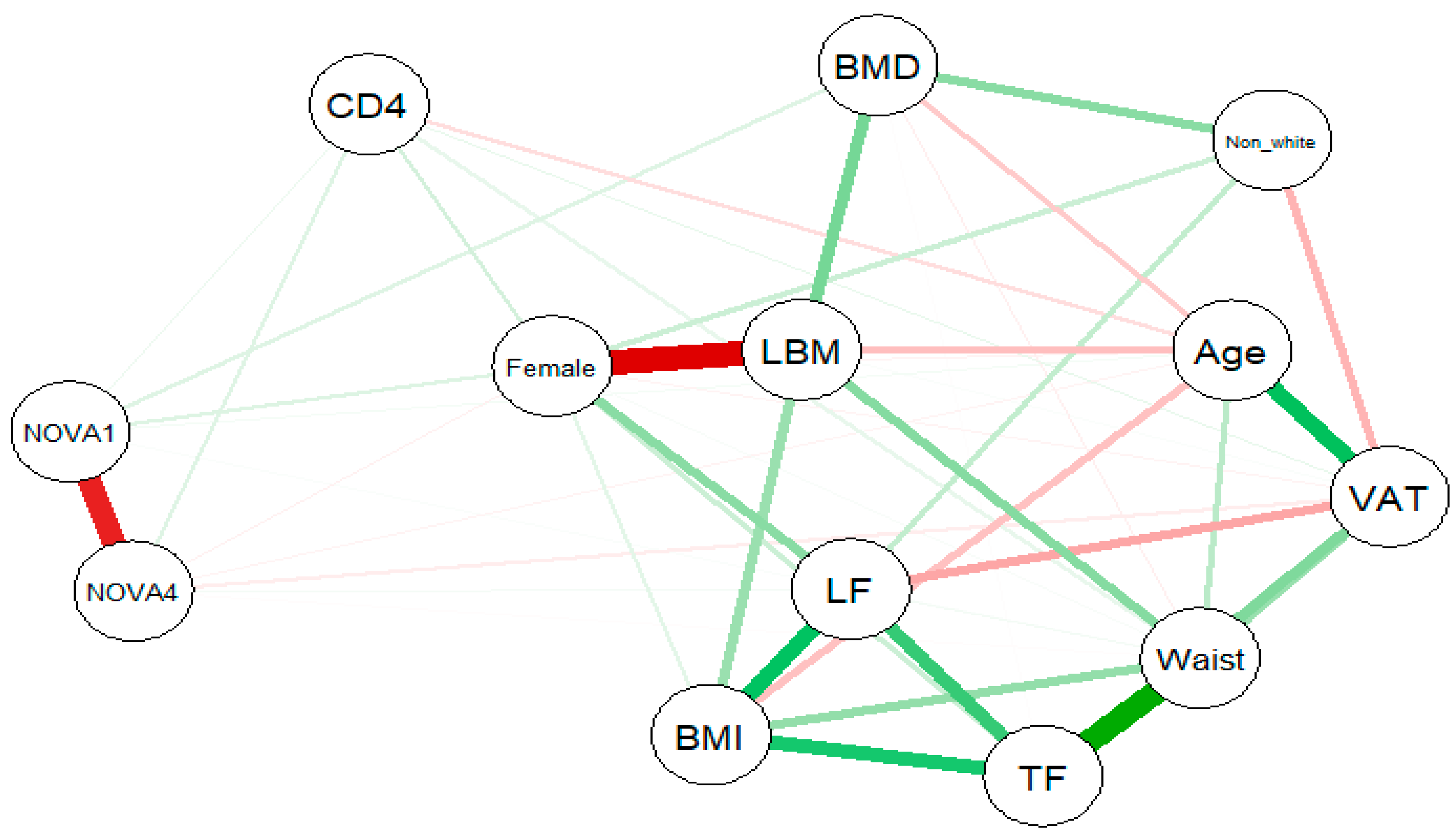
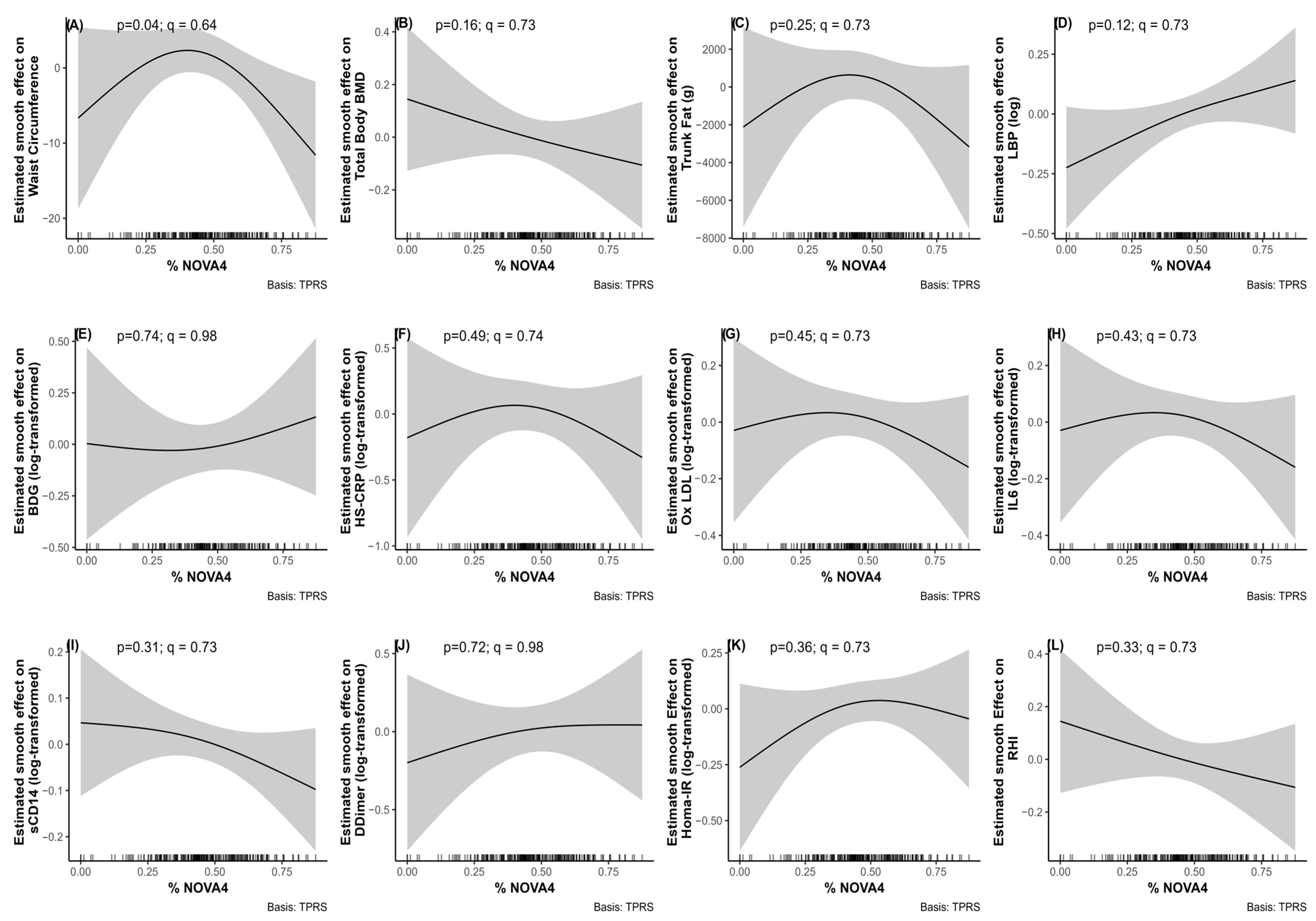
Body composition was strongly associated with age and sex, with weaker univariate associations observed for diet composition (Figure A1). These patterns remained consistent in multivariate models adjusting for age, sex, race, and CD4 count, in which percent energy intake from NOVA 4 foods was not associated with body mass index (BMI), fat mass, lean body mass, trunk fat, or estimated visceral adipose tissue area (Table 3). A significant non-linear association was observed between percent energy intake from NOVA 4 foods and waist circumference in unadjusted analyses (p = 0.04); however, this association did not remain statistically significant after false discovery rate (FDR) correction (Table 3; Figure A4). Non-linear associations were observed between age and several body composition outcomes, including waist circumference and bone mineral density (Table A1).

3.4. Associations Between UPF Intake and Inflammatory and Gut Biomarkers

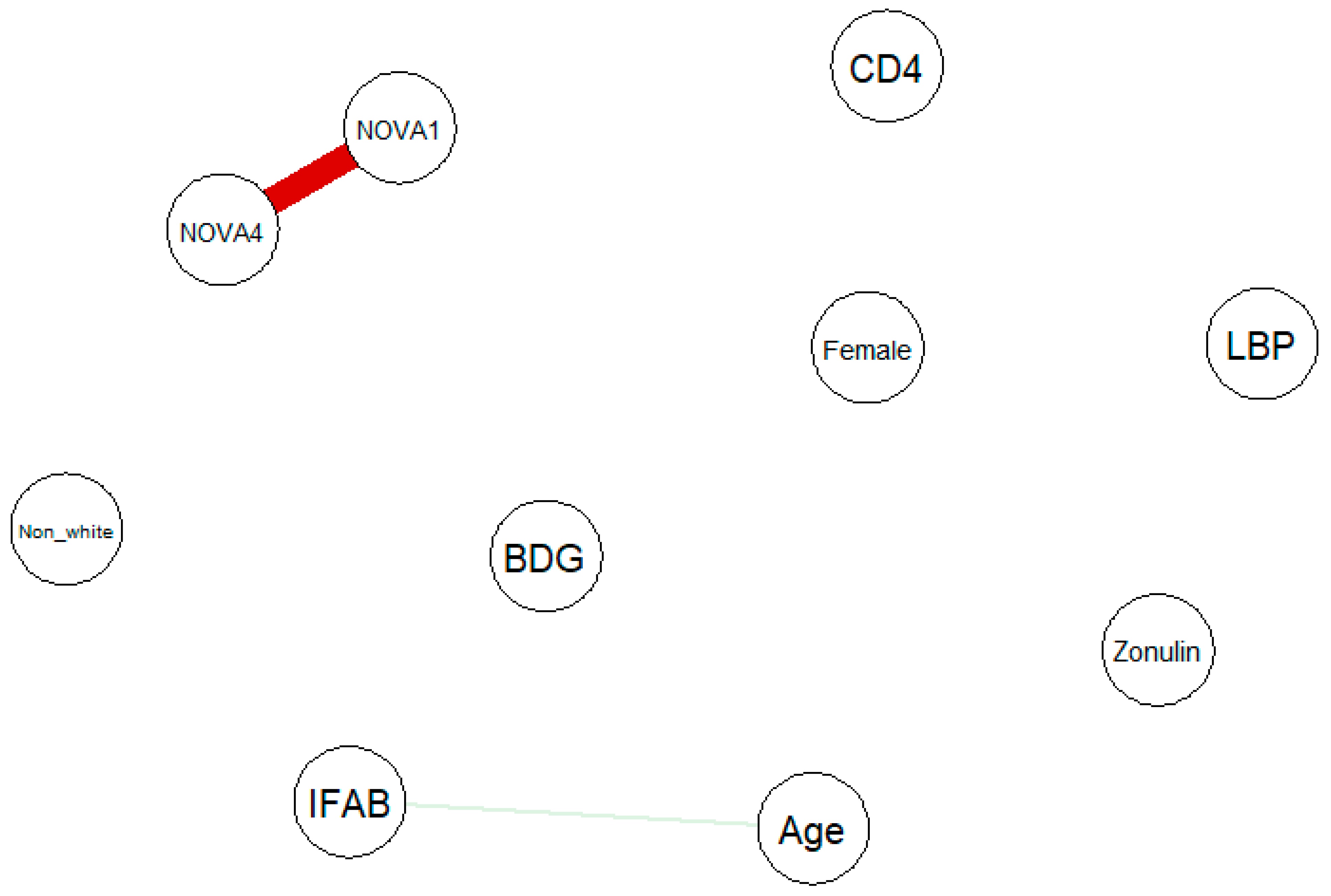
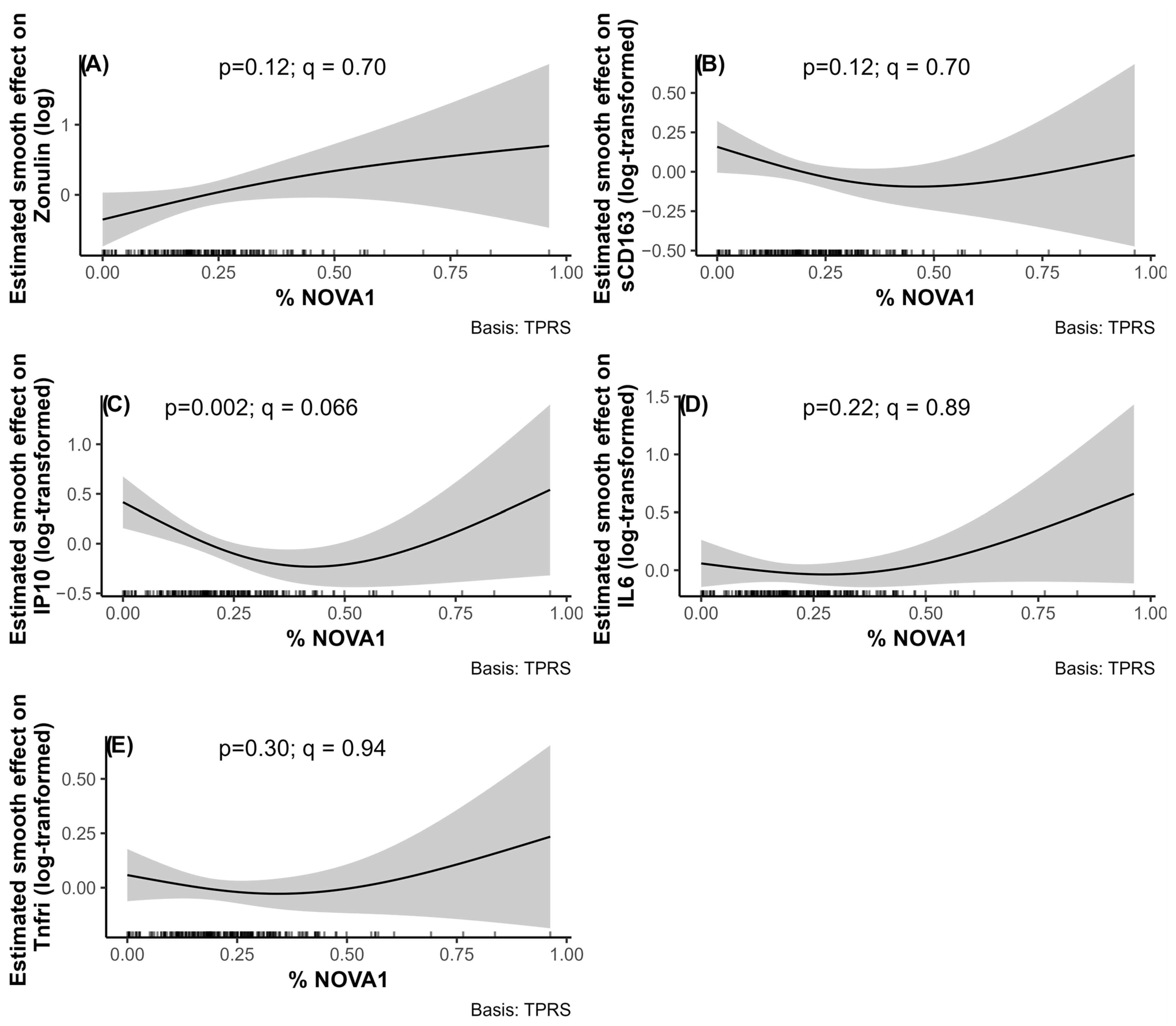
Univariate associations between study variables and inflammatory markers (Figure 1) and gut biomarkers (Figure A2) were generally weak. In multivariable models adjusting for age, sex, race, and CD4 count, percent energy intake from NOVA 4 foods was not significantly associated with markers of gut permeability or microbial translocation, including zonulin, IFABP, LBP, and BDG (Table 4). Likewise, percent energy intake from NOVA 4 foods was not independently associated with systemic inflammation or immune activation markers, including hsCRP, IL 6, IP 10, oxLDL, sCD14, sCD163, TNF RI, TNF RII, ICAM, VCAM, or D dimer (Table 4). A significant non-linear association was observed between percent energy intake from NOVA 1 foods and IP-10 (p = 0.002); however, this association was no longer statistically significant after FDR (Table 4; Figure A5). Instead, gut biomarkers and inflammatory markers were primarily associated with age, race, sex, and/or CD4 count (Table A2).

3.5. Associations Between UPF Intake and Cardiometabolic Outcomes

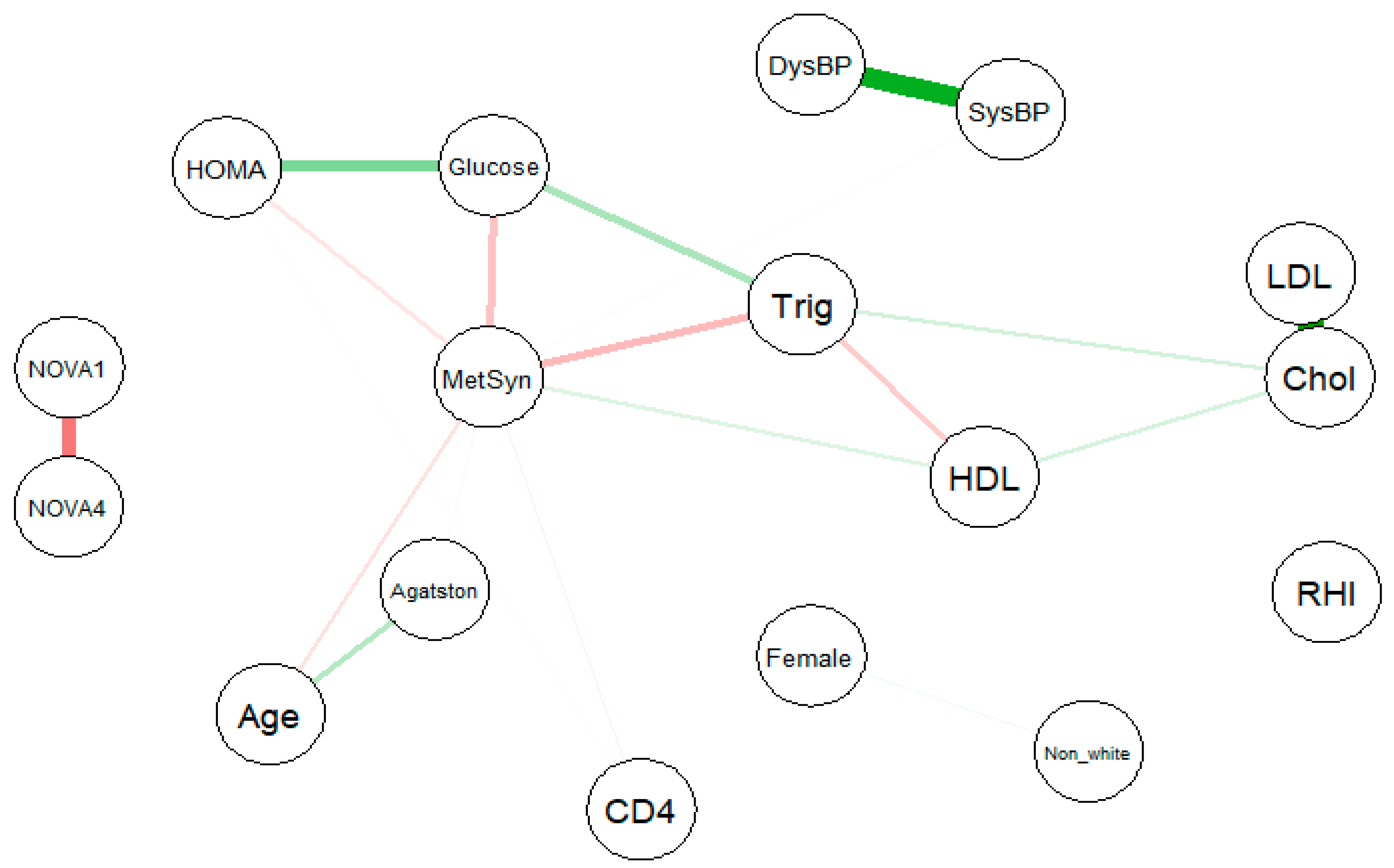
Univariate associations between age and cardiometabolic markers were weak for Agatston score and metabolic syndrome, while all other markers showed no meaningful univariate associations with study variables (Figure A3). Similarly, multivariate models assessing cardiometabolic parameters, percent energy intake from NOVA 4 foods, were not associated with lipid measures, glucose, HOMA-IR, blood pressure, RHI, or 10-year ASCVD risk (Table 5). There was a significant negative association between cholesterol and %NOVA 4 in unadjusted models (p = 0.02); however, this association was no longer significant after FDR adjustment (Table 5). Instead, cardiometabolic markers were more strongly associated with CD4 and/or age (Table A3).
Nonsignificant non-linear associations between other variables and percent energy intake from NOVA 4 and NOVA 1 foods are represented in Figure A4 and Figure A5, respectively.

4. Discussion

In this cross-sectional study of virologically suppressed PWH on stable ART, we found that a higher proportion of dietary energy derived from UPF was not independently associated with systemic inflammation, immune activation, gut permeability, cardiometabolic risk, or adverse body composition after adjustment for key demographic and HIV-related factors. Additionally, we found substantial consumption of UPF in this cohort. These findings contrast with observations from the general population and suggest that the pathways linking UPF food intake to adverse cardiometabolic health may operate differently in the context of treated HIV infection. A recently published systematic review and meta-analysis have shown that the association between ultra-processed food consumption and all causes and cardiovascular mortality was explained, amongst other factors, by the increased inflammatory markers [15]. Hence, the results of our study were unexpected, given that the previous evidence suggests that among non-HIV patients, UPF intake is associated with higher inflammation. One possible explanation for these findings is that inflammation in PWH might be influenced by persistent immune activation, microbial translocation, and ART-related factors, which may outweigh potential dietary influences, even in the setting of virologic suppression [16,17]. However, this interpretation remains hypothesis-generating and requires confirmation in longitudinal and mechanistic studies.
A similar study in Spain observed that individuals with HIV on stable ART with an undetectable HIV viral load, consuming a Western-like dietary pattern, had significantly higher levels of inflammatory biomarkers, including D-dimer (p = 0.050) and soluble TNF-alpha receptor 2 (sTNFR2) (p = 0.049), compared to those following a Mediterranean-like dietary pattern [18]. In contrast, the present study found no significant association between dietary patterns and inflammatory markers in our cohort of people living with HIV. This discrepancy may be attributable to differences in statistical power, as Manzano et al. studied 27 participants, whereas our larger sample size of 222 participants provided greater power to detect associations [18]. Alternatively, the null findings in our study could reflect differences in population characteristics, dietary assessment methods, or the specific inflammatory markers examined.
Weiss et al. reported that, among 103 individuals with HIV, higher diet quality scores were associated only with lower log-transformed concentrations of sCD14; diet quality was not correlated with other markers of immune activation, including hsCRP, sCD163, IL-6, and MCP-1 [19]. The study further demonstrated that diet quality was significantly lower in women with HIV compared with men (HEI score 49.2 vs. 55.7, p = 0.005), suggesting sex-specific differences in dietary patterns and their potential inflammatory effects [19]. Although we did not conduct sex-stratified analyses, these findings are consistent with our results, which showed that percent energy intake from NOVA 4 foods was not independently associated with elevated inflammatory markers.
Furthermore, a clinical trial assessing rosuvastatin for cardiovascular disease risk examined dietary factors, gut integrity, and inflammation in 147 adults with HIV, and found that alcohol consumption was associated with poorer gut integrity markers [20]. Specifically, liquor consumption in the previous week was positively correlated with higher LBP. Additionally, alcohol consumption was associated with increased inflammation, while other dietary components (fiber, carbohydrates, fat) showed no significant associations [20]. The lack of associations with most dietary factors is consistent with our findings; however, alcohol-related gut biomarkers and inflammatory outcomes were not evaluated in the present study.
Although this study has many strengths, particularly, it has a relatively large sample compared to other studies addressing a similar topic. Also, our study included a comprehensive assessment of inflammation and gut markers, dietary intake, and body composition measures. There are, however, some limitations that should be acknowledged. First, while NOVA provides a framework for assessing the role of industrial food processing in health outcomes, it is not without limitations. Food classification is inherently subjective, often requiring a nuanced interpretation of ingredient lists and manufacturing processes. Moreover, the system does not account for variability in nutrient density, micronutrient fortification, or culinary context across foods within the same processing group [21]. These limitations introduce challenges to reproducibility and generalizability across studies. Nevertheless, NOVA remains a widely utilized tool in nutritional epidemiology for capturing dimensions of diet not reflected in conventional nutrient-based indices [22]. Second, given the cross-sectional nature of this study, causality cannot be proven as it represents a snapshot in time rather than a cause-and-effect relation. Additionally, although major confounders such as age, sex, race, and CD4 count were adjusted for, residual confounding from lifestyle factors, medications, or unmeasured variables cannot be excluded. Our study population was recruited from a single U.S. center, potentially limiting generalizability to other regions or populations with different genetic, nutritional, or environmental backgrounds. Lastly, the self-reported UPF intake based on a single 24 h diet recall is subject to social desirability and underreporting bias.

5. Conclusions

In a cohort of virologically suppressed PWH, a higher proportion of energy intake from UPF was not associated with enhanced systemic inflammation, immune activation, gut permeability, cardiometabolic risk, or adverse body composition. Longitudinal and larger studies incorporating repeated dietary assessments and interventional trials are warranted to clarify the role of food processing in long-term cardiometabolic risk in this population.

Author Contributions

G.A.M., A.A.F., Z.K., J.D., J.B. and O.A., designed the study. All authors contributed to the acquisition of data. J.E.M., A.A.F., Z.K., J.D. and G.A.M. contributed to the analysis and interpretation of data. N.T.F., K.A. and M.C., measured plasma biomarkers in the Funderburg lab. J.E.M. contributed to statistical analysis. G.A.M. obtained funding and supervised the study. Z.K., A.A.F., J.D., O.A., J.B. and G.A.M. drafted the manuscript, and all authors contributed to the critical revision for important intellectual content. All authors have read and agreed to the published version of the manuscript.

Funding

This project was supported by the Clinical and Translational Science Collaborative of Northern Ohio which is funded by the National Center for Advancing Translational Sciences (NCATS) of the National Institutes of Health, UM1TR004528 to GM. The content is solely the responsibility of the authors and does not necessarily represent the official views of the NIH.

Institutional Review Board Statement

Our study was reviewed by the Institutional Review Board (IRB) of University Hospitals Cleveland Medical Center (UHCMC). IRB 12-15-01: approved 11 September 2017. IRB STUDY20190121: approved 29 January 2019. IRB 05-17-27: approved 13 June 2017. IRB 06-16-19: approved 23 May 2017.

Informed Consent Statement

Informed consent was obtained from all subjects involved in this study.

Data Availability Statement

The original contributions presented in this study are included in the article. Further inquiries can be directed to the corresponding author.

Conflicts of Interest

G.A.M. serves as a research consultant for Merck, Gilead, and GlaxoSmithKline/ViiV. The other authors reported no conflict.

Abbreviations

The following abbreviations are used in this manuscript:
AIAugmentation Index
ARTAntiretroviral therapy
ASCVDAtherosclerotic cardiovascular disease
ATAdipose tissue
CIConfidence Interval
CTComputed tomography
CVDCardiovascular disease
DXADual-energy X-ray absorptiometry
EDFEstimated degrees of freedom
ELISAEnzyme-linked immunosorbent assays
GAMGeneralized additive models
HbA1cHemoglobin A1C
HDLHigh-density lipoprotein
HEIHealthy Eating Index
HOMA-IRHomeostasis Model Assessment of Insulin Resistance
HIVHuman Immunodeficiency Virus
LBMLean body mass
LDLLow-density lipoprotein
MUFAMonounsaturated Fatty Acids
NDSRNutrition Data System for Research
PUFAPolyunsaturated Fatty Acids
PWHPeople with HIV
RHIReactive Hyperemic Index
SFASaturated Fatty Acids
TGTriglycerides
UPFUlta-processed food
UHCMCUniversity Hospitals Cleveland Medical Center
VATVisceral adipose tissue
VLDLVery-low-density lipoprotein

Appendix A

Table A1. Separate generalized additive models (GAMs) examining associations between body composition variables and the covariates of absolute CD4 count (per 1000 units), race, sex, and age as covariates. Models also controlled %NOVA 1 and %NOVA 4 in diet.
Body CompositionEstimate: Beta/EDF 195% CIp-Value
Weight
CD4 Absolute (per 1000)7.8−0.10, 160.053
Race
       African American
       Asian−26−73, 200.3
       Bi-Racial8.4−15, 310.5
       Caucasian−8−15, −1.20.022
       Hispanic−31−58, −4.80.021
       Native American24−21, 700.3
       Other−27−72, 190.3
Sex
       Female
       Male2.5−4.6, 9.60.5
Age (non-linear)1.930.002
BMI
CD4 Absolute (per 1000)3.10.53, 5.60.018
Race
       African American
       Asian−8.3−23, 6.60.3
       Bi-Racial1.9−5.5, 9.40.6
       Caucasian−1.9−4.1, 0.270.084
       Hispanic−11−20, −2.50.011
       Native American7.1−7.5, 220.3
       Other−8.6−23, 6.20.3
Sex
       Female
       Male−4.2−6.5, −1.9<0.001
Age (non-linear)1.980.034
Waist circumference
CD4 Absolute (per 1000)82.0, 140.009
Race
       African American
       Asian−16−52, 200.4
       Bi-Racial6.8−11, 240.4
       Caucasian−3.2−8.4, 2.10.2
       Hispanic−21−41, −0.560.044
       Native American18−16, 530.3
       Other−18−53, 170.3
Sex
       Female
       Male−7.4−13, −2.00.008
Age (non-linear)1.880.001
Total Body Bone Mineral Density
CD4 Absolute (per 1000)0.01−0.03, 0.040.8
Race
       African American
       Asian−0.13−0.37, 0.090.2
       Bi-Racial0.01−0.10, 0.11>0.9
       Caucasian−0.07−0.10, −0.04<0.001
       Hispanic−0.08−0.20, 0.040.2
       Native American−0.10−0.32, 0.110.3
       Other−0.10−0.31, 0.110.4
Sex
       Female
       Male0.050.02, 0.090.002
Age (non-linear)1.830.001
Lean body mass
CD4 Absolute (per 1000)344338, 68490.048
Race
       African American
       Asian−10,695−30,704, 93130.3
       Bi-Racial2617−7291, 12,5260.6
       Caucasian−3245−6193, −2980.031
       Hispanic−12,824−24,221, −14280.028
       Native American9026−10,489, 28,5410.4
       Other−6996−26,756, 12,7640.5
Sex
       Female
       Male12,2849202, 15,366<0.001
Age (non-linear)1.95<0.001
Total Limb fat
CD4 Absolute (per 1000)1127−1010, 32640.3
Race
       African American
       Asian−5997−18,550, 65560.3
       Bi-Racial2315−3903, 853205
       Caucasian−3011−4859, −11620.002
       Hispanic−8261−15,412, −11100.024
       Native American4106−8139, 16,3500.5
       Other−8869−21,264, 35250.2
Sex
       Female
       Male−5802−7734, −3870<0.001
Age (non-linear)1.900.016
Trunk fat
CD4 Absolute (per 1000)286394, 56320.043
Race
       African American
       Asian−4711−21,102, 11,6810.6
       Bi-Racial4042−3977, 12,0610.3
       Caucasian−1464−3844, 9160.2
       Hispanic−9427−18,631, −2240.045
       Native American7678−8107, 23,4630.3
       Other−9820−25,760, 61200.2
Sex
       Female
       Male−5441−7925, −2958<0.001
Age (non-linear)1.820.018
Estimated VAT area
CD4 Absolute (per 1000)278.4, 450.004
Race
       African American
       Asian−16−122, 900.8
       Bi-Racial41−11, 940.12
       Caucasian160.06, 310.049
       Hispanic−41−102, 190.2
       Native American68−37, 1710.2
       Other−37−142, 680.5
Sex
       Female
       Male−1.7−18, 150.8
Age (non-linear)1.66<0.001
1 For linear terms, estimates represent regression coefficients (β). For non-linear terms, estimates represent estimated degrees of freedom (EDF). BMI: Body Mass Index; VAT: Visceral Adipose Tissue. Statistically significant p-values (p < 0.05) are shown in bold.
Table A2. Separate generalized additive models (GAMs) examining associations between gut and inflammation markers and the covariates of absolute CD4 count (per 1000 units), race, sex, and age as covariates. Models also controlled for %NOVA 1 and %NOVA 4 in diet.
Gut and Inflammation MarkersEstimate: Beta/EDF 195% CIp-Value
Zonulin (log)
CD4 Absolute (per 1000)0.3−0.10, 0.700.14
Race
       African American
       Asian−0.67−2.9, 1.50.6
       Bi-Racial−0.55−1.7, 0.540.3
       Caucasian−0.21−0.57, 0.140.2
       Hispanic−0.3−1.9, 1.30.7
       Native American−0.46−2.6, 1.70.7
       Other−1.4−3.6, 0.750.2
Sex
       Female
       Male−0.3−0.66, 0.060.1
Age (non-linear)1.810.016
IFABP (log)
CD4 Absolute (per 1000)0.12−0.09, 0.340.2
Race
       African American
       Asian0.71−0.53, 2.00.3
       Bi-Racial−0.48−1.1, 0.140.13
       Caucasian−0.14−0.33, 0.040.12
       Hispanic0.08−0.63, 0.790.8
       Native American−0.69−1.9, 0.520.3
       Other−0.31−1.5, 0.910.6
Sex
       Female
       Male0.16−0.03, 0.350.1
Age (per 5 years)0.070.04, 0.10<0.001
LBP (log)
CD4 Absolute (per 1000)0.190.03, 0.350.021
Race
       African American
       Asian−0.48−1.4, 0.460.3
       Bi-Racial−0.34−0.81, 0.130.2
       Caucasian−0.05−0.19, 0.080.4
       Hispanic−0.3−0.84, 0.240.3
       Native American0.930.01, 1.80.048
       Other−1.6−2.6, −0.71<0.001
Sex
       Female
       Male−0.22−0.36, −0.070.003
Age (non-linear)0.01−0.03, 0.020.8
BDG (log)
CD4 Absolute (non-linear)1.500.6
Race
       African American
       Asian−0.82−2.3, 0.660.3
       Bi-Racial−0.29−1.0, 0.440.4
       Caucasian0.03−0.20, 0.270.8
       Hispanic0.26−0.79, 1.30.6
       Native American−0.49−1.9, 0.950.5
       Other−0.87−2.3, 0.570.2
Sex
       Female
       Male−0.24−0.48, 0.000.051
Age (per 5 years)0.01−0.03, 0.050.7
hsCRP (log)
CD4 Absolute (per 1000)0.01−0.41, 0.42>0.9
Race
       African American
       Asian−2.4−4.8, 0.080.058
       Bi-Racial−0.02−1.2, 1.2>0.9
       Caucasian0.08−0.27, 0.440.7
       Hispanic−0.78−2.2, 0.610.3
       Native American0.28−2.1, 2.70.8
       Other−2.6−5.0, −0.210.033
Sex
       Female
       Male−0.61−0.98, −0.240.001
Age−0.01−0.02, 0.000.2
OxLDL (log)
CD4 Absolute (non-linear)1.740.15
Race
       African American
       Asian−0.03−0.97, 0.90>0.9
       Bi-Racial0.16−0.30, 0.620.5
       Caucasian0.1−0.05, 0.240.2
       Hispanic−0.84−1.5, −0.180.013
       Native American0.84−0.07, 1.80.069
       Other0.02−0.88, 0.93>0.9
Sex
       Female
       Male−0.08−0.23, 0.070.3
Age 0.010.00, 0.010.005
TNF-RI (log)
CD4 Absolute (per 1000)−0.02−0.14, 0.100.8
Race
       African American
       Asian0.28−0.42, 0.990.4
       Bi-Racial0.13−0.21, 0.480.4
       Caucasian0.220.12, 0.32<0.001
       Hispanic0.29−0.12, 0.690.2
       Native American0.02−0.67, 0.71>0.9
       Other−0.15−0.84, 0.550.7
Sex
       Female
       Male−0.11−0.22, 0.000.05
Age (non-linear)1.790.05
TNF-RII (log)
CD4 Absolute (per 1000)−0.21−0.34, −0.080.002
Race
       African American
       Asian0.17−0.60, 0.940.7
       Bi-Racial−0.22−0.60, 0.160.3
       Caucasian0.150.04, 0.270.007
       Hispanic0.26−0.18, 0.700.2
       Native American−0.9−1.6, −0.140.02
       Other−0.04−0.80, 0.71>0.9
Sex
       Female
       Male−0.15−0.26, −0.030.014
Age (per 5 years)0.01−0.01, 0.020.6
IL-6 (log)
CD4 Absolute (per 1000)−0.04−0.24, 0.160.7
Race
       African American
       Asian−0.41−1.6, 0.760.5
       Bi-Racial0.29−0.28, 0.860.3
       Caucasian0.15−0.02, 0.320.075
       Hispanic−0.3−0.96, 0.350.4
       Native American0.09−1.0, 1.20.9
       Other0.78−0.35, 1.90.2
Sex
       Female
       Male−0.22−0.39, −0.040.015
Age (per 5 years)0.020.00, 0.050.081
IP-10 (log)
CD4 Absolute (per 1000)−0.57−0.80, −0.34<0.001
Race
       African American
       Asian−0.1−1.4, 1.20.9
       Bi-Racial0.19−0.46, 0.840.6
       Caucasian0.13−0.07, 0.340.2
       Hispanic−0.29−1.2, 0.650.5
       Native American0.2−1.1, 1.50.8
       Other0.21−1.1, 1.50.7
Sex
       Female
       Male−0.36−0.57, −0.15<0.001
Age (per 5 years)0.03−0.01, 0.060.15
ICAM (log)
CD4 Absolute (non-linear)1.560.2
Race
       African American
       Asian0.63−0.37, 1.60.2
       Bi-Racial0.32−0.17, 0.820.2
       Caucasian0.40.24, 0.56<0.001
       Hispanic0.56−0.15, 1.30.12
       Native American0.26−0.71, 1.20.6
       Other−0.1−1.1, 0.880.8
Sex
       Female
       Male−0.24−0.41, −0.080.004
Age (non-linear)1.380.4
VCAM (log)
CD4 Absolute (per 1000)−0.28−0.38, −0.17<0.001
Race
       African American
       Asian0.38−0.24, 1.00.2
       Bi-Racial−0.15−0.45, 0.160.4
       Caucasian0.20.10, 0.29<0.001
       Hispanic0.27−0.09, 0.620.14
       Native American−0.5−1.1, 0.100.1
       Other0.42−0.19, 1.00.2
Sex
       Female
       Male0.03−0.07, 0.120.6
Age (non-linear)1.910.078
sCD14 (log)
CD4 Absolute (non-linear)1.830.11
Race
       African American
       Asian−0.18−0.74, 0.380.5
       Bi-Racial−0.06−0.34, 0.220.7
       Caucasian0.110.03, 0.190.009
       Hispanic0.23−0.09, 0.540.2
       Native American0.13−0.42, 0.670.7
       Other0.07−0.48, 0.620.8
Sex
       Female
       Male−0.1−0.18, −0.010.025
Age (non-linear)1.640.04
sCD163 (log)
CD4 Absolute (per 1000)−0.12−0.28, 0.040.15
Race
       African American
       Asian0.16−0.80, 1.10.7
       Bi-Racial0.12−0.35, 0.600.6
       Caucasian0.11−0.03, 0.250.14
       Hispanic0.08−0.47, 0.630.8
       Native American−0.34−1.3, 0.600.5
       Other0.29−0.66, 1.20.5
Sex
       Female
       Male−0.12−0.27, 0.030.11
Age (non-linear)1.840.006
D-dimer (log)
CD4 Absolute (per 1000)−0.42−0.79, −0.060.022
Race
       African American
       Asian−0.39−2.5, 1.70.7
       Bi-Racial−0.11−1.2, 0.940.8
       Caucasian−0.3−0.61, 0.010.057
       Hispanic−0.11−1.3, 1.10.9
       Native American−2.4−4.5, −0.350.022
       Other−0.85−2.9, 1.20.4
Sex
       Female
       Male−0.18−0.51, 0.140.3
Age (non-linear)1.640.2
1 For linear terms, estimates represent regression coefficients (β). For non-linear terms, estimates represent estimated degrees of freedom (EDF). IL-6 = Interleukin-6; VCAM = Vascular Cell Adhesion Molecule-1; ICAM = Intercellular Adhesion Molecule-1; TNF-RI = Tumor Necrosis Factor Receptor-1; TNF-RII = Soluble Tumor Necrosis Factor Receptor-2; hsCRP = High-sensitivity C-reactive protein; IP-10: Interferon-gamma-induced protein 10; OxLDL = Oxidized Low-Density Lipoprotein; sCD14 = Soluble CD14; sCD163 = Soluble CD163; IFABP = Intestinal fatty-acid binding protein; LBP = Lipopolysaccharide binding protein; BDG: Beta-D-glucan. Statistically significant p-values (p < 0.05) are shown in bold.
Table A3. Separate generalized additive models (GAMs) examining associations between cardiometabolic biomarkers and the covariates of absolute CD4 count (per 1000 units), race, sex, and age as covariates. Models also controlled %NOVA 1 and %NOVA 4 in diet.
Cardiometabolic BiomarkerEstimate: Beta/EDF 195% CIp-Value
Triglycerides (log)
CD4 Absolute (non-linear)1.440.001
Race
       African American
       Asian−0.74−1.8, 0.350.2
       Bi-Racial0.33−0.21, 0.880.2
       Caucasian0.230.08, 0.390.004
       Hispanic0.16−0.46, 0.780.6
       Native American1.30.28, 2.40.014
       Other0.27−0.80, 1.30.6
Sex
       Female
       Male0.03−0.14, 0.190.7
Age (per 5 years)0.050.02, 0.07<0.001
Cholesterol (log)
CD4 Absolute (per 1000)0.10.03, 0.180.007
Race
       African American
       Asian−0.03−0.47, 0.41>0.9
       Bi-Racial0.09−0.12, 0.310.4
       Caucasian0−0.06, 0.07>0.9
       Hispanic−0.07−0.321, 0.190.6
       Native American0.35−0.09, 0.770.11
       Other−0.25−0.68, 0.180.3
Sex
       Female
       Male−0.06−0.13, 0.000.07
Age (per 5 years)0.010.00, 0.020.2
non-HDL
CD4 Absolute (per 1000)229.2, 34<0.001
Race
       African American
       Asian−14−87, 590.7
       Bi-Racial31−4.8, 680.089
       Caucasian7−3.6, 180.2
       Hispanic−18−59, 240.4
       Native American720.67, 1430.048
       Other−30−102, 420.4
Sex
       Female
       Male−5.9−17, 5.20.3
Age0.21−0.14, 0.560.2
LDL
CD4 Absolute (non-linear)1.620.046
Race
       African American
       Asian0.73−64, 65>0.9
       Bi-Racial22−9.9, 540.2
       Caucasian1.2−8.2, 110.8
       Hispanic−13−50, 230.5
       Native American30−33, 930.3
       Other−31−95, 320.3
Sex
       Female
       Male−6.7−17, 3.10.2
Age (per 5 years)0.02−1.5, 1.6>0.9
Glucose (log)
CD4 Absolute (non-linear)1.370.059
Race
       African American
       Asian−0.07−0.42, 0.270.7
       Bi-Racial−0.04−0.21, 0.130.6
       Caucasian0.04−0.01, 0.090.12
       Hispanic−0.09−0.28, 0.110.4
       Native American0.14−0.19, 0.480.4
       Other0.21−0.13, 0.550.2
Sex
       Female
       Male−0.04−0.09, 0.020.2
Age (per 5 years)0.010.00, 0.010.2
HOMA-IR (log)
CD4 Absolute (per 1000)0.240.04, 0.450.018
Race
       African American
       Asian−0.54−1.7, 0.660.4
       Bi-Racial0.04−0.55, 0.62>0.9
       Caucasian0.11−0.06, 0.280.2
       Hispanic−0.15−0.82, 0.520.7
       Native American0.69−0.47, 1.80.2
       Other0.82−0.34, 2.00.2
Sex
       Female
       Male−0.24−0.42, −0.060.01
Age (per 5 years)0.01−0.02, 0.040.4
RHI
CD4 Absolute (per 1000)0.03−0.17, 0.220.8
Race
       African American
       Asian0.47−0.64, 1.60.4
       Bi-Racial0.750.20, 1.30.008
       Caucasian0.190.03, 0.350.023
       Hispanic−0.29−0.92, 0.340.4
       Native American−0.6−1.7, 0.480.3
       Other−0.5−1.6, 0.590.4
Sex
       Female
       Male0.04−0.13, 0.220.6
Age (per 5 years)−0.02−0.04, 0.010.2
Systolic BP
CD4 Absolute (per 1000)−4.4−9.6, 0.900.1
Race
       African American
       Asian17−13, 480.3
       Bi-Racial−7.7−23, 7.50.3
       Caucasian−4.1−8.6, 0.340.07
       Hispanic−14−31, 3.20.11
       Native American−2.7−33, 270.9
       Other−12−42, 180.4
Sex
       Female
       Male0.25−4.4, 4.9>0.9
Age (non-linear)2.620.041
Diastolic BP
CD4 Absolute (per 1000)−3.8−7.1, −0.600.02
Race
       African American
       Asian−4.2−23, 150.7
       Bi-Racial−1.4−11, 8.00.8
       Caucasian−3.6−6.4, −0.810.012
       Hispanic−5.3−16, 5.50.3
       Native American−0.99−20, 18>0.9
       Other−23−42, −4.70.014
Sex
       Female
       Male−1.8−4.7, 1.10.2
Age0.07−0.03, 0.160.2
1 For linear terms, estimates represent regression coefficients (β). For non-linear terms, estimates represent estimated degrees of freedom (EDF). BP: Blood Pressure; HOMA-IR: Homeostatic Model Assessment of Insulin Resistance; LDL = Low-Density Lipoprotein; HDL = High-Density Lipoprotein; RHI: Reactive Hyperemic Index. Statistically significant p-values (p < 0.05) are shown in bold.
Figure A1. Force-directed network plot illustrating relationships among body composition variables connected by edges (green and red lines), representing the relationships between them. Edge color indicates the direction of the relationship (green, positive; red, negative), with the thickness and boldness of the color indicating the strength of the relationship. (LF = Limb fat, TF = Trunk Fat, LBM = Lean Body Mass, VAT = Estimated Visceral Adipose Tissue Area, Waist = Waist Circumference, BMD = Bone Mineral Density; BMI = Body Mass Index, NOVA 1 = Percent total energy intake of NOVA 1; NOVA 4 = Percent total energy intake of NOVA 4).
Nutrients 18 01211 g0a1
Figure A2. Force-directed network plotting displaying nodes (gut biomarkers) connected by edges (green and red lines), representing the relationships between them. Edge color indicates the direction of the relationship (green, positive; red, negative), with the thickness and boldness of the color indicating the strength of the relationship (NOVA 1 = Percent total energy intake of NOVA 1; NOVA 4 = Percent total energy intake of NOVA 4).
Nutrients 18 01211 g0a2
Figure A3. Force-directed network plotting displaying nodes (cardiovascular markers) connected by edges (green and red lines), representing the relationships between them. Edge color indicates the direction of the relationship (green, positive; red, negative), with the thickness and boldness of the color indicating the strength of the relationship (Chol = Total cholesterol; Trig = Total Triglycerides, MetSyn = Metabolic Syndrome (3 or more components); Agatston = Agatston Score; HOMA = HOMA-IR; SysBP = systolic blood pressure and DysBP = diastolic blood pressure.
Nutrients 18 01211 g0a3
Figure A4. Estimated smooth (partial) effects of % NOVA 4 A (ultra-processed) foods on (A) waist circumference, (B) total body bone mineral density (BMD), (C) trunk fat (g), (D) LBP (log transformed), (E) BDG (log transformed), (F) HS-CRP (log-transformed), (G) OX_LDL (log-transformed), (H) IL6 (log-transformed), (I) sCD14 (log-transformed), (J) D-Dimer (log-transformed), (K) Home-IR (log-transformed), and (L) RHI from generalized additive models (GAMs). The association between % NOVA 4 intake and each outcome was modeled using a thin plate regression spline (k = 3), while age, absolute CD4 count, % NOVA 1 intake, race, and sex were included as covariates. Shaded bands represent 95% confidence intervals, and rug marks indicate the distribution of observed NOVA values. Statistical significance is shown using unadjusted p-values and FDR-adjusted q-values, as indicated.
Nutrients 18 01211 g0a4
Figure A5. Estimated smooth (partial) effects of % NOVA 1 (not processed) foods on (A) Zonulin (log-transformed), (B) sCD163 (log-transformed), (C) IP-10 (log-transform) (D) IL-6 (log-transformed) and (E) TNF-RI (log-transformed) from generalized additive models (GAMs). The association between % NOVA 1 intake and each outcome was modeled using a thin plate regression spline (k = 3), while age, absolute CD4 count, % NOVA 4 intake, race, and sex were included as covariates. Shaded bands represent 95% confidence intervals, and rug marks indicate the distribution of observed NOVA values. Statistical significance is shown using unadjusted p-values and FDR-adjusted q-values, as indicated.
Nutrients 18 01211 g0a5

References

  1. Feinstein, M.J.; Hsue, P.Y.; Benjamin, L.A.; Bloomfield, G.S.; Currier, J.S.; Freiberg, M.S.; Grinspoon, S.K.; Levin, J.; Longenecker, C.T.; Post, W.S. Characteristics, Prevention, and Management of Cardiovascular Disease in People Living with HIV: A Scientific Statement from the American Heart Association. Circulation 2019, 140, e98–e124. [Google Scholar] [CrossRef] [PubMed]
  2. So-Armah, K.; Benjamin, L.A.; Bloomfield, G.S.; Feinstein, M.J.; Hsue, P.; Njuguna, B.; Freiberg, M.S. HIV and cardiovascular disease. Lancet HIV 2020, 7, e279–e293. [Google Scholar] [CrossRef]
  3. Rico-Campà, A.; Martínez-González, M.A.; Alvarez-Alvarez, I.; De Deus Mendonça, R.; De La Fuente-Arrillaga, C.; Gómez-Donoso, C.; Bes-Rastrollo, M. Association between consumption of ultra-processed foods and all cause mortality: SUN prospective cohort study. BMJ 2019, 365, l1949. [Google Scholar] [CrossRef]
  4. Monteiro, C.A.; Cannon, G.; Levy, R.; Moubarac, J.C.; Jaime, P.; Paula Martins, A.; Canella, D.; Louzada, M.; Parra Also with Camila Ricardo, D.; Calixto, G.; et al. NOVA. The star shines bright. World Nutr. 2016, 7, 28–38. [Google Scholar]
  5. Monteiro, C.A. Nutrition and health. The issue is not food, nor nutrients, so muchas processing. Public Health Nutr. 2009, 12, 729–731. [Google Scholar] [CrossRef]
  6. Lane, M.M.; Gamage, E.; Du, S.; Ashtree, D.N.; McGuinness, A.J.; Gauci, S.; Baker, P.; Lawrence, M.; Rebholz, C.M.; Srour, B.; et al. Ultra-processed food exposure and adverse health outcomes: Umbrella review of epidemiological meta-analyses. BMJ 2024, 384, e077310. [Google Scholar] [CrossRef] [PubMed]
  7. Mendoza, K.; Smith-Warner, S.A.; Rossato, S.L.; Khandpur, N.; Manson, J.A.E.; Qi, L.; Rimm, E.B.; Mukamal, K.J.; Willett, W.C.; Wang, M.; et al. Ultra-processed foods and cardiovascular disease: Analysis of three large US prospective cohorts and a systematic review and meta-analysis of prospective cohort studies. Lancet Reg. Health—Am. 2024, 37, 100859. [Google Scholar] [CrossRef] [PubMed]
  8. Juul, F.; Vaidean, G.; Parekh, N. Ultra-processed Foods and Cardiovascular Diseases: Potential Mechanisms of Action. Adv. Nutr. 2021, 12, 1673–1680. [Google Scholar] [CrossRef] [PubMed]
  9. Fitch, K.V.; Mccallum, S.A.; Erlandson, K.M.; Overton, E.T.; Zanni, M.V.; Fichtenbaum, C.; Aberg, J.A.; Fulda, E.S.; Kileel, E.M.; Moran, L.E.; et al. Diet in a global cohort of adults with HIV at low-to-moderate traditional cardiovascular disease risk. AIDS 2022, 36, 1997–2003. [Google Scholar] [CrossRef] [PubMed]
  10. Monteiro, C.A.; Cannon, G.; Levy, R.B.; Moubarac, J.C.; Louzada, M.L.C.; Rauber, F.; Khandpur, N.; Cediel, G.; Neri, D.; Martinez-Steele, E.; et al. Ultra-processed foods: What they are and how to identify them. Public Health Nutr. 2019, 22, 936–941. [Google Scholar] [CrossRef]
  11. Eckard, A.R.; Wu, Q.; Sattar, A.; Ansari-Gilani, K.; Labbato, D.; Foster, T.; Fletcher, A.A.; Adekunle, R.O.; McComsey, G.A. Once-weekly semaglutide in people with HIV-associated lipohypertrophy: A randomised, double-blind, placebo-controlled phase 2b single-centre clinical trial. Lancet Diabetes Endocrinol. 2024, 12, 523–534. [Google Scholar] [CrossRef] [PubMed]
  12. Baissary, J.; Koberssy, Z.; Durieux, J.C.; Atieh, O.; Daher, J.; Ailstock, K.; Labbato, D.; Foster, T.; Rodgers, M.A.; Merheb, A.; et al. The Effect of COVID-19 on Arterial Stiffness and Inflammation: A Longitudinal Prospective Study. Viruses 2025, 17, 394. [Google Scholar] [CrossRef]
  13. ASCVD Risk Estimator +. Available online: https://tools.acc.org/ascvd-risk-estimator-plus/#!/calculate/estimate/ (accessed on 1 December 2024).
  14. Alberti, K.G.M.M.; Eckel, R.H.; Grundy, S.M.; Zimmet, P.Z.; Cleeman, J.I.; Donato, K.A.; Fruchart, J.C.; James, W.P.T.; Loria, C.M.; Smith, S.C. Harmonizing the metabolic syndrome: A joint interim statement of the international diabetes federation task force on epidemiology and prevention; National heart, lung, and blood institute; American heart association; World heart federation; International atherosclerosis society; And international association for the study of obesity. Circulation 2009, 120, 1640–1645. [Google Scholar] [CrossRef]
  15. Monteiro, C.A.; Louzada, M.L.; Steele-Martinez, E.; Cannon, G.; Andrade, G.C.; Baker, P.; Bes-Rastrollo, M.; Bonaccio, M.; Gearhardt, A.N.; Khandpur, N.; et al. Ultra-processed foods and human health: The main thesis and the evidence. Lancet 2025, 406, 2667–2684. [Google Scholar] [CrossRef] [PubMed]
  16. Rajasuriar, R.; Khoury, G.; Kamarulzaman, A.; French, M.A.; Cameron, P.U.; Lewin, S.R. Persistent immune activation in chronic HIV infection: Do any interventions work? AIDS 2013, 27, 1199–1208. [Google Scholar] [CrossRef] [PubMed]
  17. Klatt, N.R.; Funderburg, N.T.; Brenchley, J.M. Microbial translocation, immune activation, and HIV disease. Trends Microbiol. 2013, 21, 6–13. [Google Scholar] [CrossRef] [PubMed]
  18. Manzano, M.; Talavera-Rodríguez, A.; Moreno, E.; Madrid, N.; Gosalbes, M.J.; Ron, R.; Dronda, F.; Pérez-Molina, J.A.; Lanza, V.F.; Díaz, J.; et al. Relationship of Diet to Gut Microbiota and Inflammatory Biomarkers in People with HIV. Nutrients 2022, 14, 1221. [Google Scholar] [CrossRef] [PubMed]
  19. Weiss, J.J.; Sanchez, L.; Hubbard, J.; Lo, J.; Grinspoon, S.K.; Fitch, K.V. Diet Quality Is Low and Differs by Sex in People with HIV. J. Nutr. 2019, 149, 78–87. [Google Scholar] [CrossRef]
  20. Webel, A.R.; Sattar, A.; Funderburg, N.T.; Kinley, B.; Longenecker, C.T.; Labbato, D.; Alam, S.K.; McComsey, G.A. Alcohol and dietary factors associate with gut integrity and inflammation in HIV-infected adults. HIV Med. 2017, 18, 402–411. [Google Scholar] [CrossRef]
  21. Gibney, M.J.; Forde, C.G.; Mullally, D.; Gibney, E.R. Ultra-processed foods in human health: A critical appraisal. Am. J. Clin. Nutr. 2017, 106, 717–724. [Google Scholar] [CrossRef]
  22. Monteiro, C.A.; Cannon, G.; Moubarac, J.C.; Levy, R.B.; Louzada, M.L.C.; Jaime, P.C. The UN Decade of Nutrition, the NOVA food classification and the trouble with ultra-processing. Public Health Nutr. 2018, 21, 5–17. [Google Scholar] [CrossRef]
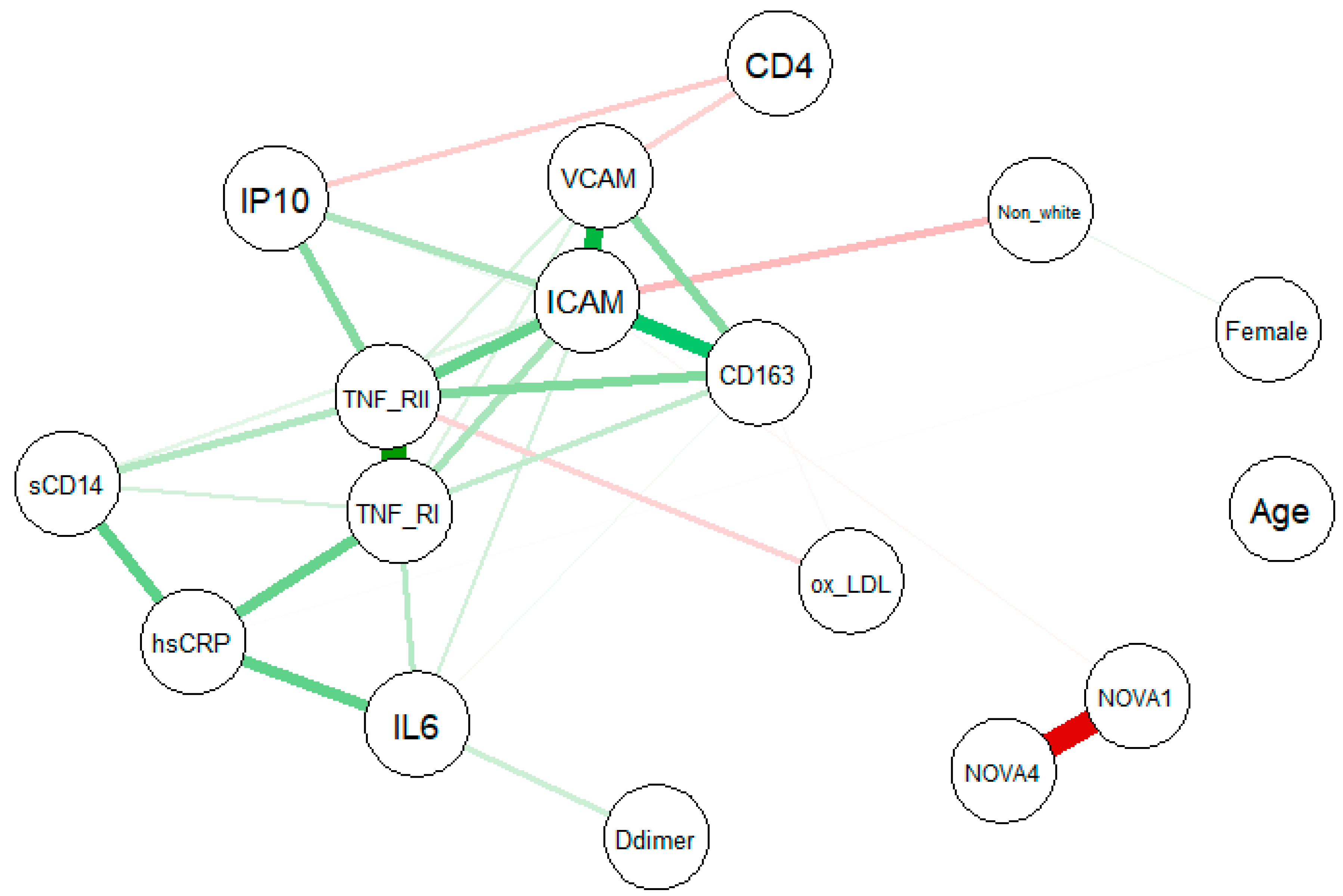
Figure 1. Force-directed network plotting displaying nodes (inflammation markers) connected by edges (green and red lines), representing the relationships between variables. Edge color indicates the direction of the relationship (green, positive; red, negative), with the thickness and boldness of the color indicating the strength of the relationship. (NOVA 1 = Percent total energy intake of NOVA 1; NOVA 4 = Percent total energy intake of NOVA 4).
Nutrients 18 01211 g001
Table 1. Baseline characteristics in HIV patients stratified by NOVA 4 dietary intake below and above the median of 45.56%.
CharacteristicOverall
N = 222 1
Healthier
N = 110 1
Unhealthy
N = 112 1
p-Value 2
Age45.4 ± 14.246.9 ± 14.244.0 ± 14.00.13
Sex 0.269
    Female69 (31.1%)38 (34.5%)31 (27.7%)
    Male153 (68.9%)72 (65.5%)81 (72.3%)
Race 0.339
    African American137 (61.7%)61 (55.5%)76 (67.9%)
    Asian1 (0.5%)1 (0.9%)0 (0.0%)
    Bi-Racial4 (1.8%)3 (2.7%)1 (0.9%)
    Caucasian75 (33.8%)41 (37.3%)34 (30.4%)
    Native American1 (0.5%)1 (0.9%)0 (0.0%)
    Other1 (0.5%)1 (0.9%)0 (0.0%)
Ethnicity 0.785
    Hispanic or Latino21 (9.5%)11 (10.0%)10 (8.9%)
    Non-Hispanic or Non-Latino201 (90.5%)99 (90.0%)102 (91.1%)
Diagnoses: Past Medical + Current
    Hypertension76 (34.2%)40 (36.4%)36 (32.1%)0.508
    Hyperlipidemia36 (16.2%)17 (15.5%)19 (17.0%)0.76
    High cholesterol34 (15.3%)18 (16.4%)16 (14.3%)0.667
    Diabetes11 (5.0%)4 (3.6%)7 (6.3%)0.37
    Asthma/COPD67 (30.2%)25 (22.7%)42 (37.5%)0.017
    CD4 < 20037 (16.7%)22 (20.0%)15 (13.4%)0.187
    Malignancy12 (5.4%)8 (7.3%)4 (3.6%)0.223
    Substance abuse49 (22.1%)23 (20.9%)26 (23.2%)0.679
Smoking Status 0.455
    Current105 (47.3%)50 (45.5%)55 (49.1%)
    Never74 (33.3%)35 (31.8%)39 (34.8%)
    Past43 (19.4%)25 (22.7%)18 (16.1%)
Alcohol Status 0.008
    Current155 (69.8%)87 (79.1%)68 (60.7%)
    Never19 (8.6%)5 (4.5%)14 (12.5%)
    Past48 (21.6%)18 (16.4%)30 (26.8%)
HIV Condition
CD4 Absolute (cells/mm3)762.3 ± 398.7703.8 ± 375.1818.1 ± 414.10.033
HIV duration (months)165.9 ± 123.7172.2 ± 128.7159.6 ± 118.80.447
Viral load (copies/mL)20 (20, 20)20 (20, 20)20 (20, 20)0.417
BMI (Kg/m2)30.61 ± 7.9130.39 ± 7.7230.82 ± 8.120.691
1 Mean ± SD; n (%); median (Q1, Q3). 2 Welch Two Sample t-test; Pearson’s Chi-squared test; Fisher’s exact test; Wilcoxon rank sum test. COPD: Chronic Obstructive Pulmonary Disorder; BMI: Body Mass Index; HIV: Human Immunodeficiency Virus. Statistically significant p-values (p < 0.05) are shown in bold.
Table 2. Overall diet composition in HIV patients stratified by NOVA 4 dietary intake below and above the median of 45.56%.
CharacteristicOverall
N = 222 1
Healthier
N = 110 1
Unhealthy
N = 112 1
Total Energy (kcal)4258.95 ± 4274.964574.03 ± 5573.903949.49 ± 2383.77
Total Fats (g)187.59 ± 289.27213.91 ± 395.35161.75 ± 108.40
Total Carbohydrates (g)470.69 ± 383.02447.93 ± 444.58493.04 ± 311.41
Total Proteins (g)161.00 ± 162.39184.05 ± 211.96138.36 ± 85.67
Total Saturated Fats (g)59.63 ± 60.0065.35 ± 76.0354.01 ± 37.78
Total Monounsaturated Fats (g)64.17 ± 86.6473.63 ± 116.9354.88 ± 36.65
Total polyunsaturated Fats (g)48.94 ± 146.0758.02 ± 205.0740.03 ± 32.01
Total Dietary Fibers (g)32.18 ± 52.1240.02 ± 71.3124.47 ± 17.13
Total Soluble Dietary Fibers (g)10.27 ± 10.4711.70 ± 12.958.88 ± 7.06
Total Insoluble Dietary Fibers (g)20.72 ± 40.0626.01 ± 55.3215.52 ± 11.60
Total Added Sugars (carbs) (g)169.74 ± 163.71113.52 ± 98.12224.96 ± 194.16
Total Added Sugars (Total Sugars) (g)153.44 ± 151.20104.16 ± 89.04201.84 ± 181.56
NOVA 1 (%) 21% (14, 30)27% (19, 37)18% (11, 25)
NOVA 4 (%)46% (36, 58)36% (28, 43)57% (50, 66)
1 Mean ± SD; n (%); median (Q1, Q3).
Table 3. Separate generalized additive models (GAMs) examining associations between body composition and dietary predictors (% NOVA 1 and % NOVA 4).
Body CompositionEstimate: Beta/EDF 195% CIp-Valueq-Value 2Adjusted R2 3
Weight
   % NOVA 15.4−20, 310.680.94
   % NOVA 4−8.3−30, 140.460.730.095
BMI
   % NOVA 11.0−7.2, 9.20.810.94
   % NOVA 4−1.6−8.7, 5.50.660.970.156
Waist circumference
   % NOVA 16.9−13, 260.480.94
   % NOVA 4 (non-linear)1.85-0.040.640.183
Total Body Bone Mineral Density
   % NOVA 10.10−0.02, 0.220.120.69
   % NOVA 4 (non-linear)1.78-0.160.730.172
Lean body mass
   % NOVA 12817−8175, 13,8080.610.94
   % NOVA 4−5278−14,785, 42290.270.730.28
Total Limb fat
   % NOVA 1431−6466, 73280.900.94
   % NOVA 4144−5822, 61090.960.990.257
Trunk fat
   % NOVA 11429−7496, 10,3550.750.94
   % NOVA 4 (non-linear)1.72-0.250.730.18
Estimated VAT area
   % NOVA 1−8.6−67, 500.770.94
   % NOVA 4−35.05−86, 160.250.730.255
1 For linear terms, estimates represent regression coefficients (β). For non-linear terms, estimates represent estimated degrees of freedom (EDF). 2 q-values represent p-values adjusted for multiple comparisons using the Benjamini–Hochberg false discovery rate (FDR) procedure, applied separately for each NOVA exposure across outcomes. 3 Adjusted R2 corresponds to the full multivariate generalized additive model, which included age, absolute CD4 count, sex, and race as covariates (see Table A1, Table A2 and Table A3). BMI: Body Mass Index; VAT: Visceral Adipose Tissue. Statistically significant p-values (p < 0.05) are shown in bold.
Table 4. Separate generalized additive models (GAMs) examining associations between gut and inflammation markers and dietary predictors (% NOVA 1 and % NOVA 4).
Gut and Inflammation MarkerEstimate: Beta/EDF 195% CIp-Valueq-Value 2Adjusted R2 3
Zonulin (log)
    % NOVA 1 (non-linear)1.32-0.120.70
    % NOVA 4 −0.07−1.3, 1.10.910.990.099
IFABP (log)
    % NOVA 1−0.06−0.74, 0.620.860.94
    % NOVA 4 0.09−0.50, 0.680.760.980.091
LBP (log)
    % NOVA 1 0.40−0.12, 0.920.130.70
    % NOVA 4 1.31-0.120.730.12
BDG (log)
    % NOVA 10.30−0.59, 1.20.510.94
    % NOVA 4 (non-linear)1.33-0.740.98−0.006
hsCRP (log)
    % NOVA 10.12−1.2, 1.50.860.94
    % NOVA 4 (non-linear)1.57-0.490.740.05
OxLDL (log)
    % NOVA 1−0.12−0.68, 0.450.680.94
    % NOVA 4 (non-linear)--0.450.730.089
TNF-RI (log)
    % NOVA 1 (non-linear)1.72-0.300.94
    % NOVA 40.30−0.03, 0.640.0740.730.085
TNF-RII (log)
    % NOVA 1−0.12−0.54, 0.300.580.94
    % NOVA 40.14−0.23, 0.510.450.730.086
IL-6 (log)
    % NOVA 1 (non-linear)1.82-0.220.89
    % NOVA 4 (non-linear)1.58-0.430.730.036
IP-10 (log)
    % NOVA 1 (non-linear)1.91-0.0020.066
    % NOVA 40.08−0.63, 0.790.830.990.177
ICAM-1 (log)
    % NOVA 1−0.68−1.3, −0.070.0280.45
    % NOVA 4 0.45−0.09, 1.00.100.730.20
VCAM-1 (log)
    % NOVA 10.02−0.32, 0.360.930.94
    % NOVA 40.13−0.16, 0.420.390.730.219
sCD14 (log)
    % NOVA 1−0.20−0.51, 0.100.190.89
    % NOVA 4 (non-linear)1.37-0.310.730.107
sCD163 (log)
    % NOVA 1 (non-linear)−1.73-0.120.70
    % NOVA 4 0.03−0.43, 0.490.900.990.05
D-dimer (log)
    % NOVA 1 0.20−0.97, 1.40.740.94
    % NOVA 4 (non-linear)1.24-0.720.980.041
1 For linear terms, estimates represent regression coefficients (β). For non-linear terms, estimates represent estimated degrees of freedom (EDF). 2 q-values represent p-values adjusted for multiple comparisons using the Benjamini–Hochberg false discovery rate (FDR) procedure, applied separately for each NOVA exposure across outcomes. 3 Adjusted R2 corresponds to the full multivariate generalized additive model, which included age, absolute CD4 count, sex, and race as covariates (see Table A1, Table A2 and Table A3). IL-6 = Interleukin-6; VCAM-1 = Vascular Cell Adhesion Molecule-1; ICAM-1 = Intercellular Adhesion Molecule-1; TNF-RI = Tumor Necrosis Factor Receptor-1; TNF-RII = Soluble Tumor Necrosis Factor Receptor-2; hsCRP = High-sensitivity C-reactive protein; IP-10: Interferon-gamma-induced protein 10; OxLDL = Oxidized Low-Density Lipoprotein; sCD14 = Soluble CD14; sCD163 = Soluble CD163; IFABP = Intestinal fatty-acid binding protein; LBP = Lipopolysaccharide binding protein; BDG: Beta-D-glucan. Statistically significant p-values (p < 0.05) are shown in bold.
Table 5. Separate generalized additive models (GAMs) examining associations between cardiometabolic biomarkers and dietary predictors (% NOVA 1 and % NOVA 4).
Cardiometabolic BiomarkerEstimate: Beta/EDF 195% CIp-Valueq-Value 2Adjusted R2 3
Triglycerides (log)
    % NOVA 1−0.06−0.66, 0.540.840.94
    % NOVA 4−0.06−0.58, 0.460.820.990.137
Cholesterol (log)
    % NOVA 1−0.05−0.30, 0.190.700.94
    % NOVA 4−0.24−0.45, −0.040.020.640.67
non-HDL
    % NOVA 1−1.6−42, 390.940.94
    % NOVA 4−21−56, 140.230.730.069
LDL
    % NOVA 12.2−33, 370.910.94
    % NOVA 4−15−46, 150.330.730.031
Glucose (log)
    % NOVA 10.02−0.17, 0.210.840.94
    % NOVA 40.01−0.17, 0.160.990.990.021
HOMA-IR (log)
    % NOVA 10.26−0.40, 0.910.440.94
    % NOVA 4 (non-linear)1.62-0.360.730.06
RHI
    % NOVA 1−0.18−0.80, 0.450.780.94
    % NOVA 4 (non-linear)1.10-0.330.730.041
Systolic BP
    % NOVA 14.7−12, 220.580.94
    % NOVA 47.5−7.0, 220.310.730.04
Diastolic BP
    % NOVA 1−0.81−11, 9.60.870.94
    % NOVA 4−0.36−9.4, 8.70.940.990.052
1 For linear terms, estimates represent regression coefficients (β). For non-linear terms, estimates represent estimated degrees of freedom (EDF). 2 q-values represent p-values adjusted for multiple comparisons using the Benjamini–Hochberg false discovery rate (FDR) procedure, applied separately for each NOVA exposure across outcomes. 3 Adjusted R2 corresponds to the full multivariate generalized additive model, which included age, absolute CD4 count, sex, and race as covariates (see Table A1, Table A2 and Table A3). BP: Blood Pressure; HOMA-IR: Homeostatic Model Assessment of Insulin Resistance; LDL = Low-Density Lipoprotein; HDL = High-Density Lipoprotein; RHI: Reactive Hyperemic Index. Statistically significant p-values (p < 0.05) are shown in bold.
Disclaimer/Publisher’s Note: The statements, opinions and data contained in all publications are solely those of the individual author(s) and contributor(s) and not of MDPI and/or the editor(s). MDPI and/or the editor(s) disclaim responsibility for any injury to people or property resulting from any ideas, methods, instructions or products referred to in the content.