Acylcarnitines Are Associated with Metabolic Syndrome and Hypertension in Two Contrasted Obese Populations
 , , and
Abstract
1. Introduction
2. Materials and Methods
2.1. Population Samples and Data Collection
2.2. Criteria for Metabolic Syndrome
2.3. Sample Size
2.4. Biochemical Analyses
2.5. Statistical Analysis
3. Results
3.1. Clinical and Biological Characteristics of the Two Populations
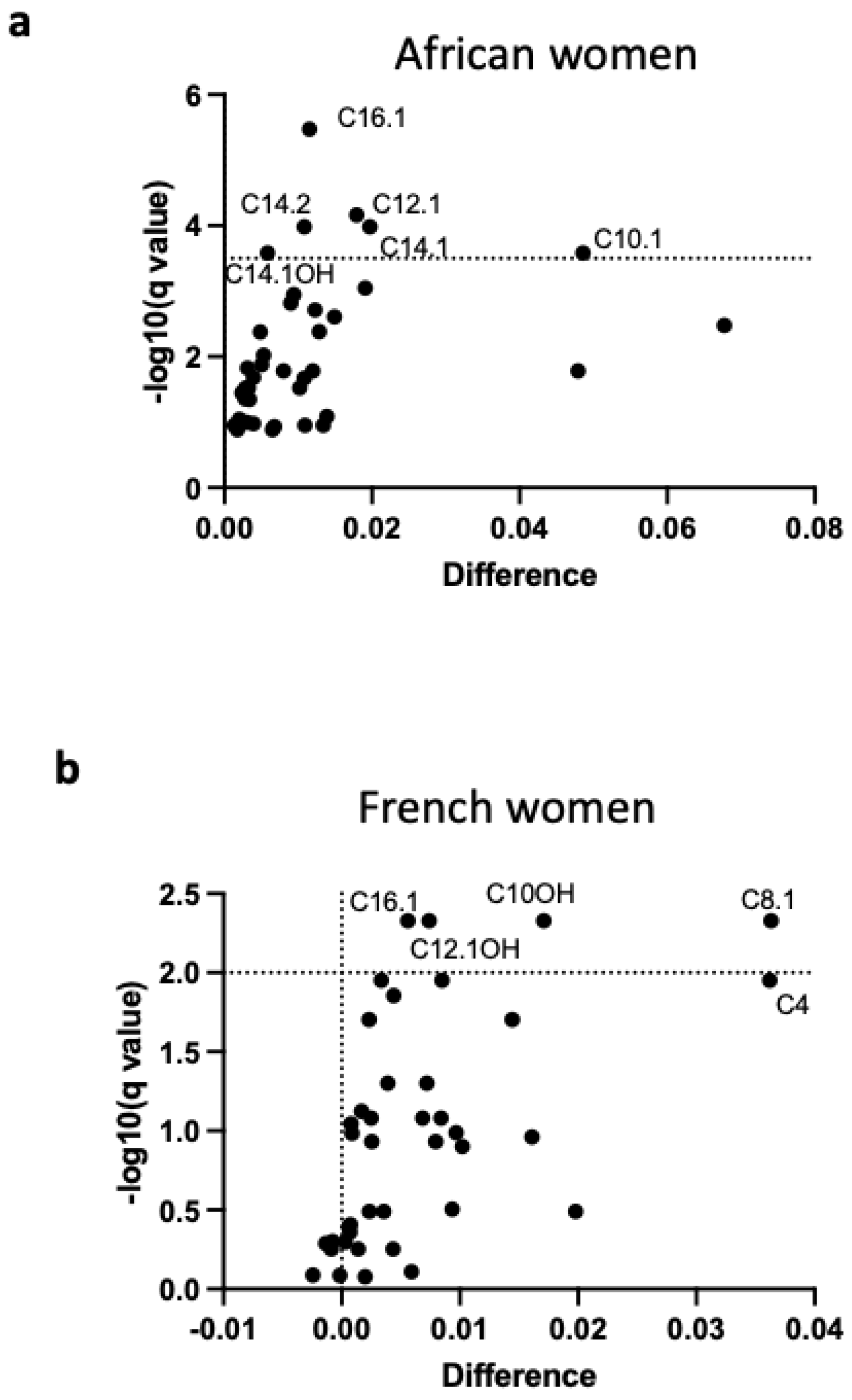
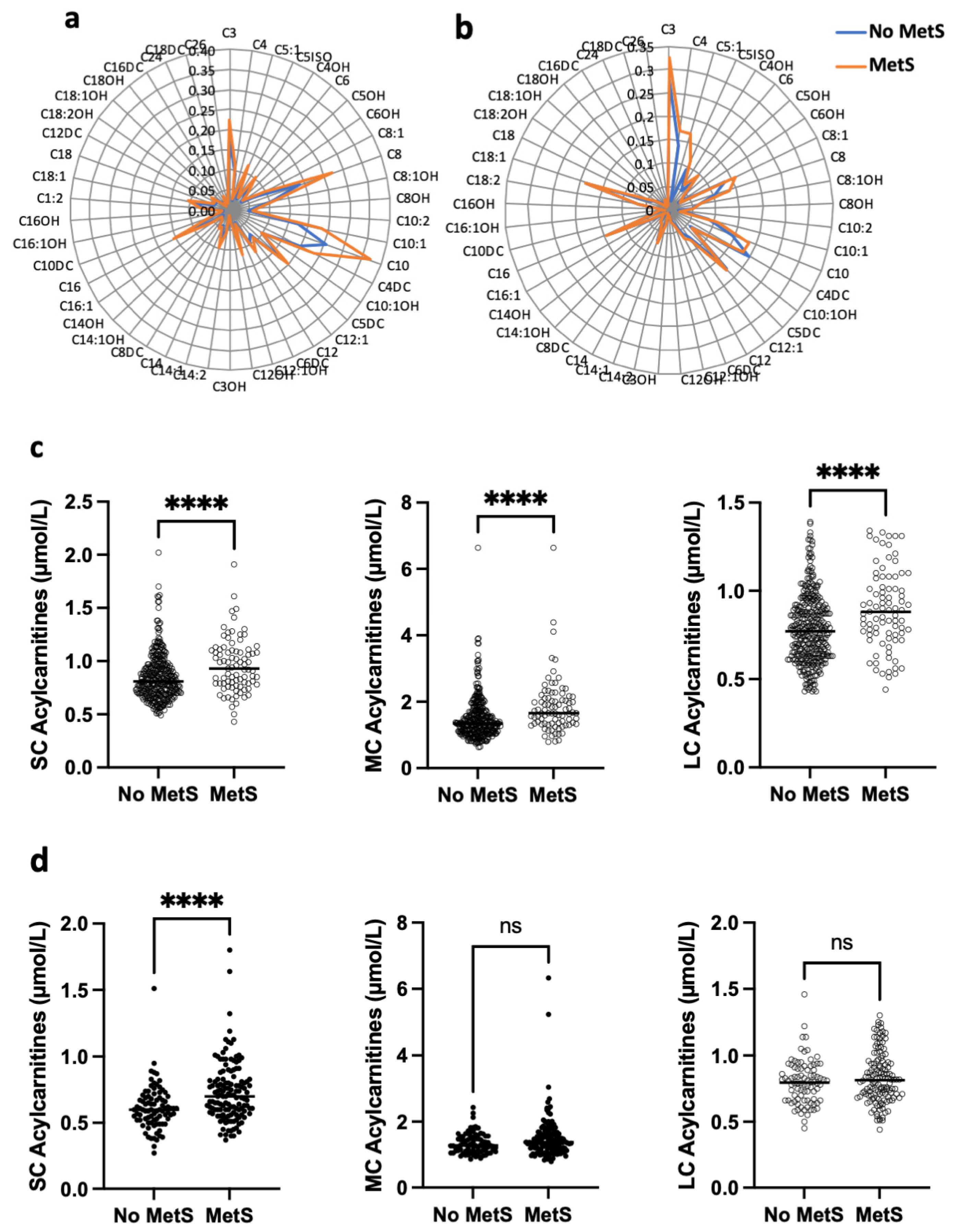
3.2. Acylcarnitine Concentrations According to Metabolic Syndrome
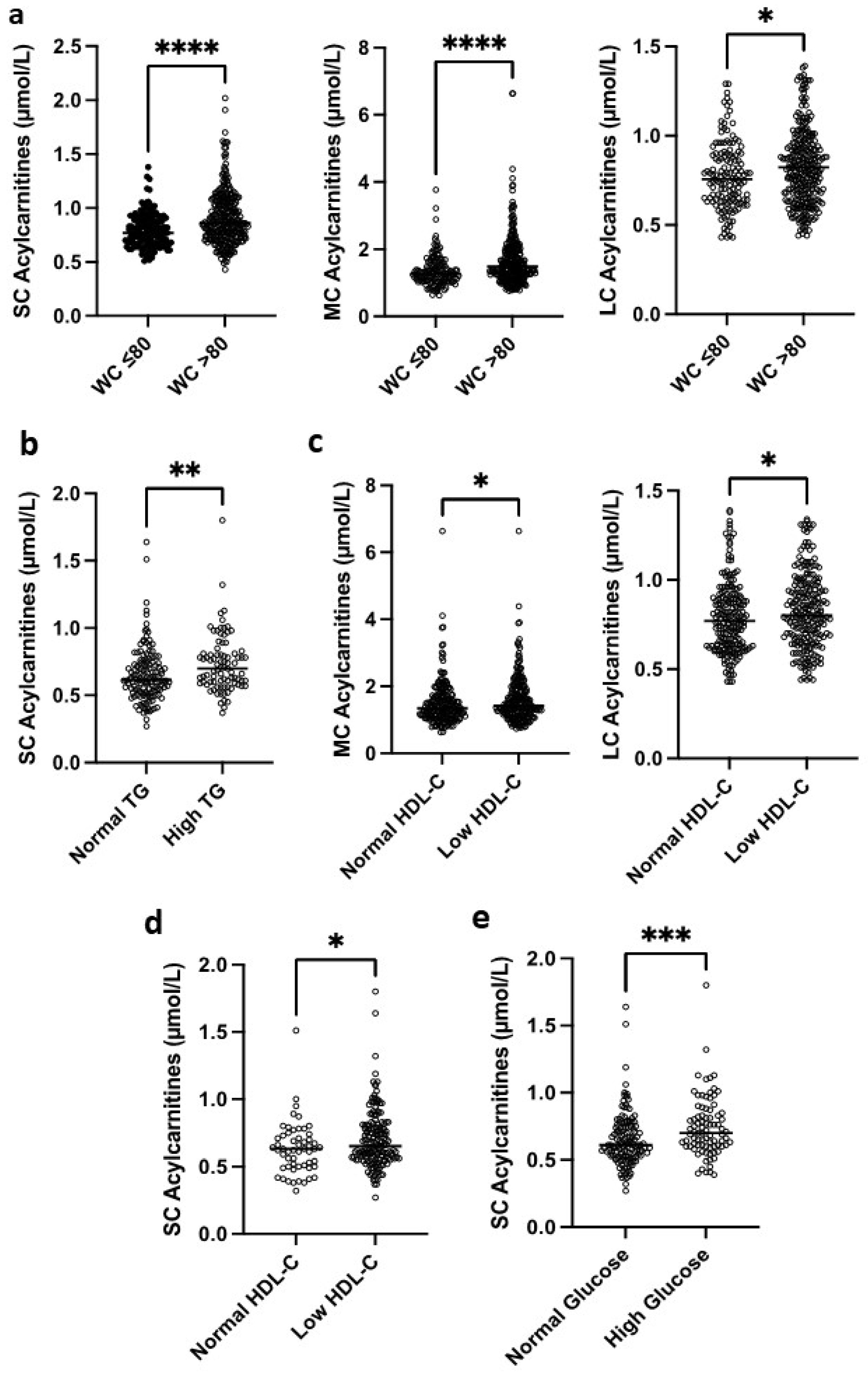
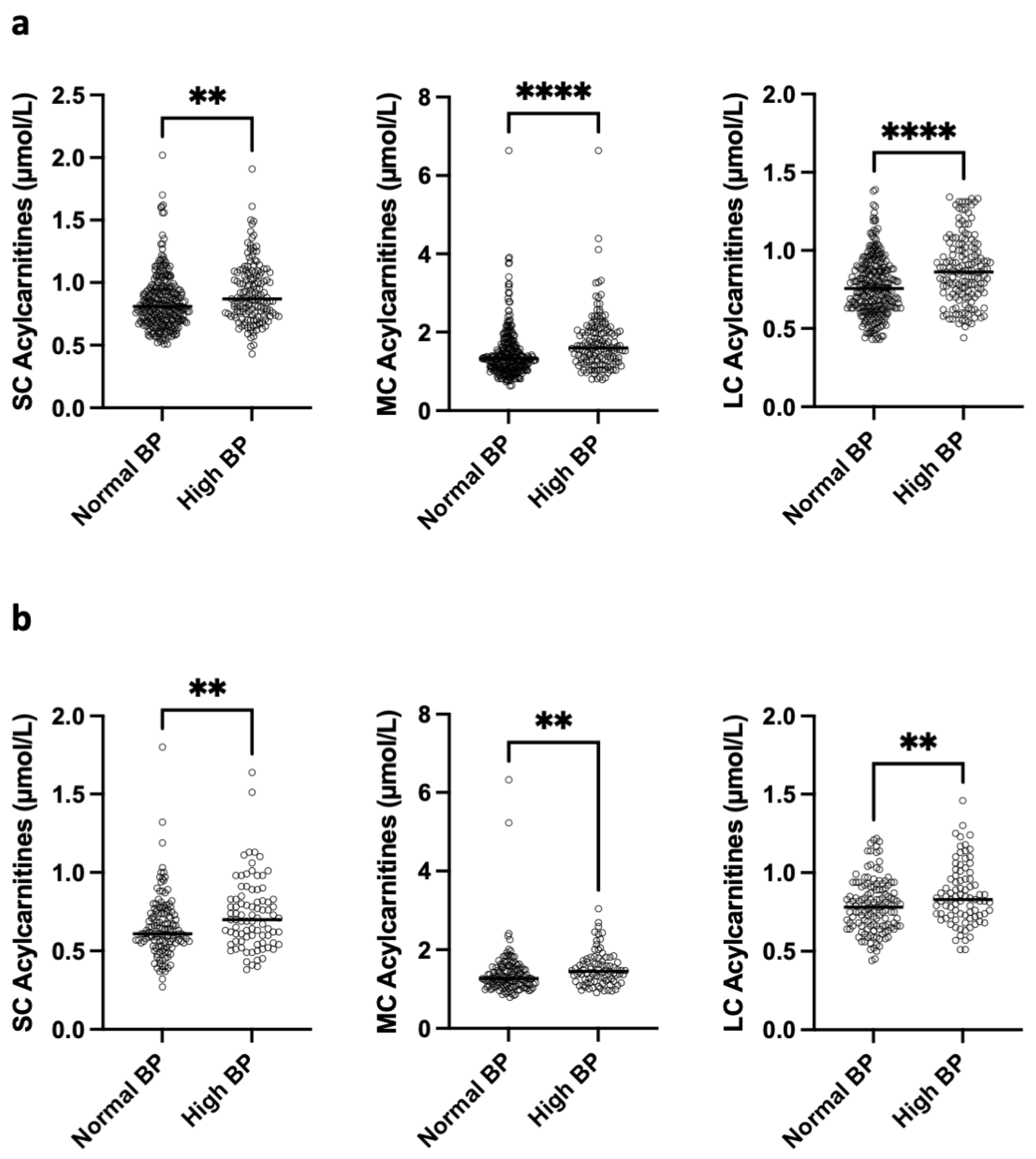
3.3. Acylcarnitine Concentrations According to Specific Components of Metabolic Syndrome
3.4. Predictors of Systolic Blood Pressure in Multivariate Analysis
4. Discussion
4.1. Association of Acylcarnitine Markers of Fatty Acid Oxidation with Obesity in African Women
4.2. Potential Mechanisms Supported by Other Studies
4.3. Association of Acylcarnitine’s Markers of Fatty Acid Oxidation with Insulin Resistance and T2DM
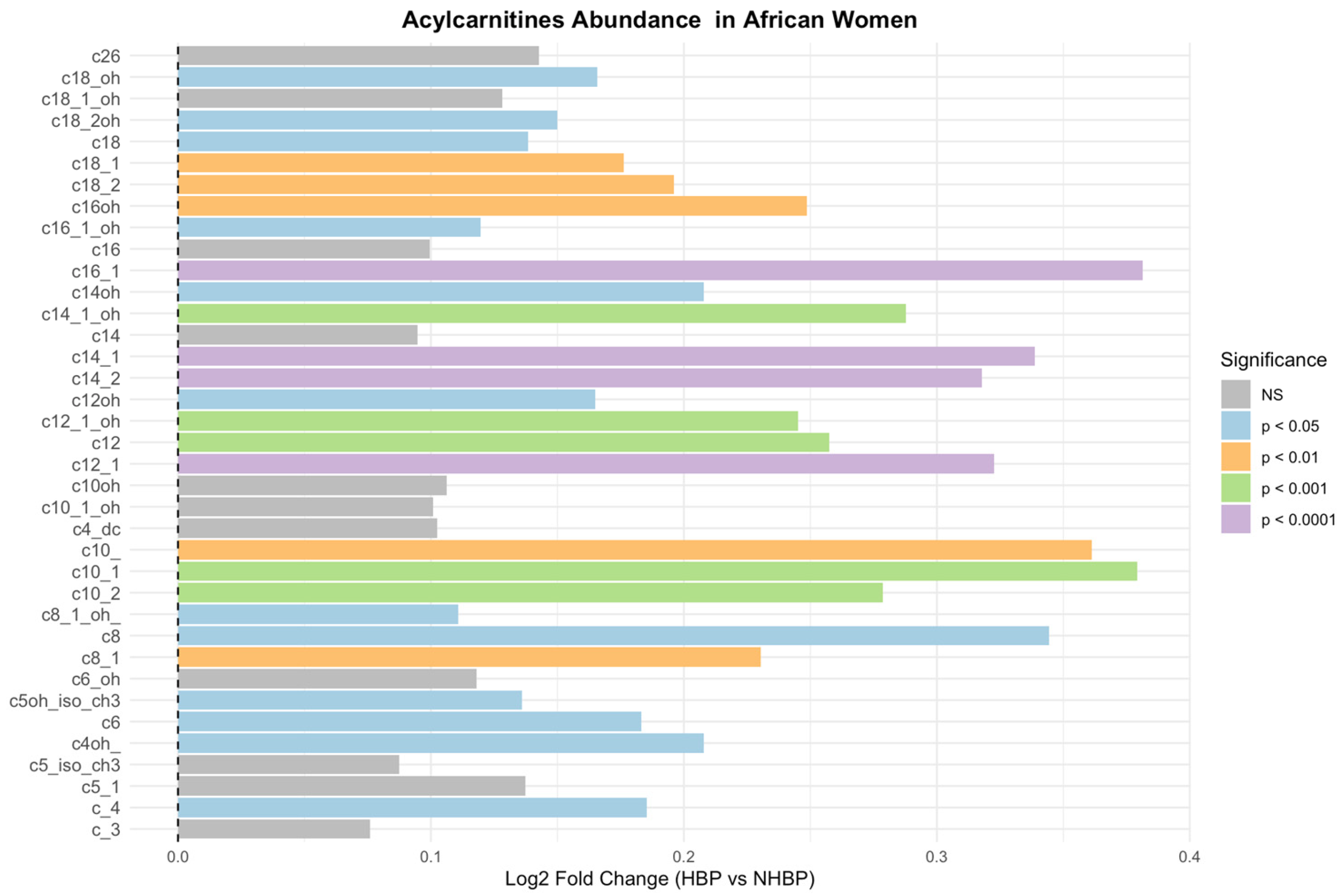
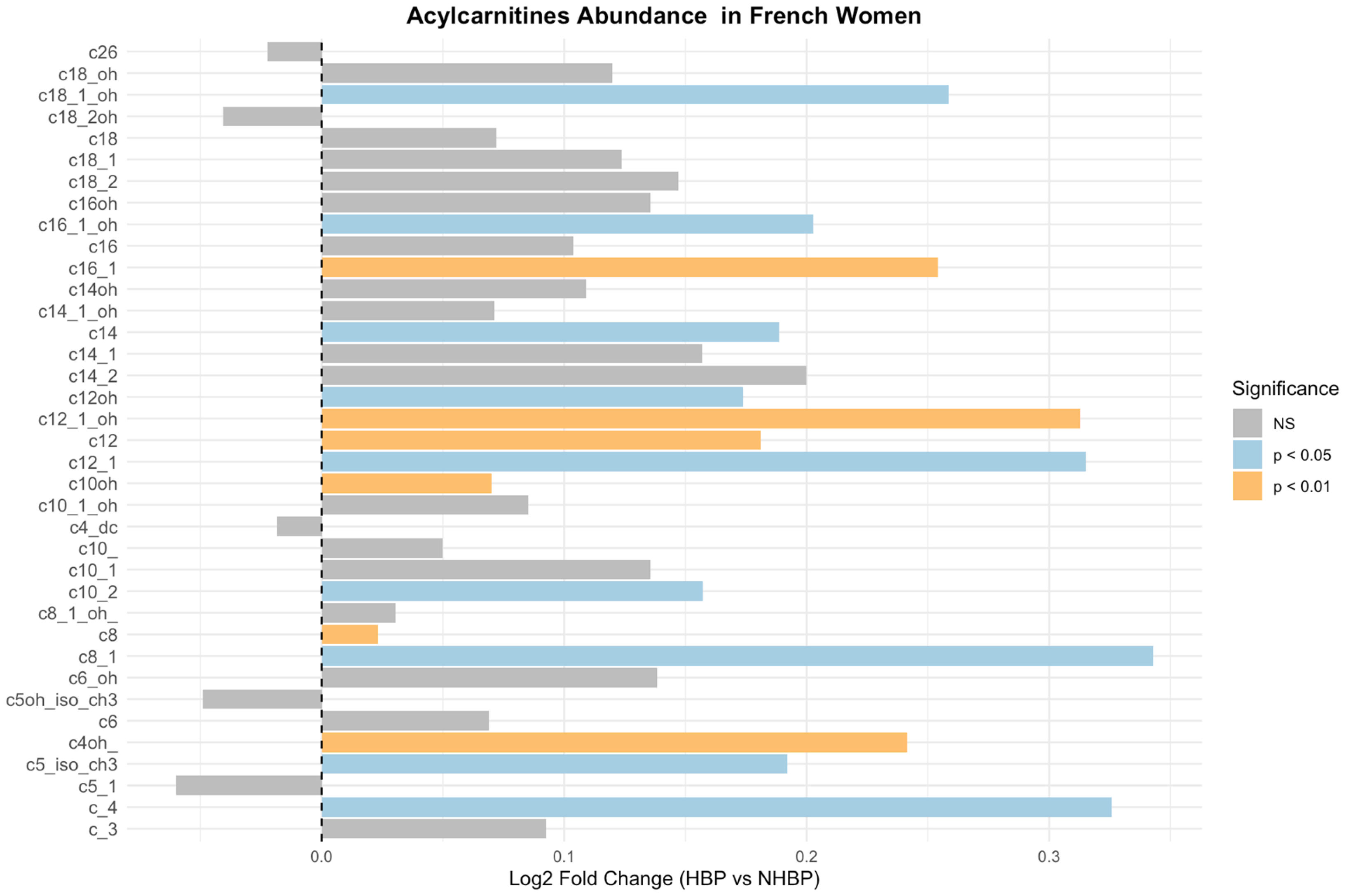
4.4. Association of Acylcarnitine’s Markers of Fatty Acid Oxidation with Hypertension
4.5. Our Study Opened Perspectives and Suffered Some Limitations
5. Conclusions
Supplementary Materials
Author Contributions
Funding
Institutional Review Board Statement
Informed Consent Statement
Data Availability Statement
Acknowledgments
Conflicts of Interest
Abbreviations
References
- Lovre, D.; Mauvais-Jarvis, F. Trends in Prevalence of the Metabolic Syndrome. JAMA 2015, 314, 950. [Google Scholar] [CrossRef] [PubMed]
- de Carvalho Vidigal, F.; Bressan, J.; Babio, N.; Salas-Salvado, J. Prevalence of metabolic syndrome in Brazilian adults: A systematic review. BMC Public Health 2013, 13, 1198. [Google Scholar] [CrossRef] [PubMed]
- Aguer, C.; McCoin, C.S.; Knotts, T.A.; Thrush, A.B.; Ono-Moore, K.; McPherson, R.; Dent, R.; Hwang, D.H.; Adams, S.H.; Harper, M.E. Acylcarnitines: Potential implications for skeletal muscle insulin resistance. FASEB J. 2015, 29, 336–345. [Google Scholar] [CrossRef] [PubMed]
- Devarshi, P.P.; McNabney, S.M.; Henagan, T.M. Skeletal Muscle Nucleo-Mitochondrial Crosstalk in Obesity and Type 2 Diabetes. Int. J. Mol. Sci. 2017, 18, 831. [Google Scholar] [CrossRef]
- Lowell, B.B.; Shulman, G.I. Mitochondrial dysfunction and type 2 diabetes. Science 2005, 307, 384–387. [Google Scholar] [CrossRef]
- Brownlee, M. Biochemistry and molecular cell biology of diabetic complications. Nature 2001, 414, 813–820. [Google Scholar] [CrossRef]
- Newgard, C.B.; An, J.; Bain, J.R.; Muehlbauer, M.J.; Stevens, R.D.; Lien, L.F.; Haqq, A.M.; Shah, S.H.; Arlotto, M.; Slentz, C.A.; et al. A branched-chain amino acid-related metabolic signature that differentiates obese and lean humans and contributes to insulin resistance. Cell Metab. 2009, 9, 311–326. [Google Scholar] [CrossRef]
- Rauschert, S.; Uhl, O.; Koletzko, B.; Hellmuth, C. Metabolomic Biomarkers for Obesity in Humans: A Short Review. Ann. Nutr. Metab. 2014, 64, 314–324. [Google Scholar] [CrossRef]
- Bouchard-Mercier, A.; Rudkowska, I.; Lemieux, S.; Couture, P.; Vohl, M.-C. The metabolic signature associated with the Western dietary pattern: A cross-sectional study. Nutr. J. 2013, 12, 158. [Google Scholar] [CrossRef]
- Ushula, T.W.; Mamun, A.; Darssan, D.; Wang, W.Y.S.; Williams, G.M.; Whiting, S.J.; Najman, J.M. Dietary patterns and the risks of metabolic syndrome and insulin resistance among young adults: Evidence from a longitudinal study. Clin. Nutr. 2022, 41, 1523–1531. [Google Scholar] [CrossRef]
- Rinaldo, P.; Matern, D.; Bennett, M.J. Fatty acid oxidation disorders. Annu. Rev. Physiol. 2002, 64, 477–502. [Google Scholar] [CrossRef] [PubMed]
- Gueant Rodriguez, R.M.; Spada, R.; Pooya, S.; Jeannesson, E.; Moreno Garcia, M.A.; Anello, G.; Bosco, P.; Elia, M.; Romano, A.; Alberto, J.M.; et al. Homocysteine predicts increased NT-pro-BNP through impaired fatty acid oxidation. Int. J. Cardiol. 2013, 167, 768–775. [Google Scholar] [CrossRef] [PubMed]
- Patel, M.J.; Batch, B.C.; Svetkey, L.P.; Bain, J.R.; Turer, C.B.; Haynes, C.; Muehlbauer, M.J.; Stevens, R.D.; Newgard, C.B.; Shah, S.H. Race and sex differences in small-molecule metabolites and metabolic hormones in overweight and obese adults. OMICS 2013, 17, 627–635. [Google Scholar] [CrossRef] [PubMed]
- Adams, S.H.; Hoppel, C.L.; Lok, K.H.; Zhao, L.; Wong, S.W.; Minkler, P.E.; Hwang, D.H.; Newman, J.W.; Garvey, W.T. Plasma acylcarnitine profiles suggest incomplete long-chain fatty acid beta-oxidation and altered tricarboxylic acid cycle activity in type 2 diabetic African-American women. J. Nutr. 2009, 139, 1073–1081. [Google Scholar] [CrossRef]
- Mels, C.M.C.; Schutte, A.E.; Erasmus, E.; Huisman, H.W.; Schutte, R.; Fourie, C.M.T.; Kruger, R.; Van Rooyen, J.M.; Smith, W.; Malan, N.T.; et al. l-Carnitine and Long-Chain Acylcarnitines are Positively Correlated with Ambulatory Blood Pressure in Humans: The SABPA Study. Lipids 2013, 48, 63–73. [Google Scholar] [CrossRef]
- Levy, J.C.; Matthews, D.R.; Hermans, M.P. Correct homeostasis model assessment (HOMA) evaluation uses the computer program. Diabetes Care 1998, 21, 2191–2192. [Google Scholar] [CrossRef]
- Gyakobo, M.; Amoah, A.G.; Martey-Marbell, D.A.; Snow, R.C. Prevalence of the metabolic syndrome in a rural population in Ghana. BMC Endocr. Disord. 2012, 12, 25. [Google Scholar] [CrossRef]
- Fezeu, L.; Balkau, B.; Kengne, A.P.; Sobngwi, E.; Mbanya, J.C. Metabolic syndrome in a sub-Saharan African setting: Central obesity may be the key determinant. Atherosclerosis 2007, 193, 70–76. [Google Scholar] [CrossRef]
- Tran, A.; Gelaye, B.; Girma, B.; Lemma, S.; Berhane, Y.; Bekele, T.; Khali, A.; Williams, M.A. Prevalence of Metabolic Syndrome among Working Adults in Ethiopia. Int. J. Hypertens. 2011, 2011, 193719. [Google Scholar] [CrossRef]
- Baker, P.R.; Boyle, K.E.; Koves, T.R.; Ilkayeva, O.R.; Muoio, D.M.; Houmard, J.A.; Friedman, J.E. Metabolomic analysis reveals altered skeletal muscle amino acid and fatty acid handling in obese humans. Obesity 2015, 23, 981–988. [Google Scholar] [CrossRef]
- Li, Z.; Gueant-Rodriguez, R.M.; Quilliot, D.; Sirveaux, M.A.; Meyre, D.; Gueant, J.L.; Brunaud, L. Folate and vitamin B12 status is associated with insulin resistance and metabolic syndrome in morbid obesity. Clin. Nutr. 2017, 37, 1700–1706. [Google Scholar] [CrossRef] [PubMed]
- Alberti, K.G.; Eckel, R.H.; Grundy, S.M.; Zimmet, P.Z.; Cleeman, J.I.; Donato, K.A.; Fruchart, J.C.; James, W.P.; Loria, C.M.; Smith, S.C., Jr. Harmonizing the metabolic syndrome: A joint interim statement of the International Diabetes Federation Task Force on Epidemiology and Prevention; National Heart, Lung, and Blood Institute; American Heart Association; World Heart Federation; International Atherosclerosis Society; and International Association for the Study of Obesity. Circulation 2009, 120, 1640–1645. [Google Scholar] [CrossRef] [PubMed]
- Noubiap, J.J.; Nansseu, J.R.; Lontchi-Yimagou, E.; Nkeck, J.R.; Nyaga, U.F.; Ngouo, A.T.; Tounouga, D.N.; Tianyi, F.L.; Foka, A.J.; Ndoadoumgue, A.L.; et al. Geographic distribution of metabolic syndrome and its components in the general adult population: A meta-analysis of global data from 28 million individuals. Diabetes Res. Clin. Pract. 2022, 188, 109924. [Google Scholar] [CrossRef] [PubMed]
- Matern, D. Laboratory Guide to the Methods in Biochemical Genetics; Blau, N., Ed.; Springer: Berlin/Heidelberg, Germany, 2008; pp. 171–206. [Google Scholar]
- Khodorova, N.V.; Rietman, A.; Rutledge, D.N.; Schwarz, J.; Piedcoq, J.; Pilard, S.; Siebelink, E.; Kok, F.J.; Tomé, D.; Mensink, M.; et al. Urinary Medium-Chained Acyl-Carnitines Sign High Caloric Intake whereas Short-Chained Acyl-Carnitines Sign High -Protein Diet within a High-Fat, Hypercaloric Diet in a Randomized Crossover Design Dietary Trial. Nutrients 2021, 13, 1191. [Google Scholar] [CrossRef]
- Koves, T.R.; Ussher, J.R.; Noland, R.C.; Slentz, D.; Mosedale, M.; Ilkayeva, O.; Bain, J.; Stevens, R.; Dyck, J.R.; Newgard, C.B.; et al. Mitochondrial overload and incomplete fatty acid oxidation contribute to skeletal muscle insulin resistance. Cell Metab. 2008, 7, 45–56. [Google Scholar] [CrossRef]
- Kosgei, V.J.; Coelho, D.; Guéant-Rodriguez, R.M.; Guéant, J.L. Sirt1-PPARS Cross-Talk in Complex Metabolic Diseases and Inherited Disorders of the One Carbon Metabolism. Cells 2020, 9, 1882. [Google Scholar] [CrossRef]
- Crown, S.B.; Marze, N.; Antoniewicz, M.R. Catabolism of Branched Chain Amino Acids Contributes Significantly to Synthesis of Odd-Chain and Even-Chain Fatty Acids in 3T3-L1 Adipocytes. PLoS ONE 2015, 10, e0145850. [Google Scholar] [CrossRef]
- Wolk, A.; Furuheim, M.; Vessby, B. Fatty acid composition of adipose tissue and serum lipids are valid biological markers of dairy fat intake in men. J. Nutr. 2001, 131, 828–833. [Google Scholar] [CrossRef]
- Wendel, U.; Baumgartner, R.; van der Meer, S.B.; Spaapen, L.J. Accumulation of odd-numbered long-chain fatty acids in fetuses and neonates with inherited disorders of propionate metabolism. Pediatr. Res. 1991, 29, 403–405. [Google Scholar] [CrossRef]
- Saric, J.; Wang, Y.; Li, J.; Coen, M.; Utzinger, J.; Marchesi, J.R.; Keiser, J.; Veselkov, K.; Lindon, J.C.; Nicholson, J.K.; et al. Species variation in the fecal metabolome gives insight into differential gastrointestinal function. J. Proteome Res. 2008, 7, 352–360. [Google Scholar] [CrossRef]
- Raman, M.; Ahmed, I.; Gillevet, P.M.; Probert, C.S.; Ratcliffe, N.M.; Smith, S.; Greenwood, R.; Sikaroodi, M.; Lam, V.; Crotty, P.; et al. Fecal microbiome and volatile organic compound metabolome in obese humans with nonalcoholic fatty liver disease. Clin. Gastroenterol. Hepatol. Off. Clin. Pract. J. Am. Gastroenterol. Assoc. 2013, 11, 868–875. [Google Scholar] [CrossRef] [PubMed]
- Salamone, D.; Costabile, G.; Corrado, A.; Della Pepa, G.; Vitale, M.; Giacco, R.; Luongo, D.; Testa, R.; Rivellese, A.A.; Annuzzi, G.; et al. Circulating short-chain fatty acids in type 2 diabetic patients and overweight/obese individuals. Acta Diabetol. 2022, 59, 1653–1656. [Google Scholar] [CrossRef] [PubMed]
- Huffman, K.M.; Shah, S.H.; Stevens, R.D.; Bain, J.R.; Muehlbauer, M.; Slentz, C.A.; Tanner, C.J.; Kuchibhatla, M.; Houmard, J.A.; Newgard, C.B.; et al. Relationships between circulating metabolic intermediates and insulin action in overweight to obese, inactive men and women. Diabetes Care 2009, 32, 1678–1683. [Google Scholar] [CrossRef] [PubMed]
- Shah, S.H.; Crosslin, D.R.; Haynes, C.S.; Nelson, S.; Turer, C.B.; Stevens, R.D.; Muehlbauer, M.J.; Wenner, B.R.; Bain, J.R.; Laferrere, B.; et al. Branched-chain amino acid levels are associated with improvement in insulin resistance with weight loss. Diabetologia 2012, 55, 321–330. [Google Scholar] [CrossRef]
- Fiehn, O.; Garvey, W.T.; Newman, J.W.; Lok, K.H.; Hoppel, C.L.; Adams, S.H. Plasma metabolomic profiles reflective of glucose homeostasis in non-diabetic and type 2 diabetic obese African-American women. PLoS ONE 2010, 5, e15234. [Google Scholar] [CrossRef]
- Wang, T.J.; Larson, M.G.; Vasan, R.S.; Cheng, S.; Rhee, E.P.; McCabe, E.; Lewis, G.D.; Fox, C.S.; Jacques, P.F.; Fernandez, C.; et al. Metabolite profiles and the risk of developing diabetes. Nat. Med. 2011, 17, 448–453. [Google Scholar] [CrossRef]
- Morino, K.; Petersen, K.F.; Shulman, G.I. Molecular mechanisms of insulin resistance in humans and their potential links with mitochondrial dysfunction. Diabetes 2006, 55, S9–S15. [Google Scholar] [CrossRef]
- Fiamoncini, J.; Lima, T.M.; Hirabara, S.M.; Ecker, J.; Gorjao, R.; Romanatto, T.; ELolimy, A.; Worsch, S.; Laumen, H.; Bader, B.; et al. Medium-chain dicarboxylic acylcarnitines as markers of n-3 PUFA-induced peroxisomal oxidation of fatty acids. Mol. Nutr. Food Res. 2015, 59, 1573–1583. [Google Scholar] [CrossRef]
- McGarry, J.D. Banting lecture 2001: Dysregulation of fatty acid metabolism in the etiology of type 2 diabetes. Diabetes 2002, 51, 7–18. [Google Scholar] [CrossRef]
- Summers, S.A. Ceramides in insulin resistance and lipotoxicity. Prog. Lipid Res. 2006, 45, 42–72. [Google Scholar] [CrossRef]
- Samovski, D.; Jacome-Sosa, M.; Abumrad, N.A. Fatty Acid Transport and Signaling: Mechanisms and Physiological Implications. Annu. Rev. Physiol. 2022, 85, 317–337. [Google Scholar] [CrossRef]
- Strauss-Kruger, M.; Kruger, R.; Jansen Van Vuren, E.; Jacobs, A.; Louw, R.; Mels, C. Identifying a metabolomics profile associated with masked hypertension in two independent cohorts: Data from the African-PREDICT and SABPA studies. Hypertens. Res. 2022, 45, 1781–1793. [Google Scholar] [CrossRef]
- Ramos-Roman, M.A.; Sweetman, L.; Valdez, M.J.; Parks, E.J. Postprandial changes in plasma acylcarnitine concentrations as markers of fatty acid flux in overweight and obesity. Metabolism 2012, 61, 202–212. [Google Scholar] [CrossRef]
- Sharma, S.; Black, S.M. Carnitine Homeostasis, Mitochondrial Function, and Cardiovascular Disease. Drug Discov. Today Dis. Mech. 2009, 6, e31–e39. [Google Scholar] [CrossRef]
- Tsuprykov, O.; Chaykovska, L.; Kretschmer, A.; Stasch, J.P.; Pfab, T.; Krause-Relle, K.; Reichetzeder, C.; Kalk, P.; Adamski, J.; Hocher, B. Endothelin-1 Overexpression Improves Renal Function in eNOS Knockout Mice. Cell Physiol. Biochem. 2015, 37, 1474–1490. [Google Scholar] [CrossRef]
- Brittain, E.L.; Talati, M.; Fessel, J.P.; Zhu, H.; Penner, N.; Calcutt, M.W.; West, J.D.; Funke, M.; Lewis, G.D.; Gerszten, R.E.; et al. Fatty Acid Metabolic Defects and Right Ventricular Lipotoxicity in Human Pulmonary Arterial Hypertension. Circulation 2016, 133, 1936–1944. [Google Scholar] [CrossRef]
- Bäck, M.; Yurdagul, A., Jr.; Tabas, I.; Öörni, K.; Kovanen, P.T. Inflammation and its resolution in atherosclerosis: Mediators and therapeutic opportunities. Nat. Rev. Cardiol. 2019, 16, 389–406. [Google Scholar] [CrossRef] [PubMed]



| African Women | French Obese Women | ||||||
|---|---|---|---|---|---|---|---|
| Metabolic syndrome | Metabolic syndrome | ||||||
| No n = 343 (80.1%) | Yes n = 85 (19.9%) | No n = 86 (39.0%) | Yes n = 134 (61.0%) | ||||
| Components of metabolic syndrome, biological data and metabolic profiling | Mean ± SD | p | Mean ± SD | p | |||
| Clinical data, related or not to MetS | |||||||
| Age, years | 39 ± 1 | 49 ± 1 | <0.0001 | 42 ± 1 | 47 ± 1 | 0.0031 | |
| Weight, kg | Yes | 77.7 ± 0.9 | 90.5 ± 1.8 | <0.0001 | 120.6 ± 1.9 | 121.5 ± 1.6 | 0.9385 |
| Blood pressure (mmHg) /treated hypertension (%) | Yes | 121 ± 18 | 150 ± 21 | <0.0001 | 8 (9.4%) | 77 (90.6%) | <0.0001 |
| Hip circumference, cm | Yes | 109.9 ± 0.7 | 118.1 ± 1.2 | <0.0001 | 138.1 ± 1.9 | 137.5 ± 1.8 | 0.2164 |
| Waist circumference, cm | Yes | 89.8 ± 0.7 | 1013.1 ± 1.2 | <0.0001 | 124.5 ± 2.0 | 124.8 ± 1.4 | 0.8877 |
| Waist/hip ratio (WHR) | Yes | 0.82 ± 0.0 | 0.88 ± 0.0 | <0.0001 | 0.89 ± 0.02 | 0.93 ± 0.01 | 0.0068 |
| BMI, kg/m2 | Yes | 30.4 ± 0.3 | 35.8 ± 0.7 | <0.0001 | 45.3 ± 0.6 | 46.4 ± 0.6 | 0.4657 |
| Fasting biochemistry | |||||||
| Glucose, mmol/L | Yes | 4.3 ± 0.0 | 4.6 ± 0.1 | 0.0609 | 4.8 ± 0.9 | 6.4 ± 0.2 | <0.0001 |
| Insulin, µU/mL | Yes | 26.0 ± 0.8 | 27.2 ± 1.6 | 0.2690 | 35.2 ± 2.8 | 63.1 ± 5.1 | <0.0001 |
| HOMA-IR | Yes | 5.1 ± 0.2 | 5.6 ± 0.4 | 0.0965 | 7.6 ± 0.6 | 19.2 ± 2.1 | <0.0001 |
| Total Cholesterol, g/L | 1.7 ± 0.0 | 1.8 ± 0.1 | 0.0307 | 1.9 ± 0.0 | 1.8 ± 0.0 | 0.1613 | |
| HDL-Cholesterol, g/L | Yes | 0.5 ± 0.0 | 0.4 ± 0.1 | <0.0001 | 0.5 ± 0.0 | 0.4 ± 0.0 | <0.0000 |
| LDL-Cholesterol, g/L | 1.1 ± 0.0 | 1.3 ± 0.0 | <0.0001 | 1.2 ± 0.1 | 1.1 ± 0.0 | 0.0061 | |
| Triglycerides, g/L | Yes | 0.6 ± 0.1 | 0.8 ± 0.0 | <0.0001 | 1.1 ± 0.0 | 1.7 ± 0.1 | <0.0001 |
| ALAT, UI/L | 12.1 ± 0.3 | 11.7 ± 0.6 | 0.7331 | 24.1 ± 2.1 | 43.4 ± 3.2 | <0.0001 | |
| ASAT, UI/L | 23.1 ± 0.5 | 22.9 ± 1.0 | 0.6639 | 22.9 ± 1.4 | 37.8 ± 2.4 | <0.0001 | |
| Ratio ASAT/ALAT | 2.2 ± 0.1 | 2.6 ± 0.3 | 0.6059 | 1.1 ± 0.1 | 1.0 ± 0.0 | 0.0721 | |
| Metabolic profiling | |||||||
| Homocysteine, µmol/L | 11.6 ± 0.3 | 12.6 ± 0.5 | 0.0009 | 13.5 ± 0.4 | 13.1 ± 0.4 | 0.2379 | |
| Folates, nmol/L | 11.3 ± 2.1 | 6.2 ± 0.4 | 0.0022 | 10.6 ± 0.7 | 12.8 ± 0.8 | 0.0222 | |
| Vitamin B12, pmol/L | 513.2 ± 13.3 | 458.2 ± 24.1 | 0.0055 | 229.5 ± 10.0 | 290.9 ± 35.3 | 0.0605 | |
| Total carnitine, µmol/L | 41.5 ± 0.5 | 44.9 ± 11 | 0.0037 | 43.2 ± 1.2 | 47.5 ± 1.0 | 0.0037 | |
| Free carnitine, µmol/L | 35.4 ± 0.5 | 38.3 ± 0.9 | 0.0116 | 33.0 ± 0.9 | 36.4 ± 0.9 | 0.0199 | |
| Short chain, µmol/L | 0.85 ± 0.01 | 0.95± 0.02 | 0.0001 | 0.61 ± 0.01 | 0.73 ± 0.02 | <0.0001 | |
| Medium chain, µmol/L | 1.48 ± 0.04 | 1.83 ± 0.01 | <0.0001 | 1.35 ± 0.03 | 1.51 ± 0.06 | 0.0907 | |
| Long chain, µmol/L | 0.79 ± 0.01 | 0.88 ± 0.02 | 0.0004 | 0.80 ± 0.02 | 0.83 ± 0.02 | 0.3316 | |
| Very long chain, µmol/L | 0.04 ± 0.00 | 0.04 ± 0.00 | 0.2523 | 0.02 ± 0.00 | 0.02 ± 0.00 | 0.6030 | |
| African Women | French Women | ||||||||
|---|---|---|---|---|---|---|---|---|---|
| Acylcarnitines | Enzymes | No MetS | MetS | p | Adjusted p | No MetS | MetS | p | Adjusted p |
| C4, µmol/L | SCAD | 0.09 ± 0.04 | 0.10 ± 0.05 | 0.0032 | 0.074 | 0.13 ± 0.04 | 0.17 ± 0.09 | 0.0025 | 0.014 |
| C8, µmol/L | MCAD | 0.18 ± 0.16 | 0.25 ± 0.26 | 0.0001 | 0.015 | 0.12 ± 0.16 | 0.12 ± 0.12 | 0.4476 | 0.095 |
| C8/C10 | MCAD | 0.75 ± 0.25 | 0.70 ± 0.21 | 0.1734 | 0.059 | 0.71 ± 0.13 | 0.73 ± 0.13 | 0.3322 | 0.872 |
| C14:1, µmol/L | VLCAD | 0.08 ± 0.04 | 0.10 ± 0.05 | 0.0001 | 0.004 | 0.07 ± 0.03 | 0.07 ± 0.03 | 0.5442 | 0.333 |
| C0/(C16:1 + C18) | CPT1 | 202.64 ± 3.88 | 203.66 ± 6.86 | 0.6991 | 0.962 | 197.83 ± 5.23 | 196.84 ± 5.77 | 0.8485 | 0.231 |
| C0/C2 | Even-numbered oxidation | 4.86 ± 1.52 | 4.78 ± 1.54 | 0.2022 | 0.405 | 4.95 ± 1.51 | 4.81 ± 1.61 | 0.4157 | 0.984 |
| (C2 + C3)/C0 | Overall activity ß-oxidation | 0.21 ± 0.02 | 0.23 ± 0.02 | 0.2775 | 0.033 | 0.22 ± 0.06 | 0.24 ± 0.08 | 0.3745 | 0.829 |
| (C3 + C5)/ Total C | BCAA metabolism | 0.005 ± 0.001 | 0.005 ± 0.002 | 0.1430 | 0.055 | 0.008 ± 0.002 | 0.008 ± 0.002 | 0.2346 | 0.127 |
| African Women | |||
|---|---|---|---|
| Odds ratio (95% C.I.) | z | p | |
| Age | 1.07 (1.06–1.11) | 7.46 | 0.000 |
| Glucose | 18.12 (2.41–135.71) | 2.82 | 0.005 |
| LDL-C | 2.36 (1.21–4.60) | 2.36 | 0.011 |
| LC-AC | 5.42 (1.60–18.43) | 2.71 | 0.007 |
Disclaimer/Publisher’s Note: The statements, opinions and data contained in all publications are solely those of the individual author(s) and contributor(s) and not of MDPI and/or the editor(s). MDPI and/or the editor(s) disclaim responsibility for any injury to people or property resulting from any ideas, methods, instructions or products referred to in the content. |
© 2026 by the authors. Licensee MDPI, Basel, Switzerland. This article is an open access article distributed under the terms and conditions of the Creative Commons Attribution (CC BY) license.
Share and Cite
Chabi, N.; Nominé-Criqui, C.; Heinken, A.; Quilliot, D.; Brunaud, L.; Li, Z.; Jeannesson-Thivisol, E.; Sanni, A.; Ziegler, O.; Gueant, J.-L.; et al. Acylcarnitines Are Associated with Metabolic Syndrome and Hypertension in Two Contrasted Obese Populations. Nutrients 2026, 18, 1137. https://doi.org/10.3390/nu18071137
Chabi N, Nominé-Criqui C, Heinken A, Quilliot D, Brunaud L, Li Z, Jeannesson-Thivisol E, Sanni A, Ziegler O, Gueant J-L, et al. Acylcarnitines Are Associated with Metabolic Syndrome and Hypertension in Two Contrasted Obese Populations. Nutrients. 2026; 18(7):1137. https://doi.org/10.3390/nu18071137
Chicago/Turabian StyleChabi, Nicodème, Claire Nominé-Criqui, Almut Heinken, Didier Quilliot, Laurent Brunaud, Zhen Li, Elise Jeannesson-Thivisol, Ambaliou Sanni, Olivier Ziegler, Jean-Louis Gueant, and et al. 2026. "Acylcarnitines Are Associated with Metabolic Syndrome and Hypertension in Two Contrasted Obese Populations" Nutrients 18, no. 7: 1137. https://doi.org/10.3390/nu18071137
APA StyleChabi, N., Nominé-Criqui, C., Heinken, A., Quilliot, D., Brunaud, L., Li, Z., Jeannesson-Thivisol, E., Sanni, A., Ziegler, O., Gueant, J.-L., & Guéant-Rodriguez, R.-M. (2026). Acylcarnitines Are Associated with Metabolic Syndrome and Hypertension in Two Contrasted Obese Populations. Nutrients, 18(7), 1137. https://doi.org/10.3390/nu18071137