Vitamin B12 Deficiency in the Diagnostic Work-Up of Global Developmental Delay: A Treatable and Time-Sensitive Condition
 , , , ,
  ,
,  ,
,  , and
, and 
Abstract
1. Introduction
2. Materials and Methods
2.1. Search Strategy
2.2. Eligibility Criteria
- human studies reporting infants or children (generally ≤5 years of age) with documented vitamin B12 deficiency and associated neurodevelopmental delay, regression, or GDD;
- observational studies evaluating pediatric vitamin B12 status in relation to neurodevelopmental outcomes;
- case reports and case series describing clinical presentation, neuroimaging findings, and treatment response;
- position statements and guidelines on the evaluation of GDD that addressed metabolic or nutritional testing;
- narrative and systematic reviews relevant to vitamin B12 deficiency and neurodevelopment.
- adult-only studies;
- basic science or animal studies without direct clinical correlates;
- reports focusing exclusively on hematologic manifestations without description of neurodevelopmental outcomes.
2.3. Data Synthesis
- Vitamin B12 metabolism and its role in early brain development;
- Epidemiology and risk factors for pediatric vitamin B12 deficiency;
- Clinical presentation and neuroimaging patterns of vitamin B12-related developmental delay or regression;
- Biomarkers of vitamin B12 status and diagnostic challenges;
- Treatment response, timing of diagnosis, and long-term neurodevelopmental outcomes;
- Integration of vitamin B12 assessment into contemporary diagnostic frameworks for GDD;
- Limitations of the current evidence base and research gaps.
3. Narrative Synthesis
3.1. Vitamin B12 and Early Brain Development
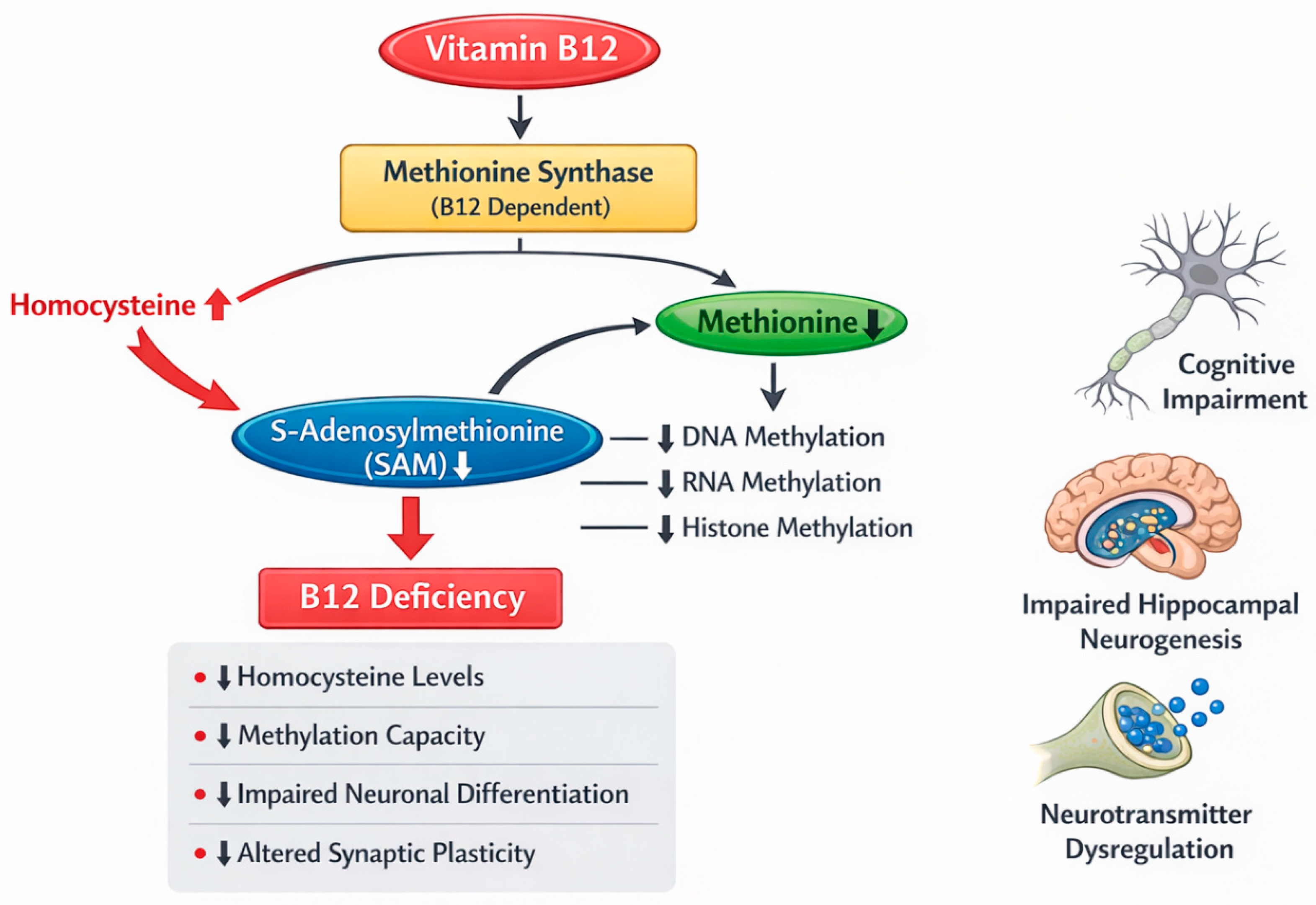
3.1.1. One-Carbon Metabolism
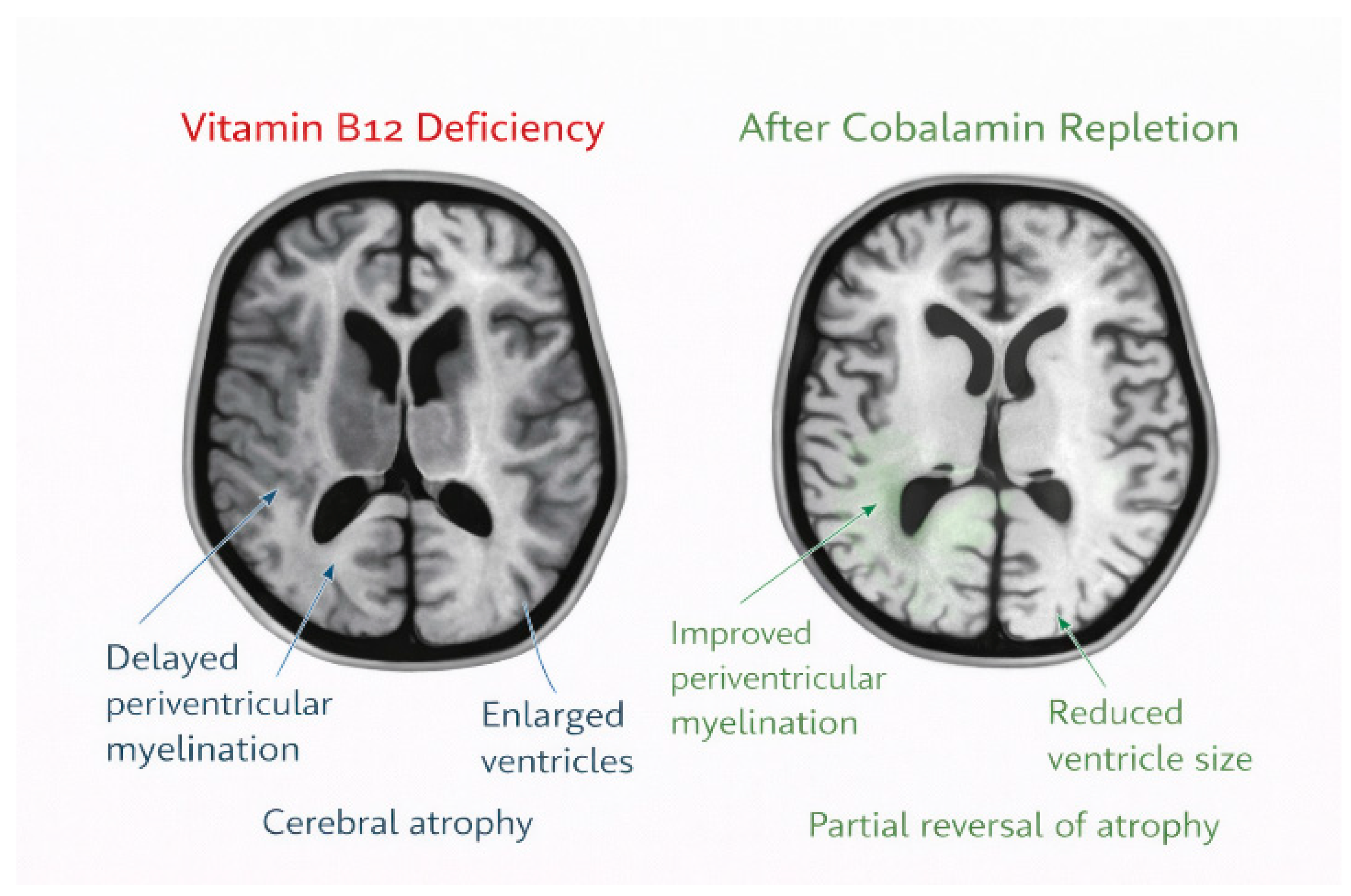
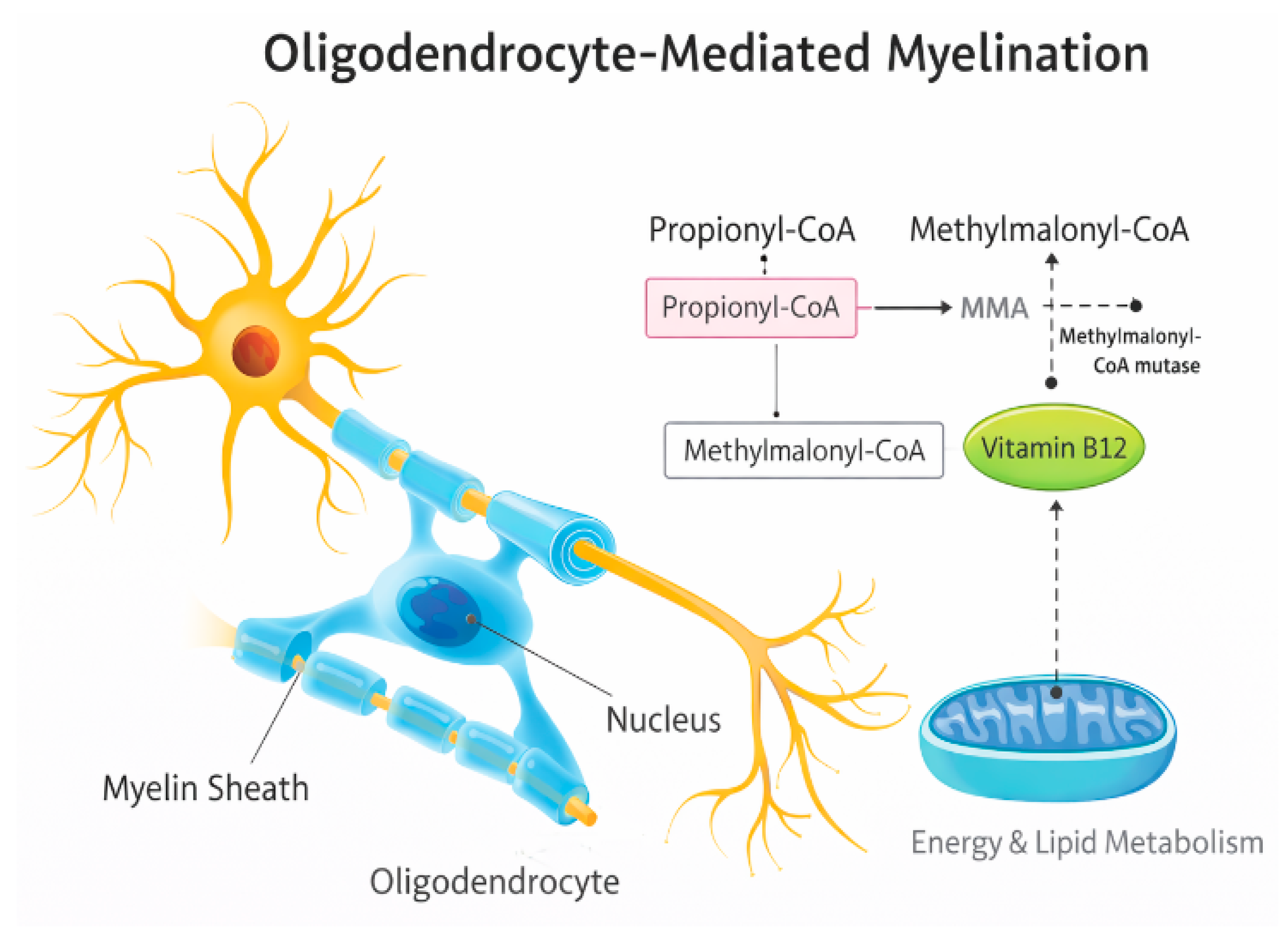
3.1.2. Myelination
3.1.3. Epigenetic Programming
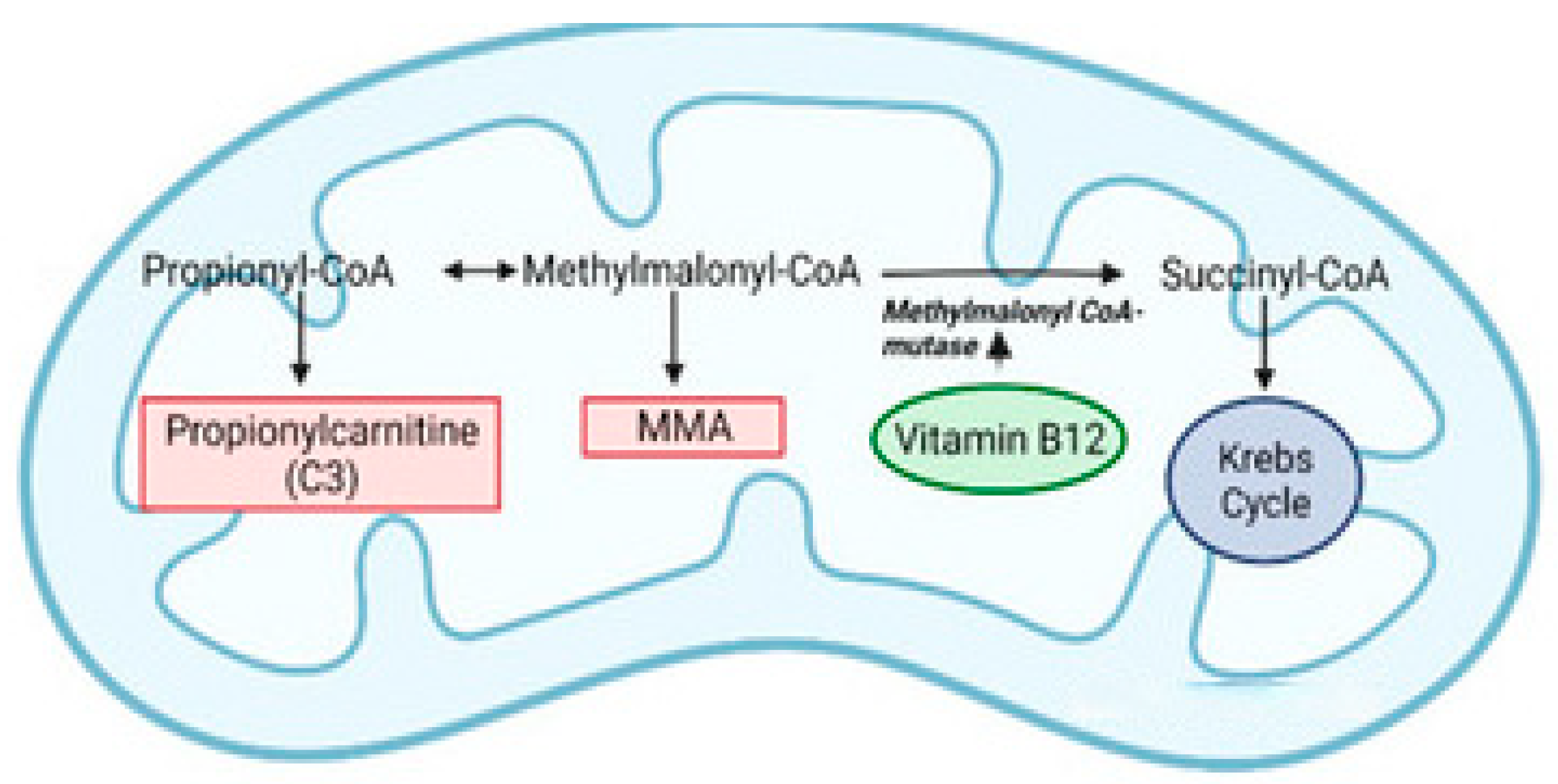
3.1.4. Mitochondrial Function
4. Risk Factors for Pediatric Vitamin B12 Deficiency
4.1. Maternal Vitamin B12 Deficiency
4.2. Exclusive Breastfeeding
4.3. Vegetarian or Vegan Maternal Diet
4.4. Malabsorption Syndromes
4.5. Inborn Errors of Cobalamin Metabolism
4.6. Socioeconomic and Environmental Factors
5. Clinical Phenotype in Children with Global Developmental Delay
6. Biomarkers and Diagnostic Challenges
7. Treatment and Neurodevelopmental Outcomes
8. Integration of Vitamin B12 Assessment into the Diagnostic Work-Up of GDD
8.1. Indications for Testing
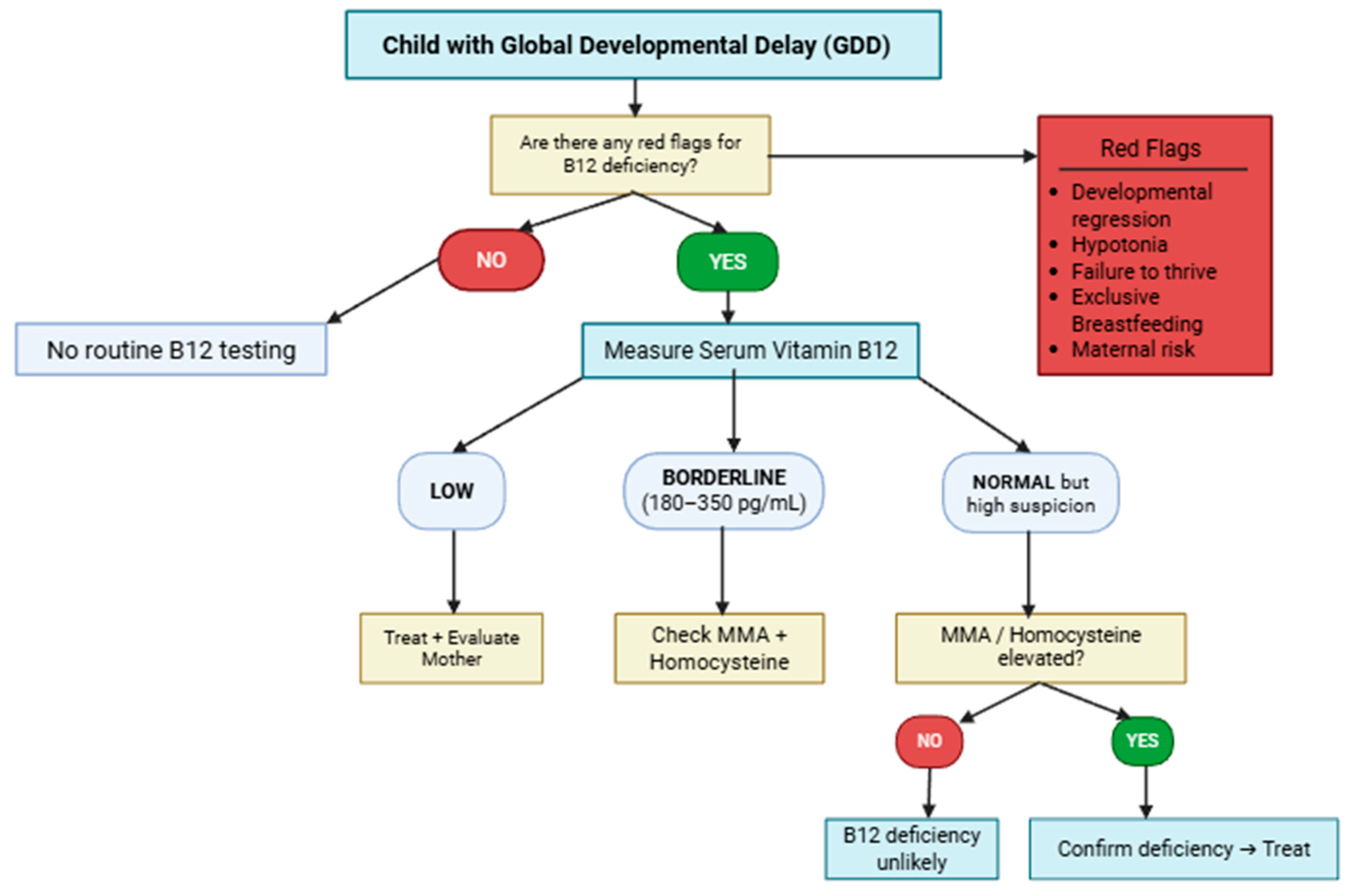
8.2. Diagnostic Strategy
8.3. Practical Implementation
- obtaining a detailed dietary and feeding history from both the child and the mother;
- identifying maternal risk factors, including a vegetarian or vegan diet, previous bariatric surgery, and pernicious anemia;
- performing targeted laboratory testing for serum vitamin B12 and, when indicated, functional biomarkers;
- conducting parallel maternal evaluation when pediatric deficiency is suspected [Figure 5].
9. Limitations and Research Gaps
9.1. Heterogeneity of Clinical Presentation
9.2. Uncertainty Regarding the Window of Reversibility
9.3. Diagnostic Limitations and Biomarker Uncertainty
9.4. Gaps in Prevention and Screening Strategies
- establish pediatric-specific reference intervals for functional biomarkers;
- define optimal biomarker combinations for early detection;
- determine long-term neurodevelopmental outcomes following treatment;
- evaluate the cost-effectiveness of maternal screening strategies;
- develop standardized diagnostic algorithms integrating maternal and infant assessment.
10. Conclusions
Author Contributions
Funding
Institutional Review Board Statement
Informed Consent Statement
Data Availability Statement
Acknowledgments
Conflicts of Interest
Abbreviations
| GDD | global developmental delay |
| SAM | S-adenosylmethionine |
| holoTC | holotranscobalamin |
| MMA | methylmalonic acid |
| IM | intramuscular |
References
- Bélanger, S.A.; Caron, J. Evaluation of the Child with Global Developmental Delay and Intellectual Disability. Paediatr. Child Health 2018, 23, 403–410. [Google Scholar] [CrossRef] [PubMed]
- Moeschler, J.B.; Shevell, M.; Committee on Genetics; Moeschler, J.B.; Shevell, M.; Saul, R.A.; Chen, E.; Freedenberg, D.L.; Hamid, R.; Jones, M.C.; et al. Comprehensive Evaluation of the Child With Intellectual Disability or Global Developmental Delays. Pediatrics 2014, 134, e903–e918. [Google Scholar] [CrossRef] [PubMed]
- Aldosari, A.N.; Aldosari, T.S. Comprehensive Evaluation of the Child with Global Developmental Delays or Intellectual Disability. Clin. Exp. Pediatr. 2024, 67, 435–446. [Google Scholar] [CrossRef] [PubMed]
- Global Research on Developmental Disabilities Collaborators. Developmental disabilities among children younger than 5 years in 195 countries and territories, 1990–2016: A systematic analysis for the Global Burden of Disease Study 2016. Lancet Glob. Health 2018, 6, e1100–e1121. [Google Scholar] [CrossRef]
- Draper, C.E.; Yousafzai, A.K.; McCoy, D.C.; Cuartas, J.; Obradović, J.; Bhopal, S.; Fisher, J.; Jeong, J.; Klingberg, S.; Milner, K.; et al. The next 1000 days: Building on early investments for the health and development of young children. Lancet 2024, 404, 2094–2116. [Google Scholar] [CrossRef]
- Wolffenbuttel, B.H.; Owen, P.J.; Ward, M.; Green, R. Vitamin B12. BMJ 2023, 383, e071725. [Google Scholar] [CrossRef]
- McNeil, K.; Chowdhury, D.; Penney, L.; Rashid, M. Vitamin B12 Deficiency with Intrinsic Factor Antibodies in an Infant with Poor Growth and Developmental Delay. Paediatr. Child Health 2014, 19, 84–86. [Google Scholar] [CrossRef]
- Casella, E.B.; Valente, M.; De Navarro, J.M.; Kok, F. Vitamin B12 Deficiency in Infancy as a Cause of Developmental Regression. Brain Dev. 2005, 27, 592–594. [Google Scholar] [CrossRef]
- Agrawal, S.; Nathani, S. Neuro-Regression in Vitamin B12 Deficiency. BMJ Case Rep. 2009, 2009, bcr0620080235. [Google Scholar] [CrossRef]
- Hasbaoui, B.E.; Mebrouk, N.; Saghir, S.; Yajouri, A.E.; Abilkassem, R.; Agadr, A. Vitamin B12 Deficiency: Case Report and Review of Literature. Pan Afr. Med. J. 2021, 38, 237. [Google Scholar] [CrossRef]
- Dror, D.K.; Allen, L.H. Effect of Vitamin B12 Deficiency on Neurodevelopment in Infants: Current Knowledge and Possible Mechanisms. Nutr. Rev. 2008, 66, 250–255. [Google Scholar] [CrossRef]
- Stabler, S.P. Vitamin B12 Deficiency. N. Engl. J. Med. 2013, 368, 149–160. [Google Scholar] [CrossRef]
- Graham, S.M.; Arvela, O.M.; Wise, G.A. Long-Term Neurologic Consequences of Nutritional Vitamin B12 Deficiency in Infants. J. Pediatr. 1992, 121, 710–714. [Google Scholar] [CrossRef]
- O’Leary, F.; Samman, S. Vitamin B12 in Health and Disease. Nutrients 2010, 2, 299–316. [Google Scholar] [CrossRef]
- Zeisel, S.H. Epigenetic Mechanisms for Nutrition Determinants of Later Health Outcomes. Am. J. Clin. Nutr. 2009, 89, 1488S–1493S. [Google Scholar] [CrossRef]
- Hannibal, L.; Lysne, V.; Bjørke-Monsen, A.-L.; Behringer, S.; Grünert, S.C.; Spiekerkoetter, U.; Jacobsen, D.W.; Blom, H.J. Biomarkers and Algorithms for the Diagnosis of Vitamin B12 Deficiency. Front. Mol. Biosci. 2016, 3, 27. [Google Scholar] [CrossRef]
- Saravanan, P.; Sukumar, N.; Adaikalakoteswari, A.; Goljan, I.; Venkataraman, H.; Gopinath, A.; Bagias, C.; Yajnik, C.S.; Stallard, N.; Ghebremichael-Weldeselassie, Y.; et al. Association of Maternal Vitamin B12 and Folate Levels in Early Pregnancy with Gestational Diabetes: A Prospective UK Cohort Study (PRiDE Study). Diabetologia 2021, 64, 2170–2182. [Google Scholar] [CrossRef]
- Wolffenbuttel, B.H.R.; Wouters, H.J.C.M.; Heiner-Fokkema, M.R.; van der Klauw, M.M. The Many Faces of Cobalamin (Vitamin B12) Deficiency. Mayo Clin. Proc. Innov. Qual. Outcomes 2019, 3, 200–214. [Google Scholar] [CrossRef] [PubMed]
- Demir, N.; Koc, A.; Üstyol, L.; Peker, E.; Abuhandan, M. Clinical and Neurological Findings of Severe Vitamin B12 Deficiency in Infancy and Importance of Early Diagnosis and Treatment. J. Paediatr. Child Health 2013, 49, 820–824. [Google Scholar] [CrossRef] [PubMed]
- Wirthensohn, M.; Wehrli, S.; Ljungblad, U.W.; Huemer, M. Biochemical, Nutritional, and Clinical Parameters of Vitamin B12 Deficiency in Infants: A Systematic Review and Analysis of 292 Cases Published between 1962 and 2022. Nutrients 2023, 15, 4960. [Google Scholar] [CrossRef] [PubMed]
- Kaufman, C.; Margreitter, J.; Herle, M.; Bonfig, W.; Däster, C.; Heinrich, B.; Karall, D.; Kogler, H.; Konstantopoulou, V.; Laemmle, A.; et al. Newborn Screening Alone Cannot Prevent Most Cases of Severe Vitamin B12 Deficiency in the First Year of Life. Nutrients 2025, 17, 3583. [Google Scholar] [CrossRef] [PubMed]
- Reischl-Hajiabadi, A.T.; Garbade, S.F.; Feyh, P.; Weiss, K.H.; Mütze, U.; Kölker, S.; Hoffmann, G.F.; Gramer, G. Maternal Vitamin B12 Deficiency Detected by Newborn Screening-Evaluation of Causes and Characteristics. Nutrients 2022, 14, 3767. [Google Scholar] [CrossRef]
- Bjørke-Monsen, A.-L. Defining Optimal Cobalamin Status for Neonates and Infants. Food Nutr. Bull. 2024, 45, S16–S22. [Google Scholar] [CrossRef] [PubMed]
- Lipari Pinto, P.; Florindo, C.; Janeiro, P.; Santos, R.L.; Mexia, S.; Rocha, H.; Tavares de Almeida, I.; Vilarinho, L.; Gaspar, A. Acquired Vitamin B12 Deficiency in Newborns: Positive Impact on Newborn Health through Early Detection. Nutrients 2022, 14, 4397. [Google Scholar] [CrossRef]
- Bjørkevoll, S.M.G.; O’Keeffe, M.; Konijnenberg, C.; Solvik, B.S.; Sødal, A.F.; Kaldenbach, S.; McCann, A.; Ueland, P.M.; Kvestad, I.; Ersvær, E.; et al. Infant Vitamin B12 Status and Its Predictors-Cross-Sectional Baseline Results from an Ongoing Randomized Controlled Trial. Am. J. Clin. Nutr. 2025, 122, 803–810. [Google Scholar] [CrossRef] [PubMed]
- Allen, L.H. Micronutrients-Assessment, Requirements, Deficiencies, and Interventions. N. Engl. J. Med. 2025, 392, 1006–1016. [Google Scholar] [CrossRef]
- Chouraqui, J.-P. Risk Assessment of Micronutrients Deficiency in Vegetarian or Vegan Children: Not So Obvious. Nutrients 2023, 15, 2129. [Google Scholar] [CrossRef]
- Whitehead, V.M. Acquired and Inherited Disorders of Cobalamin and Folate in Children. Br. J. Haematol. 2006, 134, 125–136. [Google Scholar] [CrossRef]
- Sloan, J.L.; Carrillo, N.; Adams, D.; Venditti, C.P. Disorders of Intracellular Cobalamin Metabolism. In GeneReviews®; Adam, M.P., Bick, S., Mirzaa, G.M., Pagon, R.A., Wallace, S.E., Amemiya, A., Eds.; University of Washington, Seattle: Seattle, WA, USA, 1993. [Google Scholar]
- Rodan, L.H.; Stoler, J.; Chen, E.; Geleske, T. Council on Genetics Genetic Evaluation of the Child With Intellectual Disability or Global Developmental Delay: Clinical Report. Pediatrics 2025, 156, e2025072219. [Google Scholar] [CrossRef]
- Srour, M.; Mazer, B.; Shevell, M.I. Analysis of Clinical Features Predicting Etiologic Yield in the Assessment of Global Developmental Delay. Pediatrics 2006, 118, 139–145. [Google Scholar] [CrossRef]
- Zhang, J.; Xu, Y.; Liu, Y.; Yue, L.; Jin, H.; Chen, Y.; Wang, D.; Wang, M.; Chen, G.; Yang, L.; et al. Genetic Testing for Global Developmental Delay in Early Childhood. JAMA Netw. Open 2024, 7, e2415084. [Google Scholar] [CrossRef] [PubMed]
- Patel, H.; McGuirk, R. Vitamin B12 Deficiency: Common Questions and Answers. Am. Fam. Physician 2025, 112, 294–300. [Google Scholar] [PubMed]
- Jarquin Campos, A.; Risch, L.; Nydegger, U.; Wiesner, J.; Vazquez Van Dyck, M.; Renz, H.; Stanga, Z.; Risch, M. Diagnostic Accuracy of Holotranscobalamin, Vitamin B12, Methylmalonic Acid, and Homocysteine in Detecting B12 Deficiency in a Large, Mixed Patient Population. Dis. Markers 2020, 2020, 7468506. [Google Scholar] [CrossRef] [PubMed]
- Harrington, D.J. Laboratory Assessment of Vitamin B12 Status. J. Clin. Pathol. 2017, 70, 168–173. [Google Scholar] [CrossRef]
- Sankar, S.; Srinivasan, R.; Bharadwaj, V.; Devi, S. Clinical Profile and Utility of Biomarkers in Children with Cobalamin (Vitamin B12) Deficiency: A Cross-Sectional Study. Ann. Clin. Biochem. 2026, 63, 69–78. [Google Scholar] [CrossRef]
- Valente, E.; Scott, J.M.; Ueland, P.-M.; Cunningham, C.; Casey, M.; Molloy, A.M. Diagnostic Accuracy of Holotranscobalamin, Methylmalonic Acid, Serum Cobalamin, and Other Indicators of Tissue Vitamin B12 Status in the Elderly. Clin. Chem. 2011, 57, 856–863. [Google Scholar] [CrossRef]
- Harrington, D.J.; Stevenson, E.; Sobczyńska-Malefora, A. The Application and Interpretation of Laboratory Biomarkers for the Evaluation of Vitamin B12 Status. Ann. Clin. Biochem. 2025, 62, 22–33. [Google Scholar] [CrossRef]
- Nexo, E.; Parkner, T. Vitamin B12-Related Biomarkers. Food Nutr. Bull. 2024, 45, S28–S33. [Google Scholar] [CrossRef]
- Vashi, P.; Edwin, P.; Popiel, B.; Lammersfeld, C.; Gupta, D. Methylmalonic Acid and Homocysteine as Indicators of Vitamin B-12 Deficiency in Cancer. PLoS ONE 2016, 11, e0147843. [Google Scholar] [CrossRef]
- Wang, H.; Li, L.; Qin, L.L.; Song, Y.; Vidal-Alaball, J.; Liu, T.H. Oral Vitamin B12 versus Intramuscular Vitamin B12 for Vitamin B12 Deficiency. Cochrane Database Syst. Rev. 2018, 3, CD004655. [Google Scholar] [CrossRef]
- Sezer, R.G.; Bozaykut, A.; Akoğlu, H.A.; Özdemir, G.N. The Efficacy of Oral Vitamin B12 Replacement for Nutritional Vitamin B12 Deficiency. J. Pediatr. Hematol. Oncol. 2018, 40, e69–e72. [Google Scholar] [CrossRef] [PubMed]
- Bahadir, A.; Reis, P.G.; Erduran, E. Oral Vitamin B12 Treatment Is Effective for Children with Nutritional Vitamin B12 Deficiency. J. Paediatr. Child Health 2014, 50, 721–725. [Google Scholar] [CrossRef]
- Wolffenbuttel, B.H.R.; McCaddon, A.; Ahmadi, K.R.; Green, R. A Brief Overview of the Diagnosis and Treatment of Cobalamin (B12) Deficiency. Food Nutr. Bull. 2024, 45, S40–S49. [Google Scholar] [CrossRef] [PubMed]
- Reynolds, E. Vitamin B12, Folic Acid, and the Nervous System. Lancet Neurol. 2006, 5, 949–960. [Google Scholar] [CrossRef]
- Jain, R.; Singh, A.; Mittal, M.; Talukdar, B. Vitamin B12 Deficiency in Children: A Treatable Cause of Neurodevelopmental Delay. J. Child Neurol. 2015, 30, 641–643. [Google Scholar] [CrossRef]
- Vyas, S.; Kumar, P.; Salan, T.; Sankhyan, N.; Dash, S.; Srikumar, S.; Ahuja, C.K.; Govind, V.; Singh, P. Characterization of Brain Microstructural Changes in Children with Infantile Vitamin B12 Deficiency Using Diffusion Tensor Imaging. Neuroradiology 2025, 67, 3349–3358. [Google Scholar] [CrossRef]
- Kumar, P.; Sankhyan, N.; Vyas, S.; Verma, S.; Bhatia, P.; Saini, A.G.; Suthar, R.; Sahu, J.K.; Bansal, A.; Malhi, P.; et al. Neurological Consequences of Infantile Vitamin B12 Deficiency–A Prospective Cohort Study. Pediatr. Neurol. 2026, 177, 85–94. [Google Scholar] [CrossRef]
- Gupta, J.; Jeenwal, P.; Chawdhary, S.R.; Choudhary, R.; Gupta, A.; Solanki, G.; Sehra, R.N.; Devpura, K. Neuro-Developmental Outcomes in Infants with Vitamin B12-Deficiency and Neurologic Features. Eur. J. Paediatr. Neurol. 2025, 59, 107–113. [Google Scholar] [CrossRef]
- Mütze, U.; Gleich, F.; Haas, D.; Urschitz, M.S.; Röschinger, W.; Janzen, N.; Hoffmann, G.F.; Garbade, S.F.; Syrbe, S.; Kölker, S. Vitamin B12 Deficiency Newborn Screening. Pediatrics 2024, 154, e2023064809. [Google Scholar] [CrossRef]
- Tanc, C.; Yildiz, I. Evaluation of Neurodevelopmental Screening Test Scores in Children with Vitamin B12 Deficiency. Neuropediatrics 2024, 55, 97–103. [Google Scholar] [CrossRef] [PubMed]
- Heiner-Fokkema, M.R.; Riphagen, I.J.; Wiersema, N.S.; van Zanden, J.J.; Kootstra-Ros, J.E.; Pinxterhuis, T.H.; Hooimeijer, H.L.; van Spronsen, F.J.; Muller Kobold, A.C.; de Jong, W.H.A. Age Dependency of Plasma Vitamin B12 Status Markers in Dutch Children and Adolescents. Pediatr. Res. 2021, 90, 1058–1064. [Google Scholar] [CrossRef] [PubMed]




| Clinical Domain | B12-Suggestive Phenotype | Genetic/Syndromic Phenotype |
|---|---|---|
| Developmental pattern | Developmental regression after a period of apparently normal development; loss of previously acquired skills | Persistent developmental delay; multiple congenital anomalies may suggest a syndromic cause |
| Neurological signs | Hypotonia; apathy; movement abnormalities (e.g., dystonia, ataxia); seizures; abnormal deep tendon reflexes; nystagmus; focal neurological deficits | Dysmorphic features; neurocutaneous stigmata; multiple congenital anomalies |
| Head growth | Abnormal head growth may reflect cerebral atrophy in severe and prolonged deficiency | Congenital anomalies may indicate a genetic or syndromic etiology |
| Hematologic findings | Macrocytosis; anemia (not universal, but diagnostically informative) | Not typically a defining feature |
| Neuroimaging findings | Delayed myelination; cerebral atrophy; potential reversibility after treatment | Structural malformations; corpus callosum dysgenesis; more specific congenital abnormalities |
| Associated clinical features | Feeding difficulties; failure to thrive; irritability; sleep disturbances; behavioral changes; association with exclusive breastfeeding or maternal dietary restriction | Not specifically associated with nutritional risk factors |
| Biomarker | Biological Role/What It Reflects | Strengths | Limitations/Diagnostic Challenges |
|---|---|---|---|
| Total Serum Vitamin B12 | Total circulating vitamin B12 (active + inactive fractions) | Widely available; cost-effective; standard initial screening test | Limited sensitivity, especially in the borderline range (180–350 pg/mL); measures inactive (haptocorrin-bound) fraction; false normal/elevated levels in pernicious anemia due to anti-intrinsic factor interference; affected by liver disease and myeloproliferative disorders; cannot detect functional deficiency |
| Holotranscobalamin (holoTC) | Biologically active transcobalamin-bound fraction of vitamin B12 available for cellular uptake | Early marker of deficiency; higher sensitivity than total vitamin B12 in early/subclinical states | Limited availability; higher cost; incomplete pediatric standardization; variable laboratory implementation |
| Methylmalonic Acid (MMA) | Functional intracellular deficiency due to impaired methylmalonyl-CoA mutase activity | High sensitivity; relatively specific for vitamin B12 deficiency; particularly useful in borderline total vitamin B12 levels | Elevated in renal dysfunction; affected by dehydration and thyroid disorders; age-dependent physiological variation in infants; lack of universally standardized pediatric reference ranges |
| Homocysteine | Impaired methionine synthase activity secondary to vitamin B12 deficiency | Sensitive marker; reflects functional metabolic impairment | Low specificity; elevated in folate deficiency, renal disease, and inherited metabolic disorders (e.g., homocystinuria) |
Disclaimer/Publisher’s Note: The statements, opinions and data contained in all publications are solely those of the individual author(s) and contributor(s) and not of MDPI and/or the editor(s). MDPI and/or the editor(s) disclaim responsibility for any injury to people or property resulting from any ideas, methods, instructions or products referred to in the content. |
© 2026 by the authors. Licensee MDPI, Basel, Switzerland. This article is an open access article distributed under the terms and conditions of the Creative Commons Attribution (CC BY) license.
Share and Cite
Pancheva, R.; Dzhogova, M.; Dimitrov, L.; Nikolova, M.; Mihaylova, G.; Panayotova, V.; Dobreva, D.A.; Peycheva, K.; Galunska, B.; Merdzhanova, A. Vitamin B12 Deficiency in the Diagnostic Work-Up of Global Developmental Delay: A Treatable and Time-Sensitive Condition. Nutrients 2026, 18, 1098. https://doi.org/10.3390/nu18071098
Pancheva R, Dzhogova M, Dimitrov L, Nikolova M, Mihaylova G, Panayotova V, Dobreva DA, Peycheva K, Galunska B, Merdzhanova A. Vitamin B12 Deficiency in the Diagnostic Work-Up of Global Developmental Delay: A Treatable and Time-Sensitive Condition. Nutrients. 2026; 18(7):1098. https://doi.org/10.3390/nu18071098
Chicago/Turabian StylePancheva, Rouzha, Maria Dzhogova, Lyubomir Dimitrov, Miglena Nikolova, Galya Mihaylova, Veselina Panayotova, Diana A. Dobreva, Katya Peycheva, Bistra Galunska, and Albena Merdzhanova. 2026. "Vitamin B12 Deficiency in the Diagnostic Work-Up of Global Developmental Delay: A Treatable and Time-Sensitive Condition" Nutrients 18, no. 7: 1098. https://doi.org/10.3390/nu18071098
APA StylePancheva, R., Dzhogova, M., Dimitrov, L., Nikolova, M., Mihaylova, G., Panayotova, V., Dobreva, D. A., Peycheva, K., Galunska, B., & Merdzhanova, A. (2026). Vitamin B12 Deficiency in the Diagnostic Work-Up of Global Developmental Delay: A Treatable and Time-Sensitive Condition. Nutrients, 18(7), 1098. https://doi.org/10.3390/nu18071098