Energy-Metabolism-Enhancing Probiotics Enhance the Therapeutic Response to a Glucagon-like Peptide-1 Receptor Agonist
 ,
,
Abstract
1. Introduction
2. Materials and Methods
2.1. Preparation of Lactic Acid Bacteria
2.2. Animal Experiments
2.3. Glucose Tolerance Test (GTT)
2.4. Insulin Tolerance Test (ITT)
2.5. Measurement of Circulating Metabolic Hormones and Adipokines
2.6. Histological Analysis
2.7. Isolation of Immune Cells from Adipose Tissue
2.8. Flow Cytometric Analysis of Immune Cells
2.9. Metabolomic Profiles of Bacterial Culture Supernatants
2.10. Analysis of Succinic Acid Using Gas Chromatography–Mass Spectrometry (GC-MS)
2.11. Energy Expenditure and Locomotor Activity Analysis
2.12. Statistical Analysis
3. Results
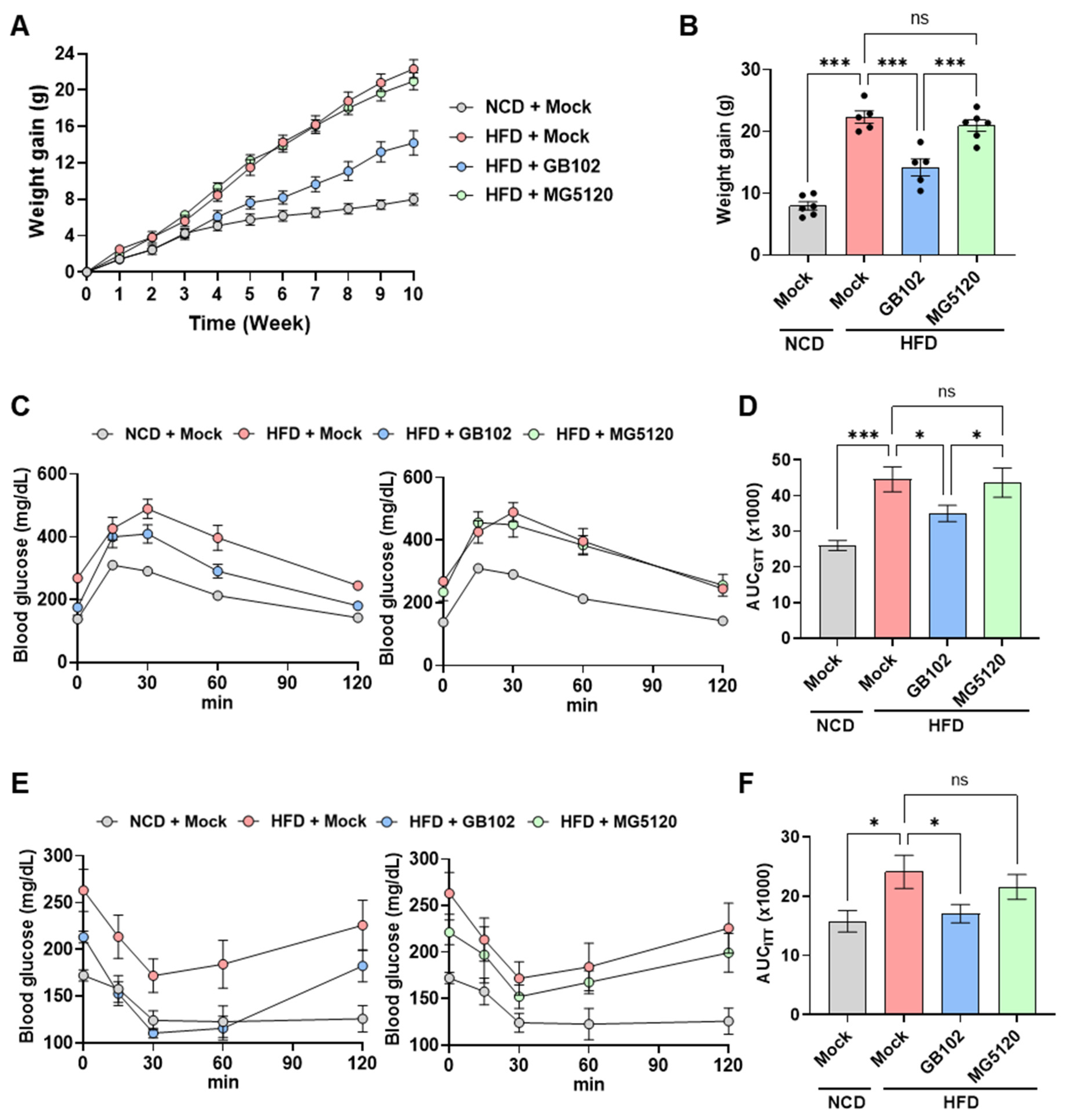
3.1. L. fermentum GB102 Exhibits Anti-Obesity and Metabolic Benefits in HFD-Induced Obese Mice
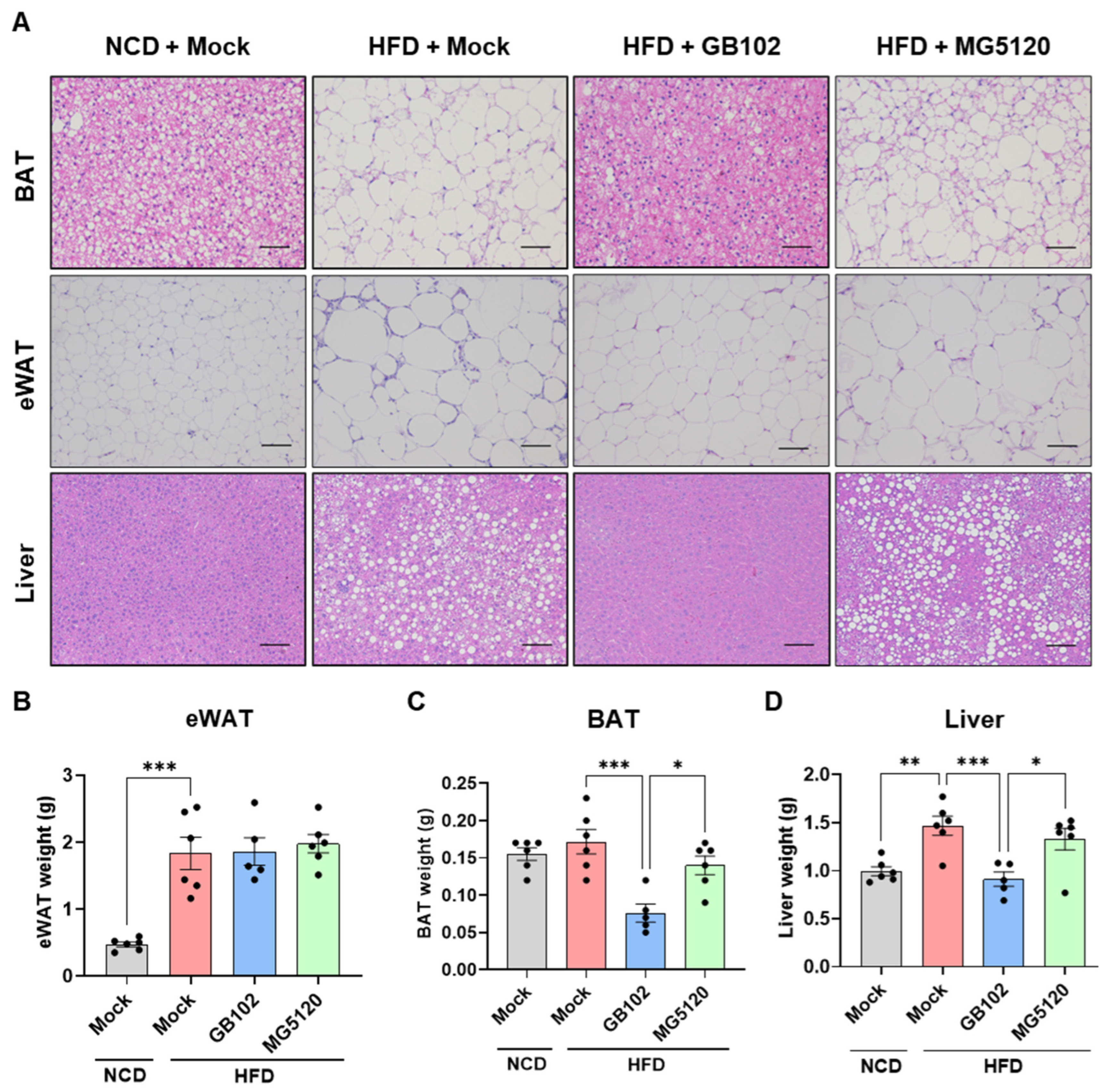
3.2. L. fermentum GB102 Modulates Metabolic Hormones and Adipokines and Attenuates Adipose Tissue Inflammation in HFD-Fed Mice
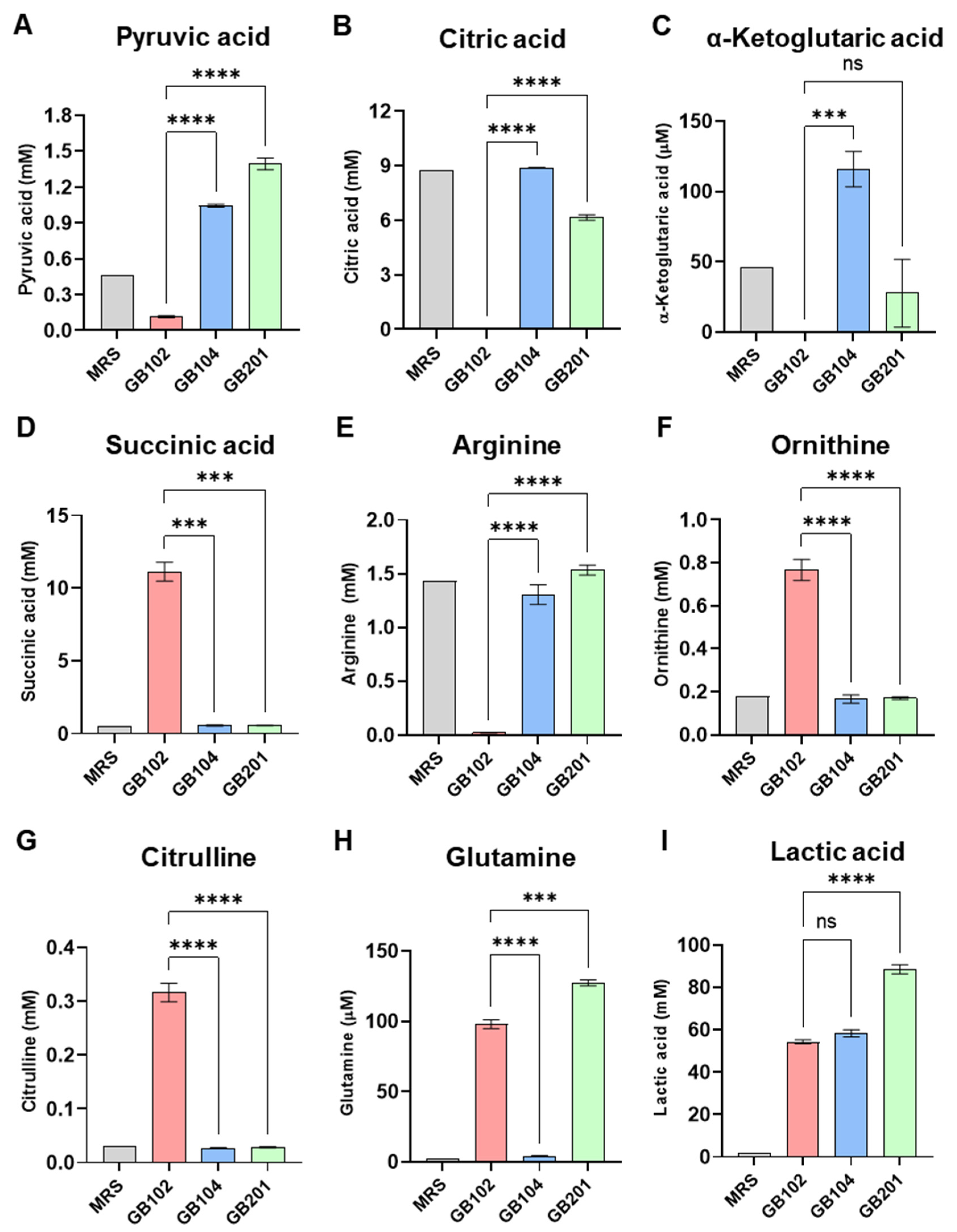
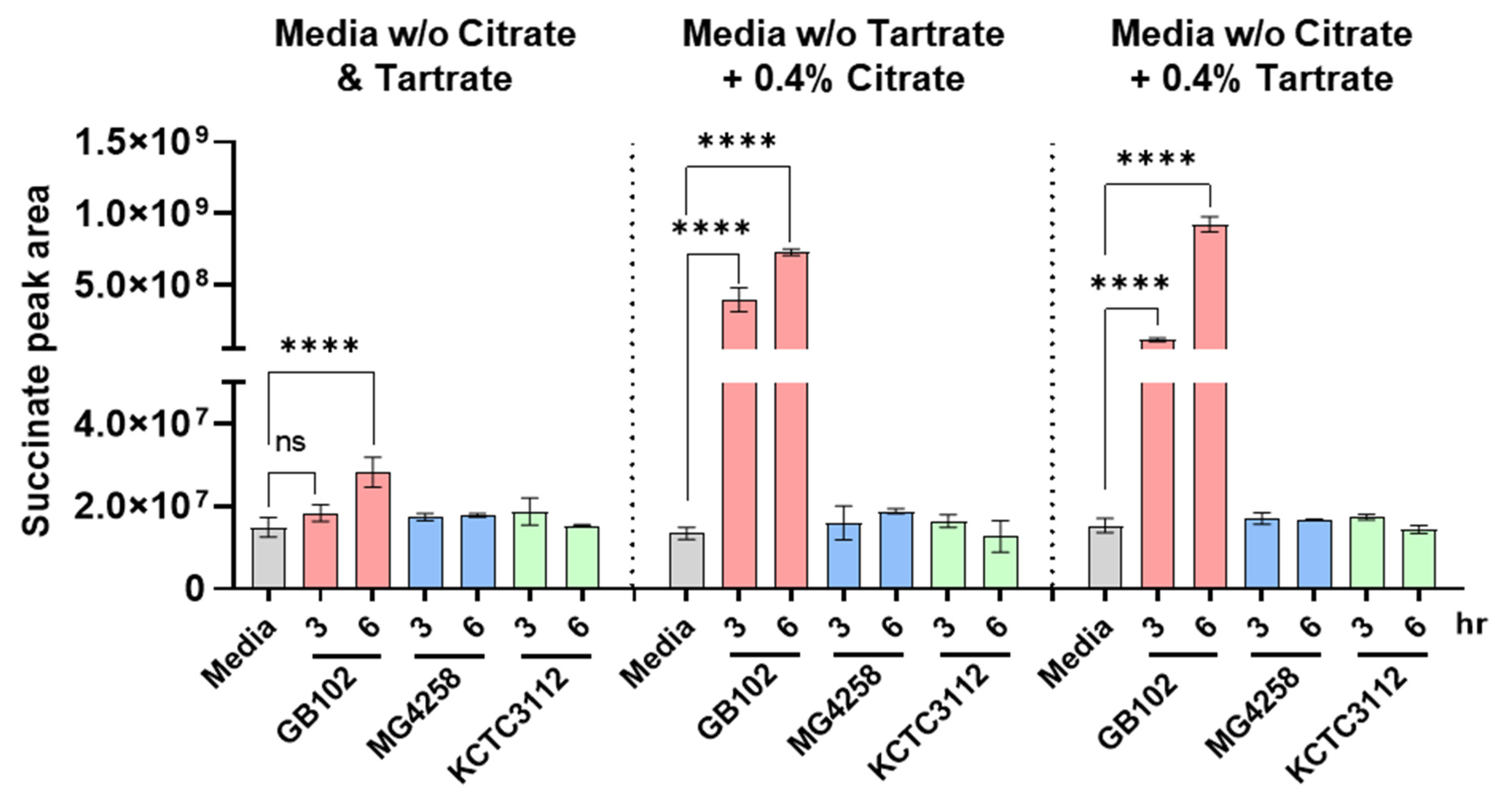
3.3. L. fermentum GB102 Exhibits Distinct Metabolic Features Including High Succinic Acid Production and Enhanced Arginine and Glutamine Metabolism
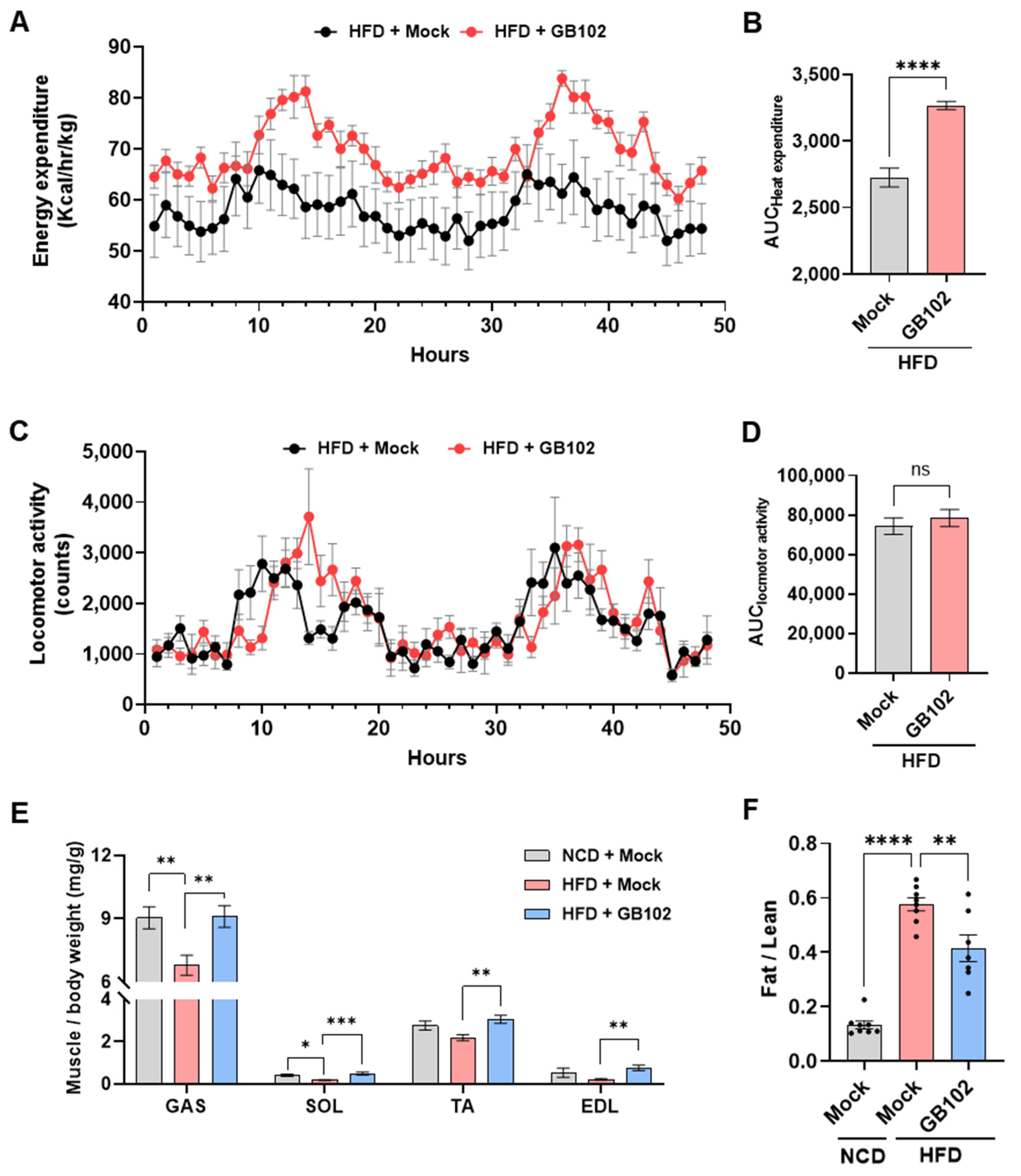
3.4. L. fermentum GB102 Increases Energy Expenditure and Attenuates Diet-Induced Muscle Loss
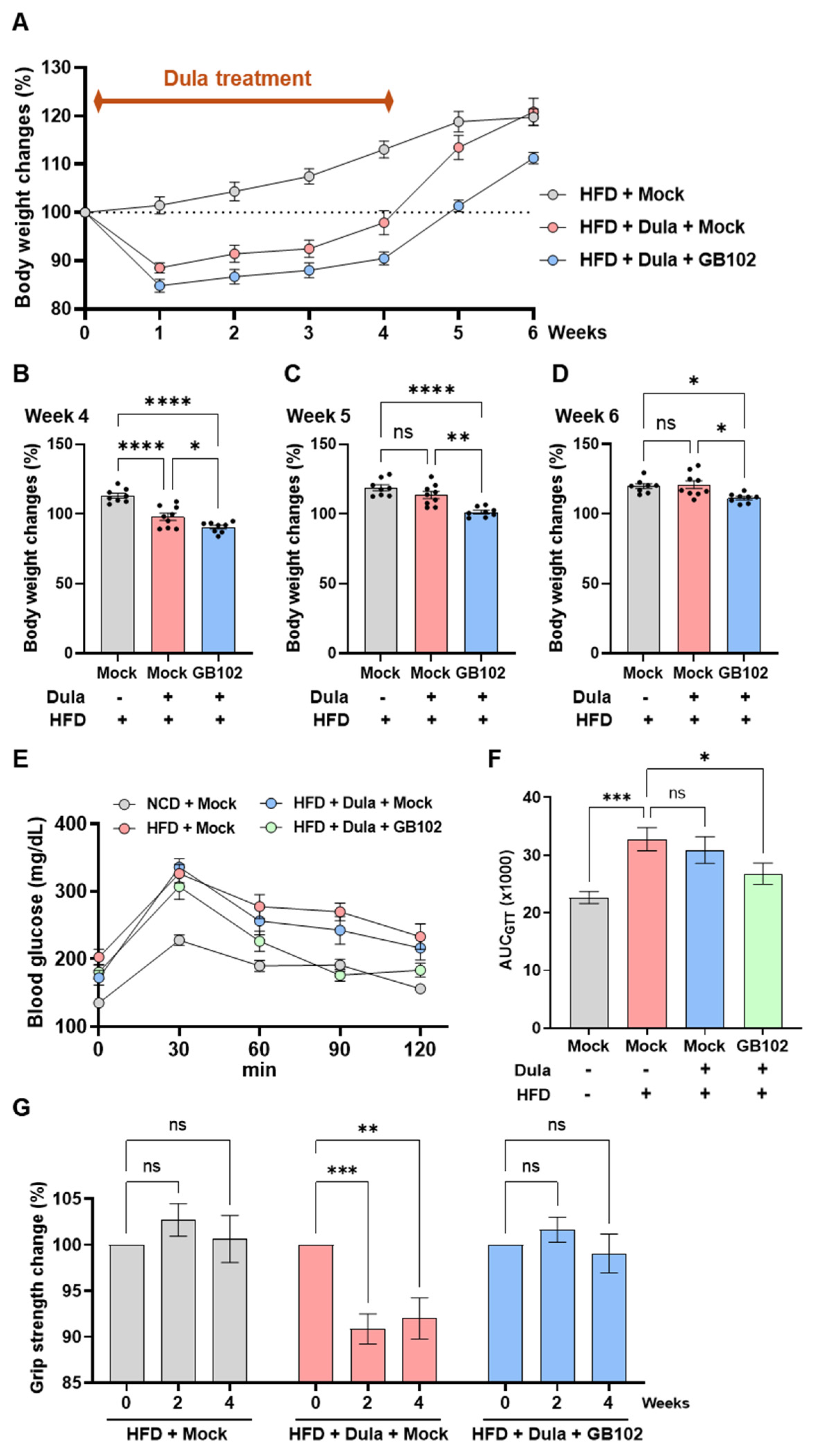
3.5. L. fermentum GB102 Enhances the Efficacy of the GLP-1 Analog Dulaglutide in Obese Mice
4. Discussion
5. Conclusions
Supplementary Materials
Author Contributions
Funding
Institutional Review Board Statement
Informed Consent Statement
Data Availability Statement
Acknowledgments
Conflicts of Interest
Abbreviations
| AUC | Area under the curve |
| BAT | Brown adipose tissue |
| CE-TOFMS | Capillary electrophoresis time-of-flight mass spectrometry |
| CLAMS | Comprehensive Lab Animal Monitoring System |
| eWAT | Epididymal white adipose tissue |
| GIP | Glucose-dependent insulinotropic polypeptide |
| GLP-1RAs | Glucagon-like peptide-1 receptor agonists |
| GTT | Glucose tolerance test |
| H&E | Hematoxylin and eosin |
| HFD | High-fat diet |
| HMT | Human Metabolome Technologies |
| IACUC | Institutional Animal Care and Use Committee |
| ITT | Insulin tolerance test |
| MRS | Man–Rogosa–Sharpe |
| MSTFA | N-methyl-N-trimethylsilyl trifluoroacetamide |
| NCD | Normal chow diet |
| NEAAs | Non-essential amino acids |
| NO | Nitric oxide |
| PAI-1 | Plasminogen activator inhibitor-1 |
| PBS | Phosphate-buffered saline |
| TD-NMR | Time-domain nuclear magnetic resonance |
| Treg | Regulatory T cell |
| VCO2 | Carbon dioxide production |
| VO2 | Oxygen consumption |
References
- GBD 2021 Adult BMI Collaborators. Global, regional, and national prevalence of adult overweight and obesity, 1990–2021, with forecasts to 2050: A forecasting study for the Global Burden of Disease Study 2021. Lancet 2025, 405, 813–838. [CrossRef] [Scilit]
- Collaborators, G.B.D.O.; Afshin, A.; Forouzanfar, M.H.; Reitsma, M.B.; Sur, P.; Estep, K.; Lee, A.; Marczak, L.; Mokdad, A.H.; Moradi-Lakeh, M.; et al. Health Effects of Overweight and Obesity in 195 Countries over 25 Years. N. Engl. J. Med. 2017, 377, 13–27. [Google Scholar] [CrossRef] [Scilit]
- Zheng, Z.; Zong, Y.; Ma, Y.; Tian, Y.; Pang, Y.; Zhang, C.; Gao, J. Glucagon-like peptide-1 receptor: Mechanisms and advances in therapy. Signal Transduct. Target. Ther. 2024, 9, 234. [Google Scholar] [CrossRef] [Scilit] [PubMed]
- Ruseva, A.; Michalak, W.; Zhao, Z.; Fabricatore, A.; Hartaigh, B.O.; Umashanker, D. Semaglutide 2.4 mg clinical outcomes in patients with obesity or overweight in a real-world setting: A 6-month retrospective study in the United States (SCOPE). Obes. Sci. Pract. 2024, 10, e737. [Google Scholar] [CrossRef] [Scilit]
- Wilding, J.P.H.; Batterham, R.L.; Davies, M.; Van Gaal, L.F.; Kandler, K.; Konakli, K.; Lingvay, I.; McGowan, B.M.; Oral, T.K.; Rosenstock, J.; et al. Weight regain and cardiometabolic effects after withdrawal of semaglutide: The STEP 1 trial extension. Diabetes Obes. Metab. 2022, 24, 1553–1564. [Google Scholar] [CrossRef] [Scilit]
- Berg, S.; Stickle, H.; Rose, S.J.; Nemec, E.C. Discontinuing glucagon-like peptide-1 receptor agonists and body habitus: A systematic review and meta-analysis. Obes. Rev. 2025, 26, e13929. [Google Scholar] [CrossRef] [Scilit]
- Quarenghi, M.; Capelli, S.; Galligani, G.; Giana, A.; Preatoni, G.; Turri Quarenghi, R. Weight Regain After Liraglutide, Semaglutide or Tirzepatide Interruption: A Narrative Review of Randomized Studies. J. Clin. Med. 2025, 14, 3791. [Google Scholar] [CrossRef] [Scilit] [PubMed]
- Tran, S.; Kramer, C.K.; Zinman, B.; Choi, H.; Retnakaran, R. Effect of chronic liraglutide therapy and its withdrawal on time to postchallenge peak glucose in type 2 diabetes. Am. J. Physiol. Endocrinol. Metab. 2018, 314, E287–E295. [Google Scholar] [CrossRef] [Scilit]
- Fan, Y.; Pedersen, O. Gut microbiota in human metabolic health and disease. Nat. Rev. Microbiol. 2021, 19, 55–71. [Google Scholar] [CrossRef] [Scilit] [PubMed]
- Geng, J.; Ni, Q.; Sun, W.; Li, L.; Feng, X. The links between gut microbiota and obesity and obesity related diseases. Biomed. Pharmacother. 2022, 147, 112678. [Google Scholar] [CrossRef] [Scilit]
- Canfora, E.E.; Meex, R.C.R.; Venema, K.; Blaak, E.E. Gut microbial metabolites in obesity, NAFLD and T2DM. Nat. Rev. Endocrinol. 2019, 15, 261–273. [Google Scholar] [CrossRef] [Scilit] [PubMed]
- Agus, A.; Clement, K.; Sokol, H. Gut microbiota-derived metabolites as central regulators in metabolic disorders. Gut 2021, 70, 1174–1182. [Google Scholar] [CrossRef] [Scilit]
- Han, H.; Yi, B.; Zhong, R.; Wang, M.; Zhang, S.; Ma, J.; Yin, Y.; Yin, J.; Chen, L.; Zhang, H. From gut microbiota to host appetite: Gut microbiota-derived metabolites as key regulators. Microbiome 2021, 9, 162. [Google Scholar] [CrossRef] [Scilit]
- Mills, E.L.; Pierce, K.A.; Jedrychowski, M.P.; Garrity, R.; Winther, S.; Vidoni, S.; Yoneshiro, T.; Spinelli, J.B.; Lu, G.Z.; Kazak, L.; et al. Accumulation of succinate controls activation of adipose tissue thermogenesis. Nature 2018, 560, 102–106. [Google Scholar] [CrossRef] [Scilit]
- Liao, F.H.; Yao, C.N.; Chen, S.P.; Wu, T.H.; Lin, S.Y. Transdermal Delivery of Succinate Accelerates Energy Dissipation of Brown Adipocytes to Reduce Remote Fat Accumulation. Mol. Pharm. 2022, 19, 4299–4310. [Google Scholar] [CrossRef] [Scilit]
- Liu, K.; Lin, L.; Li, Q.; Xue, Y.; Zheng, F.; Wang, G.; Zheng, C.; Du, L.; Hu, M.; Huang, Y.; et al. Scd1 controls de novo beige fat biogenesis through succinate-dependent regulation of mitochondrial complex II. Proc. Natl. Acad. Sci. USA 2020, 117, 2462–2472. [Google Scholar] [CrossRef] [Scilit] [PubMed]
- Yang, Y.; Luo, L.; Li, Y.; Shi, X.; Li, C.; Chai, J.; Jiang, S.; Zheng, R. Succinic Acid Improves the Metabolism of High-Fat Diet-Induced Mice and Promotes White Adipose Browning. Nutrients 2024, 16, 3828. [Google Scholar] [CrossRef] [Scilit]
- Li, X.; Huang, G.; Zhang, Y.; Ren, Y.; Zhang, R.; Zhu, W.; Yu, K. Succinate signaling attenuates high-fat diet-induced metabolic disturbance and intestinal barrier dysfunction. Pharmacol. Res. 2023, 194, 106865. [Google Scholar] [CrossRef] [Scilit] [PubMed]
- Park, H.Y.; Kim, S.W.; Seo, J.; Jung, Y.P.; Kim, H.; Kim, A.J.; Kim, S.; Lim, K. Dietary Arginine and Citrulline Supplements for Cardiovascular Health and Athletic Performance: A Narrative Review. Nutrients 2023, 15, 1268. [Google Scholar] [CrossRef] [Scilit]
- Stamler, J.S.; Meissner, G. Physiology of nitric oxide in skeletal muscle. Physiol. Rev. 2001, 81, 209–237. [Google Scholar] [CrossRef] [Scilit]
- Allerton, T.D.; Proctor, D.N.; Stephens, J.M.; Dugas, T.R.; Spielmann, G.; Irving, B.A. l-Citrulline Supplementation: Impact on Cardiometabolic Health. Nutrients 2018, 10, 921. [Google Scholar] [CrossRef] [Scilit]
- Monelli, E.; Villacampa, P.; Zabala-Letona, A.; Martinez-Romero, A.; Llena, J.; Beiroa, D.; Gouveia, L.; Chivite, I.; Zagmutt, S.; Gama-Perez, P.; et al. Angiocrine polyamine production regulates adiposity. Nat. Metab. 2022, 4, 327–343. [Google Scholar] [CrossRef] [Scilit]
- Nakatani, S.; Horimoto, Y.; Nakabayashi, N.; Karasawa, M.; Wada, M.; Kobata, K. Spermine Suppresses Adipocyte Differentiation and Exerts Anti-Obesity Effects In Vitro and In Vivo. Int. J. Mol. Sci. 2022, 23, 11818. [Google Scholar] [CrossRef] [Scilit]
- Wang, D.; Yin, J.; Zhou, Z.; Tao, Y.; Jia, Y.; Jie, H.; Zhao, J.; Li, R.; Li, Y.; Guo, C.; et al. Oral Spermidine Targets Brown Fat and Skeletal Muscle to Mitigate Diet-Induced Obesity and Metabolic Disorders. Mol. Nutr. Food Res. 2021, 65, e2100315. [Google Scholar] [CrossRef] [Scilit]
- Ramos-Molina, B.; Queipo-Ortuno, M.I.; Lambertos, A.; Tinahones, F.J.; Penafiel, R. Dietary and Gut Microbiota Polyamines in Obesity- and Age-Related Diseases. Front. Nutr. 2019, 6, 24. [Google Scholar] [CrossRef] [Scilit]
- Pagar, R.; Deshkar, S.; Mahore, J.; Patole, V.; Deshpande, H.; Gandham, N.; Mirza, S.; Junnarkar, M.; Nawani, N. The microbial revolution: Unveiling the benefits of vaginal probiotics and prebiotics. Microbiol. Res. 2024, 286, 127787. [Google Scholar] [CrossRef] [Scilit] [PubMed]
- Chang-Ho, K.; Yulah, J.; Seul Hwa, H.; Jin-Seong, K.; YongGyeong, K.; Hye Min, P.; Soo-Im, C.; Nam-Soo, P. In vitro Probiotic Evaluation of Potential Antiobesity Lactic Acid Bacteria Isolated from Human Vagina and Shellfish. Korean Soc. Biotechnol. Bioeng. 2018, 33, 161–167. [Google Scholar] [CrossRef] [Scilit]
- Kang, C.-H.; Han, S.; Kim, Y.; Jeong, Y.; Paek, N.-S. Antibacterial Activity and Probiotic Properties of Lactic Acid Bacteria Isolated from Traditional Fermented Foods. KSBB J. 2017, 32, 199–205. [Google Scholar] [CrossRef] [Scilit]
- Kim, A.R.; Jeon, S.G.; Park, S.J.; Hong, H.; Kim, B.K.; Kim, H.R.; Hong, C.P.; Yang, B.G. Alleviation of Adipose Tissue Inflammation and Obesity Suppression by a Probiotic Strain That Induces GLP-1 Secretion. Microorganisms 2025, 13, 1211. [Google Scholar] [CrossRef] [Scilit]
- Lu, C.C.; Ke, C.Y.; Wu, W.T.; Lee, R.P. L-Glutamine is better for treatment than prevention in exhaustive exercise. Front. Physiol. 2023, 14, 1172342. [Google Scholar] [CrossRef] [Scilit]
- Dollet, L.; Kuefner, M.; Caria, E.; Rizo-Roca, D.; Pendergrast, L.; Abdelmoez, A.M.; Karlsson, H.K.R.; Bjornholm, M.; Dalbram, E.; Treebak, J.T.; et al. Glutamine Regulates Skeletal Muscle Immunometabolism in Type 2 Diabetes. Diabetes 2022, 71, 624–636. [Google Scholar] [CrossRef] [Scilit] [PubMed]


Disclaimer/Publisher’s Note: The statements, opinions and data contained in all publications are solely those of the individual author(s) and contributor(s) and not of MDPI and/or the editor(s). MDPI and/or the editor(s) disclaim responsibility for any injury to people or property resulting from any ideas, methods, instructions or products referred to in the content. |
© 2026 by the authors. Licensee MDPI, Basel, Switzerland. This article is an open access article distributed under the terms and conditions of the Creative Commons Attribution (CC BY) license.
Share and Cite
Kim, A.-R.; Jeon, S.-G.; Park, S.-J.; Kim, B.-K.; Kweon, M.-N.; Jang, M.H.; Yang, B.-G. Energy-Metabolism-Enhancing Probiotics Enhance the Therapeutic Response to a Glucagon-like Peptide-1 Receptor Agonist. Nutrients 2026, 18, 1050. https://doi.org/10.3390/nu18071050
Kim A-R, Jeon S-G, Park S-J, Kim B-K, Kweon M-N, Jang MH, Yang B-G. Energy-Metabolism-Enhancing Probiotics Enhance the Therapeutic Response to a Glucagon-like Peptide-1 Receptor Agonist. Nutrients. 2026; 18(7):1050. https://doi.org/10.3390/nu18071050
Chicago/Turabian StyleKim, A-Ram, Seong-Gak Jeon, So-Jung Park, Byoung-Kook Kim, Mi-Na Kweon, Myoung Ho Jang, and Bo-Gie Yang. 2026. "Energy-Metabolism-Enhancing Probiotics Enhance the Therapeutic Response to a Glucagon-like Peptide-1 Receptor Agonist" Nutrients 18, no. 7: 1050. https://doi.org/10.3390/nu18071050
APA StyleKim, A.-R., Jeon, S.-G., Park, S.-J., Kim, B.-K., Kweon, M.-N., Jang, M. H., & Yang, B.-G. (2026). Energy-Metabolism-Enhancing Probiotics Enhance the Therapeutic Response to a Glucagon-like Peptide-1 Receptor Agonist. Nutrients, 18(7), 1050. https://doi.org/10.3390/nu18071050