Niacin Derivatives in MASLD: Metabolic and Therapeutic Insights

 ,
,  , , , , , ,
  , ,
, ,  and
and 
Abstract
1. Introduction
2. Methodology
2.1. Search Strategy
2.2. Inclusion Criteria
2.3. Exclusion Criteria
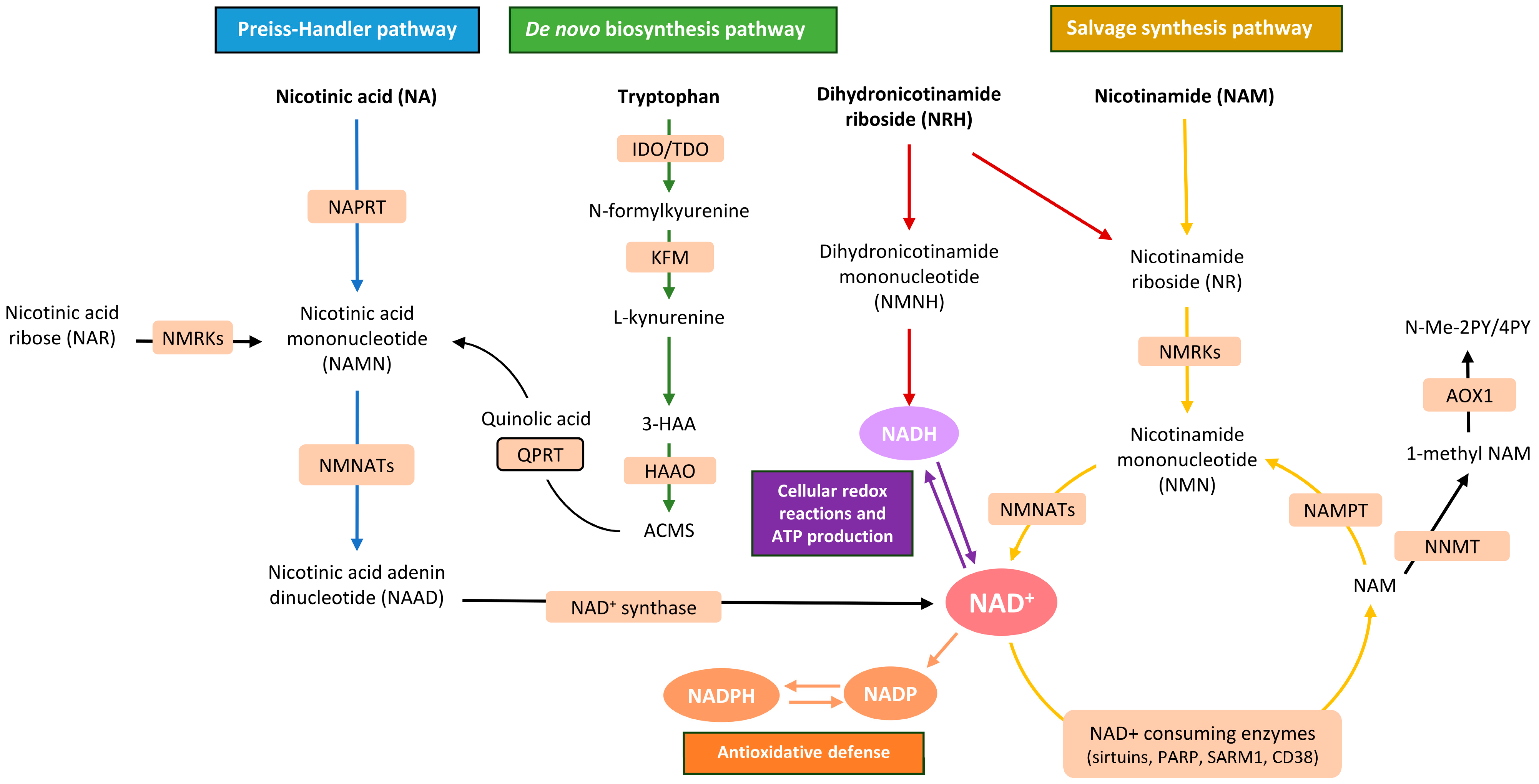
3. NAD+ Metabolism in the Liver
3.1. NAD+ Synthesis
3.2. NAD+ Consumption
3.3. Alternative Regulators of Intracellular NAD+ Levels
4. Experimental Models of MASLD: Effects of NAD+-Increasing Strategies
4.1. Experimental In Vitro Studies
4.1.1. Lipid Accumulation, Lipotoxicity, and Inflammation

| Target Outcome | Molecule | Cell Line/s | Experimental Details | Main Protective Effect | Reference |
|---|---|---|---|---|---|
| OA-induced steatosis, lipotoxicity | Niacin | HepG2 | OA (500 µM)-induced lipid accumulation; stimulation with niacin (300 µM) for 24 h. | Activation of GPR109A resulted in remarkable inhibition of OA-induced lipid accumulation via a protein kinase C-extracellular signal-regulated kinase-1/2-AMP-activated protein kinase signaling pathway. | [65] |
| PA-induced steatosis, inflammation | Niacin | HepG2 | PA (500 µM)-induced lipid accumulation; incubation with niacin (250–250 µM) for 24 h. | Inhibition of PA-induced lipid accumulation by 45–62% via inhibiting DGAT2; attenuation of hepatocyte ROS production accompanied by inhibition of NADPH oxidase activity; reduction in IL-8. | [64] |
| PA-induced steatosis | NAM | HepG2 | NAM was incubated overnight (0, 1, or 2 mM, respectively) in the presence of either glucose (5 mM), PA (200 µM), or both. | Increased flux through glucose uptake, glycolysis, and pentose phosphate pathways; glucose flux redirection to the pentose phosphate pathway suggests that the favorable effect of NAM on glucose homeostasis might be linked to improved cytoplasmic redox homeostasis via increased availability of pentose phosphate pathway-derived NADPH, the main electron donor for cytoplasmic and mitochondrial antioxidant systems. | [68] |
| PA-induced steatosis, inflammation | NR | AML12 | PA (250 µM)-induced lipid accumulation for 48 h; incubation with NR (10 µM and 10 mM) for 24 h thereafter. | Attenuation of hepatic inflammation and increased levels of mitochondrial markers. | [78] |
| Steatosis, inflammation | NMN | Mouse normal hepatocytes (NCTC1469) | PA (800–50 µM)-induced lipid accumulation for 36 h; followed by NMN incubation (500–0.05 μM) for 24 h. | NMN reduced PA-induced lipid accumulation and alleviated PA-induced ER stress and mitochondrial dysfunction in NCTC1469 cells, protecting against damaging stress response to mitochondrial and ER function. NMN reversed the mitochondrial membrane potential and ROS level of PA-treated cells by enhancing ER–mitochondria coupling, which controls mitochondrial respiration and energy production. | [62] |
| Inflammation | NR | PH5CH8 hepatocytes (immortal) and HepG2 | PA (400 μM)-induced lipid accumulation in combination with NR (500 μM) for 48 h. | Reduction in PA-induced lipoinflammation and lipotoxicity seen in HepG2 cells. | [79] |
| PA-induced steatosis, lipotoxicity | NR | AML12 and HepG2 | Cells were serum-starved for 6 h and exposed to NR (300 µM) under 150 μg/mL cycloheximide for up to 4, 8 and 16 h in a set of experiments; in another set of experiments, NR was coincubated with PA for 16 h. | Inhibition of PA-mediated ubiquitination and concomitant reduction in Fndc5 mRNA (which encodes FNDC5, the precursor form of IRISIN) 1 protein in treated cells was mediated by NAD+-dependent SIRT2 mechanisms. | [51] |
| PA-induced steatosis, inflammation | NAM | AML12 and HepG2 | Pretreatment with various doses of NAM (100–1000 μM) for 1 h, followed by PA (500 μM)-induced accumulation overnight. | Protection against PA-induced cell death; anti-lipotoxic properties were accompanied by autophagy induction. | [25] |
| PA-induced ER stress, inflammation | NAM | HepG2 | Pretreatment with NAM (5 mM) for 2 h, followed by PA (200–400 μM)-induced ER stress for 16 h. | Protection against PA-induced ER stress via SIRT1 upregulation. | [63] |
| Fibrosis | Niacin | HSCs | Primary cultures of human HSCs were harvested from 7 cadaveric livers that were processed for transplantation (four of them had MASH with fibrosis, and 2 of them had no evidence of MASH) and incubated with pharmacologically relevant concentrations of niacin (0.25 mM and 0.5 mM) for 48 or 96 h. | Dose- and time-dependent regression of pre-existing fibrotic features in HSCs. In cells from non-MASH-fibrosis donors, niacin effectively prevented and reversed fibrosis triggered by profibrotic stimuli, including TGF-β1 and oxidative stressors. In addition, niacin markedly reduced oxidative stress responses, decreasing palmitic acid- and hydrogen peroxide-induced oxidative damage by approximately 50%. | [80] |
| Fibrosis | NR | Primary mouse/human HSCs | Incubation with of NR (1 mM) for 6 h and thereafter with 2 ng/mL of TGF-β1 for 24 h. | Attenuation of the activation of HSCs; downregulation of most genes important for de novo biosynthesis of NAD+, including the NAD+ salvage synthesis pathway; expression of the activation markers, i.e., Acta2 and Col1a1. | [27] |
| Fibrosis | NR | LX-2 | TGF-β1-induced fibrosis (4 ng/mL) treated with NR (500–1000 μM) for up to 96 h. | Inhibition of HSC TGF-β1-induced fibrosis activation was mediated by SIRT1 activation mechanisms and concomitant accumulations of deacetylated of SMAD2/3. | [58] |
| Fibrosis | NMN | Primary mouse HSCs; human HSC line LX-2 (15-PGDH knockdown LX-2 cells) | Primary mouse HSCs were treated with NMN (1000 μM) and TGF-β1 (20 ng/mL) for 24 h; LX-2 cells were treated with NMN (200–5000 μM) and TGF-β1 (20 ng/mL) for 12 h. | Suppression of HSC activation via inhibition of oxidation-mediated 15-PGDH degradation to promote prostaglandin E2 degradation. | [26] |
| Target Outcome | Molecule | Animal Model | Dose/Regimen | Main Protective Effect | Reference |
|---|---|---|---|---|---|
| Hepatic steatosis | Niacin | Male Sprague-Dawley rats fed a high-fat diet (HFD). | Dietary niacin (0.5% and 1%, w/w) was given to rats for 4 wks. | Niacin prevented liver weight gain and regressed pre-existing steatosis by 42–55%, reducing liver cholesterol, and hepatic downregulated Dgat2 expression. Significant prevention and regression of hepatic steatosis. | [60] |
| Hepatic steatosis | Niacin | Wildtype C57BL/6 and GPR109A-deficient (Hcar2–/–) mice (male, 5 wks old) were fed a HFD (60% energy from fat) firstly for 6 wks to generate a diet-induced obese model. | Oral niacin (50 mM, dissolved in water) was administered for 8–9 wks. | Inhibition of hepatic lipogenesis in C57BL/6 mice through a GPR109A-mediated signaling pathway. | [65] |
| Hepatic steatosis | NAM | Male rats were provided drinking water with 30% glucose or fructose ad libitum for 12 wk. | Thirty days after the beginning of carbohydrate administration, some rats were simultaneously provided NAM at 0.06% (w/v) or 0.12% (w/v) dissolved in tap water for 5 h daily over the following 8 wks. | Administration of NAM protected against sweet-beverage-induced hepatic steatosis. This protective effect was associated with reduced oxidative and inflammatory stress, downregulation of the relative abundance and activity of glucose-6-phosphate dehydrogenase, and restoration of the NADH/NAD+ ratio. | [66] |
| Hepatic steatosis | NAM | Male albino rats on a high-fat, high-fructose (HF/HF) diet for 75 d | Conventional NAM powder dose (100 mg/kg) or two doses of NAM-loaded chitosan/TPP nanoparticles (10 mg/kg and 20 mg/kg) were orally administered, as appropriate. | Treatment with NAM, either in its conventional form or encapsulated in chitosan nanoparticles, led to a significant reduction in hepatic triglyceride levels compared with the HF/HF control group, and similar decreases were observed in liver oxidative stress markers. | [67] |
| Hepatic steatosis | NAM | Aged, male C57BL/6J mice on HFD started at 56 wks of age | NAM was administrated via diet at doses equivalent to 37.5 and 75 mg/g/day. | Chronic NAM supplementation protected against diet-induced hepatic steatosis and enhanced glucose metabolism and hepatic redox balance in HFD-fed mice at 118 weeks of age, regardless of food intake, body weight, or body composition. | [68] |
| Hepatic steatosis | NR | Wildtype, C57BL/6J mice received twice-daily nicotine i.p. (0.75 mg/kg); additionally, mice were given Coca ColaTM containing high-fructose corn syrup (Coke). | Twice-daily i.p. injection of NR was given in saline solution (200 mg/kg/d) for 10 wks. | Prevention of hepatic steatosis via reduced oxidative stress and prevention of mitochondrial damage by restoring protein levels of SIRT1 and PGC1α signalings. | [69] |
| Hepatic steatosis | NR | Apolipoprotein E-deficient mice (Apoe–/–) fed a HF/HS diet. | Dietary pellets containing vehicle (double-distilled water) or NR (400 mg/kg/d) for 2, 9, or 18 wks. | Prevention and reversion of hepatic steatosis by inducing a SIRT1- and SIRT3-dependent mitochondrial unfolded protein response. | [50] |
| Hepatic steatosis | NR | Ldlr–/–. Leiden mice fed a HFD. | The diet was supplemented with L-carnitine (0.4%, w/w), NR (0.3% w/w) or both (COMBI) for 21 wks. | COMBI treatment significantly attenuated HFD-induced body weight gain, fat mass gain (–17%) and hepatic steatosis (–22%); also, NR and COMBI reduced hepatic 4-hydroxynonenal adducts. COMBI reversed detrimental effects of HFD on liver metabolism. | [70] |
| Hepatic steatosis | NMN | Eight-week-old male, wildtype, C57BL/6J specific pathogen-free mice were randomly divided into normal diet (ND), HFD and HFD-NMN groups. | NMN (ultrapure water containing 500 mg/L (w/v) for administration via tap water for 30 wks. | Alleviation of hepatic insulin resistance and steatosis, which was linked to improved mitochondrial function and ER oxidative stress and increased hepatic content of NAD+; increased contact sites between ER and mitochondria were linked to increased intracellular ATP production and attenuation of lipid metabolic alterations in the livers of HFD mice. | [62] |
| Hepatic steatosis | NMN | Male 5 wk old db/db and C57BL/6J wildtype mice fed a regular diet. | NMN-supplemented diet (0.5%, w/w) for 4 wks. | Dietary NMN in db/db mice reduced body weight, plasma triglycerides, and hepatic triglyceride accumulation; NMN enhanced energy expenditure by increasing fat oxidation and suppressing carbohydrate oxidation; hepatic improvements included decreased fatty acid synthesis and increased β-oxidation. | [71] |
| Aging-related hepatic steatosis | NMN | Male Long–Evans rats (decompensated hemorrhagic model). | Oral NMN (400 mg/kg) administration. | Reduction in lactic acidosis and serum IL-6 levels, increased NAD+ levels, and prevention of mitochondrial dysfunction in the livers of treated mice. | [72] |
| Hepatic steatosis/fibrosis | Niacin | Wistar 7 wk old male rats fed a high-fat, -sucrose, and -cholesterol diet (HF/HS/HC) for 15 wks and weekly administered with an i.p. injection of low-dose CCl4 (400 mg/kg). | Intragastric administration of niacin (50 mg/kg/d) from the beginning of fibrosis induction. | Niacin mitigated experimental MASH/hepatic fibrosis by inhibiting the NLRP3 inflammasome/pyroptosis pathway. | [77] |
| Hepatic steatosis/fibrosis | NR | Hepatic steatosis induced by HFD or methionine/choline-deficient diet in wildtype and Fndc5–/– mice. | NR (400 mg/kg/d) for 8 wks (wildtype mice) and 12 wks (Fndc5–/–mice). | NR prevented body weight gain, hepatic steatosis, steatohepatitis, insulin resistance, mitochondrial dysfunction, apoptosis and fibrosis; these actions of NR were abrogated in Fndc5–/– mice. | [51] |
| Hepatic steatosis/fibrosis | NR | Wildtype and H247A dominant-negative, enzymically inactive NAMPT transgenic mice (DN-NAMPT) given normal or HFD, respectively. | NR (400 mg/kg/d) for 4 wks (as estimated according to the daily food intake). | NR prevented hepatic steatosis, steatohepatitis (i.e., reduced pro-inflammatory cytokines, Kuppfer cell accumulation and macrophage infiltration), and hepatic fibrosis. | [53] |
| Hepatic steatosis/fibrosis | NAM | Hepatic steatosis induced by HFD in wildtype mice. | NAM (0.25% and 1% w/v) was orally administered via tap water for 12 wks. | NR prevented body weight gain, hepatic steatosis, steatohepatitis, and hepatic fibrosis as revealed by the downregulation of specific gene markers. | [73] |
| Hepatic steatosis/fibrosis | Niacin | Eight-week-old male Wistar rats fed a HF HS and HC diet + low-dose CCl4 (i.p., 400 mg/kg, weekly). | Daily niacin administration (50 mg/kg, intragastric) for 15 wks. | Attenuation of hepatic inflammation by decreasing TNF-α and NF-κB protein levels, and inhibition of NLRP3 inflammasome activation and pyroptosis (as revealed by significant decreases in NLRP3, ASC-Caspase-1, IL-1β, IL-18); suppression of fibrosis markers (TGF-β1, α-SMA, collagen-1), thereby decreasing extracellular matrix synthesis. | [74] |
| Hepatic fibrosis/cirrhosis | Niacin | Male Wistar rats were treated with TAA (i.p., 200 mg/kg, 3×/wk) for 8 wks) to induce cirrhosis. | Oral niacin (50 mg/kg/d) from the beginning of cirrhosis induction. | Prevention of TAA-induced liver fibrosis, as revealed by TAA-induced reductions in circulating ALT, γ-GTP, and AP activities, preservation of hepatic glycogen, and prevention of oxidative stress by normalizing MDA and GPx levels; inhibition of hepatic collagen deposition and maintenance of liver architecture; suppression of TAA-mediated upregulation of TGF-β1, CTGF, α-SMA, MMP-2, and MMP-9. | [77] |
| Hepatic fibrosis | NR | Hepatic fibrosis induced by injecting i.p. CCl4 in mice (0.5 μL/g CCl4). | NR (400 mg/kg/d) orally for 8 wks. | Protection of hepatic fibrosis via increasing the activity of SIRT1 and decreasing the expression of P300, which resulted in the deacetylation of SMAD signaling in HSCs. | [58] |
| Hepatic fibrosis | NR | Hepatic fibrosis was induced in mice with a HF/HS/HC diet. | NR (400 mg/kg/d) was supplemented into diet and was given for 2, 4, and 7 wks. | Reduction in body weight by increasing energy expenditure, likely by upregulation of β-oxidation in skeletal muscle and brown adipose tissue; the protective effect of NR on liver fibrosis was independent of changes in liver steatosis and inflammation in obesity and liver fibrosis was unveiled by reduced collagen accumulation, and mRNA expression of fibrogenic genes in the liver. | [27] |
| Hepatic fibrosis | NMN | Male C57BL/6J mice injected intraperitoneally with TAA (200 mg/kg) or with 30%(w/v) CCl4 diluted in corn oil (2 μL/g) or vehicle (corn oil) once every two days for 32 d. | NMN (500 mg/kg) was administered by i.p. at the same time as TAA or CCl4 injection (32 d). Mice were sacrificed 24 h after the last TAA or CCl4 injection. | Inhibition of HSC activation; reduction in the production of extracellular matrix; NMN replenishment decreased PGE2 levels via inhibiting oxidation-mediated 15-PGDH degradation, resulting in inhibition of HSC activation to prevent liver fibrosis. | [26] |
| Hepatic fibrosis | NAM | Wildtype and GNMT-deficient (Gnmt–/–) mice on a standard diet. | At 1.5 mo. of age, NAM (50 μM) was orally administered via drinking water for 6 wks to both wildtype and GNMT-deficient mice. | Prevention of hepatic steatosis and fibrosis; reduction in hepatic SAMe content, prevention of DNA hypermethylation and normalization of the expression of critical genes involved in fatty acid metabolism, oxidative stress, inflammation, cell proliferation, and apoptosis. | [75] |
| Hepatic fibrosis | NAM | Male Sprague-Dawley rats were given 40% fructose dissolved in drinking water for 16 wks ad libitum. | Starting on the fifth week, drinking water containing fructose was replaced for 5 h each morning by different concentrations of NAM (5, 10 and 15 mM). After 5 h, the NAM treatments were withdrawn to continue the administration of fructose. | NAM reduced hepatic steatosis by downregulating key markers of de novo lipogenesis and mitigated liver fibrosis by lowering lipid peroxidation and preventing HSC activation. | [76] |
| Hepatic fibrosis | NAM | Mice were fed a CDAA-HFD. | NAM (0.5%, w/v) was orally administered via tap water for 6 wks. | NAM prevented hepatic fibrosis independent of changes in liver steatosis and inflammation. | Unpublished data * |
4.1.2. Fibrosis
4.2. Experimental In Vivo Studies
4.2.1. Hepatic Steatosis, Inflammation, and Oxidative Stress
4.2.2. Hepatic Fibrosis and Repair
5. Human Evidence on Niacin and MASLD
6. Epidemiological Evidence Exploring Associations Between Niacin Intake and Risk of MASLD
7. Niacin Interventional Studies: Pre–Post Studies and Randomized Controlled Trials
7.1. Pre–Post Studies
7.2. Randomized Studies
7.2.1. Niacin
7.2.2. Other Niacin Derivatives
| Molecule/Dose Regimen | Population Characteristics | Dose, Duration of Treatment, and Main Clinical Characteristics | Primary Outcomes | Main Results | Adverse Effects | NCT | Reference |
|---|---|---|---|---|---|---|---|
| Oral niacin | 27 subjects with obesity and MASLD * with a mean age 42 (2) y. | Niacin (Niaspan) 500–2000 mg/day over 16 wks. Participants on niacin underwent eight biweekly clinic visits over 16 wk, with adherence monitored through pill counts at each visit, weekly nurse contacts, and biweekly phone calls. | IHTG | Niaspan reduced plasma TG, VLDL-TG and VLDL-ApoB concentrations by lowering VLDL-TG and VLDL-ApoB secretion but had no effect on IHTG content. | No adverse events were reported in the study. | n.a. | [129] |
| Oral niacin | 20 subjects with IGT and 19 subjects with NGT. | Oral niacin: 100 mg at 0 min, then 150 mg every 30 min (A1: 8 doses, total 1.45 g; B1: 10 doses, total 1.75 g) to sustain suppression of intracellular lipolysis for ≥4 h. Participants underwent two randomized, standardized 6 h postprandial protocols with or without oral niacin, following a 906 kcal liquid meal; niacin was administered as 100 mg at time 0 and repeated 150 mg doses every 30 min up to 330 min, for total doses of 1.45–1.75 g, while organ-specific fatty acid fluxes were quantified using PET/CT and stable isotopic tracers. | Postprandial distribution of DFA between adipose tissue and lean organs (liver and heart) | DFA partitioning with reciprocal reduction in liver and in muscle. Niacin also robustly reduced cardiac and liver total (DFA + NEFA) postprandial fatty acid uptake. Short-acting niacin administered postprandially thus enhances adipose tissue DFA trapping and markedly reduces postprandial hepatic and cardiac fatty acid uptake. | No adverse events were reported in the study. | NCT02808182 | [130] |
| Oral NR and pterostilbene | 111 adult participants with MASLD * with a mean age of 52.1 (11.7) y (placebo group), 56.5 (9.0) y (NRPT-1) and 54.1 (8.3) y (NRPT-2) | Participants were distributed into 3 groups: the placebo group (receiving four capsules); The NR and pterostilbene (NRPT) 1 group (receiving two NRPT capsules, containing 250 mg NR + 50 mg PT) and two placebo capsules; and the NRPT 2 group (receiving four NRPT capsules, containing 500 mg NR + 100 mg PT). Duration: 6 mo. Participants attended five in-clinic visits, screening (up to 4 wk before baseline), baseline/randomization (on day 0), Weeks 6 and 12, and end of study (on wk 26, day 180), with a telephone follow-up 2 wks later; investigational product accountability was ensured through on-site visits and investigator diary review. | Hepatic fat fraction | No significant change was seen in the primary endpoint of hepatic fat fraction with respect to placebo. NRPT at the recommended dose is safe and may hold promise in lowering markers of hepatic inflammation in patients with MASLD *. | A total of 41 participants (36.9%) experienced 87 treatment-emergent adverse events, mostly mild gastrointestinal symptoms or abnormalities in blood tests. No severe adverse events occurred. Treatment-related adverse events were reported in 21 cases: 11 in placebo, 4 in the NRPT 1× group, and 6 in the NRPT 2× group. | NCT03513523 | [135] |
| Oral niacin | 20 non-diabetic, dyslipidemic male participants with metabolic syndrome. | Each participant received 2 g per day of extended-release niacin (Niaspan®) or placebo for 4 wks, with a 4 wk washout period between treatments. The primary interventions were oral administration of Niaspan or placebo for 8 wks. Participants attended a total of four clinic visits, corresponding to the beginning and end of each treatment period. Monitoring included assessments of plasma lipid profiles at the beginning and end of each treatment period. | Insulin sensitivity assessed by the two-step euglycemic-hyperinsulinemic clamp, together with VLDL–triglyceride production rate | Niaspan (2 g/d over 8 wk) in 20 dyslipidemic men reduced triglycerides by 28%, increased HDL-C by 17%, and lowered VLDL-TG production by 68%, but induced hepatic insulin resistance, associated with diacylglycerol accumulation and reduced insulin signaling in hepatocytes. | NCT01216956 | [127] | |
| Oral NAM | 70 diabetic MASLD * patients (61 with follow-up). | NAM 1000 mg daily over 12 wks with weekly phone calls and monthly visits to assess adherence. | Liver steatosis scores | NAM at a dose of 1000 mg daily was tolerable, improving metabolic abnormalities and quality of life, with no effect on liver fibrosis or steatosis. | No adverse events in the placebo group. In the NAM group, two cases of nausea/vomiting and one of fatigue occurred in week 1; all were mild, self-limited, and required no intervention or discontinuation. No liver enzyme elevations were observed. | NCT0385088 | [134] |
8. Conclusions
9. Perspectives and Future Directions
9.1. Biomarker-Guided Dosing and Patient Stratification
9.2. Standardized Clinical Trial Design
9.3. Long-Term Safety and Tolerability
9.4. Mechanistic Investigations
9.5. Gut–Liver Axis and Microbiome Interactions
9.6. Broader Translational Applications
9.7. Sex-Specific Considerations
Supplementary Materials
Author Contributions
Funding
Institutional Review Board Statement
Informed Consent Statement
Data Availability Statement
Acknowledgments
Conflicts of Interest
Abbreviations
| ALT | Alanine aminotransferase |
| AML12 | Alpha mouse liver hepatocytes |
| CCl4 | Carbon tetrachloride |
| CD38 | Cluster of differentiation 38 |
| CDAA-HFD | Choline-deficient, L-amino acid-defined high-fat diet |
| DGAT2 | Diacylglycerol O-Acyltransferase 2 |
| ER | Endoplasmic reticulum |
| FNCD5 | Fibronectin type III domain-containing protein 5 |
| GNMT | Glycine N-methyltransferase |
| GPR109A | G protein-coupled receptor 109A |
| HDL-C | High-density lipoprotein cholesterol |
| HFD | High-fat diet |
| HSCs | Hepatic stellate cells |
| MNA | 1-methylnicotinamide |
| NAD+ | Nicotinamide adenine dinucleotide (oxidized form) |
| NADH | Nicotinamide adenine dinucleotide (reduced form) |
| NAM | Nicotinamide |
| NAMPT | Nicotinamide phosphoribosyltransferase |
| NMN | Nicotinamide mononucleotide |
| NNMT | Nicotinamide riboside kinase |
| NR | Nicotinamide riboside |
| 15-PGDH | 15-hydroxyprostaglandin dehydrogenase |
| PGE2 | Prostaglandin E2 |
| ROS | Reactive oxygen species |
| SIRTs | Sirtuins |
| α-SMA | Alpha-smooth muscle actin |
| SMAD | Receptor-regulated SMAD 2/3 proteins, originally identified as “suppressor of mothers against decapentaplegic”, which are intracellular transcription factors that mediate the TGF-β signaling pathway |
| TMAO | Trimethylamine N-oxide (TMAO) |
| T2D | Type 2 diabetes mellitus |
| TGF-β1 | Transforming growth factor beta 1 |
| VLDL | Very-low-density lipoprotein |
References
- Younossi, Z.M.; Kalligeros, M.; Henry, L. Epidemiology of Metabolic Dysfunction-Associated Steatotic Liver Disease. Clin. Mol. Hepatol. 2025, 31, S32–S50. [Google Scholar] [CrossRef]
- Targher, G.; Byrne, C.D.; Tilg, H. MASLD: A Systemic Metabolic Disorder with Cardiovascular and Malignant Complications. Gut 2024, 73, 691–702. [Google Scholar] [CrossRef] [PubMed]
- Nso, N.; Mergen, D.; Ikram, M.; Macrinici, V.; Hussain, K.; Lee, K.; Ugwendum, D.; Trimingham, M.; Balasubramanian, S.; Sam, R.; et al. Cardiovascular Morbidity and Mortality in Lean vs. Non-Lean MASLD: A Comprehensive Meta-Analysis. Curr. Probl. Cardiol. 2024, 49, 102569. [Google Scholar] [CrossRef] [PubMed]
- Gurevitz, C.; Rosenson, R.S. Metabolic Dysfunction–Associated Steatotic Liver Disease, Hypertriglyceridaemia, and Cardiovascular Risk. Eur. J. Prev. Cardiol. 2024, zwae388. [Google Scholar] [CrossRef] [PubMed]
- Gu, J.; Sun, J.; Tian, K.; Bian, J.; Peng, J.; Xu, S.; Zhao, L. Reversal of Hepatic Fibrosis by the Co-Delivery of Drug and Ribonucleoprotein-Based Genome Editor. Biomaterials 2023, 298, 122133. [Google Scholar] [CrossRef]
- Hu, Y.; Sun, C.; Chen, Y.; Liu, Y.-D.; Fan, J.-G. Pipeline of New Drug Treatment for Non-Alcoholic Fatty Liver Disease/Metabolic Dysfunction-Associated Steatotic Liver Disease. J. Clin. Transl. Hepatol. 2024, 12, 802–814. [Google Scholar] [CrossRef]
- Zeng, J.; Fan, J.; Francque, S.M. Therapeutic Management of Metabolic Dysfunction Associated Steatotic Liver Disease. United Eur. Gastroenterol. J. 2024, 12, 177–186. [Google Scholar] [CrossRef]
- Kravchuk, S.; Bychkov, M.; Kozyk, M.; Strubchevska, O.; Kozyk, A. Managing Metabolic Dysfunction-Associated Steatotic Liver Disease (MASLD) in the Digital Era: Overcoming Barriers to Lifestyle Change. Cureus 2025, 17, e84803. [Google Scholar] [CrossRef]
- Elshaer, A.; Chascsa, D.M.H.; Lizaola-Mayo, B.C. Exploring Varied Treatment Strategies for Metabolic Dysfunction-Associated Steatotic Liver Disease (MASLD). Life 2024, 14, 844. [Google Scholar] [CrossRef]
- Dichtel, L.E. The Glucagon-Like Peptide-1 Receptor Agonist, Semaglutide, for the Treatment of Nonalcoholic Steatohepatitis. Hepatology 2021, 74, 2290–2292. [Google Scholar] [CrossRef]
- Harrison, S.A.; Bedossa, P.; Guy, C.D.; Schattenberg, J.M.; Loomba, R.; Taub, R.; Labriola, D.; Moussa, S.E.; Neff, G.W.; Rinella, M.E.; et al. A Phase 3, Randomized, Controlled Trial of Resmetirom in NASH with Liver Fibrosis. N. Engl. J. Med. 2024, 390, 497–509. [Google Scholar] [CrossRef] [PubMed]
- Cantó, C.; Menzies, K.J.; Auwerx, J. NAD+ Metabolism and the Control of Energy Homeostasis: A Balancing Act between Mitochondria and the Nucleus. Cell Metab. 2015, 22, 31–53. [Google Scholar] [CrossRef] [PubMed]
- Rajman, L.; Chwalek, K.; Sinclair, D.A. Therapeutic Potential of NAD-Boosting Molecules: The In Vivo Evidence. Cell Metab. 2018, 27, 529–547. [Google Scholar] [CrossRef] [PubMed]
- Bogan, K.L.; Brenner, C. Nicotinic Acid, Nicotinamide, and Nicotinamide Riboside: A Molecular Evaluation of NAD+ Precursor Vitamins in Human Nutrition. Annu. Rev. Nutr. 2008, 28, 115–130. [Google Scholar] [CrossRef]
- Parker, R.; Schmidt, M.S.; Cain, O.; Gunson, B.; Brenner, C. Nicotinamide Adenine Dinucleotide Metabolome Is Functionally Depressed in Patients Undergoing Liver Transplantation for Alcohol-Related Liver Disease. Hepatol. Commun. 2020, 4, 1183–1192. [Google Scholar] [CrossRef]
- Freeberg, K.A.; Udovich, C.C.; Martens, C.R.; Seals, D.R.; Craighead, D.H. Dietary Supplementation with NAD+-Boosting Compounds in Humans: Current Knowledge and Future Directions. J. Gerontol. Ser. A 2023, 78, 2435–2448. [Google Scholar] [CrossRef]
- Yusri, K.; Jose, S.; Vermeulen, K.S.; Tan, T.C.M.; Sorrentino, V. The Role of NAD+ Metabolism and Its Modulation of Mitochondria in Aging and Disease. npj Metab. Health Dis. 2025, 3, 26. [Google Scholar] [CrossRef]
- Xie, N.; Zhang, L.; Gao, W.; Huang, C.; Huber, P.E.; Zhou, X.; Li, C.; Shen, G.; Zou, B. NAD+ Metabolism: Pathophysiologic Mechanisms and Therapeutic Potential. Signal Transduct. Target. Ther. 2020, 5, 227. [Google Scholar] [CrossRef]
- Verdin, E. NAD+ in Aging, Metabolism, and Neurodegeneration. Science 2015, 350, 1208–1213. [Google Scholar] [CrossRef]
- Hogan, K.A.; Chini, C.C.S.; Chini, E.N. The Multi-Faceted Ecto-Enzyme CD38: Roles in Immunomodulation, Cancer, Aging, and Metabolic Diseases. Front. Immunol. 2019, 10, 1187. [Google Scholar] [CrossRef]
- Pan, Z.-G.; An, X.-S. SARM1 Deletion Restrains NAFLD Induced by High Fat Diet (HFD) through Reducing Inflammation, Oxidative Stress and Lipid Accumulation. Biochem. Biophys. Res. Commun. 2018, 498, 416–423. [Google Scholar] [CrossRef] [PubMed]
- Shin, M.; Mori, Y.; Kimura, A.; Fujita, Y.; Yoshida, K.; Sano, K.; Umezawa, C. NAD+ Biosynthesis and Metabolic Fluxes of Tryptophan in Hepatocytes Isolated from Rats Fed a Clofibrate-Containing Diet. Biochem. Pharmacol. 1996, 52, 247–252. [Google Scholar] [CrossRef] [PubMed]
- Ratajczak, J.; Joffraud, M.; Trammell, S.A.J.; Ras, R.; Canela, N.; Boutant, M.; Kulkarni, S.S.; Rodrigues, M.; Redpath, P.; Migaud, M.E.; et al. NRK1 Controls Nicotinamide Mononucleotide and Nicotinamide Riboside Metabolism in Mammalian Cells. Nat. Commun. 2016, 7, 13103. [Google Scholar] [CrossRef] [PubMed]
- Ganji, S.H.; Tavintharan, S.; Zhu, D.; Xing, Y.; Kamanna, V.S.; Kashyap, M.L. Niacin Noncompetitively Inhibits DGAT2 but Not DGAT1 Activity in HepG2 Cells. J. Lipid Res. 2004, 45, 1835–1845. [Google Scholar] [CrossRef]
- Shen, C.; Dou, X.; Ma, Y.; Ma, W.; Li, S.; Song, Z. Nicotinamide Protects Hepatocytes against Palmitate-Induced Lipotoxicity via SIRT1-Dependent Autophagy Induction. Nutr. Res. 2017, 40, 40–47. [Google Scholar] [CrossRef]
- Zong, Z.; Liu, J.; Wang, N.; Yang, C.; Wang, Q.; Zhang, W.; Chen, Y.; Liu, X.; Deng, H. Nicotinamide Mononucleotide Inhibits Hepatic Stellate Cell Activation to Prevent Liver Fibrosis via Promoting PGE2 Degradation. Free Radic. Biol. Med. 2021, 162, 571–581. [Google Scholar] [CrossRef]
- Pham, T.X.; Bae, M.; Kim, M.-B.; Lee, Y.; Hu, S.; Kang, H.; Park, Y.-K.; Lee, J.-Y. Nicotinamide Riboside, an NAD+ Precursor, Attenuates the Development of Liver Fibrosis in a Diet-Induced Mouse Model of Liver Fibrosis. Biochim. Biophys. Acta (BBA)-Mol. Basis Dis. 2019, 1865, 2451–2463. [Google Scholar] [CrossRef]
- Mukherjee, S.; Chellappa, K.; Moffitt, A.; Ndungu, J.; Dellinger, R.W.; Davis, J.G.; Agarwal, B.; Baur, J.A. Nicotinamide Adenine Dinucleotide Biosynthesis Promotes Liver Regeneration. Hepatology 2017, 65, 616–630. [Google Scholar] [CrossRef]
- Giroud-Gerbetant, J.; Joffraud, M.; Giner, M.P.; Cercillieux, A.; Bartova, S.; Makarov, M.V.; Zapata-Pérez, R.; Sánchez-García, J.L.; Houtkooper, R.H.; Migaud, M.E.; et al. A Reduced Form of Nicotinamide Riboside Defines a New Path for NAD+ Biosynthesis and Acts as an Orally Bioavailable NAD+ Precursor. Mol. Metab. 2019, 30, 192–202. [Google Scholar] [CrossRef]
- Yang, Y.; Zhang, N.; Zhang, G.; Sauve, A.A. NRH Salvage and Conversion to NAD+ Requires NRH Kinase Activity by Adenosine Kinase. Nat. Metab. 2020, 2, 364–379. [Google Scholar] [CrossRef]
- Colak, Y.; Yesil, A.; Mutlu, H.H.; Caklili, O.T.; Ulasoglu, C.; Senates, E.; Takir, M.; Kostek, O.; Yilmaz, Y.; Enc, F.Y.; et al. A Potential Treatment of Non-Alcoholic Fatty Liver Disease with SIRT1 Activators. J. Gastrointest. Liver Dis. 2014, 23, 311–319. [Google Scholar] [CrossRef] [PubMed]
- Yamaguchi, S.; Yoshino, J. Adipose Tissue NAD+ Biology in Obesity and Insulin Resistance: From Mechanism to Therapy. BioEssays 2017, 39, 1600227. [Google Scholar] [CrossRef] [PubMed]
- Rotllan, N.; Camacho, M.; Tondo, M.; Diarte-Añazco, E.M.G.; Canyelles, M.; Méndez-Lara, K.A.; Benitez, S.; Alonso, N.; Mauricio, D.; Escolà-Gil, J.C.; et al. Therapeutic Potential of Emerging NAD+-Increasing Strategies for Cardiovascular Diseases. Antioxidants 2021, 10, 1939. [Google Scholar] [CrossRef] [PubMed]
- Ding, R.-B.; Bao, J.; Deng, C.-X. Emerging Roles of SIRT1 in Fatty Liver Diseases. Int. J. Biol. Sci. 2017, 13, 852–867. [Google Scholar] [CrossRef]
- Zeidler, J.D.; Hogan, K.A.; Agorrody, G.; Peclat, T.R.; Kashyap, S.; Kanamori, K.S.; Gomez, L.S.; Mazdeh, D.Z.; Warner, G.M.; Thompson, K.L.; et al. The CD38 Glycohydrolase and the NAD Sink: Implications for Pathological Conditions. Am. J. Physiol.-Cell Physiol. 2022, 322, C521–C545. [Google Scholar] [CrossRef]
- Xia, J.; Tang, X.; Zhu, Q.; Xu, Y. PARPs in Liver Diseases. npj Gut Liver 2025, 2, 33. [Google Scholar] [CrossRef]
- Mukhopadhyay, P.; Horváth, B.; Rajesh, M.; Varga, Z.V.; Gariani, K.; Ryu, D.; Cao, Z.; Holovac, E.; Park, O.; Zhou, Z.; et al. PARP Inhibition Protects against Alcoholic and Non-Alcoholic Steatohepatitis. J. Hepatol. 2017, 66, 589–600. [Google Scholar] [CrossRef]
- Gariani, K.; Ryu, D.; Menzies, K.J.; Yi, H.-S.; Stein, S.; Zhang, H.; Perino, A.; Lemos, V.; Katsyuba, E.; Jha, P.; et al. Inhibiting Poly ADP-Ribosylation Increases Fatty Acid Oxidation and Protects against Fatty Liver Disease. J. Hepatol. 2017, 66, 132–141. [Google Scholar] [CrossRef]
- Icso, J.D.; Thompson, P.R. The Chemical Biology of NAD+ Regulation in Axon Degeneration. Curr. Opin. Chem. Biol. 2022, 69, 102176. [Google Scholar] [CrossRef]
- Aksoy, S.; Szumlanski, C.L.; Weinshilboum, R.M. Human Liver Nicotinamide N-Methyltransferase. CDNA Cloning, Expression, and Biochemical Characterization. J. Biol. Chem. 1994, 269, 14835–14840. [Google Scholar] [CrossRef]
- Holman, W.I.M.; de Lange, D.J. Fate of N-Methylnicotinamide in Man. Nature 1949, 164, 844–845. [Google Scholar] [CrossRef] [PubMed]
- Hong, S.; Moreno-Navarrete, J.M.; Wei, X.; Kikukawa, Y.; Tzameli, I.; Prasad, D.; Lee, Y.; Asara, J.M.; Fernandez-Real, J.M.; Maratos-Flier, E.; et al. Nicotinamide N-Methyltransferase Regulates Hepatic Nutrient Metabolism through Sirt1 Protein Stabilization. Nat. Med. 2015, 21, 887–894. [Google Scholar] [CrossRef] [PubMed]
- You, Z.; Liu, Y.; Liu, X. Nicotinamide N-methyltransferase Enhances the Progression of Prostate Cancer by Stabilizing Sirtuin 1. Oncol. Lett. 2018, 15, 9195–9201. [Google Scholar] [CrossRef] [PubMed]
- Takeuchi, K.; Yokouchi, C.; Goto, H.; Umehara, K.; Yamada, H.; Ishii, Y. Alleviation of Fatty Liver in a Rat Model by Enhancing N1-Methylnicotinamide Bioavailability through Aldehyde Oxidase Inhibition. Biochem. Biophys. Res. Commun. 2018, 507, 203–210. [Google Scholar] [CrossRef]
- Kitamura, S.; Nitta, K.; Tayama, Y.; Tanoue, C.; Sugihara, K.; Inoue, T.; Horie, T.; Ohta, S. Aldehyde Oxidase-Catalyzed Metabolism of N1-Methylnicotinamide In Vivo and In Vitro in Chimeric Mice with Humanized Liver. Drug Metab. Dispos. 2008, 36, 1202–1205. [Google Scholar] [CrossRef]
- Motta, B.M.; Masarone, M.; Torre, P.; Persico, M. From Non-Alcoholic Steatohepatitis (NASH) to Hepatocellular Carcinoma (HCC): Epidemiology, Incidence, Predictions, Risk Factors, and Prevention. Cancers 2023, 15, 5458. [Google Scholar] [CrossRef]
- Yaku, K.; Palikhe, S.; Iqbal, T.; Hayat, F.; Watanabe, Y.; Fujisaka, S.; Izumi, H.; Yoshida, T.; Karim, M.; Uchida, H.; et al. Nicotinamide Riboside and Nicotinamide Mononucleotide Facilitate NAD+ Synthesis via Enterohepatic Circulation. Sci. Adv. 2025, 11, eadr1538. [Google Scholar] [CrossRef]
- Nasuhidehnavi, A.; Zarzycka, W.; Górecki, I.; Chiao, Y.A.; Lee, C.F. Emerging Interactions between Mitochondria and NAD+ Metabolism in Cardiometabolic Diseases. Trends Endocrinol. Metab. 2025, 36, 176–190. [Google Scholar] [CrossRef]
- Fang, J.; Chen, W.; Hou, P.; Liu, Z.; Zuo, M.; Liu, S.; Feng, C.; Han, Y.; Li, P.; Shi, Y.; et al. NAD+ Metabolism-Based Immunoregulation and Therapeutic Potential. Cell Biosci. 2023, 13, 81. [Google Scholar] [CrossRef]
- Gariani, K.; Menzies, K.J.; Ryu, D.; Wegner, C.J.; Wang, X.; Ropelle, E.R.; Moullan, N.; Zhang, H.; Perino, A.; Lemos, V.; et al. Eliciting the Mitochondrial Unfolded Protein Response by Nicotinamide Adenine Dinucleotide Repletion Reverses Fatty Liver Disease in Mice. Hepatology 2016, 63, 1190–1204. [Google Scholar] [CrossRef]
- Li, D.-J.; Sun, S.-J.; Fu, J.-T.; Ouyang, S.-X.; Zhao, Q.-J.; Su, L.; Ji, Q.-X.; Sun, D.-Y.; Zhu, J.-H.; Zhang, G.-Y.; et al. NAD+-Boosting Therapy Alleviates Nonalcoholic Fatty Liver Disease via Stimulating a Novel Exerkine Fndc5/Irisin. Theranostics 2021, 11, 4381–4402. [Google Scholar] [CrossRef] [PubMed]
- Fallowfield, J.; Hayes, P. Pathogenesis and Treatment of Hepatic Fibrosis: Is Cirrhosis Reversible? Clin. Med. 2011, 11, 179–183. [Google Scholar] [CrossRef] [PubMed]
- Zhou, C.; Yang, X.; Hua, X.; Liu, J.; Fan, M.; Li, G.; Song, J.; Xu, T.; Li, Z.; Guan, Y.; et al. Hepatic NAD+ Deficiency as a Therapeutic Target for Non-alcoholic Fatty Liver Disease in Ageing. Br. J. Pharmacol. 2016, 173, 2352–2368. [Google Scholar] [CrossRef] [PubMed]
- Dall, M.; Hassing, A.S.; Treebak, J.T. NAD+ and NAFLD—Caution, Causality and Careful Optimism. J. Physiol. 2022, 600, 1135–1154. [Google Scholar] [CrossRef]
- Komatsu, M.; Kanda, T.; Urai, H.; Kurokochi, A.; Kitahama, R.; Shigaki, S.; Ono, T.; Yukioka, H.; Hasegawa, K.; Tokuyama, H.; et al. NNMT Activation Can Contribute to the Development of Fatty Liver Disease by Modulating the NAD+ Metabolism. Sci. Rep. 2018, 8, 8637. [Google Scholar] [CrossRef]
- Jin, J.; Lee, K.B.; Park, S.Y.; Jang, J.-J. Nicotinamide Inhibits Hepatic Fibrosis by Suppressing DNA Synthesis and Enhancing Apoptosis of Hepatic Stellate Cells. Virchows Arch. 2011, 458, 689–696. [Google Scholar] [CrossRef]
- Traister, A.; Breitman, I.; Bar-Lev, E.; Zvibel, I.; Harel, A.; Halpern, Z.; Oren, R. Nicotinamide Induces Apoptosis and Reduces Collagen I and Pro-Inflammatory Cytokines Expression in Rat Hepatic Stellate Cells. Scand. J. Gastroenterol. 2005, 40, 1226–1234. [Google Scholar] [CrossRef]
- Jiang, R.; Zhou, Y.; Wang, S.; Pang, N.; Huang, Y.; Ye, M.; Wan, T.; Qiu, Y.; Pei, L.; Jiang, X.; et al. Nicotinamide Riboside Protects against Liver Fibrosis Induced by CCl4 via Regulating the Acetylation of Smads Signaling Pathway. Life Sci. 2019, 225, 20–28. [Google Scholar] [CrossRef]
- Dall, M.; Penke, M.; Sulek, K.; Matz-Soja, M.; Holst, B.; Garten, A.; Kiess, W.; Treebak, J.T. Hepatic NAD+ Levels and NAMPT Abundance Are Unaffected during Prolonged High-Fat Diet Consumption in C57BL/6JBomTac Mice. Mol. Cell. Endocrinol. 2018, 473, 245–256. [Google Scholar] [CrossRef]
- Ganji, S.H.; Kukes, G.D.; Lambrecht, N.; Kashyap, M.L.; Kamanna, V.S. Therapeutic Role of Niacin in the Prevention and Regression of Hepatic Steatosis in Rat Model of Nonalcoholic Fatty Liver Disease. Am. J. Physiol.-Gastrointest. Liver Physiol. 2014, 306, G320–G327. [Google Scholar] [CrossRef]
- Ponugoti, B.; Kim, D.-H.; Xiao, Z.; Smith, Z.; Miao, J.; Zang, M.; Wu, S.-Y.; Chiang, C.-M.; Veenstra, T.D.; Kemper, J.K. SIRT1 Deacetylates and Inhibits SREBP-1C Activity in Regulation of Hepatic Lipid Metabolism. J. Biol. Chem. 2010, 285, 33959–33970. [Google Scholar] [CrossRef]
- Li, Y.; Tian, X.; Yu, Q.; Bao, T.; Dai, C.; Jiang, L.; Niu, K.; Yang, J.; Wang, S.; Wu, X. Alleviation of Hepatic Insulin Resistance and Steatosis with NMN via Improving Endoplasmic Reticulum–Mitochondria Miscommunication in the Liver of HFD Mice. Biomed. Pharmacother. 2024, 175, 116682. [Google Scholar] [CrossRef]
- Li, J.; Dou, X.; Li, S.; Zhang, X.; Zeng, Y.; Song, Z. Nicotinamide Ameliorates Palmitate-Induced ER Stress in Hepatocytes via CAMP/PKA/CREB Pathway-Dependent Sirt1 Upregulation. Biochim. Biophys. Acta (BBA)-Mol. Cell Res. 2015, 1853, 2929–2936. [Google Scholar] [CrossRef]
- Ganji, S.H.; Kashyap, M.L.; Kamanna, V.S. Niacin Inhibits Fat Accumulation, Oxidative Stress, and Inflammatory Cytokine IL-8 in Cultured Hepatocytes: Impact on Non-Alcoholic Fatty Liver Disease. Metabolism 2015, 64, 982–990. [Google Scholar] [CrossRef] [PubMed]
- Ye, L.; Cao, Z.; Lai, X.; Shi, Y.; Zhou, N. Niacin Ameliorates Hepatic Steatosis by Inhibiting De Novo Lipogenesis Via a GPR109A-Mediated PKC–ERK1/2–AMPK Signaling Pathway in C57BL/6 Mice Fed a High-Fat Diet. J. Nutr. 2020, 150, 672–684. [Google Scholar] [CrossRef] [PubMed]
- Mejía, S.Á.; Gutman, L.A.B.; Camarillo, C.O.; Navarro, R.M.; Becerra, M.C.S.; Santana, L.D.; Cruz, M.; Pérez, E.H.; Flores, M.D. Nicotinamide Prevents Sweet Beverage-Induced Hepatic Steatosis in Rats by Regulating the G6PD, NADPH/NADP+ and GSH/GSSG Ratios and Reducing Oxidative and Inflammatory Stress. Eur. J. Pharmacol. 2018, 818, 499–507. [Google Scholar] [CrossRef] [PubMed]
- Abd-Allah, H.; Nasr, M.; Ahmed-Farid, O.A.H.; Ibrahim, B.M.M.; Bakeer, R.M.; Ahmed, R.F. Nicotinamide and Ascorbic Acid Nanoparticles against the Hepatic Insult Induced in Rats by High Fat High Fructose Diet: A Comparative Study. Life Sci. 2020, 263, 118540. [Google Scholar] [CrossRef]
- Mitchell, S.J.; Bernier, M.; Aon, M.A.; Cortassa, S.; Kim, E.Y.; Fang, E.F.; Palacios, H.H.; Ali, A.; Navas-Enamorado, I.; Di Francesco, A.; et al. Nicotinamide Improves Aspects of Healthspan, but Not Lifespan, in Mice. Cell Metab. 2018, 27, 667–676.e4. [Google Scholar] [CrossRef]
- Rivera, J.C.; Espinoza-Derout, J.; Hasan, K.M.; Molina-Mancio, J.; Martínez, J.; Lao, C.J.; Lee, M.L.; Lee, D.L.; Wilson, J.; Sinha-Hikim, A.P.; et al. Hepatic Steatosis Induced by Nicotine plus Coca-ColaTM Is Prevented by Nicotinamide Riboside (NR). Front. Endocrinol. 2024, 15, 1282231. [Google Scholar] [CrossRef]
- Salic, K.; Gart, E.; Seidel, F.; Verschuren, L.; Caspers, M.; van Duyvenvoorde, W.; Wong, K.E.; Keijer, J.; Bobeldijk-Pastorova, I.; Wielinga, P.Y.; et al. Combined Treatment with L-Carnitine and Nicotinamide Riboside Improves Hepatic Metabolism and Attenuates Obesity and Liver Steatosis. Int. J. Mol. Sci. 2019, 20, 4359. [Google Scholar] [CrossRef]
- Shirouchi, B.; Mitsuta, S.; Higuchi, M.; Okumura, M.; Tanaka, K. Dietary Nicotinamide Mononucleotide, a Key NAD+ Intermediate, Alleviates Body Fat Mass and Hypertriglyceridemia by Enhancing Energy Expenditure with Promotion of Fat Oxidation and Hepatic Lipolysis and Suppressing Hepatic Lipogenesis in Db/Db Mice. Metabolites 2025, 15, 333. [Google Scholar] [CrossRef] [PubMed]
- Sims, C.A.; Guan, Y.; Mukherjee, S.; Singh, K.; Botolin, P.; Davila, A.; Baur, J.A. Nicotinamide Mononucleotide Preserves Mitochondrial Function and Increases Survival in Hemorrhagic Shock. JCI Insight 2018, 3, e120182. [Google Scholar] [CrossRef] [PubMed]
- Méndez-Lara, K.A.; Rodríguez-Millán, E.; Sebastián, D.; Blanco-Soto, R.; Camacho, M.; Nan, M.N.; Diarte-Añazco, E.M.G.; Mato, E.; Lope-Piedrafita, S.; Roglans, N.; et al. Nicotinamide Protects Against Diet-Induced Body Weight Gain, Increases Energy Expenditure, and Induces White Adipose Tissue Beiging. Mol. Nutr. Food Res. 2021, 65, e2100111. [Google Scholar] [CrossRef] [PubMed]
- Cardoso-Lezama, I.; Fuentes-Figueroa, M.Á.; Ramos-Tovar, E.; Márquez-Quiroga, L.V.; Ortiz-Fernández, A.; Vargas-Pozada, E.E.; Arellanes-Robledo, J.; Tsutsumi, V.; Muriel, P. Nicotinic Acid Attenuates Experimental Non-Alcoholic Steatohepatitis by Inhibiting the NLRP3 Inflammasome/Pyroptosis Pathway. Biochem. Pharmacol. 2023, 216, 115762. [Google Scholar] [CrossRef]
- Varela-Rey, M.; Martínez-López, N.; Fernández-Ramos, D.; Embade, N.; Calvisi, D.F.; Woodhoo, A.; Rodríguez, J.; Fraga, M.F.; Julve, J.; Rodríguez-Millán, E.; et al. Fatty Liver and Fibrosis in Glycine N -Methyltransferase Knockout Mice Is Prevented by Nicotinamide. Hepatology 2010, 52, 105–114. [Google Scholar] [CrossRef]
- Loza-Medrano, S.S.; Baiza-Gutman, L.A.; Manuel-Apolinar, L.; García-Macedo, R.; Damasio-Santana, L.; Martínez-Mar, O.A.; Sánchez-Becerra, M.C.; Cruz-López, M.; Ibáñez-Hernández, M.A.; Díaz-Flores, M. High Fructose-Containing Drinking Water-Induced Steatohepatitis in Rats Is Prevented by the Nicotinamide-Mediated Modulation of Redox Homeostasis and NADPH-Producing Enzymes. Mol. Biol. Rep. 2020, 47, 337–351. [Google Scholar] [CrossRef]
- Arauz, J.; Rivera-Espinoza, Y.; Shibayama, M.; Favari, L.; Flores-Beltrán, R.E.; Muriel, P. Nicotinic Acid Prevents Experimental Liver Fibrosis by Attenuating the Prooxidant Process. Int. Immunopharmacol. 2015, 28, 244–251. [Google Scholar] [CrossRef]
- Lee, H.J.; Yang, S.J. Nicotinamide Riboside Regulates Inflammation and Mitochondrial Markers in AML12 Hepatocytes. Nutr. Res. Pract. 2019, 13, 3. [Google Scholar] [CrossRef]
- Aggarwal, S.; Rastogi, A.; Maiwall, R.; Sevak, J.K.; Yadav, V.; Maras, J.; Thomas, S.S.; Kale, P.R.; Pamecha, V.; Perumal, N.; et al. Palmitic Acid Causes Hepatocyte Inflammation by Suppressing the BMAL1-NAD+-SIRT2 Axis. J. Physiol. Biochem. 2024, 80, 845–864. [Google Scholar] [CrossRef]
- Ganji, S.; Hoa, N.; Kamanna, J.; Kamanna, V.S.; Kashyap, M.L. Niacin Regresses Collagen Content in Human Hepatic Stellate Cells from Liver Transplant Donors with Fibrotic Non-Alcoholic Steatohepatitis (NASH). Am. J. Transl. Res. 2022, 14, 4006–4014. [Google Scholar]
- Kamali, C.; Brunnbauer, P.; Kamali, K.; Saqr, A.-H.A.; Arnold, A.; Harman Kamali, G.; Babigian, J.; Keshi, E.; Mohr, R.; Felsenstein, M.; et al. Extracellular NAD+ Response to Post-Hepatectomy Liver Failure: Bridging Preclinical and Clinical Findings. Commun. Biol. 2024, 7, 991. [Google Scholar] [CrossRef]
- Xiao, W.; Wang, R.-S.; Handy, D.E.; Loscalzo, J. NAD(H) and NADP(H) Redox Couples and Cellular Energy Metabolism. Antioxid. Redox Signal. 2018, 28, 251–272. [Google Scholar] [CrossRef]
- Liu, T.-Y.; Xiong, X.-Q.; Ren, X.-S.; Zhao, M.-X.; Shi, C.-X.; Wang, J.-J.; Zhou, Y.-B.; Zhang, F.; Han, Y.; Gao, X.-Y.; et al. FNDC5 Alleviates Hepatosteatosis by Restoring AMPK/MTOR-Mediated Autophagy, Fatty Acid Oxidation, and Lipogenesis in Mice. Diabetes 2016, 65, 3262–3275. [Google Scholar] [CrossRef]
- Yang, H.; Mayneris-Perxachs, J.; Boqué, N.; del Bas, J.M.; Arola, L.; Yuan, M.; Türkez, H.; Uhlén, M.; Borén, J.; Zhang, C.; et al. Combined Metabolic Activators Decrease Liver Steatosis by Activating Mitochondrial Metabolism in Hamsters Fed with a High-Fat Diet. Biomedicines 2021, 9, 1440. [Google Scholar] [CrossRef] [PubMed]
- Zhao, Y.; Li, J.; Ma, A.; Wang, Z.; Ni, Y.; Wu, D.; Zhou, Y.; Zhang, N.; Zhang, L.; Chang, Y.; et al. Irisin Alleviates Hepatic Steatosis by Activating the Autophagic SIRT3 Pathway. Chin. Med. J. 2026, 139, 443–456. [Google Scholar] [CrossRef] [PubMed]
- Witmer, N.H.; Linzer, C.R.; Boudreau, R.L. Fndc5 Is Translated from an Upstream ATG Start Codon and Cleaved to Produce Irisin Myokine Precursor Protein in Humans and Mice. Cell Metab. 2024, 36, 879–881. [Google Scholar] [CrossRef] [PubMed]
- Pieper, J.A. Overview of Niacin Formulations: Differences in Pharmacokinetics, Efficacy, and Safety. Am. J. Health-Syst. Pharm. 2003, 60, S9–S14. [Google Scholar] [CrossRef]
- Munteanu, C.; Schwartz, B. B Vitamins, Glucoronolactone and the Immune System: Bioavailability, Doses and Efficiency. Nutrients 2023, 16, 24. [Google Scholar] [CrossRef]
- Schandelmaier, S.; Briel, M.; Saccilotto, R.; Olu, K.K.; Arpagaus, A.; Hemkens, L.G.; Nordmann, A.J. Niacin for Primary and Secondary Prevention of Cardiovascular Events. Cochrane Database Syst. Rev. 2017, 2017, CD009744. [Google Scholar] [CrossRef]
- Li, D.; Tian, Y.J.; Guo, J.; Sun, W.P.; Lun, Y.Z.; Guo, M.; Luo, N.; Cao, Y.; Cao, J.M.; Gong, X.J.; et al. Nicotinamide supplementation induces detrimental metabolic and epigenetic changes in developing rats. Br. J. Nutr. 2013, 110, 2156–2164. [Google Scholar] [CrossRef]
- Irie, J.; Inagaki, E.; Fujita, M.; Nakaya, H.; Mitsuishi, M.; Yamaguchi, S.; Yamashita, K.; Shigaki, S.; Ono, T.; Yukioka, H.; et al. Effect of Oral Administration of Nicotinamide Mononucleotide on Clinical Parameters and Nicotinamide Metabolite Levels in Healthy Japanese Men. Endocr. J. 2020, 67, 153–160. [Google Scholar] [CrossRef] [PubMed]
- Airhart, S.E.; Shireman, L.M.; Risler, L.J.; Anderson, G.D.; Nagana Gowda, G.A.; Raftery, D.; Tian, R.; Shen, D.D.; O’Brien, K.D. An open-label, non-randomized study of the pharmacokinetics of the nutritional supplement nicotinamide riboside (NR) and its effects on blood NAD+ levels in healthy volunteers. PLoS ONE 2017, 12, e0186459. [Google Scholar] [CrossRef] [PubMed]
- Zhong, O.; Wang, J.; Tan, Y.; Lei, X.; Tang, Z. Effects of NAD+ Precursor Supplementation on Glucose and Lipid Metabolism in Humans: A Meta-Analysis. Nutr. Metab. 2022, 19, 20. [Google Scholar] [CrossRef] [PubMed]
- Dollerup, O.L.; Trammell, S.A.J.; Hartmann, B.; Holst, J.J.; Christensen, B.; Møller, N.; Gillum, M.P.; Treebak, J.T.; Jessen, N. Effects of Nicotinamide Riboside on Endocrine Pancreatic Function and Incretin Hormones in Nondiabetic Men With Obesity. J. Clin. Endocrinol. Metab. 2019, 104, 5703–5714. [Google Scholar] [CrossRef]
- Liu, X.; Shen, H.; Chen, M.; Shao, J. Clinical Relevance of Vitamins and Carotenoids with Liver Steatosis and Fibrosis Detected by Transient Elastography in Adults. Front. Nutr. 2021, 8, 760985. [Google Scholar] [CrossRef]
- Kim, M.J.; Lee, K.J. Analysis of the Dietary Factors Associated with Suspected Pediatric Nonalcoholic Fatty Liver Disease and Potential Liver Fibrosis: Korean National Health and Nutrition Examination Survey 2014–2017. BMC Pediatr. 2020, 20, 121. [Google Scholar] [CrossRef]
- Li, J.; Huang, J.; Lv, Y.; Ji, H. Association between Dietary Intakes of B Vitamins and Nonalcoholic Fatty Liver Disease in Postmenopausal Women: A Cross-Sectional Study. Front. Nutr. 2023, 10, 1272321. [Google Scholar] [CrossRef]
- Zhou, J.; Han, J. Association of Niacin Intake and Metabolic Dysfunction-Associated Steatotic Liver Disease: Findings from National Health and Nutrition Examination Survey. BMC Public Health 2024, 24, 2742. [Google Scholar] [CrossRef]
- Antentas, M.; Rojo-López, M.I.; Vendrell, P.; Granado-Casas, M.; Genua, I.; Fernandez-Camins, B.; Rossell, J.; Niño-Narvión, J.; Moreira, E.; Castelblanco, E.; et al. Impact of Dietary Niacin on Metabolic Dysfunction-Associated Steatotic Liver Disease in Mediterranean Subjects: A Population-Based Study. Nutrients 2024, 16, 4178. [Google Scholar] [CrossRef]
- Lin, G.; Ou, W.; Yang, J.; Chen, D.; Wang, Y.; Wu, A.; Gao, L.; Qu, W.; Lin, C.; Liang, Y. Correlation of Intestinal Bacteria, Fungi and Dietary Nutrient Intake in NAFLD Patients with Spleen Deficiency Syndrome. Front. Cell. Infect. Microbiol. 2025, 15, 1586212. [Google Scholar] [CrossRef]
- Pan, J.; Hu, Y.; Pang, N.; Yang, L. Association between Dietary Niacin Intake and Nonalcoholic Fatty Liver Disease: NHANES 2003–2018. Nutrients 2023, 15, 4128. [Google Scholar] [CrossRef] [PubMed]
- Vahid, F.; Hekmatdoost, A.; Mirmajidi, S.; Doaei, S.; Rahmani, D.; Faghfoori, Z. Association Between Index of Nutritional Quality and Nonalcoholic Fatty Liver Disease: The Role of Vitamin D and B Group. Am. J. Med. Sci. 2019, 358, 212–218. [Google Scholar] [CrossRef] [PubMed]
- Institute of Medicine (US) Standing Committee on the Scientific Evaluation of Dietary Reference Intakes and Its Panel on Folate, Other B Vitamins, and Choline. Dietary Reference Intakes for Thiamin, Riboflavin, Niacin, Vitamin B6, Folate, Vitamin B12, Pantothenic Acid, Biotin, and Choline; National Academies Press: Washington, DC, USA, 1998. [Google Scholar] [PubMed]
- Pan, J.; Zhou, Y.; Pang, N.; Yang, L. Dietary Niacin Intake and Mortality Among Individuals with Nonalcoholic Fatty Liver Disease. JAMA Netw. Open 2024, 7, e2354277. [Google Scholar] [CrossRef] [PubMed]
- Spruijt-Metz, D.; Wen, C.K.F.; Bell, B.M.; Intille, S.; Huang, J.S.; Baranowski, T. Advances and Controversies in Diet and Physical Activity Measurement in Youth. Am. J. Prev. Med. 2018, 55, e81–e91. [Google Scholar] [CrossRef]
- Amoutzopoulos, B.; Page, P.; Roberts, C.; Roe, M.; Cade, J.; Steer, T.; Baker, R.; Hawes, T.; Galloway, C.; Yu, D.; et al. Portion Size Estimation in Dietary Assessment: A Systematic Review of Existing Tools, Their Strengths and Limitations. Nutr. Rev. 2020, 78, 885–900. [Google Scholar] [CrossRef]
- Yoshino, J.; Baur, J.A.; Imai, S. NAD+ Intermediates: The Biology and Therapeutic Potential of NMN and NR. Cell Metab. 2018, 27, 513–528. [Google Scholar] [CrossRef]
- Elhassan, Y.S.; Philp, A.A.; Lavery, G.G. Targeting NAD+ in Metabolic Disease: New Insights Into an Old Molecule. J. Endocr. Soc. 2017, 1, 816–835. [Google Scholar] [CrossRef]
- Romani, M.; Hofer, D.C.; Katsyuba, E.; Auwerx, J. Niacin: An Old Lipid Drug in a New NAD+ Dress. J. Lipid Res. 2019, 60, 741–746. [Google Scholar] [CrossRef]
- Grundy, S.M. Efficacy, Safety, and Tolerability of Once-Daily Niacin for the Treatment of Dyslipidemia Associated with Type 2 Diabetes: Results of the Assessment of Diabetes Control and Evaluation of the Efficacy of Niaspan Trial. Arch. Intern. Med. 2002, 162, 1568. [Google Scholar] [CrossRef]
- Gale, E.A.M.; Bingley, P.J.; Emmett, C.L.; Collier, T. European Nicotinamide Diabetes Intervention Trial (ENDIT): A Randomised Controlled Trial of Intervention before the Onset of Type 1 Diabetes. Lancet 2004, 363, 925–931. [Google Scholar] [CrossRef]
- Knip, M.; Douek, I.F.; Moore, W.P.T.; Gillmor, H.A.; McLean, A.E.M.; Bingley, P.J.; Gale, E.A.M. Safety of High-Dose Nicotinamide: A Review. Diabetologia 2000, 43, 1337–1345. [Google Scholar] [CrossRef] [PubMed]
- Winter, S.L.; Boyer, J.L. Hepatic Toxicity from Large Doses of Vitamin B3 (Nicotinamide). N. Engl. J. Med. 1973, 289, 1180–1182. [Google Scholar] [CrossRef] [PubMed]
- Trammell, S.A.J.; Schmidt, M.S.; Weidemann, B.J.; Redpath, P.; Jaksch, F.; Dellinger, R.W.; Li, Z.; Abel, E.D.; Migaud, M.E.; Brenner, C. Nicotinamide Riboside Is Uniquely and Orally Bioavailable in Mice and Humans. Nat. Commun. 2016, 7, 12948. [Google Scholar] [CrossRef] [PubMed]
- Wang, P.; Li, J.-X.; Kong, Y.-Y.; Zheng, S.-L.; Miao, C.-Y. Nicotinamide Mononucleotide and Nicotinamide Riboside Improve Dyslipidemia and Fatty Liver but Promote Atherosclerosis in Apolipoprotein E Knockout Mice. Pharmaceuticals 2025, 18, 281. [Google Scholar] [CrossRef]
- Mills, K.F.; Yoshida, S.; Stein, L.R.; Grozio, A.; Kubota, S.; Sasaki, Y.; Redpath, P.; Migaud, M.E.; Apte, R.S.; Uchida, K.; et al. Long-Term Administration of Nicotinamide Mononucleotide Mitigates Age-Associated Physiological Decline in Mice. Cell Metab. 2016, 24, 795–806. [Google Scholar] [CrossRef]
- You, Y.; Gao, Y.; Wang, H.; Li, J.; Zhang, X.; Zhu, Z.; Liu, N. Subacute Toxicity Study of Nicotinamide Mononucleotide via Oral Administration. Front. Pharmacol. 2020, 11, 604404. [Google Scholar] [CrossRef]
- AIM-HIGH Investigators. The role of niacin in raising high-density lipoprotein cholesterol to reduce cardiovascular events in patients with atherosclerotic cardiovascular disease and optimally treated low-density lipoprotein cholesterol: Baseline characteristics of study participants. The Atherothrombosis Intervention in Metabolic syndrome with low HDL/high triglycerides: Impact on Global Health outcomes (AIM-HIGH) trial. Am. Heart J. 2011, 161, 538–543. [Google Scholar] [CrossRef]
- HPS2-THRIVE Collaborative Group. Effects of Extended-Release Niacin with Laropiprant in High-Risk Patients. N. Engl. J. Med. 2014, 371, 203–212. [Google Scholar] [CrossRef]
- Hu, M.; Chu, W.C.W.; Yamashita, S.; Yeung, D.K.W.; Shi, L.; Wang, D.; Masuda, D.; Yang, Y.; Tomlinson, B. Liver Fat Reduction with Niacin Is Influenced by DGAT-2 Polymorphisms in Hypertriglyceridemic Patients. J. Lipid Res. 2012, 53, 802–809. [Google Scholar] [CrossRef]
- Linder, K.; Willmann, C.; Kantartzis, K.; Machann, J.; Schick, F.; Graf, M.; Kümmerle, S.; Häring, H.-U.; Fritsche, A.; Stefan, N.; et al. Dietary Niacin Intake Predicts the Decrease of Liver Fat Content During a Lifestyle Intervention. Sci. Rep. 2019, 9, 1303. [Google Scholar] [CrossRef]
- Kimura, S.; Ichikawa, M.; Sugawara, S.; Katagiri, T.; Hirasawa, Y.; Ishikawa, T.; Matsunaga, W.; Gotoh, A. Nicotinamide Mononucleotide Is Safely Metabolized and Significantly Reduces Blood Triglyceride Levels in Healthy Individuals. Cureus 2022, 14, e28812. [Google Scholar] [CrossRef]
- CARLSON, L.A. Nicotinic Acid: The Broad-spectrum Lipid Drug. A 50th Anniversary Review. J. Intern. Med. 2005, 258, 94–114. [Google Scholar] [CrossRef]
- AIM-HIGH Investigators. Niacin in Patients with Low HDL Cholesterol Levels Receiving Intensive Statin Therapy. N. Engl. J. Med. 2011, 365, 2255–2267. [Google Scholar] [CrossRef] [PubMed]
- Capuzzi, D.M.; Guyton, J.R.; Morgan, J.M.; Goldberg, A.C.; Kreisberg, R.A.; Brusco, O.A.; Brody, J. Efficacy and Safety of an Extended-Release Niacin (Niaspan): A Long-Term Study. Am. J. Cardiol. 1998, 82, 74U–81U. [Google Scholar] [CrossRef] [PubMed]
- Grundy, S.M. Metabolic Syndrome: Connecting and Reconciling Cardiovascular and Diabetes Worlds. J. Am. Coll. Cardiol. 2006, 47, 1093–1100. [Google Scholar] [CrossRef] [PubMed]
- Blond, E.; Rieusset, J.; Alligier, M.; Lambert-Porcheron, S.; Bendridi, N.; Gabert, L.; Chetiveaux, M.; Debard, C.; Chauvin, M.-A.; Normand, S.; et al. Nicotinic Acid Effects on Insulin Sensitivity and Hepatic Lipid Metabolism: An In Vivo to In Vitro Study. Horm. Metab. Res. 2014, 46, 390–396. [Google Scholar] [CrossRef]
- Grundy, S.M. Metabolic Complications of Obesity. Endocrine 2000, 13, 155–165. [Google Scholar] [CrossRef]
- Fabbrini, E.; Mohammed, B.S.; Korenblat, K.M.; Magkos, F.; McCrea, J.; Patterson, B.W.; Klein, S. Effect of Fenofibrate and Niacin on Intrahepatic Triglyceride Content, Very Low-Density Lipoprotein Kinetics, and Insulin Action in Obese Subjects with Nonalcoholic Fatty Liver Disease. J. Clin. Endocrinol. Metab. 2010, 95, 2727–2735. [Google Scholar] [CrossRef]
- Montastier, É.; Ye, R.Z.; Noll, C.; Amrani, M.; Frisch, F.; Fortin, M.; Bouffard, L.; Phoenix, S.; Sarrhini, O.; Cunnane, S.C.; et al. Nicotinic Acid Increases Adipose Tissue Dietary Fatty Acid Trapping and Reduces Postprandial Hepatic and Cardiac Fatty Acid Uptake in Prediabetes. Eur. J. Pharmacol. 2025, 998, 177563. [Google Scholar] [CrossRef]
- Kashyap, M.L.; Ganji, S.; Nakra, N.K.; Kamanna, V.S. Niacin for Treatment of Nonalcoholic Fatty Liver Disease (NAFLD): Novel Use for an Old Drug? J. Clin. Lipidol. 2019, 13, 873–879. [Google Scholar] [CrossRef]
- Vosper, H. Niacin: A Re-emerging Pharmaceutical for the Treatment of Dyslipidaemia. Br. J. Pharmacol. 2009, 158, 429–441. [Google Scholar] [CrossRef] [PubMed]
- Pieper, J.A. Understanding Niacin Formulations. Am. J. Manag. Care 2002, 8, S308–S314. [Google Scholar] [PubMed]
- El-Kady, R.R.; Ali, A.K.; El Wakeel, L.M.; Sabri, N.A.; Shawki, M.A. Nicotinamide Supplementation in Diabetic Nonalcoholic Fatty Liver Disease Patients: Randomized Controlled Trial. Ther. Adv. Chronic Dis. 2022, 13, 20406223221077958. [Google Scholar] [CrossRef] [PubMed]
- Dellinger, R.W.; Holmes, H.E.; Hu-Seliger, T.; Butt, R.W.; Harrison, S.A.; Mozaffarian, D.; Chen, O.; Guarente, L. Nicotinamide Riboside and Pterostilbene Reduces Markers of Hepatic Inflammation in NAFLD: A Double-blind, Placebo-controlled Clinical Trial. Hepatology 2023, 78, 863–877. [Google Scholar] [CrossRef]
- Gindri, I.d.M.; Ferrari, G.; Pinto, L.P.S.; Bicca, J.; dos Santos, I.K.; Dallacosta, D.; Roesler, C.R.d.M. Evaluation of Safety and Effectiveness of NAD in Different Clinical Conditions: A Systematic Review. Am. J. Physiol.-Endocrinol. Metab. 2024, 326, E417–E427. [Google Scholar] [CrossRef]
- Lu, X.; Yang, R.; Chen, Y.; Chen, D. NAD Metabolic Therapy in Metabolic Dysfunction-Associated Steatotic Liver Disease: Possible Roles of Gut Microbiota. iScience 2024, 27, 109174. [Google Scholar] [CrossRef]
- Zeng, C.; Chen, M. Progress in Nonalcoholic Fatty Liver Disease: SIRT Family Regulates Mitochondrial Biogenesis. Biomolecules 2022, 12, 1079. [Google Scholar] [CrossRef]
- Dabravolski, S.A.; Bezsonov, E.E.; Orekhov, A.N. The Role of Mitochondria Dysfunction and Hepatic Senescence in NAFLD Development and Progression. Biomed. Pharmacother. 2021, 142, 112041. [Google Scholar] [CrossRef]
- Niño-Narvión, J.; Rojo-López, M.I.; Martinez-Santos, P.; Rossell, J.; Ruiz-Alcaraz, A.J.; Alonso, N.; Ramos-Molina, B.; Mauricio, D.; Julve, J. NAD+ Precursors and Intestinal Inflammation: Therapeutic Insights Involving Gut Microbiota. Nutrients 2023, 15, 2992. [Google Scholar] [CrossRef]
- Ren, Z.; Xu, Y.; Li, T.; Sun, W.; Tang, Z.; Wang, Y.; Zhou, K.; Li, J.; Ding, Q.; Liang, K.; et al. NAD+ and Its Possible Role in Gut Microbiota: Insights on the Mechanisms by Which Gut Microbes Influence Host Metabolism. Anim. Nutr. 2022, 10, 360–371. [Google Scholar] [CrossRef]
- Nagahisa, T.; Kosugi, S.; Yamaguchi, S. Interactions between Intestinal Homeostasis and NAD+ Biology in Regulating Incretin Production and Postprandial Glucose Metabolism. Nutrients 2023, 15, 1494. [Google Scholar] [CrossRef]
- Qian, W.; He, L.; Fu, C.; Zeng, T.; Wang, H.; Li, H. Metabolic Dysfunction-Associated Steatotic Liver Disease (MASLD): Emerging Insights into Gut Microbiota Interactions and Therapeutic Perspectives. Explor. Dig. Dis. 2025, 4, 100579. [Google Scholar] [CrossRef]
- Yang, X.; Zheng, E.; Lin, Y.; Sun, H.; Zhang, J.; Yu, Y. β-Nicotinamide Mononucleotide Alleviates Alcohol-Induced Liver Injury in a Mouse Model through Activation of NAD+/SIRT1 Signaling Pathways. Hereditas 2025, 162, 161. [Google Scholar] [CrossRef] [PubMed]
- Wang, S.; Wan, T.; Ye, M.; Qiu, Y.; Pei, L.; Jiang, R.; Pang, N.; Huang, Y.; Liang, B.; Ling, W.; et al. Nicotinamide Riboside Attenuates Alcohol Induced Liver Injuries via Activation of SirT1/PGC-1α/Mitochondrial Biosynthesis Pathway. Redox Biol. 2018, 17, 89–98. [Google Scholar] [CrossRef] [PubMed]
- Luo, C.; Ding, W.; Yang, C.; Zhang, W.; Liu, X.; Deng, H. Nicotinamide Mononucleotide Administration Restores Redox Homeostasis via the Sirt3–Nrf2 Axis and Protects Aged Mice from Oxidative Stress-Induced Liver Injury. J. Proteome Res. 2022, 21, 1759–1770. [Google Scholar] [CrossRef] [PubMed]
- Wan, H.; Li, J.; Liao, H.; Liao, M.; Luo, L.; Xu, L.; Yuan, K.; Zeng, Y. Nicotinamide Induces Liver Regeneration and Improves Liver Function by Activating SIRT1. Mol. Med. Rep. 2019, 19, 555–562. [Google Scholar] [CrossRef]
- Pang, N.; Hu, Q.; Zhou, Y.; Xiao, Y.; Li, W.; Ding, Y.; Chen, Y.; Ye, M.; Pei, L.; Li, Q.; et al. Nicotinamide Adenine Dinucleotide Precursor Suppresses Hepatocellular Cancer Progression in Mice. Nutrients 2023, 15, 1447. [Google Scholar] [CrossRef]
- Mukherjee, S.; Mo, J.; Paolella, L.M.; Perry, C.E.; Toth, J.; Hugo, M.M.; Chu, Q.; Tong, Q.; Chellappa, K.; Baur, J.A. SIRT3 Is Required for Liver Regeneration but Not for the Beneficial Effect of Nicotinamide Riboside. JCI Insight 2021, 6, e147193. [Google Scholar] [CrossRef]
- Dou, X.; Shen, C.; Wang, Z.; Li, S.; Zhang, X.; Song, Z. Protection of Nicotinic Acid against Oxidative Stress-Induced Cell Death in Hepatocytes Contributes to Its Beneficial Effect on Alcohol-Induced Liver Injury in Mice. J. Nutr. Biochem. 2013, 24, 1520–1528. [Google Scholar] [CrossRef]
- Li, Q.; Xie, G.; Zhang, W.; Zhong, W.; Sun, X.; Tan, X.; Sun, X.; Jia, W.; Zhou, Z. Dietary Nicotinic Acid Supplementation Ameliorates Chronic Alcohol-Induced Fatty Liver in Rats. Alcohol. Clin. Exp. Res. 2014, 38, 1982–1992. [Google Scholar] [CrossRef]
- Pérez-Díaz, A.J.; Ros-Madrid, I.; Martínez-Sánchez, M.A.; Rico-Chazarra, S.; Oliva-Bolarín, A.; Balaguer-Román, A.; Fernández-Ruiz, V.E.; Martínez, C.M.; Yuste, J.E.; Ferrer-Gómez, M.; et al. Alterations in Hepatic Amino Acid Metabolism Related to MASLD in Individuals with Obesity. J. Physiol. Biochem. 2025, 81, 625–634. [Google Scholar] [CrossRef]
- Núñez-Sánchez, M.Á.; Martínez-Sánchez, M.A.; Martínez-Montoro, J.I.; Balaguer-Román, A.; Murcia-García, E.; Fernández-Ruiz, V.E.; Ferrer-Gómez, M.; Martínez-Cáceres, C.M.; Sledzinski, T.; Frutos, M.D.; et al. Lipidomic Analysis Reveals Alterations in Hepatic FA Profile Associated with MASLD Stage in Patients with Obesity. J. Clin. Endocrinol. Metab. 2024, 109, 1781–1792. [Google Scholar] [CrossRef]
- de la Fuente-Arrillaga, C.; Vázquez Ruiz, Z.; Bes-Rastrollo, M.; Sampson, L.; Martinez-González, M.A. Reproducibility of an FFQ Validated in Spain. Public Health Nutr. 2010, 13, 1364–1372. [Google Scholar] [CrossRef]
- Mataix, J.; Mañas, M.; Llopis, J.; de Victoria, E.M. Tablas de Composición de Alimentos Españoles; Instituto de Nutrición y Tecnología de los Alimentos, Universidad de Granada: Granada, Spain, 1998. [Google Scholar]

| Dietary Niacin Intake | Population Characteristics | Dietary Assessment | Energy Intake Adjustment | Main Results | Reference |
|---|---|---|---|---|---|
| Niacin: 19.2 mg/d † | N = 1385 subjects with MASLD, aged between 18 and ≥60 y | Dietary assessment was performed using two 24 h dietary recalls. | No | A U-shaped relationship was observed between dietary niacin intake and MASLD risk, with an inflection point at 23.6 mg/d, suggesting that moderate intake may reduce MASLD prevalence. | [98] |
| Niacin (mg/d): 27.2 (5.16) NE (mg/d): 43.3 (6.9) | N = 222 subjects with MASLD (55.2 ± 11.9 y) | Dietary assessment was conducted using a 101-item Spanish FFQ. | Yes | Dietary niacin intake did not differ between subjects with or without MASLD, and fully adjusted models showed no direct association. However, smoking, female sex, and higher BMI were consistently linked to MASLD, and niacin intake <35 mg/d was associated with lower risk in non-linear analyses. | [99] |
| Niacin (mg/d) from ≤16.3 to ≥29.2 † | N = 4378 subjects with MASLD * (mean age 52.7 ± 19.3 y) | Dietary intake was assessed using two 24 h dietary recalls. | Yes | Niacin intake (>22.2 mg/d) across four quartiles was associated with a lower risk of MASLD * (ORs for Q2–Q4 vs. Q1 = 0.84, 0.80, 0.69; p-value = 0.001), with variation by hypertension status (p-value = 0.033). | [101] |
| Niacin (mg/d): 35.16 (84.37) | N = 435 postmenopausal women with MASLD *, aged 18–80 y | Dietary intake was assessed using two 24 h dietary recalls. | No | Higher dietary niacin intake showed a nonlinear association with MASLD * risk in postmenopausal women, with odds peaking at 15.8 mg/d (OR 1.04, 95% CI 1.02–1.07) and declining to a plateau at ~40 mg/d (restricted cubic splines), though no significant association was found in fully adjusted models. | [97] |
| Niacin (mg/d): 16.21 (0.85) | N = 138 children and adolescents with MASLD * aged 10–18 y. | Dietary assessment was performed using one 24 h dietary recall. | No | Higher dietary niacin intake was identified as an independent protective factor against potential liver fibrosis in children with suspected MASLD *, with OR 0.862 (p-value = 0.019). | [96] |
| MASLD_NP * Niacin (mg/d): 11.22 (2.56); MASLD_P * Niacin (mg/d): 10. 98 (2.52) | N = 245 MASLD * subjects, 106 cases of spleen deficiency syndrome (MASLD_NP *) and 139 cases without spleen deficiency syndrome (MASLD_P *) | Dietary assessment was performed using a Chinese 81-item FFQ. | Yes | Among MASLD * patients, niacin intake was negatively correlated with the abundance of Rhizopus (r = −0.39, p-value = 0.025), suggesting that higher niacin intake may be associated with a potentially beneficial modulation of gut fungi and a protective effect on immune function and inflammation in MASLD * patients with spleen deficiency syndrome. | [100] |
| Liver steatosis Niacin (mg/d): 24.32 (13.27); liver fibrosis Niacin (mg/d): 24.47 (12.63) | N = 2458 Subjects with liver steatosis with a mean age 53.74 (16.29) and 655 with hepatic fibrosis with a mean age 55.64 (15.84) | Dietary assessment was performed using two 24 h dietary recalls. | No # | Niacin intake was not significantly associated with either liver steatosis or fibrosis. Compared with the lowest tertile, higher niacin consumption did not show a protective or adverse effect on steatosis (fully adjusted OR for T2 vs. T1 = 1.25, 95% CI: 0.89–1.76; T3 vs. T1 = 1.22, 95% CI: 0.77–1.92). Similarly, no significant associations were observed for liver fibrosis (OR for T2 vs. T1 = 0.98, 95% CI: 0.55–1.76; T3 vs. T1 = 1.12, 95% CI: 0.74–1.70). | [95] |
| Niacin (mg/d): 28.3 (9.7) | N = 295 MASLD * subjects with a mean age of 43.5 (14.5) y | Dietary intake was evaluated using a 168-item Iranian FFQ. | Yes | The Index of Nutritional Quality (INQ) of niacin was significantly lower in MASLD * patients compared to controls (1.33 vs. 1.42; p-value < 0.0001). Logistic regression showed an inverse association in the age- and sex-adjusted model (OR = 0.26; 95% CI: 0.15–0.46; p-value < 0.0001), but the association was attenuated and not significant after full adjustment (OR = 0.69; 95% CI: 0.35–1.36; p-value = 0.28). | [102] |
| Niacin (mg/d): 131.3 (91.9) | N = 148 Individuals with severe obesity undergoing bariatric surgery. | Dietary intake was evaluated using a 136-item Spanish FFQ. | No | Dietary intake of niacin levels was significantly lower in biopsy-proven MASLD patients (N = 96) compared to subjects without MASLD (N = 52): 114.9 vs. 143.2; p-value = 0.0358. | Unpublished data ‡ |
| Molecule/Dose Regimen | Population Characteristics | Dose, Duration of Treatment, and Main Clinical Characteristics | Main Results | NCT | Reference |
|---|---|---|---|---|---|
| Oral niacin | N = 39 participants with dyslipidemia and at least one metabolic or cardiovascular risk factor, including MASLD *, with a mean age of 55.10 (9.10) y. | Participants with previous diagnosis of MASLD * or central obesity received extended-release niacin (Niaspan®) once daily at bedtime, with doses titrated from 375 mg to 2000 mg over the study period (23 wk intervention). | Niacin treatment significantly increased HDL-C and decreased triglycerides, total cholesterol, several apolipoproteins, liver fat content (–47.2 [32.8%]), and visceral adipose tissue (–6.3 [15.8%]), reducing the proportion of participants with hepatic steatosis to 48.7%; liver enzymes showed modest reductions, and body weight decreased slightly (–1.17 [2.44] kg); greater liver fat and visceral fat reductions were observed in participants with weight loss ≥1 kg, although liver fat decreased even in those who gained weight. | n.a. | [120] |
| Dietary niacin | N = 202 adults of whom 58 had MASLD * at baseline with an average age of 45 (38.5) y. | A 2 y lifestyle intervention combined individualized dietary counseling and physical activity guidance. Counseling sessions were monthly for the first 6 mo. and every 3 mo. thereafter, focusing on ≥5% weight loss, reduced total and saturated fat, increased fiber, fruits, and vegetables, and limited alcohol. | During the lifestyle intervention, MASLD * was resolved in 23 participants. A one-standard-deviation increase in dietary niacin intake was associated with higher odds of MASLD * resolution (OR 1.77, 95% CI: 1.00–3.43), suggesting that high niacin intake may favor the reduction in liver fat. | n.a. | [121] |
| Intravenous NMN | N = 10 Healthy participants with an average age of 43.4 (12.6) y without abnormalities or general disorders, urinalysis, electrocardiograms, and chest radiographs | Each participant received a single intravenous infusion of 300 mg NMN dissolved in 100 mL saline, administered at a rate of 5 mL/min. After 1–2 mo., samples were analyzed. | Intravenous NMN administration is safe and beneficial in humans, significantly increasing blood NAD+ levels and reducing triglycerides without affecting liver enzymes or causing hepatic damage. | n.a. | [122] |
| Oral NR | N = 6 healthy volunteers ‡ | GMP-grade NR (NIAGEN®; 500 mg twice daily) for two weeks. Blood samples (100 µL) were collected from the fingertip before and after the two-week supplementation. One month earlier, the same participants had performed a 2 wk physical exercise intervention consisting of running 3000 m/d. | Both two weeks of physical exercise and two weeks of supplementation with GMP-grade nicotinamide riboside (NIAGEN®; 500 mg twice daily) significantly increased plasma irisin concentrations. | n.a. | [51] |
Disclaimer/Publisher’s Note: The statements, opinions and data contained in all publications are solely those of the individual author(s) and contributor(s) and not of MDPI and/or the editor(s). MDPI and/or the editor(s) disclaim responsibility for any injury to people or property resulting from any ideas, methods, instructions or products referred to in the content. |
© 2026 by the authors. Licensee MDPI, Basel, Switzerland. This article is an open access article distributed under the terms and conditions of the Creative Commons Attribution (CC BY) license.
Share and Cite
Rojo-López, M.I.; Niño-Narvión, J.; Antentas, M.; Fernández-Camins, B.; Martínez-Rojo, E.; Poca, M.; Martínez-Sánchez, M.A.; Ramos-Molina, B.; Rossell, J.; Mauricio, D.; et al. Niacin Derivatives in MASLD: Metabolic and Therapeutic Insights. Nutrients 2026, 18, 996. https://doi.org/10.3390/nu18060996
Rojo-López MI, Niño-Narvión J, Antentas M, Fernández-Camins B, Martínez-Rojo E, Poca M, Martínez-Sánchez MA, Ramos-Molina B, Rossell J, Mauricio D, et al. Niacin Derivatives in MASLD: Metabolic and Therapeutic Insights. Nutrients. 2026; 18(6):996. https://doi.org/10.3390/nu18060996
Chicago/Turabian StyleRojo-López, Marina Idalia, Julia Niño-Narvión, Maria Antentas, Berta Fernández-Camins, Elizabeth Martínez-Rojo, Maria Poca, María Antonia Martínez-Sánchez, Bruno Ramos-Molina, Joana Rossell, Didac Mauricio, and et al. 2026. "Niacin Derivatives in MASLD: Metabolic and Therapeutic Insights" Nutrients 18, no. 6: 996. https://doi.org/10.3390/nu18060996
APA StyleRojo-López, M. I., Niño-Narvión, J., Antentas, M., Fernández-Camins, B., Martínez-Rojo, E., Poca, M., Martínez-Sánchez, M. A., Ramos-Molina, B., Rossell, J., Mauricio, D., & Julve, J. (2026). Niacin Derivatives in MASLD: Metabolic and Therapeutic Insights. Nutrients, 18(6), 996. https://doi.org/10.3390/nu18060996