1. Introduction
Recent years have seen increasing interest in the impact of diet on gut microbiota, especially among high-performance athletes. A major aspect is the role of protein supplements—both plant and animal-derived—in modulating microbiota composition. Understanding these relationships is crucial, as gut microbiota has many functions for overall health, exercise adaptation, post-exercise recovery, and athletic performance. The gut microbiota is essential for digestion, metabolism, vitamin synthesis, immune modulation, and maintenance of gut barrier integrity. Its composition and metabolic activity are influenced greatly by environmental factors, among which diet and supplementation are key [
1,
2,
3].
Athletes often consume high-protein diets to increase muscle mass, improve recovery, and enhance strength. This macro-nutrient may have both beneficial and undesirable health effects regarding microbiota [
4,
5]. According to WHO, recommended daily protein intake for adults is 0.83 g/kg body weight, but athletes require much more—1.2 to 2 g/kg/day. Protein is essential for tissue repair, enzyme and hormone synthesis, and adaptation to training loads. Whey, casein, soy, and pea protein supplements are commonly used as convenient sources of high-quality protein. Many athletes opt for animal proteins due to their high biological value, complete amino acid profile, and rapid absorption. Plant proteins, sometimes considered less complete, are gaining popularity in vegan/vegetarian diets and for their potentially advantageous effects on metabolic health and the environment [
6].
Digestibility and amino acid composition differences between protein types affect training outcomes and gut microbiota. About 10% of dietary protein escapes digestion in the small intestine and enters the large intestine, where it becomes a substrate for microbial fermentation. This produces various metabolites, including SCFAs (butyrate, propionate, acetate) with anti-inflammatory properties, serving as key energy sources for epithelial cells, and playing vital roles in host metabolism regulation. Fermentation also produces branched-chain fatty acids, ammonia, hydrogen sulfide, and phenolic and indole compounds, some of which may have toxic or pro-inflammatory effects. High protein diets may decrease SCFA production and increase potentially harmful metabolites, affecting gut barrier function, inflammation, and promoting dysbiosis [
7].
Protein type and source are critical: whey and beef proteins promote different microbiota members than plant proteins like soy and pea. In a pilot study by Moreno-Pérez et al. [
8], animal protein supplementation was compared to carbohydrate supplementation in endurance athletes. No significant changes in overall diversity, but marked alterations in certain taxa were noted, including increased
Bacteroidetes linked to protein degradation, reduced
Firmicutes, and lower levels of beneficial taxa (
Blautia,
Roseburia,
Bifidobacterium longum). This decline in
B. longum may impair gut barrier function and anti-inflammatory effects. Even short-term supplementation can cause rapid, measurable microbiota shifts affecting health and performance. Researchers lack adequate data on protein supplement effects on athlete gut microbiota—especially in elite cohorts such as football players, whose baseline microbiota and metabolic profiles may substantially differ, impacting responses to supplementation.
Therefore, our study aimed to evaluate the effects of animal- and plant-derived protein supplementation on the structure and metabolic potential of elite football players gut microbiota. Specifically, we sought to characterize microbiota profiles associated with different protein types and explore the potential for personalized supplementation strategies based on individual microbiome composition to support athletic performance and health. Understanding these relationships opens new avenues for optimizing nutritional approaches in athletes. The aim of the research was to assess changes in the gut microbiota structure and metabolic potential in football players undergoing supplementation with animal- and plant-derived proteins.
2. Materials and Methods
2.1. Study Design
This randomized, controlled parallel intervention was approved by the Bioethics Committee of the Collegium Medicum, University of Warmia and Mazury, Olsztyn, Resolution No. 11/2023, and registered in the ClinicalTrials.gov database (NCT06610253). The study was conducted from April to July 2023.
2.2. Subjects and Dietary Supplementation
Sixty male professional football players aged 18–35, regularly undergoing resistance and endurance training (minimum 5 sessions per week, at least 5 years’ training experience), were recruited according to specific inclusion criteria. Participants were required to be in good health, and exclusion criteria included musculoskeletal injuries, metabolic diseases, chronic illness, ongoing medication, or tobacco use. To ensure a stable baseline for microbiota analysis, individuals who had used antibiotics, medications, or probiotics within one month prior to the study were also excluded. All subjects provided written informed consent.
After baseline assessments, each subject was randomly assigned to one of four protein supplement groups:
Group 1 (WPC): Whey protein concentrate
Group 2 (RPI): Rice protein isolate
Group 3 (PPI): Pea protein isolate
Group 4 (MIX): Blend of rice and pea isolates (1:1 ratio)
Participants were provided with 900 g containers of their assigned supplement, which included a buffer amount exceeding the 840 g required for each 28-day period to ensure availability. The supplements (30 g per serving, providing approximately 24 g of protein) were dissolved in 200 mL of water. Consumption occurred once daily: immediately post-training on training days or standardized before breakfast on non-training days to ensure metabolic consistency. Detailed nutrient characteristics of each supplement are presented in
Table 1.
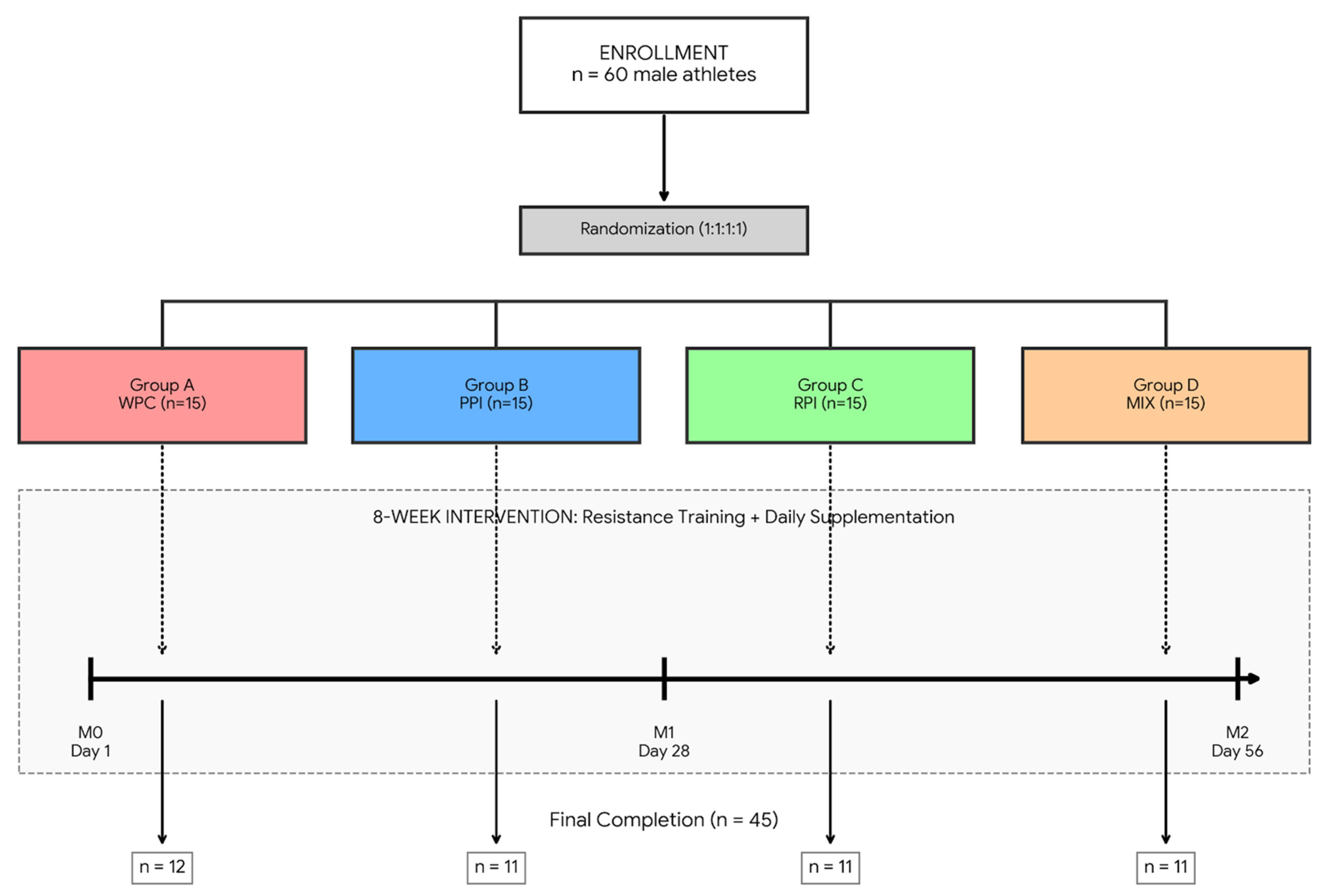
Adherence was strictly monitored via gravimetric assessment; participants returned their containers at each follow-up visit (Day 28 and Day 56), and the residual powder was weighed to verify the 30 g daily intake. Throughout the 8-week intervention, participants were strictly instructed to avoid introducing any new dietary supplements, including probiotics or prebiotics. Habitual supplement use established prior to the study was recorded at baseline and monitored via three-day food diaries and follow-up interviews at Day 28 and Day 56. Participants who failed to demonstrate systematic supplementation or training adherence were excluded from the final per-protocol analysis to maintain the integrity of the results. Detailed reasons for participant attrition are provided in
Section 3.1 and the CONSORT flow diagram (
Figure 1).
2.3. Dietary Intervention
Food intake during the intervention was monitored using a combination of a current recording method and 24 h dietary recalls. Each participant maintained a detailed food diary for three selected days (two weekdays and one weekend day) at three time intervals: the week before the experiment, after 4 weeks of intervention, and the week before study completion. To ensure the accuracy of portion sizes and minimize underreporting, all diaries were reviewed and verified by a qualified nutritionist during mandatory follow-up meetings. These records enabled the calculation of total caloric intake, macronutrient distribution, and dietary fiber consumption using DietetykPro software web version as of 2025 (DietetykPro, Wrocław, Poland) based on national food composition tables.
Standardized nutritional guidelines were provided to all participants to maintain dietary consistency. Participants were advised to eat 4–5 meals per day at regular intervals, have their last meal at least 2 h before bedtime, and abstain from snacking between meals. Consumption of water, unsweetened fruit or herbal teas, and black coffee or tea was permitted without quantitative restrictions. Crucially, participants were strictly advised to maintain their habitual dietary patterns and avoid any significant changes in caloric or fiber intake throughout the 8-week period, ensuring that observed microbial shifts could be primarily attributed to the supplementation protocol rather than confounding dietary variation. Adherence to these guidelines was monitored by reviewing food diaries at mandatory follow-up meetings.
2.4. Stool Collection, DNA Extraction, Sequencing, Bioinformatics
Each participant provided a fresh stool sample at follow-up visits. Samples were aliquoted, frozen, and stored at −80 °C until analysis. DNA was extracted using the PowerFecal Pro kit (Qiagen, Hilden, Germany), which includes a two-step PCR inhibitor removal system. The V3–V8 regions of the 16S rRNA gene were amplified using universal primers 337F (5′-GACTCCTACGGGAGGCWGCAG-3′) and 1391R (5′-GACGGGCGGTGTGTRCA-3′) with LongAmp Polymerase (New England Biolabs, Ipswich, MA, USA).
Obtained amplicons were used for library preparation using the Native Barcoding Kit 96 V14 (SQK-NBD114.96) according to the manufacturer’s instructions. Sequencing was performed on R10.4.1 flowcells using a GridION device (Oxford Nanopore Technologies, Oxford, UK) under the control of MinKnow v. 6.2.6. Raw data were basecalled using the Dorado algorithm (v.7.6.7) with the super-accurate (SUP) model v. 4.3.0. Demultiplexing, as well as barcode and adapter trimming, were also performed via Dorado (v.7.6.7) according to default settings.
Raw Nanopore sequencing reads were subjected to rigorous quality control prior to downstream analysis. Reads with a quality score (QS) below 10 were discarded to minimize the impact of sequencing errors, as well as reads with a length below the threshold of 80% of the expected amplicon size. Chimeric reads were identified and removed during the preprocessing stage. Taxonomic assignment was performed using the UBLAST/USEARCH algorithm (v11.0.667) against the NCBI 16S ribosomal RNA sequences database (Bacteria and Archaea). UBLAST searches were run under default parameters; mappings with an E-value over 1 × 10⁻¹⁸ were discarded, and taxonomy assignment was based on reads mapping with the highest bit-score value.
2.5. Statistical Analysis
A formal sample size calculation was performed based on a one-way ANOVA framework to assess the study’s power to detect differences between the four protein supplementation groups. For a total sample size of n = 45 and a significance level of α = 0.05, the study achieved a power of 0.80 to detect a large effect size (f = 0.51). While the final sample size (n = 11–12 per group) provides moderate power for detecting significant shifts, the study is primarily characterized as exploratory, focusing on a highly controlled and unique cohort of elite athletes to identify potential metabolic trends.
Raw OTU tables were processed using MicrobiomeAnalyst 2.0 (
www.microbiomeanalyst.ca). Initial preprocessing included the removal of singleton features (OTUs observed only once across all samples) to reduce spurious taxa potentially arising from sequencing errors. A low count filter was subsequently applied based on prevalence, retaining only taxa present in at least 20% of samples to minimize the influence of rare and inconsistently detected features. In addition, a low-variance filter was applied to remove the bottom 10% of features with the lowest variance across samples, thereby reducing noise and enhancing detection of biologically meaningful variation. After quality control and preprocessing, sequencing depth ranged from 43,867 to 53,964 reads per sample, indicating consistent library sizes and adequate coverage for downstream diversity and compositional analyses. These preprocessing steps were performed prior to normalization and subsequent compositional and functional analyses.
Microbiota compositional analyses were performed using MicrobiomeAnalyst 2.0. Alpha-diversity (Chao1, Shannon, Simpson indices). Differential taxonomic features were identified using Linear Discriminant Analysis Effect Size (LEfSe). Statistical significance was assessed using non-parametric Kruskal–Wallis tests followed by pairwise Wilcoxon rank-sum tests where appropriate. To control for multiple comparisons in high-dimensional microbiome data, p-values were adjusted using the Benjamini–Hochberg false discovery rate (FDR) correction. Features with an adjusted q-value < 0.05 and an LDA score > 1.0 were considered statistically significant and biologically relevant. Functional predictions derived from 16S rRNA gene profiles were generated using the MACADAM database and further evaluated in STAMP (v2.1.3). For pairwise comparisons of relative abundances between groups at each time point (M0, M1, M2), Welch’s t-tests were applied within STAMP, and resulting p-values were adjusted for multiple comparisons using the Storey false discovery rate (FDR) method, and corresponding q-values < 0.05 were considered statistically significant. In addition to statistical significance (q < 0.05), effect size estimates based on differences in mean relative proportions and corresponding confidence intervals (DP: Welch’s inverted method for CI) were examined to assess biological relevance. Because the study included repeated measurements within the same individuals, comparisons were conducted separately for each time point and interpreted as cross-sectional contrasts rather than longitudinal mixed-effects modeling.
Dietary intake data were analyzed using the Kruskal–Wallis test (Statistica 13.1, TIBCO Software Inc., Palo Alto, CA, USA). The corresponding H statistics and effect sizes (η
2(H)) are presented in
Supplementary Table S1. Statistical significance was set at
p < 0.05 for dietary variables, whereas for microbiome analyses and associated features, significance was determined at q-adjusted
p < 0.05 following multiple testing correction.
4. Discussion
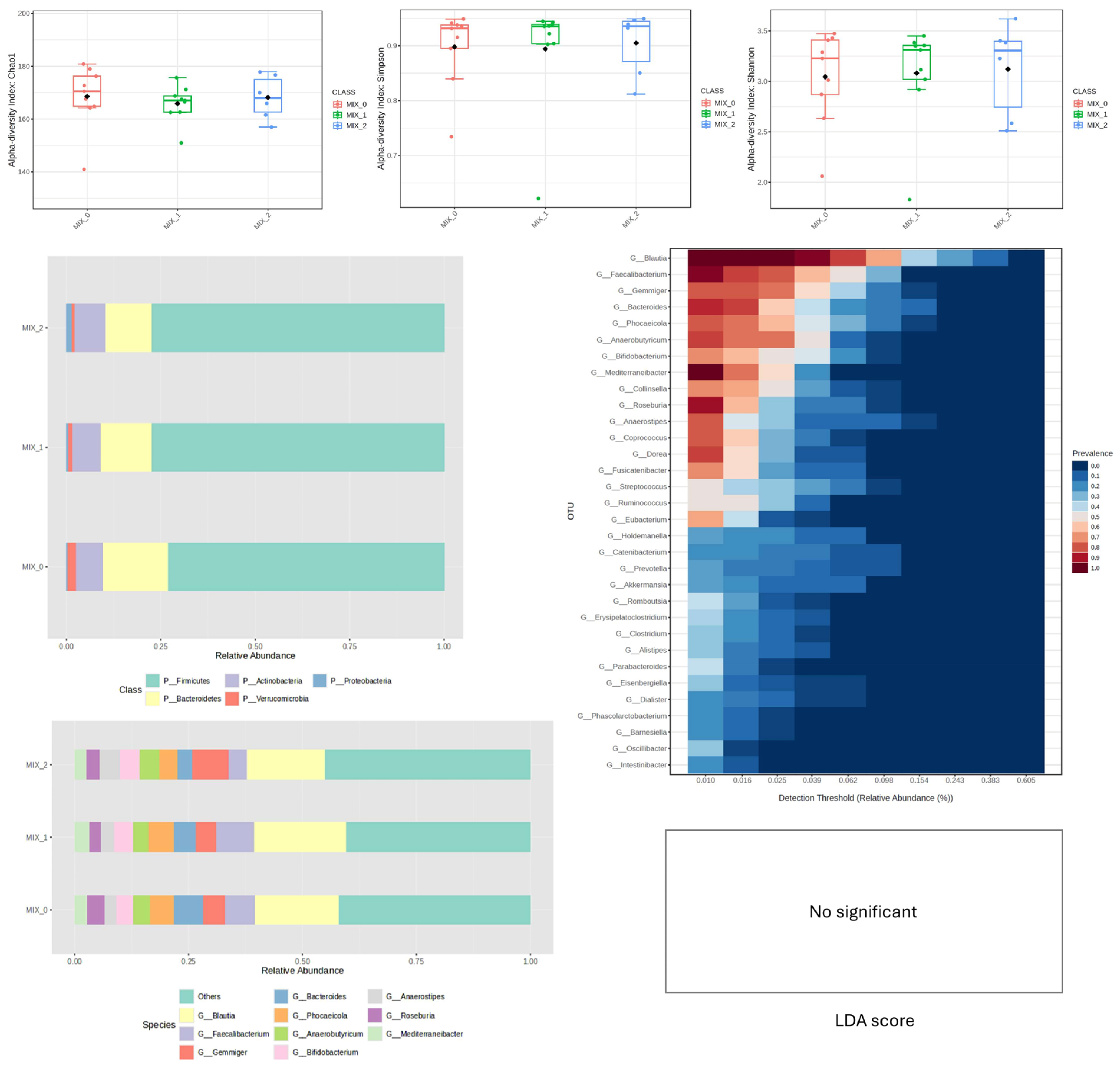
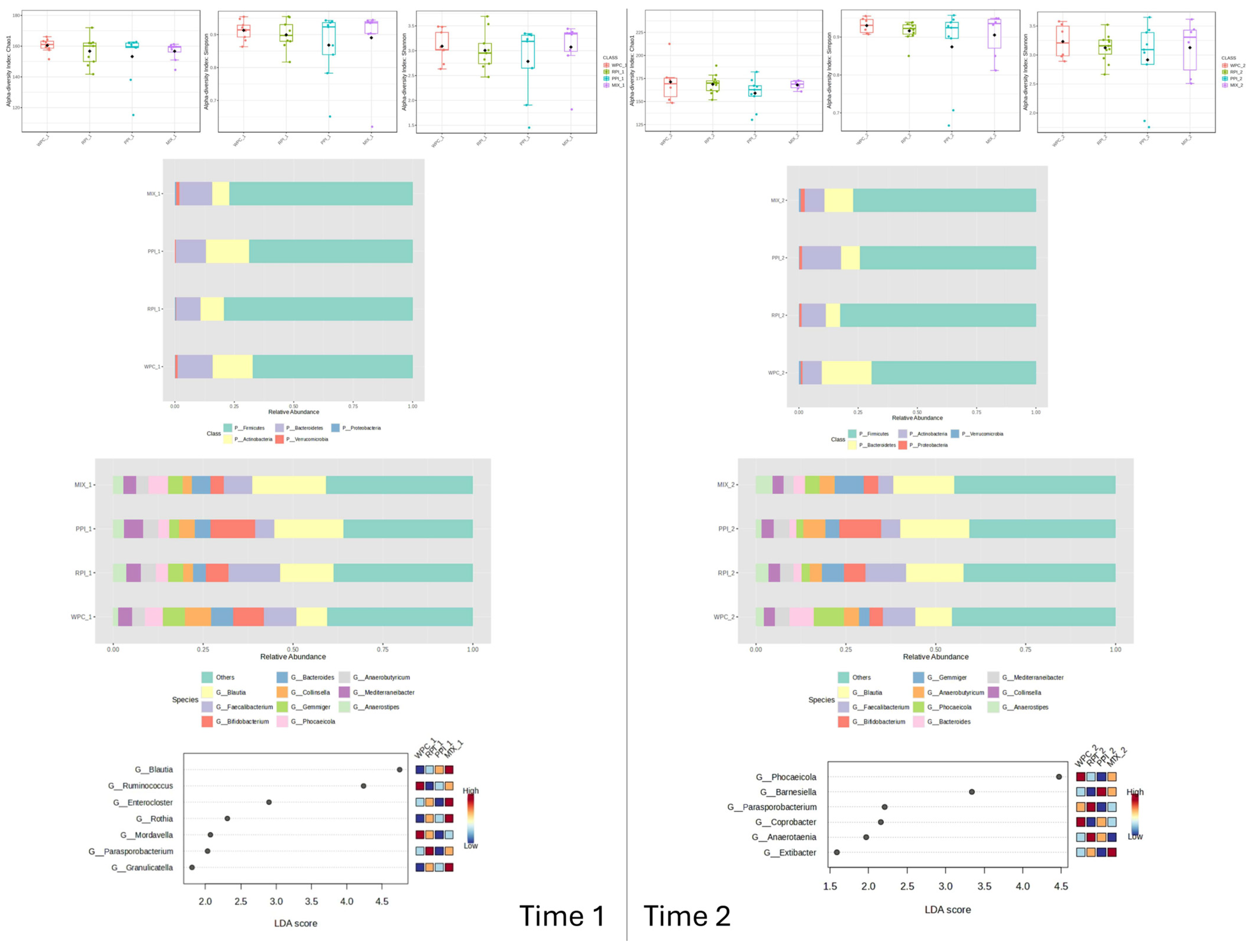
The findings of this study indicate that supplementation with proteins of various origins (MIX, WPC, RPI, PPI) did not lead to significant alterations in the overall diversity of the gut microbiota, as confirmed by stable alpha-diversity indices. Nevertheless, detailed taxonomic and functional analyses revealed subtle but potentially relevant shifts in the predicted metabolic potential of the microbiome [
8,
9].
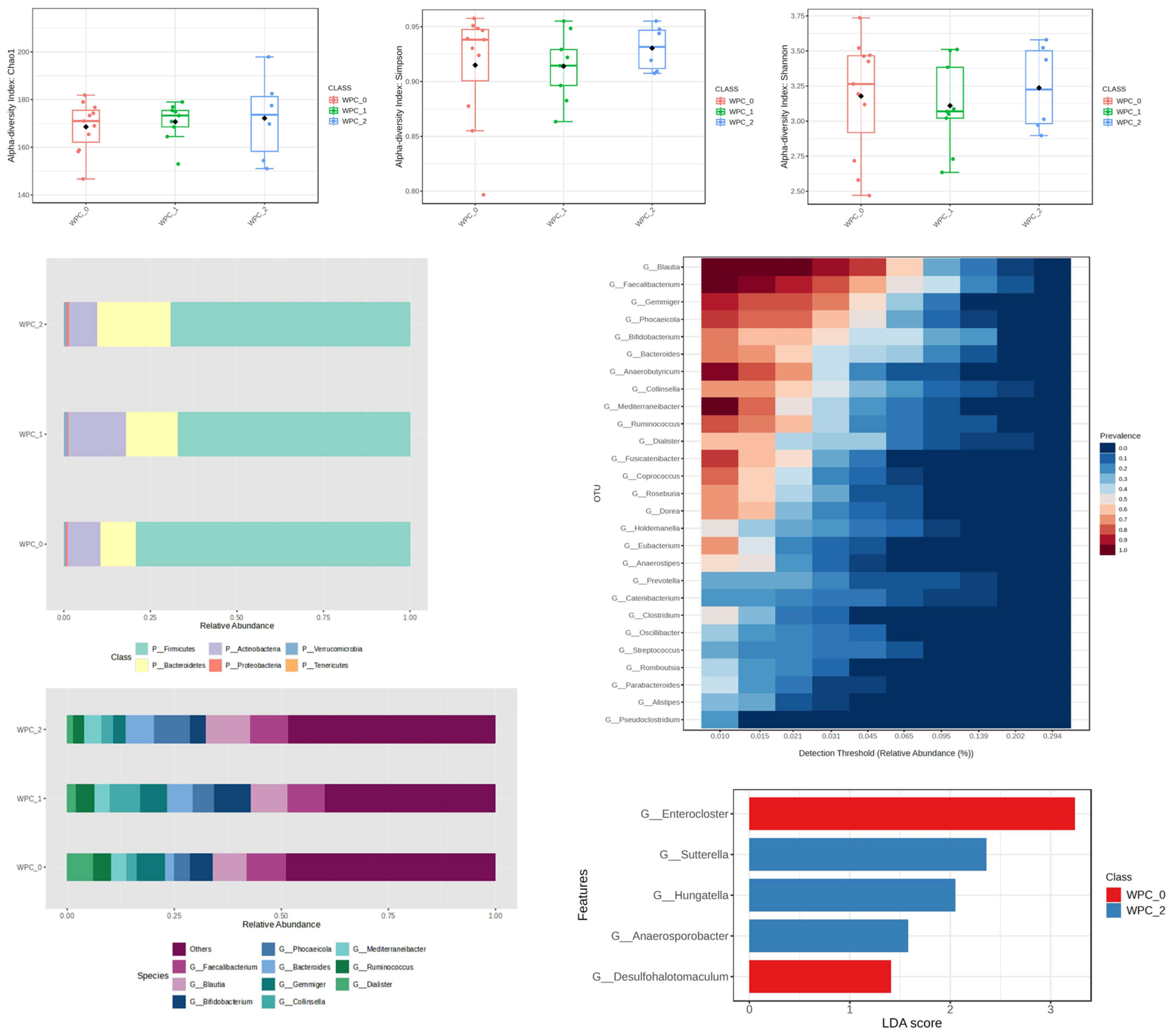
WPC supplementation demonstrated stability in the Chao1, Shannon, and Simpson indices and progressive stabilization of the microbial ecosystem. At the phylum level, a significant increase in
Actinobacteria and
Bacteroidetes was observed after 4 weeks, with
Actinobacteria returning to baseline and
Bacteroidetes rising further at 8 weeks. The increased abundance of
Bacteroidetes after 8 weeks may indicate a shift toward taxa previously associated with SCFA-related metabolic pathways; however, SCFA concentrations were not directly measured. Importantly, recent research by Govindan et al. provides direct in vivo support for these functional inferences. In their 12-week resistance training trial, participants supplementing with plant protein (lentil) exhibited significantly higher fecal concentrations of butyrate and acetate—measured via gas chromatography—compared to those consuming animal protein (whey/egg). This suggests that the predicted increase in fermentation pathways observed in our plant-protein groups (RPI/PPI) likely translates into tangible metabolic shifts [
10]. This is consistent with in vitro studies on whey protein hydrolysate and animal studies demonstrating increased short-chain fatty acid production and the restoration of key bacterial families following protein intervention [
11,
12]. Genera
Blautia and
Faecalibacterium dominated at the genus level, while fluctuations were noted for
Bifidobacterium,
Bacteroides,
Collinsella,
Phocaeicola, and
Gemmiger. LEfSe analysis revealed significant differences between WPC0 and WPC2 groups, particularly for genera
Enterocloster,
Desulfohalotomaculum,
Suterella,
Huangatella, and
Anaerosporobacter, indicating functionally meaningful ecological shifts [
13,
14].
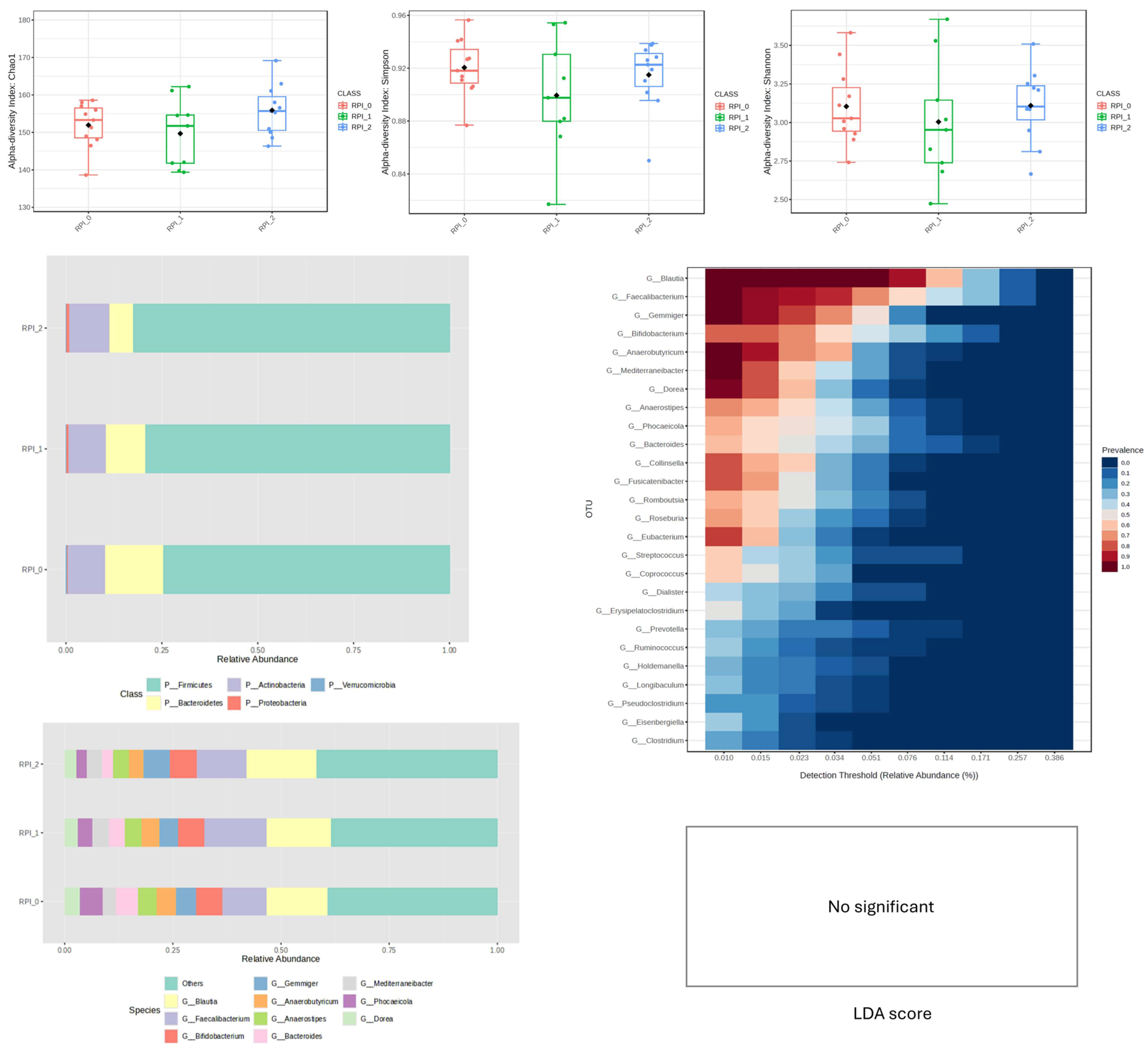
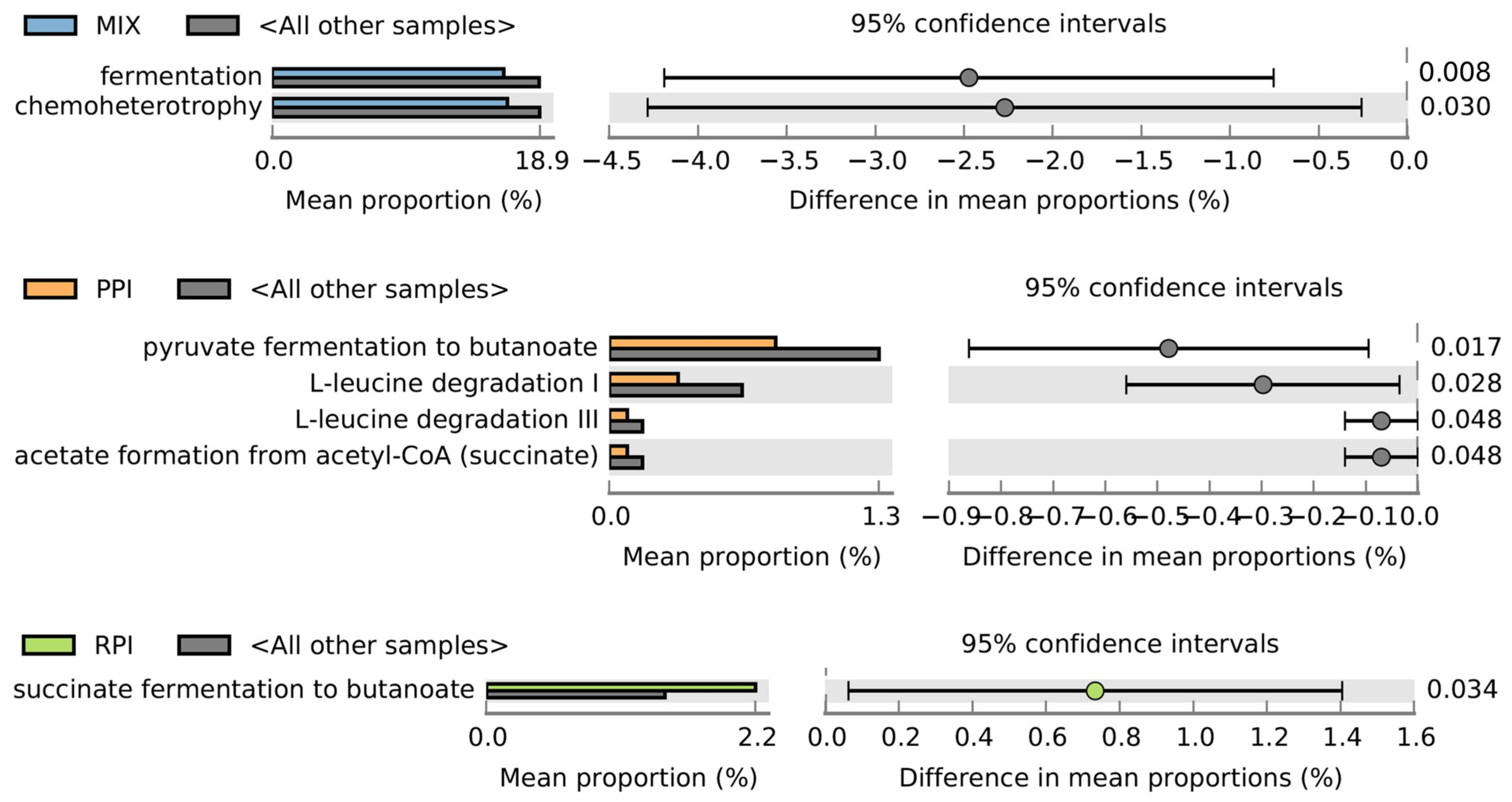
The RPI group demonstrated high taxonomic stability, but after 4 weeks, there was an increase in taxa classified as succinate-to-malate fermenters, which may suggest a shift in predicted SCFA-related metabolic potential; nevertheless, no direct metabolite data were obtained [
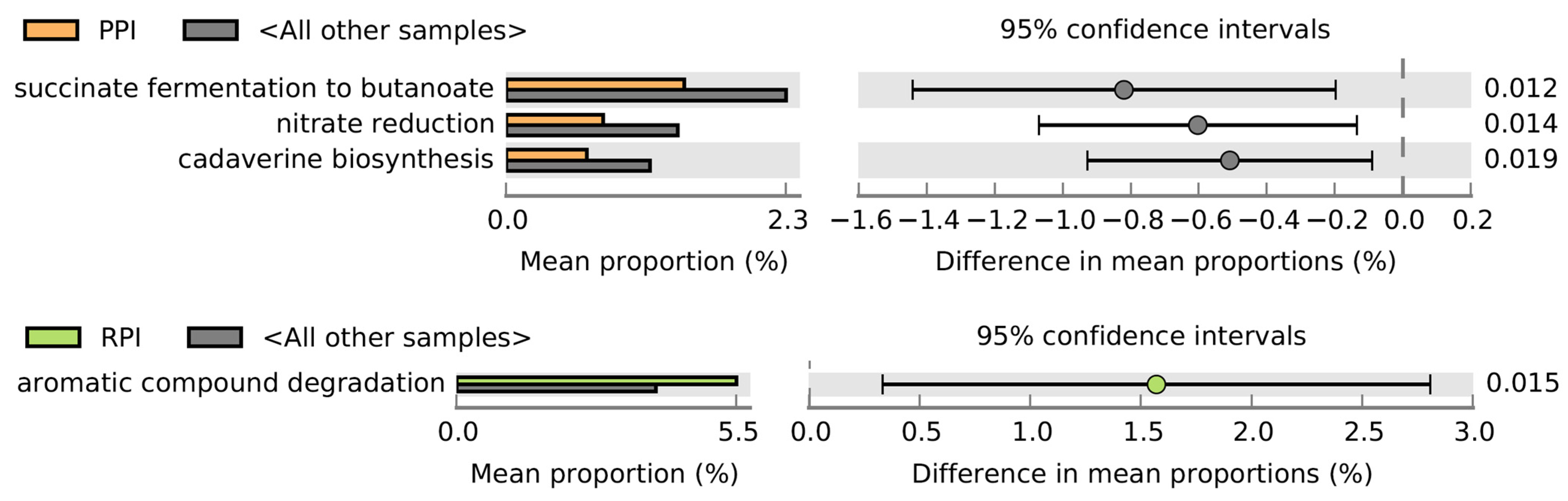
15]. Eight weeks of supplementation increased bacteria involved in aromatic compound degradation, which may be beneficial for immunoregulation. A reduction in these bacteria may diminish production of protective metabolites and increase risk for inflammatory and autoimmune conditions [
16,
17].
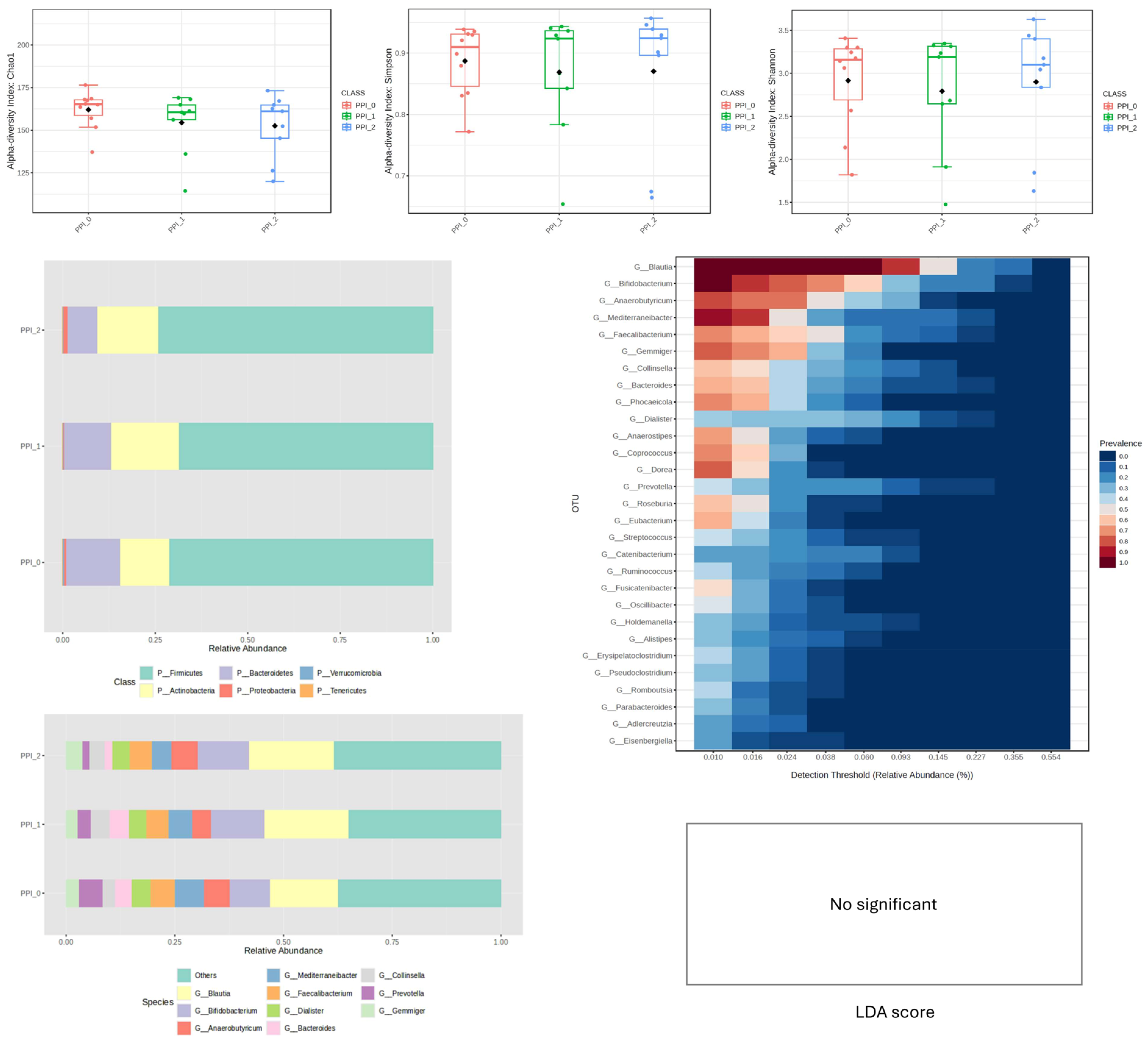
PPI supplementation did not result in significant changes in alpha-diversity, but samples showed marked intra-group variability. After 4 weeks, there was an increase in Bifidobacterium (above 20%) and a reduction in
Bacteroides and
Prevotella. There was also a reduction in pyruvate-to-butyrate fermenters, acetate-producing bacteria, and leucine-degraders. These changes may reflect alterations in taxa associated with SCFA-related pathways; however, direct quantification of SCFAs or other metabolites was not performed [
9]. After 8 weeks, there was a further decrease in succinate-to-malate fermenters and nitrate-reducing bacteria, which could alter N-NO
3 levels and contribute to inflammatory disorders.
The role of bacteria potentially related to cadaverine biosynthesis requires further clinical study, as their significance in the gut environment is still not fully understood [
18].
MIX and PPI supplementation was associated with dynamic shifts in the microbiome composition, including reductions in taxa predicted to contribute to malate and acetate production. The observed increase in Bifidobacterium following PPI supplementation aligns with previous studies on pea protein [
19], which reported similar effects in multi-ingredient interventions and underscores the complexity of microbial interactions. Both PPI and RPI showed a decline in
Bacteroidetes, contrasting with findings from animal models that indicated the opposite trend [
20] however, results from human studies regarding both Bacteroides and Bifidobacterium are consistent with our findings [
21]. MIX supplementation did not alter alpha-diversity but revealed substantial inter-individual variability, including
Firmicutes dominance at 4 weeks, a corresponding decrease in
Bacteroidetes, and reduced
Verrucomicrobia. The increase in
Gemmiger alongside a decline in
Faecalibacterium, as well as reductions in predicted fermentative and heterotrophic taxa, points to shifts in the predicted metabolic potential of the microbiota, potentially affecting SCFA and other metabolite-associated pathways.
Interpreting these results—particularly the natural production of proteases by damaged legume plant cells (PPI variant)—protein fractions as well as the presence of exogenous proteases and nitrogenous compounds appear to play a significant role in shaping the gut microenvironment, potentially promoting the growth of ammonifying and denitrifying bacteria. This shift may reflect alterations in taxa linked to butyrate-related metabolic pathways, although functional consequences cannot be confirmed without targeted metabolomic analysis. A similar protease-driven mechanism has been described in the context of legume-based feeds for livestock, but direct parallels with human gut microbiota remain speculative in the absence of corresponding metabolite data [
22].
Accordingly, the present findings should be regarded as hypothesis-generating. Interpretation of these findings must remain cautious. While dietary protein composition—including plant-derived protein fractions—may theoretically influence nitrogen availability and microbial metabolism, the present study design does not allow mechanistic conclusions. Functional predictions derived from 16S-based taxonomic profiles provide only an estimation of potential metabolic capacity and cannot substitute for targeted metagenomic or metabolomic analyses.
Bel Lassan et al. [
23] investigated the effects of high-protein milk-based supplementation during moderate energy restriction in individuals with overweight or obesity and metabolic syndrome in a 12-week randomized, double-blind trial. Compared with an isocaloric preparation with lower protein content, the high-protein intervention led to greater reductions in visceral and total adipose tissue, better preservation of lean body mass, and decreased circulating inflammatory markers (CRP, TNFα), without significant between-group differences in classical cardiometabolic parameters. Metagenomic profiling of the gut microbiota revealed minimal alterations in diversity and taxonomic composition. Nevertheless, in the high-protein group, a pronounced activation of functional modules related to amino acid metabolism—particularly biosynthetic pathways—was observed, with the magnitude of this response correlating with dietary protein intake rather than the extent of weight loss. Furthermore, an increase in microbiome gene diversity among participants with initially low richness was associated with greater reductions in body weight and fat mass, irrespective of the supplement type. These findings indicate that the beneficial metabolic effects of dietary intervention are primarily mediated through modulation of microbial metabolic functions rather than through profound taxonomic restructuring of the gut microbiota. Similarly, in our study, we also observed only moderate rearrangements in the gut bacterial microbiota composition, accompanied, however, by pronounced shifts in the predicted functional metabolic potential, particularly within pathways related to amino acid metabolism. This convergence with the findings of Bel Lassan et al. [
23] reinforces the concept that dietary protein intake may primarily modulate the functional capacity of the gut microbiota rather than induce extensive taxonomic restructuring.
Limitations and Generalizability
This study has several limitations that should be considered when interpreting the results. First, regarding statistical analysis, we employed cross-sectional comparisons at specific time points rather than longitudinal mixed-effects modeling. While this approach allows for the identification of specific differences at days 28 and 56, it limits the ability to fully infer continuous longitudinal evolution and subject-specific random effects over time. Future studies should employ mixed-effects models on larger cohorts to robustly capture these longitudinal dynamics.
Second, the functional analyses presented here are based on predictive metagenomics inferred from 16S rRNA gene amplicon data (MACADAM/STAMP). While this approach provides valuable insights into the metabolic potential of the microbial community, it does not confirm the actual production of metabolites (e.g., SCFAs, polyamines). Therefore, terms such as “biosynthesis” or “degradation” in our results refer to the abundance of genes annotated to these pathways, not the measured metabolic flux. Future studies should incorporate targeted metabolomics to validate these predictions.
Regarding generalizability, the study cohort consisted exclusively of young male professional football players. Consequently, the observed shifts in microbiota composition and predicted metabolic functions may not directly translate to female athletes, endurance-based populations, or recreational users due to differences in hormonal profiles and training metabolic demands.
However, studying elite cohorts is justified by the fact that professional sports nutrition often sets the standard for amateur and recreational populations. As recreational athletes increasingly adopt professional supplementation protocols to enhance performance, understanding the impact of these products in a highly controlled elite setting is of high practical relevance. Nonetheless, broader nutritional recommendations based on these results should be applied with caution to the general population.




 ,
,