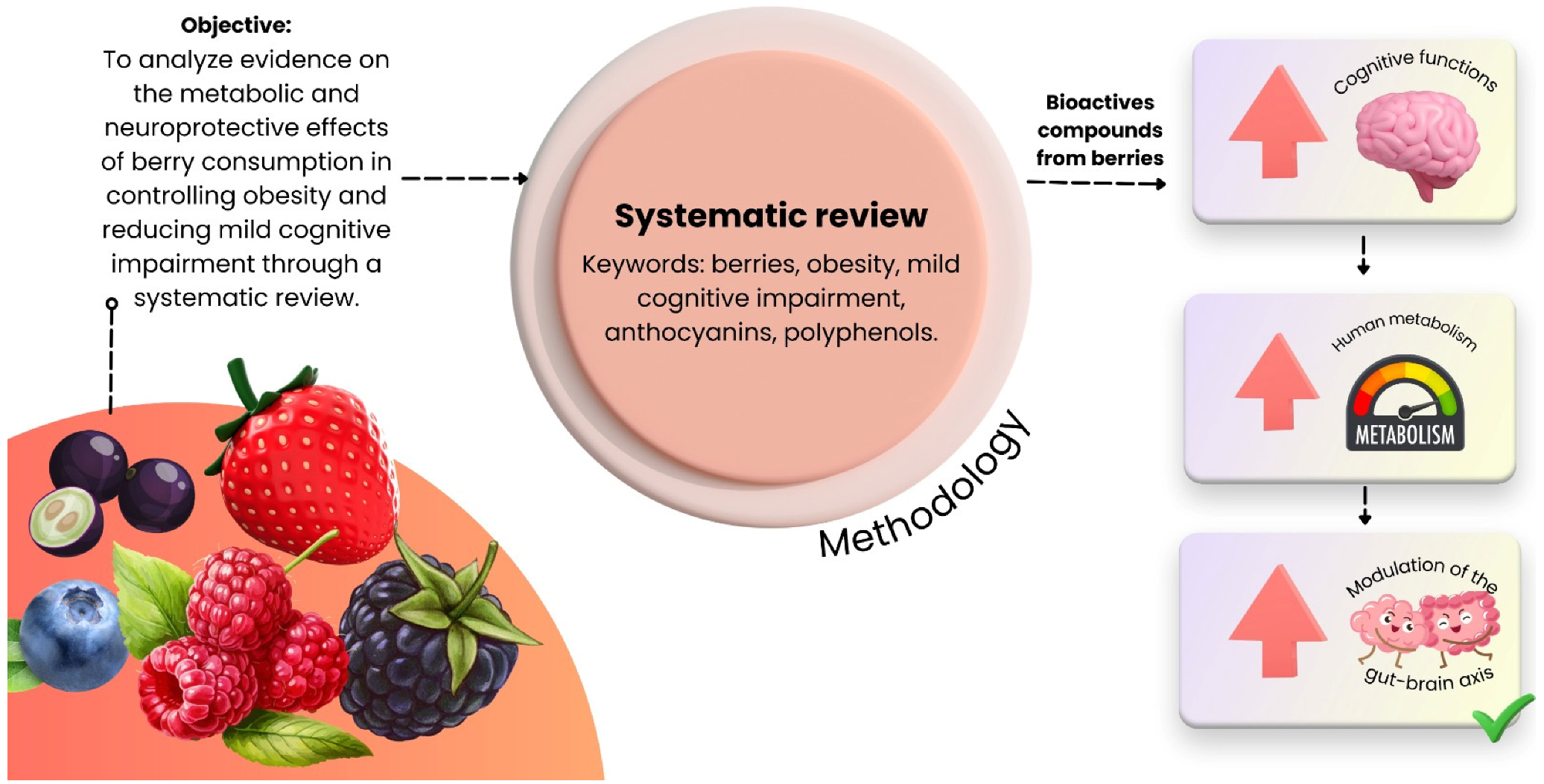
Berry Consumption and Its Role in the Modulation of Obesity and Mild Cognitive Impairment

 ,
,
Abstract
1. Introduction
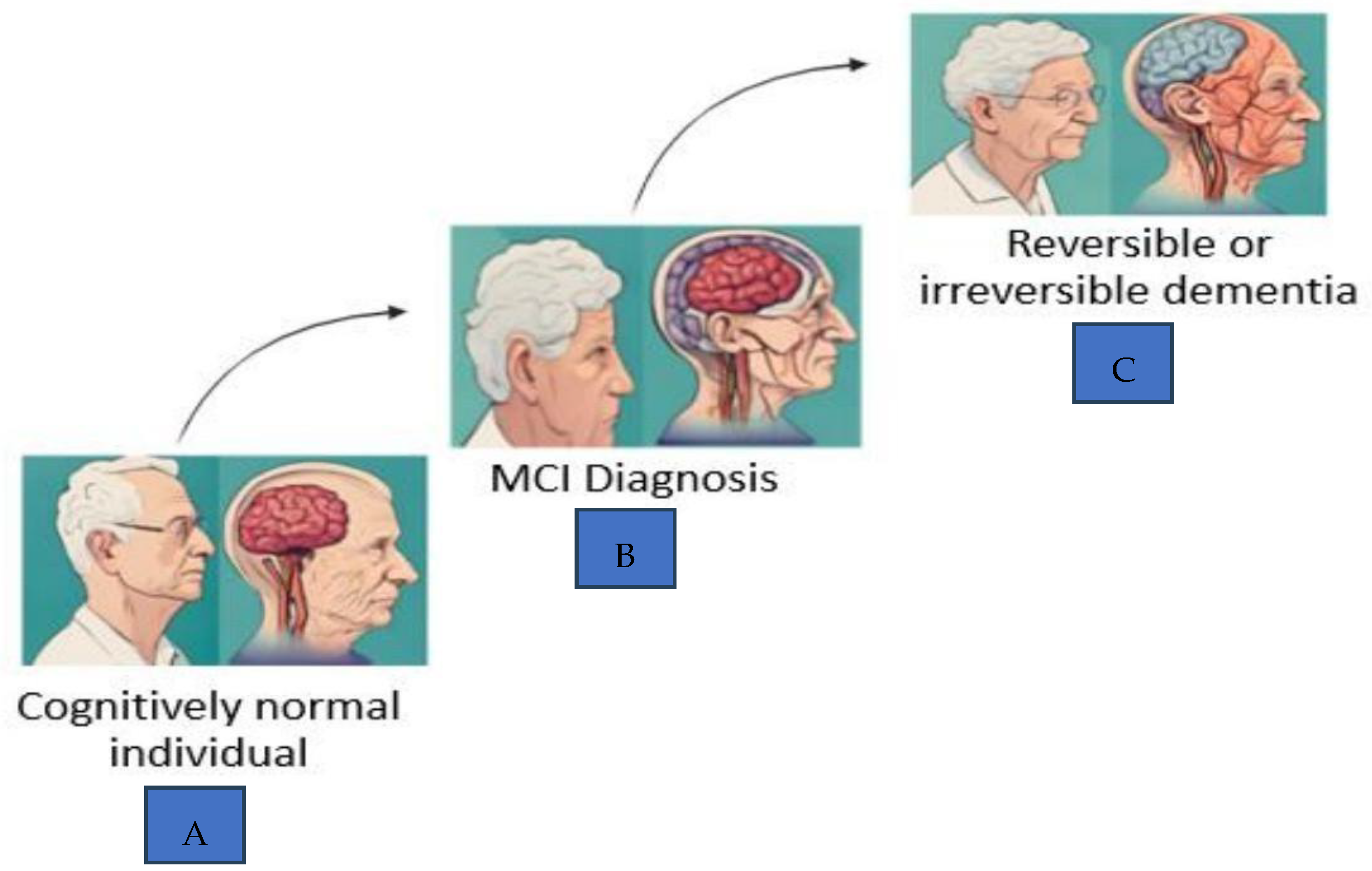
1.1. Mild Cognitive Impairment (MCI)
- Aggregates of β-amyloid protein in the form of extracellular plaques and abnormal intracellular accumulations of hyperphosphorylated TAU protein, resulting in neurofibrillary tangles—hallmark pathological features of Alzheimer’s disease.
- Microscopic inclusions known as Lewy bodies, which are classically associated with Parkinson’s disease and dementia with Lewy bodies and are also observed in a subset of Alzheimer’s disease cases.
- Cerebrovascular alterations, including small infarcts and reduced cerebral perfusion, underscoring the contribution of vascular pathology to cognitive decline in MCI.
- Reduced hippocampal volume, a structure critically involved in memory formation and consolidation.
- Enlargement of the cerebral ventricles, reflecting progressive brain atrophy.
- Reduced cerebral glucose metabolism in specific cortical regions, indicating decreased availability and utilization of the brain’s primary energy substrate.
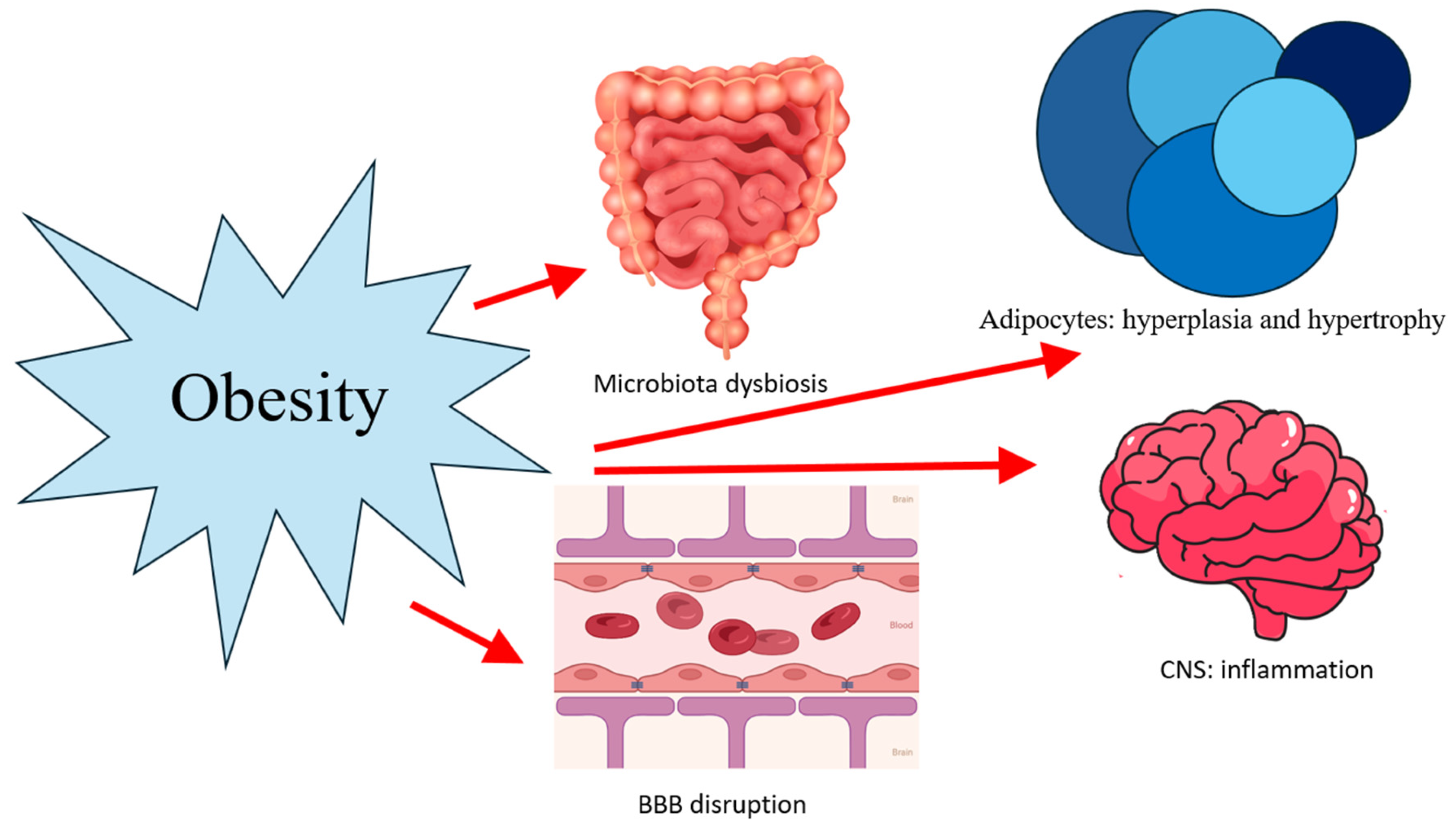
1.2. Obesity and MCI
Obesity and Damage to Cognitive Functions
1.3. Bioactive Compounds and Berries
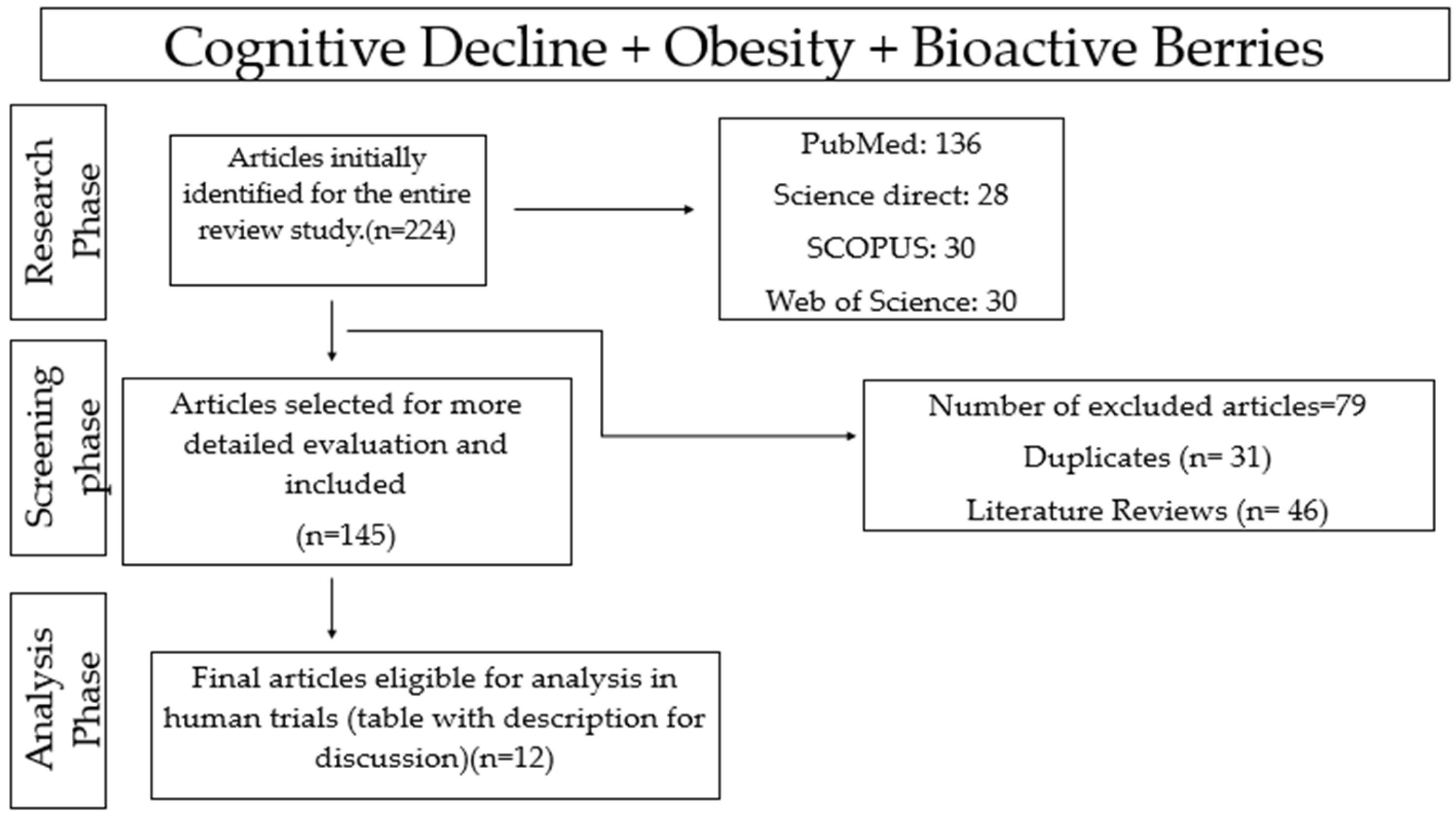
2. Methods
3. Results

| Authors | Food Matrix Evaluated | Dose, Time | Study Design | Main Results (Biomarkers Used) |
|---|---|---|---|---|
| (Krikorian, R.; Skelton, M.R.; Summer, S.S.; Shidler, M.D.; Sullivan, P.G., 2022) [86] | Blueberry | 0.5 to 1.0 c whole-fruit equivalent (Blueberry); 12 weeks. There is no description by the authors regarding the concentrations of Anthocyanins in each cup (c) of Blueberry; taken orally. | A total of 155 participants aged between 50 and 65 years were initially randomized; however, 27 individuals completed the study and were included in the final analysis. Eligibility criteria included a body mass index (BMI) ≥ 25 kg/m2, the presence of subjective cognitive complaints reflecting perceived decline from a previous level of cognitive functioning, the ability to understand and adhere to the study protocol, and provision of written informed consent. | Blueberry supplementation demonstrated neurocognitive benefits in middle-aged individuals with insulin resistance and an elevated risk of future dementia. After 12 weeks of intervention, lexical access performance significantly improved in the blueberry (BB) group (F(1,24) = 10.67, p = 0.003; Cohen’s f = 0.66). Perceived everyday memory difficulties, assessed using the Everyday Memory Questionnaire, were also significantly reduced in the BB group, particularly with respect to forgetting and encoding-related failures (F(1,24) = 4.93, p = 0.03; Cohen’s f = 0.45). In addition, fasting insulin levels were measured at baseline and after 12 weeks, revealing a significant reduction in the BB group following supplementation (F(1,24) = 4.62, p = 0.04; Cohen’s f = 0.44). |
| (Devore, E.E.; Kang, J.H.; Breteler, M.M.; Grodstein, F., 2012) [87] | Blueberry and Strawberry | 145.4 to 684.1 mg/day of flavonoids (taken orally), without specifying which flavonoids were evaluated and the concentration of each of them. Foods were specified in a common unit or serving size = ½ cup blueberries. Frequency: ≥6 times per day.” Intakes of 31 individual flavonoids representing six major flavonoid subclasses (anthocyanidins, flavonols, flavones, flavanones, flavan-3-ols, and polymeric flavonoids) were also calculated. Time of study: 6 years. | A large human cohort study included 16,010 female participants aged over 70 years, with no history of stroke and a mean body mass index (BMI) of 26.0 kg/m2 | Higher blueberry consumption was significantly associated with a slower rate of cognitive decline, including global cognitive scores (p for trend = 0.010), verbal cognition (p for trend = 0.016), and performance on the Telephone Interview for Cognitive Status (p for trend = 0.027). The mean difference in the rate of global cognitive decline during the follow-up period was 0.04 standard units (95% CI: 0.01–0.07) when comparing women who consumed ≥1 serving of blueberries per week with those who consumed <1 serving per month. These effect estimates were comparable to those reported in previous cohort studies and suggest that berry consumption may delay cognitive aging by up to 2.5 years. Furthermore, higher intakes of anthocyanins and total flavonoids were independently associated with slower rates of cognitive decline, providing additional support for the neuroprotective role of berry-derived polyphenols. |
| (Doraiswamy, P.M.; Miller, M.G.; Hellegers, C.A.; Nwosu, A.; Choe, J.; Murdoch, D.M., 2023) [88] | Blueberry | 36 g per day of freeze-dried blueberry powder in a divided dose consumed with breakfast and dinner (taken orally), per 12 weeks. The author does not mention the bioactive compounds in blueberries and their respective concentrations in each dose administered during the experiment. | Participants received blueberry supplementation while abstaining from other anthocyanin-rich foods and beverages throughout the intervention period. The study enrolled 43 participants aged 55 to 85 years who were English-speaking, clinically stable, and met diagnostic criteria for amnestic mild cognitive impairment. These criteria included impaired delayed verbal recall with otherwise normal or near-normal global cognition and preserved functional abilities. | The biomarkers Aβ40, Aβ42, the Aβ42/Aβ40 ratio, phosphorylated tau at threonine 181 (pTAU181, pg/mL), the pTAU181/Aβ42 ratio, neurofilament light chain (NfL, pg/mL), glial fibrillary acidic protein (GFAP, pg/mL), and brain-derived neurotrophic factor (BDNF, pg/mL) were evaluated at baseline and after the intervention. No statistically significant changes were observed between time points. Baseline Aβ40 levels were 114.45 ± 4.67 pg/mL and remained stable after treatment (114.73 ± 4.27 pg/mL; p = 0.55). Similarly, Aβ42 concentrations showed no change from baseline (5.75 ± 0.42 pg/mL) to post-treatment (5.75 ± 0.36 pg/mL; p = 0.50). The Aβ42/Aβ40 ratio remained unchanged (0.050 ± 0.002 at both time points). For tau-related biomarkers, pTAU181 levels were 37.24 ± 3.31 pg/mL at baseline and 38.04 ± 2.58 pg/mL post-treatment (p = 0.64), while the pTAU181/Aβ42 ratio showed no significant difference between baseline (6.72 ± 0.65) and post-treatment (6.79 ± 0.56; p = 0.56). Neurodegeneration and glial activation markers also remained stable. NfL concentrations were 30.09 ± 4.64 pg/mL at baseline and 44.25 ± 16.85 pg/mL after treatment (p = 0.80), and GFAP levels were 239.86 ± 31.15 pg/mL at baseline compared with 234.27 ± 26.98 pg/mL post-treatment (p = 0.34). Likewise, BDNF concentrations did not differ significantly between baseline (1685.48 ± 480.43 pg/mL) and post-treatment (1850.15 ± 436.63 pg/mL; p = 0.61). |
| (Wood, E.; Hein, S.; Mesnage, R.; Fernandes, F.; Abhayaratne, N.; Xu, Y.; Zhang, Z.; Bell, L.; Williams, C.; Rodriguez-Mateos, A., 2023) [89] | Wild blueberry | 26 g freeze-dried WBB powder (equivalent to 178 g fresh WBB) containing 302 mg anthocyanins), once daily, taken orally, 12 weeks. | A randomized, double-blind, parallel-group clinical design involving 61 healthy older adults of both sexes, aged 65–80 years, with a body mass index (BMI) ranging from 18 to 35 kg/m2. All participants were required to be capable of understanding the nature of the study and providing informed consent. | Wild blueberry (WBB) intervention improved specific aspects of cognitive function; however, no significant differences were observed for other measures of the Auditory Verbal Learning Test (AVLT). In the Task Switching Task (TST), 12 weeks of daily WBB supplementation resulted in a significant improvement in overall accuracy, corresponding to an 8.5% increase in performance compared with placebo (F(1,46) = 5.05, p = 0.029). |
| (Miller, M.G.; Hamilton, D.A.; Joseph, J.A.; Shukitt-Hale, B., 2018) [90] | Blueberry | Freeze dried blueberries (24 g/day); 90 days of this project. equivalent to 1 cup of fresh blueberries; This serving of blueberries contains approximately 36 mg/g of total phenolics and approximately 19.2 mg/g of anthocyanins. | A total of 37 participants (13 men and 24 women), aged between 60 and 75 years, were evaluated. Inclusion criteria comprised a body mass index (BMI) between 18.5 and 29.9 kg/m2, adequate visual acuity, fluency in English, the ability to walk unassisted for 20 min, and, for female participants, a postmenopausal status of at least 12 months. | The study demonstrated that the inclusion of small amounts of blueberries in the diets of older adults may improve specific aspects of cognitive performance. Participants committed fewer errors on switch trials across study visits (F(2,70) = 7.49, p = 0.001). Analysis of errors on switch stimuli revealed a significant intervention group × visit interaction (F(2,70) = 3.59, p = 0.033, ηp2 = 0.09), indicating that participants in the blueberry group exhibited a greater reduction in switch-related errors over time compared with those in the control group. |
| (Miller, M.G.; Thangthaeng, N.; Rutledge, G.A.; Scott, T.M.; Shukitt-Hale, B., 2021) [91] | Strawberry | 24 g/day, equivalent to two cups per serving of fresh Strawberry (SB). 90 days The phenolic composition of SB was not described in the experiment. | A total of 338 participants aged 60–75 years were included. Eligibility criteria comprised a body mass index (BMI) between 18.5 and 29.9 kg/m2, the ability to walk unassisted for 20 min, fluency in English, self-reported adequate visual acuity, and, for female participants, a postmenopausal status of more than 12 months. | In this study, participants completed the California Verbal Learning Test at baseline and again after 90 days of dietary intervention with either strawberries (SB) or placebo. At baseline, participants randomized to the SB group recognized fewer words than those assigned to the placebo group. Following the intervention, participants in the SB group demonstrated improved word recognition performance, whereas no change was observed in the placebo group. These findings suggest that the inclusion of strawberries in the diet may help preserve specific aspects of hippocampal-dependent cognitive function during normal aging. Diet may also represent an important modifiable factor in reducing the risk of Alzheimer’s disease and related dementias. With respect to anthropometric outcomes, no significant differences were observed between groups in body weight, waist circumference, or vital signs. |
| (Nilsson, A.; Salo, I.; Plaza, M.; Björck, I., 2017) [92] | Berry Beverage (Blueberries, blackcurrant, elderberry, lingonberries, strawberry, tomatoes) | Red fruit drink based on a mixture of red fruits (150 g blueberries, 50 g black currants, 50 g elderberries, 50 g bilberries, 50 g strawberries and 100 g tomatoes) daily for 5 weeks. The characterization of red fruit drinks was: Total polyphenols 1324.9 (mg/L), Anthocyanins (mg/L) 414.2, Flavanols (mg/L) 155.9. | A total of 40 apparently healthy adults aged 50–70 years were enrolled. Inclusion criteria comprised non-smoking status, age between 50 and 70 years, and normal to mildly elevated body mass index (BMI ≤ 28 kg/m2). Exclusion criteria included fasting blood glucose levels > 6.1 mmol/L, diagnosed metabolic disorders, food allergies, gastrointestinal diseases, or known cognitive disorders that could interfere with study outcomes. Owing to the structure of the cognitive assessments, participants were required to be fluent in Swedish. | Consumption of the red fruit blend for five weeks resulted in reductions in total cholesterol and low-density lipoprotein cholesterol (LDL-C) and prevented monosaccharide-induced impairments in glucose homeostasis and insulin sensitivity. In parallel, an improvement in working memory capacity was observed. The combined improvements in cardiometabolic risk markers and cognitive performance following berry drink consumption support the potential preventive role of berries in relation to type 2 diabetes, cardiovascular disease, and associated cognitive decline. |
| (Lopresti, A.L.; Smith, S.J.; Pouchieu, C.; PourTAU, L.; Gaudout, D.; Pallet, V.; Drummond, P.D., 2023) [93] | Vitis vinifera L. extract | 150 mg twice daily (capsules); 300 mg per day. No information on the composition of the extract. This daily dose is equivalent to eating approximately 185 g of grapes (35 to 40 grapes) or 34 g of blueberries (65 to 70 blueberries) per day. The study period was 6 months. | A total of 143 volunteers aged 60–80 years were included. Eligibility criteria comprised male and female participants with self-reported attention and memory difficulties and Montreal Cognitive Assessment–Basic Version (MoCA-BV) scores ranging from 13 to 18. Participants were required to live independently, be non-smokers, have a body mass index (BMI) between 18 and 30 kg/m2, and have no plans to initiate new medical treatments during the study period. | Extract supplementation was associated with greater improvements in information processing speed, performance on the Brief Test of Attention (Brief-A), visuospatial learning, and the overall BRIEF-A score. Within the extract group, correlational analyses indicated that changes in dietary polyphenol intake from baseline to week 24 were not significantly associated with changes in episodic memory (r = −0.106, p = 0.409), working memory (r = 0.096, p = 0.452), information processing speed (r = −0.017, p = 0.895), or attentional accuracy (r = −0.124, p = 0.334). These findings suggest that background dietary polyphenol intake did not influence the cognitive-enhancing effects of the extract over the intervention period. Anti-obesity outcomes were not assessed in this study. |
| (Dodd, G.F.; Williams, C.M.; Butler, L.T.; Spencer, J.P., 2019) [94] | Blueberry Beverage | Flavonoid-rich blueberry drink (579 mg anthocyanidins and procyanidins), 30 g per drink, a single visit by the researcher, 2 and 5 h after consumption. | A total of 18 participants (10 women and 8 men) with Mini-Mental State Examination (MMSE) scores ≤ 25 were included. Cognitive function was assessed at baseline and at 2 and 5 h following the intervention. | Cognitive performance differed significantly between 2 and 5 h following consumption of the control beverage (p < 0.05), with a decline relative to baseline observed at 2 h. In contrast, cognitive function improved following the blueberry beverage at both post-intervention time points. A trend toward attenuation of the postprandial increase in systolic blood pressure was also observed following the blueberry beverage compared with the control beverage (p = 0.08). Plasma brain-derived neurotrophic factor (BDNF) concentrations decreased after consumption of the control beverage; this reduction was attenuated following the blueberry beverage, although the difference did not reach statistical significance (p > 0.05). Anti-obesity outcomes were not assessed in this study. |
| (Whyte, A.R.; Cheng, N.; Butler, L.T.; Lamport, D.J.; Williams, C.M., 2019) [95] | blueberry, strawberry, raspberry, and blackberry | 400 mL of ‘smoothie’ containing 75 g of whole strawberries, blueberries, blackberries and raspberries, mixed with 100 mL of water and containing 14.3 g of polyphenols. Important: Average flavonoid content mg/75 g by flavonoid class and berry type. It was 2 days of study and observation. | A total of 46 healthy young adults were recruited for the study. Although specific inclusion criteria were not explicitly reported, the study defined several exclusion criteria, including non-native English speakers, significant visual, auditory, or language impairments, medical conditions such as diabetes or cardiovascular disease, and pregnancy. | Participants in the berry condition demonstrated higher accuracy than those receiving placebo. Post hoc analyses indicated no significant differences between interventions on incongruent trials at 2 and 4 h post-intervention; however, accuracy on incongruent trials was significantly higher in the berry condition at 6 h compared with placebo (p = 0.002). In addition, accuracy in the placebo condition on incongruent trials declined significantly between 2 and 6 h and between 4 and 6 h (both p < 0.001), whereas performance in the berry condition remained stable throughout the day. These findings suggest that the observed intervention × session interaction effects were primarily driven by deteriorating placebo performance on cognitively demanding incongruent trials. Anti-obesity outcomes were not assessed in this study. |
| (Curtis, P.J.; van der Velpen, V.; Berends, L.; Jennings, A.; Haag, L.; Minihane, A.M.; Chandra, P.; Kay, C.D.; Rimm, E.B.; Cassidy, A., 2024) [96] | Blueberry powder | 1 cup of blueberries, 150 g, presented in powder form; (equivalent to 1 cup of fresh blueberries; 364 mg of anthocyanin and 879 mg of phenolics); Total study time: 6 months. | A total of 138 participants were eligible for inclusion. The study population comprised adults aged 50–75 years who were classified as overweight or obese, with a body mass index (BMI) ≥ 25 kg/m2 | During the 6-month intervention period, no statistically significant differences were observed between groups across any domain of cognitive function (p > 0.05). However, consumption of one cup of blueberries per day was associated with a trend toward improved image recognition accuracy, corresponding to a 4.2% increase (p = 0.10; q = 0.59). Similarly, changes in self-reported alertness and mood did not differ significantly between intervention groups following chronic blueberry intake (p > 0.05), although alertness approached statistical significance among participants consuming one cup per day (p = 0.08; q = 0.24). |
| (Whyte, A.R.; Rahman, S.; Bell, L.; Edirisinghe, I.; Krikorian, R.; Williams, C.M.; Burton-Freeman, B., 2021) [97] | Wild Blueberry | The wild blueberry drink consisted of 25 g of freeze-dried whole wild blueberry (WBB) powder (~1 cup fresh weight). The bioactive substances contained in this drink were: 725 mg of Polyphenols, 475 mg of Anthocyanins. Time of study: 8 h (after meal). | A total of 35 adults aged 40–65 years participated in this human study. Eligibility criteria included a body mass index (BMI) between 18.5 and 34.9 kg/m2, non-smoking status for at least two years, and the ability to understand and complete cognitive function tasks. Participants were required not to be using medications that could interfere with study outcomes, including glucose-lowering, lipid-lowering, or psychostimulant drugs, and to have no history of cardiovascular, respiratory, renal, gastrointestinal, or neurological disorders. | Significant effects on the Auditory Verbal Learning Task (AVLT) were observed exclusively for the recognition memory component, in which participants were required to identify previously presented words from a list of 50 items. A significant main effect of beverage was detected (F(1,39.5) = 6.65, p = 0.014), with participants receiving wild blueberry (WBB) demonstrating higher recognition accuracy (M = 0.825) compared with those receiving placebo (M = 0.80). The Beverage × Time interaction showed a trend toward significance (F(4,70) = 2.01, p = 0.094), and pairwise comparisons indicated superior performance following WBB relative to placebo, most notably at 240 min post-consumption (p = 0.002). This study also assessed body mass index (BMI) as an obesity-related indicator. Metabolic responses differed between treatments during the first 120 min postprandially, with significantly lower glucose and insulin concentrations observed following WBB compared with placebo. When metabolic variables, BMI, and age were included as covariates, their impact varied according to the cognitive outcome examined. BMI emerged as a significant predictor or interaction term for specific measures, including Immediate Recall (trend: F(1,38.4) = 3.89, p = 0.056) and Total Number of Words Learned, where a BMI × Beverage interaction was observed (F(1,34.3) = 3.90, p = 0.056). In both the WBB and placebo conditions, higher BMI was associated with poorer performance (WBB β = −0.139; placebo β = −0.032). |
| (Cheatham, C.L.; Canipe, L.G., 3rd; Millsap, G.; Stegall, J.M.; Chai, S.C.; Sheppard, K.W.; Lila, M.A., 2023) [98] | Wild blueberries | 35 g of wild blueberry powder per day (equivalent to about one serving of berries); equivalent to about 178 g of fresh blueberries. This dose contained approximately: 302 mg of anthocyanins, responsible for many of the bioactive effects of blueberries; 202 mg of chlorogenic acid, another phenolic compound with antioxidant activity. | A randomized, double-blind, placebo-controlled clinical trial was conducted in older adults aged 65–80 years with mild cognitive impairment, including 44 participants allocated to the blueberry intervention group and 42 to the placebo group, alongside a healthy control group (n = 45). Cognitive outcomes were assessed using the Cambridge Neuropsychological Test Automated Battery (CANTAB) to evaluate information processing performance, particularly processing speed. In addition, event-related potentials (ERP) were recorded as electrophysiological measures of neural processing speed. | Performance on the Rapid Visual Processing task, a component of the Cambridge Neuropsychological Test Automated Battery (CANTAB), improved significantly in participants who consumed wild blueberries for six months. The magnitude of improvement was sufficient for the blueberry group to recover processing speed to levels comparable with those of a healthy reference group, whereas no comparable improvement was observed in the placebo group. Electrophysiological measures further supported these findings, demonstrating enhanced neural processing speed in the blueberry group relative to placebo. Notably, these effects were most pronounced among participants aged 75–80 years, suggesting a greater cognitive benefit in the older subgroup. |
| (Delaney, K.; Tsang, M.; Kern, M.; Rayo, V.U.; Jason, N.; Hong, M.Y.; Liu, C.; Hooshmand, S., 2025) [99] | Strawberries | Strawberries (in freeze-dried powder form, equivalent to 2 cups of fresh strawberries). Daily dose: 26 g of freeze-dried strawberry powder, equivalent to about 2 cups of fresh strawberries. 26 g of powder contains approximately 73.6 mg of anthocyanins. | A randomized, double-blind, placebo-controlled, crossover clinical trial was conducted in 35 healthy older adults with a mean age of 72 ± 6 years, including 17 women and 18 men. Participants had a mean body mass index (BMI) of 26.4 ± 3.9 kg/m2, corresponding to the overweight range. Cognitive function was assessed using validated tests from the NIH Toolbox, including measures of processing speed and episodic memory. In addition, cardiovascular and metabolic parameters were evaluated, including systolic blood pressure (SBP), waist circumference, triglyceride levels, total antioxidant capacity, lipid profile, and insulin concentrations. | Cognitive processing speed improved significantly during the strawberry consumption phase (p < 0.001), whereas episodic memory showed greater improvement during the control phase (p = 0.002). Systolic blood pressure (SBP) was significantly reduced during strawberry intake (p = 0.044). Waist circumference exhibited a significant main effect of reduction over time (p = 0.043), although this effect was not phase dependent. Triglyceride levels increased during the control phase (p = 0.012) but remained stable during the strawberry phase. Total antioxidant capacity decreased during the control phase (p = 0.032) and increased significantly during strawberry consumption (p = 0.047). No significant differences were observed between phases or over time for total cholesterol, HDL cholesterol, LDL cholesterol, glucose, diastolic blood pressure, C-reactive protein (CRP), or insulin levels. |
4. Discussion
4.1. MCI and Biomarkers
4.2. Berries, Gut Microbiota and MCI/Alzheimer Biomarkers
4.3. The Role of Adipocytes
4.4. The Risk of Bias
5. Conclusions
Supplementary Materials
Author Contributions
Funding
Institutional Review Board Statement
Informed Consent Statement
Data Availability Statement
Conflicts of Interest
References
- Petersen, R.C. Mild cognitive impairment. Contin. Lifelong Learn. Neurol. 2016, 22, 404–418. [Google Scholar] [CrossRef] [PubMed]
- Eshkoor, S.A.; Hamid, T.A.; Mun, C.Y.; Ng, C.K. Mild cognitive impairment and its management in older people. Clin. Interv. Aging 2015, 10, 687–693. [Google Scholar] [CrossRef] [PubMed]
- Jongsiriyanyong, S.; Limpawattana, P. Mild Cognitive Impairment in Clinical Practice: A Review Article. Am. J. Alzheimer’s Dis. Other Demen. 2018, 33, 500–507. [Google Scholar] [CrossRef] [PubMed]
- Petersen, R.C.; Lopez, O.; Armstrong, M.J.; Getchius, T.S.D.; Ganguli, M.; Gloss, D.; Gronseth, G.S.; Marson, D.; Pringsheim, T.; Day, G.S.; et al. Practice guideline update summary: Mild cognitive impairment: Report of the Guideline Development, Dissemination, and Implementation Subcommittee of the American Academy of Neurology. Neurology 2018, 90, 126–135. [Google Scholar] [CrossRef]
- Harada, C.N.; Natelson Love, M.C.; Triebel, K.L. Normal cognitive aging. Clin. Geriatr. Med. 2013, 29, 737–752. [Google Scholar] [CrossRef]
- Edmonds, E.C.; Thomas, K.R.; Rapcsak, S.Z.; Lindemer, S.L.; Delano-Wood, L.; Salmon, D.P.; Bondi, M.W. Data-driven classification of cognitively normal and mild cognitive impairment subtypes predicts progression in the NACC dataset. Alzheimer’s Dement. 2024, 20, 3442–3454. [Google Scholar] [CrossRef]
- Manly, J.J.; Jones, R.N.; Langa, K.M.; Ryan, L.H.; Levine, D.A.; McCammon, R.; Heeringa, S.G.; Weir, D. Estimating the prevalence of dementia and mild cognitive impairment in the US: The 2016 Health and Retirement Study Harmonized Cognitive Assessment Protocol Project. JAMA Neurol. 2022, 79, 1242–1249. [Google Scholar] [CrossRef]
- Bradfield, N.I. Mild cognitive impairment: Diagnosis and subtypes. Clin. EEG Neurosci. 2023, 54, 4–11. [Google Scholar] [CrossRef]
- Hessen, E. Mild cognitive impairment and neuropsychological examination. Front. Psychol. 2025, 16, 1662151. [Google Scholar] [CrossRef]
- Forlenza, O.V.; Diniz, B.S.; Gattaz, W.F. Diagnosis and biomarkers of predementia in Alzheimer’s disease. BMC Med. 2010, 8, 89. [Google Scholar] [CrossRef]
- Shan, G.; Zhang, Y. Disease progression from mild cognitive impairment to dementia for patients with Alzheimer’s disease or Lewy body pathology. J. Alzheimer’s Dis. Rep. 2025, 9, 25424823251359541. [Google Scholar] [CrossRef]
- Herukka, S.K.; Helisalmi, S.; Hallikainen, M.; Tervo, S.; Soininen, H.; Pirttilä, T. CSF Abeta42, Tau and phosphorylated Tau, APOE epsilon4 allele and MCI type in progressive MCI. Neurobiol. Aging 2007, 28, 507–514. [Google Scholar] [CrossRef] [PubMed]
- Alzheimer’s Association. Mild Cognitive Impairment (MCI); Alzheimer’s Association: Chicago, IL, USA, 2024; Available online: https://www.alz.org/alzheimers-dementia/what-is-dementia/related_conditions/mild-cognitive-impairment (accessed on 12 March 2025).
- Kim, B.S.; Jun, S.; Kim, H. Cognitive Trajectories and Associated Biomarkers in Patients with Mild Cognitive Impairment. J. Alzheimer’s Dis. 2023, 92, 803–814. [Google Scholar] [CrossRef] [PubMed]
- Mayo Clinic. Mild Cognitive Impairment; Mayo Clinic: Rochester, MN, USA, 2024; Available online: https://www.amerikanhastanesi.org/mayo-clinic-care-network/mayo-clinic-health-information-library/diseases-conditions/mild-cognitive-impairment-mci (accessed on 12 December 2024).
- Hugo, J.; Ganguli, M. Dementia and cognitive impairment: Epidemiology, diagnosis, and treatment. Clin. Geriatr. Med. 2014, 30, 421–442. [Google Scholar] [CrossRef] [PubMed]
- Langa, K.M.; Levine, D.A. The diagnosis and management of mild cognitive impairment: A clinical review. JAMA 2014, 312, 2551–2561. [Google Scholar] [CrossRef] [PubMed] [PubMed Central]
- World Obesity Federation. World Obesity Atlas 2024; World Obesity Federation: London, UK, 2024; Available online: https://www.worldobesity.org/news/world-obesity-atlas-2024 (accessed on 12 December 2024).
- Rubino, F.; Cummings, D.E.; Eckel, R.H.; Cohen, R.V.; Wilding, J.P.H.; Brown, W.A.; Stanford, F.C.; Batterham, R.L.; Farooqi, I.S.; Farpour-Lambert, N.J.; et al. Definition and diagnostic criteria of clinical obesity. Lancet Diabetes Endocrinol. 2025, 13, 221–262, Erratum in Lancet Diabetes Endocrinol. 2025, 13, e6. https://doi.org/10.1016/S2213-8587(25)00006-3. [Google Scholar] [CrossRef] [PubMed] [PubMed Central]
- Yuan, Y.; Li, J.; Zhang, N.; Fu, P.; Jing, Z.; Yu, C.; Zhao, D.; Hao, W.; Zhou, C. Body mass index and mild cognitive impairment among rural older adults in China: The moderating roles of gender and age. BMC Psychiatry 2021, 21, 54. [Google Scholar] [CrossRef] [PubMed] [PubMed Central]
- Quaye, E.; Galecki, A.T.; Tilton, N.; Whitney, R.; Briceño, E.M.; Elkind, M.S.V.; Fitzpatrick, A.L.; Gottesman, R.F.; Griswold, M.; Gross, A.L.; et al. Association of Obesity with Cognitive Decline in Black and White Americans. Neurology 2023, 100, e220–e231. [Google Scholar] [CrossRef] [PubMed] [PubMed Central]
- Spencer, S.J.; Korosi, A.; Layé, S.; Shukitt-Hale, B.; Barrientos, R.M. Food for thought: How nutrition impacts cognition and emotion. npj Sci. Food 2017, 1, 7. [Google Scholar] [CrossRef]
- Dye, L.; Boyle, N.B.; Champ, C.; Lawton, C. The relationship between obesity and cognitive health and decline. Proc. Nutr. Soc. 2017, 76, 443–454. [Google Scholar] [CrossRef]
- de Bem, A.F.; Krolow, R.; Farias, H.R.; de Rezende, V.L.; Gelain, D.P.; Moreira, J.C.F.; Duarte, J.M.D.N.; de Oliveira, J. Animal Models of Metabolic Disorders in the Study of Neurodegenerative Diseases: An Overview. Front. Neurosci. 2021, 14, 604150. [Google Scholar] [CrossRef] [PubMed] [PubMed Central]
- Hata, M.; Andriessen, E.M.; Hata, M.; Diaz-Marin, R.; Fournier, F.; Crespo-Garcia, S.; Sapieha, P. Past history of obesity triggers persistent epigenetic changes in innate immunity and exacerbates neuroinflammation. Science 2023, 379, 45–62. [Google Scholar] [CrossRef] [PubMed]
- Rull, A.; Camps, J.; Alonso-Villaverde, C.; Joven, J. Insulin resistance, inflammation, and obesity: Role of monocyte chemoattractant protein-1 (CCL2) in the regulation of metabolism. Mediat. Inflamm. 2010, 2010, 326580. [Google Scholar] [CrossRef] [PubMed]
- Gariballa, S.; Alkaabi, J.; Yasin, J.; Al Essa, A. Total adiponectin in overweight and obese subjects and its response to visceral fat loss. BMC Endocr. Disord. 2019, 19, 55. [Google Scholar] [CrossRef] [PubMed] [PubMed Central]
- Kim, A.Y.; Park, Y.J.; Pan, X.; Shin, K.C.; Kwak, S.H.; Bassas, A.F.; Sallam, R.M.; Park, K.S.; Alfadda, A.A.; Xu, A.; et al. Obesity-induced DNA hypermethylation of the adiponectin gene mediates insulin resistance. Nat. Commun. 2015, 6, 7585. [Google Scholar] [CrossRef] [PubMed] [PubMed Central]
- Kong, Y.; Wang, N.; Tong, Z.; Wang, D.; Wang, P.; Yang, Q.; Yan, X.; Song, W.; Jin, Z.; Zhang, M. Role of complement factor D in cardiovascular and metabolic diseases. Front. Immunol. 2024, 15, 1453030. [Google Scholar] [CrossRef] [PubMed] [PubMed Central]
- Grabska-Kobyłecka, I.; Szpakowski, P.; Król, A.; Książek-Winiarek, D.; Kobyłecki, A.; Głąbiński, A.; Nowak, D. Polyphenols and Their Impact on the Prevention of Neurodegenerative Diseases and Development. Nutrients 2023, 15, 3454. [Google Scholar] [CrossRef] [PubMed] [PubMed Central]
- Davanzo, G.G.; Castro, G.; Monteiro, L.B.; Castelucci, B.G.; Jaccomo, V.H.; da Silva, F.C.; Marques, A.M.; Francelin, C.; de Campos, B.B.; de Aguiar, C.F.; et al. Obesity increases blood-brain barrier permeability and aggravates the mouse model of multiple sclerosis. Mult. Scler. Relat. Disord. 2023, 72, 104605. [Google Scholar] [CrossRef]
- Sonelli, F.; Fiore, M.; Chaldakov, G.; Aloe, L. Adipose tissue-derived nerve growth factor and brain-derived neurotrophic factor: Results from experimental stress and diabetes. Gen. Physiol. Biophys. 2007, 26, 179–183. [Google Scholar]
- Blancas-Flores, G.; Almanza-Pérez, J.C.; López-Roa, R.I.; Alarcón-Aguilar, F.J.; García-Macedo, R.; Cruz, M. Obesity as an inflammatory process. Bol. Med. Hosp. Infant. Mex. 2010, 67, 88–96. [Google Scholar]
- Pereira, S.S.; Alvarez-Leite, J.I. Low-Grade Inflammation, Obesity, and Diabetes. Curr. Obes. Rep. 2014, 3, 422–431. [Google Scholar] [CrossRef]
- Chen, L.; Chen, R.; Wang, H.; Liang, F. Mechanisms Linking Inflammation to Insulin Resistance. Int. J. Endocrinol. 2015, 2015, 508409. [Google Scholar] [CrossRef] [PubMed]
- Tomkins, O.; Friedman, O.; Ivens, S.; Reiffurth, C.; Major, S.; Dreier, J.P.; Heinemann, U.; Friedman, A. Blood-brain barrier disruption results in delayed functional and structural alterations in the rat neocortex. Neurobiol. Dis. 2007, 25, 367–377. [Google Scholar] [CrossRef] [PubMed]
- Wondmkun, Y.T. Obesity, Insulin Resistance, and Type 2 Diabetes: Associations and Therapeutic Implications. Diabetes Metab. Syndr. Obes. 2020, 13, 3611–3616. [Google Scholar] [CrossRef] [PubMed] [PubMed Central]
- Bays, H.E.; Bindlish, S.; Clayton, T.L. Obesity, diabetes mellitus, and cardiometabolic risk: An Obesity Medicine Association (OMA) Clinical Practice Statement (CPS) 2023. Obes. Pillars 2023, 5, 100056. [Google Scholar] [CrossRef]
- Brown, G.C.; Vilalta, A. How microglia kill neurons. Brain Res. 2015, 1628, 288–297. [Google Scholar] [CrossRef] [PubMed]
- Ngamsamer, C.; Sirivarasai, J.; Sutjarit, N. The Benefits of Anthocyanins against Obesity-Induced Inflammation. Biomolecules 2022, 12, 852. [Google Scholar] [CrossRef] [PubMed] [PubMed Central]
- Carabotti, M.; Scirocco, A.; Maselli, M.A.; Severi, C. The gut–brain axis: Interactions between enteric microbiota, central and enteric nervous systems. Ann. Gastroenterol. 2015, 28, 203–209. [Google Scholar]
- Liu, Z.; Patil, I.Y.; Jiang, T.; Sancheti, H.; Walsh, J.P.; Stiles, B.L.; Yin, F.; Cadenas, E. High-fat diet induces hepatic insulin resistance and impairment of synaptic plasticity. PLoS ONE 2015, 10, e0128274. [Google Scholar] [CrossRef] [PubMed] [PubMed Central]
- Rogers, G.B.; Keating, D.J.; Young, R.L.; Wong, M.L.; Licinio, J.; Wesselingh, S. From gut dysbiosis to altered brain function and mental illness: Mechanisms and pathways. Mol. Psychiatry 2016, 21, 738–748. [Google Scholar] [CrossRef] [PubMed] [PubMed Central]
- Rusch, J.A.; Layden, B.T.; Dugas, L.R. Signalling cognition: The gut microbiota and hypothalamic-pituitary-adrenal axis. Front. Endocrinol. 2023, 14, 1130689. [Google Scholar] [CrossRef] [PubMed] [PubMed Central]
- Aburto, M.R.; Cryan, J.F. Gastrointestinal and brain barriers: Unlocking gates of communication across the microbiota–gut–brain axis. Nat. Rev. Gastroenterol. Hepatol. 2024, 21, 222–247. [Google Scholar] [CrossRef] [PubMed]
- Chen, Y.; Xu, J.; Chen, Y. Regulation of neurotransmitters by the gut microbiota and effects on cognition in neurological disorders. Nutrients 2021, 13, 2099. [Google Scholar] [CrossRef] [PubMed]
- Doifode, T.; Giridharan, V.V.; Generoso, J.S.; Bhatti, G.; Collodel, A.; Schulz, P.E.; Barichello, T. The impact of the microbiota–gut–brain axis on Alzheimer’s disease pathophysiology. Pharmacol. Res. 2021, 164, 105314. [Google Scholar] [CrossRef]
- Bayazid, A.B.; Kim, J.G.; Azam, S.; Jeong, S.A.; Kim, D.H.; Park, C.W.; Lim, B.O. Sodium butyrate ameliorates neurotoxicity and exerts anti-inflammatory effects in high-fat diet-fed mice. Food Chem. Toxicol. 2022, 159, 112743. [Google Scholar] [CrossRef]
- Matta, F.V.; Xiong, J.; Lila, M.A.; Ward, N.I.; Felipe-Sotelo, M.; Esposito, D. Chemical Composition and Bioactive Properties of Commercial and Non-Commercial Purple and White Açaí Berries. Foods 2020, 9, 1481. [Google Scholar] [CrossRef] [PubMed] [PubMed Central]
- Golovinskaia, O.; Wang, C.K. Review of Functional and Pharmacological Activities of Berries. Molecules 2021, 26, 3904. [Google Scholar] [CrossRef] [PubMed] [PubMed Central]
- Skrovankova, S.; Sumczynski, D.; Mlcek, J.; Jurikova, T.; Sochor, J. Bioactive Compounds and Antioxidant Activity in Different Types of Berries. Int. J. Mol. Sci. 2015, 16, 24673–24706. [Google Scholar] [CrossRef] [PubMed] [PubMed Central]
- Angeloni, C.; Pirola, L.; Vauzour, D.; Maraldi, T. Dietary polyphenols and their effects on cell biochemistry and pathophysiology. Oxid. Med. Cell. Longev. 2012, 2012, 579215. [Google Scholar] [CrossRef]
- Calabrò, R.S.; De Cola, M.C.; Gervasi, G.; Portaro, S.; Naro, A.; Accorinti, M.; Manuli, A.; Marra, A.; De Luca, R.; Bramanti, P. The Efficacy of Cocoa Polyphenols in the Treatment of Mild Cognitive Impairment: A Retrospective Study. Medicina 2019, 55, 156. [Google Scholar] [CrossRef] [PubMed] [PubMed Central]
- Kuszewski, J.C.; Howe, P.R.C.; Wong, R.H.X. Evaluation of cognitive performance following fish-oil and curcumin supplementation in middle-aged and older adults with overweight or obesity. J. Nutr. 2020, 150, 3190–3199. [Google Scholar] [CrossRef]
- Carrillo, J.Á.; Arcusa, R.; Xandri-Martínez, R.; Cerdá, B.; Zafrilla, P.; Marhuenda, J. Impact of Polyphenol-Rich Nutraceuticals on Cognitive Function and Neuroprotective Biomarkers: A Randomized, Double-Blind, Placebo-Controlled Clinical Trial. Nutrients 2025, 17, 601. [Google Scholar] [CrossRef]
- Tejada, S.; Sarubbo, F.; Jiménez-García, M.; Ramis, M.R.; Monserrat-Mesquida, M.; Quetglas-Llabrés, M.M.; Capó, X.; Esteban, S.; Sureda, A.; Moranta, D. Mitigating Age-Related Cognitive Decline and Oxidative Status in Rats Treated with Catechin and Polyphenon-60. Nutrients 2024, 16, 368. [Google Scholar] [CrossRef] [PubMed] [PubMed Central]
- Travica, N.; D’Cunha, N.M.; Naumovski, N.; Kent, K.; Mellor, D.D.; Firth, J.; Georgousopoulou, E.N.; Dean, O.M.; Loughman, A.; Jacka, F.; et al. The effect of blueberry interventions on cognitive performance and mood: A systematic review of randomized controlled trials. Brain Behav. Immun. 2020, 85, 96–105. [Google Scholar] [CrossRef] [PubMed]
- Krikorian, R.; Shidler, M.D.; Summer, S.S. Early Intervention in Cognitive Aging with Strawberry Supplementation. Nutrients 2023, 15, 4431. [Google Scholar] [CrossRef] [PubMed]
- Groven, S.; Devillez, P.; Scofield, R.H.; Champion, A.; Izuora, K.; Basu, A. Dietary Strawberries Improve Serum Antioxidant Profiles in Adults with Prediabetes: A 28-Week Randomized Controlled Crossover Trial. Antioxidants 2025, 14, 1258. [Google Scholar] [CrossRef]
- da Silva, A.B.N.; de Oliveira, G.M.; Gallo Ruelas, M.; Gadelha, M.S.M.; de Farias Santos, A.C.F.; Zamora, F.V. Blueberries for brainpower: A systematic review and meta-analysis with Bayesian post hoc analysis of RCTS exploring cognitive function in the elderly with prior cognitive decline. Biogerontology 2025, 26, 171. [Google Scholar] [CrossRef]
- Krikorian, R.; Shidler, M.D.; Nash, T.A.; Kalt, W.; Vinqvist-Tymchuk, M.R.; Shukitt-Hale, B.; Joseph, J.A. Blueberry supplementation improves memory in older adults. J. Agric. Food Chem. 2010, 58, 3996–4000. [Google Scholar] [CrossRef]
- Pan, P.; Skaer, C.W.; Stirdivant, S.M.; Young, M.R.; Stoner, G.D.; Lechner, J.F.; Huang, Y.W.; Wang, L.S. Beneficial regulation of metabolic profiles by black raspberries in human colorectal cancer patients. Cancer Prev. Res. 2015, 8, 743–750. [Google Scholar] [CrossRef]
- Flanagan, E.; Cameron, D.; Sobhan, R.; Wong, C.; Pontifex, M.G.; Tosi, N.; Mena, P.; Del Rio, D.; Sami, S.; Narbad, A.; et al. Chronic Consumption of Cranberries (Vaccinium macrocarpon) for 12 Weeks Improves Episodic Memory and Regional Brain Perfusion in Healthy Older Adults: A Randomised, Placebo-Controlled, Parallel-Groups Feasibility Study. Front. Nutr. 2022, 9, 849902. [Google Scholar] [CrossRef]
- Bell, L.; Williams, C.M. A pilot dose–response study of the acute effects of haskap berry extract (Lonicera caerulea L.) on cognition, mood, and blood pressure in older adults. Eur. J. Nutr. 2019, 58, 3325–3334. [Google Scholar] [CrossRef] [PubMed]
- Battino, M.; Giampieri, F.; Cianciosi, D.; Ansary, J.; Chen, X.; Zhang, D.; Gila, E.; Forbes-Hernández, T.Y. The roles of strawberry and honey phytochemicals on human health: A possible clue on the molecular mechanisms involved in the prevention of oxidative stress and inflammation. Phytomedicine 2021, 86, 153170. [Google Scholar] [CrossRef]
- Molan, A.L.; Liu, Z.; Plimmer, G. Evaluation of the effect of blackcurrant products on gut microbiota and on markers of risk for colon cancer in humans. Phytother. Res. 2014, 28, 416–422. [Google Scholar] [CrossRef] [PubMed]
- Rendeiro, C.; Rhodes, J.S.; Spencer, J.P.E. The mechanisms of action of flavonoids in the brain: Direct versus indirect effects. Neurochem. Int. 2015, 89, 126–139. [Google Scholar] [CrossRef] [PubMed]
- Tandoro, Y.; Chiu, H.-F.; Tan, C.-L.; Hsieh, M.-H.; Huang, Y.-W.; Yu, J.; Wang, L.-S.; Chan, C.-H.; Wang, C.-K. Black raspberry supplementation on overweight and Helicobacter pylori infected mild dementia patients a pilot study. npj Sci. Food 2025, 9, 9. [Google Scholar] [CrossRef]
- Williams, R.J.; Spencer, J.P.E. Flavonoids, cognition, and dementia: Actions, mechanisms, and potential therapeutic utility for Alzheimer disease. Free Radic. Biol. Med. 2012, 52, 35–45. [Google Scholar] [CrossRef]
- Miller, K.; Feucht, W.; Schmid, M. Bioactive compounds of strawberry and blueberry and their potential health effects based on human intervention studies: A brief overview. Nutrients 2019, 11, 1510. [Google Scholar] [CrossRef]
- Bonyadi, N.; Dolatkhah, N.; Salekzamani, Y.; Hashemian, M. Effect of berry-based supplements and foods on cognitive function: A systematic review. Sci. Rep. 2022, 12, 3239. [Google Scholar] [CrossRef]
- Jiang, H.; Zhang, W.; Li, X.; Xu, Y.; Cao, J.; Jiang, W. The anti-obesogenic effects of dietary berry fruits: A review. Food Res. Int. 2021, 147, 110539. [Google Scholar] [CrossRef]
- Thomas, J.; Garg, M.L.; Smith, D.W. Dietary resveratrol supplementation normalizes gene expression in the hippocampus of streptozotocin-induced diabetic C57Bl/6 mice. J. Nutr. Biochem. 2014, 25, 313–318. [Google Scholar] [CrossRef]
- Jeon, B.T.; Jeong, E.A.; Shin, H.J.; Lee, Y.; Lee, D.H.; Kim, H.J.; Roh, G.S. Resveratrol attenuates obesity-associated peripheral and central inflammation and improves memory deficit in mice fed a high-fat diet. Diabetes 2012, 61, 1444–1454. [Google Scholar] [CrossRef]
- Dragano, N.R.V.; Marques, A.Y.C.; Cintra, D.E.C.; Solon, C.; Morari, J.; Leite-Legatti, A.V.; Velloso, L.A.; Maróstica-Júnior, M.R. Freeze-dried jaboticaba peel powder improves insulin sensitivity in high-fat-fed mice. Br. J. Nutr. 2013, 110, 447–455. [Google Scholar] [CrossRef] [PubMed]
- Figueira, I.; Garcia, G.; Pimpão, R.C.; Terrasso, A.P.; Costa, I.; Almeida, A.F.; Santos, C.N. Polyphenols journey through the blood–brain barrier towards neuronal protection. Sci. Rep. 2017, 7, 11456. [Google Scholar] [CrossRef] [PubMed]
- Youdim, K.A.; Dobbie, M.S.; Kuhnle, G.; Proteggente, A.R.; Abbott, N.J.; Rice-Evans, C. Interaction between flavonoids and the blood-brain barrier: In vitro studies. J. Neurochem. 2003, 85, 180–192. [Google Scholar] [CrossRef] [PubMed]
- Lin, D.; Xiao, M.; Zhao, J.; Li, Z.; Xing, B.; Li, X.; Kong, M.; Li, L.; Zhang, Q.; Liu, Y.; et al. An Overview of Plant Phenolic Compounds and Their Importance in Human Nutrition and Management of Type 2 Diabetes. Molecules 2016, 21, 1374. [Google Scholar] [CrossRef] [PubMed] [PubMed Central]
- Bayazid, A.B.; Lim, B.O. Quercetin Is an Active Agent in Berries against Neurodegenerative Diseases Progression through Modulation of Nrf2/HO1. Nutrients 2022, 14, 5132. [Google Scholar] [CrossRef] [PubMed] [PubMed Central]
- Markočević, M.; Ivković, M.; Zloh, M. Understanding the Therapeutic Potential of Quercetin and Resveratrol: Computational Insights into Antidiabetic Activity. Chem. Proc. 2025, 18, 53. [Google Scholar] [CrossRef]
- Leri, M.; Natalello, A.; Bruzzone, E.; Stefani, M.; Bucciantini, M. Oleuropein aglycone and hydroxytyrosol interfere differently with toxic Aβ1–42 aggregation. Food Chem. Toxicol. 2019, 129, 1–12. [Google Scholar] [CrossRef]
- Lee, J.-S.; Cha, Y.-J.; Lee, K.-H.; Yim, J.-E. Onion peel extract reduces the percentage of body fat in overweight and obese subjects: A 12-week, randomized, double-blind, placebo-controlled study. Nutr. Res. Pract. 2016, 10, 175–181. [Google Scholar] [CrossRef]
- Arabi, S.M.; Jazinaki, M.S.; Chambari, M.; Bahrami, L.S.; Maleki, M.; Sukhorukov, V.N.; Sahebkar, A. The effects of Quercetin supplementation on cardiometabolic outcomes: An umbrella review of meta-analyses of randomized controlled trials. Phytother. Res. 2023, 37, 5080–5091. [Google Scholar] [CrossRef]
- Niziński, P.; Hawrył, A.; Polak, P.; Kondracka, A.; Oniszczuk, T.; Soja, J.; Hawrył, M.; Oniszczuk, A. Potential of Quercetin as a Promising Therapeutic Agent Against Type 2 Diabetes. Molecules 2025, 30, 3096. [Google Scholar] [CrossRef] [PubMed]
- Cheng, N.; Barfoot, K.L.; Le Cozannet, R.; Fança-Berthon, P.; Lamport, D.J.; Williams, C.M. Wild blueberry extract intervention in healthy older adults: A multi-study, randomized, controlled investigation of acute cognitive and cardiovascular effects. Nutrients 2024, 16, 1180. [Google Scholar] [CrossRef] [PubMed]
- Krikorian, R.; Skelton, M.R.; Summer, S.S.; Shidler, M.D.; Sullivan, P.G. Blueberry Supplementation in Midlife for Dementia Risk Reduction. Nutrients 2022, 14, 1619. [Google Scholar] [CrossRef] [PubMed] [PubMed Central]
- Devore, E.E.; Kang, J.H.; Breteler, M.M.B.; Grodstein, F. Dietary intakes of berries and flavonoids in relation to cognitive decline. Ann. Neurol. 2012, 72, 135–143. [Google Scholar] [CrossRef] [PubMed]
- Doraiswamy, P.M.; Miller, M.G.; Hellegers, C.A.; Nwosu, A.; Choe, J.; Murdoch, D.M. Blueberry Supplementation Effects on Neuronal and Pathological Biomarkers in Subjects at Risk for Alzheimer’s Disease: A Pilot Study. J. Aging Res. Lifestyle 2023, 12, 77–83, Erratum in J. Aging Res. Lifestyle 2023, 12, 84. https://doi.org/10.14283/jarlife.2023.14. [Google Scholar] [CrossRef] [PubMed] [PubMed Central]
- Wood, E.; Hein, S.; Mesnage, R.; Fernandes, F.; Abhayaratne, N.; Xu, Y.; Zhang, Z.; Bell, L.; Williams, C.; Rodriguez-Mateos, A. Wild blueberry (poly)phenols can improve vascular function and cognitive performance in healthy older individuals: A double-blind randomized controlled trial. Am. J. Clin. Nutr. 2023, 117, 1306–1319. [Google Scholar] [CrossRef]
- Miller, M.G.; Hamilton, D.A.; Joseph, J.A.; Shukitt-Hale, B. Dietary blueberry improves cognition among older adults in a randomized, double-blind, placebo-controlled trial. Eur. J. Nutr. 2018, 57, 1169–1180. [Google Scholar] [CrossRef] [PubMed]
- Miller, M.G.; Thangthaeng, N.; Rutledge, G.A.; Scott, T.M.; Shukitt-Hale, B. Dietary strawberry improves cognition in a randomised, double-blind, placebo-controlled trial in older adults. Br. J. Nutr. 2021, 126, 253–263, Erratum in Br. J. Nutr. 2021, 126, 320. https://doi.org/10.1017/S0007114521000842. [Google Scholar] [CrossRef] [PubMed]
- Nilsson, A.; Salo, I.; Plaza, M.; Björck, I. Effects of a mixed berry beverage on cognitive functions and cardiometabolic risk markers: A randomized cross-over study in healthy older adults. PLoS ONE 2017, 12, e0188173. [Google Scholar] [CrossRef]
- Lopresti, A.L.; Smith, S.J.; Pouchieu, C.; Pourtau, L.; Gaudout, D.; Pallet, V.; Drummond, P.D. Effects of a polyphenol-rich grape and blueberry extract (Memophenol™) on cognitive function in older adults with mild cognitive impairment: A randomized, double-blind, placebo-controlled study. Front. Psychol. 2023, 14, 1144231. [Google Scholar] [CrossRef] [PubMed] [PubMed Central]
- Dodd, G.F.; Williams, C.M.; Butler, L.T.; Spencer, J.P.E. Acute effects of flavonoid-rich blueberry on cognitive and vascular function in healthy older adults. Nutr. Health Aging 2019, 5, 119–132. [Google Scholar] [CrossRef]
- Whyte, A.R.; Cheng, N.; Butler, L.T.; Lamport, D.J.; Williams, C.M. Flavonoid-rich mixed berries maintain and improve cognitive function over a 6 h period in young healthy adults. Nutrients 2019, 11, 2685. [Google Scholar] [CrossRef] [PubMed]
- Curtis, P.J.; van der Velpen, V.; Berends, L.; Jennings, A.; Haag, L.; Minihane, A.M.; Chandra, P.; Kay, C.D.; Rimm, E.B.; Cassidy, A. Chronic and postprandial effect of blueberries on cognitive function, alertness, and mood in participants with metabolic syndrome—Results from a six-month, double-blind, randomized controlled trial. Am. J. Clin. Nutr. 2024, 119, 658–668. [Google Scholar] [CrossRef] [PubMed]
- Whyte, A.R.; Rahman, S.; Bell, L.; Edirisinghe, I.; Krikorian, R.; Williams, C.M.; Burton-Freeman, B. Improved metabolic function and cognitive performance in middle-aged adults following a single dose of wild blueberry. Eur. J. Nutr. 2021, 60, 1521–1536. [Google Scholar] [CrossRef]
- Cheatham, C.L.; Johnston, C.A.; Juarez, L.D.; O’Shea, C.; Hanson, C.; Tolan, N.V. Six-month intervention with wild blueberries improved speed of processing in mild cognitive impairment: A double-blind, placebo-controlled, randomized clinical trial. Nutr. Neurosci. 2023, 26, 749–761. [Google Scholar] [CrossRef]
- Delaney, K.; Tsang, M.; Kern, M.; Rayo, V.U.; Jason, N.; Hong, M.Y.; Liu, C.; Hooshmand, S. Strawberries modestly improve cognition and cardiovascular health in older adults. Nutr. Metab. Cardiovasc. Dis. 2025, 35, 104018. [Google Scholar] [CrossRef] [PubMed]
- Kakutani, S.; Watanabe, H.; Murayama, N. Green Tea Intake and Risks for Dementia, Alzheimer’s Disease, Mild Cognitive Impairment, and Cognitive Impairment: A Systematic Review. Nutrients 2019, 11, 1165. [Google Scholar] [CrossRef] [PubMed] [PubMed Central]
- Zhang, N.; Jing, P. Red cabbage anthocyanins attenuate cognitive impairment by attenuating neuroinflammation and regulating gut microbiota in aging mice. J. Agric. Food Chem. 2023, 71, 15064–15072. [Google Scholar] [CrossRef]
- Fan, K.C.; Lin, C.C.; Chiu, Y.L.; Koh, S.H.; Liu, Y.C.; Chuang, Y.F. Compositional and functional gut microbiota alterations in mild cognitive impairment: Links to Alzheimer’s disease pathology. Alzheimer’s Res. Ther. 2025, 17, 122. [Google Scholar] [CrossRef] [PubMed] [PubMed Central]
- O’Riordan, K.J.; Moloney, G.M.; Keane, L.; Clarke, G.; Cryan, J.F. The gut microbiota-immune-brain axis: Therapeutic implications. Cell Rep. Med. 2025, 6, 101982. [Google Scholar] [CrossRef] [PubMed] [PubMed Central]
- Khan, M.S.; Ikram, M.; Park, J.S.; Park, T.J.; Kim, M.O. Gut microbiota, its role in induction of Alzheimer’s disease pathology, and possible therapeutic interventions: Special focus on anthocyanins. Cells 2020, 9, 853. [Google Scholar] [CrossRef] [PubMed]
- Milenkovic, D.; Krga, I.; Dinel, A.L.; Morand, C.; Layé, S.; Castanon, N. Nutrigenomic modification induced by anthocyanin-rich bilberry extract in the hippocampus of ApoE−/− mice. J. Funct. Foods 2021, 85, 104609. [Google Scholar] [CrossRef]
- Suresh, S.; Begum, R.F.; Singh, A. Anthocyanin as a therapeutic in Alzheimer’s disease: A systematic review of preclinical evidences. Ageing Res. Rev. 2022, 76, 101595. [Google Scholar] [CrossRef]
- Lee, Y.M.; Yoon, Y.; Yoon, H.; Park, H.M.; Song, S.; Yeum, K.J. Dietary Anthocyanins against Obesity and Inflammation. Nutrients 2017, 9, 1089. [Google Scholar] [CrossRef] [PubMed] [PubMed Central]
- Geda, Y.E. Mild cognitive impairment in older adults. Curr. Psychiatry Rep. 2012, 14, 320–327. [Google Scholar] [CrossRef] [PubMed] [PubMed Central]
- Engin, A. The pathogenesis of obesity-associated adipose tissue inflammation. Adv. Exp. Med. Biol. 2017, 960, 221–245. [Google Scholar] [CrossRef]
- Farias, G.; Netto, B.D.M.; Boritza, K.; Bettini, S.C.; Vilela, R.M.; Dâmaso, A.R. Impact of weight loss on inflammation state and endothelial markers among individuals with extreme obesity after gastric bypass surgery: A 2-year follow-up study. Obes. Surg. 2020, 30, 1881–1890. [Google Scholar] [CrossRef]
- García-García, I.; Fernández-Andújar, M.; Narváez, M.; García-Casares, N. Assessing adipokines as potential biomarkers of dementia, Alzheimer’s disease, and mild cognitive impairment: A systematic review and meta-analysis. Obes. Rev. 2023, 24, e13573. [Google Scholar] [CrossRef] [PubMed]
- Wallace, T.C.; Bailey, R.L.; Blumberg, J.B.; Burton-Freeman, B.; Chen, C.O.; Crowe-White, K.M.; Drewnowski, A.; Hooshmand, S.; Johnson, E.; Lewis, R.; et al. Fruits, vegetables, and health: A comprehensive narrative, umbrella review of the science and recommendations for enhanced public policy to improve intake. Crit. Rev. Food Sci. Nutr. 2020, 60, 2174–2211. [Google Scholar] [CrossRef] [PubMed]
- Musich, M.; Curtis, A.F.; Ferguson, B.J.; Drysdale, D.; Thomas, A.L.; Greenlief, C.M.; Shenker, J.I.; Beversdorf, D.Q. Preliminary Effects of American Elderberry Juice on Cognitive Functioning in Mild Cognitive Impairment Patients: A Secondary Analysis of Cognitive Composite Scores in a Randomized Clinical Trial. Antioxidants 2025, 14, 131. [Google Scholar] [CrossRef]
- Sweeney, M.I.; Kalt, W.; MacKinnon, S.L.; Ashby, J.; Gottschall-Pass, K.T. Feeding rats diets enriched in lowbush blueberries for six weeks decreases ischemia-induced brain damage. Nutr. Neurosci. 2002, 5, 427–431. [Google Scholar] [CrossRef]
- Batista, A.G.; Zanzer, Y.C.; Marostica Junior, M.R.; Östman, E.M. Jaboticaba peel intake improved cognitive performance, inflammatory response, and appetite regulation in healthy adults: A randomized clinical crossover trial. Food Res. Int. 2025, 221, 117390. [Google Scholar] [CrossRef] [PubMed]
- Bouyahya, A.; Omari, N.E.; EL Hachlafi, N.; Jemly, M.E.; Hakkour, M.; Balahbib, A.; El Menyiy, N.; Bakrim, S.; Naceiri Mrabti, H.; Khouchlaa, A.; et al. Chemical Compounds of Berry-Derived Polyphenols and Their Effects on Gut Microbiota, Inflammation, and Cancer. Molecules 2022, 27, 3286. [Google Scholar] [CrossRef]


| Population | Young People and Adults with No Age Restrictions |
|---|---|
| Intervention | Berries containing anthocyanins are offered as part of the diet or as a supplement, for a period of more than 2 h up to a maximum of 3 years |
| Comparator | The exposure was based on habitual intake/quantiles and quartiles of wild berry consumption and/or in the form of extracts |
| Outcomes | In isolation or in combination: cognition, memory, language, verbal flow; Body mass index |
| Study types | randomized double blind; Prospective cohort study |
| Study | Bias Arising from the Randomization Process | Bias Due to Deviations from Intended Interventions | Bias Due to Missing Outcome Data | Bias in Measurement of the Outcome | Bias in Selection of the Reported Result | Overall Risk of Bias |
|---|---|---|---|---|---|---|
| Delaney, K.; Tsang, M.; Kern, M.; Rayo, V.U.; Jason, N.; Hong, M.Y.; Liu, C.; Hooshmand, S., 2025 [99] | Low risk | Low risk | Some concerns | Low risk | Low risk | Some concerns |
| Whyte, A.R.; Cheng, N.; Butler, L.T.; Lamport, D.J.; Williams, C.M., 2019 [95] | Some concerns | Some concerns | Low risk | Low risk | Some concerns | Some concerns |
| Krikorian, R.; Skelton, M.R.; Summer, S.S.; Shidler, M.D.; Sullivan, P.G., 2022 [86] | Low risk | Low risk | Low risk | Low risk | Low risk | Low risk |
| Wood, E.; Hein, S.; Mesnage, R.; Fernandes, F.; Abhayaratne, N.; Xu, Y.; Zhang, Z.; Bell, L.; Williams, C.; Rodriguez-Mateos, A., 2023 [89] | Some concerns | Low risk | Low risk | Low risk | Low risk | Some concerns |
| Curtis, P.J.; van der Velpen, V.; Berends, L.; Jennings, A.; Haag, L.; Minihane, A.M.; Chandra, P.; Kay, C.D.; Rimm, E.B.; Cassidy, A., 2024 [96] | Some concerns | Low risk | Some concerns | Low risk | Some concerns | Some concerns |
| Miller, M.G.; Hamilton, D.A.; Joseph, J.A.; Shukitt-Hale, B., 2018 [90] | Some concerns | Low risk | Some concerns | Low risk | Some concerns | Some concerns |
| Miller, M.G.; Thangthaeng, N.; Rutledge, G.A.; Scott, T.M.; Shukitt-Hale, B., 2021 [91] | Some concerns | Low risk | Some concerns | Low risk | Some concerns | Some concerns |
| Nilsson, A.;Salo, I.; Plaza, M.; Björck, I., 2017 [92] | Some concerns | Some concerns | Some concerns | Low risk | Some concerns | Some concerns |
| Whyte, A.R.; Rahman, S.; Bell, L.; Edirisinghe, I.; Krikorian, R.; Williams, C.M.; Burton-Freeman, B., 2021 [97] | Some concerns | Some concerns | Some concerns | Low risk | Some concerns | Some concerns |
| Dodd, G.F.; Williams, C.M.; Butler, L.T.; Spencer, J.P., 2019 [94] | Some concerns | Some concerns | Some concerns | Low risk | Some concerns | Some concerns |
| Lopresti, A.L.; Smith, S.J.; Pouchieu, C.; PourTAU, L.; Gaudout, D.; Pallet, V.; Drummond, P.D., 2023 [93] | Some concerns | Low risk | Some concerns | Low risk | Some concerns | Some concerns |
| Cheatham, C.L.; Canipe, L.G., 3rd; Millsap, G.; Stegall, J.M.; Chai, S.C.; Sheppard, K.W.; Lila, M.A., 2023) [98] | Some concerns | Low risk | Some concerns | Low risk | Some concerns | Some concerns |
| Delaney, K.; Tsang, M.; Kern, M.; Rayo, V.U.; Jason, N.; Hong, M.Y.; Liu, C.; Hooshmand, S., 2025 [99] | Some concerns | Some concerns | Some concerns | Some concerns | Some concerns | Some concerns |
| Study | Selection (Max 4 Stars) | Comparability (Max 2 Stars) | Outcome (Max 3 Stars) | Total Score | Quality |
|---|---|---|---|---|---|
| Devore, E.E.; Kang, J.H.; Breteler, M.M.; Grodstein, F., 2012) [87] | ★★★★ | ★★ | ★★★ | 9/9 | High quality |
Disclaimer/Publisher’s Note: The statements, opinions and data contained in all publications are solely those of the individual author(s) and contributor(s) and not of MDPI and/or the editor(s). MDPI and/or the editor(s) disclaim responsibility for any injury to people or property resulting from any ideas, methods, instructions or products referred to in the content. |
© 2026 by the authors. Licensee MDPI, Basel, Switzerland. This article is an open access article distributed under the terms and conditions of the Creative Commons Attribution (CC BY) license.
Share and Cite
Santos, G.A.A.d.; Moraes, C.P.M.; Maróstica Júnior, M.R. Berry Consumption and Its Role in the Modulation of Obesity and Mild Cognitive Impairment. Nutrients 2026, 18, 674. https://doi.org/10.3390/nu18040674
Santos GAAd, Moraes CPM, Maróstica Júnior MR. Berry Consumption and Its Role in the Modulation of Obesity and Mild Cognitive Impairment. Nutrients. 2026; 18(4):674. https://doi.org/10.3390/nu18040674
Chicago/Turabian StyleSantos, Gustavo Alves Andrade dos, Caroline Pereira Mourão Moraes, and Mário Roberto Maróstica Júnior. 2026. "Berry Consumption and Its Role in the Modulation of Obesity and Mild Cognitive Impairment" Nutrients 18, no. 4: 674. https://doi.org/10.3390/nu18040674
APA StyleSantos, G. A. A. d., Moraes, C. P. M., & Maróstica Júnior, M. R. (2026). Berry Consumption and Its Role in the Modulation of Obesity and Mild Cognitive Impairment. Nutrients, 18(4), 674. https://doi.org/10.3390/nu18040674