The Diet–Microbiota–Polyamine Axis in Intestinal Aging: Microbial Pathways, Functional Foods, and Physiological Implications



Abstract
1. Introduction
2. Polyamines: Biosynthesis, Regulation, and Functions
2.1. Biochemical Properties of Polyamines
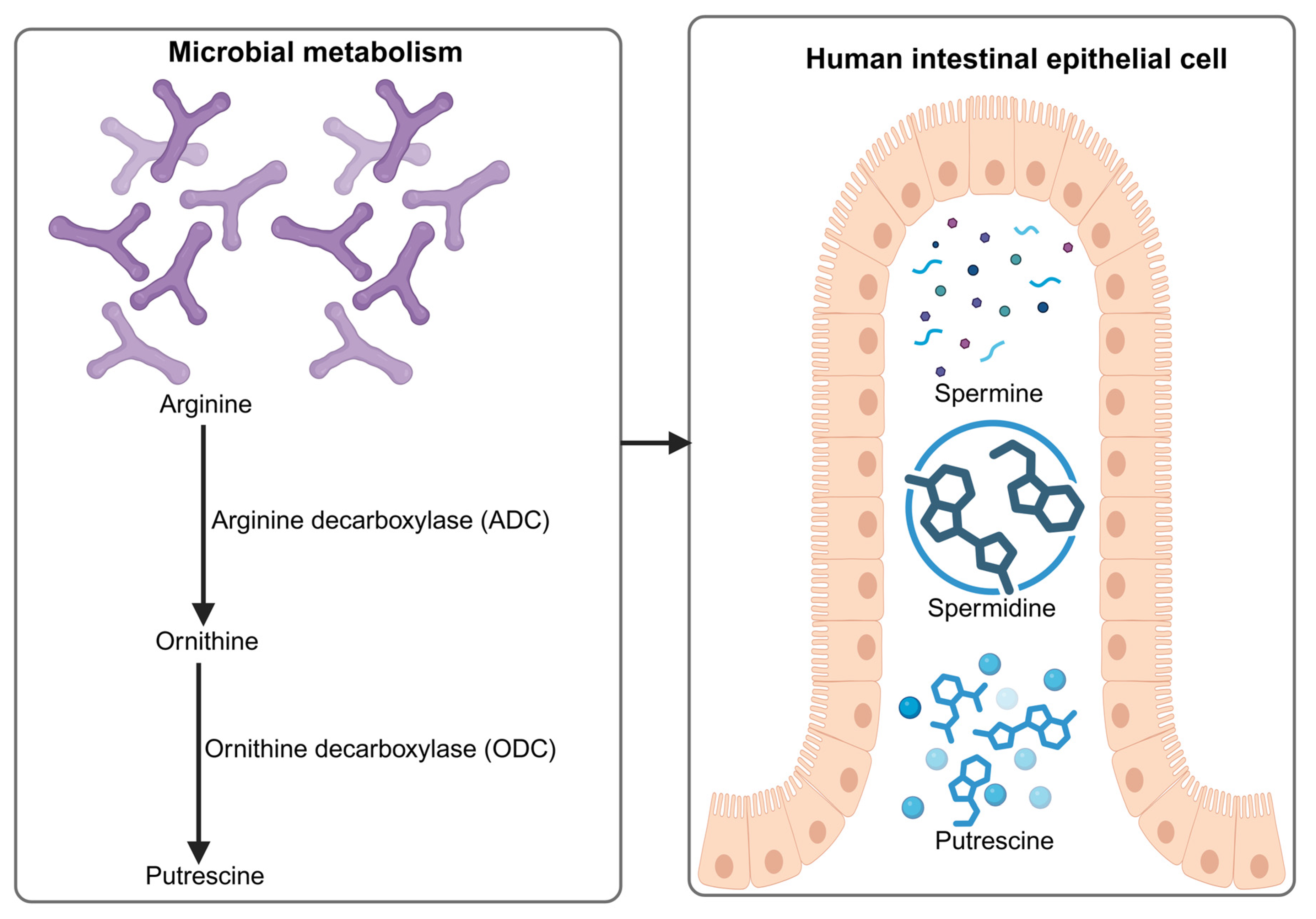
2.2. Microbial Versus Host Biosynthesis Pathways
2.3. Physiological Polyamines Versus Pathological Biogenic Amines
3. Intestinal Aging: Biology, Pathophysiology, and Microbiota Changes
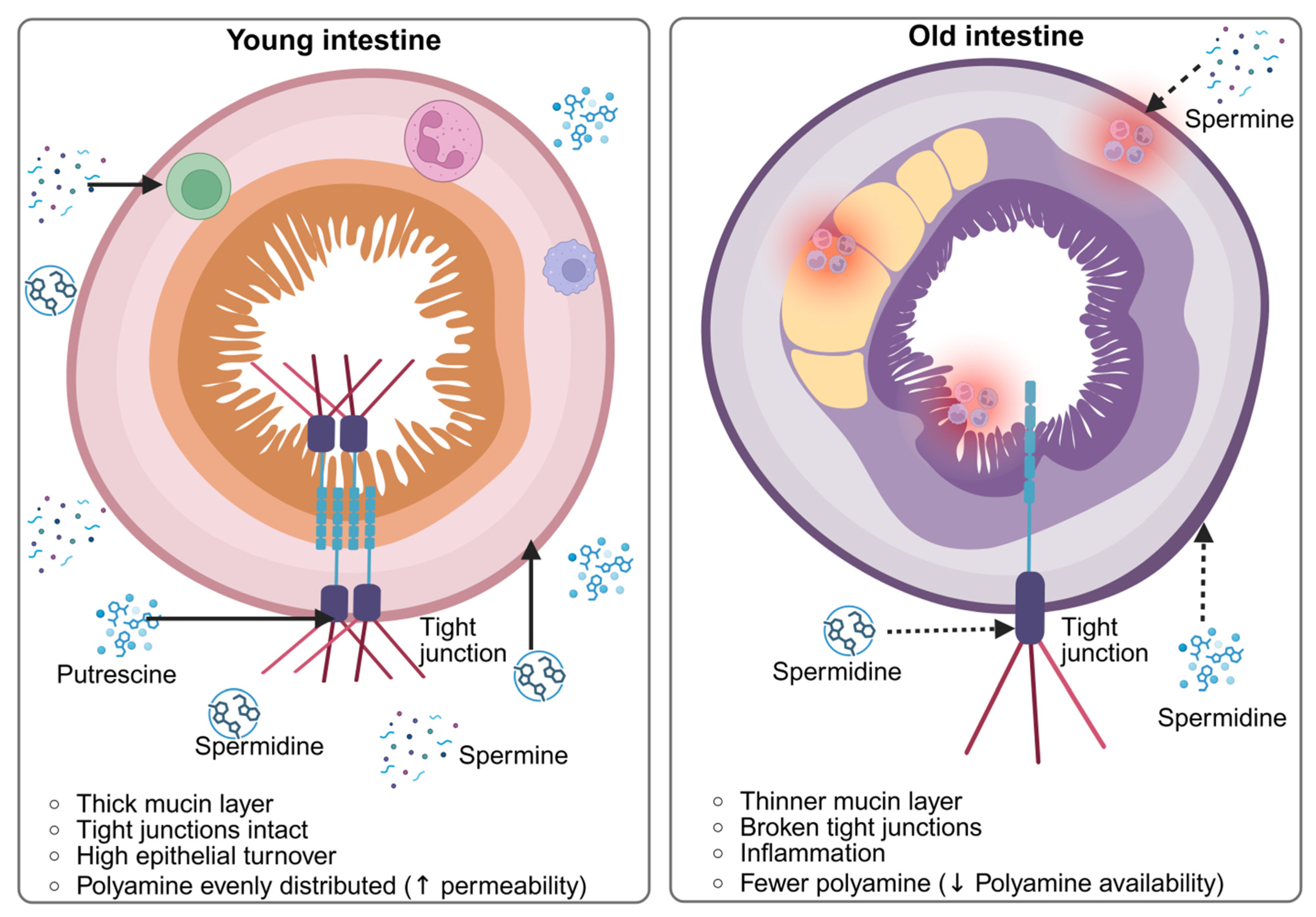
3.1. Features of the Aging Intestine
3.2. Age-Related Changes in the Gut Microbiota
3.3. Declining Polyamine Availability During Aging
4. Microbial Polyamines in the Aging Gut
4.1. Probiotic and Commensal Sources
4.2. Mechanistic Actions of Microbial-Derived Polyamines in Intestinal Aging
4.3. Dysbiosis and Pathogenic Overproduction of Harmful Polyamines
5. Dietary Polyamines and Food Sources Relevant to Aging
5.1. Polyamine-Rich Foods
5.2. Microbial Fermentation as a Natural Enrichment Strategy
5.3. Polyamines as Functional Food Components for Healthy Aging
5.4. Dietary Amino Acid Precursors and Substrate Availability for Microbial Polyamine Synthesis
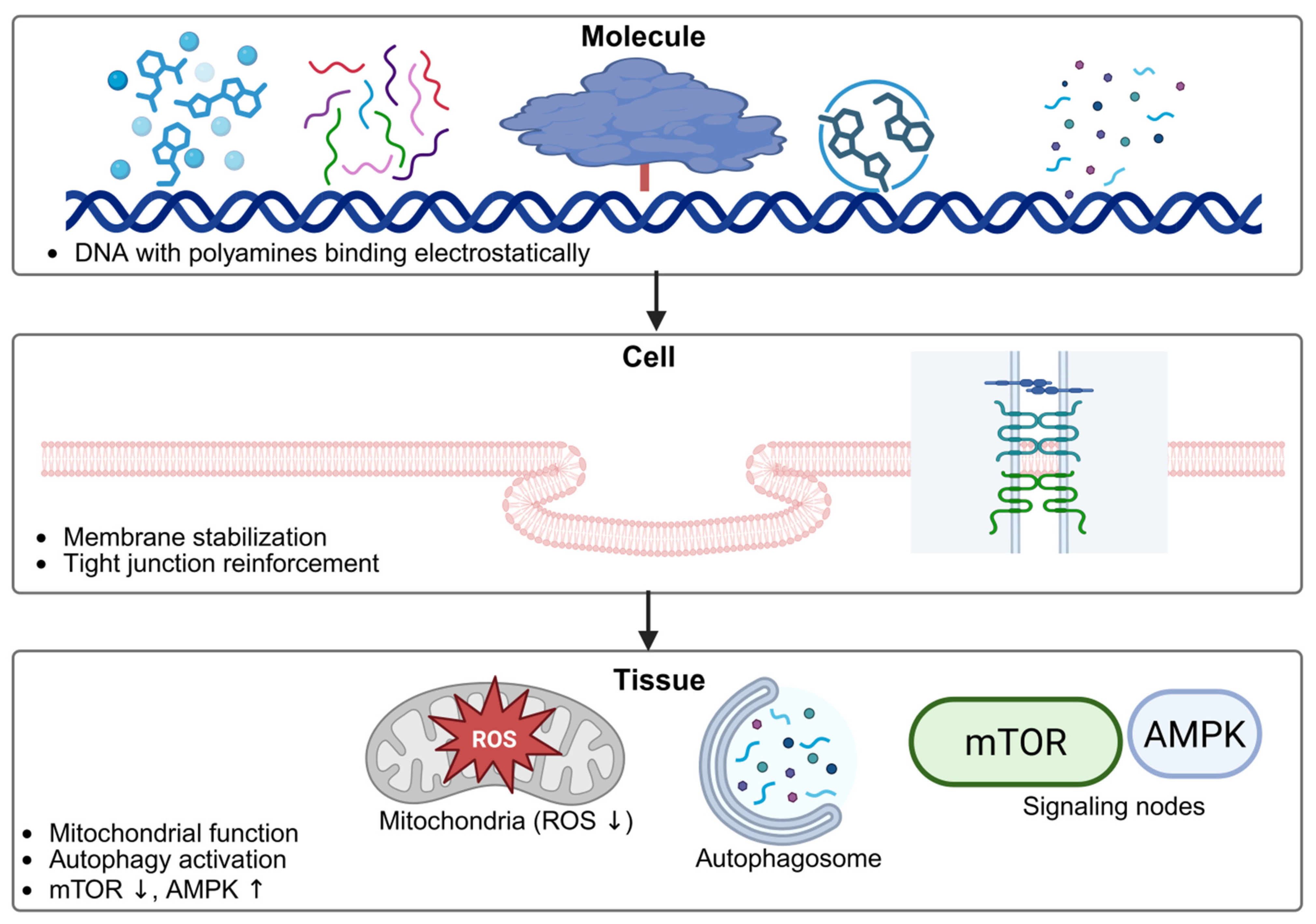
6. Biophysical and Biophysiological Actions of Polyamines in the Aging Intestine
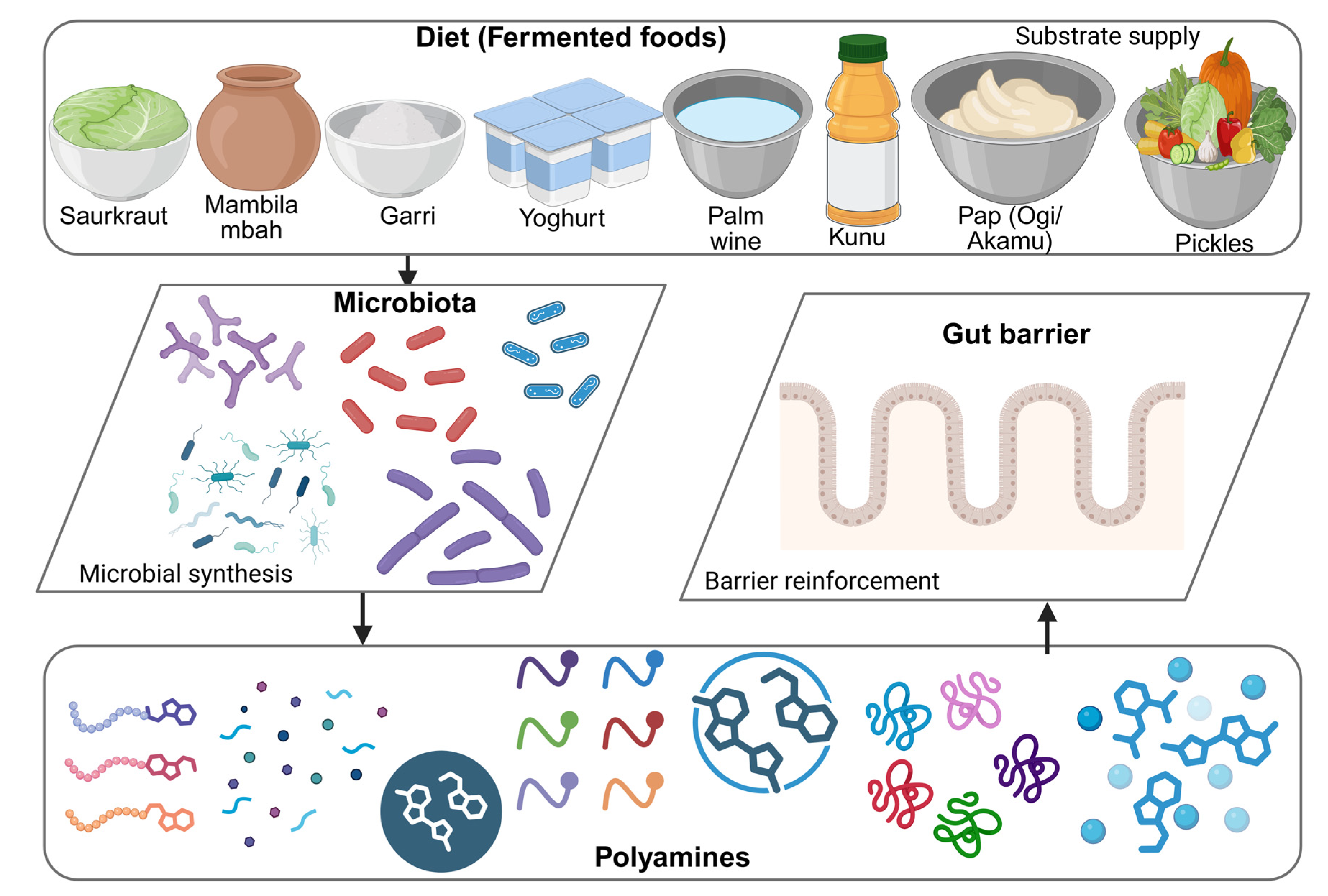
7. Diet–Microbiota–Polyamine Interactions in Intestinal Aging
8. Safety Considerations, Toxicology, and Food Industry Relevance
9. Research Gaps and Emerging Opportunities
10. Conclusions
Author Contributions
Funding
Institutional Review Board Statement
Informed Consent Statement
Data Availability Statement
Acknowledgments
Conflicts of Interest
Abbreviations
| AMPK | Adenosine Monophosphate-Activated Protein Kinase |
| DNA | Deoxyribonucleic Acid |
| LAB | Lactic Acid Bacteria |
| mTOR | Mechanistic Target of Rapamycin |
| NF-κB | Nuclear Factor Kappa B |
| ODC | Ornithine Decarboxylase |
| RNA | Ribonucleic Acid |
| ROS | Reactive Oxygen Species |
References
- Sagar, N.A.; Tarafdar, S.; Agarwal, S.; Tarafdar, A.; Sharma, S. Polyamines: Functions, Metabolism, and Role in Human Disease Management. Med. Sci. 2021, 9, 44. [Google Scholar] [CrossRef]
- Chen, D.; Shao, Q.; Yin, L.; Younis, A.; Zheng, B. Polyamine Function in Plants: Metabolism, Regulation on Development, and Roles in Abiotic Stress Responses. Front. Plant Sci. 2019, 9, 1945. [Google Scholar] [CrossRef]
- Schibalski, R.S.; Shulha, A.S.; Tsao, B.P.; Palygin, O.; Ilatovskaya, D.V. The role of polyamine metabolism in cellular function and physiology. Am. J. Physiol. Physiol. 2024, 327, C341–C356. [Google Scholar] [CrossRef]
- Xuan, M.; Gu, X.; Li, J.; Huang, D.; Xue, C.; He, Y. Polyamines: Their significance for maintaining health and contributing to diseases. Cell Commun. Signal. 2023, 21, 348. [Google Scholar] [CrossRef]
- Rao, J.N.; Xiao, L.; Wang, J.-Y. Polyamines in Gut Epithelial Renewal and Barrier Function. Physiology 2020, 35, 328–337. [Google Scholar] [CrossRef]
- Nakamura, A.; Matsumoto, M. Role of polyamines in intestinal mucosal barrier function. Semin. Immunopathol. 2025, 47, 9. [Google Scholar] [CrossRef]
- Li, X.; Xiao, X.; Wang, S.; Wu, B.; Zhou, Y.; Deng, P. Uncovering de novo polyamine biosynthesis in the gut microbiome and its alteration in inflammatory bowel disease. Gut Microbes 2025, 17, 2464225. [Google Scholar] [CrossRef] [PubMed]
- Shi, Y.; Zheng, H.; Zhu, X.; Lv, J.; Zhou, M.; Zhang, S. Aging and Intestinal Fibrosis: Mechanisms, Implications, and Therapeutic Strategies. Clin. Interv. Aging 2025, 20, 2177–2194. [Google Scholar] [CrossRef] [PubMed]
- Wang, Y.; Zhang, X.; Qing, M.; Dang, W.; Bai, X.; Wang, Y.; Zhou, D.; Zhu, L.; Qing, D.; Zhang, J.; et al. Trends in intestinal aging: From underlying mechanisms to therapeutic strategies. Acta Pharm. Sin. B 2025, 15, 3372–3403. [Google Scholar] [CrossRef]
- Tseng, C.-H.; Wu, C.-Y. From dysbiosis to longevity: A narrative review into the gut microbiome’s impact on aging. J. Biomed. Sci. 2025, 32, 93. [Google Scholar] [CrossRef] [PubMed]
- Pellanda, P.; Ghosh, T.S.; O’Toole, P.W. Understanding the impact of age-related changes in the gut microbiome on chronic diseases and the prospect of elderly-specific dietary interventions. Curr. Opin. Biotechnol. 2021, 70, 48–55. [Google Scholar] [CrossRef] [PubMed]
- Tofalo, R.; Cocchi, S.; Suzzi, G. Polyamines and Gut Microbiota. Front. Nutr. 2019, 6, 16. [Google Scholar] [CrossRef]
- Zhang, C.; Zhen, Y.; Weng, Y.; Lin, J.; Xu, X.; Ma, J.; Zhong, Y.; Wang, M. Research progress on the microbial metabolism and transport of polyamines and their roles in animal gut homeostasis. J. Anim. Sci. Biotechnol. 2025, 16, 57. [Google Scholar] [CrossRef]
- Han, Z.; Zhao, L.; Hu, Q.; Hung, I.; Liu, C.; Liu, S.; Mei, X.; Zeng, X.; Bin, P.; Wang, J. Gut microbiota-mediated modulation of host amino acid availability and metabolism. Gut Microbes 2025, 17, 2552345. [Google Scholar] [CrossRef]
- Gou, H.; Zeng, R.; Lau, H.C.H.; Yu, J. Gut microbial metabolites: Shaping future diagnosis and treatment against gastrointestinal cancer. Pharmacol. Res. 2024, 208, 107373. [Google Scholar] [CrossRef] [PubMed]
- Nakamura, A.; Kurihara, S.; Takahashi, D.; Ohashi, W.; Nakamura, Y.; Kimura, S.; Onuki, M.; Kume, A.; Sasazawa, Y.; Furusawa, Y.; et al. Symbiotic polyamine metabolism regulates epithelial proliferation and macrophage differentiation in the colon. Nat. Commun. 2021, 12, 2105. [Google Scholar] [CrossRef] [PubMed]
- Romaní-Pérez, M.; Bullich-Vilarrubias, C.; López-Almela, I.; Liébana-García, R.; Olivares, M.; Sanz, Y. The Microbiota and the Gut–Brain Axis in Controlling Food Intake and Energy Homeostasis. Int. J. Mol. Sci. 2021, 22, 5830. [Google Scholar] [CrossRef]
- Muigano, M.N.; Liu, J.; Liu, X.; Luo, P.; Li, Z.; Li, J. The Impact of Dietary Patterns on the Human Gut Microbiome and Its Health Significance: A Review. FASEB J. 2025, 39, e71072. [Google Scholar] [CrossRef]
- Ballini, A.; Charitos, I.A.; Cantore, S.; Topi, S.; Bottalico, L.; Santacroce, L. About Functional Foods: The Probiotics and Prebiotics State of Art. Antibiotics 2023, 12, 635. [Google Scholar] [CrossRef]
- Terpou, A.; Dahiya, D.; Nigam, P.S. Evolving Dynamics of Fermented Food Microbiota and the Gut Microenvironment: Strategic Pathways to Enhance Human Health. Foods 2025, 14, 2361. [Google Scholar] [CrossRef]
- Killiny, N.; Nehela, Y. Citrus Polyamines: Structure, Biosynthesis, and Physiological Functions. Plants 2020, 9, 426. [Google Scholar] [CrossRef] [PubMed]
- Bekebrede, A.F.; Keijer, J.; Gerrits, W.J.J.; de Boer, V.C.J. The Molecular and Physiological Effects of Protein-Derived Polyamines in the Intestine. Nutrients 2020, 12, 197. [Google Scholar] [CrossRef]
- Jimenez Gutierrez, G.E.; Borbolla Jiménez, F.V.; Muñoz, L.G.; Tapia Guerrero, Y.S.; Murillo Melo, N.M.; Cristóbal-Luna, J.M.; Leyva Garcia, N.; Cordero-Martínez, J.; Magaña, J.J. The Molecular Role of Polyamines in Age-Related Diseases: An Update. Int. J. Mol. Sci. 2023, 24, 16469. [Google Scholar] [CrossRef]
- Rieck, J.; Skatchkov, S.N.; Derst, C.; Eaton, M.J.; Veh, R.W. Unique Chemistry, Intake, and Metabolism of Polyamines in the Central Nervous System (CNS) and Its Body. Biomolecules 2022, 12, 501. [Google Scholar] [CrossRef]
- Chang, L.; Li, Z.; Guo, H.; Zhang, W.; Lan, W.; Wang, J.; Shen, G.; Xia, Q.; Zhao, P. Function of Polyamines in Regulating Cell Cycle Progression of Cultured Silkworm Cells. Insects 2021, 12, 624. [Google Scholar] [CrossRef]
- Zahedi, K.; Barone, S.; Soleimani, M. Polyamines and Their Metabolism: From the Maintenance of Physiological Homeostasis to the Mediation of Disease. Med. Sci. 2022, 10, 38. [Google Scholar] [CrossRef]
- Brooks, W.H. Polyamine Dysregulation and Nucleolar Disruption in Alzheimer’s Disease. J. Alzheimer’s Dis. 2024, 98, 837–857. [Google Scholar] [CrossRef]
- Sánchez-Jiménez, F.; Medina, M.Á.; Villalobos-Rueda, L.; Urdiales, J.L. Polyamines in mammalian pathophysiology. Cell. Mol. Life Sci. 2019, 76, 3987–4008. [Google Scholar] [CrossRef] [PubMed]
- Tan, B.; Xiao, D.; Wang, J.; Tan, B. The Roles of Polyamines in Intestinal Development and Function in Piglets. Animals 2024, 14, 1228. [Google Scholar] [CrossRef]
- Wu, C.-G.; Tian, J.-L.; Liu, R.; Cao, P.-F.; Zhang, T.-J.; Ren, A.; Shi, L.; Zhao, M.-W. Ornithine Decarboxylase-Mediated Production of Putrescine Influences Ganoderic Acid Biosynthesis by Regulating Reactive Oxygen Species in Ganoderma lucidum. Appl. Environ. Microbiol. 2017, 83, e01289-17. [Google Scholar] [CrossRef] [PubMed]
- Ávila, C.; Llebrés, M.T.; Cánovas, F.M.; Castro-Rodríguez, V. Arginine, a key amino acid for nitrogen nutrition and metabolism of forest trees. J. Exp. Bot. 2025, 76, 5238–5251. [Google Scholar] [CrossRef] [PubMed]
- Martí i Líndez, A.-A.; Reith, W. Arginine-dependent immune responses. Cell. Mol. Life Sci. 2021, 78, 5303–5324. [Google Scholar] [CrossRef]
- Zhu, M. Expression of human arginine decarboxylase, the biosynthetic enzyme for agmatine. Biochim. Biophys. Acta-Gen. Subj. 2004, 1670, 156–164. [Google Scholar] [CrossRef]
- Sandoval, M.; Shah, D.D. Diversity and distribution of amino acid decarboxylase enzymes in the human gut bacteria—A bioinformatics investigation. Front. Microbiol. 2025, 16, 1616635. [Google Scholar] [CrossRef]
- Ramos-Molina, B.; Queipo-Ortuño, M.I.; Lambertos, A.; Tinahones, F.J.; Peñafiel, R. Dietary and Gut Microbiota Polyamines in Obesity- and Age-Related Diseases. Front. Nutr. 2019, 6, 24. [Google Scholar] [CrossRef]
- Ding, S.; Yan, W.; Ma, Y.; Fang, J. The impact of probiotics on gut health via alternation of immune status of monogastric animals. Anim. Nutr. 2021, 7, 24–30. [Google Scholar] [CrossRef] [PubMed]
- Mokoena, M.P. Lactic Acid Bacteria and Their Bacteriocins: Classification, Biosynthesis and Applications against Uropathogens: A Mini-Review. Molecules 2017, 22, 1255. [Google Scholar] [CrossRef] [PubMed]
- Huang, R.; Wu, F.; Zhou, Q.; Wei, W.; Yue, J.; Xiao, B.; Luo, Z. Lactobacillus and intestinal diseases: Mechanisms of action and clinical applications. Microbiol. Res. 2022, 260, 127019. [Google Scholar] [CrossRef]
- Greenwood, M.P.; Greenwood, M.; Paton, J.F.R.; Murphy, D. Control of Polyamine Biosynthesis by Antizyme Inhibitor 1 Is Important for Transcriptional Regulation of Arginine Vasopressin in the Male Rat Hypothalamus. Endocrinology 2015, 156, 2905–2917. [Google Scholar] [CrossRef]
- Zare, D.; Aryaee, H.; Mirdamadi, S.; Shirkhan, F. The Benefits and Applications of Lactobacillus plantarum in Food and Health: A Narrative Review. Iran. J. Public Health 2024, 53, 2201–2213. [Google Scholar] [CrossRef]
- Popova-Krumova, P.; Danova, S.; Atanasova, N.; Yankov, D. Lactic Acid Production by Lactiplantibacillus plantarum AC 11S—Kinetics and Modeling. Microorganisms 2024, 12, 739. [Google Scholar] [CrossRef]
- Xiao, M.; Zhang, C.; Duan, H.; Narbad, A.; Zhao, J.; Chen, W.; Zhai, Q.; Yu, L.; Tian, F. Cross-feeding of bifidobacteria promotes intestinal homeostasis: A lifelong perspective on the host health. NPJ Biofilms Microbiomes 2024, 10, 47. [Google Scholar] [CrossRef]
- Ramos, S.; Silva, V.; Dapkevicius, M.; Igrejas, G.; Poeta, P. Enterococci, from Harmless Bacteria to a Pathogen. Microorganisms 2020, 8, 1118. [Google Scholar] [CrossRef]
- Krawczyk, B.; Wityk, P.; Gałęcka, M.; Michalik, M. The Many Faces of Enterococcus spp.—Commensal, Probiotic and Opportunistic Pathogen. Microorganisms 2021, 9, 1900. [Google Scholar] [CrossRef] [PubMed]
- Raman, J.; Noh, J.S.; Kim, J.-S.; Cho, G.; Kim, D.-H.; Song, J.; Kim, S.-J. Role of Bacillus Species in Food Industry: Advantages and Limitations. J. Microbiol. Biotechnol. 2025, 35, e2507043. [Google Scholar] [CrossRef]
- Choi, G.H.; Fugaban, J.I.I.; Dioso, C.M.; Vazquez Bucheli, J.E.; Holzapfel, W.H.; Todorov, S.D. Selection of Bacteriocinogenic Bacillus spp. from Traditional Fermented Korean Food Products with Additional Beneficial Properties. Fermentation 2021, 7, 271. [Google Scholar] [CrossRef]
- Rau, M.H.; Gaspar, P.; Jensen, M.L.; Geppel, A.; Neves, A.R.; Zeidan, A.A. Genome-Scale Metabolic Modeling Combined with Transcriptome Profiling Provides Mechanistic Understanding of Streptococcus thermophilus CH8 Metabolism. Appl. Environ. Microbiol. 2022, 88, e0078022. [Google Scholar] [CrossRef]
- Wang, Y.; Wu, J.; Lv, M.; Shao, Z.; Hungwe, M.; Wang, J.; Bai, X.; Xie, J.; Wang, Y.; Geng, W. Metabolism Characteristics of Lactic Acid Bacteria and the Expanding Applications in Food Industry. Front. Bioeng. Biotechnol. 2021, 9, 612285. [Google Scholar] [CrossRef] [PubMed]
- Chandra, H.; Sharma, K.K.; Tuovinen, O.H.; Sun, X.; Shukla, P. Pathobionts: Mechanisms of survival, expansion, and interaction with host with a focus on Clostridioides difficile. Gut Microbes 2021, 13, 1979882. [Google Scholar] [CrossRef] [PubMed]
- Borrego-Ruiz, A.; González-Domenech, C.M.; Borrego, J.J. The Role of Fermented Vegetables as a Sustainable and Health-Promoting Nutritional Resource. Appl. Sci. 2024, 14, 10853. [Google Scholar] [CrossRef]
- Doeun, D.; Davaatseren, M.; Chung, M.-S. Biogenic amines in foods. Food Sci. Biotechnol. 2017, 26, 1463–1474. [Google Scholar] [CrossRef] [PubMed]
- Visciano, P.; Schirone, M. Update on Biogenic Amines in Fermented and Non-Fermented Beverages. Foods 2022, 11, 353. [Google Scholar] [CrossRef]
- Voidarou, C.; Antoniadou, Μ.; Rozos, G.; Tzora, A.; Skoufos, I.; Varzakas, T.; Lagiou, A.; Bezirtzoglou, E. Fermentative Foods: Microbiology, Biochemistry, Potential Human Health Benefits and Public Health Issues. Foods 2020, 10, 69. [Google Scholar] [CrossRef] [PubMed]
- Bushra, R.; Aslam, N.; Khan, A. Food Drug Interactions. Oman Med. J. 2011, 26, 77–83. [Google Scholar] [CrossRef] [PubMed]
- Peivasteh-roudsari, L.; Barzegar-bafrouei, R.; Sharifi, K.A.; Azimisalim, S.; Karami, M.; Abedinzadeh, S.; Asadinezhad, S.; Tajdar-oranj, B.; Mahdavi, V.; Alizadeh, A.M.; et al. Origin, dietary exposure, and toxicity of endocrine-disrupting food chemical contaminants: A comprehensive review. Heliyon 2023, 9, e18140. [Google Scholar] [CrossRef]
- Zapaśnik, A.; Sokołowska, B.; Bryła, M. Role of Lactic Acid Bacteria in Food Preservation and Safety. Foods 2022, 11, 1283. [Google Scholar] [CrossRef]
- Medina, M.Á.; Urdiales, J.L.; Rodríguez-Caso, C.; Ramírez, F.J.; Sánchez-Jiménez, F. Biogenic Amines and Polyamines: Similar Biochemistry for Different Physiological Missions and Biomedical Applications. Crit. Rev. Biochem. Mol. Biol. 2003, 38, 23–59. [Google Scholar] [CrossRef]
- Sander, T.; Farke, N.; Diehl, C.; Kuntz, M.; Glatter, T.; Link, H. Allosteric Feedback Inhibition Enables Robust Amino Acid Biosynthesis in E. coli by Enforcing Enzyme Overabundance. Cell Syst. 2019, 8, 66–75.e8. [Google Scholar] [CrossRef]
- Vale, N.; Ferreira, A.; Matos, J.; Fresco, P.; Gouveia, M.J. Amino Acids in the Development of Prodrugs. Molecules 2018, 23, 2318. [Google Scholar] [CrossRef]
- Naz, S.; Liu, P.; Farooq, U.; Ma, H. Insight into de-regulation of amino acid feedback inhibition: A focus on structure analysis method. Microb. Cell Fact. 2023, 22, 161. [Google Scholar] [CrossRef]
- Dalangin, R.; Kim, A.; Campbell, R.E. The Role of Amino Acids in Neurotransmission and Fluorescent Tools for Their Detection. Int. J. Mol. Sci. 2020, 21, 6197. [Google Scholar] [CrossRef]
- Abankwah, J.K.; Wang, Y.; Wang, J.; Ogbe, S.E.; Pozzo, L.D.; Chu, X.; Bian, Y. Gut aging: A wane from the normal to repercussion and gerotherapeutic strategies. Heliyon 2024, 10, e37883. [Google Scholar] [CrossRef]
- Funk, M.C.; Zhou, J.; Boutros, M. Ageing, metabolism and the intestine. EMBO Rep. 2020, 21, e50047. [Google Scholar] [CrossRef] [PubMed]
- Ma, G.; Chen, Z.; Xie, Z.; Liu, J.; Xiao, X. Mechanisms underlying changes in intestinal permeability during pregnancy and their implications for maternal and infant health. J. Reprod. Immunol. 2025, 168, 104423. [Google Scholar] [CrossRef] [PubMed]
- Walrath, T.; Dyamenahalli, K.U.; Hulsebus, H.J.; McCullough, R.L.; Idrovo, J.-P.; Boe, D.M.; McMahan, R.H.; Kovacs, E.J. Age-related changes in intestinal immunity and the microbiome. J. Leukoc. Biol. 2021, 109, 1045–1061. [Google Scholar] [CrossRef] [PubMed]
- Cornick, S.; Tawiah, A.; Chadee, K. Roles and regulation of the mucus barrier in the gut. Tissue Barriers 2015, 3, e982426. [Google Scholar] [CrossRef]
- Sang, X.; Wang, Q.; Ning, Y.; Wang, H.; Zhang, R.; Li, Y.; Fang, B.; Lv, C.; Zhang, Y.; Wang, X.; et al. Age-Related Mucus Barrier Dysfunction in Mice Is Related to the Changes in Muc2 Mucin in the Colon. Nutrients 2023, 15, 1830. [Google Scholar] [CrossRef]
- Lakshminarayanan, B.; Stanton, C.; O’Toole, P.W.; Ross, R.P. Compositional dynamics of the human intestinal microbiota with aging: Implications for health. J. Nutr. Heal. Aging 2014, 18, 773–786. [Google Scholar] [CrossRef]
- Nagpal, R.; Mainali, R.; Ahmadi, S.; Wang, S.; Singh, R.; Kavanagh, K.; Kitzman, D.W.; Kushugulova, A.; Marotta, F.; Yadav, H. Gut microbiome and aging: Physiological and mechanistic insights. Nutr. Heal. Aging 2018, 4, 267–285. [Google Scholar] [CrossRef]
- Haran, J.P.; McCormick, B.A. Aging, Frailty, and the Microbiome—How Dysbiosis Influences Human Aging and Disease. Gastroenterology 2021, 160, 507–523. [Google Scholar] [CrossRef]
- Uemura, T.; Terui, Y. Special Issue “Polyamines in Aging and Disease”. Int. J. Mol. Sci. 2024, 25, 11960. [Google Scholar] [CrossRef]
- Green, D.R. Polyamines and Aging: A CLEAR Connection? Mol. Cell 2019, 76, 5–7. [Google Scholar] [CrossRef]
- Muñoz-Esparza, N.C.; Latorre-Moratalla, M.L.; Comas-Basté, O.; Toro-Funes, N.; Veciana-Nogués, M.T.; Vidal-Carou, M.C. Polyamines in Food. Front. Nutr. 2019, 6, 108. [Google Scholar] [CrossRef] [PubMed]
- Muñoz-Esparza, N.C.; Costa-Catala, J.; Comas-Basté, O.; Toro-Funes, N.; Latorre-Moratalla, M.L.; Veciana-Nogués, M.T.; Vidal-Carou, M.C. Occurrence of Polyamines in Foods and the Influence of Cooking Processes. Foods 2021, 10, 1752. [Google Scholar] [CrossRef]
- Bui, T.I.; Britt, E.A.; Muthukrishnan, G.; Gill, S.R. Probiotic induced synthesis of microbiota polyamine as a nutraceutical for metabolic syndrome and obesity-related type 2 diabetes. Front. Endocrinol. 2023, 13, 1094258. [Google Scholar] [CrossRef] [PubMed]
- Chen, Y.; Fang, J.-Y. The role of colonic microbiota amino acid metabolism in gut health regulation. Cell Insight 2025, 4, 100227. [Google Scholar] [CrossRef] [PubMed]
- Akpoghelie, P.O.; Edo, G.I.; Mafe, A.N.; Isoje, E.F.; Igbuku, U.A.; Ali, A.B.M.; Yousif, E.; Owheruo, J.O.; Oberhiri Oberhiri, S.; Essaghah, A.E.A.; et al. Food, Health, and Environmental Impact of Lactic Acid Bacteria: The Superbacteria for Posterity. Probiotics Antimicrob. Proteins 2025, 17, 2819–2855. [Google Scholar] [CrossRef]
- Makut, M.D.; Mafe, A.N.; Owuna, J.E.; Calina, D.; Sharifi-Rad, J. Postbiotics from indigenous lactic acid bacteria: Mechanisms, biopreservation and functional food applications. J. Sci. Food Agric. 2026; ahead of print. [Google Scholar] [CrossRef]
- Mafe, A.N.; Edo, G.I.; Majeed, O.S.; Gaaz, T.S.; Akpoghelie, P.O.; Isoje, E.F.; Igbuku, U.A.; Owheruo, J.O.; Opiti, R.A.; Garba, Y.; et al. A review on probiotics and dietary bioactives: Insights on metabolic well-being, gut microbiota, and inflammatory responses. Food Chem. Adv. 2025, 6, 100919. [Google Scholar] [CrossRef]
- Mafe, A.N.; Nkene, I.H.; Ali, A.B.M.; Edo, G.I.; Akpoghelie, P.O.; Yousif, E.; Isoje, E.F.; Igbuku, U.A.; Ismael, S.A.; Essaghah, A.E.A.; et al. Smart Probiotic Solutions for Mycotoxin Mitigation: Innovations in Food Safety and Sustainable Agriculture. Probiotics Antimicrob. Proteins, 2025; ahead of print. [Google Scholar] [CrossRef]
- Zielińska, D.; Kolożyn-Krajewska, D. Food-Origin Lactic Acid Bacteria May Exhibit Probiotic Properties: Review. Biomed Res. Int. 2018, 2018, 5063185. [Google Scholar] [CrossRef]
- Xiao, Y.; Feng, Y.; Zhao, J.; Chen, W.; Lu, W. Achieving healthy aging through gut microbiota-directed dietary intervention: Focusing on microbial biomarkers and host mechanisms. J. Adv. Res. 2025, 68, 179–200. [Google Scholar] [CrossRef] [PubMed]
- O’Callaghan, A.; van Sinderen, D. Bifidobacteria and Their Role as Members of the Human Gut Microbiota. Front. Microbiol. 2016, 7, 925. [Google Scholar] [CrossRef]
- Nair, A.V.; Singh, A.; Chakravortty, D. Defence Warriors: Exploring the crosstalk between polyamines and oxidative stress during microbial pathogenesis. Redox Biol. 2025, 83, 103648. [Google Scholar] [CrossRef]
- Chatterjee, S.; Hebbani, A.V.; Syed, K. Gut Microbiota: An Ally in the Mechanisms and Interventions of Healthy Aging. Gastrointest. Disord. 2025, 7, 68. [Google Scholar] [CrossRef]
- Minetti, A.; Omrani, O.; Brenner, C.; Allies, G.; Imada, S.; Rösler, J.; Khawaled, S.; Cansiz, F.; Meckelmann, S.W.; Gebert, N.; et al. Polyamines sustain epithelial regeneration in aged intestines by modulating protein homeostasis. bioRxiv 2024. [Google Scholar] [CrossRef]
- Ferris, M.M.; Subitoni Antonio, L.; Al-Sadi, R. Probiotics and the intestinal tight junction barrier function. Front. Cell Dev. Biol. 2025, 13, 1671152. [Google Scholar] [CrossRef]
- Liu, L.; Guo, X.; Rao, J.N.; Zou, T.; Xiao, L.; Yu, T.; Timmons, J.A.; Turner, D.J.; Wang, J.-Y. Polyamines regulate E-cadherin transcription through c-Myc modulating intestinal epithelial barrier function. Am. J. Physiol. Physiol. 2009, 296, C801–C810. [Google Scholar] [CrossRef] [PubMed]
- Zeng, L.; Qian, Y.; Cui, X.; Zhao, J.; Ning, Z.; Cha, J.; Wang, K.; Ge, C.; Jia, J.; Dou, T.; et al. Immunomodulatory role of gut microbial metabolites: Mechanistic insights and therapeutic frontiers. Front. Microbiol. 2025, 16, 1675065. [Google Scholar] [CrossRef]
- Aziz, S.; Ahmed, A.; Singh, P.; Mukhopadhyay, S. The arginase-polyamine signaling axis in immune cells: Implications for immune modulation and host-pathogen interactions. iScience 2026, 29, 114363. [Google Scholar] [CrossRef] [PubMed]
- Righes, G.; Semenzato, L.; Koutsikos, K.; Zanato, V.; Pinton, P.; Giorgi, C.; Patergnani, S. The role of autophagy in the pathogenesis and treatment of multiple sclerosis. Autophagy Rep. 2025, 4, 2529196. [Google Scholar] [CrossRef]
- Barbieri, F.; Montanari, C.; Gardini, F.; Tabanelli, G. Biogenic Amine Production by Lactic Acid Bacteria: A Review. Foods 2019, 8, 17. [Google Scholar] [CrossRef]
- Pawul-Gruba, M.; Denis, E.; Kiljanek, T.; Osek, J. Prevalence of Biogenic Amines and Their Relation to the Bacterial Content in Ripened Cheeses on the Retail Market in Poland. Foods 2025, 14, 2478. [Google Scholar] [CrossRef]
- Levine, M.; Lohinai, Z.M. Resolving the Contradictory Functions of Lysine Decarboxylase and Butyrate in Periodontal and Intestinal Diseases. J. Clin. Med. 2021, 10, 2360. [Google Scholar] [CrossRef]
- Zhou, N.; Zhang, A.; Wei, G.; Yang, S.; Xu, S.; Chen, K.; Ouyang, P. Cadaverine Production From L-Lysine with Chitin-Binding Protein-Mediated Lysine Decarboxylase Immobilization. Front. Bioeng. Biotechnol. 2020, 8, 103. [Google Scholar] [CrossRef]
- Vancamelbeke, M.; Vermeire, S. The intestinal barrier: A fundamental role in health and disease. Expert Rev. Gastroenterol. Hepatol. 2017, 11, 821–834. [Google Scholar] [CrossRef]
- Cantabrana, B.; Peña-Iglesias, P.; Castro-Estrada, P.; Suárez, L.; Bordallo, J.; Barreiro-Alonso, E.; Sánchez, M. Dietary intake of polyamines in a Spanish adult population: Age-dependent correlation with Healthy Eating Index and Dietary Inflammatory Index scores. Nutrition 2025, 130, 112608. [Google Scholar] [CrossRef] [PubMed]
- Hirano, R.; Shirasawa, H.; Kurihara, S. Health-Promoting Effects of Dietary Polyamines. Med. Sci. 2021, 9, 8. [Google Scholar] [CrossRef] [PubMed]
- Rezac, S.; Kok, C.R.; Heermann, M.; Hutkins, R. Fermented Foods as a Dietary Source of Live Organisms. Front. Microbiol. 2018, 9, 1785. [Google Scholar] [CrossRef] [PubMed]
- Sampsell, K.; Marcolla, C.S.; Tapping, S.; Fan, Y.; Sánchez-Lafuente, C.L.; Willing, B.P.; Reimer, R.A.; Burton, J.P. Current Research in Fermented Foods: Bridging Tradition and Science. Adv. Nutr. 2025, 16, 100554. [Google Scholar] [CrossRef]
- Atiya Ali, M.; Poortvliet, E.; Strömberg, R.; Yngve, A. Polyamines in foods: Development of a food database. Food Nutr. Res. 2011, 55, 5572. [Google Scholar] [CrossRef]
- Dankar, I.; Melhem, A.; Serhan, M.; Hassan, H.F. Microbial and processing factors affecting biogenic amine formation and accumulation in dairy: A narrative review. Appl. Food Res. 2025, 5, 101376. [Google Scholar] [CrossRef]
- Aladhadh, M.; Nasser Binjawhar, D.; Abd El-Kader Ebrahim, H.N.E.-D.; Radhi, K.S.; Almatrafi, M.; Fayad, E.; Al-Saman, M.A.; Elsanhoty, R.M. Investigation of Biogenic Amine Levels and Microbiological Activity as Quality Markers in Some Dairy and Fish Products in Food Markets in the Kingdom of Saudi Arabia. ACS Omega 2024, 9, 19193–19202. [Google Scholar] [CrossRef]
- Anwar, A.; Faiz, M.A.; Badar, I.H.; Jaspal, M.H.; Hou, J. Influence of Fermentation Time and Storage Conditions on the Physicochemical Properties of Different Yogurt Varieties Using Starter Cultures and Probiotic Lactobacillus rhamnosus GG. Processes 2025, 13, 759. [Google Scholar] [CrossRef]
- Tan, X.; Cui, F.; Wang, D.; Lv, X.; Li, X.; Li, J. Fermented Vegetables: Health Benefits, Defects, and Current Technological Solutions. Foods 2023, 13, 38. [Google Scholar] [CrossRef]
- Bernacka, K.; Sozański, T.; Kucharska, A.Z. Fermented Fruits, Vegetables, and Legumes in Metabolic Syndrome: From Traditional Use to Functional Foods and Medical Applications. Nutrients 2025, 17, 1989. [Google Scholar] [CrossRef]
- Craig, W.J.; Mangels, A.R.; Fresán, U.; Marsh, K.; Miles, F.L.; Saunders, A.V.; Haddad, E.H.; Heskey, C.E.; Johnston, P.; Larson-Meyer, E.; et al. The Safe and Effective Use of Plant-Based Diets with Guidelines for Health Professionals. Nutrients 2021, 13, 4144. [Google Scholar] [CrossRef] [PubMed]
- Jia, J.; Dell’Olio, A.; Izquierdo-Sandoval, D.; Capuano, E.; Liu, X.; Duan, X.; Rubert, J. Exploiting the interactions between plant proteins and gut microbiota to promote intestinal health. Trends Food Sci. Technol. 2024, 153, 104749. [Google Scholar] [CrossRef]
- Meitha, K.; Pramesti, Y.; Suhandono, S. Reactive Oxygen Species and Antioxidants in Postharvest Vegetables and Fruits. Int. J. Food Sci. 2020, 2020, 1–11. [Google Scholar] [CrossRef]
- Das, A.K.; Nanda, P.K.; Dandapat, P.; Bandyopadhyay, S.; Gullón, P.; Sivaraman, G.K.; McClements, D.J.; Gullón, B.; Lorenzo, J.M. Edible Mushrooms as Functional Ingredients for Development of Healthier and More Sustainable Muscle Foods: A Flexitarian Approach. Molecules 2021, 26, 2463. [Google Scholar] [CrossRef]
- Mafe, A.N.; Otieno, C.A.; Edo, G.I.; Akpoghelie, P.O.; Yousif, E.; Isoje, E.F.; Igbuku, U.A.; Ismael, S.A.; Makia, R.S.; Essaghah, A.E.A.; et al. Domestication and market potential of indigenous mushrooms in Nigeria and Kenya through cultivation techniques, nutritional enhancement, and consumer preference analysis. Discov. Food 2025, 5, 248. [Google Scholar] [CrossRef]
- Kontominas, M.G.; Badeka, A.V.; Kosma, I.S.; Nathanailides, C.I. Recent Developments in Seafood Packaging Technologies. Foods 2021, 10, 940. [Google Scholar] [CrossRef]
- Toldrá, F.; Reig, M. The stability and shelf life of seafood. In Food and Beverage Stability and Shelf Life; Elsevier: Amsterdam, The Netherlands, 2011; pp. 779–792. [Google Scholar]
- Schirone, M.; Esposito, L.; D’Onofrio, F.; Visciano, P.; Martuscelli, M.; Mastrocola, D.; Paparella, A. Biogenic Amines in Meat and Meat Products: A Review of the Science and Future Perspectives. Foods 2022, 11, 788. [Google Scholar] [CrossRef]
- Drabik-Markiewicz, G.; Dejaegher, B.; De Mey, E.; Kowalska, T.; Paelinck, H.; Vander Heyden, Y. Influence of putrescine, cadaverine, spermidine or spermine on the formation of N-nitrosamine in heated cured pork meat. Food Chem. 2011, 126, 1539–1545. [Google Scholar] [CrossRef]
- Salek, R.N.; Pleva, P.; Sumczynski, D.; Vinter, Š.; Kopečková, J.; Rejdlová, A.; Lorencová, E. Sauerkraut juice fermented with different symbiotic starter cultures: Comprehensive assessment of physicochemical, rheological, antioxidant, and microbiological characteristics. Front. Sustain. Food Syst. 2025, 9, 1570465. [Google Scholar] [CrossRef]
- Christensen, L.F.; García-Béjar, B.; Bang-Berthelsen, C.H.; Hansen, E.B. Extracellular microbial proteases with specificity for plant proteins in food fermentation. Int. J. Food Microbiol. 2022, 381, 109889. [Google Scholar] [CrossRef]
- Siddiqui, S.A.; Erol, Z.; Rugji, J.; Taşçı, F.; Kahraman, H.A.; Toppi, V.; Musa, L.; Di Giacinto, G.; Bahmid, N.A.; Mehdizadeh, M.; et al. An overview of fermentation in the food industry—Looking back from a new perspective. Bioresour. Bioprocess. 2023, 10, 85. [Google Scholar] [CrossRef]
- Hofer, S.J.; Daskalaki, I.; Bergmann, M.; Friščić, J.; Zimmermann, A.; Mueller, M.I.; Abdellatif, M.; Nicastro, R.; Masser, S.; Durand, S.; et al. Spermidine is essential for fasting-mediated autophagy and longevity. Nat. Cell Biol. 2024, 26, 1571–1584. [Google Scholar] [CrossRef]
- Soda, K. Overview of Polyamines as Nutrients for Human Healthy Long Life and Effect of Increased Polyamine Intake on DNA Methylation. Cells 2022, 11, 164. [Google Scholar] [CrossRef] [PubMed]
- Shen, X.; Gao, X.; Wang, L. Intestinal aging-related immune dysfunction: Mechanisms and interventions. Acta Biochim. Biophys. Sin. 2026, 58, 183–200. [Google Scholar] [CrossRef] [PubMed]
- Garzon-Escamilla, N.; Medina-Cardena, M.; Roy, P.; Trent, J.; Jamous, J.; Somesan, Y.; Denslow, S.J. Mechanistic Links Between the Gut Microbiome and Longevity Therapeutics. Biomedicines 2026, 14, 316. [Google Scholar] [CrossRef]
- Hussain, T.; Tan, B.; Yin, Y.; Blachier, F.; Tossou, M.C.B.; Rahu, N. Oxidative Stress and Inflammation: What Polyphenols Can Do for Us? Oxid. Med. Cell. Longev. 2016, 2016, 7432797. [Google Scholar] [CrossRef]
- Vona, R.; Pallotta, L.; Cappelletti, M.; Severi, C.; Matarrese, P. The Impact of Oxidative Stress in Human Pathology: Focus on Gastrointestinal Disorders. Antioxidants 2021, 10, 201. [Google Scholar] [CrossRef] [PubMed]
- Kalogerakou, T.; Antoniadou, M. The Role of Dietary Antioxidants, Food Supplements and Functional Foods for Energy Enhancement in Healthcare Professionals. Antioxidants 2024, 13, 1508. [Google Scholar] [CrossRef] [PubMed]
- Soda, K.; Uemura, T.; Sanayama, H.; Igarashi, K.; Fukui, T. Polyamine-Rich Diet Elevates Blood Spermine Levels and Inhibits Pro-Inflammatory Status: An Interventional Study. Med. Sci. 2021, 9, 22. [Google Scholar] [CrossRef]
- Blachier, F.; Kong, X. Recycling of Undigested Proteins Provided by the Host to the Large Intestine Microbiota: Implication for Intestinal Bacterial Anabolism, Growth, and Physiology. Microorganisms 2025, 13, 2690. [Google Scholar] [CrossRef]
- Hinssen, F.; Mensink, M.; Huppertz, T.; van der Wielen, N. Impact of aging on the digestive system related to protein digestion in vivo. Crit. Rev. Food Sci. Nutr. 2025, 65, 5829–5845. [Google Scholar] [CrossRef]
- Świder, O.; Roszko, M.Ł.; Wójcicki, M. The inhibitory effects of plant additives on biogenic amine formation in fermented foods—A review. Crit. Rev. Food Sci. Nutr. 2024, 64, 12935–12960. [Google Scholar] [CrossRef]
- Rossi, M.N.; Cervelli, M. Polyamine Metabolism and Functions: Key Roles in Cellular Health and Disease. Biomolecules 2024, 14, 1570. [Google Scholar] [CrossRef] [PubMed]
- Novita Sari, I.; Setiawan, T.; Seock Kim, K.; Toni Wijaya, Y.; Won Cho, K.; Young Kwon, H. Metabolism and function of polyamines in cancer progression. Cancer Lett. 2021, 519, 91–104. [Google Scholar] [CrossRef]
- Li, J.; Meng, Y.; Wu, X.; Sun, Y. Polyamines and related signaling pathways in cancer. Cancer Cell Int. 2020, 20, 539. [Google Scholar] [CrossRef]
- Zhang, J.; Cai, C.; Zhang, Y.; Luo, C.; Huo, S.; Wang, K.; Shi, C.; Liu, J.; Xu, G. The functional roles and mechanisms of polyamines in age-related bone diseases. Cell. Mol. Life Sci. 2025, 83, 38. [Google Scholar] [CrossRef] [PubMed]
- Gieryńska, M.; Szulc-Dąbrowska, L.; Struzik, J.; Mielcarska, M.B.; Gregorczyk-Zboroch, K.P. Integrity of the Intestinal Barrier: The Involvement of Epithelial Cells and Microbiota—A Mutual Relationship. Animals 2022, 12, 145. [Google Scholar] [CrossRef]
- Klionsky, D.J.; Petroni, G.; Amaravadi, R.K.; Baehrecke, E.H.; Ballabio, A.; Boya, P.; Bravo-San Pedro, J.M.; Cadwell, K.; Cecconi, F.; Choi, A.M.K.; et al. Autophagy in major human diseases. EMBO J. 2021, 40, e108863. [Google Scholar] [CrossRef]
- Galasso, L.; Cappella, A.; Mulè, A.; Castelli, L.; Ciorciari, A.; Stacchiotti, A.; Montaruli, A. Polyamines and Physical Activity in Musculoskeletal Diseases: A Potential Therapeutic Challenge. Int. J. Mol. Sci. 2023, 24, 9798. [Google Scholar] [CrossRef]
- Madeo, F.; Bauer, M.A.; Carmona-Gutierrez, D.; Kroemer, G. Spermidine: A physiological autophagy inducer acting as an anti-aging vitamin in humans? Autophagy 2019, 15, 165–168. [Google Scholar] [CrossRef] [PubMed]
- Ghiselli, F.; Rossi, B.; Piva, A.; Grilli, E. Assessing Intestinal Health. In Vitro and Ex vivo Gut Barrier Models of Farm Animals: Benefits and Limitations. Front. Vet. Sci. 2021, 8, 723387. [Google Scholar] [CrossRef] [PubMed]
- Slifer, Z.M.; Blikslager, A.T. The Integral Role of Tight Junction Proteins in the Repair of Injured Intestinal Epithelium. Int. J. Mol. Sci. 2020, 21, 972. [Google Scholar] [CrossRef]
- Tervonen, A.; Ihalainen, T.O.; Nymark, S.; Hyttinen, J. Structural dynamics of tight junctions modulate the properties of the epithelial barrier. PLoS ONE 2019, 14, e0214876. [Google Scholar] [CrossRef]
- Armstrong, J.S. Mitochondrial Medicine: Pharmacological targeting of mitochondria in disease. Br. J. Pharmacol. 2007, 151, 1154–1165. [Google Scholar] [CrossRef]
- Szabo, L.; Lejri, I.; Grimm, A.; Eckert, A. Spermidine Enhances Mitochondrial Bioenergetics in Young and Aged Human-Induced Pluripotent Stem Cell-Derived Neurons. Antioxidants 2024, 13, 1482. [Google Scholar] [CrossRef]
- Xu, X.; Pang, Y.; Fan, X. Mitochondria in oxidative stress, inflammation and aging: From mechanisms to therapeutic advances. Signal Transduct. Target. Ther. 2025, 10, 190. [Google Scholar] [CrossRef]
- Carriche, G.M.; Almeida, L.; Stüve, P.; Velasquez, L.; Dhillon-LaBrooy, A.; Roy, U.; Lindenberg, M.; Strowig, T.; Plaza-Sirvent, C.; Schmitz, I.; et al. Regulating T-cell differentiation through the polyamine spermidine. J. Allergy Clin. Immunol. 2021, 147, 335–348.e11. [Google Scholar] [CrossRef]
- Akinyele, O.; Wallace, H.M. Understanding the Polyamine and mTOR Pathway Interaction in Breast Cancer Cell Growth. Med. Sci. 2022, 10, 51. [Google Scholar] [CrossRef]
- Wang, S.-Y.; Lee, Y.-L.; Lai, Y.-H.; Chen, J.J.W.; Wu, W.-L.; Yuann, J.-M.P.; Su, W.-L.; Chuang, S.-M.; Hou, M.-H. Spermine Attenuates the Action of the DNA Intercalator, Actinomycin D, on DNA Binding and the Inhibition of Transcription and DNA Replication. PLoS ONE 2012, 7, e47101. [Google Scholar] [CrossRef] [PubMed][Green Version]
- Iacomino, G.; Picariello, G.; D’Agostino, L. DNA and nuclear aggregates of polyamines. Biochim. Biophys. Acta-Mol. Cell Res. 2012, 1823, 1745–1755. [Google Scholar] [CrossRef]
- Vasilogiannakopoulou, T.; Begou, O.; Karali, C.S.; Efthymiou, G.; Roubelakis, M.; Gorgoulis, V.; Gkouskou, K.K.; Gika, H.; Eliopoulos, A.G. Putrescine functions as a metabolic checkpoint in replication stress-induced senescence. Cell. Mol. Life Sci. 2025, 82, 410. [Google Scholar] [CrossRef]
- Satarker, S.; Wilson, J.; Kolathur, K.K.; Mudgal, J.; Lewis, S.A.; Arora, D.; Nampoothiri, M. Spermidine as an epigenetic regulator of autophagy in neurodegenerative disorders. Eur. J. Pharmacol. 2024, 979, 176823. [Google Scholar] [CrossRef] [PubMed]
- Shu, F.; Xiao, H.; Li, Q.-N.; Ren, X.-S.; Liu, Z.-G.; Hu, B.-W.; Wang, H.-S.; Wang, H.; Jiang, G.-M. Epigenetic and post-translational modifications in autophagy: Biological functions and therapeutic targets. Signal Transduct. Target. Ther. 2023, 8, 32. [Google Scholar] [CrossRef]
- Li, S.; Wang, C.; Zhang, L.; Chen, S.; Zhou, Y.; Yang, D.; Li, K.; Liu, Y.; Chi, S.; Wang, Y.; et al. Tight junction dysfunction and cytoskeletal remodeling in Hirschsprung-associated enterocolitis: A decade of mechanistic insights and therapeutic prospects (Review). Mol. Med. Rep. 2025, 33, 28. [Google Scholar] [CrossRef] [PubMed]
- Penrose, H.M.; Marchelletta, R.R.; Krishnan, M.; McCole, D.F. Spermidine Stimulates T Cell Protein-tyrosine Phosphatase-mediated Protection of Intestinal Epithelial Barrier Function. J. Biol. Chem. 2013, 288, 32651–32662. [Google Scholar] [CrossRef][Green Version]
- Song, N.; Ji, E.; Yu, J.E.; Choi, K.-H.; Kim, D.-H.; Song, J.-M.; Kang, D.-H.; Song, J.-K.; Yu, J.; Kim, K.; et al. Spermidine Enhances Mitochondrial Function and Mitigates Aortic Valve Calcification. JACC Basic to Transl. Sci. 2025, 10, 345–366. [Google Scholar] [CrossRef]
- Wang, L.; Li, W.; Liu, Y.; Dilixiati, A.; Chang, Z.; Liang, Y.; Wang, Y.; Ma, X.; Tang, L.; He, Z.; et al. Spermidine Supplementation Effectively Improves the Quality of Mouse Oocytes After Vitrification Freezing. Antioxidants 2025, 14, 224. [Google Scholar] [CrossRef]
- Fagiani, F.; Catanzaro, M.; Buoso, E.; Basagni, F.; Di Marino, D.; Raniolo, S.; Amadio, M.; Frost, E.H.; Corsini, E.; Racchi, M.; et al. Targeting Cytokine Release Through the Differential Modulation of Nrf2 and NF-κB Pathways by Electrophilic/Non-Electrophilic Compounds. Front. Pharmacol. 2020, 11, 1256. [Google Scholar] [CrossRef] [PubMed]
- Zlatanova, M.; Nešić, A.; Trbojević-Ivić, J.; Četić, D.; Gavrović-Jankulović, M. Targeting NF-κB Signaling: Selected Small Molecules Downregulate Pro-Inflammatory Cytokines in Both Food Allergen and LPS-Induced Inflammation. Int. J. Mol. Sci. 2024, 25, 5798. [Google Scholar] [CrossRef]
- Liu, S.; Liu, Y.; Zhao, J.; Yang, P.; Wang, W.; Liao, M. Effects of Spermidine on Gut Microbiota Modulation in Experimental Abdominal Aortic Aneurysm Mice. Nutrients 2022, 14, 3349. [Google Scholar] [CrossRef] [PubMed]
- Compare, D.; Sgamato, C.; Rocco, A.; Coccoli, P.; Ambrosio, C.; Nardone, G. The Leaky Gut and Human Diseases: “Can’t Fill the Cup if You Don’t Plug the Holes First”. Dig. Dis. 2024, 42, 548–566. [Google Scholar] [CrossRef]
- Ignatiou, A.; Pitsouli, C. Host–diet–microbiota interplay in intestinal nutrition and health. FEBS Lett. 2024, 598, 2482–2517. [Google Scholar] [CrossRef]
- Hernández-Acosta, J.; Tovar, A.; Torres, N. Sex-Specific Diet–Microbiota Interactions in Ageing: Implications for Healthy Longevity. Nutrients 2025, 17, 3833. [Google Scholar] [CrossRef] [PubMed]
- Sheflin, A.M.; Melby, C.L.; Carbonero, F.; Weir, T.L. Linking dietary patterns with gut microbial composition and function. Gut Microbes 2017, 8, 113–129. [Google Scholar] [CrossRef]
- Singh, R.K.; Chang, H.-W.; Yan, D.; Lee, K.M.; Ucmak, D.; Wong, K.; Abrouk, M.; Farahnik, B.; Nakamura, M.; Zhu, T.H.; et al. Influence of diet on the gut microbiome and implications for human health. J. Transl. Med. 2017, 15, 73. [Google Scholar] [CrossRef]
- Shah, P.; Swiatlo, E. A multifaceted role for polyamines in bacterial pathogens. Mol. Microbiol. 2008, 68, 4–16. [Google Scholar] [CrossRef] [PubMed]
- Santa, D.; Huch, M.; Stoll, D.A.; Cunedioglu, H.; Priidik, R.; Karakaş-Budak, B.; Matalas, A.; Pennone, V.; Girija, A.; Arranz, E.; et al. Health benefits of ethnic fermented foods. Front. Nutr. 2025, 12, 1677478. [Google Scholar] [CrossRef]
- Baron, K.; Stasolla, C. The role of polyamines during in vivo and in vitro development. Vitr. Cell. Dev. Biol.-Plant 2008, 44, 384–395. [Google Scholar] [CrossRef]
- del Rio, B.; Fernandez, M.; Redruello, B.; Ladero, V.; Alvarez, M.A. New insights into the toxicological effects of dietary biogenic amines. Food Chem. 2024, 435, 137558. [Google Scholar] [CrossRef]
- Ruiz-Capillas, C.; Herrero, A. Impact of Biogenic Amines on Food Quality and Safety. Foods 2019, 8, 62. [Google Scholar] [CrossRef] [PubMed]
- Vermelho, A.B.; Cardoso, V.d.S.; Domingos, L.T.S.; Akamine, I.T.; Amenu, B.; Osei, B.K.; Neves Junior, A. Advancements in Microbial Applications for Sustainable Food Production. Foods 2025, 14, 3427. [Google Scholar] [CrossRef]
- Tsafack, P.B.; Tsopmo, A. Effects of bioactive molecules on the concentration of biogenic amines in foods and biological systems. Heliyon 2022, 8, e10456. [Google Scholar] [CrossRef]
- Lu, B.; Wang, L.; Ran, X.; Tang, H.; Cao, D. Recent Advances in Fluorescent Methods for Polyamine Detection and the Polyamine Suppressing Strategy in Tumor Treatment. Biosensors 2022, 12, 633. [Google Scholar] [CrossRef]
- Minetti, A.; Omrani, O.; Brenner, C.; Cansiz, F.; Imada, S.; Rösler, J.; Khawaled, S.; Allies, G.; Meckelmann, S.W.; Gebert, N.; et al. Polyamines sustain epithelial regeneration in aged intestines by modulating protein homeostasis. Nat. Cell Biol. 2025, 27, 2063–2077. [Google Scholar] [CrossRef]
- Spano, G.; Russo, P.; Lonvaud-Funel, A.; Lucas, P.; Alexandre, H.; Grandvalet, C.; Coton, E.; Coton, M.; Barnavon, L.; Bach, B.; et al. Biogenic amines in fermented foods. Eur. J. Clin. Nutr. 2010, 64, S95–S100. [Google Scholar] [CrossRef]
- Gangakhedkar, P.S.; Deshpande, H.W.; Törős, G.; El-Ramady, H.; Elsakhawy, T.; Abdalla, N.; Shaikh, A.; Kovács, B.; Mane, R.; Prokisch, J. Fermentation of Fruits and Vegetables: Bridging Traditional Wisdom and Modern Science for Food Preservation and Nutritional Value Improvements. Foods 2025, 14, 2155. [Google Scholar] [CrossRef]
- Xu, Y.; Song, J.; Huang, Q.; Wei, X.; Deng, Z.; Song, Z.; Huang, H.; Luo, C.; Zhang, D.; Han, L. Functional foods and nutraceuticals with anti-aging effects: Focus on modifying the enteral microbiome. J. Funct. Foods 2025, 128, 106786. [Google Scholar] [CrossRef]
- Ni, Y.-Q.; Liu, Y.-S. New Insights into the Roles and Mechanisms of Spermidine in Aging and Age-Related Diseases. Aging Dis. 2021, 12, 1948. [Google Scholar] [CrossRef] [PubMed]
- Zamfir, L.-G.; Răut, I.; Constantin, M.; Olguța Corneli, N.; Firincă, C.; Jecu, M.-L.; Epure, P.; Nistor, C.L.; Doni, M.; Gurban, A.-M. Assessment of biogenic amines produced by microorganisms as food spoilage indicators by sensitive detection using portable opto-electrochemical tools based on biosensors. Food Control 2025, 172, 111161. [Google Scholar] [CrossRef]
- del Rio, B.; Redruello, B.; Linares, D.M.; Ladero, V.; Ruas-Madiedo, P.; Fernandez, M.; Martin, M.C.; Alvarez, M.A. The biogenic amines putrescine and cadaverine show in vitro cytotoxicity at concentrations that can be found in foods. Sci. Rep. 2019, 9, 120. [Google Scholar] [CrossRef] [PubMed]
- Saha Turna, N.; Chung, R.; McIntyre, L. A review of biogenic amines in fermented foods: Occurrence and health effects. Heliyon 2024, 10, e24501. [Google Scholar] [CrossRef]
- Biji, K.B.; Ravishankar, C.N.; Venkateswarlu, R.; Mohan, C.O.; Gopal, T.K.S. Biogenic amines in seafood: A review. J. Food Sci. Technol. 2016, 53, 2210–2218. [Google Scholar] [CrossRef]
- Tabanelli, G. Biogenic Amines and Food Quality: Emerging Challenges and Public Health Concerns. Foods 2020, 9, 859. [Google Scholar] [CrossRef]
- Ding, T.; Li, Y. Biogenic amines are important indices for characterizing the freshness and hygienic quality of aquatic products: A review. LWT 2024, 194, 115793. [Google Scholar] [CrossRef]



| Microbial Group | Representative Species | Major Polyamines Produced | Biosynthetic Pathway | Relevance to Aging Gut | Strain-Dependent Variability | Evidence Type | Reference |
|---|---|---|---|---|---|---|---|
| Lactic acid bacteria (LAB) | Lactobacillus plantarum, L. casei | Putrescine, spermidine | Arginine/ornithine decarboxylation | Widely used probiotics; safe and diet-accessible | High—production capacity varies markedly between strains | In vitro; fermented food models | [40,41] |
| Bifidobacteria | B. longum, B. adolescentis | Spermidine, spermine | Amino acid metabolism & cross-feeding | Declines with age; key target for intervention | Moderate—influenced by strain genetics and substrate availability | In vitro; animal/in vivo | [42] |
| Enterococci | Enterococcus faecium | Putrescine | Ornithine decarboxylase | Dual role: beneficial or opportunistic | High—some strains are associated with excessive amine production | In vitro | [43,44] |
| Bacillus sp. | B. subtilis | Spermidine | Polyamine synthase pathways | Relevant in fermented foods | Moderate—dependent on fermentation conditions and strain selection | In vitro; food fermentation studies | [45,46] |
| Streptococci | Streptococcus thermophilus | Putrescine | Arginine metabolism | Common dairy starter culture | Low–moderate—strain differences reported | In vitro; dairy fermentation models | [47,48] |
| Pathobionts | Proteus sp., Clostridium sp. | Putrescine, cadaverine | Unregulated decarboxylation | Linked to dysbiosis and toxicity | High—strain-specific overproduction under dysbiotic conditions | In vitro; animal/in vivo | [49,50] |
| Food Category | Representative Foods | Dominant Polyamines | Relative Content | Notes Relevant to Aging | Reference |
|---|---|---|---|---|---|
| Fermented dairy | Yogurt, cheese | Spermidine, putrescine | High | Content depends on starter cultures and ripening | [104] |
| Fermented vegetables | Sauerkraut, kimchi | Putrescine, spermidine | High | Can be optimized through controlled fermentation | [105,106] |
| Legumes & whole grains | Soybeans, lentils, wheat germ | Spermidine | Moderate–High | Major contributors in plant-based diets | [107,108] |
| Fruits & vegetables | Citrus fruits, tomatoes, spinach | Putrescine | Low–Moderate | Content varies with maturity | [109] |
| Mushrooms | Button, shiitake | Spermidine, spermine | Moderate | Emerging functional food interest | [110,111] |
| Seafood | Fish, shellfish | Spermine, putrescine | Variable | Sensitive to storage and spoilage | [112,113] |
| Processed meats | Sausages, cured meats | Putrescine, cadaverine | High (undesirable) | Associated with spoilage and safety concerns | [114,115] |
| Aging-Related Biomarker | Effect of Polyamines | Dominant Polyamine | Mechanistic Basis | References |
|---|---|---|---|---|
| DNA integrity | Protection and stabilization | Spermidine, spermine | Electrostatic binding to nucleic acids | [146,147] |
| Epithelial turnover | Increased proliferation | Putrescine | Cell cycle regulation | [148] |
| Autophagic flux | Upregulation | Spermidine | mTOR inhibition, epigenetic modulation | [149,150] |
| Tight junction integrity | Preservation | Spermidine | Cytoskeletal and protein assembly support | [151,152] |
| Mitochondrial function | Enhanced efficiency | Spermidine | Reduced ROS, membrane stabilization | [153,154] |
| Inflammatory tone | Suppression | Spermidine, spermine | NF-κB and cytokine modulation | [155,156] |
| Intestinal permeability | Reduced (“leaky gut”) | Spermidine | Barrier reinforcement | [157,158] |
| Polyamine/Amine | Primary Source | Physiological Role | Risk at High Levels | Food Safety Relevance | References |
|---|---|---|---|---|---|
| Spermidine | Diet, microbiota | Longevity, autophagy | Low toxicity | Target compound for functional foods | [119,174] |
| Spermine | Diet, host cells | DNA stabilization | Minimal risk | Naturally regulated | [175] |
| Putrescine | Microbes, foods | Cell proliferation | GI irritation | Indicator of spoilage | [176,177] |
| Cadaverine | Spoilage bacteria | None (toxic by-product) | Histamine potentiation | Major food safety concern | [178,179] |
| Histamine | Spoiled fish, fermented foods | Neuroactive | Hypertension, headaches | Regulated biogenic amine | [180,181] |
Disclaimer/Publisher’s Note: The statements, opinions and data contained in all publications are solely those of the individual author(s) and contributor(s) and not of MDPI and/or the editor(s). MDPI and/or the editor(s) disclaim responsibility for any injury to people or property resulting from any ideas, methods, instructions or products referred to in the content. |
© 2026 by the authors. Licensee MDPI, Basel, Switzerland. This article is an open access article distributed under the terms and conditions of the Creative Commons Attribution (CC BY) license.
Share and Cite
Mafe, A.N.; Büsselberg, D. The Diet–Microbiota–Polyamine Axis in Intestinal Aging: Microbial Pathways, Functional Foods, and Physiological Implications. Nutrients 2026, 18, 578. https://doi.org/10.3390/nu18040578
Mafe AN, Büsselberg D. The Diet–Microbiota–Polyamine Axis in Intestinal Aging: Microbial Pathways, Functional Foods, and Physiological Implications. Nutrients. 2026; 18(4):578. https://doi.org/10.3390/nu18040578
Chicago/Turabian StyleMafe, Alice N., and Dietrich Büsselberg. 2026. "The Diet–Microbiota–Polyamine Axis in Intestinal Aging: Microbial Pathways, Functional Foods, and Physiological Implications" Nutrients 18, no. 4: 578. https://doi.org/10.3390/nu18040578
APA StyleMafe, A. N., & Büsselberg, D. (2026). The Diet–Microbiota–Polyamine Axis in Intestinal Aging: Microbial Pathways, Functional Foods, and Physiological Implications. Nutrients, 18(4), 578. https://doi.org/10.3390/nu18040578