1. Introduction
Anorexia nervosa (AN) carries one of the highest mortality rates among psychiatric disorders, with a standardized mortality ratio of approximately 5.9 reported in a meta-analysis [
1]. The peak onset occurs between 13 and 18 years, and the consequences of prolonged malnutrition during this critical developmental window are particularly severe [
1,
2,
3]. Bradycardia, defined as a resting supine heart rate (HR) below 50 bpm, is the most frequently reported indication for inpatient medical admission in adolescents with AN, and has been documented in up to 80% of patients in hospitalized pediatric series [
4,
5]. Additional cardiovascular manifestations include orthostatic hypotension, which contributes to the risk of hemodynamic compromise and sudden cardiac death [
6].
Medical stabilization requires careful nutritional rehabilitation alongside continuous cardiovascular monitoring. Observational studies and systematic reviews have shown that higher caloric intake is associated with faster weight restoration and shorter hospital stays without increasing rates of electrolyte complications [
7,
8,
9]. The Society for Adolescent Health and Medicine (SAHM) position statement and contemporary guideline evidence increasingly support protocolized, medically monitored nutritional rehabilitation that avoids both undernutrition and refeeding syndrome, with specialist multidisciplinary oversight [
10,
11]. However, the mechanism by which nutritional restitution restores cardiovascular function remains incompletely characterized. A critical methodological challenge is confounding by baseline nutritional status: more severely malnourished patients present with both lower resting HR and lower caloric intake as co-manifestations of the same disease process, making it essential to disentangle the independent contributions of nutritional status and caloric escalation to cardiovascular recovery [
12].
Refeeding syndrome, characterized by acute hypophosphatemia and potentially fatal electrolyte shifts during nutritional rehabilitation, has historically led to conservative ‘start low, go slow’ caloric approaches [
13,
14]. Accumulating pediatric evidence, including the multicenter STRONG randomized trial [
15] suggests that refeeding syndrome is less common than previously feared in adolescents with AN managed in specialized settings with systematic electrolyte monitoring, and that the risks of underfeeding may outweigh those of refeeding [
9,
15]. Systematic documentation of electrolyte profiles during aggressive nutritional rehabilitation provides essential safety data to inform contemporary clinical practice.
Beyond the medical domain, mental health comorbidity in AN is substantial and clinically significant. Depression, anxiety disorders, suicidal ideation, and self-harm behaviors co-occur with AN at high rates and influence treatment engagement, the hospital course, and long-term outcomes [
16,
17]. Despite their clinical importance, psychiatric comorbidities are systematically undercharacterized in medical stabilization cohorts, where the primary focus has naturally been physiological recovery. Furthermore, the transition from inpatient medical stabilization to outpatient care is a high-risk period for relapse, and family-based therapy (FBT), in which parents are empowered as the primary agents of nutritional restoration, is the best-evidenced psychotherapeutic approach for adolescents with AN [
18,
19].
The present study addresses these gaps through a retrospective analysis of 68 consecutively admitted adolescents with AN at a national tertiary pediatric center, using a structured, protocol-driven nutritional rehabilitation approach. Specific aims were to: (1) characterize clinical and nutritional changes during inpatient medical stabilization; (2) identify predictors of LOS using multivariable regression; (3) explore associations between caloric rehabilitation and HR recovery using partial correlations to account for baseline nutritional status, recognizing that this approach reduces but does not remove confounding by indication; (4) assess electrolyte safety during aggressive refeeding; (5) describe the prevalence and pattern of psychiatric comorbidities; and (6) describe the discharge criteria and structured outpatient follow-up pathway of Sidra Medicine, the national tertiary pediatric referral center for eating disorders in Qatar and the sole dedicated inpatient eating disorders medical stabilization program.
2. Materials and Methods
2.1. Study Design, Setting, and Participants
This retrospective observational cohort study was conducted at a national tertiary pediatric center with a dedicated inpatient program for eating disorders. Participants were adolescents aged 8–17 years who were consecutively admitted for medical stabilization of AN between January 2017 and May 2025. Inclusion criteria were: (1) a confirmed DSM-5-TR diagnosis of AN (restricting or binge-purge subtype) established by the treating physician [
20]; (2) inpatient admission for medical stabilization with complete admission and discharge clinical data; and (3) age ≤ 18 years at admission. Patients were excluded if they had an alternative primary diagnosis, incomplete admission records, or a hospital stay of fewer than 24 h. Three patients (4.4%) had a documented prior hospitalization for AN-related medical instability within five years preceding the index admission.
The study was conducted in accordance with the Declaration of Helsinki and approved by the Institutional Review Board of Sidra Medicine (IRB no: 1929504), which waived the requirement for individual informed consent given the retrospective, de-identified nature of the data. This study is reported in accordance with the Strengthening the Reporting of Observational Studies in Epidemiology (STROBE) guideline [
21]; a completed STROBE checklist is provided as
Supplementary Material S1.
2.2. Clinical Variables and Outcome Measures
The following variables were extracted from electronic medical records at admission and discharge: body weight (kg), height (cm), body mass index (BMI, kg/m2), BMI z-score (age- and sex-standardized using WHO reference standards), BMI-for-age percentile (BMI%ile, range 0–100th centile, derived from the age- and sex-specific BMI z-score using WHO growth references; recorded as ‘%mBMI’ in the source dataset; this variable does not represent the percent-median-BMI formula [patient BMI ÷ 50th-percentile BMI × 100]), resting supine HR (bpm), standing HR (bpm), systolic blood pressure (SBP, mmHg), and diastolic blood pressure (DBP, mmHg). Prescribed daily caloric intake at admission and discharge (kcal/day) was obtained from dietitian records. Serum electrolytes obtained within 24 h of admission included sodium, potassium, chloride, blood urea nitrogen, creatinine, phosphate, calcium, magnesium, and bicarbonate. Mental health comorbidities were extracted from treating psychiatrist documentation and coded as binary variables. LOS was defined as the number of days between admission and discharge. Medical instability was assessed using four binary criteria: (1) HR < 50 bpm; (2) SBP < 90 mmHg; (3) BMI < 15 kg/m2; and (4) BMI z-score < −2.
2.3. Inpatient Nutritional Rehabilitation Protocol
All patients were admitted to a supervised medical ward with continuous cardiac telemetry. Activity was restricted to bed rest, with graduated mobilization as cardiovascular parameters normalized. The nutritional rehabilitation protocol was guided by the American Academy of Pediatrics and SAHM clinical practice guidelines for pediatric eating disorders [
5,
11].
The initial caloric prescription was determined by the treating physician. Patients consuming ≤500 kcal/day before admission were commenced at 1000 kcal/day, whereas those consuming >500 kcal/day were commenced at 1200 kcal/day. Calories were advanced by 200 kcal/day every 48 h, with adjustments at the treating team’s discretion based on weight-gain trajectory, electrolyte results, and individual tolerance. Target discharge intake was 2500–3000 kcal/day, divided into three meals and two to three snacks. All meals were supervised by nursing staff. If a patient was unable to complete a meal within 45 min, the shortfall was supplemented with a high-calorie oral nutritional supplement (Pediasure® 1.5 kcal/mL). Nasogastric tube feeding was initiated in 1–2 patients (approximately 2–3% of the cohort) and used for 1–2 days before oral intake was resumed.
Serum electrolytes, including phosphate and magnesium, were measured daily from day 2 through day 7 of admission. If all values remained within normal limits after this initial monitoring period, frequency was reduced to every 48–72 h or as clinically indicated. Hypophosphatemia (phosphate < 0.81 mmol/L) or hypomagnesemia (magnesium < 0.70 mmol/L) prompted electrolyte replacement and continuation of daily monitoring until normalization. Prophylactic phosphate supplementation was not administered to patients with normal electrolyte levels on admission. A standard micronutrient supplement was prescribed throughout each admission. Daily weight, supine and standing HR, and blood pressure were monitored throughout the stay.
2.4. Discharge Criteria
Medical discharge was considered when patients met all of the following criteria: (1) sustained cardiovascular normalization (resting supine HR ≥ 60 bpm; absence of orthostatic HR rise > 35 bpm from supine to standing; SBP ≥ 90 mmHg) on at least two consecutive days; (2) reliable completion of three meals and two snacks orally; (3) successful completion of at least one supervised home meal, a family-prepared meal eaten under nurse supervision in the inpatient setting, consistent with FBT principles [
18]; (4) ability to eat a family meal at home without significant difficulty; and (5) multidisciplinary team discharge assessment involving the pediatrician, child psychiatrist, clinical psychologist, dietitian, social worker, and clinical nurse specialist.
Following medical discharge, all patients were enrolled in a structured multidisciplinary outpatient program. Weekly clinic reviews initially involved the pediatrician, dietitian, and clinical psychologist, with measurement of weight, HR, and blood pressure at each visit. Once regular eating was established without major difficulty, review frequency was reduced to monthly. Parental competency in FBT-based home nutritional management was reinforced throughout. Total outpatient follow-up was typically 1 to 2 years, with step-down to primary care upon the achievement of recovery goals.
2.5. Statistical Analysis
Continuous variables are presented as mean ± standard deviation (SD) and median [interquartile range, IQR]; categorical variables as frequency and percentage. Change from admission to discharge was assessed using a paired Student’s t-test (normally distributed variables) and a Wilcoxon signed-rank test (non-normal or skewed variables). McNemar’s test was used to compare the proportions meeting each medical instability criterion at admission and at discharge.
Spearman rank correlations were used to assess associations between potential predictors and LOS. LOS was log-transformed (natural logarithm) prior to multivariable linear regression to address its strong right skewness. Multivariable models included age, sex, and AN subtype as covariates, along with the primary nutritional predictor. A negative binomial regression model was fitted as a complementary approach. Bivariate and partial Pearson correlations were computed for caloric–HR relationships; partial correlations controlled for admission BMI z-score using the ppcor R package. Multivariable linear regression with HR improvement as the outcome identified independent predictors. Two pre-specified sensitivity analyses were performed: (A) excluding the single patient with LOS > 180 days; (B) excluding the single patient with admission caloric intake < 100 kcal/day. All analyses were conducted in R version 4.3 (R Core Team, Vienna, Austria). Given the exploratory nature of multiple comparisons, all p-values are unadjusted, and results should be interpreted accordingly. Statistical significance was set at α = 0.05 (two-tailed).
4. Discussion
This retrospective cohort describes inpatient nutritional rehabilitation and medical stabilization among 68 consecutively hospitalized adolescents with AN in a tertiary pediatric eating-disorders program. Five main observations emerged. First, structured inpatient nutritional rehabilitation was associated with clinically meaningful improvement in nutritional, cardiovascular, and hemodynamic parameters. Second, lower admission BMI z-score was associated with longer LOS. Third, HR recovery occurred alongside nutritional rehabilitation, but exploratory adjusted analyses suggested that the magnitude of HR improvement was more closely associated with baseline nutritional and cardiovascular severity than with caloric escalation alone. Fourth, systematic electrolyte monitoring documented no hypophosphatemia requiring intervention and no refeeding syndrome. Fifth, documented mental health comorbidities or clinically significant symptom clusters were common. These findings should be interpreted as observational and hypothesis-generating rather than causal.
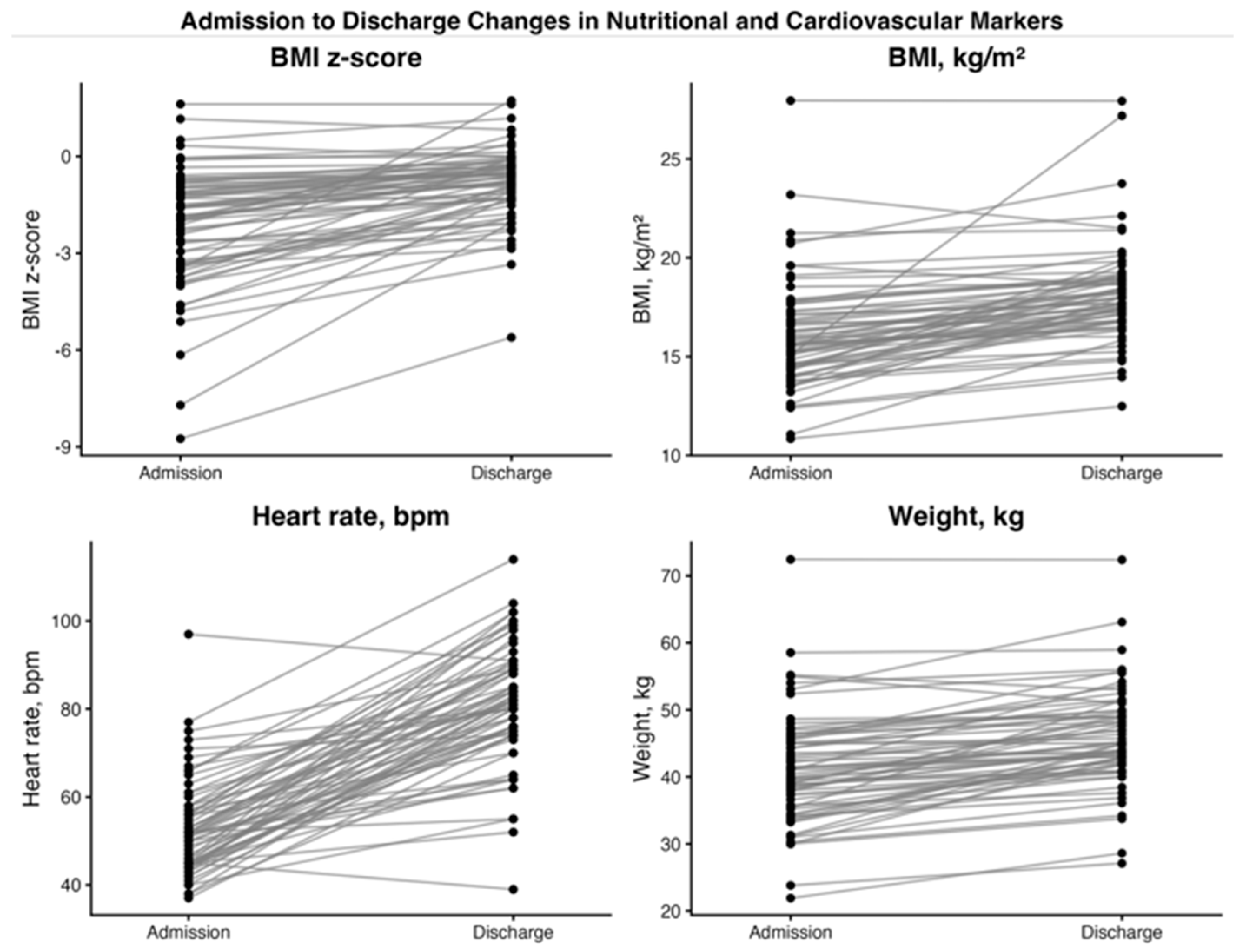
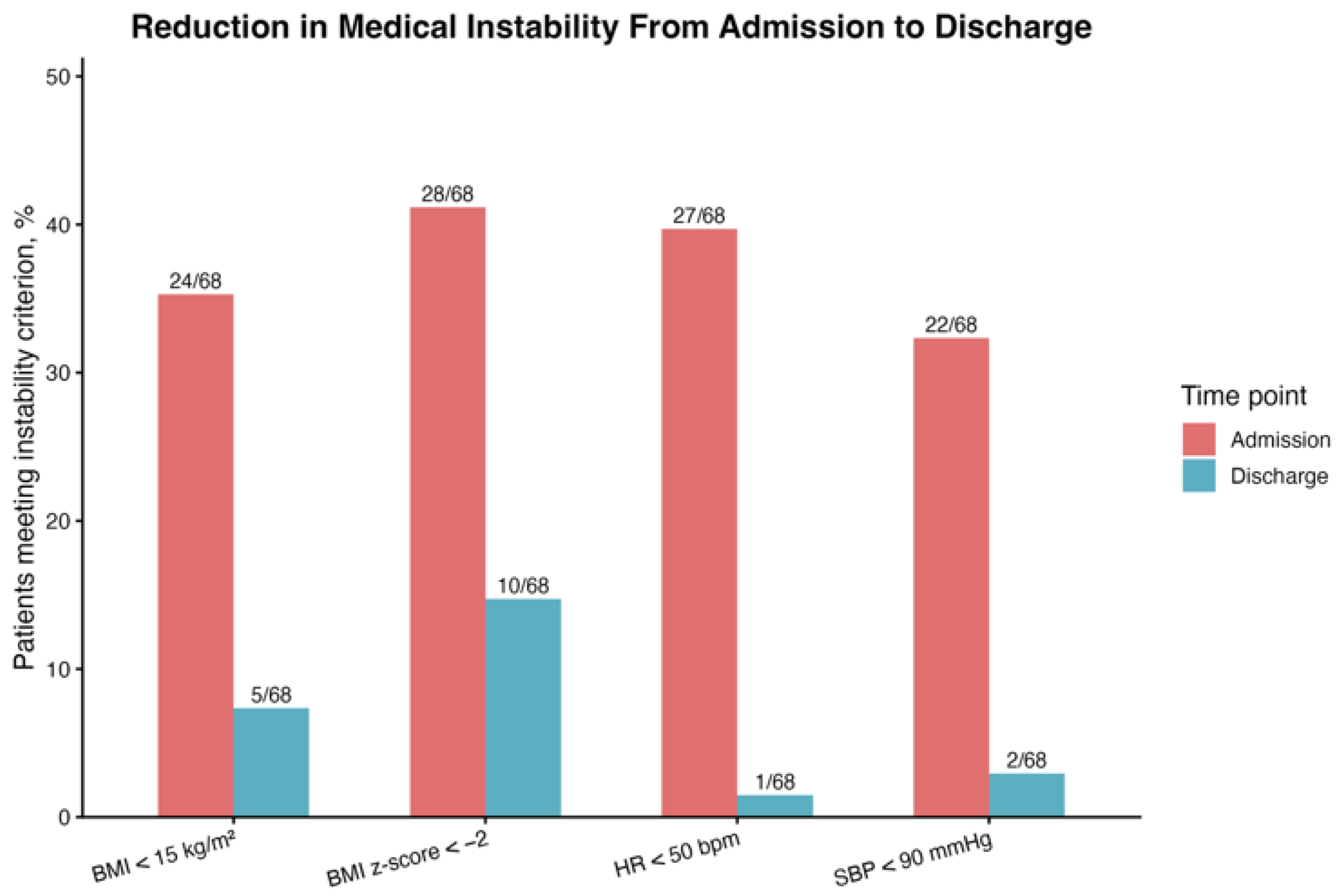
The cardiovascular improvements in this cohort were clinically dramatic. A mean HR increase of 28.4 bpm, representing a 54% increase from the mean admission HR of 52.9 bpm, together with near-complete resolution of bradycardia (39.7% to 1.5%), indicates clinically meaningful cardiovascular improvement during protocol-driven nutritional rehabilitation, consistent with prior pediatric studies [
4,
6]. However, because this study was retrospective and uncontrolled, these findings should not be interpreted as establishing treatment efficacy. Individual patient trajectories (
Figure 2) revealed substantial heterogeneity, underscoring that the presentation of AN and its cardiovascular manifestations vary widely even within a clinically defined cohort. Concurrent improvements in blood pressure and weight reflect global hemodynamic and metabolic recovery associated with nutritional restitution.
Lower admission BMI z-score was associated with longer LOS, which is clinically plausible and consistent with prior pediatric cohort data showing an association between lower nutritional status at admission and longer hospital stay [
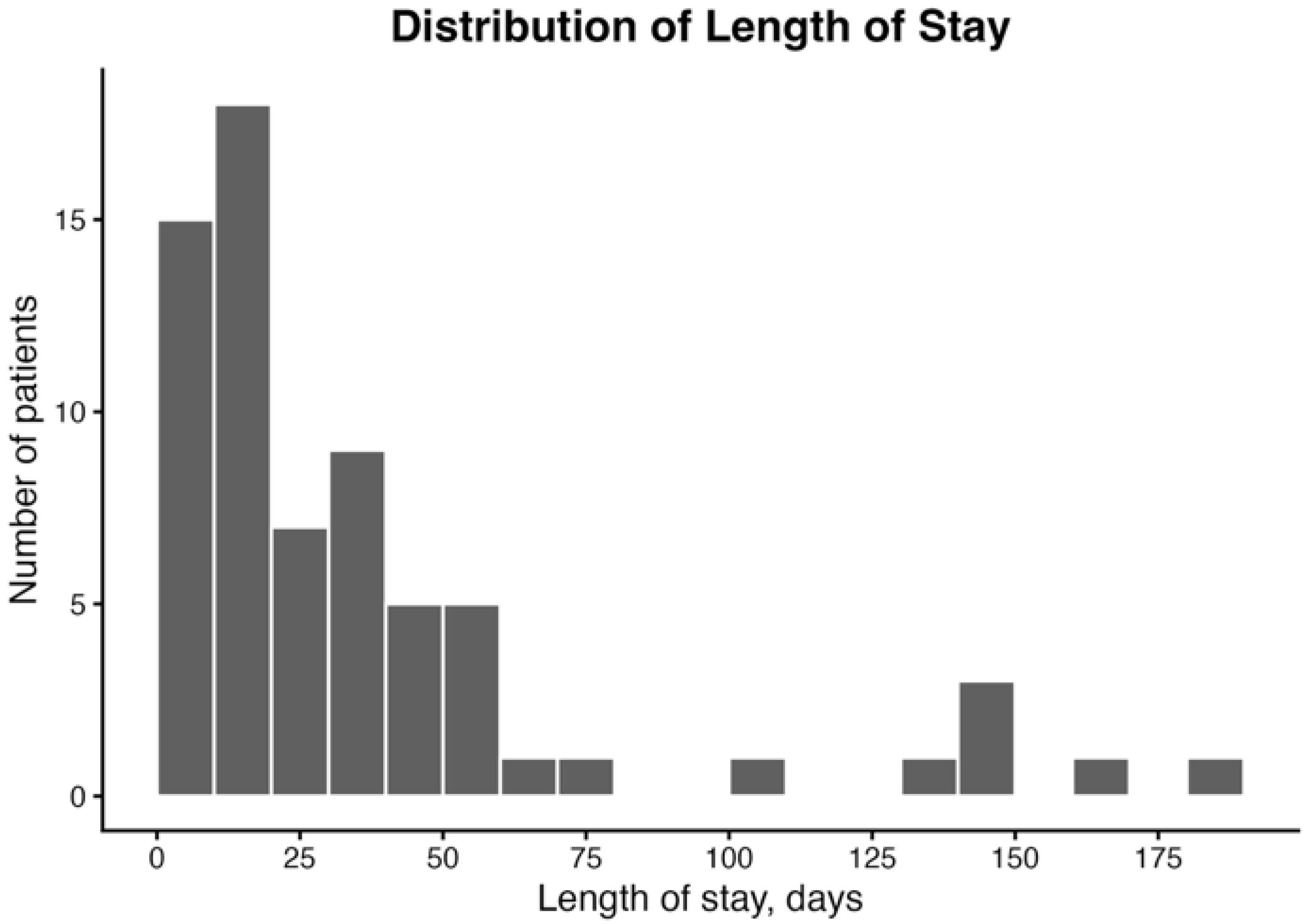
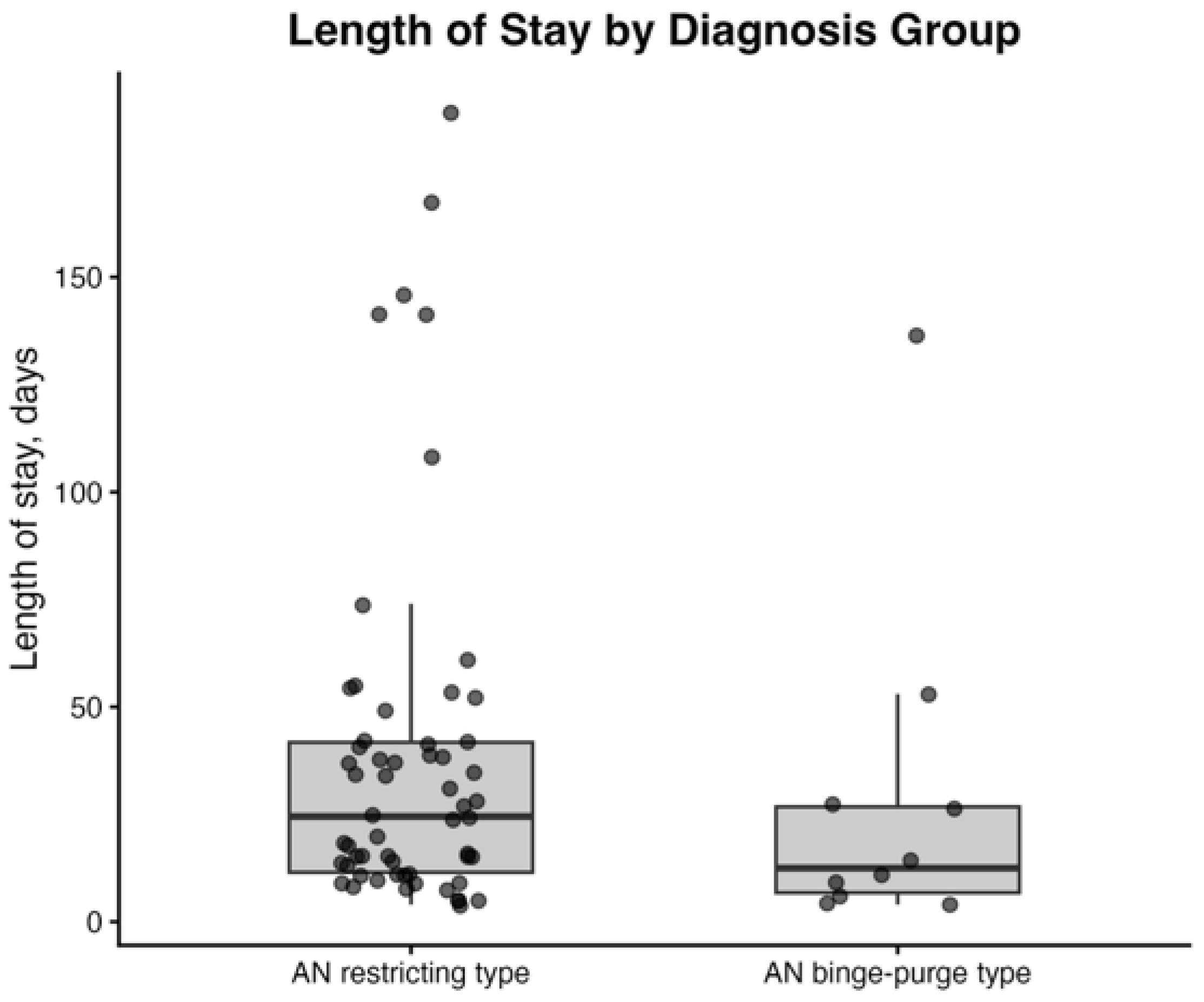
22]. In the present cohort, each 1-unit increase in admission BMI z-score was associated with an 18.9% shorter LOS, corresponding to approximately 4.5 fewer inpatient days at the observed median stay of 24 days. This effect size is clinically meaningful, but LOS should not be interpreted as a direct biological marker of illness severity or nutritional recovery alone. In this program, discharge required cardiovascular stabilization, attainment of the caloric threshold, successful completion of a supervised family meal within the hospital, and multidisciplinary agreement on psychosocial readiness for discharge. Therefore, LOS reflects the combined influence of baseline nutritional severity, clinical recovery, mental health needs, institutional discharge policy, and family readiness. These findings support early recognition and timely referral before severe malnutrition develops, but implications for hospital resource use require evaluation in prospective studies and across settings with different admission and discharge criteria.
The relationship between caloric rehabilitation and cardiovascular recovery requires careful interpretation. The significant positive correlation between admission caloric intake and admission HR (r = 0.324,
p = 0.007), which persisted after controlling for BMI z-score (partial r = 0.297,
p = 0.014;
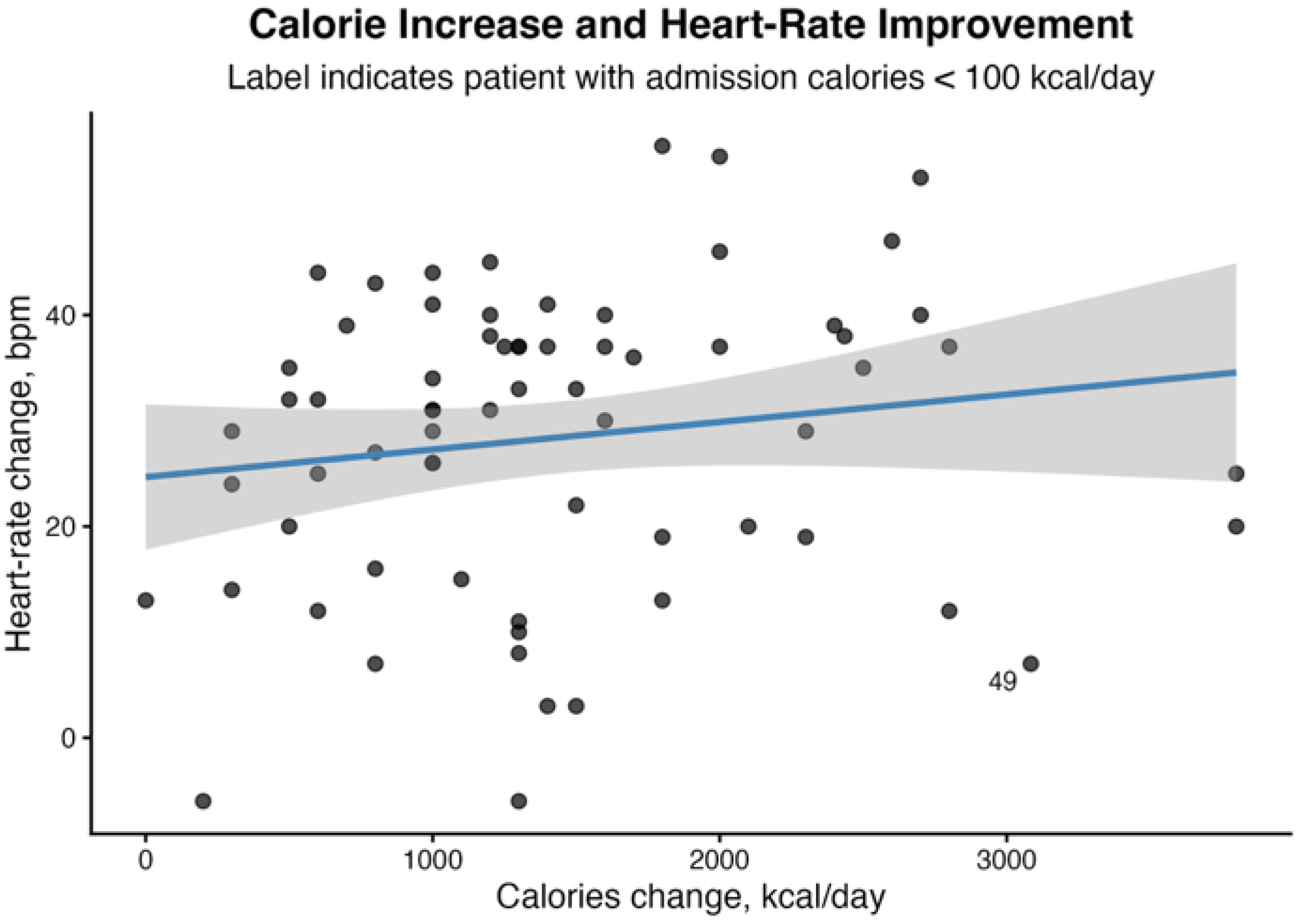
Supplementary Figure S6), reflects a cross-sectional severity signal: patients consuming more calories at admission had better nutritional status and higher resting HRs, both co-manifestations of less severe disease. This is not evidence of a causal benefit of caloric intake on HR; the treating clinician’s caloric prescription is itself informed by clinical severity, introducing a confounding-by-indication pathway that partial correlations controlling for BMI z-score alone cannot fully eliminate. In contrast, the change in caloric intake from admission to discharge was unrelated to the degree of HR improvement across multiple analytical approaches (partial r = 0.052,
p = 0.674;
Figure 5; sensitivity analysis,
Supplementary Figure S4). Multivariable regression confirmed that HR recovery was independently driven by baseline BMI z-score (β = −2.70,
p = 0.008) and by a regression-to-the-mean effect of admission HR, not by caloric escalation. These results indicate that caloric escalation added no independent predictive value for heart-rate recovery once baseline severity was accounted for. This is not the same as showing that caloric intake is unimportant. Cardiovascular recovery in AN reflects several processes we did not measure, including autonomic reconditioning, restoration of fat-free mass, rehydration, graded reduction in activity restriction and improved sleep, and the present sample was powered to detect only moderate effects. Aggressive caloric escalation remains clinically necessary for efficient weight restoration; what these data suggest is that its cardiovascular benefit is not separable from the nutritional recovery it produces.
The refeeding safety profile of this cohort builds on the emerging literature challenging historical refeeding conservatism. No cases of hypophosphatemia occurred among the 68 patients managed within this specialized tertiary setting with a protocol that started at 1000–1200 kcal/day. This aligns with randomized trial evidence and large observational cohorts showing that clinically significant hypophosphatemia during refeeding is far less common than previously feared in adolescents without severe pre-existing electrolyte abnormalities [
9,
15,
23]. Crucially, this safety record was achieved within a framework of systematic daily electrolyte monitoring from day 2 through day 7: the absence of any clinically significant refeeding syndrome episode supports the adequacy of the protocol, though retrospective data alone cannot determine whether safety reflected low intrinsic risk or monitoring-enabled timely detection. The current results should not be interpreted as evidence that aggressive refeeding is universally safe outside of specialized settings with comparable monitoring protocols. Hypokalemia (7.4% at admission) and metabolic acidosis (5.9%) were the most common electrolyte disturbances, consistent with the physiological consequences of prolonged caloric restriction and in the AN-BP subgroup, purging behavior [
24].
The prevalence of psychiatric comorbidity in this cohort, 82.4% overall, with depression in 58.8% and anxiety in 42.6%, confirms and extends findings from the broader AN literature [
16,
17] and has direct implications for the structure of inpatient care. Crucially, suicidal ideation or attempt (19.1%) and self-harm behavior (17.6%) were identified in a medically admitted cohort: populations often assumed to be at the less severe end of the psychiatric complexity spectrum because they present to pediatric medicine rather than to psychiatry. One patient had a prolonged inpatient stay driven entirely by psychiatric stabilization barriers rather than nutritional or cardiovascular failure, highlighting the extent to which psychiatric complexity can dominate the clinical trajectory even within a medical stabilization program. The comorbidity burden observed here is consistent with a model of care in which child psychiatry, clinical psychology, and social work are involved from the day of admission rather than as secondary consultants. We note that the present design did not compare staffing models and therefore cannot demonstrate that such a structure improves outcomes; this is offered as a clinical implication of the observed comorbidity prevalence rather than as a finding of the study.
The discharge protocol used at this center operationalizes FBT principles during the inpatient-to-outpatient transition [
18,
19]. Discharge was contingent not only on cardiovascular normalization and attainment of a 2500–3000 kcal/day oral intake threshold, but also on the successful completion of at least one supervised family meal before leaving the hospital, explicitly empowering parents as the primary agents of nutritional restoration before discharge, consistent with the central mechanism of FBT for adolescent AN. Although the current retrospective design did not capture post-discharge weight trajectory or readmission rates as structured outcomes, the three prior hospitalizations identified in this cohort underscore the ongoing relapse risk and the need for sustained, coordinated outpatient support. Prospective evaluation of FBT-informed discharge criteria on readmission rates is an important direction for future research.
Strengths and Limitations
The principal strengths of this study are methodological and contextual. The consecutive cohort design over eight years, together with complete primary inpatient outcome data, reduces but does not eliminate selection bias and provides clinically useful information from a national tertiary referral program. The analytic approach, including adjusted models and partial correlations, allowed exploratory assessment of the relationship between baseline nutritional severity, caloric rehabilitation, LOS, and HR recovery; however, these methods reduce rather than remove confounding, particularly because clinicians determined caloric prescriptions and adjusted them during admission. The absence of hypophosphatemia requiring intervention or documented refeeding syndrome provides reassuring safety data within a closely monitored tertiary inpatient setting. The explicit description of the nutritional rehabilitation protocol, discharge criteria, and outpatient pathway enables comparison with other centers.
Five limitations warrant discussion. First, this is a single-center study; however, as the national tertiary referral center for pediatric eating disorders, the consecutive design over eight years captures the complete national inpatient experience for this condition during that period. Second, the absence of post-discharge outcome data, weight trajectory, readmission rates, and eating disorder psychopathology is the most clinically meaningful gap. Inpatient medical stabilization is only the first step of recovery, and without longitudinal follow-up, we cannot evaluate whether the discharge protocol and FBT-based handover translate into durable improvements. Third, psychiatric comorbidities were ascertained from clinical documentation rather than from structured research interviews. All patients were assessed by a qualified child and adolescent psychiatrist within the multidisciplinary team, and diagnoses were established against the DSM-5-TR and ICD-10 criteria in the course of routine specialist care; the limitation therefore lies in the absence of a standardized research instrument such as the K-SADS rather than in the absence of diagnostic criteria. Our operational definition additionally admitted clinically significant symptom clusters documented by the treating team alongside formal diagnoses. The 82.4% figure should accordingly be understood as the prevalence of clinically documented psychiatric burden in this cohort rather than as a research-standard diagnostic prevalence, and it may differ from an instrument-ascertained rate in either direction. Fourth, illness duration prior to admission was not systematically captured, precluding analysis of chronicity as a predictor of hospital course. Fifth, the analyses involved a large number of comparisons without correction for multiplicity. We report unadjusted p-values throughout because the comparisons do not form a single pre-specified family and a blanket family-wise correction would misrepresent the design, but this means that findings beyond the pre-specified admission-to-discharge changes should be regarded as hypothesis-generating rather than confirmatory. Relatedly, the partial correlations adjust for admission BMI z-score alone and therefore reduce rather than remove confounding by indication in the caloric analyses; the absence of an independent association between caloric escalation and heart-rate improvement is consistent with, but does not establish, an absence of effect.
5. Conclusions
In this consecutive cohort of adolescents admitted for medical stabilization of anorexia nervosa, structured nutritional rehabilitation was associated with significant improvements in weight, BMI z-score, hemodynamic stability, and resolution of bradycardia. Admission BMI z-score was the strongest predictor of length of stay and an important correlate of heart rate recovery, suggesting that baseline nutritional severity remains central to the inpatient course.
Heart rate improved alongside caloric rehabilitation; however, adjusted analyses indicated that baseline nutritional and cardiovascular severity better explained the magnitude of improvement than caloric escalation alone. This finding should be interpreted within the context of a protocolized refeeding program and does not diminish the clinical importance of adequate nutritional rehabilitation for safe and efficient recovery.
The absence of hypophosphatemia requiring intervention or documented refeeding syndrome suggests that the protocol was metabolically safe when delivered with systematic electrolyte monitoring in this specialized tertiary setting. These findings should not be extrapolated to settings with less rigorous monitoring. The high prevalence of psychiatric comorbidity further emphasizes that inpatient care for adolescent anorexia nervosa should begin as an integrated medical, nutritional, and psychiatric intervention, with structured transition to family-supported outpatient recovery.



 ,
,