


Abstract
Background/Objectives: This study aimed to examine the association between a plant-based diet (PBD) and the incidence of total cardiovascular disease (CVD), coronary heart disease (CHD), and stroke in a meta-analysis of prospective cohort studies. Methods: We searched the PubMed, ISI Web of Science and Scopus databases up to February 2026 to identify prospective cohort studies assessing the association between a PBD and the incidence of total CVD, CHD, and stroke. Results: A total of twenty-two articles (nineteen cohort studies), including 846,589 subjects and 139,652 cases, were included in the meta-analysis. People with the highest adherence to overall PBD had a 10% lower risk of CVD than those with the lowest adherence (relative risk [RR] = 0.90, 95% CI: 0.85–0.95). Adherence to a healthful plant-based diet (hPBD) was inversely associated with CVD risk (RR = 0.83, 95% CI: 0.76–0.90), whereas adherence to an unhealthful plant-based diet (uPBD) was positively associated with CVD risk (RR = 1.13, 95% CI: 1.03–1.24). High compliance with overall and a healthful PBD was associated with a 9% (RR = 0.91, 95% CI: 0.85–0.96) and 23% lower risk (RR = 0.77, 95% CI: 0.72–0.84) of CHD development compared with low compliance, respectively. High compliance with a uPBD was associated with a 24% higher risk of CHD than low compliance. We found no significant association with stroke risk. Conclusions: This meta-analysis indicated that a PBD was inversely associated with the risk of CVD and CHD. A hPBD showed an inverse association, whereas a uPBD showed a positive association between cardiovascular health. Further well-designed interventions are needed to clarify these associations.
1. Introduction
Cardiovascular disease (CVD) is a leading cause of global morbidity and mortality. CVD global mortality elevated from 13.1 million to 19.2 million between 1990 and 2023. It is estimated to reach approximately 35.6 million annually by 2050 [1]. CVD is primarily attributable to coronary heart disease (CHD) and stroke. CHD and stroke account for 85% CVD mortality [2,3]. CVD imposes an enormous economic burden on health care systems [4].
CVD risk factors include non-modifiable factors (e.g., age, genes, and gender) and modifiable factors (e.g., smoking, excessive alcohol intake, unhealthful diet, physical inactivity, high blood pressure, high blood cholesterol, obesity, and diabetes) [5]. Dietary modification can play a beneficial role in CVD prevention, reducing a substantial economic burden on health care systems. A plant-based diet (PBD) has drawn attention as a CVD prevention strategy in recent years. A PBD consists of plant-based foods such as whole grains, vegetables, fruits, legumes, seeds, and nuts. In particular, a healthful plant-based diet (hPBD) includes whole grains, fruits, vegetables, nuts, legumes, vegetable oils, and tea/coffee. An unhealthful plant-based diet (uPBD) includes fruit juices, sugar-sweetened beverages, refined grains, potatoes, and sweets/desserts [6].
A higher plant-based diet index (PDI) score was associated with a lower risk of CVD events during a mean follow-up of 25 years, in the Atherosclerosis Risk in Communities (ARIC) study of 12,168 subjects [7]. Moreover, a hPBD was associated with a reduced risk of CVD during a mean follow-up of 12.3 years, in an analysis of 158,408 subjects aged 40 to 69 years from the UK Biobank prospective cohort study [8]. Meanwhile, a higher intake of unhealthful and ultra-processed plant-based foods was associated with an increased incidence of CHD during the median follow-up period of 9 years in the French NutriNet-Santé cohort study of 63,831 subjects aged over 35 years [9]. However, the EPIC-Oxford study over 18 years of follow-up showed the association between a vegetarian diet and increased risk of stroke in comparison with meat eaters, when analyzing 16, 254 subjects aged over 39 years [10].
Given the conflicting findings on the association between a PBD and the incidence of total CVD, CHD, and stroke in prospective cohort studies, this study aimed to conduct a comprehensive meta-analysis to examine this association.
2. Materials and Methods
2.1. Literature Search Strategy
To identify the studies suitable for this meta-analysis, the PubMed, ISI Web of Science and Scopus databases were searched until February 2026. The search terms were “(plant-based diet OR vegetarian OR vegan) combined with (cardiovascular disease OR coronary heart disease OR coronary artery disease OR stroke).” (Supplementary Table S1). We additionally reviewed the reference lists of the retrieved articles for further eligible studies. The current meta-analysis was registered at PROSPERO (CRD420261302639).
2.2. Selection of Study
Studies were considered eligible for inclusion in this meta-analysis based on the following criteria: prospective cohort design; a PBD as exposure; incidence of CVD, CHD, and stroke as outcomes; relative risks (RRs); and 95% confidence intervals (CIs) (Supplementary Table S2). When duplicate cohort studies were present, we included the study with the greater number of participants in the analysis.
2.3. Data Extraction
All authors independently extracted data from original articles according to the Preferred Reporting Items for Systematic reviews and Meta-Analyses (PRISMA) statement [11]. The extracted information includes: the first author’s last name, the country or region where the study was conducted, the age of subjects, the study periods or follow-up years, the sex of subjects, the number of subjects, the number of cases, the diet classification category, estimates and their 95% CIs, and adjusted variables.
2.4. Quality Assessment
All authors independently assessed study quality using a Newcastle–Ottawa Scale [12]. Points were awarded for three items: participant selection (4 points), comparability between cohorts (2 points), and disease identification (3 points), with a maximum score of 9 points. Studies that received a score of 7 or higher were considered high-quality studies. All authors independently evaluated the quality, and any discrepancies were resolved through a discussion and review of the original paper.
2.5. Statistical Analysis
Pooled relative risk and its 95% CI were calculated for the highest versus the lowest adherence to a PBD using the DerSimonian and Laird random effects models [13]. Heterogeneity among the studies was measured using Cochran’s Q statistic [14], and the I2 statistic [15] was used to quantify the degree of heterogeneity. To assess whether the influence of a specific study was not overly significant, we conducted a sensitivity analysis by integrating the results of the remaining studies while excluding each study in turn. Where possible, we performed subgroup analyses based on sex, region or follow-up years. The results of studies comparing vegetarians and meat consumers (not comparing the highest versus the lowest PBD pattern scores) were collected separately and meta-analyzed. Publication bias was verified by Begg’s [16] and Egger’s regression asymmetry test [17]. All statistical analyses were conducted using STATA 17.0 software, and a p-value of less than 0.05 was considered an indicator of significance.
3. Results
3.1. Study Characteristics
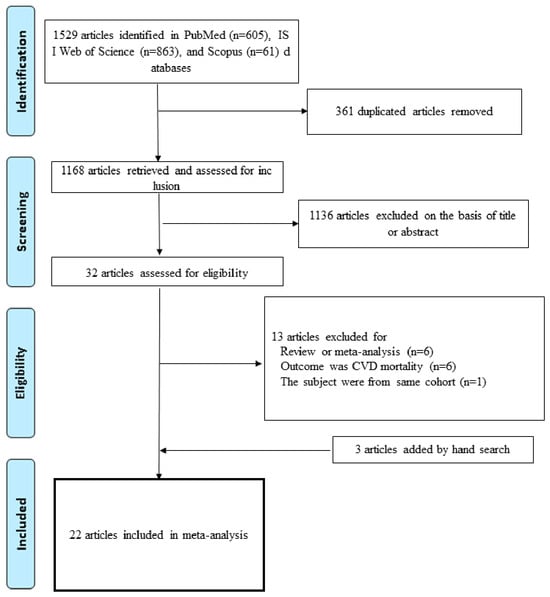
The study’s search and selection process was shown in Figure 1. We included twenty-two articles in the meta-analysis [7,9,10,18,19,20,21,22,23,24,25,26,27,28,29,30,31,32,33,34,35,36]. Table 1 presented the basic characteristics of prospective cohort studies examining the association between a PBD and CVD incidence. Eight articles reported results for a PBD, a hPBD, and a uPBD [7,21,24,28,29,31,33,34]; two reported results for a hPBD and a uPBD together [9,32]; and the rest reported results for only one of a PBD, a hPBD, and a uPBD [10,18,19,20,22,23,25,26,27,30,35,36]. Looking at the regions where the research were conducted, 14 studies were in the United States [7,9,19,20,21,22,23,24,25,26,27,29,31,32,35], five in Europe [9,10,18,28,30], and three in Asia [33,34,36]. In most cases, results were reported as comparisons of adherence to a PBD, and four articles reported comparisons between vegetarian and non-vegetarian diets [10,18,26,36]. The subjects were 18 years or older. The follow-up period ranged from 2 to 32 years with a median of 11.4 years. The Newcastle–Ottawa Scale scores ranged from 6 to 9, indicating a mean score of 7.7 (Supplementary Table S3). All studies reported results adjusted for age and smoking; most studies controlled for physical activity (n = 21) or alcohol consumption (n = 20), and many also adjusted for body mass index (BMI; n = 19) and energy intake (n = 15).
Figure 1.
The flow chart of study selection procedure.
Table 1.
Characteristics of prospective cohort studies included in the meta-analysis of a plant-based diet (PBD) and incidence of cardiovascular disease (CVD).
3.2. PBD and Risk of CVD
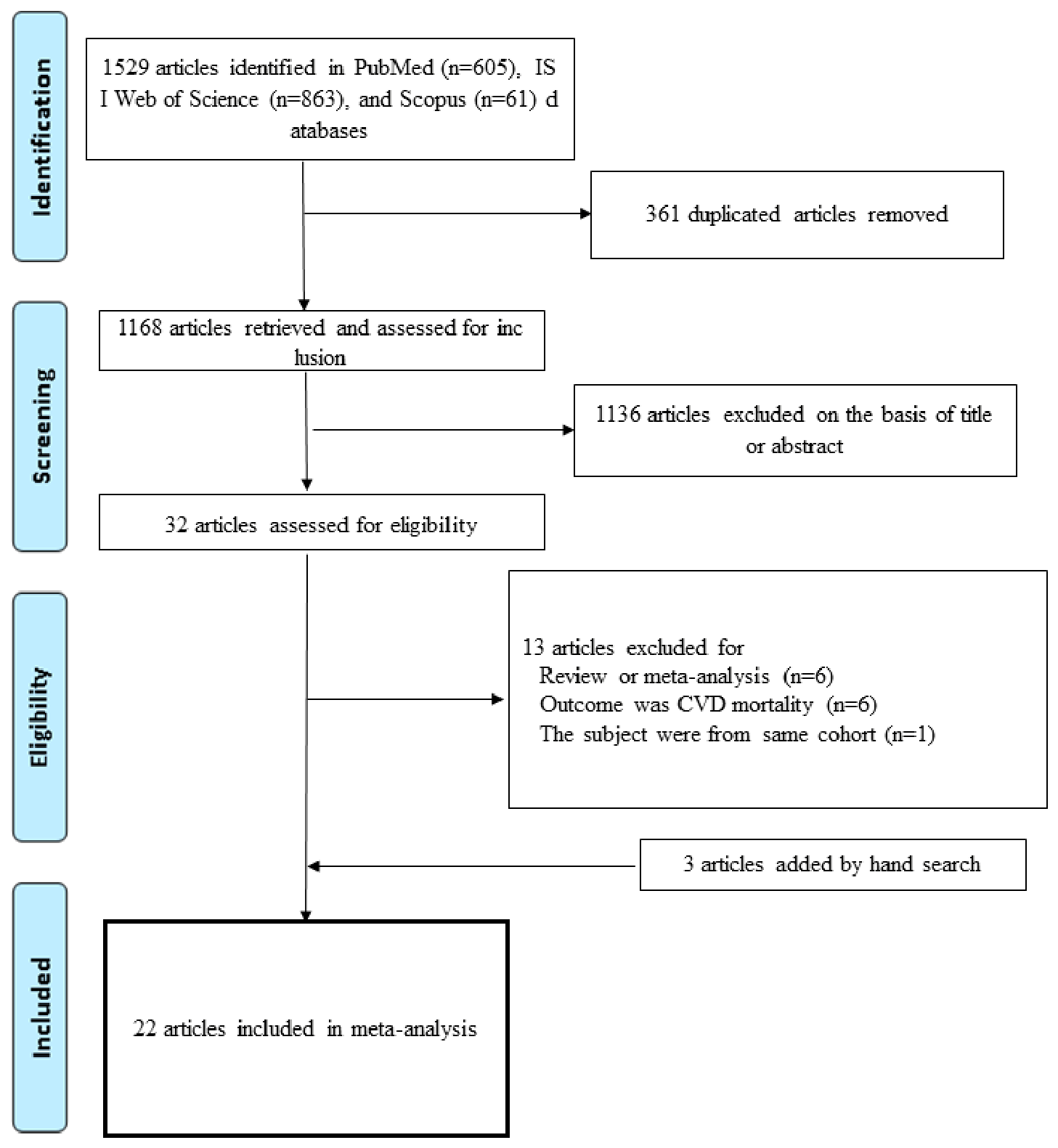
Twelve articles analyzing the association between a PBD and CVD incidence were included in the meta-analysis [7,19,20,21,24,25,28,29,31,33,34,35]. When comparing the highest and lowest PBD scores, the pooled RR was 0.90 (95% CI: 0.85–0.95), indicating significant heterogeneity (I2 = 48.9%, p = 0.03) (Figure 2). The observed significant heterogeneity disappeared (I2 = 0.0%, p = 0.69) when the study by Li et al. (2023) [31], which showed a strong inverse association, was excluded, and the pooled RR remained largely unchanged at 0.91 (95% CI: 0.88–0.94). Subgroup analysis by sex revealed a significant inverse association only in women (RR = 0.90, 95% CI: 0.85–0.94), but the sex difference was not statistically significant (p for difference = 0.38) (Table 2). When analyzed by the region where the study was conducted, significant results were found only in the U.S. (RR = 0.88, 95% CI: 0.82–0.94), but differences based on region were also not statistically significant (p for difference > 0.2 in all comparisons) (Table 2). There was no publication bias for the association between a PBD and CVD incidence (Begg’s p = 0.73, Egger’s p = 0.48).
Figure 2.
Forest plots of the prospective cohort studies of cardiovascular disease for high versus low adherence to a plant-based diet (PBD) [7,19,20,21,24,25,28,29,31,33,34,35].
Table 2.
Summary of pooled relative risks (RR) of cardiovascular disease (CVD) for a plant-based diet (PBD), a healthful plant-based diet (hPBD), and an unhealthful plant-based diet (uPBD).
3.3. hPBD and Risk of CVD
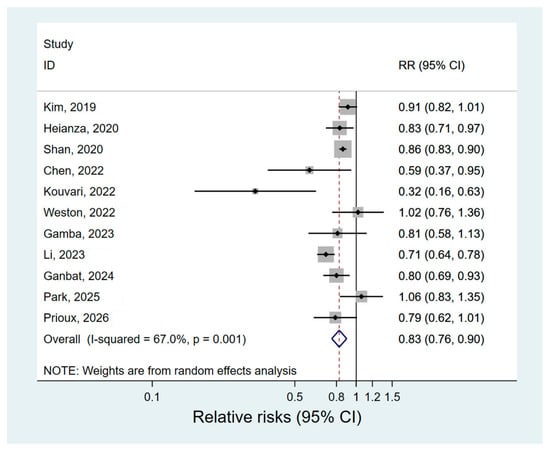
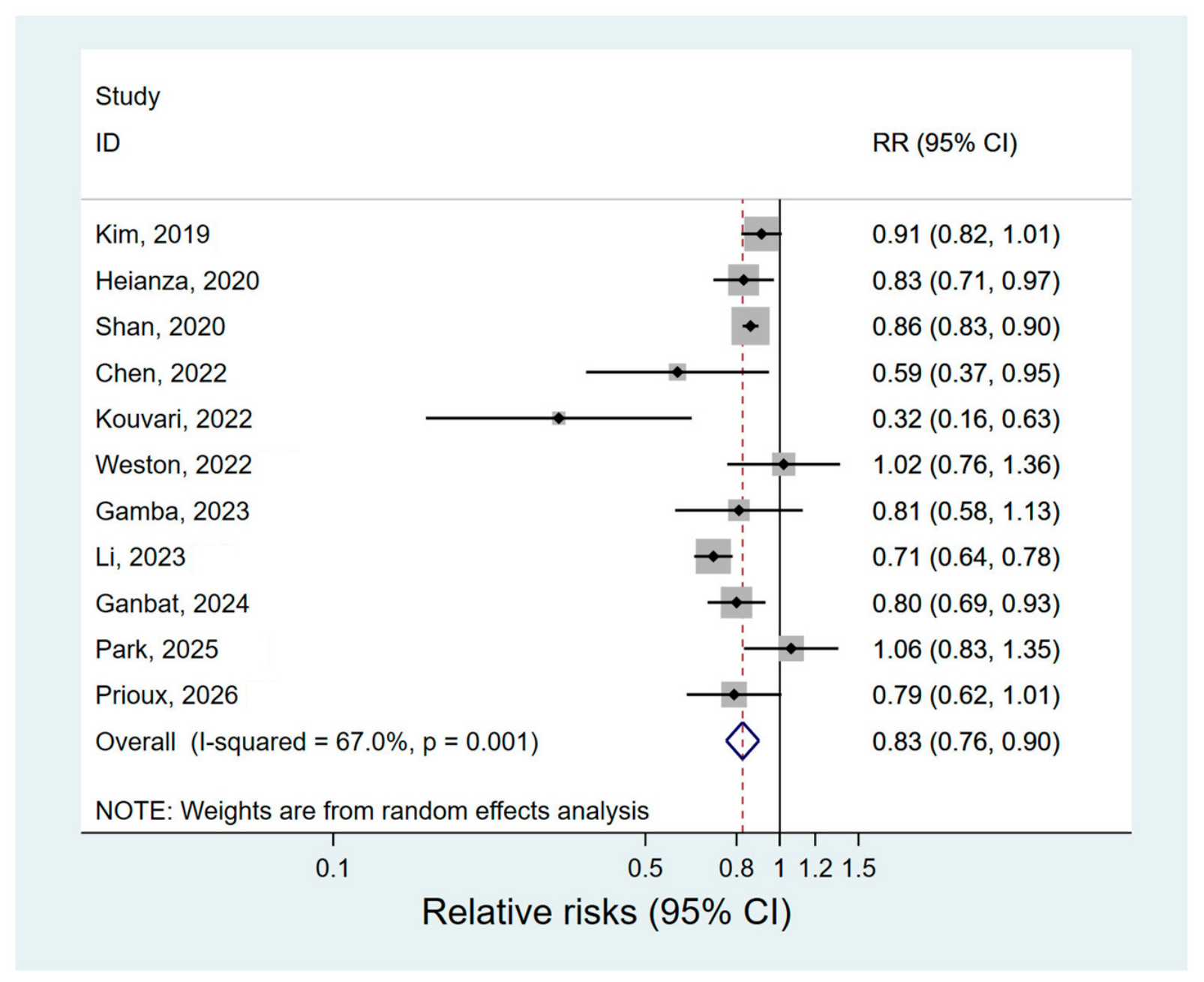
Eleven articles providing the association between hPBD and CVD incidence were included in the meta-analysis [7,9,22,23,27,28,29,30,31,33,34]. The pooled RR for the highest versus lowest adherence to hPBD was 0.83 (95% CI: 0.76–0.90), with significant heterogeneity (I2 = 67.0%, p < 0.01) (Figure 3). After excluding two studies [28,31], significant heterogeneity disappeared (I2 = 15.0%, p = 0.31), and the pooled RR was 0.86 (95% CI: 0.82–0.91). In the subgroup analysis by region, significant inverse associations were found in both the U.S. (RR = 0.83, 95% CI: 0.74–0.93) and Europe (RR = 0.75, 95% CI: 0.60–0.94) (Table 2). In contrast, in Asia, the results were not significant (RR = 0.91, 95% CI: 0.69–1.19). However, the difference was not statistically significant (p for difference >0.5 in all comparisons) (Table 2). No publication bias was observed in Begg’s (p = 0.28) and Egger’s (p = 0.37) test.
Figure 3.
Forest plots of the prospective cohort studies of cardiovascular disease for high versus low adherence to a healthful plant-based diet (hPBD) [7,9,22,23,27,28,29,30,31,33,34].
3.4. uPBD and Risk of CVD
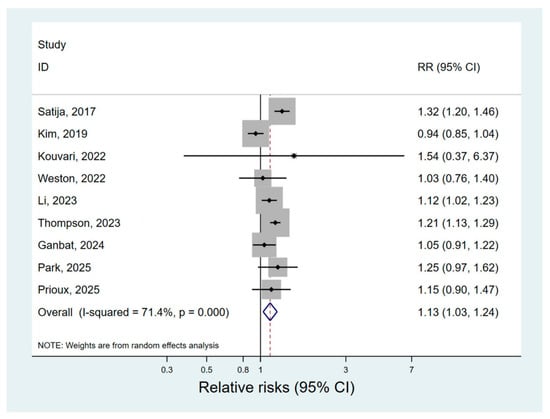
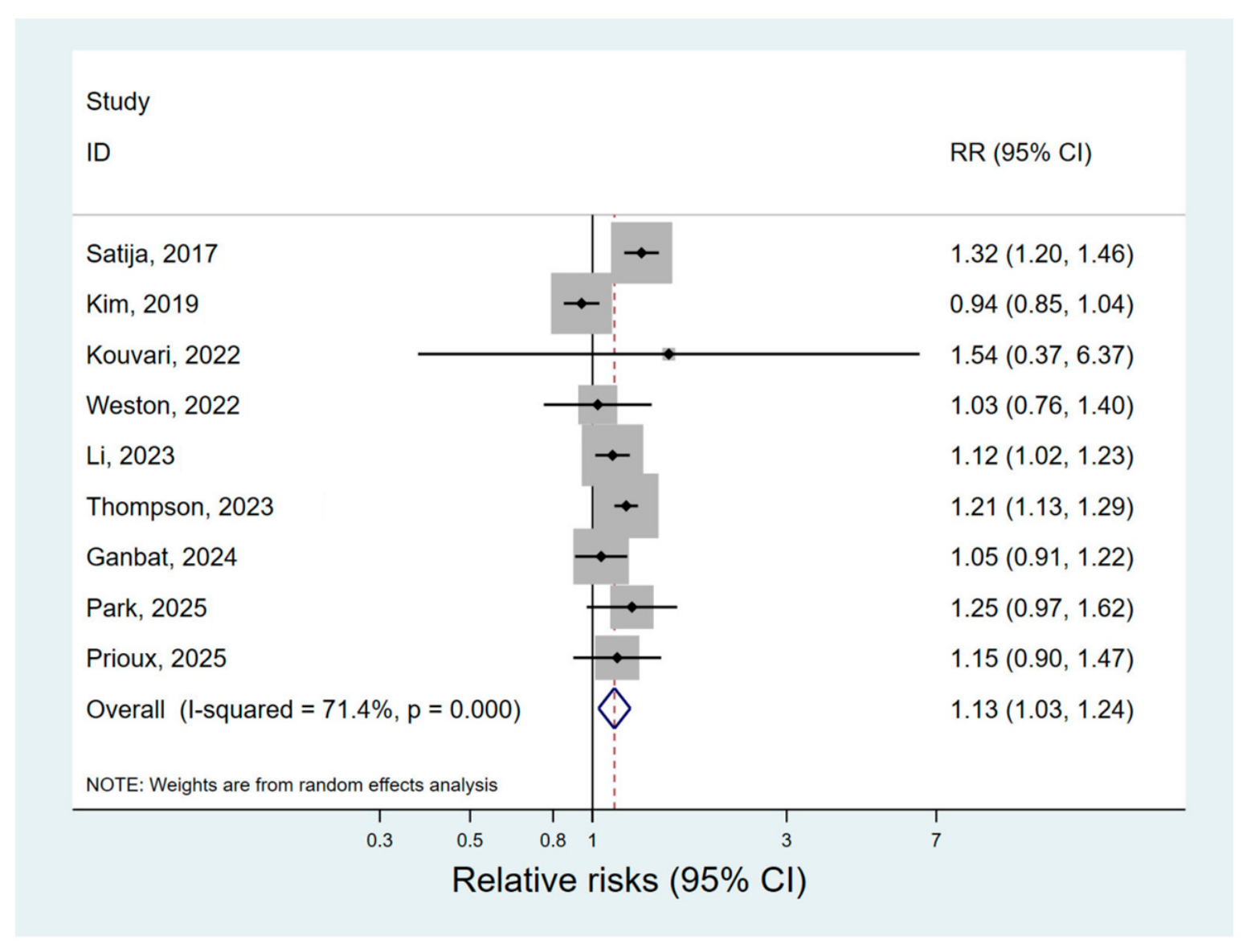
Eleven articles investigating the association between a uPBD and CVD incidence were included in the meta-analysis [7,9,21,28,29,31,32,33,34]. The pooled RR for the highest and lowest uPBD scores was 1.13 (95% CI: 1.03–1.24), showing significant heterogeneity (I2 = 71.4%, p < 0.01) (Figure 4). When the only study showing an RR value less than 1 was excluded [7], significant heterogeneity disappeared (I2 = 29.7%, p = 0.19), and the pooled RR showed a slightly stronger positive association (RR = 1.18, 95% CI: 1.11–1.26). In the subgroup analysis by sex, a significant positive association was observed only in women (RR = 1.53, 95% CI: 1.31–1.79), but the difference was not statistically significant (p for difference = 0.11) (Table 2). We found no difference by geographical region (p for difference >0.5 in all comparisons). There was no indication of publication bias (Begg’s p = 0.92, Egger’s p = 0.77).
Figure 4.
Forest plots of the prospective cohort studies of cardiovascular disease for high versus low adherence to an unhealthful plant-based diet (uPBD) [7,9,21,28,29,31,32,33,34].
3.5. Risk of CHD and Stroke
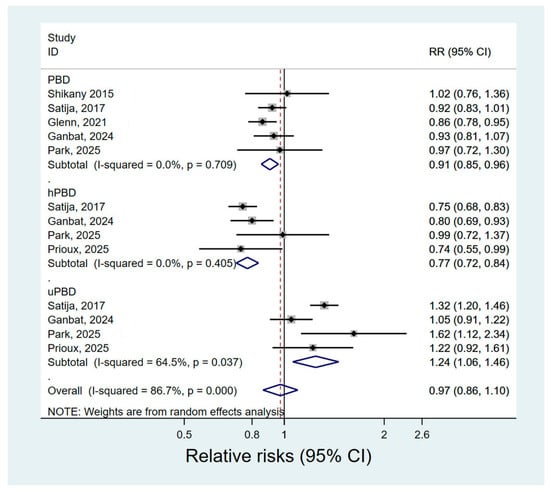
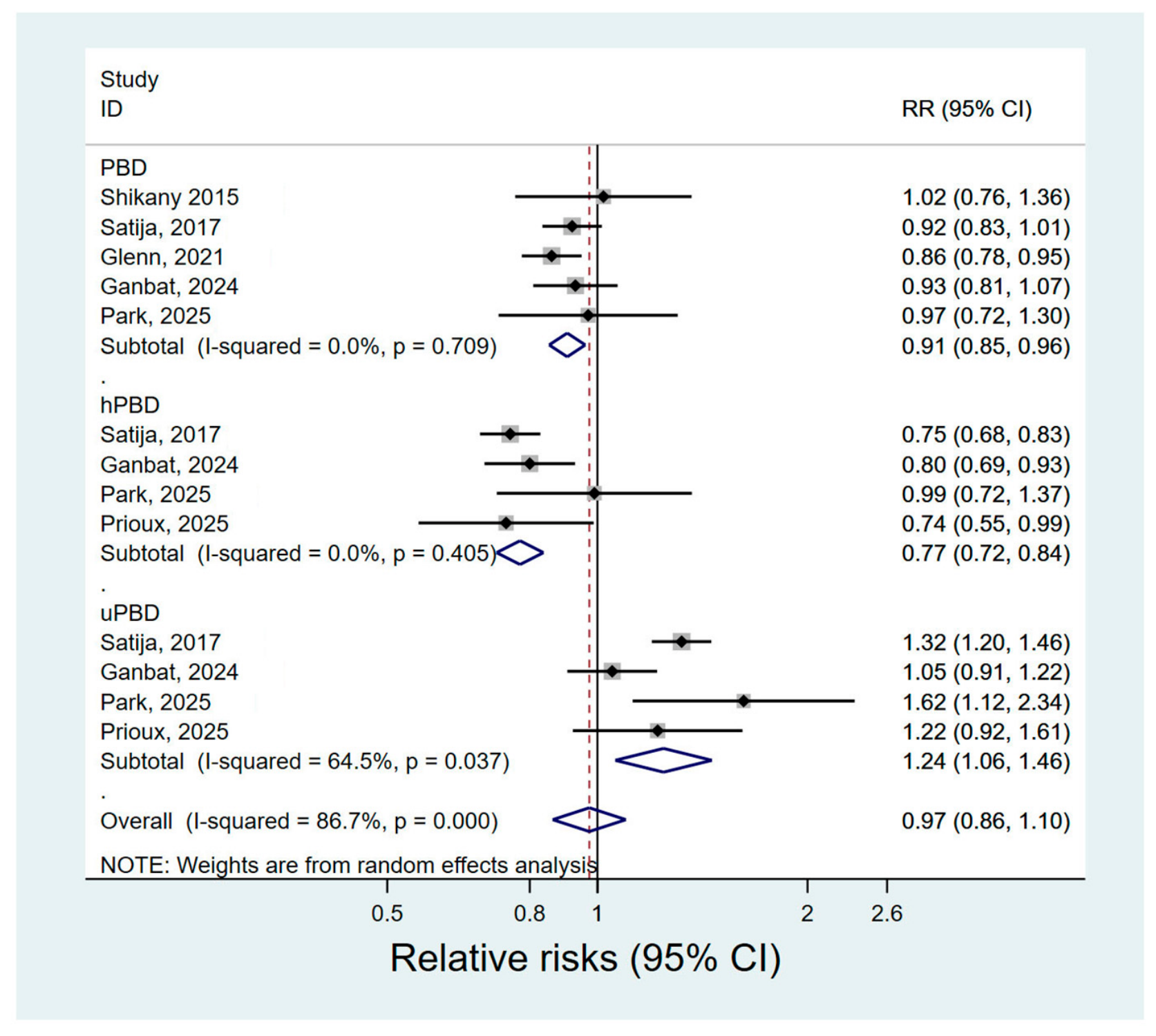
Six articles reported the RRs of CHD incidence for a PBD, a hPBD, or a uPBD [9,20,21,25,33,34]. When comparing the group with the highest dietary adherence to the group with the lowest, a PBD (RR = 0.91, 95% CI: 0.85–0.96) and a hPBD (RR = 0.77, 95% CI: 0.72–0.84) showed inverse associations between diet and CHD risk, and there was no significant heterogeneity (Figure 5), whereas a uPBD showed a positive association (RR = 1.24, 95% CI: 1.06–1.46), with significant heterogeneity (I2 = 64.5%, p = 0.04) (Figure 5).
Figure 5.
Forest plots of the prospective cohort studies of coronary heart disease for high versus low adherence to a plant-based diet (PBD), a healthful PBD (hPBD), and an unhealthful PBD (uPBD) [9,20,21,25,33,34].
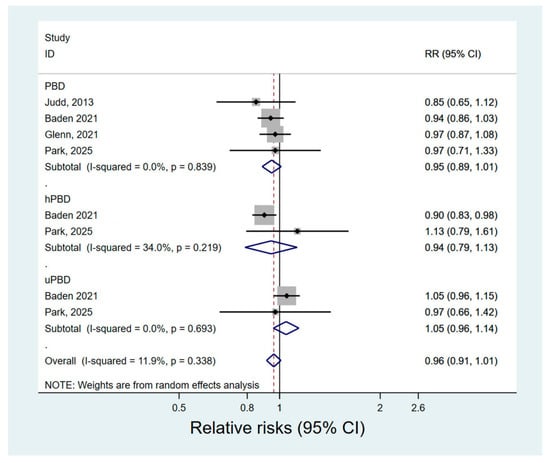
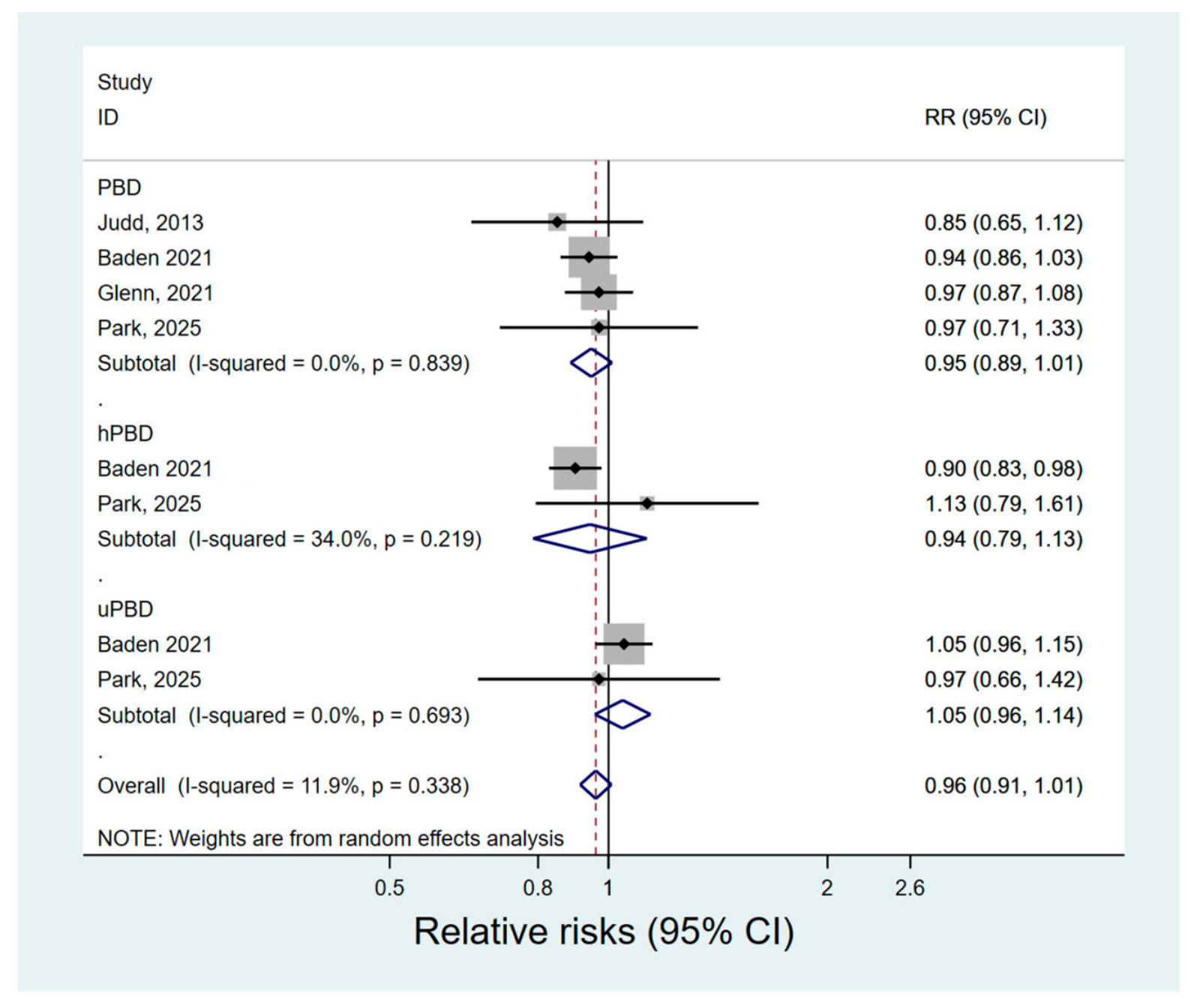
Four articles provided the RRs of stroke incidence for a PBD, a hPBD, or a uPBD [19,24,25,34], and the forest plot was shown in Figure 6. We did not observe a significant association with stroke risk in a PBD (RR = 0.95, 95% CI: 0.89–1.01), a hPBD (RR = 0.94, 95% CI: 0.79–1.13), and a uPBD (RR = 1.05, 95% CI: 0.96–1.14).
Figure 6.
Forest plots of the prospective cohort studies of stroke for high versus low adherence to a plant-based diet (PBD), a healthful PBD (hPBD), and an unhealthful PBD (uPBD) [19,24,25,34].
3.6. Vegetarians Versus Meat-Eaters
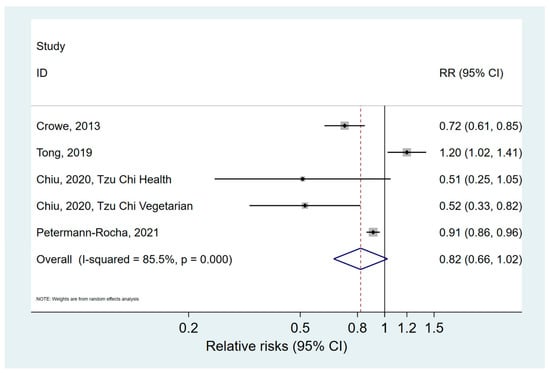
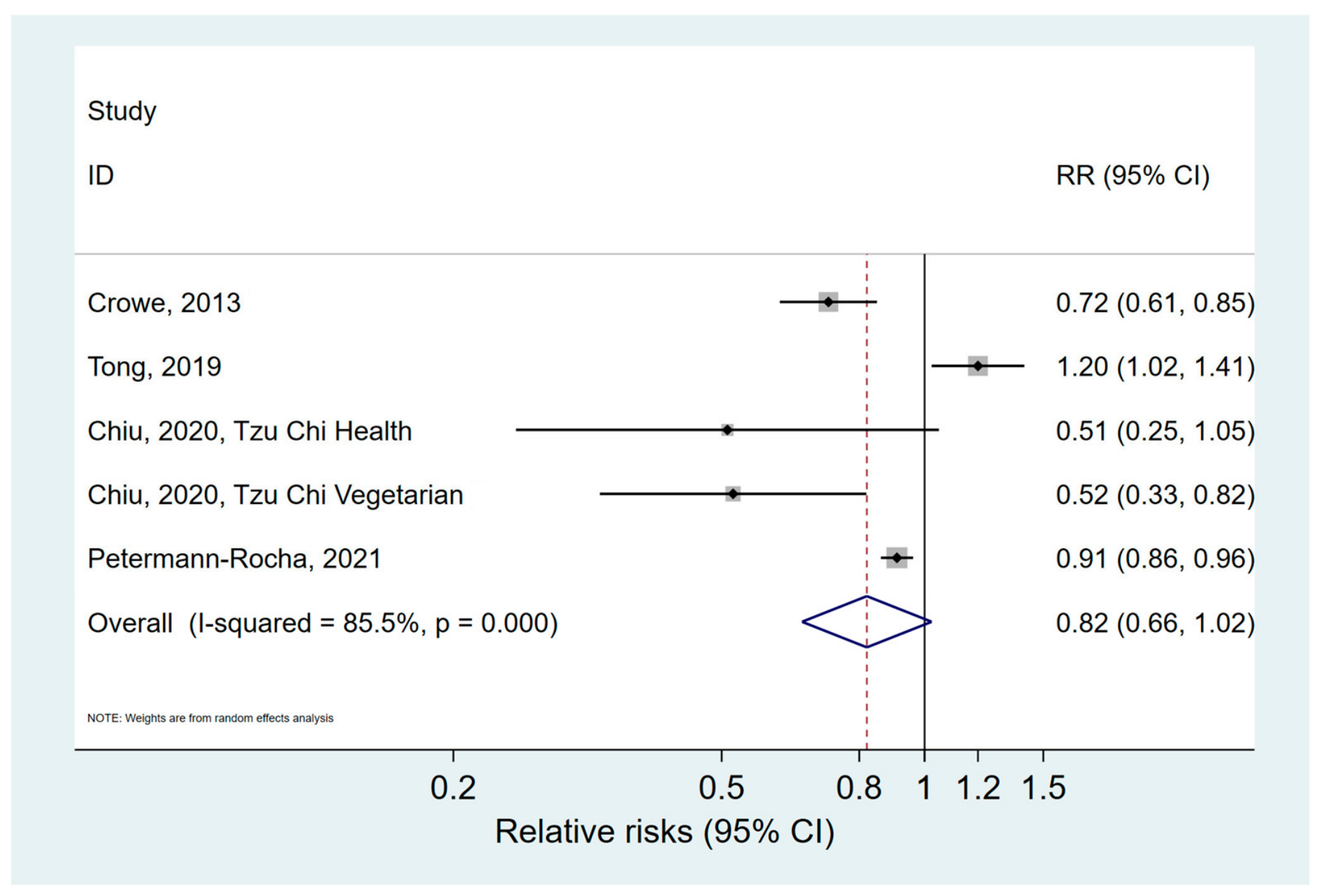
Four articles reporting RRs for CVD comparing meat eaters and vegetarians were included in the meta-analysis [10,18,26,36]. The pooled RR was 0.82 (95% CI: 0.66–1.02) with significant heterogeneity (I2 = 85.5%, p < 0.01) (Figure 7). There was no publication bias (Begg’s p = 0.81, Egger’s p = 0.50).
Figure 7.
Forest plots of the prospective cohort studies of cardiovascular disease for vegetarians compared with meat eaters [10,18,26,36].
4. Discussion
The present meta-analysis examined the association between a PBD and the incidence of total CVD, CHD, and stroke, including 19 prospective cohort studies with 846,589 subjects. We observed that overall, a PBD was associated with reductions of 10% and 9% in the risks of CVD and CHD, respectively. A hPBD was associated with a 17% and 23% reduction in CVD and CHD risk, respectively.
The inverse association between a PBD and the incidence of CVD and CHD can be linked to the protection against CVD. This diet can reduce CVD risk factors by lowering blood pressure [37], lipids [38,39,40], inflammation [41], glucose [42], body weight [42], and trimethylamine-N-oxide (TMAO) [43], and by increasing gut microbiota diversity [41] and endothelial function [44,45,46]. The recent umbrella review by Capodici et al. (2024) [47] showed that vegetarian and vegan diets were associated with improved glucose, lipid, body weight/BMI, inflammatory markers, and a lower risk of ischemic heart disease [47].
High blood pressure could affect CVDs and CHD risk [48]. A meta-analysis of 15 randomized clinical trials (RCTs) involving 856 subjects found that a PBD could play a role in blood pressure management. A vegetarian diet decreased the systolic blood pressure (SBP) and diastolic blood pressure (DBP) by 2.66 mmHg and 1.69 mmHg, respectively, compared with an omnivorous diet [37].
A PBD has been shown to lower blood lipid levels in human studies [38,39,40]. In a RCT of subjects aged an average of 67.3 years with coronary artery disease (CAD) treated with percutaneous coronary intervention (PCI) and on optimal medical therapy, a lacto-ovo-vegetarian diet for 4 weeks decreased plasma lipotoxic lipids (triacylglycerols, glycerophospholipids, cholesteryl ester, and ceramide) and increased triacylglycerols with long-chain polyunsaturated fatty acyls compared with an isocaloric meat diet [38]. A PBD contains phytochemicals. In a systematic review of RCTs examining 3478 hypertriglycemia subjects aged 18–70 years, phytochemicals supplementation (e.g., curcumin, berberine, resveratrol, catechins, epicatechin, anthocyanin, quercetin, bergamot, soy isoflavones, and so on) improved lipoid profiles by decreasing serum total cholesterol (TC), low-density lipoprotein cholesterol (LDL-C), and increasing serum high-density lipoprotein cholesterol (HDL-C) [39]. A PBD rich in phytosterols consists of plant sterols and stanols, which are a class of phytochemicals. In a meta-analysis of 124 RCTs, the average phytosterols intake of 0.6–3.3 g per day gradually decreased serum LDL-C levels by approximately 6–12% [40]. However, adherence to a PBD typically provides about 300–600 mg of phytosterol per day [49].
A PBD is high in mono- and poly-unsaturated fatty acids and low in saturated fats. The main sources of fats in a PBD are plant-based oils, nuts, and seeds. Olive oil, as a plant-based oil, is high in monounsaturated fatty acids, containing 70% to 73% of its total fat. A meta-analysis of 8 RCTs showed that olive intake improved endothelial function by increasing flow-mediated dilation compared with controls [45]. Nuts are rich in mono- and poly-unsaturated fatty acids, but they are low in saturated fats. A meta-analysis of 10 RCTs showed that nut consumption improved endothelial function [46].
A hPBD abundant in dietary fiber, comprising whole grains, vegetables, fruits, legumes, seeds, and nuts, could enhance gut microbiota diversity, reduce inflammation, and improve glucose control. In the Chinese prospective study, the positive association between short-term hPDI and microbial alpha diversity was observed. The short-term hPDI was derived from 3-day 24 h dietary recalls. Higher microbial alpha diversity was associated with lower CVD risk biomarkers, including fasting insulin, HDL-C, LDL-C, TG (triglycerides), and hs-CRP (high-sensitivity C-reactive protein) during the 3-year follow-up period [41]. Moreover, a meta-analysis of 20 RCTs involving 1878 people aged 28–64 years with CVDs showed that a vegetarian diet for an average of 6 months reduced body weight, hemoglobin A1c, and LDL-C during the intervention periods ranging from 2 to 24 months [42].
Choline, lecithin, and L-carnitine, which are rich in red meat, eggs, fish, and dairy products are broken down into trimethylamine (TMA) by gut microbiota. TMA is converted to TMAO by flavin monooxygenases in the liver. TMAO is known to increase CVD risk [50]. A recent randomized, crossover intervention in subjects with an average age of 51 years showed that a 6-day PBD significantly attenuated serum TMAO levels compared with a red meat diet [43]. Meanwhile, we observed no significant RR for CVD risk comparing meat eaters and vegetarians with significant heterogeneity. Red meat is rich in high bioavailability protein, iron, zinc, and vitamin B12, which can be limited or absent in a PBD [51]. Recent RCTs have shown that unprocessed beef or lean beef added to healthy dietary patterns benefited body weight maintenance [52], gut microbiota diversity, and TMAO reduction [53]. The present study found that a uPDI was associated with increased CVD and CHD risk. In line with our findings, the Framingham Offspring Cohort Study of 3121 subjects with a baseline age of 55 years showed that the highest intake of refined grains was associated with increased waist circumference compared with the lowest intake during the mean follow-up period of 13 years [54]. Consistently, a meta-analysis of 25 RCTs during the intervention periods ranging from 2 to 16 weeks showed that replacing refined grains with whole grains decreased LDL-C, TC, TG, hemoglobin A1c, and CRP [55].
Furthermore, several meta-analyses of prospective studies or RCTs have indicated the association between carbohydrate quality and CVD risk. In general, refined grains have a higher glycemic index than whole grains [56]. High glycemic index (GI)/ glycemic load (GL) was associated with an increased CVD risk [57,58]. In a meta-analysis of 27 RCTs with an average intervention period of 12 weeks, 1617 subjects with type 1 or 2 diabetes who adhered to low-GI/GL dietary patterns showed decreased body weight, hemoglobin A1c, fasting glucose, LDL-C, TG, SBP, and CRP [58].
The interpretation of the present findings can be supported by emerging cardiovascular biomarkers and multidimensional cardiovascular risk assessment approaches. Kwiatkowska et al. (2023) [59] estimated CVD risk using newly developed metrics based on assessments of biochemical parameters in healthy subjects aged 18–39 years who adhered to one of 4 dietary patterns: vegans, lacto- or ovo-vegetarians, pescatarians, and omnivores. The vegan group was likely to have the lowest CVD risk compared with other diet groups [59]. Very recently, Kim et al. (2025) [60] examined the association between a PBD and CVD risk in the ARIC study and Framingham Heart Study Offspring cohort using a proteomics approach to investigate the underlying mechanism. Thrombospondin-2 (THBS2) and N-terminal pro-BNP(NPPB) were negatively associated with a hPBD. Moreover, THBS2 and N-terminal pro-BNP were positively associated with CVD risk [60].
The present study observed no significant association between a PBD and stroke risk. High blood pressure is a major contributor to stroke risk [61,62]. PBDs included in the present meta-analysis might not be strong enough to lower blood pressure, which might lead to limited stroke risk reduction.
The population-based Rotterdam Study indicated that a hPBD combined with positive lifestyle modifications (e.g., smoking cessation, adequate physical activity, moderate sleep duration) is vital for personalized CVD prevention [63]. Wang et al. (2026) [63] examined the association between the healthy plant-based diet-lifestyle score and CHD risk in the population-based Rotterdam Study. They observed the association between a higher healthy plant-based diet-lifestyle score and lower CHD risk during a mean follow-up of 15.2 years among 7764 subjects [63].
This study found an inverse association between a hPBD and CVD, whereas a uPBD was positively associated with CVD. When comparing food composition and scoring systems, the uPBD’s higher sugar content than the hPBD may have influenced the differing associations with the risk of CVD development. In addition, studies have shown improvements in CVD measures with a low-carbohydrate diet, independent of protein source. This may explain why a hPBD is associated with CVD [64,65,66,67].
The present study has strengths. We comprehensively assessed the association between a PBD and risks for CVD, CHD, and stroke in a prospective cohort design with carefully controlled potential confounders and lower recall or selection bias than in other observational study designs. We carefully attempted to include the most recent large prospective cohort studies with a substantial number of subjects, indicating that the present meta-analysis showed significant statistical power. We ensured that no duplicate cohorts are included in meta-analyses of the same dietary pattern. We also refrained from including multiple values from the same cohort in meta-analyses. Furthermore, the random-effects model [68] was used to account for and manage heterogeneity across the prospective cohort studies.
However, this study also has limitations. The prospective cohort studies in the meta-analyses used self-reported dietary data, which might not reflect changes in long-term dietary behaviors; thus, potential measurement errors and reporting bias cannot be ruled out. Secondly, although most studies included in the meta-analysis reported results adjusted for confounding factors such as age, smoking, physical activity, alcohol consumption, BMI, and energy intake, it is still possible that residual confounding factors exist. Thirdly, although most studies included in the meta-analysis calculated PBD, hPBD, and uPBD scores using the food classification and scoring system proposed by Satija et al. [6], the types of foods included in each food group may vary across cultures in which the studies were conducted. Therefore, caution should be exercised when interpreting the results, keeping in mind that misclassification arising from this may have influenced the integrated estimates. Finally, regarding the analysis of CHD and stroke, caution is warranted when interpreting the results, as the number of included studies was limited.
5. Conclusions
In conclusion, this meta-analysis provides the inverse associations between a PBD and the incidence of CVD and CHD. Specifically, high adherence to a hPBD was inversely associated with CVD risk. High adherence to a uPBD was associated with CVD risk. These findings indicate how important diet quality is for distinguishing healthful from less healthful food choices within a PBD when assessing their associations with CVD risk. However, potential residual confounding from overall dietary quality and lifestyle factors should be acknowledged when interpreting these findings. In addition, it should be noted that a uPBD has a higher sugar content than a hPBD, which may have influenced the results. Future well-designed interventions targeting a hPBD and a uPBD should be conducted to clarify the prevention of CVD.
Supplementary Materials
The following supporting information can be downloaded at: https://www.mdpi.com/article/10.3390/nu18172779/s1, PRISMA_2020_checklist. Table S1: Search strategy for meta-analysis. Table S2: PICO elements of meta-analysis. Table S3: Quality assessment scores according to the Newcastle-Ottawa scale. References [7,9,10,11,18,19,20,21,22,23,24,25,26,27,28,29,30,31,32,33,34,35,36] are cited in the Supplementary Materials.
Author Contributions
Y.K. (Yoona Kim): Study concept, design, data collection, writing—original draft, review, and editing; Y.K. (Youngyo Kim): Study concept, design, data collection, data curation, statistical analysis, writing—original draft, review, and editing. All authors have read and agreed to the published version of the manuscript.
Funding
This research received no external funding.
Institutional Review Board Statement
Not applicable.
Informed Consent Statement
Not applicable.
Data Availability Statement
The data presented in this study are available on request from the corresponding author. The data are not publicly available due to privacy.
Acknowledgments
We thank all authors of the studies included in the meta-analysis.
Conflicts of Interest
The authors declare no conflicts of interest.
Abbreviations
The following abbreviations are used in this manuscript:
| ARIC | Atherosclerosis Risk in Communities |
| BMI | Body mass index |
| CAD | Coronary artery disease |
| CHD | Coronary heart disease |
| CI | Confidence interval |
| CVD | Cardiovascular disease |
| DBP | Diastolic blood pressure |
| EPIC | European Prospective Investigation into Cancer and Nutrition |
| GI | Glycemic index |
| GL | Glycemic load |
| HDL-C | High-density lipoprotein cholesterol |
| hPBD | Healthful plant-based diet |
| HPFS | Health Professionals Follow-up Study |
| hs-CRP | High-sensitivity C-reactive protein |
| IHD | Ischemic heart disease |
| LDL-C | Low-density lipoprotein cholesterol |
| NHS | Nurses’ Health Study |
| NPPB | N-terminal pro-BNP |
| PBD | Plant-based diet |
| PCI | Percutaneous coronary intervention |
| PDI | Plant-based dietary index |
| RCT | Randomized controlled trial |
| REGARDS | REasons for Geographic and Racial Differences in Stroke |
| RR | Relative risk |
| SBP | Systolic blood pressure |
| TC | Total cholesterol |
| THBS2 | Thrombospondin-2 |
| TG | Triglycerides |
| TMA | Trimethylamine |
| TMAO | Trimethylamine N-oxide |
| uPBD | Unhealthful plant-based diet |
References
- Naeem, U.; Deo, S.; Sahebkar, A.; Sheikh, S.; Khoja, A.; Vaughan, E.M.; Abdul Jabbar, A.B.; Kalra, D.K.; Slipczuk, L.; Virani, S.S. Global Burden of Cardiovascular Disease: What Should Be Expected in the Next 25 Years? Curr. Cardiol. Rep. 2026, 28, 31. [Google Scholar] [CrossRef] [Scilit]
- Brusca, S.B.; Albert, M.A. Balancing the scales of adversity: A socioecological approach to reducing the global burden of stroke and cardiovascular disease. Lancet Neurol. 2023, 22, 1094–1096. [Google Scholar] [CrossRef] [Scilit]
- WHO. Cardiovascular Diseases (CVDs). Available online: https://www.who.int/news-room/fact-sheets/detail/cardiovascular-diseases-(cvds) (accessed on 11 April 2026).
- Martin, S.S.; Aday, A.W.; Almarzooq, Z.I.; Anderson, C.A.M.; Arora, P.; Avery, C.L.; Baker-Smith, C.M.; Barone Gibbs, B.; Beaton, A.Z.; Boehme, A.K.; et al. 2024 Heart Disease and Stroke Statistics: A Report of US and Global Data From the American Heart Association. Circulation 2024, 149, e347–e913. [Google Scholar] [CrossRef] [Scilit] [PubMed]
- WHO. Cardiovascular Diseases. Available online: https://www.who.int/health-topics/cardiovascular-diseases#tab=tab_1 (accessed on 11 April 2026).
- Satija, A.; Bhupathiraju, S.N.; Rimm, E.B.; Spiegelman, D.; Chiuve, S.E.; Borgi, L.; Willett, W.C.; Manson, J.E.; Sun, Q.; Hu, F.B. Plant-Based Dietary Patterns and Incidence of Type 2 Diabetes in US Men and Women: Results from Three Prospective Cohort Studies. PLoS Med. 2016, 13, e1002039. [Google Scholar] [CrossRef] [Scilit]
- Kim, H.; Caulfield, L.E.; Garcia-Larsen, V.; Steffen, L.M.; Coresh, J.; Rebholz, C.M. Plant-Based Diets Are Associated with a Lower Risk of Incident Cardiovascular Disease, Cardiovascular Disease Mortality, and All-Cause Mortality in a General Population of Middle-Aged Adults. J. Am. Heart Assoc. 2019, 8, e012865. [Google Scholar] [CrossRef] [Scilit]
- Wang, T.; Nova, A.; Cassidy, S.; Livingstone, K.M.; Fazia, T.; Mitra, S.; Kroeger, C.M.; Masedunskas, A.; Bernardinelli, L.; Willett, W.C.; et al. Association of Healthy Predominantly Plant-Based Diet with Reduced Cardiovascular Disease Incidence and Mortality and Development of Novel Heart-Protective Diet Index. Nutrients 2025, 17, 2675. [Google Scholar] [CrossRef] [Scilit]
- Prioux, C.; Kesse-Guyot, E.; Srour, B.; Fézeu, L.K.; Baudry, J.; Wagner, S.; Hercberg, S.; Touvier, M.; Allès, B. Cardiovascular disease risk and the balance between animal-based and plant-based foods, nutritional quality, and food processing level in the French NutriNet-Santé cohort: A longitudinal observational study. Lancet Reg. Health Eur. 2025, 59, 101470. [Google Scholar] [CrossRef] [Scilit]
- Tong, T.Y.N.; Appleby, P.N.; Bradbury, K.E.; Perez-Cornago, A.; Travis, R.C.; Clarke, R.; Key, T.J. Risks of ischaemic heart disease and stroke in meat eaters, fish eaters, and vegetarians over 18 years of follow-up: Results from the prospective EPIC-Oxford study. BMJ 2019, 366, l4897. [Google Scholar] [CrossRef] [Scilit]
- Page, M.J.; McKenzie, J.E.; Bossuyt, P.M.; Boutron, I.; Hoffmann, T.C.; Mulrow, C.D.; Shamseer, L.; Tetzlaff, J.M.; Akl, E.A.; Brennan, S.E.; et al. The PRISMA 2020 statement: An updated guideline for reporting systematic reviews. BMJ 2021, 372, n71. [Google Scholar] [CrossRef] [Scilit] [PubMed]
- Wells, G.A.; Shea, B.; O’Connell, D.; Peterson, J.; Welch, V.; Losos, M.; Tugwell, P. The Newcastle-Ottawa Scale (NOS) for Assessing the Quality of Nonrandomized Studies in Meta-Analysis. Available online: http://www.ohri.ca/programs/clinical_epidemiology/oxford.asp (accessed on 7 November 2025).
- DerSimonian, R.; Laird, N. Meta-analysis in clinical trials. Control Clin. Trials 1986, 7, 177–188. [Google Scholar] [CrossRef] [Scilit]
- Cochran, W.G. The combination of estimates from different experiments. Biometrics 1954, 10, 101–129. [Google Scholar] [CrossRef] [Scilit]
- Higgins, J.P.; Thompson, S.G.; Deeks, J.J.; Altman, D.G. Measuring inconsistency in meta-analyses. BMJ 2003, 327, 557–560. [Google Scholar] [CrossRef] [Scilit] [PubMed]
- Begg, C.B.; Mazumdar, M. Operating characteristics of a rank correlation test for publication bias. Biometrics 1994, 50, 1088–1101. [Google Scholar] [CrossRef] [Scilit]
- Egger, M.; Davey Smith, G.; Schneider, M.; Minder, C. Bias in meta-analysis detected by a simple, graphical test. BMJ 1997, 315, 629–634. [Google Scholar] [CrossRef] [Scilit] [PubMed]
- Crowe, F.L.; Appleby, P.N.; Travis, R.C.; Key, T.J. Risk of hospitalization or death from ischemic heart disease among British vegetarians and nonvegetarians: Results from the EPIC-Oxford cohort study. Am. J. Clin. Nutr. 2013, 97, 597–603. [Google Scholar] [CrossRef] [Scilit]
- Judd, S.E.; Gutierrez, O.M.; Newby, P.K.; Howard, G.; Howard, V.J.; Locher, J.L.; Kissela, B.M.; Shikany, J.M. Dietary patterns are associated with incident stroke and contribute to excess risk of stroke in black Americans. Stroke 2013, 44, 3305–3311. [Google Scholar] [CrossRef] [Scilit]
- Shikany, J.M.; Safford, M.M.; Newby, P.K.; Durant, R.W.; Brown, T.M.; Judd, S.E. Southern Dietary Pattern Is Associated with Hazard of Acute Coronary Heart Disease in the Reasons for Geographic and Racial Differences in Stroke (REGARDS) Study. Circulation 2015, 132, 804–814. [Google Scholar] [CrossRef] [Scilit]
- Satija, A.; Bhupathiraju, S.N.; Spiegelman, D.; Chiuve, S.E.; Manson, J.E.; Willett, W.; Rexrode, K.M.; Rimm, E.B.; Hu, F.B. Healthful and Unhealthful Plant-Based Diets and the Risk of Coronary Heart Disease in U.S. Adults. J. Am. Coll. Cardiol. 2017, 70, 411–422. [Google Scholar] [CrossRef] [Scilit]
- Heianza, Y.; Zhou, T.; Sun, D.; Hu, F.B.; Manson, J.E.; Qi, L. Genetic susceptibility, plant-based dietary patterns, and risk of cardiovascular disease. Am. J. Clin. Nutr. 2020, 112, 220–228. [Google Scholar] [CrossRef] [Scilit]
- Shan, Z.; Li, Y.; Baden, M.Y.; Bhupathiraju, S.N.; Wang, D.D.; Sun, Q.; Rexrode, K.M.; Rimm, E.B.; Qi, L.; Willett, W.C.; et al. Association Between Healthy Eating Patterns and Risk of Cardiovascular Disease. JAMA Intern. Med. 2020, 180, 1090–1100. [Google Scholar] [CrossRef] [Scilit]
- Baden, M.Y.; Shan, Z.; Wang, F.; Li, Y.; Manson, J.E.; Rimm, E.B.; Willett, W.C.; Hu, F.B.; Rexrode, K.M. Quality of Plant-Based Diet and Risk of Total, Ischemic, and Hemorrhagic Stroke. Neurology 2021, 96, e1940–e1953. [Google Scholar] [CrossRef] [Scilit]
- Glenn, A.J.; Lo, K.; Jenkins, D.J.A.; Boucher, B.A.; Hanley, A.J.; Kendall, C.W.C.; Manson, J.E.; Vitolins, M.Z.; Snetselaar, L.G.; Liu, S.M.; et al. Relationship Between a Plant-Based Dietary Portfolio and Risk of Cardiovascular Disease: Findings From the Women’s Health Initiative Prospective Cohort Study. J. Am. Hear. Assoc. 2021, 10, e021515. [Google Scholar] [CrossRef] [Scilit]
- Petermann-Rocha, F.; Parra-Soto, S.; Gray, S.; Anderson, J.; Welsh, P.; Gill, J.; Sattar, N.; Ho, F.K.; Celis-Morales, C.; Pell, J.P. Vegetarians, fish, poultry, and meat-eaters: Who has higher risk of cardiovascular disease incidence and mortality? A prospective study from UK Biobank. Eur. Hear. J. 2021, 42, 1136–1143. [Google Scholar] [CrossRef] [Scilit]
- Chen, Y.Y.; Chen, G.C.; Abittan, N.; Xing, J.; Mossavar-Rahmani, Y.; Sotres-Alvarez, D.; Mattei, J.; Daviglus, M.; Isasi, C.R.; Hu, F.B.; et al. Healthy dietary patterns and risk of cardiovascular disease in US Hispanics/Latinos: The Hispanic Community Health Study/Study of Latinos (HCHS/SOL). Am. J. Clin. Nutr. 2022, 116, 920–927. [Google Scholar] [CrossRef]
- Kouvari, M.; Tsiampalis, T.; Chrysohoou, C.; Georgousopoulou, E.; Skoumas, J.; Mantzoros, C.S.; Pitsavos, C.S.; Panagiotakos, D.B. Quality of plant-based diets in relation to 10-year cardiovascular disease risk: The ATTICA cohort study. Eur. J. Nutr. 2022, 61, 2639–2649. [Google Scholar] [CrossRef] [Scilit]
- Weston, L.J.; Kim, H.; Talegawkar, S.A.; Tucker, K.L.; Correa, A.; Rebholz, C.M. Plant-based diets and incident cardiovascular disease and all-cause mortality in African Americans: A cohort study. PLoS Med. 2022, 19, e1003863. [Google Scholar] [CrossRef] [Scilit]
- Gamba, M.; Pano, O.; Raguindin, P.F.; Roa-Diaz, Z.M.; Muka, T.; Glisic, M.; Franco, O.H.; Marques-Vidal, P. Association between Total Dietary Phytochemical Intake and Cardiometabolic Health Outcomes-Results from a 10-Year Follow-Up on a Middle-Aged Cohort Population. Nutrients 2023, 15, 4793. [Google Scholar] [CrossRef] [Scilit]
- Li, Y.; Wang, D.D.; Nguyen, X.T.; Song, R.J.; Ho, Y.L.; Hu, F.B.; Willett, W.C.; Wilson, P.W.F.; Cho, K.; Gaziano, J.M.; et al. Plant-based diets and the incidence of cardiovascular disease: The Million Veteran Program. BMJ Nutr. Prev. Health 2023, 6, 212–220. [Google Scholar] [CrossRef] [Scilit]
- Thompson, A.S.; Tresserra-Rimbau, A.; Karavasiloglou, N.; Jennings, A.; Cantwell, M.; Hill, C.; Perez-Cornago, A.; Bondonno, N.P.; Murphy, N.; Rohrmann, S.; et al. Association of Healthful Plant-based Diet Adherence with Risk of Mortality and Major Chronic Diseases Among Adults in the UK. JAMA Netw. Open 2023, 6, e234714. [Google Scholar] [CrossRef] [Scilit]
- Ganbat, K.; Nasan Ulzii, B.; Shin, S. Association between plant-based diets and the risk of coronary heart disease predicted using the Framingham Risk Score in Korean men: Data from the HEXA cohort study. Epidemiol. Health 2024, 46, e2024035. [Google Scholar] [CrossRef] [Scilit]
- Park, C.; Han, B.; Lee, Y. Plant-Based Dietary Patterns and the Risk of Cardiovascular Disease in Middle-Aged Korean Adults: A Community-Based Prospective Cohort Study. Nutrients 2025, 17, 2805. [Google Scholar] [CrossRef] [Scilit]
- Rui, F.; Ying, Z.; Yaqing, M.; Wenli, Z.; Junbo, W. The Association Between the Plant-Based Dietary Pattern and Cardiovascular Events Risk Across Various Cardiovascular Disease Risk Populations in Northern China: A Cross-Sectional and Longitudinal Analysis from the China PEACE Project. J. Nutr. 2025, 155, 2534–2544. [Google Scholar] [CrossRef] [Scilit]
- Chiu, T.H.T.; Chang, H.R.; Wang, L.Y.; Chang, C.C.; Lin, M.N.; Lin, C.L. Vegetarian diet and incidence of total, ischemic, and hemorrhagic stroke in 2 cohorts in Taiwan. Neurology 2020, 94, e1112–e1121. [Google Scholar] [CrossRef] [Scilit]
- Lee, K.W.; Loh, H.C.; Ching, S.M.; Devaraj, N.K.; Hoo, F.K. Effects of Vegetarian Diets on Blood Pressure Lowering: A Systematic Review with Meta-Analysis and Trial Sequential Analysis. Nutrients 2020, 12, 1604. [Google Scholar] [CrossRef] [Scilit]
- Djekic, D.; Shi, L.; Calais, F.; Carlsson, F.; Landberg, R.; Hyötyläinen, T.; Frøbert, O. Effects of a Lacto-Ovo-Vegetarian Diet on the Plasma Lipidome and Its Association with Atherosclerotic Burden in Patients with Coronary Artery Disease-A Randomized, Open-Label, Cross-over Study. Nutrients 2020, 12, 3586. [Google Scholar] [CrossRef] [Scilit]
- Dadkhah Tehrani, S.; Shojaei, M.; Bagherniya, M.; Pirro, M.; Sahebkar, A. The effects of phytochemicals on serum triglycerides in subjects with hypertriglyceridemia: A systematic review of randomized controlled trials. Phytother. Res. 2023, 37, 1640–1662. [Google Scholar] [CrossRef] [Scilit]
- Ras, R.T.; Geleijnse, J.M.; Trautwein, E.A. LDL-cholesterol-lowering effect of plant sterols and stanols across different dose ranges: A meta-analysis of randomised controlled studies. Br. J. Nutr. 2014, 112, 214–219. [Google Scholar] [CrossRef] [Scilit]
- Miao, Z.; Du, W.; Xiao, C.; Su, C.; Gou, W.; Shen, L.; Zhang, J.; Fu, Y.; Jiang, Z.; Wang, Z.; et al. Gut microbiota signatures of long-term and short-term plant-based dietary pattern and cardiometabolic health: A prospective cohort study. BMC Med. 2022, 20, 204. [Google Scholar] [CrossRef] [Scilit]
- Wang, T.; Kroeger, C.M.; Cassidy, S.; Mitra, S.; Ribeiro, R.V.; Jose, S.; Masedunskas, A.; Senior, A.M.; Fontana, L. Vegetarian Dietary Patterns and Cardiometabolic Risk in People with or at High Risk of Cardiovascular Disease: A Systematic Review and Meta-analysis. JAMA Netw. Open 2023, 6, e2325658. [Google Scholar] [CrossRef] [Scilit]
- Ferreira, J.P.; Marques, P.; Zhang, G.; Possik, E.; Mavrakanas, T.A.; Tsoukas, M.A.; Sharma, A. Processed plant-based meat-supplemented diet versus red meat-based supplemented diet randomized cross-over trial Finding Optimal Oral Diet-1 (FOOD-1) trial. Sci. Rep. 2026, 16, 13104. [Google Scholar] [CrossRef] [Scilit]
- Tischmann, L.; Adam, T.C.; Mensink, R.P.; Joris, P.J. Longer-term soy nut consumption improves vascular function and cardiometabolic risk markers in older adults: Results of a randomized, controlled cross-over trial. Clin. Nutr. 2022, 41, 1052–1058. [Google Scholar] [CrossRef] [Scilit]
- Schwingshackl, L.; Christoph, M.; Hoffmann, G. Effects of Olive Oil on Markers of Inflammation and Endothelial Function-A Systematic Review and Meta-Analysis. Nutrients 2015, 7, 7651–7675. [Google Scholar] [CrossRef] [Scilit]
- Xiao, Y.; Huang, W.; Peng, C.; Zhang, J.; Wong, C.; Kim, J.H.; Yeoh, E.K.; Su, X. Effect of nut consumption on vascular endothelial function: A systematic review and meta-analysis of randomized controlled trials. Clin. Nutr. 2018, 37, 831–839. [Google Scholar] [CrossRef] [Scilit]
- Capodici, A.; Mocciaro, G.; Gori, D.; Landry, M.J.; Masini, A.; Sanmarchi, F.; Fiore, M.; Coa, A.A.; Castagna, G.; Gardner, C.D.; et al. Cardiovascular health and cancer risk associated with plant based diets: An umbrella review. PLoS ONE 2024, 19, e0300711. [Google Scholar] [CrossRef] [Scilit]
- Fuchs, F.D.; Whelton, P.K. High Blood Pressure and Cardiovascular Disease. Hypertension 2020, 75, 285–292. [Google Scholar] [CrossRef] [Scilit]
- Jaceldo-Siegl, K.; Lütjohann, D.; Sirirat, R.; Mashchak, A.; Fraser, G.E.; Haddad, E. Variations in dietary intake and plasma concentrations of plant sterols across plant-based diets among North American adults. Mol. Nutr. Food Res. 2017, 61, 1600828. [Google Scholar] [CrossRef] [Scilit]
- Thomas, M.S.; Fernandez, M.L. Trimethylamine N-Oxide (TMAO), Diet and Cardiovascular Disease. Curr. Atheroscler. Rep. 2021, 23, 12. [Google Scholar] [CrossRef] [Scilit]
- Kavanaugh, M.; Rodgers, D.; Rodriguez, N.; Leroy, F. Considering the nutritional benefits and health implications of red meat in the era of meatless initiatives. Front. Nutr. 2025, 12, 1525011. [Google Scholar] [CrossRef] [Scilit]
- Magkos, F.; Rasmussen, S.I.; Hjorth, M.F.; Asping, S.; Rosenkrans, M.I.; Sjödin, A.M.; Astrup, A.V.; Geiker, N.R.W. Unprocessed red meat in the dietary treatment of obesity: A randomized controlled trial of beef supplementation during weight maintenance after successful weight loss. Am. J. Clin. Nutr. 2022, 116, 1820–1830. [Google Scholar] [CrossRef] [Scilit]
- DiMattia, Z.S.; Zhao, J.; Hao, F.; Koshkin, S.; Bisanz, J.E.; Patterson, A.D.; Fleming, J.A.; Kris-Etherton, P.M.; Petersen, K.S. Effect of Varying Quantities of Lean Beef as Part of a Mediterranean-Style Dietary Pattern on Gut Microbiota and Plasma, Fecal, and Urinary Metabolites: A Randomized Crossover Controlled Feeding Trial. J. Am. Heart Assoc. 2025, 14, e041063. [Google Scholar] [CrossRef] [Scilit]
- Sawicki, C.M.; Jacques, P.F.; Lichtenstein, A.H.; Rogers, G.T.; Ma, J.; Saltzman, E.; McKeown, N.M. Whole- and Refined-Grain Consumption and Longitudinal Changes in Cardiometabolic Risk Factors in the Framingham Offspring Cohort. J. Nutr. 2021, 151, 2790–2799. [Google Scholar] [CrossRef] [Scilit] [PubMed]
- Marshall, S.; Petocz, P.; Duve, E.; Abbott, K.; Cassettari, T.; Blumfield, M.; Fayet-Moore, F. The Effect of Replacing Refined Grains with Whole Grains on Cardiovascular Risk Factors: A Systematic Review and Meta-Analysis of Randomized Controlled Trials with GRADE Clinical Recommendation. J. Acad. Nutr. Diet. 2020, 120, 1859–1883.e31. [Google Scholar] [CrossRef] [Scilit]
- Musa-Veloso, K.; Poon, T.; Harkness, L.S.; O’Shea, M.; Chu, Y. The effects of whole-grain compared with refined wheat, rice, and rye on the postprandial blood glucose response: A systematic review and meta-analysis of randomized controlled trials. Am. J. Clin. Nutr. 2018, 108, 759–774. [Google Scholar] [CrossRef] [Scilit] [PubMed]
- Reynolds, A.; Mann, J.; Cummings, J.; Winter, N.; Mete, E.; Te Morenga, L. Carbohydrate quality and human health: A series of systematic reviews and meta-analyses. Lancet 2019, 393, 434–445. [Google Scholar] [CrossRef] [Scilit]
- Chiavaroli, L.; Lee, D.; Ahmed, A.; Cheung, A.; Khan, T.A.; Blanco, S.; Mejia; Mirrahimi, A.; Jenkins, D.J.A.; Livesey, G.; et al. Effect of low glycaemic index or load dietary patterns on glycaemic control and cardiometabolic risk factors in diabetes: Systematic review and meta-analysis of randomised controlled trials. BMJ 2021, 374, n1651. [Google Scholar] [CrossRef] [Scilit] [PubMed]
- Kwiatkowska, I.; Olszak, J.; Brożek, A.; Blacha, A.; Nowicki, M.; Maćkowiak, K.; Formanowicz, P.; Formanowicz, D. Is It Feasible to Predict Cardiovascular Risk among Healthy Vegans, Lacto-/Ovo-Vegetarians, Pescatarians, and Omnivores under Forty? Int. J. Environ. Res. Public Health 2023, 20, 2237. [Google Scholar] [CrossRef] [Scilit]
- Kim, H.; Chen, J.; Prescott, B.; Walker, M.E.; Grams, M.E.; Yu, B.; Vasan, R.S.; Floyd, J.; Sotoodehnia, N.; Smith, N.L.; et al. Plant-Based Diets and Cardiovascular Events: A Proteomics Approach to Examine the Underlying Pathways. J. Nutr. 2025, 155, 1741–1750. [Google Scholar] [CrossRef] [Scilit]
- O’Donnell, M.J.; Xavier, D.; Liu, L.; Zhang, H.; Chin, S.L.; Rao-Melacini, P.; Rangarajan, S.; Islam, S.; Pais, P.; McQueen, M.J.; et al. Risk factors for ischaemic and intracerebral haemorrhagic stroke in 22 countries (the INTERSTROKE study): A case-control study. Lancet 2010, 376, 112–123. [Google Scholar] [CrossRef] [Scilit] [PubMed]
- Khan, M.; Wasay, M.; O’Donnell, M.J.; Iqbal, R.; Langhorne, P.; Rosengren, A.; Damasceno, A.; Oguz, A.; Lanas, F.; Pogosova, N.; et al. Risk Factors for Stroke in the Young (18–45 Years): A Case-Control Analysis of INTERSTROKE Data from 32 Countries. Neuroepidemiology 2023, 57, 275–283. [Google Scholar] [CrossRef] [Scilit]
- Wang, X.J.; Voortman, T.; Bos, D.; Kavousi, M.; Ghanbari, M.; Conrad, N.; Schram, M.T.; Steur, M. Association between healthy plant-based diet-lifestyle (hPDI-Lifestyle) score and incidence of coronary heart disease, and effect modification by genetic predisposition: A prospective analysis in a population-based cohort. Lancet Reg. Health Eur. 2026, 64, 101619. [Google Scholar] [CrossRef] [Scilit]
- McKenzie, A.L.; Athinarayanan, S.J.; Van Tieghem, M.R.; Volk, B.M.; Roberts, C.G.P.; Adams, R.N.; Volek, J.S.; Phinney, S.D.; Hallberg, S.J. 5-Year effects of a novel continuous remote care model with carbohydrate-restricted nutrition therapy including nutritional ketosis in type 2 diabetes: An extension study. Diabetes Res. Clin. Pract. 2024, 217, 111898. [Google Scholar] [CrossRef] [Scilit]
- Unwin, D.; Khalid, A.A.; Unwin, J.; Crocombe, D.; Delon, C.; Martyn, K.; Golubic, R.; Ray, S. Insights from a general practice service evaluation supporting a lower carbohydrate diet in patients with type 2 diabetes mellitus and prediabetes: A secondary analysis of routine clinic data including HbA1c, weight and prescribing over 6 years. BMJ Nutr. Prev. Health 2020, 3, 285–294. [Google Scholar] [CrossRef] [Scilit]
- Diamond, D.M.; O’Neill, B.J.; Volek, J.S. Low carbohydrate diet: Are concerns with saturated fat, lipids, and cardiovascular disease risk justified? Curr. Opin. Endocrinol. Diabetes Obes. 2020, 27, 291–300. [Google Scholar] [CrossRef] [Scilit]
- Athinarayanan, S.J.; Hallberg, S.J.; McKenzie, A.L.; Lechner, K.; King, S.; McCarter, J.P.; Volek, J.S.; Phinney, S.D.; Krauss, R.M. Impact of a 2-year trial of nutritional ketosis on indices of cardiovascular disease risk in patients with type 2 diabetes. Cardiovasc. Diabetol. 2020, 19, 208. [Google Scholar] [CrossRef] [Scilit]
- Barili, F.; Parolari, A.; Kappetein, P.A.; Freemantle, N. Statistical Primer: Heterogeneity, random- or fixed-effects model analyses? Interact. Cardiovasc. Thorac. Surg. 2018, 27, 317–321. [Google Scholar] [CrossRef] [Scilit]

Disclaimer/Publisher’s Note: The statements, opinions and data contained in all publications are solely those of the individual author(s) and contributor(s) and not of MDPI and/or the editor(s). MDPI and/or the editor(s) disclaim responsibility for any injury to people or property resulting from any ideas, methods, instructions or products referred to in the content. |
© 2026 by the authors. Licensee MDPI, Basel, Switzerland. This article is an open access article distributed under the terms and conditions of the Creative Commons Attribution (CC BY) license.