Fungal β-1,3-glucans: Cell Wall Constituents That Promote Gut Health Through Innate Immune Modulation

 , , ,
, , , 
Abstract
1. Introduction
2. The Fungal Cell Wall as a Source of Dietary β-glucans
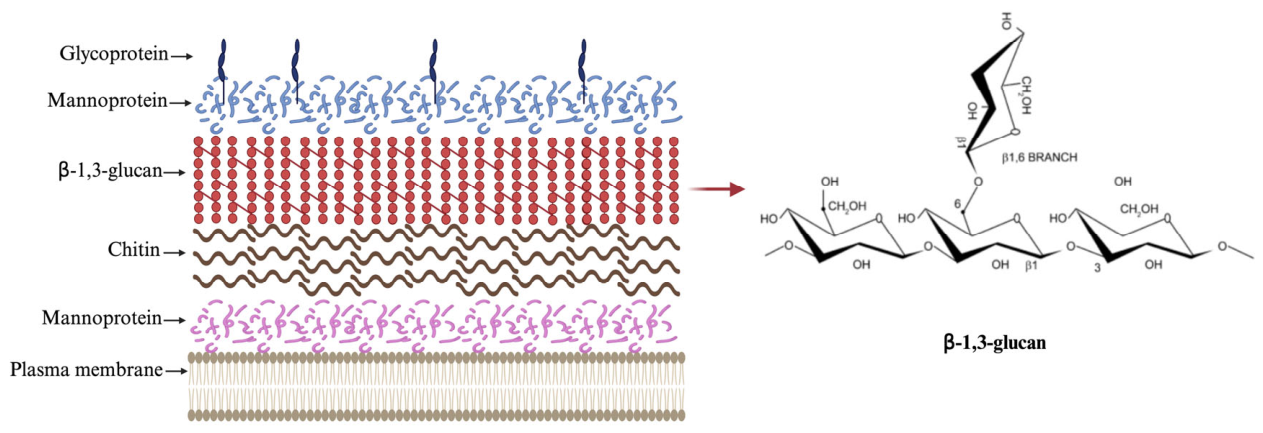
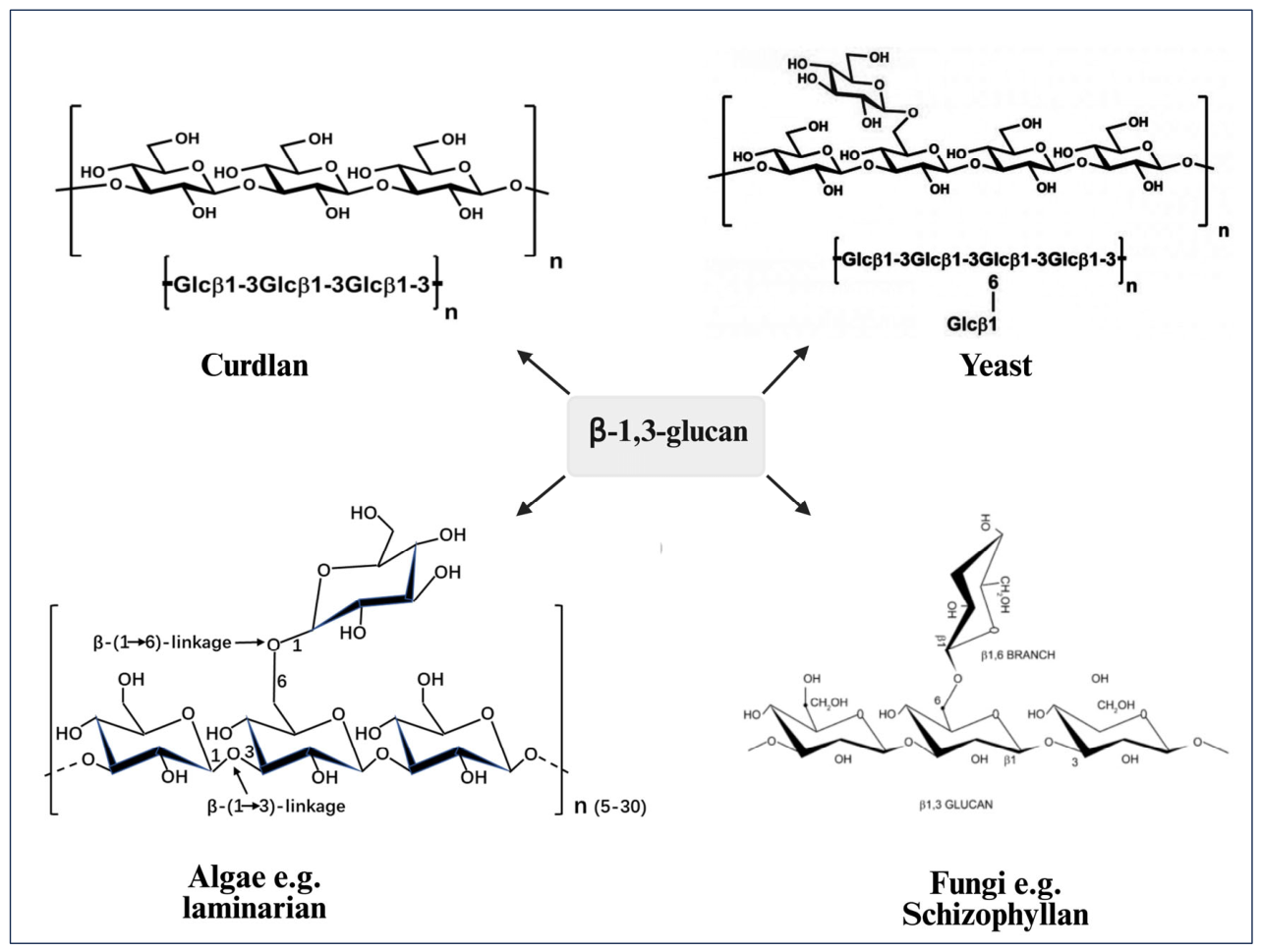
2.1. Structural Characteristics of Fungal β-1,3-glucans
2.2. Dietary Sources
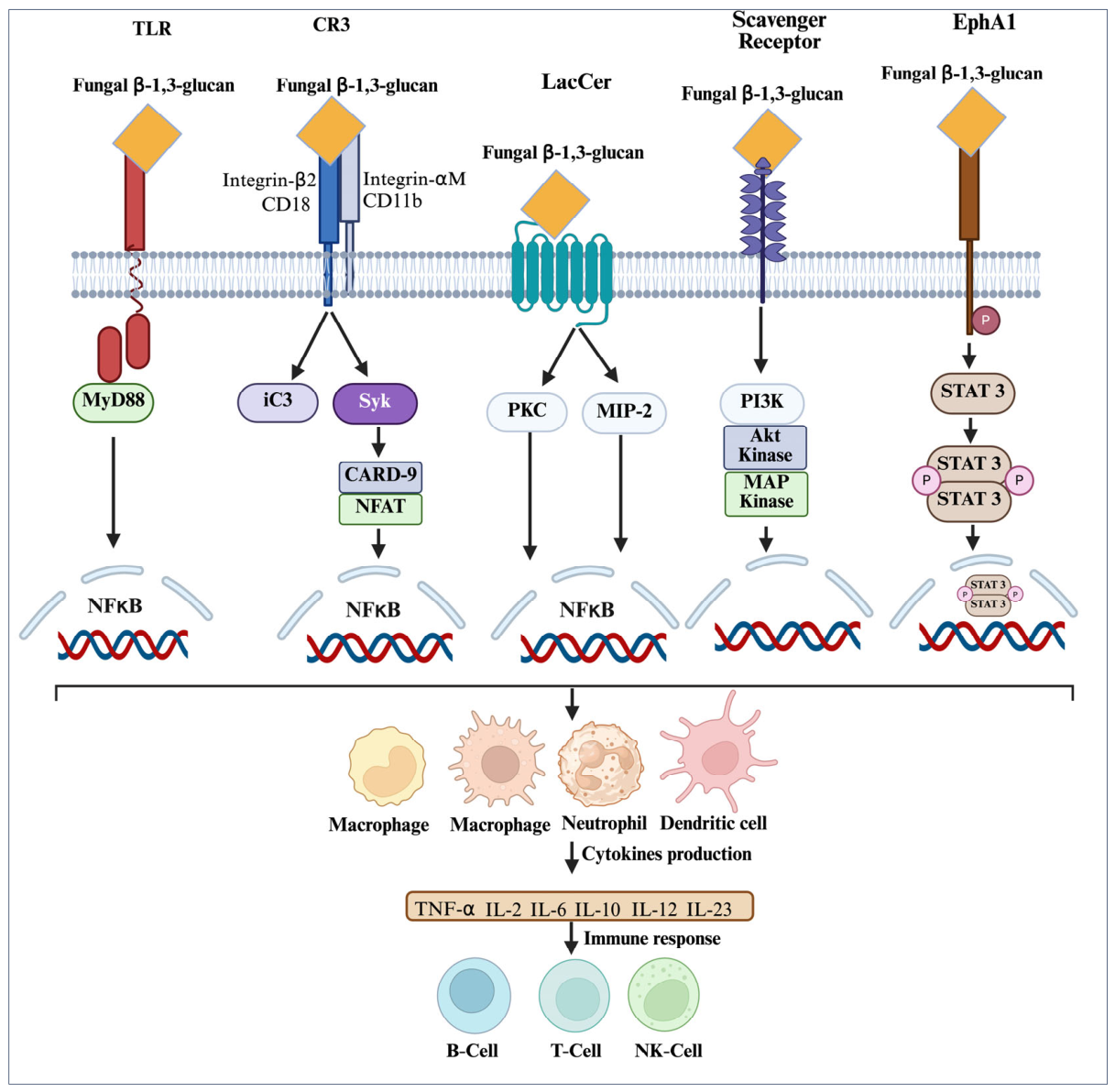
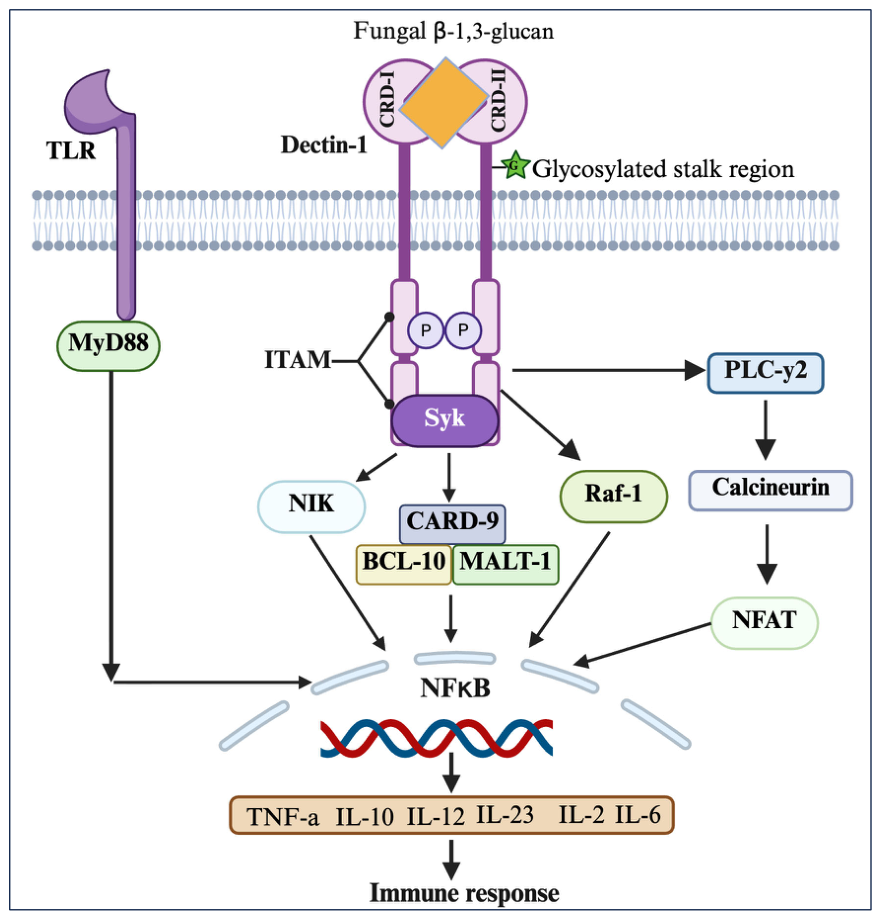
3. Immunomodulatory Effects of Fungal β-1,3-glucan
4. Functional Roles of Fungal β-glucans
4.1. Modulation of the Gut Microbiome
4.2. Epithelial Interactions
4.3. Inflammation and Oxidative Markers
4.4. Systemic Effects
4.5. Trained Immunity
4.6. Fungal β-Glucan and Gastrointestinal Tumorigenesis
4.6.1. Effect on Colorectal Cancer
4.6.2. Effect on Pancreatic Cancer
4.6.3. Effect on Gastric Cancer
4.6.4. Effect on Esophageal Cancer
5. Clinical Applications
5.1. Preclinical Applications
5.1.1. Pigs
5.1.2. Dogs
5.1.3. Horses
5.1.4. Broiler Chicken
5.1.5. Calves
5.1.6. Zebrafish
5.1.7. Models of Colitis and IBD
5.2. Therapeutic Use
5.3. Established Clinical Applications
5.3.1. Safety
5.3.2. Modulating Gut Microbiome
5.3.3. Trained Immunity
5.3.4. Stimulate Protective Immunity
5.3.5. Upper Respiratory Tract Infections

| Study | Study D1. | NCT | Participants | Source of (1→3)-β-Glucan | Dose & Duration | Clinical Indication/Disease | Primary outcome | Safety | Ref |
|---|---|---|---|---|---|---|---|---|---|
| β-D-glucan (BDG) surveillance with preemptive anidulafungin vs. standard care for invasive Candidiasis in surgical intensive care unit (SICU) patients (2008–2010) | Randomized, open-label, pilot clinical trial | NCT00672841 | 64 critically ill adult ICU patients hospitalized ≥ 3 days and at risk for invasive candidiasis | Circulating serum BDG measured using Fungitell™ assay | Twice-weekly BDG surveillance, preemptive anidulafungin initiated after ≥2 sequential BDG levels ≥ 80 pg/mL | Early detection and preemptive management of invasive candidiasis in at-risk ICU patients | Feasibility of BDG-guided preemptive antifungal therapy, ≥2 BDG levels ≥ 80 pg/mL demonstrated 100% sensitivity and 75% specificity for invasive candidiasis | Preemptive anidulafungin was safe and generally well tolerated | [208] |
| Discontinuation of empirical antifungal therapy in ICU patients using 1,3-β-D-glucan (2010–2014) | Prospective, randomized, controlled, open-label clinical trial | NCT01734525 | Critically ill adult ICU patients with suspected invasive candidiasis receiving empirical antifungal therapy | Circulating serum BDG measured serially using Fungitell® assay | Empirical antifungal therapy discontinued if BDG negative, BDG measured twice weekly during ICU stay | Suspected invasive candidiasis in critically ill ICU patients | BDG-guided strategy significantly reduced duration of empirical antifungal therapy without increasing incidence of invasive candidiasis or mortality | No significant differences in ICU mortality or development of invasive candidiasis between BDG-guided and standard-of-care groups | [209] |
| β-glucan driven vs. empirical antifungal therapy in critically Ill patients (2017–2019) | Single-center, open-label, randomized controlled clinical trial | NCT03117439 | 108 critically ill adult ICU patients with sepsis and risk factors for invasive candidiasis receiving empirical antifungal therapy | Circulating serum β-1,3-D-glucan measured serially (enrollment and every 48–72 h for up to 14 days) | Antifungal therapy discontinued if BDG negative, BDG monitored at enrollment and every 48–72 h over 14 days | Suspected invasive Candida infection in critically ill septic ICU patients | BDG-guided strategy significantly reduced duration of empirical antifungal therapy within 30 days compared with standard care | No significant difference in 30-day mortality or incidence of invasive candidiasis between BDG-guided and control groups | [210] |
| CandiSep Trial (2016–2019) | Open-label, randomized, multicenter clinical trial | NCT02734550 | 339 adult ICU patients with sepsis or septic shock at high risk for invasive Candida infection (ICI) | Circulating serum (β-1,3-D-glucan measured using Fungitell® assay (Limulus amebocyte lysate-based) | Diagnostic threshold ≥ 80 pg/mL, two measurements within 24 h | Early diagnosis and management of invasive Candida infection in sepsis | BDG-guided antifungal therapy did not reduce 28-day all-cause mortality compared with standard care, resulted in earlier and more frequent antifungal use | No major safety concerns, increased antifungal exposure without mortality benefit | [211] |
| Irreversible electroporation and β-glucan induced trained innate immunity for treatment of pancreatic ductal adenocarcinoma | Prospective Phase II trial (IRE + adjuvant oral β-glucan vs. IRE alone comparator cohort) | NCT03080974 | 50 total (30 IRE + β-glucan, 20 IRE alone), Stage III locally advanced PDA | Yeast derived particulate β-glucan (Wellmune®, from S. cerevisiae) | 500 mg orally twice daily (1000 mg/day) for 12 months or until progression | Stage III locally advanced pancreatic ductal adenocarcinoma | Median DFI of 18 months, median OS of 32.5 months, improved CD4/CD8 terminal effector phenotype correlating with survival | No dose-limiting toxicities, 96% compliance, 23% grade 3–4 AEs at 90 days (none required β-glucan dose modification), no 90-day mortality | [146] |
| Clinical trials of yeast-derived β-1,3-glucan in children: effects on innate immunity | Randomized, double-blind, placebo-controlled trial | Not reported | 56 children (originally 60 enrolled, 4 excluded), aged approximately 8–12 years, with chronic respiratory problems, placebo group (n = 27) and glucan group (n = 29) | Yeast-derived insoluble β-1,3-glucan (#300), >85% purity (Transfer Point, Columbia, SC, USA) | 100 mg/day orally for 30 days | Children with chronic respiratory problems, evaluation of nonspecific (innate) mucosal immunity | Changes in salivary markers of innate immunity and inflammation (albumin, lysozyme, C-reactive protein [CRP], calprotectin), significant reduction in albumin and calprotectin levels, significant modulation of lysozyme, CRP changes not statistically significant | No adverse effects reported, treatment was well tolerated under medical supervision | [212] |
| Randomized, double-blind pilot study examining yeast β-glucan supplementation on antibody titer response following influenza vaccination in older adults | Randomized, double-blind, placebo-controlled pilot trial (1:1 allocation) | Not reported | 78 randomized participants (β-glucan n = 38, placebo n = 40), adults aged 50–89 years | Yeast-derived insoluble β-1,3/1,6-glucan (manufacturer: Lallemand Inc.) | 500 mg/day orally, supplementation included a 2-week pre-vaccination period and continued until 28 days post-vaccination | Immune response to seasonal influenza vaccination in generally healthy older adults (>50 years) | Mean change in Influenza A hemagglutination inhibition (HI) antibody titer from baseline to 28 days post-vaccination, β-glucan group showed significantly higher Influenza A antibody titer compared to placebo in Season 1 (p = 0.037) | No unexpected adverse events reported, few isolated fever cases (1 during β-glucan intervention, 1 during placebo, 1 at baseline), no differences in fatigue, cold/flu symptoms, or serious adverse events between groups | [207] |
| Effects of low-to-moderate dose yeast β-glucan (YBG) supplementation on upper respiratory symptoms and mood in moderately stressed adults | 12-week randomized, double-blind, placebo-controlled trial | ISRCTN 48336189 | 198 moderately stressed adults (PSS-10: 14–26), 190 completed (Placebo n = 65, 120 mg n = 62, 204 mg n = 63), mean BMI 24.2 ± 5.5 kg/m2 | Yeast-derived β-(1,3/1,6)-glucan from S. cerevisiae | 120 mg/day or 204 mg/day orally for 12 weeks | Upper respiratory tract infection (URTI) symptom severity in moderately stressed adults, mood and fatigue assessment | Change in WURSS-21 total severity score at week 12, both doses significantly reduced URTI severity vs. placebo (p = 0.002 and p < 0.001), only 204 mg exceeded minimal clinically important difference (MCID = 6.5), mood states significantly improved (p < 0.001) | No serious adverse events, no treatment related adverse events, biochemical markers remained within normal ranges, minor transient symptoms (GI discomfort, headache) not treatment-related | [213] |
| Effects of Yeast β-glucan Supplementation on Upper Respiratory Tract Infections in Older Adults (2013–2015) | Randomized, double-blind, placebo-controlled clinical trial | Not reported | Healthy adults aged 50–70 years (n = 100) | Yeast-derived β-1,3/1,6-glucan (Wellmune®, S. cerevisiae) | 250 mg orally once daily for 90 days during winter months | Prevention of upper respiratory tract infections in older adults | Incidence and severity of URTI symptoms, β-glucan group showed reduced URTI symptom severity and improved immune response markers | Well tolerated, no significant adverse effects compared with placebo | [203] |
| Yeast (1,3)-(1,6)-β-glucan supplementation for immune defense in healthy adults (2009–2011) | Randomized, double-blind, placebo-controlled multicenter clinical trial | Not reported | 162 healthy adults with recurrent infections | Insoluble yeast-derived β-(1,3)/(1,6)-D-glucan | 900 mg/day orally for 16 weeks | Prevention of common cold infections / immune support | β-glucan supplementation reduced symptomatic common cold infections by ~25% vs. placebo | Well tolerated, no major safety concerns reported | [199] |
| Effects of orally administered β-glucan on innate immune responses in humans (2013) | Randomized open-label intervention pilot study | NCT01727895 | 15 healthy male volunteers | Oral commercially available water-insoluble β-glucan (yeast-derived) | 1000 mg orally once daily for 7 days | Evaluation of β-glucan effects on innate immune responses in healthy humans | No significant effect on cytokine production or leukocyte microbicidal activity after supplementation | Well tolerated, no major adverse effects reported | [214] |
6. Limitations, Controversies and Future Directions
Author Contributions
Funding
Institutional Review Board Statement
Informed Consent Statement
Data Availability Statement
Conflicts of Interest
Abbreviations
| 3-MA | 3-Methyladenine |
| ASC | Apoptosis-Associated Speck-Like Protein Containing A CARD (Caspase Recruitment Domain) |
| ASD | Autism Spectrum Disorder |
| BALB/c | Bagg Albino Strain C |
| Bcl10 | B-Cell Lymphoma/Leukemia |
| BDG | Serum β-1,3-Glucan |
| BDNF | Brain-Derived Neurotrophic Factor |
| BNCT | Boron Neutron Capture Therapy |
| BYG | Baker’s Yeast β-Glucan |
| CARD9 | Caspase Recruitment Domain-Containing Protein 9 |
| CAT | Catalase |
| CCL2 | Chemokine (C-C motif) ligand 2 |
| CCR2 | C-C Chemokine Receptor Type 2 |
| CD5 | Cluster Of Differentiation 5 |
| CG | Chitin–Glucan |
| CLP | Cecal Ligation And Puncture |
| COX-2 | Cyclooxygenase-2 |
| CQ | Chloroquine |
| CR3 | Complement Receptor 3 |
| CVD | Cardiovascular Disease |
| CXCL8 | Chemokine (CXC Motif) Ligand 8 |
| DNA | Deoxyribonucleic Acid |
| DSS | Dextran Sulfate Sodium |
| EphA2 | Erythropoietin-Producing Hepatocellular |
| ERK MAP | Extracellular Signal-Regulated Kinase Mitogen-Activated Protein |
| FDA | Food And Drug Administration |
| GALT | Gut-Associated Lymphoid Tissue |
| GBM | Glioblastoma |
| GD2/GD3 | Disialoganglioside GD2 / Disialoganglioside GD3 |
| GEM | Gemcitabine |
| GLP-1 | Glucagon-Like Peptide-1 |
| GM-CSF | Granulocyte–Macrophage Colony-Stimulating Factor |
| GPX1 | Glutathione Peroxidase |
| grifolan-LE | Grifolan (Lentinan-Like)—LE Variant |
| HDL | High-Density Lipoprotein |
| hemITAM | Hem Immunoreceptor Tyrosine-Based Activation Motif |
| HepG2 | Human Hepatocellular Carcinoma Cell Line |
| IBD | Inflammatory Bowel Disease |
| IDO1 | Indoleamine 2,3-Dioxygenase 1 |
| IFIs | Fungal Infections |
| IFN-γ | Interferon-Gamma |
| IL | Interleukin |
| Imprime PGG | Imprime PGG (Poly-1,6-Β-D-Glucopyranosyl-Β-1,3-D-Glucopyranose) |
| iNOS | Inducible Nitric Oxide Synthase |
| IRE | Irreversible Electroporation |
| ITAM | Immunoreceptor Tyrosine-Based Activation Motif |
| JAM-1 | Junctional Adhesion Molecule-1 |
| LacCer | Lactosylceramide |
| LNT | Lentinus Edodes β-Glucan |
| LPS | Lipopolysaccharide |
| Malt1 | Mucosa-Associated Lymphoid Tissue Lymphoma Translocation Protein 1 |
| MAP | Mitogen-Activated Protein |
| MAPK–Elk-1 | Mitogen-Activated Protein Kinase—Elk-1 |
| MAPK–PPARγ | Mitogen-Activated Protein Kinase—Peroxisome Proliferator-Activated Receptor Gamma |
| MARCO | Macrophage Receptor With Collagenous Structure |
| MDA | Malondialdehyde |
| MDSCs | Myeloid-Derived Suppressor Cells |
| MHC-II | Major Histocompatibility Complex Class II |
| MIP-2 | Macrophage Inflammatory Protein-2 |
| MPO | Myeloperoxidase |
| mTOR | Mechanistic (Or Mammalian) Target Of Rapamycin |
| MyD88 | Mal Adaptor Complex |
| NF-κB | Nuclear Factor Kappa-Light-Chain-Enhancer Of Activated B Cells |
| NFAT | Nuclear Factor Of Activated T Cells |
| NK cells | Natural Killer Cells |
| NLR | Neutrophil-To-Lymphocyte Ratio |
| NLRP3 | NOD-, LRR- And Pyrin Domain-Containing Protein 3 |
| NMR | Nuclear Magnetic Resonance |
| NO | Nitric Oxide |
| NSG mouse | NOD Scid Gamma Mouse |
| OVX | Ovariectomized |
| p-Akt | Phosphorylated Akt (Protein Kinase B) |
| PAMPs | Pathogen-Associated Molecular Patterns |
| PBMCs | Peripheral Blood Mononuclear Cells |
| PD-L1 | Programmed Death-Ligand 1 (CD274) |
| PDAC | Pancreatic Ductal Adenocarcinoma |
| PEG2 | Prostaglandin E2 |
| PI3K | Phosphoinositide 3-Kinase |
| PKC | Protein Kinase C |
| PRRs | Pattern-Recognition Receptors |
| PSA | Prostate-Specific Antigen |
| RA | Rheumatoid Arthritis |
| RANTES | Regulated Upon Activation, Normal T Cell Expressed And Secreted |
| RAW264.7 | Murine Macrophage Cell Line RAW 264.7 |
| Rho GTPases | Ras Homolog Family Small Gtpases |
| ROS | Reactive Oxygen Species |
| RTK | Receptor Tyrosine Kinase |
| SCFAs | Short-Chain Fatty Acids |
| SDL | Superfine Dispersed Lentinan |
| SOD1 | Superoxide Dismutase |
| SOX | A Standard Chemotherapy Regimen Consisting Of S-1 And Oxaliplatin |
| SR-A/CD204 | Scavenger Receptor Class A / Cluster Of Differentiation 204 |
| SRCD5CAR-NK | Shorthand For Chimeric Antigen Receptor (CAR) Natural Killer Cells Targeting SR-C/D5 |
| SRs | Scavenger Receptors |
| STAT1 | Signal Transducer And Activator Of Transcription 1 |
| STAT3 | Signal Transducer And Activator Of Transcription 3 |
| Syk | Spleen Tyrosine Kinase |
| TGF-β | Transforming Growth Factor-β |
| TLRs | Toll-Like Receptors |
| TNBC | Triple-Negative Breast Cancer |
| TNF | Tumor Necrosis Factor |
| Tregs | Regulatory T Cells |
| Vav1 | Vav Guanine Nucleotide Exchange Factor 1 |
| VLDL | Very-Low-Density Lipoprotein |
| ZO | Zonula Occludens |
References
- Synytsya, A.; Novak, M. Structural diversity of fungal glucans. Carbohydr. Polym. 2013, 92, 792–809. [Google Scholar] [CrossRef]
- Synytsya, A.; Novak, M. Structural analysis of glucans. Ann. Transl. Med. 2014, 2, 17. [Google Scholar] [CrossRef] [PubMed]
- Garcia-Rubio, R.; de Oliveira, H.C.; Rivera, J.; Trevijano-Contador, N. The Fungal Cell Wall: Candida, Cryptococcus, and Aspergillus Species. Front. Microbiol. 2019, 10, 2993. [Google Scholar] [CrossRef] [PubMed]
- Perez, P.; Cortes, J.C.G.; Cansado, J.; Ribas, J.C. Fission yeast cell wall biosynthesis and cell integrity signalling. Cell Surf. 2018, 4, 1–9. [Google Scholar] [CrossRef] [PubMed]
- Ruiz-Herrera, J.; Ortiz-Castellanos, L. Cell wall glucans of fungi. A review. Cell Surf. 2019, 5, 100022. [Google Scholar] [CrossRef]
- Camilli, G.; Tabouret, G.; Quintin, J. The Complexity of Fungal beta-Glucan in Health and Disease: Effects on the Mononuclear Phagocyte System. Front. Immunol. 2018, 9, 673. [Google Scholar] [CrossRef]
- Geller, A.; Shrestha, R.; Yan, J. Yeast-Derived beta-Glucan in Cancer: Novel Uses of a Traditional Therapeutic. Int. J. Mol. Sci. 2019, 20, 3618. [Google Scholar] [CrossRef]
- Lull, C.; Wichers, H.J.; Savelkoul, H.F. Antiinflammatory and immunomodulating properties of fungal metabolites. Mediat. Inflamm. 2005, 2005, 63–80. [Google Scholar] [CrossRef]
- Rop, O.; Mlcek, J.; Jurikova, T. Beta-glucans in higher fungi and their health effects. Nutr. Rev. 2009, 67, 624–631. [Google Scholar] [CrossRef]
- Zlotko, K.; Wiater, A.; Wasko, A.; Pleszczynska, M.; Paduch, R.; Jaroszuk-Scisel, J.; Bieganowski, A. Report on Fungal (1→3)-α-D-glucans: Properties, Functions and Application. Molecules 2019, 24, 3972. [Google Scholar] [CrossRef]
- Zhong, X.; Wang, G.; Li, F.; Fang, S.; Zhou, S.; Ishiwata, A.; Tonevitsky, A.G.; Shkurnikov, M.; Cai, H.; Ding, F. Immunomodulatory Effect and Biological Significance of beta-Glucans. Pharmaceutics 2023, 15, 1615. [Google Scholar] [CrossRef] [PubMed]
- Liang, L.; Liu, L.; Zhou, W.; Yang, C.; Mai, G.; Li, H.; Chen, Y. Gut microbiota-derived butyrate regulates gut mucus barrier repair by activating the macrophage/WNT/ERK signaling pathway. Clin. Sci. 2022, 136, 291–307. [Google Scholar] [CrossRef]
- Wang, H.; Chen, G.; Li, X.; Zheng, F.; Zeng, X. Yeast β-glucan, a potential prebiotic, showed a similar pro-biotic activity to inulin. Food Funct. 2020, 11, 10386–10396. [Google Scholar] [CrossRef] [PubMed]
- Bowman, S.M.; Free, S.J. The structure and synthesis of the fungal cell wall. Bioessays 2006, 28, 799–808. [Google Scholar] [CrossRef]
- Aimanianda, V.; Simenel, C.; Garnaud, C.; Clavaud, C.; Tada, R.; Barbin, L.; Mouyna, I.; Heddergott, C.; Popolo, L.; Ohya, Y.; et al. The Dual Activity Responsible for the Elongation and Branching of beta-(1,3)-Glucan in the Fungal Cell Wall. mBio 2017, 8, e00619-17. [Google Scholar] [CrossRef] [PubMed]
- Ensley, H.E.; Tobias, B.; Pretus, H.A.; McNamee, R.B.; Jones, E.L.; Browder, I.W.; Williams, D.L. NMR spectral analysis of a water-insoluble (1-->3)-beta-D-glucan isolated from Saccharomyces cerevisiae. Carbohydr. Res. 1994, 258, 307–311. [Google Scholar] [CrossRef] [PubMed]
- Lesage, G.; Bussey, H. Cell wall assembly in Saccharomyces cerevisiae. Microbiol. Mol. Biol. Rev. 2006, 70, 317–343. [Google Scholar] [CrossRef]
- Lowman, D.W.; West, L.J.; Bearden, D.W.; Wempe, M.F.; Power, T.D.; Ensley, H.E.; Haynes, K.; Williams, D.L.; Kruppa, M.D. New insights into the structure of (1-->3,1-->6)-beta-D-glucan side chains in the Candida glabrata cell wall. PLoS ONE 2011, 6, e27614. [Google Scholar] [CrossRef]
- Tada, R.; Adachi, Y.; Ishibashi, K.; Ohno, N. An unambiguous structural elucidation of a 1,3-beta-D-glucan obtained from liquid-cultured Grifola frondosa by solution NMR experiments. Carbohydr. Res. 2009, 344, 400–404. [Google Scholar] [CrossRef]
- Manabe, N.; Yamaguchi, Y. 3D Structural Insights into beta-Glucans and Their Binding Proteins. Int. J. Mol. Sci. 2021, 22, 1578. [Google Scholar] [CrossRef]
- Batbayar, S.; Lee, D.H.; Kim, H.W. Immunomodulation of Fungal beta-Glucan in Host Defense Signaling by Dectin-1. Biomol. Ther. 2012, 20, 433–445. [Google Scholar] [CrossRef]
- Mata-Martinez, P.; Bergon-Gutierrez, M.; Del Fresno, C. Dectin-1 Signaling Update: New Perspectives for Trained Immunity. Front. Immunol. 2022, 13, 812148. [Google Scholar] [CrossRef]
- Jayachandran, M.; Chen, J.; Chung, S.S.M.; Xu, B. A critical review on the impacts of beta-glucans on gut microbiota and human health. J. Nutr. Biochem. 2018, 61, 101–110. [Google Scholar] [CrossRef]
- Palleschi, A.; Bocchinfuso, G.; Coviello, T.; Alhaique, F. Molecular dynamics investigations of the polysaccharide scleroglucan: First study on the triple helix structure. Carbohydr. Res. 2005, 340, 2154–2162. [Google Scholar] [CrossRef]
- Amirinia, F.; Jabrodini, A.; Morovati, H.; Ardi, P.; Motamedi, M. Fungal beta-Glucans: Biological Properties, Immunomodulatory Effects, Diagnostic and Therapeutic Applications. Infect. Dis. Clin. Microbiol. 2025, 7, 1–16. [Google Scholar] [CrossRef]
- Bergendiova, K.; Tibenska, E.; Majtan, J. Pleuran (β-glucan from Pleurotus ostreatus) supplementation, cellular immune response and respiratory tract infections in athletes. Eur. J. Appl. Physiol. 2011, 111, 2033–2040. [Google Scholar] [CrossRef] [PubMed]
- Jesenak, M.; Hrubisko, M.; Chudek, J.; Bystron, J.; Rennerova, Z.; Diamant, Z.; Majtan, J.; Emeryk, A. Beneficial effects of pleuran on asthma control and respiratory tract-infection frequency in children with perennial asthma. Sci. Rep. 2025, 15, 7146. [Google Scholar] [CrossRef] [PubMed]
- Jesenak, M.; Prokopova, E.; Bozensky, J.; Bonaci-Nikolic, B.; Milosevic, K.; Stankovic, K.; Ostojic, O.; Zivkovic, Z.; Diamant, Z.; Kunc, P.; et al. Novel Chewable Pleuran-Based Supplement Decreases Respiratory Tract Infections in Children: A Randomised Controlled Trial. Adv. Ther. 2025, 42, 6132–6149. [Google Scholar] [CrossRef]
- Rennerova, Z.; Pico Sirvent, L.; Carvajal Roca, E.; Pasnik, J.; Logar, M.; Milosevic, K.; Majtan, J.; Jesenak, M. Beta-(1,3/1,6)-D-glucan from Pleurotus ostreatus in the prevention of recurrent respiratory tract infections: An international, multicentre, open-label, prospective study. Front. Pediatr. 2022, 10, 999701. [Google Scholar] [CrossRef]
- Wzorek-Lyczko, K.; Piwowarczyk, A.; Wozniak, W.; Kuchar, E.; Szymanski, H. A randomised trial of pleuran in paediatric acute gastroenteritis. Sci. Rep. 2025, 15, 16912. [Google Scholar] [CrossRef] [PubMed]
- Ina, K.; Kataoka, T.; Ando, T. The use of lentinan for treating gastric cancer. Anticancer. Agents Med. Chem. 2013, 13, 681–688. [Google Scholar] [CrossRef]
- Sun, M.; Bu, R.; Zhang, B.; Cao, Y.; Liu, C.; Zhao, W. Lentinan Inhibits Tumor Progression by Immunomodulation in a Mouse Model of Bladder Cancer. Integr. Cancer Ther. 2020, 19, 1534735420946823. [Google Scholar] [CrossRef] [PubMed]
- Zhou, G.; Liu, H.; Yuan, Y.; Wang, Q.; Wang, L.; Wu, J. Lentinan progress in inflammatory diseases and tumor diseases. Eur. J. Med. Res. 2024, 29, 8. [Google Scholar] [CrossRef]
- Zhou, S.; Sun, H. Prognostic model for gastric cancer patients with COVID-19 and network pharmacology study on treatment by lentinan. Sci. Rep. 2024, 14, 24645. [Google Scholar] [CrossRef]
- Mansour, A.; Daba, A.; Baddour, N.; El-Saadani, M.; Aleem, E. Schizophyllan inhibits the development of mammary and hepatic carcinomas induced by 7,12 dimethylbenz(α)anthracene and decreases cell proliferation: Comparison with tamoxifen. J. Cancer Res. Clin. 2012, 138, 1579–1596. [Google Scholar] [CrossRef] [PubMed]
- Nakano, T.; Oka, K.; Hanba, K.; Morita, S. Intratumoral administration of sizofiran activates langerhans cell and T-cell infiltration in cervical cancer. Clin. Immunol. Immunopathol. 1996, 79, 79–86. [Google Scholar] [CrossRef] [PubMed]
- Zhong, K.; Tong, L.T.; Liu, L.; Zhou, X.R.; Liu, X.X.; Zhang, Q.; Zhou, S.M. Immunoregulatory and antitumor activity of schizophyllan under ultrasonic treatment. Int. J. Biol. Macromol. 2015, 80, 302–308. [Google Scholar] [CrossRef]
- Chen, S.N.; Nan, F.H.; Liu, M.W.; Yang, M.F.; Chang, Y.C.; Chen, S. Evaluation of Immune Modulation by β-1,3; 1,6 D-Glucan Derived from in Healthy Adult Volunteers, A Randomized Controlled Trial. Foods 2023, 12, 659. [Google Scholar] [CrossRef]
- Ekiz, E.; Oz, E.; Abd El-Aty, A.M.; Proestos, C.; Brennan, C.; Zeng, M.M.; Tomasevic, I.; Elobeid, T.; Çadirci, K.; Bayrak, M.; et al. Exploring the Potential Medicinal Benefits of From Metabolic Disorders to Coronavirus Infections. Foods 2023, 12, 1512. [Google Scholar] [CrossRef]
- Gao, X.L.; Homayoonfal, M. Exploring the anti-cancer potential of polysaccharides (GLPs) and their versatile role in enhancing drug delivery systems: A multifaceted approach to combat cancer. Cancer Cell Int. 2023, 23, 324. [Google Scholar] [CrossRef]
- Hsieh, C.Y.; Yang, H.S.; Hsu, C.P.; Chang, J.F.; Lin, C.C. Exploring the Potential Health Benefits of Polysaccharides Produced Using an Innovative Metabolic Synthesis Technique. Nat. Prod. Commun. 2025, 20, 1–8. [Google Scholar] [CrossRef]
- Habtemariam, S. Trametes versicolor (Synn. Coriolus versicolor) Polysaccharides in Cancer Therapy: Targets and Efficacy. Biomedicines 2020, 8, 135. [Google Scholar] [CrossRef] [PubMed]
- Nakazato, H.; Koike, A.; Saji, S.; Ogawa, N.; Sakamoto, J. Efficacy of Immunochemotherapy as Adjuvant Treatment after Curative Resection of Gastric-Cancer. Lancet 1994, 343, 1122–1126. [Google Scholar] [CrossRef] [PubMed]
- Oba, K.; Teramukai, S.; Kobayashi, M.; Matsui, T.; Kodera, Y.; Sakamoto, J. Efficacy of adjuvant immunochemotherapy with polysaccharide K for patients with curative resections of gastric cancer. Cancer Immunol. Immun. 2007, 56, 905–911. [Google Scholar] [CrossRef] [PubMed]
- Price, L.A.; Wenner, C.A.; Sloper, D.T.; Slaton, J.W.; Novack, J.P. Role for toll-like receptor 4 in TNF-alpha secretion by murine macrophages in response to polysaccharide Krestin, a mushroom extract. Fitoterapia 2010, 81, 914–919. [Google Scholar] [CrossRef]
- Toge, T.; Yamaguchi, Y. Protein-bound polysaccharide increases survival in resected gastric cancer cases stratified with a preoperative granulocyte and lymphocyte count. Oncol. Rep. 2000, 7, 1157–1161. [Google Scholar] [CrossRef]
- Fang, J.; Wang, Y.; Lv, X.; Shen, X.; Ni, X.; Ding, K. Structure of a beta-glucan from Grifola frondosa and its antitumor effect by activating Dectin-1/Syk/NF-kappaB signaling. Glycoconj. J. 2012, 29, 365–377. [Google Scholar] [CrossRef]
- Ma, L.L.; Lin, X.L.; Liang, M.; Long, J.Y.; Qu, X.; Yu, Y.; Zhou, Y.F.; Cheng, H.R. Effect of polysaccharide on immune function and gut microbiota in mice. Acupunct. Herb. Med. 2025, 5, 68–75. [Google Scholar] [CrossRef]
- Mao, G.H.; Ren, Y.; Feng, W.W.; Li, Q.; Wu, H.Y.; Jin, D.; Zhao, T.; Xu, C.Q.; Yang, L.Q.; Wu, X.Y. Antitumor and immunomodulatory activity of a water-soluble polysaccharide from. Carbohydr. Polym. 2015, 134, 406–412. [Google Scholar] [CrossRef]
- Masuda, Y.; Togo, T.; Mizuno, S.; Konishi, M.; Nanba, H. Soluble β-glucan from induces proliferation and Dectin-1/Syk signaling in resident macrophages via the GM-CSF autocrine pathway. J. Leukoc. Biol. 2012, 91, 547–556. [Google Scholar] [CrossRef]
- Chen, C.C.; Tang, C.T.; Lai, C.Y.; Han, C.K.; Cheng, Y.H.; Lin, Y.F.; Lin, C.T.; Huang, Y.L. In Vitro Assessment of the Antioxidant and Anticancer Properties of Flammulina velutipes Stipe Extracts. Anticancer Res. 2023, 43, 3057–3067. [Google Scholar] [CrossRef]
- Liang, Q.X.; Zhao, Q.C.; Hao, X.T.; Wang, J.M.; Ma, C.Y.; Xi, X.F.; Kang, W.Y. The Effect of Polysaccharide on Immunization Analyzed by Intestinal Flora and Proteomics. Front. Nutr. 2022, 9, 841230. [Google Scholar] [CrossRef] [PubMed]
- Wu, M.; Luo, X.; Xu, X.Y.; Wei, W.; Yu, M.Y.; Jiang, N.; Ye, L.M.; Yang, Z.R.; Fei, X.F. Antioxidant and immunomodulatory activities of a polysaccharide from Flammulina velutipes. J. Tradit. Chin. Med. 2014, 34, 733–740. [Google Scholar] [CrossRef] [PubMed]
- Chihara, G.; Hamuro, J.; Maeda, Y.; Arai, Y.; Fukuoka, F. Antitumour Polysaccharide Derived Chemically from Natural Glucan (Pachyman). Nature 1970, 225, 943–944. [Google Scholar] [CrossRef]
- Liu, F.; Zhang, L.J.; Feng, X.; Ibrahim, S.A.; Huang, W.; Liu, Y. Immunomodulatory Activity of Carboxymethyl Pachymaran on Immunosuppressed Mice Induced by Cyclophosphamide. Molecules 2021, 26, 5733. [Google Scholar] [CrossRef]
- Zhang, Z.J.; Yang, Y.; Hu, C.J.; Zhang, Z.Q. Effect of pachymaran on oxidative stress and DNA damage induced by formaldehyde. Sci. Rep. 2023, 13, 17465. [Google Scholar] [CrossRef] [PubMed]
- Zhao, Y.L.; Feng, X.; Zhang, L.J.; Huang, W.; Liu, Y. Antitumor Activity of Carboxymethyl Pachymaran with Different Molecular Weights Based on Immunomodulatory and Gut Microbiota. Nutrients 2023, 15, 4527. [Google Scholar] [CrossRef]
- He, Y.L.; Li, X.L.; Hao, C.; Zeng, P.J.; Zhang, M.; Liu, Y.; Chang, Y.J.; Zhang, L.J. Polysaccharide: A Review of Antitumor and Other Biological Activity Studies in China. Discov. Med. 2018, 25, 159–176. [Google Scholar]
- Konno, S. Synergistic potentiation of D-fraction with vitamin C as possible alternative approach for cancer therapy. Int. J. Gen. Med. 2009, 2, 91–108. [Google Scholar] [CrossRef]
- Lin, H.; She, Y.H.; Cassileth, B.R.; Sirotnak, F.; Rundles, S.C. Maitake beta-glucan MD-fraction enhances bone marrow colony formation and reduces doxorubicin toxicity in vitro. Int. Immunopharmacol. 2004, 4, 91–99. [Google Scholar] [CrossRef]
- Misaki, A.; Kawaguchi, K.; Miyaji, H.; Nagae, H.; Hokkoku, S.; Kakuta, M.; Sasaki, T. Structure of Pestalotan, a Highly Branched (1→3)-β-d-Glucan Elaborated by Pestalotia sp. 815, and the Enhancement of Its Antitumor Activity by Polyol Modification of the Side Chains. Carbohydr. Res. 1984, 129, 209–227. [Google Scholar] [CrossRef] [PubMed]
- Vetvicka, V.; Teplyakova, T.; Shintyapina, A.B.; Korolenko, T.A. Effects of Medicinal Fungi-Derived β-Glucan on Tumor Progression. J. Fungi 2021, 7, 250. [Google Scholar] [CrossRef]
- Wang, H.X.; Liu, W.K.; Ng, T.B.; Ooi, V.E.C.; Chang, S.T. Immunomodulatory and Antitumor Activities of a Polysaccharide-Peptide Complex from a Mycelial Culture of Tricholoma Sp, a Local Edible Mushroom. Life Sci. 1995, 57, 269–281. [Google Scholar] [CrossRef] [PubMed]
- van Steenwijk, H.P.; Bast, A.; de Boer, A. Immunomodulating Effects of Fungal Beta-Glucans: From Traditional Use to Medicine. Nutrients 2021, 13, 1333. [Google Scholar] [CrossRef]
- Camilli, G.; Eren, E.; Williams, D.L.; Aimanianda, V.; Meunier, E.; Quintin, J. Impaired phagocytosis directs human monocyte activation in response to fungal derived beta-glucan particles. Eur. J. Immunol. 2018, 48, 757–770. [Google Scholar] [CrossRef]
- Kankkunen, P.; Teirila, L.; Rintahaka, J.; Alenius, H.; Wolff, H.; Matikainen, S. (1,3)-beta-glucans activate both dectin-1 and NLRP3 inflammasome in human macrophages. J. Immunol. 2010, 184, 6335–6342. [Google Scholar] [CrossRef] [PubMed]
- Taylor, P.R.; Tsoni, S.V.; Willment, J.A.; Dennehy, K.M.; Rosas, M.; Findon, H.; Haynes, K.; Steele, C.; Botto, M.; Gordon, S.; et al. Dectin-1 is required for beta-glucan recognition and control of fungal infection. Nat. Immunol. 2007, 8, 31–38. [Google Scholar] [CrossRef]
- Lee, D.H.; Kim, H.W. Innate immunity induced by fungal beta-glucans via dectin-1 signaling pathway. Int. J. Med. Mushrooms 2014, 16, 1–16. [Google Scholar] [CrossRef]
- Ferwerda, G.; Meyer-Wentrup, F.; Kullberg, B.J.; Netea, M.G.; Adema, G.J. Dectin-1 synergizes with TLR2 and TLR4 for cytokine production in human primary monocytes and macrophages. Cell Microbiol. 2008, 10, 2058–2066. [Google Scholar] [CrossRef]
- Goodridge, H.S.; Underhill, D.M. Fungal Recognition by TLR2 and Dectin-1. Handb. Exp. Pharmacol. 2008, 2008, 87–109. [Google Scholar] [CrossRef]
- Li, X.; He, Y.; Zeng, P.; Liu, Y.; Zhang, M.; Hao, C.; Wang, H.; Lv, Z.; Zhang, L. Molecular basis for Poria cocos mushroom polysaccharide used as an antitumour drug in China. J. Cell Mol. Med. 2019, 23, 4–20. [Google Scholar] [CrossRef]
- Carvalho, A.; Giovannini, G.; De Luca, A.; D’Angelo, C.; Casagrande, A.; Iannitti, R.G.; Ricci, G.; Cunha, C.; Romani, L. Dectin-1 isoforms contribute to distinct Th1/Th17 cell activation in mucosal candidiasis. Cell Mol. Immunol. 2012, 9, 276–286. [Google Scholar] [CrossRef] [PubMed]
- Gerosa, F.; Baldani-Guerra, B.; Lyakh, L.A.; Batoni, G.; Esin, S.; Winkler-Pickett, R.T.; Consolaro, M.R.; De Marchi, M.; Giachino, D.; Robbiano, A.; et al. Differential regulation of interleukin 12 and interleukin 23 production in human dendritic cells. J. Exp. Med. 2008, 205, 1447–1461. [Google Scholar] [CrossRef]
- Gringhuis, S.I.; Kaptein, T.M.; Remmerswaal, E.B.M.; Drewniak, A.; Wevers, B.A.; Theelen, B.; D’Haens, G.; Boekhout, T.; Geijtenbeek, T.B.H. Fungal sensing by dectin-1 directs the non-pathogenic polarization of T(H)17 cells through balanced type I IFN responses in human DCs. Nat. Immunol. 2022, 23, 1735–1748. [Google Scholar] [CrossRef]
- LeibundGut-Landmann, S.; Gross, O.; Robinson, M.J.; Osorio, F.; Slack, E.C.; Tsoni, S.V.; Schweighoffer, E.; Tybulewicz, V.; Brown, G.D.; Ruland, J.; et al. Syk- and CARD9-dependent coupling of innate immunity to the induction of T helper cells that produce interleukin 17. Nat. Immunol. 2007, 8, 630–638. [Google Scholar] [CrossRef]
- Drummond, R.A.; Brown, G.D. Signalling C-type lectins in antimicrobial immunity. PLoS Pathog. 2013, 9, e1003417. [Google Scholar] [CrossRef] [PubMed]
- Thwe, P.M.; Fritz, D.I.; Snyder, J.P.; Smith, P.R.; Curtis, K.D.; O’Donnell, A.; Galasso, N.A.; Sepaniac, L.A.; Adamik, B.J.; Hoyt, L.R.; et al. Syk-dependent glycolytic reprogramming in dendritic cells regulates IL-1beta production to beta-glucan ligands in a TLR-independent manner. J. Leukoc. Biol. 2019, 106, 1325–1335. [Google Scholar] [CrossRef]
- Robinson, M.J.; Osorio, F.; Rosas, M.; Freitas, R.P.; Schweighoffer, E.; Gross, O.; Verbeek, J.S.; Ruland, J.; Tybulewicz, V.; Brown, G.D.; et al. Dectin-2 is a Syk-coupled pattern recognition receptor crucial for Th17 responses to fungal infection. J. Exp. Med. 2009, 206, 2037–2051. [Google Scholar] [CrossRef]
- Rogers, N.C.; Slack, E.C.; Edwards, A.D.; Nolte, M.A.; Schulz, O.; Schweighoffer, E.; Williams, D.L.; Gordon, S.; Tybulewicz, V.L.; Brown, G.D.; et al. Syk-dependent cytokine induction by Dectin-1 reveals a novel pattern recognition pathway for C type lectins. Immunity 2005, 22, 507–517. [Google Scholar] [CrossRef] [PubMed]
- Gringhuis, S.I.; den Dunnen, J.; Litjens, M.; van der Vlist, M.; Wevers, B.; Bruijns, S.C.; Geijtenbeek, T.B. Dectin-1 directs T helper cell differentiation by controlling noncanonical NF-kappaB activation through Raf-1 and Syk. Nat. Immunol. 2009, 10, 203–213. [Google Scholar] [CrossRef]
- Deerhake, M.E.; Shinohara, M.L. Emerging roles of Dectin-1 in noninfectious settings and in the CNS. Trends Immunol. 2021, 42, 891–903. [Google Scholar] [CrossRef]
- Goodridge, H.S.; Simmons, R.M.; Underhill, D.M. Dectin-1 stimulation by Candida albicans yeast or zymosan triggers NFAT activation in macrophages and dendritic cells. J. Immunol. 2007, 178, 3107–3115. [Google Scholar] [CrossRef] [PubMed]
- Nascimento, E.F.D.; Batista, P.V.C.; Cunha, C.S.; Lacerda, L.R.A.; Moura, V.C.; Oliveira, T.Q.; Filho, A.; de Rezende, P.H.F.; Macedo, D.S.; Vasconcelos, S.M.M. Targeting the Dectin-1 Receptor in Neuroinflammation: Therapeutic Implications for Neuropsychiatric Disorders. ACS Chem. Neurosci. 2025, 16, 3082–3095. [Google Scholar] [CrossRef] [PubMed]
- Owen, A.M.; Fults, J.B.; Patil, N.K.; Hernandez, A.; Bohannon, J.K. TLR Agonists as Mediators of Trained Immunity: Mechanistic Insight and Immunotherapeutic Potential to Combat Infection. Front. Immunol. 2020, 11, 622614. [Google Scholar] [CrossRef] [PubMed]
- Ozinsky, A.; Underhill, D.M.; Fontenot, J.D.; Hajjar, A.M.; Smith, K.D.; Wilson, C.B.; Schroeder, L.; Aderem, A. The repertoire for pattern recognition of pathogens by the innate immune system is defined by cooperation between toll-like receptors. Proc. Natl. Acad. Sci. USA 2000, 97, 13766–13771. [Google Scholar] [CrossRef]
- Reyes, E.Y.; Shinohara, M.L. Host immune responses in the central nervous system during fungal infections. Immunol. Rev. 2022, 311, 50–74. [Google Scholar] [CrossRef]
- Young, S.H.; Ye, J.; Frazer, D.G.; Shi, X.; Castranova, V. Molecular mechanism of tumor necrosis factor-alpha production in 1-->3-beta-glucan (zymosan)-activated macrophages. J. Biol. Chem. 2001, 276, 20781–20787. [Google Scholar] [CrossRef]
- Vorup-Jensen, T.; Jensen, R.K. Structural Immunology of Complement Receptors 3 and 4. Front. Immunol. 2018, 9, 2716. [Google Scholar] [CrossRef]
- Goyal, S.; Castrillon-Betancur, J.C.; Klaile, E.; Slevogt, H. The Interaction of Human Pathogenic Fungi with C-Type Lectin Receptors. Front. Immunol. 2018, 9, 1261. [Google Scholar] [CrossRef]
- Thornton, B.P.; Vetvicka, V.; Pitman, M.; Goldman, R.C.; Ross, G.D. Analysis of the sugar specificity and molecular location of the beta-glucan-binding lectin site of complement receptor type 3 (CD11b/CD18). J. Immunol. 1996, 156, 1235–1246. [Google Scholar] [CrossRef]
- Xia, Y.; Ross, G.D. Generation of recombinant fragments of CD11b expressing the functional beta-glucan-binding lectin site of CR3 (CD11b/CD18). J. Immunol. 1999, 162, 7285–7293. [Google Scholar] [CrossRef]
- Yan, J.; Vetvicka, V.; Xia, Y.; Coxon, A.; Carroll, M.C.; Mayadas, T.N.; Ross, G.D. Beta-glucan, a “specific” biologic response modifier that uses antibodies to target tumors for cytotoxic recognition by leukocyte complement receptor type 3 (CD11b/CD18). J. Immunol. 1999, 163, 3045–3052. [Google Scholar] [CrossRef]
- Li, B.; Allendorf, D.J.; Hansen, R.; Marroquin, J.; Ding, C.; Cramer, D.E.; Yan, J. Yeast beta-glucan amplifies phagocyte killing of iC3b-opsonized tumor cells via complement receptor 3-Syk-phosphatidylinositol 3-kinase pathway. J. Immunol. 2006, 177, 1661–1669. [Google Scholar] [CrossRef]
- Kunanopparat, A.; Dinh, T.T.H.; Ponpakdee, P.; Padungros, P.; Kaewduangduen, W.; Ariya-Anandech, K.; Tummamunkong, P.; Samaeng, A.; Sae-Ear, P.; Leelahavanichkul, A.; et al. Complement receptor 3-dependent engagement by Candida glabrata beta-glucan modulates dendritic cells to induce regulatory T-cell expansion. Open Biol. 2024, 14, 230315. [Google Scholar] [CrossRef]
- Czop, J.K. The role of beta-glucan receptors on blood and tissue leukocytes in phagocytosis and metabolic activation. Pathol. Immunopathol. Res. 1986, 5, 286–296. [Google Scholar] [CrossRef]
- van Bruggen, R.; Drewniak, A.; Jansen, M.; van Houdt, M.; Roos, D.; Chapel, H.; Verhoeven, A.J.; Kuijpers, T.W. Complement receptor 3, not Dectin-1, is the major receptor on human neutrophils for beta-glucan-bearing particles. Mol. Immunol. 2009, 47, 575–581. [Google Scholar] [CrossRef]
- Iwabuchi, K.; Nakayama, H.; Hanafusa, K. Lactosylceramide-enriched microdomains mediate human neutrophil immunological functions via carbohydrate-carbohydrate interaction. Glycoconj. J. 2022, 39, 239–246. [Google Scholar] [CrossRef]
- Cognigni, V.; Ranallo, N.; Tronconi, F.; Morgese, F.; Berardi, R. Potential benefit of beta-glucans as adjuvant therapy in immuno-oncology: A review. Explor. Target. Antitumor Ther. 2021, 2, 122–138. [Google Scholar] [CrossRef]
- Iwabuchi, K.; Nagaoka, I. Lactosylceramide-enriched glycosphingolipid signaling domain mediates superoxide generation from human neutrophils. Blood 2002, 100, 1454–1464. [Google Scholar] [CrossRef]
- Zimmerman, J.W.; Lindermuth, J.; Fish, P.A.; Palace, G.P.; Stevenson, T.T.; DeMong, D.E. A novel carbohydrate-glycosphingolipid interaction between a beta-(1-3)-glucan immunomodulator, PGG-glucan, and lactosylceramide of human leukocytes. J. Biol. Chem. 1998, 273, 22014–22020. [Google Scholar] [CrossRef]
- MacLeod, D.T.; Nakatsuji, T.; Wang, Z.; di Nardo, A.; Gallo, R.L. Vaccinia virus binds to the scavenger receptor MARCO on the surface of keratinocytes. J. Investig. Dermatol. 2015, 135, 142–150. [Google Scholar] [CrossRef]
- Swidergall, M.; Solis, N.V.; Lionakis, M.S.; Filler, S.G. EphA2 is an epithelial cell pattern recognition receptor for fungal beta-glucans. Nat. Microbiol. 2018, 3, 53–61. [Google Scholar] [CrossRef]
- Swidergall, M.; Solis, N.V.; Wang, Z.; Phan, Q.T.; Marshall, M.E.; Lionakis, M.S.; Pearlman, E.; Filler, S.G. EphA2 Is a Neutrophil Receptor for Candida albicans that Stimulates Antifungal Activity during Oropharyngeal Infection. Cell Rep. 2019, 28, 423–433 e425. [Google Scholar] [CrossRef]
- Buksa, A.; Petrovic, F.; Maglica, Z. Fungal beta-Glucans Enhance Lactic Acid Bacteria Growth by Shortening Their Lag Phase and Increasing Growth Rate. Microorganisms 2025, 13, 1313. [Google Scholar] [CrossRef]
- Fernandez-Julia, P.; Black, G.W.; Cheung, W.; Van Sinderen, D.; Munoz-Munoz, J. Fungal beta-glucan-facilitated cross-feeding activities between Bacteroides and Bifidobacterium species. Commun. Biol. 2023, 6, 576. [Google Scholar] [CrossRef]
- De Marco Castro, E.; Calder, P.C.; Roche, H.M. β-1,3/1,6-Glucans and Immunity: State of the Art and Future Directions. Mol. Nutr. Food Res. 2021, 65, e1901071. [Google Scholar] [CrossRef]
- Yu, L.; Gao, Y.; Ye, Z.; Duan, H.; Zhao, J.; Zhang, H.; Narbad, A.; Tian, F.; Zhai, Q.; Chen, W. Interaction of beta-glucans with gut microbiota: Dietary origins, structures, degradation, metabolism, and beneficial function. Crit. Rev. Food Sci. Nutr. 2024, 64, 9884–9909. [Google Scholar] [CrossRef]
- Neyrinck, A.M.; Possemiers, S.; Verstraete, W.; De Backer, F.; Cani, P.D.; Delzenne, N.M. Dietary modulation of clostridial cluster XIVa gut bacteria (Roseburia spp.) by chitin-glucan fiber improves host metabolic alterations induced by high-fat diet in mice. J. Nutr. Biochem. 2012, 23, 51–59. [Google Scholar] [CrossRef]
- Qiao, Y.; Ye, X.; Zhong, L.; Xia, C.; Zhang, L.; Yang, F.; Li, Y.; Fang, X.; Fu, L.; Huang, Y.; et al. Yeast beta-1,3-glucan production by an outer membrane beta-1,6-glucanase: Process optimization, structural characterization and immunomodulatory activity. Food Funct. 2022, 13, 3917–3930. [Google Scholar] [CrossRef]
- Dejean, G.; Tamura, K.; Cabrera, A.; Jain, N.; Pudlo, N.A.; Pereira, G.; Viborg, A.H.; Van Petegem, F.; Martens, E.C.; Brumer, H. Synergy between Cell Surface Glycosidases and Glycan-Binding Proteins Dictates the Utilization of Specific Beta(1,3)-Glucans by Human Gut Bacteroides. mBio 2020, 11, 10-1128. [Google Scholar] [CrossRef]
- Singh, R.P.; Rajarammohan, S.; Thakur, R.; Hassan, M. Linear and branched beta-Glucans degrading enzymes from versatile Bacteroides uniformis JCM 13288(T) and their roles in cooperation with gut bacteria. Gut Microbes 2020, 12, 1–18. [Google Scholar] [CrossRef]
- Gierynska, M.; Szulc-Dabrowska, L.; Struzik, J.; Mielcarska, M.B.; Gregorczyk-Zboroch, K.P. Integrity of the Intestinal Barrier: The Involvement of Epithelial Cells and Microbiota-A Mutual Relationship. Animals 2022, 12, 145. [Google Scholar] [CrossRef]
- Ramanan, D.; Cadwell, K. Intrinsic Defense Mechanisms of the Intestinal Epithelium. Cell Host Microbe 2016, 19, 434–441. [Google Scholar] [CrossRef]
- Yu, L.C.; Wang, J.T.; Wei, S.C.; Ni, Y.H. Host-microbial interactions and regulation of intestinal epithelial barrier function: From physiology to pathology. World J. Gastrointest. Pathophysiol. 2012, 3, 27–43. [Google Scholar] [CrossRef]
- Do, H.J.; Kim, Y.S.; Oh, T.W. Effect of Polycan, a beta-Glucan from Aureobasidium pullulans SM-2001, on Inflammatory Response and Intestinal Barrier Function in DSS-Induced Ulcerative Colitis. Int. J. Mol. Sci. 2023, 24, 14773. [Google Scholar] [CrossRef]
- Han, F.F.; Fan, H.X.; Yao, M.; Yang, S.S.; Han, J.Z. Oral administration of yeast β-glucan ameliorates inflammation and intestinal barrier in dextran sodium sulfate-induced acute colitis. J. Funct. Foods 2017, 35, 115–126. [Google Scholar] [CrossRef]
- Aleman, R.S.; Moncada, M.; Aryana, K.J. Leaky Gut and the Ingredients That Help Treat It: A Review. Molecules 2023, 2, 619. [Google Scholar] [CrossRef]
- Singh, R.P.; Bhardwaj, A. β-glucans: A potential source for maintaining gut microbiota and the immune system. Front. Nutr. 2023, 10, 1143682. [Google Scholar] [CrossRef]
- Zhang, X.; Zhang, Y.; He, Y.; Zhu, X.; Ai, Q.; Shi, Y. β-glucan protects against necrotizing enterocolitis in mice by inhibiting intestinal inflammation, improving the gut barrier, and modulating gut microbiota. J. Transl. Med. 2023, 21, 14. [Google Scholar] [CrossRef]
- Muthuramalingam, K.; Singh, V.; Choi, C.; Choi, S.I.; Kim, Y.M.; Unno, T.; Cho, M. Dietary intervention using (1,3)/(1,6)-beta-glucan, a fungus-derived soluble prebiotic ameliorates high-fat diet-induced metabolic distress and alters beneficially the gut microbiota in mice model. Eur. J. Nutr. 2020, 59, 2617–2629. [Google Scholar] [CrossRef]
- Isnard, S.; Lin, J.; Bu, S.; Fombuena, B.; Royston, L.; Routy, J.P. Gut Leakage of Fungal-Related Products: Turning Up the Heat for HIV Infection. Front. Immunol. 2021, 12, 656414. [Google Scholar] [CrossRef]
- Takiishi, T.; Fenero, C.I.M.; Camara, N.O.S. Intestinal barrier and gut microbiota: Shaping our immune responses throughout life. Tissue Barriers 2017, 5, e1373208. [Google Scholar] [CrossRef]
- Babayigit, H.; Kucuk, C.; Sozuer, E.; Yazici, C.; Kose, K.; Akgun, H. Protective effect of β-glucan on lung injury after cecal ligation and puncture in rats. Intens. Care Med. 2005, 31, 865–870. [Google Scholar] [CrossRef]
- Sener, G.; Toklu, H.; Ercan, F.; Erkanli, G. Protective effect of β-glucan against oxidative organ injury in a rat model of sepsis. Int. Immunopharmacol. 2005, 5, 1387–1396. [Google Scholar] [CrossRef]
- Pan, W.; Jiang, P.F.; Zhao, J.X.; Shi, H.L.; Zhang, P.; Yang, X.Y.; Biazik, J.; Hu, M.M.; Hua, H.; Ge, X.; et al. β-Glucan from prevents cognitive impairments in high-fat diet-induced obese mice: Involvement of colon-brain axis. J. Transl. Med. 2021, 19, 54. [Google Scholar] [CrossRef]
- Mori, K.; Naganuma, M.; Mizuno, S.; Suzuki, H.; Kitazume, M.T.; Shimamura, K.; Chiba, S.; Sugita, A.; Matsuoka, K.; Hisamatsu, T.; et al. β-(1,3)-Glucan derived from Candida albicans induces inflammatory cytokines from macrophages and lamina propria mononuclear cells derived from patients with Crohn’s disease. Intest. Res. 2018, 16, 384–392. [Google Scholar] [CrossRef]
- Murphy, E.J.; Rezoagli, E.; Major, I.; Rowan, N.J.; Laffey, J.G. β-Glucan Metabolic and Immunomodulatory Properties and Potential for Clinical Application. J. Fungi 2020, 6, 356. [Google Scholar] [CrossRef]
- Karageorgopoulos, D.E.; Vouloumanou, E.K.; Ntziora, F.; Michalopoulos, A.; Rafailidis, P.I.; Falagas, M.E. β-D-glucan assay for the diagnosis of invasive fungal infections: A meta-analysis. Clin. Infect. Dis. 2011, 52, 750–770. [Google Scholar] [CrossRef]
- Mackay, C.A.; Ballot, D.E.; Perovic, O. Serum 1,3-betaD-Glucan assay in the diagnosis of invasive fungal disease in neonates. Pediatr. Rep. 2011, 3, e14. [Google Scholar] [CrossRef]
- Jaijakul, S.; Vazquez, J.A.; Swanson, R.N.; Ostrosky-Zeichner, L. (1,3)-beta-D-glucan as a prognostic marker of treatment response in invasive candidiasis. Clin. Infect. Dis. 2012, 55, 521–526. [Google Scholar] [CrossRef]
- Kozlowska, E.; Agier, J.; Rozalska, S.; Jurczak, M.; Goralczyk-Binkowska, A.; Zelechowska, P. Fungal beta-Glucans Shape Innate Immune Responses in Human Peripheral Blood Mononuclear Cells (PBMCs): An In Vitro Study on PRR Regulation, Cytokine Expression, and Oxidative Balance. Int. J. Mol. Sci. 2025, 26, 6458. [Google Scholar] [CrossRef]
- Torosantucci, A.; Chiani, P.; Bromuro, C.; De Bernardis, F.; Palma, A.S.; Liu, Y.; Mignogna, G.; Maras, B.; Colone, M.; Stringaro, A.; et al. Protection by Anti-β-Glucan Antibodies Is Associated with Restricted β-1,3 Glucan Binding Specificity and Inhibition of Fungal Growth and Adherence. PLoS ONE 2009, 4, e5392. [Google Scholar] [CrossRef] [PubMed]
- Vos, A.; Dekker, N.; Distel, B.; Leunissen, J.A.; Hochstenbach, F. Role of the synthase domain of Ags1p in cell wall alpha-glucan biosynthesis in fission yeast. J. Biol. Chem. 2007, 282, 18969–18979. [Google Scholar] [CrossRef] [PubMed]
- Horneck Johnston, C.J.H.; Ledwith, A.E.; Lundahl, M.L.E.; Charles-Messance, H.; Hackett, E.E.; O’Shaughnessy, S.D.; Clegg, J.; Prendeville, H.; McGrath, J.P.; Walsh, A.M.; et al. Recognition of yeast beta-glucan particles triggers immunometabolic signaling required for trained immunity. iScience 2024, 27, 109030. [Google Scholar] [CrossRef] [PubMed]
- Pedro, A.R.V.; Lima, T.; Frois-Martins, R.; Leal, B.; Ramos, I.C.; Martins, E.G.; Cabrita, A.R.J.; Fonseca, A.J.M.; Maia, M.R.G.; Vilanova, M.; et al. Dectin-1-Mediated Production of Pro-Inflammatory Cytokines Induced by Yeast beta-Glucans in Bovine Monocytes. Front. Immunol. 2021, 12, 689879. [Google Scholar] [CrossRef]
- Moerings, B.G.J.; de Graaff, P.; Furber, M.; Witkamp, R.F.; Debets, R.; Mes, J.J.; van Bergenhenegouwen, J.; Govers, C. Continuous Exposure to Non-Soluble beta-Glucans Induces Trained Immunity in M-CSF-Differentiated Macrophages. Front. Immunol. 2021, 12, 672796. [Google Scholar] [CrossRef]
- Vuscan, P.; Kischkel, B.; Hatzioannou, A.; Markaki, E.; Sarlea, A.; Tintore, M.; Cune, J.; Verginis, P.; de Lecea, C.; Chavakis, T.; et al. Potent induction of trained immunity by Saccharomyces cerevisiae beta-glucans. Front. Immunol. 2024, 15, 1323333. [Google Scholar] [CrossRef]
- Leonhardt, J.; Grosse, S.; Marx, C.; Siwczak, F.; Stengel, S.; Bruns, T.; Bauer, R.; Kiehntopf, M.; Williams, D.L.; Wang, Z.Q.; et al. Candida albicans beta-Glucan Differentiates Human Monocytes Into a Specific Subset of Macrophages. Front. Immunol. 2018, 9, 2818. [Google Scholar] [CrossRef]
- Geller, A.; Yan, J. Could the Induction of Trained Immunity by beta-Glucan Serve as a Defense Against COVID-19? Front. Immunol. 2020, 11, 1782. [Google Scholar] [CrossRef]
- Wang, G.; Li, Z.; Tian, M.; Cui, X.; Ma, J.; Liu, S.; Ye, C.; Yuan, L.; Qudus, M.S.; Afaq, U.; et al. β-Glucan Induces Training Immunity to Promote Antiviral Activity by Activating TBK1. Viruses 2023, 15, 1204. [Google Scholar] [CrossRef]
- Kim, J.H.; Seo, J.; No, H.; Kuge, T.; Mori, T.; Kimoto, H.; Kim, J.K. Low-Molecular-Weight beta-1,3-1,6-Glucan Derived from Aureobasidium pullulans Exhibits Anticancer Activity by Inducing Apoptosis in Colorectal Cancer Cells. Biomedicines 2023, 11, 529. [Google Scholar] [CrossRef]
- Hazama, S.; Watanabe, S.; Ohashi, M.; Yagi, M.; Suzuki, M.; Matsuda, K.; Yamamoto, T.; Suga, Y.; Suga, T.; Nakazawa, S.; et al. Efficacy of Orally Administered Superfine Dispersed Lentinan (β-1,3-Glucan) for the Treatment of Advanced Colorectal Cancer. Anticancer Res. 2009, 29, 2611–2617. [Google Scholar]
- Wakui, A.; Kasai, M.; Konno, K.; Abe, R.; Kanamaru, R.; Takahashi, K.; Nakai, Y.; Yoshida, Y.; Koie, H.; Masuda, H.; et al. Randomized study of lentinan on patients with advanced gastric and colorectal cancer. Tohoku Lentinan Study Group. Gan To Kagaku Ryoho 1986, 13, 1050–1059. [Google Scholar]
- Yoon, T.J.; Koppula, S.; Lee, K.H. The Effects of β-glucans on Cancer Metastasis. Anti-Cancer Agents Med. Chem. 2013, 13, 699–708. [Google Scholar] [CrossRef] [PubMed]
- Binmama, S.; Dang, C.P.; Visitchanakun, P.; Hiengrach, P.; Somboonna, N.; Cheibchalard, T.; Pisitkun, P.; Chindamporn, A.; Leelahavanichkul, A. Beta-Glucan from S. cerevisiae Protected AOM-Induced Colon Cancer in cGAS-Deficient Mice Partly through Dectin-1-Manipulated Macrophage Cell Energy. Int. J. Mol. Sci. 2022, 23, 10951. [Google Scholar] [CrossRef]
- Martin, R.C., 2nd; Li, Y.; Shore, E.A.; Malik, D.A.; Li, H.; Hu, X.; Hayat, T.; Tan, M.; McMasters, K.M.; Yan, J. Irreversible Electroporation and Beta-Glucan-Induced Trained Innate Immunity for Treatment of Pancreatic Ductal Adenocarcinoma: A Phase II Study. J. Am. Coll. Surg. 2025, 240, 351–361. [Google Scholar] [CrossRef]
- Geller, A.E.; Shrestha, R.; Woeste, M.R.; Guo, H.X.; Hu, X.L.; Ding, C.L.; Andreeva, K.; Chariker, J.H.; Zhou, M.Q.; Tieri, D.; et al. The induction of peripheral trained immunity in the pancreas incites anti-tumor activity to control pancreatic cancer progression. Nat. Commun. 2022, 13, 759. [Google Scholar] [CrossRef]
- Tsukada, A.; Miyajima, I.; Uchiyama, S.; Tabe, D.; Ikewaki, N.; Ichiyama, K.; Senthilkumar, R.; Iwasaki, M.; Abraham, S.J.K. Effects of Nichi BRITE β-glucans as an onco-nutrition adjuvant in patients undergoing subtotal stomach-preserving pancreaticoduodenectomy (SSPPD) for pancreatic, bile duct and duodenal malignancies: A clinical study. Nutrition 2025, 137, 112811. [Google Scholar] [CrossRef]
- Chu, Y.Q.; He, X.; Xue, Y.; Jiang, H.; Zhu, C.; Qi, C.J.; Zhang, X.; Chen, D.S.; Dai, H.J.; Xian, Q.Y.; et al. An exploratory clinical study of β-glucan combined with camrelizumab and SOX chemotherapy as first-line treatment for advanced gastric adenocarcinoma. Front. Immunol. 2024, 15, 1448485. [Google Scholar] [CrossRef]
- Tanaka, K.; Tanaka, Y.; Suzuki, T.; Mizushima, T. Protective effect of β-(1,3 → 1,6)-D-glucan against irritant-induced gastric lesions. Br. J. Nutr. 2011, 106, 475–485. [Google Scholar] [CrossRef] [PubMed]
- Taguchi, T. Clinical efficacy of lentinan on patients with stomach cancer: End point results of a four-year follow-up survey. Cancer Detect. Prev. Suppl. 1987, 1, 333–349. [Google Scholar]
- Higashi, D.; Seki, K.; Ishibashi, Y.; Egawa, Y.; Koga, M.; Sasaki, T.; Hirano, K.; Mikami, K.; Futami, K.; Maekawa, T.; et al. The Effect of Lentinan Combination Therapy for Unresectable Advanced Gastric Cancer. Anticancer Res. 2012, 32, 2365–2368. [Google Scholar]
- Del Corno, M.; Gessani, S.; Conti, L. Shaping the Innate Immune Response by Dietary Glucans: Any Role in the Control of Cancer? Cancers 2020, 12, 155. [Google Scholar] [CrossRef]
- Wang, J.L.; Bi, Z.; Zou, J.W.; Gu, X.M. Combination therapy with lentinan improves outcomes in patients with esophageal carcinoma. Mol. Med. Rep. 2012, 5, 745–748. [Google Scholar] [CrossRef] [PubMed]
- Hahn, T.W.; Lohakare, J.D.; Lee, S.L.; Moon, W.K.; Chae, B.J. Effects of supplementation of beta-glucans on growth performance, nutrient digestibility, and immunity in weanling pigs. J. Anim. Sci. 2006, 84, 1422–1428. [Google Scholar] [CrossRef] [PubMed]
- Lee, J.J.; Kyoung, H.; Cho, J.H.; Choe, J.; Kim, Y.; Liu, Y.; Kang, J.; Lee, H.; Kim, H.B.; Song, M. Dietary Yeast Cell Wall Improves Growth Performance and Prevents of Diarrhea of Weaned Pigs by Enhancing Gut Health and Anti-Inflammatory Immune Responses. Animals 2021, 11, 2269. [Google Scholar] [CrossRef] [PubMed]
- Li, J.; Li, D.F.; Xing, J.J.; Cheng, Z.B.; Lai, C.H. Effects of beta-glucan extracted from Saccharomyces cerevisiae on growth performance, and immunological and somatotropic responses of pigs challenged with Escherichia coli lipopolysaccharide. J. Anim. Sci. 2006, 84, 2374–2381. [Google Scholar] [CrossRef]
- Liu, G.; Yu, L.; Martinez, Y.; Ren, W.; Ni, H.; Abdullah Al-Dhabi, N.; Duraipandiyan, V.; Yin, Y. Dietary Saccharomyces cerevisiae Cell Wall Extract Supplementation Alleviates Oxidative Stress and Modulates Serum Amino Acids Profiles in Weaned Piglets. Oxid. Med. Cell Longev. 2017, 2017, 3967439. [Google Scholar] [CrossRef]
- Sweeney, T.; Collins, C.B.; Reilly, P.; Pierce, K.M.; Ryan, M.; O’Doherty, J.V. Effect of purified beta-glucans derived from Laminaria digitata, Laminaria hyperborea and Saccharomyces cerevisiae on piglet performance, selected bacterial populations, volatile fatty acids and pro-inflammatory cytokines in the gastrointestinal tract of pigs. Br. J. Nutr. 2012, 108, 1226–1234. [Google Scholar] [CrossRef]
- Dritz, S.S.; Shi, J.; Kielian, T.L.; Goodband, R.D.; Nelssen, J.L.; Tokach, M.D.; Chengappa, M.M.; Smith, J.E.; Blecha, F. Influence of dietary beta-glucan on growth performance, nonspecific immunity, and resistance to Streptococcus suis infection in weanling pigs. J. Anim. Sci. 1995, 73, 3341–3350. [Google Scholar] [CrossRef]
- Duarte, M.E.; Stahl, C.H.; Kim, S.W. Intestinal Damages by F18(+)Escherichia coli and Its Amelioration with an Antibacterial Bacitracin Fed to Nursery Pigs. Antioxidants 2023, 12, 1040. [Google Scholar] [CrossRef]
- Rychlik, A.; Nieradka, R.; Kander, M.; Nowicki, M.; Wdowiak, M.; Kolodziejska-Sawerska, A. The effectiveness of natural and synthetic immunomodulators in the treatment of inflammatory bowel disease in dogs. Acta Vet. Hung. 2013, 61, 297–308. [Google Scholar] [CrossRef] [PubMed]
- Amaral, A.R.; Rentas, M.F.; Rosa, T.C.T.; Pereira, T.A.E.; Marchi, P.H.; Teixeira, F.A.; Filho, F.O.R.; Putarov, T.C.; Cogliati, B.; Vendramini, T.H.A.; et al. Microbiota in Mild Inflammatory Bowel Disease (IBD) Can Be Modulated by Beta-Glucans and Mannanoligosaccharides: A Randomized, Double-Blinded Study in Dogs. Vet. Sci. 2024, 11, 349. [Google Scholar] [CrossRef] [PubMed]
- de Souza Theodoro, S.; Goncalves Tozato, M.E.; Warde Luis, L.; Goloni, C.; Bassi Scarpim, L.; Bortolo, M.; Cavalieri Carciofi, A. β-glucans from Euglena gracilis or Saccharomyces cerevisiae effects on immunity and inflammatory parameters in dogs. PLoS ONE 2024, 19, e0304833. [Google Scholar] [CrossRef]
- Lacerenza, M.D.; Arantes, J.A.; Reginato, G.M.; Passarelli, D.; Balieiro, J.C.C.; Amaral, A.R.; Vendramini, T.H.A.; Brunetto, M.A.; Doria, R.G.S. Effects of beta-Glucan Supplementation on LPS-Induced Endotoxemia in Horses. Animals 2024, 14, 474. [Google Scholar] [CrossRef] [PubMed]
- Picetti, T.S.; Soveral, L.F.; Miotto, R.; Erpen, L.M.S.; Kreutz, Y.; Guizzo, J.A.; Frandoloso, R.; Kreutz, L.C. Orally administered beta-glucan improves the hemolytic activity of the complement system in horses. Vet. World 2021, 14, 835–840. [Google Scholar] [CrossRef]
- Amer, S.A.; Attia, G.A.; Aljahmany, A.A.; Mohamed, A.K.; Ali, A.A.; Gouda, A.; Alagmy, G.N.; Megahed, H.M.; Saber, T.; Farahat, M. Effect of 1,3-Beta Glucans Dietary Addition on the Growth, Intestinal Histology, Blood Biochemical Parameters, Immune Response, and Immune Expression of CD3 and CD20 in Broiler Chickens. Animals 2022, 12, 3179. [Google Scholar] [CrossRef]
- Gu, Y.; Bautil, A.; Simmonds, S.; Croonen, D.; De Schepper, C.; Brijs, K.; Courtin, C.M. Structurally distinct yeast-derived beta-glucans modulate intestinal morphology and microbial metabolism in broiler chickens differentially. Poult. Sci. 2026, 105, 106689. [Google Scholar] [CrossRef]
- Zhen, W.; Liu, Y.; Shao, Y.; Ma, Y.; Wu, Y.; Guo, F.; Abbas, W.; Guo, Y.; Wang, Z. Yeast beta-Glucan Altered Intestinal Microbiome and Metabolome in Older Hens. Front. Microbiol. 2021, 12, 766878. [Google Scholar] [CrossRef]
- Zhen, W.; Shao, Y.; Wu, Y.; Li, L.; Pham, V.H.; Abbas, W.; Wan, Z.; Guo, Y.; Wang, Z. Dietary yeast beta-glucan supplementation improves eggshell color and fertile eggs hatchability as well as enhances immune functions in breeder laying hens. Int. J. Biol. Macromol. 2020, 159, 607–621. [Google Scholar] [CrossRef]
- Wang, J.; Yan, F.; Xiong, M.; Dong, J.; Yang, W.; Xu, X. Effects of Yeast beta-Glucan Supplementation on Calf Intestinal and Respiratory Health. Animals 2025, 15, 997. [Google Scholar] [CrossRef]
- Yan, F.; Zhang, Z.; Zhan, X.; Yang, W.; Yao, J.; Xu, X. Immune pre-stimulation by injected yeast beta-glucan as a strategy to prevent calf diarrhea and bovine respiratory disease during the first 74 days of age. Front. Cell Infect. Microbiol. 2025, 15, 1586121. [Google Scholar] [CrossRef] [PubMed]
- Liang, H.; Li, Y.; Li, M.; Zhou, W.; Chen, J.; Zhang, Z.; Yang, Y.; Ran, C.; Zhou, Z. The effect and underlying mechanism of yeast beta-glucan on antiviral resistance of zebrafish against spring viremia of carp virus infection. Front. Immunol. 2022, 13, 1031962. [Google Scholar] [CrossRef] [PubMed]
- Li, S.C.; Peng, H.H.; Sun, Y.N.; Yang, J.L.; Wang, J.; Bai, F.Q.; Peng, C.Y.; Fang, S.Z.; Cai, H.M.; Chen, G.J. Yeast β-glucan attenuates dextran sulfate sodium-induced colitis: Involvement of gut microbiota and short-chain fatty acids. Int. J. Biol. Macromol. 2024, 280, 135846. [Google Scholar] [CrossRef]
- Zhu, Y.G.; He, D.S.; Gao, X.X.; Wang, A.R.; Yu, J.; Wang, S.H.; Cui, B.S.; Mu, G.Q.; Ma, C.L.; Tuo, Y. β-Glucan Extracted from Pichia kudriavzevii DPUL-51–6Y, Kluyveromyces marxianus DPUL-F15, and Saccharomyces cerevisiae DPUL-C6 Shows Ameliorating Effects on DSS-Induced Ulcerative Colitis on BALB/c Mice. J. Agr. Food Chem. 2025, 73, 10265–10278. [Google Scholar] [CrossRef] [PubMed]
- Aleem, E. β-Glucans and their applications in cancer therapy: Focus on human studies. Anticancer. Agents Med. Chem. 2013, 13, 709–719. [Google Scholar] [CrossRef]
- Ameri Shah Reza, M.; Najafi, S.; Kahfi, M.; Safari, M.; Mahjoor, M. Beta-glucans in oncology: Revolutionizing treatment with immune power & tumor targeting. Naunyn Schmiedebergs Arch. Pharmacol. 2026, 399, 1711–1720. [Google Scholar] [CrossRef]
- Chan, G.C.; Chan, W.K.; Sze, D.M. The effects of beta-glucan on human immune and cancer cells. J. Hematol. Oncol. 2009, 2, 25. [Google Scholar] [CrossRef]
- Helal, M.; Allen, K.J.H.; van Dijk, B.; Nosanchuk, J.D.; Snead, E.; Dadachova, E. Radioimmunotherapy of Blastomycosis in a Mouse Model with a (1-->3)-beta-Glucans Targeting Antibody. Front. Microbiol. 2020, 11, 147. [Google Scholar] [CrossRef]
- Liu, F.; Wang, Z.; Liu, J.; Li, W. Radioprotective effect of orally administered beta-d-glucan derived from Saccharomyces cerevisiae. Int. J. Biol. Macromol. 2018, 115, 572–579. [Google Scholar] [CrossRef]
- Engstad, C.S.; Engstad, R.E.; Olsen, J.O.; Osterud, B. The effect of soluble beta-1,3-glucan and lipopolysaccharide on cytokine production and coagulation activation in whole blood. Int. Immunopharmacol. 2002, 2, 1585–1597. [Google Scholar] [CrossRef]
- Weitberg, A.B. A phase I/II trial of beta-(1,3)/(1,6) D-glucan in the treatment of patients with advanced malignancies receiving chemotherapy. J. Exp. Clin. Cancer Res. 2008, 27, 40. [Google Scholar] [CrossRef]
- Cerletti, C.; Esposito, S.; Iacoviello, L. Edible Mushrooms and Beta-Glucans: Impact on Human Health. Nutrients 2021, 13, 2195. [Google Scholar] [CrossRef]
- Wang, H.; Cai, Y.; Zheng, Y.; Bai, Q.; Xie, D.; Yu, J. Efficacy of biological response modifier lentinan with chemotherapy for advanced cancer: A meta-analysis. Cancer Med. 2017, 6, 2222–2233. [Google Scholar] [CrossRef]
- Wang, X.E.; Wang, Y.H.; Zhou, Q.; Peng, M.; Zhang, J.; Chen, M.; Ma, L.J.; Xie, G.M. Immunomodulatory Effect of Lentinan on Aberrant T Subsets and Cytokines Profile in Non-small Cell Lung Cancer Patients. Pathol. Oncol. Res. 2020, 26, 499–505. [Google Scholar] [CrossRef]
- Yin, X.; Ying, J.; Li, L.; Zhang, H.; Wang, H. A meta-analysis of lentinan injection combined with chemotherapy in the treatment of nonsmall cell lung cancer. Indian. J. Cancer 2015, 52, e29–e31. [Google Scholar] [CrossRef]
- Zhang, Y.; Zhang, M.; Jiang, Y.; Li, X.; He, Y.; Zeng, P.; Guo, Z.; Chang, Y.; Luo, H.; Liu, Y.; et al. Lentinan as an immunotherapeutic for treating lung cancer: A review of 12 years clinical studies in China. J. Cancer Res. Clin. Oncol. 2018, 144, 2177–2186. [Google Scholar] [CrossRef]
- Bose, N.; Chan, A.S.; Guerrero, F.; Maristany, C.M.; Qiu, X.; Walsh, R.M.; Ertelt, K.E.; Jonas, A.B.; Gorden, K.B.; Dudney, C.M.; et al. Binding of Soluble Yeast beta-Glucan to Human Neutrophils and Monocytes is Complement-Dependent. Front. Immunol. 2013, 4, 230. [Google Scholar] [CrossRef]
- Cardenas, F.I.; Mauguen, A.; Cheung, I.Y.; Kramer, K.; Kushner, B.H.; Ragupathi, G.; Cheung, N.V.; Modak, S. Phase I Trial of Oral Yeast-Derived beta-Glucan to Enhance Anti-GD2 Immunotherapy of Resistant High-Risk Neuroblastoma. Cancers 2021, 13, 6265. [Google Scholar] [CrossRef]
- Halstenson, C.E.; Shamp, T.; Gargano, M.A.; Walsh, R.M.; Patchen, M.L. Two randomized, double-blind, placebo-controlled, dose-escalation phase 1 studies evaluating BTH1677, a 1, 3-1,6 beta glucan pathogen associated molecular pattern, in healthy volunteer subjects. Investig. New Drugs 2016, 34, 202–215. [Google Scholar] [CrossRef]
- Stopeck, A.T.; Abu-Khalaf, M.; Borges, V.; Chmielowski, B.; Rao, R.; Xie, B.; Dudek, A.Z.; Mina, L.; O’Shaughnessy, J.; Chisamore, M.; et al. Phase 2 trial of imprime and pembrolizumab immunotherapy in metastatic triple negative breast cancer patients who have progressed beyond first line chemotherapy. J. Immunol. 2025, 214, 1529–1538. [Google Scholar] [CrossRef]
- Habibullah, N.N.M.; Ismail, M.; Ibrahim, N.; Tang, S.G.H.; Mohd Rasdi, H.F.; Abdul Hamid, M.F.; Ramasamy, K.; Tan, S.F.; Shahar, S. Low-dose of yeast beta-glucan on respiratory symptoms and psychological well-being in moderately stressed adults. iScience 2026, 29, 115120. [Google Scholar] [CrossRef]
- Lehne, G.; Haneberg, B.; Gaustad, P.; Johansen, P.W.; Preus, H.; Abrahamsen, T.G. Oral administration of a new soluble branched beta-1,3-D-glucan is well tolerated and can lead to increased salivary concentrations of immunoglobulin A in healthy volunteers. Clin. Exp. Immunol. 2006, 143, 65–69. [Google Scholar] [CrossRef]
- Pinheiro, I.; Robinson, L.; Verhelst, A.; Marzorati, M.; Winkens, B.; den Abbeele, P.V.; Possemiers, S. A yeast fermentate improves gastrointestinal discomfort and constipation by modulation of the gut microbiome: Results from a randomized double-blind placebo-controlled pilot trial. BMC Complement. Altern. Med. 2017, 17, 441. [Google Scholar] [CrossRef]
- Jang, H.Y.; Jung, S.J.; Park, E.O.; Kim, S.D.; Kim, J.K.; Chae, S.W.; Cha, Y.S.; Lee, S.O. TBG-136, a Schizophyllum commune-derived β-glucan benefits gut microbiota and intestinal health: A randomized, double-blind, and placebo-controlled clinical trial. J. Funct. Foods 2023, 107, 105668. [Google Scholar] [CrossRef]
- Pallav, K.; Dowd, S.E.; Villafuerte, J.; Yang, X.T.; Kabbani, T.; Hansen, J.; Dennis, M.; Leffler, D.A.; Newburg, D.S.; Kelly, C.P. Effects of polysaccharopeptide from Trametes Versicolor and amoxicillin on the gut microbiome of healthy volunteers. Gut Microbes 2014, 5, 458–467. [Google Scholar] [CrossRef]
- Ranaivo, H.; Zhang, Z.X.; Alligier, M.; Van den Berghe, L.; Sothier, M.; Lambert-Porcheron, S.; Feugier, N.; Cuerq, C.; Machon, C.; Neyrinck, A.M.; et al. Chitin-glucan supplementation improved postprandial metabolism and altered gut microbiota in subjects at cardiometabolic risk in a randomized trial. Sci. Rep. 2022, 12, 8830. [Google Scholar] [CrossRef]
- Woeste, M.R.; Shrestha, R.; Geller, A.E.; Li, S.; Montoya-Durango, D.; Ding, C.L.; Hu, X.L.; Li, H.; Puckett, A.; Mitchell, R.A.; et al. Irreversible electroporation augments β-glucan induced trained innate immunity for the treatment of pancreatic ductal adenocarcinoma. J. Immunother. Cancer 2023, 11, e006221. [Google Scholar] [CrossRef]
- Auinger, A.; Riede, L.; Bothe, G.; Busch, R.; Gruenwald, J. Yeast (1,3)-(1,6)-beta-glucan helps to maintain the body’s defence against pathogens: A double-blind, randomized, placebo-controlled, multicentric study in healthy subjects. Eur. J. Nutr. 2013, 52, 1913–1918. [Google Scholar] [CrossRef]
- Carpenter, K.C.; Breslin, W.L.; Davidson, T.; Adams, A.; McFarlin, B.K. Baker’s yeast beta-glucan supplementation increases monocytes and cytokines post-exercise: Implications for infection risk? Br. J. Nutr. 2013, 109, 478–486. [Google Scholar] [CrossRef]
- Medeiros, S.D.V.; Cordeiro, S.L.; Cavalcanti, J.E.C.; Melchuna, K.M.; Lima, A.M.D.; Araujo, I.; Medeiros, A.C.; Rocha, K.B.F.; Oliveira, E.M.; Faria, E.D.B.; et al. Effects of Purified Saccharomyces cerevisiae (1→3)-β-Glucan on Venous Ulcer Healing. Int. J. Mol. Sci. 2012, 13, 8142–8158. [Google Scholar] [CrossRef]
- Dharsono, T.; Rudnicka, K.; Wilhelm, M.; Schoen, C. Effects of Yeast (1,3)-(1,6)-Beta-Glucan on Severity of Upper Respiratory Tract Infections: A Double-Blind, Randomized, Placebo-Controlled Study in Healthy Subjects. J. Am. Coll. Nutr. 2019, 38, 40–50. [Google Scholar] [CrossRef]
- Fuller, R.; Moore, M.V.; Lewith, G.; Stuart, B.L.; Ormiston, R.V.; Fisk, H.L.; Noakes, P.S.; Calder, P.C. Yeast-derived beta-1,3/1,6 glucan, upper respiratory tract infection and innate immunity in older adults. Nutrition 2017, 39–40, 30–35. [Google Scholar] [CrossRef]
- Kanno, T.; Ishibashi, K.I.; Kajiyama, S.; Ikawa, T.; Morita, T.; Murata, K.; Imai, S.; Nishioka, M.; Adachi, Y. Dietary beta-1,3/1,6-Glucan from Baker’s Yeast Supports Upper Respiratory Mucosal Immune Health in Healthy Adults: Evidence from a Randomized, Double-Blind, Placebo-Controlled Trial. Nutrients 2026, 18, 961. [Google Scholar] [CrossRef]
- Zabriskie, H.A.; Blumkaitis, J.C.; Moon, J.M.; Currier, B.S.; Stefan, R.; Ratliff, K.; Harty, P.S.; Stecker, R.A.; Rudnicka, K.; Jäger, R.; et al. Yeast Beta-Glucan Supplementation Downregulates Markers of Systemic Inflammation after Heated Treadmill Exercise. Nutrients 2020, 12, 1144. [Google Scholar] [CrossRef]
- McFarlin, B.K.; Bridgeman, E.A.; Curtis, J.H.; Vingren, J.L.; Hill, D.W. Baker’s yeast beta glucan supplementation was associated with an improved innate immune mRNA expression response after exercise. Methods 2024, 230, 68–79. [Google Scholar] [CrossRef]
- Moreno, M.L.; Nieves, C.J.; Hebert, K.; Vivas, C.A.; Rivero-Mendoza, D.; Colee, J.; Tompkins, T.A.; Dahl, W.J. Yeast Beta-Glucan Enhances Antibody Response Following Influenza Vaccination—A Double-Blind, Randomized, Placebo-Controlled Pilot Trial. J. Diet. Suppl. 2025, 22, 795–810. [Google Scholar] [CrossRef]
- Hanson, K.E.; Pfeiffer, C.D.; Lease, E.D.; Balch, A.H.; Zaas, A.K.; Perfect, J.R.; Alexander, B.D. β-D-glucan surveillance with preemptive anidulafungin for invasive candidiasis in intensive care unit patients: A randomized pilot study. PLoS ONE 2012, 7, e42282. [Google Scholar] [CrossRef]
- Nucci, M.; Nouer, S.A.; Esteves, P.; Guimaraes, T.; Breda, G.; de Miranda, B.G.; Queiroz-Telles, F.; Colombo, A.L. Discontinuation of empirical antifungal therapy in ICU patients using 1,3-beta-d-glucan. J. Antimicrob. Chemother. 2016, 71, 2628–2633. [Google Scholar] [CrossRef]
- De Pascale, G.; Posteraro, B.; D’Arrigo, S.; Spinazzola, G.; Gaspari, R.; Bello, G.; Montini, L.M.; Cutuli, S.L.; Grieco, D.L.; Di Gravio, V.; et al. (1,3)-beta-D-Glucan-based empirical antifungal interruption in suspected invasive candidiasis: A randomized trial. Crit. Care 2020, 24, 550. [Google Scholar] [CrossRef]
- Bloos, F.; Held, J.; Kluge, S.; Simon, P.; Kogelmann, K.; de Heer, G.; Kuhn, S.O.; Jarczak, D.; Motsch, J.; Hempel, G.; et al. (1 --> 3)-beta-D-Glucan-guided antifungal therapy in adults with sepsis: The CandiSep randomized clinical trial. Intensive Care Med. 2022, 48, 865–875. [Google Scholar] [CrossRef]
- Richter, J.; Svozil, V.; Kral, V.; Rajnohova Dobiasova, L.; Stiborova, I.; Vetvicka, V. Clinical trials of yeast-derived beta-(1,3) glucan in children: Effects on innate immunity. Ann. Transl. Med. 2014, 2, 15. [Google Scholar] [CrossRef]
- Mohamad Habibullah, N.N.; Shahar, S.; Ismail, M.; Ibrahim, N.; Kamaruddin, M.Z.A.; Tang, S.G.H.; Hamid, M.F.A.; Ramasamy, K. Efficacy of yeast beta-glucan 1,3/1,6 supplementation on respiratory infection, fatigue, immune markers and gut health among moderate stress adults in Klang Valley of Malaysia: Protocol for a randomised, double-blinded, placebo-controlled, parallel-group study. BMJ Open 2025, 15, e084277. [Google Scholar] [CrossRef]
- Leentjens, J.; Quintin, J.; Gerretsen, J.; Kox, M.; Pickkers, P.; Netea, M.G. The effects of orally administered Beta-glucan on innate immune responses in humans, a randomized open-label intervention pilot-study. PLoS ONE 2014, 9, e108794. [Google Scholar] [CrossRef]



| Characteristics | Cereal β-glucans | Fungal β-glucans |
|---|---|---|
| Linkage | Mixed β-1,3 and β-1,4 linkages in a linear, unbranched chain | β-1,3 backbone with β-1,6 side branches |
| Branching | Unbranched | Branched |
| Molecular weight | Low to high | Variable |
| Conformation | Flexible chain conformations | Triple-helical or aggregated conformations |
| Solubility | More water-soluble; form viscous, high-molecular-weight solutions at physiological concentrations | High molecular weight, particulate/insoluble |
| PRR engagement and innate immunity | Minimal direct Dectin-1 activation; effects on innate immunity are generally indirect (via microbiota/SCFA or metabolic changes) | High affinity for Dectin-1 and CR3, cytokine production and trained immunity |
| Microbiota and metabolic effects | Fermentable which increases SCFAs | Less fermentable; chitin–glucan mixes can be fermented and modulate microbiota to a little extent |
| Vaccine/adjuvant and antigen carrier roles | Not used as classical particulate adjuvants | Effective antigen carriers/adjuvants |
| Translational implications | Cholesterol-lowering and prebiotic applications | Immune priming, vaccine adjuvancy and adjunctive immunotherapy applications |
| β-Glucan | Name of Fungus | Structure | Therapeutic Applications | Reference |
|---|---|---|---|---|
| Pleuran | Pleurotus spp. | Branched β-(1→3)/(1→6) | Immunomodulator, adjunct in respiratory infections, supportive anticancer therapy | [26,27,28,29,30] |
| Lentinan | Lentinus edodes | Branched β-(1→3)/(1→6) | Approved adjunct in gastric and colorectal cancer therapy, enhances chemotherapy response | [31,32,33,34] |
| Schizophyllan/Sizofiran/Sonifilan | Schizophyllum commune | Branched β-(1→3)/(1→6) | Adjuvant in cervical and head & neck cancers, immune stimulation | [35,36,37] |
| Gl–1 | Ganodema lucidum | Branched β-(1→3)/(1→6) | Antitumor activity, immune enhancement, metabolic syndrome support | [38,39,40,41] |
| Krestin | Trametes versicolor | Branched β-(1→3)/(1→6) | Approved cancer adjuvant in Japan (gastric, colorectal, lung cancers), improves survival | [42,43,44,45,46] |
| Grifolan | Grifola fondosa | Branched β-(1→3)/(1→6) | Antitumor immunomodulator, macrophage and NK cell activation | [47,48,49,50] |
| Flammulin | Flammulina velutipes | Branched β-(1→3)/(1→6) | Anticancer and immunostimulatory effects, antioxidant activity | [51,52,53] |
| Pachymaran | Poria cocos | Linear β-(1→3) | Antitumor immunomodulator, enhances macrophage and NK cell activity, supportive therapy in cancer and inflammatory disorders | [54,55,56,57] |
| Maitake | Grifola frondosa | Branched β-(1→3)/(1→6) | Anticancer adjuvant, immune enhancement, supports chemotherapy, metabolic syndrome and diabetes support | [57,58,59,60] |
| Pestolan | Pestolatia sp. | Linear β-(1→3) | Antitumor activity, macrophage activation, experimental immunomodulator | [61,62,63] |
| Coriolan | Coriolus versicolor | Linear β-(1→3) | Anticancer immunotherapy, enhances T-cell and NK activity, adjunct in gastric and colorectal cancers | [42] |
Disclaimer/Publisher’s Note: The statements, opinions and data contained in all publications are solely those of the individual author(s) and contributor(s) and not of MDPI and/or the editor(s). MDPI and/or the editor(s) disclaim responsibility for any injury to people or property resulting from any ideas, methods, instructions or products referred to in the content. |
© 2026 by the authors. Licensee MDPI, Basel, Switzerland. This article is an open access article distributed under the terms and conditions of the Creative Commons Attribution (CC BY) license.
Share and Cite
Samiksha, F.; Singh, D.; Harbool, S.S.; Di Martino, L.; Kruithoff, C.; S. McCormick, T.; Ghannoum, M. Fungal β-1,3-glucans: Cell Wall Constituents That Promote Gut Health Through Innate Immune Modulation. Nutrients 2026, 18, 1794. https://doi.org/10.3390/nu18111794
Samiksha F, Singh D, Harbool SS, Di Martino L, Kruithoff C, S. McCormick T, Ghannoum M. Fungal β-1,3-glucans: Cell Wall Constituents That Promote Gut Health Through Innate Immune Modulation. Nutrients. 2026; 18(11):1794. https://doi.org/10.3390/nu18111794
Chicago/Turabian StyleSamiksha, Fnu, Drishtant Singh, Sudi Shatha Harbool, Luca Di Martino, Caroline Kruithoff, Thomas S. McCormick, and Mahmoud Ghannoum. 2026. "Fungal β-1,3-glucans: Cell Wall Constituents That Promote Gut Health Through Innate Immune Modulation" Nutrients 18, no. 11: 1794. https://doi.org/10.3390/nu18111794
APA StyleSamiksha, F., Singh, D., Harbool, S. S., Di Martino, L., Kruithoff, C., S. McCormick, T., & Ghannoum, M. (2026). Fungal β-1,3-glucans: Cell Wall Constituents That Promote Gut Health Through Innate Immune Modulation. Nutrients, 18(11), 1794. https://doi.org/10.3390/nu18111794