Review

Curcumin and Cancer-Related Inflammation

Cancer Prevention Laboratory, Southeastern Louisiana University, Hammond, LA 70403, USA
*
Author to whom correspondence should be addressed.
Nutrients 2026, 18(10), 1636; https://doi.org/10.3390/nu18101636
Submission received: 4 April 2026 / Revised: 17 May 2026 / Accepted: 19 May 2026 / Published: 21 May 2026
(This article belongs to the Section Phytochemicals and Human Health)

Abstract

Chronic inflammation is a well-established risk factor for cancer progression. This review aims to determine how persistent inflammatory signaling reshapes the tissue microenvironment to favor tumor cell proliferation, survival, and progression. It also discusses the role of cytokines such as IL-6 and TGF-β, reactive oxygen species (ROS), and the transcription factors NF-κB and STAT3 in inflammation and in the tumor microenvironment. Sustained activation of these pathways promotes genomic instability, loss of tumor suppressor gene function, enhanced oncogene expression, and resistance to apoptosis, collectively facilitating malignant transformation and tumor development. The key novelty of this review lies in integrating these interconnected networks with new evidence to clarify how they drive cancer initiation and progression. Furthermore, we discuss the therapeutic potential of plant-derived bioactive compounds, with a particular emphasis on curcumin. Curcumin exhibits significant anti-inflammatory and anticancer effects through inhibition of NF-κB and STAT3 signaling and its downstream targets, thereby attenuating inflammation-driven tumorigenesis. However, its clinical application is limited by poor bioavailability. Finally, this review highlights current strategies to overcome these limitations and future directions for optimizing curcumin-based interventions in inflammation-associated diseases.

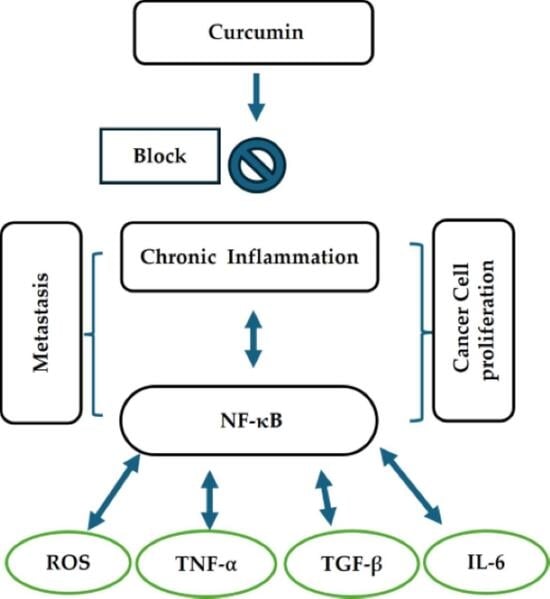
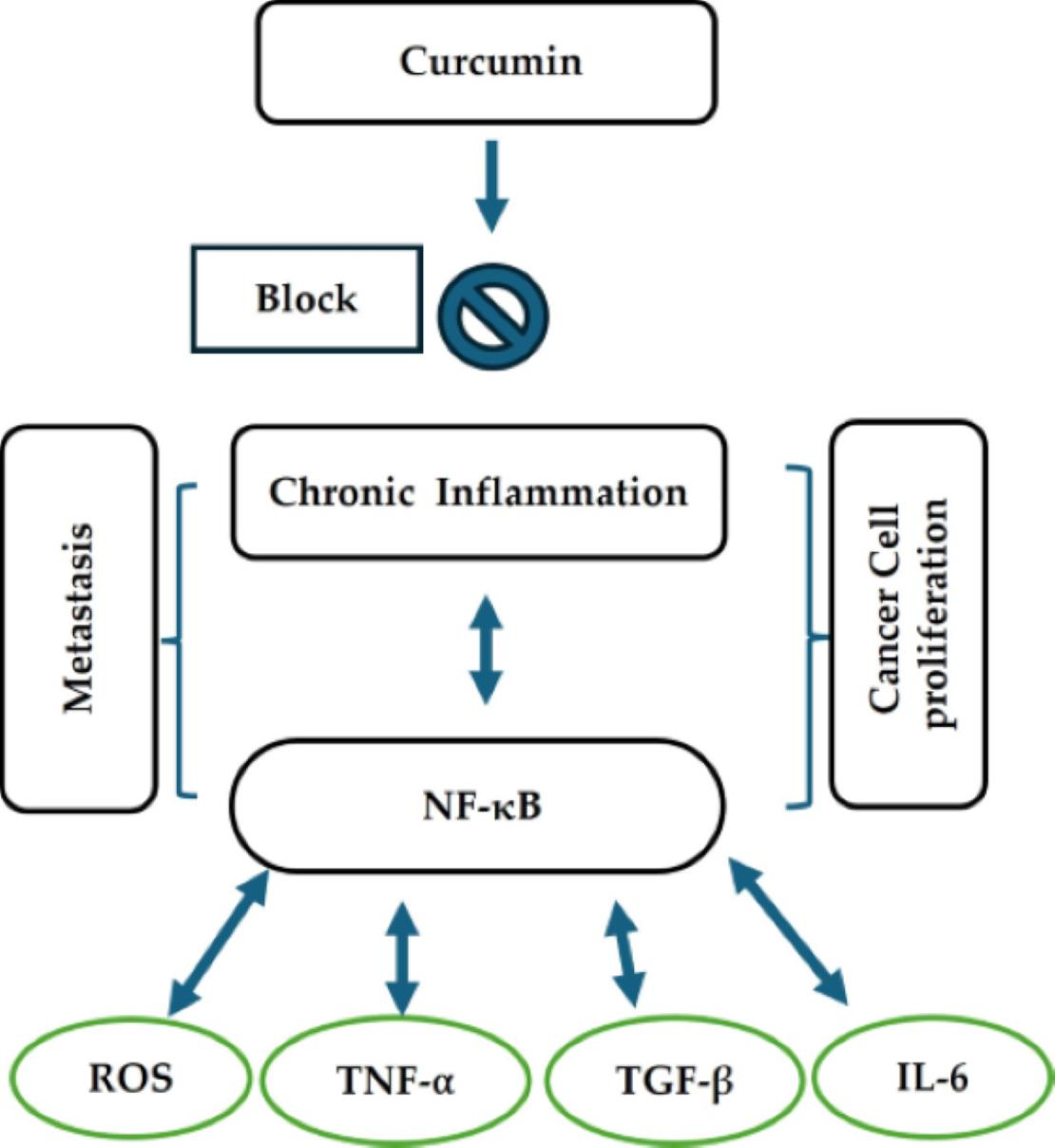
Graphical Abstract

1. Introduction

Chronic inflammation and oxidative stress are central drivers of tumor initiation, progression, metastasis, and therapeutic resistance. Chronic inflammation alters the tumor microenvironment in ways that promote malignant transformation. Studying the relationship between chronic inflammation and tumorogenesis helps explain how normal physiological processes become dysregulated and contribute to cancer initiation and progression. Pro-inflammatory cytokines such as interleukin-6 (IL-6), tumor necrosis factor-α (TNF-α), and transforming growth factor-β (TGF-β) play pivotal roles in shaping the tumor microenvironment (TME), promoting immune evasion, enhancing survival signaling, and facilitating resistance to chemotherapy and radiotherapy [1,2,3]. These cytokines regulate multiple hallmarks of cancer, including proliferation, angiogenesis, metastasis, metabolic reprogramming, and protection against therapy-induced DNA damage.
Persistent activation of the transcription factors nuclear factor kappa B (NF-κB) and signal transducer and activator of transcription 3 (STAT3), together with their downstream inflammation-dependent enzymes cyclooxygenase (COX-2) and inducible nitric oxide synthase (iNOS), further amplifies tumor-promoting signaling and contributes to inflammation-associated malignancies [1,2,3]. Reactive oxygen species (ROS), generated during chronic inflammation, also contribute(s) to genomic instability and activate redox-sensitive pathways that support tumor progression and metastasis [4,5].
However, IL-6, TNF-α, TGF-β and ROS exhibit pleotropic roles: physiological concentrations are required for normal cell signaling and homeostasis, whereas dysregulated production promotes cancer cell survival, proliferation, and adaptation to stress, highlighting their therapeutic potential. Targeting inflammatory mediators and redox-regulated pathways has therefore emerged as a promising anticancer strategy.
To reduce the side effects of radiation and chemotherapies, there is increasing interest in identifying safer alternatives, particularly natural compounds that can target multiple pathways involved in inflammation and cancer. Plant-derived compounds have contributed significantly to modern oncology, with agents such as paclitaxel and the vinca alkaloids serving as established chemotherapeutics. Curcumin, a bioactive polyphenol from Curcuma longa, demonstrates anti-inflammatory, antioxidant, chemopreventive, and pro-apoptotic properties through inhibition of NF-κB/STAT 3 signaling. Exploring such compounds supports the development of novel, plant-based therapeutic strategies. Curcumin exhibits promising anticancer effects in preclinical studies by inhibiting proliferation, inducing apoptosis, and modulating NF-κB/STAT3 and related pathways [6,7]. Curcumin has shown synergistic effects with gemcitabine in pancreatic cancer models [8], and strategies such as co-administration with piperine may enhance its clinical utility [9]. Although, curcumin exhibits promising anticancer and disease-modulating properties in preclinical studies, its clinical application is presently limited to use as a complementary (adjuvant) therapy alongside standard treatments rather than as a standalone or alternative therapy [10]. Clinical evidence remains limited and its benefits remain largely confined to adjunctive use, partly due to its poor bioavailability [11,12].
Investigating these limitations is important for advancing drug delivery systems and improving therapeutic efficacy. Although substantial research links inflammation and cancer, gaps remain in fully understanding how persistent inflammatory signaling drives genomic instability and therapy resistance. This makes the topic both relevant and timely for further exploration. Collectively, modulation of inflammatory and oxidative pathways—particularly through naturally derived compounds—represents a promising avenue for improving cancer prevention and therapy.

2. Role of Cytokines

2.1. Interleukin-6

Among the diverse mediators present in the tumor microenvironment, interleukin-6 (IL-6) has emerged as a central regulator linking chronic inflammation to cancer progression and therapeutic resistance [13]. IL-6 is a pleiotropic cytokine that regulates immune responses, hematopoiesis, tissue repair, and metabolic balance. Under physiological conditions, IL-6 production is rapid and transient, supporting host defense during infection or tissue injury. However, persistent IL-6 expression and sustained receptor engagement shift its role from protective to pathogenic, contributing to chronic inflammatory diseases and malignancies [13,14].
In the context of cancer, IL-6 is frequently elevated across multiple tumor types and is often dysregulated, promoting tumorigenesis by orchestrating key hallmarks of cancer, including enhanced cell proliferation, survival, angiogenesis, invasion, metastasis, and metabolic reprogramming [15]. Importantly, IL-6 signaling has been strongly implicated in resistance to chemo- and radiotherapy. By activating downstream pro-survival and antioxidant pathways, facilitating DNA damage repair, and suppressing apoptosis, IL-6 enables tumor cells to withstand therapy-induced oxidative stress and genotoxic insults [15,16].
IL-6 exerts its biological effects through binding to the membrane-bound IL-6 receptor (IL-6Rα) or soluble IL-6R, followed by association with the signal-transducing co-receptor gp130 [14]. This interaction activates several downstream pathways, most prominently the STAT3 pathway, as well as the MAPK/ERK and PI3K/AKT cascades [13]. Canonical IL-6/STAT3 signaling drives transcription of genes involved in cell proliferation and survival (e.g., cyclins and c-Myc) and anti-apoptotic responses (e.g., Bcl-2, Bcl-xL, and survivin), as well as immune evasion and inflammation.
In many tumor types, including breast [17], colorectal [18], pancreatic [19], lung [20] and hepatocellular carcinomas [21], constitutive activation of IL-6/STAT3 signaling establishes a feed-forward inflammatory loop. Tumor cells, cancer-associated fibroblasts (CAFs), tumor-associated macrophages (TAMs), and other stromal components secrete IL-6, reinforcing paracrine and autocrine signaling that sustains malignant behavior [22]. Collectively, these findings underscore that dysregulated IL-6 signaling not only sustains tumor growth and progression but also establishes a protective microenvironment that fosters therapeutic resistance. Thus, targeting the IL-6/IL-6R/JAK/STAT3 axis—through monoclonal antibodies (e.g., IL-6 or IL-6R blockers), JAK inhibitors, or STAT3 inhibitors—is an active area of translational research aimed at improving outcomes in patients with IL-6-driven malignancies [22]. Overall, these lines of evidence clearly show that targeting IL-6 could be a promising therapeutic strategy in cancer.

2.2. Transforming Growth Factor-β

The functions of transforming growth factor-β (TGF-β) are highly dependent on the cell type and cellular context. Evidence suggests that TGF-β signaling exerts a biphasic, “double-edged sword” effect during tumor development [23]. In normal tissues and early-stage tumor cells, activation of the TGF-β pathway primarily functions as a tumor suppressor by inducing cell-cycle arrest, promoting apoptosis, and maintaining tissue homeostasis [24]. However, as tumors progress, cancer cells often acquire mechanisms that attenuate the growth-inhibitory effects of TGF-β while retaining or enhancing its pro-tumorigenic activities. In advanced-stage cancers, TGF-β signaling can therefore shift toward an oncogenic role, facilitating epithelial–mesenchymal transition (EMT), invasion, metastasis, immune evasion, and resistance to chemotherapy and targeted therapies [24,25,26].
TGF-β plays a pivotal role in shaping the immunosuppressive TME in oral squamous cell carcinoma (OSCC). It promotes immune evasion by inducing the differentiation and expansion of regulatory T cells (Tregs) and facilitating the activation of cancer-associated fibroblasts (CAFs), both of which contribute to tumor progression. Concurrently, TGF-β suppresses anti-tumor immunity by inhibiting the cytotoxic activity and effector functions of cytotoxic T lymphocytes (CTLs) and natural killer (NK) cells. Through these coordinated mechanisms, TGF-β fosters an immune-tolerant microenvironment that supports OSCC growth and progression [27].
TGF-β-induced epithelial–mesenchymal transition (EMT) is a critical driver of tumor metastasis [28]. It has been shown that inhibition of TGF-β activity inhibited HNF1A-AS1/oncostatin M-mediated EMT in gastroenteropancreatic neuroendocrine neoplasms [29]. Moreover, studies indicate that pancreatic cancer cells themselves do not secrete TGF-β; rather, TGF-β secretion at the tumor site results from infiltrating granulocytes (predominantly neutrophils), leading to overproduction of collagens [30]. Taking together, these findings clearly show that targeting TGF-β signaling could be a promising therapeutic approach in cancer.

2.3. Tumor Necrosis Factor Alpha

Tumor necrosis factor (TNF)-α is a pleiotropic cytokine with key roles in inflammation [31]. It promotes inflammatory responses in immune cells, including T and B lymphocytes, as well as in non-immune, tissue-resident cells such as fibroblasts and epithelial cells [32]. TNF-α is mainly produced by activated macrophages and monocytes, and its expression is rapidly induced in response to pathogen-associated molecular patterns (PAMPs) via toll-like receptors (TLRs), elevated levels of other cytokines (e.g., IL-1 and IFN-γ), and various forms of cellular stress or tissue injury. These features make TNF-α one of the earliest cytokines released during inflammation [33,34].
TNF-α is a type II transmembrane protein that functions either as a membrane-bound signaling molecule or as a soluble cytokine generated through proteolytic cleavage. Binding of TNF family ligands to their receptors triggers the recruitment of intracellular adaptor proteins and activates multiple downstream signaling pathways [35]. Based on differences in their intracellular domains, members of the tumor necrosis factor receptor (TNFR) superfamily are broadly classified into three major groups. Although TNF receptor-associated factor (TRAF) proteins lack intrinsic enzymatic activity, they function as adaptor molecules that initiate diverse signaling cascades regulating proliferation, differentiation, and cell death [35,36].
TNF-α was originally identified as a factor capable of suppressing tumor cell proliferation and was linked to tumor necrosis and a variety of inflammatory diseases [37,38]. Apoptosis induced through TNF superfamily receptors involves adaptor proteins such as FAS-associated death domain (FADD) and TNFR-associated death domain (TRADD) [35]. However, accumulating evidence now recognizes that overexpression of TNF-α also confers potent pro-tumorigenic properties [39,40,41]. TNF-α promotes angiogenesis by recruiting endothelial progenitor cells at the sites of tissue damage during inflammatory signaling [42], and its overexpression induces chemoresistance in leukemia, pancreatic ductal adenocarcinoma, and breast cancer cells [39,40,41].
Cancer cell survival signaling activates the NF-κB signaling cascade and other pathways downstream of TNF-α, depending on the cellular context [35]. Activation of NF-κB by TNF-α and other TNFR superfamily members is primarily mediated through the recruitment of distinct TRAF proteins. At the molecular level, TNF-α acts through several mechanisms. First, activation of TNF- receptor-1 (TNFR1) predominantly recruits TRADD, which can then further associate with TRAF2, TRAF1, and receptor-interacting protein (RIP), resulting in NF-κB activation that promotes cell survival and counteracts apoptotic signaling [36]. Second, activation of TRAF-interacting motifs (TIMs) promotes recruitment of TRAF proteins, stimulating multiple signaling pathways, including NF-κB [35]. Third, decoy receptors compete with signaling-component receptors for ligand binding, thereby modulating downstream responses [35].
Consistent with these observations, anti-TNF-α antibodies and other TNF-α antagonists have demonstrated therapeutic efficacy in multiple experimental models of common epithelial cancers [39,40,41,43] and in alleviating inflammation associated with several autoimmune diseases [32]. Collectively, these findings indicate that TNF-α remains an important therapeutic target at the intersection of inflammation and cancer.

3. Reactive Oxygen Species

Reactive oxygen species (ROS) are highly reactive oxygen-derived molecules generated as natural byproducts of cellular metabolism and are essential for maintaining physiological processes, including redox signaling and host defense. ROS is a collective term that includes superoxide (O2), hydrogen peroxide (H2O2), hydroxyl radical (OH•), singlet oxygen (1O2), peroxyl (LOO•), alkoxyl (LO•), lipid hydroperoxide (LOOH), peroxynitrite (ONOO), hypochlorous acid (HOCl), and ozone (O3). Several ROS, such as superoxide, hydroxyl radical, peroxyl, and alkoxyl, contain unpaired electrons and are therefore classified as free radicals, whereas others lacking unpaired electrons—such as hydrogen peroxide, peroxynitrite, hypochlorous acid, and ozone—are considered non-radical species [44].
The thioredoxin system is a major cellular system which maintains intracellular redox balance by preserving high levels of reduced protein thiols [45]. Thioredoxin reductase (TrxR) is one of the enzyme of the thioredoxin system that is overexpressed in tumor cells, provides resistance against oxidative stress, and supports tumor cell proliferation, anti-apoptosis and immune-mediated damage [46]. Accumulating evidence indicates that dysregulated ROS production plays a pivotal role in chronic inflammation and tumor progression [5,47,48]. Within the chronically inflamed tumor microenvironment, persistent activation of inflammatory cells enhances ROS generation, thereby establishing a pro-oxidant milieu [49]. Elevated ROS levels can directly induce mitochondrial genomic instability through oxidative DNA damage [4,48] or indirectly modulate redox-sensitive signaling pathways that regulate proliferation, EMT, invasion, and metastasis. Such mechanisms have been implicated in the progression and dissemination of multiple malignancies, including breast, lung, liver, and colorectal cancers [5].
Importantly, ROS functions as a double-edged sword in cancer biology. Sustained intracellular ROS can act as secondary messengers in signaling cascades that promote and maintain an oncogenic phenotype, supporting tumor initiation and metastasis. At the same time, excessive ROS accumulation can surpass the antioxidant capacity of tumor cells, leading to growth arrest or cell death, thereby functioning as anti-tumorigenic agents [50,51,52]. ROS also contributes to malignant transformation and progression to metastasis [51,53].
Cancer cells undergo metabolic reprogramming to sustain rapid proliferation, which requires increased adenosine triphosphate production, elevated biosynthetic activity, and tight regulation of the intracellular redox balance [51,54]. Consequently, mitochondrial ROS production is elevated, but this increase is counteracted by upregulated antioxidant scavenging systems to maintain redox homeostasis [51,55]. In parallel, inflammatory cytokines such as TNF-α critically regulate ROS and reactive nitrogen species signaling, thereby influencing innate immune cell function under both physiological and inflammatory conditions. TNF-α-mediated redox signaling pathways modulate immune cell activation, survival, and effector responses, further linking chronic inflammation, oxidative stress, and tumor progression [56]. This functional duality has generated strong interest in exploiting ROS modulation as a therapeutic strategy to enhance tumor-selective oxidative damage and improve precision targeting.

4. Nuclear Factor Kappa B

TNF-α, IL-6, TGF-β, and ROS activate key inflammatory signaling mediators such as NF-κB and exhibit extensive crosstalk with each other in cancer growth and cancer metastasis [57,58,59,60,61]. Activated NF-κB plays a dual role in inflammation. In innate immune cells, activated NF-κB promotes the production of pro-inflammatory mediators (e.g., neutrophils and macrophages) and pro-inflammatory cytokines (e.g., TNF-α and IL-6) that facilitate pathogen clearance, initiate tissue repair, and maintain innate immunity [62]. In adaptive immunity, activated NF-κB regulates the activation and differentiation of both T and B lymphocytes. It contributes to the development of effector T-cell subsets such as Th1, Th2, Th17, and regulatory T cells (Tregs) in coordination with co-stimulatory signals from molecules such as CD28. In B cells, antigen recognition through the B-cell receptor activates NF-κB, promoting proliferation, differentiation into plasma cells, and antibody production. T-cell-derived co-stimulatory signals, mediated by cytokines such as IL-4 and interactions involving the CD40 ligand, further enhance NF-κB activation in B cells, facilitating class-switch recombination and terminal differentiation [62,63].
However, sustained or aberrant activation of NF-κB can drive the development of chronic inflammatory disorders, autoimmune diseases, and cancer. In such conditions, the negative feedback mechanisms that normally resolve inflammation are overwhelmed by persistent NF-κB signaling. This intricate signaling network underscores the central role of NF-κB in regulating immune responses, inflammatory processes, and tumorigenesis [64]. NF-κB is a ubiquitously expressed transcription factor implicated in numerous pathological conditions, particularly inflammation-associated cancer. It regulates the transcription of several pro-inflammatory cytokines, including TNF-α, thereby promoting the survival of transformed cells through suppression of apoptotic pathways [38,65,66].
In its resting state, NF-κB remains sequestered in the cytoplasm through tight association with specific inhibitory proteins known as IκBs. These inhibitors belong to a gene family that includes IκBα, IκBβ, IκBγ, IκBε, Bcl-3, p100, and p105. Upon stimulation by agents such as TNF-α, IκBα is phosphorylated at serine residues 32 and 36, ubiquitinated at lysine residues 21 and 22, and subsequently degraded via the proteasomal pathway. This degradation unmasks the nuclear localization signals of the p50–p65 heterodimer. The p65 subunit is then phosphorylated, enabling its translocation to the nucleus, where it binds to specific DNA sequences and initiates gene transcription of pro-inflammatory cytokines and chemokines [38,67].
NF-κB influences all six hallmarks of cancer by transcriptionally activating genes involved in cell proliferation, angiogenesis, metastasis, tumor promotion, inflammation, and cell survival [42,68,69,70,71,72,73]. Because tumor cells frequently exploit NF-κB to develop resistance to chemotherapy and radiation, targeting NF-κB activation represents a promising strategy to enhance the effectiveness of conventional anticancer treatments [74,75]. Although NF-κB activity is tightly regulated in most normal cells, it is constitutively activated in several malignancies where it contributes to tumor growth and chemoresistance [68]. Consequently, pharmacologic inhibition of NF-κB is considered a promising therapeutic strategy for cancer treatment.

5. Curcumin

Approximately 25% of prescription drugs in the United States are derived from plant sources, many of which were identified through systematic investigation of traditional and folkloric medicine [76]. Notable examples include paclitaxel (Taxol), originally isolated from the Pacific yew tree, and the vinca alkaloids vinblastine and vincristine, derived from the rosy periwinkle (Catharanthus roseus). These plant-derived agents have been extensively characterized and remain integral components of modern chemotherapeutic regimens, demonstrating efficacy comparable to or exceeding that of many synthetic drugs [76].
Another widely studied medicinal plant is Curcuma longa L. (Zingiberaceae), a perennial herb cultivated throughout tropical regions of Asia. Its rhizome, commonly known as turmeric, is used both as a culinary spice and as a traditional medicinal agent [77]. The bioactive fraction of turmeric extract contains 60–70% curcumin (diferuloyalmethane), 20–27% demethoxycurcumin, and 10–15% bisdemethoxycurcumin [78]. Curcumin (diferuloylmethane), the principal bioactive constituent of turmeric, exhibits a broad spectrum of pharmacological activities, including anti-inflammatory and antioxidant properties [79], as well as chemopreventive and chemotherapeutic potential [80,81]. Owing to its favorable safety profile and low systemic toxicity, curcumin has attracted considerable interest as a candidate anticancer agent. Preclinical studies have demonstrated that curcumin exerts potent antiproliferative and pro-apoptotic effects in vitro [82,83] and suppresses breast [84,85,86,87], colon [88], liver [89,90,91], pancreatic [92], and cervical cancers [93,94].
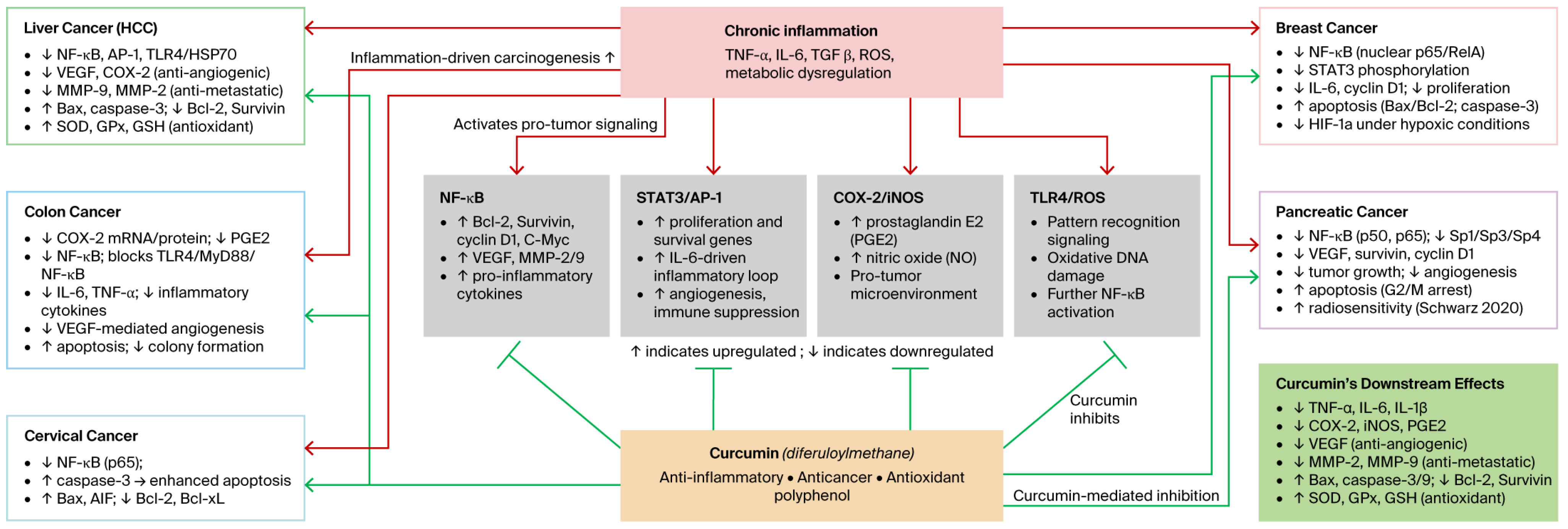
Mechanistically, curcumin has been shown to inhibit the transcriptional activity of NF-κB [77,95], a central regulator of genes involved in cell proliferation, survival, inflammation, and cell cycle progression. Figure 1 illustrates how curcumin modulates inflammation-driven carcinogenesis across multiple cancer types. At the molecular level, curcumin suppresses NF-κB signaling by inhibiting both upstream and downstream regulators. Upstream, curcumin interferes with TNF receptors, NF-κB-inducing kinases, and the IκB kinase (IKK) complex. This inhibition blocks IκBα phosphorylation and degradation, preventing p65 phosphorylation, acetylation, and nuclear translocation. Consequently, curcumin downregulates the NF-κB-dependent gene expression involved in cell proliferation (COX-2, cyclin D1, and c-Myc), anti-apoptosis (Bcl-2, Bcl-xL, and IAPs), and metastasis (VEGF, MMP-9, and ICAM-1). Overall, this leads to reduced cellular proliferation, enhanced apoptosis, and inhibition of tumor progression [38,77,96,97].
Curcumin also inhibits the JAK/STAT signaling pathway by suppressing phosphorylation of JAK1, JAK2, and STAT3, leading to downregulation of oncogenic targets such as c-Myc, MMP-9, Snail, Twist, and Ki-67. This results in reduced tumor cell proliferation, migration, and invasion; decreased tumor growth; and improved survival in glioma models [6,7,101]. Curcumin inhibits TrxR activity in HeLa cells by paradoxically shifting cells towards oxidative stress [102]. Curcumin also activates the mitogen-activated protein kinases (MAPKs) via ROS, thereby promoting apoptosis in tumor cells [103]. Curcumin also exerts immune-cell-specific effects through differential modulation of macrophages, dendritic cells, T lymphocytes, B cells, and natural killer (NK) cells [104]. For example, in normal Wistar rats, intraperitoneal injections of curcumin at 40 mg/kg/rat every 24 h for 30 days preserved Th1 cytokine production, NK-cell cytotoxicity, and macrophage activity [105]. Curcumin protects T-cell apoptosis when administered orally at 50 mg/kg, activates the JAK3–STAT5a pathway in T cells, restores BCL-2 expression in tumor-bearing mice, and prevents tumor-induced thymic atrophy through restoration of NF-κB pathway activity [106,107]. In summary, curcumin in tumor cells directly inhibits transcription factors and signaling components such as NF-κB, JAK/STAT, and ROS-generating systems by targeting NF-κB-inducing kinases, JAK/STAT kinases, TrxR, and MAPKs and induces downstream effects on genes and proteins regulated by these transcription factors via suppression of inflammatory cytokines and inflammatory enzymes (COX-2 and iNOS), as well as promotion of apoptosis via increased pro-apoptotic BAX and decreased anti-apoptotic Bcl-2 expression [103,108,109].
Despite its favorable pharmacological safety, curcumin exhibits poor oral bioavailability and limited aqueous solubility, restricting its clinical efficacy. In a phase I clinical trial, oral curcumin (8000 mg/day) was administered to 25 patients (13 men and 12 women; median age: 60 years, range: 36–77 years), yielding peak serum concentrations of 0.4–1.6 uM at 1–2 h after intake; seven patients derived clinical benefit after three months of treatment [110]. A phase II clinical trial in patients with advanced pancreatic cancer demonstrated limited but measurable biological activity of oral curcumin (8 g/day); among 21 patients, two exhibited clinical benefit, including one case of brief tumor regression and one case of disease stabilization lasting 18 months [11]. On average clinical studies reported doses ranging from approximately 2.5 g/day to 5 g/day, and phase I studies demonstrated safety up to 12 g/day despite low bioavailability [111]. The most recent clinical trials from December 2018–November 2026 with curcumin alone and curcumin in combination with chemotherapy in different cancers with completion and estimated dates of completion are listed in the review [10]. Multiple studies have shown that curcumin is present at very low concentrations in blood, tumors, and extraintestinal tissues, largely due to poor absorption, rapid metabolism, chemical instability, and swift systemic elimination. For example, oral administration of curcumin at 500 mg/kg yields a serum concentration of only 0.06 µg/mL, reflecting approximately 1% bioavailability. Its limited solubility in neutral and acidic environments, together with its propensity to undergo hydrolysis under intestinal conditions, further restricts its stability. Curcumin is rapidly metabolized in the intestine through conjugation to glucuronide and sulfate forms, with studies consistently reporting negligible levels of free curcumin and substantially higher levels of its metabolites in serum, underscoring its rapid biotransformation [112].
Curcumin also demonstrated anti-inflammatory effects in clinical studies. In a randomized placebo-controlled trial involving 80 patients with solid tumors, curcuminoid supplementation as an adjuvant therapy (180 mg/day for 8 weeks orally) significantly reduced systemic inflammatory mediators, including TNF-α, MCP-1, hs-CRP, and TGF-β, compared with the placebo [10,113]. Similarly, in a phase I trial of APG-157 (a botanical formulation containing curcumin), oral cancer patients showed reduced salivary IL-1β, IL-6, and IL-8 levels within 24 h of treatment [10,114]. Overall, clinical evidence remains limited but promising: curcumin appears safe and may provide adjunctive benefits, although it has not consistently improved survival outcomes [78,112]. Its clinical translation is hindered by poor bioavailability, variability in formulations, and a lack of large-scale trials.
In preclinical studies, curcumin has demonstrated synergistic anticancer effects when used in combination with various chemotherapeutic drugs [10]. Briefly, studies showed that the combination of curcumin with Paris saponin II induced apoptosis in lung cancer cells via PI3K/Akt pathway inhibition [115]. In breast cancer, which contains both MCF-7 and cisplatin-resistant MCF-7DDP cells, FEN1 expression was reduced in the group receiving combined curcumin and cisplatin treatment compared with cisplatin alone. Moreover, FEN1 overexpression in MCF-7 cells attenuated the chemo-sensitizing effect of 20 μmol/L curcumin on 2 μg/mL cisplatin, whereas FEN1 silencing in MCF-7DDP cells further enhanced the sensitizing effect of 20 μmol/L curcumin to 5 μg/mL cisplatin [116]. In brain cancer cells, curcumin potentiated the cytotoxicity of the EGFR inhibitors AG494 and AG1478 by causing irreversible DNA damage [117]. Curcumin has been shown to enhance the efficacy of imatinib by downregulating p210 BCR-ABL and Hsp90, and it has also been reported to potentiate the cytotoxic effects of daunorubicin [10]. Emerging evidence from colorectal cancer and gallbladder cancer mouse models suggest that inhibiting tumor-associated microbiota can be beneficial. Curcumin modulates tumor-associated microbiota by reshaping microbial composition, promoting beneficial microbial populations while suppressing tumor-promoting microbes, thereby reducing dysbiosis-associated inflammation [118,119] and, in combination with the probiotic Lactobacillus rhamnosus GG, reversing gemcitabine resistance in a gallbladder tumor mouse model [119]. Preclinical evidence strongly and consistently demonstrates that curcumin exhibits multi-targeted anticancer activity by inhibiting key cell-signaling pathways.
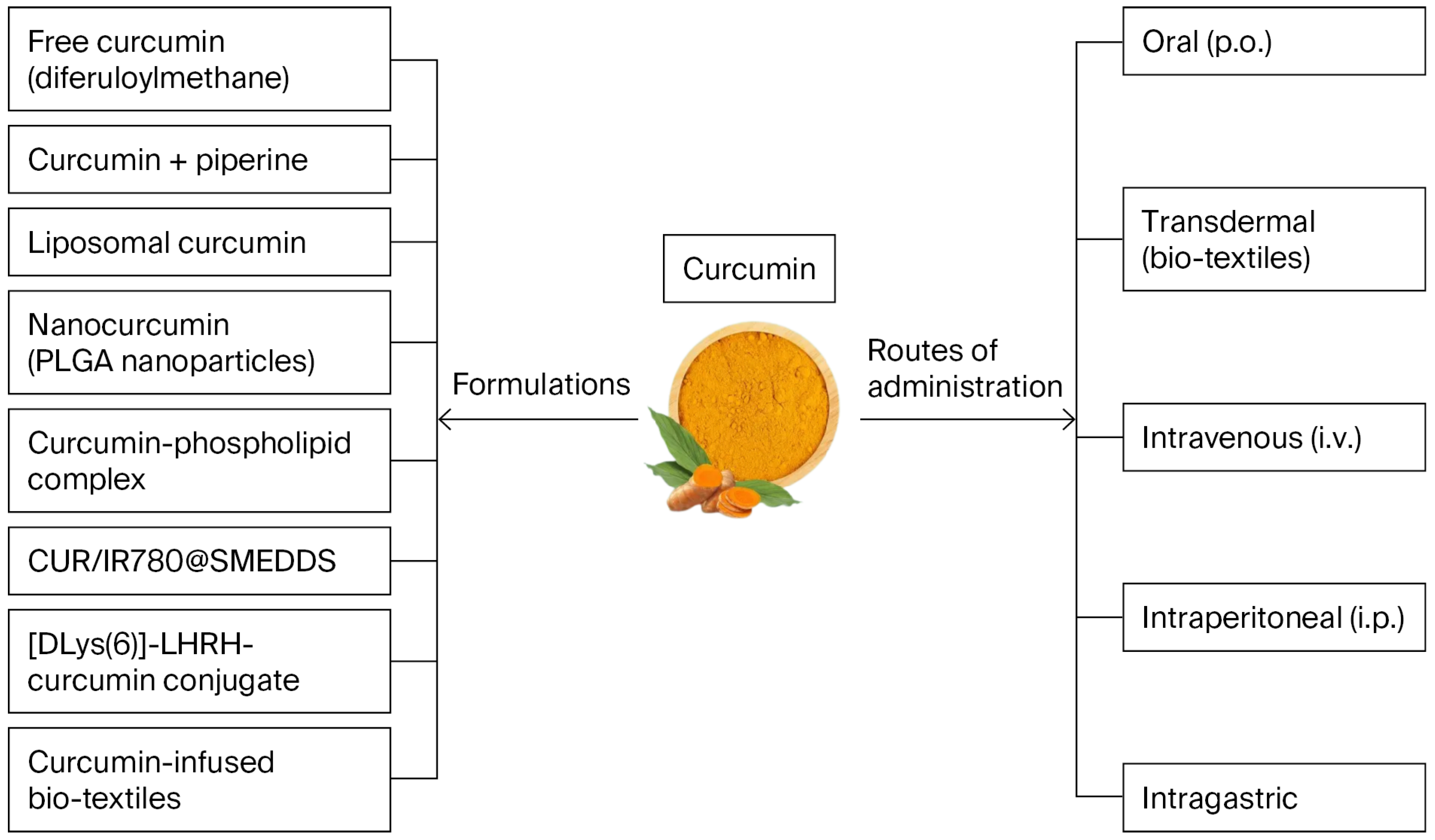
Various formulations and combinations of curcumin have been tested in diverse cancer cell lines and mouse models, as summarized in Table 1 and Figure 2 [12,84,85,86,89,90,92,98,99,100,120,121,122,123]. Curcumin, administered alone at concentrations ranging from 1.3 μM to 100 μM, significantly suppressed both invasive and metastatic potential in vitro across multiple cancer cell lines, including lung cancer (6–60 μM), breast cancer (1.3–30 μM), brain cancer (25 μM), pancreatic cancer (10–100 μM), gastric cancer (4–10 μM), and leukemia (10–80 μM) [10]. Nevertheless, oral administration of curcumin enhanced the antitumor activity in the preclinical rat cancer model bearing the highly cachectic Yoshida AH-130 ascites hepatoma [124]. Strategies to improve curcumin bioavailability, such as co-administration with piperine, have shown promise in enhancing systemic absorption and therapeutic potential [125]. In rats, curcumin alone (2 g/kg) produced moderate serum levels, whereas co-administration with piperine (20 mg/kg) significantly increased serum concentrations and bioavailability by 154% by altering its pharmacokinetics. In humans, curcumin alone (2 g) resulted in very low or undetectable serum levels, whereas adding piperine (20 mg) dramatically enhanced its absorption and increased its bioavailability by 2000% without adverse effects [126].
Numerous advanced formulations of curcumin have also been evaluated. Liposomal curcumin demonstrated antitumor activity at levels comparable to or greater than free curcumin when tested at equal molar concentrations in pancreatic cancer. IC50 values of liposomal curcumin ranged from approximately 2.0 μM in Capan-1 cells to 2.5 μM in BxPC-3 and 37.8 μM in Capan-2 cells, whereas free curcumin exhibited IC50 values between 5.4 μM (BxPC-3 and Capan-1) and 46 μM (Capan-2) [99,120]. Liposomal curcumin (40 mg/kg given intravenously 3 times weekly) inhibited pancreatic carcinoma growth in murine xenograft models, suppressed tumor angiogenesis and exhibited no overt host toxicity in mice [99]. In vivo, in a pancreatic cancer mouse model where free curcumin is given orally and the a bioconjugate, luteinizing hormone releasing hormone analog-Curcumin ([DLys6]–LHRH–Curcumin) is given intravenously at 60 mg/kg twice weekly, the [DLys6]–LHRH–curcumin conjugate significantly reduces pancreatic tumor volume in a nude mouse xenograft model as compared to free curcumin. The [DLys6]–LHRH–Curcumin conjugate becomes a water-soluble drug without overt toxicity [100]. Liposomal curcumin and [DLys6]–LHRH–Curcumin improve solubility and systemic exposure, supporting curcumin’s use as an adjuvant that can be combined with standard anticancer therapies [99,100].
Nanocurcumin formulations, particularly those incorporating poly (lactic-co-glycolic acid) (PLGA), have demonstrated enhanced solubility and improved therapeutic efficacy [127,128,129,130]. PLGA-encapsulated curcumin demonstrates strong anticancer activity at substantially lower effective doses; for example, a PLGA-PAMAM-PCL nanocurcumin system reduced A549 lung cancer cell viability to about 21% after 24 h at 200 nM, with an IC50 observed at 50 nM and no significant toxicity detected in mesenchymal stem cells [121]. PLGA is considered safe because it degrades in vivo into glycolic acid and lactic acid, both of which are naturally metabolized through the tricarboxylic acid (TCA) cycle and ultimately excreted as water and carbon dioxide [130]. Surface modification with polymers such as polyethylene glycol helps protect PLGA nanoparticles from premature degradation by the reticuloendothelial system, thereby enhancing their stability and further improving the plasma bioavailability of curcumin following oral administration [130].
The curcumin–phospholipid complex significantly improved liver antioxidant enzyme levels and provided greater hepatoprotection than free curcumin at the same dose. These complexes also produced higher peak serum concentrations and sustained effective curcumin levels for longer durations compared to pure curcumin [131]. A hybrid self-microemulsifying drug delivery system (CUR/IR780@SMEDDS) was formulated to co-encapsulate a curcumin–phospholipid complex and the near-infrared dye IR780 and compared with suspensions of curcumin and IR780. Pharmacokinetic studies in rats demonstrated markedly improved oral absorption, with relative bioavailability increases of 743.7% for curcumin and 307.0% for IR780 compared with free compounds [122]. Free curcumin exerts antiproliferative and pro-apoptotic effects across several cancer cell lines but generally requires higher micromolar exposures in vitro, with dose–response experiments in breast cancer models showing that concentrations of 75–125 µM markedly reduce cell viability and that 75 µM functions as the IC50 at 24 h, leading to a sustained decrease in the mitotic index and near-complete suppression of cell division by 72 h [84]. By contrast, in metastatic 4T1 breast cancer cells, CUR/IR780@SMEDDS combined with localized NIR irradiation significantly enhanced cytotoxicity and inhibited invasion. In orthotopic 4T1 tumor-bearing nude mice, oral CUR/IR780@SMEDDS (50 mg/kg curcumin and 5 mg/kg IR780 every 2 days for 16 days) with local NIR irradiation suppressed tumor growth and lung metastasis [122]. Moreover, curcumin-infused bio-textiles, such as disposable bra inserts, have been proposed as a practical strategy for daily breast cancer prevention, delivering bioavailable curcumin transdermally via skin contact [123]. Thus, improved formulations of curcumin are emerging as powerful tools to overcome its bioavailability and stability limitations, further supporting its development as a promising chemopreventive and adjunct therapeutic agent.
In particular, oncology clinical studies have consistently demonstrated that curcumin given orally at doses up to 12 g/day is well tolerated without significant toxicity, with only mild gastrointestinal discomfort. Certain preclinical studies found potential drug interactions that warrant a more cautious and nuanced description of curcumin safety. For example, curcumin administered orally at doses of 8–12 g/day was shown to alter systemic iron metabolism in an iron-deficient mouse model that was fed a low-iron diet (5 mg iron/kg), whereas mice receiving iron-sufficient diets (12–1000 mg iron/kg) showed no changes [132]. In rabbits, pre-treatment with curcumin (60 mg/kg; orally) for three days at an interval of 24 h can enhance systemic bioavailability of norfloxacin because curcumin suppressed intestinal and hepatic UDP-glucuronyltransferase and inhibition of CYP3A4, which may delay norfloxacin’s metabolism and excretion. This may lead to a reduction in both the loading and maintenance doses of norfloxacin, suggesting that prior administration of curcumin may provide economic benefits while also minimizing drug-related side effects, as lower amounts of the drug are required [133]. Similarly, in Wistar rats, pre-administration of (100 mg/kg; orally) curcumin for 7 days affects the pharmacokinetics of warfarin and clopidogrel, with no detectable pharmacodynamic impact on anticoagulation or antiplatelet effects [134]. Some documented adverse effects of curcumin are mild and reversible, including cases of allergic contact dermatitis on skin exposure [135]. Taken together, these data support the conclusion that curcumin is generally safe and well tolerated in cancer patients at doses commonly used in clinical trials, but these findings also highlight specific contexts, such as pre-existing iron deficiency or concomitant drugs with narrow therapeutic indices, where caution and monitoring may be warranted.

6. Summary

Chronic inflammation is increasingly recognized as a critical enabling factor in carcinogenesis, particularly in cancer and cancer metastasis. Persistent inflammatory stimuli promote continuous recruitment of immune cells, sustained cytokine production (such as IL-6, TNF-α, TGF-β, and ROS), and activation of redox-sensitive transcription factors, thereby establishing a tumor-promoting microenvironment. Among the central mediators, NF-κB plays a pivotal role by regulating genes involved in proliferation, survival, angiogenesis, invasion, and resistance to apoptosis. Its downstream targets further amplify inflammatory signaling, enhancing tumor growth and metastatic potential. Constitutive activation of NF-κB and STAT 3 in several cancers underscores their importance as mechanistic links between inflammation and tumor progression, promoting immune evasion, enhancing survival signaling, and facilitating resistance to chemotherapy and radiotherapy.
At physiological levels, IL-6, TNF-α, TGF-β, ROS, and NF-κB function as secondary messengers that support normal proliferation and apoptotic pathways; however, their dysregulation shifts signaling toward anti-apoptotic and pro-survival programs in cancer cells, highlighting their dual roles in cancer biology. This “double-edged sword” effect provides both challenges and opportunities for therapeutic intervention, as their activity must be precisely modulated to achieve tumor-selective cytotoxicity. While chronic inflammation in the tumor microenvironment generally suppresses apoptosis and permits cancer cell survival and proliferation, curcumin can restore apoptotic signaling in inflammation-driven cancers by targeting key pathways. It inhibits the NF-κB and JAK/STAT signaling pathways, leading to downregulation of anti-apoptotic proteins (e.g., Bcl-2, Bcl-xL, and IAPs) and suppression of pro-survival gene expressions. Simultaneously, curcumin upregulates pro-apoptotic factors such as Bax and activates caspases. It also reduces inflammatory mediators (e.g., TNF-α, IL-6, COX-2, and iNOS), thereby disrupting the pro-survival tumor microenvironment and restoring apoptosis in cancer cells.
Given the central role of inflammatory pathways in tumor development, targeting these molecular circuits represents a rational therapeutic strategy. In this context, plant-derived bioactive compounds have gained significant attention. Curcumin has demonstrated the ability to suppress NF-κB and STAT 3 activation, downregulate their target proteins, modulate cytokine production, and induce apoptosis in various cancer models. Extensive preclinical research consistently shows that curcumin possesses broad anticancer properties, acting on multiple molecular targets by suppressing oncogenic signaling pathways, promoting apoptosis, and reducing inflammation and oxidative stress across diverse cancer types. In contrast, clinical evidence is still limited but encouraging curcumin appears safe and may offer benefits as an adjunct therapy, although it has not reliably improved survival outcomes. Its clinical application remains constrained by poor bioavailability, inconsistent formulations, and insufficient large-scale trials. Overall, curcumin currently appears most promising as a chemopreventive or supportive treatment rather than as primary therapy, although ongoing advances in formulation may enhance its effectiveness.
These properties position curcumin as a promising chemopreventive and adjunct therapeutic agent, yet its clinical translation continues to be limited by poor solubility, rapid metabolism, and low systemic bioavailability. In addition, combining NF-κB and STAT3 inhibitors—including curcumin and related agents—with conventional chemotherapeutics may offer synergistic benefits by targeting both tumor cells and the inflammatory microenvironment. A deeper understanding of inflammation-driven oncogenic signaling will be essential for developing more precise, mechanism-based therapeutic interventions.

7. Future Prospectives

The future of curcumin research is likely to be shaped by precision-medicine approaches that focus on identifying specific patient subgroups, molecular profiles, and cancer types that are most responsive. Large, well-designed randomized controlled trials will be essential to establish standardized dosing regimens, optimize formulations, and generate high-quality evidence for clinical efficacy. Given its low toxicity profile and pleiotropic effects, curcumin is an attractive candidate for combination therapy, thereby enhancing the efficacy of chemotherapy and radiotherapy, mitigating treatment-related side effects, and potentially reducing drug resistance.
Because curcumin undergoes extensive hepatic metabolism and clearance, careful monitoring of liver function enzymatic profiles will be important when developing curcumin as a drug or as an adjacent cancer treatment. The trajectory of curcumin in oncology will depend on overcoming key translational barriers. Although various formulations—such as nanoparticle-encapsulated systems, liposomal carriers, phospholipid complexes, and structural analogs—have improved curcumin’s bioavailability, further research is required to show reproducible pharmacokinetics and consistent clinical benefit. Curcumin interactions with chemotherapeutic drugs require careful evaluation in both clinical and preclinical settings. Current clinical evidence is insufficient in supporting these interactions. Therefore, further evaluation is needed.
While curcumin is unlikely to replace conventional cancer therapies, continued refinement of its formulations and targeted applications may strengthen its role as an effective adjuvant in cancer prevention and treatment.

8. Conclusions

Inflammation activates cellular targets that support cancer cell survival and proliferation. Collectively, the evidence highlights the intricate interplay between ROS, chronic inflammation, and cytokine signaling in shaping tumor progression, metastasis, and therapeutic responsiveness. Curcumin’s spectrum of pharmacological activities, including anti-inflammatory and antioxidant properties, as well as its subsequent chemopreventive and chemotherapeutic uses, allows it to be developed as a cancer adjuvant therapeutic drug. Curcumin remains a promising candidate for development as an adjuvant therapeutic agent in cancer, particularly in inflammation-driven malignancies.

Author Contributions

Conceptualization, S.A.; methodology, S.A., K.L. and E.B.; software, S.A.; validation, S.A., K.L. and E.B.; formal analysis, S.A.; investigation, S.A., K.L. and E.B.; resources, S.A.; data curation, S.A., K.L. and E.B.; writing—original draft preparation, S.A.; writing—review and editing, S.A., K.L. and E.B.; visualization, S.A.; supervision, S.A.; project administration, S.A.; funding acquisition, No Funding. All authors have read and agreed to the published version of the manuscript.

Funding

This work received no external funding.

Institutional Review Board Statement

Not applicable.

Informed Consent Statement

Not applicable.

Data Availability Statement

No new data were created or analyzed in this study. Data sharing is not applicable to this article.

Acknowledgments

Sita Aggarwal greatly acknowledges the support of the Chemistry and Physics Department and The College of Science and Technology for internal research support.

Conflicts of Interest

The authors declare no conflicts of interest.

Abbreviations

The following abbreviations are used in this manuscript:
IL-6Interleukin-6
TNF-αTumor necrosis factor-α
TGF-βTransforming growth factor-β
TMETumor microenvironment
NF-κBNuclear factor kappa B
COX-2Cyclooxygenase-2
iNOSInducible nitric oxide synthase
STAT3Signal transducer and activator of transcription 3
ROSReactive oxygen species
TRADDTNFR-associated death domain
TNFRTumor necrosis factor (TNF) receptor
TRAFTNF receptor-associated factor
OSCCOral squamous cell carcinoma
PLGApoly(lactic-co-glycolic acid)

References

  1. Adrian, K.; Ghaib, H.; Ali, I. Tumour necrosis factor-alpha levels as predictor factor on clinical response of anthracycline-based neoadjuvant chemotherapy in locally advance breast cancer patients: Experimental research. Ann. Med. Surg. 2023, 85, 807–811. [Google Scholar]
  2. Zhang, M.; Zhang, Y.Y.; Chen, Y.; Wang, J.; Wang, Q.; Lu, H. TGF-beta Signaling and Resistance to Cancer Therapy. Front. Cell Dev. Biol. 2021, 9, 786728. [Google Scholar]
  3. Liang, Y.; Shao, Y.; Gu, W. Role of interleukin-6 in resistance to tumor therapy. Discov. Oncol. 2025, 16, 1791. [Google Scholar] [CrossRef]
  4. Woo, D.K.; Green, P.D.; Santos, J.H.; D’Souza, A.D.; Walther, Z.; Martin, W.D.; Christian, B.E.; Chandel, N.S.; Shadel, G.S. Mitochondrial genome instability and ROS enhance intestinal tumorigenesis in APC(Min/+) mice. Am. J. Pathol. 2012, 180, 24–31. [Google Scholar] [PubMed]
  5. Chen, A.; Huang, H.; Fang, S.; Hang, Q. ROS: A “booster” for chronic inflammation and tumor metastasis. Biochim. Biophys. Acta Rev. Cancer 2024, 1879, 189175. [Google Scholar]
  6. He, G.; Karin, M. NF-kappaB and STAT3–key players in liver inflammation and cancer. Cell Res. 2011, 21, 159–168. [Google Scholar] [CrossRef]
  7. Grivennikov, S.I.; Karin, M. Dangerous liaisons: STAT3 and NF-kappaB collaboration and crosstalk in cancer. Cytokine Growth Factor. Rev. 2010, 21, 11–19. [Google Scholar]
  8. Thongpon, P.; Intuyod, K.; Chomwong, S.; Pongking, T.; Klungsaeng, S.; Muisuk, K.; Charoenram, N.; Sitthirach, C.; Thanan, R.; Pinlaor, P.; et al. Curcumin synergistically enhances the efficacy of gemcitabine against gemcitabine-resistant cholangiocarcinoma via the targeting LAT2/glutamine pathway. Sci. Rep. 2024, 14, 16059. [Google Scholar]
  9. Kakarala, M.; Brenner, D.E.; Korkaya, H.; Cheng, C.; Tazi, K.; Ginestier, C.; Liu, S.; Dontu, G.; Wicha, M.S. Targeting breast stem cells with the cancer preventive compounds curcumin and piperine. Breast Cancer Res. Treat. 2010, 122, 777–785. [Google Scholar]
  10. Zoi, V.; Galani, V.; Lianos, G.D.; Voulgaris, S.; Kyritsis, A.P.; Alexiou, G.A. The Role of Curcumin in Cancer Treatment. Biomedicines 2021, 9, 1086. [Google Scholar] [CrossRef] [PubMed]
  11. Dhillon, N.; Aggarwal, B.B.; Newman, R.A.; Wolff, R.A.; Kunnumakkara, A.B.; Abbruzzese, J.L.; Ng, C.S.; Badmaev, V.; Kurzrock, R. Phase II trial of curcumin in patients with advanced pancreatic cancer. Clin. Cancer Res. 2008, 14, 4491–4499. [Google Scholar] [CrossRef]
  12. Puri, R.; Arora, V. Synergistic anticancer efficacy of optimized curcumin-piperine loaded magnetic nanoparticles for the treatment of colorectal cancer. Explor. Target. Antitumor Ther. 2025, 6, 1002340. [Google Scholar] [CrossRef] [PubMed]
  13. Kang, S.; Tanaka, T.; Narazaki, M.; Kishimoto, T. Targeting Interleukin-6 Signaling in Clinic. Immunity 2019, 50, 1007–1023. [Google Scholar] [CrossRef]
  14. Rose-John, S. Local and systemic effects of interleukin-6 (IL-6) in inflammation and cancer. FEBS Lett. 2022, 596, 557–566. [Google Scholar] [CrossRef]
  15. Kumari, N.; Dwarakanath, B.S.; Das, A.; Bhatt, A.N. Role of interleukin-6 in cancer progression and therapeutic resistance. Tumour Biol. 2016, 37, 11553–11572. [Google Scholar] [CrossRef] [PubMed]
  16. Jones, S.A.; Jenkins, B.J. Recent insights into targeting the IL-6 cytokine family in inflammatory diseases and cancer. Nat. Rev. Immunol. 2018, 18, 773–789. [Google Scholar] [CrossRef]
  17. Manore, S.G.; Doheny, D.L.; Wong, G.L.; Lo, H.W. IL-6/JAK/STAT3 Signaling in Breast Cancer Metastasis: Biology and Treatment. Front. Oncol. 2022, 12, 866014. [Google Scholar] [CrossRef]
  18. Heichler, C.; Scheibe, K.; Schmied, A.; Geppert, C.I.; Schmid, B.; Wirtz, S.; Thoma, O.M.; Kramer, V.; Waldner, M.J.; Buttner, C.; et al. STAT3 activation through IL-6/IL-11 in cancer-associated fibroblasts promotes colorectal tumour development and correlates with poor prognosis. Gut 2020, 69, 1269–1282. [Google Scholar] [CrossRef]
  19. Bharadwaj, U.; Marin-Muller, C.; Li, M.; Chen, C.; Yao, Q. Mesothelin overexpression promotes autocrine IL-6/sIL-6R trans-signaling to stimulate pancreatic cancer cell proliferation. Carcinogenesis 2011, 32, 1013–1024. [Google Scholar] [CrossRef]
  20. Fu, Z.Z.; Peng, Y.; Cao, L.Y.; Chen, Y.S.; Li, K.; Fu, B.H. Correlations Between Serum IL-6 Levels and Radiation Pneumonitis in Lung Cancer Patients: A Meta-Analysis. J. Clin. Lab. Anal. 2016, 30, 145–154. [Google Scholar] [CrossRef] [PubMed]
  21. Yang, J.; Wang, J.; Luo, J. Decreased IL-6 induces sensitivity of hepatocellular carcinoma cells to sorafenib. Pathol. Res. Pract. 2019, 215, 152565. [Google Scholar] [CrossRef]
  22. Thuya, W.L.; Cao, Y.; Ho, P.C.; Wong, A.L.; Wang, L.; Zhou, J.; Nicot, C.; Goh, B.C. Insights into IL-6/JAK/STAT3 signaling in the tumor microenvironment: Implications for cancer therapy. Cytokine Growth Factor Rev. 2025, 85, 26–42. [Google Scholar] [CrossRef]
  23. Massague, J. TGFbeta in Cancer. Cell 2008, 134, 215–230. [Google Scholar] [CrossRef]
  24. Morikawa, M.; Derynck, R.; Miyazono, K. TGF-beta and the TGF-beta Family: Context-Dependent Roles in Cell and Tissue Physiology. Cold Spring Harb. Perspect. Biol. 2016, 8, a021873. [Google Scholar] [CrossRef]
  25. Saito, A.; Horie, M.; Micke, P.; Nagase, T. The Role of TGF-beta Signaling in Lung Cancer Associated with Idiopathic Pulmonary Fibrosis. Int. J. Mol. Sci. 2018, 19, 361. [Google Scholar] [CrossRef] [PubMed]
  26. Boguslawska, J.; Kryst, P.; Poletajew, S.; Piekielko-Witkowska, A. TGF-beta and microRNA Interplay in Genitourinary Cancers. Cells 2019, 8, 1619. [Google Scholar] [CrossRef] [PubMed]
  27. Kondo, Y.; Suzuki, S.; Takahara, T.; Ono, S.; Goto, M.; Miyabe, S.; Sugita, Y.; Ogawa, T.; Ito, H.; Satou, A.; et al. Improving function of cytotoxic T-lymphocytes by transforming growth factor-beta inhibitor in oral squamous cell carcinoma. Cancer Sci. 2021, 112, 4037–4049. [Google Scholar] [CrossRef]
  28. Li, C.; Wan, L.; Liu, Z.; Xu, G.; Wang, S.; Su, Z.; Zhang, Y.; Zhang, C.; Liu, X.; Lei, Z.; et al. Long non-coding RNA XIST promotes TGF-beta-induced epithelial-mesenchymal transition by regulating miR-367/141-ZEB2 axis in non-small-cell lung cancer. Cancer Lett. 2018, 418, 185–195. [Google Scholar] [CrossRef] [PubMed]
  29. Xue, J.; Bai, J.; Long, Q.; Wei, Y.; Pan, J.; Li, X.; Tang, Q. TCF-3-mediated transcription of lncRNA HNF1A-AS1 targeting oncostatin M expression inhibits epithelial-mesenchymal transition via TGFbeta signaling in gastroenteropancreatic neuroendocrine neoplasms. Aging 2021, 13, 14065–14077. [Google Scholar] [CrossRef]
  30. Aoyagi, Y.; Oda, T.; Kinoshita, T.; Nakahashi, C.; Hasebe, T.; Ohkohchi, N.; Ochiai, A. Overexpression of TGF-beta by infiltrated granulocytes correlates with the expression of collagen mRNA in pancreatic cancer. Br. J. Cancer 2004, 91, 1316–1326. [Google Scholar] [CrossRef]
  31. Annibaldi, A.; Meier, P. Checkpoints in TNF-Induced Cell Death: Implications in Inflammation and Cancer. Trends Mol. Med. 2018, 24, 49–65. [Google Scholar] [CrossRef] [PubMed]
  32. Croft, M.; Benedict, C.A.; Ware, C.F. Clinical targeting of the TNF and TNFR superfamilies. Nat. Rev. Drug Discov. 2013, 12, 147–168. [Google Scholar] [CrossRef] [PubMed]
  33. Riches, D.W.; Chan, E.D.; Winston, B.W. TNF-alpha-induced regulation and signalling in macrophages. Immunobiology 1996, 195, 477–490. [Google Scholar] [CrossRef]
  34. Kirchner, S.; Boldt, S.; Kolch, W.; Haffner, S.; Kazak, S.; Janosch, P.; Holler, E.; Andreesen, R.; Eissner, G. LPS resistance in monocytic cells caused by reverse signaling through transmembrane TNF (mTNF) is mediated by the MAPK/ERK pathway. J. Leukoc. Biol. 2004, 75, 324–331. [Google Scholar]
  35. Hehlgans, T.; Pfeffer, K. The intriguing biology of the tumour necrosis factor/tumour necrosis factor receptor superfamily: Players, rules and the games. Immunology 2005, 115, 1–20. [Google Scholar] [CrossRef]
  36. Hsu, H.; Huang, J.; Shu, H.B.; Baichwal, V.; Goeddel, D.V. TNF-dependent recruitment of the protein kinase RIP to the TNF receptor-1 signaling complex. Immunity 1996, 4, 387–396. [Google Scholar] [CrossRef]
  37. Siakavellas, S.I.; Bamias, G. Tumor Necrosis Factor-like Cytokine TL1A and Its Receptors DR3 and DcR3: Important New Factors in Mucosal Homeostasis and Inflammation. Inflamm. Bowel Dis. 2015, 21, 2441–2452. [Google Scholar] [CrossRef]
  38. Aggarwal, S.; Takada, Y.; Singh, S.; Myers, J.N.; Aggarwal, B.B. Inhibition of growth and survival of human head and neck squamous cell carcinoma cells by curcumin via modulation of nuclear factor-kappaB signaling. Int. J. Cancer 2004, 111, 679–692. [Google Scholar]
  39. Zhou, X.; Zhou, S.; Li, B.; Li, Q.; Gao, L.; Li, D.; Gong, Q.; Zhu, L.; Wang, J.; Wang, N.; et al. Transmembrane TNF-alpha preferentially expressed by leukemia stem cells and blasts is a potent target for antibody therapy. Blood 2015, 126, 1433–1442. [Google Scholar]
  40. Zhao, X.; Fan, W.; Xu, Z.; Chen, H.; He, Y.; Yang, G.; Yang, G.; Hu, H.; Tang, S.; Wang, P.; et al. Inhibiting tumor necrosis factor-alpha diminishes desmoplasia and inflammation to overcome chemoresistance in pancreatic ductal adenocarcinoma. Oncotarget 2016, 7, 81110–81122. [Google Scholar] [CrossRef] [PubMed]
  41. Yu, M.; Zhou, X.; Niu, L.; Lin, G.; Huang, J.; Zhou, W.; Gan, H.; Wang, J.; Jiang, X.; Yin, B.; et al. Targeting transmembrane TNF-alpha suppresses breast cancer growth. Cancer Res. 2013, 73, 4061–4074. [Google Scholar] [CrossRef]
  42. Prisco, A.R.; Hoffmann, B.R.; Kaczorowski, C.C.; McDermott-Roe, C.; Stodola, T.J.; Exner, E.C.; Greene, A.S. Tumor Necrosis Factor alpha Regulates Endothelial Progenitor Cell Migration via CADM1 and NF-kB. Stem Cells 2016, 34, 1922–1933. [Google Scholar] [CrossRef]
  43. Mitoma, H.; Horiuchi, T.; Tsukamoto, H.; Tamimoto, Y.; Kimoto, Y.; Uchino, A.; To, K.; Harashima, S.; Hatta, N.; Harada, M. Mechanisms for cytotoxic effects of anti-tumor necrosis factor agents on transmembrane tumor necrosis factor alpha-expressing cells: Comparison among infliximab, etanercept, and adalimumab. Arthritis Rheum. 2008, 58, 1248–1257. [Google Scholar] [CrossRef] [PubMed]
  44. Li, R.; Jia, Z.; Trush, M.A. Defining ROS in Biology and Medicine. React. Oxyg. Species 2016, 1, 9–21. [Google Scholar] [CrossRef] [PubMed]
  45. Arner, E.S.; Holmgren, A. Physiological functions of thioredoxin and thioredoxin reductase. Eur. J. Biochem. 2000, 267, 6102–6109. [Google Scholar] [CrossRef]
  46. Arner, E.S.; Holmgren, A. The thioredoxin system in cancer. Semin. Cancer Biol. 2006, 16, 420–426. [Google Scholar] [CrossRef]
  47. Noubade, R.; Wong, K.; Ota, N.; Rutz, S.; Eidenschenk, C.; Valdez, P.A.; Ding, J.; Peng, I.; Sebrell, A.; Caplazi, P.; et al. NRROS negatively regulates reactive oxygen species during host defence and autoimmunity. Nature 2014, 509, 235–239. [Google Scholar] [CrossRef]
  48. Zhou, R.; Yazdi, A.S.; Menu, P.; Tschopp, J. A role for mitochondria in NLRP3 inflammasome activation. Nature 2011, 469, 221–225. [Google Scholar] [CrossRef] [PubMed]
  49. Matsui, A.; Kobayashi, J.; Kanno, S.I.; Hashiguchi, K.; Miyaji, M.; Yoshikawa, Y.; Yasui, A.; Zhang-Akiyama, Q.M. Oxidation resistance 1 prevents genome instability through maintenance of G2/M arrest in gamma-ray-irradiated cells. J. Radiat. Res. 2020, 61, 1–13. [Google Scholar] [CrossRef]
  50. Valko, M.; Rhodes, C.J.; Moncol, J.; Izakovic, M.; Mazur, M. Free radicals, metals and antioxidants in oxidative stress-induced cancer. Chem. Biol. Interact. 2006, 160, 1–40. [Google Scholar] [CrossRef]
  51. Podsednik, A.; Jacob, A.; Li, L.Z.; Xu, H.N. Relationship between Optical Redox Status and Reactive Oxygen Species in Cancer Cells. React. Oxyg. Species 2020, 9, 95–108. [Google Scholar] [CrossRef]
  52. Huang, R.; Chen, H.; Liang, J.; Li, Y.; Yang, J.; Luo, C.; Tang, Y.; Ding, Y.; Liu, X.; Yuan, Q.; et al. Dual Role of Reactive Oxygen Species and their Application in Cancer Therapy. J. Cancer 2021, 12, 5543–5561. [Google Scholar] [CrossRef] [PubMed]
  53. Ma, Y.; Guo, J.; Rao, H.; Xin, J.; Song, X.; Liu, R.; Shao, S.; Hou, J.; Kong, L.; Hu, Z.; et al. The 8-oxoguanine DNA glycosylase-synaptotagmin 7 pathway increases extracellular vesicle release and promotes tumour metastasis during oxidative stress. J. Extracell. Vesicles 2024, 13, e12505. [Google Scholar] [CrossRef]
  54. Cairns, R.A.; Harris, I.S.; Mak, T.W. Regulation of cancer cell metabolism. Nat. Rev. Cancer 2011, 11, 85–95. [Google Scholar] [CrossRef]
  55. Ciccarese, F.; Ciminale, V. Escaping Death: Mitochondrial Redox Homeostasis in Cancer Cells. Front. Oncol. 2017, 7, 117. [Google Scholar] [CrossRef]
  56. Blaser, H.; Dostert, C.; Mak, T.W.; Brenner, D. TNF and ROS Crosstalk in Inflammation. Trends Cell Biol. 2016, 26, 249–261. [Google Scholar] [CrossRef]
  57. van Ravensteijn, S.G.; Amir, A.L.; Tauriello, D.V.F.; van Herpen, C.M.L.; Boers-Sonderen, M.J.; Wesseling, Y.J.W.; van Brussel, A.G.C.; Keizer, D.M.; Verheul, H.M.W.; Bol, K.F. Exploring the relation between TGF-beta pathway activity and response to checkpoint inhibition in patients with metastatic melanoma. Clin. Exp. Immunol. 2025, 219, uxae108. [Google Scholar] [CrossRef]
  58. Vyas, D.; Lopez-Hisijos, N.; Gandhi, S.; El-Dakdouki, M.; Basson, M.D.; Walsh, M.F.; Huang, X.; Vyas, A.K.; Chaturvedi, L.S. Doxorubicin-Hyaluronan Conjugated Super-Paramagnetic Iron Oxide Nanoparticles (DOX-HA-SPION) Enhanced Cytoplasmic Uptake of Doxorubicin and Modulated Apoptosis, IL-6 Release and NF-kappaB Activity in Human MDA-MB-231 Breast Cancer Cells. J. Nanosci. Nanotechnol. 2015, 15, 6413–6422. [Google Scholar] [CrossRef] [PubMed]
  59. Shirmohammadi, E.; Ebrahimi, S.S.; Farshchi, A.; Salimi, M. The efficacy of etanercept as anti-breast cancer treatment is attenuated by residing macrophages. BMC Cancer 2020, 20, 836. [Google Scholar] [PubMed]
  60. Jensen-Jarolim, E.; Fazekas, J.; Singer, J.; Hofstetter, G.; Oida, K.; Matsuda, H.; Tanaka, A. Crosstalk of carcinoembryonic antigen and transforming growth factor-beta via their receptors: Comparing human and canine cancer. Cancer Immunol. Immunother. 2015, 64, 531–537. [Google Scholar] [CrossRef]
  61. Ma, N.; Wang, Y.; Li, X.; Xu, M.; Tan, D. Reactive oxygen species in cancer: Mechanistic insights and therapeutic innovations. Cell Stress Chaperones 2025, 30, 100108. [Google Scholar] [CrossRef] [PubMed]
  62. Sharma, U.; Sahu, A.; Shekhar, H.; Sharma, B.; Haque, S.; Kaur, D.; Tuli, H.S.; Mishra, A.; Ahmad, F. The heat of the battle: Inflammation’s role in prostate cancer development and inflammation-targeted therapies. Discov. Oncol. 2025, 16, 108. [Google Scholar] [CrossRef]
  63. Hayden, M.S.; Ghosh, S. Signaling to NF-kappaB. Genes Dev. 2004, 18, 2195–2224. [Google Scholar] [CrossRef] [PubMed]
  64. Li, H.L.; Chen, D.D.; Li, X.H.; Zhang, H.W.; Lu, Y.Q.; Ye, C.L.; Ren, X.D. Changes of NF-kB, p53, Bcl-2 and caspase in apoptosis induced by JTE-522 in human gastric adenocarcinoma cell line AGS cells: Role of reactive oxygen species. World J. Gastroenterol. 2002, 8, 431–435. [Google Scholar] [CrossRef]
  65. Shen, K.; Zhang, Q. Literature review: Nuclear factor kappa B (NF-kappaB) regulation in human cancers mediated by ubiquitin-specific proteases (USPs). Ann. Transl. Med. 2024, 12, 90. [Google Scholar] [CrossRef]
  66. Daniels, M.A.; Teixeiro, E. The NF-kappaB signaling network in the life of T cells. Front. Immunol. 2025, 16, 1559494. [Google Scholar] [CrossRef]
  67. Anilkumar, S.; Wright-Jin, E. NF-kappaB as an Inducible Regulator of Inflammation in the Central Nervous System. Cells 2024, 13, 485. [Google Scholar] [CrossRef]
  68. Baud, V.; Karin, M. Is NF-kappaB a good target for cancer therapy? Hopes and pitfalls. Nat. Rev. Drug Discov. 2009, 8, 33–40. [Google Scholar] [CrossRef]
  69. Islam, M.T.; Chen, F.Z.; Chen, H.C.; Wahid, A. Knockdown of USP8 inhibits prostate cancer cell growth, proliferation, and metastasis and promotes docetaxel’s activity by suppressing the NF-kB signaling pathway. Front. Oncol. 2022, 12, 923270. [Google Scholar] [CrossRef] [PubMed]
  70. Wang, T.; Wang, X.G.; Xu, J.H.; Wu, X.P.; Qiu, H.L.; Yi, H.; Li, W.X. Overexpression of the human ZNF300 gene enhances growth and metastasis of cancer cells through activating NF-kB pathway. J. Cell. Mol. Med. 2012, 16, 1134–1145. [Google Scholar] [CrossRef]
  71. Mu, G.; Zhang, W.; Gu, Y.; Wang, H.; Huang, J.; Bian, C.; Wei, K.; Xia, Y.; Wang, J. The P4HB/LGALS3BP/NF-kB axis promotes the progression of MIA to IAC in lung adenocarcinoma. Sci. Rep. 2025, 15, 26672. [Google Scholar] [CrossRef]
  72. Mitrovic Ajtic, O.; Suboticki, T.; Diklic, M.; Dikic, D.; Vukotic, M.; Dragojevic, T.; Zivkovic, E.; Antic, D.; Cokic, V. Regulation of S100As Expression by Inflammatory Cytokines in Chronic Lymphocytic Leukemia. Int. J. Mol. Sci. 2022, 23, 6952. [Google Scholar] [CrossRef]
  73. Burstein, E.; Duckett, C.S. Dying for NF-kappaB? Control of cell death by transcriptional regulation of the apoptotic machinery. Curr. Opin. Cell Biol. 2003, 15, 732–737. [Google Scholar] [CrossRef]
  74. Huang, C.P.; Chen, J.; Chen, C.C.; Liu, G.; Zhang, Y.; Messing, E.; Yeh, S.; Chang, C. ASC-J9(R) increases the bladder cancer chemotherapy efficacy via altering the androgen receptor (AR) and NF-kappaB survival signals. J. Exp. Clin. Cancer Res. 2019, 38, 275. [Google Scholar] [CrossRef]
  75. Sun, Y.; St Clair, D.K.; Fang, F.; Warren, G.W.; Rangnekar, V.M.; Crooks, P.A.; St Clair, W.H. The radiosensitization effect of parthenolide in prostate cancer cells is mediated by nuclear factor-kappaB inhibition and enhanced by the presence of PTEN. Mol. Cancer Ther. 2007, 6, 2477–2486. [Google Scholar] [CrossRef]
  76. Alam, M.M.; Naeem, M.; Khan, M.M.A.; Uddin, M. Vincristine and Vinblastine Anticancer Catharanthus Alkaloids: Pharmacological Applications and Strategies for Yield Improvement. In Catharanthus Roseus: Current Research and Future Prospects; Naeem, M., Aftab, T., Khan, M.M.A., Eds.; Springer International Publishing: Cham, Switzerland, 2017; pp. 277–307. [Google Scholar]
  77. Aggarwal, S.; Ichikawa, H.; Takada, Y.; Sandur, S.K.; Shishodia, S.; Aggarwal, B.B. Curcumin (diferuloylmethane) down-regulates expression of cell proliferation and antiapoptotic and metastatic gene products through suppression of IkappaBalpha kinase and Akt activation. Mol. Pharmacol. 2006, 69, 195–206. [Google Scholar] [CrossRef]
  78. Nelson, K.M.; Dahlin, J.L.; Bisson, J.; Graham, J.; Pauli, G.F.; Walters, M.A. The Essential Medicinal Chemistry of Curcumin. J. Med. Chem. 2017, 60, 1620–1637. [Google Scholar] [CrossRef] [PubMed]
  79. Mittal, A.; Nagpal, M.; Vashistha, V.K.; Arora, R.; Issar, U. Recent advances in the antioxidant activity of metal-curcumin complexes: A combined computational and experimental review. Free Radic. Res. 2024, 58, 11–26. [Google Scholar] [CrossRef] [PubMed]
  80. Bharti, A.C.; Takada, Y.; Aggarwal, B.B. Curcumin (diferuloylmethane) inhibits receptor activator of NF-kappa B ligand-induced NF-kappa B activation in osteoclast precursors and suppresses osteoclastogenesis. J. Immunol. 2004, 172, 5940–5947. [Google Scholar] [CrossRef] [PubMed]
  81. Hewlings, S.J.; Kalman, D.S. Curcumin: A Review of Its Effects on Human Health. Foods 2017, 6, 92. [Google Scholar] [CrossRef]
  82. He, Y.; Liao, Y.; Fang, S.; Zhu, L.; Zhao, Z.; Chen, T.; Zhang, Z. Mechanism of Curcumin in Inhibiting Proliferation of Head and Neck Squamous Cell Carcinoma: A Network Pharmacology and Cellular Experimental Study. BioMed Res. Int. 2025, 2025, 4318115. [Google Scholar] [CrossRef]
  83. Sala de Oyanguren, F.J.; Rainey, N.E.; Moustapha, A.; Saric, A.; Sureau, F.; O’Connor, J.E.; Petit, P.X. Highlighting Curcumin-Induced Crosstalk between Autophagy and Apoptosis as Supported by Its Specific Subcellular Localization. Cells 2020, 9, 361. [Google Scholar] [CrossRef]
  84. Guneydas, G.; Topcul, M.R. Antiproliferative Effects of Curcumin Different Types of Breast Cancer. Asian Pac. J. Cancer Prev. 2022, 23, 911–917. [Google Scholar] [CrossRef] [PubMed]
  85. Khan, M.N.; Haggag, Y.A.; Lane, M.E.; McCarron, P.A.; Tambuwala, M.M. Polymeric Nano-Encapsulation of Curcumin Enhances its Anti-Cancer Activity in Breast (MDA-MB231) and Lung (A549) Cancer Cells Through Reduction in Expression of HIF-1alpha and Nuclear p65 (Rel A). Curr. Drug Deliv. 2018, 15, 286–295. [Google Scholar] [CrossRef]
  86. Starvaggi Cucuzza, L.; Motta, M.; Miretti, S.; Accornero, P.; Baratta, M. Curcuminoid-phospholipid complex induces apoptosis in mammary epithelial cells by STAT-3 signaling. Exp. Mol. Med. 2008, 40, 647–657. [Google Scholar] [CrossRef]
  87. Ramachandran, C.; Fonseca, H.B.; Jhabvala, P.; Escalon, E.A.; Melnick, S.J. Curcumin inhibits telomerase activity through human telomerase reverse transcritpase in MCF-7 breast cancer cell line. Cancer Lett. 2002, 184, 1–6. [Google Scholar] [CrossRef] [PubMed]
  88. Bracci, L.; Fabbri, A.; Del Corno, M.; Conti, L. Dietary Polyphenols: Promising Adjuvants for Colorectal Cancer Therapies. Cancers 2021, 13, 4499. [Google Scholar] [CrossRef] [PubMed]
  89. Lin, L.I.; Ke, Y.F.; Ko, Y.C.; Lin, J.K. Curcumin inhibits SK-Hep-1 hepatocellular carcinoma cell invasion in vitro and suppresses matrix metalloproteinase-9 secretion. Oncology 1998, 55, 349–353. [Google Scholar] [CrossRef]
  90. Cao, J.; Liu, Y.; Jia, L.; Zhou, H.M.; Kong, Y.; Yang, G.; Jiang, L.P.; Li, Q.J.; Zhong, L.F. Curcumin induces apoptosis through mitochondrial hyperpolarization and mtDNA damage in human hepatoma G2 cells. Free Radic. Biol. Med. 2007, 43, 968–975. [Google Scholar] [CrossRef]
  91. Ma, K.; Shen, Y.; Hu, J.; Li, J.; Zhang, X. Curcumin as a therapeutic agent in liver cancer: A systematic review of preclinical models and mechanisms. Eur. J. Med. Res. 2025, 30, 640. [Google Scholar] [CrossRef]
  92. Schwarz, K.; Dobiasch, S.; Nguyen, L.; Schilling, D.; Combs, S.E. Modification of radiosensitivity by Curcumin in human pancreatic cancer cell lines. Sci. Rep. 2020, 10, 3815. [Google Scholar] [CrossRef] [PubMed]
  93. de Matos, R.P.A.; Calmon, M.F.; Amantino, C.F.; Villa, L.L.; Primo, F.L.; Tedesco, A.C.; Rahal, P. Effect of Curcumin-Nanoemulsion Associated with Photodynamic Therapy in Cervical Carcinoma Cell Lines. BioMed Res. Int. 2018, 2018, 4057959. [Google Scholar] [CrossRef] [PubMed]
  94. Abdull Rahim, U.; Mustapa, M.; Mohamed Shakrin, N.N.S.; Nurdin, A.; Mohamad Taridi, N.; Yusof, Y.A.M.; Mad Nordin, M.F.; Che Roos, N.A. Current evidence and future direction on evaluating the anticancer effects of curcumin, gingerols, and shogaols in cervical cancer: A systematic review. PLoS ONE 2024, 19, e0314280. [Google Scholar] [CrossRef]
  95. Zong, H.; Wang, F.; Fan, Q.X.; Wang, L.X. Curcumin inhibits metastatic progression of breast cancer cell through suppression of urokinase-type plasminogen activator by NF-kappa B signaling pathways. Mol. Biol. Rep. 2012, 39, 4803–4808. [Google Scholar] [CrossRef]
  96. Desai, S.J.; Prickril, B.; Rasooly, A. Mechanisms of Phytonutrient Modulation of Cyclooxygenase-2 (COX-2) and Inflammation Related to Cancer. Nutr. Cancer 2018, 70, 350–375. [Google Scholar] [CrossRef]
  97. Goel, A.; Boland, C.R.; Chauhan, D.P. Specific inhibition of cyclooxygenase-2 (COX-2) expression by dietary curcumin in HT-29 human colon cancer cells. Cancer Lett. 2001, 172, 111–118. [Google Scholar] [CrossRef]
  98. Waghela, B.N.; Sharma, A.; Dhumale, S.; Pandey, S.M.; Pathak, C. Curcumin conjugated with PLGA potentiates sustainability, anti-proliferative activity and apoptosis in human colon carcinoma cells. PLoS ONE 2015, 10, e0117526. [Google Scholar] [CrossRef]
  99. Li, L.; Braiteh, F.S.; Kurzrock, R. Liposome-encapsulated curcumin: In vitro and in vivo effects on proliferation, apoptosis, signaling, and angiogenesis. Cancer 2005, 104, 1322–1331. [Google Scholar] [CrossRef]
  100. Aggarwal, S.; Ndinguri, M.W.; Solipuram, R.; Wakamatsu, N.; Hammer, R.P.; Ingram, D.; Hansel, W. [DLys(6)]-luteinizing hormone releasing hormone-curcumin conjugate inhibits pancreatic cancer cell growth in vitro and in vivo. Int. J. Cancer 2011, 129, 1611–1623. [Google Scholar] [CrossRef]
  101. Weissenberger, J.; Priester, M.; Bernreuther, C.; Rakel, S.; Glatzel, M.; Seifert, V.; Kogel, D. Dietary curcumin attenuates glioma growth in a syngeneic mouse model by inhibition of the JAK1,2/STAT3 signaling pathway. Clin. Cancer Res. 2010, 16, 5781–5795. [Google Scholar] [CrossRef] [PubMed]
  102. Cai, W.; Zhang, B.; Duan, D.; Wu, J.; Fang, J. Curcumin targeting the thioredoxin system elevates oxidative stress in HeLa cells. Toxicol. Appl. Pharmacol. 2012, 262, 341–348. [Google Scholar] [CrossRef] [PubMed]
  103. Han, X.; Xu, B.; Beevers, C.S.; Odaka, Y.; Chen, L.; Liu, L.; Luo, Y.; Zhou, H.; Chen, W.; Shen, T.; et al. Curcumin inhibits protein phosphatases 2A and 5, leading to activation of mitogen-activated protein kinases and death in tumor cells. Carcinogenesis 2012, 33, 868–875. [Google Scholar] [CrossRef]
  104. Bose, S.; Panda, A.K.; Mukherjee, S.; Sa, G. Curcumin and tumor immune-editing: Resurrecting the immune system. Cell Div. 2015, 10, 6. [Google Scholar] [CrossRef] [PubMed]
  105. Varalakshmi, C.; Ali, A.M.; Pardhasaradhi, B.V.; Srivastava, R.M.; Singh, S.; Khar, A. Immunomodulatory effects of curcumin: In-vivo. Int. Immunopharmacol. 2008, 8, 688–700. [Google Scholar] [CrossRef]
  106. Bhattacharyya, S.; Mandal, D.; Saha, B.; Sen, G.S.; Das, T.; Sa, G. Curcumin prevents tumor-induced T cell apoptosis through Stat-5a-mediated Bcl-2 induction. J. Biol. Chem. 2007, 282, 15954–15964. [Google Scholar] [CrossRef]
  107. Bhattacharyya, S.; Mandal, D.; Sen, G.S.; Pal, S.; Banerjee, S.; Lahiry, L.; Finke, J.H.; Tannenbaum, C.S.; Das, T.; Sa, G. Tumor-induced oxidative stress perturbs nuclear factor-kappaB activity-augmenting tumor necrosis factor-alpha-mediated T-cell death: Protection by curcumin. Cancer Res. 2007, 67, 362–370. [Google Scholar] [CrossRef]
  108. Pratheeshkumar, P.; Sreekala, C.; Zhang, Z.; Budhraja, A.; Ding, S.; Son, Y.O.; Wang, X.; Hitron, A.; Hyun-Jung, K.; Wang, L.; et al. Cancer prevention with promising natural products: Mechanisms of action and molecular targets. Anticancer Agents Med. Chem. 2012, 12, 1159–1184. [Google Scholar] [CrossRef] [PubMed]
  109. Afshari, H.; Noori, S.; Nourbakhsh, M.; Daraei, A.; Azami Movahed, M.; Zarghi, A. A novel imidazo[1,2-a]pyridine derivative and its co-administration with curcumin exert anti-inflammatory effects by modulating the STAT3/NF-kappaB/iNOS/COX-2 signaling pathway in breast and ovarian cancer cell lines. Bioimpacts 2024, 14, 27618. [Google Scholar] [CrossRef]
  110. Cheng, A.L.; Hsu, C.H.; Lin, J.K.; Hsu, M.M.; Ho, Y.F.; Shen, T.S.; Ko, J.Y.; Lin, J.T.; Lin, B.R.; Ming-Shiang, W.; et al. Phase I clinical trial of curcumin, a chemopreventive agent, in patients with high-risk or pre-malignant lesions. Anticancer Res. 2001, 21, 2895–2900. [Google Scholar]
  111. Khosravi, M.A.; Seifert, R. Clinical trials on curcumin in relation to its bioavailability and effect on malignant diseases: Critical analysis. Naunyn Schmiedebergs Arch. Pharmacol. 2024, 397, 3477–3491. [Google Scholar] [CrossRef]
  112. Wong, S.C.; Kamarudin, M.N.A.; Naidu, R. Anticancer Mechanism of Curcumin on Human Glioblastoma. Nutrients 2021, 13, 950. [Google Scholar] [CrossRef] [PubMed]
  113. Panahi, Y.; Saadat, A.; Beiraghdar, F.; Sahebkar, A. Adjuvant therapy with bioavailability-boosted curcuminoids suppresses systemic inflammation and improves quality of life in patients with solid tumors: A randomized double-blind placebo-controlled trial. Phytother. Res. 2014, 28, 1461–1467. [Google Scholar] [CrossRef]
  114. Basak, S.K.; Bera, A.; Yoon, A.J.; Morselli, M.; Jeong, C.; Tosevska, A.; Dong, T.S.; Eklund, M.; Russ, E.; Nasser, H.; et al. A randomized, phase 1, placebo-controlled trial of APG-157 in oral cancer demonstrates systemic absorption and an inhibitory effect on cytokines and tumor-associated microbes. Cancer 2020, 126, 1668–1682. [Google Scholar] [CrossRef]
  115. Man, S.; Zhang, L.; Cui, J.; Yang, L.; Ma, L.; Gao, W. Curcumin enhances the anti-cancer effects of Paris Saponin II in lung cancer cells. Cell Prolif. 2018, 51, e12458. [Google Scholar] [CrossRef]
  116. Zou, J.; Zhu, L.; Jiang, X.; Wang, Y.; Wang, Y.; Wang, X.; Chen, B. Curcumin increases breast cancer cell sensitivity to cisplatin by decreasing FEN1 expression. Oncotarget 2018, 9, 11268–11278. [Google Scholar] [CrossRef]
  117. Bojko, A.; Cierniak, A.; Adamczyk, A.; Ligeza, J. Modulatory Effects of Curcumin and Tyrphostins (AG494 and AG1478) on Growth Regulation and Viability of LN229 Human Brain Cancer Cells. Nutr. Cancer 2015, 67, 1170–1182. [Google Scholar] [CrossRef] [PubMed]
  118. Deng, W.; Xiong, X.; Lu, M.; Huang, S.; Luo, Y.; Wang, Y.; Ying, Y. Curcumin suppresses colorectal tumorigenesis through restoring the gut microbiota and metabolites. BMC Cancer 2024, 24, 1141. [Google Scholar] [CrossRef] [PubMed]
  119. Li, Y.; Niu, S.; Wang, H.; Li, J. Microbiome Modulation with Lactobacillus rhamnosus GG Potentiates Curcumin’s Efficacy in Reversing Gemcitabine Resistance of Gallbladder Cancer through Gut Microbiota-PI3K/AKT Axis. J. Microbiol. Biotechnol. 2026, 36, e2601007. [Google Scholar] [CrossRef]
  120. Mahmud, M.; Piwoni, A.; Filipczak, N.; Janicka, M.; Gubernator, J. Long-Circulating Curcumin-Loaded Liposome Formulations with High Incorporation Efficiency, Stability and Anticancer Activity towards Pancreatic Adenocarcinoma Cell Lines In Vitro. PLoS ONE 2016, 11, e0167787. [Google Scholar] [CrossRef]
  121. Qasim Almajidi, Y.; Jawad, A.Q.; Abdulameer Albadri, A. Biocompatible PAMAM-PLGA-PCL Nanocarrier for Efficient Curcumin Delivery to Lung Cancer Cells: In Vitro Studies. Chem. Biodivers. 2024, 21, e202401106. [Google Scholar] [CrossRef]
  122. Liu, Y.; Huang, P.; Hou, X.; Yan, F.; Jiang, Z.; Shi, J.; Xie, X.; Shen, J.; Fan, Q.; Wang, Z.; et al. Hybrid curcumin-phospholipid complex-near-infrared dye oral drug delivery system to inhibit lung metastasis of breast cancer. Int. J. Nanomed. 2019, 14, 3311–3330. [Google Scholar] [CrossRef]
  123. Atlan, M.; Neman, J. Targeted Transdermal Delivery of Curcumin for Breast Cancer Prevention. Int. J. Environ. Res. Public. Health 2019, 16, 4949. [Google Scholar] [CrossRef] [PubMed]
  124. Busquets, S.; Carbo, N.; Almendro, V.; Quiles, M.T.; Lopez-Soriano, F.J.; Argiles, J.M. Curcumin, a natural product present in turmeric, decreases tumor growth but does not behave as an anticachectic compound in a rat model. Cancer Lett. 2001, 167, 33–38. [Google Scholar] [CrossRef]
  125. Heidari, H.; Bagherniya, M.; Majeed, M.; Sathyapalan, T.; Jamialahmadi, T.; Sahebkar, A. Curcumin-piperine co-supplementation and human health: A comprehensive review of preclinical and clinical studies. Phytother. Res. 2023, 37, 1462–1487. [Google Scholar] [CrossRef]
  126. Shoba, G.; Joy, D.; Joseph, T.; Majeed, M.; Rajendran, R.; Srinivas, P.S. Influence of piperine on the pharmacokinetics of curcumin in animals and human volunteers. Planta Med. 1998, 64, 353–356. [Google Scholar] [CrossRef] [PubMed]
  127. Boroughani, M.; Moaveni, A.K.; Hatami, P.; Mansoob Abasi, N.; Seyedoshohadaei, S.A.; Pooladi, A.; Moradi, Y.; Rahimi Darehbagh, R. Nanocurcumin in cancer treatment: A comprehensive systematic review. Discov. Oncol. 2024, 15, 515. [Google Scholar] [CrossRef] [PubMed]
  128. Janjua, K.A.; Shehzad, A.; Shahzad, R.; Islam, S.U.; Islam, M.U. Nanocurcumin: A Double-Edged Sword for Microcancers. Curr. Pharm. Des. 2020, 26, 5783–5792. [Google Scholar] [CrossRef]
  129. Karthikeyan, A.; Senthil, N.; Min, T. Nanocurcumin: A Promising Candidate for Therapeutic Applications. Front. Pharmacol. 2020, 11, 487. [Google Scholar] [CrossRef]
  130. Gagliardi, S.; Morasso, C.; Stivaktakis, P.; Pandini, C.; Tinelli, V.; Tsatsakis, A.; Prosperi, D.; Hickey, M.; Corsi, F.; Cereda, C. Curcumin Formulations and Trials: What’s New in Neurological Diseases. Molecules 2020, 25, 5389. [Google Scholar] [CrossRef]
  131. Maiti, K.; Mukherjee, K.; Gantait, A.; Saha, B.P.; Mukherjee, P.K. Curcumin-phospholipid complex: Preparation, therapeutic evaluation and pharmacokinetic study in rats. Int. J. Pharm. 2007, 330, 155–163. [Google Scholar] [CrossRef]
  132. Jiao, Y.; Wilkinson, J.t.; Di, X.; Wang, W.; Hatcher, H.; Kock, N.D.; D’Agostino, R., Jr.; Knovich, M.A.; Torti, F.M.; Torti, S.V. Curcumin, a cancer chemopreventive and chemotherapeutic agent, is a biologically active iron chelator. Blood 2009, 113, 462–469. [Google Scholar] [CrossRef] [PubMed]
  133. Pavithra, B.H.; Prakash, N.; Jayakumar, K. Modification of pharmacokinetics of norfloxacin following oral administration of curcumin in rabbits. J. Vet. Sci. 2009, 10, 293–297. [Google Scholar] [CrossRef]
  134. Liu, A.C.; Zhao, L.X.; Lou, H.X. Curcumin alters the pharmacokinetics of warfarin and clopidogrel in Wistar rats but has no effect on anticoagulation or antiplatelet aggregation. Planta Med. 2013, 79, 971–977. [Google Scholar] [CrossRef] [PubMed]
  135. Lamb, S.R.; Wilkinson, S.M. Contact allergy to tetrahydrocurcumin. Contact Dermat. 2003, 48, 227. [Google Scholar] [CrossRef] [PubMed]
Figure 1. Curcumin modulates inflammation-driven carcinogenesis across multiple cancer types. Chronic inflammatory stimuli, including microbial signals, metabolic dysregulation, and environmental insults, activate key pro-inflammatory signaling pathways including NF-κB, STAT3/AP-1, COX-2/iNOS, and TLR4, leading to the expression of pro-tumor cytokines (TNF-⍺, IL-6, and IL-1β), anti-apoptotic proteins (Bcl-2 and survivin), angiogenic factors (VEGF), and invasion-related enzymes (MMP-2 and MMP-9). Curcumin inhibits these inflammatory pathways by blocking NF-κB and STAT3 activation, suppressing COX-2 and iNOS expression, attenuating TLR4/MyD88 signaling, and reducing ROS while enhancing antioxidant defenses (SOD, GPx, and GSH). In liver cancer (HCC), curcumin decreases NF-κB, AP-1, VEGF, and MMP-9 expression while inducing apoptosis via Bax/caspase-3 upregulation [89,90,91]. In breast cancer, curcumin inhibits NF-κB (nuclear p65) and STAT3 phosphorylation, decreasing IL-6-driven proliferation and promoting apoptosis [84,85,86]. In colon cancer, curcumin specifically downregulates COX-2 mRNA and protein and blocks the TLR4/MyD88/NF-κB axis, suppressing pro-inflammatory cytokines and VEGF-mediated angiogenesis [12,98]. In pancreatic cancer, curcumin suppresses NF-κB (p50/p65) and its downstream targets cyclin D1, survivin, and VEGF; induces apoptosis; and enhances radiosensitivity [92,99,100]. In cervical cancer, curcumin inhibits NF-κB activation and activates caspase-3-dependent apoptosis via the NF-κB-p53-caspase-3 pathway [94]. Green arrows (⊣) indicate inhibition by curcumin; the thin green arrow indicate the downregulation of specific molecules; red arrows indicate pro-carcinogenic activation by inflammation.
Nutrients 18 01636 g001
Figure 2. Curcumin formulations and routes of administration used in preclinical cancer studies.
Nutrients 18 01636 g002
Table 1. Curcumin formulations tested on various cancer cells.
Curcumin FormulationCancer Cell Line(s)Study (Year)Key Findings
Free curcuminSK-Hep-1 and Huh-7 (liver)Lin et al., 1998 [89]Inhibited invasion and migration of HCC cells via MMP-9 suppression
Free curcuminHepG2 (liver)Cao et al., 2007 [90]Induced apoptosis through a mitochondrial pathway; promoted cytochrome c release
Free curcuminMCF-7 and MDA-MB-231 (breast)Goksu Guneydas and Topcul, 2022 [84]Dose-dependent anti-proliferative effects in luminal A and triple-negative breast cancer cells
Free curcuminPanc-1 and MIAPaCa-2 (pancreatic)Schwarz et al., 2020 [92]Radiosensitized pancreatic cancer cells; enhanced radiation-induced apoptosis and G2/M arrest
Curcumin + piperine
(nanoparticles)
HCT-116 (colon)Puri and Arora, 2025 [12]Synergistic anticancer effect; enhanced cellular uptake; IC50 lower than free curcumin
Liposomal curcuminPancreatic carcinoma (in vivo)Li et al., 2005 [99]Activity comparable to or greater than free curcumin; inhibited tumor growth and suppressed angiogenesis in murine xenografts
Liposomal curcuminAsPC-1 and BxPC-3 (pancreatic)Mahmud et al., 2016 [120]Potent anticancer activity on pancreatic adenocarcinoma cells; less toxic to normal cells than free curcumin
Nanocurcumin (PLGA)A549 (lung)Almajidi et al., 2024 [121]IC50 of 50 nM at 24 h; 6–8-fold upregulation of apoptotic genes (caspase-9 and Bax);
no toxicity in normal cells
Nanocurcumin (PLGA)HCT-116 (colon)Waghela et al., 2015 [98]Inhibited colony formation and cell migration; enhanced anti-cancer activity vs. free curcumin
Nanocurcumin (PLGA)MDA-MB-231 (breast) and
A549 (lung)
Khan et al., 2018 [85]Reduced HIF-1a and nuclear p65 expression; enhanced anti-cancer activity under hypoxic conditions
Curcumin-phospholipid complexHC11 and BME-UV
(mammary epithelial)
Cucuzza et al., 2008 [86]Induced apoptosis in mammary epithelial cells via the STAT-3 signaling pathway
CUR/IR780@SMEDDS4T1 (breast and metastatic)Liu et al., 2019 [122]Enhanced oral bioavailability; inhibited lung metastasis of breast cancer in vivo
[DLys6]-LHRH-CurcuminMIAPaCa-2, Panc-1, and BxPC-3 (pancreatic)Aggarwal et al.,
2011 [100]
Water-soluble conjugate selectively targeted and inhibited pancreatic cancer cell growth; enabled i.v. administration
Curcumin-infused
bio-textiles
Transdermal delivery
(proof of concept)
Atlan et al., 2019 [123]Delivered targeted transdermal curcumin therapy through simple skin contact
Note: Nanocurcumin is PLGA-encapsulated curcumin, PLGA, poly (lactic-co-glycolic acid); CUR/IR780@SMEDDS, Hybrid self microemulsifying curcumin-phospholipid complex-near-infrared dye; [DLys6]-LHRH-Curcumin (a bioconjugate, luteinizing hormone releasing hormone analog-Curcumin; i.v. intravenous.
Disclaimer/Publisher’s Note: The statements, opinions and data contained in all publications are solely those of the individual author(s) and contributor(s) and not of MDPI and/or the editor(s). MDPI and/or the editor(s) disclaim responsibility for any injury to people or property resulting from any ideas, methods, instructions or products referred to in the content.