
Hydration of Workers in Thermal Environments—Practical Recommendation


Abstract
1. Introduction
Review Methods
2. Factors Affecting Water Requirements
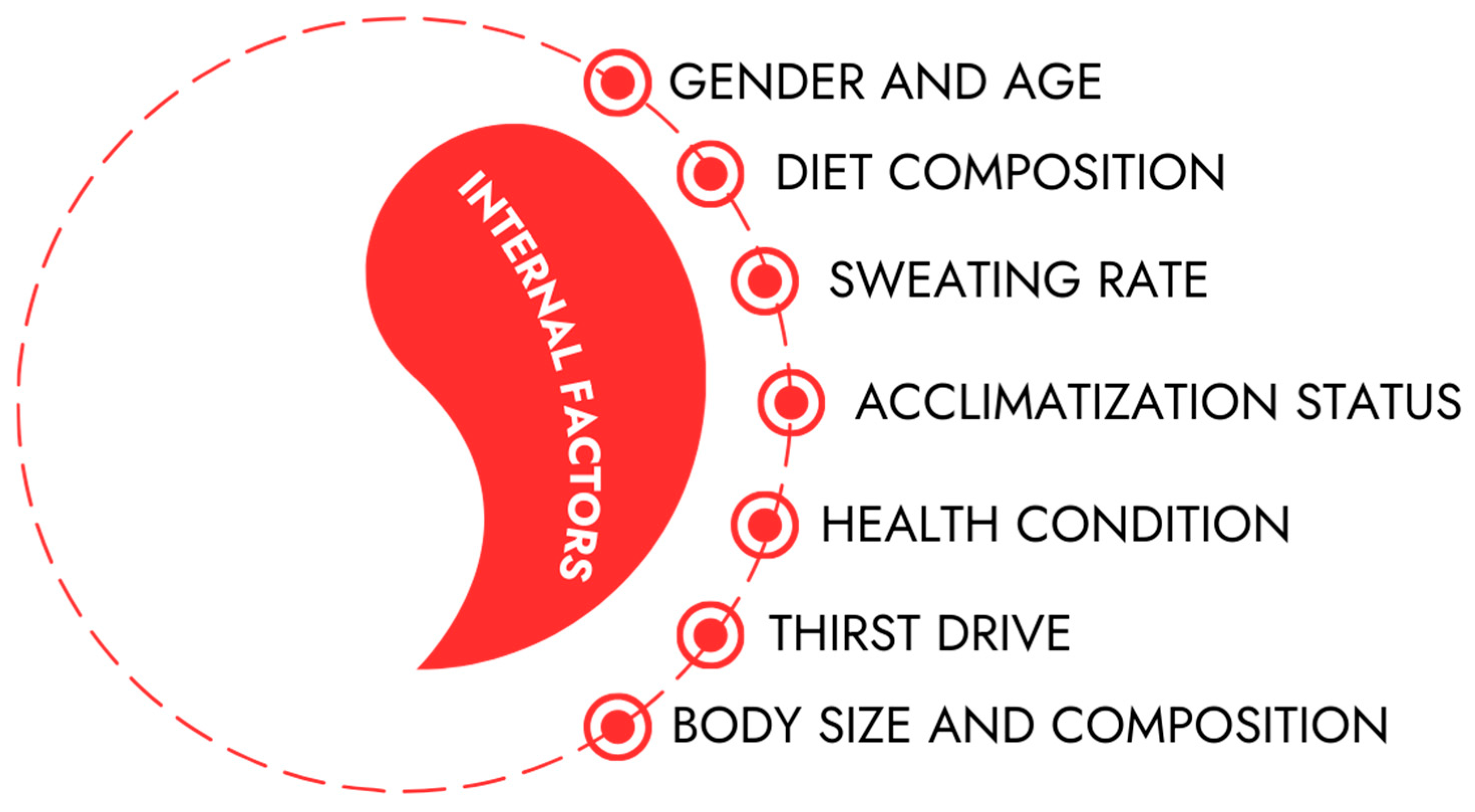
2.1. Internal Factors
- GENDER—Due to differences in body mass and metabolic rate between men and women, men have a higher daily fluid requirement (higher sweating rates). However, the mean sweating rate (expressed relative to body surface area) is similar between women and men in temperate and hot, dry conditions, but is lower in women than men in hot, wet conditions. Less sweat is wasted as a result of the greater suppression of sweat (due to wetted skin). Under these conditions, women lose less fluid because of a lower sweating rate. Men produce more sweat in humid conditions and become more dehydrated (wasting water because of difficult evaporation and insignificant effect on cooling) [2,32,33,34,35,36,37].
- AGE—The influence of age is noticeable both on the thermoregulatory capacity and on the regulation of fluids in the body. Heat tolerance deteriorates with age. Older people begin to sweat later (and less effectively) than younger people, which causes older people to increase their core body temperature or weighted average skin temperature to a greater extent. It should also be noted that the feeling of thirst decreases with age. Older people also have lower total body water content and reduced kidney function [4,38,39,40,41,42,43,44].
- DIET COMPOSITION—The requirement for water also varies depending on the diet composition. More water should be provided as the energy value of the diet increases (because larger amounts of nutrients must be metabolized), and a diet high in protein increases the removal of water-soluble nitrogen compounds (leading to increased diuresis). Excessive fiber consumption promotes greater water loss through feces. In turn, insufficient supply of carbohydrates (CHO) also increases the water requirement due to the need to remove ketones in the urine [3,45,46].
- SWEATING RATE—Sweating rates can depend on work intensity and duration (increasing in proportion to both) as well as heat acclimatization (which increases sweating), fitness levels (higher fitness level increases sweating), clothing (higher clothing insulation increases sweating), and ambient temperatures (higher temperature increases sweating). On the other hand, wet skin (from high humidity) can reduce sweating. The amount of sweat lost varies individually, but usually women produce less sweat and also lose fewer electrolytes than men [1,3,4,31,36].
- ACCLIMATIZATION STATUS—Acclimatization to a hot environment by exercise of low to medium intensity in high temperatures for 1 h a day (or longer) over 9–14 days reduces the risk of heat stress. Heat acclimatization increases sweating rates and therefore requires greater fluid intake; however, heat-acclimatized people drink more often, and they can more accurately match fluid intake to the amount of sweat lost. Changes in the intensity of sweating occur between the 3rd and 10th day of exposure [2,47,48].
- BODY SIZE AND COMPOSITION—The amount of sweat produced is almost proportional to the two-thirds power of body weight, so a 91 kg man will sweat about 30% more than his 59 kg companion performing the same intense exercise. Water constitutes approximately 40–70% of human body weight, and its total content depends on gender, age, and body composition (lean body mass contains ~70–80% water, whereas adipose tissue contains ~10%). Therefore, people with low body fat have a higher total body water content than people with higher body fat, even with the same body weight [2,3,8,35,36,49].
- HEALTH CONDITION—Fever, vomiting, or diarrhea increase fluid losses, so water requirements increase during this time. Moreover, certain drugs, for example, antihypertensives, hypolipemics, hypoglycemics, or drugs for acid- or nervous-related disorders, may affect hydration status. In addition, diabetes mellitus, obesity, or renal disease can also induce water balance alterations [28,45,56,57,58,59].
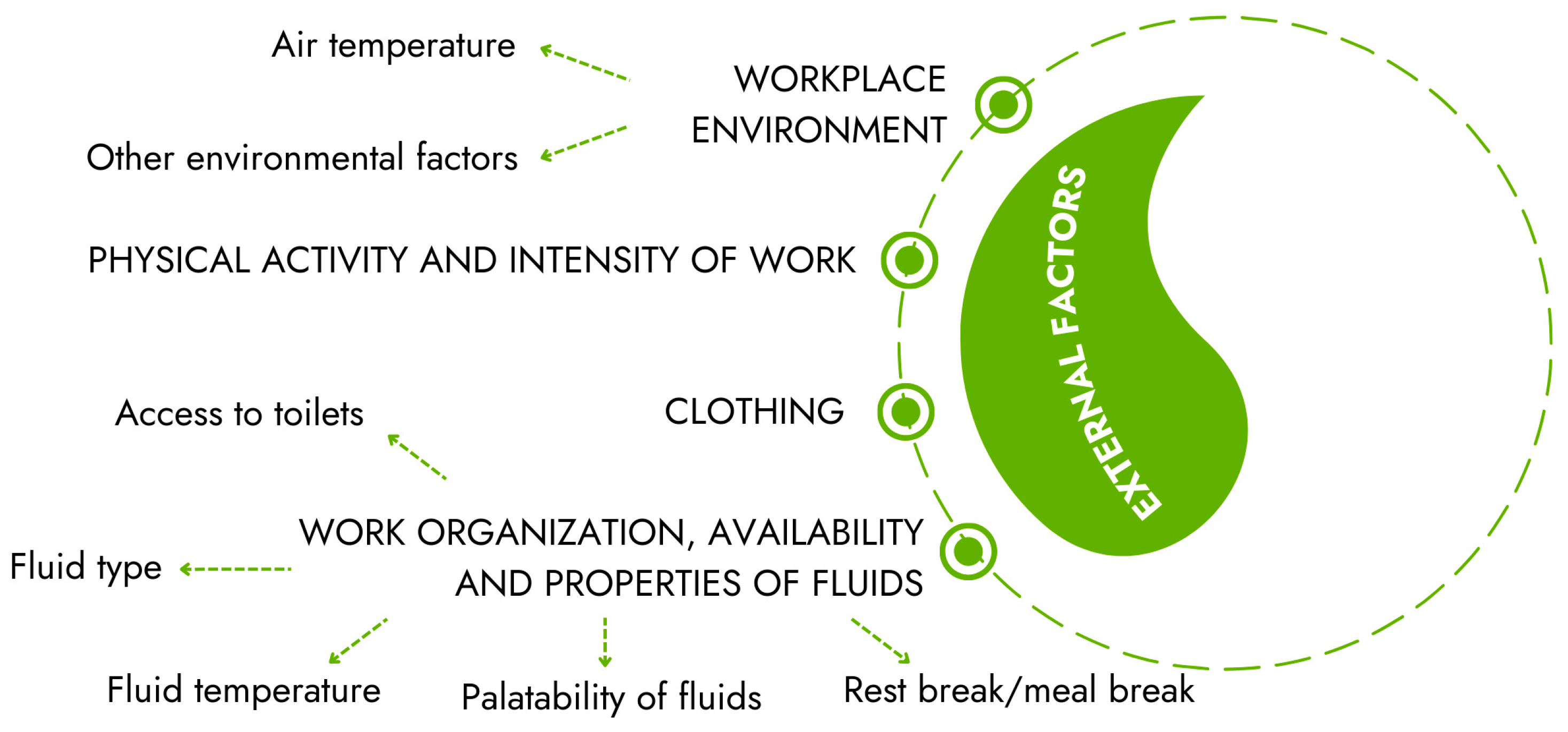
2.2. External Factors
- WORKPLACE ENVIRONMENT:
- Air temperature—When workers work in unfavorable temperature conditions, fluid intake increases depending on environmental conditions. The water requirement increases not only in warm environments at elevated temperatures but also at low temperatures or high altitudes. Water loss from the body—mainly through sweat—significantly increases in warm conditions (sweating begins above 28 °C). In such environments, the rate of sweating (water loss) can reach approximately 2–3 L/h, which is the main cause of dehydration in hot conditions. Water requirements may increase also from 4 to 6 L/day and from 8 to 10 L/day when workers or soldiers perform heavy physical work or for many hours moderate physical work in a moderate environment and in an extremely hot environment, respectively. Some studies have shown that, for soldiers, miners, or construction workers, water losses and therefore also fluid requirements can reach 10–12 L/day in a hot environment. Dehydration in cold environments may reach 3–8% of body weight (levels are similar to those reported for workers in hot climates). The most important factors causing dehydration during work in cold environments are cold-induced diuresis, respiratory water losses, cold-protective clothing (sweat loss due to overdressing), the metabolic cost of movement, impaired thirst sensation, reduced desire to drink, limited access to fluids, and reduced fluid intake to minimize urination [2,3,8,22,31,36,60,61].
- Other environmental factors (the influence of air humidity, air movement, sunlight, or radiation temperature)—The level of air relative humidity may affect the demand for water. At low relative humidity and elevated air temperature, the need for water increases due to increased sweating and the rapid evaporation of sweat from the surface of the skin; air movement also supports heat dissipation and the effectiveness of sweat evaporation. Moreover, high humidity in warmer environments may increase water requirements, although wet skin (from high humidity) can reduce sweating. It should also be noted that cold, dry conditions may increase water loss from the respiratory tract when breathing cold and dry air. Extreme thermal working conditions, which may affect the occurrence of dehydration in workers, are also sometimes observed in atypical places. For example, some buildings (such as hospitals) are of a design type that makes them susceptible to overheating with often hot and humid environments. Moreover, if relative humidity falls due to the use of air conditioning without humidification, an increase in respiratory water loss can occur. Thus, maintaining optimal working environmental temperatures and humidity may help reduce sweating and consequently fluid loss [5,22,23,36,61,62].
- CLOTHING—Clothing is another factor that can have a significant impact on daily water requirements. Typically, garments provide insulation and inhibit vapor evaporation, increasing the heat load, thereby raising the sweating rate compared to wearing shorts and t-shirts. However, in some conditions, clothing can help reduce water requirements. For example, in a hot, dry environment (desert, full sun), light, “breathable” solar-reflecting material can reduce perspiration by up to 20%. On the other hand, in a cold environment, water loss can be the effect of heavy and cumbersome clothing, which causes significant heat storage and sweating. Soldiers dressed in cold-protective clothing (with high thermal insulation ~ 4.0 clo) produced little sweat while resting in the cold, but lost nearly 2.0 L of sweat per hour during moderate or heavy exercise. However, when thermal insulation was about 1.9 clo, a five-fold reduction in the rate of sweating was observed (only approximately 0.4 L/h). Workers in cold climates should dress in layers. Additionally, using face masks can also impede proper fluid intake [2,3,8,22,23,61].
- PHYSICAL ACTIVITY AND INTENSITY OF WORK—The intensity of exercise and its duration reflect the rate of sweating and thus the total loss of fluid. The water requirement increases with greater physical activity (increased losses of water from sweat and through the lungs are observed with longer and more intense efforts). Depending on exercise intensity, duration, and type, fluid requirements vary. Occupational work is characterized by different types of activity (aerobic, anaerobic, and/or strength tasks) interspersed with rest breaks, so large sweat losses in workers can occur, especially when combined with protective clothing and/or extreme thermal work conditions. Moderate-intensity military tasks are estimated to produce a sweating rate of approximately 0.3 L/h, while high-intensity work increases the rate of sweating to approximately 0.7 L/h. However, if moderate-intensity work (with a sweating rate of 0.3 L/h) is extended to 8 h, the daily fluid requirement increases by an additional 2.4 L/day. If people do not match their fluid intake with their sweat loss, it can lead to over-drinking or under-drinking during different types of physical activity [1,2,3,22,23,31,36,47,63,64,65,66].
- WORK ORGANIZATION:
- Rest break/meal break—Workers will refrain from drinking water if they have to walk long distances to get it. Workers may become voluntarily dehydrated while working, especially in cold or hot climates, but they may replenish water with meals. Meals are a valuable opportunity to maintain hydration (as they stimulate thirst and result in the intake of extra fluids) and provide nutrients (including electrolytes lost through sweat) necessary to achieve full hydration. It was shown that 30% of water is obtained from food in total in-shift fluid intake of workers [2,69].
- Fluid type—Water is the most commonly consumed beverage throughout Europe. However, drinking patterns and quantities vary and are influenced by age, gender, diet, physical activity level, time of day, environment, and climatic conditions, as well as the availability of palatable tap water or other drinks, regional differences in drinking pattern culture, and tradition. As beverage preferences may vary among employees, workers should have a certain degree of “autonomy” regarding the type of fluids they consume [30,54,70,71,72,73,74,75,76].
- The palatability of fluids—Odor, taste, temperature, color, and fluid turbidity influence fluid palatability. Voluntary consumption of fluids will be reduced if the water has an unpleasant taste or odor. Allowing workers a certain degree of “autonomy” regarding the palatability of the fluids they consume could maximize enjoyment and help increase fluid intake [2,70,75,77].
- Fluids temperature—Some authors described that drinking too cold drinks can cause cramps in the digestive system and, due to the constriction of blood vessels and reduced blood flow, also slower fluid absorption. Therefore, they recommend beverages close to body temperature. However, such an approach does not seem to be justified, especially in a hot and humid microclimate, because the regulation of gastric emptying is multifactorial, with the basic factors being gastric volume and energy density of the drink (high energy density and small stomach volume slow emptying rates). Drink temperature has little effect on gastric emptying. The National Institute for Occupational Safety and Health (NIOSH) and the Occupational Safety and Health Administration (OSHA) recommend that in hot environments, workers should drink chilled fluids (10–15 °C, not too cold), whereas in cold environments, it is better to choose warm drinks. A chilled drink could act as a “cooler” because it requires an energy input to raise the temperature of the ingested fluid to body temperature, and this suppresses the increase in internal temperature. In turn, in a cold environment, when body temperature is lowered, drinking warm beverages may help increase core body temperature. On the other hand, it was suggested that drinking hot beverages may “cool” the body, if sweat can evaporate from the body’s surface. This happens, for example, in a dry and hot environment. In the case of high temperature and high humidity, sweat evaporation is difficult, and thus hot drinks do not provide a cooling effect [1,23,31,68,70,75,78,79,80,81,82,83,84,85,86].
3. Hydration Status Among Workers
4. Consequences of Dehydration
5. What We Lose with Sweat
6. Fluid Consumption Strategies
- Determined in mL/kg (Equation (1)):
- Determined in mL/kcal expenditure (Equation (2)):
7. Types of Fluids
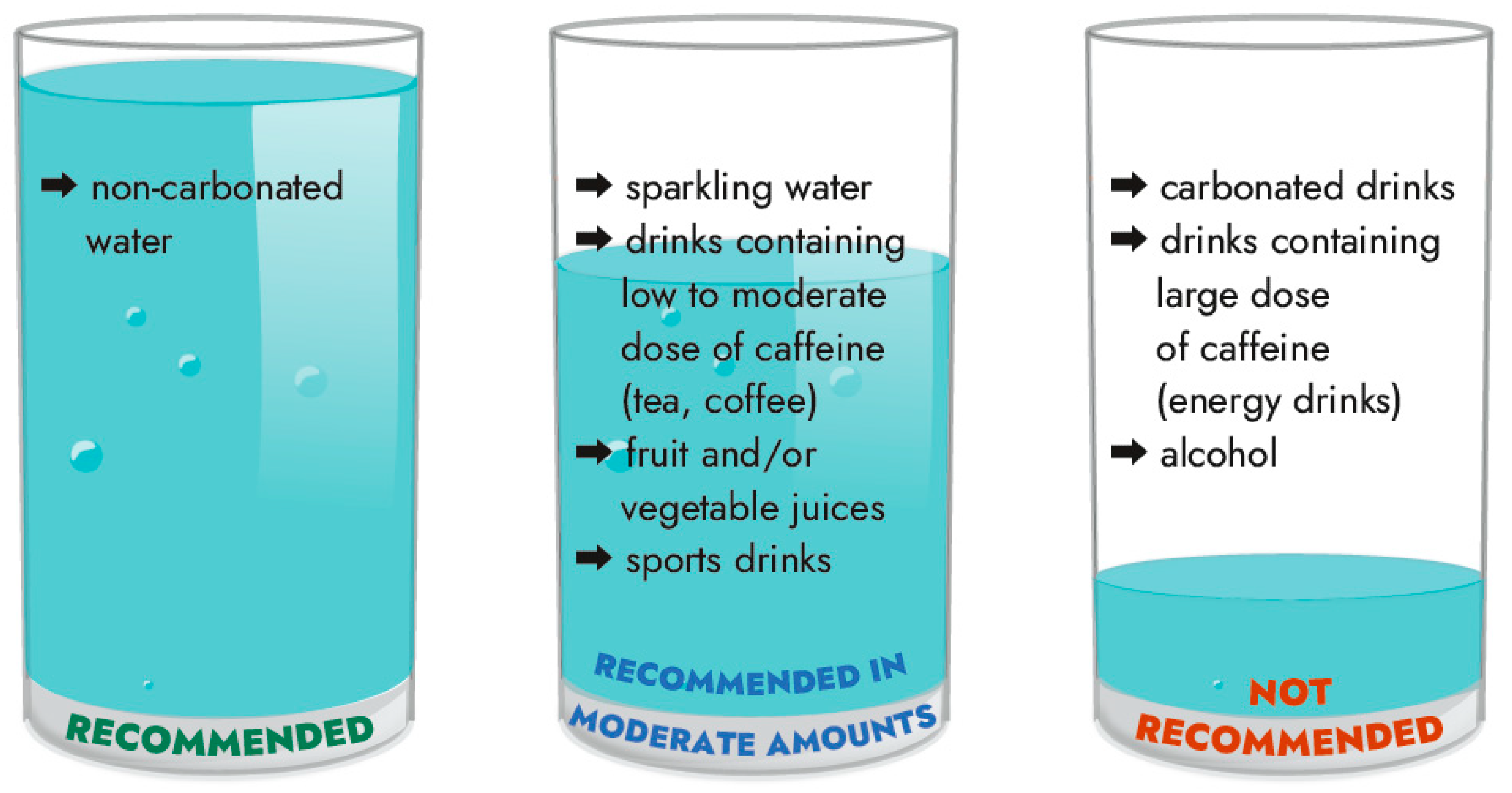
- Non-carbonated (still, plain) water—Workers should consume the largest amount of non-carbonated water (spring or mineral). Spring water is universal, while mineral waters require understanding of individual health needs. For example, people with kidney stones should avoid water with a high calcium content, whereas people with osteoporosis should especially choose this type of water. People suffering from hypertension should select low-sodium water, while workers exposed to high temperatures may benefit more from water with a high sodium content. However, one should not drink large amounts of water (without sodium at the same time) because it is hypotonic and is excreted faster by the kidneys, accelerating dehydration of the body. Moreover, excessive water consumption may disturb the water—electrolyte balance [31,45,82,83,84,85,89,117,118,133,138,139].
- Fruit and vegetable juices and/or sports drinks—Workers should drink these in limited amounts. They contain carbohydrates and other nutrients that may be beneficial in certain situations. However, consuming these drinks in the amounts required to compensate for sweat loss may cause gastrointestinal discomfort due to the slowing of gastric emptying, which is proportional to the energy content of the drink. In addition, sports drinks (isotonic drinks) and fruit juices can increase total energy consumption during the day and therefore should not be consumed in large amounts [31,79,89,117,118,137].
- Carbonated drinks—Carbonated (especially sugary) drinks should be avoided because the carbon dioxide (CO2) they contain stretches the stomach walls and reflexively inhibits thirst, which may lead to workers drinking less fluid than needed. Moreover, these drinks contain added sugars, which may increase calorie intake. However, Maughan et al. [140] reported that sparkling water is as hydrating as regular water. On the other hand, apart from carbonation’s effects on satiety, sparkling water and other carbonated drinks may affect bloating and may worsen this condition. In general, some workers may find the fizz from CO2 appealing, which can increase their daily water intake. The Centers for Disease Control and Prevention (CDC; USA) promotes water, even sparkling water, over sugary drinks for those who do not like to drink plain water. However, waters containing CO2 are not recommended for people suffering from hyperacidity, gastric and duodenal ulcers, throat and vocal cord diseases, as well as people with respiratory or circulatory failure. Moreover, if workers do not consume enough calories or if they are not hungry at mealtimes, they should not choose carbonated water, as it may further reduce their food and fluid intake [31,45,140,141,142,143,144,145,146,147,148,149].
- Drinks containing caffeine—Some authors recommend avoiding drinks containing caffeine because they can increase diuresis and the loss of larger amounts of water and disrupt the body’s water and electrolyte balance. According to the EFSA [150], daily caffeine intake from all sources up to 400 mg (approximately 5.7 mg/kg body mass) seems safe for adults in the general population (except for pregnant women). Large doses (≥500 mg) of caffeine may elicit a diuretic effect. On the other hand, the development of tolerance to the diuretic effect may appear with regular coffee drinking. However, four days is sufficient time for the loss of tolerance when caffeine is discontinued. The common opinion is that higher doses of caffeine—but not low to moderate doses—may cause an acute increase in urine volume in caffeine-naive individuals (those who do not habitually consume caffeine or those who have abstained from caffeine consumption for ≥ 4 days) [151,152,153]. Because of that, some recommendations state that coffee or tea can effectively contribute to total daily fluid intake [64,117,118,138,154].
8. Workplace Hydration—Recommendation
- (1)
- In hot microclimates (WBGT above 25 °C),
- (2)
- In cold microclimates (WCI above 1000),
- (3)
- When working outdoors at air temperatures below 10 °C or above 25 °C,
- (4)
- When working in physically demanding jobs (effective energy expenditure above 1500 kcal for men and 1000 kcal for women),
- (5)
- At workstations where the air temperature exceeds 28 °C.
9. Summary
- Be properly hydrated before starting work;
- Frequently drink small amounts of fluids right from the beginning of work;
- Compensate for fluid deficiencies after finishing work;
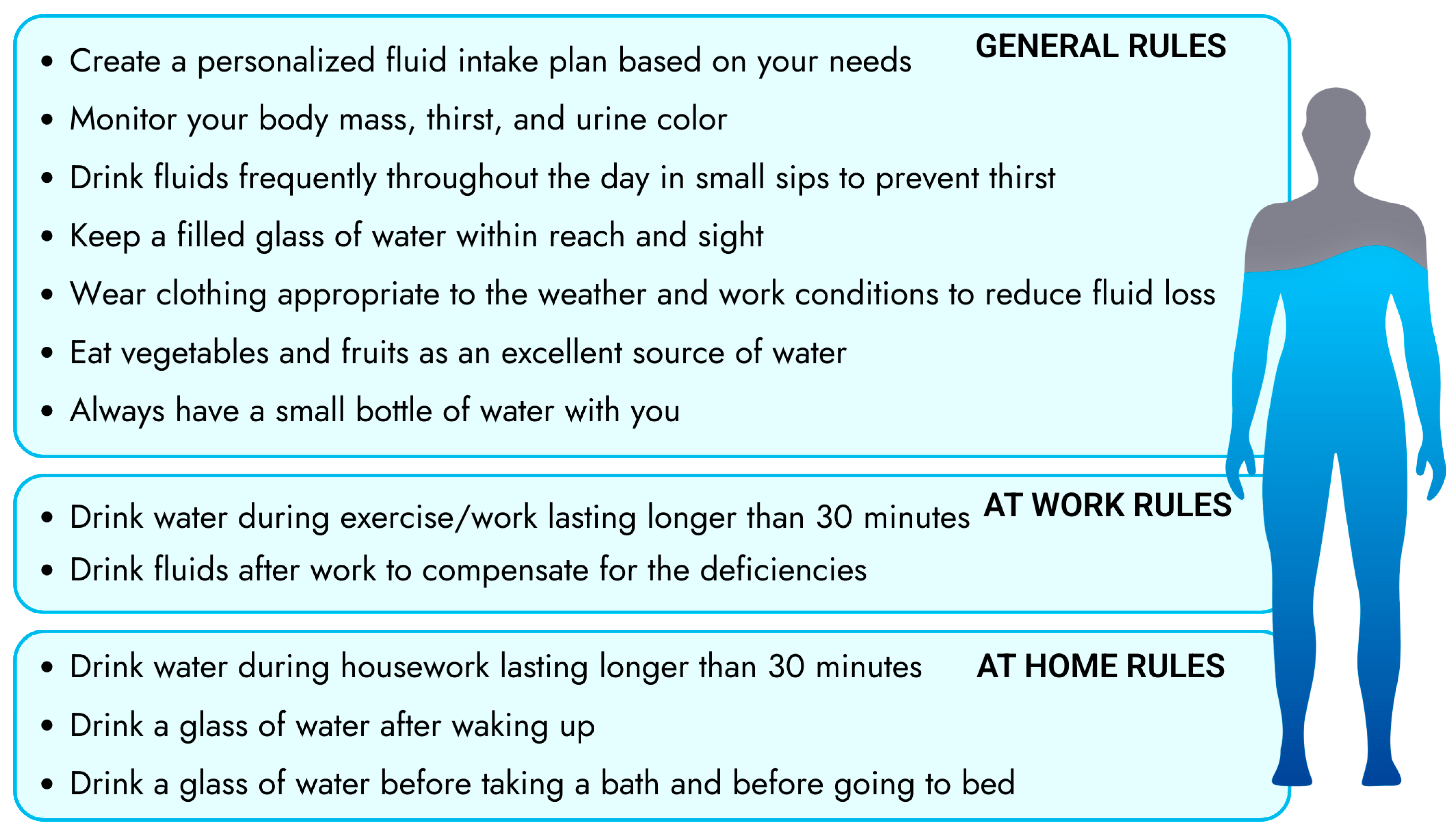
- Create an individualized hydration plan.
Limitations
Author Contributions
Funding
Institutional Review Board Statement
Informed Consent Statement
Data Availability Statement
Conflicts of Interest
References
- Mikulski, T. Woda i elektrolity podczas wysiłku fizycznego. In Dietetyka Sportowa; Frączak, B., Krzywański, J., Krysztofiak, H., Eds.; PZWL: Warszawa, Poland, 2019; pp. 317–336. (In Polish) [Google Scholar]
- Montain, S.; Ely, M.; Santee, W.; Friedl, K. Water Requirements and Soldier Hydration; Borden Institute: Washington, DC, USA, 2010. Available online: https://medcoeckapwstorprd01.blob.core.usgovcloudapi.net/pfw-images/borden/HydrationPDF.pdf (accessed on 1 November 2025).
- Orysiak, J.; Młynarczyk, M. Nawodnienie organizmu w miejscu pracy w mikroklimacie gorącym. (Hydration of the human body in the workplace, in a hot microclimate). Bezpieczeństwo Pracy. Nauka I Prakt. 2020, 7, 17–21. (In Polish) [Google Scholar]
- Périard, J.D.; Eijsvogels, T.M.H.; Daanen, H.A.M. Exercise under heat stress: Thermoregulation, hydration, performance implications, and mitigation strategies. Physiol. Rev. 2021, 101, 1873–1979. [Google Scholar] [CrossRef]
- Sobolewski, A.; Młynarczyk, M.; Konarska, M.; Bugajska, J. The influence of air humidity on human heat stress in a hot environment. J. Occup. Saf. Ergon. 2021, 27, 226–236. [Google Scholar] [CrossRef]
- Jacklitsch, B.; Williams, W.J.; Musolin, K.; Coca, A.; Kim, J.-H.; Turner, N. NIOSH Criteria for a Recommended Standard: Occupational Exposure to Heat and Hot Environments; DHHS (NIOSH) Publication 2016-106; U.S. Department of Health and Human Services, Centers for Disease Control and Prevention, National Institute for Occupational Safety and Health: Atlanta, GA, USA, 2016.
- Sobolewski, A.; Młynarczyk, M.; Konarska, M.; Bugajska, J. Effect of previous lowering of skin temperature on the time of safe exposure to a hot environment: A case study. Int. J. Occup. Saf. Ergon. 2021, 27, 237–246. [Google Scholar] [CrossRef] [PubMed]
- Kenefick, R.W.; Sawka, M.N. Hydration at the work site. J. Am. Coll. Nutr. 2007, 26, 597S–603S. [Google Scholar] [CrossRef]
- Parsons, K. (Ed.) Dehydration and water requirements. In Human Thermal Environments, 3rd ed.; Taylor and Francis Group: Abingdon, UK, 2014; pp. 139–159. [Google Scholar]
- Okręglicka, K.; Wiśniewska, K.; Jarosz, A. Consequences of excessive fluid intake—Water intoxication. Pol. J. Sport. Med. 2017, 33, 167–176. [Google Scholar] [CrossRef]
- Gun, R. Deaths in Australia from Work-Related Heat Stress, 2000–2015. Int. J. Environ. Res. Public Health 2019, 16, 3601. [Google Scholar] [CrossRef]
- Ioannou, L.G.; Mantzios, K.; Tsoutsoubi, L.; Nintou, E.; Vliora, M.; Gkiata, P.; Dallas, C.N.; Gkikas, G.; Agaliotis, G.; Sfakianakis, K.; et al. Occupational Heat Stress: Multi-Country Observations and Interventions. Int. J. Environ. Res. Public Health 2021, 18, 6303. [Google Scholar] [CrossRef] [PubMed]
- Flouris, A.D.; Ioannou, L.G.; Dinas, P.C.; Mantzios, K.; Gkiata, P.; Gkikas, G.; Vliora, M.; Amorim, T.; Tsoutsoubi, L.; Kapnia, A.; et al. Assessment of Occupational Heat Strain and Mitigation Strategies in Qatar; Report Number FL/2019/13; International Labour Organization: Doha, Qatar, 2019. [Google Scholar]
- Health and Safety Executive (HSE). The Law on Workplace Safety. Available online: https://www.hse.gov.uk/workplace-health/law.htm (accessed on 1 November 2025).
- Occupational Safety and Health Administration (OSHA) 1910.141—Sanitation. Available online: https://www.osha.gov/laws-regs/regulations/standardnumber/1910/1910.141 (accessed on 1 November 2025).
- Rozporządzenie Ministra Pracy i Polityki Socjalnej w Sprawie Ogólnych Przepisów Bezpieczeństwa i Higieny Pracy (Dz.U. 1997 nr 129 poz. 844 z Późn. zm.) [Regulation of the Minister of Labor and Social Policy on General Occupational Health and Safety Regulations (JL 1997, No. 129, Item 844; as Amended)]. Available online: https://isap.sejm.gov.pl/isap.nsf/DocDetails.xsp?id=wdu19971290844 (accessed on 1 November 2025).
- Orysiak, J.; Młynarczyk, M.; Tomaszewski, P. Fluid intake at work in foresters working in different thermal conditions. Sci. Rep. 2023, 13, 15870. [Google Scholar] [CrossRef] [PubMed]
- Abasilim, C.; Friedman, L.S.; Martin, M.C.; Madigan, D.; Perez, J.; Morera, M.; Tovar, A.; Roka, F.; Xiuhtecutli, N.; Forst, L.; et al. Risk factors associated with indicators of dehydration among migrant farmworkers. Environ. Res. 2024, 251, 118633. [Google Scholar] [CrossRef]
- Morrissey, M.C.; Casa, D.J.; Brewer, G.J.; Adams, W.M.; Hosokawa, Y.; Benjamin, C.L.; Grundstein, A.J.; Hostler, D.; McDermott, B.P.; McQuerry, M.L.; et al. Heat Safety in the Workplace: Modified Delphi Consensus to Establish Strategies and Resources to Protect the US Workers. Geohealth 2021, 5, e2021GH000443. [Google Scholar] [CrossRef]
- Papadopoulou, A.-M.; Apergi, K.; Panagopoulou, M.-V.; Argyri, K.; Malisova, O. Hydration Habits and Water Balance in a Working Population in Greece. Nutrients 2025, 17, 371. [Google Scholar] [CrossRef]
- Roca, J.; Sanromà-Ortiz, M.; Cemeli, T.; Tort-Nasarre, G.; Santamaría, A.L.; Espart, A.; Cantos-Puig, C.; Campoy, C. Health Interventions for the Prevention of Dehydration in Agricultural Workers Exposed to Heat Stress: A Systematic Review. Healthcare 2025, 13, 1232. [Google Scholar] [CrossRef] [PubMed]
- Freund, B.J.; Sawka, M.N. Influence of Cold Stress on Human Fluid Balance. In Nutritional Needs in Cold and in High-Altitude Environments: Applications for Military Personnel in Field Operations, Institute of Medicine (US) Committee on Military Nutrition Research; Marriott, B.M., Carlson, S.J., Eds.; National Academies Press: Washington, DC, USA, 1996; Chapter 9; pp. 161–179. [Google Scholar]
- Castellani, J.W.; O’Brien, C.; Baker-Fulco, C.; Sawka, M.N.; Young, A.J. Sustaining Health & Performance in Cold Weather Operations; Technical Note; TN/02-2 AD; US Army Research Institute of Environmental Medicine: Natick, MA, USA, 2001. Available online: https://apps.dtic.mil/sti/pdfs/ADA395745.pdf (accessed on 1 November 2025).
- Orysiak, J.; Młynarczyk, M.; Tomaszewski, P. Hydration Status in Men Working in Different Thermal Environments: A Pilot Study. Int. J. Environ. Res. Public Health 2022, 19, 5627. [Google Scholar] [CrossRef]
- Parker, R.; Ashby, L.; Bates, G. Dehydration in loggers—Effects of season and time of day. COHFE Rep. 2002, 3, 1174–1234. [Google Scholar]
- Biggs, C.; Paterson, M.; Maunder, E. Hydration status of South African forestry workers harvesting trees in autumn and winter. Ann. Occup. Hyg. 2011, 55, 6–15. [Google Scholar] [CrossRef]
- Miller, V.S.; Bates, G.P. Hydration, hydration, hydration. Ann. Occup. Hyg. 2010, 54, 134–136. [Google Scholar] [CrossRef]
- European Food Safety Authority (EFSA). Scientific Opinion on Dietary Reference Values for water. EFSA J. 2010, 8, 1459. [Google Scholar] [CrossRef]
- Ferreira-Pêgo, C.; Guelinckx, I.; Moreno, L.A.; Kavouras, S.A.; Gandy, J.; Martinez, H.; Bardosono, S.; Abdollahi, M.; Nasseri, E.; Jarosz, A.; et al. Total fluid intake and its determinants: Cross-sectional surveys among adults in 13 countries worldwide. Eur. J. Nutr. 2015, 54, 35–43. [Google Scholar] [CrossRef]
- Braun, H.; von Andrian-Werburg, J.; Malisova, O.; Athanasatou, A.; Kapsokefalou, M.; Ortega, J.F.; Mora-Rodriguez, R.; Thevis, M. Differing Water Intake and Hydration Status in Three European Countries—A Day-to-Day Analysis. Nutrients 2019, 11, 773. [Google Scholar] [CrossRef] [PubMed]
- Maughan, R.J.; Watson, P.; Shirreffs, S.M. Implications of active lifestyles and environmental factors for water needs and consequences of failure to meet those needs. Nutr. Rev. 2015, 73, 130–140. [Google Scholar] [CrossRef] [PubMed]
- Avellini, B.A.; Kamon, E.; Krajewski, J.T. Physiological responses of physically fit men and women to acclimation to humid heat. J. Appl. Physiol. 1980, 49, 254–261. [Google Scholar] [CrossRef] [PubMed]
- Shapiro, Y.; Pandolf, K.B.; Avellini, B.A.; Pimental, N.A.; Goldman, R.F. Physiological responses of men and women to humid and dry heat. J. Appl. Physiol. 1980, 49, 1–8. [Google Scholar] [CrossRef]
- Sawka, M.N.; Toner, M.M.; Francesconi, R.P.; Pandolf, K.B. Hypohydration and exercise: Effects of heat acclimation, gender, and environment. J. Appl. Physiol. 1983, 55, 1147–1153. [Google Scholar] [CrossRef]
- Sawka, M.N.; Burke, L.M.; Eichner, E.R.; Maughan, R.J.; Montain, S.J.; Stachenfeld, N.S. American College of Sports Medicine position stand. Exercise and fluid replacement. Med. Sci. Sports Exerc. 2007, 39, 377–390. [Google Scholar] [CrossRef]
- Baker, L.B.; Jeukendrup, A.E. Optimal composition of fluid-replacement beverages. Compr. Physiol. 2014, 4, 575–620. [Google Scholar] [CrossRef] [PubMed]
- Niu, Z.; Goto, T. Effects of individual characteristics and local body functions on sweating response: A review. Int. J. Biometeorol. 2024, 68, 2185–2204. [Google Scholar] [CrossRef]
- Wagner, J.A.; Robinson, S.; Tzankof, S.P.; Marino, R.P. Heat tolerance and acclimatization to work in the heat in relation to age. J. Appl. Physiol. 1972, 72, 616–622. [Google Scholar] [CrossRef]
- Phillips, P.A.; Rolls, B.J.; Ledingham, J.G.; Forsling, M.L.; Morton, J.J.; Crowe, M.J.; Wollner, L. Reduced thirst after water deprivation in healthy elderly men. N. Engl. J. Med. 1984, 311, 753–759. [Google Scholar] [CrossRef]
- Mack, G.W.; Weseman, C.A.; Langhans, G.W.; Scherzer, H.; Gillen, C.M.; Nadel, E.R. Body fluid balance in dehydrated healthy older men: Thirst and renal osmoregulation. J. Appl. Physiol. 1994, 76, 1615–1623. [Google Scholar] [CrossRef]
- Magiera, A.; Kaczmarczyk, K.; Wiszomirska, I.; Olszewska, E. Wydolność fizyczna kobiet w starszym wieku. Post. Rehabil. 2012, 2, 29–36. (In Polish) [Google Scholar] [CrossRef]
- Pandolf, K.B. Aging and human heat tolerance. Exp. Aging Res. 1997, 23, 69–105. [Google Scholar] [CrossRef]
- Li, S.; Xiao, X.; Zhang, X. Hydration Status in Older Adults: Current Knowledge and Future Challenges. Nutrients 2023, 15, 2609. [Google Scholar] [CrossRef]
- Pence, J.; Davis, A.; Allen-Gregory, E.; Bloomer, R.J. Hydration Strategies in Older Adults. Nutrients 2025, 17, 2256. [Google Scholar] [CrossRef] [PubMed]
- Brzozowska, A.; Gawęcki, J. Woda w Żywieniu i Jej Źródła; Wydawnictwo Uniwersytetu Przyrodniczego w Poznaniu: Poznań, Poland, 2015. [Google Scholar]
- Rychlik, E.; Woźniak, A. Woda. In Normy Żywienia dla Populacji Polski; Rychlik, E., Stoś, K., Woźniak, A., Mojska, H., Eds.; NIZP-PZH: Warszawa, Poland, 2024; pp. 145–157. [Google Scholar]
- Belval, L.N.; Hosokawa, Y.; Casa, D.J.; Adams, W.M.; Armstrong, L.E.; Baker, L.B.; Burke, L.; Cheuvront, S.; Chiampas, G.; González-Alonso, J.; et al. Practical Hydration Solutions for Sports. Nutrients 2019, 11, 1550. [Google Scholar] [CrossRef] [PubMed]
- Kenney, W.L. Physiology of Sport and Exercise, 5th ed.; Kenney, W.L., Wilmore, J.H., Costill, D.L., Eds.; Human Kinetics: Champaign, IL, USA, 2011. [Google Scholar]
- Laja García, A.I.; Moráis-Moreno, C.; Samaniego-Vaesken, M.d.L.; Puga, A.M.; Varela-Moreiras, G.; Partearroyo, T. Association between Hydration Status and Body Composition in Healthy Adolescents from Spain. Nutrients 2019, 11, 2692. [Google Scholar] [CrossRef]
- Greenleaf, J.E. Problem: Thirst, drinking behavior, and involuntary dehydration. Med. Sci. Sports Exerc. 1992, 24, 645–656. [Google Scholar] [CrossRef] [PubMed]
- Kenefick, R.W.; Hazzard, M.P.; Mahood, N.V.; Castellani, J.W. Thirst sensations and AVP responses at rest and during exercise-cold exposure. Med. Sci. Sports Exerc. 2004, 36, 1528–1534. [Google Scholar] [CrossRef]
- Cotter, J.D.; Thornton, S.N.; Lee, J.K.; Laursen, P.B. Are we being drowned in hydration advice? Thirsty for more? Extrem. Physiol. Med. 2014, 3, 18. [Google Scholar] [CrossRef]
- Racinais, S.; Alonso, J.M.; Coutts, A.J.; Flouris, A.D.; Girard, O.; González-Alonso, J.; Hausswirth, C.; Jay, O.; Lee, J.K.; Mitchell, N.; et al. Consensus Recommendations on Training and Competing in the Heat. Sports Med. 2015, 49, 1164–1173. [Google Scholar] [CrossRef]
- Walden, M.; Mayländer, S.; Kaeding, T.S. Drinking Patterns and Fluid Intake in the Settings Workplace and University: A Systematic Review. J. Nutr. Health Sci. 2018, 5, 410. [Google Scholar]
- Adams, W.M.; Vandermark, L.W.; Belval, L.N.; Casa, D.J. The Utility of Thirst as a Measure of Hydration Status Following Exercise-Induced Dehydration. Nutrients 2019, 11, 2689. [Google Scholar] [CrossRef]
- Popkin, B.M.; D’Anci, K.E.; Rosenberg, I.H. Water, hydration, and health. Nutr. Rev. 2010, 68, 439–458. [Google Scholar] [CrossRef]
- National Collaborating Centre for Women’s and Children’s Health (UK). 5, Fluid management. In Diarrhoea and Vomiting Caused by Gastroenteritis: Diagnosis, Assessment and Management in Children Younger than 5 Years; NICE Clinical Guidelines, No. 84; RCOG Press: London, UK, 2009. Available online: https://www.ncbi.nlm.nih.gov/books/NBK63837/ (accessed on 1 November 2025).
- Walter, A.N.; Lenz, T.L. Hydration and Medication Use. Am. J. Lifestyle Med. 2011, 5, 332–335. [Google Scholar] [CrossRef]
- Puga, A.M.; Lopez-Oliva, S.; Trives, C.; Partearroyo, T.; Varela-Moreiras, G. Effects of Drugs and Excipients on Hydration Status. Nutrients 2019, 11, 669. [Google Scholar] [CrossRef]
- Thomas, D.T.; Erdman, K.A.; Burke, L.M. American College of Sports Medicine Joint Position Statement. Nutrition and Athletic Performance. Med. Sci. Sports Exerc. 2016, 48, 543–568. [Google Scholar] [CrossRef]
- Keeler, S. Cold Weather Increases Risk of Dehydration. UNH Today, 28 January 2005, p. 1528. Available online: https://scholars.unh.edu/news/1528 (accessed on 1 November 2025).
- El-Sharkawy, A.M.; Bragg, D.; Watson, P.; Neal, K.; Sahota, O.; Maughan, R.J.; Lobo, D.N. Hydration amongst nurses and doctors on-call (the HANDS on prospective cohort study). Clin. Nutr. 2016, 35, 935–942. [Google Scholar] [CrossRef]
- De Francisco, A.L.M.; Castelao, A.M. Bahia 2008 study: Hydration barometer in the Spanish population. Nefrol. íA 2010, 30, 220–226. [Google Scholar] [CrossRef]
- Spitz, M.G.; Castellani, J.W.; Freund, B.J.; Sawka, M.N. Management of Heat and Cold Stress—Guidance to NATO Medical Personnel; Technical Report; T13-3; US Army Research Institute of Environmental Medicine: Natick, MA, USA, 2012. Available online: https://apps.dtic.mil/sti/tr/pdf/ADA571324.pdf (accessed on 1 November 2025).
- Cosgrove, S.D.; Love, T.D.; Brown, R.C.; Baker, D.F.; Howe, A.S.; Black, K.E. Fluid and electrolyte balance during two different preseason training sessions in elite rugby union players. J. Strength. Cond. Res. 2014, 28, 520–527. [Google Scholar] [CrossRef] [PubMed]
- Consortium for Health and Military Performance (CHAMP). Warfighter Nutrition Guide. Available online: https://www.hprc-online.org/nutrition/warfighter-nutrition-guide (accessed on 1 November 2025).
- Mears, S.A.; Shirreffs, S.M. Assessing hydration status and reported beverage intake in the workplace. Am. J. Lifestyle Med. 2015, 9, 157–168. [Google Scholar] [CrossRef]
- Ioannou, L.G.; Foster, J.; Morris, N.B.; Piil, J.F.; Havenith, G.; Mekjavic, I.B.; Kenny, G.P.; Nybo, L.; Flouris, A.D. Occupational heat strain in outdoor workers: A comprehensive review and meta-analysis. Temperature 2022, 9, 67–102. [Google Scholar] [CrossRef]
- Raines, J.; Snow, R.; Petersen, A.; Harvey, J.; Nichols, D.; Aisbett, B. Pre-shift fluid intake: Effect on physiology, work and drinking during emergency wildfire fighting. Appl. Ergon. 2012, 43, 532–540. [Google Scholar] [CrossRef]
- Burdon, C.A.; Johnson, N.A.; Chapman, P.G.; O’Connor, H.T. Influence of beverage temperature on palatability and fluid ingestion during endurance exercise: A systematic review. Int. J. Sport. Nutr. Exerc. Metab. 2012, 22, 199–211. [Google Scholar] [CrossRef]
- Elmadfa, I.; Meyer, A.L. Patterns of drinking and eating across the European Union: Implications for hydration status. Nutr. Rev. 2015, 73, 141–147. [Google Scholar] [CrossRef] [PubMed]
- Guelinckx, I.; Ferreira-Pêgo, C.; Moreno, L.A.; Kavouras, S.A.; Gandy, J.; Martinez, H.; Bardosono, S.; Abdollahi, M.; Nasseri, E.; Jarosz, A.; et al. Intake of water and different beverages in adults across 13 countries. Eur. J. Nutr. 2015, 54, 45–55. [Google Scholar] [CrossRef]
- Athanasatou, A.; Malisova, O.; Kandyliari, A.; Kapsokefalou, M. Water Intake in a Sample of Greek Adults Evaluated with the Water Balance Questionnaire (WBQ) and a Seven-Day Diary. Nutrients 2016, 8, 559. [Google Scholar] [CrossRef]
- Malisova, O.; Athanasatou, A.; Pepa, A.; Husemann, M.; Domnik, K.; Braun, H.; Mora-Rodriguez, R.; Ortega, J.F.; Fernandez-Elias, V.E.; Kapsokefalou, M. Water Intake and Hydration Indices in Healthy European Adults: The European Hydration Research Study (EHRS). Nutrients 2016, 8, 204. [Google Scholar] [CrossRef] [PubMed]
- Brearley, M.B. Should Workers Avoid Consumption of Chilled Fluids in a Hot and Humid Climate? Saf. Health Work 2017, 8, 327–328. [Google Scholar] [CrossRef]
- Vieux, F.; Maillot, M.; Rehm, C.D.; Barrios, P.; Drewnowski, A. The Timing of Water and Beverage Consumption During the Day Among Children and Adults in the United States: Analyses of NHANES 2011–2016 Data. Nutrients 2019, 11, 2707. [Google Scholar] [CrossRef] [PubMed]
- Jung, A.P.; Dale, R.B.; Bishop, P.A. Ambient-temperature beverages are consumed at a rate similar to chilled water in heat-exposed workers. J. Occup. Environ. Hyg. 2007, 4, 54–57. [Google Scholar] [CrossRef]
- Leiper, J.B. Fate of ingested fluids: Factors affecting gastric emptying and intestinal absorption of beverages in humans. Nutr. Rev. 2015, 73, 57–72. [Google Scholar] [CrossRef] [PubMed]
- Benton, D.; Braun, H.; Cobo, J.C.; Edmonds, C.; Elmadfa, I.; El-Sharkawy, A.; Feehally, J.; Gellert, R.; Holdsworth, J.; Kapsokefalou, M.; et al. Executive summary and conclusions from the European Hydration Institute Expert Conference on human hydration, health, and performance. Nutr. Rev. 2015, 73, 148–150. [Google Scholar] [CrossRef] [PubMed]
- Hailes, W.S.; Cuddy, J.S.; Cochrane, K.; Ruby, B.C. Thermoregulation During Extended Exercise in the Heat: Comparisons of Fluid Volume and Temperature. Wilderness Environ. Med. 2016, 27, 386–392. [Google Scholar] [CrossRef]
- Bain, A.R.; Lesperance, N.C.; Jay, O. Body heat storage during physical activity is lower with hot fluid ingestion under conditions that permit full evaporation. Acta Physiol. 2012, 206, 98–108. [Google Scholar] [CrossRef]
- National Institute for Occupational Safety and Health (NIOSH). Preventing Cold-Related Illness, Injury, and Death Among Workers; Jacklitsch, B., Ceballos, D., Cincinnati, O.H., Eds.; DHHS (NIOSH) Publication No. 2019-113; U.S. Department of Health and Human Services, Centers for Disease Control and Prevention, National Institute for Occupational Safety and Health: Atlanta, GA, USA, 2019. [CrossRef]
- National Institute for Occupational Safety and Health (NIOSH). Heat Stress—Recommendations. Available online: https://www.cdc.gov/niosh/heat-stress/recommendations/?CDC_AAref_Val=https://www.cdc.gov/niosh/topics/heatstress/recommendations.html (accessed on 1 November 2025).
- Occupational Safety and Health Administration (OSHA). Cold Stress Guide. Available online: https://www.osha.gov/emergency-preparedness/guides/cold-stress (accessed on 1 November 2025).
- Occupational Safety and Health Administration (OSHA). Protecting Workers from Heat Illness. Available online: https://www.osha.gov/Publications/osha-niosh-heat-illness-infosheet.pdf (accessed on 1 November 2025).
- Centers for disease control and prevention (CDC). About Heat and Your Health. Available online: https://www.cdc.gov/heat-health/about/index.html?CDC_AA_refVal=https%3A%2F%2Fwww.cdc.gov%2Fextreme-heat%2Fprevention%2Findex.html (accessed on 1 November 2025).
- Brake, D.J.; Bates, G.P. Fluid losses and hydration status of industrial workers under thermal stress working extended shifts. Occup. Environ. Med. 2003, 60, 90–96. [Google Scholar] [CrossRef] [PubMed]
- Ruby, B.C.; Schoeller, D.A.; Sharkey, B.J.; Burks, C.; Tysk, S. Water turnover and changes in body composition during arduous wildfire suppression. Med. Sci. Sports Exerc. 2003, 35, 1760–1765. [Google Scholar] [CrossRef]
- Miller, V.; Bates, G. Hydration of outdoor workers in north-west Australia. J. Occup. Health Saf. Aust. N. Z. 2007, 23, 79–87. [Google Scholar]
- Bates, G.P.; Miller, V.S.; Joubert, D.M. Hydration status of expatriate manual workers during summer in the middle East. Ann. Occup. Hyg. 2010, 54, 137–143. [Google Scholar] [CrossRef]
- Polkinghorne, B.G.; Gopaldasani, V.; Furber, S.; Davies, B.; Flood, V.M. Hydration status of underground miners in a temperate Australian region. BMC Public Health 2013, 13, 426. [Google Scholar] [CrossRef]
- Hunt, A.P.; Parker, A.W.; Stewart, I.B. Heat strain and hydration status of surface mine blast crew workers. J. Occup. Environ. Med. 2014, 56, 409–414. [Google Scholar] [CrossRef]
- Wesseling, C.; Aragón, A.; González, M.; Weiss, I.; Glaser, J.; Rivard, C.J.; Roncal-Jiménez, C.; Correa-Rotter, R.; Johnson, R.J. Heat stress, hydration and uric acid: A cross-sectional study in workers of three occupations in a hotspot of Mesoamerican nephropathy in Nicaragua. BMJ Open 2016, 6, e011034. [Google Scholar] [CrossRef]
- Ueno, S.; Sakakibara, Y.; Hisanaga, N.; Oka, T.; Yamaguchi-Sekino, S. Heat Strain and Hydration of Japanese Construction Workers during Work in Summer. Ann. Work. Expo. Health 2018, 62, 571–582. [Google Scholar] [CrossRef]
- Mix, J.; Elon, L.; Vi Thien Mac, V.; Flocks, J.; Economos, E.; Tovar-Aguilar, A.J.; Stover Hertzberg, V.; McCauley, L.A. Hydration Status, Kidney Function, and Kidney Injury in Florida Agricultural Workers. J. Occup. Environ. Med. 2018, 60, e253–e260. [Google Scholar] [CrossRef] [PubMed]
- Spector, J.T.; Krenz, J.; Calkins, M.; Ryan, D.; Carmona, J.; Pan, M.; Zemke, A.; Sampson, P.D. Associations between heat exposure, vigilance, and balance performance in summer tree fruit harvesters. Appl. Ergon. 2018, 67, 1–8. [Google Scholar] [CrossRef]
- Al-Bouwarthan, M.; Quinn, M.M.; Kriebel, D.; Wegman, D.H. A Field Evaluation of Construction Workers’ Activity, Hydration Status, and Heat Strain in the Extreme Summer Heat of Saudi Arabia. Ann. Work. Expo. Health 2020, 64, 522–535. [Google Scholar] [CrossRef] [PubMed]
- Mizelle, E.; Larson, K.L.; Bolin, L.P.; Kearney, G.D. Fluid Intake and Hydration Status Among North Carolina Farmworkers: A Mixed Methods Study. Workplace Health Saf. 2022, 70, 532–541. [Google Scholar] [CrossRef] [PubMed]
- Piil, J.F.; Lundbye-Jensen, J.; Christiansen, L.; Ioannou, L.; Tsoutsoubi, L.; Dallas, C.N.; Mantzios, K.; Flouris, A.D.; Nybo, L. High prevalence of hypohydration in occupations with heat stress-Perspectives for performance in combined cognitive and motor tasks. PLoS ONE 2018, 13, e0205321. [Google Scholar] [CrossRef] [PubMed]
- Kase, R.; Tanaka, Y.L.; Amemiya, A.; Sugawara, H.; Saito, M.; Oouchi, A.; Matsushima, E.; Yorozu, H.; Komiyama, M. Dehydration of nurses working in the day shift and its factors: A multicenter cross-sectional observational study. J. Int. Nurs. Res. 2022, 1, e2021. [Google Scholar] [CrossRef]
- Jéquier, E.; Constant, F. Water as an essential nutrient: The physiological basis of hydration. Eur. J. Clin. Nutr. 2010, 64, 115–123. [Google Scholar] [CrossRef]
- Cleary, M.A.; Sitler, M.R.; Kendrick, Z.V. Dehydration and symptoms of delayed-onset muscle soreness in normothermic men. J. Athl. Train. 2006, 41, 36–45. [Google Scholar]
- Pomroy, S.; Lovell, G.; Hughes, D.; Vlahovich, N. Intravenous fluids and their use in sport: A position statement from the Australian Institute of Sport. J. Sci. Med. Sport. 2020, 23, 322–328. [Google Scholar] [CrossRef]
- Shirreffs, S.M.; Sawka, M.N. Fluid and electrolyte needs for training, competition, and recovery. J. Sports Sci. 2011, 29, S39–S46. [Google Scholar] [CrossRef] [PubMed]
- Liska, D.; Mah, E.; Brisbois, T.; Barrios, P.L.; Baker, L.B.; Spriet, L.L. Narrative Review of Hydration and Selected Health Outcomes in the General Population. Nutrients 2019, 11, 70. [Google Scholar] [CrossRef]
- Coombes, I.D.; Stowasser, D.A.; Coombes, J.A. Why do interns make prescribing errors? A qualitative study. Med. J. Aust. 2008, 188, 89–94. [Google Scholar] [CrossRef]
- Hew-Butler, T.; Rosner, M.H.; Fowkes-Godek, S.; Dugas, J.P.; Hoffman, M.D.; Lewis, D.P.; Maughan, R.J.; Miller, K.C.; Montain, S.J.; Rehrer, N.J.; et al. Statement of the 3rd International Exercise-Associated Hyponatremia Consensus Development Conference, Carlsbad, California, 2015. Br. J. Sports Med. 2015, 49, 1432–1446. [Google Scholar] [CrossRef]
- Racinais, S.; Hosokawa, Y.; Akama, T.; Bermon, S.; Bigard, X.; Casa, D.J.; Grundstein, A.; Jay, O.; Massey, A.; Migliorini, S.; et al. IOC consensus statement on recommendations and regulations for sport events in the heat. Br. J. Sports Med. 2023, 57, 8–25. [Google Scholar] [CrossRef]
- Stirling, M.H.; Parsons, K.C. A model of human water balance. J. Therm. Biol. 2000, 25, 187–190. [Google Scholar] [CrossRef]
- Baker, L.B.; Stofan, J.R.; Hamilton, A.A.; Horswill, C.A. Comparison of regional patch collection vs. whole body washdown for measuring sweat sodium and potassium loss during exercise. J. Appl. Physiol. 2009, 107, 887–895. [Google Scholar] [CrossRef] [PubMed]
- Buono, M.J.; Ball, K.D.; Kolkhorst, F.W. Sodium ion concentration vs. sweat rate relationship in humans. J. Appl. Physiol. 2007, 103, 990–994. [Google Scholar] [CrossRef]
- Klous, L.; De Ruiter, C.; Alkemade, P.; Daanen, H.; Gerrett, N. Sweat rate and sweat composition during heat acclimation. J. Therm. Biol. 2020, 93, 102697. [Google Scholar] [CrossRef] [PubMed]
- Bates, G.P.; Miller, V.S. Sweat rate and sodium loss during work in the heat. J. Occup. Med. Toxicol. 2008, 3, 4. [Google Scholar] [CrossRef] [PubMed]
- Tang, Y.M.; Wang, D.G.; Li, J.; Li, X.H.; Wang, Q.; Liu, N.; Liu, W.T.; Li, Y.X. Relationships between micronutrient losses in sweat and blood pressure among heat-exposed steelworkers. Ind. Health 2016, 54, 215–223. [Google Scholar] [CrossRef]
- Scott, J.M.; Linderman, J.R.; Deuster, P.A. Hydration: Tactical and Practical Strategies. J. Spec. Oper. Med. 2023, 23, 88–91. [Google Scholar] [CrossRef]
- Powiatowa Stacja Sanitarno-Epidemiologiczna w Wieliczce. Światowy Tydzień Walki z Nadmiernym Spożyciem Soli 8–14 Marca 2021. Available online: https://www.gov.pl/web/psse-wieliczka/swiatowy-tydzien-walki-z-nadmiernym-spozyciem-soli-2021 (accessed on 1 November 2025).
- National Institute for Occupational Safety and Health. Heat Stress Hydration; DHHS (NIOSH) Publication No. 2017-126; Centers for Disease Control and Prevention: Atlanta, GA, USA, 2017. Available online: https://www.cdc.gov/niosh/mining/UserFiles/works/products/training/keepingcool/2017-126_hydration.pdf (accessed on 1 November 2025).
- Occupational Safety and Health Administration (OSHA). Keeping Workers Well-Hydrated. Available online: https://www.osha.gov/sites/default/files/publications/OSHA4372.pdf (accessed on 1 November 2025).
- Armstrong, L.E.; Johnson, E.C.; Kunces, L.J.; Ganio, M.S.; Judelson, D.A.; Kupchak, B.R.; Vingren, J.L.; Munoz, C.X.; Huggins, R.A.; Hydren, J.R.; et al. Drinking to thirst versus drinking ad libitum during road cycling. J. Athl. Train. 2014, 49, 624–631. [Google Scholar] [CrossRef] [PubMed]
- Kenefick, R.W. Drinking Strategies: Planned Drinking Versus Drinking to Thirst. Sports Med. 2018, 48, 31–37. [Google Scholar] [CrossRef]
- Institute of Medicine. Dietary Reference Intakes for Water, Potassium, Sodium, Chloride and Sulfate; The National Academies Press: Washington, DC, USA, 2005. [Google Scholar] [CrossRef]
- Goulet, E.D.B.; Hoffman, M.D. Impact of Ad Libitum Versus Programmed Drinking on Endurance Performance: A Systematic Review with Meta-Analysis. Sports Med. 2019, 49, 221–232. [Google Scholar] [CrossRef]
- Health and Safety Executive (HSE). Temperature in the Workplace—Dehydration. Available online: https://www.hse.gov.uk/temperature/employer/dehydration.htm (accessed on 1 November 2025).
- Cheuvront, S.N.; Kenefick, R.W. Personalized fluid and fuel intake for performance optimization in the heat. J. Sci. Med. Sport. 2021, 24, 735–738. [Google Scholar] [CrossRef] [PubMed]
- Yamada, Y.; Zhang, X.; Henderson, M.E.T.; Sagayama, H.; Pontzer, H.; Watanabe, D.; Yoshida, T.; Kimura, M.; Ainslie, P.N.; Andersen, L.F.; et al. Variation in human water turnover associated with environmental and lifestyle factors. Science 2022, 25, 909–915. [Google Scholar] [CrossRef]
- Seal, A.D.; Colburn, A.T.; Johnson, E.C.; Péronnet, F.; Jansen, L.T.; Adams, J.D.; Bardis, C.N.; Guelinckx, I.; Perrier, E.T.; Kavouras, S.A. Total water intake guidelines are sufficient for optimal hydration in United States adults. Eur. J. Nutr. 2023, 62, 221–226. [Google Scholar] [CrossRef]
- Dolci, A.; Vanhaecke, T.; Qiu, J.; Ceccato, R.; Arboretti, R.; Salmaso, L. Personalized prediction of optimal water intake in adult population by blended use of machine learning and clinical data. Sci. Rep. 2022, 12, 19692. [Google Scholar] [CrossRef]
- Vivanti, A.P. Origins for the estimations of water requirements in adults. Eur. J. Clin. Nutr. 2012, 66, 1282–1289. [Google Scholar] [CrossRef]
- Mallett, L.J.; Premkumar, V.; Brown, L.J.; May, J.; Rollo, M.E.; Schumacher, T.L. Total water intake by kilogram of body weight: Analysis of the Australian 2011 to 2013 National Nutrition and Physical Activity Survey. Nutr. Diet. 2021, 78, 496–505. [Google Scholar] [CrossRef] [PubMed]
- Orysiak, J.; Młynarczyk, M.; Prus, P. Types of consumed drinks at work during summer and winter seasons among foresters: A pilot study. In Social and Occupational Ergonomics, Proceedings of the AHFE (2022) International Conference, New York, NY, USA, 24–28 July 2022; Karwowski, W., Kalkis, H., Roja, Z., Eds.; AHFE International: New York, NY, USA, 2022; Volume 65. [Google Scholar] [CrossRef]
- Bates, G.P.; Schneider, J. Hydration status and physiological workload of UAE construction workers: A prospective longitudinal observational study. J. Occup. Med. Toxicol. 2008, 3, 21. [Google Scholar] [CrossRef]
- Langer, C.E.; Mitchell, D.C.; Armitage, T.L.; Moyce, S.C.; Tancredi, D.J.; Castro, J.; Vega-Arroyo, A.J.; Bennett, D.H.; Schenker, M.B. Are Cal/OSHA Regulations Protecting Farmworkers in California from Heat-Related Illness? J. Occup. Environ. Med. 2021, 63, 532–539. [Google Scholar] [CrossRef] [PubMed]
- Serwis Narodowego Funduszu Zdrowia. Diety NFZ. Available online: https://diety.nfz.gov.pl/porady/zdrowe-nawyki/odpowiednie-nawodnienie-klucz-do-dobrego-zdrowia (accessed on 1 November 2025).
- Costill, D.L.; Saltin, B. Factors limiting gastric emptying during rest and exercise. J. Appl. Physiol. 1974, 37, 679–683. [Google Scholar] [CrossRef]
- van Nieuwenhoven, M.A.; Vriens, B.E.; Brummer, R.J.; Brouns, F. Effect of dehydration on gastrointestinal function at rest and during exercise in humans. Eur. J. Appl. Physiol. 2000, 83, 578–584. [Google Scholar] [CrossRef]
- Jackson, L.L.; Rosenberg, H.R. Preventing heat-related illness among agricultural workers. J. Agromedicine 2010, 15, 200–215. [Google Scholar] [CrossRef]
- McCubbin, A.J.; Allanson, B.A.; Caldwell Odgers, J.N.; Cort, M.M.; Costa, R.J.S.; Cox, G.R.; Crawshay, S.T.; Desbrow, B.; Freney, E.G.; Gaskell, S.K.; et al. Sports Dietitians Australia Position Statement: Nutrition for Exercise in Hot Environments. Int. J. Sport. Nutr. Exerc. Metab. 2020, 30, 83–98. [Google Scholar] [CrossRef] [PubMed]
- Army Public Health Center. Cold Weather Injuries. Available online: https://ph.health.mil/PHC%20Resource%20Library/disease_epi-cold-weather-Injuries-factsheet.pdf (accessed on 1 November 2025).
- Ministerstwo Obrony Narodowej. Instrukcja o Zabezpieczeniu Sanitarnohigienicznym i Przeciwepidemicznym Sił Zbrojnych Rzeczypospolitej Polskiej W Czasie Pokoju, Kryzysu i Wojny; Departament Wojskowej Służby Zdrowia: Warszawa, Poland, 2023. Available online: https://womp-bydgoszcz.wp.mil.pl/documents/89/20231108_J_Instrukcja_o_Zabezpieczeniu_Sanitarnohig._i_Przeciwepi._SZ_RP_-_Za%C5%82%C4%85cznik_do_Decyzji_Nr_219.pdf (accessed on 1 November 2025). (In Polish)
- Maughan, R.J.; Watson, P.; Cordery, P.A.; Walsh, N.P.; Oliver, S.J.; Dolci, A.; Rodriguez-Sanchez, N.; Galloway, S.D. A randomized trial to assess the potential of different beverages to affect hydration status: Development of a beverage hydration index. Am. J. Clin. Nutr. 2016, 103, 717–723. [Google Scholar] [CrossRef] [PubMed]
- Centers for Disease Control and Prevention (CDC). Rethink Your Drink. Available online: https://www.cdc.gov/healthy-weight-growth/rethink-your-drink/?CDC_AAref_Val=https://www.cdc.gov/healthyweight/healthy_eating/drinks.html (accessed on 1 November 2025).
- Passe, D.H.; Horn, M.; Murray, R. The effects of beverage carbonation on sensory responses and voluntary fluid intake following exercise. Int. J. Sport. Nutr. 1997, 7, 286–297. [Google Scholar] [CrossRef] [PubMed]
- Wakisaka, S.; Nagai, H.; Mura, E.; Matsumoto, T.; Moritani, T.; Nagai, N. The effects of carbonated water upon gastric and cardiac activities and fullness in healthy young women. J. Nutr. Sci. Vitaminol. 2012, 58, 333–338. [Google Scholar] [CrossRef] [PubMed]
- Foley, A.; Burgell, R.; Barrett, J.S.; Gibson, P.R. Management Strategies for Abdominal Bloating and Distension. Gastroenterol. Hepatol. 2014, 10, 561–571. [Google Scholar]
- Peyrot des Gachons, C.; Avrillier, J.; Gleason, M.; Algarra, L.; Zhang, S.; Mura, E.; Nagai, H.; Breslin, P.A. Oral Cooling and Carbonation Increase the Perception of Drinking and Thirst Quenching in Thirsty Adults. PLoS ONE 2016, 11, e0162261. [Google Scholar] [CrossRef] [PubMed]
- Viejo, C.G.; Torrico, D.D.; Dunshea, F.R.; Fuentes, S. Bubbles, Foam Formation, Stability and Consumer Perception of Carbonated Drinks: A Review of Current, New and Emerging Technologies for Rapid Assessment and Control. Foods 2019, 8, 596. [Google Scholar] [CrossRef] [PubMed]
- Karimi, M. Why Drinking Carbonated Beverages and Energy Drinks are Detrimental to Children’s Oral Health? EC Paediatr. 2019, 8, 537–543. [Google Scholar]
- Healthline. Does Sparkling Water Hydrate You? Available online: https://www.healthline.com/nutrition/does-sparkling-water-hydrate-you#recommendation (accessed on 1 November 2025).
- Harvard School of Public Health. Water. Available online: https://www.hsph.harvard.edu/nutritionsource/water/ (accessed on 1 November 2025).
- European Food Safety Authority (EFSA). Scientific Opinion on the safety of caffeine. EFSA J. 2015, 13, 4102. [Google Scholar] [CrossRef]
- Fisher, S.M.; McMurray, R.G.; Berry, M.; Mar, M.H.; Forsythe, W.A. Influence of caffeine on exercise performance in habitual caffeine users. Int. J. Sports Med. 1986, 7, 276–280. [Google Scholar] [CrossRef]
- Bird, E.T.; Parker, B.D.; Kim, H.S.; Coffield, K.S. Caffeine ingestion and lower urinary tract symptoms in healthy volunteers. Neurourol. Urodyn. 2005, 24, 611–615. [Google Scholar] [CrossRef]
- Killer, S.C.; Blannin, A.K.; Jeukendrup, A.E. No Evidence of Dehydration with Moderate Daily Coffee Intake: A Counterbalanced Cross-Over Study in a Free-Living Population. PLoS ONE 2014, 9, e84154. [Google Scholar] [CrossRef]
- British Nutrition Foundation. Hydration. Available online: https://www.nutrition.org.uk/healthy-sustainable-diets/hydration/?level=Consumer (accessed on 1 November 2025).
- Wołyniec, W.; Szwarc, A.; Kasprowicz, K.; Zorena, K.; Jaskulak, M.; Renke, M.; Naczyk, M.; Ratkowski, W. Impact of hydration with beverages containing free sugars or xylitol on metabolic and acute kidney injury markers after physical exercise. Front. Physiol. 2022, 13, 841056. [Google Scholar] [CrossRef]
- Cuddy, J.S.; Gaskill, S.E.; Sharkey, B.J.; Harger, S.G.; Ruby, B.C. Supplemental feedings increase self-selected work output during wildfire suppression. Med. Sci. Sports Exerc. 2007, 39, 1004–1012. [Google Scholar] [CrossRef]
- Cuddy, J.S.; Ham, J.A.; Harger, S.G.; Slivka, D.R.; Ruby, B.C. Effects of an electrolyte additive on hydration and drinking behavior during wildfire suppression. Wilderness Environ. Med. 2008, 19, 172–180. [Google Scholar] [CrossRef] [PubMed]
- Bethel, J.W.; Spector, J.T.; Krenz, J. Hydration and Cooling Practices Among Farmworkers in Oregon and Washington. J. Agromedicine 2017, 22, 222–228. [Google Scholar] [CrossRef] [PubMed]
- Ma, L.; Hu, Y.; Alperet, D.J.; Liu, G.; Malik, V.; Manson, J.E.; Rimm, E.B.; Hu, F.B.; Sun, Q. Beverage consumption and mortality among adults with type 2 diabetes: Prospective cohort study. BMJ 2023, 381, e073406. [Google Scholar] [CrossRef] [PubMed]
- Zhang, J.; Zhang, N.; Liu, S.; Du, S.; He, H.; Ma, G. The comparison of water intake patterns and hydration biomarkers among young adults with different hydration statuses in Hebei, China. Nutr. Metab. 2021, 18, 2. [Google Scholar] [CrossRef]
- Headquarters, Department of the Army. Heat Stress Control and Heat Casualty Management. Army Technical Bulletin, Medical. 2022, TB MD 507. Available online: https://armypubs.army.mil/epubs/DR_pubs/DR_a/ARN43608-TB_MED_507-001-WEB-2.pdf (accessed on 1 November 2025).
- Rozporządzenie Rady Ministrów w Sprawie Profilaktycznych Posiłków i Napojów. Dz.U. 1996 nr 60 Poz. 279 z Późn. zm [Regulation of the Council of Ministers on Preventive Meals and Beverages (JL 1996, No. 60, Item 279, as Amended)]. Available online: https://isap.sejm.gov.pl/isap.nsf/DocDetails.xsp?id=WDU19960600279 (accessed on 1 November 2025).
- Update: OSHA’s Heat Injury and Illness Prevention Standard—July 2025. Available online: https://ehdinsurance.com/status-update-oshas-heat-injury-and-illness-prevention-standard-july-2025/ (accessed on 1 November 2025).
- Occupational Safety and Health Administration. Heat Injury and Illness Prevention in Outdoor and Indoor Work Settings. Fed. Regist. 2024, 89, 70698–71073. [Google Scholar]
- Brake, D. Fluid consumption, sweat rates and hydration status of thermally-stressed underground miners and the implications for heat illness and shortened shifts. In Proceedings of the Queensland Mining Industry Safety and Health Conference, Townsville, Australia, 27 August 2001; pp. 275–287. [Google Scholar]
- Carter, A.; Muller, R. Hydration knowledge, behaviours and status of staff at the residential camp of a fly-in/fly-out minerals extraction and processing operation in tropical North-Eastern Australia. Ind. Health 2007, 45, 579–589. [Google Scholar] [CrossRef]
- Culp, K.; Tonelli, S.; Ramey, S.L.; Donham, K.; Fuortes, L. Preventing heat-related illness among Hispanic farmworkers. AAOHN J. 2011, 59, 23–32. [Google Scholar] [CrossRef]



| Authors | Participants/Workers | Before Work Dehydration (%) | After Work Dehydration (%) | Dehydration Criteria Based on Urine Specific Gravity (USG) |
|---|---|---|---|---|
| Ueno et al., 2018 [94] | Construction workers, Japan | 5% | 21% | USG > 1.030 |
| Al-Bouwarthan et al., 2020 [97] | Construction workers, Saudi Arabia | 85% | 81% | USG ≥ 1.020 |
| Wesseling et al., 2016 [93] | Construction worker (CW), small-scale farmer (SSF), sugarcane cutter (SC), Nikaragua | 29% (CW) 20% (SSF) 15% (SC) | No data | USG ≥ 1.030 |
| Mizelle et al., 2022 [98] | Latino farmworkers | 47% 0% | 92% 8% | USG ≥ 1.020 USG > 1.030 |
| Abasilim et al., 2024 [18] | Farmworker, Mexico, Guatemala | 62% | 97% | USG > 1.020 |
| Mix et al., 2018 [95] | Agricultural workers, Mexico, Guatemala, Haiti, USA, other | 53% 3% | 81% 13% | USG ≥ 1.020 USG > 1.030 |
| Biggs et al., 2011 [26] | Forestry workers harvesting trees, South Africa | 43% autumn 47% winter | 64% autumn 63% winter | USG > 1.020 |
| Orysiak et al., 2022 [24] | Foresters, Poland | 70% summer 57% autumn 68% winter | 45% summer 48% autumn 63% winter | USG ≥ 1.020 |
| Piil et al., 2018 [99] | Manufacturing workers (indoor aluminum extrusion), agricultural workers, police officers, tourism workers, and construction workers, Denmark, Cyprus, Greece, and Spain | 70% (range 44–92% across the five different industries) | 69% (range; 14–100% across the five different industries) | USG ≥ 1.020 |
| Polkinghorne et al., 2013 [91] | Underground mines, Australia | 59% | 58% | USG > 1.020 |
| Kase et al., 2022 [100] | Nurses, Japan | 51% | 71% | USG ≥ 1.020 |
| Mears and Shirreffs, 2015 [67] | Teacher (T) Security staff (SS) Firefighter (F) Office worker (OW) Catering staff (chefs and kitchen assistants) (CS) Great Britain | 39% (T) 60% (SS) 73% (F) 47% (OW) 38% (CS) | 23% (T) 53% (SS) 36% (F) 20% (OW) 38% (CS) | USG > 1.020 |
| Mild-to-Moderate Dehydration | Severe Dehydration | |
|---|---|---|
| General appearance/condition |
|
|
| Thirst |
|
|
| Tears, eyes |
|
|
| Mucous membranes, skin |
|
|
| Heart rate, respiration |
|
|
| Urine output |
|
|
| Percent of Dehydration | Effects |
|---|---|
| 1–2% |
|
| |
| 2–3% |
|
| |
| |
| |
| 3–8% |
|
| |
| |
| |
| |
| 8–15% |
|
| |
| |
| 15% |
|
| Strategies | Description |
|---|---|
| Planned drinking |
|
| |
| |
| Drinking to thirst |
|
| |
| |
| Ad libitum drinking |
|
| |
|
| Scope of Activity | Recommendations |
|---|---|
| EMPLOYERS SHOULD | |
| Hydration education |
|
| Adequate hydration in the workplace |
|
| Palatability of drinks |
|
| Meals |
|
| Rest breaks |
|
| Minimize water loss in the body |
|
| Acclimatization |
|
| Access to toilets |
|
| Come to work well hydrated |
|
| WORKERS SHOULD | |
| Hydration education |
|
| Adequate hydration in the workplace |
|
| Palatability of drinks |
|
| Meals |
|
| Rest breaks |
|
| Minimize water loss in the body |
|
| Acclimatization |
|
| Come to work well hydrated |
|
Disclaimer/Publisher’s Note: The statements, opinions and data contained in all publications are solely those of the individual author(s) and contributor(s) and not of MDPI and/or the editor(s). MDPI and/or the editor(s) disclaim responsibility for any injury to people or property resulting from any ideas, methods, instructions or products referred to in the content. |
© 2025 by the authors. Licensee MDPI, Basel, Switzerland. This article is an open access article distributed under the terms and conditions of the Creative Commons Attribution (CC BY) license.
Share and Cite
Orysiak, J.; Młynarczyk, M.; Bugajska, J.; Łastowiecka-Moras, E. Hydration of Workers in Thermal Environments—Practical Recommendation. Nutrients 2026, 18, 64. https://doi.org/10.3390/nu18010064
Orysiak J, Młynarczyk M, Bugajska J, Łastowiecka-Moras E. Hydration of Workers in Thermal Environments—Practical Recommendation. Nutrients. 2026; 18(1):64. https://doi.org/10.3390/nu18010064
Chicago/Turabian StyleOrysiak, Joanna, Magdalena Młynarczyk, Joanna Bugajska, and Elżbieta Łastowiecka-Moras. 2026. "Hydration of Workers in Thermal Environments—Practical Recommendation" Nutrients 18, no. 1: 64. https://doi.org/10.3390/nu18010064
APA StyleOrysiak, J., Młynarczyk, M., Bugajska, J., & Łastowiecka-Moras, E. (2026). Hydration of Workers in Thermal Environments—Practical Recommendation. Nutrients, 18(1), 64. https://doi.org/10.3390/nu18010064