The Hidden Players in Multiple Sclerosis Nutrition: A Narrative Review on the Influence of Vitamins, Polyphenols, Salt, and Essential Metals on Disease and Gut Microbiota

 ,
,  , , and
Abstract
1. Introduction
2. Methods
3. Vitamins
3.1. Vitamin A
3.2. Vitamins B
3.2.1. Vitamin B1
3.2.2. Vitamin B2
3.2.3. Vitamin B3
3.2.4. Vitamin B5
3.2.5. Vitamin B6
3.2.6. Vitamin B7
3.2.7. Vitamin B9 and B12
3.3. Vitamin C
3.4. Vitamin D
3.5. Vitamin E
3.6. Vitamin K
3.7. Vitamins and the Gut Microbiota
4. Polyphenols
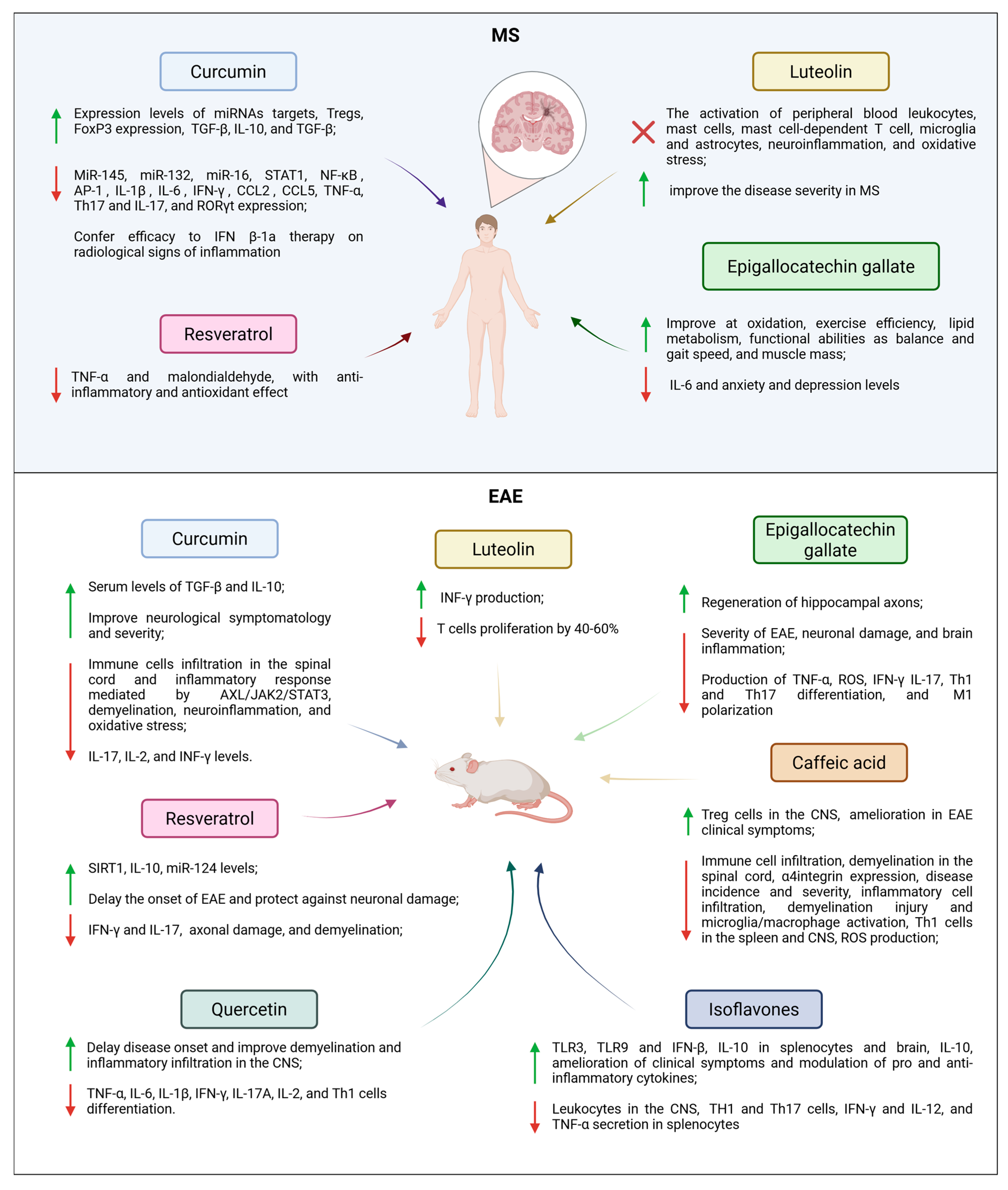
4.1. Curcumin
4.2. Resveratrol
4.3. Quercetin
4.4. Luteolin
4.5. Epigallocatechin Gallate
4.6. Caffeic Acid
4.7. Isoflavones
4.8. Polyphenols and the Gut Microbiota
5. Salt
Salt and the Gut Microbiota
6. Essential Metals
6.1. Zinc
6.2. Iron
6.3. Selenium
6.4. Metals and the Gut Microbiota
7. Translational Challenges and Limitations
8. Conclusions
Author Contributions
Funding
Data Availability Statement
Conflicts of Interest
References
- Number of People with MS|Atlas of MS. Available online: https://atlasofms.org/map/global/epidemiology/number-of-people-with-ms (accessed on 3 December 2025).
- Haki, M.; AL-Biati, H.A.; Al-Tameemi, Z.S.; Ali, I.S.; Al-hussaniy, H.A. Review of Multiple Sclerosis: Epidemiology, Etiology, Pathophysiology, and Treatment. Medicine 2024, 103, e37297. [Google Scholar] [CrossRef] [PubMed]
- Tafti, D.; Ehsan, M.; Xixis, K.L. Multiple Sclerosis. In StatPearls; StatPearls Publishing: Treasure Island, FL, USA, 2025. [Google Scholar]
- Naserpour, L.; Jalise, S.Z.; Khoshandam, M.; Hosseinzadeh, F. Molecular Mechanism and the Main Signaling Pathways in the Development and Progression of Multiple Sclerosis. Exp. Cell Res. 2025, 452, 114769. [Google Scholar] [CrossRef] [PubMed]
- Greer, J.M.; Trifilieff, E.; Pender, M.P. Correlation Between Anti-Myelin Proteolipid Protein (PLP) Antibodies and Disease Severity in Multiple Sclerosis Patients with PLP Response-Permissive HLA Types. Front. Immunol. 2020, 11, 1891. [Google Scholar] [CrossRef] [PubMed]
- Agliardi, C.; Guerini, F.R.; Zanzottera, M.; Bolognesi, E.; Picciolini, S.; Caputo, D.; Rovaris, M.; Pasanisi, M.B.; Clerici, M. Myelin Basic Protein in Oligodendrocyte-Derived Extracellular Vesicles as a Diagnostic and Prognostic Biomarker in Multiple Sclerosis: A Pilot Study. Int. J. Mol. Sci. 2023, 24, 894. [Google Scholar] [CrossRef]
- Martinsen, V.; Kursula, P. Multiple Sclerosis and Myelin Basic Protein: Insights into Protein Disorder and Disease. Amino Acids 2022, 54, 99–109. [Google Scholar] [CrossRef]
- Boutitah-Benyaich, I.; Eixarch, H.; Villacieros-Álvarez, J.; Hervera, A.; Cobo-Calvo, Á.; Montalban, X.; Espejo, C. Multiple Sclerosis: Molecular Pathogenesis and Therapeutic Intervention. Signal Transduct. Target. Ther. 2025, 10, 324. [Google Scholar] [CrossRef]
- Klineova, S.; Lublin, F.D. Clinical Course of Multiple Sclerosis. Cold Spring Harb. Perspect. Med. 2018, 8, a028928. [Google Scholar] [CrossRef]
- EFENDİ, H. Clinically Isolated Syndromes: Clinical Characteristics, Differential Diagnosis, and Management. Noro Psikiyatr. Ars. 2015, 52, S1–S11. [Google Scholar] [CrossRef]
- Lublin, F.D.; Reingold, S.C.; Cohen, J.A.; Cutter, G.R.; Sørensen, P.S.; Thompson, A.J.; Wolinsky, J.S.; Balcer, L.J.; Banwell, B.; Barkhof, F.; et al. Defining the Clinical Course of Multiple Sclerosis. Neurology 2014, 83, 278–286. [Google Scholar] [CrossRef]
- Panahi, P.; Mirzohreh, S.T.; Zafardoust, H.; Habibi, P.; Ghojazadeh, M.; Shoaran, M. Pediatric Multiple Sclerosis: A Systematic Exploration of Effectiveness in Current and Emerging Therapeutics. Pediatr. Neurol. 2025, 168, 23–59. [Google Scholar] [CrossRef]
- Capasso, N.; Virgilio, E.; Covelli, A.; Giovannini, B.; Foschi, M.; Montini, F.; Nasello, M.; Nilo, A.; Prestipino, E.; Schirò, G.; et al. Aging in Multiple Sclerosis: From Childhood to Old Age, Etiopathogenesis, and Unmet Needs: A Narrative Review. Front. Neurol. 2023, 14, 1207617. [Google Scholar] [CrossRef] [PubMed]
- Patsopoulos, N.A. Genetics of Multiple Sclerosis: An Overview and New Directions. Cold Spring Harb. Perspect. Med. 2018, 8, a028951. [Google Scholar] [CrossRef] [PubMed]
- Alfredsson, L.; Olsson, T. Lifestyle and Environmental Factors in Multiple Sclerosis. Cold Spring Harb. Perspect. Med. 2019, 9, a028944. [Google Scholar] [CrossRef] [PubMed]
- Sintzel, M.B.; Rametta, M.; Reder, A.T. Vitamin D and Multiple Sclerosis: A Comprehensive Review. Neurol. Ther. 2017, 7, 59–85. [Google Scholar] [CrossRef]
- Bronzini, M.; Maglione, A.; Rosso, R.; Matta, M.; Masuzzo, F.; Rolla, S.; Clerico, M. Feeding the Gut Microbiome: Impact on Multiple Sclerosis. Front. Immunol. 2023, 14, 1176016. [Google Scholar] [CrossRef]
- Gill, P.A.; Inniss, S.; Kumagai, T.; Rahman, F.Z.; Smith, A.M. The Role of Diet and Gut Microbiota in Regulating Gastrointestinal and Inflammatory Disease. Front. Immunol. 2022, 13, 866059. [Google Scholar] [CrossRef]
- Patloka, O.; Komprda, T.; Franke, G. Review of the Relationships Between Human Gut Microbiome, Diet, and Obesity. Nutrients 2024, 16, 3996. [Google Scholar] [CrossRef]
- Hou, K.; Wu, Z.-X.; Chen, X.-Y.; Wang, J.-Q.; Zhang, D.; Xiao, C.; Zhu, D.; Koya, J.B.; Wei, L.; Li, J.; et al. Microbiota in Health and Diseases. Signal Transduct. Target. Ther. 2022, 7, 135. [Google Scholar] [CrossRef]
- Travers, B.S.; Tsang, B.K.-T.; Barton, J.L. Multiple Sclerosis: Diagnosis, Disease-Modifying Therapy and Prognosis. Aust. J. Gen. Pr. 2022, 51, 199–206. [Google Scholar] [CrossRef]
- Niedziela, N.; Kalinowska, A.; Kułakowska, A.; Mirowska-Guzel, D.; Rejdak, K.; Siger, M.; Stasiołek, M.; Adamczyk-Sowa, M. Clinical and Therapeutic Challenges of Smouldering Multiple Sclerosis. Neurol. Neurochir. Pol. 2024, 58, 245–255. [Google Scholar] [CrossRef]
- Rosso, R.; Maglione, A.; Bronzini, M.; Virgilio, E.; Clerico, M.; Rolla, S. Linking Nutrients to Multiple Sclerosis Pathogenesis: Biological Evidence and Clinical Implications. Nutrients 2025, 17, 3414. [Google Scholar] [CrossRef]
- Racke, M.K.; Burnett, D.; Pak, S.H.; Albert, P.S.; Cannella, B.; Raine, C.S.; McFarlin, D.E.; Scott, D.E. Retinoid Treatment of Experimental Allergic Encephalomyelitis. IL-4 Production Correlates with Improved Disease Course. J. Immunol. 1995, 154, 450–458. [Google Scholar] [CrossRef] [PubMed]
- Navidhamidi, M.; Nazari, A.; Dehghan, S.; Ebrahimpour, A.; Nasrnezhad, R.; Pourabdolhossein, F. Therapeutic Potential of Combined Therapy of Vitamin A and Vitamin C in the Experimental Autoimmune Encephalomyelitis (EAE) in Lewis Rats. Mol. Neurobiol. 2022, 59, 2328–2347. [Google Scholar] [CrossRef] [PubMed]
- Eriksen, A.B.; Berge, T.; Gustavsen, M.W.; Leikfoss, I.S.; Bos, S.D.; Spurkland, A.; Harbo, H.F.; Blomhoff, H.K. Retinoic Acid Enhances the Levels of IL-10 in TLR-Stimulated B Cells from Patients with Relapsing–Remitting Multiple Sclerosis. J. Neuroimmunol. 2015, 278, 11–18. [Google Scholar] [CrossRef] [PubMed]
- Løken-Amsrud, K.I.; Myhr, K.-M.; Bakke, S.J.; Beiske, A.G.; Bjerve, K.S.; Bjørnarå, B.T.; Hovdal, H.; Lilleås, F.; Midgard, R.; Pedersen, T.; et al. Retinol Levels Are Associated with Magnetic Resonance Imaging Outcomes in Multiple Sclerosis. Mult. Scler. 2013, 19, 451–457. [Google Scholar] [CrossRef]
- Bitarafan, S.; Saboor-Yaraghi, A.; Sahraian, M.-A.; Nafissi, S.; Togha, M.; Beladi Moghadam, N.; Roostaei, T.; Siassi, F.; Eshraghian, M.-R.; Ghanaati, H.; et al. Impact of Vitamin A Supplementation on Disease Progression in Patients with Multiple Sclerosis. Arch. Iran. Med. 2015, 18, 435–440. [Google Scholar]
- Bitarafan, S.; Saboor-Yaraghi, A.; Sahraian, M.-A.; Soltani, D.; Nafissi, S.; Togha, M.; Moghadam, N.B.; Roostaei, T.; Honarvar, N.M.; Harirchian, M.-H. Effect of Vitamin A Supplementation on Fatigue and Depression in Multiple Sclerosis Patients: A Double-Blind Placebo-Controlled Clinical Trial. Iran. J. Allergy Asthma Immunol. 2016, 15, 13–19. [Google Scholar]
- Ji, Z.; Fan, Z.; Zhang, Y.; Yu, R.; Yang, H.; Zhou, C.; Luo, J.; Ke, Z.-J. Thiamine Deficiency Promotes T Cell Infiltration in Experimental Autoimmune Encephalomyelitis: The Involvement of CCL2. J. Immunol. 2014, 193, 2157–2167. [Google Scholar] [CrossRef]
- Ortí, J.E.d.l.R.; Cuerda-Ballester, M.; Drehmer, E.; Carrera-Juliá, S.; Motos-Muñoz, M.; Cunha-Pérez, C.; Benlloch, M.; López-Rodríguez, M.M. Vitamin B1 Intake in Multiple Sclerosis Patients and Its Impact on Depression Presence: A Pilot Study. Nutrients 2020, 12, 2655. [Google Scholar] [CrossRef]
- Costantini, A.; Nappo, A.; Pala, M.I.; Zappone, A. High Dose Thiamine Improves Fatigue in Multiple Sclerosis. Case Rep. 2013, 2013, bcr2013009144. [Google Scholar] [CrossRef]
- Mandić, M.; Mitić, K.; Nedeljković, P.; Perić, M.; Božić, B.; Lunić, T.; Bačić, A.; Rajilić-Stojanović, M.; Peković, S.; Božić Nedeljković, B. Vitamin B Complex and Experimental Autoimmune Encephalomyelitis -Attenuation of the Clinical Signs and Gut Microbiota Dysbiosis. Nutrients 2022, 14, 1273. [Google Scholar] [CrossRef] [PubMed]
- Naghashpour, M.; Amani, R.; Sarkaki, A.; Ghadiri, A.A.; Samarbaf-Zadeh, A.; Jafarirad, S.; Rouhizadeh, A.; Saki, A. Riboflavin May Ameliorate Neurological Motor Disability but Not Spatial Learning and Memory Impairments in Murine Model of Multiple Sclerosis. Clin. Nutr. Exp. 2019, 23, 1–14. [Google Scholar] [CrossRef]
- Naghashpour, M.; Amani, R.; Sarkaki, A.; Ghadiri, A.; Samarbafzadeh, A.; Jafarirad, S.; Malehi, A.S. Brain-Derived Neurotrophic and Immunologic Factors: Beneficial Effects of Riboflavin on Motor Disability in Murine Model of Multiple Sclerosis. Iran. J. Basic Med. Sci. 2016, 19, 439–448. [Google Scholar] [PubMed]
- Naghashpour, M.; Majdinasab, N.; Shakerinejad, G.; Kouchak, M.; Haghighizadeh, M.H.; Jarvandi, F.; Hajinajaf, S. Riboflavin Supplementation to Patients with Multiple Sclerosis Does Not Improve Disability Status nor Is Riboflavin Supplementation Correlated to Homocysteine. Int. J. Vitam. Nutr. Res. 2013, 83, 281–290. [Google Scholar] [CrossRef]
- Zhang, J.; Chen, J.; Li, Y.; Cui, X.; Zheng, X.; Roberts, C.; Lu, M.; Elias, S.B.; Chopp, M. Niaspan Treatment Improves Neurological Functional Recovery in Experimental Autoimmune Encephalomyelitis Mice. Neurobiol. Dis. 2008, 32, 273–280. [Google Scholar] [CrossRef]
- Wuerch, E.C.; Mirzaei, R.; Yong, V.W. Niacin Produces an Inconsistent Treatment Response in the EAE Model of Multiple Sclerosis. J. Neuroimmunol. 2024, 394, 578421. [Google Scholar] [CrossRef]
- Chen, C.; Zhang, W.; Zhou, T.; Liu, Q.; Han, C.; Huang, Z.; Chen, S.; Mei, Q.; Zhang, C.; Zhang, K.; et al. Vitamin B5 Rewires Th17 Cell Metabolism via Impeding PKM2 Nuclear Translocation. Cell Rep. 2022, 41, 111741. [Google Scholar] [CrossRef]
- Olsson, A.; Gustavsen, S.; Nguyen, T.D.; Nyman, M.; Langkilde, A.R.; Hansen, T.H.; Sellebjerg, F.; Oturai, A.B.; Bach Søndergaard, H. Serum Short-Chain Fatty Acids and Associations with Inflammation in Newly Diagnosed Patients with Multiple Sclerosis and Healthy Controls. Front. Immunol. 2021, 12, 661493. [Google Scholar] [CrossRef]
- Evans, E.; Piccio, L.; Cross, A.H. Use of Vitamins and Dietary Supplements by Patients with Multiple Sclerosis: A Review. JAMA Neurol. 2018, 75, 1013–1021. [Google Scholar] [CrossRef]
- Du, X.; Yang, Y.; Zhan, X.; Huang, Y.; Fu, Y.; Zhang, Z.; Liu, H.; Zhang, L.; Li, Y.; Wen, Q.; et al. Vitamin B6 Prevents Excessive Inflammation by Reducing Accumulation of Sphingosine-1-phosphate in a Sphingosine-1-phosphate Lyase–Dependent Manner. J. Cell Mol. Med. 2020, 24, 13129–13138. [Google Scholar] [CrossRef]
- Belen, S.; Patt, N.; Kupjetz, M.; Ueland, P.M.; McCann, A.; Gonzenbach, R.; Bansi, J.; Zimmer, P. Vitamin B6 Status Is Related to Disease Severity and Modulated by Endurance Exercise in Individuals with Multiple Sclerosis: A Secondary Analysis of a Randomized Controlled Trial. Am. J. Clin. Nutr. 2025, 121, 1403–1414. [Google Scholar] [CrossRef] [PubMed]
- Rabin, B.S. Inhibition of Experimentally Induced Autoimmunity in Rats by Biotin Deficiency. J. Nutr. 1983, 113, 2316–2322. [Google Scholar] [CrossRef] [PubMed]
- Espiritu, A.I.; Remalante-Rayco, P.P.M. High-Dose Biotin for Multiple Sclerosis: A Systematic Review and Meta-Analyses of Randomized Controlled Trials. Mult. Scler. Relat. Disord. 2021, 55, 103159. [Google Scholar] [CrossRef] [PubMed]
- Sedel, F.; Papeix, C.; Bellanger, A.; Touitou, V.; Lebrun-Frenay, C.; Galanaud, D.; Gout, O.; Lyon-Caen, O.; Tourbah, A. High Doses of Biotin in Chronic Progressive Multiple Sclerosis: A Pilot Study. Mult. Scler. Relat. Disord. 2015, 4, 159–169. [Google Scholar] [CrossRef]
- Kirsty, C.-W.; Mary, H.; Sumner, J. The Relationship of Cobalamin and/or Folate to the Patient-Centred Outcomes in Multiple Sclerosis: A Systematic Review and Meta-Analysis. Nutr. Health 2022, 28, 527–542. [Google Scholar] [CrossRef]
- Nozari, E.; Ghavamzadeh, S.; Razazian, N. The Effect of Vitamin B12 and Folic Acid Supplementation on Serum Homocysteine, Anemia Status and Quality of Life of Patients with Multiple Sclerosis. Clin. Nutr. Res. 2019, 8, 36–45. [Google Scholar] [CrossRef]
- Mastronardi, F.G.; Min, W.; Wang, H.; Winer, S.; Dosch, M.; Boggs, J.M.; Moscarello, M.A. Attenuation of Experimental Autoimmune Encephalomyelitis and Nonimmune Demyelination by IFN-Beta plus Vitamin B12: Treatment to Modify Notch-1/Sonic Hedgehog Balance. J. Immunol. 2004, 172, 6418–6426. [Google Scholar] [CrossRef]
- Najafi, M.R.; Shaygannajad, V.; Mirpourian, M.; Gholamrezaei, A. Vitamin B12 Deficiency and Multiple Sclerosis; Is There Any Association? Int. J. Prev. Med. 2012, 3, 286–289. [Google Scholar]
- Scalabrino, G.; Veber, D.; De Giuseppe, R.; Roncaroli, F. Low Levels of Cobalamin, Epidermal Growth Factor, and Normal Prions in Multiple Sclerosis Spinal Cord. Neuroscience 2015, 298, 293–301. [Google Scholar] [CrossRef]
- Sandyk, R.; Awerbuch, G.I. Vitamin B12 and Its Relationship to Age of Onset of Multiple Sclerosis. Int. J. Neurosci. 1993, 71, 93–99. [Google Scholar] [CrossRef]
- Spitsin, S.V.; Scott, G.S.; Mikheeva, T.; Zborek, A.; Kean, R.B.; Brimer, C.M.; Koprowski, H.; Hooper, D.C. Comparison of Uric Acid and Ascorbic Acid in Protection against EAE. Free Radic. Biol. Med. 2002, 33, 1363–1371. [Google Scholar] [CrossRef]
- Besler, H.T.; Çomoğlu, S.; OkÇu, Z. Serum Levels of Antioxidant Vitamins and Lipid Peroxidation in Multiple Sclerosis. Nutr. Neurosci. 2002, 5, 215–220. [Google Scholar] [CrossRef]
- Ibrahim, A.; Alloush, T.K.; Elnaga, Y.A.; Hamdy, M.; Fouad, M.M. Serum Level of Vitamin C in a Sample of Egyptian Patients with Multiple Sclerosis. Neurosci. Med. 2019, 10, 398–406. [Google Scholar] [CrossRef]
- Zhang, S.M.; Hernán, M.A.; Olek, M.J.; Spiegelman, D.; Willett, W.C.; Ascherio, A. Intakes of Carotenoids, Vitamin C, and Vitamin E and MS Risk among Two Large Cohorts of Women. Neurology 2001, 57, 75–80. [Google Scholar] [CrossRef] [PubMed]
- Wang, Y.; Marling, S.J.; Zhu, J.G.; Severson, K.S.; DeLuca, H.F. Development of Experimental Autoimmune Encephalomyelitis (EAE) in Mice Requires Vitamin D and the Vitamin D Receptor. Proc. Natl. Acad. Sci. USA 2012, 109, 8501–8504. [Google Scholar] [CrossRef] [PubMed]
- Chang, J.-H.; Cha, H.-R.; Lee, D.-S.; Seo, K.Y.; Kweon, M.-N. 1,25-Dihydroxyvitamin D3 Inhibits the Differentiation and Migration of TH17 Cells to Protect against Experimental Autoimmune Encephalomyelitis. PLoS ONE 2010, 5, e12925. [Google Scholar] [CrossRef]
- Munger, K.L.; Zhang, S.M.; O’Reilly, E.; Hernán, M.A.; Olek, M.J.; Willett, W.C.; Ascherio, A. Vitamin D Intake and Incidence of Multiple Sclerosis. Neurology 2004, 62, 60–65. [Google Scholar] [CrossRef]
- Hashemi, R.; Morshedi, M.; Asghari Jafarabadi, M.; Altafi, D.; Saeed Hosseini-Asl, S.; Rafie-Arefhosseini, S. Anti-Inflammatory Effects of Dietary Vitamin D3 in Patients with Multiple Sclerosis. Neurol. Genet. 2018, 4, e278. [Google Scholar] [CrossRef]
- Mahler, J.V.; Solti, M.; Apóstolos-Pereira, S.L.; Adoni, T.; Silva, G.D.; Callegaro, D. Vitamin D3 as an Add-on Treatment for Multiple Sclerosis: A Systematic Review and Meta-Analysis of Randomized Controlled Trials. Mult. Scler. Relat. Disord. 2024, 82, 105433. [Google Scholar] [CrossRef]
- Thouvenot, E.; Laplaud, D.; Lebrun-Frenay, C.; Derache, N.; Le Page, E.; Maillart, E.; Froment-Tilikete, C.; Castelnovo, G.; Casez, O.; Coustans, M.; et al. High-Dose Vitamin D in Clinically Isolated Syndrome Typical of Multiple Sclerosis: The D-Lay MS Randomized Clinical Trial. JAMA 2025, 333, 1413–1422. [Google Scholar] [CrossRef]
- Virgilio, E.; Vecchio, D.; Crespi, I.; Barbero, P.; Caloni, B.; Naldi, P.; Cantello, R.; Dianzani, U.; Comi, C. Serum Vitamin D as a Marker of Impaired Information Processing Speed and Early Disability in Multiple Sclerosis Patients. Brain Sci. 2021, 11, 1521. [Google Scholar] [CrossRef]
- Darwish, H.; Haddad, R.; Osman, S.; Ghassan, S.; Yamout, B.; Tamim, H.; Khoury, S. Effect of Vitamin D Replacement on Cognition in Multiple Sclerosis Patients. Sci. Rep. 2017, 7, 45926. [Google Scholar] [CrossRef] [PubMed]
- Zhao, H.; Zhang, H.; Wu, H.; Li, H.; Liu, L.; Guo, J.; Li, C.; Shih, D.Q.; Zhang, X. Protective Role of 1,25(OH)2 Vitamin D3 in the Mucosal Injury and Epithelial Barrier Disruption in DSS-Induced Acute Colitis in Mice. BMC Gastroenterol. 2012, 12, 57. [Google Scholar] [CrossRef] [PubMed]
- Jin, D.; Wu, S.; Zhang, Y.-G.; Lu, R.; Xia, Y.; Dong, H.; Sun, J. Lack of Vitamin D Receptor Causes Dysbiosis and Changes the Functions of the Murine Intestinal Microbiome. Clin. Ther. 2015, 37, 996–1009.e7. [Google Scholar] [CrossRef] [PubMed]
- Sun, J. VDR/Vitamin D Receptor Regulates Autophagic Activity through ATG16L1. Autophagy 2016, 12, 1057–1058. [Google Scholar] [CrossRef]
- Cantarel, B.L.; Waubant, E.; Chehoud, C.; Kuczynski, J.; DeSantis, T.Z.; Warrington, J.; Venkatesan, A.; Fraser, C.M.; Mowry, E.M. Gut Microbiota in Multiple Sclerosis: Possible Influence of Immunomodulators. J. Investig. Med. 2015, 63, 729–734. [Google Scholar] [CrossRef]
- Nitzan, Z.; Staun-Ram, E.; Volkowich, A.; Miller, A. Multiple Sclerosis-Associated Gut Microbiome in the Israeli Diverse Populations: Associations with Ethnicity, Gender, Disability Status, Vitamin D Levels, and Mediterranean Diet. Int. J. Mol. Sci. 2023, 24, 15024. [Google Scholar] [CrossRef]
- Blanchard, B.; Heurtaux, T.; Garcia, C.; Moll, N.M.; Caillava, C.; Grandbarbe, L.; Klosptein, A.; Kerninon, C.; Frah, M.; Coowar, D.; et al. Tocopherol Derivative TFA-12 Promotes Myelin Repair in Experimental Models of Multiple Sclerosis. J. Neurosci. 2013, 33, 11633–11642. [Google Scholar] [CrossRef]
- Xue, H.; Ren, H.; Zhang, L.; Sun, X.; Wang, W.; Zhang, S.; Zhao, J.; Ming, L. Alpha-Tocopherol Ameliorates Experimental Autoimmune Encephalomyelitis through the Regulation of Th1 Cells. Iran. J. Basic Med. Sci. 2016, 19, 561–566. [Google Scholar]
- Guan, J.-Z.; Guan, W.-P.; Maeda, T. Vitamin E Administration Erases an Enhanced Oxidation in Multiple Sclerosis. Can. J. Physiol. Pharmacol. 2018, 96, 1181–1183. [Google Scholar] [CrossRef]
- Moriya, M.; Nakatsuji, Y.; Okuno, T.; Hamasaki, T.; Sawada, M.; Sakoda, S. Vitamin K2 Ameliorates Experimental Autoimmune Encephalomyelitis in Lewis Rats. J. Neuroimmunol. 2005, 170, 11–20. [Google Scholar] [CrossRef] [PubMed]
- Lasemi, R.; Kundi, M.; Moghadam, N.B.; Moshammer, H.; Hainfellner, J.A. Vitamin K2 in Multiple Sclerosis Patients. Wien. Klin. Wochenschr. 2018, 130, 307–313. [Google Scholar] [CrossRef] [PubMed]
- Office of Dietary Supplements—Vitamin A and Carotenoids. Available online: https://ods.od.nih.gov/factsheets/VitaminA-HealthProfessional/ (accessed on 3 December 2025).
- Theodosiou, M.; Laudet, V.; Schubert, M. From Carrot to Clinic: An Overview of the Retinoic Acid Signaling Pathway. Cell. Mol. Life Sci. 2010, 67, 1423–1445. [Google Scholar] [CrossRef] [PubMed]
- Coombes, J.L.; Siddiqui, K.R.R.; Arancibia-Cárcamo, C.V.; Hall, J.; Sun, C.-M.; Belkaid, Y.; Powrie, F. A Functionally Specialized Population of Mucosal CD103+ DCs Induces Foxp3+ Regulatory T Cells via a TGF-Beta and Retinoic Acid-Dependent Mechanism. J. Exp. Med. 2007, 204, 1757–1764. [Google Scholar] [CrossRef]
- Mucida, D.; Park, Y.; Kim, G.; Turovskaya, O.; Scott, I.; Kronenberg, M.; Cheroutre, H. Reciprocal TH17 and Regulatory T Cell Differentiation Mediated by Retinoic Acid. Science 2007, 317, 256–260. [Google Scholar] [CrossRef]
- Mora, J.R.; Iwata, M.; Eksteen, B.; Song, S.-Y.; Junt, T.; Senman, B.; Otipoby, K.L.; Yokota, A.; Takeuchi, H.; Ricciardi-Castagnoli, P.; et al. Generation of Gut-Homing IgA-Secreting B Cells by Intestinal Dendritic Cells. Science 2006, 314, 1157–1160. [Google Scholar] [CrossRef]
- Royal, W.; Gartner, S.; Gajewski, C.D. Retinol Measurements and Retinoid Receptor Gene Expression in Patients with Multiple Sclerosis. Mult. Scler. 2002, 8, 452–458. [Google Scholar] [CrossRef]
- Office of Dietary Supplements—Thiamin. Available online: https://ods.od.nih.gov/factsheets/Thiamin-HealthProfessional/ (accessed on 3 December 2025).
- Mrowicka, M.; Mrowicki, J.; Dragan, G.; Majsterek, I. The Importance of Thiamine (Vitamin B1) in Humans. Biosci. Rep. 2023, 43, BSR20230374. [Google Scholar] [CrossRef]
- Office of Dietary Supplements—Riboflavin. Available online: https://ods.od.nih.gov/factsheets/Riboflavin-HealthProfessional/ (accessed on 3 December 2025).
- Mazur-Bialy, A.I.; Buchala, B.; Plytycz, B. Riboflavin Deprivation Inhibits Macrophage Viability and Activity—A Study on the RAW 264.7 Cell Line. Br. J. Nutr. 2013, 110, 509–514. [Google Scholar] [CrossRef]
- Office of Dietary Supplements—Niacin. Available online: https://ods.od.nih.gov/factsheets/Niacin-HealthProfessional/ (accessed on 3 December 2025).
- Office of Dietary Supplements—Pantothenic Acid. Available online: https://ods.od.nih.gov/factsheets/PantothenicAcid-HealthProfessional/ (accessed on 3 December 2025).
- Office of Dietary Supplements—Vitamin B6. Available online: https://ods.od.nih.gov/factsheets/VItaminB6-HealthProfessional/ (accessed on 3 December 2025).
- Office of Dietary Supplements—Biotin. Available online: https://ods.od.nih.gov/factsheets/Biotin-HealthProfessional/ (accessed on 3 December 2025).
- Tourbah, A.; Lebrun-Frenay, C.; Edan, G.; Clanet, M.; Papeix, C.; Vukusic, S.; De Sèze, J.; Debouverie, M.; Gout, O.; Clavelou, P.; et al. MD1003 (High-Dose Biotin) for the Treatment of Progressive Multiple Sclerosis: A Randomised, Double-Blind, Placebo-Controlled Study. Mult. Scler. 2016, 22, 1719–1731. [Google Scholar] [CrossRef]
- Cree, B.A.C.; Cutter, G.; Wolinsky, J.S.; Freedman, M.S.; Comi, G.; Giovannoni, G.; Hartung, H.-P.; Arnold, D.; Kuhle, J.; Block, V.; et al. Safety and Efficacy of MD1003 (High-Dose Biotin) in Patients with Progressive Multiple Sclerosis (SPI2): A Randomised, Double-Blind, Placebo-Controlled, Phase 3 Trial. Lancet Neurol. 2020, 19, 988–997. [Google Scholar] [CrossRef] [PubMed]
- Birnbaum, G.; Stulc, J. High Dose Biotin as Treatment for Progressive Multiple Sclerosis. Mult. Scler. Relat. Disord. 2017, 18, 141–143. [Google Scholar] [CrossRef] [PubMed]
- Office of Dietary Supplements—Vitamin B12. Available online: https://ods.od.nih.gov/factsheets/VitaminB12-HealthProfessional/ (accessed on 3 December 2025).
- Dardiotis, E.; Arseniou, S.; Sokratous, M.; Tsouris, Z.; Siokas, V.; Mentis, A.-F.A.; Michalopoulou, A.; Andravizou, A.; Dastamani, M.; Paterakis, K.; et al. Vitamin B12, Folate, and Homocysteine Levels and Multiple Sclerosis: A Meta-Analysis. Mult. Scler. Relat. Disord. 2017, 17, 190–197. [Google Scholar] [CrossRef] [PubMed]
- Li, X.; Yuan, J.; Han, J.; Hu, W. Serum Levels of Homocysteine, Vitamin B12 and Folate in Patients with Multiple Sclerosis: An Updated Meta-Analysis. Int. J. Med. Sci. 2020, 17, 751–761. [Google Scholar] [CrossRef]
- Office of Dietary Supplements—Vitamin C. Available online: https://ods.od.nih.gov/factsheets/VitaminC-HealthProfessional/ (accessed on 3 December 2025).
- Office of Dietary Supplements—Vitamin D. Available online: https://ods.od.nih.gov/factsheets/VitaminD-HealthProfessional/ (accessed on 3 December 2025).
- Office of Dietary Supplements—Vitamin E. Available online: https://ods.od.nih.gov/factsheets/Vitamine-HealthProfessional/ (accessed on 3 December 2025).
- Jiménez-Jiménez, F.J.; de Bustos, F.; Molina, J.A.; de Andrés, C.; Gasalla, T.; Ortí-Pareja, M.; Zurdo, M.; Porta, J.; Castellano-Millán, F.; Arenas, J.; et al. Cerebrospinal Fluid Levels of Alpha-Tocopherol in Patients with Multiple Sclerosis. Neurosci. Lett. 1998, 249, 65–67. [Google Scholar] [CrossRef]
- Office of Dietary Supplements—Vitamin K. Available online: https://ods.od.nih.gov/factsheets/VitaminK-HealthProfessional/ (accessed on 3 December 2025).
- Yang, Q.; Liang, Q.; Balakrishnan, B.; Belobrajdic, D.P.; Feng, Q.-J.; Zhang, W. Role of Dietary Nutrients in the Modulation of Gut Microbiota: A Narrative Review. Nutrients 2020, 12, 381. [Google Scholar] [CrossRef]
- La Rosa, G.; Lonardo, M.S.; Cacciapuoti, N.; Muscariello, E.; Guida, B.; Faraonio, R.; Santillo, M.; Damiano, S. Dietary Polyphenols, Microbiome, and Multiple Sclerosis: From Molecular Anti-Inflammatory and Neuroprotective Mechanisms to Clinical Evidence. Int. J. Mol. Sci. 2023, 24, 7247. [Google Scholar] [CrossRef]
- ELBini-Dhouib, I.; Manai, M.; Neili, N.-E.; Marzouki, S.; Sahraoui, G.; Ben Achour, W.; Zouaghi, S.; BenAhmed, M.; Doghri, R.; Srairi-Abid, N. Dual Mechanism of Action of Curcumin in Experimental Models of Multiple Sclerosis. Int. J. Mol. Sci. 2022, 23, 8658. [Google Scholar] [CrossRef]
- Sun, M.; Liu, N.; Sun, J.; Li, X.; Wang, H.; Zhang, W.; Xie, Q.; Wang, M. Curcumin Regulates Anti-Inflammatory Responses by AXL/JAK2/STAT3 Signaling Pathway in Experimental Autoimmune Encephalomyelitis. Neurosci. Lett. 2022, 787, 136821. [Google Scholar] [CrossRef]
- Khosropour, S.; Shahvarooghi, E.; Rezaeizadeh, H.; Esmaeelzadeh, M. Curcumin and Its Semisynthetic Derivative F-Curcumin Ameliorate the Expression of Cytokines in Autoimmune Encephalomyelitis Mouse Models of Multiple Sclerosis. Iran. J. Allergy Asthma Immunol. 2023, 22, 575–587. [Google Scholar] [CrossRef]
- Sadek, M.A.; Rabie, M.A.; El Sayed, N.S.; Sayed, H.M.; Kandil, E.A. Neuroprotective Effect of Curcumin against Experimental Autoimmune Encephalomyelitis-Induced Cognitive and Physical Impairments in Mice: An Insight into the Role of the AMPK/SIRT1 Pathway. Inflammopharmacology 2024, 32, 1499–1518. [Google Scholar] [CrossRef]
- Dolati, S.; Ahmadi, M.; Aghebti-Maleki, L.; Nikmaram, A.; Marofi, F.; Rikhtegar, R.; Ayromlou, H.; Yousefi, M. Nanocurcumin Is a Potential Novel Therapy for Multiple Sclerosis by Influencing Inflammatory Mediators. Pharmacol. Rep. 2018, 70, 1158–1167. [Google Scholar] [CrossRef]
- Dolati, S.; Ahmadi, M.; Rikhtegar, R.; Babaloo, Z.; Ayromlou, H.; Aghebati-Maleki, L.; Nouri, M.; Yousefi, M. Changes in Th17 Cells Function after Nanocurcumin Use to Treat Multiple Sclerosis. Int. Immunopharmacol. 2018, 61, 74–81. [Google Scholar] [CrossRef] [PubMed]
- Dolati, S.; Babaloo, Z.; Ayromlou, H.; Ahmadi, M.; Rikhtegar, R.; Rostamzadeh, D.; Roshangar, L.; Nouri, M.; Mehdizadeh, A.; Younesi, V.; et al. Nanocurcumin Improves Regulatory T-Cell Frequency and Function in Patients with Multiple Sclerosis. J. Neuroimmunol. 2019, 327, 15–21. [Google Scholar] [CrossRef] [PubMed]
- Petracca, M.; Quarantelli, M.; Moccia, M.; Vacca, G.; Satelliti, B.; D’Ambrosio, G.; Carotenuto, A.; Ragucci, M.; Assogna, F.; Capacchione, A.; et al. ProspeCtive Study to Evaluate Efficacy, Safety and tOlerability of Dietary supplemeNT of Curcumin (BCM95) in Subjects with Active Relapsing MultIple Sclerosis Treated with subcutaNeous Interferon Beta 1a 44 Mcg TIW (CONTAIN): A Randomized, Controlled Trial. Mult. Scler. Relat. Disord. 2021, 56, 103274. [Google Scholar] [CrossRef] [PubMed]
- Wang, D.; Li, S.-P.; Fu, J.-S.; Zhang, S.; Bai, L.; Guo, L. Resveratrol Defends Blood-Brain Barrier Integrity in Experimental Autoimmune Encephalomyelitis Mice. J. Neurophysiol. 2016, 116, 2173–2179. [Google Scholar] [CrossRef]
- Cantó, C.; Auwerx, J. Targeting Sirtuin 1 to Improve Metabolism: All You Need Is NAD(+)? Pharmacol. Rev. 2012, 64, 166–187. [Google Scholar] [CrossRef]
- Nimmagadda, V.K.; Bever, C.T.; Vattikunta, N.R.; Talat, S.; Ahmad, V.; Nagalla, N.K.; Trisler, D.; Judge, S.I.V.; Royal, W., III; Chandrasekaran, K.; et al. Overexpression of SIRT1 Protein in Neurons Protects against Experimental Autoimmune Encephalomyelitis through Activation of Multiple SIRT1 Targets. J. Immunol. 2013, 190, 4595–4607. [Google Scholar] [CrossRef]
- Gandy, K.A.O.; Zhang, J.; Nagarkatti, P.; Nagarkatti, M. Resveratrol (3, 5, 4′-Trihydroxy-Trans-Stilbene) Attenuates a Mouse Model of Multiple Sclerosis by Altering the miR-124/Sphingosine Kinase 1 Axis in Encephalitogenic T Cells in the Brain. J. Neuroimmune Pharmacol. 2019, 14, 462–477. [Google Scholar] [CrossRef]
- Keramatzadeh, S.; Hosseini, S.A.; Majdinasab, N.; Cheraghian, B.; Zilaee, M. Effects of Resveratrol Supplementation on Inflammatory Markers, Fatigue Scale, Fasting Blood Sugar and Lipid Profile in Relapsing-Remitting Multiple Sclerosis Patients: A Double-Blind, Randomized Placebo-Controlled Trial. Nutr. Neurosci. 2025, 28, 854–862. [Google Scholar] [CrossRef]
- Chen, Y.; Zhang, M.; Li, W.; Wang, X.; Chen, X.; Wu, Y.; Zhang, H.; Yang, L.; Han, B.; Tang, J. Drug Repurposing Based on the Similarity Gene Expression Signatures to Explore for Potential Indications of Quercetin: A Case Study of Multiple Sclerosis. Front. Chem. 2023, 11, 1250043. [Google Scholar] [CrossRef] [PubMed]
- Muthian, G.; Bright, J.J. Quercetin, a Flavonoid Phytoestrogen, Ameliorates Experimental Allergic Encephalomyelitis by Blocking IL-12 Signaling through JAK-STAT Pathway in T Lymphocyte. J. Clin. Immunol. 2004, 24, 542–552. [Google Scholar] [CrossRef] [PubMed]
- Verbeek, R.; van Tol, E.A.; van Noort, J.M. Oral Flavonoids Delay Recovery from Experimental Autoimmune Encephalomyelitis in SJL Mice. Biochem. Pharmacol. 2005, 70, 220–228. [Google Scholar] [CrossRef] [PubMed]
- Theoharides, T.C. Luteolin as a Therapeutic Option for Multiple Sclerosis. J. Neuroinflamm. 2009, 6, 29. [Google Scholar] [CrossRef]
- Kempuraj, D.; Thangavel, R.; Kempuraj, D.D.; Ahmed, M.E.; Selvakumar, G.P.; Raikwar, S.P.; Zaheer, S.A.; Iyer, S.S.; Govindarajan, R.; Chandrasekaran, P.N.; et al. Neuroprotective Effects of Flavone Luteolin in Neuroinflammation and Neurotrauma. Biofactors 2021, 47, 190–197. [Google Scholar] [CrossRef]
- Aktas, O.; Prozorovski, T.; Smorodchenko, A.; Savaskan, N.E.; Lauster, R.; Kloetzel, P.-M.; Infante-Duarte, C.; Brocke, S.; Zipp, F. Green Tea Epigallocatechin-3-Gallate Mediates T Cellular NF-Kappa B Inhibition and Exerts Neuroprotection in Autoimmune Encephalomyelitis. J. Immunol. 2004, 173, 5794–5800. [Google Scholar] [CrossRef]
- Sun, Q.; Zheng, Y.; Zhang, X.; Hu, X.; Wang, Y.; Zhang, S.; Zhang, D.; Nie, H. Novel Immunoregulatory Properties of EGCG on Reducing Inflammation in EAE. Front. Biosci.-Landmark 2013, 18, 332–342. [Google Scholar] [CrossRef]
- Cai, F.; Liu, S.; Lei, Y.; Jin, S.; Guo, Z.; Zhu, D.; Guo, X.; Zhao, H.; Niu, X.; Xi, Y.; et al. Epigallocatechin-3 Gallate Regulates Macrophage Subtypes and Immunometabolism to Ameliorate Experimental Autoimmune Encephalomyelitis. Cell. Immunol. 2021, 368, 104421. [Google Scholar] [CrossRef]
- Herges, K.; Millward, J.M.; Hentschel, N.; Infante-Duarte, C.; Aktas, O.; Zipp, F. Neuroprotective Effect of Combination Therapy of Glatiramer Acetate and Epigallocatechin-3-Gallate in Neuroinflammation. PLoS ONE 2011, 6, e25456. [Google Scholar] [CrossRef]
- Platero, J.L.; Cuerda-Ballester, M.; Ibáñez, V.; Sancho, D.; Lopez-Rodríguez, M.M.; Drehmer, E.; de la Rubia Ortí, J.E. The Impact of Coconut Oil and Epigallocatechin Gallate on the Levels of IL-6, Anxiety and Disability in Multiple Sclerosis Patients. Nutrients 2020, 12, 305. [Google Scholar] [CrossRef]
- Bellmann-Strobl, J.; Paul, F.; Wuerfel, J.; Dörr, J.; Infante-Duarte, C.; Heidrich, E.; Körtgen, B.; Brandt, A.; Pfüller, C.; Radbruch, H.; et al. Epigallocatechin Gallate in Relapsing-Remitting Multiple Sclerosis. Neurol. Neuroimmunol. Neuroinflamm. 2021, 8, e981. [Google Scholar] [CrossRef] [PubMed]
- Mähler, A.; Steiniger, J.; Bock, M.; Klug, L.; Parreidt, N.; Lorenz, M.; Zimmermann, B.F.; Krannich, A.; Paul, F.; Boschmann, M. Metabolic Response to Epigallocatechin-3-Gallate in Relapsing-Remitting Multiple Sclerosis: A Randomized Clinical Trial. Am. J. Clin. Nutr. 2015, 101, 487–495. [Google Scholar] [CrossRef] [PubMed]
- Benlloch, M.; Cuerda Ballester, M.; Drehmer, E.; Platero, J.L.; Carrera-Juliá, S.; López-Rodríguez, M.M.; Ceron, J.J.; Tvarijonaviciute, A.; Navarro, M.Á.; Moreno, M.L.; et al. Possible Reduction of Cardiac Risk after Supplementation with Epigallocatechin Gallate and Increase of Ketone Bodies in the Blood in Patients with Multiple Sclerosis. A Pilot Study. Nutrients 2020, 12, 3792. [Google Scholar] [CrossRef]
- Cuerda-Ballester, M.; Proaño, B.; Alarcón-Jimenez, J.; de Bernardo, N.; Villaron-Casales, C.; Romance, J.M.L.; de la Rubia Ortí, J.E. Improvements in Gait and Balance in Patients with Multiple Sclerosis after Treatment with Coconut Oil and Epigallocatechin Gallate. A Pilot Study. Food Funct. 2023, 14, 1062–1071. [Google Scholar] [CrossRef] [PubMed]
- de la Rubia Ortí, J.E.; Platero Armero, J.L.; Cuerda-Ballester, M.; Sanchis-Sanchis, C.E.; Navarro-Illana, E.; Lajara-Romance, J.M.; Benlloch, M.; Ceron, J.J.; Tvarijonaviciute, A.; Proaño, B. Lipid Profile in Multiple Sclerosis: Functional Capacity and Therapeutic Potential of Its Regulation after Intervention with Epigallocatechin Gallate and Coconut Oil. Foods 2023, 12, 3730. [Google Scholar] [CrossRef]
- de la Rubia Ortí, J.E.; Platero, J.L.; Benlloch, M.; Franco-Martinez, L.; Tvarijonaviciute, A.; Escribá-Alepuz, J.; Sancho-Castillo, S. Role of Haptoglobin as a Marker of Muscular Improvement in Patients with Multiple Sclerosis after Administration of Epigallocatechin Gallate and Increase of Beta-Hydroxybutyrate in the Blood: A Pilot Study. Biomolecules 2021, 11, 617. [Google Scholar] [CrossRef]
- Alnawajha, A.; Endharti, A.; Santoso, S.; Santosaningsih, D. The Impact of Caffeic Acid Phenethyl Ester on Spinal Cord Inflammation in Mice Model of Multiple Sclerosis: Impact of Caffeic Acid Phenethyl Ester in Multiple Sclerosis. J. Trop. Life Sci. 2024, 14, 389–396. [Google Scholar] [CrossRef]
- Zhou, Y.; Wang, J.; Chang, Y.; Li, R.; Sun, X.; Peng, L.; Zheng, W.; Qiu, W. Caffeic Acid Phenethyl Ester Protects against Experimental Autoimmune Encephalomyelitis by Regulating T Cell Activities. Oxidative Med. Cell. Longev. 2020, 2020, 7274342. [Google Scholar] [CrossRef]
- Ilhan, A.; Akyol, O.; Gurel, A.; Armutcu, F.; Iraz, M.; Oztas, E. Protective Effects of Caffeic Acid Phenethyl Ester against Experimental Allergic Encephalomyelitis-Induced Oxidative Stress in Rats. Free Radic. Biol. Med. 2004, 37, 386–394. [Google Scholar] [CrossRef]
- De Paula, M.L.; Rodrigues, D.H.; Teixeira, H.C.; Barsante, M.M.; Souza, M.A.; Ferreira, A.P. Genistein Down-Modulates pro-Inflammatory Cytokines and Reverses Clinical Signs of Experimental Autoimmune Encephalomyelitis. Int. Immunopharmacol. 2008, 8, 1291–1297. [Google Scholar] [CrossRef]
- Dias, A.T.; de Castro, S.B.R.; de Souza Alves, C.C.; Evangelista, M.G.; da Silva, L.C.; Reis, D.R.d.L.; Machado, M.A.; Juliano, M.A.; Ferreira, A.P. Genistein Modulates the Expression of Toll-like Receptors in Experimental Autoimmune Encephalomyelitis. Inflamm. Res. 2018, 67, 597–608. [Google Scholar] [CrossRef] [PubMed]
- Jahromi, S.R.; Arrefhosseini, S.R.; Ghaemi, A.; Alizadeh, A.; Sabetghadam, F.; Togha, M. Effect of Oral Genistein Administration in Early and Late Phases of Allergic Encephalomyelitis. Iran. J. Basic Med. Sci. 2014, 17, 509–515. [Google Scholar] [PubMed]
- Kotha, R.R.; Luthria, D.L. Curcumin: Biological, Pharmaceutical, Nutraceutical, and Analytical Aspects. Molecules 2019, 24, 2930. [Google Scholar] [CrossRef] [PubMed]
- Dolati, S.; Aghebati-Maleki, L.; Ahmadi, M.; Marofi, F.; Babaloo, Z.; Ayramloo, H.; Jafarisavari, Z.; Oskouei, H.; Afkham, A.; Younesi, V.; et al. Nanocurcumin Restores Aberrant miRNA Expression Profile in Multiple Sclerosis, Randomized, Double-Blind, Placebo-Controlled Trial. J. Cell. Physiol. 2018, 233, 5222–5230. [Google Scholar] [CrossRef]
- Beesley, S.; Olcese, J.; Saunders, C.; Bienkiewicz, E.A. Combinatorial Treatment Effects in a Cell Culture Model of Alzheimer’s Disease. J. Alzheimers Dis. 2017, 55, 1155–1166. [Google Scholar] [CrossRef]
- Shindler, K.S.; Ventura, E.; Dutt, M.; Elliott, P.; Fitzgerald, D.C.; Rostami, A. Oral Resveratrol Reduces Neuronal Damage in a Model of Multiple Sclerosis. J. Neuro-Ophthalmol. 2010, 30, 328–339. [Google Scholar] [CrossRef]
- Villar-Delfino, P.H.; Penaforte Santos, R.; Pereira Christo, P.; Nogueira-Machado, J.A.; Oliveira Volpe, C.M. Antioxidant Effects of Resveratrol in Granulocytes from Multiple Sclerosis Patients. Explor. Neurosci. 2024, 3, 362–374. [Google Scholar] [CrossRef]
- Ghaiad, H.R.; Nooh, M.M.; El-Sawalhi, M.M.; Shaheen, A.A. Resveratrol Promotes Remyelination in Cuprizone Model of Multiple Sclerosis: Biochemical and Histological Study. Mol. Neurobiol. 2017, 54, 3219–3229. [Google Scholar] [CrossRef]
- Ahmadi, L.; Eskandari, N.; Ghanadian, M.; Rahmati, M.; Kasiri, N.; Etamadifar, M.; Toghyani, M.; Alsahebfosoul, F. The Immunomodulatory Aspect of Quercetin Penta Acetate on Th17 Cells Proliferation and Gene Expression in Multiple Sclerosis. Cell J. 2023, 25, 110–117. [Google Scholar] [CrossRef]
- Ghasemi, S.; Hassanpour, S.; Hosseini, R. Protective Effect of the Quercetin on Experimental Cuprizone-Induced Multiple Sclerosis in Male C57BL/6 Mice. Curr. Res. Physiol. 2025, 8, 100146. [Google Scholar] [CrossRef]
- Sternberg, Z.; Chadha, K.; Lieberman, A.; Drake, A.; Hojnacki, D.; Weinstock-Guttman, B.; Munschauer, F. Immunomodulatory Responses of Peripheral Blood Mononuclear Cells from Multiple Sclerosis Patients upon in Vitro Incubation with the Flavonoid Luteolin: Additive Effects of IFN-β. J. Neuroinflamm. 2009, 6, 28. [Google Scholar] [CrossRef]
- Nagle, D.G.; Ferreira, D.; Zhou, Y.-D. Epigallocatechin-3-Gallate (EGCG): Chemical and Biomedical Perspectives. Phytochemistry 2006, 67, 1849–1855. [Google Scholar] [CrossRef] [PubMed]
- Klumbies, K.; Rust, R.; Dörr, J.; Konietschke, F.; Paul, F.; Bellmann-Strobl, J.; Brandt, A.U.; Zimmermann, H.G. Retinal Thickness Analysis in Progressive Multiple Sclerosis Patients Treated with Epigallocatechin Gallate: Optical Coherence Tomography Results from the SUPREMES Study. Front. Neurol. 2021, 12, 615790. [Google Scholar] [CrossRef] [PubMed]
- Rust, R.; Chien, C.; Scheel, M.; Brandt, A.U.; Dörr, J.; Wuerfel, J.; Klumbies, K.; Zimmermann, H.; Lorenz, M.; Wernecke, K.-D.; et al. Epigallocatechin Gallate in Progressive MS: A Randomized, Placebo-Controlled Trial. Neurol. Neuroimmunol. Neuroinflamm. 2021, 8, e964. [Google Scholar] [CrossRef] [PubMed]
- Pavlíková, N. Caffeic Acid and Diseases—Mechanisms of Action. Int. J. Mol. Sci. 2022, 24, 588. [Google Scholar] [CrossRef]
- Grabska-Kobylecka, I.; Kaczmarek-Bak, J.; Figlus, M.; Prymont-Przyminska, A.; Zwolinska, A.; Sarniak, A.; Wlodarczyk, A.; Glabinski, A.; Nowak, D. The Presence of Caffeic Acid in Cerebrospinal Fluid: Evidence That Dietary Polyphenols Can Cross the Blood-Brain Barrier in Humans. Nutrients 2020, 12, 1531. [Google Scholar] [CrossRef]
- Anushya Vardhini, V.; Sowmiya, S.; Abdul Sameer, S.; Sakthi, R.; Divya, R.; Monisha, A. Role of Isoflavones in Multiple Sclerosis. IBRO Neurosci. Rep. 2025, 19, 456–470. [Google Scholar] [CrossRef]
- Ohgomori, T.; Jinno, S. Cuprizone-Induced Demyelination in the Mouse Hippocampus Is Alleviated by Phytoestrogen Genistein. Toxicol. Appl. Pharmacol. 2019, 363, 98–110. [Google Scholar] [CrossRef]
- Liu, Y.-C.; Li, X.-Y.; Shen, L. Modulation Effect of Tea Consumption on Gut Microbiota. Appl. Microbiol. Biotechnol. 2020, 104, 981–987. [Google Scholar] [CrossRef]
- Moreno-Indias, I.; Sánchez-Alcoholado, L.; Pérez-Martínez, P.; Andrés-Lacueva, C.; Cardona, F.; Tinahones, F.; Queipo-Ortuño, M.I. Red Wine Polyphenols Modulate Fecal Microbiota and Reduce Markers of the Metabolic Syndrome in Obese Patients. Food Funct. 2016, 7, 1775–1787. [Google Scholar] [CrossRef]
- Roopchand, D.E.; Carmody, R.N.; Kuhn, P.; Moskal, K.; Rojas-Silva, P.; Turnbaugh, P.J.; Raskin, I. Dietary Polyphenols Promote Growth of the Gut Bacterium Akkermansia Muciniphila and Attenuate High-Fat Diet-Induced Metabolic Syndrome. Diabetes 2015, 64, 2847–2858. [Google Scholar] [CrossRef] [PubMed]
- Dueñas, M.; Muñoz-González, I.; Cueva, C.; Jiménez-Girón, A.; Sánchez-Patán, F.; Santos-Buelga, C.; Moreno-Arribas, M.V.; Bartolomé, B. A Survey of Modulation of Gut Microbiota by Dietary Polyphenols. Biomed Res. Int. 2015, 2015, 850902. [Google Scholar] [CrossRef] [PubMed]
- Jensen, S.N.; Cady, N.M.; Shahi, S.K.; Peterson, S.R.; Gupta, A.; Gibson-Corley, K.N.; Mangalam, A.K. Isoflavone Diet Ameliorates Experimental Autoimmune Encephalomyelitis through Modulation of Gut Bacteria Depleted in Patients with Multiple Sclerosis. Sci. Adv. 2021, 7, eabd4595. [Google Scholar] [CrossRef] [PubMed]
- Khadka, S.; Omura, S.; Sato, F.; Nishio, K.; Kakeya, H.; Tsunoda, I. Curcumin β-D-Glucuronide Modulates an Autoimmune Model of Multiple Sclerosis with Altered Gut Microbiota in the Ileum and Feces. Front. Cell. Infect. Microbiol. 2021, 11, 772962. [Google Scholar] [CrossRef]
- Schepici, G.; Silvestro, S.; Bramanti, P.; Mazzon, E. The Gut Microbiota in Multiple Sclerosis: An Overview of Clinical Trials. Cell Transplant. 2019, 28, 1507–1527. [Google Scholar] [CrossRef]
- Chen, J.; Chia, N.; Kalari, K.R.; Yao, J.Z.; Novotna, M.; Paz Soldan, M.M.; Luckey, D.H.; Marietta, E.V.; Jeraldo, P.R.; Chen, X.; et al. Multiple Sclerosis Patients Have a Distinct Gut Microbiota Compared to Healthy Controls. Sci. Rep. 2016, 6, 28484. [Google Scholar] [CrossRef]
- Cekanaviciute, E.; Yoo, B.B.; Runia, T.F.; Debelius, J.W.; Singh, S.; Nelson, C.A.; Kanner, R.; Bencosme, Y.; Lee, Y.K.; Hauser, S.L.; et al. Gut Bacteria from Multiple Sclerosis Patients Modulate Human T Cells and Exacerbate Symptoms in Mouse Models. Proc. Natl. Acad. Sci. USA 2017, 114, 10713–10718. [Google Scholar] [CrossRef]
- Jangi, S.; Gandhi, R.; Cox, L.M.; Li, N.; von Glehn, F.; Yan, R.; Patel, B.; Mazzola, M.A.; Liu, S.; Glanz, B.L.; et al. Alterations of the Human Gut Microbiome in Multiple Sclerosis. Nat. Commun. 2016, 7, 12015. [Google Scholar] [CrossRef]
- Thirion, F.; Sellebjerg, F.; Fan, Y.; Lyu, L.; Hansen, T.H.; Pons, N.; Levenez, F.; Quinquis, B.; Stankevic, E.; Søndergaard, H.B.; et al. The Gut Microbiota in Multiple Sclerosis Varies with Disease Activity. Genome Med. 2023, 15, 1. [Google Scholar] [CrossRef]
- Jette, S.; de Schaetzen, C.; Tsai, C.-C.; Tremlett, H. The Multiple Sclerosis Gut Microbiome and Disease Activity: A Systematic Review. Mult. Scler. Relat. Disord. 2024, 92, 106151. [Google Scholar] [CrossRef]
- Schwerdtfeger, L.A.; Montini, F.; Lanser, T.B.; Ekwudo, M.N.; Zurawski, J.; Tauhid, S.; Glanz, B.I.; Chu, R.; Bakshi, R.; Chitnis, T.; et al. Gut Microbiota and Metabolites Are Linked to Disease Progression in Multiple Sclerosis. Cell Rep. Med. 2025, 6, 102055. [Google Scholar] [CrossRef] [PubMed]
- Gupta, V.K.; Janda, G.S.; Pump, H.K.; Lele, N.; Cruz, I.; Cohen, I.; Ruff, W.E.; Hafler, D.A.; Sung, J.; Longbrake, E.E. Alterations in Gut Microbiome-Host Relationships After Immune Perturbation in Patients with Multiple Sclerosis. Neurol. Neuroimmunol. Neuroinflamm. 2025, 12, e200355. [Google Scholar] [CrossRef] [PubMed]
- Yadav, S.K.; Ito, N.; Mindur, J.E.; Kumar, H.; Youssef, M.; Suresh, S.; Kulkarni, R.; Rosario, Y.; Balashov, K.E.; Dhib-Jalbut, S.; et al. Fecal Lcn-2 Level Is a Sensitive Biological Indicator for Gut Dysbiosis and Intestinal Inflammation in Multiple Sclerosis. Front. Immunol. 2022, 13, 1015372. [Google Scholar] [CrossRef] [PubMed]
- Li, J.; Feng, S.; Wang, Z.; He, J.; Zhang, Z.; Zou, H.; Wu, Z.; Liu, X.; Wei, H.; Tao, S. Limosilactobacillus Mucosae-Derived Extracellular Vesicles Modulates Macrophage Phenotype and Orchestrates Gut Homeostasis in a Diarrheal Piglet Model. NPJ Biofilms Microbiomes 2023, 9, 33. [Google Scholar] [CrossRef]
- Bigdeli, A.; Arab, S.S.; Behmanesh, M. Analysis of the Relationship between Proteins of Microorganisms and MS Disease by Bioinformatics Method. Res. Sq. 2022. [Google Scholar] [CrossRef]
- Strazzullo, P.; Abate, V. Sodium. Adv. Nutr. 2025, 16, 100409. [Google Scholar] [CrossRef]
- Brown, I.J.; Tzoulaki, I.; Candeias, V.; Elliott, P. Salt Intakes around the World: Implications for Public Health. Int. J. Epidemiol. 2009, 38, 791–813. [Google Scholar] [CrossRef]
- Wilck, N.; Balogh, A.; Markó, L.; Bartolomaeus, H.; Müller, D.N. The Role of Sodium in Modulating Immune Cell Function. Nat. Rev. Nephrol. 2019, 15, 546–558. [Google Scholar] [CrossRef]
- Kleinewietfeld, M.; Manzel, A.; Titze, J.; Kvakan, H.; Yosef, N.; Linker, R.A.; Muller, D.N.; Hafler, D.A. Sodium Chloride Drives Autoimmune Disease by the Induction of Pathogenic TH17 Cells. Nature 2013, 496, 518–522. [Google Scholar] [CrossRef]
- Wu, C.; Yosef, N.; Thalhamer, T.; Zhu, C.; Xiao, S.; Kishi, Y.; Regev, A.; Kuchroo, V.K. Induction of Pathogenic TH17 Cells by Inducible Salt-Sensing Kinase SGK1. Nature 2013, 496, 513–517. [Google Scholar] [CrossRef]
- Na, S.-Y.; Janakiraman, M.; Leliavski, A.; Krishnamoorthy, G. High-Salt Diet Suppresses Autoimmune Demyelination by Regulating the Blood-Brain Barrier Permeability. Proc. Natl. Acad. Sci. USA 2021, 118, e2025944118. [Google Scholar] [CrossRef] [PubMed]
- Martín-Hersog, F.A.; Muñoz-Jurado, A.; Escribano, B.M.; Luque, E.; Galván, A.; LaTorre, M.; Giraldo, A.I.; Caballero-Villarraso, J.; Agüera, E.; Santamaría, A.; et al. Sodium Chloride-Induced Changes in Oxidative Stress, Inflammation, and Dysbiosis in Experimental Multiple Sclerosis. Nutr. Neurosci. 2024, 27, 74–86. [Google Scholar] [CrossRef] [PubMed]
- Cortese, M.; Yuan, C.; Chitnis, T.; Ascherio, A.; Munger, K.L. No Association between Dietary Sodium Intake and the Risk of Multiple Sclerosis. Neurology 2017, 89, 1322–1329. [Google Scholar] [CrossRef] [PubMed]
- McDonald, J.; Graves, J.; Waldman, A.; Lotze, T.; Schreiner, T.; Belman, A.; Greenberg, B.; Weinstock-Guttman, B.; Aaen, G.; Tillema, J.-M.; et al. A Case-Control Study of Dietary Salt Intake in Pediatric-Onset Multiple Sclerosis. Mult. Scler. Relat. Disord. 2016, 6, 87–92. [Google Scholar] [CrossRef]
- Briggs, F.B.S.; Hill, E.; Abboud, H. The Prevalence of Hypertension in Multiple Sclerosis Based on 37 Million Electronic Health Records from the United States. Eur. J. Neurol. 2021, 28, 558–566. [Google Scholar] [CrossRef]
- Salter, A.; Lancia, S.; Kowalec, K.; Fitzgerald, K.C.; Marrie, R.A. Comorbidity and Disease Activity in Multiple Sclerosis. JAMA Neurol. 2024, 81, 1170–1177. [Google Scholar] [CrossRef]
- Schubert, C.; Guttek, K.; Grüngreiff, K.; Thielitz, A.; Bühling, F.; Reinhold, A.; Brocke, S.; Reinhold, D. Oral Zinc Aspartate Treats Experimental Autoimmune Encephalomyelitis. Biometals 2014, 27, 1249–1262. [Google Scholar] [CrossRef]
- Scelsi, R.; Franciotta, D.M.; Camana, C.; Savoldi, F.; Allegrini, M. Suppression of Experimental Allergic Encephalomyelitis after Dietary Zinc Deprivation in Guinea Pigs. Nutr. Res. 1989, 9, 1345–1354. [Google Scholar] [CrossRef]
- Choi, B.Y.; Jeong, J.H.; Eom, J.-W.; Koh, J.-Y.; Kim, Y.-H.; Suh, S.W. A Novel Zinc Chelator, 1H10, Ameliorates Experimental Autoimmune Encephalomyelitis by Modulating Zinc Toxicity and AMPK Activation. Int. J. Mol. Sci. 2020, 21, 3375. [Google Scholar] [CrossRef]
- Choi, B.Y.; Kim, I.Y.; Kim, J.H.; Kho, A.R.; Lee, S.H.; Lee, B.E.; Sohn, M.; Koh, J.-Y.; Suh, S.W. Zinc Transporter 3 (ZnT3) Gene Deletion Reduces Spinal Cord White Matter Damage and Motor Deficits in a Murine MOG-Induced Multiple Sclerosis Model. Neurobiol. Dis. 2016, 94, 205–212. [Google Scholar] [CrossRef]
- Choi, B.Y.; Jang, B.G.; Kim, J.H.; Seo, J.-N.; Wu, G.; Sohn, M.; Chung, T.N.; Suh, S.W. Copper/Zinc Chelation by Clioquinol Reduces Spinal Cord White Matter Damage and Behavioral Deficits in a Murine MOG-Induced Multiple Sclerosis Model. Neurobiol. Dis. 2013, 54, 382–391. [Google Scholar] [CrossRef] [PubMed]
- Bredholt, M.; Frederiksen, J.L. Zinc in Multiple Sclerosis: A Systematic Review and Meta-Analysis. ASN Neuro 2016, 8, 1759091416651511. [Google Scholar] [CrossRef] [PubMed]
- Nirooei, E.; Kashani, S.M.A.; Owrangi, S.; Malekpour, F.; Niknam, M.; Moazzen, F.; Nowrouzi-Sohrabi, P.; Farzinmehr, S.; Akbari, H. Blood Trace Element Status in Multiple Sclerosis: A Systematic Review and Meta-Analysis. Biol. Trace Elem. Res. 2022, 200, 13–26. [Google Scholar] [CrossRef]
- Stojsavljević, A.; Jagodić, J.; Perović, T.; Manojlović, D.; Pavlović, S. Changes of Target Essential Trace Elements in Multiple Sclerosis: A Systematic Review and Meta-Analysis. Biomedicines 2024, 12, 1589. [Google Scholar] [CrossRef] [PubMed]
- da Silva Castro, Á.; da Silva Albuquerque, L.; de Melo, M.L.P.; D’Almeida, J.A.C.; Braga, R.A.M.; de Assis, R.C.; do Nascimento Marreiro, D.; Matos, W.O.; Maia, C.S.C. Relationship between Zinc-Related Nutritional Status and the Progression of Multiple Sclerosis. Mult. Scler. Relat. Disord. 2022, 66, 104063. [Google Scholar] [CrossRef]
- Oraby, M.I.; Hussein, M.; Abd Elkareem, R.; Elfar, E. The Emerging Role of Serum Zinc in Motor Disability and Radiological Findings in Patients with Multiple Sclerosis. Egypt. J. Neurol. Psychiatry Neurosurg. 2019, 55, 60. [Google Scholar] [CrossRef]
- Cortese, M.; Chitnis, T.; Ascherio, A.; Munger, K.L. Total Intake of Different Minerals and the Risk of Multiple Sclerosis. Neurology 2019, 92, e2127–e2135. [Google Scholar] [CrossRef]
- Forge, J.K.; Pedchenko, T.V.; LeVine, S.M. Iron Deposits in the Central Nervous System of SJL Mice with Experimental Allergic Encephalomyelitis. Life Sci. 1998, 63, 2271–2284. [Google Scholar] [CrossRef]
- Grant, S.M.; Wiesinger, J.A.; Beard, J.L.; Cantorna, M.T. Iron-Deficient Mice Fail to Develop Autoimmune Encephalomyelitis. J. Nutr. 2003, 133, 2635–2638. [Google Scholar] [CrossRef]
- Ropele, S.; Kilsdonk, I.D.; Wattjes, M.P.; Langkammer, C.; de Graaf, W.L.; Frederiksen, J.L.; Larsson, H.B.; Yiannakas, M.; Wheeler-Kingshott, C.A.; Enzinger, C.; et al. Determinants of Iron Accumulation in Deep Grey Matter of Multiple Sclerosis Patients. Mult. Scler. 2014, 20, 1692–1698. [Google Scholar] [CrossRef]
- Duarte-Silva, E.; Meuth, S.G.; Peixoto, C.A. The Role of Iron Metabolism in the Pathogenesis and Treatment of Multiple Sclerosis. Front. Immunol. 2023, 14, 1137635. [Google Scholar] [CrossRef] [PubMed]
- Knyszyńska, A.; Radecka, A.; Zabielska, P.; Łuczak, J.; Karakiewicz, B.; Lubkowska, A. The Role of Iron Metabolism in Fatigue, Depression, and Quality of Life in Multiple Sclerosis Patients. Int. J. Environ. Res. Public Health 2020, 17, 6818. [Google Scholar] [CrossRef] [PubMed]
- de Toledo, J.H.D.S.; Fraga-Silva, T.F.d.C.; Borim, P.A.; de Oliveira, L.R.C.; Oliveira, E.d.S.; Périco, L.L.; Hiruma-Lima, C.A.; de Souza, A.A.L.; de Oliveira, C.A.F.; De Magalhães Padilha, P.; et al. Organic Selenium Reaches the Central Nervous System and Downmodulates Local Inflammation: A Complementary Therapy for Multiple Sclerosis? Front. Immunol. 2020, 11, 571844. [Google Scholar] [CrossRef] [PubMed]
- Scelsi, R.; Savoldi, F.; Ceroni, M.; Allegrini, M.; Poggi, P. Selenium and Experimental Allergic Encephalomyelitis. The Effects of Different Levels of Dietary Selenium on Clinico-Pathological Findings. J. Neurol. Sci. 1983, 61, 369–379. [Google Scholar] [CrossRef]
- Socha, K.; Kochanowicz, J.; Karpińska, E.; Soroczyńska, J.; Jakoniuk, M.; Mariak, Z.; Borawska, M.H. Dietary Habits and Selenium, Glutathione Peroxidase and Total Antioxidant Status in the Serum of Patients with Relapsing-Remitting Multiple Sclerosis. Nutr. J. 2014, 13, 62. [Google Scholar] [CrossRef]
- Stojsavljević, A.; Jagodić, J.; Pavlović, S.; Dinčić, E.; Kuveljić, J.; Manojlović, D.; Živković, M. Essential Trace Element Levels in Multiple Sclerosis: Bridging Demographic and Clinical Gaps, Assessing the Need for Supplementation. J. Trace Elem. Med. Biol. 2024, 83, 127421. [Google Scholar] [CrossRef]
- Clausen, J.; Jensen, G.E.; Nielsen, S.A. Selenium in Chronic Neurologic Diseases. Multiple Sclerosis and Batten’s Disease. Biol. Trace Elem. Res. 1988, 15, 179–203. [Google Scholar] [CrossRef]
- Alizadeh, A.; Mehrpour, O.; Nikkhah, K.; Bayat, G.; Espandani, M.; Golzari, A.; Jarahi, L.; Foroughipour, M. Comparison of Serum Concentration of Se, Pb, Mg, Cu, Zn, between MS Patients and Healthy Controls. Electron. Physician 2016, 8, 2759–2764. [Google Scholar] [CrossRef]
- Rahmani, M.; Pakkhesal, S.; Baharomid, S.; Karimi, H.; Mosaddeghi-Heris, R.; Talebi, M.; Aghaei, N.; Rahimi-Mamaghani, A.; Sanaie, S.; Naseri, A. Shining a Light on Selenium: A Meta-Analysis of Supplementation in Multiple Sclerosis. Biol. Trace Elem. Res. 2024, 202, 4375–4386. [Google Scholar] [CrossRef]
- Rezaeimanesh, N.; Rafiee, P.; Saeedi, R.; Khosravian, P.; Sahraian, M.A.; Eskandarieh, S.; Moghadasi, A.N.; Jahromi, S.R. The Effect of Crocin-Selenium Nanoparticles on the Cognition and Oxidative Stress Markers of Multiple Sclerosis Patients: A Randomized Triple-Blinded Placebo-Controlled Clinical Trial. Biometals 2024, 37, 305–319. [Google Scholar] [CrossRef]
- Todorov, S.D.; Penna, A.L.B.; Venema, K.; Holzapfel, W.H.; Chikindas, M.L. Recommendations for the Use of Standardised Abbreviations for the Former Lactobacillus Genera, Reclassified in the Year 2020. Benef. Microbes 2023, 15, 1–4. [Google Scholar] [CrossRef] [PubMed]
- Zheng, J.; Wittouck, S.; Salvetti, E.; Franz, C.M.A.P.; Harris, H.M.B.; Mattarelli, P.; O’Toole, P.W.; Pot, B.; Vandamme, P.; Walter, J.; et al. A Taxonomic Note on the Genus Lactobacillus: Description of 23 Novel Genera, Emended Description of the Genus Lactobacillus Beijerinck 1901, and Union of Lactobacillaceae and Leuconostocaceae. Int. J. Syst. Evol. Microbiol. 2020, 70, 2782–2858. [Google Scholar] [CrossRef] [PubMed]
- Wilck, N.; Matus, M.G.; Kearney, S.M.; Olesen, S.W.; Forslund, K.; Bartolomaeus, H.; Haase, S.; Mähler, A.; Balogh, A.; Markó, L.; et al. Salt-Responsive Gut Commensal Modulates TH17 Axis and Disease. Nature 2017, 551, 585–589. [Google Scholar] [CrossRef] [PubMed]
- Mezzaroba, L.; Alfieri, D.F.; Colado Simão, A.N.; Vissoci Reiche, E.M. The Role of Zinc, Copper, Manganese and Iron in Neurodegenerative Diseases. Neurotoxicology 2019, 74, 230–241. [Google Scholar] [CrossRef]
- Birgisdottir, B.E.; Knutsen, H.K.; Haugen, M.; Gjelstad, I.M.; Jenssen, M.T.S.; Ellingsen, D.G.; Thomassen, Y.; Alexander, J.; Meltzer, H.M.; Brantsæter, A.L. Essential and Toxic Element Concentrations in Blood and Urine and Their Associations with Diet: Results from a Norwegian Population Study Including High-Consumers of Seafood and Game. Sci. Total. Environ. 2013, 463–464, 836–844. [Google Scholar] [CrossRef]
- Office of Dietary Supplements—Zinc. Available online: https://ods.od.nih.gov/factsheets/Zinc-HealthProfessional/ (accessed on 4 December 2025).
- Kitabayashi, C.; Fukada, T.; Kanamoto, M.; Ohashi, W.; Hojyo, S.; Atsumi, T.; Ueda, N.; Azuma, I.; Hirota, H.; Murakami, M.; et al. Zinc Suppresses Th17 Development via Inhibition of STAT3 Activation. Int. Immunol. 2010, 22, 375–386. [Google Scholar] [CrossRef]
- Sensi, S.L.; Paoletti, P.; Bush, A.I.; Sekler, I. Zinc in the Physiology and Pathology of the CNS. Nat. Rev. Neurosci. 2009, 10, 780–791. [Google Scholar] [CrossRef]
- Tubek, S. Zinc Supplementation or Regulation of Its Homeostasis: Advantages and Threats. Biol. Trace Elem. Res. 2007, 119, 1–9. [Google Scholar] [CrossRef]
- Wessels, I.; Maywald, M.; Rink, L. Zinc as a Gatekeeper of Immune Function. Nutrients 2017, 9, 1286. [Google Scholar] [CrossRef]
- Haase, H.; Rink, L. Multiple Impacts of Zinc on Immune Function. Metallomics 2014, 6, 1175–1180. [Google Scholar] [CrossRef]
- Prasad, A.S. Zinc: Role in Immunity, Oxidative Stress and Chronic Inflammation. Curr. Opin. Clin. Nutr. Metab. Care 2009, 12, 646–652. [Google Scholar] [CrossRef] [PubMed]
- Choi, B.Y.; Jung, J.W.; Suh, S.W. The Emerging Role of Zinc in the Pathogenesis of Multiple Sclerosis. Int. J. Mol. Sci. 2017, 18, 2070. [Google Scholar] [CrossRef] [PubMed]
- Office of Dietary Supplements—Iron. Available online: https://ods.od.nih.gov/factsheets/Iron-HealthProfessional/ (accessed on 4 December 2025).
- Stankiewicz, J.M.; Neema, M.; Ceccarelli, A. Iron and Multiple Sclerosis. Neurobiol. Aging 2014, 35, S51–S58. [Google Scholar] [CrossRef] [PubMed]
- Tang, C.; Yang, J.; Zhu, C.; Ding, Y.; Yang, S.; Xu, B.; He, D. Iron Metabolism Disorder and Multiple Sclerosis: A Comprehensive Analysis. Front. Immunol. 2024, 15, 1376838. [Google Scholar] [CrossRef]
- van Rensburg, S.J.; Kotze, M.J.; Hon, D.; Haug, P.; Kuyler, J.; Hendricks, M.; Botha, J.; Potocnik, F.C.V.; Matsha, T.; Erasmus, R.T. Iron and the Folate-Vitamin B12-Methylation Pathway in Multiple Sclerosis. Metab. Brain Dis. 2006, 21, 121–137. [Google Scholar] [CrossRef]
- Lynch, S.G.; Fonseca, T.; LeVine, S.M. A Multiple Course Trial of Desferrioxamine in Chronic Progressive Multiple Sclerosis. Cell. Mol. Biol. 2000, 46, 865–869. [Google Scholar]
- Sadler, R.A.; Mallard, B.A.; Shandilya, U.K.; Hachemi, M.A.; Karrow, N.A. The Immunomodulatory Effects of Selenium: A Journey from the Environment to the Human Immune System. Nutrients 2024, 16, 3324. [Google Scholar] [CrossRef]
- Yilmaz, B.; Li, H. Gut Microbiota and Iron: The Crucial Actors in Health and Disease. Pharmaceuticals 2018, 11, 98. [Google Scholar] [CrossRef]
- Jian, J.; Wei, J. Ferroptosis: A New Pathway in the Interaction between Gut Microbiota and Multiple Sclerosis. Front. Biosci. 2025, 30, 26265. [Google Scholar] [CrossRef]
- Ashraf, H.; Cossu, D.; Ruberto, S.; Noli, M.; Jasemi, S.; Simula, E.R.; Sechi, L.A. Latent Potential of Multifunctional Selenium Nanoparticles in Neurological Diseases and Altered Gut Microbiota. Materials 2023, 16, 699. [Google Scholar] [CrossRef]
- Skalny, A.V.; Aschner, M.; Lei, X.G.; Gritsenko, V.A.; Santamaria, A.; Alekseenko, S.I.; Prakash, N.T.; Chang, J.-S.; Sizova, E.A.; Chao, J.C.J.; et al. Gut Microbiota as a Mediator of Essential and Toxic Effects of Zinc in the Intestines and Other Tissues. Int. J. Mol. Sci. 2021, 22, 13074. [Google Scholar] [CrossRef]
- Jumaylawee, H.R.H.; Komijani, M.; Shahrjerdi, S.; Sargolzaei, J. The Interplay of Gut Microbiota and Heavy Metals in Multiple Sclerosis Patients. Microb. Pathog. 2025, 199, 107269. [Google Scholar] [CrossRef]
- Rademacher, T.-D.; Meuth, S.G.; Wiendl, H.; Johnen, A.; Landmeyer, N.C. Molecular Biomarkers and Cognitive Impairment in Multiple Sclerosis: State of the Field, Limitations, and Future Direction—A Systematic Review and Meta-Analysis. Neurosci. Biobehav. Rev. 2023, 146, 105035. [Google Scholar] [CrossRef]



| Vitamin | Effects in EAE | Effects in MS |
|---|---|---|
| A (Retinol) | Suppression of EAE [24]; Co-supplementation with Vitamin C mitigates neurological severity and disease progression [25]. | ↑ the B cells-secreted IL-10 [26]; ↓ and prediction of the risk of developing gadolinium-enhancing T1 lesions, T2 lesions, and active lesions [27]; Improve MSFC in RRMS [28]; Improve fatigue and depression and psychiatric outcomes [29]. |
| B1 (Thiamine) | ↓ of disease progression, acceleration of its onset and microglial activation [30]; ↓ in Th1 and Th17 cell infiltration in the spinal cord, with amplification of the inflammatory response [30]. | ↓ depression [31]; ↓ of fatigue [32]; Improvement in gut dysbiosis by B1, B2, B3, B5, B6, and B12 together [33]. |
| B2 (Riboflavin) | Amelioration of neurological disability mediated by BDNF and IL-6 [34]; Synergistic effects with IFN-β1a [35]. | No improvement in EDSS [36]; Improvement in gut dysbiosis by B1, B2, B3, B5, B6, and B12 together [33]. |
| B3 (Niacin) | ↑ neurological functional recovery [37]; ↓ of inflammatory infiltrates [37]; ↑ in oligodendrogenesis and axonal regeneration [37]; No effect on EAE clinical score without amelioration of neuropathology [38]; No ↓ in T cell proliferation [38]. | Improvement in gut dysbiosis by B1, B2, B3, B5, B6, and B12 together [33]. |
| B5 (Panthotenic acid) | Amelioration of Th17-associated autoimmune disorders [39]. | ↑ in the serum of MS patients [40]; ↓ in MS patients [41]; Improvement in gut dysbiosis by B1, B2, B3, B5, B6, and B12 together [33]. |
| B6 (Pyridoxine) | ↓ of sphingosine-1-phosphate [42]; Prevention of EAE development [42]. | Low B6 levels were associated with higher EDSS [43]; Improvement in gut dysbiosis by B1, B2, B3, B5, B6, and B12 together [33]. |
| B7 (Biotin) | B7 deficiency ↓ thymus size, cellularity, and immune response [44]; | Improvement in 25-foot walk time [45]; Impact on disability and disease progression [46]. |
| B9 (Folate) | No significant differences in B9 concentrations between pwMS and healthy controls [47]; Improvement in the mental and physical fields of quality of life when combined with B12 [48]. | |
| B12 (Cobalamin) | Improvement in clinical motility with IFN- beta therapy and ↓ astrocytosis and demyelination [49]; | No significant differences in B9 concentrations between pwMS and healthy controls [47]; B12 deficiency is not associated with MS [50]; Lower levels of B12 both in the serum and in the cerebrospinal fluid ↑ earlier age of MS onset [48,51,52]; Improvement in the mental and physical fields of quality of life when combined with B12 [48]; Improvement in gut dysbiosis by B1, B2, B3, B5, B6, and B12 together [33]. |
| C (Ascorbic acid) | No effect on EAE, only moderate effects on the development of clinical symptoms and no prevention in the opening of the BBB [53]; Mitigation of neurological severity and disease progression, ↓ in demyelination, inflammation, immune cell infiltration, and activation of microglia and astrocytes [25]. | Lower levels during a relapse and with infratentorial lesions [54,55]; No ↓ in the risk of MS onset [56]. |
| D (Calciferol) | EAE development require Vitamin D and its receptors [57]; Inhibition of Treg and Th17 differentiation and migration [58]. | ↓ of MS incidence [59]; ↓ risk of developing MS [59]; ↑ IL-10 levels [60]; No ↓ in EDSS scores or new T2 lesions [61]; ↓ disease activity in CIS and in early RRMS [62]; Low Vitamin D worsen information processing speed performances in MS [63]; ↑ cognition [64]; Disruption of intestinal barrier integrity, dysbiosis and reduction in butyrate-producing bacteria caused by Vitamin D deficiency [65,66,67]; ↑ Faecalibacterium, Coprococcus, Akkermansia and Barnesiella [68,69]; ↓ Succinivibrio, Mitsuokella, Succinivibrionaceae and Aeromonadales [69]. |
| E (Tocopherol) | ↑ oligodendrocyte regeneration and remyelination [70]; ↓ EAE severity and delay disease progression by suppressing T cell proliferation and the Th1 immune response [71]. | Lower vitamin E in MS serum [54]; ↓ in lipid peroxidation in serum and maintain telomere length in circulating lymphocytes [72]; No ↓ in the risk of MS onset [56]. |
| K (Naphthoquinones) | Improvement in disease outcome [73]. | Low Vitamin K levels in MS [74]. |
| Compound | Effects in EAE | Effects in MS |
|---|---|---|
| Salt (NaCl) | ↑ Th17 differentiation [172,173,174]; ↓ Treg suppressive function under high-salt conditions [172]; Worsening of EAE severity [173]; ↑ IL-17A+ CD4+ CNS infiltrates and splenocyte IL-17A expression [173]; ↑ corticosterone levels with strengthening of BBB integrity [175]; ↓ CNS T cell infiltration in spontaneous CNS autoimmunity [175]; ↓ oxidative stress, inflammation, and dysbiosis [176]. | No clear association between high sodium intake and MS risk in adults and pediatric-onset MS [177,178]; ↑ relapse rate and MRI activity [178]; No association with clinical or MRI outcomes [177]; |
| Zinc | ↓ clinical and histopathological EAE severity [181]; ↓ IFN-γ, TNF-α, GM-CSF, IL-5 [181]; Zinc deficiency prevents neurological signs of EAE [182]; Zinc chelation or ZnT3 deletion ↓ inflammation, demyelination, BBB disruption, and microglial activation [183,184,185]. | ↓ serum zinc levels in pwMS compared to controls [186,187,188]; ↑ erythrocyte zinc levels in pwMS [189]; ↓ zinc levels associated with ↑ disease duration, relapse number, EDSS, and MRI lesion load [190]; No association between dietary zinc intake and MS risk [191]. |
| Iron | ↑ macrophage infiltration, extravasated red blood cells and granular staining during clinical EAE [192]; Iron deficiency protective against EAE development [193]; Iron excess not clearly associated with disease onset [193]. | ↓ serum iron levels in pwMS [186,187,188]; ↑ iron accumulation in deep grey matter associated with disease duration and severity [194]; ↓ iron levels in white matter [195]; Ferritin deficiency associated with depressive symptoms and reduced quality of life [196]; No association between dietary iron intake and MS risk [191]. |
| Selenium | ↓ local inflammation [197]; ↓ clinical severity of EAE [197]; ↑ mortality and subacute disease course in EAE [198]. | ↓ serum selenium levels in pwMS in several cohorts [199,200,201]; No differences in Se levels between pwMS and controls in some studies [202]; Selenium supplementation associated with ↓ inflammatory and oxidative stress markers [203]; Crocin–selenium nanoparticles ↑ antioxidant capacity and cognitive function [204]. |
Disclaimer/Publisher’s Note: The statements, opinions and data contained in all publications are solely those of the individual author(s) and contributor(s) and not of MDPI and/or the editor(s). MDPI and/or the editor(s) disclaim responsibility for any injury to people or property resulting from any ideas, methods, instructions or products referred to in the content. |
© 2026 by the authors. Licensee MDPI, Basel, Switzerland. This article is an open access article distributed under the terms and conditions of the Creative Commons Attribution (CC BY) license.
Share and Cite
Rosso, R.; Virgilio, E.; Bronzini, M.; Rolla, S.; Maglione, A.; Clerico, M. The Hidden Players in Multiple Sclerosis Nutrition: A Narrative Review on the Influence of Vitamins, Polyphenols, Salt, and Essential Metals on Disease and Gut Microbiota. Nutrients 2026, 18, 148. https://doi.org/10.3390/nu18010148
Rosso R, Virgilio E, Bronzini M, Rolla S, Maglione A, Clerico M. The Hidden Players in Multiple Sclerosis Nutrition: A Narrative Review on the Influence of Vitamins, Polyphenols, Salt, and Essential Metals on Disease and Gut Microbiota. Nutrients. 2026; 18(1):148. https://doi.org/10.3390/nu18010148
Chicago/Turabian StyleRosso, Rachele, Eleonora Virgilio, Matteo Bronzini, Simona Rolla, Alessandro Maglione, and Marinella Clerico. 2026. "The Hidden Players in Multiple Sclerosis Nutrition: A Narrative Review on the Influence of Vitamins, Polyphenols, Salt, and Essential Metals on Disease and Gut Microbiota" Nutrients 18, no. 1: 148. https://doi.org/10.3390/nu18010148
APA StyleRosso, R., Virgilio, E., Bronzini, M., Rolla, S., Maglione, A., & Clerico, M. (2026). The Hidden Players in Multiple Sclerosis Nutrition: A Narrative Review on the Influence of Vitamins, Polyphenols, Salt, and Essential Metals on Disease and Gut Microbiota. Nutrients, 18(1), 148. https://doi.org/10.3390/nu18010148