Review

The “Burden” of Childhood Obesity on Bone Health: A Look at Prevention and Treatment

by
Ilaria Farella
1,
Mariangela Chiarito
2,
Rossella Vitale
3,
Gabriele D’Amato
4 and
Maria Felicia Faienza
2,*
1
Department of Medicine and Surgery, LUM University, Casamassima, 70010 Bari, Italy
2
Pediatric Unit, Department of Precision and Regenerative Medicine and Ionian Area, University of Bari “Aldo Moro”, 70124 Bari, Italy
3
Giovanni XXIII Pediatric Hospital, University of Bari “Aldo Moro”, 70124 Bari, Italy
4
Neonatal Intensive Care Unit, Di Venere Hospital, 70012 Bari, Italy
*
Author to whom correspondence should be addressed.
Nutrients 2025, 17(3), 491; https://doi.org/10.3390/nu17030491
Submission received: 12 January 2025 / Revised: 26 January 2025 / Accepted: 27 January 2025 / Published: 29 January 2025
(This article belongs to the Section Nutrition and Obesity)

Abstract

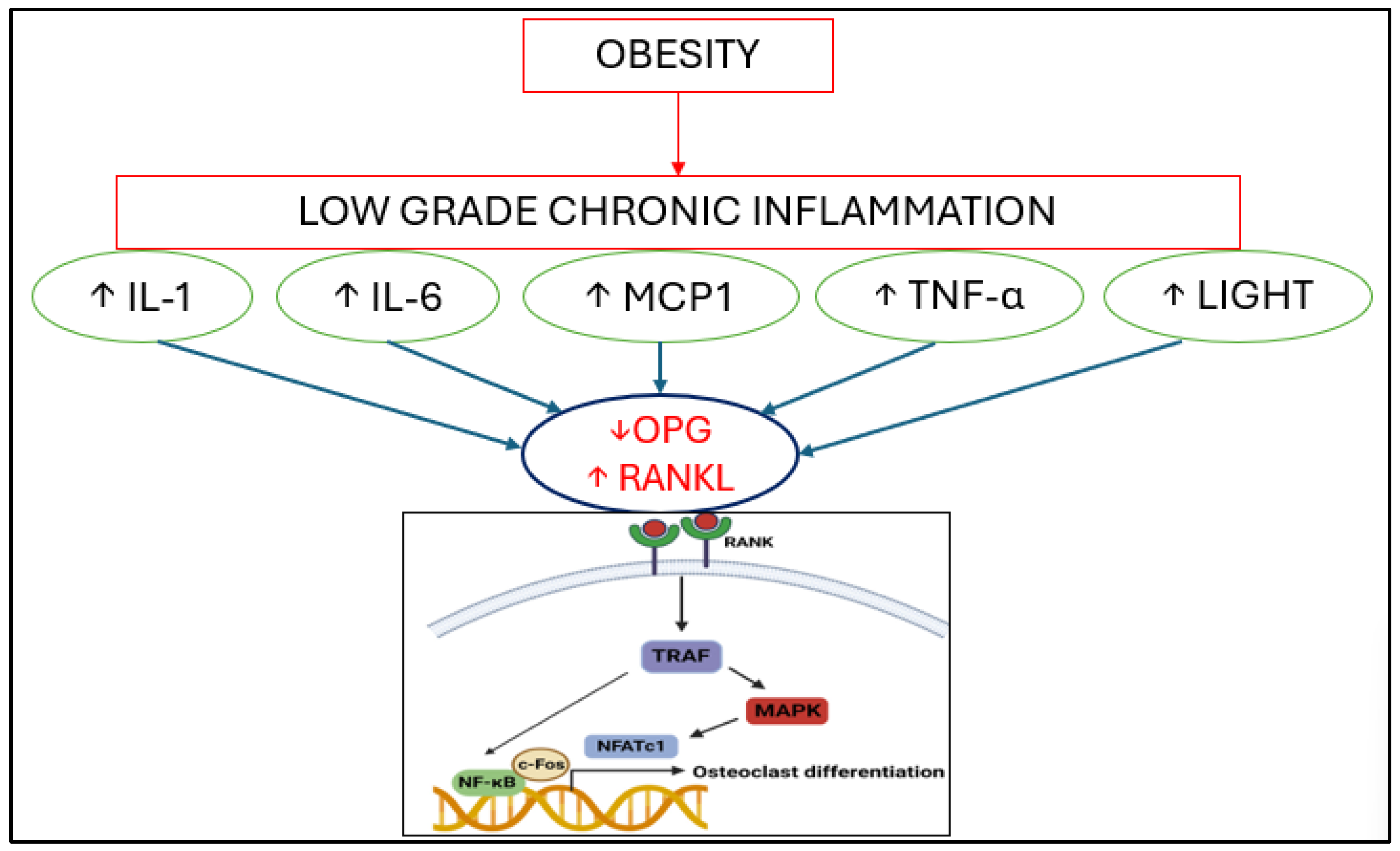
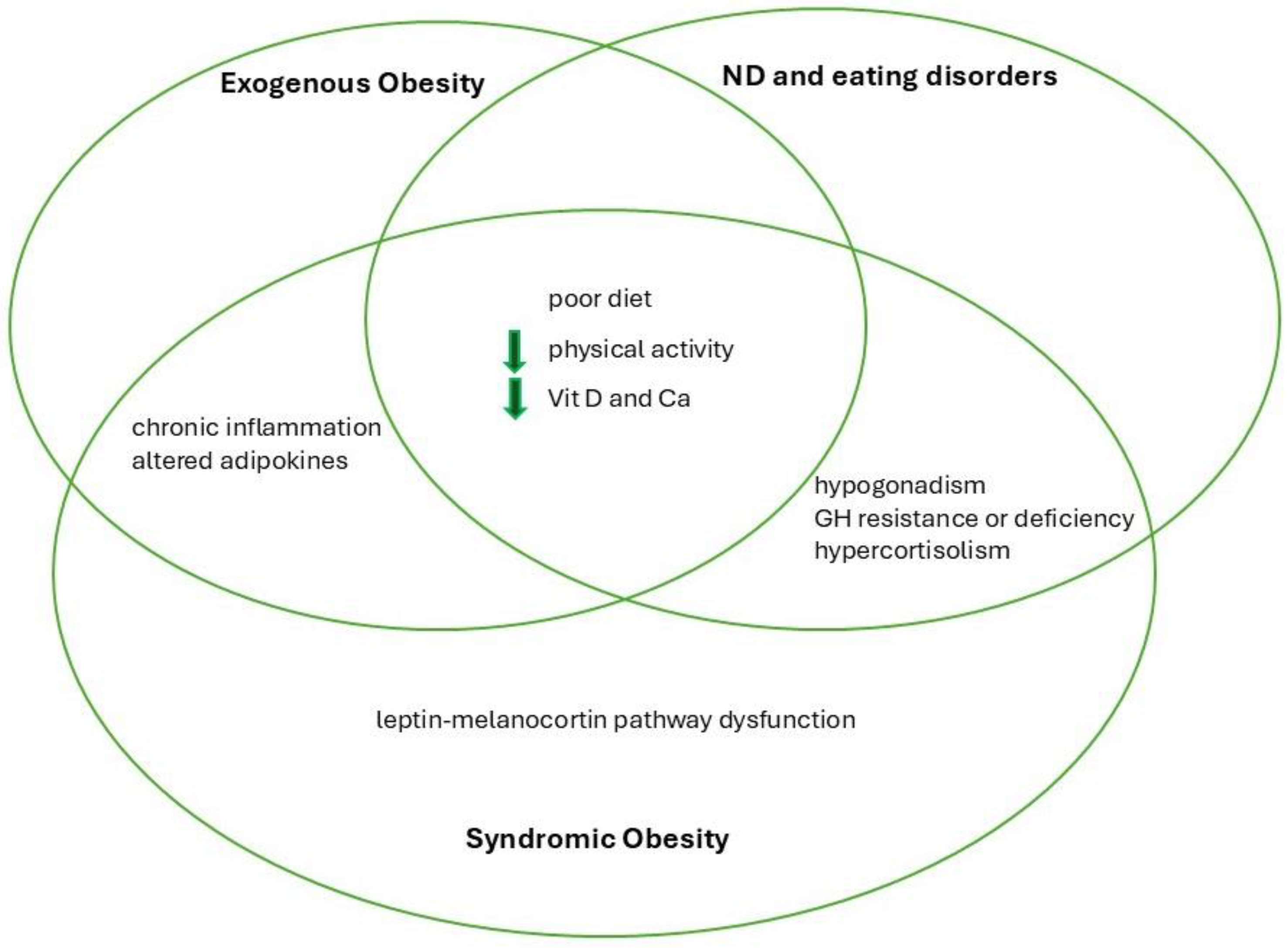
Childhood obesity represents a multifaceted challenge to bone health, influenced by a combination of endocrine, metabolic, and mechanical factors. Excess body fat correlates with an increase in bone mineral density (BMD) yet paradoxically elevates fracture risk due to compromised bone quality and increased mechanical loading on atypical sites. Additionally, subjects with syndromic obesity, as well as individuals with atypical nutritional patterns, including those with eating disorders, show bone fragility through unique genetic and hormonal dysregulations. Emerging evidence underscores the adverse effects of new pharmacological treatments for severe obesity on bone health. Novel drugs, such as glucagon-like peptide-1 (GLP-1) receptor agonists, and bariatric surgery demonstrate potential in achieving weight loss, though limited evidence is available regarding their short- and long-term impacts on skeletal health. This review provides a comprehensive analysis of the mechanisms underlying the impact of childhood obesity on bone health. It critically appraises evidence from in vitro studies, animal models, and clinical research in children with exogenous obesity, syndromic obesity, and eating disorders. It also explores the effects of emerging pharmacological and surgical treatments for severe obesity on skeletal integrity, highlights prevention strategies, and identifies research gaps.
Keywords: childhood obesity; bone health; adipokines; syndromic obesity; eating disorders; bariatric surgery; GLP-1 receptor agonists childhood obesity; bone health; adipokines; syndromic obesity; eating disorders; bariatric surgery; GLP-1 receptor agonists