Systematic Review

Yerba Mate (Ilex paraguariensis) and Rheumatoid Arthritis: A Systematic Review of Mechanistic and Clinical Evidence


by
Manuela Cassotta
1,2,
Qingwei Cao
3,4,
Haixia Hu
3,4,
Carlos Rabeiro Martinez
3,4,
Luis Alonso Dzul Lopez
1,5,6,
Santos Gracia Villar
1,5,7,
Maurizio Battino
1,3,4,8,* and
Francesca Giampieri
1,3,4
1
Research Group on Food, Nutritional Biochemistry and Health, Universidad Europea del Atlántico, Isabel Torres 21, 39011 Santander, Spain
2
Joint Laboratory on Food Science, Nutrition, and Intelligent Processing of Foods, Polytechnic University of Marche, Italy, Universidad Europea del Atlántico Spain and Jiangsu University, China, at Universidad Europea del Atlántico, 39011 Santander, Spain
3
Department of Clinical Sciences, Università Politecnica delle Marche, 60131 Ancona, Italy
4
Joint Laboratory on Food Science, Nutrition, and Intelligent Processing of Foods, Polytechnic University of Marche, Italy, Universidad Europea del Atlántico Spain and Jiangsu University, China, at the Polytechnic University of Marche, 60130 Ancona, Italy
5
Faculty of Nutrition and Dietetics, Universidad Internacional Iberoamericana, Campeche 24560, Mexico
6
Research Group on Food, Nutritional Biochemistry and Health, Universidad de La Romana, La Romana 22000, Dominican Republic
7
Faculty of Human Nutrition and Dietetics, Universidade Internacional do Cuanza, Cuito EN250, Bié, Angola
8
International Joint Research Laboratory of Intelligent Agriculture and Agri-Products Processing, Jiangsu University, Zhenjiang 212013, China
*
Author to whom correspondence should be addressed.
Nutrients 2025, 17(24), 3853; https://doi.org/10.3390/nu17243853 (registering DOI)
Submission received: 12 November 2025 / Revised: 2 December 2025 / Accepted: 3 December 2025 / Published: 10 December 2025
(This article belongs to the Section Nutritional Immunology)

Abstract

Background: Rheumatoid arthritis (RA) is a chronic autoimmune disease driven by persistent inflammation and oxidative stress. Ilex paraguariensis (yerba mate) contains bioactive compounds—particularly chlorogenic acids, quercetin, and rutin—with documented antioxidant and anti-inflammatory properties. Objectives: To systematically review the mechanistic and clinical evidence on Ilex paraguariensis and its main constituents in RA-relevant inflammatory, oxidative, and bone metabolic pathways. Methods: Following PRISMA 2020, PubMed/MEDLINE, LILACS, and SciELO were searched up to September 2025. Eligible studies included yerba mate preparations (last 10 years) or isolated compounds (last 5 years) assessing RA-relevant clinical, inflammatory, oxidative, or bone metabolic outcomes. Non-original studies were excluded. Owing to heterogeneity, findings were narratively synthesized, and risk of bias was evaluated using RoB 2, ROBINS-I, OHAT, and SYRCLE. Results: Twenty-three studies met inclusion criteria: 11 human (clinical or observational), 7 human-based in vitro, and 5 animal studies. Interventions with yerba mate infusions or standardized extracts suggest reductions in inflammatory markers (e.g., C-reactive protein, interleukin-6) and indicate improvements in glutathione-related oxidative balance. Evidence from isolated compounds, particularly quercetin and rutin, suggests comparable anti-inflammatory and antioxidant effects. Preclinical studies appear to indicate modulation of inflammatory and redox pathways relevant to RA. Conclusions: Yerba mate and its constituents show preliminary indications of anti-inflammatory and antioxidant effects with potential relevance to RA pathophysiology. However, in the absence of clinical trials in RA patients, conclusions remain tentative, constrained by small sample sizes, methodological heterogeneity, species differences, and internal validity concerns. Future research should include rigorously designed randomized trials and mechanistic studies using advanced human-relevant platforms, such as organoids and organ-on-chip systems.

1. Introduction

Rheumatoid arthritis (RA) is a chronic, systemic autoimmune disease characterized by persistent synovial inflammation, progressive joint destruction, pain, and functional disability. It affects approximately 0.5–1% of the global population, with a higher prevalence in women, and represents a major cause of impaired quality of life and work disability worldwide [1].
The pathogenesis of RA is multifactorial and involves persistent activation of innate and adaptive immune responses. Central mechanisms include the upregulation of nuclear factor kappa-B (NF-κB) and Janus kinase/signal transducer and activator of transcription (JAK/STAT) signaling, leading to increased production of pro-inflammatory cytokines such as tumor necrosis factor-α (TNF-α), interleukin (IL)-1β, IL-6, and IL-17. Fibroblast-like synoviocytes (FLSs) acquire an aggressive phenotype, contributing to pannus formation, secretion of matrix metalloproteinases (MMPs), and cartilage destruction. Oxidative stress further amplifies inflammation and tissue damage by excessive generation of reactive oxygen species (ROS) and impaired antioxidant defenses. Bone remodeling is dysregulated through activation of the receptor activator of nuclear factor-κB ligand (RANKL)/osteoprotegerin (OPG) axis, favoring osteoclastogenesis and bone erosion. Collectively, these processes sustain chronic inflammation, pain, and joint destruction [2].
Although advances in disease-modifying antirheumatic drugs (DMARDs), including biologics and Janus kinase inhibitors, have significantly improved disease control and outcomes, current therapies are not curative. Many patients experience incomplete responses, treatment-related adverse effects, or progressive structural damage despite therapy [3]. This scenario underscores the ongoing need for complementary strategies targeting key pathogenic mechanisms of RA, such as chronic inflammation, oxidative stress, FLS hyperplasia, pain, and bone remodeling.
Ilex paraguariensis, popularly known as yerba mate, is a species native to temperate and subtropical regions of South America, belonging to the Aquifoliaceae family. Traditionally consumed in countries such as Argentina, Brazil, Paraguay, and Uruguay, its popularity has been steadily expanding worldwide, with increasing consumption reported in Europe, North America, and parts of Asia, both as traditional infusions and as commercial preparations (e.g., energy drinks, dietary supplements, and functional foods).
Yerba mate have several therapeutic properties and are recommended as hypocholesterolemic, hepatoprotective, diuretic, digestive, nervous system stimulant, antioxidant, anti-inflammatory, antirheumatic, and lipolytic agent. It is also indicated for the treatment of occasional asthenia and as an adjunct in the treatment of overweight [4,5].
Yerba mate is particularly rich in bioactive compounds, mainly belonging to three classes: phenolic acids, methylxanthines, and flavonoids. Among phenolic acids, caffeoylquinic derivatives (chlorogenic acids) are the most abundant, accounting for nearly one third of the total polyphenolic content and including 3-caffeoylquinic (CQA), 4-CQA, 5-CQA, and dicaffeoylquinic isomers. Flavonoids, though less concentrated than phenolic acids, are consistently present, with rutin as the most abundant (up to 7–8 mg/g dry leaves), alongside quercetin and kaempferol [6]. Collectively, these compounds confer strong antioxidant and anti-inflammatory potential, which provides the biological rationale for exploring their relevance in the context of RA. A recent systematic review of clinical trials reported that dietary polyphenols, of which Ilex paraguariensis is a particularly rich source, may improve disease activity, reduce C-Reactive Protein (CRP) and Erythrocyte Sedimentation Rate (ESR), and modulate oxidative stress parameters in patients with RA [7]. Additional reviews have noted that dietary polyphenols may exert immunomodulatory and antioxidant effects relevant to RA pathophysiology, further supporting the interest in plant-derived phenolic compounds [8,9]. Mechanistic analyses further indicate that polyphenolic compounds can modulate key intracellular pathways involved in RA, including NF-κB, JAK/STAT, MAPKs, and Nrf2 [10].
This systematic review examines the effects of yerba mate preparations consumed in its various traditional and commercial forms and—secondarily—of its main isolated bioactive constituents on major pathogenic mechanisms of RA, including chronic inflammation, oxidative stress, FLS activation, joint damage, bone remodeling, and pain modulation.

2. Methods

The review was conducted in accordance with PRISMA 2020. The protocol was registered on the Open Science Framework (OSF): (https://osf.io/zd9mq, accessed on 12 November 2025).

2.1. Search Strategy and Information Sources

We systematically searched PubMed/MEDLINE, LILACS, and SciELO, with the last search performed on 15 September 2025. The search strategy combined terms related to Ilex paraguariensis or “yerba mate” and its principal bioactive constituents (e.g., “chlorogenic acid”, “caffeoylquinic acid”, “quercetin”, “ursolic acid”, “rutin”) together with “rheumatoid arthritis”. The complete search strings, including Boolean operators and MeSH terms, are provided in Appendix A. Reference lists of all included articles and related records suggested by the databases were also screened to identify additional eligible studies.

2.2. Inclusion Criteria

We included original studies in humans, human-derived cells, or animal models that evaluated Ilex paraguariensis preparations—such as traditional infusions, aqueous or hydroalcoholic extracts, or commercial formulations—or isolated bioactive constituents recognised as major components of yerba mate (including chlorogenic and caffeoylquinic acids, quercetin, and rutin). Eligible designs comprised randomized or non-randomized clinical trials, observational studies, human-based in vitro investigations, and in vivo animal studies using established models of arthritis, inflammation, or oxidative stress. Studies were required to report at least one outcome relevant to RA, including clinical parameters (e.g., DAS28, CRP, ESR), systemic inflammatory or oxidative biomarkers, or mechanistic endpoints involving RA-related pathways such as NF-κB, JAK/STAT, Nrf2 activation, fibroblast-like synoviocyte behaviour, cytokine release, or alterations in the RANKL/OPG axis. To ensure that the evidence synthesized reflects up-to-date research, we applied a ten-year window for studies on yerba mate preparations, consistent with the primary focus of the review on the preparations themselves rather than isolated constituents. For isolated bioactive compounds, a five-year window was adopted to capture mechanistic investigations generated with modern analytical approaches and more recent experimental models.

2.3. Exclusion Criteria

We excluded animal studies investigating isolated compounds, non-human in vitro models, non-original articles, studies lacking primary data or RA-relevant outcomes, grey literature, articles without full text available despite reasonable retrieval attempts, articles not published in English or Spanish, and any study outside the predefined time windows.

2.4. Grouping for Synthesis

For the narrative synthesis, studies were organised into four predefined categories: human studies assessing yerba mate infusions or non-fractioned extracts; human studies evaluating isolated bioactive constituents; human-based in vitro mechanistic studies; and in vivo animal studies using yerba mate preparations. The substantial heterogeneity in study design, populations, interventions, and outcomes did not allow for a meta-analysis, and findings were therefore synthesised qualitatively within each group.

2.5. Study Selection

All records were imported into Zotero, where duplicates were removed manually. Two reviewers independently screened titles and abstracts and subsequently assessed full texts against the predefined eligibility criteria. Disagreements were resolved by consensus or, when needed, through consultation with a third reviewer. No automation tools were used at any stage of the selection process. The study selection workflow is presented in the PRISMA flow diagram (Supplementary File S1).

2.6. Data Extraction and Quality Assessment

Two reviewers independently extracted data using a standardised form, including study design, population or model, intervention characteristics, outcomes, and main findings. Risk of bias was evaluated with design-appropriate tools: RoB 2 for randomized trials [11], ROBINS-I for observational studies [12], the OHAT tool for in vitro studies, and the SYRCLE tool for animal experiments [13].

3. Results

A total of 1218 records were identified through database searches and manual screening of reference lists and related articles. After removal of duplicates, 913 records were screened by title and abstract, of which 840 were excluded. Full texts of 73 articles were assessed for eligibility, leading to the inclusion of 23 studies in the final review. The study selection process is detailed in the PRISMA flow diagram (Supplementary File S1).
Of the included studies, 11 were human clinical investigations, 7 were in vitro studies using human cells, and 5 were animal models of arthritis or related inflammatory conditions. The included human studies showed marked heterogeneity in populations (healthy, cardiometabolic, HIV, postmenopausal), yerba mate formulations (infusion, roasted tea, standardized extracts, or isolated compounds), doses, exposure durations, and outcomes assessed. The main characteristics and findings of the included studies are summarized in Table 1 and Table 2.

3.1. Human Clinical Trials and Human-Based In Vitro Studies with Yerba Mate Infusions or Non-Fractionated Extracts

A total of ten human-based studies were identified, including seven clinical investigations and three in vitro studies evaluating Ilex paraguariensis (yerba mate) infusions or non-fractionated extracts (Table 1). Clinical trials conducted in metabolic, cardiovascular, HIV, or healthy populations, assessed inflammatory and oxidative stress biomarkers after short- to medium-term interventions (8 days to 4 weeks). Reported effects included reductions in circulating cytokines and inflammatory markers (e.g., CRP, IL-6, TNF-α), alongside improvements in oxidative balance (e.g., increased antioxidant capacity, improved GSH-related parameters). For instance, encapsulated dried mate extract reduced CRP and IL-6 in the higher-risk cardiometabolic subgroup [14], and roasted mate tea consumption reduced a broad panel of inflammatory cytokines [16]. In healthy men, short-term mate supplementation decreased TNF-α and IL-6 levels and increased the GSH:GSSG ratio [17,18]. One observational study reported higher bone mineral density and lower osteoporosis prevalence among habitual consumers (>1 L/day) [24]. Three in vitro studies further supported these observations. In human HepG2 hepatocytes, exposure to a yerba mate phenolic extract and its main metabolites—dihydrocaffeic acid (DHCA) and dihydroferulic acid (DHFA)—reduced intracellular ROS and lipid peroxidation, increased glutathione levels, and normalized antioxidant enzyme activities [27]. Both the native extract and DHCA were effective, whereas DHFA showed only partial activity. In endothelial cells, yerba mate extract mitigated TNF-α–induced oxidative stress and improved nitric oxide synthase (eNOS) expression (Wang et al., 2019 [30]). In THP-1 macrophages, aqueous yerba mate extract inhibited NLRP3 inflammasome activation and decreased ROS and nitric oxide levels (Santos et al., 2025 [31]).

3.2. Human-Based Studies with Isolated or Chemically Defined Bioactive Compounds

Nine studies investigated Ilex paraguariensis bioactive constituents, including chlorogenic acids, rutin, and quercetin (Table 1). Five randomized clinical trials evaluated these compounds in non-RA populations. Quercetin supplementation (500–1000 mg/day for 7 days to 12 weeks) in post-myocardial infarction patients, individuals undergoing coronary artery bypass surgery, and healthy postmenopausal women led to reductions in pro-inflammatory cytokines and increases in total antioxidant capacity, while effects on CRP varied across studies [21,22,23].
In patients with type 2 diabetes, rutin (500 mg/day for 3 months) decreased inflammatory and oxidative stress biomarkers and increased antioxidant capacity [20]. A crossover trial with a caffeoylquinic acid–standardized dry yerba mate extract also reported reductions in CRP and IL-6 in a higher cardiometabolic-risk subgroup [14].
Four in vitro studies using human-derived cells evaluated the effects of bioactive constituents present in Ilex paraguariensis (Table 1). Quercetin treatment of RA fibroblast-like synoviocytes (RA-FLSs) reduced the expression of the long non-coding RNA XIST, a regulator implicated in synovial fibroblast activation, and Proteasome subunit beta type-8 (PSMB8), a component of the immunoproteasome involved in antigen processing and inflammatory signaling; this downregulation was associated with reduced synoviocyte proliferation and inflammatory mediator release [28].
In RA-FLSs, quercetin also inhibited abnormal migration and invasion by upregulating microRNA-146a (miR-146a) and downregulating GATA-binding protein 6 (GATA6), leading to reduced F-actin organization; given that synoviocyte hypermigration and invasiveness drive pannus formation and joint destruction in RA, these findings support a potential anti-invasive effect [25].
In human PBMCs cocultured with mesenchymal stem cells, quercetin enhanced the immunosuppressive properties of the stem cells by reducing Th17 cell differentiation and NF-κB activation, while upregulating IL-6, NO, and indoleamine-2,3-dioxygenase—an enzyme involved in tryptophan catabolism and T-cell suppression—thereby attenuating pro-inflammatory responses [26].
In human hepatocytes, 5-caffeoylquinic acid, a major chlorogenic acid also present in yerba mate, activated the Nrf2/ARE pathway, upregulated antioxidant enzymes, and protected cells from oxidative stress–induced ROS accumulation and glutathione depletion [29]. Across the included clinical studies, the overall methodological quality ranged from low to high risk of bias, with common issues related to randomization, attrition, and reporting. Detailed domain-level assessments are presented in Supplementary Table S1. Similarly, the in vitro evidence was characterized by predominantly moderate-to-high risk of bias, with recurrent issues related to absence of randomization, lack of blinding, and incomplete reporting of culture conditions and outcome assessment (Supplementary Table S2).

3.3. Animal Studies

A total of five animal studies were identified, all employing Ilex paraguariensis infusions or non-fractionated extracts in models of adjuvant-induced arthritis or systemic inflammation (Table 2). Doses ranged from 10 to 800 mg/kg, administered orally for periods between a single dose and four weeks. In the adjuvant-induced arthritis model [35], yerba mate reduced paw edema and leukocyte infiltration and restored antioxidant enzyme activities. In models of acute or systemic inflammation, including carrageenan-induced pleurisy [33], nociception and paw edema [32], and DSS-induced colitis [36], treatment decreased leukocyte migration, Th1/Th17 polarization, levels of pro-inflammatory cytokines (IL-6, TNF-α, IFN-γ) and increased IL-10. In aged female rats, supplementation improved bone mineral density and decreased bone oxidative stress markers [34]. Across studies, yerba mate administration generally showed anti-inflammatory and antioxidant effects in vivo, although only one experiment used an arthritis-specific model. The animal studies showed a generally high risk of bias, primarily due to limited reporting of randomization procedures, lack of blinding, and potential uncontrolled confounders across the in vivo models. Detailed SYRCLE assessments are presented in Supplementary Table S3.

4. Discussion

Although no clinical trials have directly investigated Ilex paraguariensis or its main bioactive components in patients with RA, evidence from human studies in other clinical contexts provides preliminary indications of systemic anti-inflammatory and antioxidant effects that could be relevant to RA.
Randomized controlled trials with yerba mate infusions or standardized extracts have reported reductions in circulating inflammatory biomarkers such as CRP and IL-6 in some populations, together with improvements in redox-related parameters, including increased glutathione level. Similar findings have been observed for isolated compounds—particularly quercetin and rutin—which have been associated with reduction in pro-inflammatory cytokines (IL-6, TNF-α) and oxidative stress parameters across different clinical contexts such as cardiovascular risk, diabetes, and postmenopausal states.
While these results suggest a plausible systemic anti-inflammatory and antioxidant activity of yerba mate and its bioactive components in humans, the available evidence remains limited. The number of human studies identified in this review is small, and those that exist are generally short in duration, involve modest sample sizes, and have been conducted in populations without inflammatory joint disease—thus restricting their direct extrapolation to RA. Moreover, considerable heterogeneity in population characteristics, intervention formats, dosages, and exposure durations further limits the interpretability and generalizability of the findings. Furthermore, the outcomes assessed in these studies are limited to general inflammatory or oxidative biomarkers (e.g., CRP, IL-6, TNF-α), which are not validated RA-specific clinical endpoints and cannot be directly extrapolated to disease activity or joint symptoms in RA.
Several mechanistic investigations further support the notion that yerba mate and its major constituents can modulate oxidative stress, cytokine production, and inflammatory signaling cascades, including the NF-κB, JAK/STAT, and NLRP3 inflammasome pathways.
Moreover, evidence from observational and experimental studies indicates that yerba mate may influence bone metabolism through antioxidant and anti-inflammatory mechanisms. Habitual consumption (>1 L/day) has been associated with higher bone mineral density and reduced osteoporosis prevalence among postmenopausal women [24], while animal data suggest increased OPG expression and decreased RANKL and oxidative stress in bone tissue [34]. Given that dysregulated RANKL/OPG signaling and inflammation-driven bone resorption are central features of RA, these findings provide additional mechanistic support for the potential relevance of yerba mate in attenuating bone loss associated with chronic inflammation.
Evidence from human-cell and animal models suggests that these actions may underlie anti-inflammatory and antioxidant effects relevant to RA pathophysiology, such as immune activation, oxidative imbalance, tissue damage and bone remodeling. The main mechanistic pathways through which yerba mate and its principal bioactive constituents may influence RA pathophysiology are summarized in Figure 1.
Nonetheless, important methodological limitations—including species-specific differences, the intrinsic reductionism of traditional in vitro systems, and the frequent use of supraphysiological concentrations in mechanistic assays—warrant cautious interpretation of these preclinical findings.
Prospectively designed randomized, placebo-controlled trials in patients with RA are warranted to determine clinical efficacy and safety, using RA-specific endpoints (e.g., DAS28, ACR response, RA-specific imaging outputs), adequate treatment duration, and predefined biomarker panels to capture target engagement.

4.1. Critical Appraisal of Preclinical Evidence: Species Differences, Limitations of Traditional In Vitro Models, and Supraphysiological Concentrations

Despite offering mechanistic insight, current preclinical models present several limitations that restrict their translational value.
These include interspecies differences, the inherent simplification of traditional in vitro systems, and the reliance on concentrations that may not reflect realistic human systemic exposure.
It is well established that major interspecies differences exist in pharmacokinetics, including absorption, distribution, metabolism, and excretion of xenobiotics, which can markedly alter systemic exposure and biological effects across species [37,38]. In the specific case of yerba mate, several of its major bioactive compounds, such as methylxanthines, quercetin derivatives, and rutin, exhibit inter-species variability in pharmacokinetics and metabolism [39,40,41,42]. Such interspecific differences highlight the limitations of directly extrapolating anti-inflammatory or antioxidant effects observed in rodents or other animal models to humans.
Moreover, major discrepancies exist between human RA and experimental arthritis models in rodents. While adjuvant- or collagen-induced arthritis partially reproduce synovial inflammation and joint destruction, they do not fully capture the chronicity, autoimmune features, and heterogeneity of human RA. Critical aspects such as autoantibody production, FLS behaviour, and systemic comorbidities are often absent or oversimplified, limiting the external validity of findings from animal studies [43].
Given these limitations, it is also noteworthy that the animal studies included in this review—consistent with a well-recognized issue in preclinical research—employed heterogeneous dosing regimens, based in some cases on approximations from traditional human consumption and in others on arbitrarily selected amounts. None provided formal human-equivalent dose calculations or pharmacokinetic justification. Moreover, classical allometric scaling has intrinsic constraints [44,45,46], particularly for phytochemicals characterized by low oral bioavailability, extensive first-pass metabolism, and microbiota-dependent biotransformation, for which allometric extrapolations often fail to predict human systemic exposure. This variability further constrains the translational value of the preclinical evidence, as the systemic exposures achieved in animals may not reflect physiologically attainable levels in humans.
Traditional in vitro systems, typically based on immortalized cell lines or static monocultures, provide only a reductionist view of the RA microenvironment. They fail to capture the dynamic interactions between immune cells, synoviocytes, cartilage, and bone that drive disease progression, and they also lack cross-talk with other organs such as the liver and gut, which play a central role in the metabolism and transformation of bioactive compounds. This is particularly relevant for key yerba mate phytochemicals—such as caffeoylquinic and dicaffeoylquinic acids—which undergo extensive first-pass metabolism, phase II conjugation, and colonic microbial biotransformation in humans in vivo [42,47], resulting in low circulating levels of the parent compounds and the predominance of bioactive metabolites rather than the intact molecules tested in vitro.
In this context, the widespread use of in vitro concentrations that exceed physiologically achievable human exposure further limits the translational value of mechanistic findings, as many experimental doses are substantially higher than the plasma ranges documented in human pharmacokinetic studies. Taken together, these factors indicate that conventional in vitro systems may not accurately reflect the biochemical milieu in which Ilex paraguariensis constituents act in vivo.

4.2. Future Perspectives and Research Directions

Future research should move beyond classical animal models and reductionist in vitro systems toward human-relevant, mechanistically informative approaches. Advanced experimental platforms such as multicellular organoids and microfluidic organ-on-chip systems can more accurately reproduce the complex architecture and cellular interactions characteristic of the rheumatoid joint, including synovial fibroblasts, immune cells, endothelial components, and bone-resorbing cells [48,49,50]. When coupled with gut- and liver-on-chip models, these technologies also allow investigation of the absorption, first-pass metabolism, and microbiota-mediated biotransformation of orally administered phytochemicals such as those found in Ilex paraguariensis [51,52].
Integrating these physiologically based models with multi-omics profiling and in silico simulations may provide deeper insight into the molecular pathways and network-level interactions modulated by complex phytochemical mixtures under conditions that closely mimic human physiology [53].
Importantly, future mechanistic studies should incorporate human pharmacokinetic data to guide dose selection and ensure the use of exposure ranges that are physiologically achievable. In humans, chlorogenic acids undergo limited absorption in their native form and circulate mainly as microbial and phase-II metabolites [47,54,55]; rutin is poorly absorbed as an intact glycoside and contributes chiefly to circulating quercetin conjugates [56]; quercetin itself is extensively metabolized during first-pass processing and appears in plasma predominantly as glucuronidated, sulfated, or methylated derivatives [57,58,59]; in contrast, methylxanthines such as caffeine are efficiently absorbed and reach measurable systemic levels [60]. These well-established pharmacokinetic features indicate that most native phenolic constituents of Ilex paraguariensis may exhibit low systemic availability, underscoring the need to test concentrations aligned with documented human exposure rather than extremely high experimental doses. Furthermore, human pharmacokinetic studies using yerba mate infusions or extracts are still lacking, and the systemic exposure achieved after consumption of the complex phytochemical matrix remains insufficiently characterized. Such data are needed to define realistic human exposure ranges and to guide mechanistic experiments toward physiologically relevant concentration windows. Early-phase dose-finding and pharmacokinetic/pharmacometabolomic studies in RA populations will also be essential to quantify systemic exposure to native compounds and derived metabolites, evaluate inter-individual variability (including microbiota-related influences), and link exposure profiles to pharmacodynamic responses.
Equally important is the need to investigate the biological activity of the yerba mate as an intact preparation, rather than focusing exclusively on isolated constituents. Its bioactive potential reflects interactions among multiple co-occurring components, which may modulate each other’s effects. For example, in vitro data indicate that saponins and quercetin can jointly inhibit iNOS and COX-2 expression through NF-κB modulation, whereas the corresponding unfractionated extract shows lower potency, potentially due to competing interactions within the mixture [61]. Therefore, future studies should aim to characterize the integrated biological effects of complete yerba mate preparations—particularly in human-relevant models—so as to capture the full complexity of their mechanistic actions.
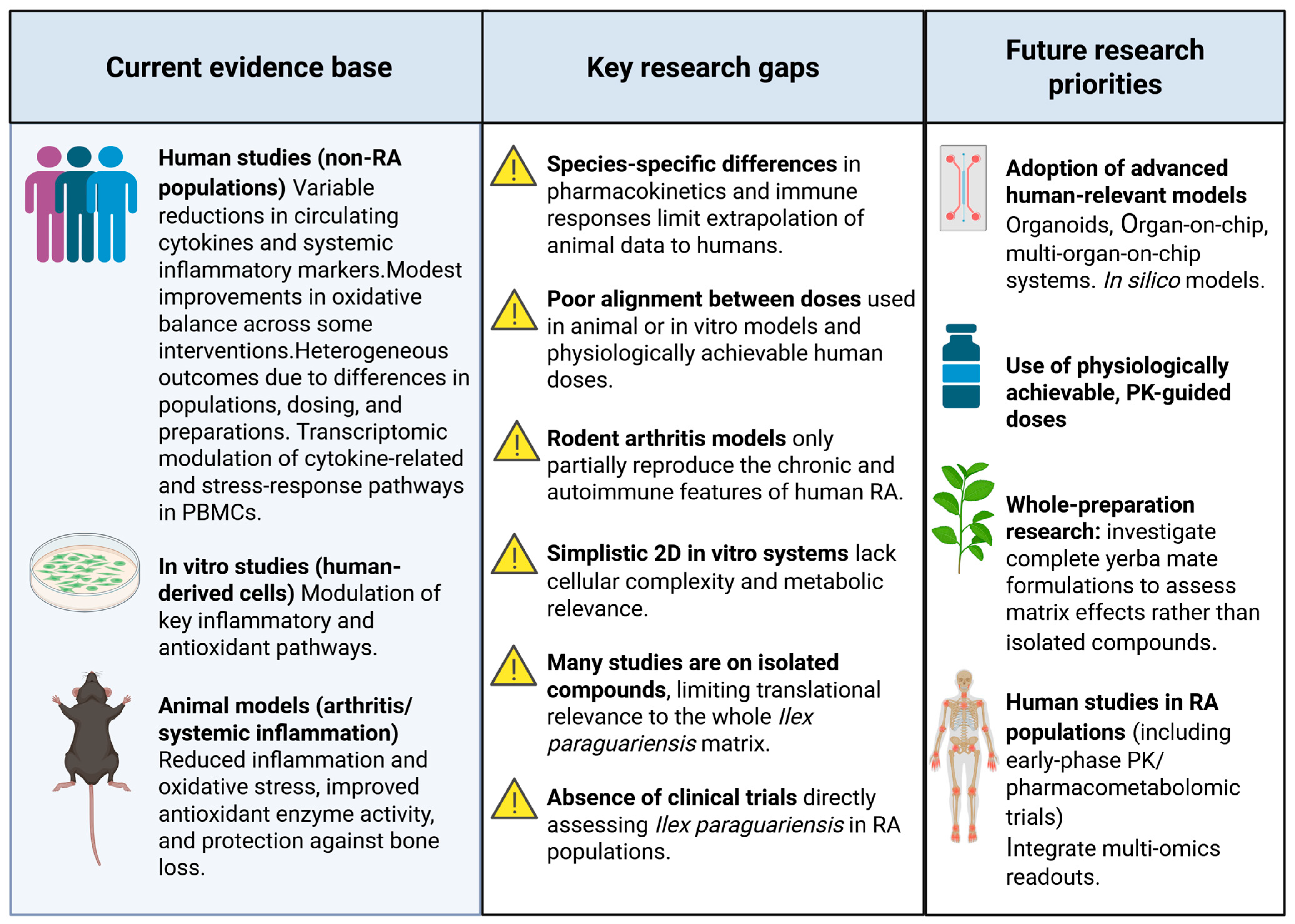
The conceptual framework summarizing current evidence, key research gaps, and future research priorities for Ilex paraguariensis in RA is illustrated in Figure 2.

4.3. Limitations of the Present Review

This review has several limitations that should be acknowledged.
First, no clinical studies have been conducted specifically in individuals with RA, and all available evidence derives from non-RA human populations, animal models, or in vitro systems. Consequently, the endpoints assessed in human studies are largely non–RA-specific, relying on general inflammatory or oxidative markers rather than disease-relevant outcomes such as joint inflammation, autoantibodies, or validated composite activity scores. This substantially limits the extent to which current mechanistic findings can be directly extrapolated to RA. Second, substantial heterogeneity across study designs, populations, intervention forms, and outcome measures precluded quantitative synthesis and limits comparability among studies. Third, the overall body of evidence is relatively small, spanning a limited number of clinical, animal, and in vitro investigations, many of which involve modest sample sizes or restricted experimental conditions. Fourth, most preclinical data rely on animal models or simplified in vitro systems that may not accurately reproduce human pharmacokinetics, immune mechanisms, or disease complexity, thereby reducing translational applicability. In addition, dosing regimens show substantial variability. Many in vitro studies use supraphysiological concentrations, and doses employed in animal models are often empirical and not informed by human pharmacokinetic data. These factors further complicate the interpretation and translational relevance of mechanistic findings. Fifth, most human trials were characterized by concerns in randomization, blinding, or outcome reporting, as reflected by predominantly moderate-to-high risk-of-bias assessments. Preclinical in vitro studies frequently lacked key methodological safeguards such as randomization, blinding, and standardized outcome assessment, while animal experiments often had unclear or high risk of bias due to insufficient reporting of allocation procedures, randomization, blinding, and housing or experimental conditions. These limitations substantially reduce the internal validity and generalizability of the available findings and further underscore that current evidence should be interpreted as preliminary.
Finally, publication bias cannot be excluded, as studies reporting null or negative results are less likely to be published. Despite these limitations, the present review integrates the best up-to-date available human, in vitro, and animal evidence to inform mechanistic processes potentially relevant to RA, thereby providing an improved foundation for future disease-specific research.

5. Conclusions

The available evidence suggests that yerba mate may exert anti-inflammatory and antioxidant effects that could be mechanistically relevant to RA. Several human studies conducted in metabolic, cardiovascular, or general inflammatory settings have shown improvements in oxidative balance and modulation of inflammatory pathways. However, no clinical trials to date have evaluated yerba mate in patients with RA, and the current evidence is insufficient to support its use for disease management. To address these gaps, well-designed human studies specifically targeting RA are warranted. Future research should also prioritize advanced, human-relevant platforms—including organoids, organ-on-chip systems, and in silico models—capable of capturing complex immune and joint-specific processes more accurately than animal or simplistic in vitro systems. Such rigorously conducted, human-centered studies will be essential to determine the true translational potential of yerba mate and its bioactive constituents in RA.

Supplementary Materials

The following supporting information can be downloaded at: https://www.mdpi.com/article/10.3390/nu17243853/s1, Supplementary File S1: Prisma_FlowDiagram_Cassotta_et_al; Supplementary Table S1: Risk of Bias Assessment for Human Studies; Supplementary Table S2: Risk of bias for in vitro studies. Risk of Bias assessment: OHAT tool for in vitro studies.; Supplementary Table S3: Risk of bias for animal studies. Risk of Bias assessment: SYRCLE tool. Ref. [62] is cited in Supplementary Materials file.

Author Contributions

Conceptualization, M.C. and Q.C.; Methodology, M.C. and H.H.; Writing—Original Draft Preparation, M.C., H.H. and C.R.M.; Writing—Review & Editing L.A.D.L., S.G.V. and F.G.; Visualization, M.B.; Supervision, M.B. and F.G. All authors have read and agreed to the published version of the manuscript.

Funding

This research received no external funding.

Data Availability Statement

All data analyzed in this study are derived from previously published articles cited throughout this manuscript. The full list of references is provided in the References section.

Conflicts of Interest

The authors declare no conflicts of interest.

Abbreviations

The following abbreviations are used in this manuscript:
ADAAdenosine Deaminase
ACRAmerican College of Rheumatology
ALPAlkaline Phosphatase
aBMDareal Bone Mineral Density
ARFAqueous Residual Fraction
BFButanolic Fraction
BMDBone Mineral Density
CafCaffeine
CATCatalase
CECrude Extract
CGAChlorogenic Acid
CRPC-Reactive Protein
CQACaffeoylquinic Acid
CVCell Viability
DAS28Disease Activity Score in 28 joints
DEGsDifferentially Expressed Genes
DEPsDifferentially Expressed Proteins
DHCADihydrocaffeic Acid
DHFADihydroferulic Acid
diCQADicaffeoylquinic Acid
DSSDextran Sodium Sulfate
DXADual-energy X-ray Absorptiometry
eNOSEndothelial Nitric Oxide Synthase
ESRErythrocyte Sedimentation Rate
FLSFibroblast-like Synoviocyte
GATA6GATA-binding Protein 6
GPxGlutathione Peroxidase
GRGlutathione Reductase
GSHReduced Glutathione
GSSGOxidized Glutathione
hUCMSCsHuman Umbilical Cord Mesenchymal Stem Cells
IDOIndoleamine 2,3-Dioxygenase
IFN-γInterferon-gamma
ILInterleukin
IL-6Interleukin-6
JAK/STATJanus Kinase/Signal Transducer and Activator of Transcription
LDHLactate Dehydrogenase
MDAMalondialdehyde
MMPMatrix Metalloproteinase
MPOMyeloperoxidase
NF-κBNuclear Factor Kappa-light-chain-enhancer of Activated B Cells
NLRP3Nucleotide-binding Domain, Leucine-rich Repeat-containing Family, Pyrin Domain-containing 3
NONitric Oxide
NOxNitric Oxide Species
NPSHNon-Protein Thiols
OPGOsteoprotegerin
p-AKTPhosphorylated Protein Kinase B
PBMCsPeripheral Blood Mononuclear Cells
p-IκBPhosphorylated Inhibitor of Kappa B
PSMB8Proteasome Subunit Beta 8
RANKLReceptor Activator of Nuclear Factor κB Ligand
RA-FLSsRheumatoid Arthritis Fibroblast-like Synoviocytes
ROSReactive Oxygen Species
RutRutin
sBMDSurface Bone Mineral Density (cortical)
SODSuperoxide Dismutase
SOD2Superoxide Dismutase 2
TACTotal Antioxidant Capacity
TBARSThiobarbituric Acid Reactive Substances
ThT Helper
Th17T Helper 17 Cells
TLR-3Toll-Like Receptor 3
TNF-αTumor Necrosis Factor-alpha
t-BHPtert-Butyl Hydroperoxide
TRAPTartrate-Resistant Acid Phosphatase
vBMDVolumetric Bone Mineral Density (trabecular)
XISTX-inactive Specific Transcript (long non-coding RNA)
YMEYerba Mate Aqueous Extract
YMPEYerba Mate Phenolic Extract

Appendix A

Appendix A.1. Search Strings for Pubmed

(“Ilex paraguariensis” [MeSH Terms] OR (“ilex” [All Fields] AND “paraguariensis”[All Fields]) OR “Ilex paraguariensis” [All Fields] OR (“yerba” [All Fields] AND “mate” [All Fields]) OR “yerba mate” [All Fields] OR (“Ilex paraguariensis” [MeSH Terms] OR (“ilex” [All Fields] AND “paraguariensis” [All Fields]) OR “Ilex paraguariensis” [All Fields])) AND (2015:2025 [pdat])
(“Ilex paraguariensis” [MeSH Terms] OR (“ilex” [All Fields] AND “paraguariensis” [All Fields]) OR “Ilex paraguariensis” [All Fields] OR (“yerba” [All Fields] AND “mate” [All Fields]) OR “yerba mate” [All Fields] OR (“Ilex paraguariensis” [MeSH Terms] OR (“ilex” [All Fields] AND “paraguariensis” [All Fields]) OR “Ilex paraguariensis” [All Fields])) AND (“arthritis” [MeSH Terms] OR “arthritis” [All Fields] OR “arthritides” [All Fields] OR “polyarthritides” [All Fields])
((“chlorogenic acid” [Supplementary Concept] OR “chlorogenic acid” [All Fields] OR “chlorogenic acid” [MeSH Terms] OR (“chlorogenic” [All Fields] AND “acid” [All Fields]) OR (“quercetin” [Supplementary Concept] OR “quercetin” [All Fields] OR “quercetin” [MeSH Terms] OR “quercetin s” [All Fields] OR “quercetine” [All Fields] OR “quercetins” [All Fields]) OR (“ursolic acid” [Supplementary Concept] OR “ursolic acid” [All Fields] OR “ursolic acid” [MeSH Terms] OR (“ursolic” [All Fields] AND “acid” [All Fields])) OR (“rutin” [Supplementary Concept] OR “rutin” [All Fields] OR “rutin” [MeSH Terms] OR “rutins” [All Fields])) AND (“arthritis, rheumatoid” [MeSH Terms] OR (“arthritis” [All Fields] AND “rheumatoid” [All Fields]) OR “rheumatoid arthritis” [All Fields] OR (“rheumatoid” [All Fields] AND “arthritis” [All Fields]))) AND (2020:2025 [pdat])
((“caffeoylquinic acid” [All Fields] OR “3-caffeoylquinic acid” [All Fields] OR “4-caffeoylquinic acid” [All Fields] OR “5-caffeoylquinic acid” [All Fields] OR “3,4-dicaffeoylquinic acid” [All Fields] OR “3,5-dicaffeoylquinic acid” [All Fields] OR “4,5-dicaffeoylquinic acid” [All Fields]) AND (“inflammation” [MeSH Terms] OR (“inflammatories” [All Fields] OR “inflammatory” [All Fields]) OR “oxidative stress” [All Fields] OR (“cytokin” [All Fields] OR “cytokine s” [All Fields] OR “cytokines” [Supplementary Concept] OR “cytokines” [All Fields] OR “cytokine” [All Fields] OR “cytokines” [MeSH Terms] OR “cytokinic” [All Fields] OR “cytokins” [All Fields]) OR “arthritis” [All Fields] OR “rheumatoid arthritis” [All Fields])) AND (2020:2025 [pdat])

Appendix A.2. Search Strings for SciELO

Ilex paraguariensis” OR “yerba mate”
“Chlorogenic acid” AND “rheumatoid arthritis”
“Rutin” AND “rheumatoid arthritis”
“Quercetin” AND “rheumatoid arthritis”
“Ursolic acid” AND “rheumatoid arthritis”

Appendix A.3. Search Strings for LILACS

Ilex paraguariensis” OR “yerba mate” AND db:(“LILACS”) AND (year_cluster:[2015 TO 2025]) AND instance:”lilacsplus”
(“Ilex paraguariensis” OR “yerba mate”) AND (“rheumatoid arthritis” OR “inflammation” OR “oxidative stress”) AND db:(“LILACS”) AND (year_cluster:[2015 TO 2025]) AND instance: ”lilacsplus”

References

  1. Chauhan, K.; Jandu, J.S.; Brent, L.H.; Al-Dhahir, M.A. Rheumatoid Arthritis. In StatPearls; StatPearls Publishing: Treasure Island, FL, USA, 2025. [Google Scholar]
  2. Gao, Y.; Zhang, Y.; Liu, X. Rheumatoid Arthritis: Pathogenesis and Therapeutic Advances. MedComm 2024, 5, e509. [Google Scholar] [CrossRef]
  3. Conigliaro, P.; D’Antonio, A.; D’Erme, L.; Lavinia Fonti, G.; Triggianese, P.; Bergamini, A.; Chimenti, M.S. Failure and Multiple Failure for Disease Modifying Antirheumatic Drugs in Rheumatoid Arthritis: Real-Life Evidence from a Tertiary Referral Center in Italy. PLoS ONE 2023, 18, e0281213. [Google Scholar] [CrossRef] [PubMed]
  4. Franzen, F.d.L.; Boscariol Rasera, G.; e Silva, K.F.C.; de Castro, R.J.S.; de Oliveira, M.S.R.; Bolini, H.M.A. Physicochemical Characterization and Antioxidant Potential of Plant Extracts for Use in Foods. Braz. J. Food Technol. 2025, 28, e2024085. [Google Scholar] [CrossRef]
  5. Gerber, T.; Nunes, A.; Moreira, B.R.; Maraschin, M. Yerba Mate (Ilex paraguariensis A. St.-Hil.) for New Therapeutic and Nutraceutical Interventions: A Review of Patents Issued in the Last 20 Years (2000–2020). Phytother. Res. 2023, 37, 527–548. [Google Scholar] [CrossRef]
  6. Brousse, M.M.; Monaca, A.B.; López, G.G.; Cruz, N.E.; Vergara, M.L.; Brousse, M.M.; Monaca, A.B.; López, G.G.; Cruz, N.E.; Vergara, M.L. Successive Concentrations of Phenolic Compounds of ‘Yerba Mate’ (Ilex paraguariensis) and Their Contribution to Antioxidant Capacity. Rev. Cienc. Tecnol. 2024, 42, 18–27. [Google Scholar] [CrossRef]
  7. Long, Z.; Xiang, W.; He, Q.; Xiao, W.; Wei, H.; Li, H.; Guo, H.; Chen, Y.; Yuan, M.; Yuan, X.; et al. Efficacy and Safety of Dietary Polyphenols in Rheumatoid Arthritis: A Systematic Review and Meta-Analysis of 47 Randomized Controlled Trials. Front. Immunol. 2023, 14, 1024120. [Google Scholar] [CrossRef]
  8. Dojs, A.; Roś, B.; Siekaniec, K.; Kuchenbeker, N.; Mierzwińska-Mucha, J.; Jakubowicz, M. The Role of Dietary Polyphenols in Patients with Rheumatoid Arthritis–A Review of Literature. J. Educ. Health Sport 2025, 82, 60290. [Google Scholar] [CrossRef]
  9. Christman, L.M.; Gu, L. Efficacy and Mechanisms of Dietary Polyphenols in Mitigating Rheumatoid Arthritis. J. Funct. Foods 2020, 71, 104003. [Google Scholar] [CrossRef]
  10. Saleem, U.; Farrukh, M.; Saadullah, M.; Siddique, R.; Gul, H.; Ahmad, A.; Shaukat, B.; Shah, M.A. Role of Polyphenolics in the Management of Rheumatoid Arthritis through Intracellular Signaling Pathways: A Mechanistic Review. Inflammopharmacology 2025, 33, 2263–2275. [Google Scholar] [CrossRef] [PubMed]
  11. Sterne, J.A.C.; Savović, J.; Page, M.J.; Elbers, R.G.; Blencowe, N.S.; Boutron, I.; Cates, C.J.; Cheng, H.-Y.; Corbett, M.S.; Eldridge, S.M.; et al. RoB 2: A Revised Tool for Assessing Risk of Bias in Randomised Trials. BMJ 2019, 366, l4898. [Google Scholar] [CrossRef] [PubMed]
  12. Sterne, J.A.; Hernán, M.A.; Reeves, B.C.; Savović, J.; Berkman, N.D.; Viswanathan, M.; Henry, D.; Altman, D.G.; Ansari, M.T.; Boutron, I.; et al. ROBINS-I: A Tool for Assessing Risk of Bias in Non-Randomised Studies of Interventions. BMJ 2016, 355, i4919. [Google Scholar] [CrossRef]
  13. Hooijmans, C.R.; Rovers, M.M.; de Vries, R.B.M.; Leenaars, M.; Ritskes-Hoitinga, M.; Langendam, M.W. SYRCLE’s Risk of Bias Tool for Animal Studies. BMC Med. Res. Methodol. 2014, 14, 43. [Google Scholar] [CrossRef] [PubMed]
  14. Gebara, K.S.; Gasparotto, A., Jr.; Palozi, R.A.C.; Morand, C.; Bonetti, C.I.; Gozzi, P.T.; de Mello, M.R.F.; Costa, T.A.; Cardozo Junior, E.L. A Randomized Crossover Intervention Study on the Effect a Standardized Maté Extract (Ilex paraguariensis A. St.-Hil.) in Men Predisposed to Cardiovascular Risk. Nutrients 2020, 13, 14. [Google Scholar] [CrossRef]
  15. Petrilli, A.A.; Souza, S.J.; Teixeira, A.M.; Pontilho, P.M.; Souza, J.M.P.; Luzia, L.A.; Rondó, P.H.C. Effect of Chocolate and Yerba Mate Phenolic Compounds on Inflammatory and Oxidative Biomarkers in HIV/AIDS Individuals. Nutrients 2016, 8, 132. [Google Scholar] [CrossRef]
  16. Bravo, L.; Martínez-López, S.; Sierra-Cinos, J.L.; Mateos, R.; Sarriá, B. Yerba Mate (Ilex paraguariensis St. Hill.) Tea May Have Cardiometabolic Beneficial Effects in Healthy and At-Risk Subjects: A Randomized, Controlled, Blind, Crossover Trial in Nonhabitual Consumers. Mol. Nutr. Food Res. 2025, 69, e70065. [Google Scholar] [CrossRef]
  17. Panza, V.P.; Brunetta, H.S.; de Oliveira, M.V.; Nunes, E.A.; da Silva, E.L. Effect of Mate Tea (Ilex paraguariensis) on the Expression of the Leukocyte NADPH Oxidase Subunit P47phox and on Circulating Inflammatory Cytokines in Healthy Men: A Pilot Study. Int. J. Food Sci. Nutr. 2019, 70, 212–221. [Google Scholar] [CrossRef] [PubMed]
  18. Panza, V.P.; Diefenthaeler, F.; Tamborindeguy, A.C.; Camargo, C.d.Q.; de Moura, B.M.; Brunetta, H.S.; Sakugawa, R.L.; de Oliveira, M.V.; Puel, E.d.O.; Nunes, E.A.; et al. Effects of Mate Tea Consumption on Muscle Strength and Oxidative Stress Markers after Eccentric Exercise. Br. J. Nutr. 2016, 115, 1370–1378. [Google Scholar] [CrossRef] [PubMed]
  19. Ruskovska, T.; Morand, C.; Bonetti, C.I.; Gebara, K.S.; Cardozo Junior, E.L.; Milenkovic, D. Multigenomic Modifications in Human Circulating Immune Cells in Response to Consumption of Polyphenol-Rich Extract of Yerba Mate (Ilex paraguariensis A. St.-Hil.) Are Suggestive of Cardiometabolic Protective Effects. Br. J. Nutr. 2023, 129, 185–205. [Google Scholar] [CrossRef]
  20. Bazyar, H.; Moradi, L.; Zaman, F.; Zare Javid, A. The Effects of Rutin Flavonoid Supplement on Glycemic Status, Lipid Profile, Atherogenic Index of Plasma, Brain-Derived Neurotrophic Factor (BDNF), Some Serum Inflammatory, and Oxidative Stress Factors in Patients with Type 2 Diabetes Mellitus: A Double-Blind, Placebo-Controlled Trial. Phytother. Res. 2023, 37, 271–284. [Google Scholar] [CrossRef]
  21. Dehghani, F.; Sezavar Seyedi Jandaghi, S.H.; Janani, L.; Sarebanhassanabadi, M.; Emamat, H.; Vafa, M. Effects of Quercetin Supplementation on Inflammatory Factors and Quality of Life in Post-Myocardial Infarction Patients: A Double Blind, Placebo-Controlled, Randomized Clinical Trial. Phytother. Res. 2021, 35, 2085–2098. [Google Scholar] [CrossRef]
  22. Bailly, A.R.; Hester, G.M.; Alesi, M.G.; Buresh, R.J.; Feito, Y.; Mermier, C.M.; Ducharme, J.B.; VanDusseldorp, T.A. Quercetins Efficacy on Bone and Inflammatory Markers, Body Composition, and Physical Function in Postmenopausal Women. J. Bone Miner. Metab. 2025, 43, 304–314. [Google Scholar] [CrossRef]
  23. Mury, P.; Dagher, O.; Fortier, A.; Diaz, A.; Lamarche, Y.; Noly, P.-E.; Ibrahim, M.; Pagé, P.; Demers, P.; Bouchard, D.; et al. Quercetin Reduces Vascular Senescence and Inflammation in Symptomatic Male but Not Female Coronary Artery Disease Patients. Aging Cell 2025, 24, e70108. [Google Scholar] [CrossRef] [PubMed]
  24. Brun, L.R.; Henríquez, M.M.; Stieben, L.A.R.; Cusumano, M.; Wilches-Visbal, J.H.; Saraví, F.D.; Brance, M.L. Positive Effect of Yerba Mate (Ilex paraguariensis) Consumption on Bone Mineral Density in Postmenopausal Women Assessed by Dual Energy X-Ray Absorptiometry-Based 3-Dimensional Modeling. J. Bone Metab. 2025, 32, 123–132. [Google Scholar] [CrossRef]
  25. Zhao, J.; Chen, B.; Peng, X.; Wang, C.; Wang, K.; Han, F.; Xu, J. Quercetin Suppresses Migration and Invasion by Targeting miR-146a/GATA6 Axis in Fibroblast-like Synoviocytes of Rheumatoid Arthritis. Immunopharmacol. Immunotoxicol. 2020, 42, 221–227. [Google Scholar] [CrossRef]
  26. Chen, G.; Ye, Y.; Cheng, M.; Tao, Y.; Zhang, K.; Huang, Q.; Deng, J.; Yao, D.; Lu, C.; Huang, Y. Quercetin Combined With Human Umbilical Cord Mesenchymal Stem Cells Regulated Tumour Necrosis Factor-α/Interferon-γ-Stimulated Peripheral Blood Mononuclear Cells via Activation of Toll-Like Receptor 3 Signalling. Front. Pharmacol. 2020, 11, 499. [Google Scholar] [CrossRef]
  27. Baeza, G.; Sarriá, B.; Mateos, R.; Bravo, L. Dihydrocaffeic Acid, a Major Microbial Metabolite of Chlorogenic Acids, Shows Similar Protective Effect than a Yerba Mate Phenolic Extract against Oxidative Stress in HepG2 Cells. Food Res. Int. 2016, 87, 25–33. [Google Scholar] [CrossRef]
  28. Sun, H.-T.; Li, J.-P.; Qian, W.-Q.; Yin, M.-F.; Yin, H.; Huang, G.-C. Quercetin Suppresses Inflammatory Cytokine Production in Rheumatoid Arthritis Fibroblast-like Synoviocytes. Exp. Ther. Med. 2021, 22, 1260. [Google Scholar] [CrossRef]
  29. Chen, X.; Yang, J.H.; Cho, S.S.; Kim, J.H.; Xu, J.; Seo, K.; Ki, S.H. 5-Caffeoylquinic Acid Ameliorates Oxidative Stress-Mediated Cell Death via Nrf2 Activation in Hepatocytes. Pharm. Biol. 2020, 58, 999–1005. [Google Scholar] [CrossRef]
  30. Wang, S.; Sarriá, B.; Mateos, R.; Goya, L.; Bravo-Clemente, L. TNF-α-Induced Oxidative Stress and Endothelial Dysfunction in EA.Hy926 Cells Is Prevented by Mate and Green Coffee Extracts, 5-Caffeoylquinic Acid and Its Microbial Metabolite, Dihydrocaffeic Acid. Int. J. Food Sci. Nutr. 2019, 70, 267–284. [Google Scholar] [CrossRef] [PubMed]
  31. Santos, J.M.D.; Touguinha, L.; Bridi, R.; Andreazza, A.C.; Bick, D.L.U.; Davidson, C.B.; dos Santos, A.F.; Machado, K.A.; Scariot, F.J.; Delamare, L.A.P.; et al. Could the Inhibition of Systemic NLRP3 Inflammasome Mediate Central Redox Effects of Yerba Mate? An in Silico and Pre-Clinical Translational Approach. J. Ethnopharmacol. 2025, 344, 119518. [Google Scholar] [CrossRef] [PubMed]
  32. De Carvalho, E.F.; de Oliveira, S.K.; Nardi, V.K.; Gelinski, T.C.; Bortoluzzi, M.C.; Maraschin, M.; Nardi, G.M. Ilex Paraguariensis Promotes Orofacial Pain Relief After Formalin Injection: Involvement of Noradrenergic Pathway. Pharmacogn. Res. 2016, 8, S31–S37. [Google Scholar] [CrossRef] [PubMed]
  33. Luz, A.B.G.; da Silva, C.H.B.; Nascimento, M.V.P.S.; de Campos Facchin, B.M.; Baratto, B.; Fröde, T.S.; Reginatto, F.H.; Dalmarco, E.M. The Anti-Inflammatory Effect of Ilex paraguariensis A. St. Hil (Mate) in a Murine Model of Pleurisy. Int. Immunopharmacol. 2016, 36, 165–172. [Google Scholar] [CrossRef]
  34. Pereira, C.S.; Stringhetta-Garcia, C.T.; da Silva Xavier, L.; Tirapeli, K.G.; Pereira, A.A.F.; Kayahara, G.M.; Tramarim, J.M.; Crivelini, M.M.; Padovani, K.S.; Leopoldino, A.M.; et al. Llex Paraguariensis Decreases Oxidative Stress in Bone and Mitigates the Damage in Rats during Perimenopause. Exp. Gerontol. 2017, 98, 148–152. [Google Scholar] [CrossRef]
  35. Correa, V.G.; de Sá-Nakanishi, A.B.; Gonçalves, G.d.A.; Barros, L.; Ferreira, I.C.F.R.; Bracht, A.; Peralta, R.M. Yerba Mate Aqueous Extract Improves the Oxidative and Inflammatory States of Rats with Adjuvant-Induced Arthritis. Food Funct. 2019, 10, 5682–5696. [Google Scholar] [CrossRef]
  36. Olate-Briones, A.; Albornoz-Muñoz, S.; Rodríguez-Arriaza, F.; Rodríguez-Vergara, V.; Aguirre, J.M.; Liu, C.; Peña-Farfal, C.; Escobedo, N.; Herrada, A.A. Yerba Mate (Ilex paraguariensis) Reduces Colitis Severity by Promoting Anti-Inflammatory Macrophage Polarization. Nutrients 2024, 16, 1616. [Google Scholar] [CrossRef] [PubMed]
  37. Mealey, K.L.; Karriker, M.J. Comparative Pharmacokinetics and Pharmacodynamics. In Pharmacotherapeutics for Veterinary Dispensing; John Wiley & Sons, Ltd.: Hoboken, NJ, USA, 2019; pp. 75–94. ISBN 978-1-119-40457-6. [Google Scholar]
  38. Toutain, P.-L.; Ferran, A.; Bousquet-Mélou, A. Species Differences in Pharmacokinetics and Pharmacodynamics. In Comparative and Veterinary Pharmacology; Handbook of Experimental Pharmacology; Cunningham, F., Elliott, J., Lees, P., Eds.; Springer: Berlin/Heidelberg, Germany, 2010; pp. 19–48. [Google Scholar] [CrossRef]
  39. Correa, V.G.; Garcia-Manieri, J.A.A.; Dias, M.I.; Pereira, C.; Mandim, F.; Barros, L.; Ferreira, I.C.F.R.; Peralta, R.M.; Bracht, A. Gastrointestinal Digestion of Yerba Mate, Rosemary and Green Tea Extracts and Their Subsequent Colonic Fermentation by Human, Pig or Rat Inocula. Food Res. Int. 2024, 194, 114918. [Google Scholar] [CrossRef]
  40. Martignoni, M.; Groothuis, G.M.M.; de Kanter, R. Species Differences between Mouse, Rat, Dog, Monkey and Human CYP-Mediated Drug Metabolism, Inhibition and Induction. Expert Opin. Drug Metab. Toxicol. 2006, 2, 875–894. [Google Scholar] [CrossRef]
  41. Reinboth, M.; Wolffram, S.; Abraham, G.; Ungemach, F.R.; Cermak, R. Oral Bioavailability of Quercetin from Different Quercetin Glycosides in Dogs. Br. J. Nutr. 2010, 104, 198–203. [Google Scholar] [CrossRef]
  42. Riva, A.; Kolimár, D.; Spittler, A.; Wisgrill, L.; Herbold, C.W.; Abrankó, L.; Berry, D. Conversion of Rutin, a Prevalent Dietary Flavonol, by the Human Gut Microbiota. Front. Microbiol. 2020, 11, 585428. [Google Scholar] [CrossRef] [PubMed]
  43. Marshall, L.J.; Bailey, J.; Cassotta, M.; Herrmann, K.; Pistollato, F. Poor Translatability of Biomedical Research Using Animals-A Narrative Review. Altern. Lab. Anim. 2023, 51, 102–135. [Google Scholar] [CrossRef]
  44. Nair, A.; Morsy, M.A.; Jacob, S. Dose Translation between Laboratory Animals and Human in Preclinical and Clinical Phases of Drug Development. Drug Dev. Res. 2018, 79, 373–382. [Google Scholar] [CrossRef] [PubMed]
  45. van Valkengoed, D.W.; Krekels, E.H.J.; Knibbe, C.A.J. All You Need to Know About Allometric Scaling: An Integrative Review on the Theoretical Basis, Empirical Evidence, and Application in Human Pharmacology. Clin. Pharmacokinet. 2025, 64, 173–192. [Google Scholar] [CrossRef] [PubMed]
  46. Sharma, V.; McNeill, J.H. To Scale or Not to Scale: The Principles of Dose Extrapolation. Br. J. Pharmacol. 2009, 157, 907–921. [Google Scholar] [CrossRef]
  47. Gómez-Juaristi, M.; Martínez-López, S.; Sarria, B.; Bravo, L.; Mateos, R. Absorption and Metabolism of Yerba Mate Phenolic Compounds in Humans. Food Chem. 2018, 240, 1028–1038. [Google Scholar] [CrossRef]
  48. Li, Z.A.; Sant, S.; Cho, S.K.; Goodman, S.B.; Bunnell, B.A.; Tuan, R.S.; Gold, M.S.; Lin, H. Synovial Joint-on-a-Chip for Modeling Arthritis: Progress, Pitfalls, and Potential. Trends Biotechnol. 2023, 41, 511–527. [Google Scholar] [CrossRef]
  49. Paggi, C.A. Developing a Joint-on-Chip Platform: A Multi-Organ-on-Chip Model to Mimic Healthy and Diseased Conditions of the Synovial Joints. Ph.D. Thesis, University of Twente, Enschede, The Netherlands, 31 March 2022. [Google Scholar] [CrossRef]
  50. Zhang, X.; Su, R.; Wang, H.; Wu, R.; Fan, Y.; Bin, Z.; Gao, C.; Wang, C. The Promise of Synovial Joint-on-a-Chip in Rheumatoid Arthritis. Front. Immunol. 2024, 15, 1408501. [Google Scholar] [CrossRef] [PubMed]
  51. Abokor, F.A.; Al Yazeedi, S.; Baher, J.Z.; Cheung, C.; Sin, D.D.; Osei, E.T. Exploring Multi-Organ Crosstalk via the TissUse HUMIMIC Chip System: Lessons Learnt So Far. Biotechnol. Bioeng. 2025, 122, 2951–2966. [Google Scholar] [CrossRef]
  52. Kang, S.G.; Choi, Y.Y.; Mo, S.J.; Kim, T.H.; Ha, J.H.; Hong, D.K.; Lee, H.; Park, S.D.; Shim, J.-J.; Lee, J.-L.; et al. Effect of Gut Microbiome-Derived Metabolites and Extracellular Vesicles on Hepatocyte Functions in a Gut-Liver Axis Chip. Nano Converg. 2023, 10, 5. [Google Scholar] [CrossRef]
  53. Tariq, M.H.; Advani, D.; Almansoori, B.M.; AlSamahi, M.E.; Aldhaheri, M.F.; Alkaabi, S.E.; Mousa, M.; Kohli, N. The Identification of Novel Therapeutic Biomarkers in Rheumatoid Arthritis: A Combined Bioinformatics and Integrated Multi-Omics Approach. Int. J. Mol. Sci. 2025, 26, 2757. [Google Scholar] [CrossRef]
  54. Stalmach, A.; Williamson, G.; Crozier, A. Impact of Dose on the Bioavailability of Coffee Chlorogenic Acids in Humans. Food Funct. 2014, 5, 1727–1737. [Google Scholar] [CrossRef]
  55. Farah, A.; Duarte, G. Bioavailability and Metabolism of Chlorogenic Acids from Coffee. In Coffee in Health and Disease Prevention; Academic Press: Cambridge, MA, USA, 2015; pp. 789–801. [Google Scholar]
  56. Erlund, I.; Kosonen, T.; Alfthan, G.; Mäenpää, J.; Perttunen, K.; Kenraali, J.; Parantainen, J.; Aro, A. Pharmacokinetics of Quercetin from Quercetin Aglycone and Rutin in Healthy Volunteers. Eur. J. Clin. Pharmacol. 2000, 56, 545–553. [Google Scholar] [CrossRef] [PubMed]
  57. Jihwaprani, M.C.; Rizky, W.C.; Mushtaq, M.; Jihwaprani, M.C.; Rizky, W.C.; Mushtaq, M. Pharmacokinetics of Quercetin. In Quercetin-Effects on Human Health; IntechOpen: London, UK, 2023; ISBN 978-0-85466-526-6. [Google Scholar]
  58. Moon, Y.J.; Wang, L.; DiCenzo, R.; Morris, M.E. Quercetin Pharmacokinetics in Humans. Biopharm. Drug. Dispos. 2008, 29, 205–217. [Google Scholar] [CrossRef] [PubMed]
  59. Almeida, A.F.; Borge, G.I.A.; Piskula, M.; Tudose, A.; Tudoreanu, L.; Valentová, K.; Williamson, G.; Santos, C.N. Bioavailability of Quercetin in Humans with a Focus on Interindividual Variation. Compr. Rev. Food Sci. Food Saf. 2018, 17, 714–731. [Google Scholar] [CrossRef] [PubMed]
  60. Arnaud, M.J. Pharmacokinetics and Metabolism of Natural Methylxanthines in Animal and Man. In Methylxanthines; Handbook of Experimental Pharmacology; Springer: Berlin/Heidelberg, Germany, 2011; pp. 33–91. [Google Scholar] [CrossRef]
  61. Puangpraphant, S.; de Mejia, E.G. Saponins in Yerba Mate Tea (Ilex paraguariensis A. St.-Hil) and Quercetin Synergistically Inhibit iNOS and COX-2 in Lipopolysaccharide-Induced Macrophages through NFkappaB Pathways. J. Agric. Food Chem. 2009, 57, 8873–8883. [Google Scholar] [CrossRef]
  62. Page, M.J.; McKenzie, J.E.; Bossuyt, P.M.; Boutron, I.; Hoffmann, T.C.; Mulrow, C.D.; Shamseer, L.; Tetzlaff, J.M.; Akl, E.A.; Brennan, S.E.; et al. The PRISMA 2020 statement: An updated guideline for reporting systematic reviews. BMJ 2021, 372, n71. [Google Scholar] [CrossRef]
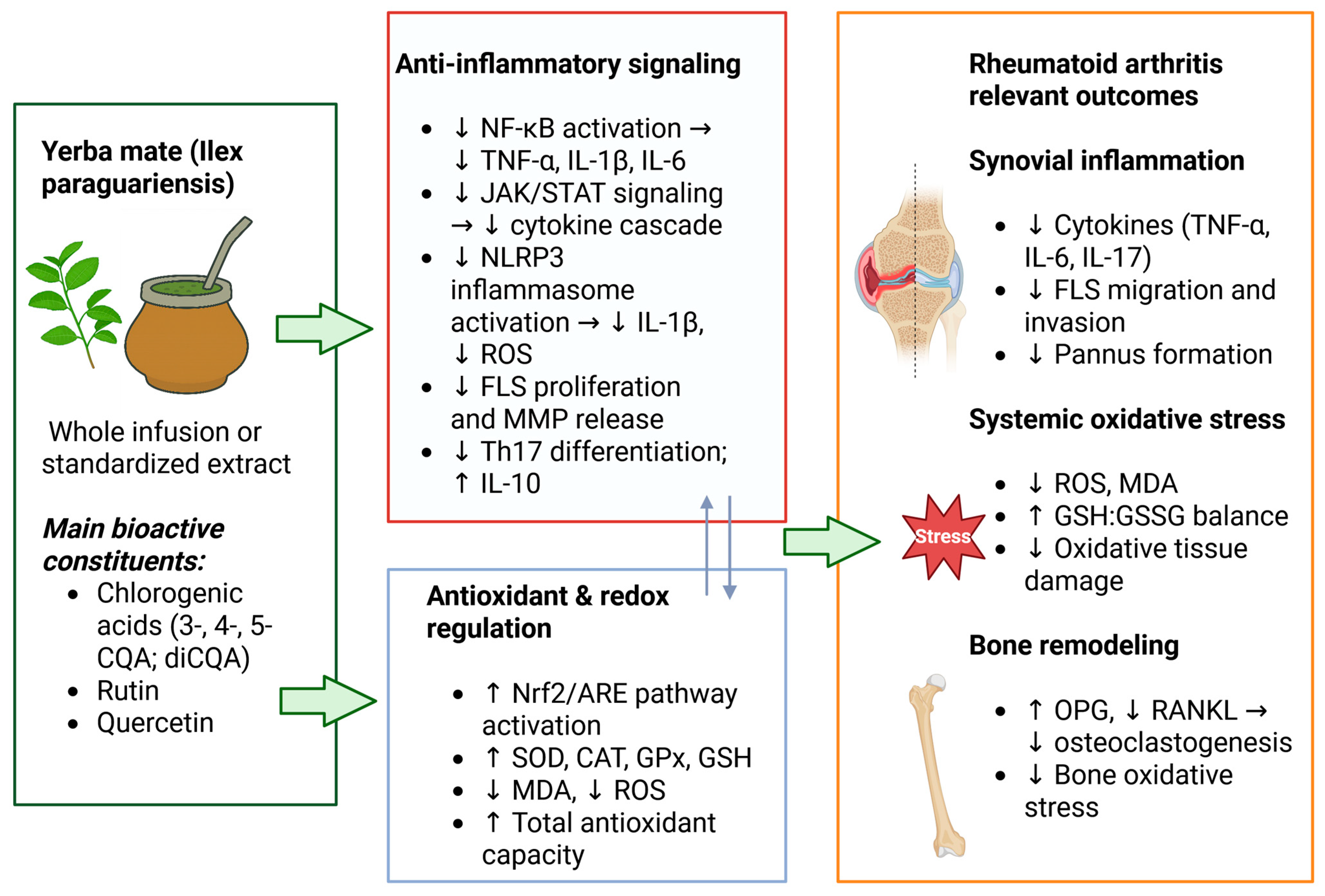
Figure 1. Proposed mechanisms underlying the anti-inflammatory, antioxidant, and bone-protective effects of Ilex paraguariensis and its main bioactive constituents in RA. Yerba mate infusions or non-fractioned preparations—rich in chlorogenic acids (3-, 4-, 5-CQA; diCQA), rutin, and quercetin—modulate inflammatory and oxidative pathways relevant to RA. Anti-inflammatory effects include inhibition of NF-κB, JAK/STAT, and NLRP3 signaling, leading to reduced cytokine release (TNF-α, IL-1β, IL-6), reduced FLS proliferation, and decreased Th17 differentiation, together with increased IL-10. Activation of the Nrf2/ARE pathway enhances antioxidant defenses (↑ SOD, CAT, GPx, GSH) and decreases oxidative stress markers (↓ ROS, ↓ MDA), improving the GSH:GSSG redox balance. At the bone level, yerba mate increases OPG and reduces RANKL expression, limiting osteoclastogenesis and oxidative damage. Collectively, these actions may mitigate synovial inflammation, oxidative stress, and inflammation-driven bone remodeling. Abbreviations: CQA, caffeoylquinic acid; diCQA, dicaffeoylquinic acid; NF-κB, nuclear factor kappa-light-chain-enhancer of activated B cells; JAK/STAT, Janus kinase/signal transducer and activator of transcription; NLRP3, nucleotide-binding domain, leucine-rich repeat-containing family, pyrin domain-containing 3; FLS, fibroblast-like synoviocyte; MMP, matrix metalloproteinase; IL, interleukin; TNF-α, tumor necrosis factor-alpha; ROS, reactive oxygen species; MDA, malondialdehyde; SOD, superoxide dismutase; CAT, catalase; GPx, glutathione peroxidase; GSH, reduced glutathione; GSSG, oxidized glutathione; OPG, osteoprotegerin; RANKL, receptor activator of nuclear factor-κB ligand. Legend: ↓ decrease; ↑ increase; → resulting effect.
Nutrients 17 03853 g001
Figure 2. Current evidence and future research priorities for Ilex paraguariensis in RA. Evidence of anti-inflammatory and antioxidant activity derives from non-RA human studies and preclinical in vitro and animal models, which offer mechanistic insights but have limited translational relevance due to species differences, non–RA-specific endpoints, and supraphysiological exposures. Future research should prioritize advanced human-relevant models (organoids, organ-on-chip), multi-omics integration, and well-conducted clinical trials in RA populations using yerba mate as a complete, non-fractionated preparation (“whole”) to strengthen clinical translation. Created in BioRender (https://BioRender.com/).
Nutrients 17 03853 g002
Table 1. Human clinical and in vitro studies on yerba mate and isolated constituents with potential RA-relevant outcomes.
Study DesignPopulation/CellsIntervention (Mate or Compound)Outcomes AssessedMain FindingsRisk of BiasReferences
Randomized, double-blind, placebo-controlled crossover trialAdults at cardiovascular risk, 45–65 y (n = 34 men)Encapsulated dry mate extract (580 mg caffeoylquinic acids/day, 4 weeks)CRP, IL-6↓ CRP (−50%) 0.50 ± 0.18 vs. 0.60 ± 0.25 mg/dL; p < 0.05 and ↓ IL-6 (−19%) 1.71 ± 0.26 vs. 1.39 ± 0.17 pg/mL only in higher-risk group (p < 0.05)Some concerns (RoB 2)[14]
Randomized, double-blind, placebo-controlled, crossover clinical trialAdults with HIV/AIDS on ART ≥6 months, virally suppressed (n = 92)Yerba mate 3 g/day soluble preparation vs. mate-placebo for 15 dayshs-CRP; fibrinogen; lipid profile (including HDL-c); white blood cell indices; oxidative stress (TBARS)No significant changes in hs-CRP, fibrinogen, or TBARS vs. baseline/placebo (all p > 0.05)High (RoB 2)[15]
Randomized, controlled, single-blind, crossover trialAdults, non-habitual yerba mate consumers, 18–55 y (n = 52 completers: 25 normocholesterolemic; 27 hypercholesterolemic)Yerba mate tea (roasted), 3 servings/day (each 3 g sachet infused 5 min in 150 mL; ~9 g leaves/day). Estimated intake: ~666 mg/day (poly)phenols; ~66 mg/day caffeine.
Control: decaffeinated, polyphenol-free isotonic drink, 3×/day. Diet: restriction of other polyphenol/methylxanthine sources.
Inflammatory cytokines (IL-1β, -2, -4, -5, -6, -7, -8, -10, -12, -13), TNF-α, IFN-γ; hsCRP; lipid peroxidation (MDA)Broad ↓ of ILs (all p < 0.001–0.003), TNF-α ~40–50% reduction (p < 0.001), IFN-γ ~40–50% reduction (p < 0.001); hsCRP ↓ in both groups −55%; p = 0.031;
MDA ↓
High (RoB 2)[16]
Pilot, two-phase crossover study (self-controlled, no placebo)Healthy adults, men, 25 ± 3 y (n = 9)Soluble mate tea (1 g/200 mL, 3×/day, 8 days)Leukocyte p47phox; serum TNF-α, IL-6, IL-1β; plasma phenols; GSH, GSSG, GSH:GSSG ratio↓ p47phox (−22%; p = 0.030); ↓ TNF-α (−56%; p = 0.010); ↓ IL-6 (−52%; p = 0.012); ↑ plasma phenols (+30%; p = 0.004); ↑ GSH:GSSG ratio (+98%; p = 0.015); improved redox balance (↑GSH + 16.5%, p = 0.049; ↓GSSG −34%, ns).Some concerns (RoB2)[17]
Randomized crossover trialHealthy adults, men (n = 12)Mate tea (3 × 200 mL/day, 11 days; ~890 mg polyphenols) vs. waterEccentric exercise; isometric strength; plasma phenolics; GSH, GSSG, GSH:GSSG ratio; LOOH↑ plasma phenolics (p = 0.008);
Preserved GSH (mate prevented the 48–72 h decline seen in control; p = 0.002); faster strength recovery at 24 h (+8.6%; p = 0.009); no effects on GSSG, GSH:GSSG ratio, or LOOH.
High (RoB2)[18]
Randomized, double-blind, crossover trialAdults, men, 45–65 y, ≤1 metabolic syndrome criterion (n = 34)Standardized yerba mate extract (2250 mg/day, ~581 mg CQA), 4 weeks vs. placeboPBMC transcriptomics; inflammatory biomarkers (CRP, IL-6); NF-κB/MAPK/PI3K-Akt pathwaysModulated PBMC gene expression: 2635 DEGs (↑ 2385 protein-coding; ↓ 244 lncRNA; ↓ 6 miRNA). Subgroup: ↓ CRP (p = 0.031) and ↓ IL-6 (p < 0.001). Pathways: modulation of cytokine–cytokine receptor interaction, chemokine, MAPK, and PI3K-Akt signalling pathways.High (RoB 2)[19]
Randomized, double-blind, placebo-controlled trialAdults with type 2 diabetes mellitus (n = 50)Rutin supplement, 500 mg/day, 3 monthsIL-6, MDA, TAC↓ IL-6 (−7.1 pg/mL; p = 0.002); ↓ MDA (−3.6 µM; p < 0.001); ↑ TAC (+0.16 mM; p < 0.001).Low (RoB 2)[20]
Randomized, double-blind, placebo-controlled parallel-group trialPost–myocardial infarction adults, 35–65 y (n = 88)Quercetin 500 mg/day (oral tablets, 8 weeks)hs-CRP, IL-6, TNF-α, TAC↑ TAC (p < 0.001); ↓ TNF-α (within-group p = 0.009, not significant vs. placebo); no effect on hs-CRP or IL-6.Some concerns (RoB 2)[21]
Randomized, double-blind, placebo-controlled trialHealthy post-menopausal women (n = 33)Quercetin 500 mg/day (oral tablets, 90 days)IL-6, TNF-α, CRP↓ IL-6 (p = 0.045) and ↓ TNF-α (p = 0.021) vs. placebo; no effect on CRPSome concerns (RoB 2)[22]
Randomized, double-blind, placebo-controlled trialAdults undergoing coronary artery bypass surgery (n = 97)Quercetin, 500 mg twice daily, 2 days pre-surgery → hospital discharge (max 7 days)hsCRP; NO-dependent endothelial functions; SnRNA-seq; Olink 384-protein inflammation panel↓ hs-CRP in men (p < 0.05; group × time p = 0.025); ↓ IL-6/JAK-STAT3 and ↓ TNF-α/NF-κB pathways; ↑ NO-dependent endothelial relaxation in men (p < 0.05); DEPs in men defined by FDR < 0.05Some concerns (RoB 2)[23]
Observational case–control studyPostmenopausal women consuming ≥1 L/day YM (n = 153) vs. non-consumers (n = 147)Habitual yerba mate consumptionBMD (DXA), cortical/trabecular vBMD, osteoporosis diagnosis, fragility fractures↑ Total hip BMD (+8%; p < 0.0001); ↑ cortical & trabecular vBMD (all p < 0.0001); ↓ osteoporosis prevalence (3.3% vs. 10.9%; OR 0.276, p = 0.012); ↓ low-impact fractures (5.9% vs. 12.9%; OR 2.197, p = 0.046).Serious (ROBINS-I)[24]
In vitro mechanistic studyHuman RA-FLSsQuercetin (0, 10, 20 or 30 μM)Cell migration and invasion, F-actin expression, miR-146a and GATA6 levels ↑miR-146a and ↓ GATA6, leading to ↓ F-actin expression and suppression of RA-FLS migration and invasionHigh (OHAT)[25]
In vitroHuman PBMCs from healthy donors (TNF-α/IFN-γ–stimulated)Quercetin (10 μM) pretreatment of hUCMSCs before coculture with activated PBMCsPBMC proliferation; Th17 cell proportion; expression of TLR-3, p-AKT, p-IκB in hUCMSCs; secretion of IL-6, NO, and IDOQuercetin enhanced the immunosuppressive effect of hUCMSCs → ↓PBMC proliferation; ↓ Th17 cells; ↑ TLR-3; ↓ p-AKT and ↓ p-IκB; ↑IL-6, ↑ NO, ↑ IDOSome Concerns (OHAT)[26]
In vitro Human hepatoma HepG2 cellsYMPE, metabolites (DHCA, DHFA)CV, LDH leakage, ROS, GSH, GPx, GR, MDA, protein carbonylsYMPE and DHCA ↓ROS, ↓ LDH, ↓ MDA, ↓ carbonyls, ↑ GSH, normalized GPx/GR; DHFA partially effective;Low (OHAT)[27]
In vitro mechanistic studyHuman RA-FLSsQuercetin (50 nmol/L, pretreatment 2 h)IL-1β, IL-6, IL-8; XIST, miR-485, PSMB8 expression↓ Inflammatory cytokines (IL-1β, IL-6, IL-8) and ↓ XIST expression in TNF-α–stimulated RA-FLSs; restored miR-485; suppressed PSMB8 upregulation; anti-inflammatory effect lost when PSMB8 silencedHigh (OHAT)[28]
In vitro Human hepatocyte cell line (HepG2)5-Caffeoylquinic acid (5-CQA), 10–100 μMROS, GSH, Nrf2 nuclear translocation, ARE activity, HO-1, GCL, NQO1, Sestrin2 expression
↑ Nrf2 activation and downstream antioxidant enzymes (HO-1, GCL, NQO1, Sestrin2)
↓ ROS production and prevention of GSH depletion under oxidative stress; protective effect abolished by Nrf2 knockout or inhibitorHigh (OHAT)[29]
In vitroHuman endothelial EA.hy926 cellsYMPE prepared from commercial yerba mate leaves and stems (1–50 µg/mL).ROS, GSH, GPx, GR, protein carbonyls, eNOS levels↓ ROS; ↑ GSH; ↓ GPx, ↓ GR overactivation; ↓ protein carbonyls; ↑ eNOS → prevention of TNF-α–induced oxidative stress and endothelial dysfunctionHigh
(OHAT)
[30]
In vitro + in silico dockingHuman THP-1 macrophagesYME prepared from commercial pure leaf yerba mate (1–500 μg/mL (range), with 15 μg/mL used in efficacy experiments).Cell viability; NO, ROS; NLRP3 inflammasome activation; gene expression; docking of chlorogenic acid and rutin to NLRP3 (MCC950 binding site)Suppression of NLRP3 inflammasome activation in macrophages, ↓ NO and ROS, and attenuated pro-inflammatory responses; chlorogenic acid and rutin showed high predicted affinity for NLRP3 inhibitionHigh (OHAT)[31]
Abbreviations: BMD, Bone Mineral Density; DXA, Dual-energy X-ray Absorptiometry; sBMD, Surface Bone Mineral Density (cortical); vBMD, Volumetric Bone Mineral Density (trabecular); NPSHs, Non-Protein Thiols; TBARSs, Thiobarbituric Acid Reactive Substances; t-BHP, tert-Butyl Hydroperoxide; eNOS, Endothelial Nitric Oxide Synthase; GPx, Glutathione Peroxidase; GR, Glutathione Reductase; GSH, Reduced Glutathione; ROS, Reactive Oxygen Species; CV, Cell Viability; DHCA, Dihydrocaffeic Acid; DHFA, Dihydroferulic Acid; LDH, Lactate Dehydrogenase; MDA, Malondialdehyde; YME, Yerba Mate Aqueous Extract; YMPE, Yerba Mate Phenolic Extract; RA-FLSs, Rheumatoid Arthritis Fibroblast-like Synoviocytes; XIST, X-inactive Specific Transcript (long non-coding RNA); PSMB8, Proteasome Subunit Beta 8; GATA6, GATA-binding Protein 6; PBMCs, Peripheral Blood Mononuclear Cells; hUCMSCs, Human Umbilical Cord Mesenchymal Stem Cells; TNF-α, Tumor Necrosis Factor-alpha; IFN-γ, Interferon-gamma; TLR-3, Toll-Like Receptor 3; p-AKT, Phosphorylated Protein Kinase B; p-IκB, Phosphorylated Inhibitor of kappa B; IL-6, Interleukin-6; NO, Nitric Oxide; IDO, Indoleamine 2,3-dioxygenase; Th17, T helper 17 cells; MDA, Malondialdehyde; TAC, Total Antioxidant Capacity. Legend: ↓ decrease; ↑ increase; → resulting effect.
Table 2. Animal Studies Evaluating Yerba Mate in Models Potentially Relevant to RA.
Species/ModelIntervention Dose/DurationOutcomes AssessedMain FindingsRisk of biasReferences
Mice; formalin-induced orofacial nociception, writhing test, paw formalin test, carrageenan-induced paw edemaIlex paraguariensis aqueous leaf infusion (prepared from 100 g dried leaves infused in 1 L water at 85 °C for 10 min, filtered, dried at 40 °C, and reconstituted before administration).Oral, 1–3 g/kg, acute administration. Dose derived from habitual human mate consumption (light/moderate/heavy drinkers); no PK or formal human-equivalent dose calculation reported.Nociception, paw edema, mechanistic pathways↓ Writhing; ↓ Orofacial pain (formalin test, both phases); ↔ Paw edema; ↔ Paw formalin test; effect blocked by α1-adrenoceptor antagonist → noradrenergic pathway involvementHigh (SYRCLE)[32]
Female Swiss mice, carrageenan-induced pleurisyHydroethanolic leaf extract of Ilex paraguariensis (CE) and fractions (BF, ARF), prepared by turboextraction of lyophilized leaves in 20% ethanol (1:5 m/v, 5 min); isolated compounds: Caf, Rut, CGA.CE 10–50 mg/kg; BF and ARF 0.1–10 mg/kg; Caf 0.1–5 mg/kg; Rut 0.01–1 mg/kg; CGA 0.01–1 mg/kg; all given orally 0.5 h before pleurisy inductionLeukocyte and neutrophil migration, exudate concentration, MPO and ADA activity, NOx levels, cytokine levels (IL-6, IL-17A, IFN-γ, TNF-α, IL-10), lung histology, NF-κB p65 phosphorylation↓ Leukocyte and neutrophil influx; ↓ exudation, MPO, ADA, NOx; ↓ IL-6, IL-17A, IFN-γ, TNF-α; ↑ IL-10; improved lung histology; ↓ NF-κB p65 phosphorylation → overall attenuation of Th1/Th17 polarizationHigh (SYRCLE)[33]
Female Wistar rats, “perimenopausal” (16 months);Mate tea instant powder (commercial preparation; reconstituted in water, 0.05 g/mL; plant part not specified).20 mg/kg/day; Dose stated by authors as equivalent to human consumption of ~300 mL/day of mate tea and previously used in their earlier work;
4 weeks.
Areal bone mineral density (aBMD), trabecular area, osteocyte number, plasma TRAP (osteoclast activity) and ALP (osteoblast activity), bone MDA (oxidative stress marker), immunohistochemistry for RANKL, OPG, SOD2;Increased aBMD, trabecular area, and osteocyte number; ↓ TRAP, RANKL, SOD2; ↑ OPG; ↓ bone MDA; suggesting reduced oxidative stress and inhibition of osteoclastogenesis via RANKL-dependent pathway;High (SYRCLE)[34]
Rat, adjuvant-induced arthritis Hot-water aqueous extract of Ilex paraguariensis leaves (traditional chimarrão; 85 g leaves/1.5 L water, 5 min; lyophilized)Oral, 400 or 800 mg/kg/day, 23 daysROS, oxidative damage, antioxidant enzymes (SOD, CAT, GPx, GR, XO), GSH/GSSG, paw edema, leukocyte infiltrationImproved antioxidant status (↑ GSH, restored enzyme activity, ↓ ROS, ↓ damage); reduced paw swelling and inflammatory infiltrationHigh (SYRCLE)[35]
Mouse; DSS-induced colitis modelCommercial leaf dry extract of Ilex paraguariensis, dissolved in hot water (60 °C; 1 g in 8 mL), filtered (0.2 µm)Oral gavage,
0.025 g/mouse; 7-day pretreatment + DSS (3%) for 7 days
Inflammatory macrophage infiltration and polarization (F4/80+, CD206+, CD301+); modulation of gut inflammatory milieu↓ Pro-inflammatory macrophage infiltration; ↑ M2 (anti-inflammatory) macrophage polarization in colon; High (SYRCLE)[36]
Abbreviations: ADA, Adenosine Deaminase; ARF, Aqueous Residual Fraction; BF, Butanolic Fraction; Caf, Caffeine; CE, Crude Extract; CGA, Chlorogenic Acid; DEGs, Differentially Expressed Genes; DEPs, Differentially Expressed Proteins; DSS, dextran sodium sulfate; MPO, Myeloperoxidase; NOx, Nitric Oxide species; Rut, Rutin; Th, T helper; aBMD, areal Bone Mineral Density; TRAP, Tartrate-Resistant Acid Phosphatase; ALP, Alkaline Phosphatase; MDA, Malondialdehyde; RANKL, Receptor Activator of Nuclear Factor κB Ligand; OPG, Osteoprotegerin; SOD2, Superoxide Dismutase 2. Legend: decrease; ↑ increase; ↔ no change; → resulting effect.
Disclaimer/Publisher’s Note: The statements, opinions and data contained in all publications are solely those of the individual author(s) and contributor(s) and not of MDPI and/or the editor(s). MDPI and/or the editor(s) disclaim responsibility for any injury to people or property resulting from any ideas, methods, instructions or products referred to in the content.