Review

Can Beetroot (Beta vulgaris) Support Brain Health? A Perspective Review on Alzheimer’s Disease

1
Sport and Physical Activity Research Institute, University of the West of Scotland, Blantyre G72 0LH, UK
2
Human Nutrition & Exercise Research Centre, Centre for Healthier Lives, Population Health Sciences Institute, Newcastle University, Newcastle upon Tyne NE1 7RU, UK
*
Author to whom correspondence should be addressed.
Nutrients 2025, 17(23), 3790; https://doi.org/10.3390/nu17233790
Submission received: 4 November 2025 / Revised: 26 November 2025 / Accepted: 2 December 2025 / Published: 3 December 2025
(This article belongs to the Section Phytochemicals and Human Health)

Abstract

Alzheimer’s disease (AD), the leading cause of dementia, has limited treatment options despite extensive pharmacological research. This has increased interest in dietary strategies that act across multiple pathological mechanisms. Beetroot (Beta vulgaris), known for its cardiovascular and metabolic benefits, contains a distinctive combination of bioactive compounds including inorganic nitrate, betalains, and polyphenols. Together these constituents influence vascular function, oxidative stress, mitochondrial efficiency, inflammation, and the microbiota. Previous reviews have typically focused on dietary nitrate in dementia prevention or have examined nitrate and betalains separately. In contrast, this review synthesises evidence on beetroot as a combined neuroprotective food. Preclinical data indicate that beetroot and its key constituents enhance antioxidant defences, support neuronal bioenergetics, and modulate cholinergic and inflammatory pathways. Human studies further suggest that nitrate-rich beetroot can improve cerebral blood flow and vascular responsiveness, and that higher intakes of plant-derived nitrate are associated with reduced cognitive decline. However, findings are inconsistent, most trials are small and short in duration, and research directly involving people with AD is scarce. By integrating vascular, antioxidant, and microbiome perspectives, this review identifies beetroot as a promising yet underexplored dietary candidate for AD management. Further mechanistic studies and multidomain approaches combining metagenomics, biomarkers, neuroimaging, and cognitive outcomes are needed.

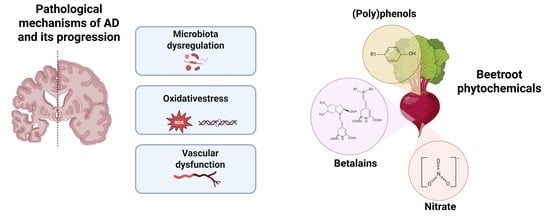
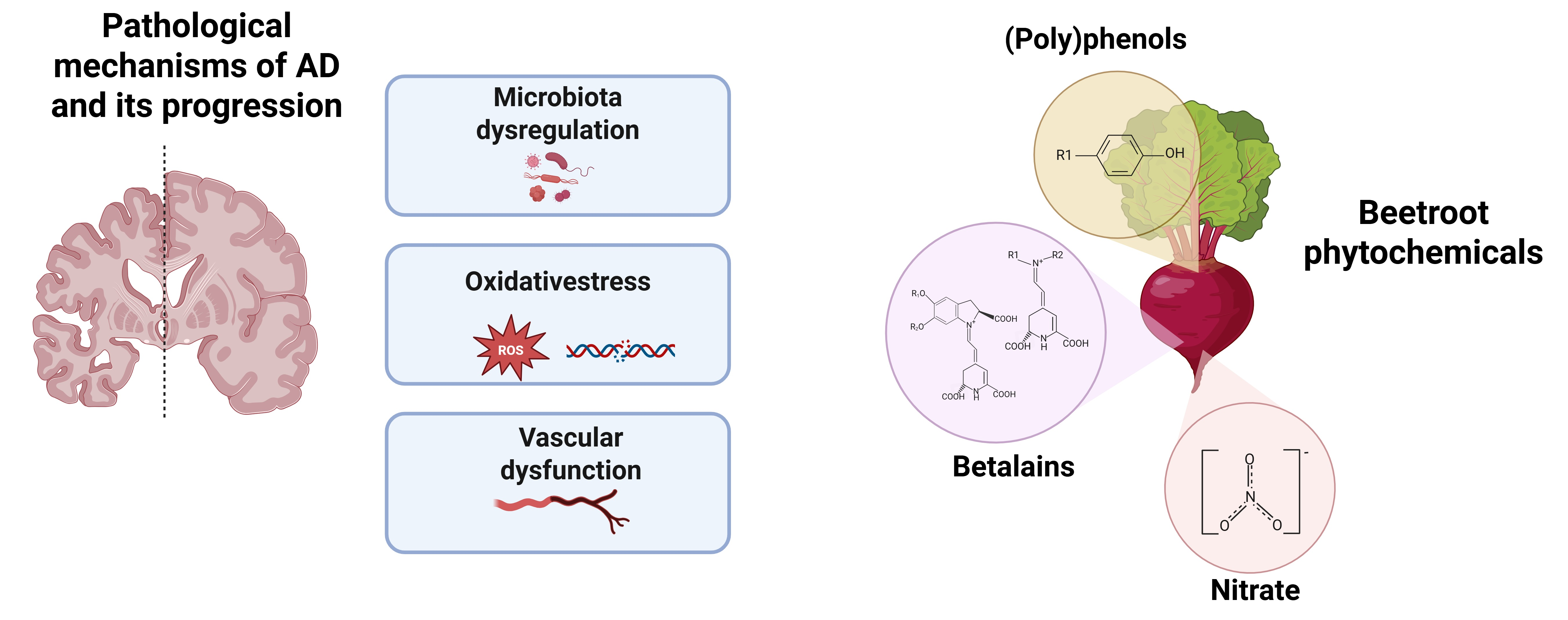
Graphical Abstract

1. Introduction

Alzheimer’s disease (AD), the leading cause of dementia worldwide, imposes profound personal, social, and financial burdens, while creating major demands on healthcare infrastructures and long-term support services [1]. It is a progressive neurodegenerative disorder, characterised by the gradual loss of cognitive function, including memory decline, impaired thinking, and changes in behaviour. Despite advances in prevention research, an estimated 57 million people currently live with dementia, a figure expected to almost triple by 2050 in the absence of effective therapies [2]. Current pharmacological treatment options are limited. Cholinesterase inhibitors and glutamate receptor antagonists can provide modest symptomatic relief, are affordable, and are typically well tolerated [3]. However, they do not modify the underlying disease course. More recently developed monoclonal antibodies (e.g., Donanemab and Lecanemab) are formulated to modify the disease trajectory by removing amyloid-β (Aβ) plaques (discussed further below) from the brain and have shown modest cognitive and functional benefits [4,5]. Moreover, they are frequently accompanied by adverse effects and are not deemed to be cost-effective [6]. These limitations highlight the need for effective, scalable, well-tolerated and affordable approaches to prevention and management that complement existing therapies.
AD is understood as a multifactorial and progressive disorder beginning decades before symptoms. Many underlying mechanisms contribute to neurodegeneration, as reviewed in detail by Verma et al. [7]. Oxidative stress is a well-established driver of AD pathogenesis and progression [8,9]. Impaired antioxidant defence and redox disturbances promote lipid and protein oxidation, DNA injury, and inflammatory signalling, compromising neuronal function and structure [10]. Oxidative stress is therefore central to many other hallmark features of AD such as Aβ plaques, neurofibrillary tangles, mitochondrial dysfunction, and cholinergic insufficiency [11]. Additionally, progressive vascular dysfunction is implicated in AD. Impaired cerebral blood flow (CBF), endothelial injury, and blood–brain barrier breakdown can interact with amyloid, tau, and inflammatory processes to accelerate neurodegeneration [12]. Moreover, emerging evidence suggests that oral and gut microbiome dysbiosis may contribute to AD via systemic inflammation, microbial metabolites, blood–brain barrier disruption, and altered immune signalling [13,14]. The complexity in AD pathology helps explain why isolated nutrient interventions such as antioxidants have largely failed to alter disease trajectories [15].
By contrast, dietary patterns and whole-food approaches are increasingly recognised for their ability to deliver a spectrum of bioactive compounds that act synergistically across multiple pathological pathways. Red beetroot (Beta vulgaris L.) is of particular interest in this context: it is naturally rich in inorganic nitrate (NO3), betalains, (poly)phenols (Figure 1), and saponins and carotenoids, which will not be reviewed [16,17,18]. While the cardiovascular benefits of beetroot, mediated through nitric oxide (NO)-dependent vasodilation, are well documented, its potential to support brain health remains comparatively underexplored [19,20]. Earlier reviews have focused on dietary nitrate as a strategy to augment cognitive function in healthy individuals or to prevent dementia [21,22]. However, none have considered the other bioactive compounds and whether beetroot could be relevant for individuals already living with AD. Beetroot is inexpensive, widely accessible, and culturally adaptable, making it a potentially scalable dietary intervention for those with AD. Therefore, this review examines beetroot’s potential role in AD by synthesising evidence from mechanistic, epidemiological, and clinical research and aims to identify the key gaps that must be addressed.

2. Beetroot Neuroprotective Mechanisms

2.1. Nitrate and Brain Health

Beetroot is best known for its very high nitrate content (>250 mg/100 g fresh weight [23]), which provides a substrate for NO production via the enterosalivary nitrate–nitrite–NO pathway [24]. Leafy greens such as spinach, rocket, and lettuce along with celery and radish contain comparable or even higher nitrate concentrations, depending on their growing conditions. However, beetroot is widely studied in nitrate research due to its palatability, ease of consumption, and standardised, bioaccessible dose preparations [25]. Importantly, beetroot formulations (predominantly concentrated juices) have consistently been shown to increase NO bioavailability and improve cardiometabolic function [26,27,28]. This is noteworthy given the associations between vascular dysfunction and metabolic underpinnings in AD [29,30]. However, the role of nitrate and NO in the central nervous system remains complex, since excessive NO can be neurotoxic and may aggravate AD-related pathology [31].
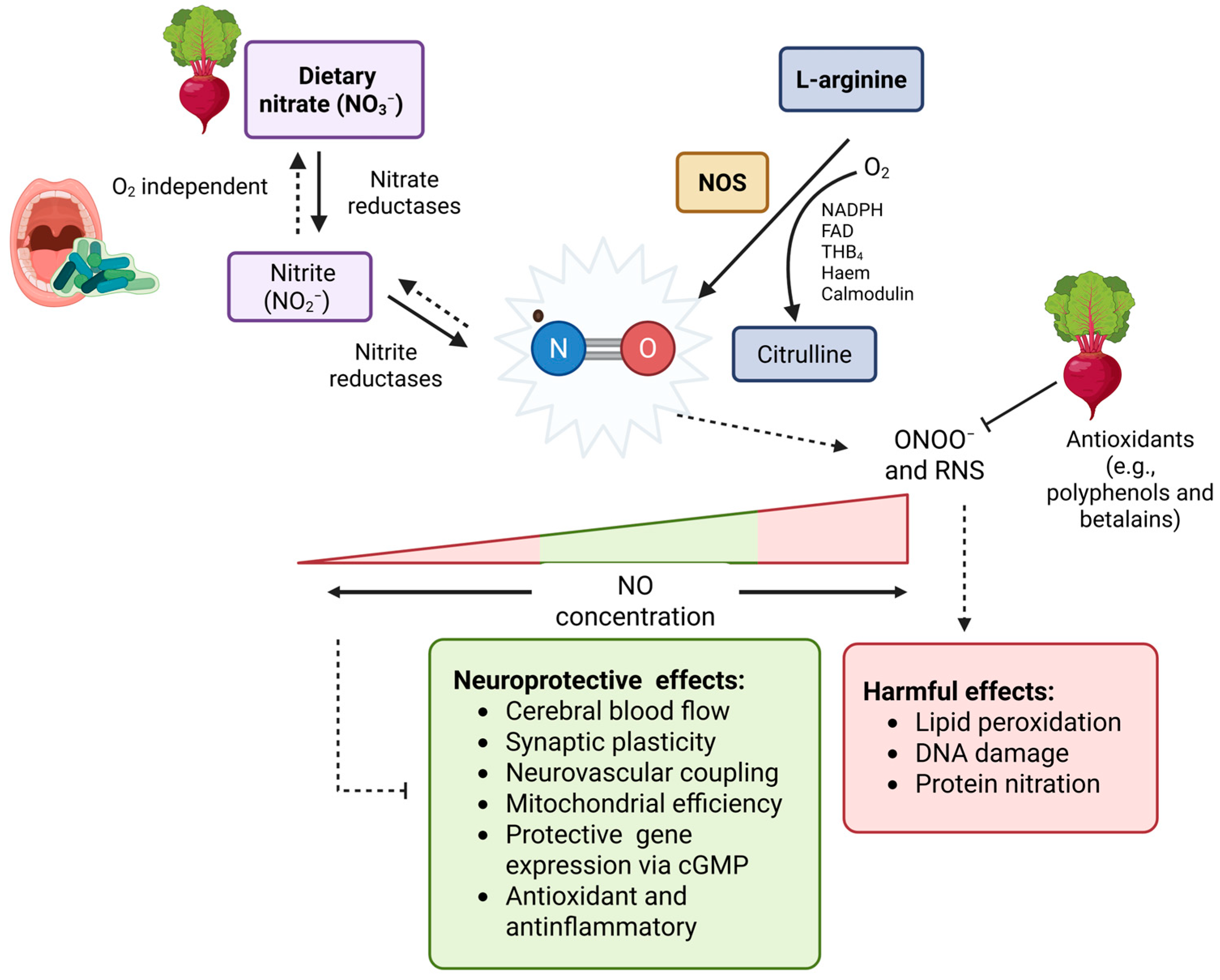
NO is a pleiotropic signalling molecule with critical roles in vascular tone, synaptic plasticity, and neuroinflammation [32]. NO can be synthesised endogenously from the nitric oxide synthases (NOS) systems or from exogenous dietary sources such as beetroot [33] (Figure 2). Much of the evidence linking NO to AD pathology relates to the NOS system, where findings vary. In contrast, data on NOS-independent NO donors such as nitrate remain limited. Endogenous NO is produced from L-arginine by NOS, which exists in three major isoforms: endothelial (eNOS), neuronal (nNOS), and inducible (iNOS). The eNOS and nNOS are constitutively expressed and calcium-dependent, producing low, transient levels of NO, while iNOS is induced by inflammation and generates sustained, high concentrations [34]. Isoform-specific and context-dependent roles of NO are central to its duality; unlike NO produced by iNOS, NO derived from eNOS and nNOS seems to protect against AD neuropathology [35].
On the other hand, physiological levels of NO are essential for neuroprotection. NO supports neurovascular coupling, CBF, neuroplasticity, neurogenesis, and long-term potentiation (see [18,24]). However, classical NO-donating drugs have shown limited usefulness in AD because they have poor tissue distribution, short half-lives, and non-specific NO release, which can lead to systemic hypotension [36]. Nevertheless, several NOS−independent NO donors, including nitrates, are currently being prototyped for their therapeutic effects in AD (Table 1).
Dietary nitrate from beetroot also produces a slower and more sustained rise in NO that contributes modestly yet meaningfully to whole-body NO homeostasis [30]. Reduction to nitrite and subsequent NO could support brain health through established mechanisms including enhanced CBF and perfusion [41,42], antioxidant effects, and neuroprotection [43]. However, direct mechanistic evidence showing that dietary nitrate supplementation delivers sufficient NO to the brain is lacking. Nevertheless, there is some evidence for neuroprotective properties of whole beetroot interventions relevant to AD. For example, in a scopolamine-induced rat model of AD, Olasehinde et al. [44] supplemented the diet with 2 percent and 4 percent beetroot powder for 14 days. Both doses improved memory performance, with a better memory index in the 4%. These effects were linked to changes in purinergic enzyme activity, modulation of monoamine oxidase and angiotensin-converting enzyme activity and enhanced neuronal antioxidant status. In a separate study, red beetroot/carrot juice (80:20 v/v) given for 12 weeks attenuated cadmium-induced loss of calretinin-immunoreactive neurons [45]. These findings were attributed to the polyphenol content of the beetroot, although neither study measured nitrate, NO, or CBF directly.

2.2. Betalains and Polyphenols in Brain Health

Beetroot is also a rich source of phytochemicals such as betalains and polyphenols. Interest in these compounds stem from their antioxidant activities. In fact, beetroot ranks the highest among vegetables for total antioxidant capacity and contains the greatest phenolic content per dry weight [46].
Isolated beetroot compounds have been investigated for their in vitro and in vivo antioxidant effects. For example, 10, 20, and 50 μM of betanin increased cell viability in hydrogen peroxide-induced apoptosis in PC12 cells [47]. In the same study 5–50 μM of betanin was shown to reduce reactive oxygen species (ROS) production and decrease acetylcholinesterase (AChE) activity. In LPS-activated rat microglial cells, pretreatment with 500 μM of betanin was shown to reduce ROS levels, inflammatory cytokines [tumour necrosis factor-alpha (TNF-α), interleukin-6 (IL-6), and interleukin-1 beta), and cell injury [48]]. Together this was found with reduced mitochondrial membrane potential impairment and cellular energy status.
Similar findings have been reported in murine models. Shunan et al. [49] found that 10 and 20 mg/kg of betalains for 4 weeks suppressed aluminium-chloride-induced learning impairments in Sprague Dawley rats. In another study, 50 mg/kg of betanin attenuated induced memory and learning impairment in Scopolamine model of AD [50]. Both studies reported reductions in oxidative stress as well as improved histopathology. Moreover, Shunan and colleagues [49] found reduced AChE activity, while Salimi et al. [50] found improved mitochondrial function and structure.
The studies discussed above focused mainly on isolated phytochemicals such as betalains. However, limited work using whole beetroot interventions and computational docking approaches has shown that other beetroot polyphenols, including myricetin, catechin, quercetin, and apigenin, may bind to AD-related enzymes and alter their conformation and activity [44,51,52]. These findings highlight the need to study beetroot as a whole-food matrix, since the combined effects of its bioactive compounds may target multiple mechanisms relevant to AD.

2.3. Beetroot and the Microbiota–Brain Axis

In addition to their direct molecular effects, beetroot’s bioactive compounds may also act indirectly by shaping host–microbe interactions. The oral and gut microbiota, through the microbiota–brain axis, are now widely recognised as central mediators of diet–brain communication [53,54,55]. As such, examining these relationships may therefore offer valuable insight into how beetroot could contribute to cognitive health and the progression of AD. Nevertheless, only a limited number of studies have explored the potential for beetroot to modulate the microbiome [56,57,58].
In the oral cavity, commensal nitrate-reducing bacteria such as Neisseria, Rothia, and Veillonella convert dietary nitrate into nitrite, which is subsequently reduced to NO (Figure 2) [59]. Short-term beetroot juice intake has been shown to enrich nitrate-reducing bacterial modules (e.g., Neisseria–Haemophilus) while suppressing pathogenic species linked to cognitive decline and AD [60]. These microbial shifts correlated with improved cognitive performance in older adults, even in the absence of changes in CBF, suggesting beetroot may confer cognitive benefits through microbiome-mediated pathways. Oral dysbiosis is increasingly recognised as a modifiable risk factor for AD, with pathogens (e.g., Porphyromonas gingivalis) implicated in systemic inflammation, blood–brain barrier disruption, and direct neuroinflammatory activation [61]. By reducing the abundance of such pathogenic species while enriching nitrate-reducing commensals, beetroot may attenuate chronic low-grade inflammation and reduced NO bioavailability that may accelerate cognitive decline [62].
Within the gut, beetroot phytochemicals such as betalains and polyphenols reach the colon largely unmetabolised, where they undergo microbial transformation into bioactive metabolites with greater bioavailability and potential neuroprotective properties [63,64]. These compounds may exert prebiotic-like effects by shaping microbial composition and functional capacity. For example, in an eight-week intervention, daily consumption of 150 g of whole beetroot reduced the abundance of Alistipes in older adults [65]. This is a noteworthy finding given that this genus has been associated with impaired cognition [66] and AD pathology and may exacerbate AD through pro-inflammatory signalling [67]. The beetroot intervention increased production of short-chain fatty acids (SCFA), attributed to the higher fibre content of the whole beets [65]. Consistent with this, short-term beetroot juice supplementation has also been shown to elevate SCFA levels, with changes correlating to total excretion of betacyanins, further supporting a prebiotic role for beetroot and its phytochemicals [56]. SCFA are microbial metabolites capable of crossing the blood–brain barrier, modulating microglial activity, suppressing neuroinflammation, and attenuating Aβ and tau pathology [68], highlighting the potential relevance to AD.

3. Beetroot and Brain Health: Epidemiological Evidence and Clinical Insights

Although population-based studies have not specifically examined beetroot as a source of nitrate, emerging epidemiological evidence suggests that higher intakes of plant-based dietary nitrate may support brain health. In the Rush Memory and Aging Project, individuals with the highest nitrate intake experienced significantly slower rates of cognitive decline compared with those with the lowest intake [69]. By contrast, a cross-sectional analysis of NHANES data reported no consistent associations between urinary nitrate concentrations and cognitive performance, and even poorer Digit Symbol Substitution scores among participants with higher nitrate exposure [70]. Interpretation of these findings is limited by the use of a single spot urinary measure, which is influenced by hydration status, endogenous NO metabolism, and an inability to distinguish between nitrate from vegetables versus meats—sources that likely differ in predominance across populations.
More recent longitudinal evidence from the Australian Diabetes, Obesity, and Lifestyle study provides support for a neuroprotective role of plant-derived nitrate. In over 9000 participants, higher intakes of plant-based (~98 mg/day) and vegetable-based nitrate (~72 mg/day) were associated with 57% and 66% lower risks of dementia-related mortality, respectively [71]. Notably, higher intake of processed meat-derived nitrate was linked to a more than twofold increased risk of dementia mortality [HR (95% CI): 2.10 (1.07–4.12)], underscoring the importance of dietary source [72]. Complementary analyses in the Australian Imaging, Biomarkers and Lifestyle Study of Ageing demonstrated that among individuals at elevated genetic risk for AD, each additional 60 mg/day of plant-based nitrate at baseline was associated with better cognitive outcomes over 10.5 years, including higher episodic recall and recognition memory scores [73]. Extending this line of evidence, recent neuroimaging analyses by the same authors showed that in APOE ε4 carriers, moderate-to-high intakes of vegetable-sourced nitrate were linked to lower cerebral Aβ burden and attenuated right hippocampal atrophy [74].
Clinical studies have investigated dietary nitrate, primarily from concentrated beetroot juice, for its potential to augment CBF as a means to enhance cognitive function, though findings are mixed [75]. Beyond limitations such as small sample sizes and reliance on indirect measures of CBF, most trials have been conducted in young healthy adults (a population with already optimal CBF and cognitive function), thereby reducing the likelihood of detecting meaningful benefits. More promising results have emerged in older adults and those with vascular compromise. For example, Presley et al. [76] demonstrated that a high-nitrate diet supplemented with 16 oz beetroot juice (8.5 mmol nitrate) acutely increased regional perfusion in frontal white matter, particularly along tracts connecting the dorsolateral prefrontal cortex (DLPFC) and anterior cingulate cortex (ACC), despite no change in global perfusion. This is pertinent to AD, as arterial spin labelling studies consistently report hypoperfusion in the DLPFC and other frontal regions of AD patients compared with healthy controls [77]. Because the DLPFC–ACC network underpins executive control and is vulnerable to early AD-related vascular decline, enhanced perfusion in these tracts may represent a protective mechanism.
In patients with transient ischemic attack, 7-day sodium nitrate supplementation (0.1 mmol·kg−1·day−1) reduced blood pressure and cerebral artery velocity fluctuations while improving cerebral autoregulation [78]. Although this investigation did not involve beetroot directly, it reinforces the principle that nitrate supplementation can stabilise cerebrovascular dynamics even under pathological conditions. Clinical studies have also reported 2–12 weeks of beetroot juice intake reduces systemic oxidative stress and inflammatory markers [79,80,81,82]. Of particular note, a 12-week trial of concentrated beetroot juice (24 mL/day, 180 mg and ~46 mg of nitrate and polyphenols, respectively) in individuals with type 2 diabetes significantly decreased circulating IL-6 and TNF-α [80]. Given the established association between type 2 diabetes and increased AD risk [83], such reductions in systemic inflammation may be particularly relevant for modifying overlapping inflammatory pathways that contribute to neurodegeneration.
To date, however, no studies have directly assessed the effects of beetroot on CBF, cognitive function, or inflammation in AD populations. Notably, the only clinical evidence in people living with AD demonstrated that a single small dose of beetroot juice (5 mmol nitrate) increased systemic NO bioavailability (plasma nitrate and nitrite) to physiological levels comparable to healthy older adults and improved vascular responsiveness [84]. This finding is significant as it suggests that beetroot supplementation can augment vascular function even in the context of neurodegeneration and concomitant pharmacological treatment. However, there remain important gaps and limitations in the existing evidence that warrant careful consideration.

4. Current Gaps and Limitations

Current evidence for beetroot in AD is limited and remains fragmented across mechanistic, epidemiological, and clinical domains. Interpretation of the available data is further complicated by the dual nature of NO and methodological limitations in its measurement that do not distinguish enzymatic from non-enzymatic sources [85]. While some other NO donors are being investigated for their therapeutic effects (Table 1), these are in early stages and should be interpreted cautiously, as animal models do not fully replicate the complexity of human AD [86]. With regard to beetroot, betalains have been shown to suppress iNOS activity and reduce excessive NO production which may favour neuroprotective properties of nitrate-derived NO and limit neurotoxicity [48,49]. However, these studies focus on isolated mechanisms rather than considering beetroot as a whole-food matrix with potentially synergistic phytochemicals. Furthermore, although preclinical studies report antioxidant, anti-inflammatory, and neuroprotective effects of beetroot constituents, the exact compounds and mechanisms have yet to be elucidated.
In humans, research is sparse. Few studies have examined how beetroot influences the oral or gut microbiome, and even fewer have linked these changes to cognitive outcomes or markers of neurodegeneration. Moreover, the abundance of nitrate-reducing oral bacteria in individuals with AD has not been characterised, yet these microbes may influence nitrate bioavailability and, in turn, the efficacy of any dietary interventions.
Epidemiological studies have investigated dietary nitrate intake more broadly, rather than through beetroot specifically, and most focus on dementia prevention rather than disease progression. While associations exist between higher vegetable-derived nitrate intake, reduced Aβ burden, and attenuated atrophy, there is no direct evidence that these findings translate into slower AD progression. Clinical studies of beetroot report improvements in CBF, inflammation, and, in some cases, cognition, but none have been conducted in AD populations. Most prior research has used concentrated beetroot juice with single-dose, short-duration protocols, so optimal dosing schedules and effective beetroot formulations have not yet been established.
To date, only a single acute-dose study in individuals with AD has been conducted but it did not have relevant clinical endpoints. Therefore, the safety profile of long-term beetroot supplementation (especially sustained nitrate exposure) remains insufficiently characterised in AD. Individuals with AD often present with polypharmacy and comorbidities that need to be carefully considered [87].

5. Future Research Directions

Future preclinical studies should use whole beetroot interventions with integrative approaches that help to elucidate the mechanisms and the conditions under which beetroot-derived NO may be beneficial rather than harmful. Human studies should aim to answer several key questions, including the optimal dosage, duration, and methods of administration of beetroot. For beetroot to exert its effects, an appropriate amount of its bioactive compounds must reach the target tissues, i.e., the brain. Microencapsulation could stabilise the bioactive compounds, offer controlled release, and improve the sensorial attributes of beetroot, making it more viable as a nutraceutical [88].
Epidemiological studies would benefit from clarifying nitrate sources and mapping their associations with long-term disease trajectories, while clinical studies should adopt designs that combine metagenomic profiling, biomarkers, advanced neuroimaging, and cognitive testing within the same cohort. These studies should be explored in groups with elevated risk of AD, including individuals with mild cognitive impairment, APOE ε4 carriers, or those with vascular comorbidities. Before long-term studies can be conducted in AD populations, systematic evaluations of food–drug interactions with current AD therapies are needed [89]. Addressing these areas will clarify whether beetroot’s mechanistic promise can be translated into tangible clinical benefits, helping to clarify its role in AD management.

6. Conclusions

Beetroot may offer a promising avenue for further investigation in AD research because it combines vascular, antioxidant, and microbiome-modulating properties within a single whole-food source. Although the reviewed evidence points to potential benefits, particularly for neuroprotection, definitive links to clinical outcomes in AD remain unexplored. It is also important to recognise that comorbidities, medication use, and the potential for harmful elevations in NO may influence individual responses, underscoring the need for careful evaluation of safety alongside potential benefits. Further mechanistic evidence and multidomain studies are needed. Addressing these areas will establish whether beetroot can be translated into meaningful strategies for preserving brain health and slowing of cognitive decline and AD progression.

Author Contributions

R.K. conceived the review topic, designed the structure, and led the drafting of the manuscript. O.M.S. provided critical revisions, ensured accuracy of the interpretation, and contributed to the final editing and approval of the manuscript. All authors read and approved the final version of the paper. All authors have read and agreed to the published version of the manuscript.

Funding

This research received no external funding.

Institutional Review Board Statement

Not applicable.

Informed Consent Statement

Not applicable.

Data Availability Statement

No new data were created or analyzed in this study.

Acknowledgments

During the preparation of this manuscript/study, R.K. used ChatGPT (GPT-5, OpenAI, San Francisco, CA, USA) to assist in improving the clarity, grammar, and readability of the manuscript text. The authors have reviewed and edited the output and take full responsibility for the content of this publication.

Conflicts of Interest

O.M.S. has received research grants from EPSRC, BBSRC, Rank Prize, MRC, Wellcome Trust, NIHR, ARUK, OHID, the Fruit Juice Science Centre and the Nutrition Society. He has carried out paid consultancy (paid to institution) for Delta Hat Ltd and is a Section Chair for the Nutrition Society. The authors declare no conflicts of interest.

Abbreviations

The following abbreviations are used in this manuscript:
Amyloid-β
ACCAnterior cingulate cortex
AChEAcetylcholinesterase
ADAlzheimer’s disease
APOEApolipoprotein E
BH4Tetrahydrobiopterin
CBFCerebral blood flow
cGMPCyclic guanosine monophosphate
DLPFCDorsolateral prefrontal cortex
eNOSEndothelial nitric oxide synthases
FADFlavin adenine dinucleotide
IL-6Interleukin-6
iNOSInducible nitric oxide synthases
LPSLipopolysaccharide
NADPHNicotinamide adenine dinucleotide phosphate
NHANESNational health and nutrition examination survey
nNOSNeuronal nitric oxide synthases
NONitric oxide
PC12Rat adrenal pheochromocytoma cell line
ROSReactive oxygen species
RNSReactive nitrogen species
SCFAShort-chain fatty acid
TNF-αTumour necrosis factor-alpha

References

  1. Skaria, A.P. The economic and societal burden of Alzheimer disease: Managed care considerations. Am. J. Manag. Care 2022, 28, S188–S196. [Google Scholar]
  2. Nichols, E.; Steinmetz, J.D.; Vollset, S.E.; Fukutaki, K.; Chalek, J.; Abd-Allah, F.; Abdoli, A.; Abualhasan, A.; Abu-Gharbieh, E.; Akram, T.T.; et al. Estimation of the global prevalence of dementia in 2019 and forecasted prevalence in 2050: An analysis for the Global Burden of Disease Study 2019. Lancet Public Health 2022, 7, e105–e125. [Google Scholar] [CrossRef]
  3. Celis-Morales, C.; Livingstone, K.M.; Marsaux, C.F.; Macready, A.L.; Fallaize, R.; O’Donovan, C.B.; Woolhead, C.; Forster, H.; Walsh, M.C.; Navas-Carretero, S.; et al. Effect of personalized nutrition on health-related behaviour change: Evidence from the Food4Me European randomized controlled trial. Int. J. Epidemiol. 2017, 46, 578–588. [Google Scholar] [CrossRef]
  4. Sims, J.R.; Zimmer, J.A.; Evans, C.D.; Lu, M.; Ardayfio, P.; Sparks, J.; Wessels, A.M.; Shcherbinin, S.; Wang, H.; Monkul Nery, E.S.; et al. Donanemab in Early Symptomatic Alzheimer Disease: The TRAILBLAZER-ALZ 2 Randomized Clinical Trial. JAMA 2023, 330, 512–527. [Google Scholar] [CrossRef]
  5. Van Dyck, C.H.; Swanson, C.J.; Aisen, P.; Bateman, R.J.; Chen, C.; Gee, M.; Kanekiyo, M.; Li, D.; Reyderman, L.; Cohen, S. Lecanemab in early Alzheimer’s disease. N. Engl. J. Med. 2023, 388, 9–21. [Google Scholar] [CrossRef]
  6. Nguyen, H.V.; Mital, S.; Knopman, D.S.; Alexander, G.C. Cost-Effectiveness of Lecanemab for Individuals with Early-Stage Alzheimer Disease. Neurology 2024, 102, e209218. [Google Scholar] [CrossRef] [PubMed]
  7. Verma, A.; Kumar Waiker, D.; Bhardwaj, B.; Saraf, P.; Shrivastava, S.K. The molecular mechanism, targets, and novel molecules in the treatment of Alzheimer’s disease. Bioorg. Chem. 2022, 119, 105562. [Google Scholar] [CrossRef] [PubMed]
  8. Bai, R.; Guo, J.; Ye, X.-Y.; Xie, Y.; Xie, T. Oxidative stress: The core pathogenesis and mechanism of Alzheimer’s disease. Ageing Res. Rev. 2022, 77, 101619. [Google Scholar] [CrossRef]
  9. Perluigi, M.; Di Domenico, F.; Butterfield, D.A. Oxidative damage in neurodegeneration: Roles in the pathogenesis and progression of Alzheimer disease. Physiol. Rev. 2024, 104, 103–197. [Google Scholar] [CrossRef]
  10. Ionescu-Tucker, A.; Cotman, C.W. Emerging roles of oxidative stress in brain aging and Alzheimer’s disease. Neurobiol. Aging 2021, 107, 86–95. [Google Scholar] [CrossRef] [PubMed]
  11. Alkhalifa, A.E.; Alkhalifa, O.; Durdanovic, I.; Ibrahim, D.R.; Maragkou, S. Oxidative Stress and Mitochondrial Dysfunction in Alzheimer’s Disease: Insights into Pathophysiology and Treatment. J. Dement. Alzheimer’s Dis. 2025, 2, 17. [Google Scholar] [CrossRef]
  12. Klohs, J. An integrated view on vascular dysfunction in Alzheimer’s disease. Neurodegener. Dis. 2019, 19, 109–127. [Google Scholar] [CrossRef]
  13. Maitre, Y.; Mahalli, R.; Micheneau, P.; Delpierre, A.; Amador, G.; Denis, F. Evidence and therapeutic perspectives in the relationship between the oral microbiome and Alzheimer’s disease: A systematic review. Int. J. Environ. Res. Public Health 2021, 18, 11157. [Google Scholar] [CrossRef]
  14. Liu, S.; Gao, J.; Zhu, M.; Liu, K.; Zhang, H.-L. Gut microbiota and dysbiosis in Alzheimer’s disease: Implications for pathogenesis and treatment. Mol. Neurobiol. 2020, 57, 5026–5043. [Google Scholar] [CrossRef]
  15. Lloret, A.; Esteve, D.; Monllor, P.; Cervera-Ferri, A.; Lloret, A. The Effectiveness of Vitamin E Treatment in Alzheimer’s Disease. Int. J. Mol. Sci. 2019, 20, 879. [Google Scholar] [CrossRef]
  16. Clifford, T.; Howatson, G.; West, D.J.; Stevenson, E.J. The Potential Benefits of Red Beetroot Supplementation in Health and Disease. Nutrients 2015, 7, 2801–2822. [Google Scholar] [CrossRef]
  17. Sentkowska, A.; Pyrzyńska, K. Old-fashioned, but still a superfood—Red beets as a rich source of bioactive compounds. Appl. Sci. 2023, 13, 7445. [Google Scholar] [CrossRef]
  18. Thiruvengadam, M.; Chung, I.-M.; Samynathan, R.; Chandar, S.R.H.; Venkidasamy, B.; Sarkar, T.; Rebezov, M.; Gorelik, O.; Shariati, M.A.; Simal-Gandara, J. A comprehensive review of beetroot (Beta vulgaris L.) bioactive components in the food and pharmaceutical industries. Crit. Rev. Food Sci. Nutr. 2024, 64, 708–739. [Google Scholar] [CrossRef] [PubMed]
  19. Siervo, M.; Babateen, A.; Alharbi, M.; Stephan, B.; Shannon, O. Dietary nitrate and brain health. Too much ado about nothing or a solution for dementia prevention? Br. J. Nutr. 2022, 128, 1130–1136. [Google Scholar] [CrossRef]
  20. Siervo, M.; Scialò, F.; Shannon, O.M.; Stephan, B.C.M.; Ashor, A.W. Does dietary nitrate say NO to cardiovascular ageing? Current evidence and implications for research. Proc. Nutr. Soc. 2018, 77, 112–123. [Google Scholar] [CrossRef]
  21. Shannon, O.M.; Gregory, S.; Siervo, M. Dietary nitrate, aging and brain health: The latest evidence. Curr. Opin. Clin. Nutr. Metab. Care 2022, 25, 393–400. [Google Scholar] [CrossRef]
  22. Rajendra, A.; Bondonno, N.P.; Rainey-Smith, S.R.; Gardener, S.L.; Hodgson, J.M.; Bondonno, C.P. Potential role of dietary nitrate in relation to cardiovascular and cerebrovascular health, cognition, cognitive decline and dementia: A review. Food Funct. 2022, 13, 12572–12589. [Google Scholar] [CrossRef]
  23. Hord, N.G.; Tang, Y.; Bryan, N.S. Food sources of nitrates and nitrites: The physiologic context for potential health benefits. Am. J. Clin. Nutr. 2009, 90, 1–10. [Google Scholar] [CrossRef] [PubMed]
  24. Lundberg, J.O.; Gladwin, M.T.; Ahluwalia, A.; Benjamin, N.; Bryan, N.S.; Butler, A.; Cabrales, P.; Fago, A.; Feelisch, M.; Ford, P.C.; et al. Nitrate and nitrite in biology, nutrition and therapeutics. Nat. Chem. Biol. 2009, 5, 865–869. [Google Scholar] [CrossRef]
  25. Dos Santos Baião, D.; Vieira Teixeira da Silva, D.; Margaret Flosi Paschoalin, V. A Narrative Review on Dietary Strategies to Provide Nitric Oxide as a Non-Drug Cardiovascular Disease Therapy: Beetroot Formulations-A Smart Nutritional Intervention. Foods 2021, 10, 859. [Google Scholar] [CrossRef]
  26. Celik, B.; Muriuki, E.; Kuhnle, G.G.C.; Spencer, J.P.E.; Mills, C.E. The Impact of Inorganic Nitrate on Endothelial Function: A Systematic Review of Randomized Controlled Trials and Meta-analysis. Nutr. Rev. 2025, nuaf132. [Google Scholar] [CrossRef]
  27. Mirmiran, P.; Houshialsadat, Z.; Gaeini, Z.; Bahadoran, Z.; Azizi, F. Functional properties of beetroot (Beta vulgaris) in management of cardio-metabolic diseases. Nutr. Metab. 2020, 17, 3. [Google Scholar] [CrossRef] [PubMed]
  28. Hayes, E.; Alhulaefi, S.; Siervo, M.; Whyte, E.; Kimble, R.; Matu, J.; Griffiths, A.; Sim, M.; Burleigh, M.; Easton, C. Inter-individual differences in the blood pressure lowering effects of dietary nitrate: A randomised double-blind placebo-controlled replicate crossover trial. Eur. J. Nutr. 2025, 64, 101. [Google Scholar] [CrossRef] [PubMed]
  29. de la Torre, J.C.; Stefano, G.B. Evidence that Alzheimer’s disease is a microvascular disorder: The role of constitutive nitric oxide. Brain Res. Brain Res. Rev. 2000, 34, 119–136. [Google Scholar] [CrossRef]
  30. de la Monte, S.M. Type 3 diabetes is sporadic Alzheimer׳s disease: Mini-review. Eur. Neuropsychopharmacol. 2014, 24, 1954–1960. [Google Scholar] [CrossRef]
  31. Azargoonjahromi, A. Dual role of nitric oxide in Alzheimer’s disease. Nitric Oxide 2023, 134–135, 23–37. [Google Scholar] [CrossRef]
  32. Benarroch, E.E. Nitric oxide. Neurology 2011, 77, 1568–1576. [Google Scholar] [CrossRef] [PubMed]
  33. Lundberg, J.O.; Weitzberg, E.; Gladwin, M.T. The nitrate–nitrite–nitric oxide pathway in physiology and therapeutics. Nat. Rev. Drug Discov. 2008, 7, 156–167. [Google Scholar] [CrossRef]
  34. Förstermann, U.; Sessa, W.C. Nitric oxide synthases: Regulation and function. Eur. Heart J. 2012, 33, 829–837. [Google Scholar] [CrossRef]
  35. Wang, L.; Lu, D.; Wang, X.; Wang, Z.; Li, W.; Chen, G. The effects of nitric oxide in Alzheimer’s disease. Med. Gas Res. 2024, 14, 186–191. [Google Scholar] [CrossRef]
  36. Mak, S.; Liu, Z.; Wu, L.; Guo, B.; Luo, F.; Liu, Z.; Hu, S.; Wang, J.; Cui, G.; Sun, Y.; et al. Pharmacological Characterizations of anti-Dementia Memantine Nitrate via Neuroprotection and Vasodilation in Vitro and in Vivo. ACS Chem. Neurosci. 2020, 11, 314–327. [Google Scholar] [CrossRef]
  37. Thatcher, G.R.; Bennett, B.M.; Dringenberg, H.C.; Reynolds, J.N. Novel nitrates as NO mimetics directed at Alzheimer’s disease. J. Alzheimer’s Dis. 2005, 6, S75–S84. [Google Scholar] [CrossRef] [PubMed]
  38. Chen, G.; Zhang, K.; Sun, M.; Xie, N.; Wu, L.; Zhang, G.; Guo, B.; Huang, C.; Man Hoi, M.P.; Zhang, G.; et al. Multi-functional memantine nitrate attenuated cognitive impairment in models of vascular dementia and Alzheimer’s disease through neuroprotection and increased cerebral blood flow. Neuropharmacology 2025, 272, 110410. [Google Scholar] [CrossRef] [PubMed]
  39. Dubey, H.; Dubey, A.; Gulati, K.; Ray, A. S-nitrosoglutathione modulates HDAC2 and BDNF levels in the brain and improves cognitive deficits in experimental model of Alzheimer’s disease in rats. Int. J. Neurosci. 2024, 134, 777–785. [Google Scholar] [CrossRef]
  40. Dubey, H.; Ray, A.; Dubey, A.; Gulati, K. S-Nitrosoglutathione Attenuates Oxidative Stress and Improves Retention Memory Dysfunctions in Intra-Cerebroventricular-Streptozotocin Rat Model of Sporadic Alzheimer’s Disease via Activation of BDNF and Nuclear Factor Erythroid 2-Related Factor-2 Antioxidant Signaling Pathway. Neuropsychobiology 2024, 83, 101–113. [Google Scholar] [CrossRef]
  41. Rifkind, J.M.; Nagababu, E.; Barbiro-Michaely, E.; Ramasamy, S.; Pluta, R.M.; Mayevsky, A. Nitrite infusion increases cerebral blood flow and decreases mean arterial blood pressure in rats: A role for red cell NO. Nitric Oxide 2007, 16, 448–456. [Google Scholar] [CrossRef]
  42. Christie, I.N.; Theparambil, S.M.; Braga, A.; Doronin, M.; Hosford, P.S.; Brazhe, A.; Mascarenhas, A.; Nizari, S.; Hadjihambi, A.; Wells, J.A.; et al. Astrocytes produce nitric oxide via nitrite reduction in mitochondria to regulate cerebral blood flow during brain hypoxia. Cell Rep. 2023, 42, 113514. [Google Scholar] [CrossRef]
  43. Mohanakumar, K.P.; Thomas, B.; Sharma, S.M.; Muralikrishnan, D.; Chowdhury, R.; Chiueh, C.C. Nitric oxide: An antioxidant and neuroprotector. Ann. N. Y. Acad. Sci. 2002, 962, 389–401. [Google Scholar] [CrossRef] [PubMed]
  44. Olasehinde, T.A.; Oyeleye, S.I.; Ibeji, C.U.; Oboh, G. Beetroot supplemented diet exhibit anti-amnesic effect via modulation of cholinesterases, purinergic enzymes, monoamine oxidase and attenuation of redox imbalance in the brain of scopolamine treated male rats. Nutr. Neurosci. 2022, 25, 1011–1025. [Google Scholar] [CrossRef]
  45. Matysek, M.; Kowalczuk-Vasilev, E.; Szalak, R.; Baranowska-Wójcik, E.; Arciszewski, M.B.; Szwajgier, D. Can Bioactive Compounds in Beetroot/Carrot Juice Have a Neuroprotective Effect? Morphological Studies of Neurons Immunoreactive to Calretinin of the Rat Hippocampus after Exposure to Cadmium. Foods 2022, 11, 2794. [Google Scholar] [CrossRef]
  46. Vinson, J.A.; Hao, Y.; Su, X.; Zubik, L. Phenol Antioxidant Quantity and Quality in Foods:  Vegetables. J. Agric. Food Chem. 1998, 46, 3630–3634. [Google Scholar] [CrossRef]
  47. Tayarani-Najaran, Z.; Dehghanpour Farashah, M.; Emami, S.A.; Ramazani, E.; Shahraki, N.; Hadipour, E. Protective effects of betanin, a novel acetylcholinesterase inhibitor, against H2O2-induced apoptosis in PC12 cells. Mol. Biol. Rep. 2024, 51, 986. [Google Scholar] [CrossRef] [PubMed]
  48. Ahmadi, H.; Nayeri, Z.; Minuchehr, Z.; Sabouni, F.; Mohammadi, M. Betanin purification from red beetroots and evaluation of its anti-oxidant and anti-inflammatory activity on LPS-activated microglial cells. PLoS ONE 2020, 15, e0233088. [Google Scholar] [CrossRef] [PubMed]
  49. Shunan, D.; Yu, M.; Guan, H.; Zhou, Y. Neuroprotective effect of Betalain against AlCl3-induced Alzheimer’s disease in Sprague Dawley Rats via putative modulation of oxidative stress and nuclear factor kappa B (NF-κB) signaling pathway. Biomed. Pharmacother. 2021, 137, 111369. [Google Scholar] [CrossRef]
  50. Salimi, A.; Sabur, M.; Dadkhah, M.; Shabani, M. Inhibition of scopolamine-induced memory and mitochondrial impairment by betanin. J. Biochem. Mol. Toxicol. 2022, 36, e23076. [Google Scholar] [CrossRef]
  51. Ojo, O.A.; Gyebi, G.A.; Ezenabor, E.H.; Iyobhebhe, M.; Emmanuel, D.A.; Adelowo, O.A.; Olujinmi, F.E.; Ogunwale, T.E.; Babatunde, D.E.; Ogunlakin, A.D.; et al. Exploring beetroot (Beta vulgaris L.) for diabetes mellitus and Alzheimer’s disease dual therapy: In vitro and computational studies. RSC Adv. 2024, 14, 19362–19380. [Google Scholar] [CrossRef]
  52. Rehman, S.; Ali Ashfaq, U.; Sufyan, M.; Shahid, I.; Ijaz, B.; Hussain, M. The Insight of In Silico and In Vitro evaluation of Beta vulgaris phytochemicals against Alzheimer’s disease targeting acetylcholinesterase. PLoS ONE 2022, 17, e0264074. [Google Scholar] [CrossRef]
  53. Adil, N.A.; Omo-Erigbe, C.; Yadav, H.; Jain, S. The oral–gut microbiome–brain axis in cognition. Microorganisms 2025, 13, 814. [Google Scholar] [CrossRef] [PubMed]
  54. Narengaowa; Kong, W.; Lan, F.; Awan, U.F.; Qing, H.; Ni, J. The oral-gut-brain AXIS: The influence of microbes in Alzheimer’s disease. Front. Cell. Neurosci. 2021, 15, 633735. [Google Scholar]
  55. de Oliveira, S.P.A.; do Nascimento, H.M.A.; Sampaio, K.B.; de Souza, E.L. A review on bioactive compounds of beet (Beta vulgaris L. subsp. vulgaris) with special emphasis on their beneficial effects on gut microbiota and gastrointestinal health. Crit. Rev. Food Sci. Nutr. 2021, 61, 2022–2033. [Google Scholar] [CrossRef]
  56. Wang, Y.; Do, T.; Marshall, L.J.; Boesch, C. Effect of two-week red beetroot juice consumption on modulation of gut microbiota in healthy human volunteers—A pilot study. Food Chem. 2023, 406, 134989. [Google Scholar] [CrossRef]
  57. Fejes, R.; Séneca, J.; Pjevac, P.; Lutnik, M.; Weisshaar, S.; Pilat, N.; Steiner, R.; Wagner, K.H.; Woodman, R.J.; Bondonno, C.P. Increased Nitrate Intake from Beetroot Juice Over 4 Weeks Changes the Composition of the Oral, But Not the Intestinal Microbiome. Mol. Nutr. Food Res. 2025, 69, e70156. [Google Scholar] [CrossRef]
  58. Burleigh, M.; Liddle, L.; Muggeridge, D.J.; Monaghan, C.; Sculthorpe, N.; Butcher, J.; Henriquez, F.; Easton, C. Dietary nitrate supplementation alters the oral microbiome but does not improve the vascular responses to an acute nitrate dose. Nitric Oxide 2019, 89, 54–63. [Google Scholar] [CrossRef] [PubMed]
  59. Doel, J.J.; Benjamin, N.; Hector, M.P.; Rogers, M.; Allaker, R.P. Evaluation of bacterial nitrate reduction in the human oral cavity. Eur. J. Oral Sci. 2005, 113, 14–19. [Google Scholar] [CrossRef] [PubMed]
  60. Vanhatalo, A.; L’Heureux, J.E.; Kelly, J.; Blackwell, J.R.; Wylie, L.J.; Fulford, J.; Winyard, P.G.; Williams, D.W.; van der Giezen, M.; Jones, A.M. Network analysis of nitrate-sensitive oral microbiome reveals interactions with cognitive function and cardiovascular health across dietary interventions. Redox Biol. 2021, 41, 101933. [Google Scholar] [CrossRef]
  61. Matsushita, K.; Yamada-Furukawa, M.; Kurosawa, M.; Shikama, Y. Periodontal Disease and Periodontal Disease-Related Bacteria Involved in the Pathogenesis of Alzheimer’s Disease. J. Inflamm. Res. 2020, 13, 275–283. [Google Scholar] [CrossRef] [PubMed]
  62. Venturelli, M.; Pedrinolla, A.; Boscolo Galazzo, I.; Fonte, C.; Smania, N.; Tamburin, S.; Muti, E.; Crispoltoni, L.; Stabile, A.; Pistilli, A.; et al. Impact of Nitric Oxide Bioavailability on the Progressive Cerebral and Peripheral Circulatory Impairments During Aging and Alzheimer’s Disease. Front Physiol 2018, 9, 169. [Google Scholar] [CrossRef] [PubMed]
  63. Wang, Y.; Adekolurejo, O.O.; Wang, B.; McDermott, K.; Do, T.; Marshall, L.J.; Boesch, C. Bioavailability and excretion profile of betacyanins–Variability and correlations between different excretion routes. Food Chem. 2024, 437, 137663. [Google Scholar] [CrossRef]
  64. Cheng, H.; Zhang, D.; Wu, J.; Liu, J.; Zhou, Y.; Tan, Y.; Feng, W.; Peng, C. Interactions between gut microbiota and polyphenols: A mechanistic and metabolomic review. Phytomedicine 2023, 119, 154979. [Google Scholar] [CrossRef]
  65. Capper, T.E.; Houghton, D.; Stewart, C.J.; Blain, A.P.; McMahon, N.; Siervo, M.; West, D.J.; Stevenson, E.J. Whole beetroot consumption reduces systolic blood pressure and modulates diversity and composition of the gut microbiota in older participants. NFS J. 2020, 21, 28–37. [Google Scholar] [CrossRef]
  66. Muhammad, J.A.; Ngouongo, Y.J.W.; Ramirez, S.; Kautz, T.F.; Satizabal, C.L.; Himali, J.J.; Seshadri, S.; Fongang, B. Poor cognition is associated with increased abundance of Alistipes and decreased abundance of Clostridium genera in the gut. Alzheimer’s Dement. 2023, 19, e076520. [Google Scholar] [CrossRef]
  67. Vogt, N.M.; Kerby, R.L.; Dill-McFarland, K.A.; Harding, S.J.; Merluzzi, A.P.; Johnson, S.C.; Carlsson, C.M.; Asthana, S.; Zetterberg, H.; Blennow, K.; et al. Gut microbiome alterations in Alzheimer’s disease. Sci. Rep. 2017, 7, 13537. [Google Scholar] [CrossRef]
  68. Qian, X.H.; Xie, R.Y.; Liu, X.L.; Chen, S.D.; Tang, H.D. Mechanisms of Short-Chain Fatty Acids Derived from Gut Microbiota in Alzheimer’s Disease. Aging Dis. 2022, 13, 1252–1266. [Google Scholar] [CrossRef]
  69. Morris, M.C.; Wang, Y.; Barnes, L.L.; Bennett, D.A.; Dawson-Hughes, B.; Booth, S.L. Nutrients and bioactives in green leafy vegetables and cognitive decline: Prospective study. Neurology 2018, 90, e214–e222. [Google Scholar] [CrossRef]
  70. Pereira, L.C.R.; Shannon, O.M.; Mazidi, M.; Babateen, A.M.; Ashor, A.W.; Stephan, B.C.M.; Siervo, M. Relationship between urinary nitrate concentrations and cognitive function in older adults: Findings from the NHANES survey. Int. J. Food Sci. Nutr. 2021, 72, 1–11. [Google Scholar] [CrossRef]
  71. Rajendra, A.; Bondonno, N.P.; Zhong, L.; Radavelli-Bagatini, S.; Murray, K.; Rainey-Smith, S.R.; Gardener, S.L.; Blekkenhorst, L.C.; Magliano, D.J.; Shaw, J.E.; et al. Plant but not animal sourced nitrate intake is associated with lower dementia-related mortality in the Australian Diabetes, Obesity, and Lifestyle Study. Front. Nutr. 2024, 11, 1327042. [Google Scholar] [CrossRef]
  72. Bowles, E.F.; Burleigh, M.; Mira, A.; Van Breda, S.G.J.; Weitzberg, E.; Rosier, B.T. Nitrate: “the source makes the poison”. Crit. Rev. Food Sci. Nutr. 2025, 65, 4676–4702. [Google Scholar] [CrossRef] [PubMed]
  73. Rajendra, A.; Bondonno, N.P.; Murray, K.; Zhong, L.; Rainey-Smith, S.R.; Gardener, S.L.; Blekkenhorst, L.C.; Ames, D.; Maruff, P.; Martins, R.N.; et al. Habitual dietary nitrate intake and cognition in the Australian Imaging, Biomarkers and Lifestyle Study of ageing: A prospective cohort study. Clin. Nutr. 2023, 42, 1251–1259. [Google Scholar] [CrossRef]
  74. Rajendra, A.; Bondonno, N.P.; Murray, K.; Zhong, L.; Rainey-Smith, S.R.; Gardener, S.L.; Blekkenhorst, L.C.; Doré, V.; Villemagne, V.L.; Laws, S.M.; et al. Baseline habitual dietary nitrate intake and Alzheimer’s Disease related neuroimaging biomarkers in the Australian Imaging, Biomarkers and Lifestyle study of ageing. J. Prev. Alzheimers Dis. 2025, 12, 100161. [Google Scholar] [CrossRef]
  75. Clifford, T.; Babateen, A.; Shannon, O.M.; Capper, T.; Ashor, A.; Stephan, B.; Robinson, L.; O’Hara, J.P.; Mathers, J.C.; Stevenson, E.; et al. Effects of Inorganic Nitrate and Nitrite Consumption on Cognitive Function and Cerebral Blood Flow: A Systematic Review and Meta-Analysis of Randomised Clinical Trials. Crit. Rev. Food Sci. Nutr. 2018, 59, 1–31. [Google Scholar] [CrossRef] [PubMed]
  76. Presley, T.D.; Morgan, A.R.; Bechtold, E.; Clodfelter, W.; Dove, R.W.; Jennings, J.M.; Kraft, R.A.; King, S.B.; Laurienti, P.J.; Rejeski, W.J.; et al. Acute effect of a high nitrate diet on brain perfusion in older adults. Nitric Oxide 2011, 24, 34–42. [Google Scholar] [CrossRef]
  77. Ma, H.R.; Pan, P.L.; Sheng, L.Q.; Dai, Z.Y.; Wang, G.D.; Luo, R.; Chen, J.H.; Xiao, P.R.; Zhong, J.G.; Shi, H.C. Aberrant pattern of regional cerebral blood flow in Alzheimer’s disease: A voxel-wise meta-analysis of arterial spin labeling MR imaging studies. Oncotarget 2017, 8, 93196–93208. [Google Scholar] [CrossRef]
  78. Fan, J.L.; O’Donnell, T.; Lanford, J.; Croft, K.; Watson, E.; Smyth, D.; Koch, H.; Wong, L.K.; Tzeng, Y.C. Dietary nitrate reduces blood pressure and cerebral artery velocity fluctuations and improves cerebral autoregulation in transient ischemic attack patients. J. Appl. Physiol. 2020, 129, 547–557. [Google Scholar] [CrossRef]
  79. Fejes, R.; Pilat, N.; Lutnik, M.; Weisshaar, S.; Weijler, A.M.; Krüger, K.; Draxler, A.; Bragagna, L.; Peake, J.M.; Woodman, R.J.; et al. Effects of increased nitrate intake from beetroot juice on blood markers of oxidative stress and inflammation in older adults with hypertension. Free Radic. Biol. Med. 2024, 222, 519–530. [Google Scholar] [CrossRef] [PubMed]
  80. Karimzadeh, L.; Behrouz, V.; Sohrab, G.; Hedayati, M.; Emami, G. A randomized clinical trial of beetroot juice consumption on inflammatory markers and oxidative stress in patients with type 2 diabetes. J. Food Sci. 2022, 87, 5430–5441. [Google Scholar] [CrossRef]
  81. Shepherd, A.I.; Costello, J.T.; Bailey, S.J.; Bishop, N.; Wadley, A.J.; Young-Min, S.; Gilchrist, M.; Mayes, H.; White, D.; Gorczynski, P. “Beet” the cold: Beetroot juice supplementation improves peripheral blood flow, endothelial function, and anti-inflammatory status in individuals with Raynaud’s phenomenon. J. Appl. Physiol. 2019, 127, 1478–1490. [Google Scholar] [CrossRef] [PubMed]
  82. Asgary, S.; Afshani, M.R.; Sahebkar, A.; Keshvari, M.; Taheri, M.; Jahanian, E.; Rafieian-Kopaei, M.; Malekian, F.; Sarrafzadegan, N. Improvement of hypertension, endothelial function and systemic inflammation following short-term supplementation with red beet (Beta vulgaris L.) juice: A randomized crossover pilot study. J. Hum. Hypertens. 2016, 30, 627–632. [Google Scholar] [CrossRef] [PubMed]
  83. Vagelatos, N.T.; Eslick, G.D. Type 2 Diabetes as a Risk Factor for Alzheimer’s Disease: The Confounders, Interactions, and Neuropathology Associated with This Relationship. Epidemiol. Rev. 2013, 35, 152–160. [Google Scholar] [CrossRef]
  84. Pedrinolla, A.; Dorelli, G.; Porcelli, S.; Burleigh, M.; Mendo, M.; Martignon, C.; Fonte, C.; Dalle Carbonare, L.G.; Easton, C.; Muti, E.; et al. Increasing nitric oxide availability via ingestion of nitrate-rich beetroot juice improves vascular responsiveness in individuals with Alzheimer’s Disease. Nitric Oxide 2025, 156, 50–56. [Google Scholar] [CrossRef]
  85. Hunter, R.A.; Storm, W.L.; Coneski, P.N.; Schoenfisch, M.H. Inaccuracies of nitric oxide measurement methods in biological media. Anal. Chem. 2013, 85, 1957–1963. [Google Scholar] [CrossRef]
  86. Chen, Z.Y.; Zhang, Y. Animal models of Alzheimer’s disease: Applications, evaluation, and perspectives. Zool. Res. 2022, 43, 1026–1040. [Google Scholar] [CrossRef]
  87. Clague, F.; Mercer, S.W.; McLean, G.; Reynish, E.; Guthrie, B. Comorbidity and polypharmacy in people with dementia: Insights from a large, population-based cross-sectional analysis of primary care data. Age Ageing 2016, 46, 33–39. [Google Scholar] [CrossRef]
  88. Trindade, L.R.D.; Baião, D.D.S.; da Silva, D.V.T.; Almeida, C.C.; Pauli, F.P.; Ferreira, V.F.; Conte-Junior, C.A.; Paschoalin, V.M.F. Microencapsulated and Ready-to-Eat Beetroot Soup: A Stable and Attractive Formulation Enriched in Nitrate, Betalains and Minerals. Foods 2023, 12, 1497. [Google Scholar] [CrossRef]
  89. Shannon, O.M.; Mathers, J.C.; Stevenson, E.; Siervo, M. Healthy dietary patterns, cognition and dementia risk: Current evidence and context. Proc. Nutr. Soc. 2025, 1–11. [Google Scholar] [CrossRef] [PubMed]
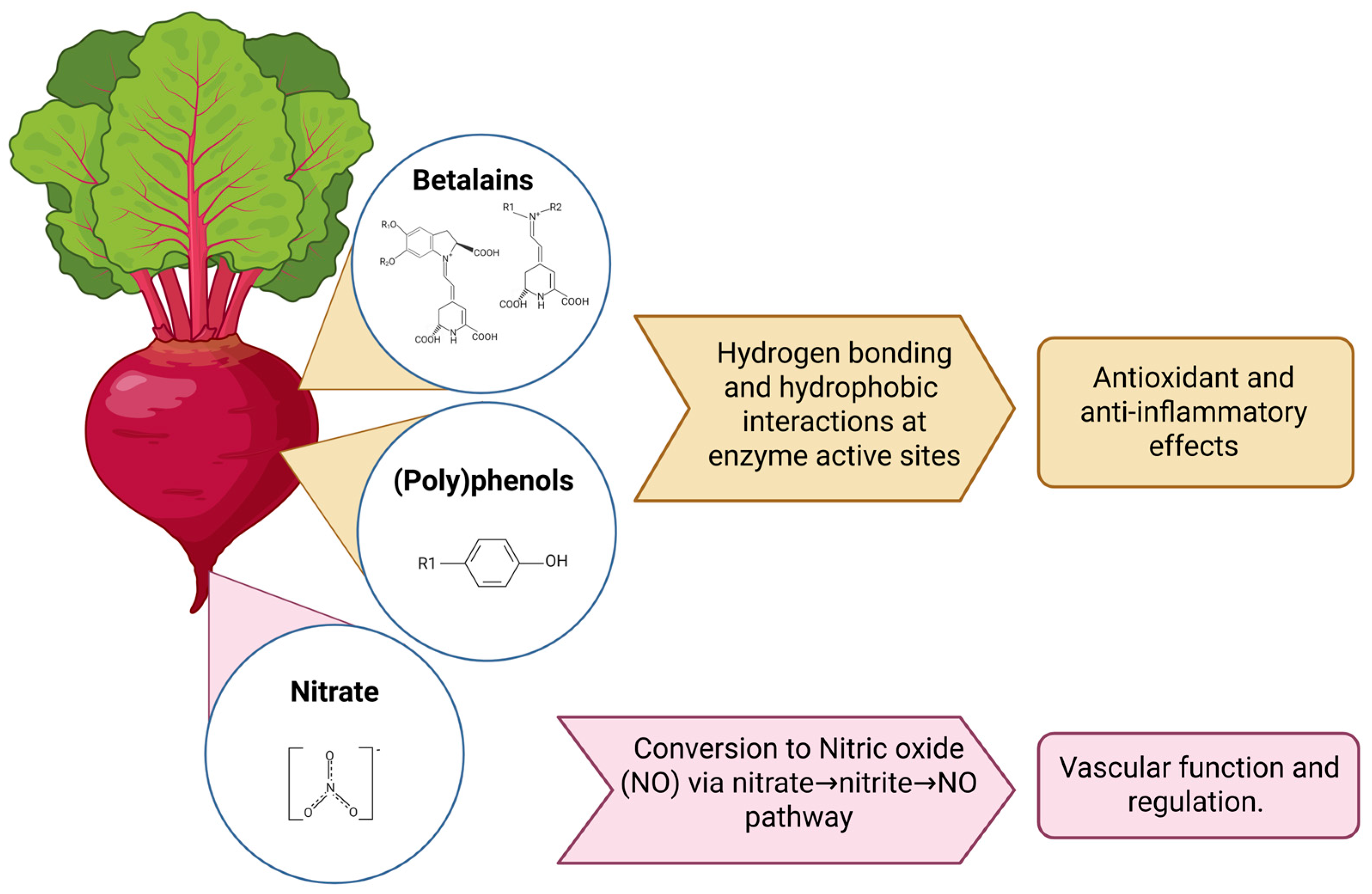
Figure 1. Beetroot phytochemicals reviewed and proposed mechanisms of action and key neuroprotective properties.
Nutrients 17 03790 g001
Figure 2. Nitric oxide (NO) is generated by nitric oxide synthases (NOS), which convert L-arginine and oxygen in the presence of essential cofactors [e.g., NADPH, flavin adenine dinucleotide (FAD), tetrahydrobiopterin (BH4), haem, and calmodulin], producing L-citrulline as a by-product. Alternatively, dietary nitrate, found in leafy greens and beetroot, can contribute to NO formation through its reduction to nitrite (NO2) by oral bacteria (a rapid pathway) and xanthine oxidase (a slower pathway), which can be converted to NO via acidic reduction in the stomach or via various systemic nitrite reductases. This pathway is reversible hence the dashed arrows. The concentration of NO is relevant to its effects; while NO may be neuroprotective, high concentrations could contribute to oxidative and nitrosative stress when dysregulated. Although beetroots antioxidants may counteract this as discussed later.
Nutrients 17 03790 g002
Table 1. NOS-independent NO donors in animal studies.
CompoundsNeuroprotective PropertiesReference
GT 715 and GT 061
(S-nitrates)
Reversal of cognitive deficits via NO/cGMP/ERK–CREB pathways.[37]
MN-08 (memantine with a nitrate group)Reversal of cognitive deficits, with greater efficacy than standard memantine. Increased cerebral blood flow, reduced neuronal loss and white matter injury and activated pro-survival signalling pathways associated with neuronal resilience.[38]
S-nitrosoglutathioneReversal of cognitive deficits, with greater efficacy than (NOS dependent) L-Arginine. Reduced neuronal damage and amyloid β, and upregulation of brain derived neurotropic factor and Nuclear Factor Erythroid 2-Related Factor-2 antioxidant signalling pathways[39,40]
Disclaimer/Publisher’s Note: The statements, opinions and data contained in all publications are solely those of the individual author(s) and contributor(s) and not of MDPI and/or the editor(s). MDPI and/or the editor(s) disclaim responsibility for any injury to people or property resulting from any ideas, methods, instructions or products referred to in the content.