Article

A Method to Estimate the Efficacy vs. Effectiveness in Meta-Analysis of Clinical Trials with Different Adherence Scenarios: A Monte Carlo Simulation Study in Nutrition

by
Miguel Ángel López-Espinoza
1,*,
José Antonio Lozano-Lozano
2 and
David Prieto-Merino
3
1
Health Science Department, Universidad Católica de Murcia (UCAM), 30107 Murcia, Spain
2
Instituto de Ciencias Biomédicas, Universidad Autónoma de Chile (Chile), Santiago 7500912, Región Metropolitana, Chile
3
Cátedra Internacional de Análisis Estadístico y Big Data, Universidad Católica de Murcia (UCAM), 30107 Murcia, Spain
*
Author to whom correspondence should be addressed.
Nutrients 2021, 13(7), 2352; https://doi.org/10.3390/nu13072352
Submission received: 18 May 2021 / Revised: 6 July 2021 / Accepted: 7 July 2021 / Published: 9 July 2021
(This article belongs to the Special Issue Dietary Interventions for Cardiovascular Risk Reduction)

Abstract

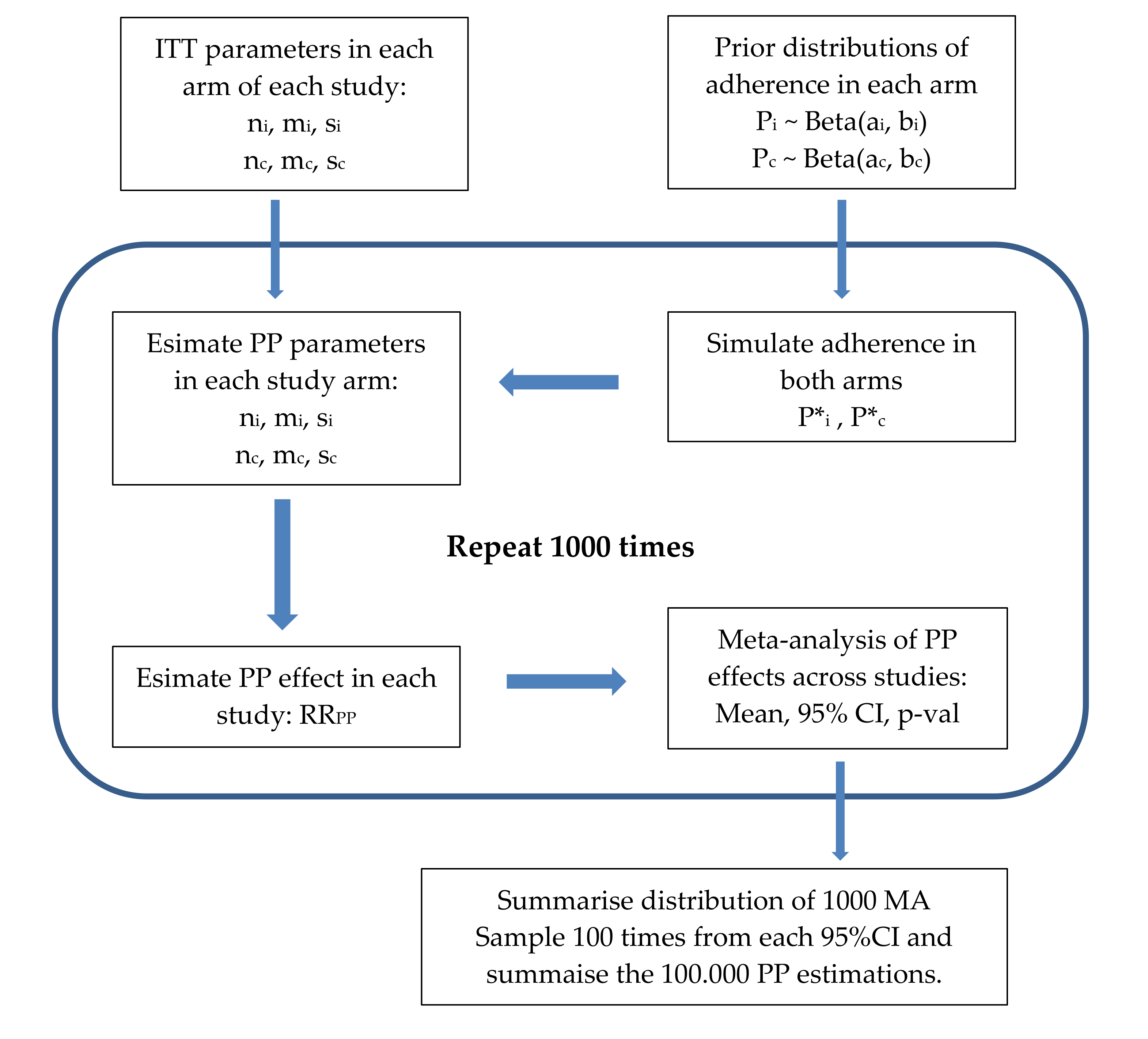
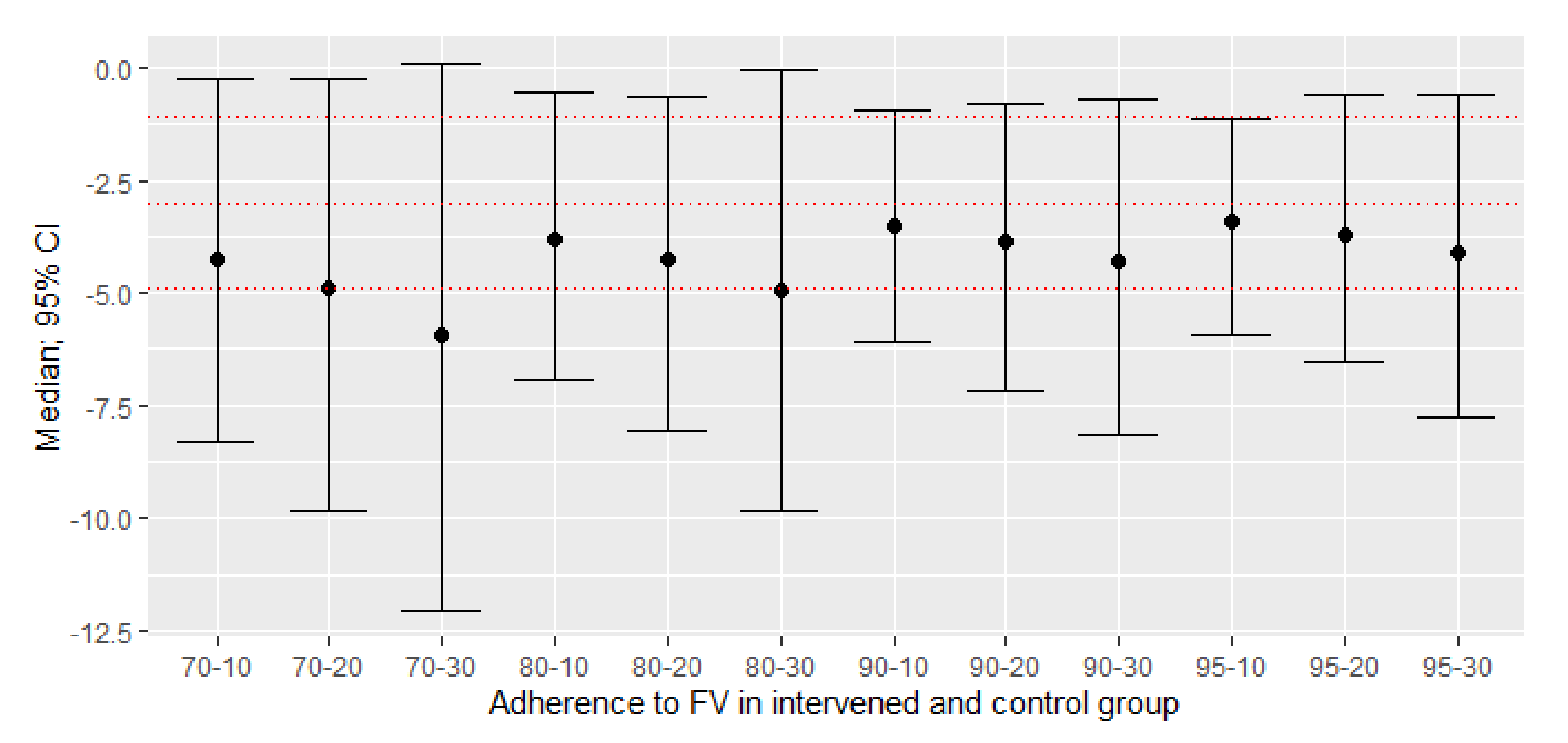
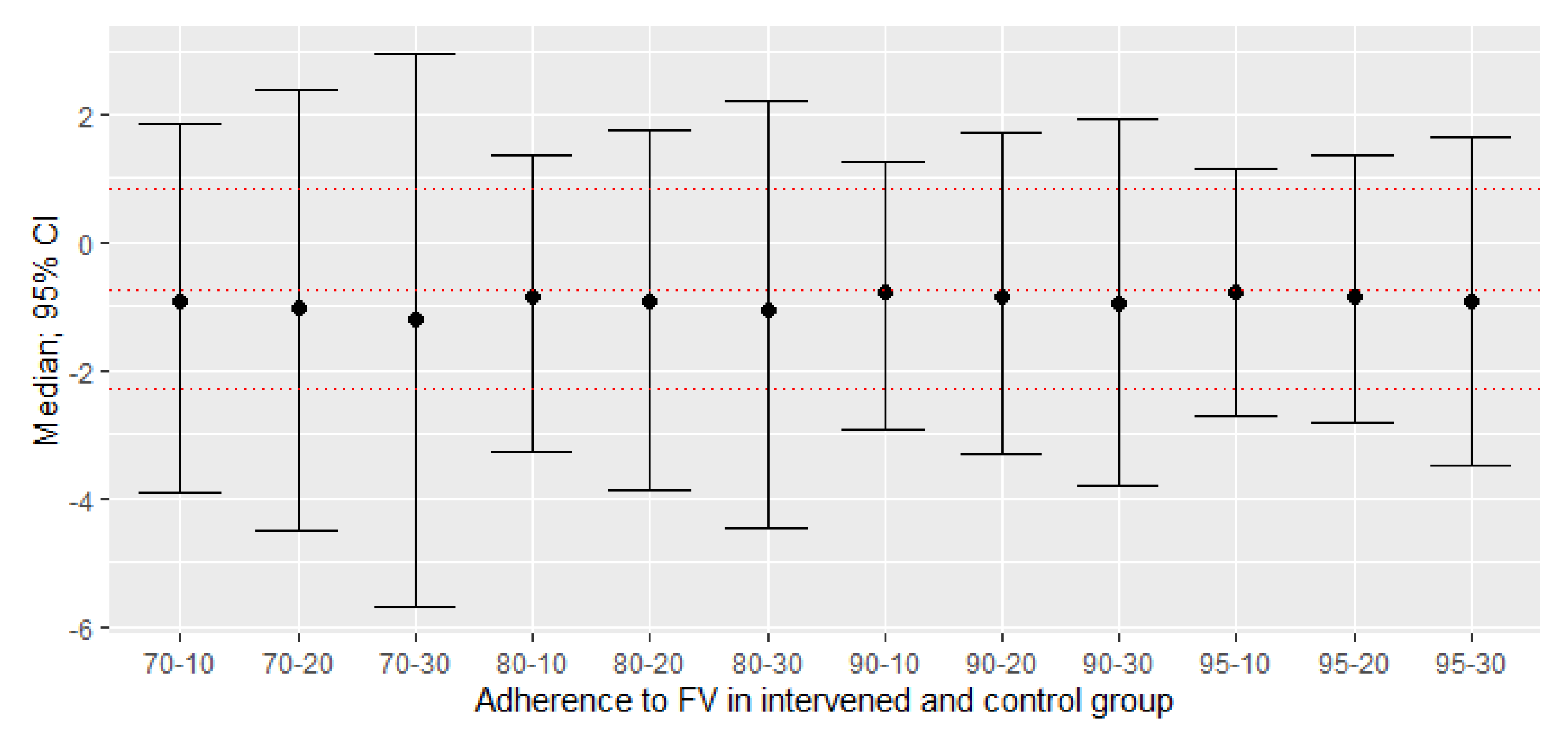
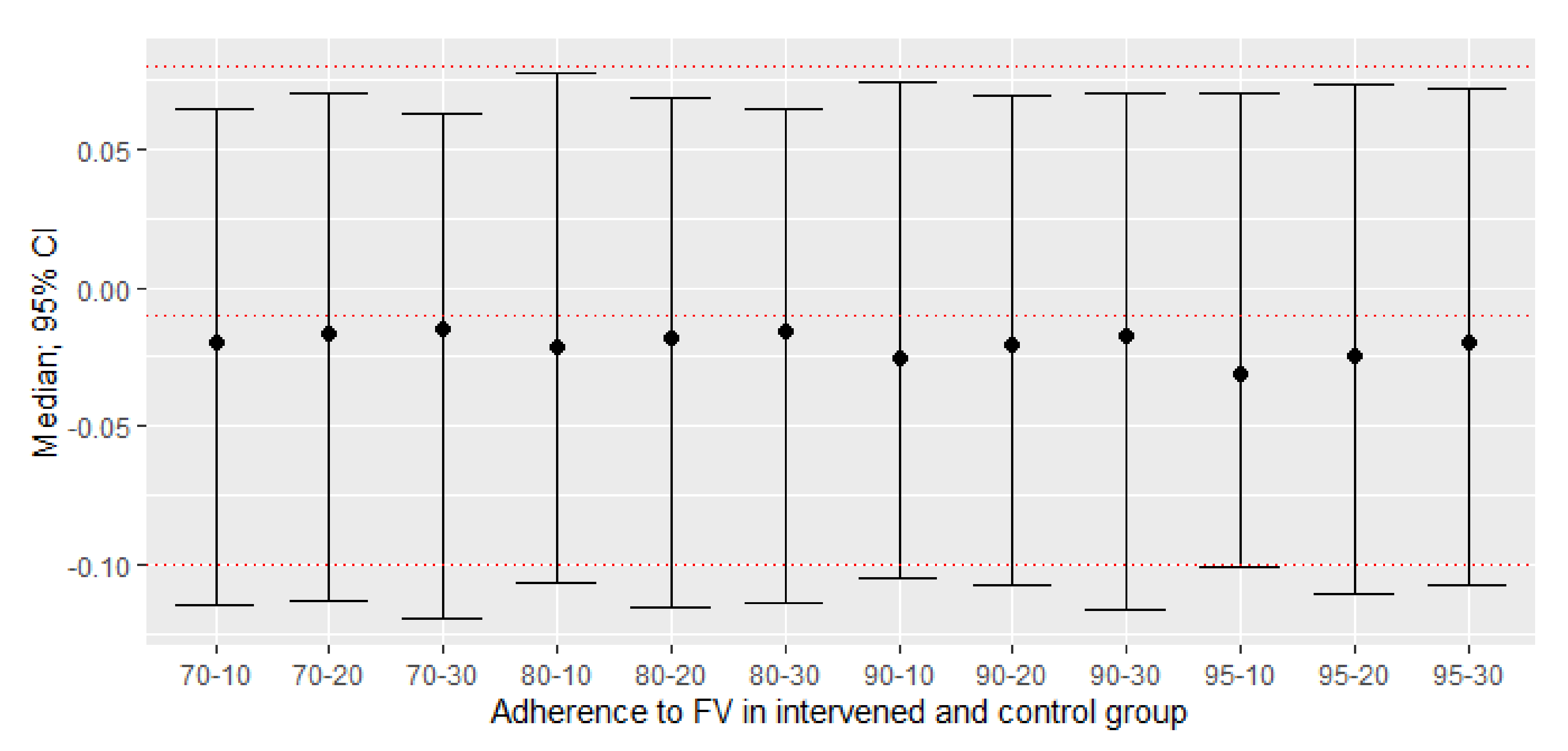
Randomized clinical trials (RCTs) evaluating the effectiveness of interventions to promote fruit and vegetable (FV) consumption usually report intention-to-treat (ITT) analysis as the main outcome. These analyses compare the randomly assigned groups and accept that some individuals may not follow the recommendations received in their group. The ITT analysis is useful to quantify the global effect of promoting the consumption of FV in a population (effectiveness) but, if non-adherence is significant in the RCT, they cannot estimate the specific effect in the individuals that increased their FV consumption (efficacy). To calculate the efficacy of FV consumption, a per protocol analysis (PP) would have to be carried out, in which groups of individuals are compared according to their actual adherence to FV consumption, regardless of the group to which they were assigned; unfortunately, many RCTs do not report the PP analysis. The objective of this article is to apply a new method to estimate the efficacy of Meta-analysis (MA) PP which include RCTs of effectiveness by ITT, without estimates of adherence. The method is based on generating Monte Carlo simulations of percentages of adherence in each allocation group from prior distributions informed by expert knowledge. We illustrate the method reanalyzing a Cochrane Systematic Review (SR) of RCTs on increased FV consumption reported with ITT, simulating 1000 times the estimation of a PP meta-analyses, and obtaining means and ranges of the potential PP effects. In some cases, the range of estimated PP effects was clearly more favourable than the effect calculated with the original ITT assumption, and therefore this corrected analysis must be considered when estimating the true effect of the consumption of a certain food.
Keywords: fruits and vegetables; intention to treat; meta-analysis; Monte Carlo method; SBP; DBP; LDL; HDL fruits and vegetables; intention to treat; meta-analysis; Monte Carlo method; SBP; DBP; LDL; HDL