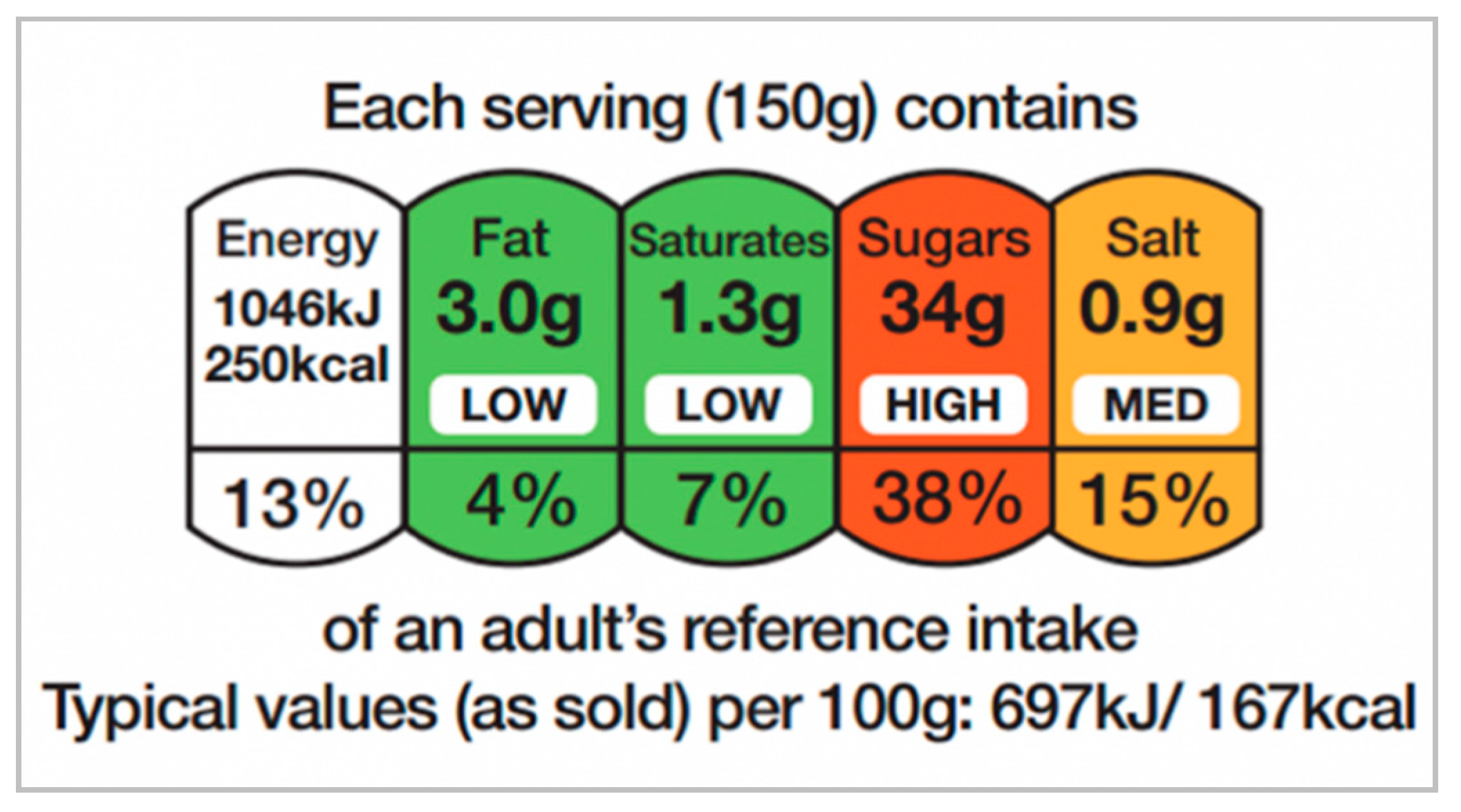
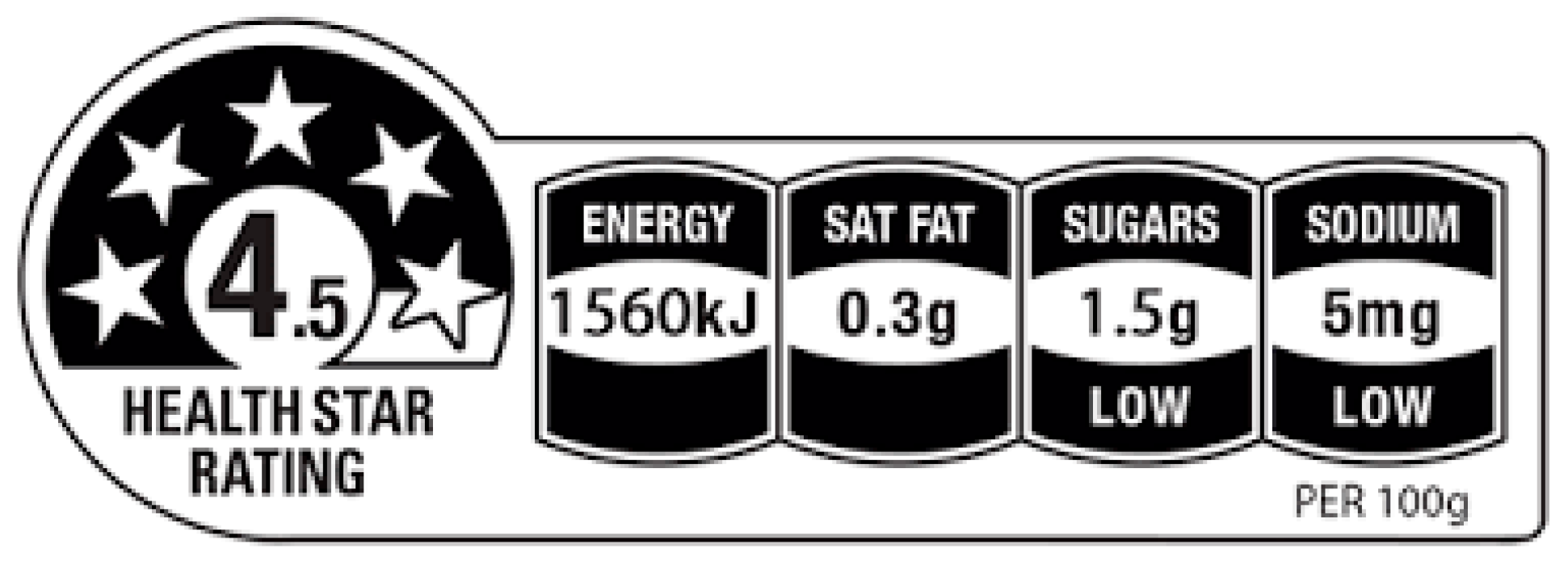
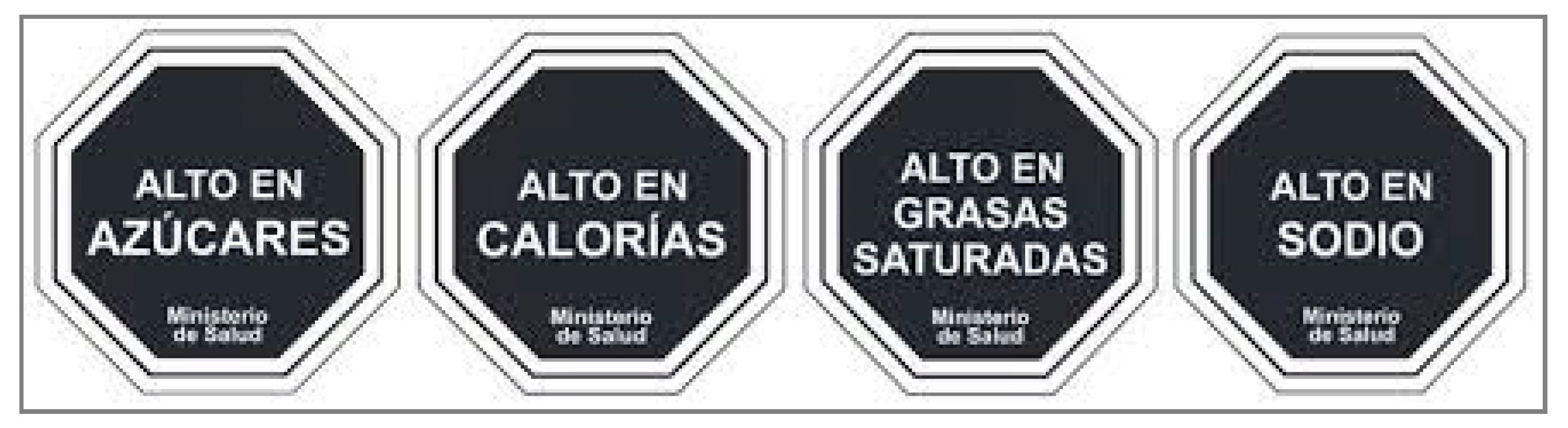
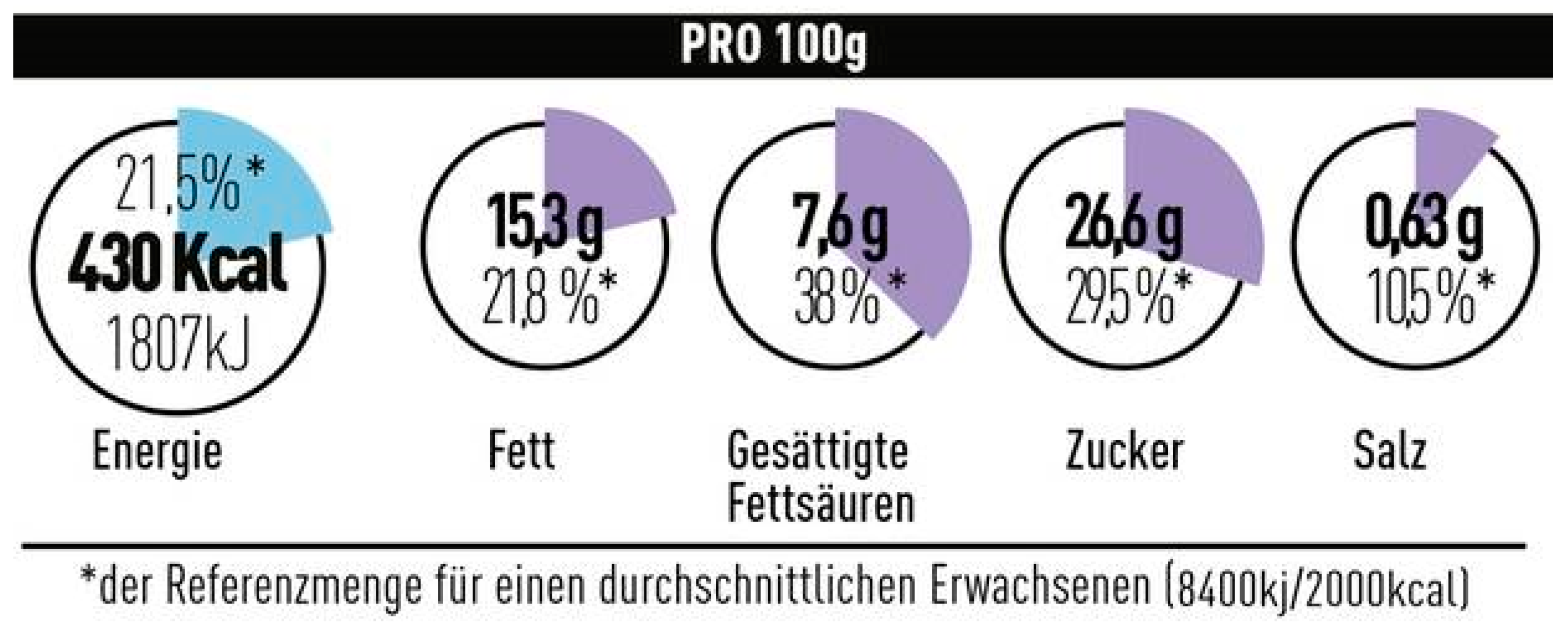
What Makes a Front-of-Pack Nutritional Labelling System Effective: The Impact of Key Design Components on Food Purchases


Abstract
Share and Cite
Muller, L.; Ruffieux, B. What Makes a Front-of-Pack Nutritional Labelling System Effective: The Impact of Key Design Components on Food Purchases. Nutrients 2020, 12, 2870. https://doi.org/10.3390/nu12092870
Muller L, Ruffieux B. What Makes a Front-of-Pack Nutritional Labelling System Effective: The Impact of Key Design Components on Food Purchases. Nutrients. 2020; 12(9):2870. https://doi.org/10.3390/nu12092870
Chicago/Turabian StyleMuller, Laurent, and Bernard Ruffieux. 2020. "What Makes a Front-of-Pack Nutritional Labelling System Effective: The Impact of Key Design Components on Food Purchases" Nutrients 12, no. 9: 2870. https://doi.org/10.3390/nu12092870
APA StyleMuller, L., & Ruffieux, B. (2020). What Makes a Front-of-Pack Nutritional Labelling System Effective: The Impact of Key Design Components on Food Purchases. Nutrients, 12(9), 2870. https://doi.org/10.3390/nu12092870