Article

Automatic Color Correction for Multisource Remote Sensing Images with Wasserstein CNN
1
School of Electronic, Electrical and Communication Engineering, University of Chinese Academy of Sciences, Huairou District, Beijing 101408, China
2
Institute of Electronics, Chinese Academy of Sciences, Beijing 100190, China
3
Key Laboratory of Geo-spatial Information Processing and Application System Technology, Beijing 100190, China
*
Author to whom correspondence should be addressed.
Remote Sens. 2017, 9(5), 483; https://doi.org/10.3390/rs9050483
Submission received: 19 March 2017 / Revised: 8 May 2017 / Accepted: 12 May 2017 / Published: 15 May 2017
(This article belongs to the Special Issue Learning to Understand Remote Sensing Images)

Abstract

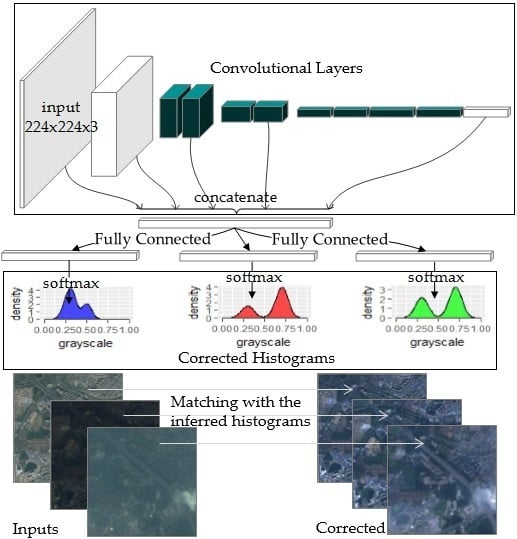
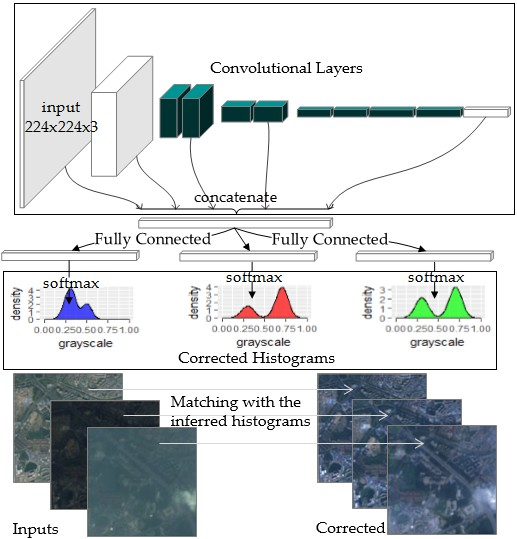
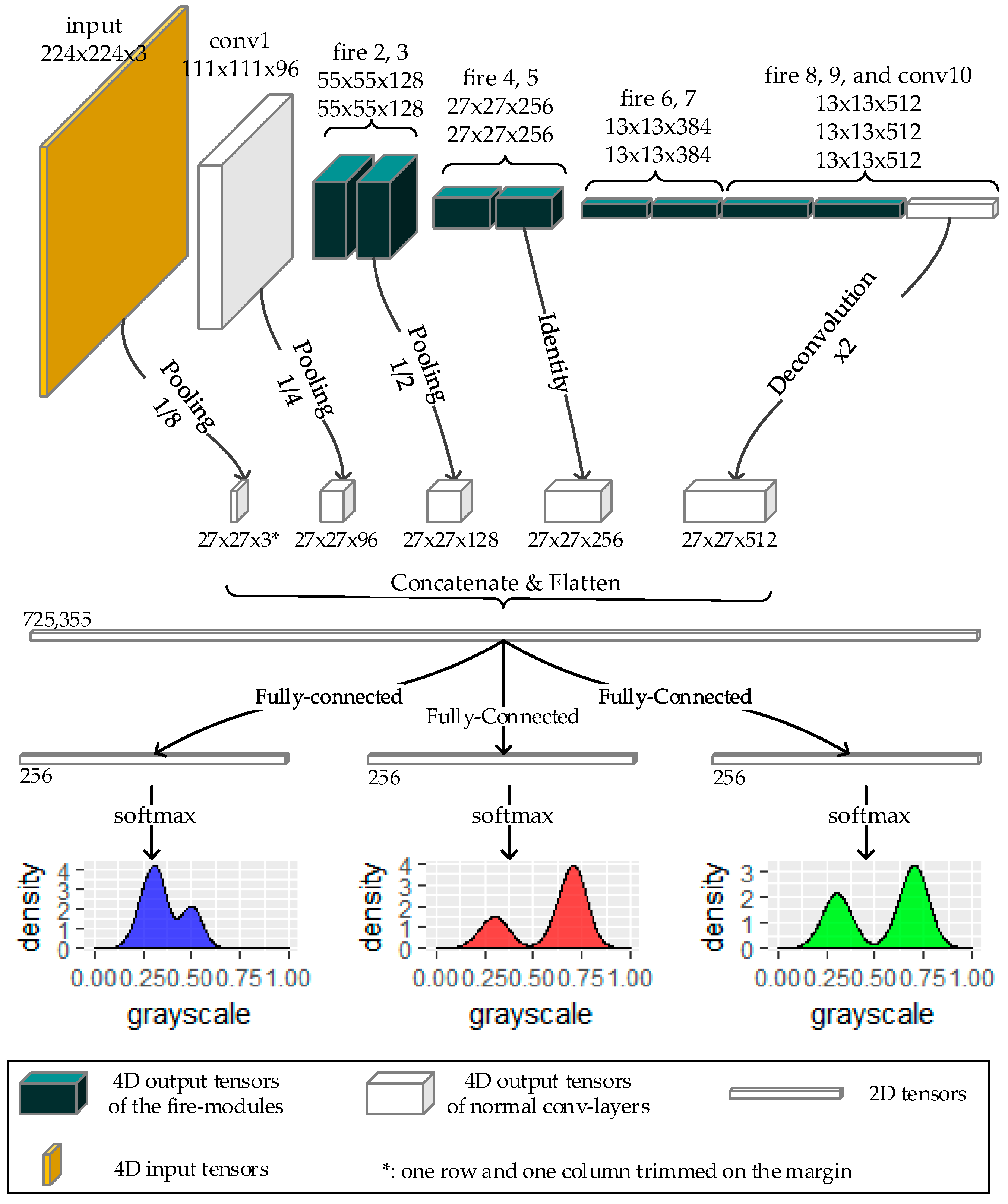
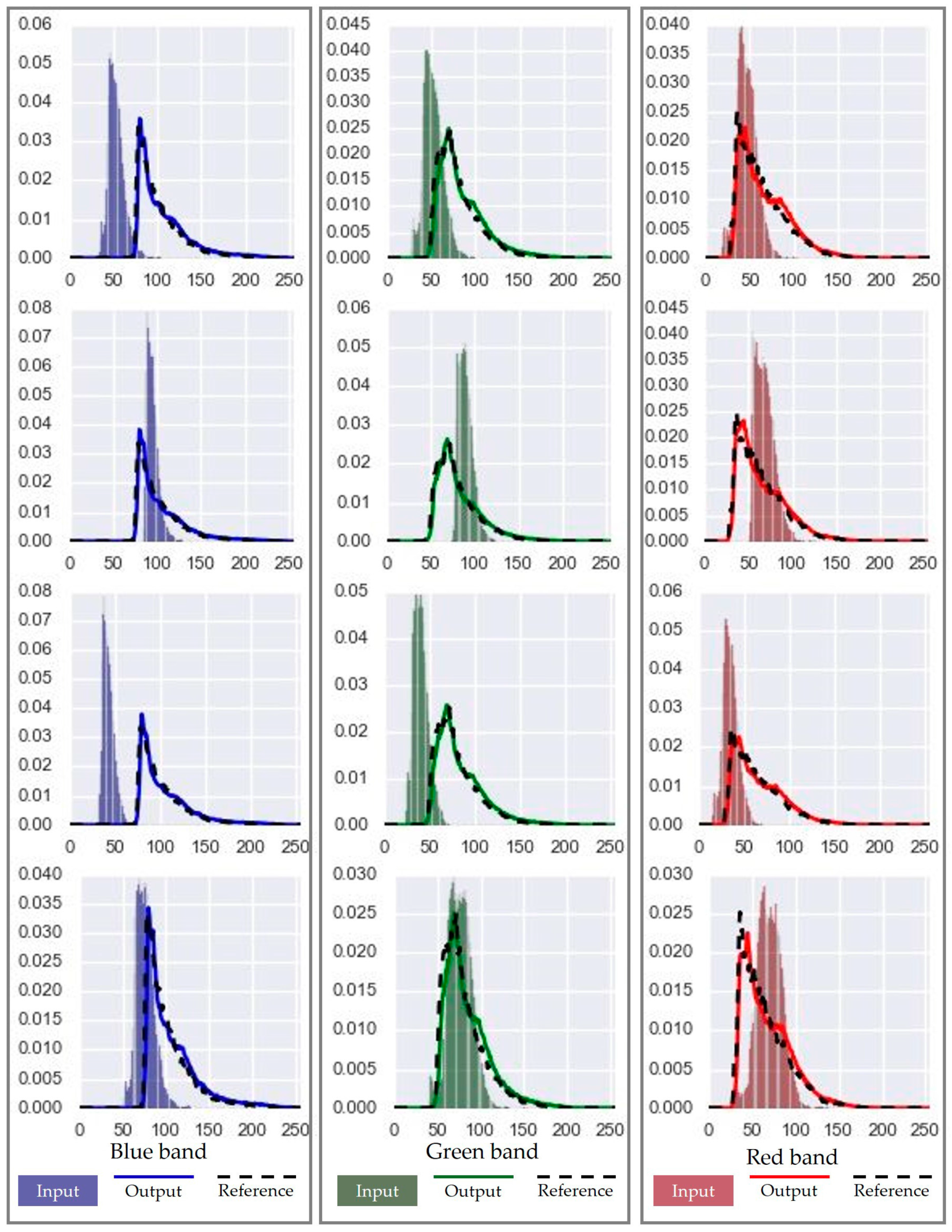
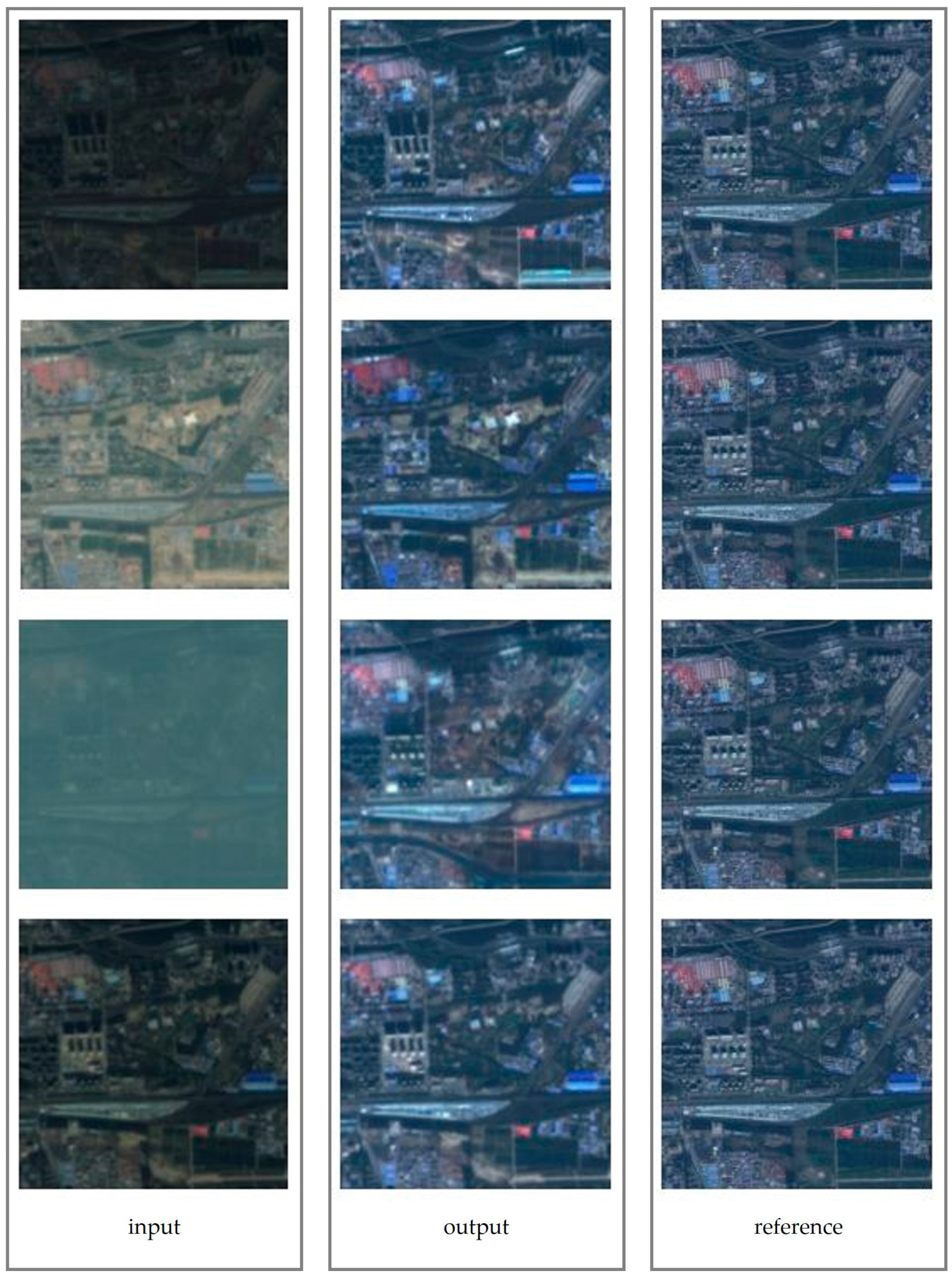
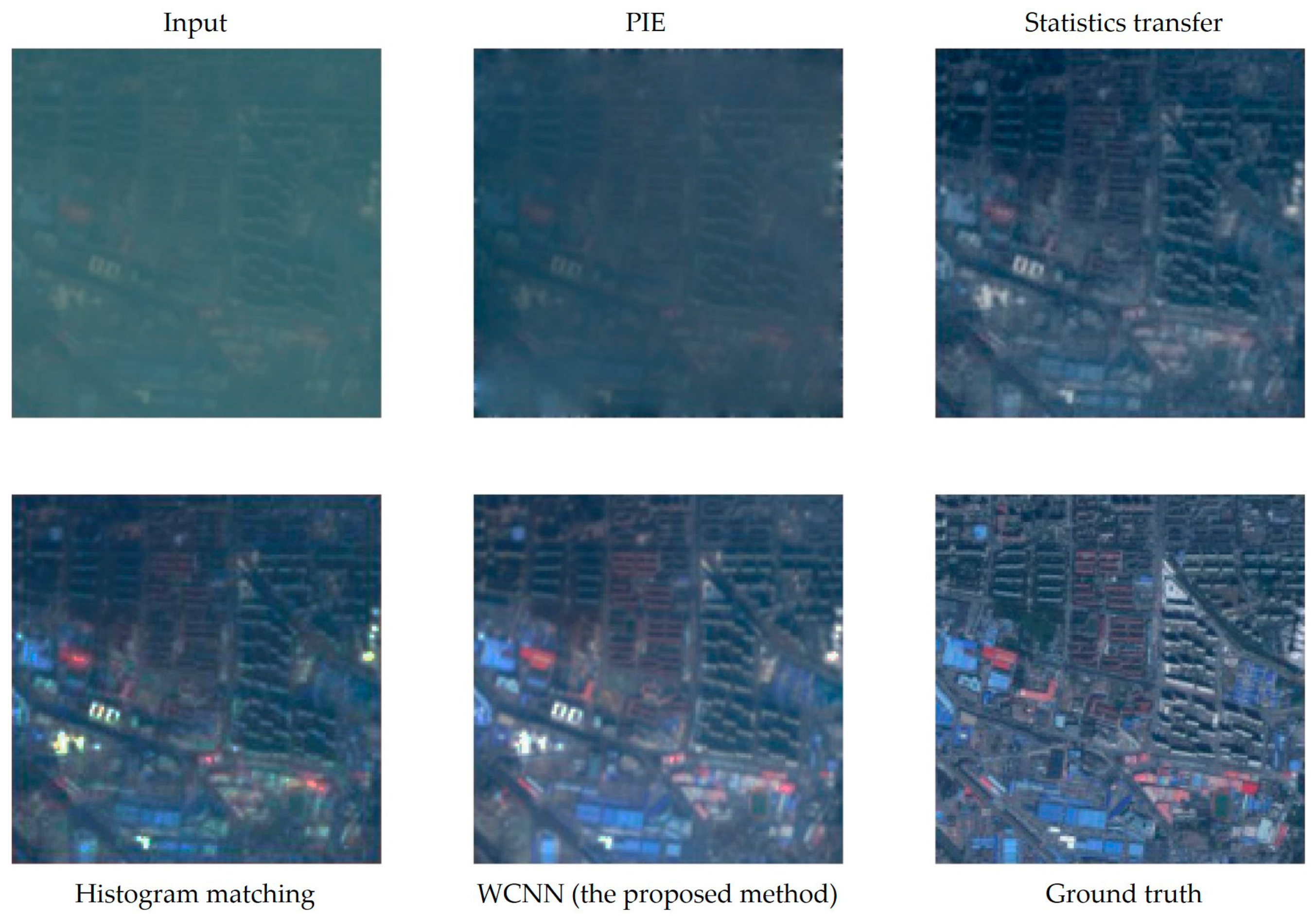
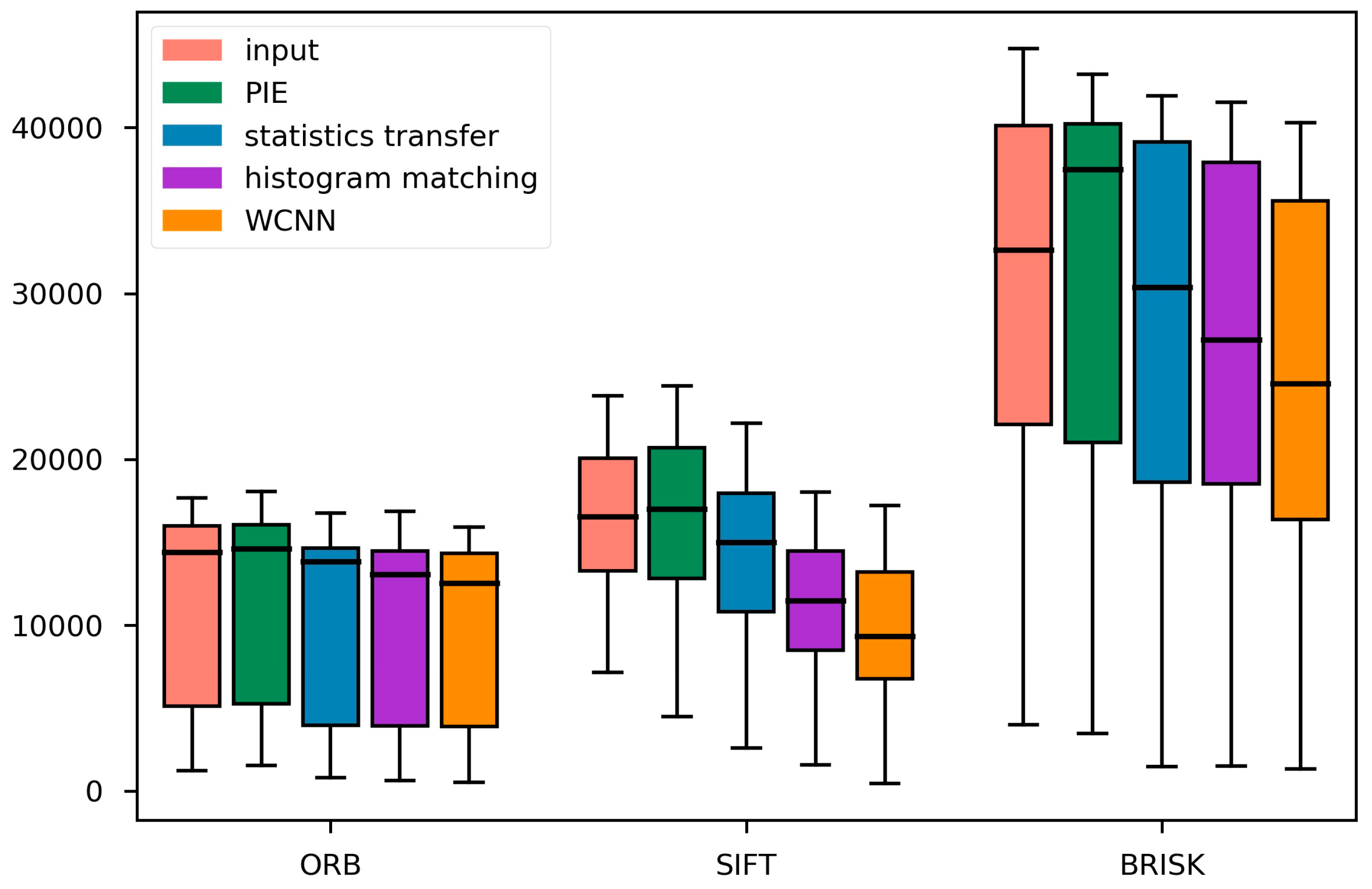
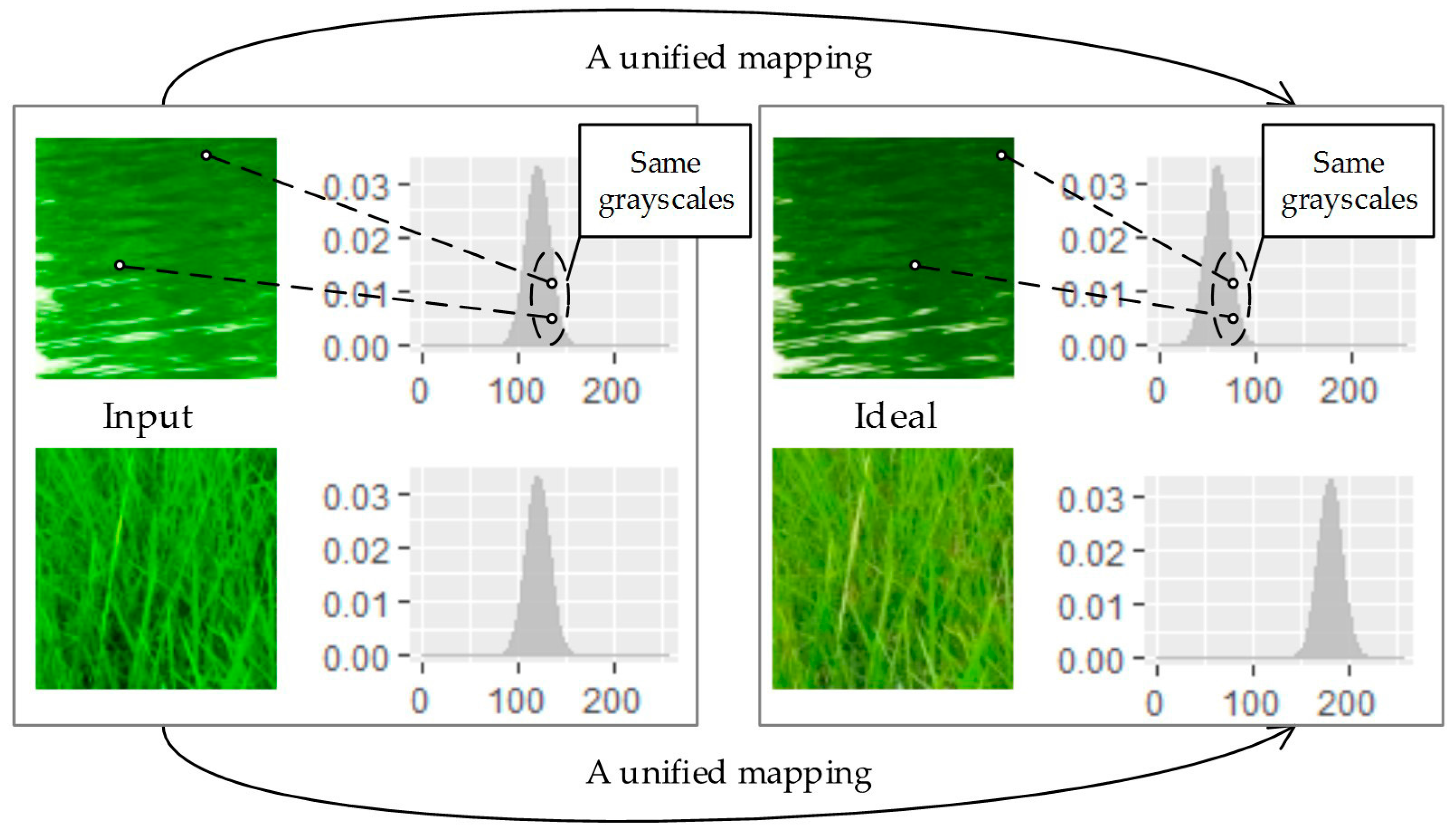
In this paper a non-parametric model based on Wasserstein CNN is proposed for color correction. It is suitable for large-scale remote sensing image preprocessing from multiple sources under various viewing conditions, including illumination variances, atmosphere disturbances, and sensor and aspect angles. Color correction aims to alter the color palette of an input image to a standard reference which does not suffer from the mentioned disturbances. Most of current methods highly depend on the similarity between the inputs and the references, with respect to both the contents and the conditions, such as illumination and atmosphere condition. Segmentation is usually necessary to alleviate the color leakage effect on the edges. Different from the previous studies, the proposed method matches the color distribution of the input dataset with the references in a probabilistic optimal transportation framework. Multi-scale features are extracted from the intermediate layers of the lightweight CNN model and are utilized to infer the undisturbed distribution. The Wasserstein distance is utilized to calculate the cost function to measure the discrepancy between two color distributions. The advantage of the method is that no registration or segmentation processes are needed, benefiting from the local texture processing potential of the CNN models. Experimental results demonstrate that the proposed method is effective when the input and reference images are of different sources, resolutions, and under different illumination and atmosphere conditions.
Keywords: remote sensing image correction; color matching; optimal transport; CNN remote sensing image correction; color matching; optimal transport; CNN
Graphical Abstract