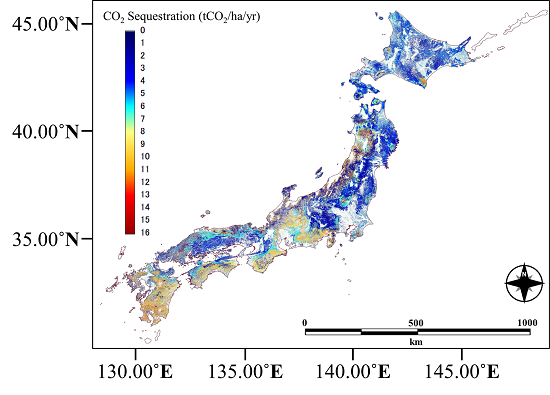
Estimation of CO2 Sequestration by the Forests in Japan by Discriminating Precise Tree Age Category using Remote Sensing Techniques
Abstract
Share and Cite
Iizuka, K.; Tateishi, R. Estimation of CO2 Sequestration by the Forests in Japan by Discriminating Precise Tree Age Category using Remote Sensing Techniques. Remote Sens. 2015, 7, 15082-15113. https://doi.org/10.3390/rs71115082
Iizuka K, Tateishi R. Estimation of CO2 Sequestration by the Forests in Japan by Discriminating Precise Tree Age Category using Remote Sensing Techniques. Remote Sensing. 2015; 7(11):15082-15113. https://doi.org/10.3390/rs71115082
Chicago/Turabian StyleIizuka, Kotaro, and Ryutaro Tateishi. 2015. "Estimation of CO2 Sequestration by the Forests in Japan by Discriminating Precise Tree Age Category using Remote Sensing Techniques" Remote Sensing 7, no. 11: 15082-15113. https://doi.org/10.3390/rs71115082
APA StyleIizuka, K., & Tateishi, R. (2015). Estimation of CO2 Sequestration by the Forests in Japan by Discriminating Precise Tree Age Category using Remote Sensing Techniques. Remote Sensing, 7(11), 15082-15113. https://doi.org/10.3390/rs71115082