1. Introduction
Sea Surface Temperature (SST) is a fundamental and biophysical parameter in assessing the health of aquatic ecosystems and the sustainability of water resource management. Minute changes in water temperature induce fluctuations in Dissolved Oxygen (DO) levels and serve as a key factor determining the frequency of algal blooms. In particular, thermal effluents discharged from power plants or industrial factories due to industrialization cause localized water temperature increases, leading to the environmental issue of “thermal pollution”. Such artificial thermal loads can disturb the metabolic rates of aquatic biota and reduce biodiversity, potentially causing irreversible impacts on the entire ecosystem; therefore, precise and continuous monitoring is essential. To detect such environmental changes in coastal estuaries, UAV-based high-resolution monitoring approaches have been increasingly adopted [
1].
Traditionally, water temperature observation has relied on point-based measurement methods using buoys, ship-based surveys, or mooring stations. While these in situ data offer high accuracy and temporal resolution, they have a critical limitation: a lack of spatial representativeness. Even with dozens of sensors installed, it is insufficient to perfectly reconstruct fine-scale thermal fronts or diffusion patterns occurring in complex coastlines or irregular river terrains. Furthermore, installation and maintenance require substantial cost and manpower.
As an alternative, satellite-based Thermal Infrared (TIR) remote sensing technology has been widely used for extensive SST monitoring. Satellite sensors such as Landsat, NOAA, and MODIS periodically provide SST distributions on a global or regional scale, making significant contributions to studies on large-scale ocean circulation and climate change. Huang et al. [
2] conducted a study to quantitatively calculate the diffusion range of thermal effluents from nuclear power plants using satellite imagery. Recently, attempts have been made to improve monitoring precision by combining UAV and satellite data [
3].
However, satellite remote sensing exposes clear spatio-temporal limitations in monitoring coastal areas or narrow inland streams. Even high-resolution satellites like Landsat-8/9 or Sentinel-2 have a spatial resolution of only about 100 m in TIR bands, making it difficult to detect localized water temperature changes near narrow rivers or breakwaters. Additionally, cloud cover and long revisit times make it impossible to capture real-time phenomena such as thermal effluent discharge. Above all, the mixed pixel problem, where land and water are blended due to complex coastal topography, significantly degrades the accuracy of temperature retrieval.
These monitoring challenges are particularly critical in coastal and transitional water environments, which are among the most ecologically sensitive and dynamically complex systems on Earth. Coastal zones serve as interfaces between terrestrial and marine processes, where thermal pollution can have amplified impacts on aquatic biodiversity, sediment dynamics, and morphological stability. The interplay of tidal currents, freshwater inflows, and anthropogenic thermal inputs creates spatially heterogeneous temperature fields that demand high-resolution observation capabilities [
4].
Recent rapid advancements in UAV technology are emerging as an innovative platform to bridge the gap between satellite and in situ observations. UAVs can perform low-altitude flights at desired times and locations, acquiring ultra-high-resolution imagery at the centimeter (cm) level without being affected by clouds. In particular, the ability to mount miniaturized thermal sensors (microbolometers) has opened the possibility of performing high-precision water temperature mapping at a low cost.
UAV-based thermal infrared exploration has significantly lower operating costs compared to manned aircraft observations and offers excellent accessibility to hazardous areas, expanding its application to various fields such as disaster management, agriculture, and infrastructure inspection [
5]. In the water resources sector, UAV thermal imaging technology is being introduced for leak detection, Submarine Groundwater Discharge (SGD) monitoring [
6,
7,
8,
9], and analysis of river restoration effects [
10]. For instance, Micieli et al. [
11] conducted a study detecting the presence of water bodies in Mediterranean climate rivers using UAV thermal imaging, and Dugdale et al. [
12] presented the potential of combining UAVs and TIR imagery for understanding hydrological processes. This is expanding to integration with simulation models [
13] and analysis of river environments across various spatial scales [
14]. However, uncooled thermal sensors typically mounted on UAVs have an intrinsic technical limitation of lower measurement accuracy compared to cooled sensors. Uncooled sensors are sensitive to internal sensor temperature changes (FPA temperature), exhibiting temporal drift. Due to lens vignetting effects or non-uniformity, it is difficult to obtain reliable absolute temperature values without radiometric calibration. O’Sullivan and Kurylyk [
15] pointed out sensor errors due to external heat absorption and emphasized the importance of shielding. Furthermore, atmospheric water vapor and aerosols absorb or scatter longwave radiation emitted from the surface, reducing the amount of energy reaching the sensor. UAV imagery captured at altitudes of hundreds of meters is more affected by this atmospheric attenuation compared to ground measurements, serving as a primary cause for underestimating water surface temperatures. Therefore, the application of appropriate algorithms to correct for atmospheric effects and mechanical sensor errors is essential [
16].
Many existing studies have explored calibration strategies for UAV-based thermal infrared sensing, including radiative transfer models, blackbody-based calibration, polynomial fitting, neural-network-based approaches, and practical in situ correction using Ground Control Points (GCPs) or Temperature Control Points [
17,
18,
19,
20,
21]. Radiative-transfer-based and blackbody-based methods can provide high radiometric accuracy, but they often require laboratory-grade reference equipment or additional atmospheric information, which limits routine field applicability. Polynomial or neural-network-based models can represent nonlinear sensor response more flexibly, but their robustness may decrease when only a limited number of synchronous field calibration samples are available, and their physical interpretability is often limited. In contrast, in situ linear regression remains attractive for operational water temperature monitoring because it is simple, physically interpretable, and less prone to overfitting under limited sample conditions.
In this study, a linear calibration model was considered particularly suitable because the observed water temperature range was relatively narrow and each UAV survey was conducted within a short time window under approximately stable atmospheric conditions, allowing the dominant radiometric bias to be reasonably approximated as a gain-and-offset relationship. At the same time, inland streams and coastal waters differ substantially in hydraulic behavior, water depth, turbidity, and thermal background caused by surrounding terrain features. Therefore, verifying whether the same low-cost UAV system and calibration protocol can provide consistent accuracy across both narrow, vegetation-dense river environments and wide, open coastal waters remains an important task for the practical standardization of UAV thermal imaging.
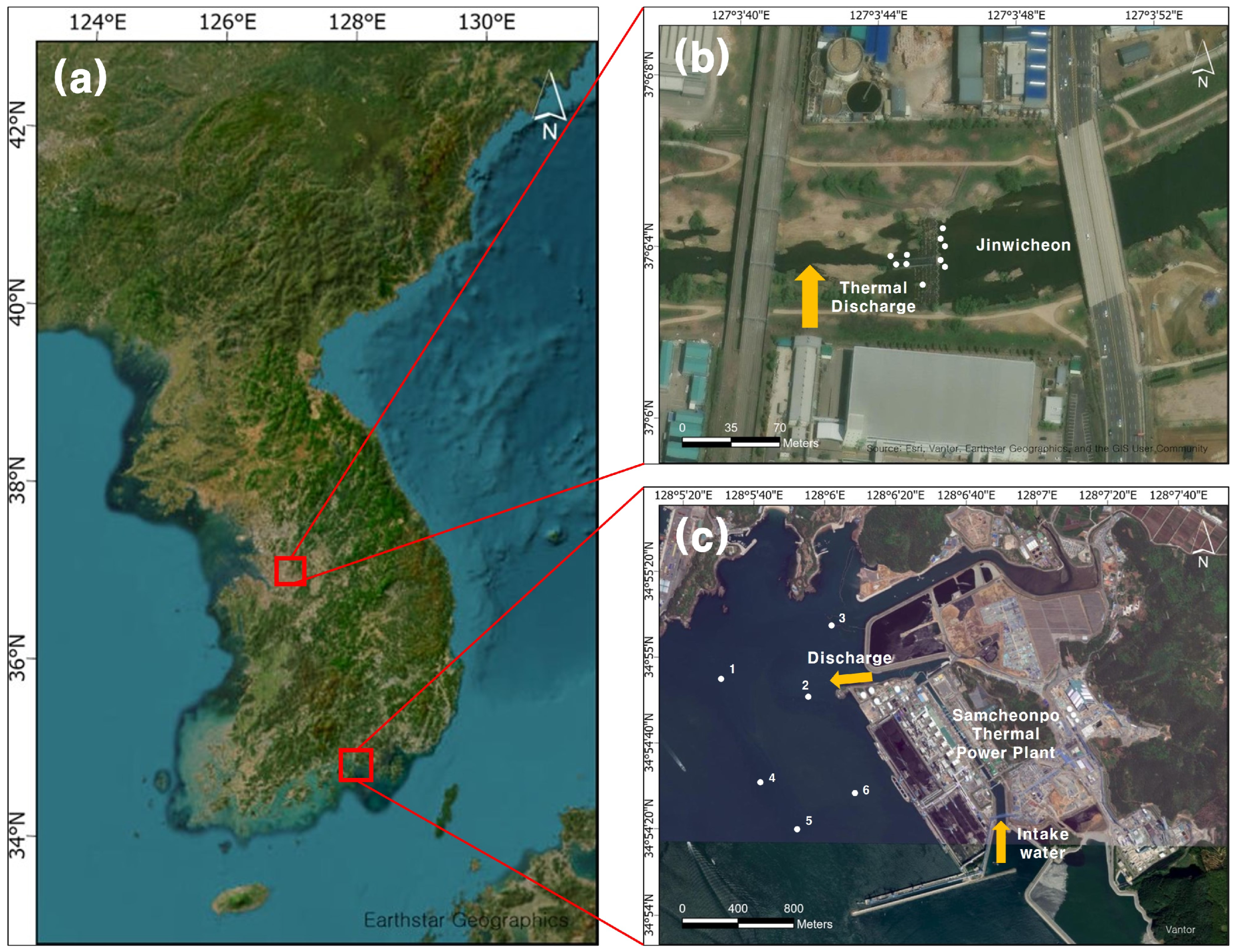
Accordingly, this study aims to perform high-resolution SST mapping and evaluate its applicability for two study areas with different hydraulic characteristics (inland stream and coastal sea) using a low-cost UAV thermal imaging system. Specifically, in situ observations using precision water thermometers were performed simultaneously with UAV flights targeting Study Area A (Jinwi-cheon, Pyeongtaek) and Study Area B (waters near Samcheonpo Thermal Power Plant).
In this study, we quantify the bias in the initial radiometric temperature of uncooled thermal sensors and present a practical in situ-based linear calibration workflow for high-resolution surface water temperature mapping. Using this workflow, we visualize sub-meter-scale thermal effluent patterns in both inland and coastal environments that are difficult to resolve with satellite imagery. By applying the same calibration framework to two hydraulically distinct settings, we provide initial evidence that this low-cost UAV-based approach can achieve reliable performance across contrasting aquatic environments, although broader validation remains necessary. Rather than proposing a new regression form, this study demonstrates a practical and reproducible thermal monitoring workflow that can support water quality management, ecosystem conservation, and environmental impact assessment.
3. Materials and Methods
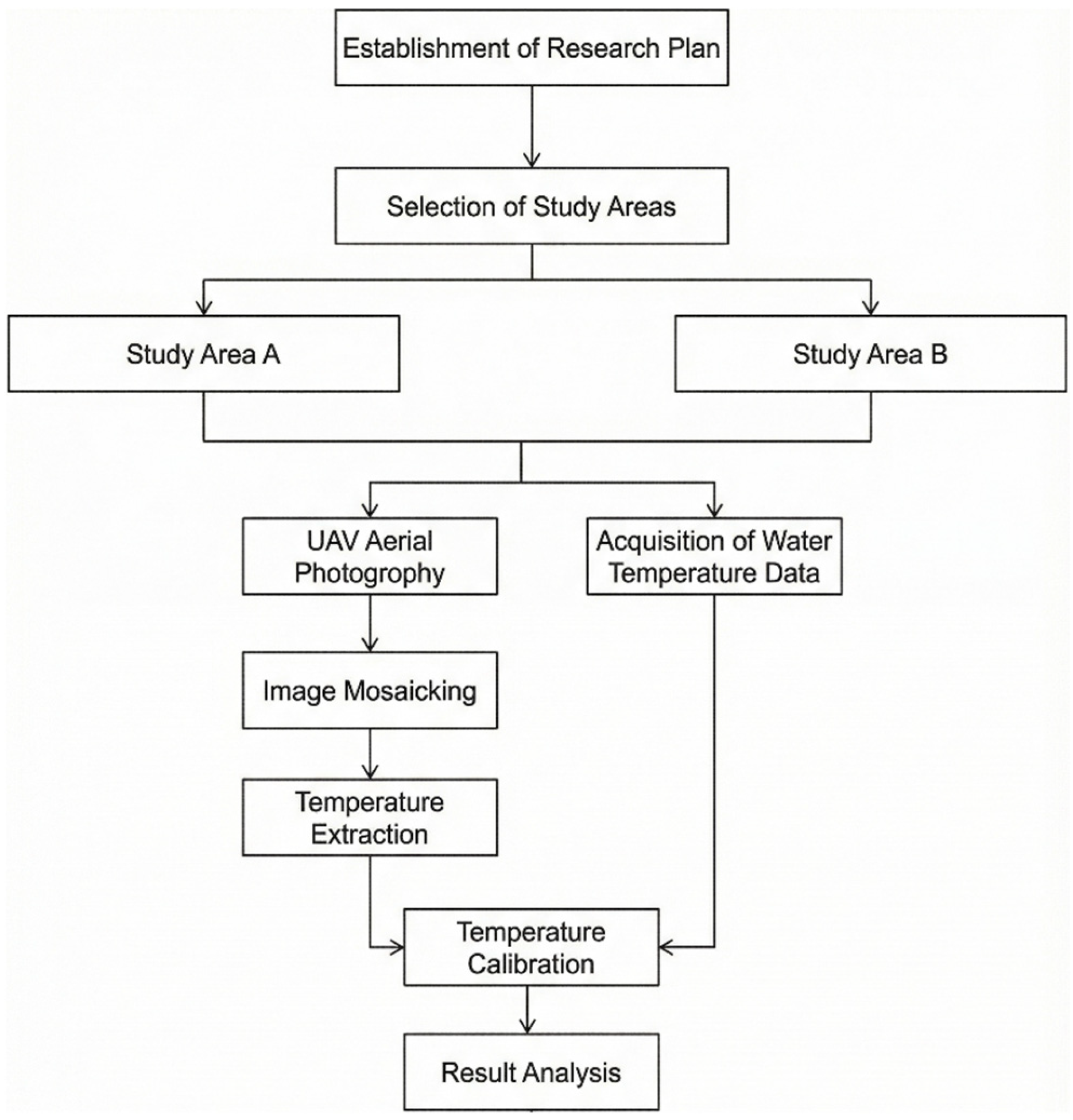
This section describes the materials and methodological framework used to maximize the observation accuracy of low-cost UAV-based TIR sensors and to precisely map the SST distribution of rivers and coastal waters. The overall research process consists of platform and sensor configuration, in situ water temperature acquisition, image stitching, absolute orientation, and radiometric calibration based on in situ data (
Figure 2). The technical specifications and mathematical background of each step are presented to ensure the reproducibility of the study.
3.1. UAV Platform and Thermal Sensor
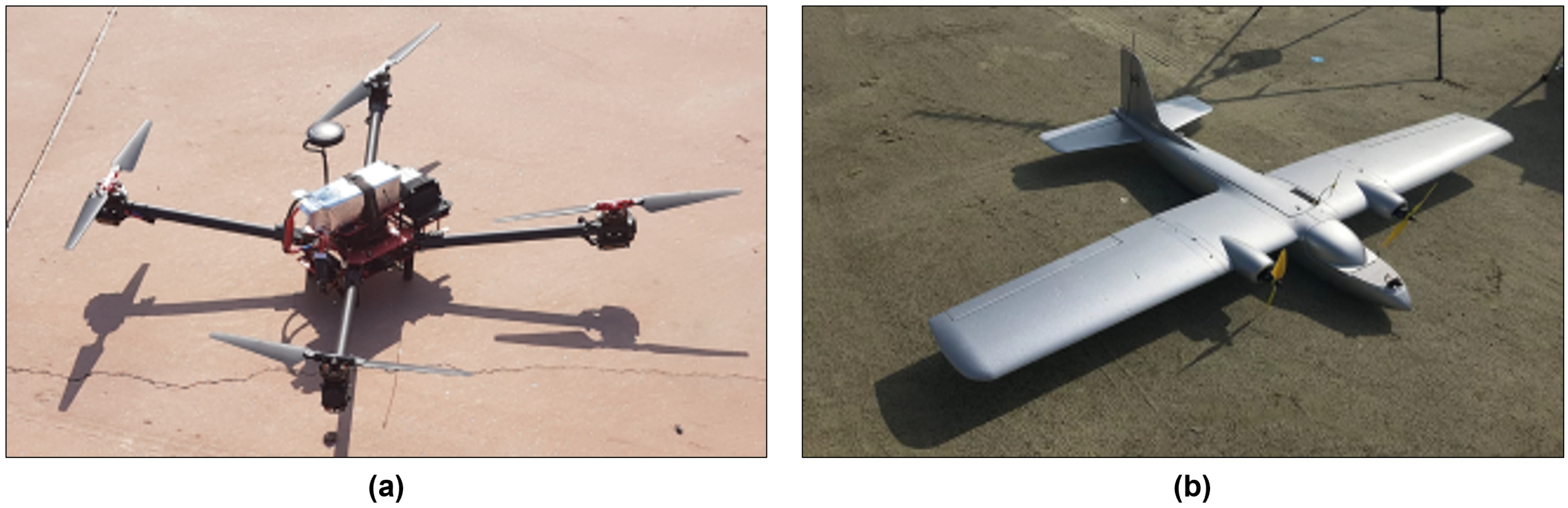
Different types of UAV platforms were operated to establish flight plans optimized for the spatial scale and topographical characteristics of the study areas. For Study Area A, which is narrow and has many obstacles, a rotary-wing drone capable of hovering and precise control was deployed (
Figure 3a). Conversely, for Study Area B, which requires covering a wide sea area efficiently, a fixed-wing drone capable of securing long flight times and a wide shooting radius was used (
Figure 3b).
The core sensor mounted for thermal data acquisition is the FLIR Vue Pro R model from (FLIR Systems, Inc., Wilsonville, OR, USA). This sensor is based on an uncooled VOx microbolometer that detects the 7.5–13.5 µm wavelength band and has a lightweight form factor optimized for aerial photography. In particular, the ‘R (Radiometric)’ model preserves absolute temperature values in the metadata of each captured JPEG image, enabling quantitative temperature extraction through post-processing. The main specifications of the sensor used in this study are shown in
Table 1. Although the temperature measurement accuracy of the sensor is specified as ±5 °C or 5%, this is an industrial inspection standard. In environmental monitoring, where minute water temperature changes must be detected, errors may occur due to atmospheric effects and water surface emissivity [
15]. Therefore, this study essentially includes a calibration process using separate in situ measurement data.
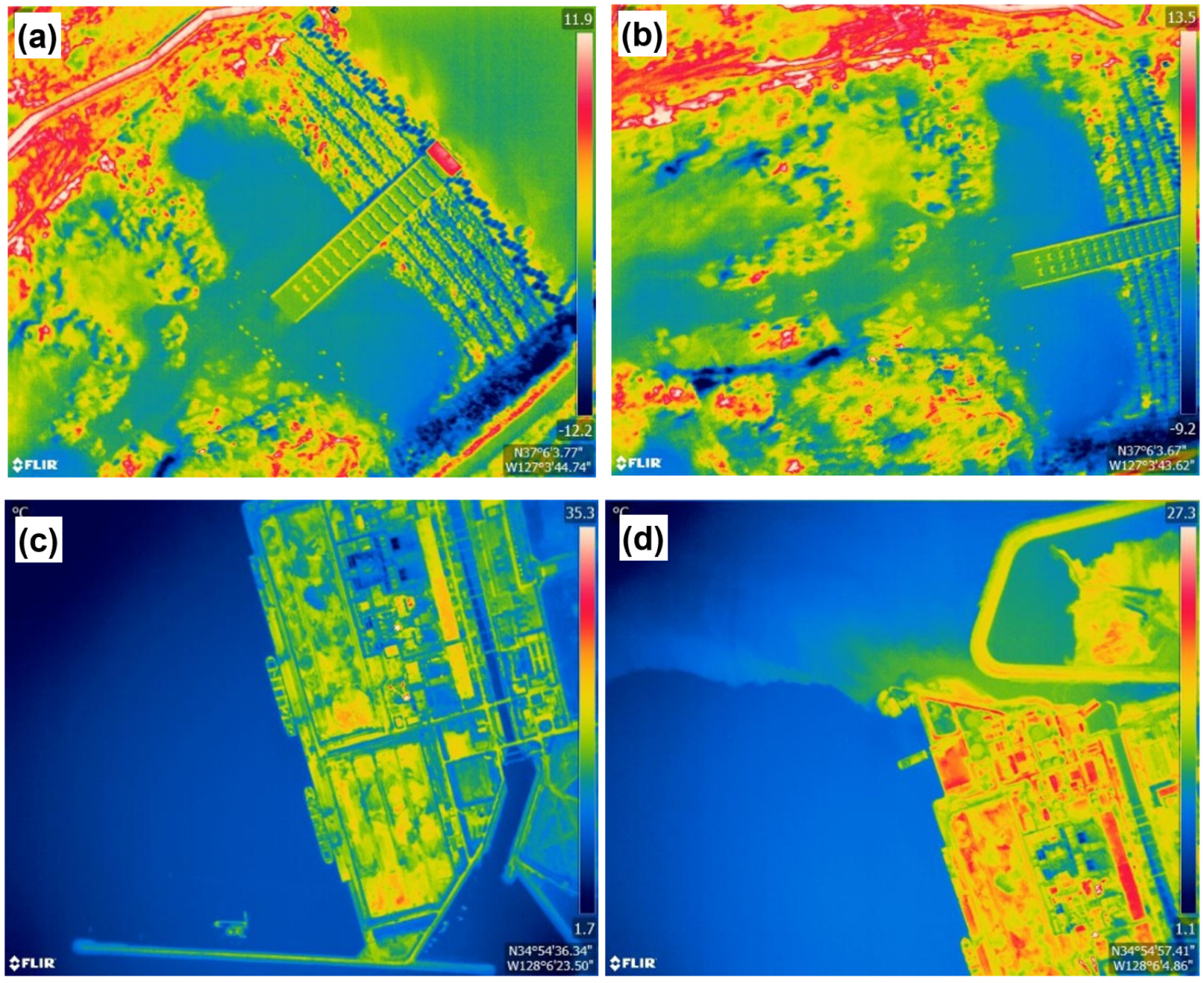
Data collection set flight altitude and overlap according to the characteristics of each region. In Study Area A, a high Ground Sampling Distance (GSD) of approximately 15 cm was secured through interval shooting at 1 s intervals, and a total of 679 images were acquired (see
Figure 4a,b). In Study Area B, a total of 41 images were acquired to cover a large area (see
Figure 4c,d). All acquired images were stored in R-JPEG format and used as raw data for post-processing in FLIR Tools+ (v5.9, FLIR Systems, Inc., Wilsonville, OR, USA) and Pix4D Mapper software (v3.2, Pix4D SA, Prilly, Switzerland).
3.2. In Situ Water Temperature Measurements
To calibrate the radiometric temperature obtained from the thermal sensor to the actual kinetic temperature and verify the accuracy of the proposed technique, in situ ground truth data were collected. The RBR solo T (v2.0, RBR Ltd., Ottawa, ON, Canada), a precision water thermometer widely used for oceanographic and hydraulic surveys, was used as the measurement equipment. This thermometer can measure water temperatures in the range of −5 °C to 35 °C and provides a very high accuracy of ±0.002 °C. These characteristics secure sufficient reliability as a reference value for correcting bias errors of several degrees Celsius that thermal cameras may have. Detailed specifications of the thermometer are presented in
Table 2.
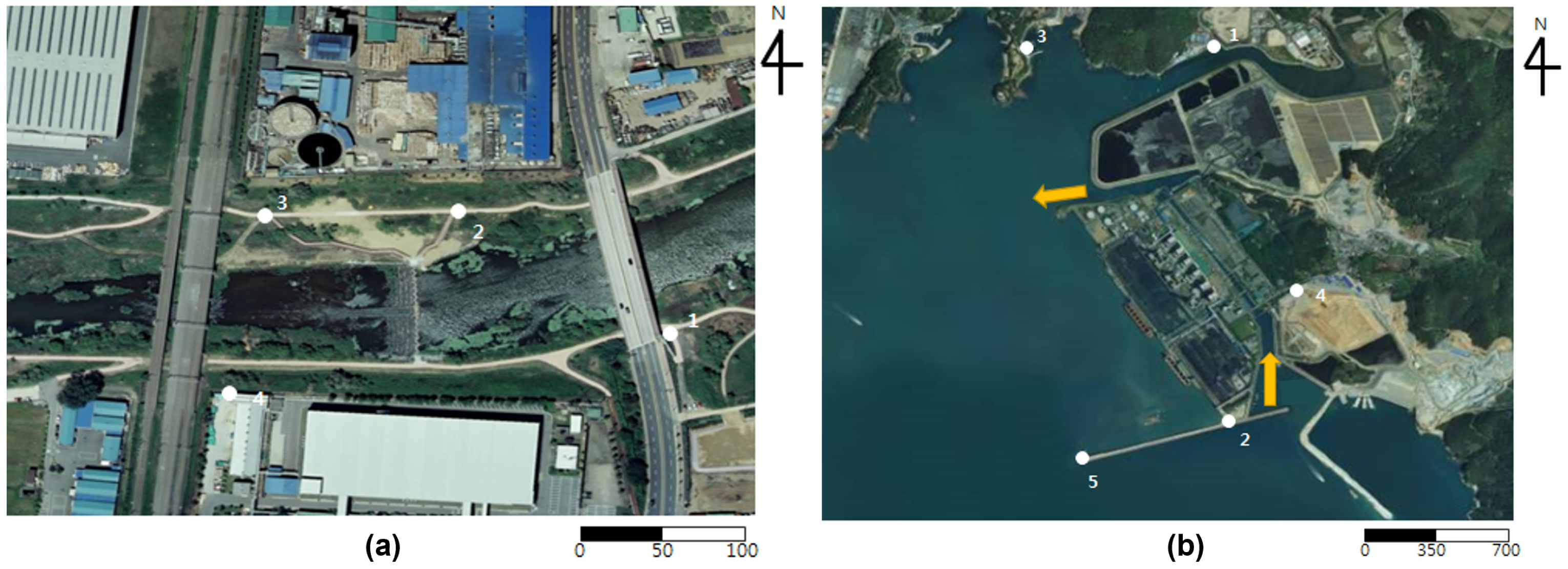
Field observations were designed to occur as simultaneously as possible with UAV flights. In Study Area A, a total of 10 points were selected centered around the weir, considering thermal diffusion patterns (see
Figure 1a). Considering that the thermal camera measures the skin temperature of the water surface, data were acquired at a depth of approximately 10 cm. At each point, data were collected for 30 s at 3 s intervals, and the average value was determined as the representative water temperature for that point.
In Study Area B, thermometers were installed at a total of 6 points, including the thermal effluent outfall, intake, and an ambient control point unaffected by thermal effluent (see
Figure 1b). To prevent equipment loss due to tidal currents and accurately measure surface water temperature, a mooring system was constructed using heavy anchors and chains to fix the equipment to the seabed and floats (buoys) to position the thermometer at a depth of 1 m. Location information was recorded at each observation point using a precision handheld GPS, which was later used as coordinates for geometric correction and temperature extraction of thermal images.
The high-precision ground truth dataset constructed in this way serves a decisive role in overcoming the limitations of low-cost UAV thermal sensors by being used not just for simple comparative verification but as training data for the linear regression-based temperature correction model, which is the core of this study [
17].
3.3. Experimental Design and Data Acquisition Protocol
The first step of the study is the establishment of a flight plan optimized for the environmental characteristics of the target area and data acquisition. Unlike general optical sensors, the thermal sensor (FLIR Vue Pro R) has a low resolution (640 × 512 pixels) and is sensitive to vignetting effects depending on the lens Field of View (FOV) and atmospheric attenuation. Therefore, flight altitude and overlap settings are key variables determining data quality. In this study, forward and side overlaps were set to 75% or higher to increase the success rate of image stitching. In the case of Study Area A (stream), low-altitude flight was performed to prevent matching failures due to irregular reflection on the water surface and homogeneous texture, securing a GSD of approximately 15 cm. Conversely, for Study Area B (coast), a fixed-wing aircraft was utilized for wide coverage, and a total of 41 images were acquired by designing an optimal path considering battery efficiency. The timing of data acquisition was selected to minimize noise from diurnal heating caused by solar radiation and sun glint, and to ensure the clearest thermal contrast between the thermal effluent and surrounding water temperature. Additionally, sufficient warm-up time was allowed before flight to ensure the internal microbolometer reached thermal equilibrium, preventing rapid temperature drift due to Non-Uniformity Correction (NUC) shutter operation.
In addition, FLIR-series uncooled thermal sensors used for aquatic monitoring are affected by several radiometric bias sources, including internal FPA temperature drift during flight, NUC shutter-induced temporal discontinuities, lens vignetting causing spatial non-uniformity, and water-surface-specific reflection effects such as sun glint and low thermal contrast. Because the relative influence of these factors can differ between narrow inland streams and open coastal waters, calibration methods validated in a single environment may not be directly transferable without additional site-specific verification.
3.4. Photogrammetric Processing and Mosaic Generation
The acquired individual thermal images must be combined into a single orthomosaic containing location information. For this purpose, this study utilized Pix4D Mapper software based on the Structure-from-Motion (SfM) algorithm. The image processing process undergoes the following detailed steps.
First, in the image input and initialization step, the initial position and attitude of the camera are estimated based on GPS coordinates and IMU data recorded in the metadata of the R-JPEG format. At this time, since thermal images are single-channel black-and-white data without color information, a preprocessing step to enhance local contrast is internally performed for keypoint extraction.
Second is the relative orientation and point cloud generation step. Tie points are generated through matching between extracted keypoints, and camera internal parameters (focal length, principal point, etc.) and external parameters (position, attitude) are optimized through Bundle Adjustment. In this process, since areas lacking texture like the water surface are prone to matching errors, geometric stability was secured by including fixed terrain features of the land in the shooting.
Third, in the absolute orientation step, Ground Control Points (GCPs) are input to correct the positional accuracy of the generated 3D model. Study Areas A and B contain inaccessible water bodies or security facilities (power plants), limiting direct measurement of GCPs with RTK-GPS in the field. To overcome this, high-precision orthophotos (GSD 51 cm) provided by the National Geographic Information Institute (NGII) were used as reference data. Distinctive features identifiable in the reference images, such as road intersections and embankment corners, were selected as GCPs, and the coordinates (X, Y) of these points were extracted and applied to the thermal data processing. Four GCPs were used in Study Area A and five in Study Area B to correct the scale and coordinate system of the model (
Figure 5). The finally generated mosaic image was geometrically corrected by applying the Transverse Mercator projection (Central Origin).
3.5. Radiometric Calibration Strategy
General UAV thermal cameras show significant bias from actual temperatures due to absorption by atmospheric water vapor, sensor self-heating, and uncertainty in surface emissivity. In particular, images captured at altitudes of hundreds of meters tend to measure lower than the surface temperature, and initial analysis in this study also observed a maximum deviation of over 9 °C. Therefore, to avoid the complexity of physical modeling and secure practical accuracy, an empirical linear regression model between the in situ water temperature
and the thermal sensor measurement value
was introduced. The calibration model is defined as follows:
where
is the calibrated surface water temperature (°C),
is the initial radiometric temperature extracted from the UAV thermal image (°C),
is the regression coefficient (slope, a term related to sensor sensitivity and atmospheric transmittance), and
is the constant term (intercept, a term related to sensor offset and atmospheric radiation).
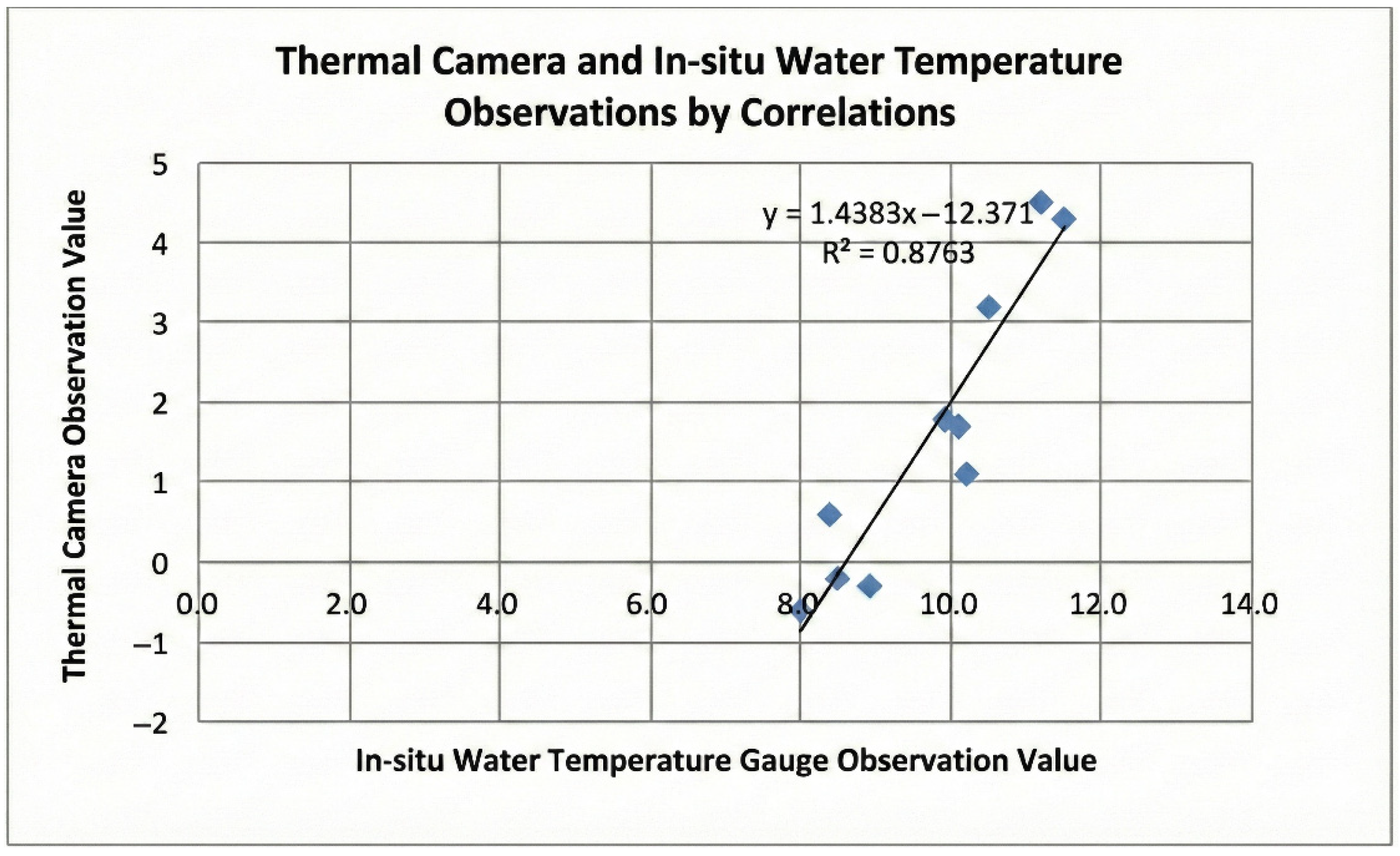
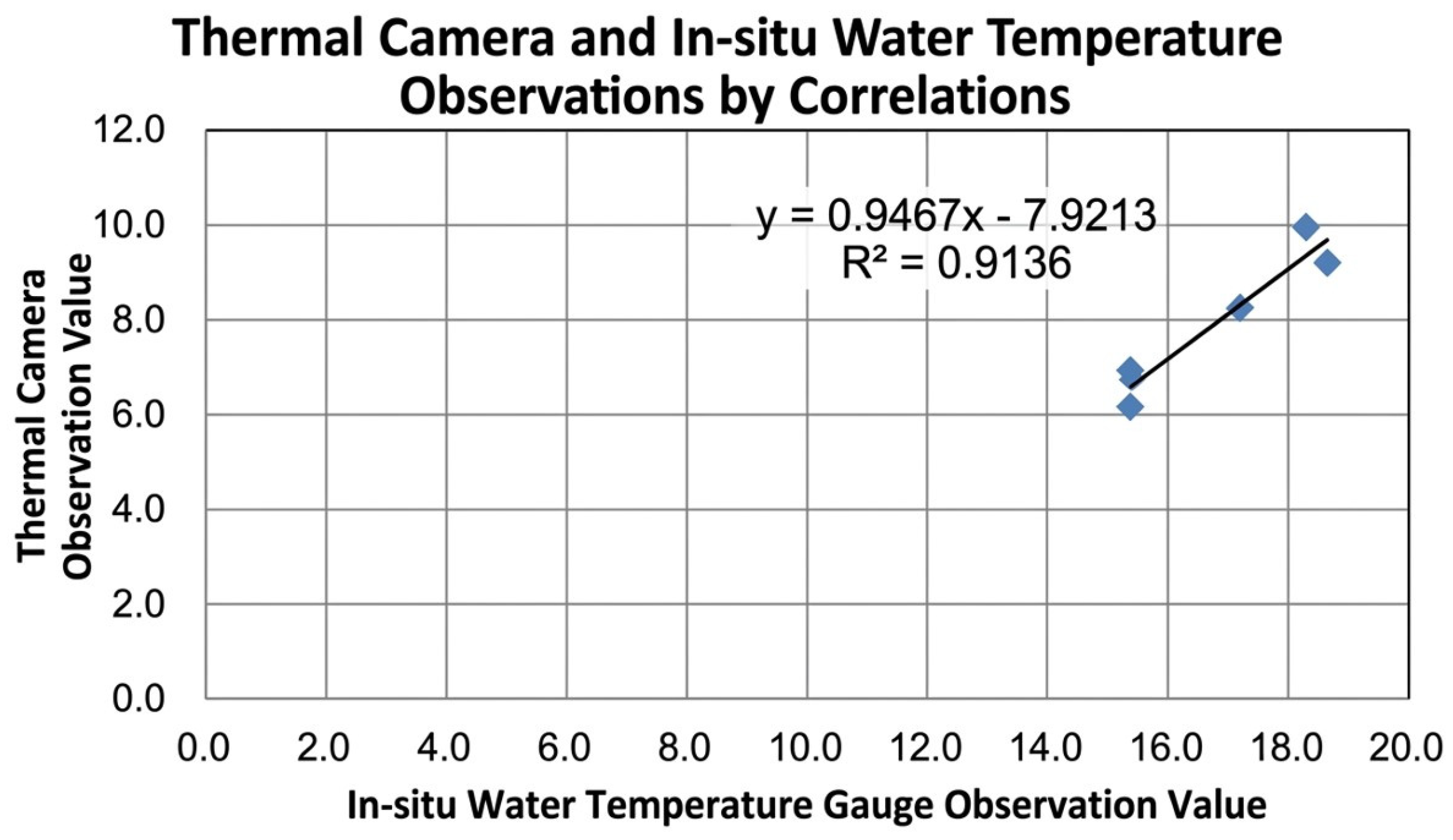
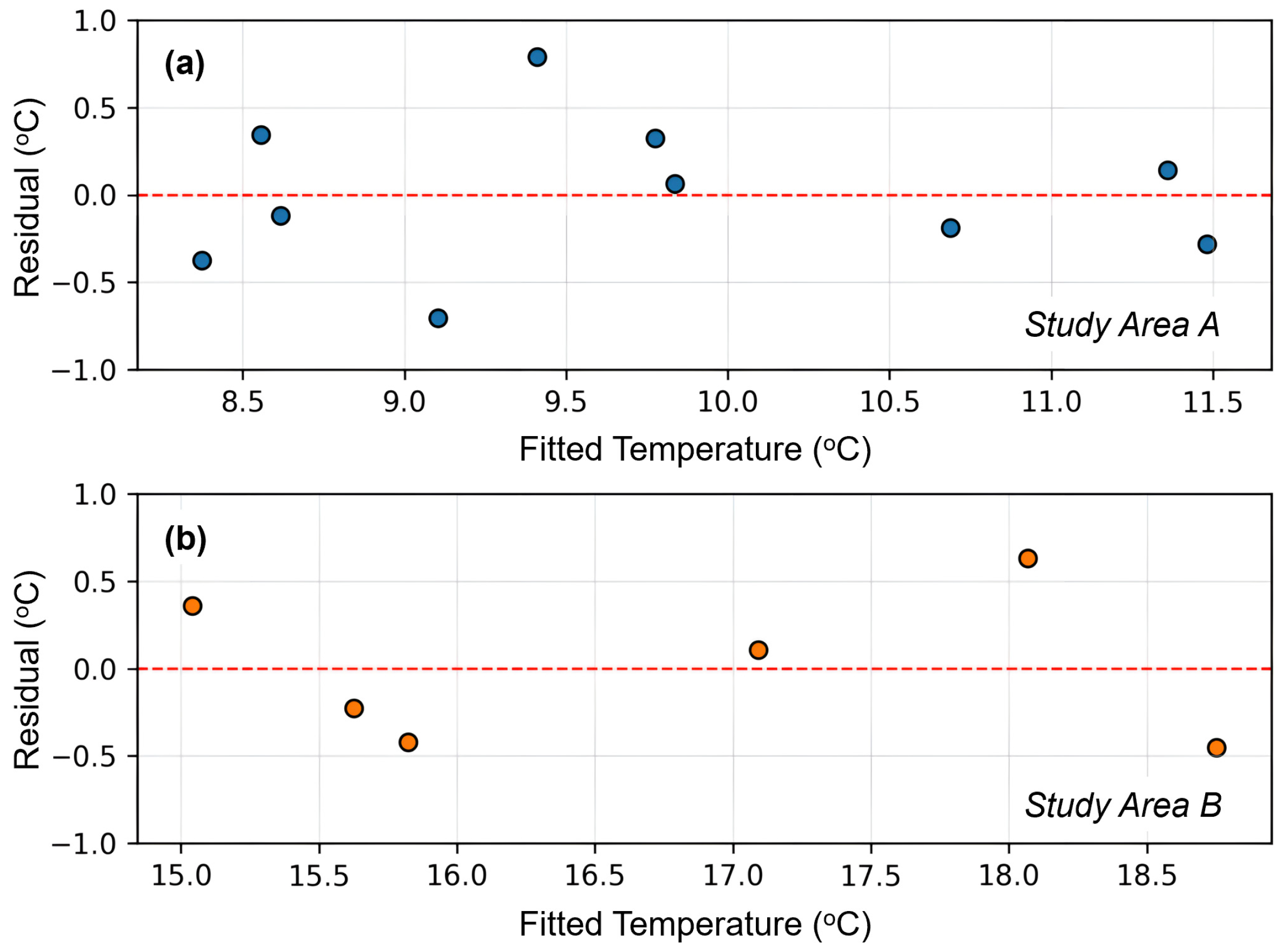
To estimate the parameters and of this model, regression analysis was performed using in situ water temperature data collected simultaneously with the UAV flight as the dependent variable , and the thermal image pixel value of the corresponding point as the independent variable . Ten data pairs in Study Area A and six data pairs in Study Area B were used for model training.
Some studies propose calibration techniques based on polynomials of second order or higher or neural networks [
17]. However, in cases where the temperature range is limited to 8–25 °C and the flight time is short so that atmospheric conditions remain relatively constant, as in this study, the linear model has the advantage of preventing overfitting and being easy to interpret physically. Additionally, while water surface emissivity is generally assumed to be about 0.98, it can vary slightly depending on turbidity, suspended solids, and wave roughness. The field data-based calibration technique proposed in this study implicitly reflects such environmental variability within the regression coefficients, enabling high accuracy without separate emissivity correction procedures.
The linear regression model adopted in this study was considered appropriate for three reasons. First, the observed water temperature range was relatively narrow (approximately 8–25 °C), allowing the sensor response to be reasonably approximated as locally linear within the calibration interval. Second, each UAV survey was completed within a short time window under approximately stable atmospheric conditions, such that the dominant radiometric bias could be represented as a gain-and-offset relationship associated with atmospheric transmittance and path radiance. Third, because the number of synchronous in situ calibration samples was limited, the use of higher-order polynomial or neural-network-based models would increase model complexity and the risk of overfitting without necessarily improving practical robustness. For these reasons, a simple linear calibration framework was considered the most suitable and interpretable approach for the present field conditions.
3.6. Performance Evaluation Metrics
To quantitatively verify the validity of the proposed calibration methodology, this study adopted RMSE (Root Mean Square Error) as the main evaluation metric. RMSE is an indicator that comprehensively represents the difference between the model’s predicted values and actual observed values, calculated as follows:
where
is the number of observation points used for validation. Additionally, the coefficient of determination
was calculated to analyze the correlation between the data before and after calibration and the measured values. This indicates how well the UAV thermal data explain the actual water temperature patterns; a value closer to 1 implies a strong linear relationship. This methodology has the advantage of high operational efficiency in that it can construct accurate area-wide water temperature maps with only a small number of thermometer observation points, without requiring complex atmospheric correction software (e.g., MODTRAN) or expensive in situ spectroradiometers.
To address the concern that the same in situ measurements are used for both model calibration and accuracy evaluation, a leave-one-out cross-validation (LOOCV) strategy was additionally implemented. In LOOCV, each observation point is iteratively held out as a test sample while the remaining n − 1 points are used to train the regression model. The held-out point is then predicted using the trained model, and this process is repeated for all n points to compute a cross-validated RMSE. This approach provides a more realistic estimate of model generalization performance, particularly when independent validation data cannot be collected due to logistical constraints in field-based UAV surveys. LOOCV = RMSE can be calculated as follows:
where
is the observed water temperature at the
-th in situ measurement point, and
is the predicted value at that point obtained from the regression model calibrated using all remaining
observations.
5. Discussion
This study elucidated minute water temperature variability in rivers and coasts through UAV-based TIR remote sensing and demonstrated the utility of a linear regression calibration model based on in situ data. This section interprets the physical and environmental mechanisms of the derived results, discusses the differentiation from existing satellite and fixed observation methodologies, and deeply considers the limitations inherent in this study and directions for future improvement.
5.1. Mechanism of Radiometric Bias and Calibration Stability
One of the most notable findings of this study is the behavior characteristics of the initial radiometric temperature shown by the low-cost uncooled microbolometer sensor. Despite the occurrence of a maximum bias error of over 9 °C before calibration, the linear correlation with in situ water temperature was maintained very solidly. This suggests that systematic offset due to atmospheric absorption and differences in water surface emissivity is the main cause of the error, rather than thermal noise or non-uniformity inside the sensor. As pointed out by O’Sullivan and Kurylyk, uncooled sensors are sensitive to external environmental temperature changes, which can degrade water temperature measurement accuracy. However, in cases where short-term (within 2 h) flights are performed as in this study, the internal sensor temperature is maintained relatively stably, which is interpreted as the reason why a high calibration efficiency, with an RMSE of less than 0.5 °C, could be achieved with only a simple linear model. This demonstrates that practical water temperature mapping is possible if an appropriate number of GCPs are secured, without complex atmospheric correction algorithms or expensive blackbody equipment.
5.2. Hydro-Thermal Dynamics and Comparison with Satellite Approaches
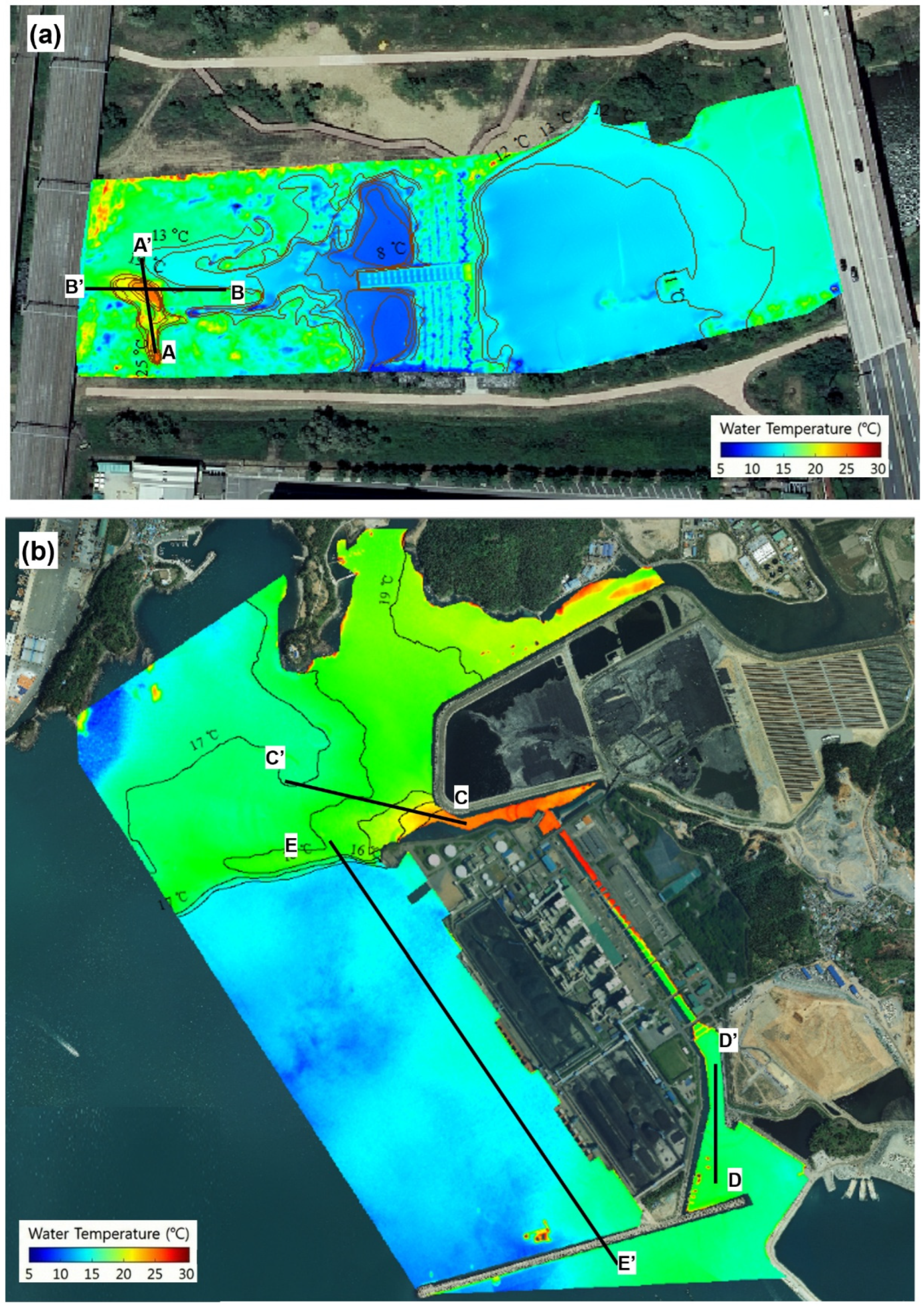
The difference in thermal effluent diffusion patterns observed in Study Areas A (stream) and B (coast) highlights the dominant influence of hydraulic characteristics and topographical confinement on heat transport. In the narrow stream environment of Study Area A, the thermal effluent was entrained into the main flow to form a narrow, band-shaped advective plume, and rapid temperature decreases caused by turbulent mixing around hydraulic structures such as weirs were clearly captured in the UAV thermal mosaics. In contrast, in the open coastal waters of Study Area B, buoyant spreading behavior—where the warmer effluent rises toward the surface and disperses laterally—was dominant, and the areal extent of the plume was observed to evolve asymmetrically in response to tidal currents and coastal circulation.
When compared conceptually to satellite-based monitoring studies such as Huang et al. [
2] and Kim et al. [
25], our UAV imagery makes a unique contribution by resolving fine-scale thermal fronts, mixing zones, and near-field dilution patterns that are inherently smoothed within satellite pixels of tens to thousands of meters. For example, with a ground sampling distance of approximately 0.15 m, the UAV data used in this study can resolve hydro-thermal structures at 10–50 m scales, whereas these features would be entirely sub-pixel for Landsat-8 TIRS (100 m nominal thermal resolution) and MODIS SST products (≈1 km resolution). Moreover, literature values indicate that typical RMSEs for satellite-derived water or sea surface temperature products are on the order of 0.5–1.5 °C for Landsat thermal algorithms and about 0.3–0.6 °C for MODIS SST under well-calibrated, cloud-free conditions, while our UAV-based calibration achieved RMSE values below 0.5 °C in both study areas, with comparable error levels under LOOCV. Thus, although satellite products are indispensable for synoptic and long-term monitoring at basin to regional scales, the UAV thermal approach demonstrated here provides substantially higher spatial detail and sufficient accuracy to quantify the initial dilution and fine-scale thermal gradients immediately downstream of discharge outlets, dramatically improving the spatial precision of aquatic ecosystem impact assessments in small, hydraulically complex environments.
5.3. Error Sources and Uncertainty Analysis
Despite the high potential of the proposed methodology, this study contains several intrinsic limitations and uncertainties. First, the thermal infrared sensor mounted on the UAV measures the skin temperature of the water surface, whereas the in situ observations represent bulk water temperature at approximately 10 cm to 1 m depth. This skin–bulk temperature discrepancy can vary depending on wind speed, evaporation, and vertical thermal stratification. In Study Area A, the wind speed during image acquisition was approximately 2 m/s, and Study Area B was surveyed under relatively calm sea conditions, suggesting that strong near-surface thermal decoupling was unlikely during the measurements. Therefore, although a small skin–bulk temperature difference may have existed, it was unlikely to be the dominant source of calibration uncertainty in the present dataset. Nevertheless, because this study relied on single-depth in situ observations and did not include evaporation-flux measurements or vertical temperature profiling, the magnitude of the skin–bulk gradient could not be quantified explicitly and remains a source of uncertainty [
26]. Second is the ‘mixed pixel’ problem where aquatic vegetation such as dense reeds partially covers the water surface in Study Area A. Since vegetation has a lower heat capacity than water and heats up more easily by solar radiation, noise occurred where pixels mixed with vegetation reflected the temperature of vegetation leaves, measuring higher or lower than the actual water temperature. This raises the need for introducing post-processing techniques to precisely mask non-water areas using hyperspectral sensors or RGB image-based Vegetation Indices, as in the study by Alphonse et al. [
22].
To better understand the error budget of the pre-calibration bias, we provide an estimated decomposition of error sources. Based on typical atmospheric transmittance values for the 7.5–13.5 µm band at the flight altitudes used (100–400 m above ground level) and the column water vapor content during measurements, atmospheric attenuation is estimated to account for approximately 60–75% of the total pre-calibration bias. Sensor drift associated with FPA temperature variations and NUC shutter events contributes an estimated 15–25% of the bias, consistent with characterization studies of FLIR uncooled sensors. Emissivity variation across different water surface conditions (calm vs. wind-roughened, clear vs. turbid) accounts for approximately 5–10% of the error, while mixed pixel effects from riparian vegetation contribute an additional 5–10% at affected locations only. These estimates align with findings reported in the UAV thermal remote sensing literature [
15,
18] and underscore the dominant role of atmospheric effects in driving the need for field-based calibration.
5.4. Applicability Conditions of the Linear Calibration Framework
The present linear calibration framework is expected to perform most reliably under relatively stable atmospheric conditions, short flight durations, and a limited water-temperature range, where temporal sensor drift and nonlinear radiometric effects remain moderate. In contrast, its performance may degrade under conditions such as high humidity, longer atmospheric paths, or rapidly changing weather, which can increase atmospheric attenuation and reduce calibration stability. Additional uncertainty may also arise in environments with strong vertical thermal stratification, highly variable turbidity, or extensive shoreline vegetation, where surface emissivity and mixed-pixel effects become more pronounced. These considerations indicate that, although the proposed workflow showed consistent performance across the two study sites, further validation under broader environmental and climatic conditions is still necessary.
5.5. Cost–Benefit Considerations
From a practical standpoint, it is important to consider the cost–benefit positioning of UAV-based thermal monitoring relative to satellite alternatives. The total hardware cost for our UAV system (consumer-grade drone and FLIR Vue Pro R sensor) was approximately $3000–$5000 USD, with per-mission operational costs of $200–$500 including personnel, batteries, and transport. In contrast, freely available satellite thermal data (Landsat-8/9 TIRS at 100 m, MODIS at 1000 m) offer no per-acquisition cost but lack the spatial resolution required for site-specific thermal plume monitoring in narrow waterways or complex coastal zones. Commercial high-resolution satellite tasking can cost $1000–$10,000 per scene without guaranteeing cloud-free conditions or specific timing. The unique advantage of the UAV approach lies not in lower absolute cost, but in the ability to obtain high-resolution data at the exact time and location needed—a capability essential for regulatory compliance monitoring, environmental impact assessments, and emergency response to pollution events. The UAV and satellite approaches are therefore best viewed as complementary rather than competing tools in an integrated thermal monitoring framework.
5.6. Limitations and Future Research Directions
Future research requires the following approaches to overcome the limitations identified in this study and expand the utility of UAV thermal imaging technology. First, moving beyond the limitations of single-point shooting, diurnal variations and seasonal variability of thermal effluent diffusion should be elucidated through time-series flights. As suggested by Ji et al. [
27] in urban thermal environment monitoring, diurnal flight cycle data can contribute to separating the interaction between solar radiation heat and artificial waste heat. Also, to supplement the limitation of grasping vertical water temperature structure, the introduction of a ‘Dipping Sensor’ integrated hybrid system where a drone lands on the water surface to directly measure temperature by depth can be considered [
28]. Finally, connectivity with numerical modeling must be strengthened beyond simple monitoring. High-resolution surface water temperature fields acquired by UAVs can be utilized as boundary conditions or validation data for 3D hydrodynamic models, playing a decisive role in improving model prediction accuracy. It should be noted that the field data in this study were acquired in 2017 using the FLIR Vue Pro R sensor, which remains one of the most widely deployed uncooled thermal cameras for UAV applications. While newer sensor generations offer improved NUC algorithms and higher pixel resolutions, the fundamental physics of uncooled microbolometer-based thermal sensing and atmospheric attenuation have not changed, making the calibration methodology and workflow fully transferable. Future work should additionally include: (1) multi-climate validation across tropical, arid, and temperate environments to establish the boundary conditions of the linear calibration approach; (2) ablation experiments to quantify the impact of flight altitude, calibration point density, and GCP configuration on mapping accuracy; (3) temporal stability testing of the calibration model across seasons and meteorological conditions; and (4) cross-sensor validation with different brands and models of uncooled thermal cameras to confirm the generalizability of the protocol.
6. Conclusions
This study established a practical protocol capable of precisely mapping SST in various water body environments by overcoming the spatiotemporal limitations of satellite remote sensing through the combination of low-cost UAVs and uncooled thermal infrared sensors. As a result of applying a linear regression calibration model based on in situ data to two study areas with different hydraulic conditions (inland stream and coastal sea), the bias error of over 9 °C shown by the initial thermal sensor was effectively removed.
After calibration, RMSE converged to less than 0.5 °C (0.42–0.43 °C) in both areas, proving that quantitative accuracy necessary for environmental monitoring can be achieved with only appropriate ground control points, without expensive atmospheric correction equipment or complex physical models. In particular, the methodology proposed in this study maximized field operation efficiency by correcting internal sensor drift and atmospheric attenuation effects by integrating them into empirical regression coefficients.
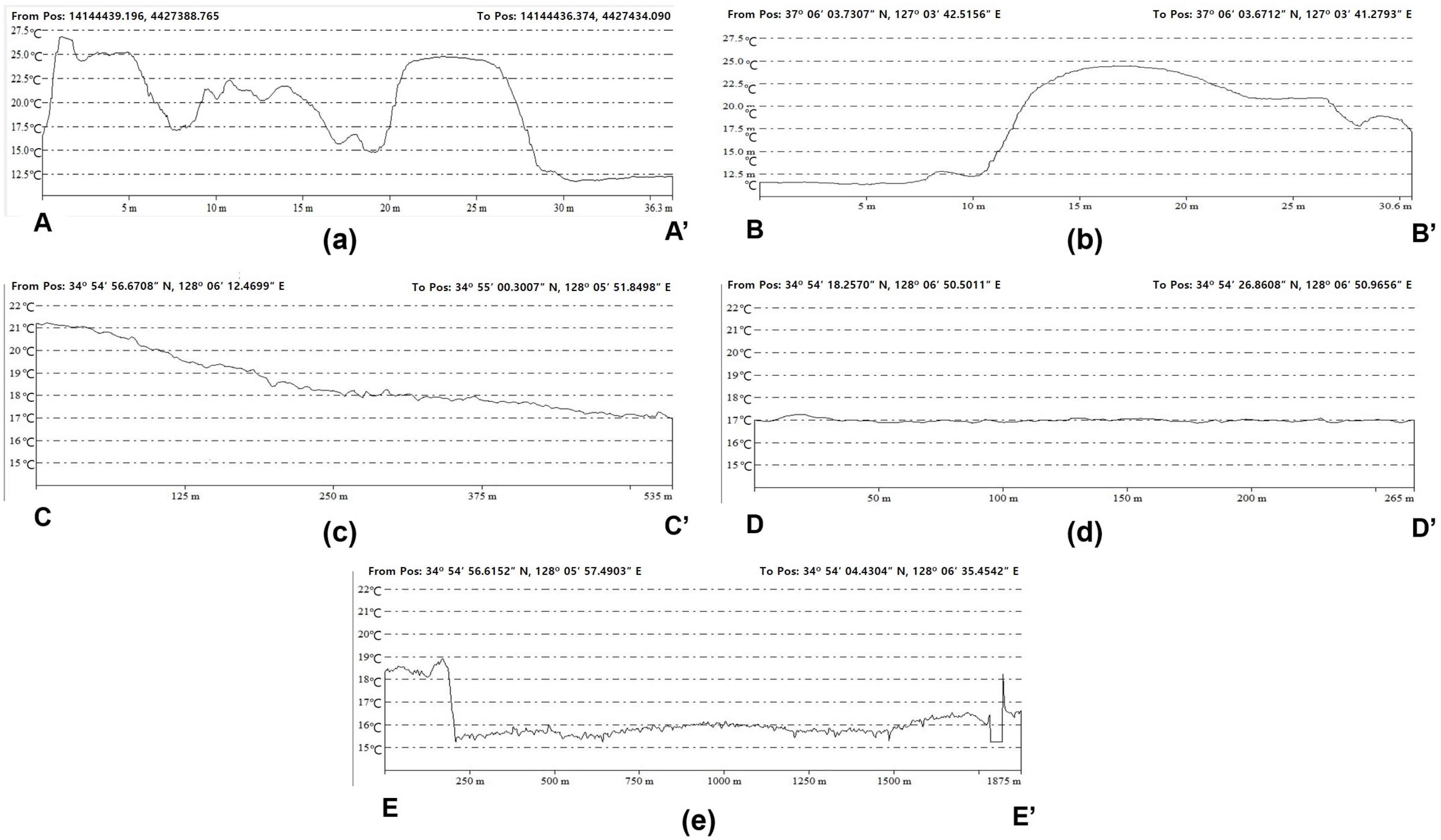
The constructed high-resolution water temperature maps clearly elucidated the fine structure of thermal effluent diffusion, which was impossible to identify with existing point-based observations or low-resolution satellite imagery. In the narrow stream environment, the exact location of the thermal effluent outlet and phenomena of turbulent mixing and rapid temperature drop caused by river structures (weirs) were visualized, confirming the formation of a rapid temperature gradient of over 13 °C immediately downstream of the outlet. Conversely, in the extensive coastal sea area, buoyant spreading patterns extending from the power plant outfall to the open sea and the thermal blocking effect by breakwaters were clearly captured. These results suggest that UAV thermal imaging technology can provide decisive spatial information for understanding the transport and diffusion behavior of pollutants and assessing the environmental impact of industrial facilities, beyond simply measuring water temperature.
In conclusion, this study confirmed that UAV-based TIR remote sensing is an economical and powerful tool for water quality management and aquatic ecosystem conservation. Although some physical limitations due to skin temperature measurement and interference by riparian vegetation exist, these can be improved through the fusion with multi-spectral sensors and the introduction of time-series monitoring techniques in the future. The results of this study are expected to be utilized as basic data supporting rapid and accurate decision-making in urgent monitoring situations such as the construction of smart water management systems or response to coastal pollution accidents.