Article

3D Velocity Time Series Inversion of Petermann Glacier Using Ascending and Descending Sentinel-1 Images


1
National Key Laboratory of Microwave Imaging, Aerospace Information Research Institute, Chinese Academy of Sciences, Beijing 100190, China
2
School of Electronic, Electrical, and Communication Engineering, University of Chinese Academy of Sciences, Beijing 100049, China
*
Author to whom correspondence should be addressed.
Remote Sens. 2026, 18(6), 869; https://doi.org/10.3390/rs18060869
Submission received: 25 January 2026 / Revised: 1 March 2026 / Accepted: 10 March 2026 / Published: 11 March 2026

Highlights

What are the main findings?
  • A prior-constrained Kalman filtering framework was developed to retrieve stable three-dimensional glacier velocity time series from ascending and descending SAR observations.
  • Year-round 3D velocities of the Petermann Glacier were derived and used to quantify their spatiotemporal variability and controlling factors.
What are the implications of the main findings?
  • An effective solution for accurate 3D glacier velocity inversion from asynchronous SAR observations is provided.
  • The 3D velocity time series reveals the spatiotemporal variation characteristics of the Petermann Glacier and enhances understanding of the dynamics of the Petermann Glacier.

Abstract

Three-dimensional (3D) glacier velocities capture the full dynamic behavior of ice masses. For marine-terminating glaciers, acquiring 3D velocity fields is particularly critical for quantifying ice discharge into the ocean, assessing the stability of floating ice tongues, and constraining ice–ocean interactions that govern submarine melting, calving processes, and freshwater fluxes to the ocean. To further investigate glacier dynamics and elucidate ice–ocean interaction mechanisms, this study analyzed the 3D velocity of the Petermann Glacier throughout 2021 using long-term Sentinel-1 synthetic aperture radar (SAR) observations. First, two-dimensional velocity time series were derived from ascending and descending SAR images, and the glacier’s 3D velocity components were reconstructed based on the geometric relationships between the two viewing geometries. The estimated 3D velocities were then used as prior constraints, and glacier motion was treated as a continuously evolving state variable within a Kalman filtering framework. Multi-track, asynchronous remote sensing observations were integrated into a unified system to obtain a stable and temporally continuous 3D velocity field. Finally, statistical analyses of the 3D velocity time series were conducted to characterize spatiotemporal variations, seasonal patterns, and topographic influences on glacier motion, thereby providing quantitative insights into the dynamic coupling between glacier and ocean.

1. Introduction

Marine-terminating outlet glaciers constitute a critical link between ice sheets and the ocean system, playing a central role in ice-sheet mass transport, sea-level rise, and the evolution of polar marine environments [1,2]. Through the discharge of ice and freshwater into the ocean, they directly influence thermohaline structure, ocean circulation, and sea-ice formation processes in fjords and adjacent waters. Their dynamic behavior is highly sensitive to ice–ocean interactions and is particularly susceptible to modulation by warm-water intrusions and enhanced basal melting [3]. Consequently, accurately characterizing the motion of marine-terminating outlet glaciers is of great scientific importance for quantitatively assessing ice-sheet mass fluxes to the ocean, elucidating the mechanisms governing ice-tongue stability, and improving ice–ocean coupling models.
Petermann Glacier is located in the high-latitude polar region of northwestern Greenland. As one of the northernmost and largest marine-terminating glaciers in the Northern Hemisphere, it plays a key role in studies of regional ice-sheet drainage, ice–ocean interactions, and global sea-level change [4]. The glacier drains approximately 4% of the Greenland Ice Sheet [5] and serves as a major outlet in its northern sector. Through its wide and relatively stable floating ice tongue, Petermann Glacier continuously discharges large volumes of ice into the Arctic Ocean via Petermann Fjord [6], exerting a significant influence on both regional and global sea-level variability.
Due to limitations in both technology and methodology, early observations of Petermann Glacier were primarily used for mapping and descriptive studies, focusing mainly on its location, scale, and geometric characteristics [7]. With the advent of aerial photography and early satellite imagery, attention gradually shifted to the thickness of the ice tongue and variations in its terminus position. The collapse of the ice tongue directly leads to glacier mass loss [8]. In particular, two major calving events occurred in 2010 and 2012, resulting in a substantial retreat of the glacier front [9].
With the continuous development of remote sensing technology, the availability of high-precision, long-term observations has ushered Petermann Glacier research into a new stage, in which the emphasis has shifted toward monitoring and analyzing glacier dynamics and ice–ocean interactions. Glacier velocity, as a direct indicator of ice dynamics, has become an indispensable parameter in such studies. Compared with changes in ice thickness or area, glacier velocity is more sensitive to external forcing and responds more rapidly. For example, the 2012 collapse event led directly to a wintertime acceleration of Petermann Glacier [10]. In addition, subglacial hydrology, temperature variations, and basal and surface topography can all induce significant changes in the glacier velocity [11,12]. The glacier velocity also provides critical constraints for ice-dynamics modeling and numerical simulations. Hill et al. [13] used surface velocity fields as initial conditions and as constraints for inverting basal friction parameters, demonstrating the key role of ice-tongue integrity in controlling glacier dynamic stability. Furthermore, continuous monitoring of Petermann Glacier velocity can reveal the sensitivity of the ice body to atmospheric and oceanic forcing, including flow acceleration, changes in stress transmission, and long-term trends in ice-sheet drainage flux [14]. Numerous studies have confirmed the importance of velocity observations for glacier dynamic analysis, ice-sheet stability assessment, and climate-change impact studies [15].
However, most existing work is based on two-dimensional velocity measurements. In reality, glacier motion is inherently a three-dimensional dynamic process. Driven by gravity and constrained by boundary conditions, ice masses exhibit significant horizontal flow accompanied by vertical deformation. Although the vertical velocity is generally small in magnitude, it plays a crucial role in distinguishing between “mass loss” and “flow redistribution” processes [16]. Moreover, 3D velocity fields enable more detailed diagnosis of glacier responses to climate forcing, such as enhanced vertical subsidence associated with surface melting [17,18]. Therefore, monitoring the 3D velocity of Petermann Glacier is essential for a more comprehensive understanding of its internal deformation and dynamic mechanisms.
Existing approaches for retrieving 3D glacier velocity mainly rely on joint inversion using multi-source remote sensing data combined with physical constraints [19,20,21]. The basic idea is to derive multiple two-dimensional velocity fields from different viewing geometries and then reconstruct the 3D velocity field through geometric combination. However, observations from different satellite orbits are often temporally asynchronous, and estimating 3D velocity from a single epoch is intrinsically an ill-posed problem.
Hu et al. [22] first proposed a Kalman-filter-based method for 3D displacement estimation using multi-sensor, multi-orbit, and multi-temporal observations. A similar framework can be applied to glacier velocity retrieval. Kalman filtering provides a rigorous solution by explicitly incorporating physical continuity constraints and uncertainty propagation through state-space modeling, thereby transforming the underdetermined instantaneous inversion problem into a solvable time-series estimation problem. Nevertheless, insufficient 3D geometric constraints in the initial state can lead to significant bias during the early stages of filtering and to uncontrolled drift in the vertical velocity component. Therefore, this study proposes a 3D glacier velocity inversion method based on prior constraints and Kalman filtering. Our main contribution lies in introducing a prior-constraint strategy into the Kalman filtering framework, thereby producing a 3D glacier velocity time series with reduced deviations and improved stability compared with existing methods.
In this study, time-series Sentinel-1 ascending and descending images are used to investigate the 3D velocity of Petermann Glacier. The objectives are to analyze the spatiotemporal characteristics of glacier motion and to explore their potential links to environmental forcing and internal dynamic mechanisms. The remainder of this paper is organized as follows: Section 2 describes the study area and datasets; Section 3 presents the methodology; Section 4 reports the 3D glacier velocity results; Section 5 discusses the implications of the findings; and Section 6 summarizes the main conclusions.

2. Study Area and Data

2.1. Study Area

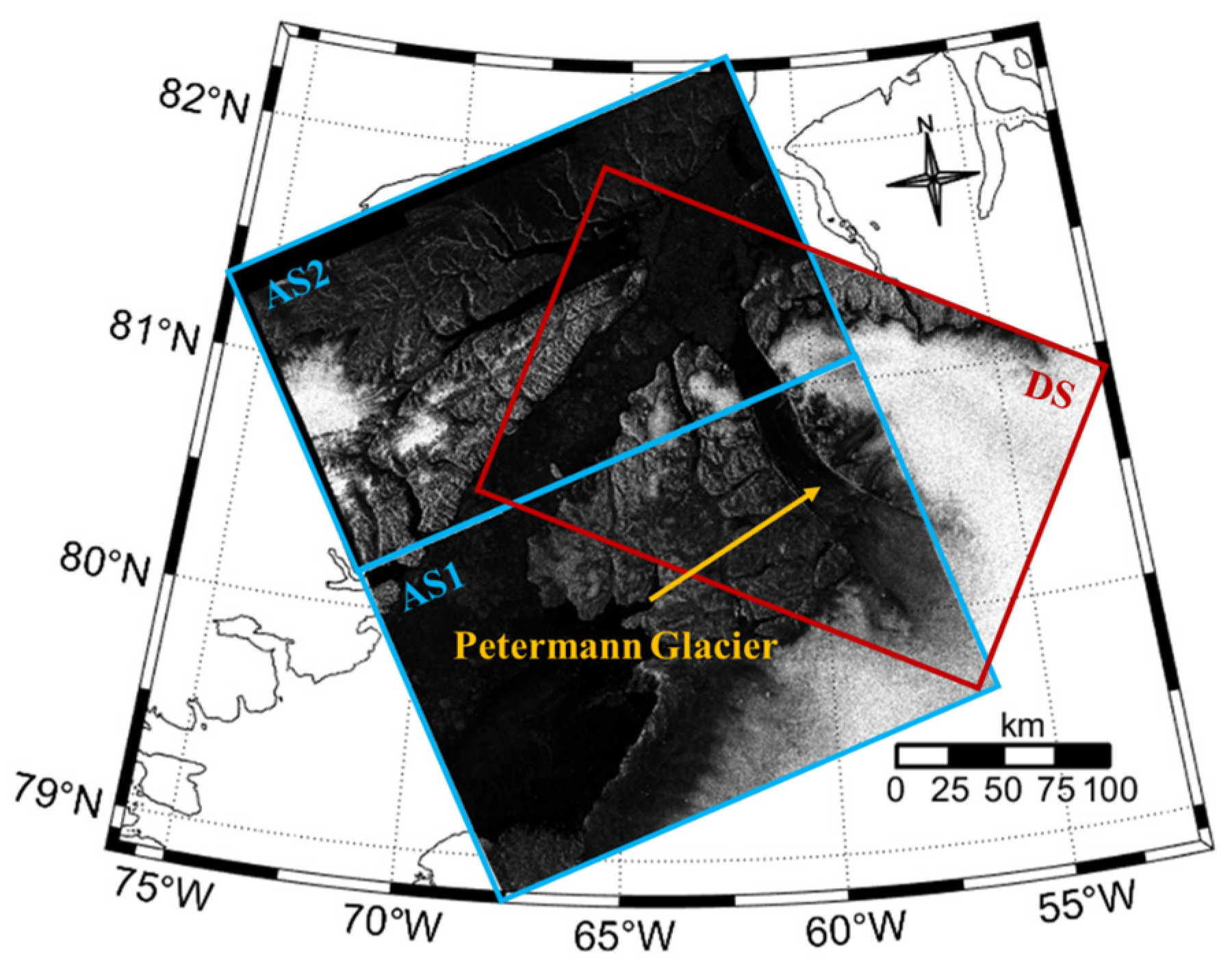
Petermann Glacier is located in northwestern Greenland (approximately 80.5°N, 60.0°W), as shown in Figure 1. It hosts the longest floating ice tongue in the Arctic, with a historical length exceeding 80 km [5]. The glacier drains ice from the northwestern sector of the Greenland Ice Sheet and ultimately discharges into the Nares Strait [6]. As a key dynamic unit linking the inland ice sheet with the marine environment, the ice tongue regulates upstream ice transport and dynamic balance through its buttressing effect [23]. Meanwhile, its morphology and stability are highly sensitive to oceanic heat transport within the fjord, directly influencing basal melting, calving processes, and the overall stability of the floating ice shelf [5,24]. Glacier velocity and ice thickness are strongly affected by climate change, tidal forcing, and basal topography. As one of the major outlet glaciers of the Greenland Ice Sheet, the Petermann Glacier therefore provides an important natural laboratory for investigating glacier dynamics and plays a critical role in assessing ice-sheet mass loss and its contribution to global sea-level rise.

2.2. Data

Sentinel-1 is a C-band synthetic aperture radar (SAR) satellite mission operating in a polar, sun-synchronous orbit. As part of the European Space Agency (ESA) Copernicus program, it is designed to provide global, all-weather, day-and-night radar observations. Sentinel-1A, launched in 2014, enabled continuous SAR data acquisition, while Sentinel-1B, launched in 2016, formed a dual-satellite constellation with Sentinel-1A, reducing the revisit interval from 12 days to 6 days. The SAR data used in this study consist of interferometric wide-swath (IW) mode images obtained from the Copernicus Data Space Ecosystem (https://dataspace.copernicus.eu/). All SAR data used in this study are Ground Range Detected (GRD) images acquired in HH polarization. The image swath width is approximately 250 km, with a spatial resolution of 10 m. Sentinel-1 GRD data were used instead of SLC products because intensity-based offset tracking relies primarily on amplitude texture rather than interferometric phase. The multi-look characteristics of GRD imagery reduce speckle noise and improve matching robustness over rapidly deforming glacier surfaces. Considering the GRD pixel spacing, the theoretical sub-pixel matching precision is approximately 0.05–0.2 pixels, corresponding to displacement uncertainties on the order of 0.5–2.0 m. The accuracy is typically lower in the azimuth direction and in slow-flow regions where displacement approaches the detection limit.
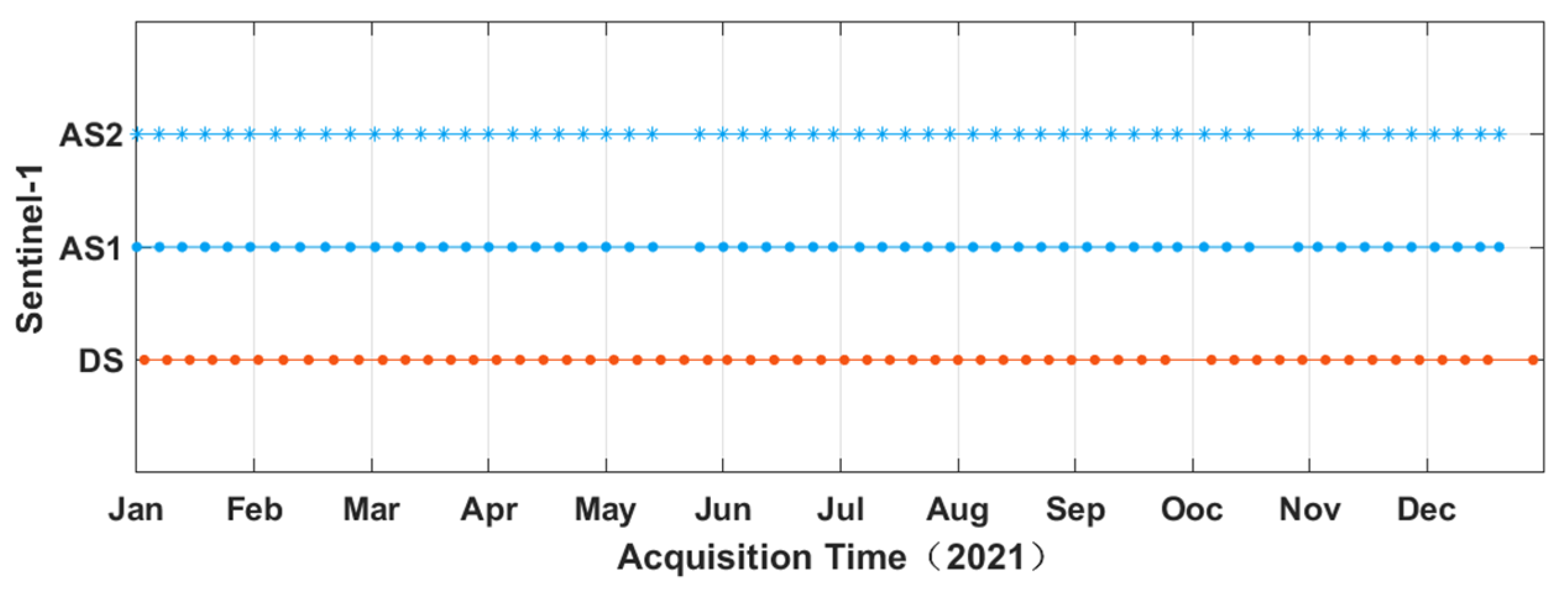
A total of 177 SAR images were employed, including 118 ascending-orbit scenes and 59 descending-orbit scenes. The ascending images (incidence angle range of approximately 29.9–45.6°, azimuth angle approximately 318.4°) cover the period from 1 January 2021 to 21 December 2021, with a typical revisit interval of 6 days for the same orbit. The descending images (incidence angle range of approximately 30.3–45.5°, azimuth angle approximately 224.8°) cover the period from 3 January 2021 to 29 December 2021, with the same typical revisit interval of 6 days. The detailed acquisition dates of the images are shown in Figure 2. The spatial coverage of the SAR dataset is illustrated in Figure 1, where the red and blue boxes denote the footprints of the descending and ascending images, respectively. The orbit information of the SAR images is shown in Appendix A.
In addition, this study employed the European Space Agency (ESA) Climate Change Initiative (CCI) ice velocity product and the Making Earth System Data Records for Use in Research Environments (MEaSUREs) ice velocity product for comparison and validation. The ESA CCI Version 3.0 product is derived from optical satellite imagery using an intensity-tracking method and covers the period from 17 to 28 June 2021, providing ice surface velocity estimates at a spatial resolution of approximately 500 m. The CCI data were temporally aligned with SAR acquisitions using a nearest-date matching approach to minimize temporal mismatches. The MEaSUREs dataset corresponds to the Greenland Ice Sheet monthly ice velocity mosaic (Version 5), generated through joint inversion of SAR data from TerraSAR-X/TanDEM-X and Sentinel-1A/-1B together with Landsat 8 and Landsat 9 optical imagery, with a spatial resolution of about 200 m. An altimeter-calibrated digital elevation model, ACE30 (Version 2), with a spatial resolution of ~30 m, was also used for subsequent analysis and validation. The DEM was obtained via the DEM Manager in SNAP, which automatically downloads and installs ACE30 as auxiliary topographic data.
Atmospheric and oceanic conditions were characterized using ERA5 reanalysis data and a multi-observation global ocean three-dimensional temperature dataset. ERA5, produced using the Integrated Forecasting System (IFS, Cy41r2), provides hourly global atmospheric data since 1979 at a spatial resolution of approximately 0.1° × 0.1°. The 2 m air temperature product was used in this study. The ocean dataset, provided by the Copernicus Marine Service, has a spatial resolution of about 0.125° × 0.125°, from which seawater temperature fields were extracted for analysis.

3. Methods

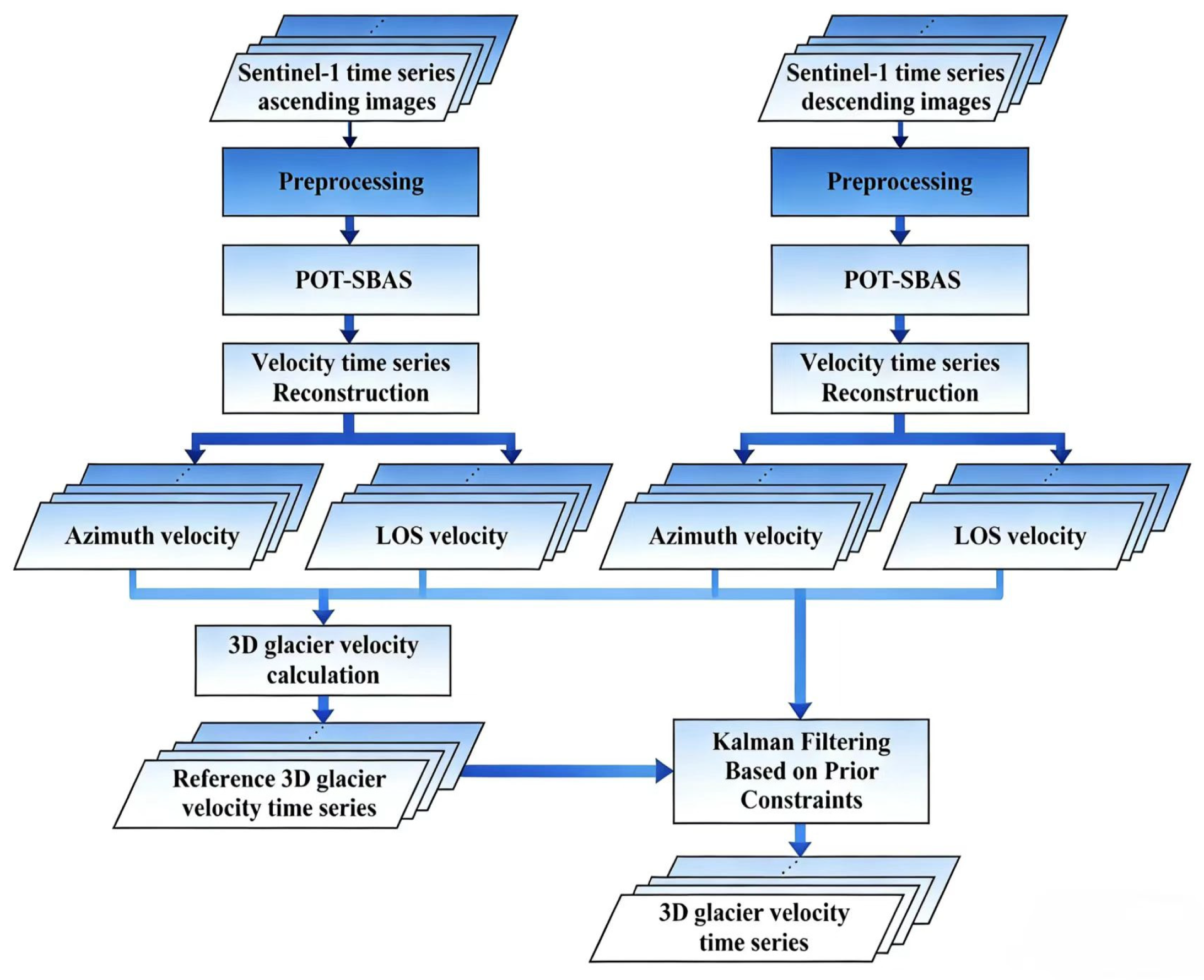
This section introduces a 3D glacier velocity inversion framework based on prior-constrained Kalman filtering, as illustrated in Figure 3. First, line-of-sight (LOS) and azimuth velocities from both ascending and descending images are derived using the pixel offset tracking -small baseline subset (POT-SBAS) method applied to the time series SAR images. The glacier displacement sequences are then reconstructed to obtain continuous velocity time series. Meanwhile, the geometric relationships between the satellite viewing directions and the ground surface are exploited to derive an initial estimate of the 3D glacier velocity. This preliminary 3D velocity is subsequently incorporated as prior information in the state prediction step, and Kalman filtering is applied to obtain a temporally continuous and physically consistent 3D glacier velocity time series. The detailed methodology is described below.

3.1. Pixel Offset Tracking–Small Baseline Subset

Pixel Offset Tracking-Small Baseline Subset (POT-SBAS) is a deformation and velocity inversion technique that integrates amplitude-based pixel offset tracking (POT) with small baseline subset (SBAS) time-series analysis [25]. It is particularly suitable for glaciers and ice shelves where interferometric coherence is low.
Assume that n + 1 SAR images are acquired at times t 0 , t 1 , t n . Prior to applying the POT-SBAS method, all SAR images are co-registered to ensure geometric consistency. To improve the co-registration of SAR images, a DEM-assisted method was applied using the ACE30. The DEM provides terrain elevation information, allowing the reference and secondary images to be projected onto the topographic surface before cross-correlation. This approach reduces geometric distortions caused by elevation differences and enhances sub-pixel registration accuracy, particularly in areas of complex terrain.
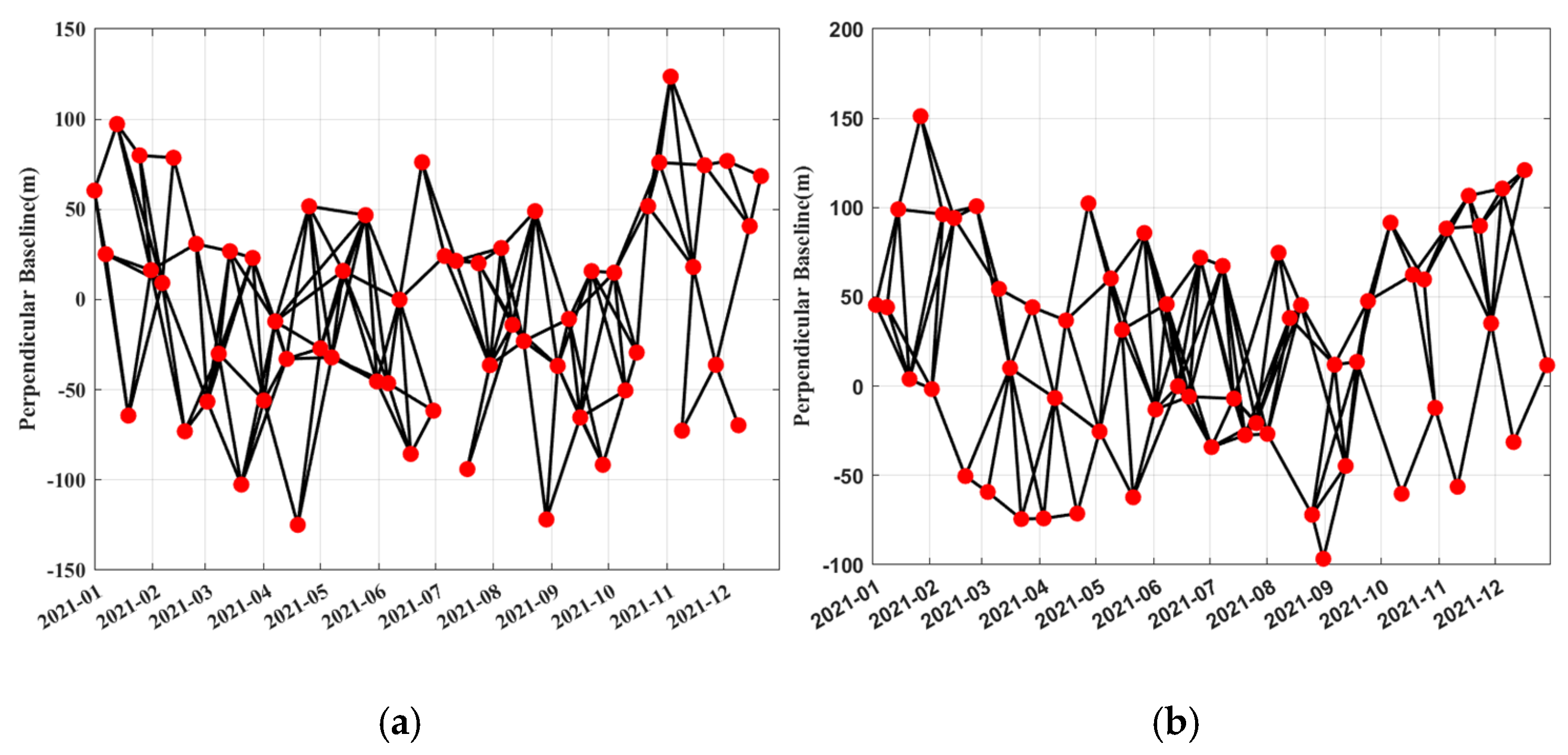
A small-baseline image-pair network is then constructed using temporal and spatial baseline thresholds to reduce the effects of orbital errors and geometric decorrelation. Offset tracking is less sensitive to perpendicular baseline than interferometric processing; therefore, the baseline constraint was applied mainly to avoid geometric mismatch rather than to preserve phase coherence. In this study, the temporal baseline threshold is set to 24 days and the perpendicular spatial baseline threshold to 100 m to avoid geometric distortions while preserving a sufficient number of image pairs for offset tracking. The SBAS net of the ascending and descending images is shown in Figure 4. Suppose that the resulting network contains m image pairs, then:
1 n + 1 < m < n ( n + 1 2 ) .
For each image pair, the POT technique is applied to estimate pixel offsets in the LOS and azimuth directions. POT is a widely used method for retrieving surface displacement from remote sensing images by exploiting image similarity through cross-correlation matching. The most commonly used similarity metric is the normalized cross-correlation (NCC) function [26], expressed as:
ρ = 1 M N i = 1 M j = 1 N T i , j μ 1 S i , j μ 2 1 M N i = 1 M j = 1 N T i , j μ 1 2 1 M N i = 1 M j = 1 N S i , j μ 2 2 ,
where T ( i , j ) and S ( i , j ) denote the pixel values at row i and column j in the template window and the corresponding search window, respectively. μ 1 and μ 2 represent the mean pixel values of the template window ( M × N ) and the search window, which should be larger than the template window to ensure that the true displacement is fully captured during the matching process. In this study, M = N = 128 , which provides sufficient spatial features for stable cross-correlation while maintaining computational efficiency, and the step size is 10. By sliding the template window over the search window, a cross-correlation matrix is obtained. Sub-pixel offsets are then estimated by bicubic interpolation and by locating the peak of the normalized cross-correlation coefficient. Matches with low correlation and abnormal offset values are subsequently removed using normalized cross-correlation thresholding. A threshold that is set too high may lead to the removal of a large proportion of useful data, while a threshold that is too low may introduce spurious errors. Therefore, a threshold value of 0.1 was selected in this study as a compromise between data completeness and reliability. Finally, glacier displacement is computed from the retained pixel offsets.
The retained displacement observations from all image pairs are incorporated into the SBAS framework to construct the displacement time-series observation equation:
B d = d o b s ,
where d is the unknown displacement time series to be solved:
d = d 1 , d 2 , d n T .
with d i represents the cumulative displacement at acquisition time t i . d o b s represents the displacement observations derived from m image pairs:
d o b s = d 1 o b s , d 2 o b s , , d m o b s T .
where d k o b s denotes the observed displacement for the k -th image pair.
The coefficient matrix B encodes the relation between the unknown cumulative displacements and each observed pair. For example, if the k -th observation corresponds to the image pair ( t i , t j ) , the corresponding row of B is:
B k = [ 0 , , 1 , 0 , 1 , 0 , 0 ] .
with −1 at the column corresponding to d i and +1 at the column corresponding to d j , and zeros elsewhere. Then, the observation equation for this pair can be written as
d k o b s = B k d .
By stacking all image-pair observations and corresponding rows of B , the full observation system (Equation (3)) is obtained. The observation equations are solved using the least-squares method to obtain the glacier displacement time series in both the LOS and azimuth directions.
It is worth noting that, in this study, the results derived from 6-day image pairs were discarded in parts of the glacier accumulation zones. The empirical uncertainty of the offset tracking, estimated from stable, ice-free terrain, is approximately 0.1 pixel (~1 m). In some slow-moving areas of the accumulation zone, expected displacements over a 6-day interval are comparable to or smaller than this uncertainty. In addition, correlation peaks are often degraded by template noise associated with rapid snow surface changes, making reliable sub-pixel offset determination difficult. Consequently, velocity estimates close to zero frequently occur in these regions. To avoid introducing unreliable measurements into the velocity time series, these 6-day pair results were excluded from the calculations in the affected accumulation areas.

3.2. Velocity Time Series Reconstruction

Since the positioning over time (POT) technique relies on the similarity between SAR images, changes in surface conditions—such as fresh snowfall and glacier melting—can modify image features and lead to offset-matching failures and data rejection. As a result, the derived glacier displacement time series may contain gaps. To address this issue, a displacement time series reconstruction method based on empirical orthogonal function (EOF) analysis is adopted [12,27].
First, interpolation is applied to initialize the missing values. A spatiotemporal displacement matrix is then constructed and analyzed using empirical orthogonal function (EOF) decomposition. Two key parameters are identified: the number of modes k 1 with major contributions and the number of modes k 2 that minimize the reconstruction error. The former is determined based on a contribution rate threshold, which is set to 75% in this study. The latter is obtained by randomly selecting a subset of the initially derived glacier displacement and their corresponding reconstructed displacement, and minimizing the error between them. Glacier displacements are subsequently estimated by jointly considering these two factors.
d ^ = a d k 1 + b d k 2 .
where d ^ represents the updated velocity estimate. d k 1 denotes the glacier velocity reconstructed using k 1 dominant modes, while d k 2 represents the glacier velocity reconstructed using k 2 modes. Parameters a and b represent the confidence levels associated with the two reconstructed velocities, respectively, and the updated estimates are then used to replace the missing values.
Due to the uncertainty in the relationship between signal and noise in the actual glacier velocity field, the values of a and b directly affect the amount of information retained in the reconstructed data, and consequently influence the final reconstruction error. Therefore, these parameters are not fixed during the iterative process but are adaptively adjusted to minimize the reconstruction error. The iteration is terminated when the difference between the initial glacier displacement and the reconstructed displacement reaches a minimum. This strategy not only reduces the reconstruction error as much as possible but also prevents over-smoothing by maintaining consistency with the original observations. After obtaining the complete glacier displacement time series, the corresponding velocity time series is derived by dividing the displacement by the respective temporal intervals.

3.3. 3D Velocity Calculation

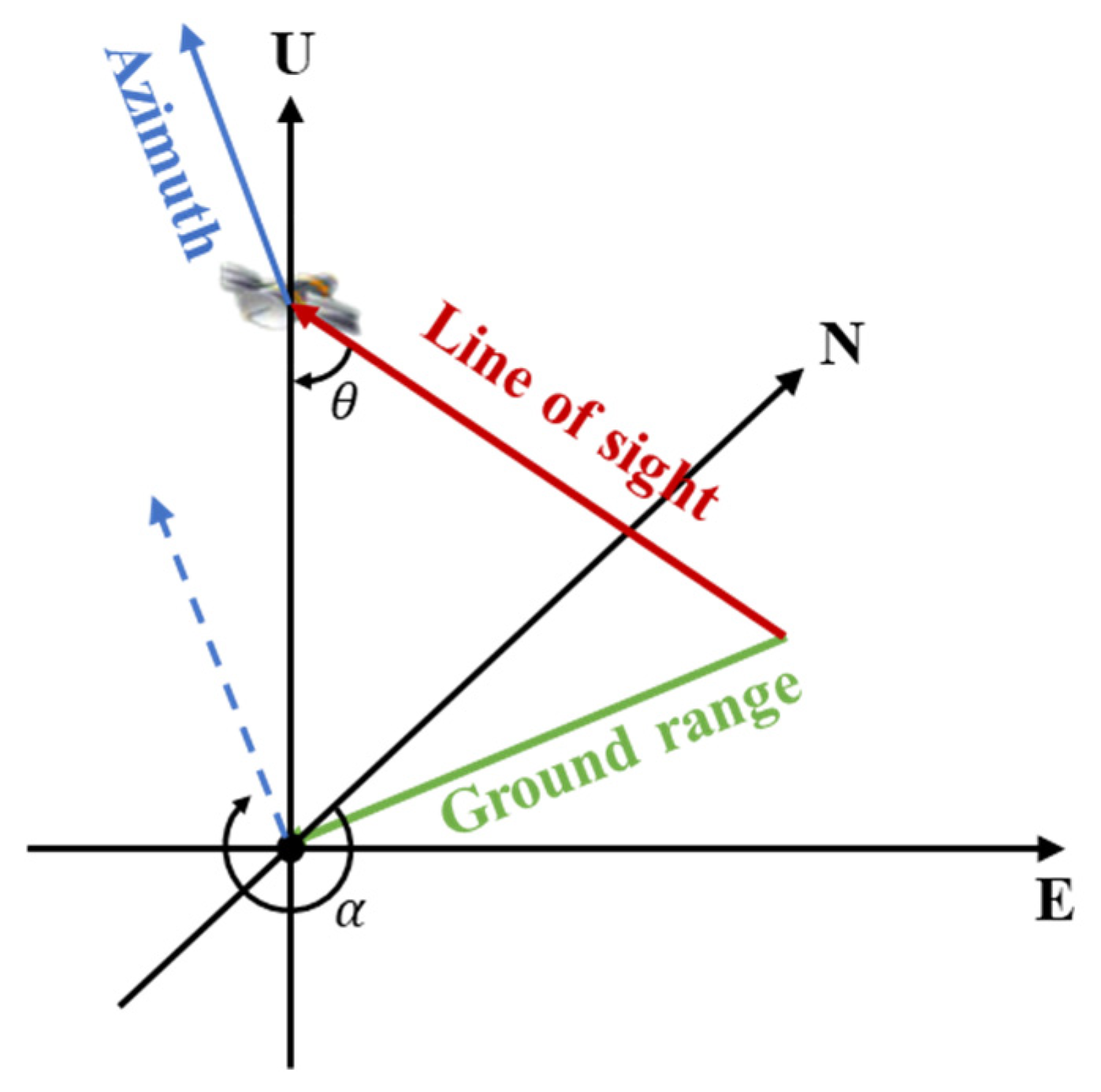
After obtaining the glacier velocities in the azimuth and line-of-sight (LOS) directions (from ground to satellite) of the ascending and descending orbits, respectively, the 3D glacier velocity can be solved based on the geometric relationship between the satellite and the ground features [28]. In this study, as shown in Figure 5, the incident angle θ is defined as the angle between the radar LOS direction and the local vertical direction. The azimuth angle α is defined as the direction of the satellite track measured clockwise from geographic north. Based on the geometric relationship of the satellite during flight:
B c V ^ = L ,
where B c is the coefficient matrix:
B c = cos θ A sin θ A · cos α A sin θ A · sin α A 0 sin α A cos α A cos θ D sin θ D · cos α D sin θ D · sin α D 0 sin α D cos α A .
V ^  is the 3D velocity vector to be solved:
V ^ = v ^ U v ^ E v ^ N T ,
where v ^ U , v ^ E , and v ^ N represent the vertical, eastward, and northward velocities, respectively. θ A , θ D , α A , and α D are the ascending orbit incident angle, descending orbit incident angle, ascending orbit azimuth angle, and descending orbit azimuth angle, respectively.
L = v l o s A v az A v l o s D v az D T ,
where v l o s A , v az A , v l o s D and v az D represent the glacier velocity in the LOS direction of ascending orbit, the glacier velocity in the azimuth direction of ascending orbit, the glacier velocity in the LOS direction of descending orbit, and the glacier velocity in the azimuth direction of descending orbit, respectively.

3.4. Kalman Filtering Based on Prior Constraints

First, Kalman filtering state space modeling is performed. Its state vector is:
x k = [ v E ( k ) v N ( k ) v U ( k ) ] T .
Generally, the glacier velocity does not change drastically over short timescales, so a random walk model is used:
x k = F k x k 1 + w k .
And F k = I , w k N ( 0 , Q ) , where w k is a random vector, following a multivariate Gaussian normal distribution, Q is the process noise covariance, used to describe the uncertainty of the actual velocity change, and:
Q = σ E 2 0 0 0 σ N 2 0 0 0 σ U 2 ,
where σ E , σ N and σ U represent the uncertainties of the eastward, northward, and vertical components, respectively. It should be noted that the uncertainties defined here do not represent measurement errors of the observations, but rather describe the expected magnitude of natural variations in glacier velocity between adjacent observation epochs. Owing to differences in the physical mechanisms governing glacier motion in different directions, short-term variations in the three velocity components are not identical and can be reasonably assumed to be mutually independent. Numerous observational studies have demonstrated that glacier velocities exhibit pronounced seasonal variability with clear directional dependence. Flow-parallel velocities typically increase by approximately 10–60% during the melt season compared with winter conditions, corresponding to characteristic variations on the order of 10–20 m/yr. In contrast, transverse velocity variations are considerably smaller, generally on the order of 3–8 m/yr. The vertical component, primarily controlled by ice-thickness adjustment and mass continuity, varies more smoothly over short time scales [29,30,31]. Based on these considerations, σ E , σ N and σ U were set to 0.02 m/d, 0.05 m/d, and 0.005 m/d, respectively. Then, an observation model is constructed. When constructing the observation model, the 3D velocity calculated using geometric relationships is introduced as a prior state into the observation equation:
z k = H k x k + ε k ,
where z k represents the observation vector, and:
z k = v l o s v a z ,
where v l o s and v a z represent the velocities in the LOS direction and azimuth direction, respectively. H k represents the observation matrix, and:
H k = h l o s h a z T ,
where
h l o s = [ s i n θ c o s α s i n θ s i n α cos θ ] ,
h a z = s i n α cos α 0 .
And when the observation data is an ascending result, i.e., v l o s A and v a z A respectively, the azimuth angle α and incident angle θ in its observation matrix take the values α A and θ A corresponding to the ascending orbit. The same applies when the observation data is a descending result. ε k represents the observation noise, and ε k N ( 0 , R ) , where R represents the observation noise matrix:
R = σ l o s 2 0 0 σ a z 2 ,
where σ l o s and σ a z denote the uncertainties of the line-of-sight (LOS) and azimuth observations, respectively, which were estimated from the stable-area analysis as 0.002 m/d and 0.005 m/d.
Finally, the Kalman gain is calculated according to the observation equation and the state equation, respectively, and the state vector is continuously updated to finally obtain the 3D velocity time series of the glacier.

4. Results

This paper uses the proposed method to obtain the 3D velocity time series of Petermann Glacier for the whole year of 2021. This section presents the glacier 3D velocity time series results and verifies the reliability of the results.

4.1. 3D Velocity Time Series of Petermann Glacier

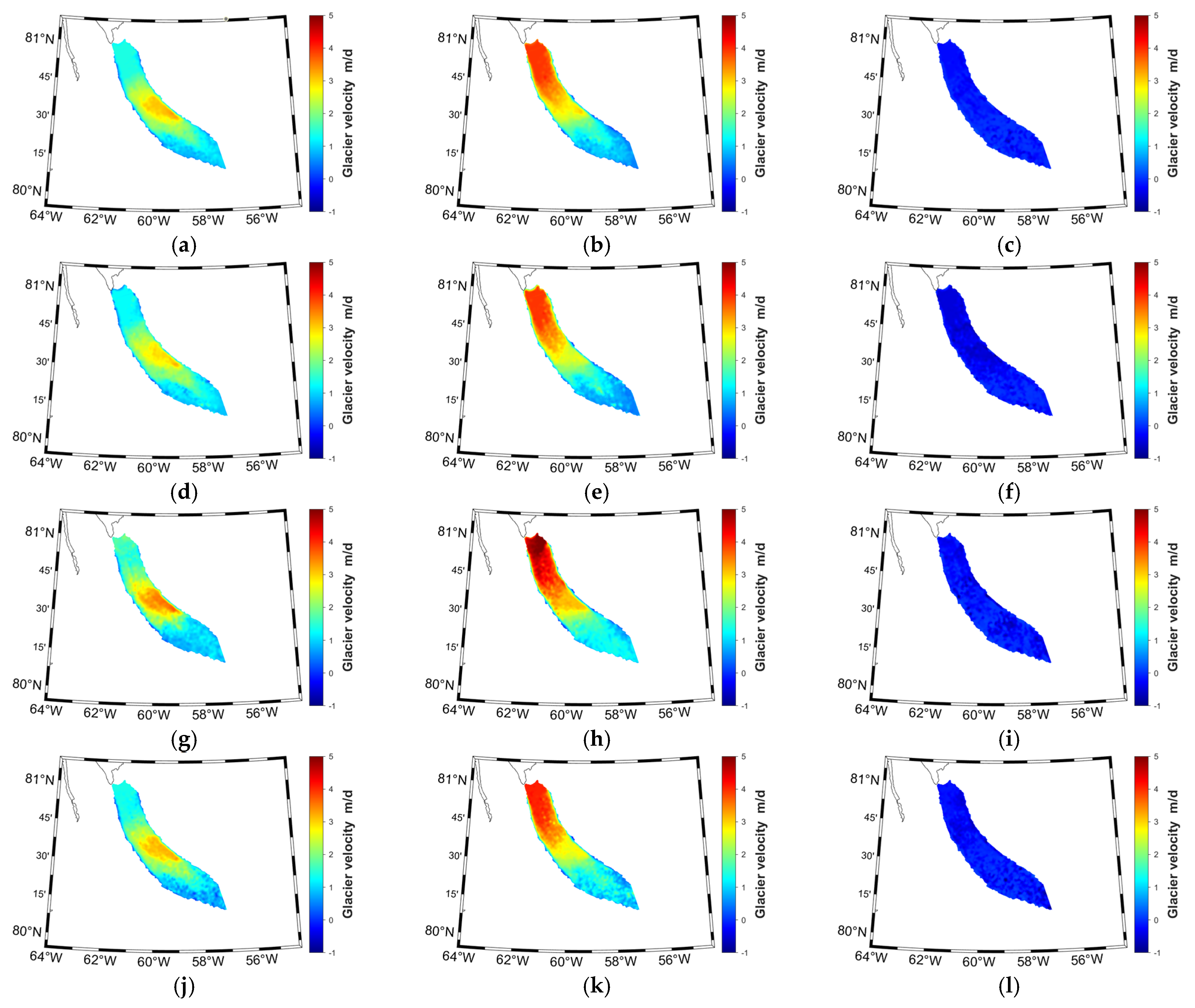
Using the Sentinel-1A/B ascending and descending SAR images described above, the 3D glacier velocity time series of Petermann Glacier for the entire year of 2021 was retrieved. Figure 6 presents the example monthly glacier velocity fields in different seasons. The figures from top to bottom correspond to velocity fields in January, April, July, and October, respectively. The first, second, and third columns correspond to the westward, northward, and vertical velocity fields of the glacier, respectively.
Figure 6 shows that glacier velocity increases significantly in summer. In the absence of concurrent meltwater, runoff, or oceanographic measurements, we assume that this seasonal acceleration may reflect (i) enhanced delivery of surface meltwater to the glacier bed, which can transiently reduce basal traction, and/or (ii) increased summer ocean forcing that drives basal melt beneath the ice shelf and weakens buttressing [32,33,34]. In addition, as can be seen from Figure 6, the vertical velocity of the Petermann Glacier is negative in most areas for most of the year, that is, it moves downwards. Overall, the vertical velocity component is much smaller than the horizontal components.

4.2. Result Verification

4.2.1. Glacier Velocity Verification

Given the lack of publicly available 3D glacier velocity products for the study area, this section uses two-dimensional surface velocity products for comparison and validation of the derived results. We first compare our velocity estimates with the ESA Greenland Ice Sheet CCI two-dimensional ice velocity product for Petermann Glacier, Greenland. The CCI product is generated by intensity tracking of Sentinel-2 imagery acquired between 17 and 28 June 2021.
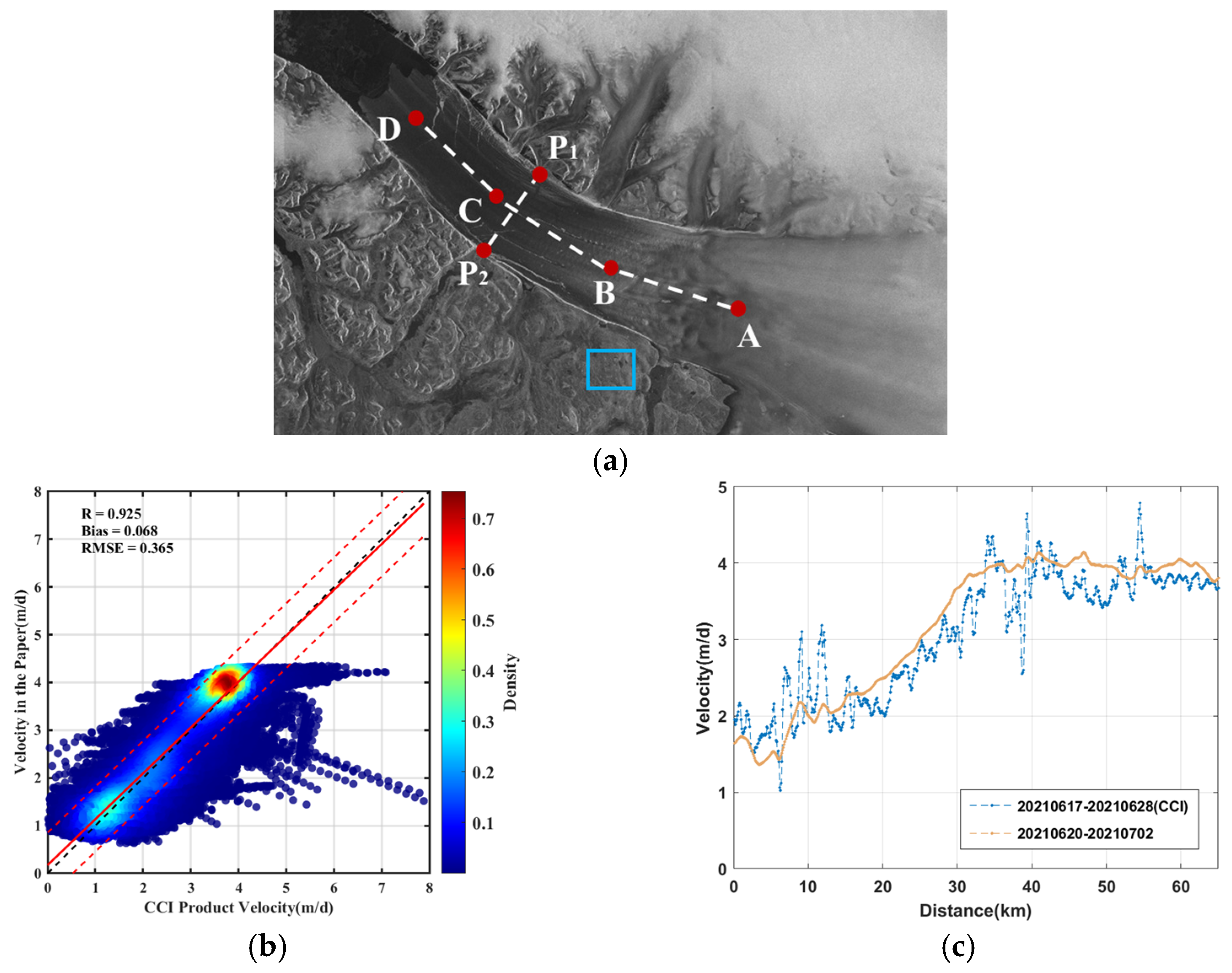
To minimize errors caused by temporal mismatch, we compared our velocity estimates with the CCI product using the acquisition pair closest in time: the two-dimensional glacier velocity from 20 June to 2 July 2021 derived with the method proposed in this study. The CCI product was resampled and reprojected to match our grid, and the comparison is presented in Figure 7.
Figure 7b summarizes the spatial agreement between the two datasets. The correlation coefficient (R = 0.925) indicates strong spatial consistency. The mean bias is 0.068 m/d, suggesting no appreciable systematic overestimation or underestimation, and the root-mean-square error (RMSE) is 0.365 m d−1. Given the small bias, the residual differences are likely dominated by random errors rather than systematic effects. The RMSE can be attributed to several factors. First, the two datasets are derived from different sensors: our velocities are retrieved from Sentinel-1 SAR imagery, whereas the CCI product is generated from Sentinel-2 optical imagery. Differences in sensing mechanisms and error characteristics can lead to discrepancies. Second, the acquisition times are not exactly coincident; thus, even if both products accurately capture glacier motion at their respective observation times, temporal offsets can introduce additional differences. Third, differences in spatial resolution may further amplify local discrepancies, especially in fast-flowing regions with strong velocity gradients. Overall, the high correlation and low bias support the reliability of our retrieved two-dimensional velocity field.
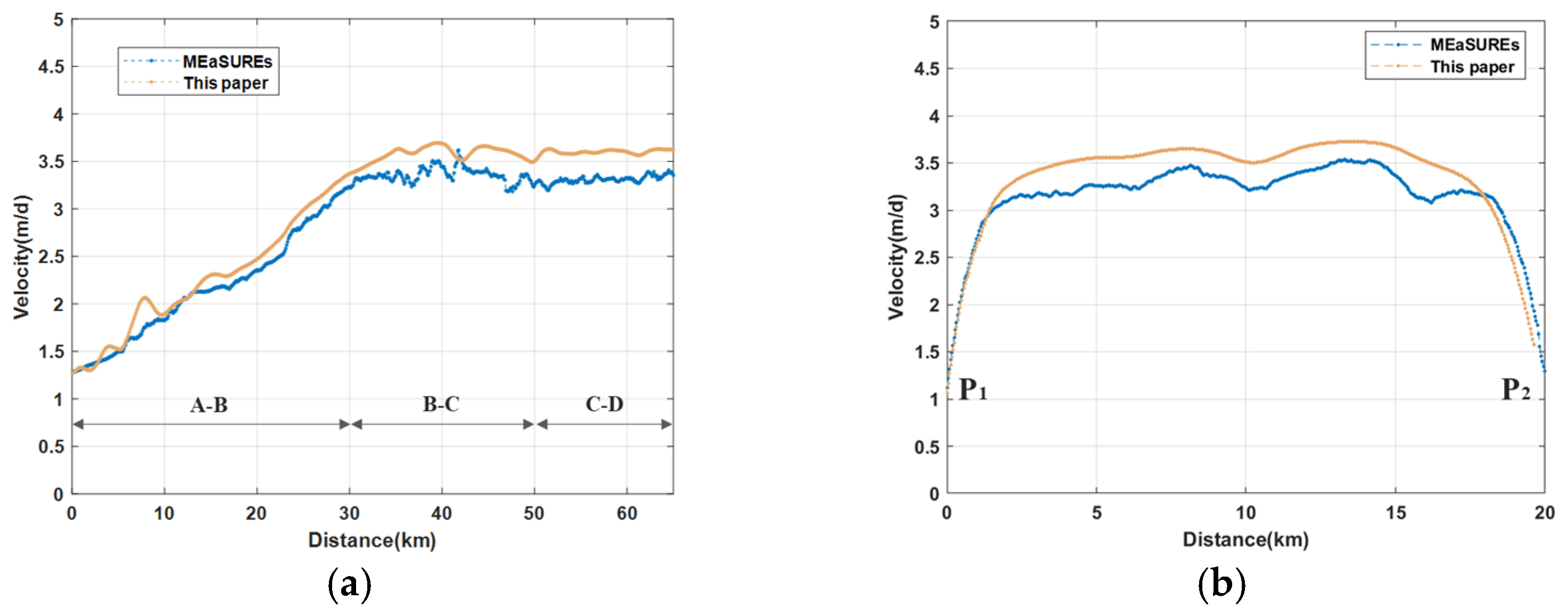
Moreover, the spatial variation in velocity along the glacier flowline was examined. As shown in Figure 7a, four points (A, B, C, and D) were selected from the inland region of the glacier to its ocean terminus and connected sequentially. The corresponding comparison is illustrated in Figure 7c. In Figure 7c, the orange curve represents the Petermann Glacier velocity profile obtained in this paper, and the blue curve represents the Petermann Glacier velocity profile in the CCI product. Although minor discrepancies exist between the two datasets, their overall variation patterns are highly consistent. Moreover, the velocities obtained using the proposed method exhibit smoother and more stable behavior than those from the CCI product.
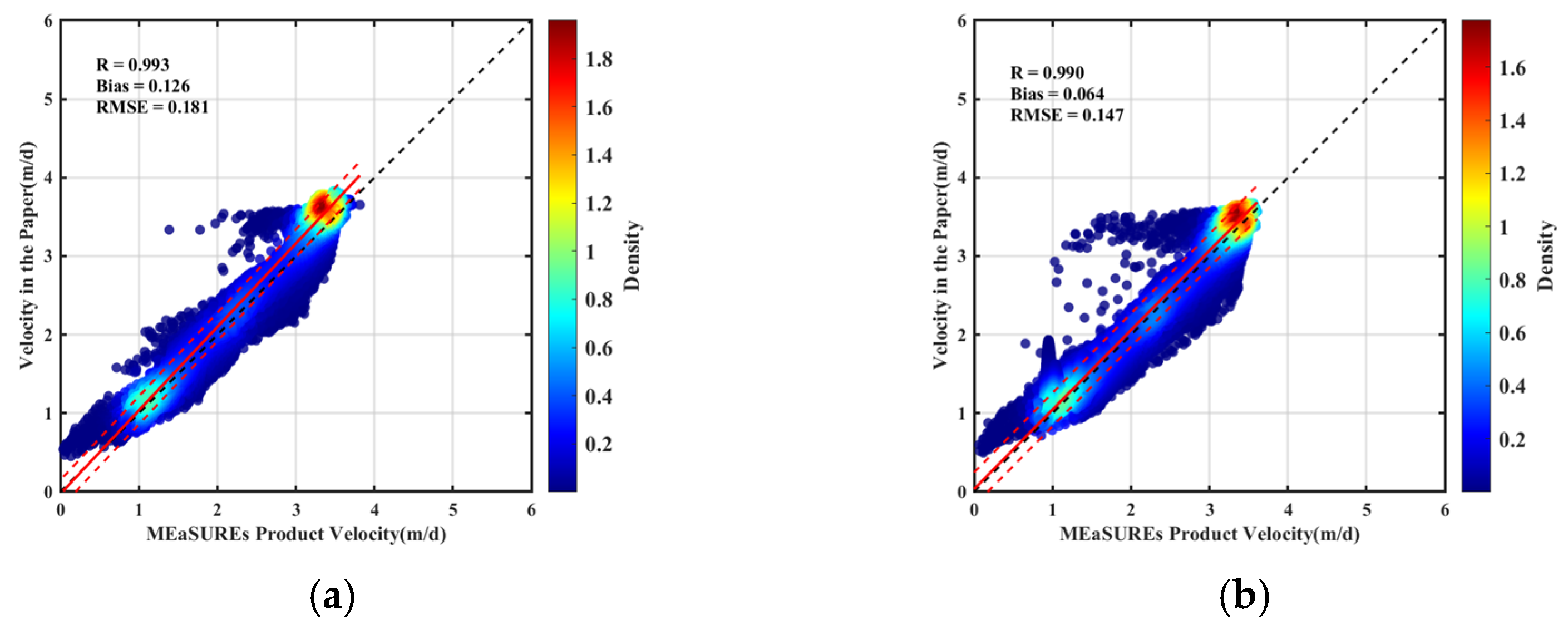
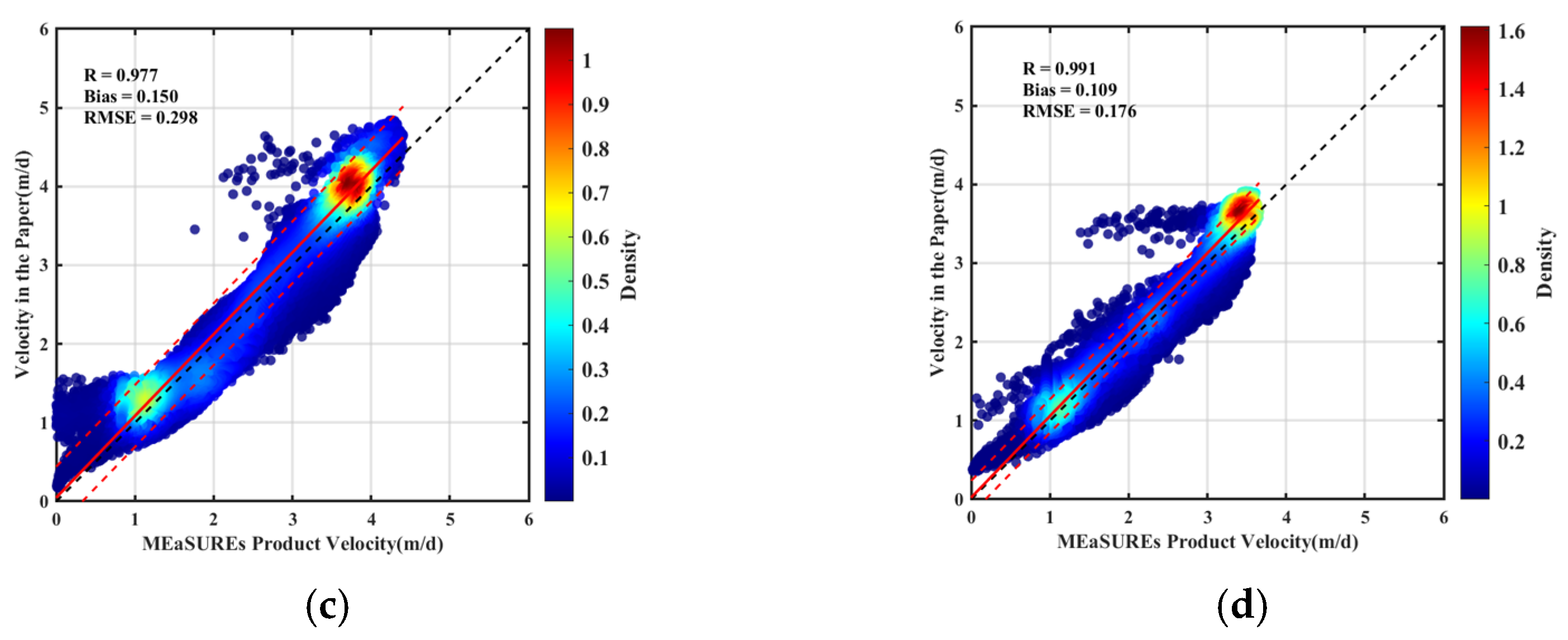
In addition, we compared the derived velocities with the MEaSUREs products. To assess the seasonal stability of our method, we selected monthly ice flow velocities of the Petermann Glacier for four representative months (January, April, July, and October) for comparison. The results are presented in Figure 8, where Figure 8a–d correspond to January, April, July, and October, respectively.
The comparative analysis demonstrates that the derived velocities exhibit strong agreement with the MEaSUREs products across all seasons, with correlation coefficients consistently exceeding 0.97. The root mean square error is lowest in spring, while a slight increase in dispersion is observed during summer. This seasonal variation may be attributed to the intensified rate of glacier flow changes during the ablation period, as well as elevated observation noise resulting from enhanced surface meltwater and reduced interferometric coherence in summer. Nevertheless, the consistent velocity magnitudes and spatial patterns observed throughout winter, spring, summer, and autumn further validate the robustness and seasonal stability of the proposed method. In addition, we present a comparison of the glacier velocity profiles along the streamline direction (A–B–C–D) and along the tangential direction of the flow (P1–P2) in January, which are shown in Figure 9. The results show that both profiles, along the flow and tangential directions, exhibit good consistency in terms of velocity magnitude and variation trends. Overall, the velocity measurements of the Petermann Glacier obtained in this study can be considered reliable.

4.2.2. Qualitative Consistency Assessment

To assess the physical consistency of the retrieved vertical velocities, a qualitative consistency assessment was performed based on the glacier mass continuity relationship. This analysis provides a qualitative consistency check of the reconstructed velocity field under simplified mass-continuity assumptions. Glacier flow satisfies the mass conservation (continuity) equation:
H / t = ( H v x y ) + a s ,
where H / t denotes the rate of ice thickness change, H represents the ice thickness, v x y is the horizontal velocity vector, and a s denotes the surface mass balance (SMB).
However, in the study area, ice thickness observations are difficult to obtain and their spatial coverage is limited, which makes reliable quantitative inversion challenging. Therefore, a simplified consistency assessment was adopted in this study. Previous theoretical and observational studies indicate that, in fast-flowing outlet glaciers, dynamically induced thickness changes associated with horizontal flow divergence commonly dominate over surface mass balance variations [35,36]. Under such conditions, and over relatively short observational periods, neglecting the ice-thickness change term ( H / t ) and SMB provides a first-order approximation for evaluating the dynamically driven component of vertical motion. Consequently, over short temporal scales, the secondary effects of SMB and ice thickness change can be neglected, leading to the following approximate relationship:
v u v x y ,
where v u denotes the vertical velocity. The divergence of the horizontal velocity field was calculated and compared with the vertical velocity.
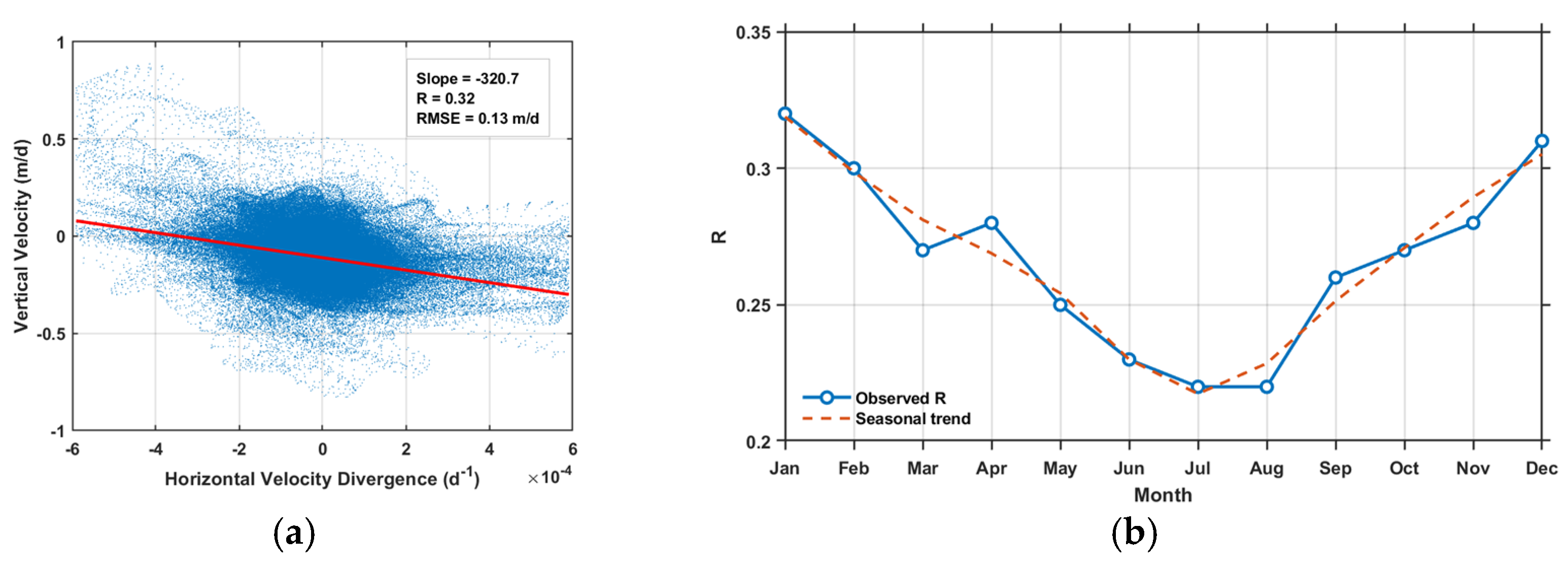
The corresponding results are presented in Figure 10. Figure 10a illustrates the relationship between horizontal velocity divergence and vertical velocity in January. The results reveal a stable overall negative correlation. The negative relationship agrees with glacier mass-continuity theory, where divergent flow leads to dynamic thinning and surface lowering. A regression analysis between vertical velocity and horizontal flow divergence yields a correlation coefficient of R = 0.32, a slope of −264, and an RMSE of 0.13 m/day. Although the correlation strength is moderate, this can be attributed to the combined influence of ice thickness variations, surface mass balance, and observational uncertainties affecting the vertical velocity estimates. The slope magnitude is comparable to the characteristic ice thickness in the study region, further supporting the physical consistency of the reconstructed vertical velocity. The moderate correlation reflects the influence of additional processes such as surface mass balance and basal melting, which also affect vertical motion. And the RMSE reflects the residual difference between observed vertical velocity and that predicted from horizontal divergence rather than the absolute uncertainty of the vertical velocity itself. The residuals include contributions from surface mass balance, basal melting, spatial variations in ice thickness, and inversion uncertainties.
The full ice mass continuity equation links vertical velocity to horizontal flow divergence, temporal thickness change, and SMB. In this study, a simplified relationship was adopted by neglecting ∂H/∂t and SMB terms to emphasize the dynamically driven component of vertical motion. This approximation is most appropriate for fast-flowing glacier regions and short observation periods, where advection and longitudinal strain dominate thickness evolution. Nevertheless, the simplification introduces limitations. In accumulation areas, positive SMB may offset dynamically induced thinning, while in ablation zones, surface melting and basal melt may enhance surface lowering independently of horizontal divergence. These processes contribute to the observed scatter in the regression analysis and partly explain the moderate correlation between vertical velocity and flow divergence. It should be noted that, because surface mass balance and thickness-change terms are not included, this analysis is intended only to assess physical consistency rather than to serve as a strict validation.
Furthermore, Figure 10b presents the consistency test results across different time periods. A stronger correlation between horizontal velocity divergence and vertical velocity is observed during winter. The reduction in correlation during the melt season likely reflects the increasing influence of meltwater-driven basal sliding and surface mass balance processes, which progressively weaken the coupling between vertical motion and horizontal strain.

4.2.3. Uncertainty Analysis

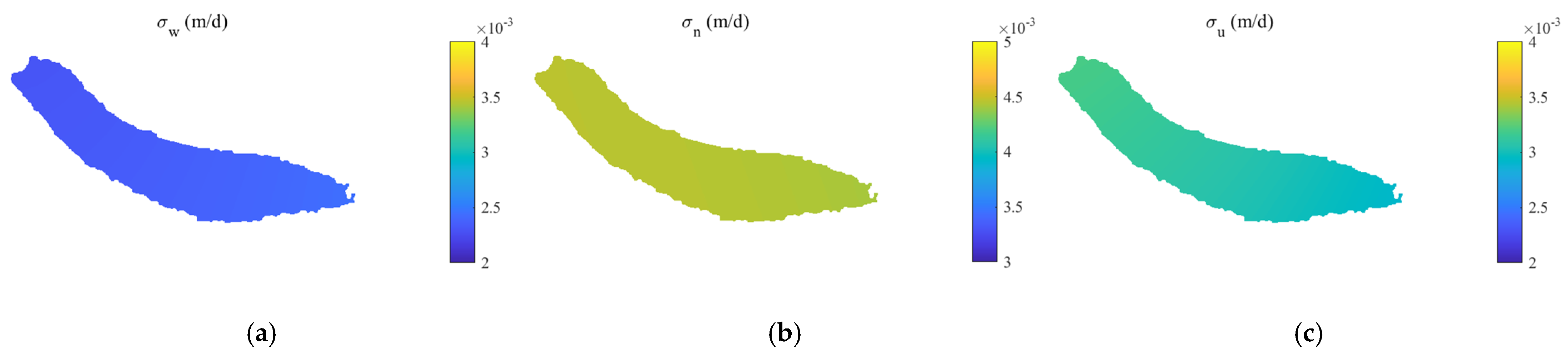
To assess the uncertainty of the glacier velocity observations, a stable area located adjacent to the glacier was randomly selected, and the velocity measurements within this region were statistically analyzed. The uncertainties of the line-of-sight (LOS) and azimuth velocity components were first estimated from the stable area, yielding values of 0.0018 m/d and 0.0045 m/d, respectively. Subsequently, the error propagation from the measurement space to the three-dimensional (3D) velocity space was evaluated. Because the satellite LOS and azimuth observations are linearly related to the 3D velocity components, the relationship can be expressed using a sensitivity (design) matrix defined as:
G = s i n θ a c o s α a s i n θ a s i n α a cos θ a s i n α a cos α a 0 s i n θ d c o s α d s i n θ d s i n α d cos θ d s i n α d cos α d 0 .
Assuming that the observations in the range and azimuth directions are independent for each orbit, the joint covariance matrix can be written as:
R obs = σ l o s 2 0 0 0 0 σ a z 2 0 0 0 0 σ l o s 2 0 0 0 0 σ a z 2 .
The covariance of 3D velocity can be solved using the error propagation formula:
R E N U = ( G T R o b s G ) 1 .
The uncertainties of the 3D velocities were derived accordingly, and the spatial distributions of the westward, northward, and vertical velocity uncertainties are presented in Figure 11. In the study area, the incidence angles vary from 32.9° to 40.4° for descending tracks and from 42.5° to 45.6° for ascending tracks. Despite this variation, the uncertainties of the westward and northward velocity components exhibit relatively limited spatial variability, with values of 0.0023–0.0024 m/d and 0.0044–0.0045 m/d, respectively. In contrast, the uncertainty of the vertical velocity shows a more pronounced variation from near to far range, ranging from approximately 0.0029 to 0.0032 m/d. This difference primarily arises from the varying sensitivity of the observation geometry to different velocity components, with the vertical component being more strongly affected by LOS measurement errors. Overall, the uncertainty analysis indicates that the variations in incidence angle introduce only a minor effect on the retrieved 3D velocities. In addition, a sensitivity analysis was performed by propagating the incidence angle perturbation into the LOS projection model. The resulting velocity variation is on the order of 10−3 m/d, which is small and can be ignored. Overall, in the scenario of this study, the 3D velocity error caused by the change in the incident angle has a relatively small impact. Therefore, it is reasonable and feasible to use a constant incident angle in the experiment.
To further assess the robustness of the 3D inversion, the observation geometry was evaluated through singular value decomposition (SVD) of the sensitivity matrix. The matrix is full rank, and the smallest singular value is comparable in magnitude to the other two singular values, yielding a condition number of approximately 1.75. This result indicates that, under the adopted observation geometry, all three velocity components, including the vertical component, are well constrained and reliably observable. Meanwhile, a statistical analysis of the three-dimensional velocities was conducted within the selected stable region. The mean westward, northward, and vertical velocities were 0.0024 m/d, 0.0026 m/d, and 0.00014 m/d, respectively. The weak non-zero vertical velocity observed in the stable region may partly reflect minor surface processes; however, given that its magnitude is smaller than the estimated uncertainty, it is more likely attributable to residual systematic effects arising from SAR co-registration and geometric inversion.
The standard deviations derived from the stable-region analysis are 0.00098 m/d, 0.0010 m/d, and 0.0015 m/d for the westward, northward, and vertical components, respectively. The results show that the uncertainty of the vertical velocity is slightly higher than that of the horizontal (westward and northward) components, which is consistent with the theoretical expectation that the vertical constraint of the ascending-descending orbit observation geometry is relatively weak. However, due to the favorable ascending-descending orbit observation geometry, the vertical component does not exhibit significant uncertainty bias, indicating that the 3D inversion maintains good stability in the vertical direction. Furthermore, the uncertainty estimate obtained in the stable region is smaller than the theoretical error propagation result. This is because the theoretical estimate represents the upper limit of uncertainty under the assumption of independent spatial noise, while the stable region observations benefit from spatial averaging and temporal filtering processes, effectively reducing the level of random noise.

4.2.4. Kalman Filter Parameter Sensitivity

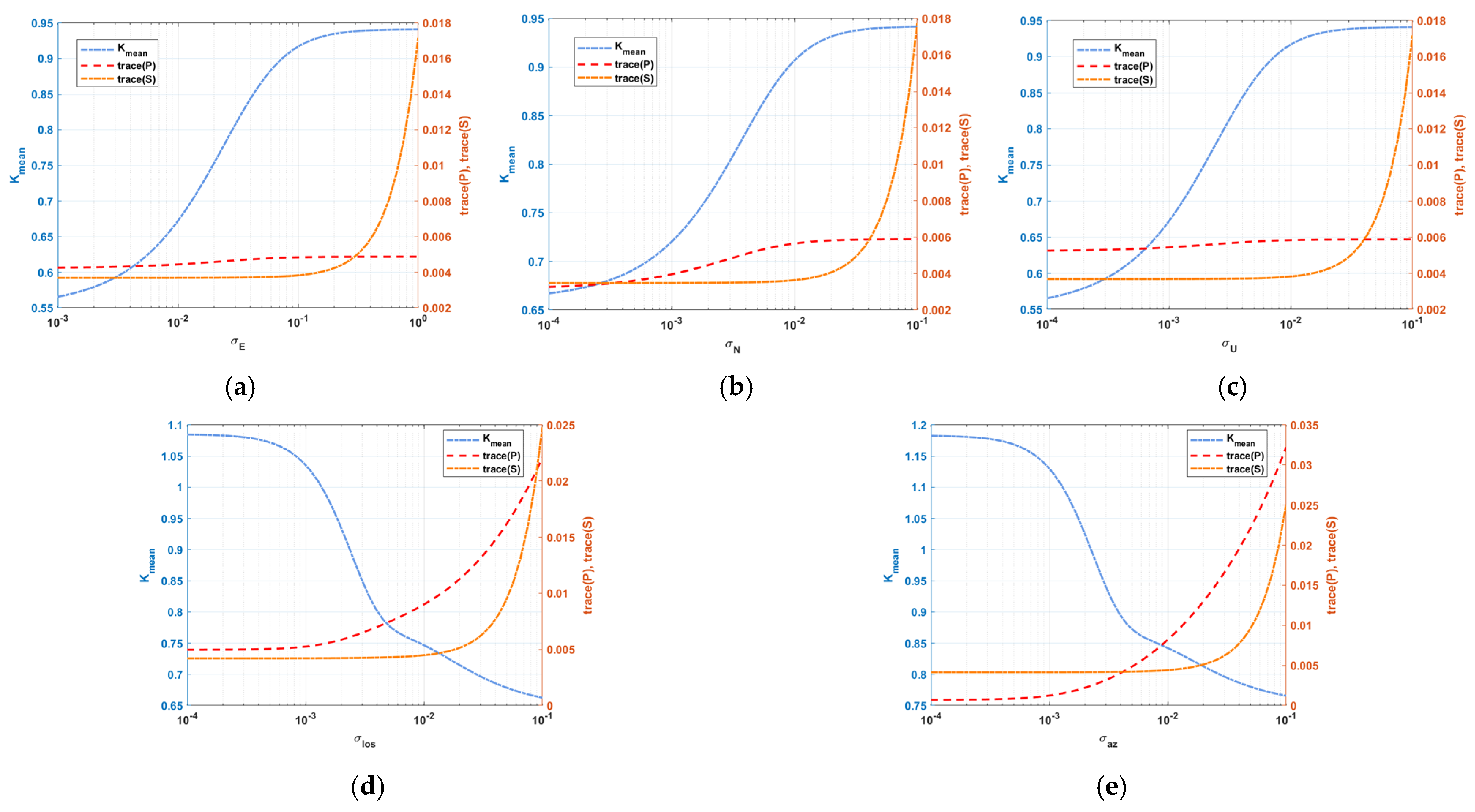
In this study, the configurations of Q and R were primarily determined based on physical prior knowledge of glacier velocity variability and measurement uncertainty. To evaluate how these parameters influence the performance of the Kalman filter, a sensitivity analysis was conducted by examining their impacts on the Kalman gain (K), the state covariance (P), and the innovation covariance (S). To facilitate quantitative comparison, matrix quantities were summarized using scalar metrics. The effective Kalman gain was defined as the mean row norm of K (Kₘₑₐₙ), representing the relative confidence of the filter in the observations. The overall state uncertainty and innovation energy were characterized by the traces of P and S, respectively. Because the traces of S exhibits relatively small magnitudes, its square root was used for clearer visualization in the figure. The results are presented in Figure 12.
Figure 12a–e illustrate the effects of parameters σ E , σ N , σ U , σ l o s and σ a z on the Kalman filter performance. In each panel, the blue curve denotes Kₘₑₐₙ, indicating the degree to which observations influence the state update; the red curve represents the traces of P, reflecting estimation uncertainty and stability; and the orange curve corresponds to the traces of S, characterizing the innovation response of the filter. The Kalman gain, representing the confidence of the filter in the observations, is shown in Figure 12. Overall, the curves related to Q exhibit similar trends. Specifically, the Kalman gain increases with increasing process noise, while the state covariance and innovation covariance gradually increase, indicating a shift from a stable and smooth system to a dynamically sensitive one. However, as R increases, the Kalman gain decreases significantly. Furthermore, the state covariance and innovation covariance increase rapidly, indicating a decrease in the filter’s confidence in the observations and a significant increase in estimation uncertainty. Simultaneously, the figures show that the values of the five parameters in this study are all within a trade-off between sensitivity and stability, with the filter variance and gain in each direction remaining balanced, representing a reasonable configuration that satisfies both system stability and noise resistance.
During the Kalman filtering process, the noise covariance is scaled according to the state-space time step, which corresponds to the acquisition interval between consecutive SAR observations. This allows uncertainty to increase over time while ensuring weight consistency under irregular sampling. Furthermore, during periods of rapid dynamic events in glacier velocity, the sensitivity of the filter can be temporarily enhanced by adaptively adjusting Q or R when sudden events occur, thus preventing rapid changes from being suppressed and ensuring real-time response.

4.2.5. Comparison of Different Methods

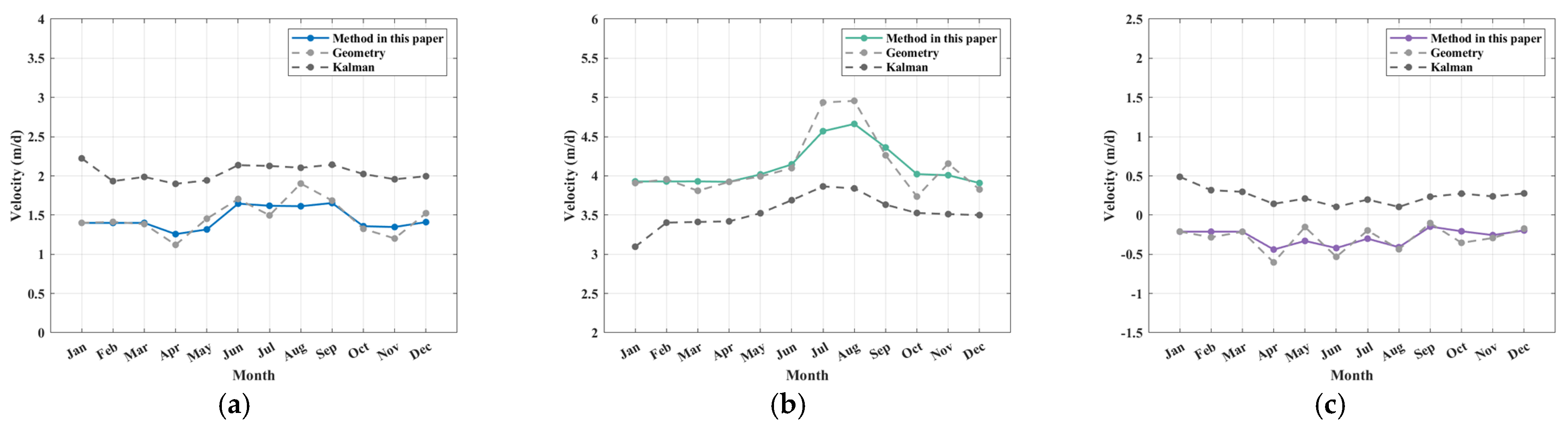
To further evaluate the effectiveness of the proposed method, the 3D glacier velocity results derived from the proposed approach, the traditional geometrically based inversion method, and the Kalman filter–based method without prior constraints are systematically compared. First, the uncertainties associated with the velocity estimates obtained using these three methods are assessed, and the results are summarized in Table 1. The geometrically based method exhibits a smaller bias but suffers from larger temporal variability. In contrast, the Kalman filter method without prior constraints demonstrates improved stability but introduces a larger bias. By jointly accounting for both bias and stability, the proposed method achieves a more balanced performance and therefore provides more reliable 3D glacier velocity estimates.
The 3D velocity results of Petermann Glacier in 2021 obtained using different methods are further compared in Figure 13, which presents the corresponding time series of the velocity components. From left to right, they display the westward, northward, and vertical velocity components respond to point D. As shown in Figure 13, the velocity time series obtained using Kalman filtering are relatively smooth but may exhibit larger systematic deviations. In contrast, the geometrically derived velocities are more reliable in terms of magnitude but display pronounced temporal fluctuations. This behavior arises primarily from the limited sensitivity of the ascending and descending SAR acquisition geometry to the vertical and northward velocity components. Compared with the east–west component, these two components contribute less to the line-of-sight and azimuth observations, resulting in an ill-conditioned observation system for their estimation. Consequently, small measurement errors and speckle noise in the SAR-derived displacements can be strongly amplified during direct geometric inversion, leading to unstable solutions and pronounced high-frequency fluctuations in the retrieved velocities.
Meanwhile, within the 3D joint inversion framework, the velocity components are not solved independently but are coupled through the observation equations and the inversion matrix. As a result, errors originating from the poorly constrained components can propagate to the other components during the inversion process, further contaminating the overall solution. This error coupling effect explains the noticeable variability observed in the estimated velocity time series, particularly when no additional physical constraints or temporal regularization are imposed.
Kalman filtering, on the other hand, mitigates random noise through the incorporation of temporal evolution models and prior information; however, it is vulnerable to systematic bias when the prior is inaccurate. Therefore, employing the geometrically derived 3D velocities as prior constraints in the Kalman filtering framework provides an effective compromise between stability and unbiasedness, ultimately enhancing the reliability of the retrieved 3D glacier velocity fields.

5. Discussion

The previous section derived the glacier velocity time series of Petermann Glacier for the entire year of 2021, and the validation results demonstrate that the retrieved velocities are reliable. To further investigate the dynamic behavior of the glacier, this section presents a statistical analysis of the 3D velocities.

5.1. Annual Variation in 3D Glacier Velocity

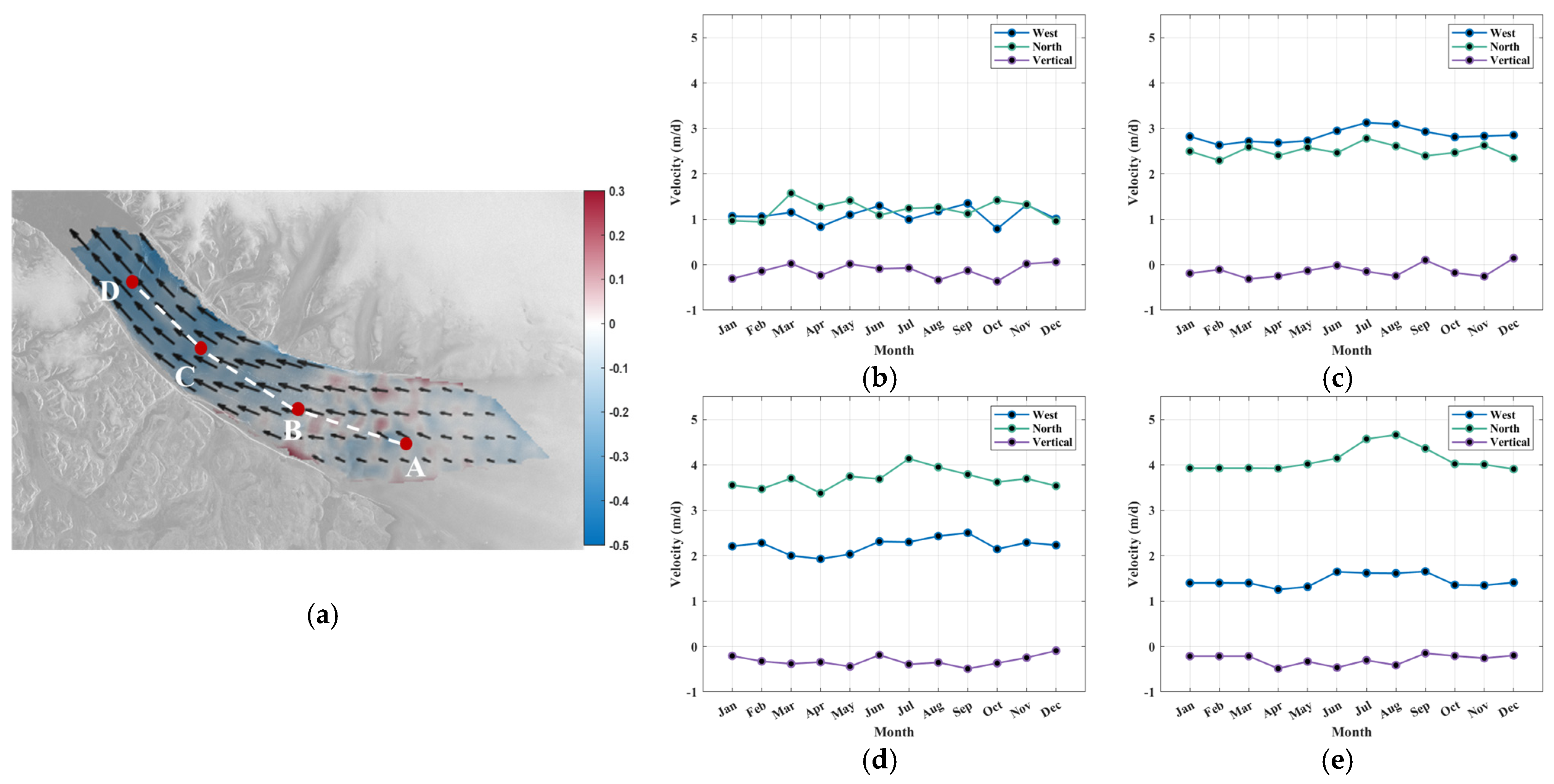
First, the annual mean 3D velocity of Petermann Glacier was calculated, and the results are shown in Figure 14a. In the figure, arrows denote the horizontal velocity field, with their length and orientation representing the magnitude and direction of ice flow, respectively. The color scale indicates the vertical velocity component, where red corresponds to upward motion and blue to downward motion. As illustrated in Figure 14a, the ablation zone exhibits relatively high horizontal flow velocities. This behavior can be attributed to factors such as enhanced basal sliding induced by meltwater in the ablation area [37] and local topographic variations [12]. Meanwhile, this region is characterized by a negative mass balance, and the vertical velocity is predominantly downward.
In contrast, the accumulation zone exhibits a coexistence of positive and negative vertical velocities, likely reflecting the combined influence of surface mass balance and ice-dynamic transport. Persistent positive SMB associated with snowfall tends to promote ice thickening and surface uplift, whereas spatial variations in ice flow, including local flow divergence and strain-induced deformation, may produce dynamic thinning and localized subsidence. As a result, the vertical velocity field in the accumulation zone displays pronounced spatial heterogeneity, characterized by alternating upward and downward motions [38,39]. Previous studies have reported that annual SMB in northern Greenland and other high-latitude accumulation regions can reach approximately 1–3 m w.e.a−1 or higher under strong accumulation conditions [40,41,42], which suggests that SMB may contribute to the observed vertical motion. Nevertheless, this comparison should be regarded as qualitative, and the observed vertical velocity patterns likely represent the combined effects of climatic mass input and dynamic ice-flow redistribution rather than a direct attribution to either process alone.
Meanwhile, to further compare velocity variations across different regions of the glacier, the 3D velocity time series at four representative points (A, B, C, and D) were analyzed, as shown in Figure 14b–e. The results indicate that the difference between the westward and northward velocity components gradually increases along the flow direction, implying a progressive deflection of the main flow toward the north. This pattern can be attributed to the geometry of the downstream channel of the Petermann Glacier, which is not straight but gradually bends from an approximately east–west orientation to a northwest–northwest direction. Under the constraints imposed by the fjord sidewalls and the glacier margins, the northward velocity component increasingly exceeds the westward component downstream. In addition, Figure 14e shows a pronounced increase in northward velocity near the glacier terminus during July and August.
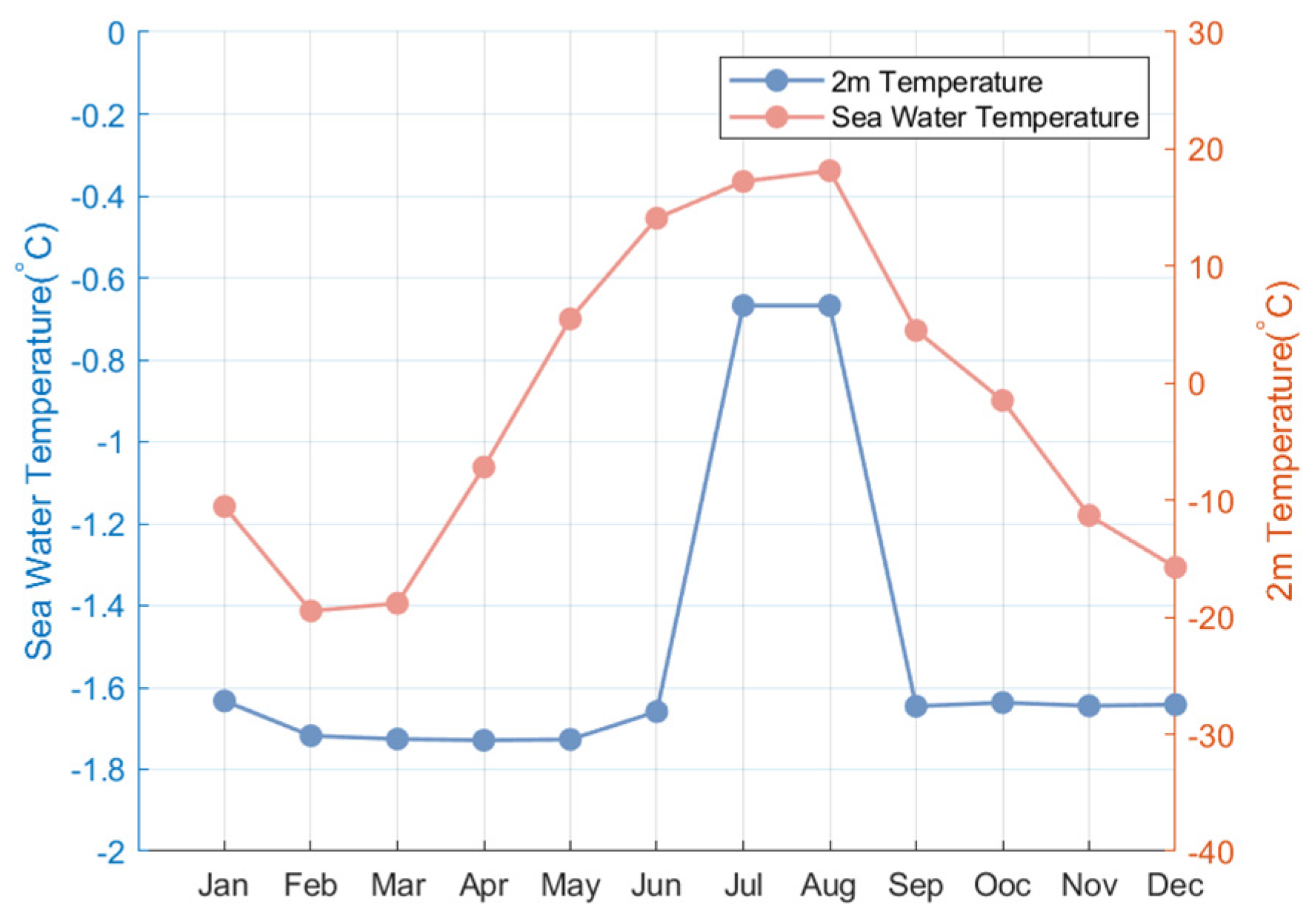
To further investigate this phenomenon, 2 m air temperature data near Petermann Glacier (81.0°N, −61.4°W) and seawater temperature data near the glacier fjord mouth (81.3°N, −62.5°W) were analyzed. The temporal variations in air and seawater temperatures are presented in Figure 15. The results indicate a pronounced increase in air temperature during summer, frequently exceeding 0 °C. Such conditions likely enhance surface melting, increasing meltwater input to the glacier bed and promoting basal sliding, which may contribute to an acceleration of glacier flow along the main flow direction. And seawater temperature records near the fjord show a clear warming during July and August. Petermann Glacier is a typical floating ice-tongue–fjord system, and warmer Atlantic water may intrude into Petermann Fjord during summer, enhancing ocean-driven basal melting and undercutting of the floating ice tongue [3]. This process can reduce buttressing provided by the ice tongue and potentially facilitate glacier acceleration. Although direct observational evidence remains limited, intensified ocean-induced basal melting and the associated weakening of ice-tongue buttressing are therefore considered plausible contributing factors to the observed increase in glacier velocity.
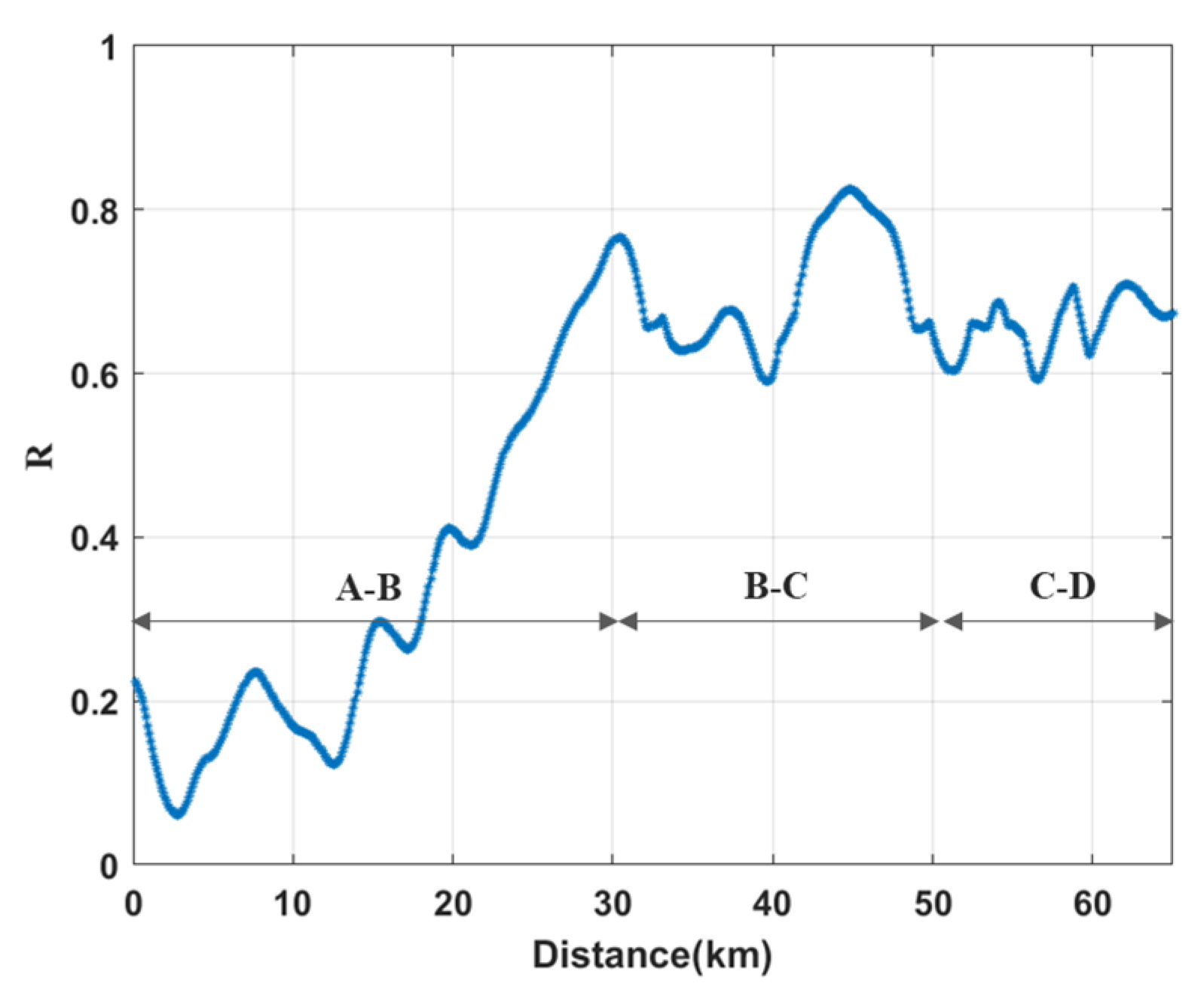
In addition, to quantitatively evaluate the environmental controls on glacier dynamics, correlation analyses were performed between glacier velocity and atmospheric and oceanic variables. The results show a positive correlation (R = 0.79) between 2 m air temperature and the velocity of the nearby glacier, suggesting enhanced basal lubrication associated with surface melting. Fjord seawater temperature also exhibits a significant correlation (R = 0.74) with terminus velocity, indicating the influence of ocean-driven frontal melting. Meanwhile, the correlation coefficient between glacier velocity and temperature along the main flowline is shown in Figure 16. As shown in the figure, although local fluctuations arise from statistical instability associated with the spatial resolution mismatch and limited temporal sampling between the glacier velocity and temperature datasets, the large-scale pattern reveals an overall increase in correlation toward the glacier terminus, indicating a progressively stronger physical coupling between glacier dynamics and thermal forcing.

5.2. Topography Influence on Glacier Velocity

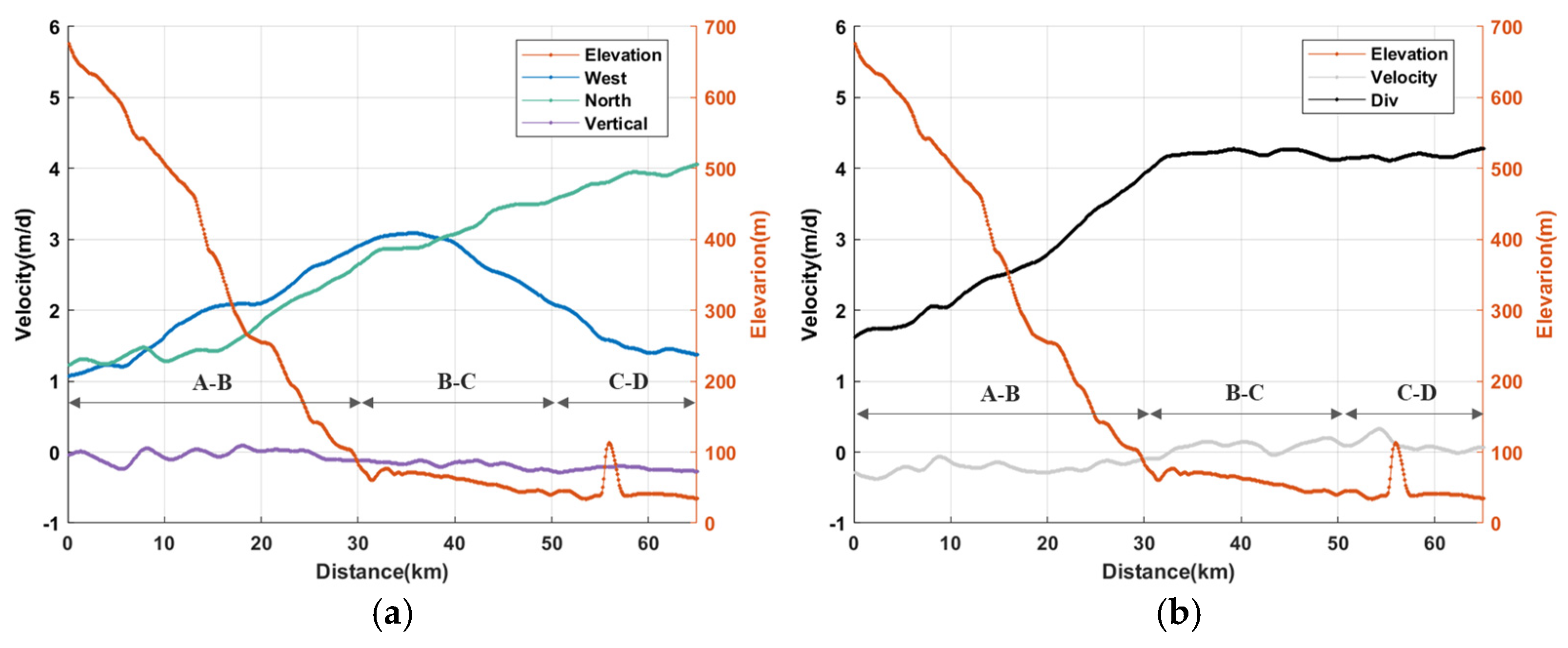
Previous studies have demonstrated that topography is one of the key factors controlling glacier flow velocity [43,44]. To investigate the relationship between glacier velocity and topographic conditions and to further elucidate the flow mechanism of the Petermann Glacier, this section examines the correspondence between the 3D velocity field and surface elevation. As shown in Figure 17a, points A, B, C, and D are connected sequentially to form a representative flowline. The annual mean velocities and corresponding topographic elevations along cross-sections perpendicular to this flowline were extracted. The statistical results are presented in Figure 17, which compares the westward, northward, and vertical velocity components with the corresponding variations in topographic elevation. The orange dashed line represents elevation changes, while the blue, green, and purple dashed lines denote the westward, northward, and vertical velocity components, respectively.
As illustrated in Figure 17, the westward velocity first increases and then decreases along the flow direction, whereas the northward velocity exhibits a monotonic increase. As discussed in the previous section, the main flow direction of the glacier gradually shifts northward toward the terminus, a pattern further confirmed by these results. Meanwhile, a pronounced decrease in surface elevation is observed in the upstream section, coinciding with simultaneous increases in both westward and northward velocities.
Downstream of point B, the topographic profile becomes relatively gentle. In this region, the westward velocity gradually decreases, whereas the northward velocity continues to increase. In the steep upstream reach of the Petermann Glacier, the large basal slope enhances gravity-driven motion, accelerating ice flow along the main flow direction and inducing significant longitudinal stretching and lateral spreading. This results in concurrent increases in both the westward and northward velocity components. Beyond point B, the basal topography flattens and the downstream channel progressively bends northward. Under the geometric constraints imposed by the fjord sidewalls, westward motion becomes increasingly restricted, leading to a gradual reduction in the westward velocity component. In contrast, northward motion is less constrained.
Furthermore, as the glacier approaches its terminus, the ice tongue gradually becomes afloat, and the ice mass increasingly decouples from bedrock, instead being supported by seawater buoyancy. This transition substantially reduces basal friction. At the same time, the glacier trough widens downstream, promoting enhanced longitudinal stretching of the ice mass. Together, these processes contribute to the continuous increase in the northward velocity component. To further verify the proposed hypothesis, we compared the relationship between velocity and divergence along the flow direction of the Petermann Glacier, as shown in Figure 17b. The gray line in the figure represents divergence, which was magnified 2000 times and plotted according to velocity coordinates to better illustrate the trend of divergence changes. The results show that the divergence transitions from negative to positive during the rapid decrease in upstream surface elevation. This pattern indicates that longitudinal extension is likely driven by the increased upstream surface slope. Furthermore, the divergence remains positive downstream of point B, suggesting that the ice mass experiences sustained longitudinal stretching in this region.
With respect to the vertical velocity, changes in topographic elevation do not directly control its magnitude. However, relatively large fluctuations are observed in section AB, where the vertical motion alternates between upward and downward. Downstream of point B, the vertical velocity becomes more stable and exhibits a persistent downward trend along the flow direction. This behavior can be explained by the differing mass-balance regimes. Section AB lies within the accumulation zone, where the glacier surface is continuously replenished by snowfall while undergoing snow densification and gravitational compaction. These competing processes dominate alternately in space and time, producing alternating uplift and subsidence signals. Although basal topography does not directly determine the magnitude of the vertical velocity, topographic undulations may modulate local stress and strain conditions, contributing to the observed oscillatory pattern. In contrast, the downstream ablation zone experiences sustained mass loss due to surface melting and calving, combined with pronounced longitudinal stretching and ice thinning associated with flow acceleration. As a result, the ice column undergoes persistent subsidence, and the vertical velocity remains consistently negative.

5.3. Seasonal Differences in Glacier Velocity

In addition to topographic controls, climatic conditions also play a significant role in glacier dynamics. To investigate the seasonal variability of the Petermann Glacier, the 3D velocity field was analyzed for different seasons. The statistical results are presented in Table 2, showing the mean and standard deviation of the westward, northward, and vertical velocity components, respectively. The reported standard deviations represent spatial variability within the study region rather than temporal uncertainty. Overall, the Petermann Glacier exhibits higher velocities in summer compared to other seasons, while winter velocities are generally lower, consistent with previous studies [12]. The glacier velocity fluctuates more in summer. Specifically, the range of northward velocities shows more variation than the westward component, reflecting the seasonal dynamics of ice motion.
This seasonal pattern is likely to be attributed to increased summer temperatures (Figure 15), which generate extensive surface meltwater. The meltwater raises subglacial water pressure, reducing basal friction and significantly enhancing glacier sliding along the main flow direction [34]. Moreover, the spatially heterogeneous meltwater input in summer leads to variable basal sliding across the glacier, producing a wider velocity distribution. In contrast, winter dynamics are relatively simple, with more uniform velocities across different regions. The northward velocity is closely aligned with the glacier’s primary flow direction and is highly sensitive to changes in basal sliding. In contrast, the westward velocity is mainly controlled by the geometry of the glacier trough and lateral strain, making it less responsive to seasonal hydrological changes; therefore, its distribution remains relatively stable across seasons.
The vertical velocity exhibits a clear seasonal variability. During winter, the cessation of surface melting and the stabilization, or slight accumulation, of snow cover weaken the overall downward motion. In spring and autumn, reduced surface melting, relatively stable subglacial hydrological conditions, and limited interaction between the ice shelf and the ocean result in ice motion being dominated by slow creep and steady strain, leading to comparatively small spatial variability. In contrast, summer is characterized by intense and spatially heterogeneous surface melting, increased basal meltwater input, and thinning of the ice tongue, which together enhance regional differences in vertical motion and substantially amplify the spatial variability of vertical velocity.

6. Conclusions

This study presents an effective approach for obtaining reliable 3D glacier velocity time series. The method integrates long-term ascending and descending orbit SAR images with optical imagery, using 3D glacier velocities derived from geometric relationships as a priori constraints in a Kalman filter framework. Compared with traditional techniques, this approach achieves a better balance between stability and unbiasedness in 3D velocity inversion, substantially enhancing the accuracy and reliability of glacier 3D velocity retrievals.
This study applies the proposed method to derive the 3D velocity time series of Petermann Glacier for the year 2021 and to perform a statistical analysis of its annual velocity characteristics. The results indicate that vertical motion in the ablation zone is relatively stable, with downward velocity gradually increasing along the flow direction. During winter, enhanced freezing leads to larger positive values in the vertical velocity field. Upstream glacier dynamics are strongly influenced by topography and generally exhibit a trend of horizontal acceleration, whereas downstream flow is primarily controlled by the geometry of the glacier trough and the terminal ice tongue. Consequently, the main flow direction changes downstream, and the velocity increases progressively along the flow path. Meanwhile, velocity variations near the glacier terminus are closely associated with the thermal conditions of seawater beneath the ice tongue. Strong marine thermal intrusion may enhance basal melting, thereby weakening the buttressing effect of the ice tongue and further promoting acceleration of downstream ice flow. These findings suggest that the dynamic evolution of Petermann Glacier is governed not only by terrestrial geometry and climatic factors but is also highly sensitive to changes in the fjord marine environment.

Author Contributions

Conceptualization, Z.L.; methodology, Z.L.; validation, Z.L. and H.M.; formal analysis, Y.Z.; investigation, Y.Z.; resources, Y.Z.; writing—original draft preparation, Z.L.; writing—review and editing, Z.L. and Y.D.; supervision, Y.D. and J.C.; project administration, J.C. All authors have read and agreed to the published version of the manuscript.

Funding

This research was funded by the National Natural Science Foundation of China, grant number 62231024.

Data Availability Statement

The Sentinel-1 data used in this paper is available at https://dataspace.copernicus.eu/.

Acknowledgments

The authors are grateful to the European Space Agency for providing all relevant data and all the reviewers for their contributions to this research.

Conflicts of Interest

The authors declare no conflicts of interest.

Appendix A

The appendix provides the orbit IDs of the SAR images used in the study, as shown in Table A1.
Table A1. The track IDs of the SAR images used in the study.
Date (Ascending)Track IDDate (Descending)Track ID
20210101249662021010335973
20210107360372021010925077
20210113251412021011536148
20210119362122021012125252
20210125253162021012736323
20210131363872021020225427
20210206254912021020836498
20210212365622021021425602
20210218256662021022036673
20210224367372021022625777
20210302258412021030436848
20210308258992021031025952
20210314260162021031637023
20210320370872021032226127
20210326261912021032837198
20210401372622021040326302
20210407263662021040937373
20210413374372021041526477
20210419265412021042137548
20210425376122021042726652
20210501267162021050337723
20210507377872021050926827
20210513268912021051537898
20210525270662021052127002
20210531381372021052738073
20210606272412021060227177
20210612383122021060838248
20210618274162021061427352
20210624384872021062038423
20210630275912021062627527
20210706386622021070238598
20210712277662021070827702
20210718388372021071438773
20210724279412021072027877
20210730390122021072638948
20210805281162021080128052
20210811391872021080739123
20210817282912021081328227
20210823393622021081939298
20210829284662021082528402
20210904395372021083139473
20210910286412021090628577
20210916397122021091239648
20210922288162021091828752
20210928398872021092439823
20211004289912021100639998
20211010400622021101229102
20211016291662021101840173
20211022402372021102429277
20211028293412021103040348
20211103404122021110529452
20211109295162021111140523
20211115405872021111729627
20211121296912021112340698
20211127407622021112929802
20211203298662021120540873
20211209409372021121129977
20211215300412021121741048
20211121411122021112941223

References

  1. Rignot, E.; Mouginot, J.; Scheuchl, B. Ice flow of the Antarctic ice sheet. Science 2011, 333, 1427–1430. [Google Scholar] [CrossRef]
  2. Straneo, F.; Heimbach, P. North Atlantic warming and the retreat of Greenland’s outlet glaciers. Nature 2013, 504, 36–43. [Google Scholar] [CrossRef] [PubMed]
  3. Hill, E.A.; Carr, J.R.; Stokes, C.R. A review of recent changes in major marine-terminating outlet glaciers in Northern Greenland. Remote Sens. 2017, 4, 111. [Google Scholar] [CrossRef]
  4. Rignot, E.; Steffen, K. Channelized bottom melting and stability of floating ice shelves. Geophys. Res. Lett. 2008, 35, L02503. [Google Scholar] [CrossRef]
  5. Münchow, A.; Padman, L.; Fricker, H.A. Interannual changes of the floating ice shelf of Petermann Gletscher, North Greenland, from 2000 to 2012. J. Glaciol. 2014, 60, 489–499. [Google Scholar] [CrossRef]
  6. Jakobsson, M.; Hogan, K.A.; Mayer, L.A.; Mix, A.; Jennings, A.; Stoner, J.; Eriksson, B.; Jerram, K.; Mohammad, R.; Pearce, C.; et al. The Holocene retreat dynamics and stability of Petermann Glacier in northwest Greenland. Nat. Commun. 2018, 9, 2104. [Google Scholar] [CrossRef]
  7. Johannessen, O.M.; Miles, M.W.; Babiker, M. Unprecedented retreat in a 50-year observational record for Petermann Glacier, North Greenland. Atmos. Ocean. Sci. Lett. 2013, 6, 259–265. [Google Scholar] [CrossRef]
  8. Falkner, K.K.; Melling, H.; Münchow, A.M.; Box, J.E.; Wohlleben, T.; Johnson, H.L.; Gudmandsen, P.; Samelson, R.; Copland, L.; Steffen, K.; et al. Context for the recent massive Petermann Glacier calving event. Eos Trans. Am. Geophys. Union 2011, 92, 117–118. [Google Scholar] [CrossRef]
  9. Li, D.; Jiang, L.; Huang, R. Hydrological and kinematic precursors of the 2017 calving event at the Petermann Glacier in Greenland observed from multi-source remote sensing data. Remote Sens. 2021, 13, 591. [Google Scholar] [CrossRef]
  10. Rückamp, M.; Neckel, N.; Berger, S.; Humbert, A.; Helm, V. Calving-induced speedup of Petermann Glacier. J. Geophys. Res. Earth Surf. 2019, 124, 216–228. [Google Scholar] [CrossRef]
  11. Ehrenfeucht, S.; Morlighem, M.; Rignot, E.; Dow, C.F.; Mouginot, J. Seasonal acceleration of Petermann Glacier, Greenland, from changes in subglacial hydrology. Geophys. Res. Lett. 2023, 50, e2022GL101234. [Google Scholar] [CrossRef]
  12. Li, Z.; Chong, J.; Zhao, Y.; Diao, L. Reconstruction of Petermann Glacier velocity time series using multi-source remote sensing images. Int. J. Appl. Earth Obs. Geoinf. 2024, 135, 104307. [Google Scholar] [CrossRef]
  13. Hill, E.A.; Gudmundsson, G.H.; Carr, J.R.; Stokes, C.R. Velocity response of Petermann Glacier, northwest Greenland, to past and future calving events. Cryosphere 2018, 12, 3907–3921. [Google Scholar] [CrossRef]
  14. Mouginot, J.; Rignot, E.; Scheuchl, B.; Millan, R. Fast retreat of Zachariæ Isstrøm, northeast Greenland. Science 2015, 350, 1357–1361. [Google Scholar] [CrossRef]
  15. Millan, R.; Mouginot, J.; Derkacheva, A.; Rignot, E.; Milillo, P.; Ciraci, E.; Dini, L.; Bjørk, A. Ongoing grounding line retreat and fracturing initiated at the Petermann Glacier ice shelf, Greenland, after 2016. Cryosphere 2022, 16, 3021–3031. [Google Scholar] [CrossRef]
  16. Samsonov, S.; Tiampo, K.; Cassotto, R. SAR-derived flow velocity and its link to glacier surface elevation change and mass balance. Remote Sens. Environ. 2021, 258, 112402. [Google Scholar] [CrossRef]
  17. Zwally, H.J.; Abdalati, W.; Herring, T.; Larson, K.; Saba, J.; Steffen, K. Surface melt-induced acceleration of Greenland ice-sheet flow. Science 2002, 297, 218–222. [Google Scholar] [CrossRef]
  18. Nanni, U.; Bouchayer, C.; Åkesson, H.; Lefeuvre, P.-M.; Mannerfelt, E.S.; Köhler, A.; Gagliardini, O.; Kohler, J.; Schmidt, L.S.; Hult, J.; et al. Observed positive feedback between surface ablation and crevasse formation drives glacier acceleration and potential surge. Nat. Commun. 2025, 16, 11227. [Google Scholar] [CrossRef] [PubMed]
  19. Tsai, Y.-L.S.; Lin, S.-Y.; Kim, J.-R.; Choi, Y. Analysis of the seasonal velocity difference of the Greenland Russell Glacier using multi-sensor data. Terr. Atmos. Ocean. Sci. 2019, 30, 541–562. [Google Scholar] [CrossRef]
  20. Li, J.; Li, Z.-W.; Wu, L.-X.; Xu, B.; Hu, J.; Zhou, Y.S.; Miao, Z.L. Deriving a time series of 3D glacier motion to investigate interactions of a large mountain glacial system with its glacial lake using SAR pixel offset–SBAS technique. J. Hydrol. 2018, 559, 596–608. [Google Scholar] [CrossRef]
  21. Yang, L.; Zhao, C.; Lu, Z.; Yang, C.; Zhang, Q. Three-dimensional time series movement of the Cuolangma glaciers, southern Tibet, with Sentinel-1 imagery. Remote Sens. 2020, 12, 3466. [Google Scholar] [CrossRef]
  22. Hu, J.; Ding, X.-L.; Li, Z.-W.; Zhu, J.-J.; Sun, Q.; Zhang, L. Kalman-filter-based approach for multisensor, multitrack, and multitemporal InSAR. IEEE Trans. Geosci. Remote Sens. 2013, 51, 4226–4239. [Google Scholar] [CrossRef]
  23. Dupont, T.K.; Alley, R.B. Assessment of the importance of ice-shelf buttressing to ice-sheet flow. Geophys. Res. Lett. 2005, 32, L04503. [Google Scholar] [CrossRef]
  24. Rignot, E.; Koppes, M.; Velicogna, I. Rapid submarine melting of the calving faces of West Greenland glaciers. Nat. Geosci. 2010, 3, 187–191. [Google Scholar] [CrossRef]
  25. Casu, F.; Manconi, A.; Pepe, A.; Lanari, R. Deformation time-series generation in areas characterized by large displacement dynamics: The SAR amplitude pixel-offset SBAS technique. IEEE Trans. Geosci. Remote Sens. 2011, 49, 2752–2763. [Google Scholar] [CrossRef]
  26. Yan, S.; Liu, G.; Wang, Y.; Ruan, Z. Accurate determination of glacier surface velocity fields with a DEM-assisted pixel-tracking technique from SAR imagery. Remote Sens. 2015, 7, 10898–10916. [Google Scholar] [CrossRef]
  27. Hippert-Ferrer, A.; Yan, Y.; Bolon, P. EM-EOF: Gap-filling in incomplete SAR displacement time series. IEEE Trans. Geosci. Remote Sens. 2021, 59, 5794–5811. [Google Scholar] [CrossRef]
  28. Hu, J.; Li, Z.-W.; Li, J.; Zhang, L.; Ding, X.-L.; Zhu, J.-J.; Sun, Q. 3-D movement mapping of an alpine glacier by integrating D-InSAR, MAI and offset-tracking: A case study of the Dongkemadi Glacier. Glob. Planet. Change 2014, 118, 62–68. [Google Scholar] [CrossRef]
  29. Hooke, R.L.B.; Calla, P.; Holmlund, P.; Nilsson, M.; Stroeven, A. A 3-Year Record of Seasonal Variations in Surface Velocity, Storglaciären, Sweden. J. Glaciol. 1989, 35, 235–247. [Google Scholar] [CrossRef]
  30. Sundal, A.V.; Shepherd, A.; Nienow, P.; Palmer, S.; Joughin, I. Seasonal Speedup of the Greenland Ice Sheet Linked to Routing of Surface Water. Earth Planet. Sci. Lett. 2011, 302, 423–428. [Google Scholar] [CrossRef]
  31. Iken, A. The Effect of the Subglacial Water Pressure on the Sliding Velocity of a Glacier in an Idealized Numerical Model. J. Glaciol. 1981, 27, 407–421. [Google Scholar] [CrossRef]
  32. Little, C.M.; Goldberg, D.; Gnanadesikan, A.; Oppenheimer, M. On the coupled response to ice-shelf basal melting. J. Glaciol. 2012, 58, 203–215. [Google Scholar] [CrossRef]
  33. Clason, C.C.; Mair, D.W.F.; Nienow, P.W.; Bartholomew, I.D.; Sole, A.J.; Palmer, S.J. Modelling the transfer of supraglacial meltwater to the bed of Leverett Glacier, southwest Greenland. Cryosphere 2015, 9, 123–138. [Google Scholar] [CrossRef]
  34. Pritchard, H.D.; Ligtenberg, S.R.M.; Fricker, H.A.; Vaughan, D.G.; van den Broeke, M.R.; Padman, L. Antarctic ice-sheet loss driven by basal melting of ice shelves. Nature 2012, 484, 502–505. [Google Scholar] [CrossRef] [PubMed]
  35. Pritchard, H.D.; Arthern, R.J.; Vaughan, D.G.; Edwards, L.A. Extensive dynamic thinning on the margins of the Greenland and Antarctic ice sheets. Nature 2009, 461, 971–975. [Google Scholar] [CrossRef] [PubMed]
  36. Gardner, A.S.; Moholdt, G.; Scambos, T.; Fahnstock, M.; Ligtenberg, S.; van den Broeke, M.; Nilsson, J. Increased West Antarctic and unchanged East Antarctic ice discharge over the last 7 years. Cryosphere 2018, 12, 521–547. [Google Scholar] [CrossRef]
  37. Harper, J.; Meierbachtol, T.; Humphrey, N.; Saito, J.; Stansberry, A. Generation and fate of basal meltwater during winter, western Greenland Ice Sheet. Cryosphere 2021, 15, 5409–5421. [Google Scholar] [CrossRef]
  38. Jourdain, B.; Vincent, C.; Réveillet, M.; Rabatel, A.; Brun, F.; Six, D.; Laarman, O.; Piard, L.; Ginot, P.; Sanchez, O.; et al. A method to estimate surface mass balance in glacier accumulation areas based on digital elevation models and submergence velocities. J. Glaciol. 2023, 69, 1403–1418. [Google Scholar] [CrossRef]
  39. Zeller, L.; McGrath, D.; Sass, L.; O’Neel, S.; McNeil, C.; Baker, E. Beyond glacier-wide mass balances: Parsing seasonal elevation change into spatially resolved patterns of accumulation and ablation at Wolverine Glacier, Alaska. J. Glaciol. 2023, 69, 87–102. [Google Scholar] [CrossRef]
  40. Hanna, E.; Huybrechts, P.; Cappelen, J.; Steffen, K.; Bales, R.C.; Burgess, E.; McConnell, J.R.; Peder Steffensen, J.; Van den Broeke, M.; Wake, L. Greenland Ice Sheet surface mass balance 1870–2010 based on twentieth century reanalysis, and links with global climate forcing. J. Geophys. Res. Atmos. 2011, 116, D24121. [Google Scholar] [CrossRef]
  41. Noël, B.; van de Berg, W.J.; Lhermitte, S.; van den Broeke, M.R. Rapid ablation zone expansion amplifies north Greenland mass loss. Sci. Adv. 2019, 5, eaat1093. [Google Scholar] [CrossRef] [PubMed]
  42. Noël, B.; van de Berg, W.J.; Lhermitte, S.; Wouters, B.; Schaffer, N.; van den Broeke, M.R. Six decades of glacial mass loss in the Canadian Arctic Archipelago. J. Geophys. Res. Earth Surf. 2018, 123, 1430–1449. [Google Scholar] [CrossRef]
  43. Sam, L.; Bhardwaj, A.; Kumar, R.; Buchroithner, M.F.; Martin-Torres, F.J. Heterogeneity in topographic control on velocities of western Himalayan glaciers. Sci. Rep. 2018, 8, 12843. [Google Scholar] [CrossRef] [PubMed]
  44. McKenzie, M.A.; Miller, L.E.; Slawson, J.S.; MacKie, E.J.; Wang, S. Differential impact of isolated topographic bumps on ice sheet flow and subglacial processes. Cryosphere 2023, 17, 2477–2486. [Google Scholar] [CrossRef]
Figure 1. Petermann Glacier in SAR images. The blue box indicates the coverage area of the ascending images, which are labeled AS1 and AS2 according to the direction of the satellite flight. The boxes show two example images acquired on 1 January 2021. The red box indicates the coverage area of the descending image (labeled DS), with an example image acquired on 3 January 2021.
Remotesensing 18 00869 g001
Figure 2. The acquisition date of all SAR images used in this study.
Remotesensing 18 00869 g002
Figure 3. Flowchart of the 3D glacier velocity inversion method based on prior-constrained Kalman filtering.
Remotesensing 18 00869 g003
Figure 4. The SBAS net. (a) The SBAS net of the ascending images; (b) The SBAS net of the descending images.
Remotesensing 18 00869 g004
Figure 5. Schematic diagram of satellite incident angle and azimuth angle. The red arrow denotes the LOS direction, and the blue arrow denotes the satellite azimuth direction.
Remotesensing 18 00869 g005
Figure 6. Three-dimensional velocity fields of Petermann Glacier in different seasons. (a) The westward velocity field in January; (b) the northward velocity field in January; (c) the vertical velocity field in January; (d) the westward velocity field in April; (e) the northward velocity field in April; (f) the vertical velocity field in April; (g) the westward velocity field in July; (h) the northward velocity field in July; (i) the vertical velocity field in July; (j) the westward velocity field in October; (k) the northward velocity field in October; (l) the vertical velocity field in October.
Remotesensing 18 00869 g006
Figure 7. Comparison of the glacier velocity obtained in this paper with the CCI product. (a) The region of uncertainty test (blue box) and the location of the profile; (b) the overall comparison of the obtained glacier velocities with CCI products, where the red line represents the 95% confidence interval.; (c) the comparison of the obtained glacier velocities (orange line) with CCI products (blue line) along the profile.
Remotesensing 18 00869 g007
Figure 8. Comparison of the glacier velocity obtained in this paper with the MEaSUREs products. (a) The comparison results in January; (b) the comparison results in April; (c) the comparison results in July; (d) the comparison results in October. The red lines in the subplots represent the 95% confidence intervals.
Remotesensing 18 00869 g008aRemotesensing 18 00869 g008b
Figure 9. Glacier velocity profile results. (a) The comparison results along the flow direction; (b) the comparison results along the tangential direction of the flow direction.
Remotesensing 18 00869 g009
Figure 10. Consistency check results. (a) Example comparison between horizontal velocity divergence and vertical velocity in January; (b) consistency check results for different time periods. The red line in (a) represents the linear fit between the vertical velocity and the horizontal velocity divergence.
Remotesensing 18 00869 g010
Figure 11. 3D uncertainty maps. (a) Westward velocity uncertainty maps; (b) northward velocity uncertainty maps; (c) vertical velocity uncertainty maps.
Remotesensing 18 00869 g011
Figure 12. The effects of different parameters on Kalman filter performance. (a) The effects of σ E ; (b) the effects of σ N ; (c) the effects of σ U ; (d) the effects of σ l o s ; (e) the effects of σ a z .
Remotesensing 18 00869 g012
Figure 13. Comparison of 3D velocities obtained by different methods. (a) The westward velocity at points D; (b) the northward velocity at point D; (c) the westward velocity at point D. The dark gray and light gray dashed lines represent the results derived from Kalman filtering without prior constraints and from the geometric-based approach, respectively.
Remotesensing 18 00869 g013
Figure 14. The annual average 3D velocity of Petermann Glacier and the variation in glacier velocity at different locations. (a) The annual average 3D velocity of Petermann Glacier; (b) the variation in glacier velocity at point A; (c) the variation in glacier velocity at point B; (d) the variation in glacier velocity at point C; (e) the variation in glacier velocity at point D.
Remotesensing 18 00869 g014
Figure 15. The 2 m air temperature data and the sea water temperature data.
Remotesensing 18 00869 g015
Figure 16. Correlation coefficient between glacier velocity and 2m air temperature along the main flowline (A-B-C-D).
Remotesensing 18 00869 g016
Figure 17. Topographic elevation and glacier velocity variations along the flowline of the Petermann Glacier. (a) The topographic elevation and 3D glacier velocity variations; (b) the topographic elevation, glacier velocity and divergence variations.
Remotesensing 18 00869 g017
Table 1. Uncertainty in glacier velocity observation results from different methods.
Westward Velocity (m/d)Northward Velocity (m/d)Vertical Velocity (m/d)
Method in this paper 0.0024 ± 0.00098 0.0026 ± 0.0010 0.00014 ± 0.0015
Geometry 0.0020 ± 0.0038 0.0024 ± 0.0047 0.00013 ± 0.0026
Kalman 0.071 ± 0.00058 0.0513 ± 0.00083 0.0295 ± 0.0013
Table 2. Statistics on the mean and standard deviation of Petermann Glacier velocity in different seasons.
Westward Velocity (m/d)Northward Velocity (m/d)Vertical Velocity (m/d)
Spring 1.73 ± 0.74 2.18 ± 1.19 0.15 ± 0.12
Summer 1.75 ± 0.81 2.33 ± 1.35 0.18 ± 0.14
Autumn 1.73 ± 0.78 2.17 ± 1.22 0.12 ± 0.10
Winter 1.67 ± 0.72 2.05 ± 1.17 0.08 ± 0.09
Disclaimer/Publisher’s Note: The statements, opinions and data contained in all publications are solely those of the individual author(s) and contributor(s) and not of MDPI and/or the editor(s). MDPI and/or the editor(s) disclaim responsibility for any injury to people or property resulting from any ideas, methods, instructions or products referred to in the content.