A Transferable Modeling Framework for Improving the Cooling Effect of Urban Green Space: Multi-Temporal Sampling, 3D Morphological Reconstruction and Bayesian Network




Highlights
- A transferable multi-temporal sampling and 3D modeling framework was developed to overcome limited field data and capture internal and surrounding structural effects on urban green space (UGS) cooling;
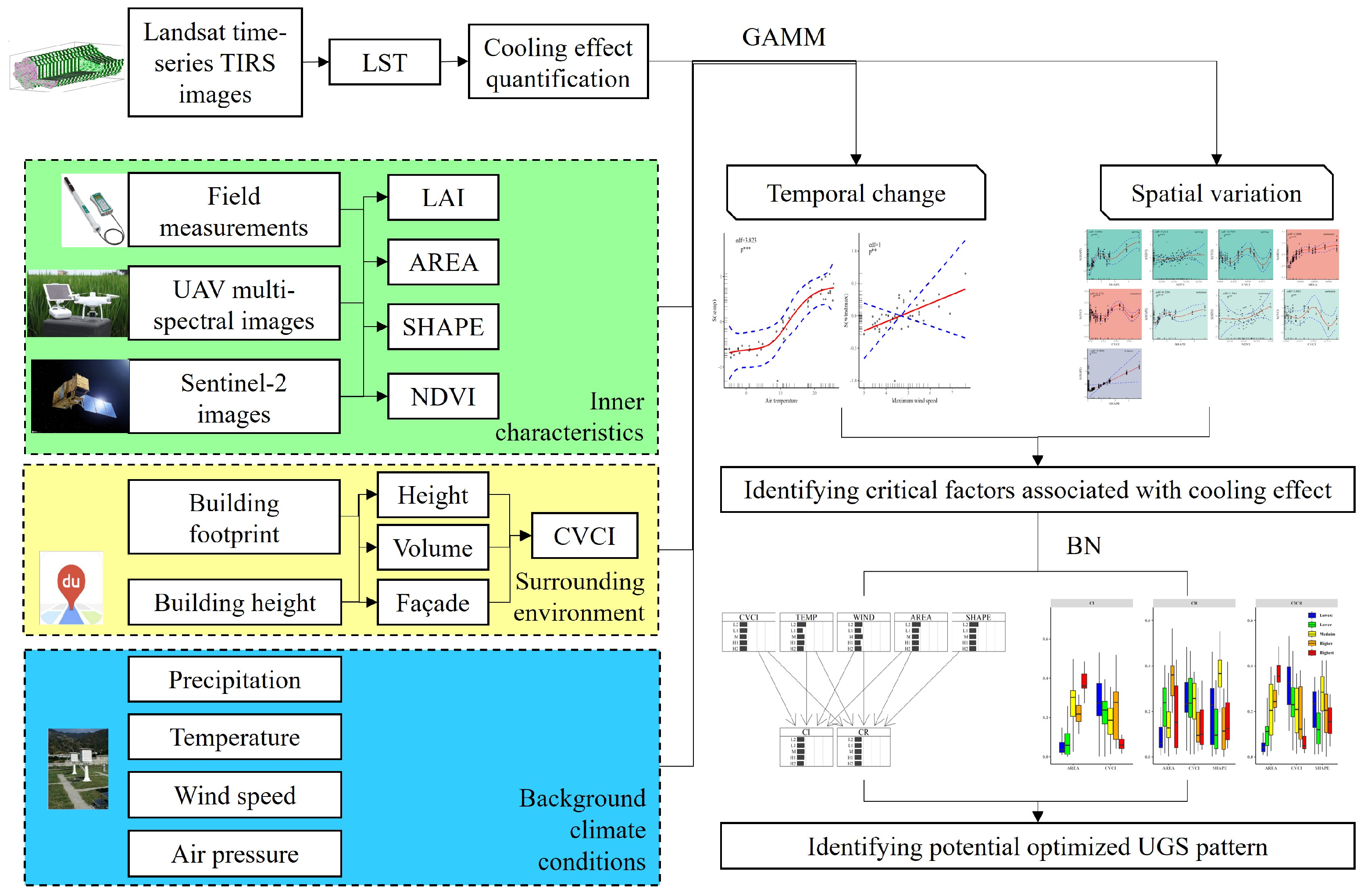
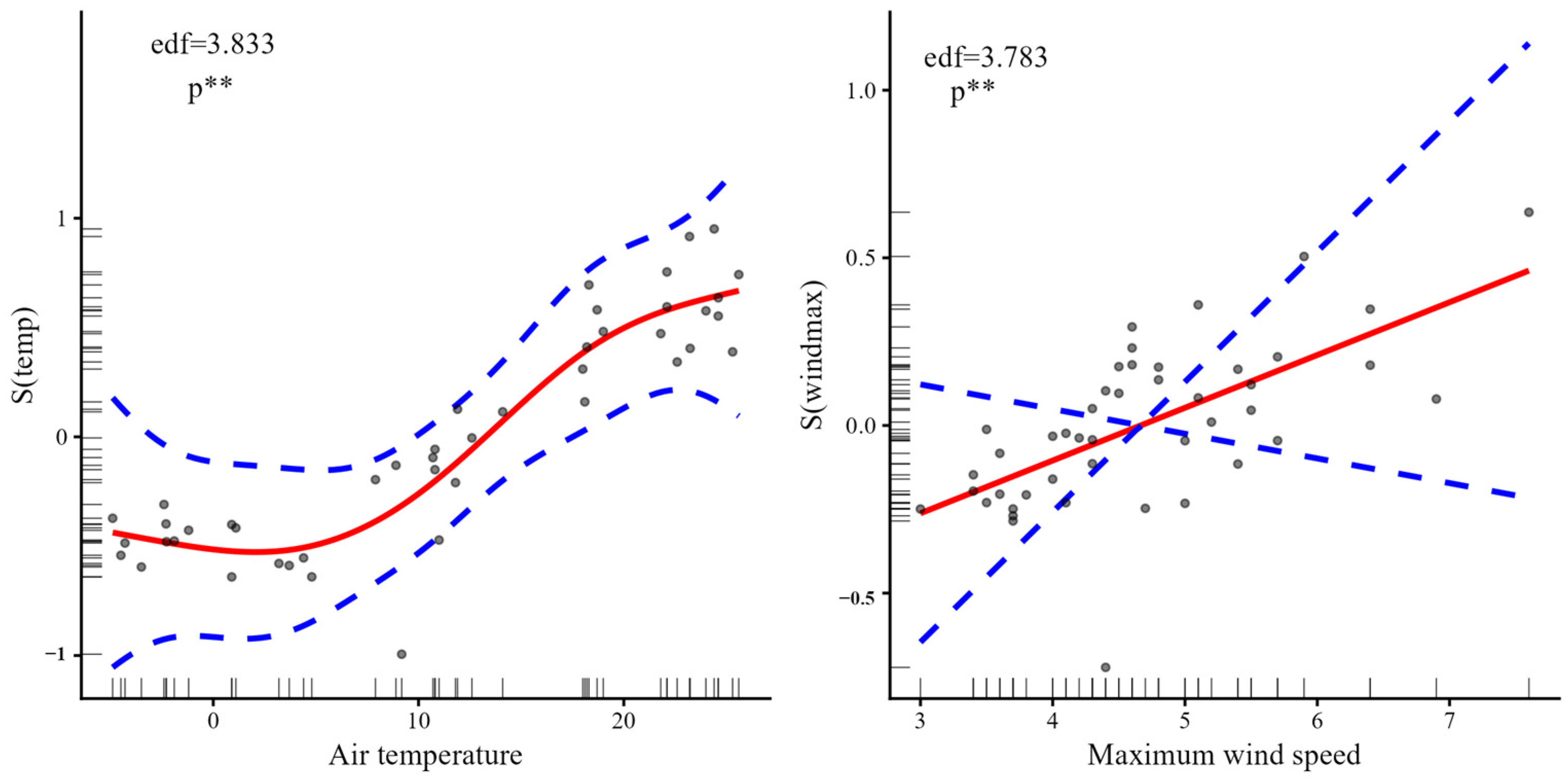
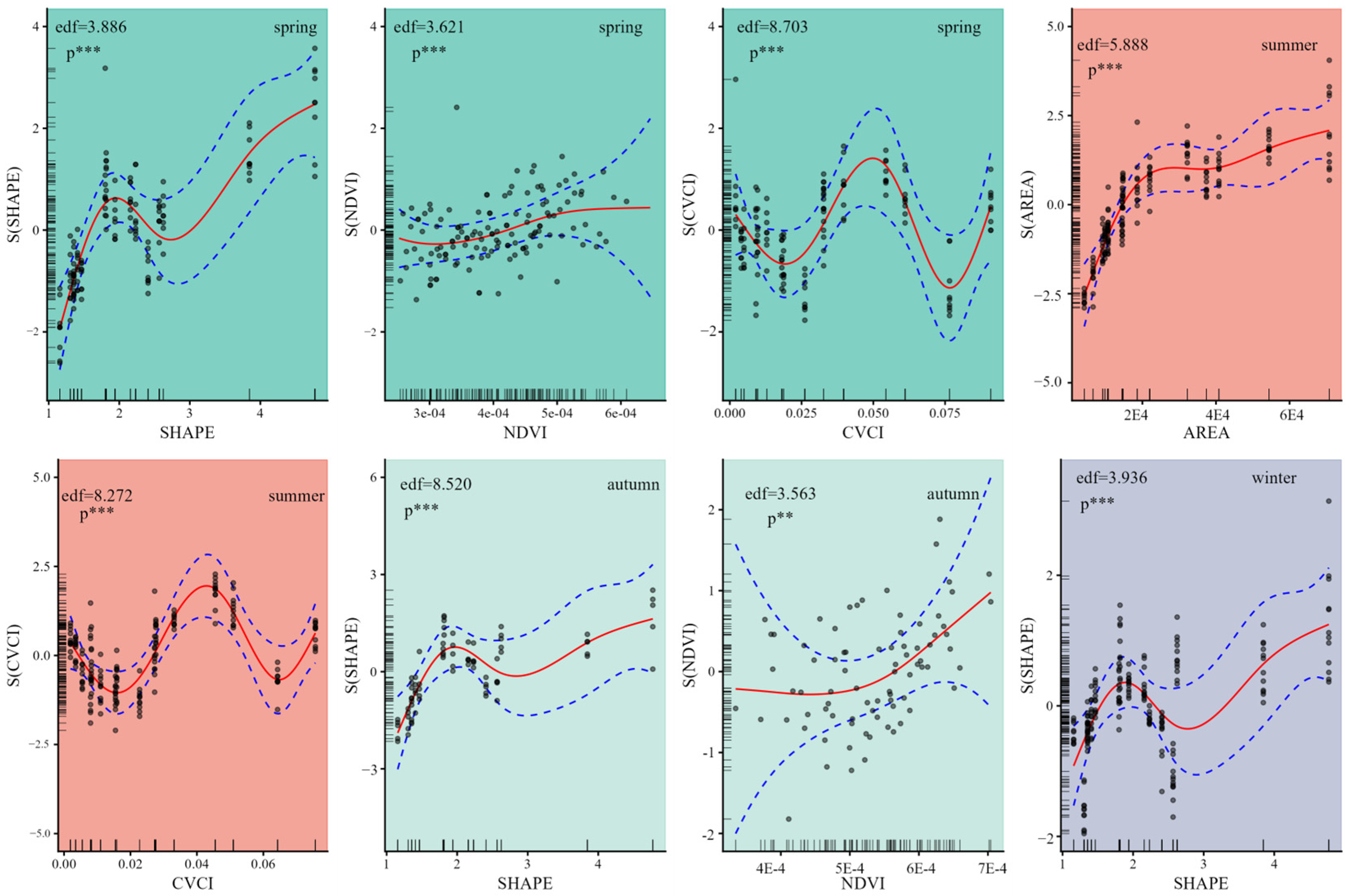
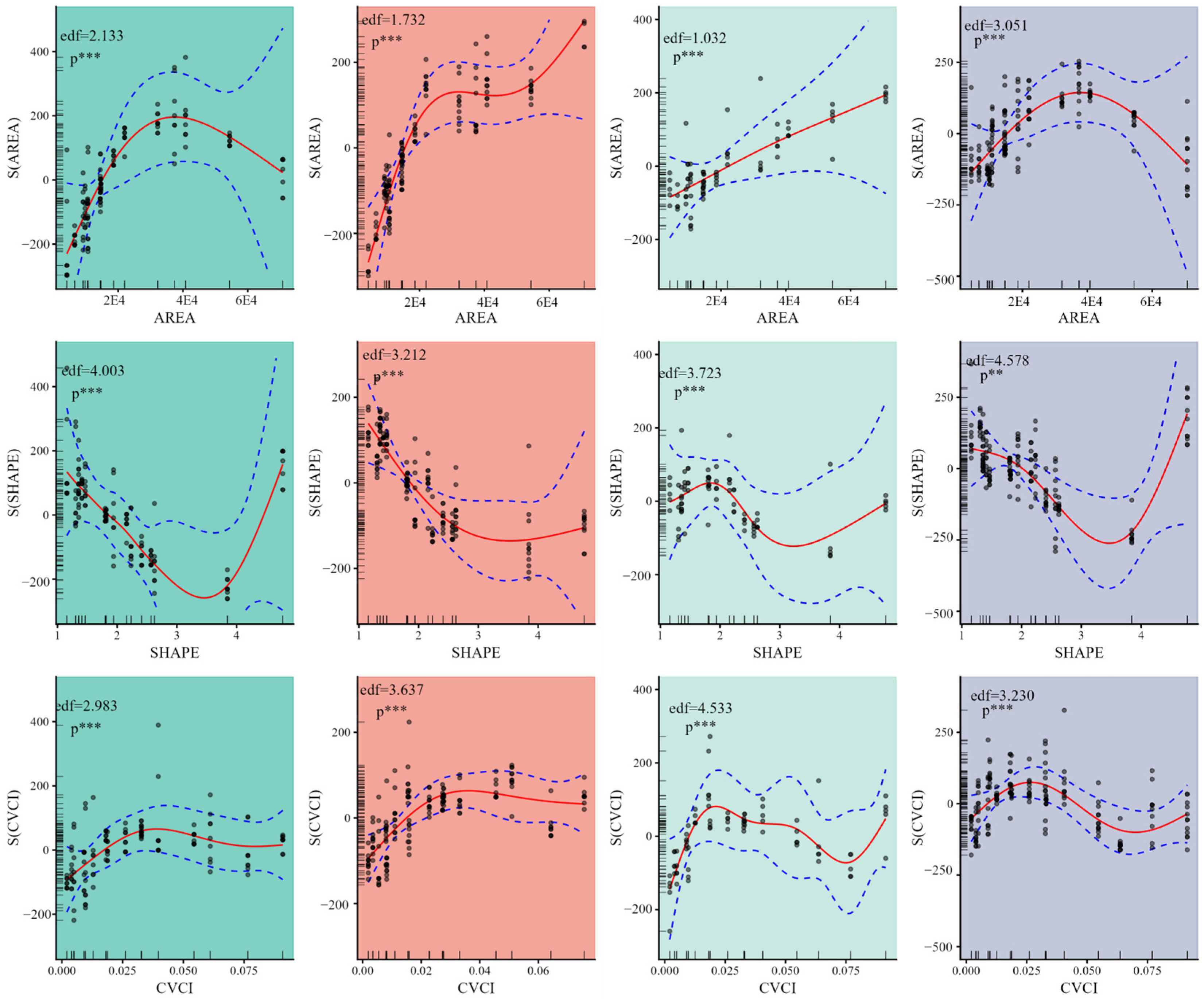
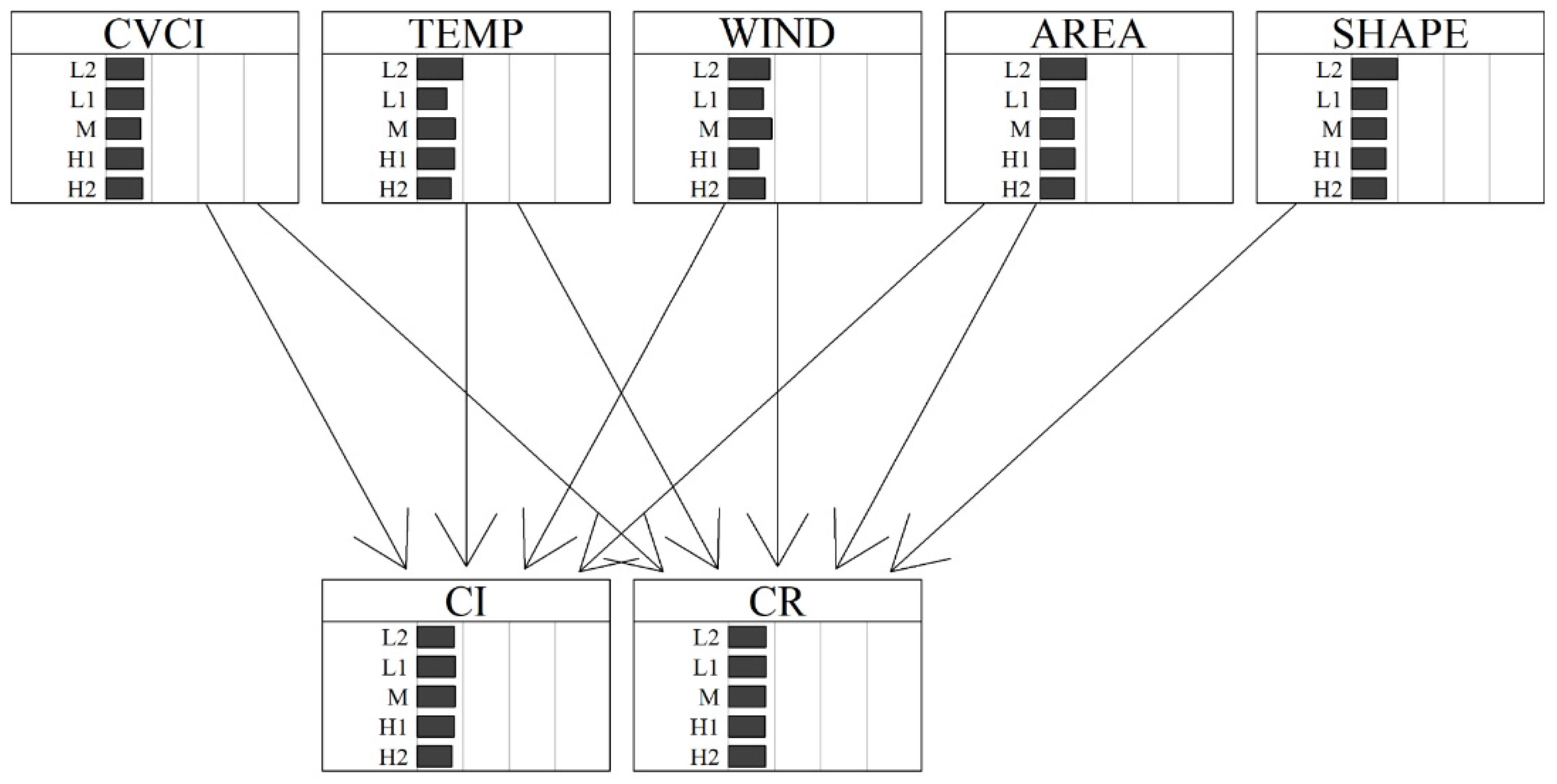
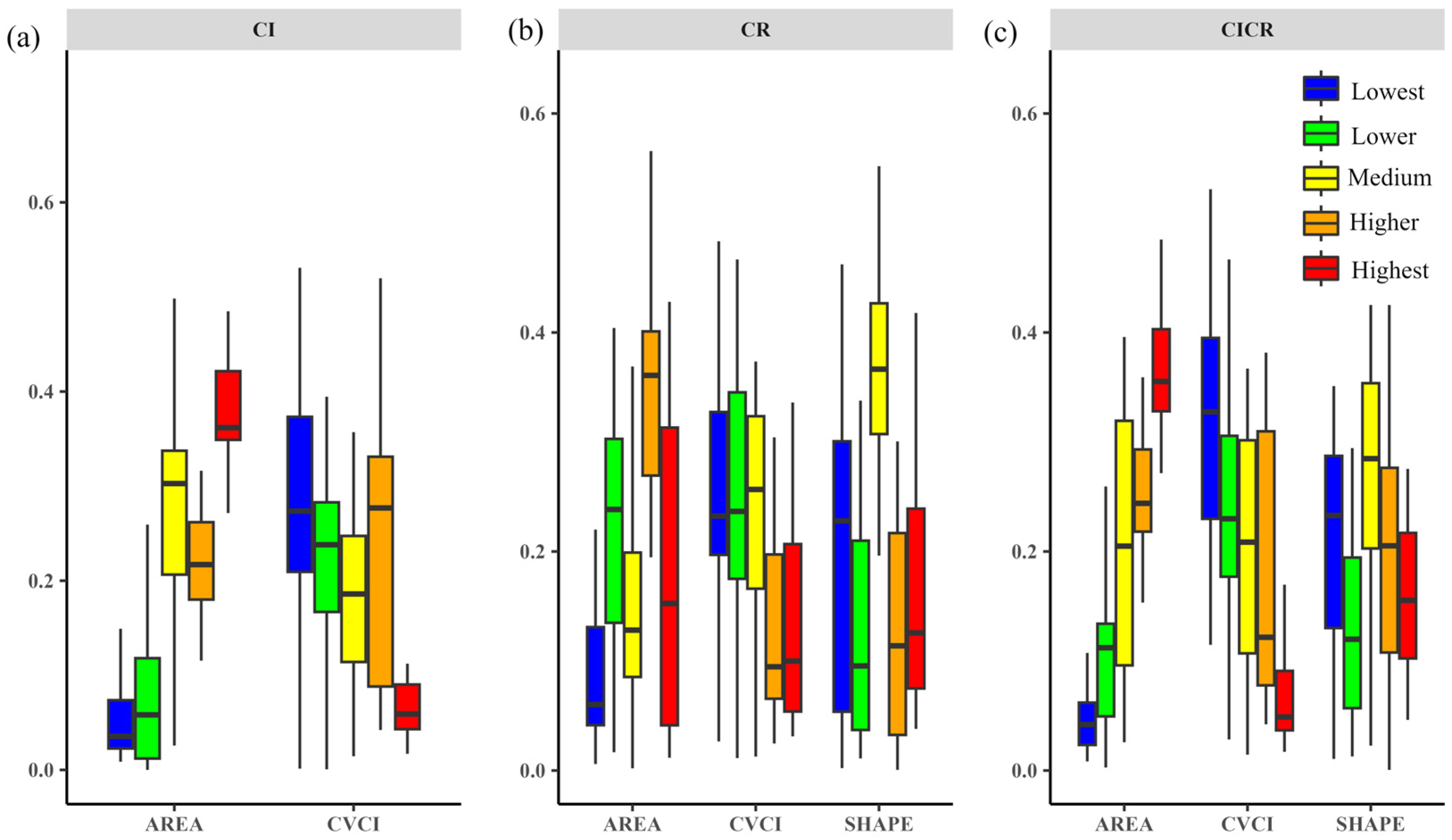
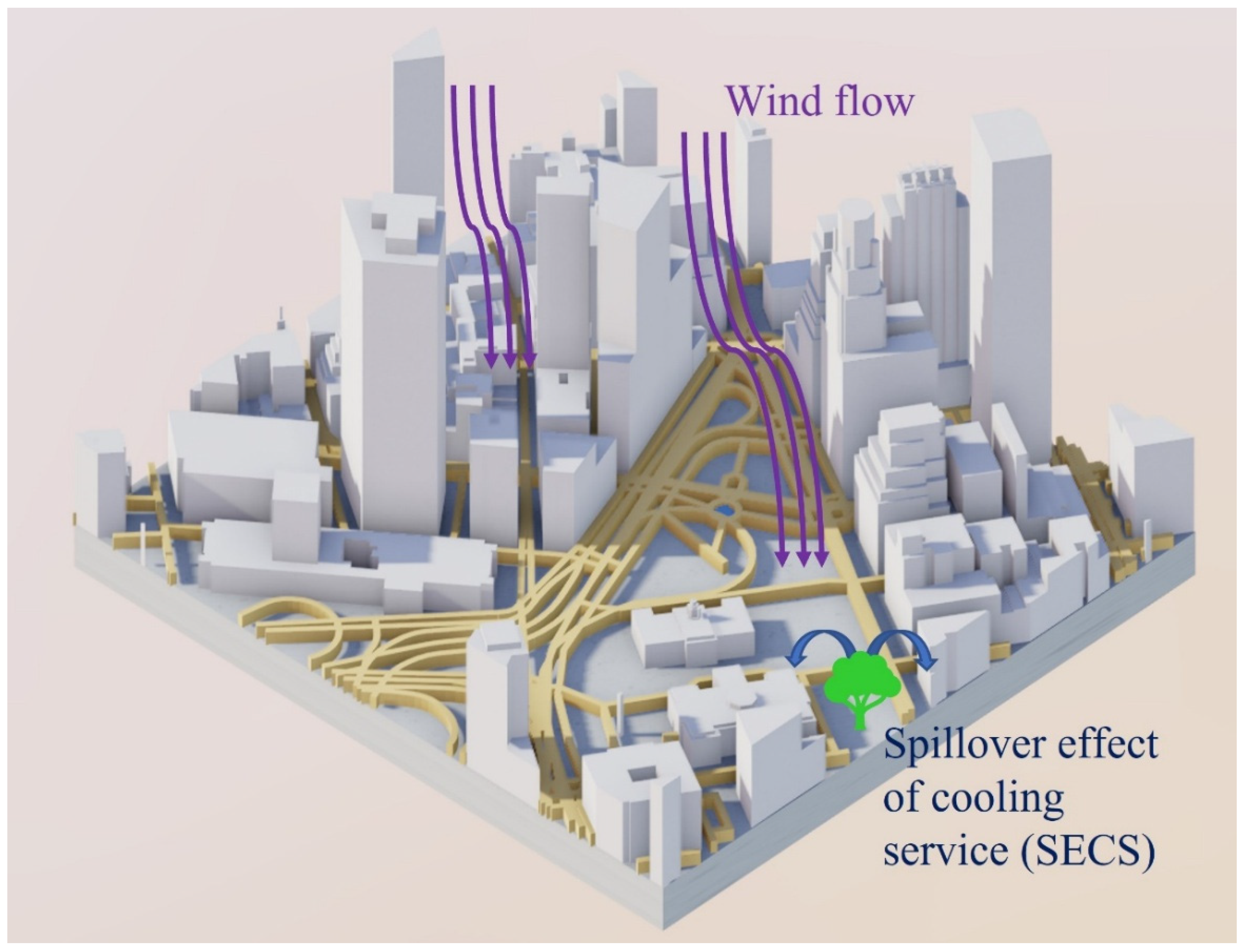
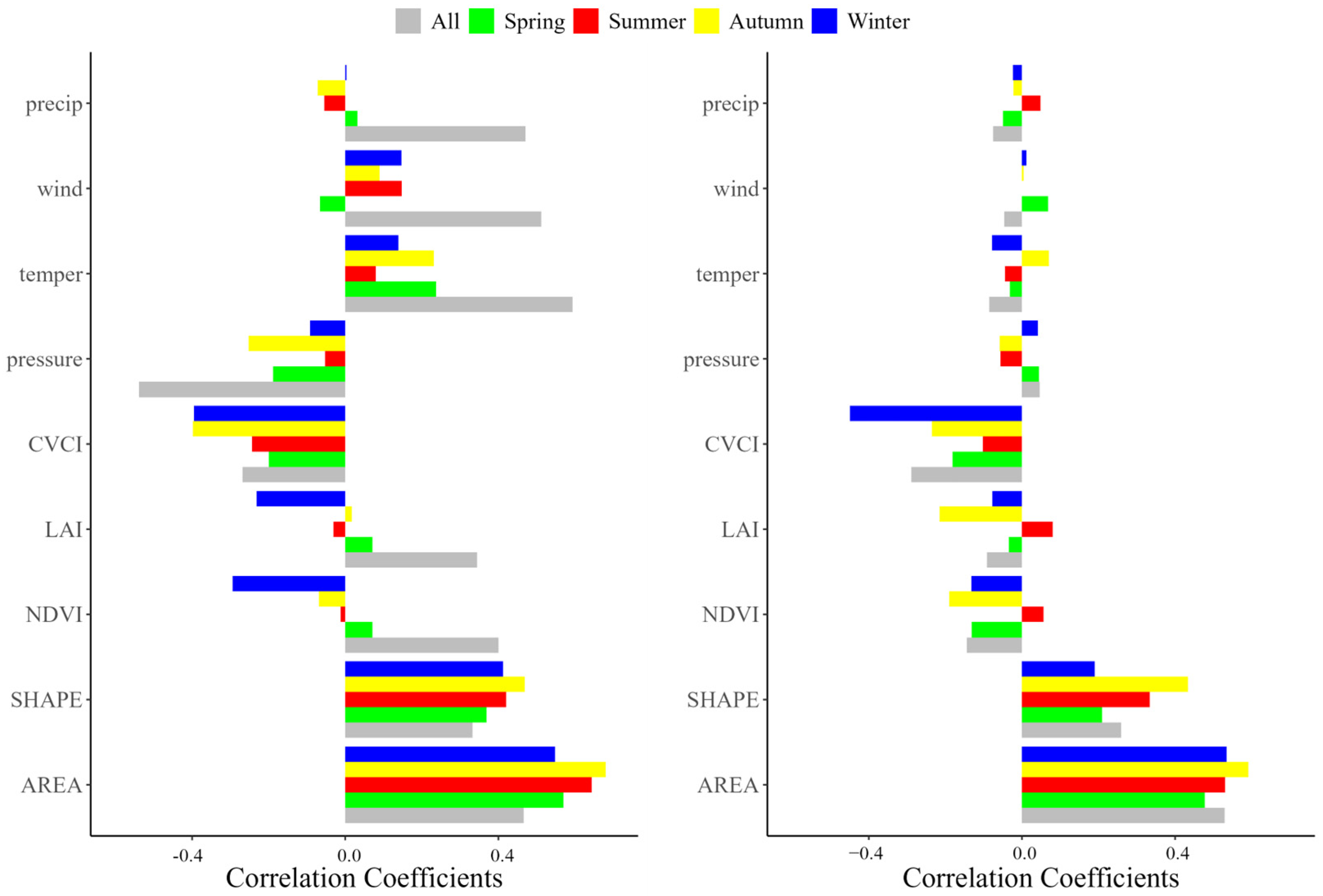
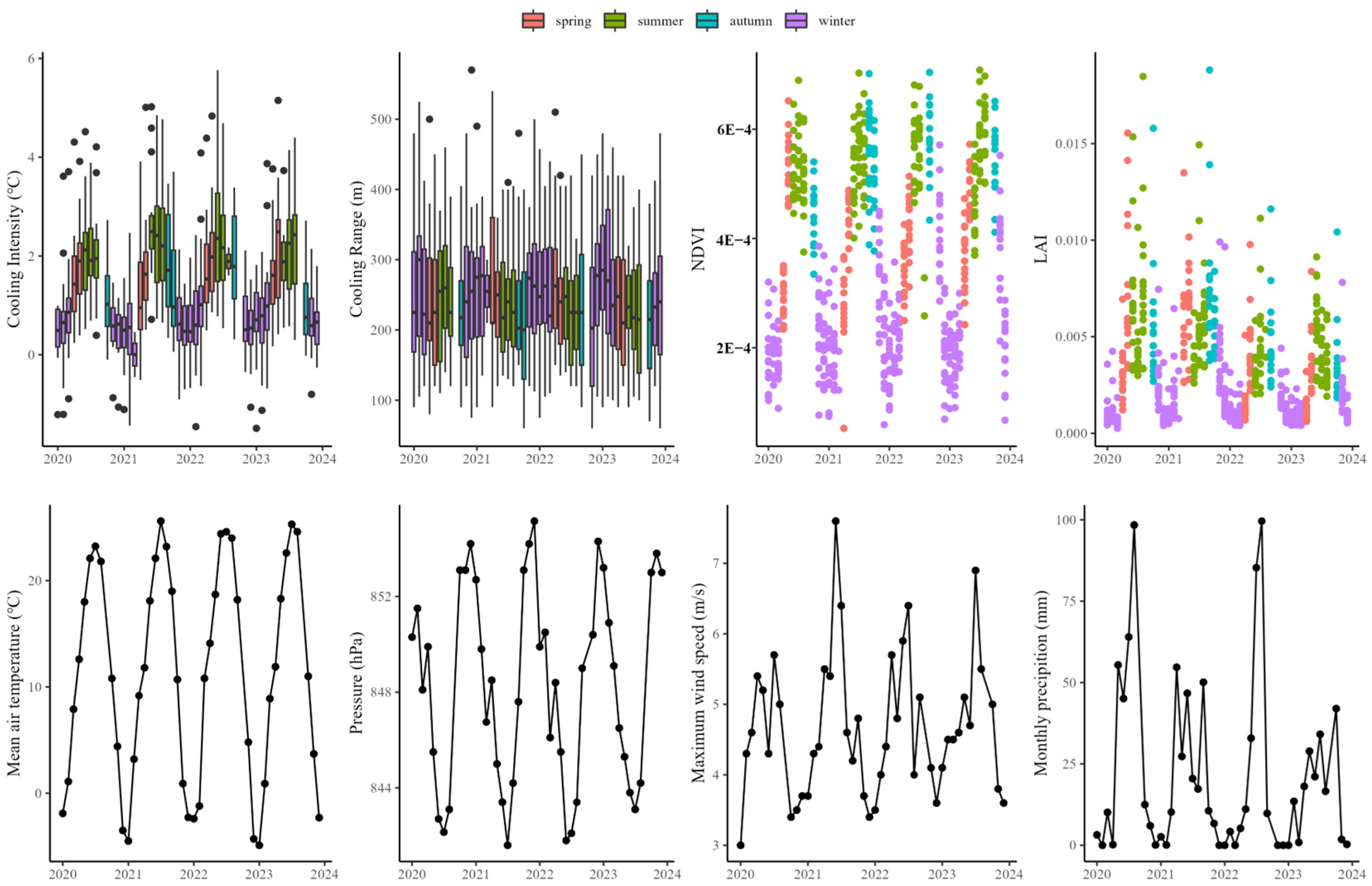
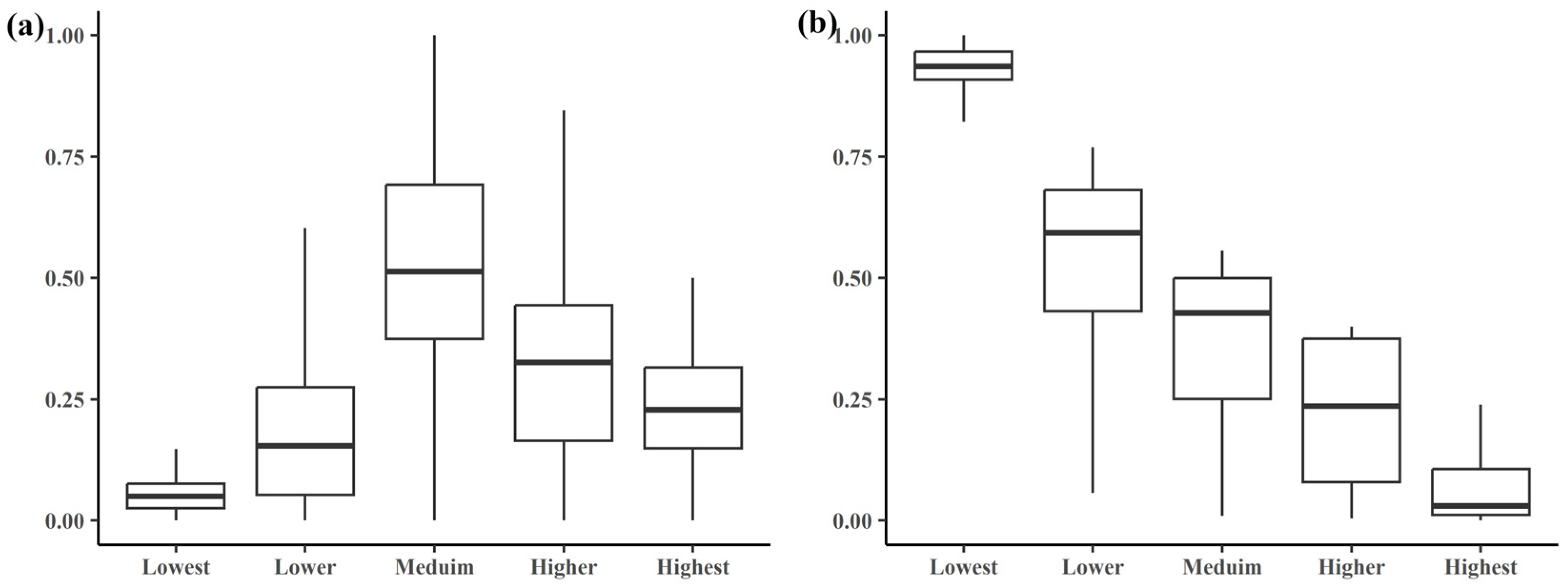
- The UGS cooling effect is mainly associated with meteorological conditions (air temperature and wind speed) and 3D configuration (area, shape, and surrounding ventilation), with “win–win” performance in large, regularly shaped, moderately ventilated patches.
- This framework enables mechanism-based, scalable assessment of UGS cooling under data-limited conditions;
- Findings inform climate-responsive green-infrastructure design and urban ventilation optimization in heat-vulnerable cities.
Abstract
1. Introduction
2. Materials and Methods
2.1. Study Area
2.2. Data Collection and Processing
2.2.1. Fine-Scale Land Use Classification
2.2.2. Estimation of Land Surface Temperature (LST)
2.2.3. Quantification of Leaf Area Index (LAI)
2.2.4. Simulation of Ventilation Environment
2.3. Methodology
2.3.1. Quantifying the UGS Cooling Effect
2.3.2. Quantifying the Cooling-Related Patterns of UGS
2.3.3. Identifying Optimized Patterns for the UGS Cooling Effect
3. Results
3.1. Temporal Changes in Cooling Intensity and Their Associated Factors
3.2. Seasonal Patterns of the Cooling Effect and Associated Factors
3.3. Optimized UGS Patterns for Improving the Cooling Effect
4. Discussion
4.1. Significant Differences Exist in the UGS Cooling Effect Between Different Seasons
4.2. Urban 3D Structure Plays a Critical Role in the UGS Cooling Effect
4.3. Implications for Urban Planning and UGS Management
4.4. Limitations and Future Research Directions
5. Conclusions
Author Contributions
Funding
Data Availability Statement
Acknowledgments
Conflicts of Interest
Abbreviations
| UGS | Urban green space |
| CI | Cooling intensity |
| CR | Cooling range |
| GAMM | Generalized additive mixed-effects model |
| NDVI | Normalized difference vegetation index |
| UHI | Urban heat island |
| LAI | Leaf area index |
| UAV | Unmanned aerial vehicle |
Appendix A

| Indicator | Meaning | Equation |
|---|---|---|
| UAV multi-spectral-based indicators | ||
| NDVI | Normalized difference vegetation index | |
| GNDVI | Green normalized difference vegetation index | |
| OSAVI | Optimized soil adjusted vegetation index | |
| NDRE | Normalized difference red-edge index | |
| LCI | Leaf area chlorophyll index | |
| Sentinel-2 image-based indicators | ||
| CIg | Green chlorophyll index | |
| EVI | Enhanced vegetation index | |
| RVI | Ratio vegetation index | |
| OSAVI | Optimized soil adjusted vegetation index | |
| GNDVI | Green normalized difference vegetation index | |
| NDVI | Normalized difference vegetation index | |
| MTCI | MERIS terrestrial chlorophyll index | |
| CI_rededge1 | Red-edge chlorophyll index-1 | |
| CI_rededge2 | Red-edge chlorophyll index-2 | |
| CI_rededge3 | Red-edge chlorophyll index-3 | |
| NDRE_rededge1 | Normalized difference red-edge index-1 | |
| NDRE_rededge2 | Normalized difference red-edge index-2 | |
| NDRE_rededge3 | Normalized difference red-edge index-3 | |
| LCI_rededge1 | Red-edge leaf area chlorophyll index-1 | |
| LCI_rededge2 | Red-edge leaf area chlorophyll index-2 | |
| LCI_rededge3 | Red-edge leaf area chlorophyll index-3 | |
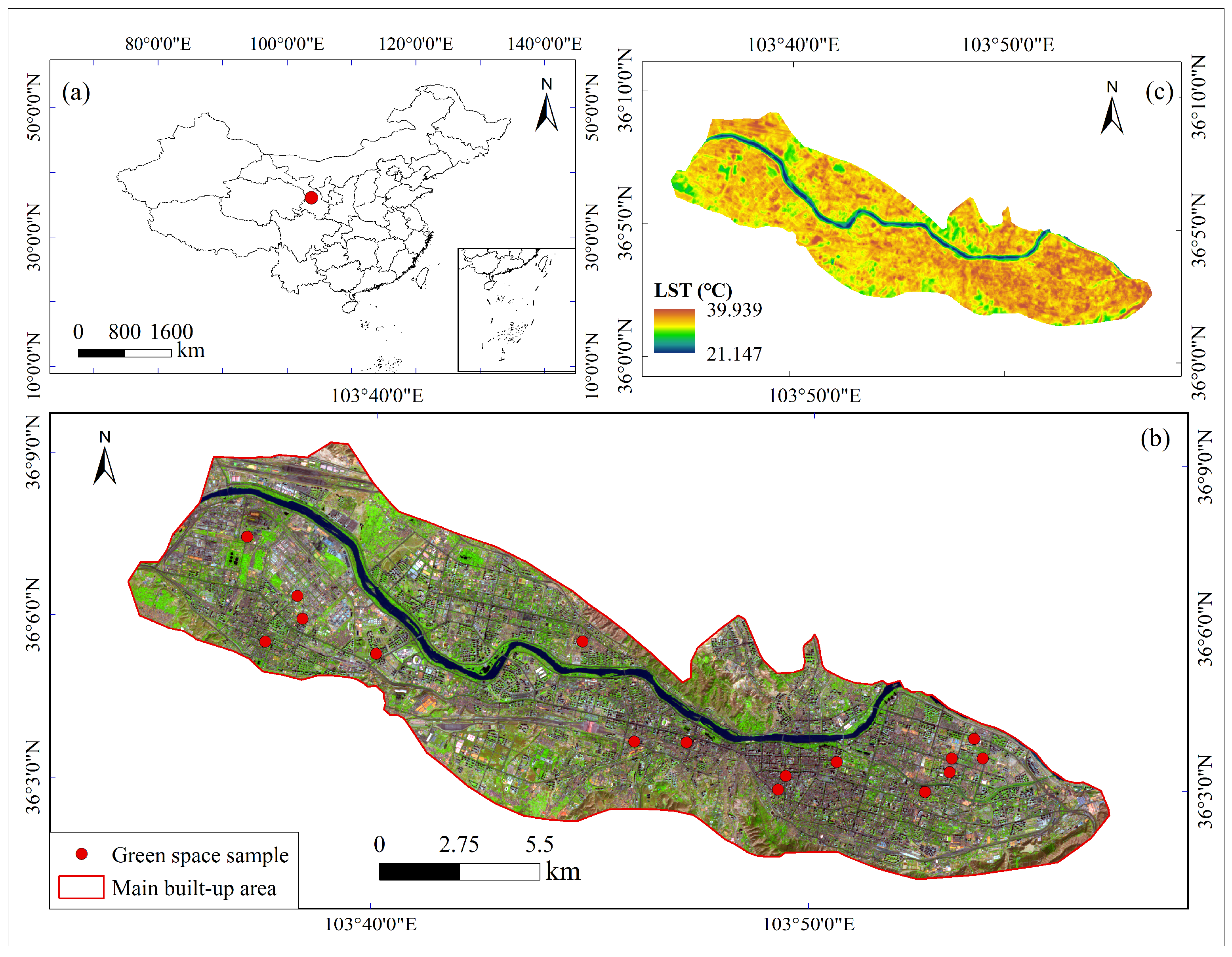
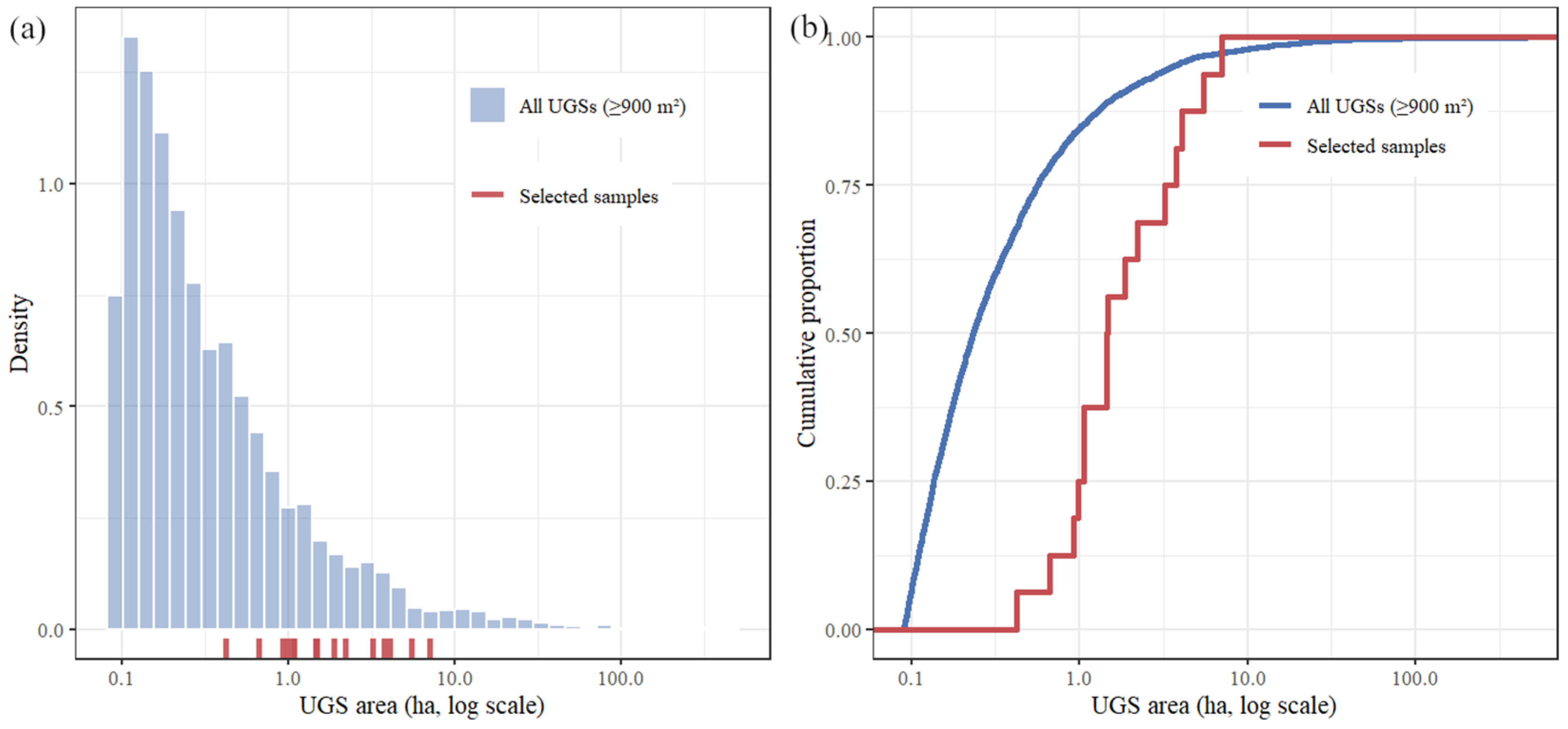
| Sample ID | Area (ha) | Length (km) | Type | Location |
|---|---|---|---|---|
| 1 | 0.66 | 0.44 | Park | Urban core |
| 2 | 0.98 | 0.58 | Park | Inner city |
| 3 | 1.07 | 0.54 | Park | Inner city |
| 4 | 3.22 | 2.76 | Residential green space | Urban core |
| 5 | 1.45 | 1.16 | Residential green space | Urban core |
| 6 | 1.06 | 0.58 | Roadside green space | Urban core |
| 7 | 1.46 | 1.08 | Park | Urban core |
| 8 | 0.42 | 0.3 | Residential green space | Urban core |
| 9 | 7.08 | 5.08 | Residential green space | Inner city |
| 10 | 0.92 | 0.52 | Park | Urban core |
| 11 | 1.86 | 1.4 | Institutional green space | Inner city |
| 12 | 1.47 | 0.88 | Park | Inner city |
| 13 | 2.2 | 1.28 | Roadside green space | Inner city |
| 14 | 5.44 | 1.68 | Park | Inner city |
| 15 | 4.08 | 2.12 | Park | Inner city |
| 16 | 3.74 | 1.5 | Park | Inner city |
Appendix B


References
- Baik, J.J.; Kim, Y.H.; Kim, J.J.; Han, J.Y. Effects of boundary-layer stability on urban heat island-induced circulation. Theor. Appl. Clim. 2007, 89, 73–81. [Google Scholar] [CrossRef]
- UN (Department of Economic and Social Affairs, Population Division). World Urbanization Prospects 2018: Highlights; Department of Economic and Social Affairs, Population Division: New York, NY, USA, 2019. [Google Scholar]
- Lin, Y.; Zhang, M.; Gan, M.; Huang, L.; Zhu, C.; Zheng, Q.; You, S.; Ye, Z.; Shahtahmassebi, A.; Li, Y.; et al. Fine identification of the supply–demand mismatches and matches of urban green space ecosystem services with a spatial filtering tool. J. Clean. Prod. 2022, 336, 130404. [Google Scholar] [CrossRef]
- Zhou, W.; Cao, W.; Wu, T.; Zhang, T. The win-win interaction between integrated blue and green space on urban cooling. Sci. Total Environ. 2023, 863, 160712. [Google Scholar] [CrossRef] [PubMed]
- Tieskens, K.F.; Smith, I.A.; Jimenez, R.B.; Hutyra, L.R.; Fabian, M.P. Mapping the gaps between cooling benefits of urban greenspace and population heat vulnerability. Sci. Total Environ. 2022, 845, 157283. [Google Scholar] [CrossRef]
- Yan, M.; Chen, L.D.; Leng, S.; Sun, R.H. Effects of local background climate on urban vegetation cooling and humidification: Variations and thresholds. Urban For. Urban Green. 2023, 80, 127840. [Google Scholar] [CrossRef]
- Li, Y.L.; Ren, C.; Ho, J.Y.E.; Shi, Y. Landscape metrics in assessing how the configuration of urban green spaces affects their cooling effect: A systematic review of empirical studies. Landsc. Urban Plan. 2023, 239, 104842. [Google Scholar] [CrossRef]
- Yu, Z.W.; Yang, G.Y.; Zuo, S.D.; Jorgensen, G.; Koga, M.; Vejre, H. Critical review on the cooling effect of urban blue-green space: A threshold-size perspective. Urban For. Urban Green. 2020, 49, 126630. [Google Scholar] [CrossRef]
- Sheng, S.; Wang, Y. Configuration characteristics of green-blue spaces for efficient cooling in urban environments. Sustain. Cities Soc. 2024, 100, 105040. [Google Scholar] [CrossRef]
- Xu, Z.Y.; Zhao, S.Q. Scale dependence of urban green space cooling efficiency: A case study in Beijing metropolitan area. Sci. Total Environ. 2023, 898, 165563. [Google Scholar] [CrossRef]
- Ding, W.; Liu, M.; Wu, Y.; Chen, H. How to expand the cooling capacity of blue and green spaces in peri-urban areas throughout the entire diurnal cycle: Evidence from an inland multilake city. J. Clean. Prod. 2024, 444, 141165. [Google Scholar] [CrossRef]
- Wang, C.; Ren, Z.; Du, Y.; Guo, Y.; Zhang, P.; Wang, G.; Hong, S.; Ma, Z.; Hong, W.; Li, T. Urban vegetation cooling capacity was enhanced under rapid urbanization in China. J. Clean. Prod. 2023, 425, 138906. [Google Scholar] [CrossRef]
- Park, C.Y.; Park, Y.S.; Kim, H.G.; Yun, S.H.; Kim, C.K. Quantifying and mapping cooling services of multiple ecosystems. Sustain. Cities Soc. 2021, 73, 103123. [Google Scholar] [CrossRef]
- Ren, Z.; Wang, C.; Guo, Y.; Hong, S.; Zhang, P.; Ma, Z.; Hong, W.; Wang, X.; Geng, R.; Meng, F. The cooling capacity of urban vegetation and its driving force under extreme hot weather: A comparative study between dry-hot and humid-hot cities. Build. Environ. 2024, 263, 111901. [Google Scholar] [CrossRef]
- Ying, S.; Wang, M.; Zhang, W.; Sun, H.; Li, C. City-scale ventilation analysis using 3D buildings with Guangzhou case. Urban Clim. 2023, 49, 101471. [Google Scholar] [CrossRef]
- Xie, P.; Yang, J.; Wang, H.; Liu, Y.; Liu, Y. A New method of simulating urban ventilation corridors using circuit theory. Sustain. Cities Soc. 2020, 59, 102162. [Google Scholar] [CrossRef]
- Shirzadi, M.; Naghashzadegan, M.; Mirzaei, P.A. Improving the CFD modelling of cross-ventilation in highly-packed urban areas. Sustain. Cities Soc. 2018, 37, 451–465. [Google Scholar] [CrossRef]
- Palusci, O.; Monti, P.; Cecere, C.; Montazeri, H.; Blocken, B. Impact of morphological parameters on urban ventilation in compact cities: The case of the Tuscolano-Don Bosco district in Rome. Sci. Total Environ. 2022, 807, 150490. [Google Scholar] [CrossRef]
- Huang, J.; Wang, Y. Identification of ventilation corridors through a simulation scenario of forest canopy density in the metropolitan area. Sustain. Cities Soc. 2023, 95, 104595. [Google Scholar] [CrossRef]
- Yuan, B.; Zhou, L.; Dang, X.; Sun, D.; Hu, F.; Mu, H. Separate and combined effects of 3D building features and urban green space on land surface temperature. J. Environ. Manag. 2021, 295, 113116. [Google Scholar] [CrossRef]
- Zhu, Z.; Shen, Y.; Fu, W.; Zheng, D.; Huang, P.; Li, J.; Lan, Y.; Chen, Z.; Liu, Q.; Xu, X.; et al. How does 2D and 3D of urban morphology affect the seasonal land surface temperature in Island City? A block-scale perspective. Ecol. Indic. 2023, 150, 110221. [Google Scholar] [CrossRef]
- Fang, Y.; Zhao, L. Assessing the environmental benefits of urban ventilation corridors: A case study in Hefei, China. Build. Environ. 2022, 212, 108810. [Google Scholar] [CrossRef]
- Zhang, J.; Lin, S.; Ding, L.; Bruzzone, L. Multi-Scale Context Aggregation for Semantic Segmentation of Remote Sensing Images. Remote Sens. 2020, 12, 701. [Google Scholar] [CrossRef]
- Jimenez-Munoz, J.C.; Sobrino, J.A.; Skokovic, D.; Mattar, C.; Cristobal, J. Land Surface Temperature Retrieval Methods from Landsat-8 Thermal Infrared Sensor Data. IEEE Geosci. Remote Sens. Lett. 2014, 11, 1840–1843. [Google Scholar] [CrossRef]
- Lyu, R.; Pang, J.; Tian, X.; Zhao, W.; Zhang, J. How to optimize the 2D/3D urban thermal environment: Insights derived from UAV LiDAR/multispectral data and multi-source remote sensing data. Sustain. Cities Soc. 2023, 88, 104287. [Google Scholar] [CrossRef]
- Du, S.; Chen, S.; Cheng, S.; He, J.; Zhao, D.; Zhu, X.; Lian, L.; Tu, X.; Zhao, Q.; Zhang, Y. Dust storm detection for ground-based stations with imbalanced machine learning. Environ. Model. Softw. 2025, 188, 106420. [Google Scholar] [CrossRef]
- Li, X.; Lin, K.; Cheng, D.; Zou, H.; Shu, Y.; Jin, Z.; Zhu, J. Meteorological effects of ventilation corridor in central urban areas: A case study of Wuhan. Sustain. Cities Soc. 2024, 114, 105752. [Google Scholar] [CrossRef]
- Tan, X.Y.; Sun, X.; Huang, C.D.; Yuan, Y.; Hou, D.L. Comparison of cooling effect between green space and water body. Sustain. Cities Soc. 2021, 67, 102711. [Google Scholar] [CrossRef]
- Qi, S.F.; Zhao, S.P.; Yu, Y.; Yang, L.L. Composition, sources and potential source regions of aerosols under contrasting environment conditions of Lanzhou, a valley city of western China: Observations by means of topographic relief. Atmos. Pollut. Res. 2024, 15, 102154. [Google Scholar] [CrossRef]
- Cheng, X.Y.; Peng, J.; Dong, J.Q.; Liu, Y.X.; Wang, Y.L. Non-linear effects of meteorological variables on cooling efficiency of African urban trees. Environ. Int. 2022, 169, 107489. [Google Scholar] [CrossRef]
- Wood, S.N.; Goude, Y.; Shaw, S. Generalized additive models for large data sets. Appl. Stat. 2015, 64, 139–155. [Google Scholar] [CrossRef]
- Pham, H.V.; Sperotto, A.; Furlan, E.; Torresan, S.; Marcomini, A.; Critto, A. Integrating Bayesian Networks into ecosystem services assessment to support water management at the river basin scale. Ecosyst. Serv. 2021, 50, 101300. [Google Scholar] [CrossRef]
- Marcot, B.G.; Penman, T.D. Advances in Bayesian network modelling: Integration of modelling technologies. Environ. Model. Softw. 2019, 111, 386–393. [Google Scholar] [CrossRef]
- Zawadzka, J.E.; Harris, J.A.; Corstanje, R. Assessment of heat mitigation capacity of urban greenspaces with the use of InVEST urban cooling model, verified with day-time land surface temperature data. Landsc. Urban Plan. 2021, 214, 104163. [Google Scholar] [CrossRef]
- Yang, C.; Zhu, W.; Sun, J.; Xu, X.; Wang, R.; Lu, Y.; Zhang, S.; Zhou, W. Assessing the effects of 2D/3D urban morphology on the 3D urban thermal environment by using multi-source remote sensing data and UAV measurements: A case study of the snow-climate city of Changchun, China. J. Clean. Prod. 2021, 321, 128956. [Google Scholar] [CrossRef]
- Han, L.; Zhao, J.; Gao, Y.; Gu, Z.; Xin, K.; Zhang, J. Spatial distribution characteristics of PM2.5 and PM10 in Xi’an City predicted by land use regression models. Sustain. Cities Soc. 2020, 61, 102329. [Google Scholar] [CrossRef]
- Huang, L.; Lu, Y.; Wang, J. Linking G2SFCA method and circuit theory to promote spatial equity and landscape connectivity in urban ecological infrastructure. J. Environ. Manag. 2023, 348, 119208. [Google Scholar] [CrossRef]
- Zhou, W.; Yu, Y.; Zhang, S.; Xu, J.; Wu, T. Methods for quantifying the cooling effect of urban green spaces using remote sensing: A comparative study. Landsc. Urban Plan. 2025, 256, 105289. [Google Scholar] [CrossRef]
- Back, Y.; Bach, P.M.; Jasper-Tönnies, A.; Rauch, W.; Kleidorfer, M. A rapid fine-scale approach to modelling urban bioclimatic conditions. Sci. Total Environ. 2021, 756, 143732. [Google Scholar] [CrossRef]
- Lemoine-Rodríguez, R.; Inostroza, L.; Falfán, I.; MacGregor-Fors, I. Too hot to handle? On the cooling capacity of urban green spaces in a Neotropical Mexican city. Urban For. Urban Green. 2022, 74, 127633. [Google Scholar] [CrossRef]
- Wang, C.; Ren, Z.; Dong, Y.; Zhang, P.; Guo, Y.; Wang, W.; Bao, G. Efficient cooling of cities at global scale using urban green space to mitigate urban heat island effects in different climatic regions. Urban For. Urban Green. 2022, 74, 127635. [Google Scholar] [CrossRef]
- Wang, J.; Zhou, W.; Jiao, M.; Zheng, Z.; Ren, T.; Zhang, Q. Significant effects of ecological context on urban trees’ cooling efficiency. ISPRS J. Photogramm. Remote Sens. 2020, 159, 78–89. [Google Scholar] [CrossRef]
- Yang, Y.J.; Guo, M.; Wang, L.L.; Zong, L.; Liu, D.Y.; Zhang, W.J.; Wang, M.Y.; Wan, B.C.; Guo, Y.D. Unevenly spatiotemporal distribution of urban excess warming in coastal Shanghai megacity, China: Roles of geophysical environment, ventilation and sea breezes. Build. Environ. 2023, 235, 110180. [Google Scholar] [CrossRef]
- Gunawardena, K.R.; Wells, M.J.; Kershaw, T. Utilising green and bluespace to mitigate urban heat island intensity. Sci. Total Environ. 2017, 584, 1040–1055. [Google Scholar] [CrossRef]
- Yu, Z.G. Spin relaxation and diffusion in disordered organic solids. J. Photon Energy 2018, 8, 032213. [Google Scholar] [CrossRef]
- Wang, C.; Ren, Z.; Zhang, P.; Guo, Y.; Hong, S.; Hong, W.; Wang, X.; Geng, R.; Meng, F. Impact of vegetation coverage and configuration on urban temperatures: A comparative study of 31 provincial capital cities in China. J. For. Res. 2024, 35, 142. [Google Scholar] [CrossRef]
- Deilami, K.; Kamruzzaman, M.; Liu, Y. Urban heat island effect: A systematic review of spatio-temporal factors, data, methods, and mitigation measures. Int. J. Appl. Earth Obs. Geoinf. 2018, 67, 30–42. [Google Scholar] [CrossRef]
- Yang, J.R.; Guo, R.; Li, D.; Wang, X.L.; Li, F.Z. Interval-thresholding effect of cooling and recreational services of urban parks in metropolises. Sustain. Cities Soc. 2022, 79, 103684. [Google Scholar] [CrossRef]
- Zhou, W.; Yu, W.; Wu, T. An alternative method of developing landscape strategies for urban cooling: A threshold-based perspective. Landsc. Urban Plan. 2022, 225, 104449. [Google Scholar] [CrossRef]
- Shi, M.; Chen, M.; Jia, W.; Du, C.; Wang, Y. Cooling effect and cooling accessibility of urban parks during hot summers in China’s largest sustainability experiment. Sustain. Cities Soc. 2023, 93, 104519. [Google Scholar] [CrossRef]
- Maimaitiyiming, M.; Ghulam, A.; Tiyip, T.; Pla, F.; Latorre-Carmona, P.; Halik, Ü.; Sawut, M.; Caetano, M. Effects of green space spatial pattern on land surface temperature: Implications for sustainable urban planning and climate change adaptation. ISPRS J. Photogramm. Remote Sens. 2014, 89, 59–66. [Google Scholar] [CrossRef]
- Jaganmohan, M.; Knapp, S.; Buchmann, C.M.; Schwarz, N. The Bigger, the Better? The Influence of Urban Green Space Design on Cooling Effects for Residential Areas. J. Environ. Qual. 2016, 45, 134–145. [Google Scholar] [CrossRef]
- Zardo, L.; Geneletti, D.; Pérez-Soba, M.; Van Eupen, M. Estimating the cooling capacity of green infrastructures to support urban planning. Ecosyst. Serv. 2017, 26, 225–235. [Google Scholar] [CrossRef]
- Wang, C.C.; Ren, Z.B.; Chang, X.Y.; Wang, G.D.; Hong, X.; Dong, Y.L.; Guo, Y.J.; Zhang, P.; Ma, Z.J.; Wang, W.J. Understanding the cooling capacity and its potential drivers in urban forests at the single tree and cluster scales. Sustain. Cities Soc. 2023, 93, 104531. [Google Scholar] [CrossRef]
- Hidalgo García, D. Spatio-temporal analysis of the urban green infrastructure of the city of Granada (Spain) as a heat mitigation measure using high-resolution images Sentinel 3. Urban For. Urban Green. 2023, 87, 128061. [Google Scholar] [CrossRef]
- Bartesaghi-Koc, C.; Osmond, P.; Peters, A. Quantifying the seasonal cooling capacity of ‘green infrastructure types’ (GITs): An approach to assess and mitigate surface urban heat island in Sydney, Australia. Landsc. Urban Plan. 2020, 203, 103893. [Google Scholar] [CrossRef]
- Wang, D.; Wan, B.; Liu, J.; Su, Y.; Guo, Q.; Qiu, P.; Wu, X. Estimating aboveground biomass of the mangrove forests on northeast Hainan Island in China using an upscaling method from field plots, UAV-LiDAR data and Sentinel-2 imagery. Int. J. Appl. Earth Obs. Geoinf. 2020, 85, 101986. [Google Scholar] [CrossRef]
- Qi, T.; Ren, Q.; He, C.Y.; Zhang, X.W. Dual effects on vegetation from urban expansion in the drylands of northern China: A multiscale investigation using the vegetation disturbance index. Sci. Total Environ. 2024, 928, 172481. [Google Scholar] [CrossRef]
- Rahman, M.A.; Stratopoulos, L.M.F.; Moser-Reischl, A.; Zölch, T.; Häberle, K.-H.; Rötzer, T.; Pretzsch, H.; Pauleit, S. Traits of trees for cooling urban heat islands: A meta-analysis. Build. Environ. 2020, 170, 106606. [Google Scholar] [CrossRef]
- He, Y.; Yuan, C.; Ren, C.; Ng, E. Urban ventilation assessment with improved vertical wind profile in high-density cities—Comparisons between LiDAR and conventional methods. J. Wind. Eng. Ind. Aerodyn. 2022, 228, 105116. [Google Scholar] [CrossRef]
- Yang, J.; Wang, Y.; Xue, B.; Li, Y.; Xiao, X.; Xia, J.C.; He, B. Contribution of urban ventilation to the thermal environment and urban energy demand: Different climate background perspectives. Sci. Total Environ. 2021, 795, 148791. [Google Scholar] [CrossRef] [PubMed]
- Wang, W.; Wang, D.; Chen, H.; Wang, B.; Chen, X. Identifying urban ventilation corridors through quantitative analysis of ventilation potential and wind characteristics. Build. Environ. 2022, 214, 108943. [Google Scholar] [CrossRef]
- Tian, W.; Yang, Y.; Wang, L.; Zong, L.; Zhang, Y.; Liu, D. Role of local climate zones and urban ventilation in canopy urban heat island–heatwave interaction in Nanjing megacity, China. Urban Clim. 2023, 49, 101474. [Google Scholar] [CrossRef]


| Type | Factor | Code | Calculation Method |
|---|---|---|---|
| Inner characteristics | Patch area | AREA | |
| Patch shape index | SHAPE | ||
| Normalized difference vegetation | NDVI | ||
| Leaf area index | LAI | Estimated following the methodology described in Section 2.2.2 | |
| Surrounding environment | Comprehensive ventilation cost index | CVCI | Estimated following the methodology described in Section 2.2.3 |
| Background conditions | Average monthly precipitation | precip | Observation data from monitoring station |
| Average monthly temperature | temper | Observation data from monitoring station | |
| Maximum wind speed | wind | Observation data from monitoring station | |
| Average monthly air pressure | pressure | Observation data from monitoring station |
| Code | Description | Unit | State Code | ||||
|---|---|---|---|---|---|---|---|
| L2 | L1 | M | H1 | H2 | |||
| AREA | Patch area | ha | ≤0.98 | (0.98, 1.45] | (1.45, 1.86] | (1.86, 3.74] | >3.74 |
| SHAPE | Patch shape index | - | ≤1.36 | (1.36, 1.8] | (1.8, 2.16] | (2.16, 2.57] | >2.57 |
| CVCI | Comprehensive ventilation cost index | - | ≤0.008 | (0.01, 0.02] | (0.02, 0.03] | (0.03, 0.05] | >0.05 |
| TEMP | Average monthly temperature | °C | ≤0.9 | (0.9, 8.9] | (8.9, 14.1] | (14.1, 22.1] | >22.1 |
| WIND | Maximum wind speed | m/s | ≤3.7 | (3.7, 4.3] | (4.3, 4.8] | (4.8, 5.4] | >5.4 |
| CI | Cooling intensity | °C | ≤0.42 | (0.42, 0.91] | (0.91, 1.53] | (1.53, 2.33] | >2.33 |
| CR | Cooling range | m | ≤150 | (150, 210] | (210, 270] | (270, 320] | >320 |
Disclaimer/Publisher’s Note: The statements, opinions and data contained in all publications are solely those of the individual author(s) and contributor(s) and not of MDPI and/or the editor(s). MDPI and/or the editor(s) disclaim responsibility for any injury to people or property resulting from any ideas, methods, instructions or products referred to in the content. |
© 2026 by the authors. Licensee MDPI, Basel, Switzerland. This article is an open access article distributed under the terms and conditions of the Creative Commons Attribution (CC BY) license.
Share and Cite
Lyu, R.; Zhou, L.; Guo, Z.; Sun, Q.; Gao, H.; Wang, X. A Transferable Modeling Framework for Improving the Cooling Effect of Urban Green Space: Multi-Temporal Sampling, 3D Morphological Reconstruction and Bayesian Network. Remote Sens. 2026, 18, 669. https://doi.org/10.3390/rs18050669
Lyu R, Zhou L, Guo Z, Sun Q, Gao H, Wang X. A Transferable Modeling Framework for Improving the Cooling Effect of Urban Green Space: Multi-Temporal Sampling, 3D Morphological Reconstruction and Bayesian Network. Remote Sensing. 2026; 18(5):669. https://doi.org/10.3390/rs18050669
Chicago/Turabian StyleLyu, Rongfang, Liang Zhou, Zecheng Guo, Qinke Sun, Hong Gao, and Xi Wang. 2026. "A Transferable Modeling Framework for Improving the Cooling Effect of Urban Green Space: Multi-Temporal Sampling, 3D Morphological Reconstruction and Bayesian Network" Remote Sensing 18, no. 5: 669. https://doi.org/10.3390/rs18050669
APA StyleLyu, R., Zhou, L., Guo, Z., Sun, Q., Gao, H., & Wang, X. (2026). A Transferable Modeling Framework for Improving the Cooling Effect of Urban Green Space: Multi-Temporal Sampling, 3D Morphological Reconstruction and Bayesian Network. Remote Sensing, 18(5), 669. https://doi.org/10.3390/rs18050669