Article

Characteristics of Thunderstorms in the Hinterland of the Tibetan Plateau and Impact of the Topographic Slope

China Meteorological Administration Aerosol-Cloud and Precipitation Key Laboratory, Collaborative Innovation Center on Forecast and Evaluation of Meteorological Disasters, Nanjing University of Information Science & Technology, Nanjing 210044, China
*
Author to whom correspondence should be addressed.
Remote Sens. 2026, 18(4), 650; https://doi.org/10.3390/rs18040650
Submission received: 10 January 2026 / Revised: 6 February 2026 / Accepted: 14 February 2026 / Published: 20 February 2026

Highlights

What are the main findings?
  • Over the Tibetan Plateau, both the TBB and thunderstorm area can affect a storm’s precipitation capacity, while the primary factor varies across regions and seasons.
  • Topographic effects on the thunderstorms indicate slope dependency.
What are the implications of the main findings?
  • The findings deepen our understanding of the relationship between thunderstorm characteristics and their precipitation capacity over the Tibetan Plateau.
  • The findings suggest that complex terrain can impose non-trivial effects on thunderstorms.

Abstract

Deep convection strongly influences regional water cycles over the Tibetan Plateau (TP), often referred to as the “Asian Water Tower.” Using FY-2E thundercloud observations, we examined the deep convection characteristics over the central TP. Deep convective storms over the TP exhibit pronounced spatiotemporal heterogeneity. The frequency distribution of storm areas follows an exponential pattern in all seasons, and the cloud-top black body temperature (TBB) distribution is negatively skewed, with values concentrated between −40 and −36 °C. Deep convection is most active in summer, with storms that are larger and have colder cloud tops. In spring, storms are less frequent but tend to cover larger areas, whereas autumn is dominated by small- to medium-sized systems. Spatially, the southeastern and southwestern TP are high-frequency centers, with storm occurrence 2–3 times higher than in the northern TP. Associations between deep-convection properties and precipitation vary by season and region. In summer, storm-related precipitation is primarily linked to large storm areas, whereas in autumn it is more strongly associated with storms with lower TBB. In the southwestern TP, precipitation intensity is more strongly related to TBB, whereas in the northwestern TP, it is more sensitive to storm area. Topographic slope also modulates both precipitation and storm properties. Most storm precipitation occurs over slopes ≤14°, and heavy precipitation shows a bimodal dependence on slope, with peaks at 3–4° and 11–13°. Gentle slopes favor storm growth and horizontal expansion; as the slope increases, mean TBB increases, and deep convection weakens.

1. Introduction

The Tibetan Plateau (TP) is a vast high-elevation landmass at the intersection of Central, South, and East Asia. With a mean elevation exceeding 4000 m, it exerts strong thermal and mechanical influences on atmospheric circulation. Since 1979, total cloudiness over the TP has decreased, whereas low-level cloudiness and total precipitation have increased [1]. Driven by the combined effects of topography and atmospheric circulation, both the frequency and intensity of extreme precipitation over the TP have increased over time [2]. Cloud and precipitation processes regulate the land–atmosphere radiation balance and are closely linked to the atmospheric and surface water cycles through precipitation [3]. Since 1998, the TP has exhibited an accelerated warming trend [4], accompanied by more frequent extreme weather and climate events.
For clarity, deep convection refers to vigorous, vertically developed convective processes powered by latent heat release during phase changes of water, and it encompasses phenomena that can produce large hail, damaging winds, and heavy rainfall. Thunderstorms are a common manifestation of deep convection and are defined as convective cloud systems that produce lightning and thunder; their electrification and intensity are closely tied to convective kinematics, with updraft strength and volume modulating lightning characteristics (e.g., flash rate and polarity). Deep convection includes both thundering and non-thundering deep moist convective processes, whereas thunderstorms represent a core subset of deep convection [5,6]. Many forms of severe convective weather are often associated with mesoscale convective systems (MCSs) [7]. MCSs contribute importantly to summer precipitation over the TP, with distinct elevation-dependent occurrence and precipitation characteristics. Compared with lowlands, convective systems over the TP generally have smaller horizontal scales, shallower cloud structures, lower water content, and reduced precipitation efficiency [8,9]. Precipitation frequency across the TP is strongly influenced by ice-phase and mixed-phase cloud processes; precipitation mainly originates from ice-phase and supercooled-liquid clouds in the cold season, whereas mixed-phase precipitation becomes more frequent in the warm season [10].
Topographically, the central–eastern TP exhibits strong relief and a west-high–east-low configuration: the west is dominated by high-elevation mountains, whereas the east contains dense lake clusters. Thunderstorm frequency is significantly higher over the southern and eastern TP than that over the northern and western regions, with prominent hotspots in the southeastern, central–southern, and southwestern sectors, and activity over the central TP typically peaks in June [11,12]. Consistently, TP precipitation is highly heterogeneous in space and time, generally decreasing from southeast to northwest, and summer (June–August) precipitation contributes ~60–70% of the annual total [13]. The spatiotemporal distribution of thunderstorm-related precipitation is shaped by interactions between the large-scale monsoon circulation and the westerlies and is further modulated by complex topography. Among topographic controls, slope is a key descriptor of terrain relief and can affect precipitation intensity and spatial structure by modifying uplift rates and water-vapor convergence [14,15]. Previous studies have largely emphasized elevation, but elevation alone cannot represent terrain relief or account for slope-driven dynamical effects. Existing studies of TP storms are dominated by statistical assessments of large-scale topographic controls, whereas fewer studies have systematically quantified the spatiotemporal variability of thunderstorms and their link to precipitation. Here, the spatiotemporal variability of thunderstorms over the TP is examined, and slope is related to precipitation to explore how different types of storm precipitation occur under a warming and humidifying climate [16].

2. Data and Methodology

2.1. Data

This study uses Fengyun-2E (FY-2E) full-disk observations to construct a thundercloud-characteristics dataset, providing high temporal sampling, kilometer-scale spatial resolution, and broad geographic coverage. The dataset integrates satellite-derived thundercloud properties with lightning detection, a key indicator of thunderstorms, at a 5 km spatial resolution at the sub-satellite point. The candidate thunderclouds are identified by using a cloud-top black body temperature threshold of TBB ≤ −32 °C, and thunderstorm activity is verified by using lightning-location data within ±1 h of the satellite observation time. This time window is a predefined design of the dataset, aiming to match the 1-h temporal resolution of the FY-2E satellite and compensate for the low detection efficiency of WWLLN [12,17]. The dataset is organized as event-based records: each identified and confirmed thundercloud is stored as an independent entry, rather than in a traditional gridded format. Each record includes timing, location, morphology (major/minor axes and orientation), structural metrics (cloud area and TBB statistics), and lightning activity. Compared with TRMM observations, this dataset provides better temporal continuity and improved detection of weak-lightning thunderstorms.
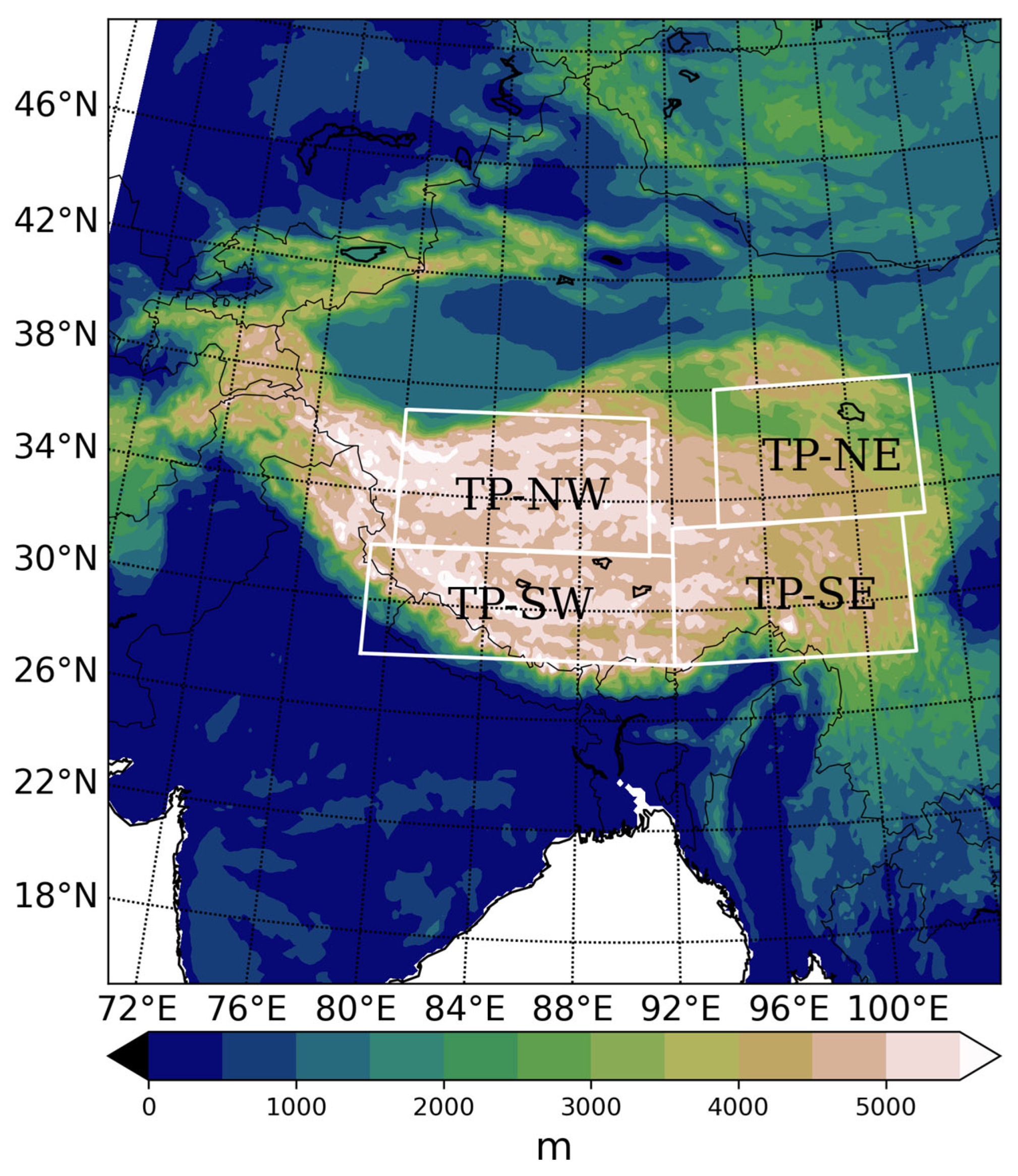
We use the precipitation data from the high-resolution near-surface meteorological forcing dataset for the Third Pole region (TPMFD) [18], which is generated by combining high-resolution WRF simulations, machine-learning downscaling, and observations from more than 9000 rain-gauge stations. By collocating TPHiPr precipitation with the thundercloud records, we extract thunderstorm-associated precipitation based on storm location. TPHiPr provides a 1/30° spatial resolution and multi-temporal products (hourly, daily, and monthly), enabling analysis of thunderstorm-precipitation variability across time scales. Terrain information is derived from the Global Multi-resolution Terrain Elevation Data (GMTED2010) 30-arc-second mean elevation product, developed jointly by the U.S. Geological Survey and the National Geospatial-Intelligence Agency. GMTED2010 incorporates Shuttle Radar Topography Mission (SRTM) data (covering ~69.9% of global land area) at 30 arcseconds (~900 m), providing finer spatial detail than the legacy GTOPO30 dataset. Based on GMTED2010, terrain slope is derived and classified into gradient bins, and its effects on the storm-precipitation intensity are then discussed. To investigate regional contrasts in thundercloud–precipitation processes, analysis subregions are defined based on the spatial heterogeneity of thunderstorm activity and storm-precipitation distribution. Four representative regions (outlined by white solid lines in Figure 1) are the Northwestern Ngari Inland Lake Zone (TP-NW), the Northeastern margin of the Qaidam Basin (TP-NE), the Southwestern Yarlung Tsangpo Valley and its northern extension (TP-SW), and the Southeastern Plateau Piedmont Zone (TP-SE).

2.2. Methodology

In winter, the Tibetan Plateau (TP) acts as a cold source that stabilizes atmospheric stratification. Together with topographic blocking and the thermal forcing of the circulation, as well as the modulation of diabatic heating by snow cover, deep convection is significantly suppressed over the TP in winter. Seasonal changes in atmospheric circulation are accompanied by systematic differences in thundercloud characteristics. Du et al. (2022) reported that ~93.9% of TP thunderstorms occur from May to September, peaking in August and ranking second in September [12]. Hui et al. (2022) noted that the TP lies near the confluence of the East Asian and South Asian monsoons and northwesterly cold-air intrusions [19]. From June to September, under the influence of the southern monsoon, thunderstorm activity reaches its maximum, whereas weaker activity prevails under westerly flow in other seasons. Because winter thunderstorms (December–February) are rare and yield limited samples, only thunderclouds from March to November are analyzed.
To characterize thunderstorms in both vertical development and horizontal extent, we use cloud-top black body temperature (TBB) and storm area and relate them to precipitation characteristics. Thunderstorm clouds are included when their centroid falls within the study domain. Shou et al. (2019) [20] reported a significant relationship between TBB and Tibetan Plateau vortices (TPVs), suggesting that lower TBB indicates higher cloud tops and is associated with stronger TPV intensity and heavier precipitation. Meanwhile, the areas of convective cloud clusters and deep convective penetrating-cloud regions are positively correlated with TPV intensity [20]. The spatial extent of deep convective thunderclouds can shape the distribution and intensity of precipitation. Yamaguchi and Feingold (2015) showed that larger convective areas increase the likelihood of precipitation, especially when adjacent precipitation regions interact and merge, expanding the precipitation footprint [21]. In South China, intense precipitation can occur in storms with smaller cold cloud-top areas and shorter lifetimes; similar behavior has been reported for many TP thunderstorm cases [22]. Therefore, storm area and TBB are used as predictors of precipitation potential. To quantify both convective intensity and spatial scale, a two-dimensional classification is constructed based on TBB and area (Table 1). For TBB (as an indicator of vertical development), three classes are defined: strongly developed (SDTC; TBB < −55 °C), moderately developed (MDTC; −55 °C ≤ TBB < −45 °C), and weakly developed (WDTC; −45 °C ≤ TBB < −32 °C). The selection of these thresholds is based on relevant studies over the TP. TBB ≤ −55 °C serves as a proxy for strong convective cores [23,24], which is consistent with observational findings that thunderstorms over the TP with TBB below −55 °C are associated with intense vertical development and high precipitation potential [17,24]. The intermediate threshold of −45 °C is determined based on the statistical distribution of TBB for thunderstorms over the TP, as studies have shown that the TBB of newborn thunderstorms over the TP is concentrated in the range from −55 °C to −10 °C [24]; this division effectively distinguishes moderately developed convection from weak convection. Thus, TBB ≤ −32 °C was adopted as the basic criterion for identifying thunderstorm clouds [17], a widely recognized threshold in convective studies over the TP. The selection of TBB ≤ −32 °C as the identification threshold is not arbitrary but tailored to the TP’s high-altitude characteristics. Ma et al. (2021) verified that over 75% of WWLLN lightning strikes of the TP and its adjacent areas correspond to TBB ≤ −32 °C, confirming its effectiveness in capturing convection [17]. To avoid misclassifying high-altitude cirrus or thick stratiform clouds (which may have similar TBB but no deep convection), cloud classification (CLC) data are used to constrain the threshold—only areas identified as cloud regions in CLC are considered candidate thunderclouds. Although this threshold has undergone multi-dimensional verification in the original dataset, slight uncertainties may still exist in the special high-altitude environment of the TP: for example, high-altitude cirrus or thick stratiform clouds with similar TBB values may be occasionally misclassified if they coincide with lightning from adjacent convective systems, thereby leading to a slight overestimation of individual thunderstorm areas, especially in complex terrain regions with fragmented cloud systems. However, the strict quality control of the original dataset and the large-sample statistics in this study have effectively mitigated these impacts.
Based on storm organization and spatial coverage over the TP, thunderstorms are further classified by area into three size classes: small (SSTC; area ≤ 1000 km2), medium (MSTC; 1000 < area ≤ 5000 km2), and large (LSTC; area > 5000 km2).
To estimate storm precipitation, we assume that each thundercloud footprint forms a circular cap on the spherical Earth, and we define its spatial coverage from the cloud centroid (latitude and longitude) and its area. This assumption is a scientifically reasonable simplification where the angular radius is derived from the actual thunderstorm area via spherical geometry to ensure “area equivalence”—a design that prioritizes capturing the core convective region while balancing computational feasibility for massive datasets. Specifically, the cloud area is converted to an angular radius (i.e., a central angle) using spherical-geometry relationships. The latitude bounds are obtained directly from the angular radius, and the longitude bounds are computed as a function of the centroid latitude. The full conversion method and corresponding formulas are detailed as follows:
  • Angular radius calculation
Using the mean Earth radius ( R = 6371   k m ), convert the thundercloud area ( A , k m 2 ) to the spherical angular radius ( θ , r a d ) via the spherical cap area inverse formula:
θ = arccos ( 1 A 2 π R 2 )
Latitude/longitude offset conversion
  • Latitude offset ( l a t , ° ):
Directly convert θ to degrees (meridian arc length is constant per radian):
l a t = θ × 180 ° π
  • Longitude offset ( l o n , ° ):
Correct for polar convergence using the cosine of the centroid latitude ( l a t 0 , converted to radians as l a t 0 ° ):
l o n = θ cos ( l a t 0 ° ) × 180 ° π
2.
Geographic boundary determination
Based on the centroid ( l o n 0 , l a t 0 ), calculate bounds with valid coordinate constraints (−180°~180° for longitude, −90°~90° for latitude):
W e s t = m a x ( l o n 0 l o n , 180 ° )
E a s t = m i n ( l o n 0 + l o n , 180 ° )
S o u t h = m a x ( l a t 0 l a t , 90 ° )
N o r t h = m i n ( l a t 0 + l a t , 90 ° )
This conversion process ensures that the geographic range of the thundercloud footprint accurately reflects its actual spatial extent, laying a foundation for subsequent precipitation extraction. TP thunderstorms are dominated by small- to medium-sized systems with relatively concentrated core regions, so the circular cap effectively encapsulates the key area where thunderstorm–precipitation–topography interactions occur. The surrounding non-relevant terrain only involves the edge of the circular range, accounting for less than 10% of the total area in most cases, to minimize interference.
For the hourly gridded precipitation field, we average precipitation over all grid cells within the cloud footprint to obtain the mean precipitation rate (mm h−1) for each thundercloud at that hour.
The slope dataset provides four directional components at each grid cell: positive and negative meridional slopes and positive and negative zonal (latitudinal) slopes. For each thundercloud, we extract the four slope components over all grid cells within the cloud footprint and compute their means to characterize the local topographic setting of storm initiation. This averaging method is adopted to capture the integrated topographic and precipitation conditions of the thunderstorm’s spatial extent, avoiding interference from accidental extreme values of individual grid cells that do not reflect the overall environment of the thunderstorm system. Consequently, for each thunderstorm cell, the TBB, precipitation intensity, and mean slope gradients are obtained for the four slope components. Building on these calculations, we compile daily metrics for all thundercloud cells within the study domain, including area, TBB, and precipitation intensity, for 2010–2018 (24 h aggregation).

3. Results

3.1. Spatial and Temporal Distribution of Thunderclouds

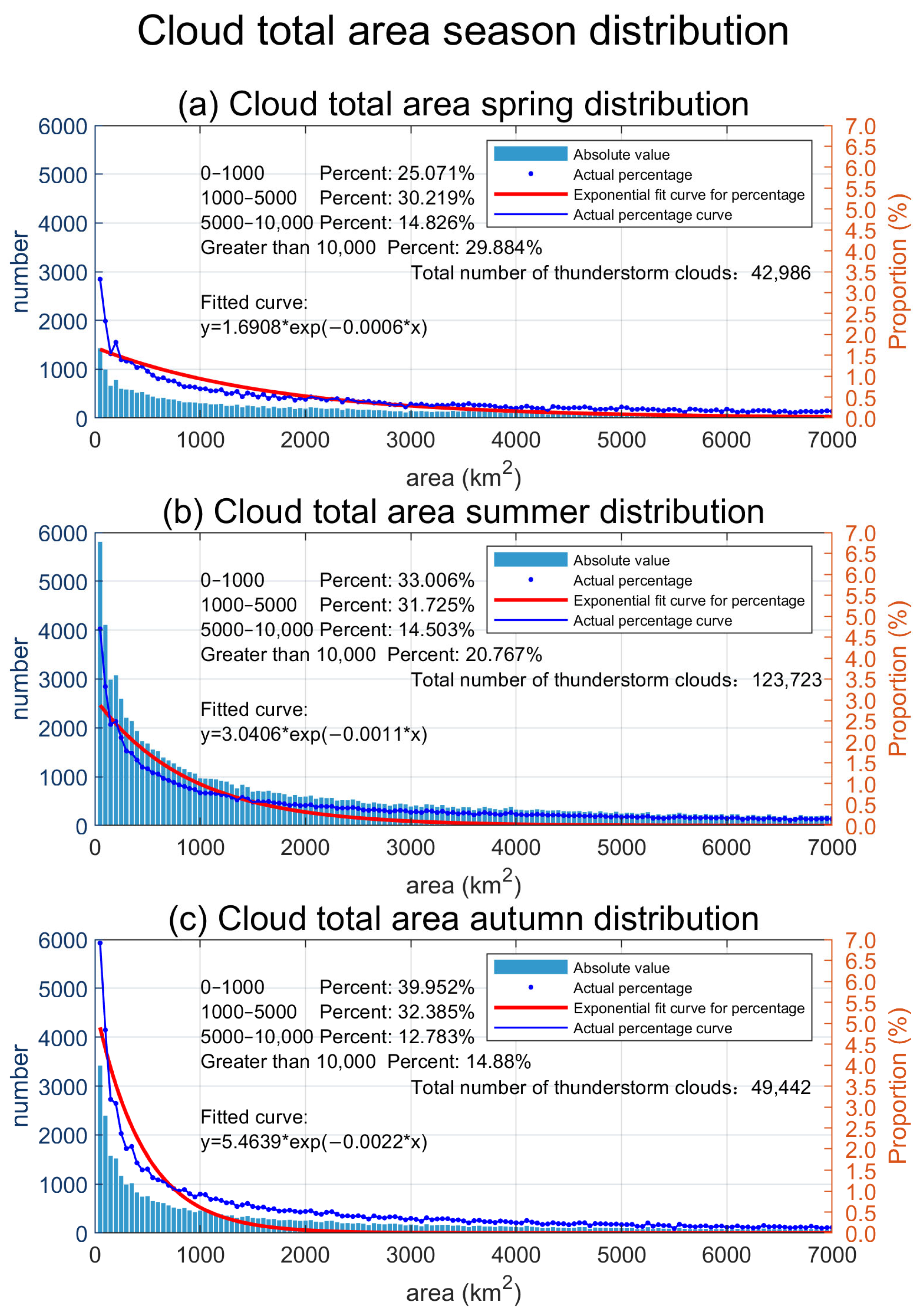
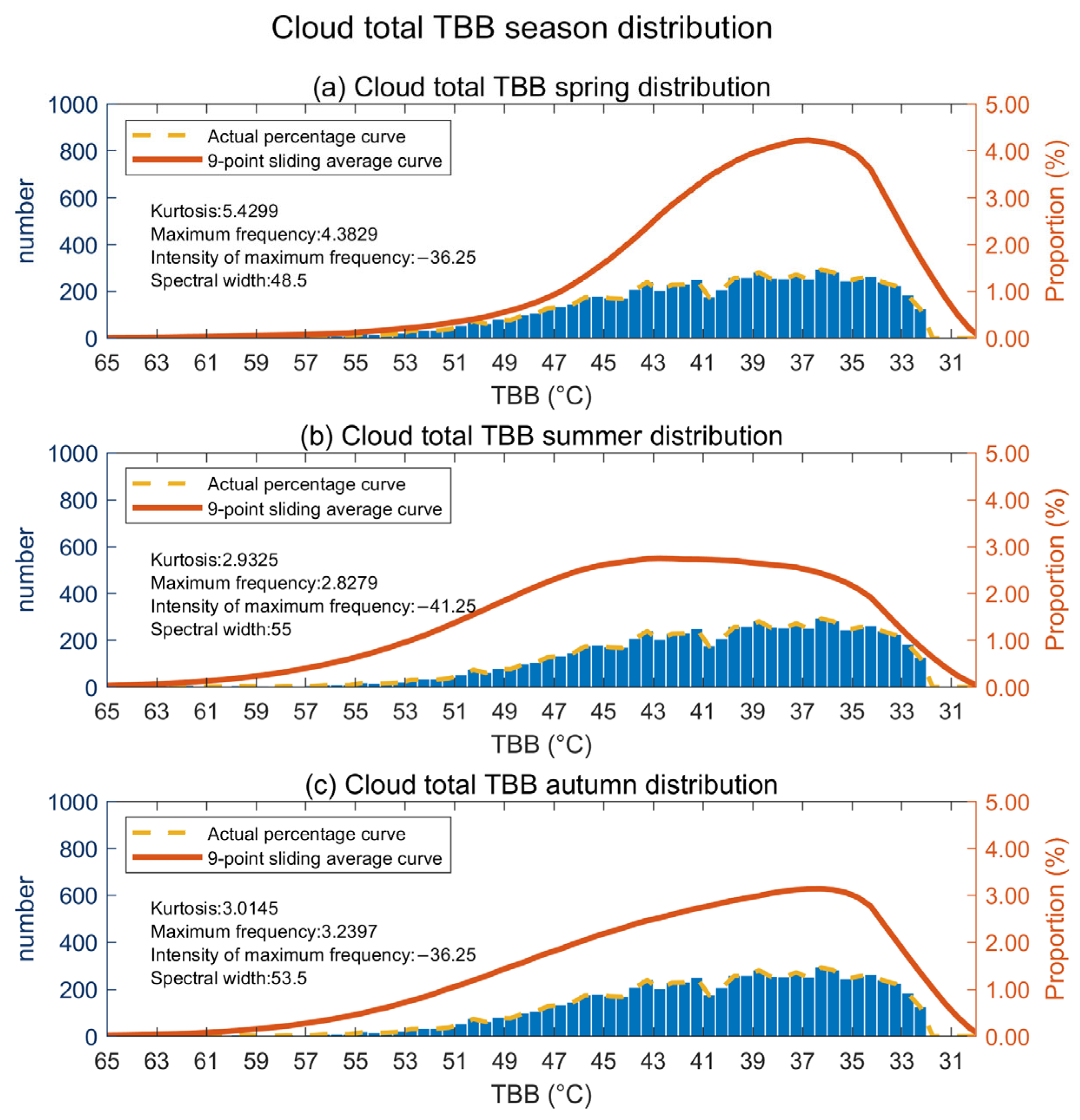
Figure 2 and Figure 3 show the seasonal distributions of thundercloud area and cloud-top black body temperature (TBB) over the TP, respectively. In all seasons, thundercloud area follows an exponential-type distribution (Figure 2), dominated by small-sized storms (SSTC) and part of the medium-sized class (MSTC), mostly with areas < 2000 km2. The seasonal TBB distributions are left-skewed (Figure 3) and are concentrated mainly between −40 and −36 °C, implying stronger convective development in spring and summer with higher fractions of SDTC and MDTC than in autumn and winter, consistent with the results of Bo et al. (2016) [25]. Summer has the highest thunderstorm frequency (123,723 events), approximately 2–3 times higher than that in spring and autumn (Figure 2). The summer distribution decays most rapidly with area, and 64.7% of storms have areas ≤ 5000 km2, mainly SSTC and MSTC. Enhanced moisture transport from the southern Indian Ocean likely increases storm coverage and is accompanied by higher fractions of MDTC and SDTC (Figure 3). The summer TBB distribution has the lowest peak and the broadest spread, indicating a wider range of cloud-top temperatures and, by inference, more dispersed cloud-top heights; the modal frequency occurs at the coldest peak TBB (−41.3 °C), consistent with frequent SDTC and MDTC. These summer features indicate intensified convection and are supported by Xu et al. (2022), who reported that ~90% of lightning occurs during May–September, with positive cloud-to-ground lightning flashes peaking in June and negative cloud-to-ground lightning flashes peaking in August [26].
Spring shows the broadest area distribution and the slowest decay with area (Figure 2). MSTC (30.2%) and the ≥10,000 km2 fraction of LSTC (29.9%) dominate, indicating a “few but large” regime in spring. Zhang et al. (2023) attributed this pattern to the relatively frequent occurrence of ice clouds in spring (25.6%) [27]; a widespread ice-cloud environment may favor both vertical development and horizontal expansion, providing a microphysical basis for the formation of LSTC. In spring, the TBB distribution has the highest kurtosis and the narrowest spread, with a peak at −36.3 °C (Figure 3), suggesting relatively low variability in TBB and storms clustered near this value, consistent with WDTC being predominant. Autumn shows the most concentrated area distribution, with the steepest decay and the smallest spread (Figure 2). SSTC and MSTC together account for 72.2% of storms in autumn, including 40% SSTC. Despite a moderate TBB spread (53.5 °C), implying the presence of some MDTC and SDTC, WDTC remains the dominant class. This localized, SSTC-dominated regime may be linked to weak convection triggered by nocturnal radiative cooling. Nocturnal radiative cooling over the TP can produce a near-surface unstable layer capped by a stable inversion, favoring weak penetrative convection with small horizontal scales; however, the resulting stratification may still allow convection to reach relatively high altitudes despite weak near-surface instability. Such radiation-driven convection has been proposed as an important mechanism for locally intense thunderstorms over plateau terrain [28].
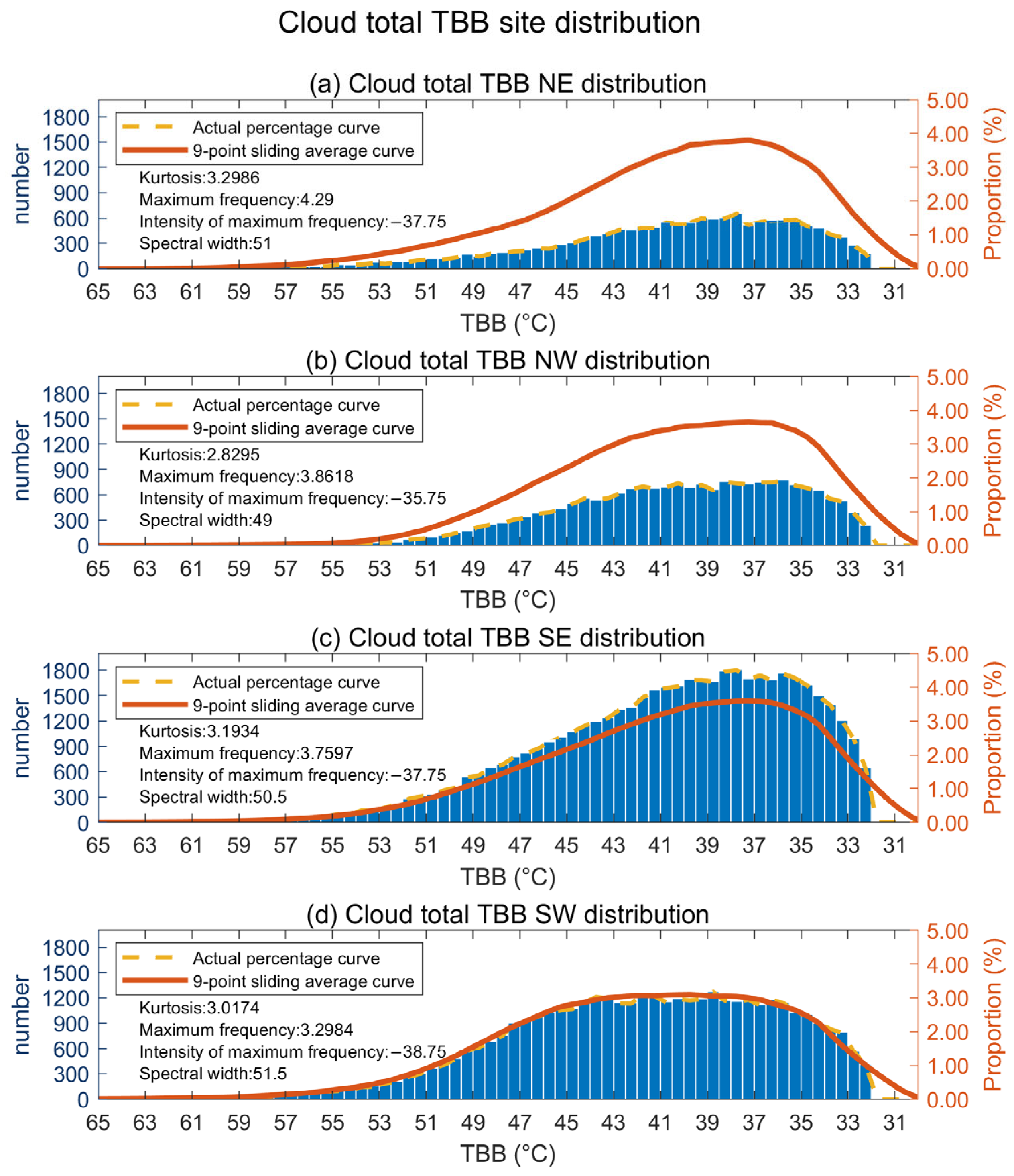
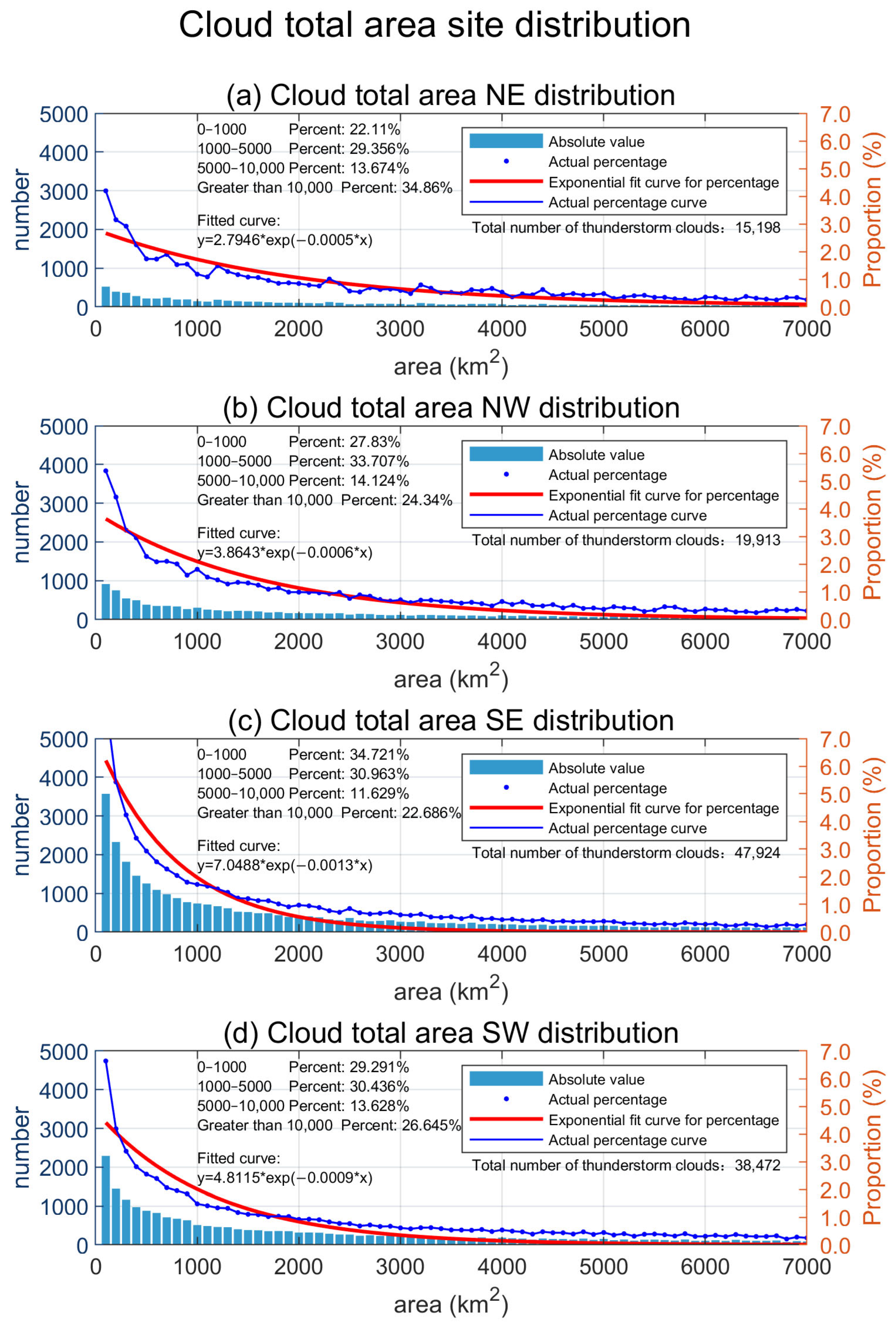
Figure 4 shows the annual distributions of thundercloud area and TBB across four subregions. In all subregions, the thundercloud area follows an exponential-type distribution, dominated by SSTC and the <2000 km2 fraction of MSTC. Thunderstorm frequency is significantly higher in the southeastern (Figure 4c) and southwestern (Figure 4d) TP, reaching roughly 2–3 times that in the northern subregions. The northeastern subregion has the lowest thunderstorm frequency but the highest fraction of large storms (area > 10,000 km2; 34.9%) (Figure 4a). Its TBB distribution (Figure 5a) has the highest kurtosis (3.3) and a relatively narrow spread (51 °C), concentrated between −38 and −35 °C, indicating dominance of MDTC and WDTC and suggesting relatively organized, large-area storms with mid-to-low cloud-top temperatures. In TP-NW (Figure 4b), LSTC account for 24.3%, and storms are generally smaller overall. The narrowest TBB spread (49 °C) and a relatively warm TBB range (−35 to −32 °C) (Figure 5b) indicate MDTC predominance, consistent with smaller storms with mid-level cloud tops. TP-SE (Figure 4c) shows the most concentrated area distribution, with SSTC and MSTC accounting for 65.0% of storms; despite a broader TBB spread and lower kurtosis (Figure 5c), WDTC remains dominant, implying frequent small storms with relatively warm cloud tops. TP-SW (Figure 4d) is dominated by MSTC and LSTC. With the lowest kurtosis (3.0) and the largest TBB spread (50.5 °C) (Figure 5d), TP-SW shows the broadest range of cloud-top temperatures; although WDTC remains dominant, the distribution indicates frequent larger storm clusters.
These results are broadly consistent with previous studies: severe thunderstorms are often associated with very low TBB (e.g., <−60 °C) and high lightning density. Du et al. (2022) reported that extreme thunderstorms over the southeastern plateau have lightning densities ~30 times higher than ordinary thunderstorms [12], and their ranking of thunderstorm activity—southeastern > central–southern > southwestern—agrees with the spatial patterns identified here. Notably, Du et al. (2024) reported peak lightning flash densities on the western and northeastern plateaus and minima in the southeast [29]. This apparent discrepancy may reflect differences between electrical activity and cloud-top thermal/area-based metrics: abundant SDTC/MDTC coverage and large thundercloud counts are observed in TP-SE. Together, these findings suggest that vertical storm structure and microphysical processes may modulate lightning activity in ways that are not captured by TBB and area alone.

3.2. Relationship Between the Storm Characteristics and Its Precipitation Features

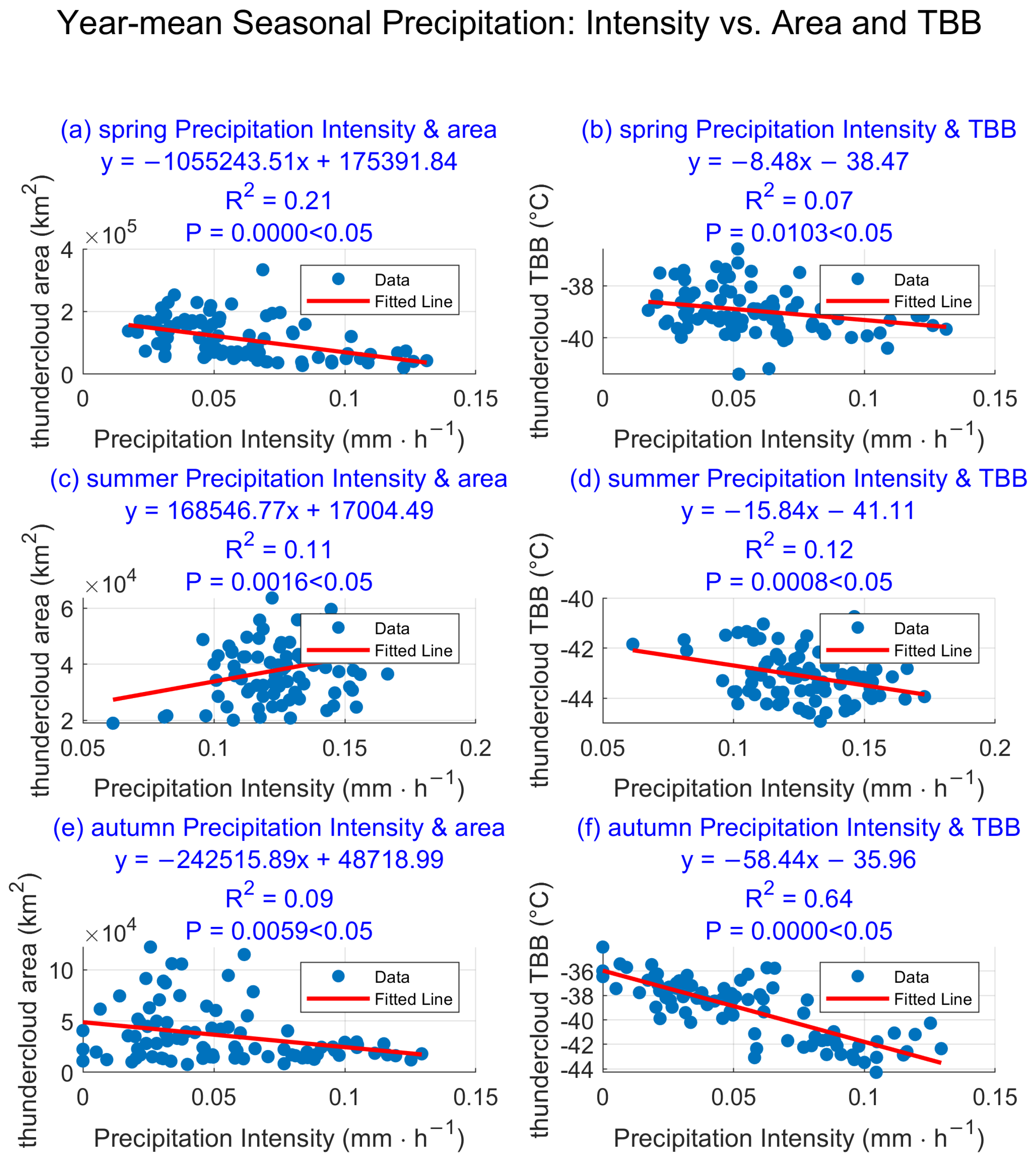
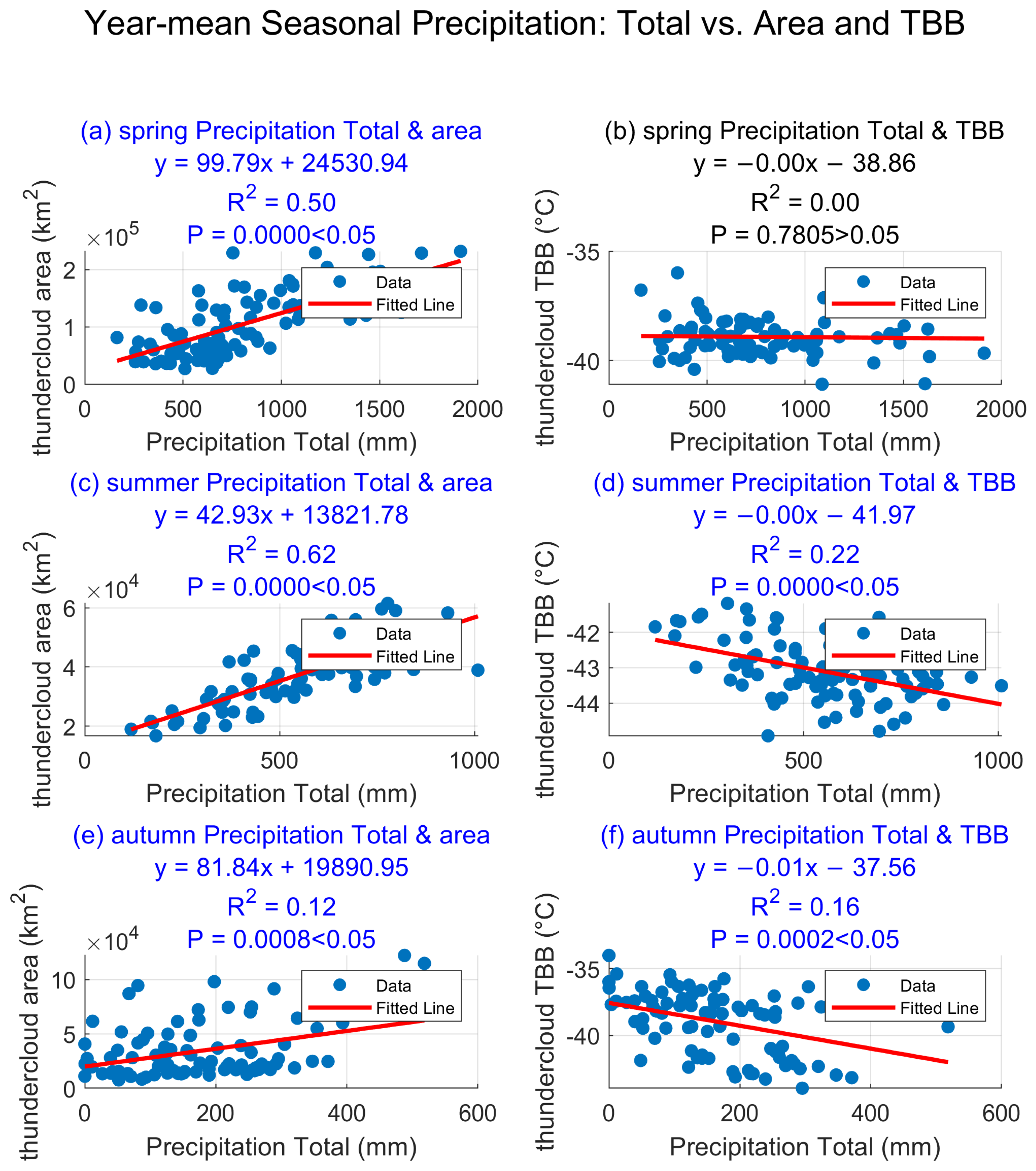
Figure 6 presents seasonal mean linear regressions of storm precipitation intensity against thundercloud area, and TBB for 2010–2018, and Figure 7 shows the corresponding regressions for total thunderstorm precipitation over the same period. Overall, spring SSTC are more likely to be associated with heavy precipitation; summer LSTC and SDTC are associated with frequent but relatively weak precipitation; and autumn SSTC and SDTC are linked to short-duration heavy precipitation, likely influenced by ice-phase processes. Across seasons, LSTC and SDTC tend to produce larger total precipitation amounts.
In spring, precipitation intensity decreases with increasing thundercloud area (R2 = 0.2) and with increasing TBB (R2 = 0.1), and both relationships have passed the significance test at the significance level of 0.05, consistent with the springtime area distribution and precipitation patterns discussed above. Although LSTC are relatively common in spring, mean precipitation intensity is lowest in this season, and heavy precipitation occurs more often from SSTC and SDTC. In contrast, total precipitation increases with thundercloud area in spring (R2 = 0.5), indicating that LSTC contribute disproportionately to seasonal precipitation totals.
Figure 6 and Figure 7 show that both precipitation intensity (R2 = 0.11) and total precipitation (R2 = 0.62) increase with storm area in summer. This positive relationship between precipitation intensity and storm area is unique to summer, distinct from the negative correlations observed in spring (R2 = 0.2) and autumn (R2 = 0.1). The key driver is the sufficient moisture supply over the TP in summer. Enhanced moisture transport from the southern Indian Ocean (Section 3.1) supports sustained deep convection in large storm systems (LSTC and MSTC), where the expanded horizontal extent corresponds to stronger updrafts and more efficient condensation. In contrast, spring and autumn are characterized by limited moisture; large storms in these seasons are often weakly developed (predominantly WDTC) with shallow cloud tops, leading to reduced precipitation intensity despite larger areas. The statistical significance (p = 0.0016 < 0.05) of the summer positive correlation further confirms its uniqueness compared to the negative trends in other seasons. Precipitation metrics also decrease with increasing TBB. The precipitation intensity shows a closer relationship with TBB (R2 = 0.6) than that with area (R2 = 0.1). Together with the large number and broad area of summer storms and their relatively cold cloud tops (Figure 2 and Figure 3), these results suggest that summer thunderstorm precipitation is frequent but typically relatively weak, likely dominated by sustained precipitation associated with SSTC and MSTC. In contrast, larger storms contribute substantially to the total rainfall.
In autumn, precipitation intensity decreases with storm area (R2 = 0.1), whereas total precipitation increases with storm area (R2 = 0.1). Both precipitation intensity and total precipitation decrease with increasing TBB, and the corresponding relationships remain approximately linear. By contrast to summer, autumn SSTC and SDTC more often produce short-duration heavy precipitation.
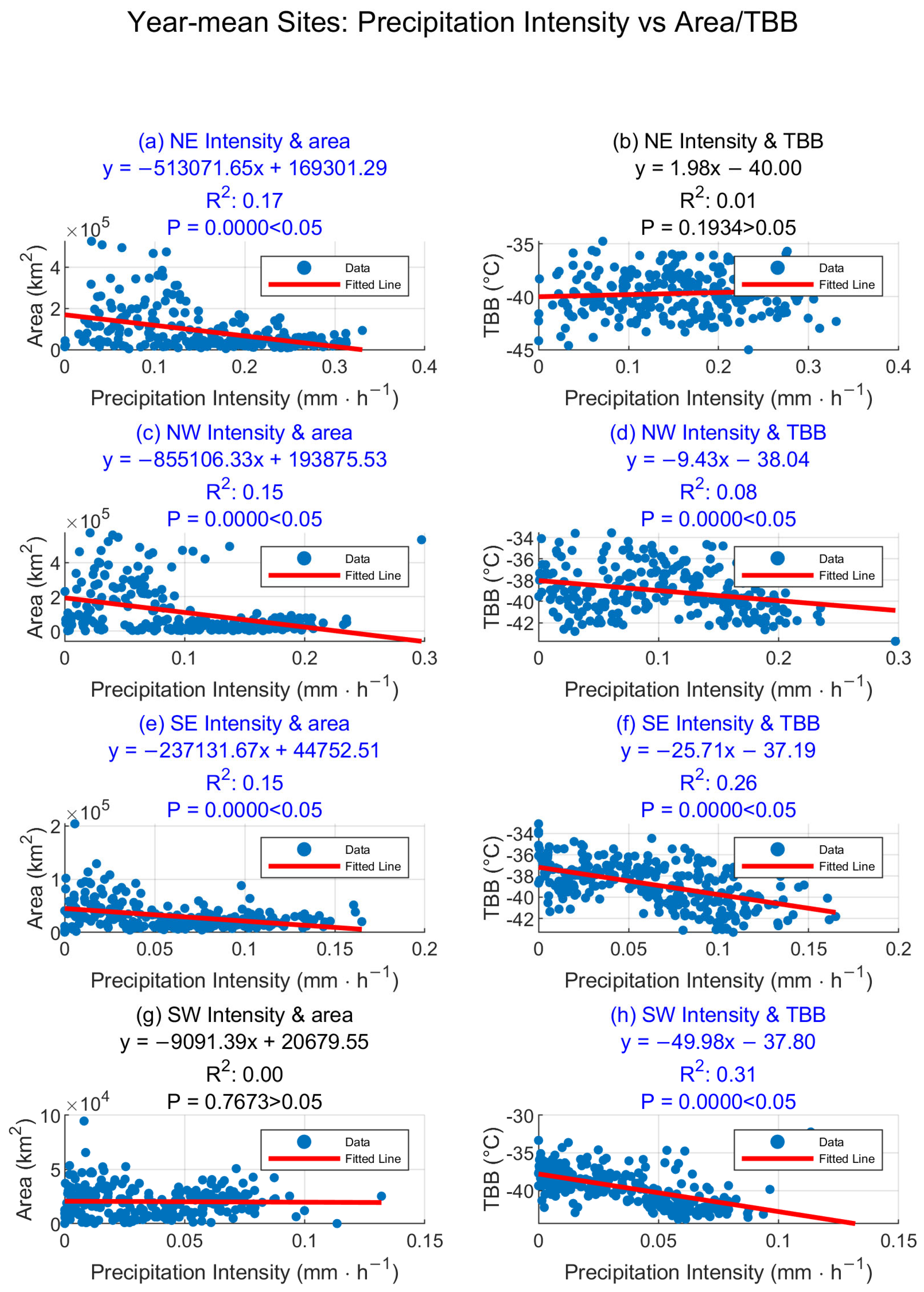
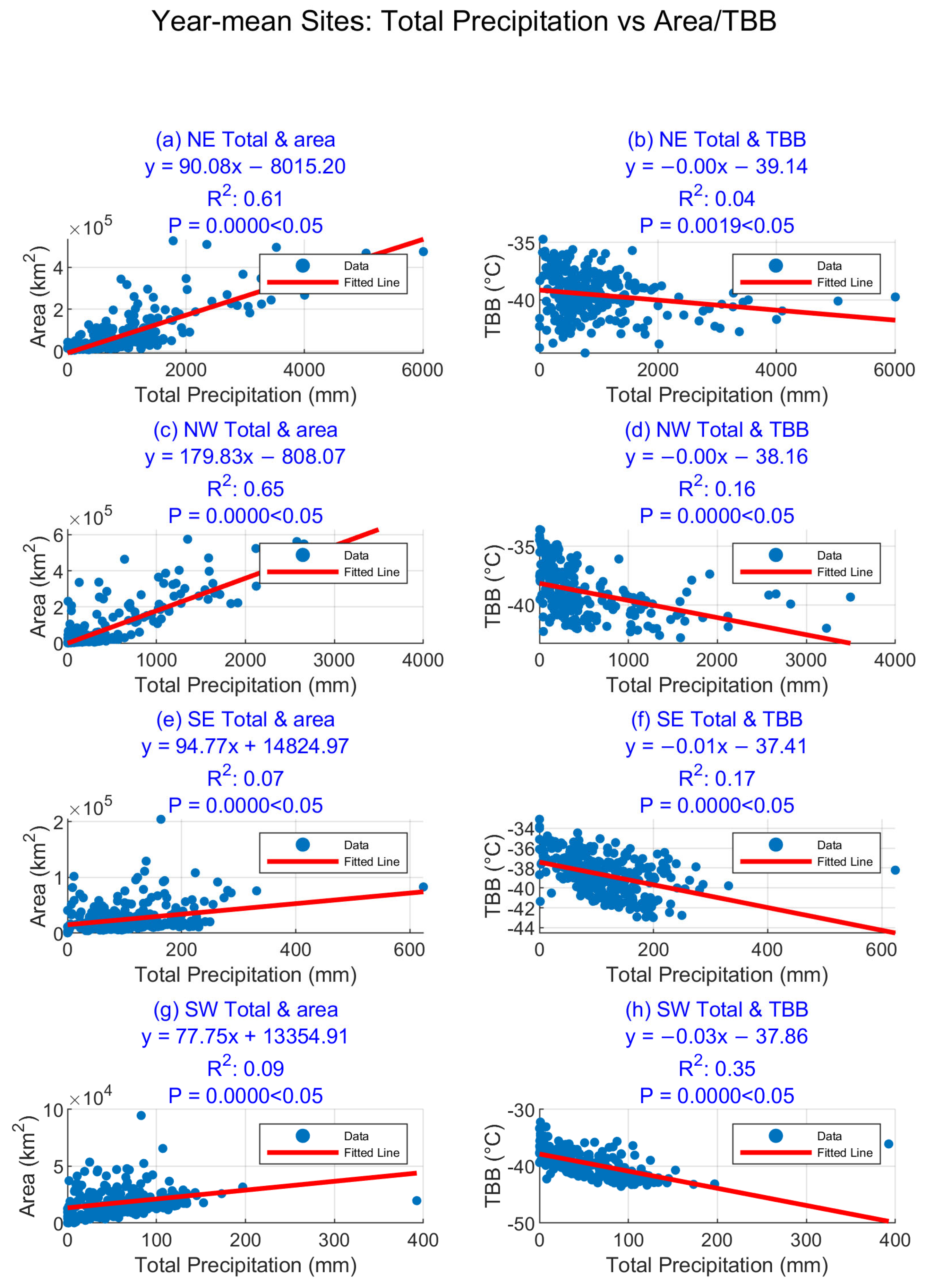
Figure 8 and Figure 9 show regional linear regressions linking storm precipitation intensity and total storm precipitation to thundercloud properties (area and TBB) over the interior TP. Significance tests at the 95% confidence level indicate a negative relationship between precipitation intensity and storm area in TP-NE, suggesting that smaller storms (SSTC) are more often associated with intense precipitation. This is consistent with the notion that SSTC often represent localized convection, where strong mesoscale lifting can promote rapid condensation and precipitation formation. In TP-NW and TP-SE, precipitation intensity decreases with increasing area and increasing TBB. The corresponding R2 values are 0.2 (area) and 0.1 (TBB) in TP-NW, and 0.2 (area) and 0.3 (TBB) in TP-SE. This pattern suggests that intense precipitation is favored when storms are both small in area and have cold cloud tops (i.e., SSTC with SDTC-like TBB), which indicates that there is possibly isolated deep convection.
Notably, the regional differences (especially TP-SW vs. TP-NW) are tied to topography and circulation. TP-NW is located at the junction of the westerlies and the South Asian summer monsoon (SASM) [30]. It has flat terrain and shows the strongest total precipitation dependence on storm area (R2 = 0.7). This is because LSTC benefit from continuous moisture transport, a core mechanism of SASM-induced precipitation, as well as unconstrained expansion. In contrast, TP-SW’s steep Himalayan terrain induces strong orographic lifting. This is a key process by which SASM modulates TP precipitation [30], making precipitation more linked to TBB (R2 = 0.3 for intensity; R2 = 0.4 for total). In this region, vertical development dominates and terrain limits storm expansion.
Moisture sources amplify this discrepancy. TP-NW relies on westerly and weak SASM moisture, which favors LSTC and the correlation between storm area and precipitation. This aligns with SASM’s uneven moisture transport across the TP. TP-SW receives Bay of Bengal moisture via the SASM [31], and this moisture is terrain-constrained. Small storms capture moisture via lifting, which enhances TBB dependence. SASM’s asymmetric effect [30], a typical feature of SASM anomaly, further reinforces area-dependence in TP-NW and TBB-dependence in TP-SW.
For total storm precipitation, a consistent pattern emerges across subregions: larger storms (LSTC) and colder cloud tops (SDTC: low TBB) are associated with greater precipitation totals. This pattern reflects regional circulation-terrain interactions; the relative importance of storm area and vertical development varies by subregion, explaining divergent TP-NW/TP-SW correlations.

3.3. Effects of Topographic Slope on the Thunderstorm

The TP shows pronounced spatial heterogeneity in storm precipitation. This pattern is shaped by large-scale circulation and is further modulated by local complex topography, including elevation and slope [14]. Four directional slope components over the TP are considered: east-facing (SlopeX_Neg, higher to the west and lower to the east), west-facing (SlopeX_Pos, higher to the east and lower to the west), south-facing (SlopeY_Pos. higher to the north and lower to the south), and north-facing (SlopeY_Neg, higher to the south and lower to the north). We then quantify how storm precipitation intensity varies with slope magnitude for each directional component.
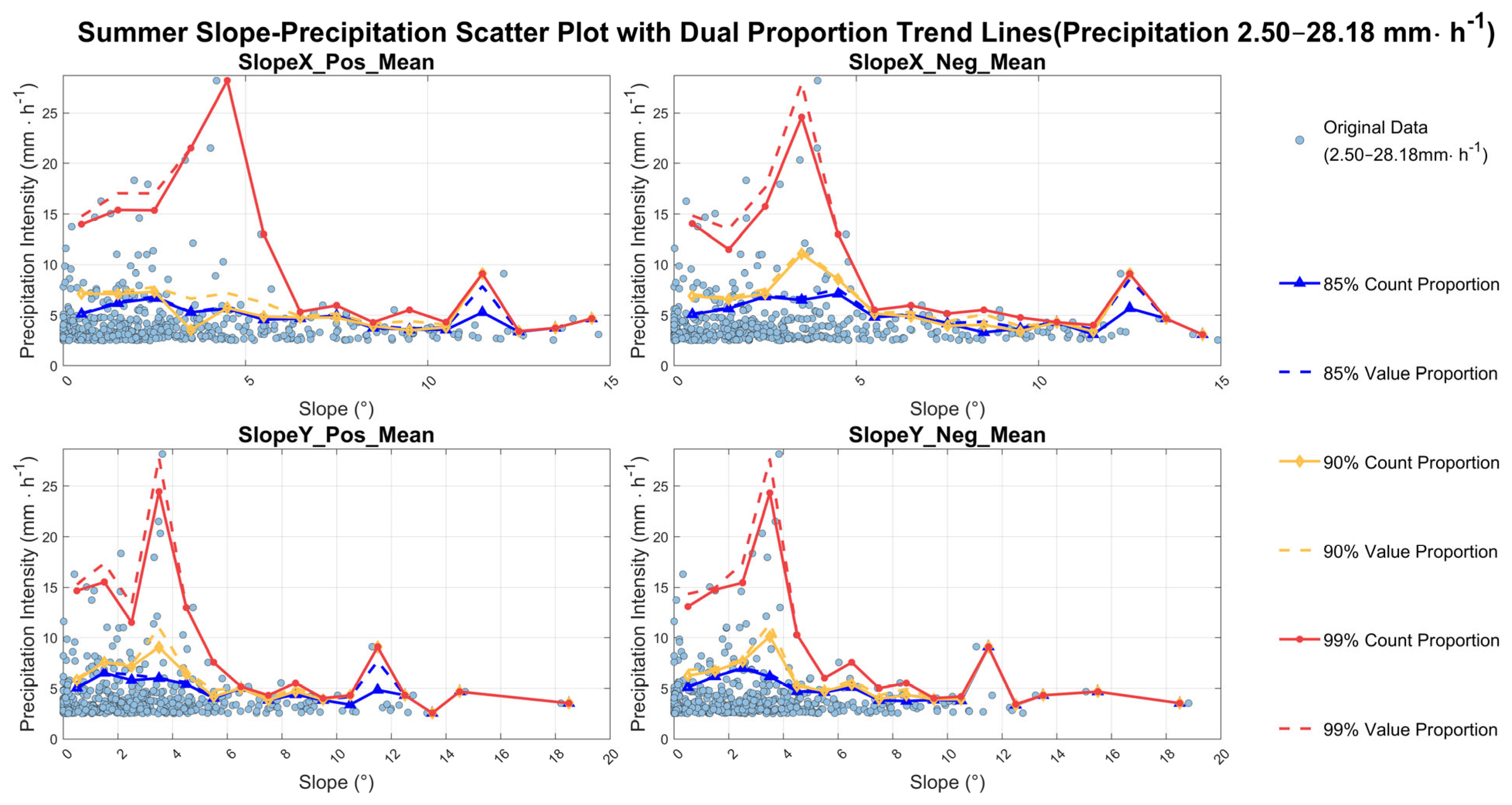
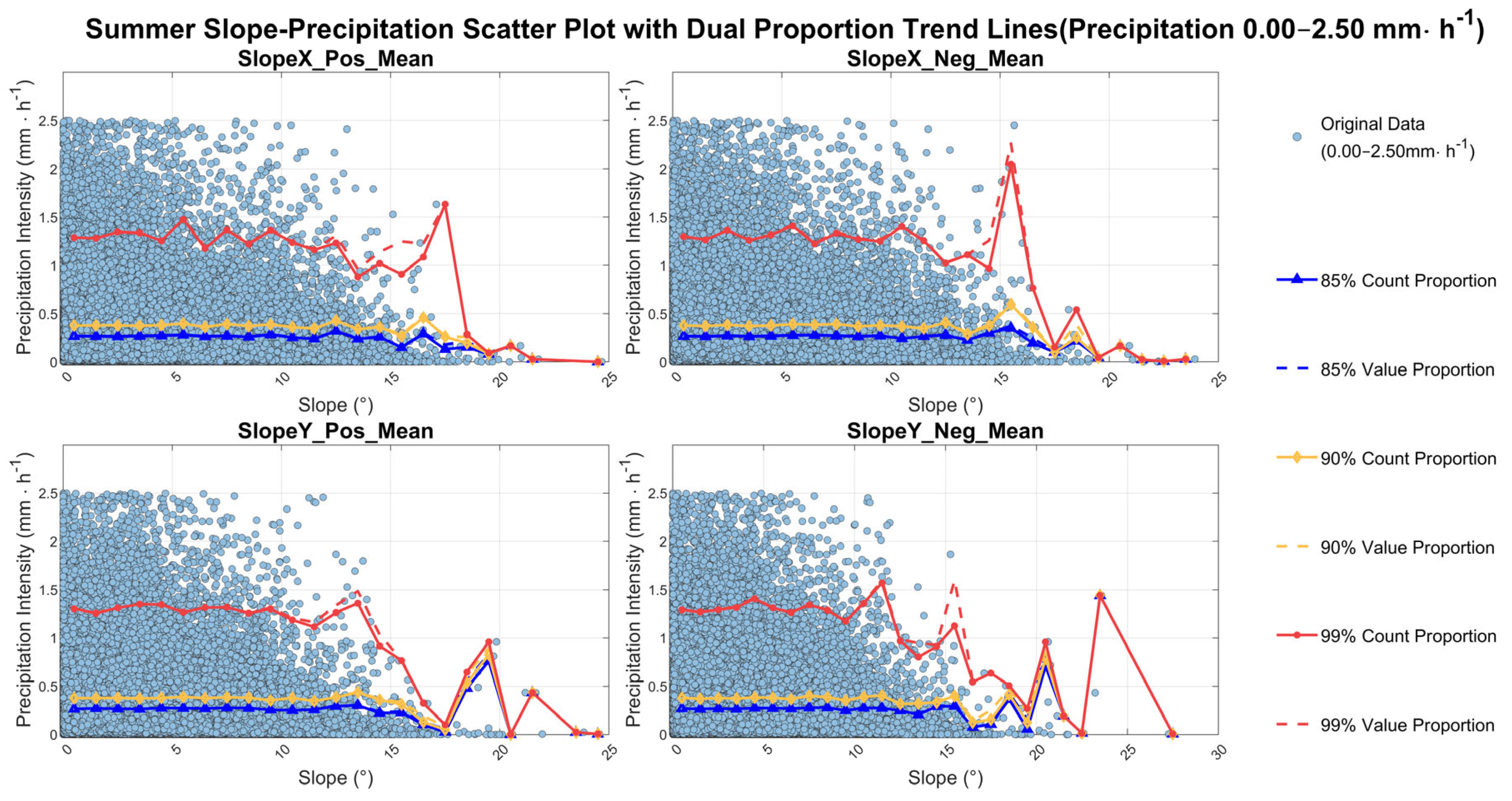
As shown in Figure 10 and Figure 11, storm precipitation intensity is divided into weak and intense precipitation. The classification is based on meteorological industry standards, observation specifications, physical characteristics of thunderstorm precipitation in the study area, and statistical features of the research data. Weak precipitation is defined as 0.00–2.50 mm h−1, and intense precipitation as 2.50–28.18 mm h−1. The upper limit of intense precipitation (28.18 mm h−1) is the maximum storm precipitation intensity within the study’s statistical scope. This dividing threshold aligns with China’s statutory meteorological standards. Specifications for Surface Meteorological Observations—Weather Phenomena (GB/T 35224-2017) [32] and Precipitation Grades (GB/T 28592-2012) [33] explicitly set 2.50 mm h−1 as the storm precipitation intensity dividing line between light rain and moderate rain. As an authoritative threshold for distinguishing weak and moderate precipitation in meteorological observation and scientific research, it ensures the normativity of the classification in these two figures.
Figure 10 shows summer scatterplots of slope versus weak storm precipitation (0.0–2.5 mm h−1) for each directional component, overlaid with quantile-based trend lines (85th–99th percentiles) to illustrate how weak precipitation varies with slope. Figure 11 shows the corresponding relationships for heavy storm precipitation using the same quantile interval. The count proportion lines reflect the frequency distribution of precipitation events at various slopes, showing that most summer precipitation events (e.g., 85%) occur at a relatively low precipitation intensity for all directional slopes, indicating a high frequency of weak precipitation events in the study area. In contrast, the value proportion lines reveal the cumulative volume contribution of precipitation events, where the 99th percentile line (the highest quantile) exhibits an obvious upward trend with the increase in slope magnitude, suggesting that larger slopes are associated with a significant increase in extreme precipitation intensity, and the cumulative precipitation volume is mainly contributed by a small number of high-intensity precipitation events. The original scatter points show a dense distribution of low-intensity precipitation events (Figure 10), which obscures the above extreme precipitation trends, while the quantile trend lines effectively highlight the slope dependence of precipitation intensity, especially for extreme precipitation events. Figure 10 indicates that weak precipitation (0–2.5 mm h−1) shows little sensitivity to slope across all directional components. When the slope exceeds ~13°, weak-precipitation intensity increases slightly and then decreases. The increase is more evident on the east- and west-facing components, rising from ~1.3 mm h−1 to ~1.6 and ~2.0 mm h−1, respectively. This variation is closely related to the modulation of orographic lifting and associated atmospheric processes by slope magnitude: a moderate slope increase initially enhances stable orographic lifting, inducing mild vertical motion that facilitates low-level moist airflow convergence without obvious blocking, while slight thermal contrast from solar radiation absorption provides stable energy for weak convection development [34]. These conditions moderately promote cloud droplet collision and coalescence, lowering TBB slightly and expanding the storm area to enhance weak precipitation. However, excessive slope beyond ~13° causes significant airflow blocking, reducing moisture supply and triggering excessive thermal contrast-induced airflow separation, which weakens vertical lifting. This further leads to higher TBB, a smaller storm area, and reduced cloud droplet collision efficiency, ultimately decreasing weak precipitation intensity [34].
For the heavy precipitation, Figure 11 shows a bimodal dependence of intensity on slope. Across all directional components, heavy precipitation peaks at slopes of 3–4°, consistent with a transition zone in mountainous terrain, where orographic lifting is effective while airflow blockage and moisture limitation associated with steeper terrain are reduced. This behavior is consistent with modeling results reported by Li et al. (2022) [16] and Wei et al. (2025) [35]. When airflow impinges on steep terrain, vertical velocity can increase markedly (e.g., |w| > 3 m s−1 on the windward slope), enhancing condensation and precipitation and supporting the mechanism that slope steepness modulates local storm intensity. For slopes > 4°, weak precipitation generally decreases with slope, and a secondary peak in heavy precipitation appears near 11–13°. Stronger mechanical forcing over steep terrain may accelerate the downslope propagation of plateau vortices and promote interactions with southwestern vortices, forming stronger vortex systems that sustain ascent and moisture convergence conducive to heavy precipitation [36]. In summer, stronger solar radiation absorption on steep slopes (>11°) creates a notable thermal contrast, inducing local convective circulation that further reinforces convection. Steep terrain also acts as a moisture barrier, accumulating water vapor that is transported upward to form ice crystals and release latent heat, deepening convection [11]. However, terrain blocking limits storm area expansion, resulting in a secondary peak that is weaker than the primary one.
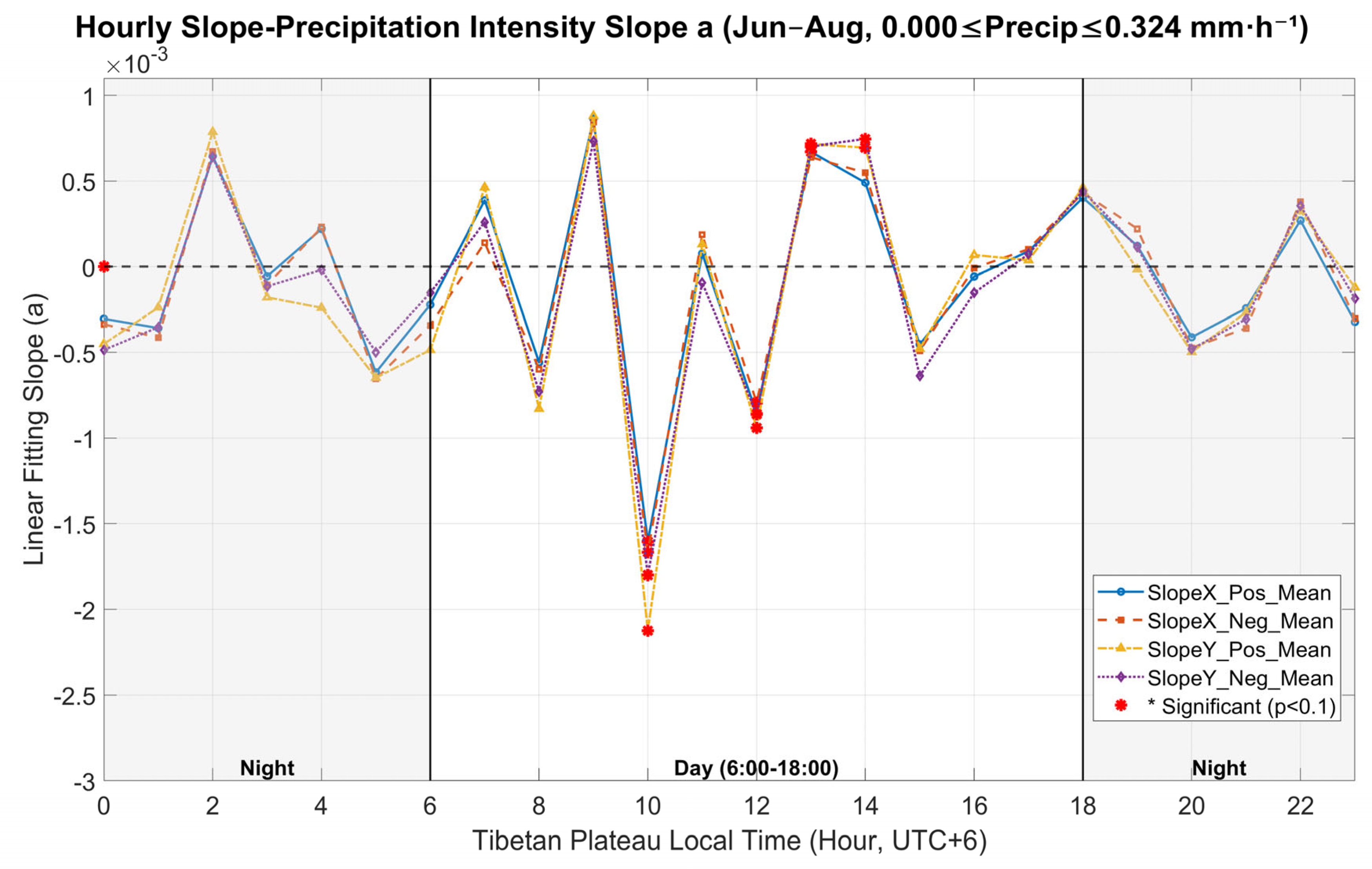
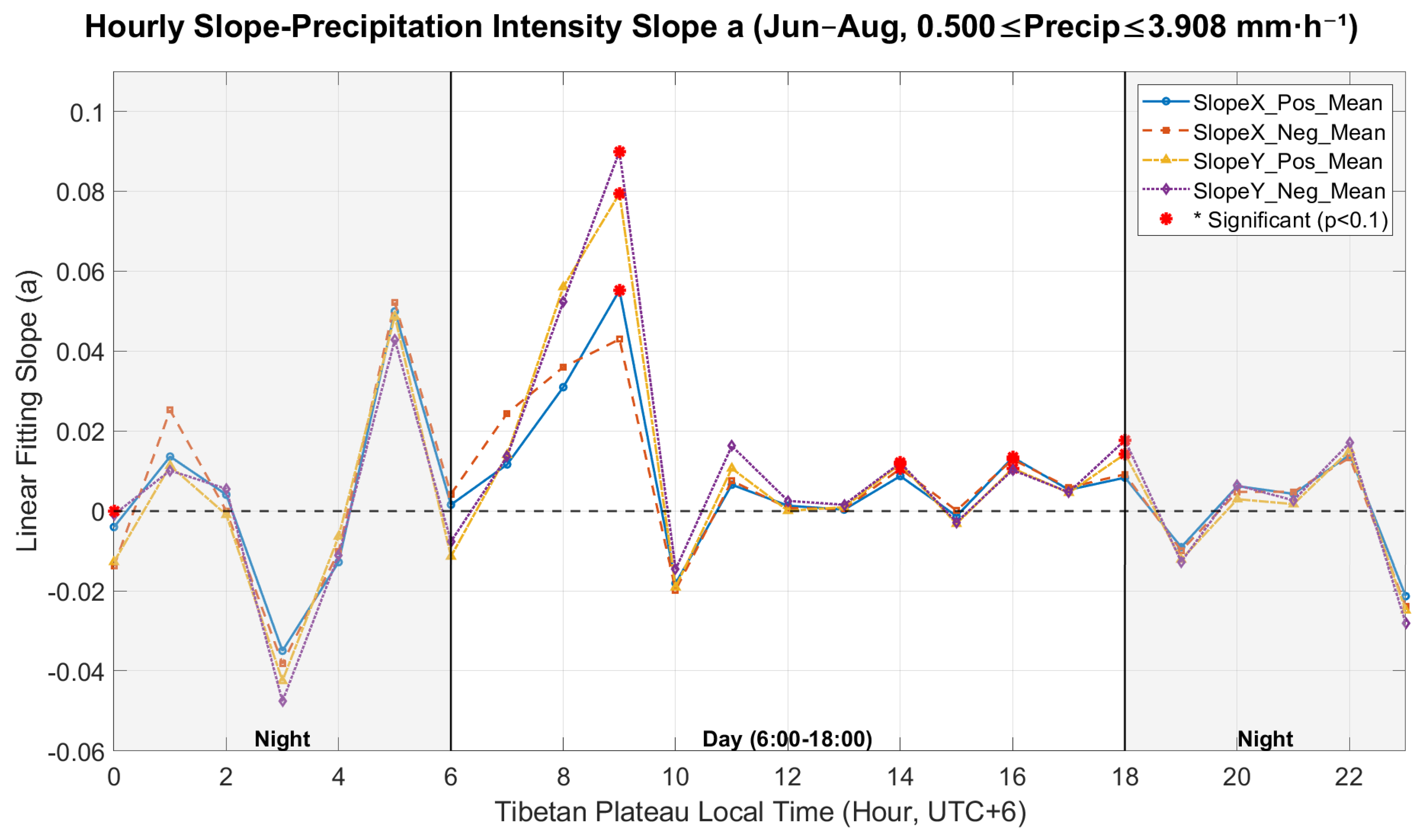
Figure 12 and Figure 13 show the diurnal variation in the regression slope a for the slope–precipitation-intensity relationship across the four directional slope components (SlopeX_Pos/Neg and SlopeY_Pos/Neg) over the TP. To ensure the analysis remains clear and focused on the relationship between weak precipitation and heavy precipitation, Figure 12 corresponds to summer weak precipitation (90th percentile), and Figure 13 corresponds to heavy precipitation (99.9th percentile). Here, a measures the change in precipitation intensity corresponding to a unit increase in slope. The diurnal amplitude of a and its statistical significance (p < 0.1: red markers) reveal when and to what extent the slope regulates precipitation intensity. Comparing diurnal cycles, a varies most strongly during daytime in Figure 12 and Figure 13, and significant points (p < 0.1) occur more frequently for heavy precipitation (Figure 13). This behavior is consistent with daytime thermodynamic and dynamical forcing over the plateau. Under strong daytime solar heating, boundary-layer instability over the TP increases rapidly, favoring convective precipitation. Steeper slopes can enhance the mechanical lifting of warm, moist air toward its lifting condensation level, promoting vertical convective growth. At night, radiative cooling stabilizes the boundary layer, and precipitation tends to shift toward more stratiform regimes governed by large-scale circulation (e.g., westerlies and the monsoon circulation).
Weak precipitation at the 90th percentile likely reflects either measurement noise or weak, circulation-controlled precipitation, for which terrain modulation is limited in Figure 12. Weak morning precipitation may partly represent residual nocturnal precipitation, which is typically spatially homogeneous. Over steeper terrain, precipitation may be distributed over a broader area, reducing local intensity and yielding a negative value (Figure 12). However, between the hours of 06:00–12:00, spatially heterogeneous surface heating develops, and sun-facing slopes warm rapidly, which can help initiate locally heavy convective precipitation. Between the hours of 12:00–18:00, the diurnal amplitude of a peaks and significant points become more frequent, consistent with the afternoon maximum in deep convection over the plateau [37]. During this period, heavy precipitation is primarily convective, and terrain acts mainly by enhancing mechanical lifting.
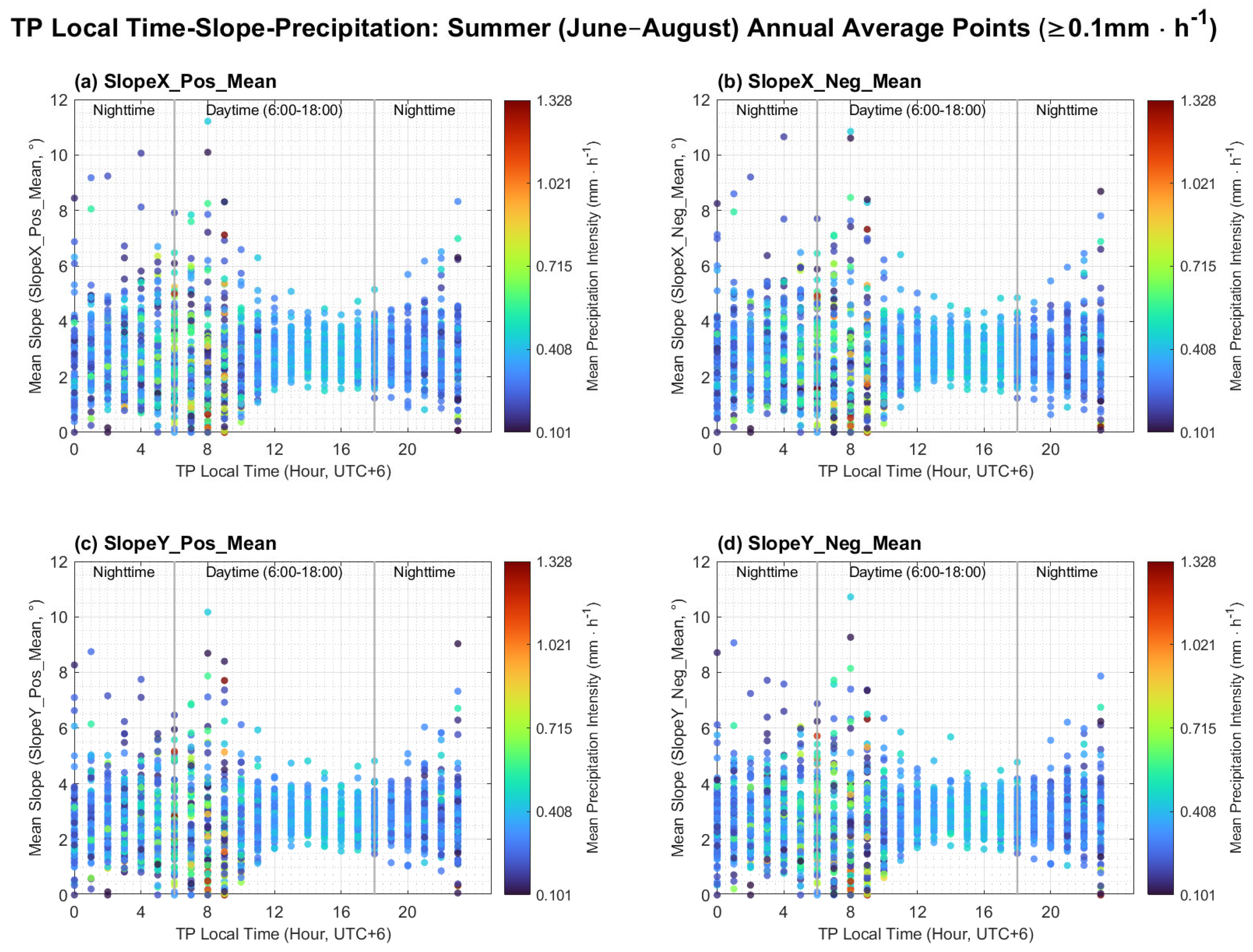
Figure 14 shows the summertime (June–August) diurnal cycle of the annually averaged slope–precipitation relationship across the four directional slope components over the TP. Extremely weak precipitation may contain background noise, while extremely heavy precipitation may originate from rare abnormal events. Therefore, to more clearly exhibit the distribution of the relationship between the slope gradient and precipitation intensity among the vast majority (accounting for 99% of the total samples) of thunderstorm precipitation events, and to avoid the interference of extremely weak precipitation (≤0.1 mm h−1) and a small number of extremely high values (>99th percentile) on graphical visualization and trend interpretation, these two subsets of data are excluded when plotting the figure. This data preprocessing is mainly based on two considerations: first, to exclude endpoint noise that may obscure the “slope–precipitation” relationship, thereby making the statistical relationship based on the main dataset clearer and more stable; second, to avoid individual extreme values excessively affecting the interpretation of the distribution patterns and trend lines in graphical visualization, so as to more truly reflect the general law of how slope modulates precipitation intensity throughout the day. All four slope components show a consistent diurnal pattern: afternoon storms are more homogeneous, with precipitation intensity concentrated around 0.3–0.5 mm h−1, whereas early-morning storms feature frequent extremes and a more polarized intensity distribution. This behavior is consistent with Figure 13, which shows a stronger positive slope–intensity relationship in the early morning, coincident with a higher occurrence of intense precipitation.
These features likely reflect nocturnal moisture trapping within a stable boundary layer and the subsequent morning transition toward convective instability. At night, longwave radiative cooling rapidly produces a stable boundary layer and a low-level temperature inversion over the TP. The inversion limits vertical mixing, allowing near-surface moisture to accumulate and increasing water-vapor mixing ratios within the boundary layer. After sunrise, surface heating erodes the stable layer and shifts the stratification from stable to convectively unstable. The accumulated boundary-layer moisture can then be lifted to the lifting condensation level by a combination of orographic forcing and thermal convection, triggering precipitation. This interpretation is consistent with Zeng et al. [38], who analyzed multi-peak precipitation over East China and argued that both East China’s multi-peak precipitation and the TP’s early-morning extremes rely on large-scale moisture transport. In their framework, moisture over East China is largely maritime, whereas over the TP it is supplied mainly by the South Asian monsoon. Our results suggest that terrain amplification becomes most effective when moisture supply is sufficient, supporting a moisture–topography synergy as a key driver of early-morning storm precipitation over the TP.
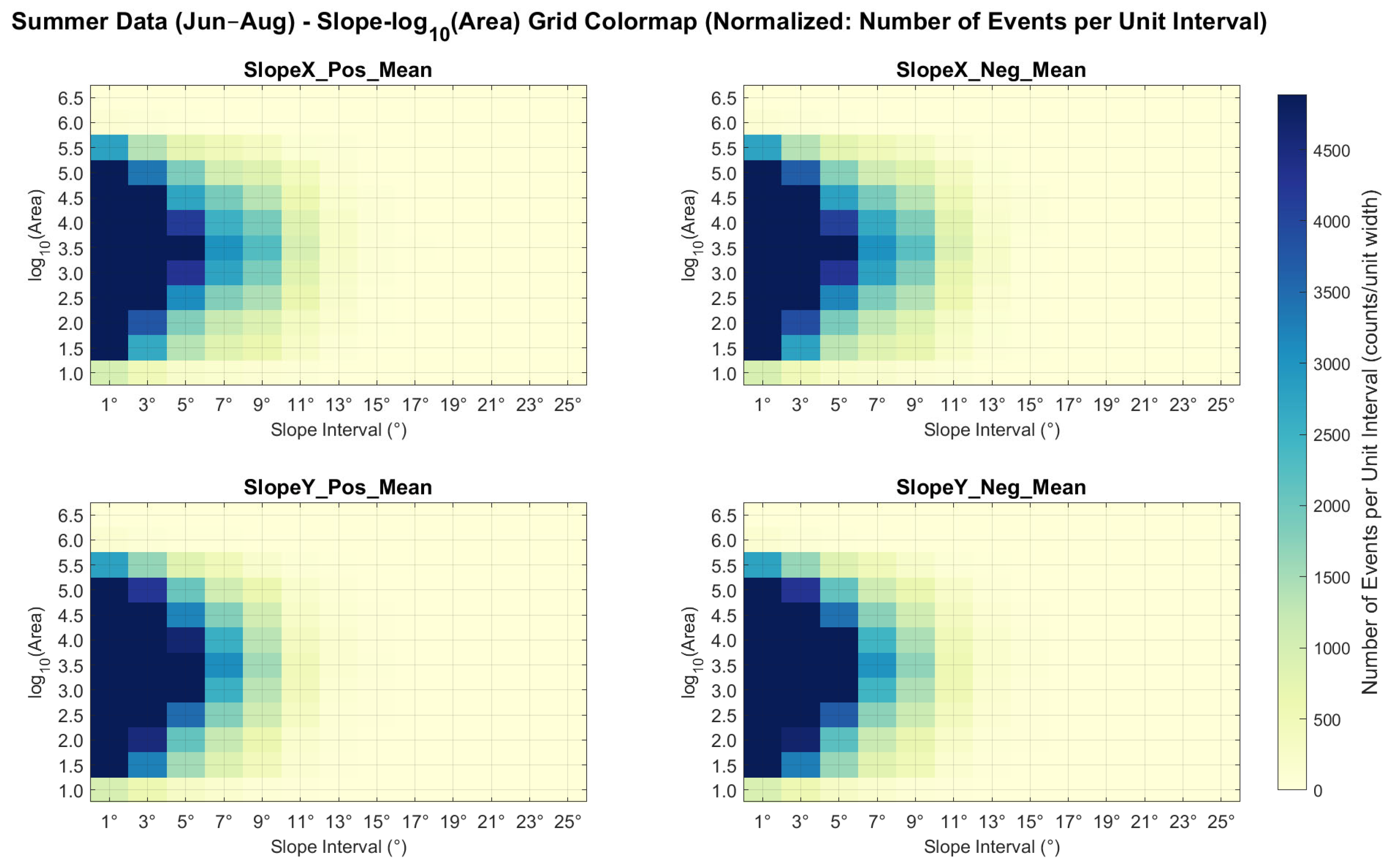
Figure 15 and Figure 16 jointly depict how slope modulates thundercloud area and TBB under different slope-orientation scenarios over the TP in summer. Both figures indicate that thunderstorm precipitation occurs predominantly over slopes ≤ 14°, with broadly consistent patterns across slope orientations. Figure 15 shows that, as the slope increases, the spread of log10(area) narrows and storm footprints contract, converging toward ~103–104 km2. This implies that gentle slopes favor the development of large storm systems, consistent with Houze Jr. [39]. A plausible explanation is that gentle slopes provide broad, sustained lifting that supports the organization of LSTC. When warm, moist flow encounters gentle terrain, ascent is weaker (order cm s−1 rather than m s−1) but distributed over a broader area. Moisture can cool adiabatically and condense over a large footprint, promoting extensive cloud shields and relatively uniform, widespread precipitation. In contrast, steep slopes produce stronger but spatially confined lifting, favoring smaller convective cells (SSTC) and reducing the areal extent of both clouds and precipitation.
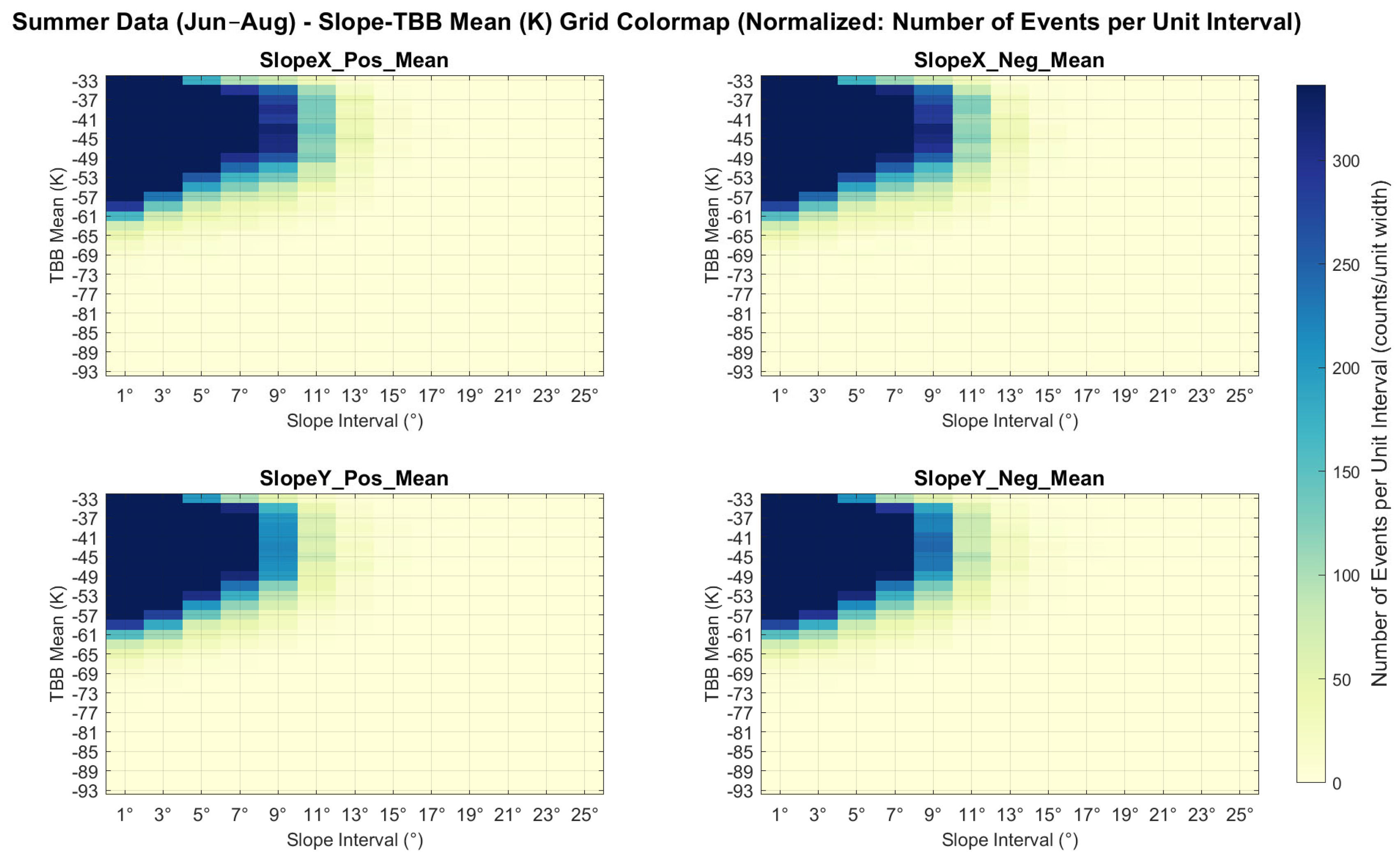
Figure 16 further shows that an increasing slope narrows the TBB range and raises the mean TBB, implying a reduced spread in inferred cloud-top heights. The lighter shading at large slopes suggests fewer events per bin and a more dispersed event distribution. In the steepest-slope bins, precipitation-associated storms have TBB mainly between −47 and −33 °C. Compared with steep terrain, gentle slopes are associated with lower mean TBB (more SDTC/MDTC), implying higher cloud tops and stronger deep convection, consistent with the study of Pan [40]. Over steep slopes, flow separation and channeling may reduce the effective lifting efficiency, which can increase mean TBB and weaken deep convection.

4. Discussion

Our study reveals pronounced spatiotemporal heterogeneity of thunderstorms over the TP. It finds regionally and seasonally different relationships between thunderstorm properties (TBB and area) and precipitation, as well as slope-dominated topographic modulation effects on storm precipitation and structure. Meanwhile, it should be noted that these results depend on the data quality and methodology, which require further discussion to improve the results’ rationality.
These results advance our understanding of TP thunderstorm precipitation but are limited by data resolution, methodological constraints, insufficient multi-scale coupling analysis, and the current focus on slope alone [41]. The original dataset [17] integrated FY-2E satellite data and WWLLN lightning observations, adopting a 1-h lightning-satellite matching window. Complemented by dual screening criteria (TBB ≤ −32 °C and CLC) and ellipse fitting optimization, the dataset was verified for reliability and made publicly available. Relevant studies have utilized similar data or methods: Fu et al. (2006) explored the vertical structure of TP summer precipitation systems, revealing the “tower mast” feature of isolated rain cells [42]; Chen et al. (2019, 2021) employed circular/elliptical fitting and minimum bounding rectangle (MBR) to study TP thunderstorms, validating the correlations between cloud morphology, precipitation intensity, and topographic modulation [43,44]. Nevertheless, uncertainties exist, including spatiotemporal mismatch from the 1-h window (due to TP single-cell thunderstorms’ 30–40 min lifecycle), heterogeneous WWLLN detection efficiency (lower in western TP), and geometric simplifications (e.g., circular cap assumption). These factors may introduce uncertainty in aspects such as precipitation statistics and thunderstorm cloud identification, but will not affect the main conclusions of the relevant studies.
Future work should quantify physical mechanisms, examine long-term thunderstorm changes, and improve applicability. We plan to use the WRF model with detailed cloud-microphysics diagnostics and to develop a multidimensional topographic framework (slope, mountain orientation, and relief) to assess how terrain controls thunderstorm development. We will also optimize the definition of thundercloud spatial extent, adopting methods such as elliptical fitting or minimum bounding rectangle (MBR), referenced in Chen et al. [43,44], which can better match the irregular or elongated morphologies of TP thunderstorms, reduce the inclusion of irrelevant terrain, and refine the extraction of topographic signals. We will also investigate interactions between terrain and multiscale systems (Plateau Vortex, Southwest Vortex, South Asian monsoon, and westerlies), emphasizing their joint influence on thunderstorms together with local topographic features.

5. Conclusions

This study employed multi-source data fusion and multivariate statistical analyses to explore the thunderstorm temporal–spatial characteristics and their relationship with the precipitation. Also, the effects of the complex terrain on the thunderstorm over the TP are discussed in terms of topographic slope. The main findings are as follows.
  • Thunderstorms over the TP exhibit pronounced spatiotemporal variability. Thundercloud area follows an exponential-type distribution across seasons and subregions, dominated by SSTC and part of MSTC (area < 2000 km2). TBB distributions are left-skewed, with the highest frequencies between −40 and −36 °C, indicating a dominance of WDTC. In spring, LSTC (area ≥ 10,000 km2) account for 29.9% (mostly WDTC), whereas in autumn, SSTC and MSTC (area ≤ 5000 km2) account for 72.2%. Subregional compositions differ: TP-NE is characterized by more LSTC and MDTC/WDTC; TP-NW by MSTC and MDTC; TP-SE by SSTC and WDTC; and TP-SW by LSTC and WDTC. Summer shows the highest activity, dominated by small- to medium-intensity storms (mainly MDTC), whereas autumn has the fewest and weakest events (predominantly WDTC). TP-SW exhibits a relatively high fraction of high-intensity precipitation associated with SDTC/MDTC, with a slower decay in frequency toward high intensities.
  • Relationships between precipitation and thundercloud properties (area and TBB) vary by season and region, but a consistent feature is that larger storms (LSTC) and colder cloud tops (SDTC; low TBB) are associated with larger precipitation totals. The dependence of precipitation intensity is more heterogeneous. Seasonally, heavy spring precipitation tends to occur in smaller storms, whereas summer precipitation is frequent but typically weak and is more associated with larger, higher-topped systems. In autumn, precipitation intensity decreases with storm area and decreases more strongly with increasing TBB, and short-duration heavy precipitation is most often associated with SSTC and SDTC, potentially linked to ice-phase microphysics. Regionally, intense precipitation in TP-NE is more often associated with SSTC; TP-NW and TP-SE favor intense precipitation when storms are both small and cold-topped (SSTC with SDTC-like TBB); and TP-SW shows a stronger dependence on TBB, highlighting the role of vertical storm development (SDTC/MDTC).
  • Topographic regulation can be summarized as “slope-dominated but aspect-weak”; i.e., slope magnitude matters more than slope orientation. Storm precipitation occurs mainly over slopes ≤14°, and heavy precipitation shows a bimodal dependence on slope, peaking near 3–4° (a transition zone) and again near 11–13°, where stronger mechanical forcing can enhance heavy precipitation. Slope effects on heavy precipitation are strongest in the afternoon, while early-morning extremes show a strong positive slope–intensity relationship. In contrast, slope orientation shows no significant impact, likely because moisture-source differences, valley–wind alignment, and leeward gravity-wave precipitation collectively offset orientation effects. Slope also modulates thundercloud structure: gentle slopes favor horizontal expansion and LSTC, whereas steep slopes may reduce effective lifting via flow separation, raising mean TBB (more WDTC) and weakening deep convection (fewer SDTC/MDTC). The results show no significant differences in slope–storm precipitation relationships among the four slope components. Despite theoretically stronger orographic lifting on windward slopes [45], slope effects are modulated by slope orientation, valley geometry, moisture pathways, and local circulations [41], with two key mechanisms homogenizing the relationships: differentiated moisture supplies across slope components and variable lifting efficiency tied to valley-flow alignment. Moreover, leeward-slope precipitation induced by topographic gravity waves [46] complements windward orographic lifting, further offsetting inter-component contrasts and accounting for the consistent slope–precipitation relationships observed.

Author Contributions

Data curation, writing—original draft preparation, S.C.; methodology, review and editing, J.C.; conceptualization, funding acquisition, C.L. All authors have read and agreed to the published version of the manuscript.

Funding

This research was supported by the Xinjiang Talent Development Foundation (XJRC-2025-ZZB-ZDXQ-018), the National Key Research and Development Program of China (No. 2023YFC3007504), the National Science Foundation of China (42075067), and the University-Level College Student Innovation and Entrepreneurship Training Program of the Nanjing University of Information Science & Technology (No. XJDC202410300199).

Data Availability Statement

The thundercloud-characteristics dataset is available at the National Tibetan Plateau/Third Pole Environment Data Center (http://data.tpdc.ac.cn, https://doi.org/10.11888/Atmos.tpdc.272622, accessed on 17 February 2024). Precipitation data from the high-resolution near-surface meteorological forcing dataset for the Third Pole region (TPMFD, 1979-2023) is provided by the National Tibetan Plateau/Third Pole Environment Data Center (http://data.tpdc.ac.cn, https://doi.org/10.11888/Atmos.tpdc.300398, accessed on 29 March 2024). Terrain information is derived from the GMTED2010 30-arc-second mean elevation product, jointly developed by the U.S. Geological Survey (USGS) and the National Geospatial-Intelligence Agency (NGA) (https://topotools.cr.usgs.gov/gmted_viewer/gmted2010_global_grids.php, accessed on 1 July 2025).

Acknowledgments

We gratefully acknowledge the National Tibetan Plateau Data Center, the U.S. Geological Survey (USGS), and the National Geospatial-Intelligence Agency (NGA) for providing the FY-2E, TPMFD, and GMTED2010 datasets. We thank Kai Yang for valuable technical guidance and constructive suggestions during data processing and manuscript preparation. We also appreciate the anonymous reviewers for their insightful comments that improved the quality of this paper.

Conflicts of Interest

The authors declare no conflicts of interest.

Abbreviations

The following abbreviations are used in this manuscript:
TBBBlack body temperature
SDTCStrongly developed thunderstorm clouds
MDTCModerately developed thunderstorm clouds
WDTCWeakly developed thunderstorm clouds
SSTCSmall-sized thunderstorm clouds
MSTCMedium-sized thunderstorm clouds
LSTCLarge-sized thunderstorm clouds
SASMSouth Asian summer monsoon

References

  1. Tang, J. Distribution, Trends and Causes of Clouds, Precipitation Andextreme Disastrous Weather Events on the Tibetan Plateau. Ph.D. Thesis, Nanjing University of Information Science and Technology, Nanjing, China, 2022. (In Chinese) [Google Scholar]
  2. Genbatu, G.; Zhongjie, S.; Xiaohui, Y.; Yuguang, H.; Hao, G.; Fandjinou, K.; Zhiming, X.; Wei, W.; Zhiyong, Z.; Xiao, Z.; et al. Analysis of Precipitation Extremes in the Qinghai-Tibetan Plateau, China: Spatio-Temporal Characteristics and Topography Effects. Atmosphere 2017, 8, 127. [Google Scholar]
  3. Zhao, C.; Wang, Y.; Letu, H. New Progress and Challenges in Cloud-Aerosol-Radiation-Precipitation Interactions: Preface for a Special Issue. Adv. Atmos. Sci. 2022, 39, 1983–1985. [Google Scholar] [CrossRef]
  4. Duan, A.; Xiao, Z. Does the Climate Warming Hiatus Exist over the Tibetan Plateau? Sci. Rep. 2015, 5, 13711. [Google Scholar] [CrossRef]
  5. Doswell, C.A. Severe Convective Storms—An Overview. In Severe Convective Storms; Doswell, C.A., Ed.; American Meteorological Society: Boston, MA, USA, 2001; pp. 1–26. ISBN 978-1-935704-06-5. [Google Scholar]
  6. Lang, T.J.; Rutledge, S.A. Relationships between Convective Storm Kinematics, Precipitation, and Lightning. Mon. Weather. Rev. 2002, 130, 2492–2506. [Google Scholar] [CrossRef]
  7. Gray, M.E.B. The Impact of Mesoscale Convective-System Potential-Vorticity Anomalies on Numerical-Weather-Prediction Forecasts. Q. J. R. Meteorol. Soc. 2001, 127, 73–88. [Google Scholar] [CrossRef]
  8. Luo, Y.; Zhang, R.; Qian, W.; Luo, Z.; Hu, X. Intercomparison of Deep Convection over the Tibetan Plateau–Asian Monsoon Region and Subtropical North America in Boreal Summer Using CloudSat/CALIPSO Data. J. Clim. 2011, 24, 2164–2177. [Google Scholar] [CrossRef]
  9. Qie, X.; Wu, X.; Yuan, T.; Bian, J.; Lu, D. Comprehensive Pattern of Deep Convective Systems over the Tibetan Plateau–South Asian Monsoon Region Based on TRMM Data. J. Clim. 2014, 27, 6612–6626. [Google Scholar] [CrossRef]
  10. Wang, J.; Jian, B.; Wang, G.; Zhao, Y.; Li, Y.; Letu, H.; Zhang, M.; Li, J. Climatology of Cloud Phase, Cloud Radiative Effects and Precipitation Properties over the Tibetan Plateau. Remote Sens. 2021, 13, 363. [Google Scholar] [CrossRef]
  11. Qie, X.; Wei, L.; Zhu, K.; Qie, K.; Xu, C.; Sun, Z.; Jiang, R.; Zhang, H.; Yuan, S. Regional Differences of Convection Structure of Thunderclouds over the Tibetan Plateau. Atmos. Res. 2022, 278, 106338. [Google Scholar] [CrossRef]
  12. Du, Y.; Zheng, D.; Ma, R.; Zhang, Y.; Lyu, W.; Yao, W.; Zhang, W.; Ciren, L.; Cuomu, D. Thunderstorm Activity over the Qinghai–Tibet Plateau Indicated by the Combined Data of the FY-2E Geostationary Satellite and WWLLN. Remote Sens. 2022, 14, 2855. [Google Scholar] [CrossRef]
  13. Wang, X.; Pang, G.; Yang, M. Precipitation over the Tibetan Plateau during Recent Decades: A Review Based on Observations and Simulations. Int. J. Climatol. 2018, 38, 1116–1131. [Google Scholar] [CrossRef]
  14. Liu, W.; Zhang, Q.; Fu, Z.; Chen, X.; Li, H.; Liu, W.; Zhang, Q.; Fu, Z.; Chen, X.; Li, H. Analysis and Estimation of Geographical and Topographic Influencing Factors for Precipitation Distribution over Complex Terrains: A Case of the Northeast Slope of the Qinghai–Tibet Plateau. Atmosphere 2018, 9, 349. [Google Scholar] [CrossRef]
  15. Fo, B. The Effects of Topography and Elevation on Precipitation. Acta Geogr. Sin. 1992, 47, 302–314. (In Chinese) [Google Scholar]
  16. Li, G.; Chen, H.; Xu, M.; Zhao, C.; Zhong, L.; Li, R.; Fu, Y.; Gao, Y. Impacts of Topographic Complexity on Modeling Moisture Transport and Precipitation over the Tibetan Plateau in Summer. Adv. Atmos. Sci. 2022, 39, 1151–1166. [Google Scholar] [CrossRef]
  17. Ma, R.; Zheng, D.; Yao, W.; Zhang, W. Thunderstorm Feature Dataset and Characteristics of Thunderstorm Activities in China. J. Appl. Meteorol. Sci. 2021, 32, 358–369. (In Chinese) [Google Scholar] [CrossRef]
  18. Yang, K.; Jiang, Y. A Long-Term (1979–2020) High-Resolution (1/30°) Precipitation Dataset for the Third Polar region (TPHiPr); National Tibetan Plateau Data Center: Beijing, China, 2022. [Google Scholar]
  19. Hui, L.; Zhou, Y.; Yan, Z. The Characteristics of Thunderstorms and Their Lightning Activity on the Qinghai-Tibetan Plateau. Adv. Meteorol. 2022, 2022, 9102145. [Google Scholar] [CrossRef]
  20. Shou, Y.-X.; Lu, F.; Liu, H.; Cui, P.; Shou, S.; Liu, J. Satellite-Based Observational Study of the Tibetan Plateau Vortex: Features of Deep Convective Cloud Tops. Adv. Atmos. Sci. 2019, 36, 189–205. [Google Scholar] [CrossRef]
  21. Yamaguchi, T.; Feingold, G. On the Relationship between Open Cellular Convective Cloud Patterns and the Spatial Distribution of Precipitation. Atmos. Chem. Phys. 2015, 15, 1237–1251. [Google Scholar] [CrossRef]
  22. Zhang, H.; Xiao, L.; Wu, Z.; Yang, H.; Chen, Z. Characteristics of TBB for Two Southern China Squalls and Analysis of Intense Convective Weather. Guangdong Meteorol. 2020, 42, 7–11+16. (In Chinese) [Google Scholar]
  23. Tsuchiya, H.; Hibino, K.; Kawata, K.; Ohnishi, M.; Takita, M.; Munakata, K.; Kato, C.; Shimoda, S.; Shi, Q.; Wang, S.; et al. Characteristics of Temporal Variability of Long-Duration Bursts of High-Energy Radiation Associated with Thunderclouds on the Tibetan Plateau. Prog. Earth Planet. Sci. 2024, 11, 26. [Google Scholar] [CrossRef]
  24. Zhang, Q.; Ren, J.; Xiao, D.; Long, K.; Xiao, H. Satellite Image Characteristics and Formation Mechanisms of Newborn Thunderstorms in Eastern Qinghai-Xizang Plateau. Meteor. Sci. Technol. 2018, 46, 943–950. (In Chinese) [Google Scholar]
  25. Bo, Y.; Wang, Y.; Li, J.; Wang, C. Temporal and Spatial Variation Features of Cloud Water and Its Relation to Precipitation over the Tibetan Plateau. J. Glaciol. Geocryol. 2016, 38, 1679–1690. (In Chinese) [Google Scholar]
  26. Xu, M.; Qie, X.; Pang, W.; Shi, G.; Liang, L.; Sun, Z.; Yuan, S.; Zhu, K.; Zhao, P. Lightning Climatology Across the Chinese Continent from 2010 to 2020. Atmos. Res. 2022, 275, 106251. [Google Scholar] [CrossRef]
  27. Zhang, J.; Jing, L. Spatial and Temporal Variations of Cloud Parameters over the Qinghai-Xizang Plateau During the Past Two Decades. Plateau Meteorol. 2023, 42, 1107–1118. (In Chinese) [Google Scholar]
  28. Kaushal, S.; Singh, D.K.; Sreenivas, K.R. Penetrative Convection Driven by Radiative Cooling in the Nocturnal Atmospheric Boundary Layer. Bound. Layer Meteorol 2025, 191, 27. [Google Scholar] [CrossRef]
  29. Du, Y.; Zheng, D.; Zhang, Y.; Yao, W.; Xu, L.; Fang, X. Spatiotemporal Distributions of the Thunderstorm and Lightning Structures over the Qinghai–Tibet Plateau. Remote Sens. 2024, 16, 468. [Google Scholar] [CrossRef]
  30. Zhu, Y.; Sang, Y.-F.; Chen, D.; Sivakumar, B.; Li, D. Effects of the South Asian Summer Monsoon Anomaly on Interannual Variations in Precipitation over the South-Central Tibetan Plateau. Environ. Res. Lett. 2020, 15, 124067. [Google Scholar] [CrossRef]
  31. Nie, Y.; Sun, J. Synoptic-Scale Circulation Precursors of Extreme Precipitation Events over Southwest China During the Rainy Season. J. Geophys. Res. Atmos. 2021, 126, e2021JD035134. [Google Scholar] [CrossRef]
  32. GB/T 35224—2017; Specifications for Surface Meteorological Observation—Weather Phenomena. China Meteorological Administration: Beijing, China, 2017. (In Chinese)
  33. GB/T 28592—2012; Grade of Precipitation. China Meteorological Administration: Beijing, China, 2012. (In Chinese)
  34. Chang, Y.; Ma, Q.; Qi, P.; Guo, X.; Lin, D.; Guo, L.; Di, D.; Zhao, Y.; Wang, H.; Chen, T. Characteristics of Orographic Clouds and Associated Mechanisms in the Qilian Mountains, Northeastern Tibetan Plateau Based on FengYun-4A Satellite TBB Product. Atmos. Res. 2025, 320, 108031. [Google Scholar] [CrossRef]
  35. Wei, X.; Liu, Y.; Cheng, C.; Chang, X.; Guo, J.; Wei, X.; Liu, Y.; Cheng, C.; Chang, X.; Guo, J. Topographic Precipitation Diagnosis: Model Design and Validation in a Two-Dimensional Context. Atmosphere 2025, 16, 593. [Google Scholar] [CrossRef]
  36. Li, X.; Yang, S.; Yang, S. Influence of Multi-Scale Topographic Factors on Vortex Development during an Eastward-Propagating Rainstorm Event in Southwest China. Chin. J. Atmos. Sci. 2023, 47, 34–52. (In Chinese) [Google Scholar] [CrossRef]
  37. Murakami, M. Analysis of the Deep Convective Activity Over the Western Pacific and Southeast Asia: Part I: Diurnal Variation. J. Meteorol. Soc. Jpn. 1983, 61, 60–76. [Google Scholar] [CrossRef]
  38. Zeng, L.; Gao, Y.; Zhang, G. Jianduo Li The Influence of Main Topographic Factors on Peak Types of Extreme Hourly Precipitation in Eastern China. Trans. Atmos. Sci. 2023, 46, 369–379. (In Chinese) [Google Scholar] [CrossRef]
  39. Houze, R.A., Jr. Orographic Effects on Precipitating Clouds. Rev. Geophys. 2012, 50, 1. [Google Scholar] [CrossRef]
  40. Pan, X. Characteristic of Precipitation and Clouds over the Tibetan Plateau in Summer Based on TRMM and CloudSat. Ph.D. Thesis, University of Science and Technology of China, Hefei, China, 2017. (In Chinese) [Google Scholar]
  41. Gultepe, I. Mountain Weather: Observation and Modeling. Adv. Geophys. 2015, 56, 229–312. [Google Scholar] [CrossRef]
  42. Fu, Y.; Liu, G.; Wu, G.; Yu, R.; Xu, Y.; Wang, Y.; Li, R.; Liu, Q. Tower Mast of Precipitation over the Central Tibetan Plateau Summer. Geophys. Res. Lett. 2006, 33, L05802. [Google Scholar] [CrossRef]
  43. Chen, Y. Identification of Cloud Clusters and Rain Cells and Their Features from Multi-Satellite Observations. Ph.D. Thesis, University of Science and Technology of China, Hefei, China, 2019. (In Chinese) [Google Scholar]
  44. Chen, Y.; Zhang, A.; Fu, Y.; Chen, S.; Li, W. Morphological Characteristics of Precipitation Areas over the Tibetan Plateau Measured by TRMM PR. Adv. Atmos. Sci. 2021, 38, 677–689. [Google Scholar] [CrossRef]
  45. Roe, G.H. Orographic Precipitation. Annu. Rev. Earth Planet. Sci. 2005, 33, 645–671. [Google Scholar] [CrossRef]
  46. Guo, X.; Guo, X.; Fu, D.; Niu, S. Relationship between Bell-Shaped Terrain Dynamic Forcing, Mountain Wave Propagation, and Orographic Clouds and Precipitation. Chin. J. Atmos. Sci. 2013, 37, 786–800. (In Chinese) [Google Scholar]
Figure 1. Subregional division of the TP study area; background shading denotes terrain elevation.
Remotesensing 18 00650 g001
Figure 2. Seasonal distributions of thundercloud area over the TP (km2): (a) spring, (b) summer, and (c) autumn. The equations shown in each panel denote the exponential fit.
Remotesensing 18 00650 g002
Figure 3. Seasonal distributions of thundercloud TBB over the TP (°C): (a) spring, (b) summer, and (c) autumn. The blue bars indicate the number of thunderclouds under the TBB.
Remotesensing 18 00650 g003
Figure 4. Regional distributions of thundercloud area over the TP (km2): (a) TP-NE, (b) TP-NW, (c) TP-SE, and (d) TP-SW. The equations shown in each panel denote the exponential fit.
Remotesensing 18 00650 g004
Figure 5. Regional distributions of thundercloud TBB over the TP (°C): (a) TP-NE, (b) TP-NW, (c) TP-SE, and (d) TP-SW. The blue bars indicate the number of thunderclouds under the TBB.
Remotesensing 18 00650 g005
Figure 6. Seasonal linear relationships between storm precipitation intensity (mm h−1) and thundercloud area (km2) and TBB (°C), averaged over 2010–2018: (a) spring precipitation intensity vs. thundercloud area, (b) spring precipitation intensity vs. TBB, (c) summer precipitation intensity vs. thundercloud area, (d) summer precipitation intensity vs. TBB, (e) autumn precipitation intensity vs. thundercloud area, and (f) autumn precipitation intensity vs. TBB. Solid red lines denote the fitted linear regressions; blue text indicates statistical significance at the 95% confidence level.
Remotesensing 18 00650 g006
Figure 7. Seasonal linear relationships between total storm precipitation (mm) and thundercloud area (km2) and TBB (°C), averaged over 2010–2018: (a) spring total precipitation vs. thundercloud area, (b) spring total precipitation vs. TBB, (c) summer total precipitation vs. thundercloud area, (d) summer total precipitation vs. TBB, (e) autumn total precipitation vs. thundercloud area, and (f) autumn total precipitation vs. TBB. Solid red lines denote the fitted linear regressions; blue text indicates statistical significance at the 95% confidence level.
Remotesensing 18 00650 g007
Figure 8. Regional linear relationships between storm precipitation intensity (mm h−1) and thundercloud area (km2) and TBB (°C), averaged over 2010–2018: (a) TP-NE precipitation intensity vs. thundercloud area, (b) TP-NE precipitation intensity vs. TBB, (c) TP-NW precipitation intensity vs. thundercloud area, (d) TP-NW precipitation intensity vs. TBB, (e) TP-SE precipitation intensity vs. thundercloud area, (f) TP-SE precipitation intensity vs. TBB, (g) TP-SW precipitation intensity vs. thundercloud area, and (h) TP-SW precipitation intensity vs. TBB. Solid red lines denote the fitted linear regressions; blue text indicates statistical significance at the 95% confidence level.
Remotesensing 18 00650 g008
Figure 9. Regional linear relationships between total storm precipitation (mm) and thundercloud area (km2) and TBB (°C), averaged over 2010–2018: (a) TP-NE total precipitation vs. thundercloud area, (b) TP-NE total precipitation vs. TBB, (c) TP-NW total precipitation vs. thundercloud area, (d) TP-NW total precipitation vs. TBB, (e) TP-SE total precipitation vs. thundercloud area, (f) TP-SE total precipitation vs. TBB, (g) TP-SW total precipitation vs. thundercloud area, and (h) TP-SW total precipitation vs. TBB. Solid red lines denote the fitted linear regressions; blue text indicates statistical significance at the 95% confidence level.
Remotesensing 18 00650 g009
Figure 10. Summer scatterplots of slope versus storm precipitation intensity (0.00–2.50 mm h−1) for four directional slope components (SlopeX_Pos_Mean, SlopeX_Neg_Mean, SlopeY_Pos_Mean, and SlopeY_Neg_Mean). Overlaid are 85th–99th percentile quantile-based trend lines divided into two types: (1) count proportion lines (solid line): quantile lines for the proportion of summer precipitation event counts at each slope; (2) value proportion lines (dotted line): quantile lines for the proportion of cumulative summer precipitation volume at each slope.
Remotesensing 18 00650 g010
Figure 11. Summer scatterplots of slope versus storm precipitation intensity (2.50–28.18 mm h−1) for four directional slope components (SlopeX_Pos_Mean, SlopeX_Neg_Mean, SlopeY_Pos_Mean, and SlopeY_Neg_Mean). Overlaid are 85th–99th percentile quantile-based trend lines divided into two types: (1) count proportion lines (solid line): quantile lines for the proportion of summer precipitation event counts at each slope; (2) value proportion lines (dotted line): quantile lines for the proportion of cumulative summer precipitation volume at each slope.
Remotesensing 18 00650 g011
Figure 12. Diurnal variation in the fitted slope a in the slope–precipitation-intensity relationship (summer: precipitation ≤ 0.324 mm h−1, 90th percentile).
Remotesensing 18 00650 g012
Figure 13. Diurnal variation in the fitted slope a in the slope–precipitation-intensity relationship (summer: 0.5–0.391 mm h−1, 99.9th percentile).
Remotesensing 18 00650 g013
Figure 14. Summer (June–August) diurnal cycle of the annually averaged slope–precipitation relationship across four slope components (TP local time, UTC + 6). Events with precipitation ≤ 0.1 mm h−1 are excluded, and values above the 99th percentile are removed.
Remotesensing 18 00650 g014
Figure 15. Filled-contour plots of slope versus log10(thundercloud area) over the TP in summer (June–August). The color shading indicates the number of thunderstorm-precipitation events per bin. Panels correspond to SlopeX_Pos, SlopeX_Neg, SlopeY_Pos, and SlopeY_Neg.
Remotesensing 18 00650 g015
Figure 16. Filled-contour plots of slope versus mean TBB (K) over the TP in summer (June–August). Color shading indicates the number of thunderstorm-precipitation events per bin. Panels correspond to SlopeX_Pos, SlopeX_Neg, SlopeY_Pos, and SlopeY_Neg.
Remotesensing 18 00650 g016
Table 1. Two-dimensional classification criteria for thunderstorm clouds over the TP.
Classification DimensionClass NameAbbreviationRange
Development Intensity (TBB)Strongly developed thunderstorm cloudsSDTCTBB < −55 °C
Moderately developed thunderstorm cloudsMDTC−55 °C ≤ TBB < −45 °C
Weakly developed thunderstorm cloudsWDTC−45 °C ≤ TBB < −32 °C
Spatial Scale (Area)Small-sized thunderstorm cloudsSSTCArea ≤ 1000 km2
Medium-sized thunderstorm cloudsMSTC1000 km2 < Area ≤ 5000 km2
Large-sized thunderstorm cloudsLSTCArea > 5000 km2
Disclaimer/Publisher’s Note: The statements, opinions and data contained in all publications are solely those of the individual author(s) and contributor(s) and not of MDPI and/or the editor(s). MDPI and/or the editor(s) disclaim responsibility for any injury to people or property resulting from any ideas, methods, instructions or products referred to in the content.