Monitoring Changes in Landsat Thermal Features in Urban and Non-Urban Interfaces from 1986 to 2023 in Two International Urban Centers: Implications for Climate and Global Issues

Highlights
- We developed a prototype approach combining long-term Landsat thermal data with dynamic land cover products to quantify SUHI intensities and hotspots at city scale.
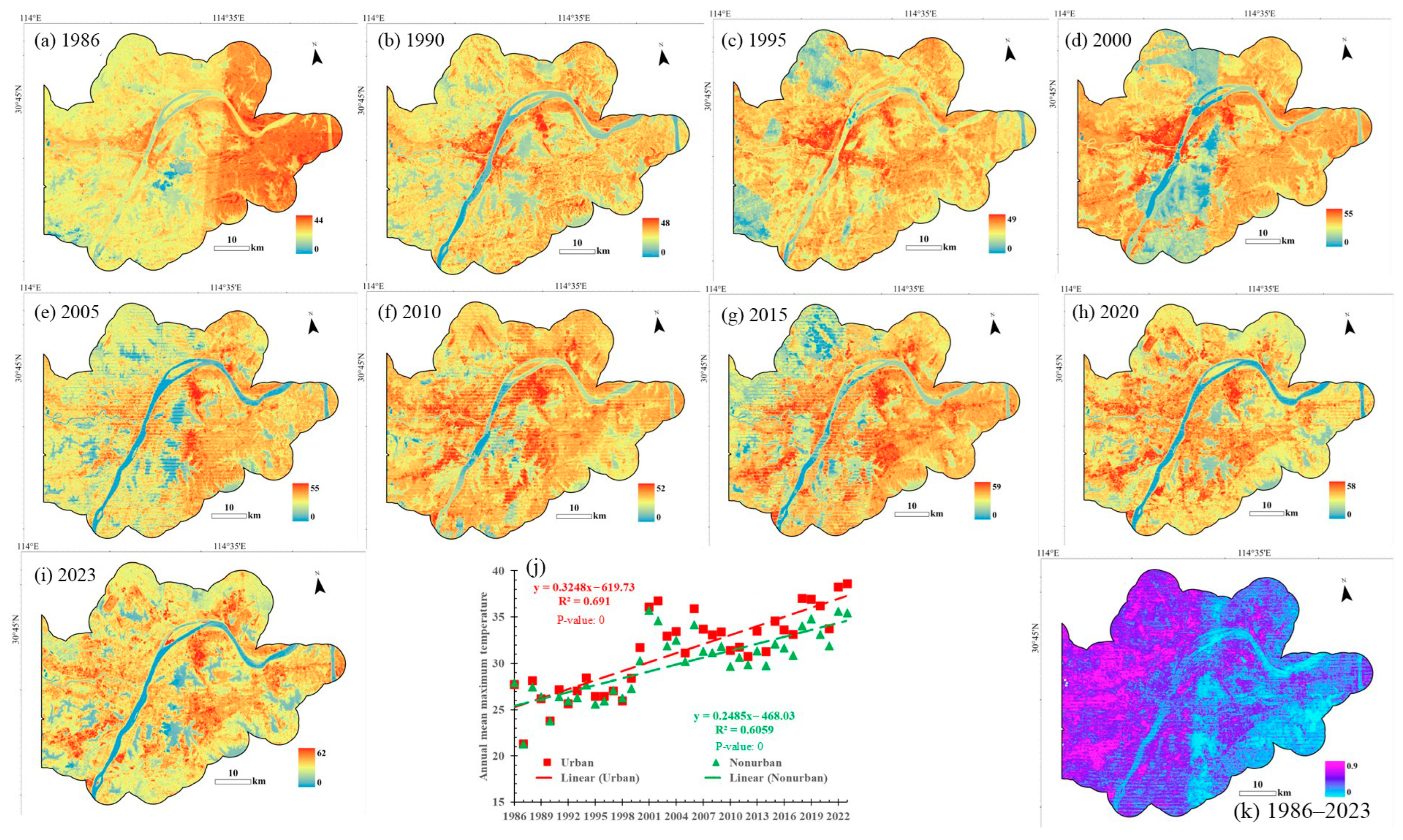
- Urban growth significantly increased land surface temperatures, with Wuhan showing stronger warming trends (0.04 °C/year) compared to Brasília (0.01 °C/year).
- Provides a scalable framework for combining land cover and thermal satellite data to monitor surface urban heat dynamics.
- Supports sustainable urban planning and climate adaptation through improved SUHI tracking and analysis.
Abstract
1. Introduction
2. Materials and Methods
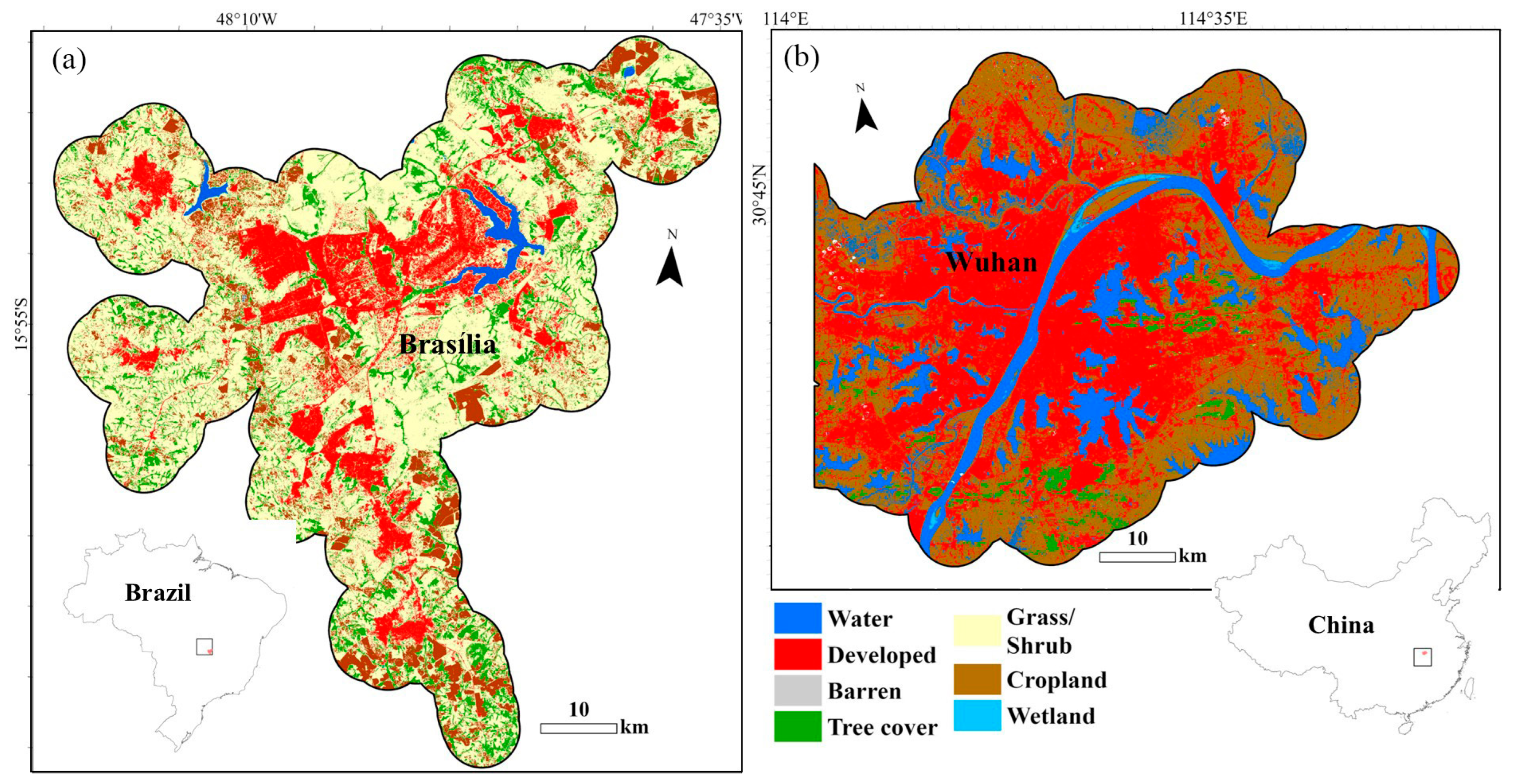
2.1. Study Areas
2.2. Annual Land Cover Dynamics
2.3. Annual Land Surface Temperature (LST) Retrieval
2.4. Reference Data, Extracting Strategy, and Validation
2.5. Quantification of SUHI Intensities, Variations, and Trends
2.6. SUHI Hotspot Analysis
3. Results
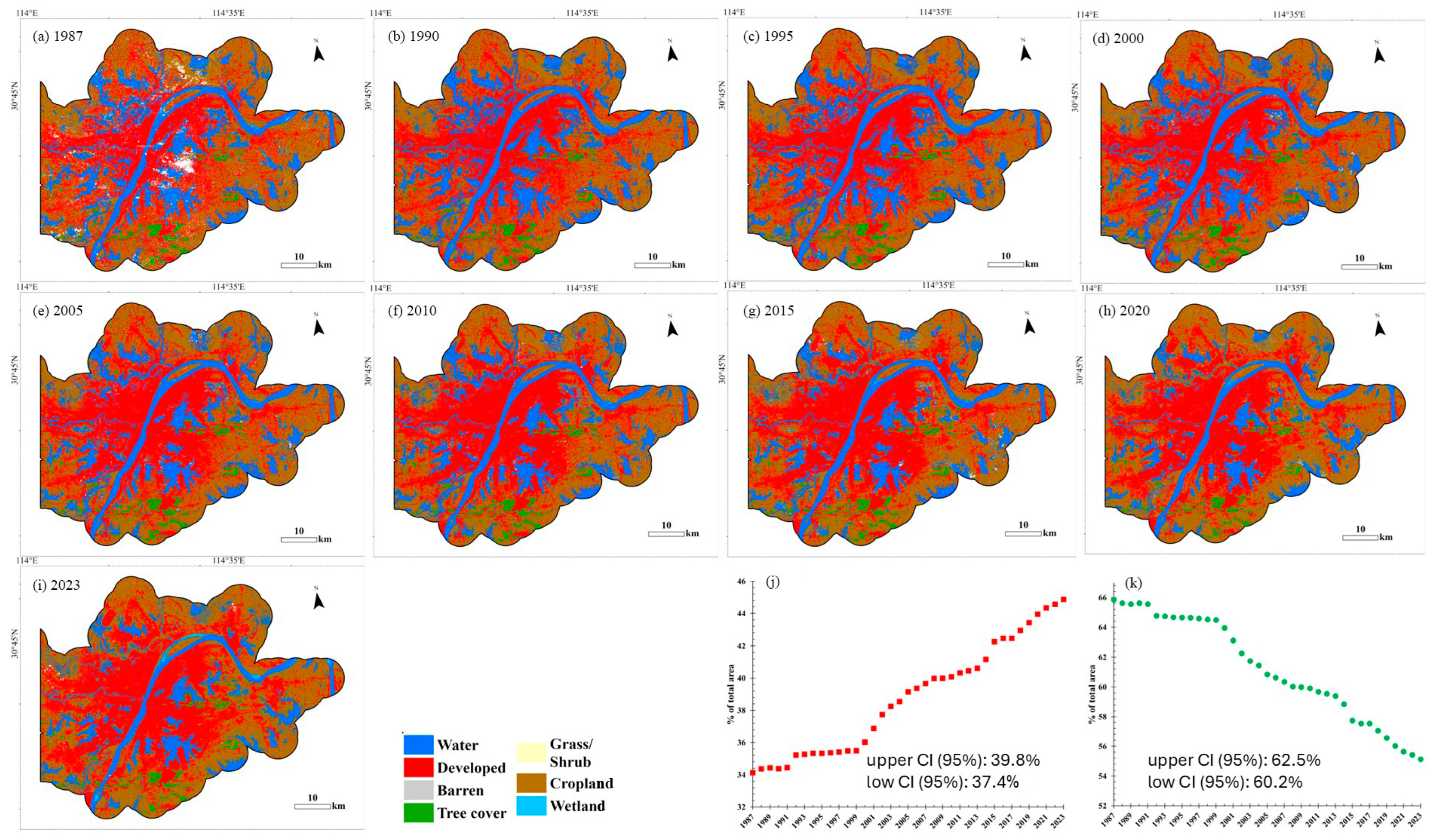
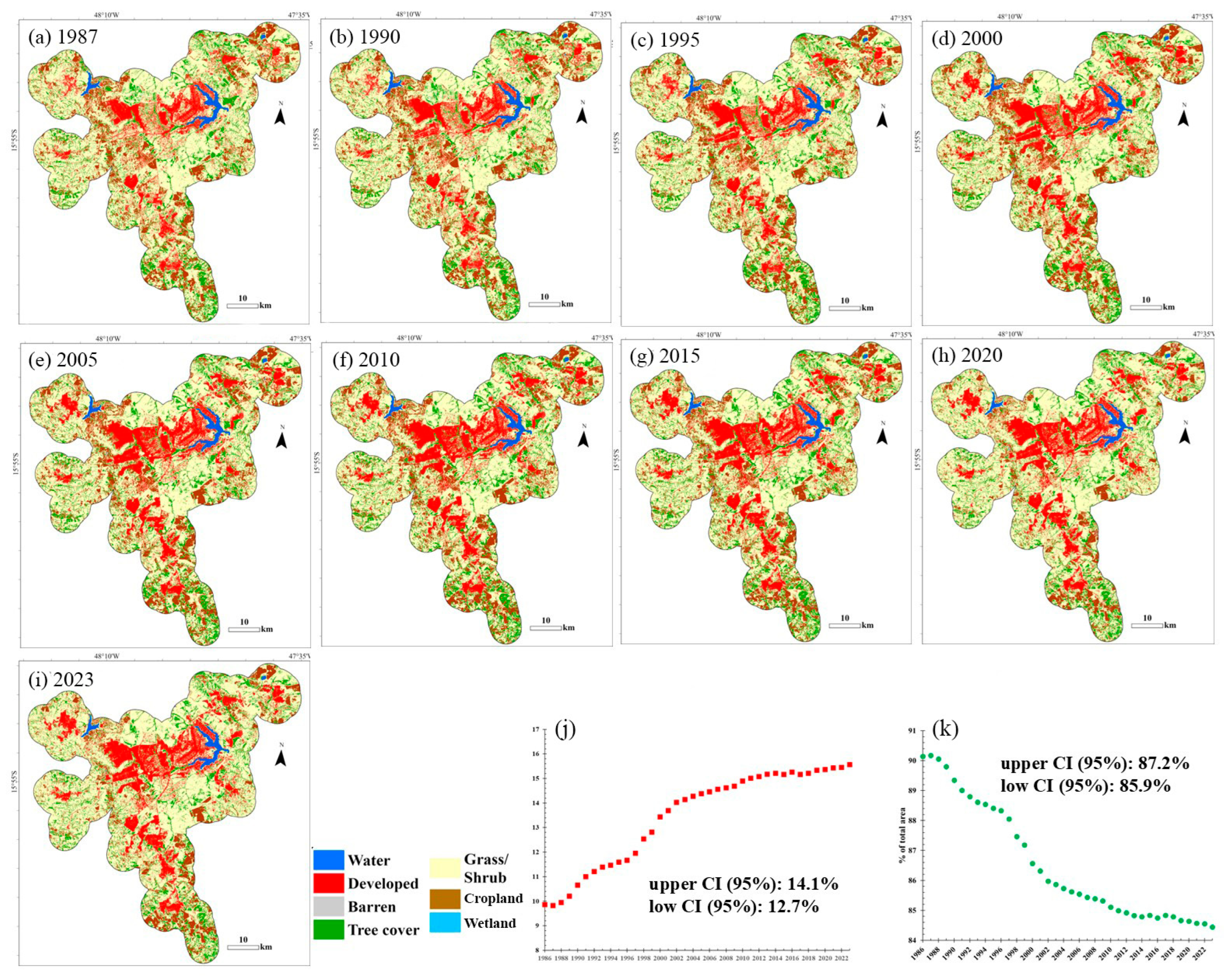
3.1. Land Cover Changes in Urban Areas and Urban-Rural Interfaces
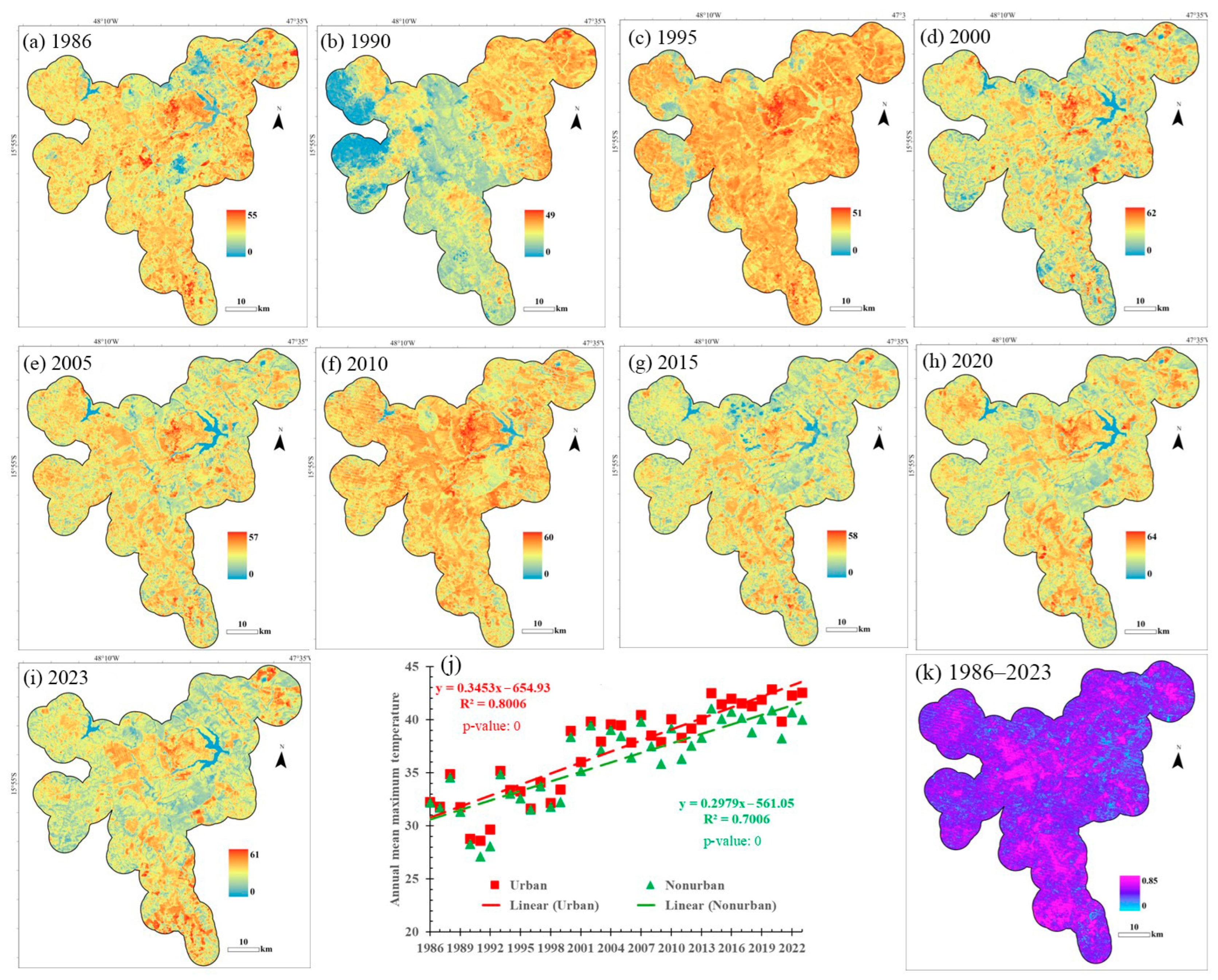
3.2. The Spatial Distributions of LST and Trends Analysis
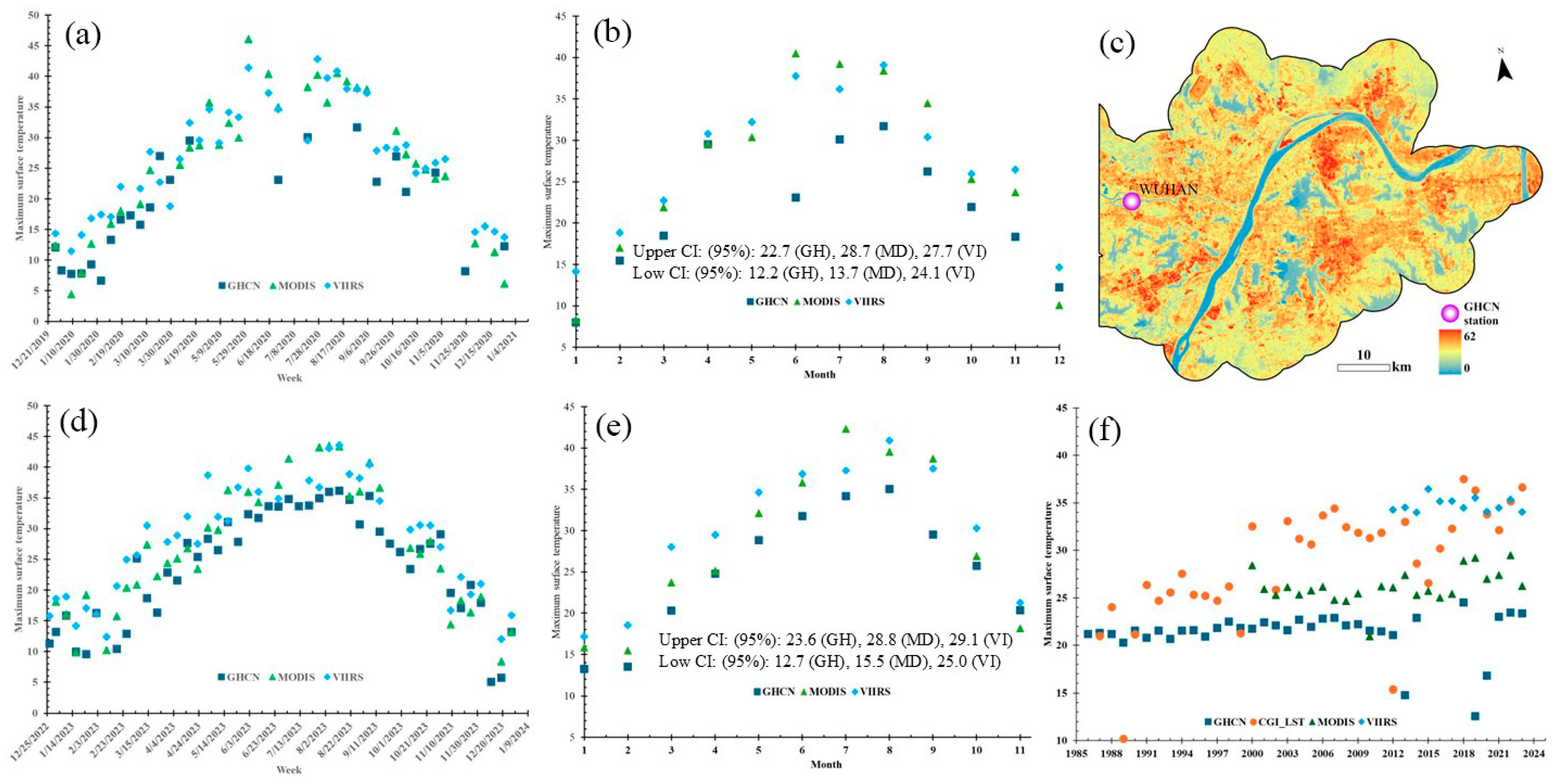
3.3. The Evaluation and Comparison of LST
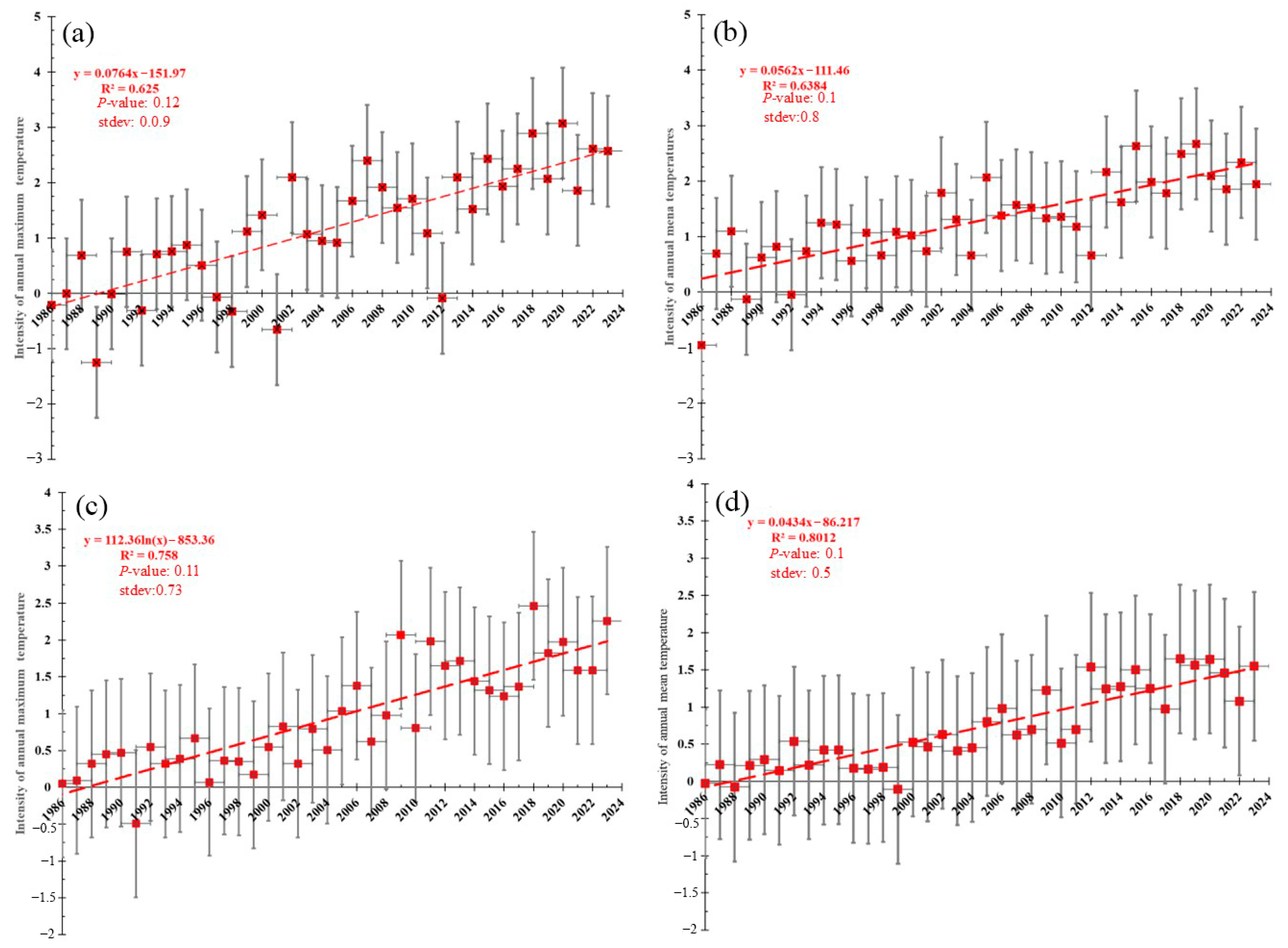
3.4. Spatial Patterns and Temporal Variations of SUHI Intensities
3.5. Spatial Distribution of SUHI Hotspot
4. Discussion
4.1. Land Cover Change and LST Variations and Trends
4.2. The Evaluation and Comparison of LST
4.3. Land Cover and SUHI Intensity Trends
4.4. SUHI Hotspot Probability in Persistent Urban Areas
4.5. Limitations and Future Directions
5. Conclusions
- Urban expansion over the past four decades has significantly influenced land surface temperatures (LSTs). Wuhan exhibited stronger warming trends due to extensive conversion of cropland and wetlands, while Brasília showed more moderate increases linked to cropland and grass/shrub conversion.
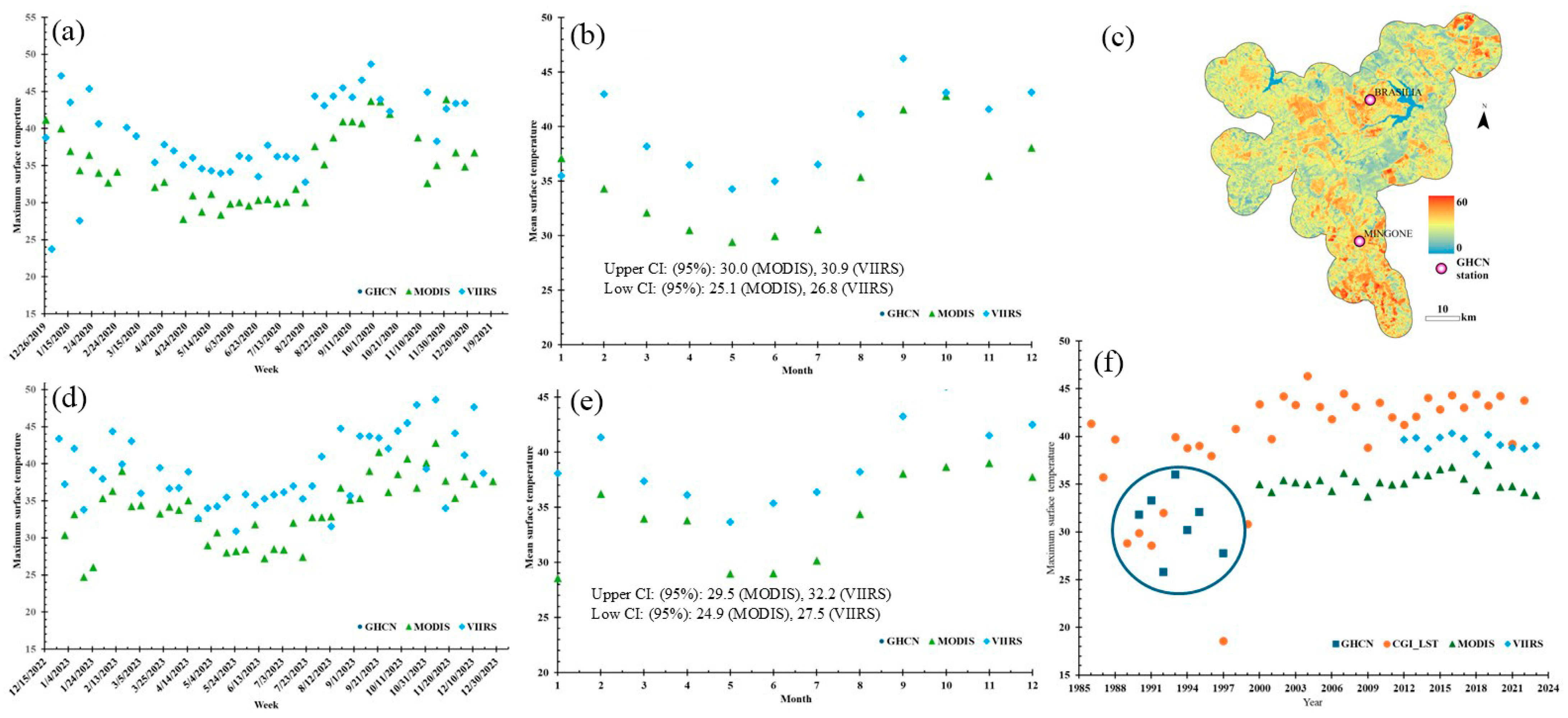
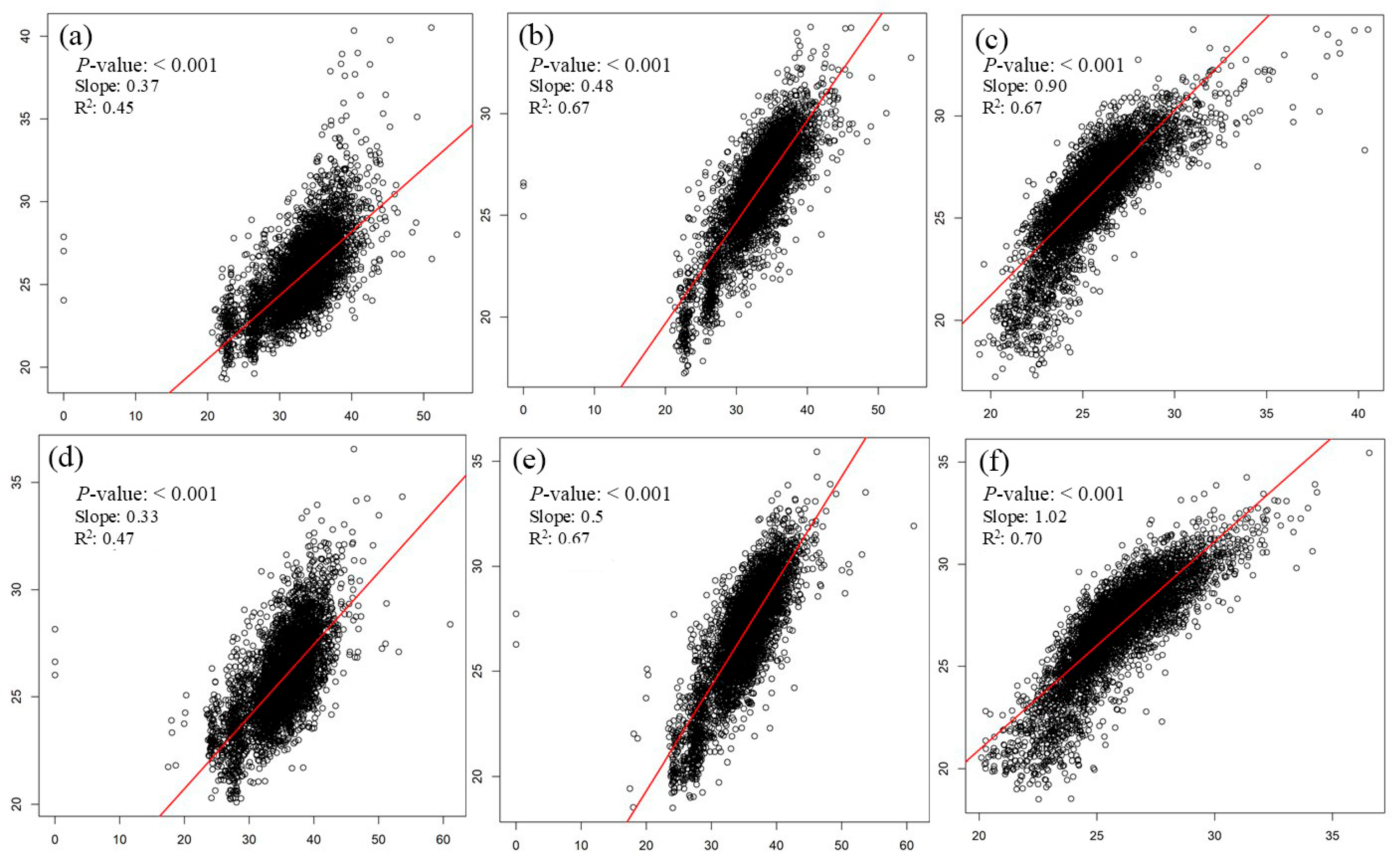
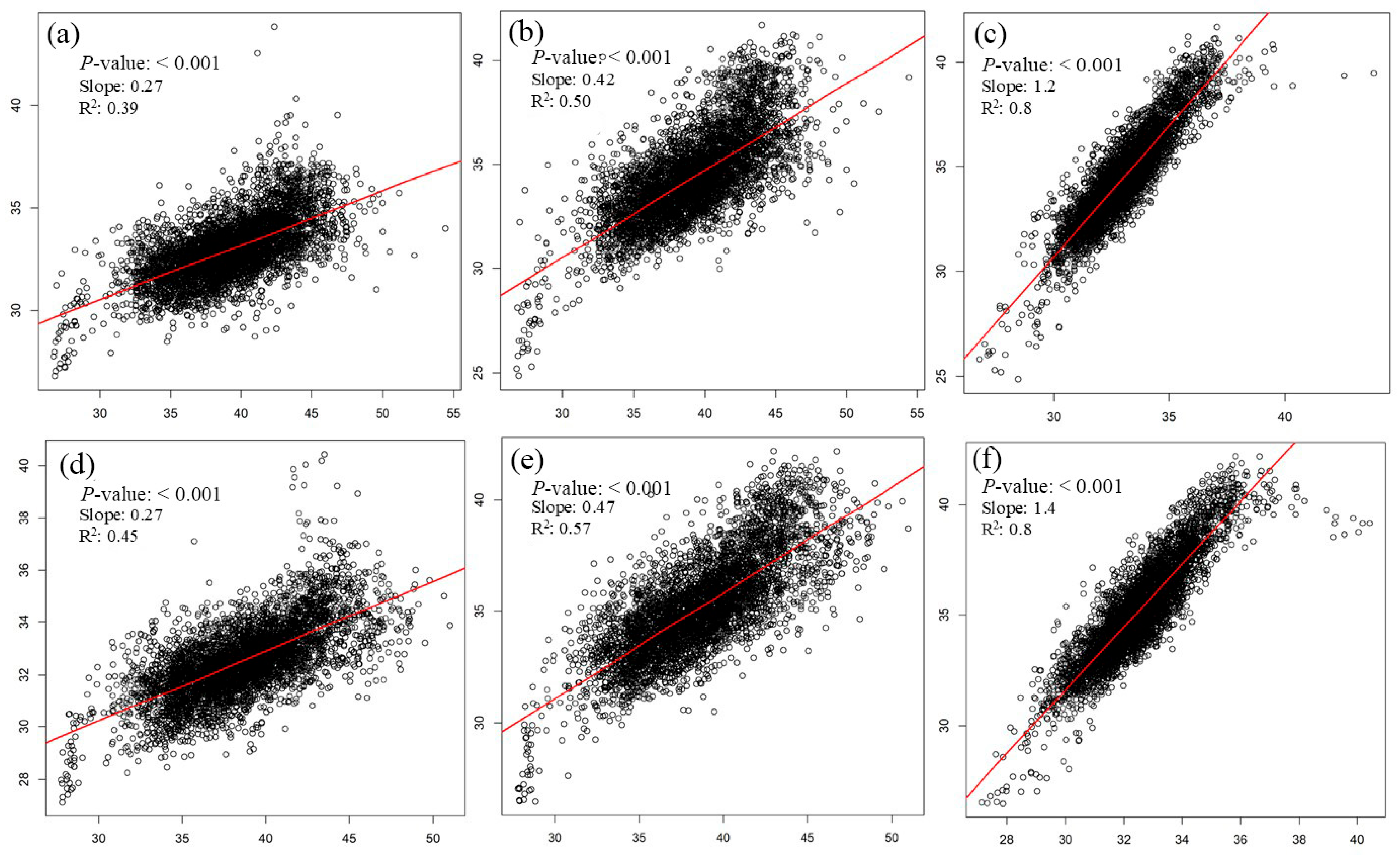
- Landsat-derived LST products offer robust, spatially detailed records of SUHI dynamics, outperforming coarser MODIS and VIIRS datasets in capturing fine-scale temperature variations, despite limitations from cloud contamination and data gaps.
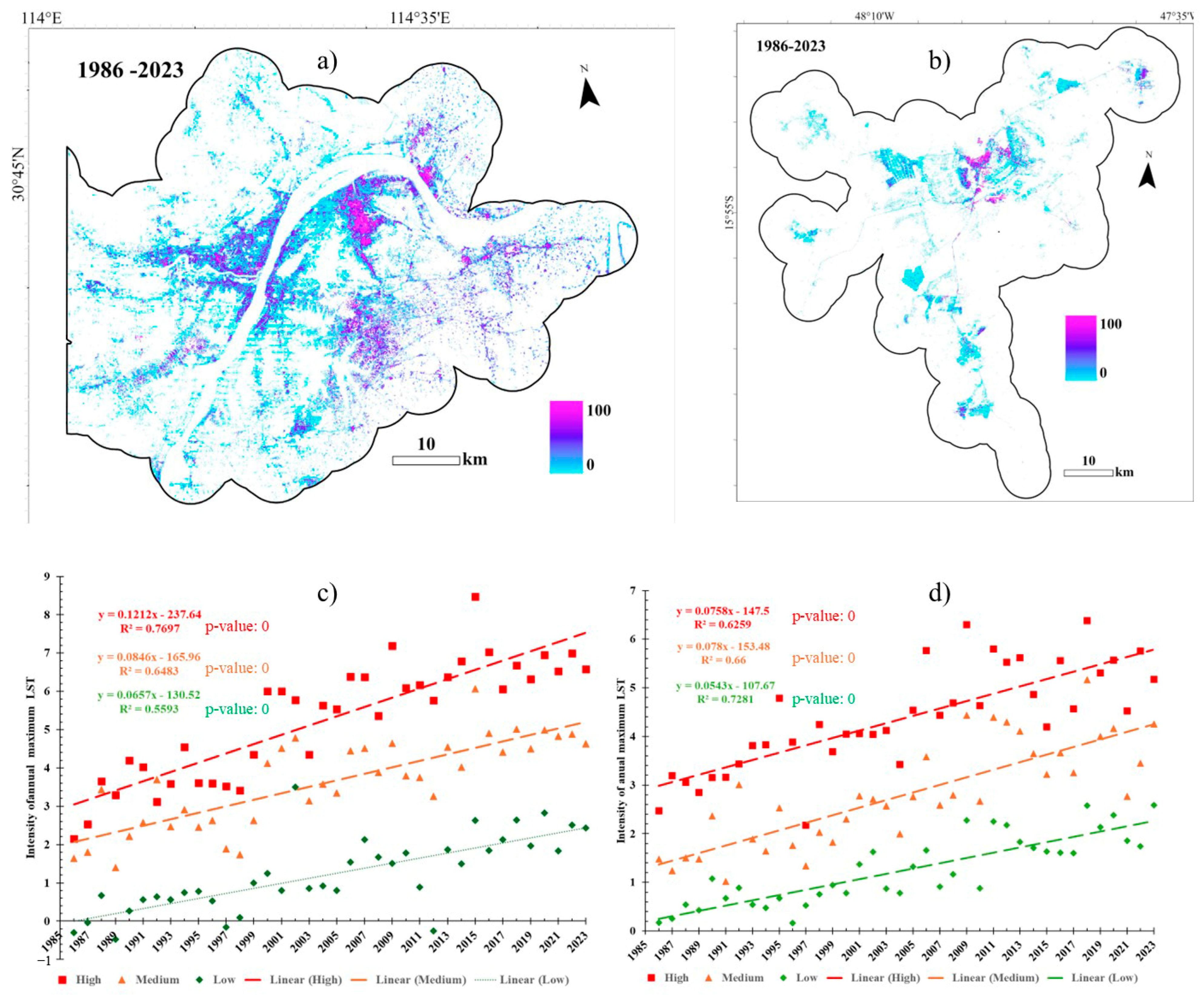
- SUHI intensity trends are more pronounced when assessed using maximum LST values, highlighting that urban growth amplifies extreme heat conditions more strongly than mean annual temperatures.
- Persistent SUHI hotspots were concentrated in dense urban cores with high impervious surface cover, underscoring the importance of green infrastructure and water bodies in mitigating urban heat stress.
- Land cover composition is a critical mediator of SUHI effects: forests and water bodies consistently provided cooling benefits, while cropland and grass/shrub contributed to elevated LSTs.
Supplementary Materials
Author Contributions
Funding
Data Availability Statement
Acknowledgments
Conflicts of Interest
References
- Mahtta, R.; Fragkias, M.; Güneralp, B.; Mahendra, A.; Reba, M.; Wentz, E.A.; Seto, K.C. Urban land expansion: The role of population and economic growth for 300+ cities. npj Urban Sustain. 2022, 2, 5. [Google Scholar] [CrossRef]
- Seto, K.C.; Parnell, S.; Elmqvist, T. A global outlook on urbanization. In Urbanization, Biodiversity and Ecosystem Services: Challenges and Opportunities; Springer: Dordrecht, The Netherlands, 2013; pp. 1–12. [Google Scholar]
- Cohen, J.E. World population in 2050: Assessing the projections. In Conference Series-Federal Reserve Bank of Boston; Federal Reserve Bank of Boston: Boston, MA, USA, 2001; pp. 83–113. [Google Scholar]
- Shi, H.; Xian, G.; Auch, R.; Gallo, K.; Zhou, Q. Urban Heat Island and Its Regional Impacts Using Remotely Sensed Thermal Data—A Review of Recent Developments and Methodology. Land 2021, 10, 867. [Google Scholar] [CrossRef]
- Xian, G.; Shi, H.; Auch, R.; Gallo, K.; Zhou, Q.; Wu, Z.T.; Kolian, M. The effects of urban land cover dynamics on urban heat Island intensity and temporal trends. Giscience Remote Sens. 2021, 58, 501–515. [Google Scholar] [CrossRef]
- Crimmins, A.R.; Avery, C.W.; Easterling, D.R. Fifth National Climate Assessment; National Academies of Sciences, Engineering, and Medicine: Washington, DC, USA, 2024. [Google Scholar] [CrossRef]
- Nuruzzaman, M. Urban heat island: Causes, effects and mitigation measures–A review. Int. J. Environ. Monit. Anal. 2015, 3, 67–73. [Google Scholar] [CrossRef]
- Phelan, P.E.; Kaloush, K.; Miner, M.; Golden, J.; Phelan, B.; Silva, H.; Taylor, R.A. Urban Heat Island: Mechanisms, Implications, and Possible Remedies. Annu. Rev. Environ. Resour. 2015, 40, 285–307. [Google Scholar] [CrossRef]
- Santamouris, M. Recent progress on urban overheating and heat island research. Integrated assessment of the energy, environmental, vulnerability and health impact. Synergies with the global climate change. Energy Build. 2020, 207, 109482. [Google Scholar] [CrossRef]
- Arnfield, A.J. Two decades of urban climate research: A review of turbulence, exchanges of energy and water, and the urban heat island. Int. J. Climatol. 2003, 23, 1–26. [Google Scholar] [CrossRef]
- Li, L.; Zha, Y. Satellite-Based Spatiotemporal Trends of Canopy Urban Heat Islands and Associated Drivers in China’s 32 Major Cities. Remote Sens. 2019, 11, 102. [Google Scholar] [CrossRef]
- Imhoff, M.L.; Zhang, P.; Wolfe, R.E.; Bounoua, L. Remote sensing of the urban heat island effect across biomes in the continental USA. Remote Sens. Environ. 2010, 114, 504–513. [Google Scholar] [CrossRef]
- Earth Resources Observation and Science (EROS) Center. Landsat 8-9 Operational Land Imager/Thermal Infrared Sensor Level-2, Collection 2 [Dataset]; U.S. Geological Survey: Reston, VA, USA, 2020. [Google Scholar] [CrossRef]
- Earth Resources Observation and Science (EROS) Center. Landsat 7 Enhanced Thematic Mapper Plus Level-2, Collection 2 [Dataset]; U.S. Geological Survey: Reston, VA, USA, 2020. [Google Scholar] [CrossRef]
- Earth Resources Observation and Science (EROS) Center. Landsat 4-5 Thematic Mapper Level-2, Collection 2 [Dataset]; U.S. Geological Survey: Reston, VA, USA, 2020. [Google Scholar] [CrossRef]
- Wan, Z.; Hook, S.; Hulley, G. MODIS/Terra Land Surface Temperature/Emissivity 8-Day L3 Global 1km SIN Grid V061 [Dataset]; NASA EOSDIS Land Processes DAAC; NASA Land Processes Distributed Active Archive Center: Sioux Falls, SD, USA, 2021. [Google Scholar] [CrossRef]
- Hulley, G.; Hook, S. VIIRS/NPP Land Surface Temperature 8-Day L3 Global 1km SIN Grid V001 [Dataset]; NASA EOSDIS Land Processes DAAC; NASA Land Processes Distributed Active Archive Center: Sioux Falls, SD, USA, 2018. [Google Scholar] [CrossRef]
- Zhou, D.; Xiao, J.; Bonafoni, S.; Berger, C.; Deilami, K.; Zhou, Y.; Frolking, S.; Yao, R.; Qiao, Z.; Sobrino, J.A. Satellite remote sensing of surface urban heat islands: Progress, challenges, and perspectives. Remote Sens. 2018, 11, 48. [Google Scholar] [CrossRef]
- Chakraborty, T.; Lee, X. A simplified urban-extent algorithm to characterize surface urban heat islands on a global scale and examine vegetation control on their spatiotemporal variability. Int. J. Appl. Earth Obs. Geoinf. 2019, 74, 269–280. [Google Scholar] [CrossRef]
- Derdouri, A.; Wang, R.C.; Murayama, Y.; Osaragi, T. Understanding the Links between LULC Changes and SUHI in Cities: Insights from Two-Decadal Studies (2001–2020). Remote Sens. 2021, 13, 3654. [Google Scholar] [CrossRef]
- Deng, X.Z.; Zhao, C.H.; Yan, H.M. Systematic Modeling of Impacts of Land Use and Land Cover Changes on Regional Climate: A Review. Adv. Meteorol. 2013, 2013, 317678. [Google Scholar] [CrossRef]
- Kara, Y.; Yavuz, V. Urban microclimates in a warming world: Land surface temperature (LST) trends across ten major cities on seven continents. Urban Sci. 2025, 9, 115. [Google Scholar] [CrossRef]
- Morabito, M.; Crisci, A.; Georgiadis, T.; Orlandini, S.; Munafò, M.; Congedo, L.; Rota, P.; Zazzi, M. Urban Imperviousness Effects on Summer Surface Temperatures Nearby Residential Buildings in Different Urban Zones of Parma. Remote Sens. 2018, 10, 26. [Google Scholar] [CrossRef]
- Peng, S.J.; Feng, Z.L.; Liao, H.X.; Huang, B.; Peng, S.L.; Zhou, T. Spatial-temporal pattern of, and driving forces for, urban heat island in China. Ecol. Indic. 2019, 96, 127–132. [Google Scholar] [CrossRef]
- Xian, G.; Shi, H.; Zhou, Q.; Auch, R.; Gallo, K.; Wu, Z.T.; Kolian, M. Monitoring and characterizing multi-decadal variations of urban thermal condition using time-series thermal remote sensing and dynamic land cover data. Remote Sens. Environ. 2022, 269, 112803. [Google Scholar] [CrossRef]
- Wulder, M.A.; Loveland, T.R.; Roy, D.P.; Crawford, C.J.; Masek, J.G.; Woodcock, C.E.; Allen, R.G.; Anderson, M.C.; Belward, A.S.; Cohen, W.B.; et al. Current status of Landsat program, science, and applications. Remote Sens. Environ. 2019, 225, 127–147. [Google Scholar] [CrossRef]
- Dwyer, J.L.; Roy, D.P.; Sauer, B.; Jenkerson, C.B.; Zhang, H.K.K.; Lymburner, L. Analysis Ready Data: Enabling Analysis of the Landsat Archive. Remote Sens. 2018, 10, 1363. [Google Scholar] [CrossRef]
- Brown, J.F.; Tollerud, H.J.; Barber, C.P.; Zhou, Q.; Dwyer, J.L.; Vogelmann, J.E.; Loveland, T.R.; Woodcock, C.E.; Stehman, S.V.; Zhu, Z.; et al. Lessons learned implementing an operational continuous United States national land change monitoring capability: The Land Change Monitoring, Assessment, and Projection (LCMAP) approach. Remote Sens. Environ. 2020, 238, 111356. [Google Scholar] [CrossRef]
- Barber, C.P.; Healey, N.C.; Smith, K.; Shi, H.; Mital, R.; Brown, J.F.; Robison, C. Developing a Land Change Monitoring Capability and Supporting Training Data Strategy for Select International Sites: First Outputs [Dataset]; U.S. Geological Survey data release; U.S. Geological Survey: Reston, VA, USA, 2026. [Google Scholar] [CrossRef]
- Healey, N.C.; Barber, C.P.; Smith, K.; Mital, R.; Brown, J.F.; Robison, C. Resiliency of land change monitoring efforts to input data resampling. Front. Remote Sens. 2025, 6, 1570580. [Google Scholar] [CrossRef]
- Arévalo, P.; Bullock, E.L.; Woodcock, C.E.; Olofsson, P. A suite of tools for continuous land change monitoring in google earth engine. Front. Clim. 2020, 2, 576740. [Google Scholar] [CrossRef]
- ESRI. World Administrative Divisions, ArcGIS Online. Available online: https://www.arcgis.com/index.html (accessed on 1 January 2025).
- IBGE. Brazilian Institute of Geography and Statistics. Available online: https://www.ibge.gov.br/ (accessed on 3 March 2025).
- United Nations, UNData. Available online: https://data.un.org/ (accessed on 3 March 2025).
- National Bureau of Statistics of China. China Statistical Yearbook. New Statistical Yearbooks; China Statistics Press: Beijing, China, 2024. Available online: https://www.stats.gov.cn/english/Statisticaldata/yearbook/ (accessed on 1 January 2025).
- Zhu, Z.; Woodcock, C.E. Continuous change detection and classification of land cover using all available Landsat data. Remote Sens. Environ. 2014, 144, 152–171. [Google Scholar] [CrossRef]
- Stanimirova, R.; Tarrio, K.; Turlej, K.; McAvoy, K.; Stonebrook, S.; Hu, K.T.; Arevalo, P.; Bullock, E.L.; Zhang, Y.; Woodcock, C.E.; et al. A global land cover training dataset from 1984 to 2020. Sci. Data 2023, 10, 879. [Google Scholar] [CrossRef]
- Bratic, G.; Oxoli, D.; Brovelli, M.A. Map of Land Cover Agreement: Ensambling Existing Datasets for Large-Scale Training Data Provision. Remote Sens. 2023, 15, 3774. [Google Scholar] [CrossRef]
- Zhang, X.; Zhao, T.T.; Xu, H.; Liu, W.D.; Wang, J.Q.; Chen, X.D.; Liu, L.Y. GLC_FCS30D: The first global 30 m land-cover dynamics monitoring product with a fine classification system for the period from 1985 to 2022 generated using dense-time-series Landsat imagery and the continuous change-detection method. Earth Syst. Sci. Data 2024, 16, 1353–1381. [Google Scholar] [CrossRef]
- Potapov, P.; Hansen, M.C.; Pickens, A.; Hernandez-Serna, A.; Tyukavina, A.; Turubanova, S.; Zalles, V.; Li, X.; Khan, A.; Stolle, F.; et al. The Global 2000–2020 Land Cover and Land Use Change Dataset Derived From the Landsat Archive: First Results. Front. Remote Sens. 2022, 3, 856903. [Google Scholar] [CrossRef]
- Teluguntla, P.; Thenkabail, P.; Oliphant, A.; Gumma, M.; Aneece, I.; Foley, D.; McCormick, R.; Witzeman, C. Landsat-Derived Global Rainfed and Irrigated-Cropland Product L3 2020 30 m V002 [Dataset]; NASA EOSDIS Land Processes DAAC; NASA Land Processes Distributed Active Archive Center: Sioux Falls, SD, USA, 2024. [Google Scholar] [CrossRef]
- Shi, H.; Barber, C.P.; Sayler, K.L.; Smith, K.; Hussain, R. Developing an Annual land Surface Temperature from 1985 to Present for Select International Sites: First Outputs [Dataset]; U.S. Geological Survey data release; U.S. Geological Survey: Reston, VA, USA, 2025. [Google Scholar] [CrossRef]
- Cook, M.; Schott, J.R.; Mandel, J.; Raqueno, N. Development of an Operational Calibration Methodology for the Landsat Thermal Data Archive and Initial Testing of the Atmospheric Compensation Component of a Land Surface Temperature (LST) Product from the Archive. Remote Sens. 2014, 6, 11244–11266. [Google Scholar] [CrossRef]
- Menne, M.J.; Williams, C.N.; Gleason, B.E.; Rennie, J.J.; Lawrimore, J.H. The Global Historical Climatology Network Monthly Temperature Dataset, Version 4. J. Clim. 2018, 31, 9835–9854. [Google Scholar] [CrossRef]
- Friedl, M.; Sulla-Menashe, D. MODIS/Terra+ Aqua Land Cover Type Yearly L3 Global 0.05 Deg CMG V061 [Dataset]; NASA EOSDIS Land Processes DAAC; NASA Land Processes Distributed Active Archive Center: Sioux Falls, SD, USA, 2022. [Google Scholar] [CrossRef]
- Shi, H.; Xian, G.R. Assessing gap-filled Landsat land surface temperature time-series data using different observational datasets. Int. J. Remote Sens. 2025, 46, 4559–4582. [Google Scholar] [CrossRef]
- Shi, H.; Rigge, M.; Postma, K.; Bunde, B. Trends analysis of rangeland condition monitoring assessment and projection (RCMAP) fractional component time series (1985–2020). Gisci. Remote Sens. 2022, 59, 1243–1265. [Google Scholar] [CrossRef]
- Gong, P.; Li, X.C.; Wang, J.; Bai, Y.Q.; Cheng, B.; Hu, T.Y.; Liu, X.P.; Xu, B.; Yang, J.; Zhang, W.; et al. Annual maps of global artificial impervious area (GAIA) between 1985 and 2018. Remote Sens. Environ. 2020, 236, 111510. [Google Scholar] [CrossRef]
- Souza, C.M., Jr.; Z. Shimbo, J.; Rosa, M.R.; Parente, L.L.; A. Alencar, A.; Rudorff, B.F.; Hasenack, H.; Matsumoto, M.; G. Ferreira, L.; Souza-Filho, P.W. Reconstructing three decades of land use and land cover changes in Brazilian biomes with Landsat archive and Earth Engine. Remote Sens. 2020, 12, 2735. [Google Scholar] [CrossRef]
- Zhai, H.; Lv, C.Q.; Liu, W.Z.; Yang, C.; Fan, D.S.; Wang, Z.K.; Guan, Q.F. Understanding Spatio-Temporal Patterns of Land Use/Land Cover Change under Urbanization in Wuhan, China, 2000–2019. Remote Sens. 2021, 13, 3331. [Google Scholar] [CrossRef]
- Al-Saadi, L.M.; Jaber, S.H.; Al-Jiboori, M.H. Variation of urban vegetation cover and its impact on minimum and maximum heat islands. Urban Clim. 2020, 34, 100707. [Google Scholar] [CrossRef]
- Gui, X.; Wang, L.; Yao, R.; Yu, D.; Li, C. Investigating the urbanization process and its impact on vegetation change and urban heat island in Wuhan, China. Environ. Sci. Pollut. Res. Int. 2019, 26, 30808–30825. [Google Scholar] [CrossRef]
- Lima Alves, E.D.; Lopes, A. The urban heat island effect and the role of vegetation to address the negative impacts of local climate changes in a small Brazilian City. Atmosphere 2017, 8, 18. [Google Scholar] [CrossRef]
- Xie, Q.J.; Ren, L.; Yang, C.Z. Regulation of water bodies to urban thermal environment: Evidence from Wuhan, China. Front. Ecol. Evol. 2023, 11, 983567. [Google Scholar] [CrossRef]
- Chen, H.; Huang, J.J.; Li, H.; Wei, Y.Z.; Zhu, X.T. Revealing the response of urban heat island effect to water body evaporation from main urban and suburb areas. J. Hydrol. 2023, 623, 129687. [Google Scholar] [CrossRef]
- Deng, H.J.; Feng, J.L.; Liu, K.; Xiong, Y.Z.; Cao, J.J. Local climate zone framework: Seasonal dynamics of surface urban heat island and its influencing factors in three Chinese urban agglomerations. Gisci. Remote Sens. 2025, 62, 2490317. [Google Scholar] [CrossRef]
- She, Y.H.; Liu, Z.H.; Zhan, W.F.; Lai, J.M.; Huang, F. Strong regulation of daily variations in nighttime surface urban heat islands by meteorological variables across global cities. Environ. Res. Lett. 2022, 17, 014049. [Google Scholar] [CrossRef]
- Zou, K.; Yu, X.Y.; Wong, M.S.; Qin, K.; Zhu, R.; Li, S.Y. Exploring the spatiotemporal evolution patterns of Urban Heat Island with a network-based approach. Sustain. Cities Soc. 2024, 117, 105926. [Google Scholar] [CrossRef]
- Zhou, Q.; Xian, G.; Shi, H. Gap Fill of Land Surface Temperature and Reflectance Products in Landsat Analysis Ready Data. Remote Sens. 2020, 12, 1192. [Google Scholar] [CrossRef]







| Land Cover Class | Dataset | Citation |
|---|---|---|
| Developed | GLC_FCS30D | [39] |
| GLAD BuiltUp | [40] | |
| Cropland | GLC_FCS30D | [39] |
| GLAD Cropland | [40] | |
| LGRIP30 | [41] | |
| Grass/Shrub | GLC_FCS30D | [39] |
| Tree Cover | GLC_FCS30D | [39] |
| GLAD Tree Cover | [40] | |
| Water | GLC_FCS30D | [39] |
| LGRIP30 | [41] | |
| GLAD Water | [40] | |
| Wetlands | GLC_FCS30D | [39] |
| Barren | GLC_FCS30D | [39] |
| Sensor | Data | Resolution | Time | Source |
|---|---|---|---|---|
| Landsat | Land cover | 30 m | 1986–2023 | USGS [29] |
| Thermal | 30 m | 1986–2023 | USGS [13,14,15] | |
| QA 1 | 30 m | 1986–2023 | USGS [13,14,15] | |
| MODIS | Surface temperature | 1000 m | 2000–2023 | NASA [16] |
| VIIRS | Surface temperature | 1000 m | 2018–2023 | NASA [17] |
| GHCN 2 | Air temperature | Station (point) | 1986–2023 | NOAA [44] |
| Vector data | Global urban boundary | Polygon | 2023 | ESRI [32] |
Disclaimer/Publisher’s Note: The statements, opinions and data contained in all publications are solely those of the individual author(s) and contributor(s) and not of MDPI and/or the editor(s). MDPI and/or the editor(s) disclaim responsibility for any injury to people or property resulting from any ideas, methods, instructions or products referred to in the content. |
© 2026 by the authors. Licensee MDPI, Basel, Switzerland. This article is an open access article distributed under the terms and conditions of the Creative Commons Attribution (CC BY) license.
Share and Cite
Shi, H.; Barber, C.P.; Sayler, K.L.; Smith, K.; Hussain, R. Monitoring Changes in Landsat Thermal Features in Urban and Non-Urban Interfaces from 1986 to 2023 in Two International Urban Centers: Implications for Climate and Global Issues. Remote Sens. 2026, 18, 590. https://doi.org/10.3390/rs18040590
Shi H, Barber CP, Sayler KL, Smith K, Hussain R. Monitoring Changes in Landsat Thermal Features in Urban and Non-Urban Interfaces from 1986 to 2023 in Two International Urban Centers: Implications for Climate and Global Issues. Remote Sensing. 2026; 18(4):590. https://doi.org/10.3390/rs18040590
Chicago/Turabian StyleShi, Hua, Christopher P. Barber, Kristi L. Sayler, Kelcy Smith, and Reza Hussain. 2026. "Monitoring Changes in Landsat Thermal Features in Urban and Non-Urban Interfaces from 1986 to 2023 in Two International Urban Centers: Implications for Climate and Global Issues" Remote Sensing 18, no. 4: 590. https://doi.org/10.3390/rs18040590
APA StyleShi, H., Barber, C. P., Sayler, K. L., Smith, K., & Hussain, R. (2026). Monitoring Changes in Landsat Thermal Features in Urban and Non-Urban Interfaces from 1986 to 2023 in Two International Urban Centers: Implications for Climate and Global Issues. Remote Sensing, 18(4), 590. https://doi.org/10.3390/rs18040590