1. Introduction
With the deepening application of GNSS-S radar in maritime target surveillance, the continuous detection of surface moving targets under low SNR conditions has become critical technical bottlenecks requiring urgent breakthroughs. Leveraging the backscatter characteristics of navigation satellite signals, GNSS-S radar offers unique advantages such as wide-area coverage and high stealth capability. However, its extremely low signal power and severe susceptibility to sea clutter result in discontinuous target tracks, leading to cumulative errors in trajectory association [
1,
2]. Furthermore, the random scintillation effects and phase disturbances in the target’s radar cross-section (RCS) further exacerbate the technical complexity of trajectory tracking [
3].
Compared to conventional synthetic aperture radar (SAR), polarimetric SAR has garnered significant attention in radar target feature extraction due to its capacity to provide richer target scattering information. Early polarimetric classification approaches primarily relied on single-type polarimetric features extracted from canonical scattering decompositions. For instance, Freeman decomposition [
4] and Cloude decomposition [
5] decompose the polarimetric covariance matrix into surface, double-bounce, and volume scattering components; Biondi and Clemente [
6] employed eigenvalue distribution analysis of covariance matrices to identify dominant scattering mechanisms for distinguishing man-made structures from natural features. While these methods provide physically interpretable features, their discriminative power is limited by the relatively low dimensionality of feature representations.
To enhance classification performance, researchers have progressively incorporated multi-scale feature fusion strategies that exploit complementary information across spatial scales and polarimetric channels. Xue et al. [
7] proposed an unsupervised classification method for full-polarimetric SAR images integrating polarimetric and spatial texture features, employing K-means clustering for terrain classification; Yang et al. [
8] demonstrated that integrating spatial neighborhood information with polarimetric scatterer characteristics effectively improves classification accuracy while preserving terrain contours; Chen et al. [
9] combined Freeman and Cloude decompositions with iterative class boundary optimization, achieving 5–15% improvement over single-decomposition methods; Xie et al. [
10] fused dual-polarization information with multi-scale features for vessel classification; Zhao et al. [
11] introduced wavelet transform-based multi-scale fusion integrated with Freeman-Yamaguchi decomposition [
12], demonstrating synergistic improvements; Sun et al. [
13] employed sparse representation to capture refined object characteristics across multiple scales. These multi-scale fusion approaches have substantially improved classification performance by exploiting richer feature representations.
Existing techniques predominantly focus on feature extraction from targets processed by single-station SAR imaging, where the target SNR is favorable [
14,
15,
16,
17]. The image-based processing paradigm is rather complex and exhibits poor real-time performance. These limitations motivate the exploration of signal-level feature extraction approaches that bypass the imaging stage entirely, enabling more efficient and flexible target discrimination directly from raw or minimally processed radar returns.
For externally sourced radars utilizing GNSS signals, target detection proves more challenging due to constraints imposed by sea clutter interference, system power limitations and geometric configurations. The traditional Delay-Doppler Map (DDM) method serves as the core technique for feature inversion and target monitoring in Global Navigation Satellite System-Reflection (GNSS-R) technology. However, the low resolution of the DDM method results in poor positioning accuracy [
18]. Various enhancements have been proposed to improve DDM-based performance. Chen et al. [
19] proposed an target detection algorithm based on DDM symmetry, coupled with a positioning method incorporating geometric-semantic constraints. This approach improved the average absolute accuracy by 2.73 km and the relative accuracy by 32.32% during offshore platform positioning. Southwell et al. [
20] designed a 3D matched filter in the Delay-Doppler-Time (DDT) domain to enhance signal-to-clutter ratio (SCR); Zhao et al. [
21] proposed an integrated system combining SAR with GNSS-R for vessel detection. However, DDM-based approaches suffer from coarse delay-Doppler resolution, making it difficult to resolve closely spaced targets. Moreover, DDM provides only kinematic information without target-specific scattering characteristics, limiting its capability for target classification and robust data association in multi-target scenarios.
To overcome these limitations, this paper proposes a GNSS-S radar moving target tracking framework that integrates statistical and polarization characteristics. This method achieves the distinction between targets and clutter, as well as among targets themselves, by analyzing the amplitude statistical characteristics (kurtosis and skewness) and polarimetric scattering characteristics (helix scattering power ratio) of targets in dual-frequency and dual-polarization channels, thereby accomplishing trajectory association for each target. This signal-level, multi-feature approach can directly extract rich target characteristics from simply pre-processed signals, providing a practical solution for continuous multi-target trajectory association in complex sea conditions.
The structure of this paper is as follows:
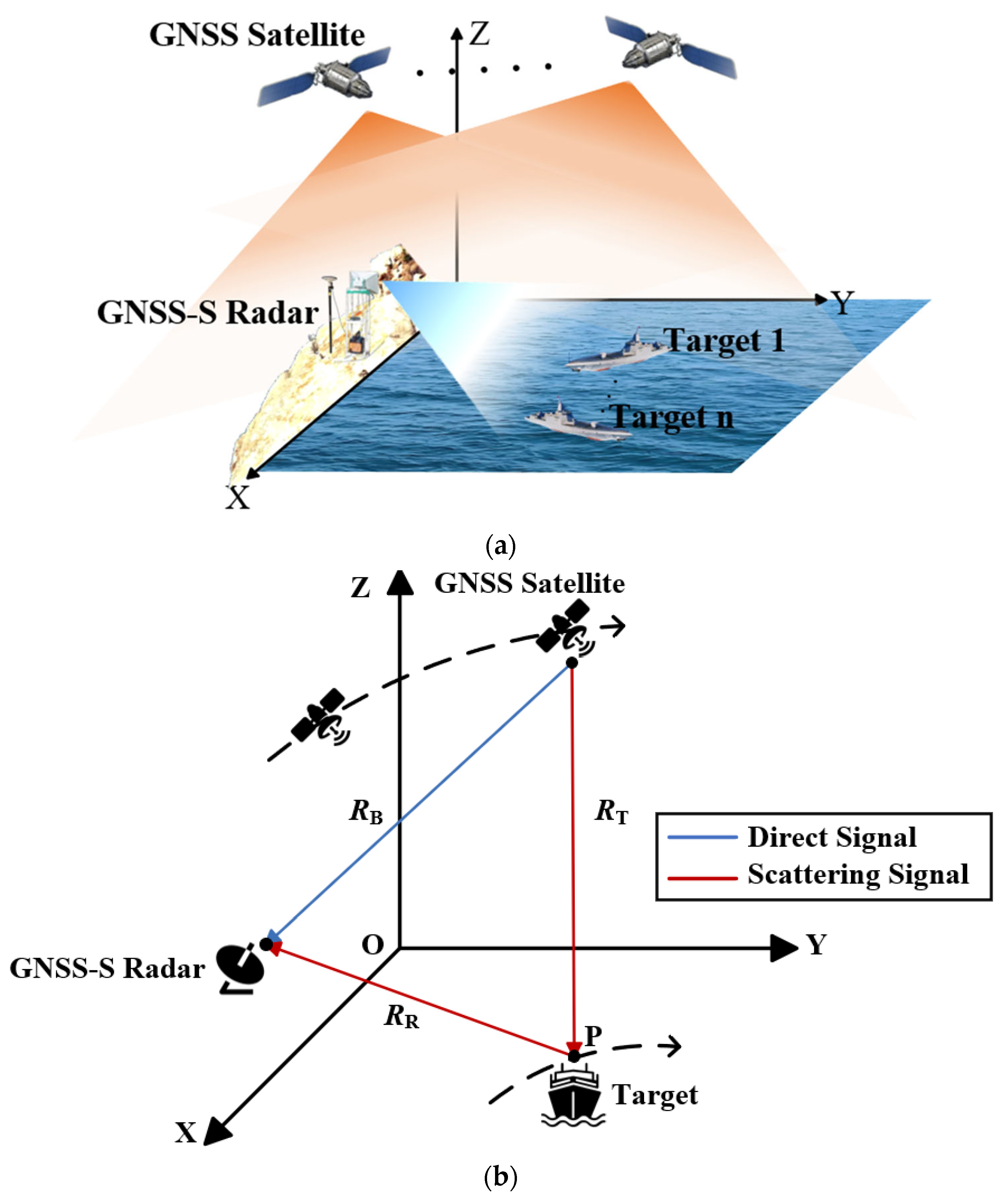
Section 2 introduces the components and operating principles of the GNSS-S radar system;
Section 3 details the methods for extracting moving target characteristics and the radar signal processing workflow;
Section 4 presents the results of the maritime experiments and related discussions;
Section 5 provides the conclusions.
3. GNSS-S Radar Moving Target Track Association
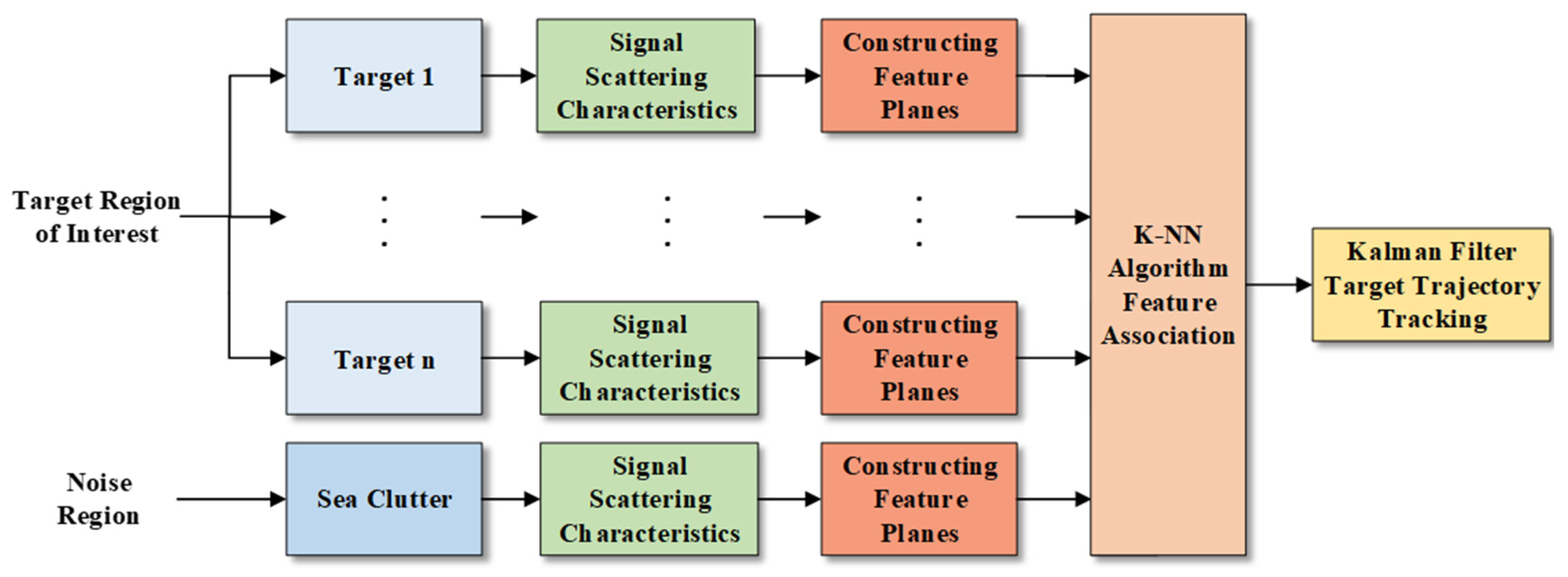
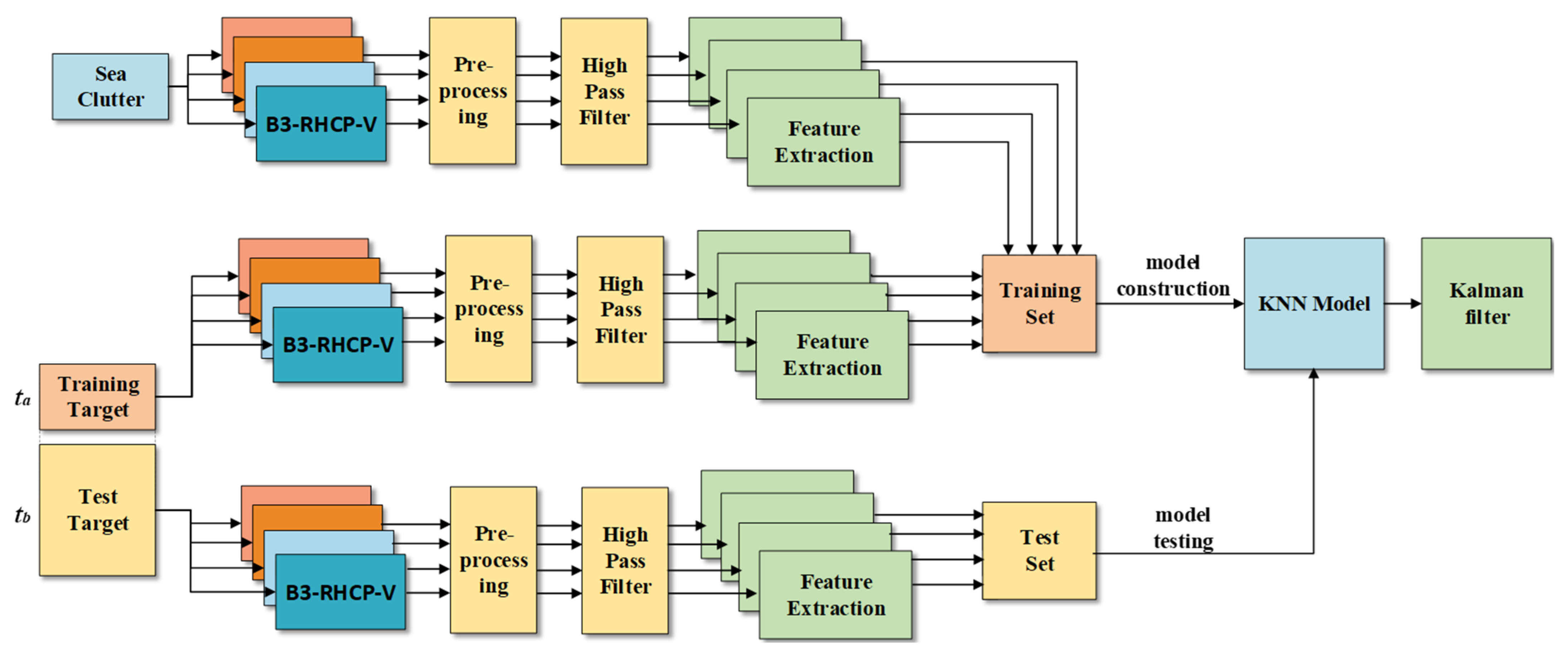
Figure 3 illustrates the flowchart for associating moving target trajectories from GNSS-S dual-frequency dual-polarization radar data. Firstly, based on the region of interest derived from pre-processing, the amplitude statistical characteristics and polarization scattering characteristic of sea clutter and individual moving targets are extracted across the four dual-frequency, dual-polarization channels. These form the basis for constructing the feature plane. Secondly, a training set is formed using selected amplitude and polarization characteristics from sea clutter and early-stage target motion. The K-Nearest Neighbors (KNN) algorithm is then employed to distinguish between sea clutter and targets, as well as between individual targets. Finally, Kalman filtering is applied to track the trajectories of each target.
3.1. Statistical Characteristics of Moving Targets
In order to compare the statistical characteristics of different types of targets, the echo signals are energy normalized before the central moments are calculated:
where
x is the amplitude of the echo signal,
is the absolute value of
x,
is the normalized echo signal, and
is the expected value of
.
The formulae for the n-th order central moments are given below:
where
µ and
σ are the mean and standard deviation of the echo signal amplitude, respectively.
When
n = 3,
M3 is the third-order center distance of the probability density distribution function of the echo signal amplitude, also known as skewness, which is used to measure the degree of skewness of the probability density distribution. The formula for the third-order center distance is:
Similarly, when
n = 4,
M4 is the fourth-order center distance of the probability density distribution function of the echo signal amplitude, also known as kurtosis, which is used as a measure of how steep the probability density distribution pattern is. The formula for the fourth-order center distance is:
For moving targets, as their position and orientation change, the echo amplitude also varies over time. Different observation angles produce different echo intensities, exhibiting distinct statistical patterns [
23]. Skewness reflects the asymmetry of these amplitude fluctuations. Moving vessels often generate asymmetric distributions because their RCS variations are directional rather than random. Different skewness values indicate distinct motion and structural characteristics. Kurtosis measures the tail characteristics of the distribution. Ships with complex structures occasionally produce very strong echoes when certain surfaces align favorably with the radar geometry, resulting in higher kurtosis. In contrast, ships with simpler structures tend to generate more uniform amplitudes and exhibit lower kurtosis.
In comparison, sea clutter generated by random wave motion typically exhibits relatively symmetric amplitude distributions and moderate kurtosis values. These unique statistical characteristics of moving targets provide a basis for distinguishing targets from clutter. Since different frequency bands and polarization modes interact with target structures in distinct ways, calculating the skewness and kurtosis for each frequency-polarization channel allows us to derive multi-dimensional statistical characteristics of the target. This multi-channel approach similarly enhances classification capability.
However, relying solely on skewness and kurtosis may be insufficient for finer classification, as they primarily reflect temporal dynamics induced by motion rather than structural features. The amplitude characteristics of two targets with similar motion patterns may partially overlap. This motivates the incorporation of polarimetric features to provide more detailed structural information.
3.2. Polarization Characteristic of Moving Targets
The circularly polarized waves transmitted by navigation satellites undergo polarization transformation upon interacting with targets, generating circularly polarization components and linear polarization components in varying proportions and orientations. Stokes decomposition can effectively analyze this polarization transformation process [
24]. Therefore, in this paper, Stokes decomposition is utilized to extract the polarization characteristics of the received signals. The four resulting Stokes parameters are as follows:
In order to adapt to the asymmetric scattering of the characterized target, ref. [
25] extracted the helical scattering power of the ship target based on the Yamaguchi model. When a target possesses a helical or rotating structure, its scattering simultaneously generates both linear and circular polarization components. The energy corresponds directly to the cross-polarization component of the off-diagonal terms of the polarization covariance matrix. The covariance matrix is shown below:
Therefore, the spiral scattering power of the ship target can be expressed as:
In order to eliminate the differences in target intensities, the spiral scattering power ratio
Phelix is calculated as follows, using the total power as the denominator:
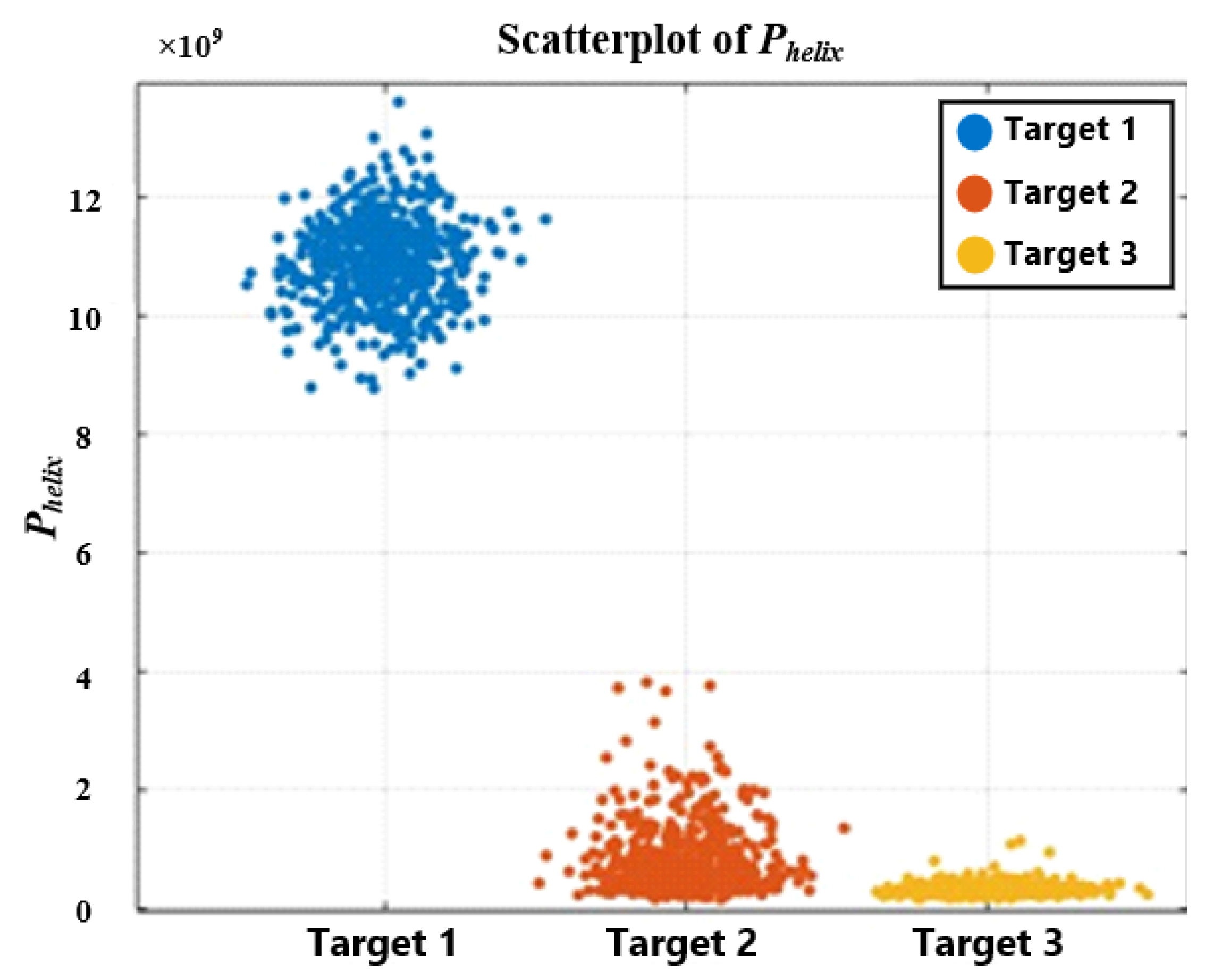
Phelix is able to quantify the degree of perturbation of incident circularly polarized waves by the asymmetric structure of the target. Influenced by the structure of the target, ships with more complex shapes may have multiple sets of masts, angles and other structures, which will generate more intense spiral scattered energy, while small cargo ships, fishing boats and other ships with flat decks and symmetrical structures will have less spiral scattered energy. Therefore, this characteristic quantity can be used to distinguish different kinds of ships.
The combination of Phelix with the amplitude statistical characteristics provides complementary discrimination capability. Kurtosis and skewness capture the temporal dynamics of amplitude fluctuations caused by target motion and aspect angle changes, while Phelix reflects the intrinsic structural characteristics of the target. This multi-dimensional feature space enables more robust target discrimination by exploiting both temporal and spatial-polarimetric information. Under low SNR conditions, the inclusion of polarimetric features offers additional advantages: The polarization characteristics reflect the intrinsic ability of a target to alter the polarization state of electromagnetic waves. Ship targets with complex metallic structures can maintain distinct polarization features even when the signal strength is weak. Compared to purely amplitude-based characteristics, this structural property is less susceptible to environmental noise.
3.3. Signal Preprocessing
Unlike the linear frequency-modulated signals employed by conventional synthetic aperture radars, GNSS signals constitute a code division multiple access continuous wave signal, utilizing Pseudo-Random Noise (PRN) codes modulated and encoded with navigation messages. This paper employs the Block Expanded Compression (BEC) algorithm to transform the one-dimensional time-series signal—namely the GNSS signal—into a two-dimensional range-azimuth signal. This process simultaneously eliminates the effects of Doppler shift and navigation messages to enhance coherent accumulation gain [
3].
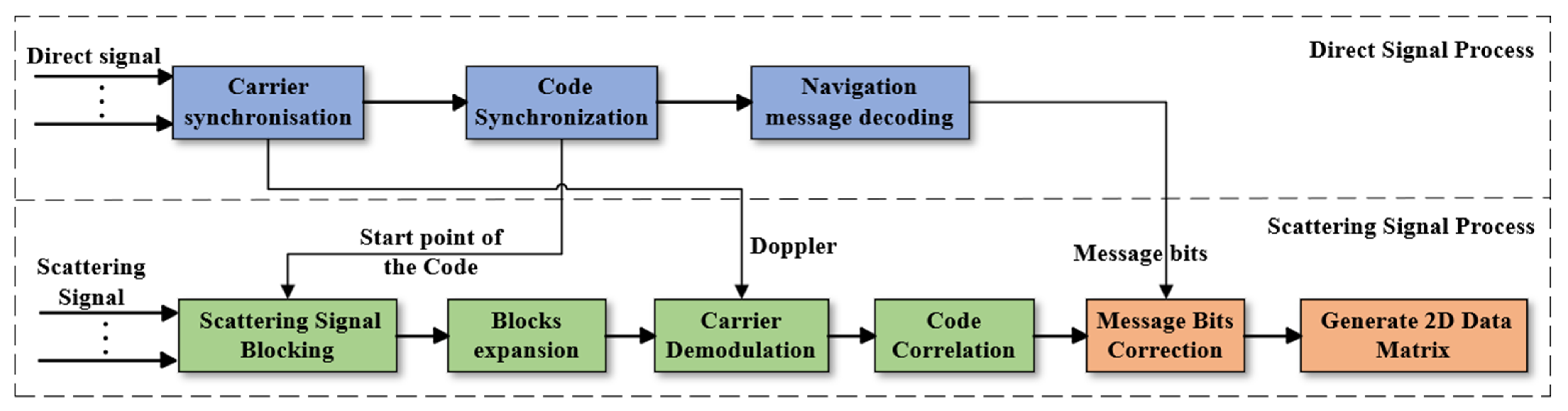
The acquired B1-H, B1-V, B3-H, and B3-V dual-frequency dual-polarization signals undergo separate BEC processing, with the workflow illustrated in
Figure 4. The BEC algorithm achieves the conversion from one-dimensional to two-dimensional signals and interference cancelation through three steps: signal block division, expansion operations, and data compression. First, using the start time of the direct signal’s PRN code cycle as the reference, the one-dimensional time-series signal is divided into equal-length data blocks, with scattered signals grouped by matching cycles. Second, due to the longer propagation paths of scattered signals, code phase deviations occur relative to direct signals, and Doppler shifts from target motion disrupt the periodicity of PRN codes. Therefore, the BEC algorithm concatenates adjacent sub-blocks to enhance PRN code correlation gain. Finally, the carrier is demodulated via mixing, followed by PRN code correlation processing to compress the signal. Subsequently, phase jumps are corrected based on decoded navigation message information, generating a two-dimensional data matrix.
3.4. Method for Associating Features with Trajectories
The KNN algorithm is a straightforward yet effective supervised learning method. Its core principle involves: for an unknown sample, first calculating its distance from all samples in the training set to identify the k nearest neighbors; subsequently, determining the predicted outcome for the unknown sample by majority vote based on the labels of these k neighbors [
26]. This study employs Euclidean distance for the metric calculation.
As shown in
Figure 5, B3-RHCP-V and the three differently colored boxes below it respectively represent the echo data of four channels. For each target, during the initial experimental phase at time
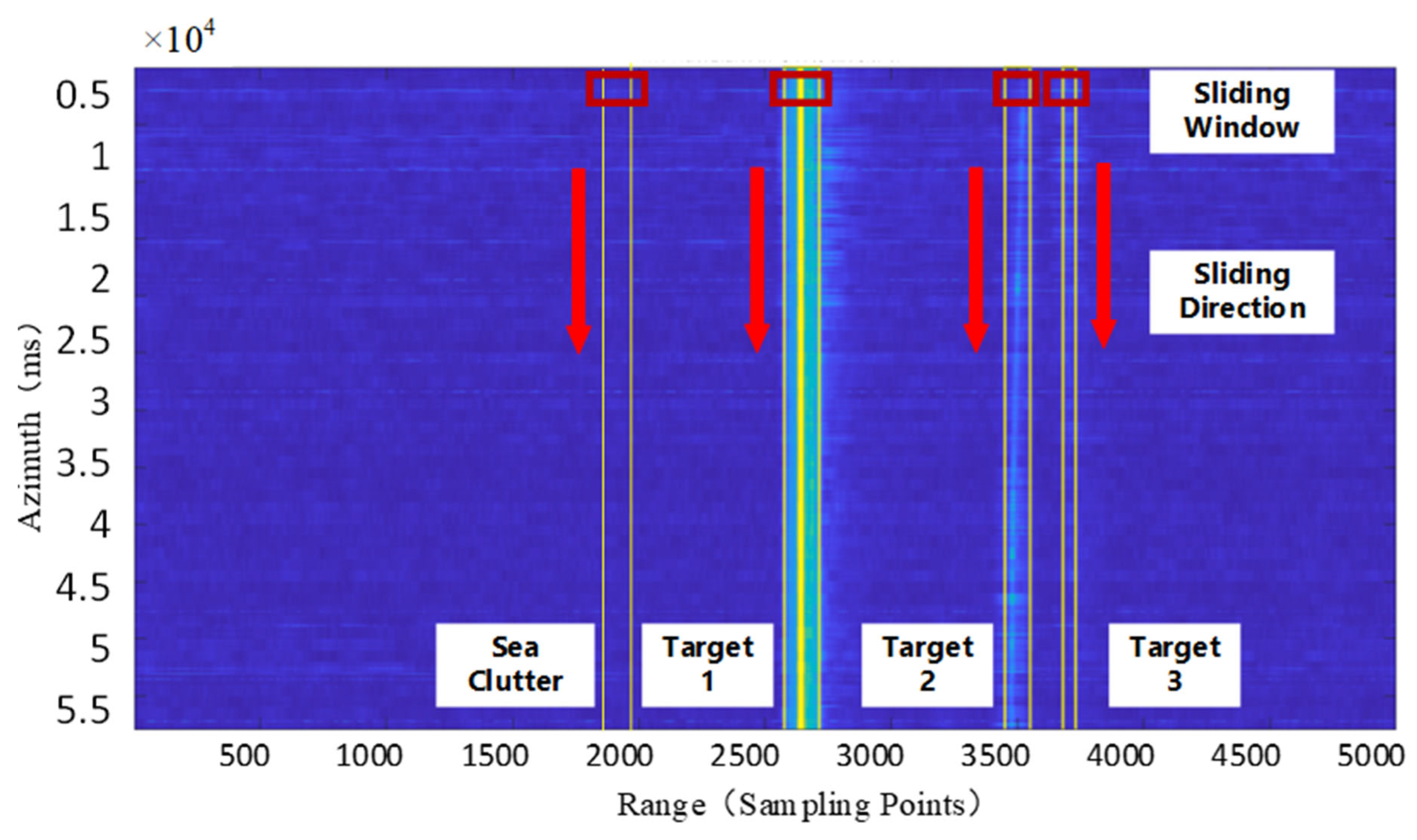
ta, the corresponding target region within its four-channel dual-frequency dual-polarization frequency-polarization components is first selected. The amplitude statistical characteristics and polarization decomposition characteristics are then calculated separately for each component. These feature vectors constitute the fundamental units of the training set. For sea clutter, the scattering characteristics of the four-channel dual-frequency dual-polarization frequency-polarization components are similarly calculated and input as the fundamental units of the training set. All target features extracted at time
ta are employed as training samples, with a classification model constructed using the KNN algorithm. Subsequent targets at time
tb undergo identical feature extraction to form the test sample set. Inputting these test samples into the trained classification model yields the target classification results.
The Kalman filter is capable of recursively estimating and predicting the state vector of a moving target at the next instant, thereby determining its trajectory [
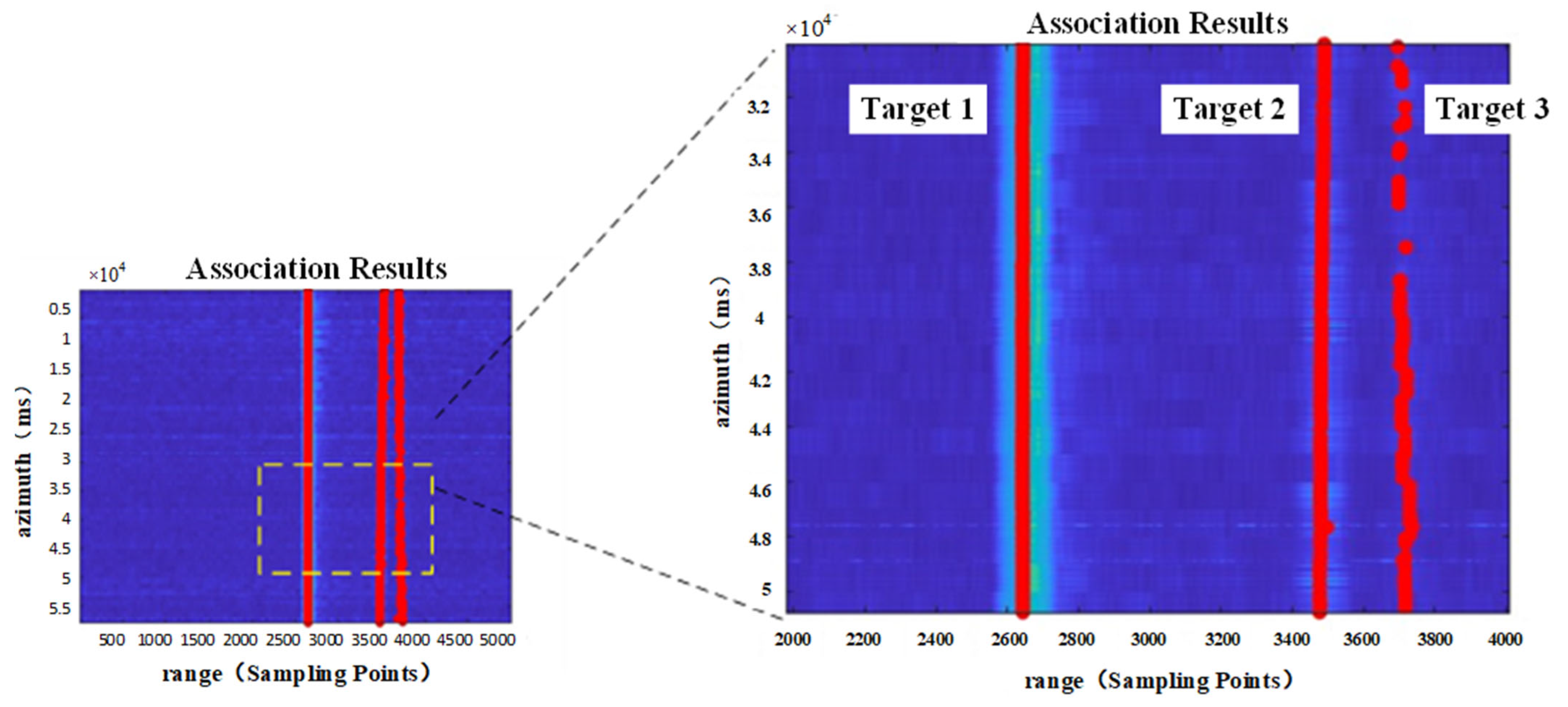
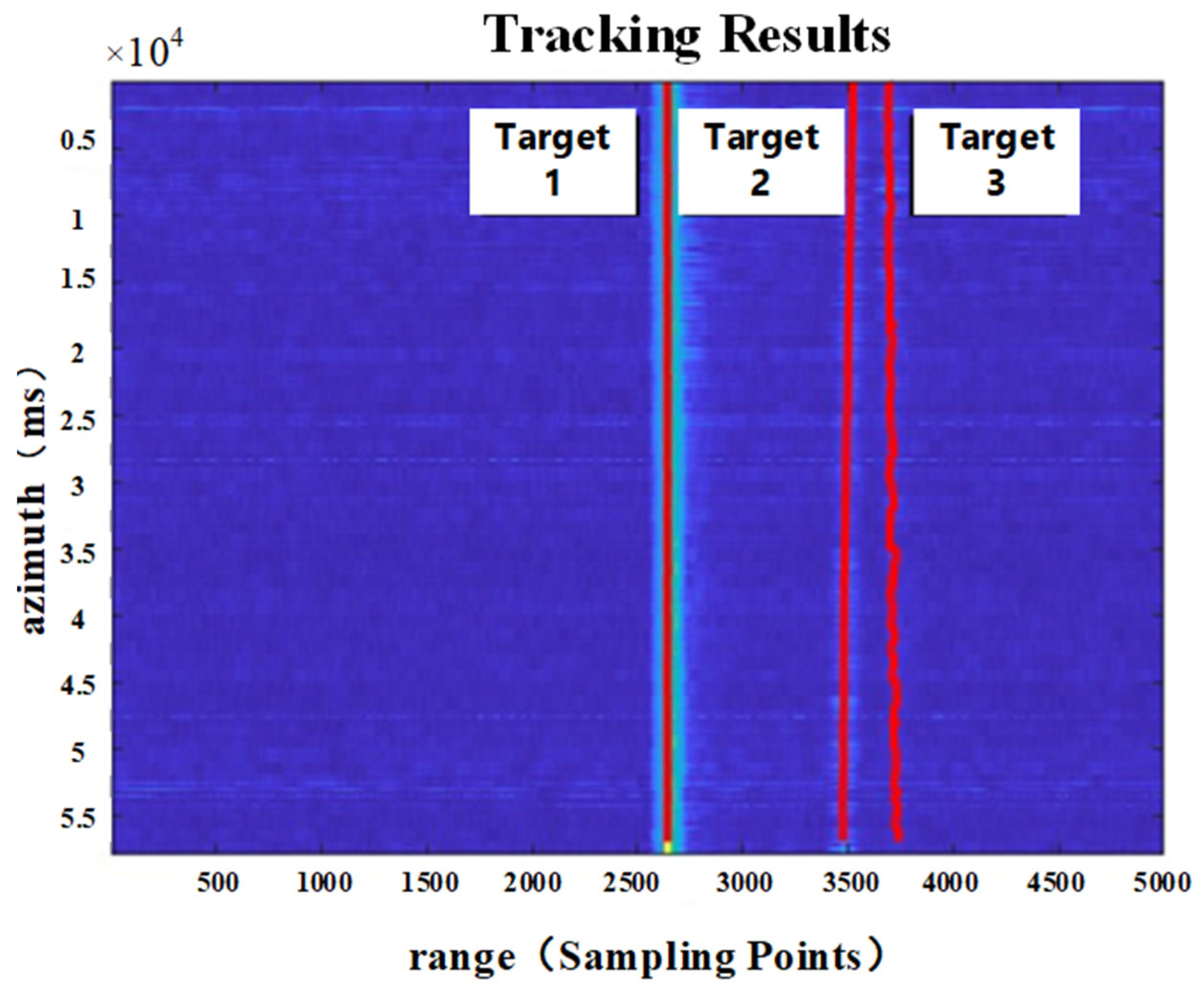
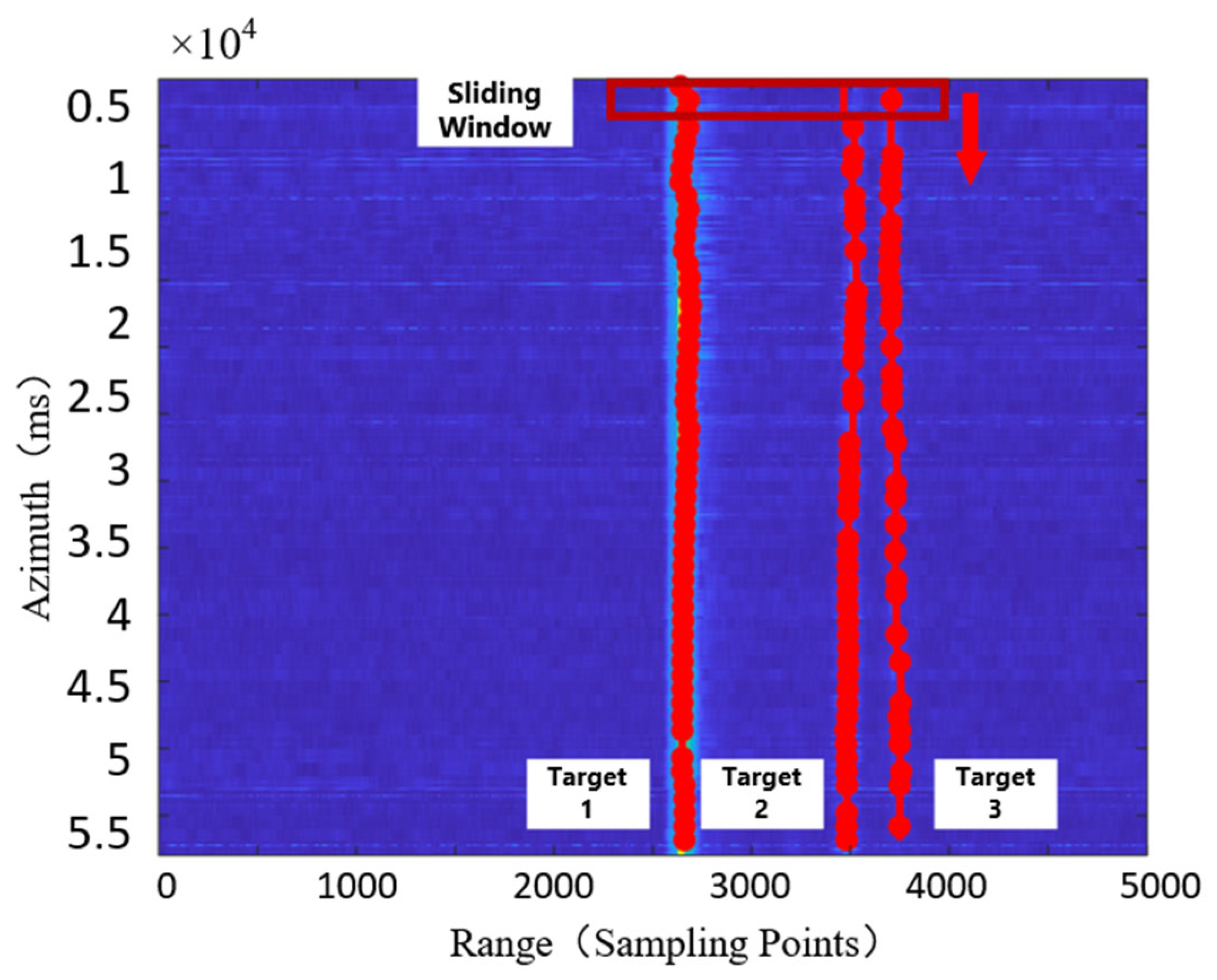
27]. Based on the target feature correlation results achieved through the KNN algorithm, Kalman filtering is employed to track the paths of each target. The target feature association results derived from the KNN algorithm are employed to track the paths of individual targets using Kalman filtering. Should the KNN algorithm correctly associate a target position, this location is employed as the state variable correction prediction, balancing model and observation reliability. Should the KNN algorithm misassociate at any moment, the prediction value is directly adopted as the current state to prevent trajectory discontinuity. This ensures only observations classified as ‘valid targets’ contribute to updates, mitigating trajectory divergence caused by sea clutter interference.
5. Discussion
5.1. The Effectiveness of Feature Fusion in Target Characteristics Association
This study constructs a feature plane by fusing amplitude statistical characteristics (skewness and kurtosis) and polarization scattering characteristics (helical scattering power ratio,
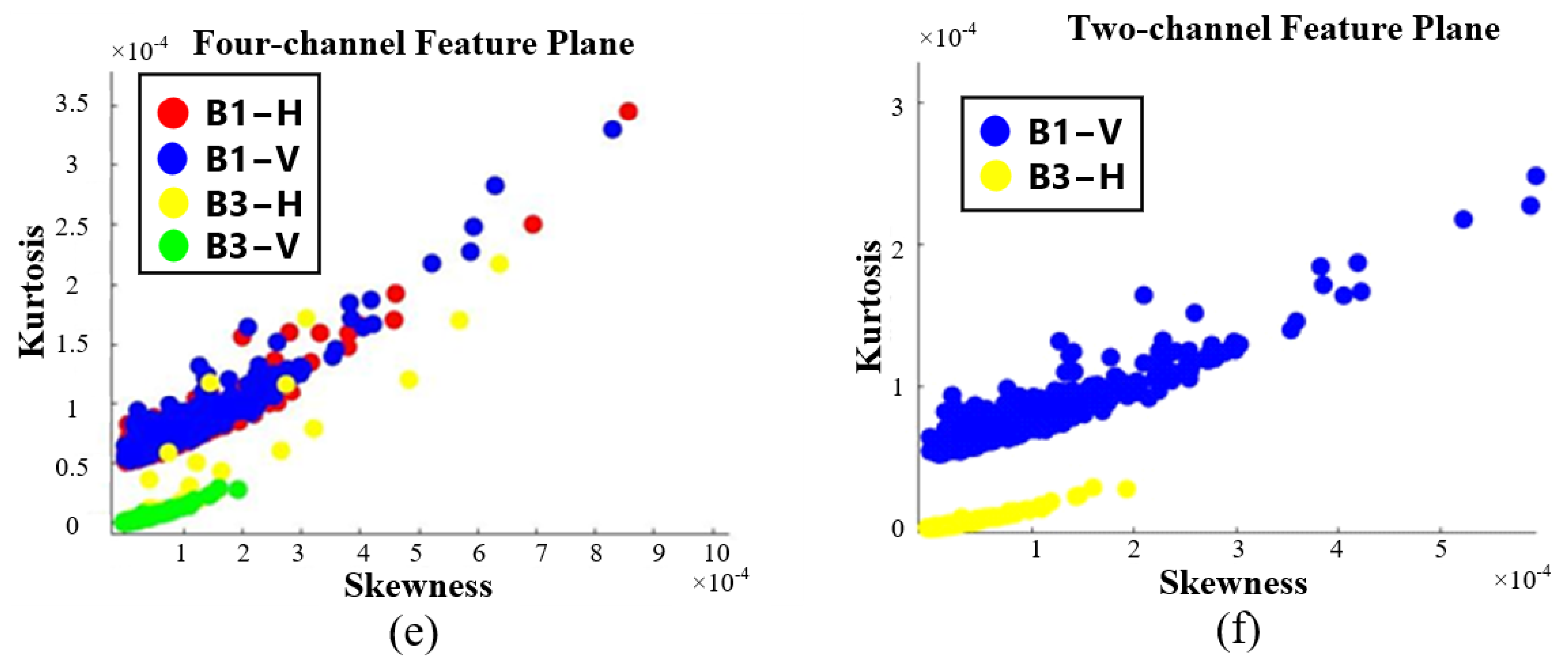
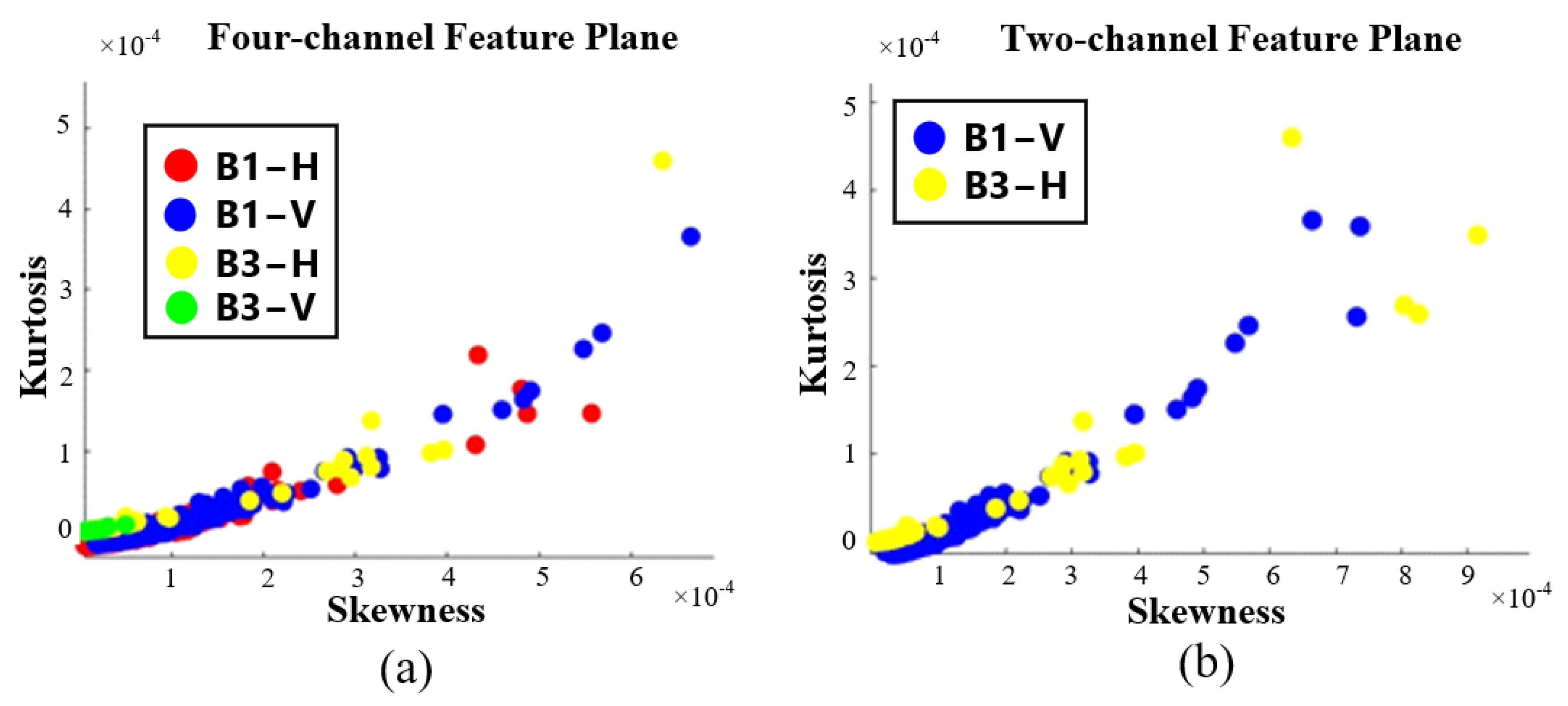
Phelix) of dual-frequency dual-polarization (B1-H, B1-V, B3-H, B3-V) signals, which addresses the challenge of target trajectory tracking under low SNR in GNSS-S radar. Experimental results indicate that as a uniformly scattering medium, sea clutter exhibits significant statistical overlap across both four-channel and dual-channel characteristic planes (
Figure 8), with no discernible spatial differentiation. This is because sea clutter demonstrates negligible variation in polarization and frequency, maintaining a relatively uniform amplitude distribution pattern across different polarization channels.
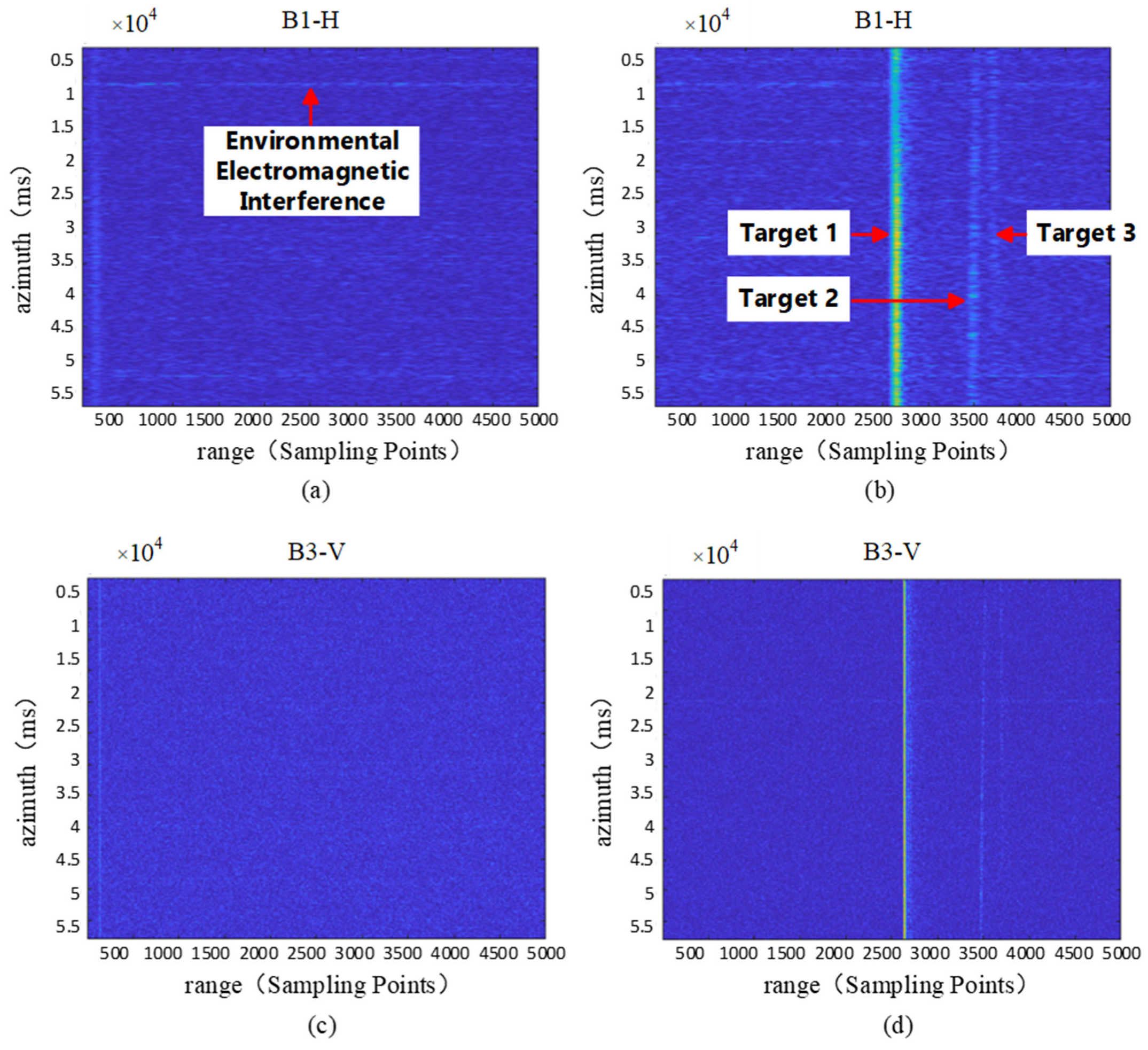
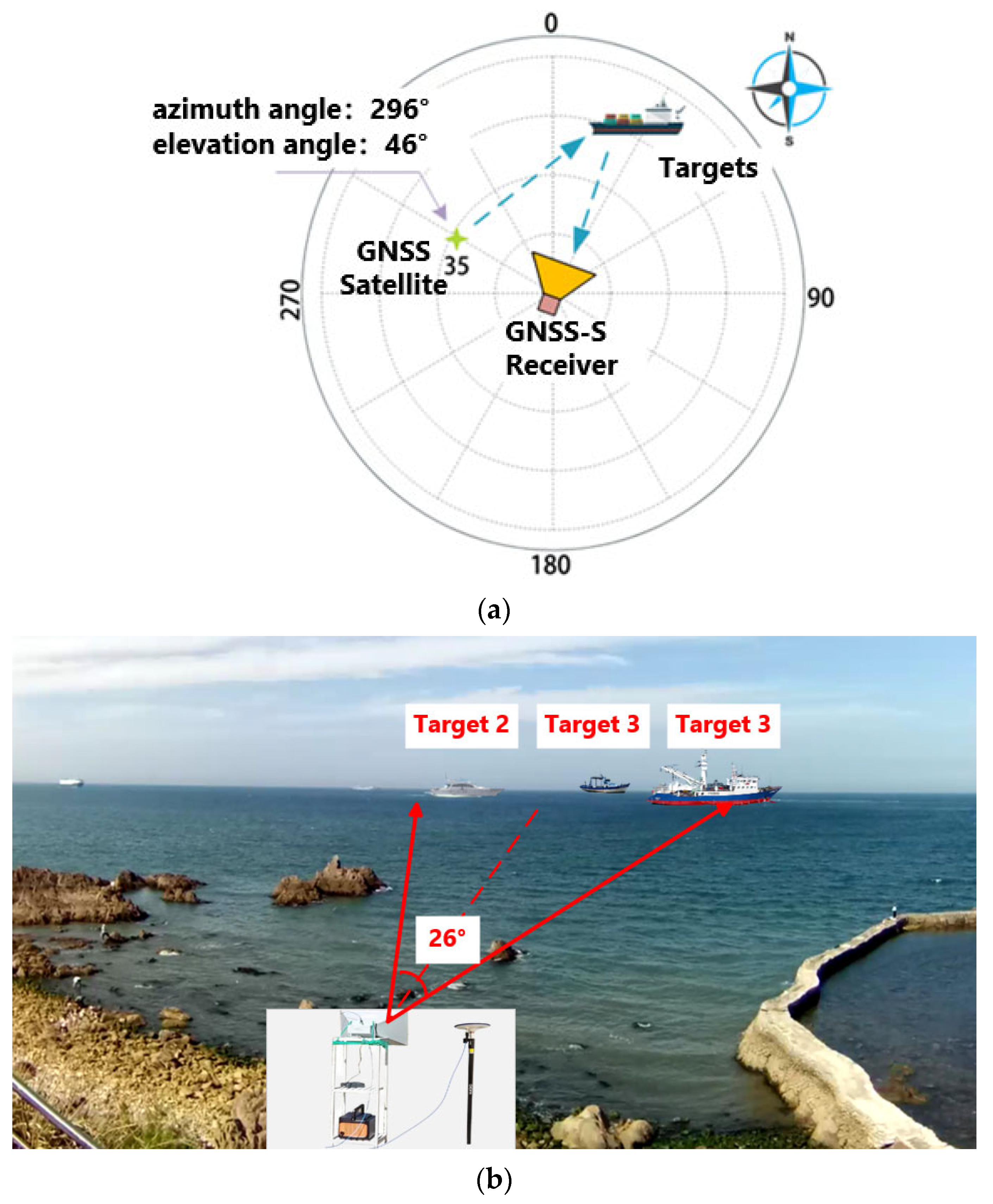
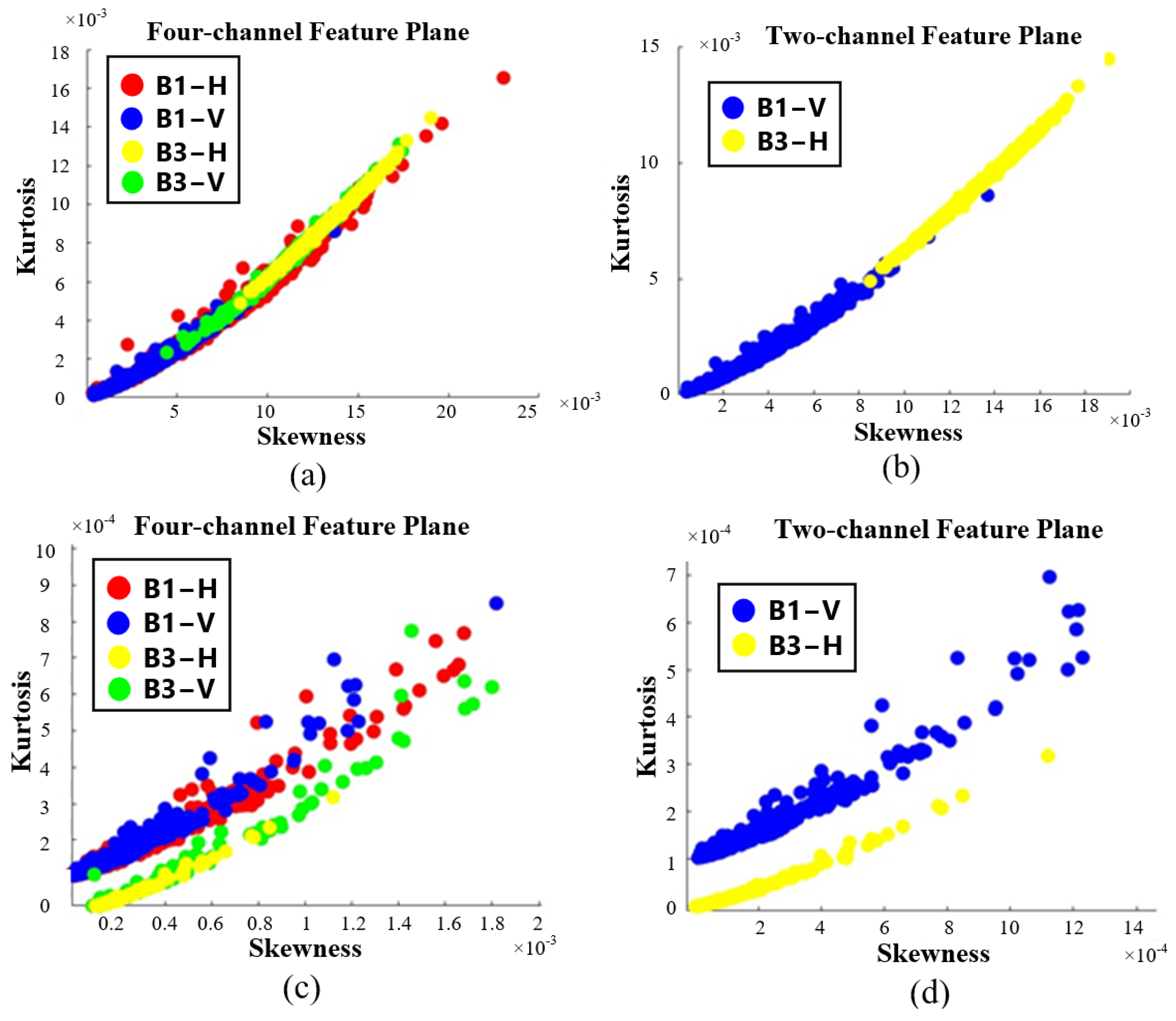
By contrast, the three ship targets exhibit markedly different distribution characteristics on the feature plane (
Figure 9). Target 1, being structurally complex with a large RCS, exhibits higher kurtosis and skewness in the B3-V channel than in the B1-V channel, and its
Phelix value is substantially greater than those of Targets 2 and 3. This arises from Target 1’s multiple masts and angular structures, which induce strong helical scattering of the incident circularly polarized wave, significantly amplifying polarization differences. Targets 2 and 3 are smaller with flatter decks, exhibiting lower
Phelix values. However, Target 2’s skewness and kurtosis are nearly double those of Target 3. This discrepancy stems from variations in hull material and superstructure layout, which influence the scattering characteristics of the echo signal.
It is noteworthy that the fusion of these two features compensates for the limitations of distinguishing targets using a single feature alone. For instance, relying solely on amplitude statistics may lead to partial overlap in the indicators between Target 2 and Target 3, resulting in misclassification. However, the introduction of Phelix enables effective differentiation between these two targets by exploiting structural differences in helical scattering. This confirms that the combination of amplitude statistics (reflecting signal intensity distribution) and polarized scattering characteristics (reflecting target structural properties) forms a complementary feature system. This complementary approach is the core reason for achieving effective differentiation between distinct targets.
5.2. Advantages of the Method in Low-Resolution Radar Applications
Against the backdrop of existing studies mostly focusing on high-resolution imaging radars (such as polarimetric SAR), this method demonstrates unique advantages in low-resolution GNSS-S radar applications.
Firstly, it circumvents complex high-resolution imaging processing, thereby reducing algorithmic complexity. Conventional target tracking methods based on high-resolution imaging require steps such as range-Doppler imaging and refocusing to capture target details, entailing substantial data computation and demanding stringent hardware performance requirements. By contrast, this approach directly extracts amplitude statistical features and polarization characteristics from low-resolution GNSS-S signals, employing the KNN algorithm and Kalman filter for tracking. The entire process involves no imaging-related operations, substantially reducing computational demands and making it suitable for deployment on low-power coastal monitoring equipment.
Secondly, this method demonstrates strong adaptability in low SNR environments. Low-resolution GNSS-S radar signals exhibit low power levels and are susceptible to severe sea clutter interference, leading to discontinuities in target points. The feature fusion system employed in this study—particularly Phelix—reduces sensitivity to noise. Even with faint echo signals, it distinguishes structural differences between sea clutter and targets through polarimetric characteristics, thereby enabling effective target localisation.
5.3. Limitations and Future Work
The scope of the experimental validation was limited. The experiment only involved three types of ship targets, lasted for a relatively short period of time, and was conducted under conditions of relatively low wind speed. It remains unclear whether this method can maintain effective association and tracking for larger, more complex targets or non-vessel objects (such as buoys with RCS comparable to small vessels). Furthermore, the experiment only validated the performance of a single radar receiving station without exploring the effectiveness of multi-station combinations, thereby limiting the method’s generalisability in complex maritime scenarios. Future work will expand the experimental scope by incorporating additional target types and harsher sea conditions. A multi-station GNSS-S radar experimental platform will be established to validate the method’s performance in multi-satellite scenarios, thereby enhancing its practical utility for maritime surveillance.
6. Conclusions
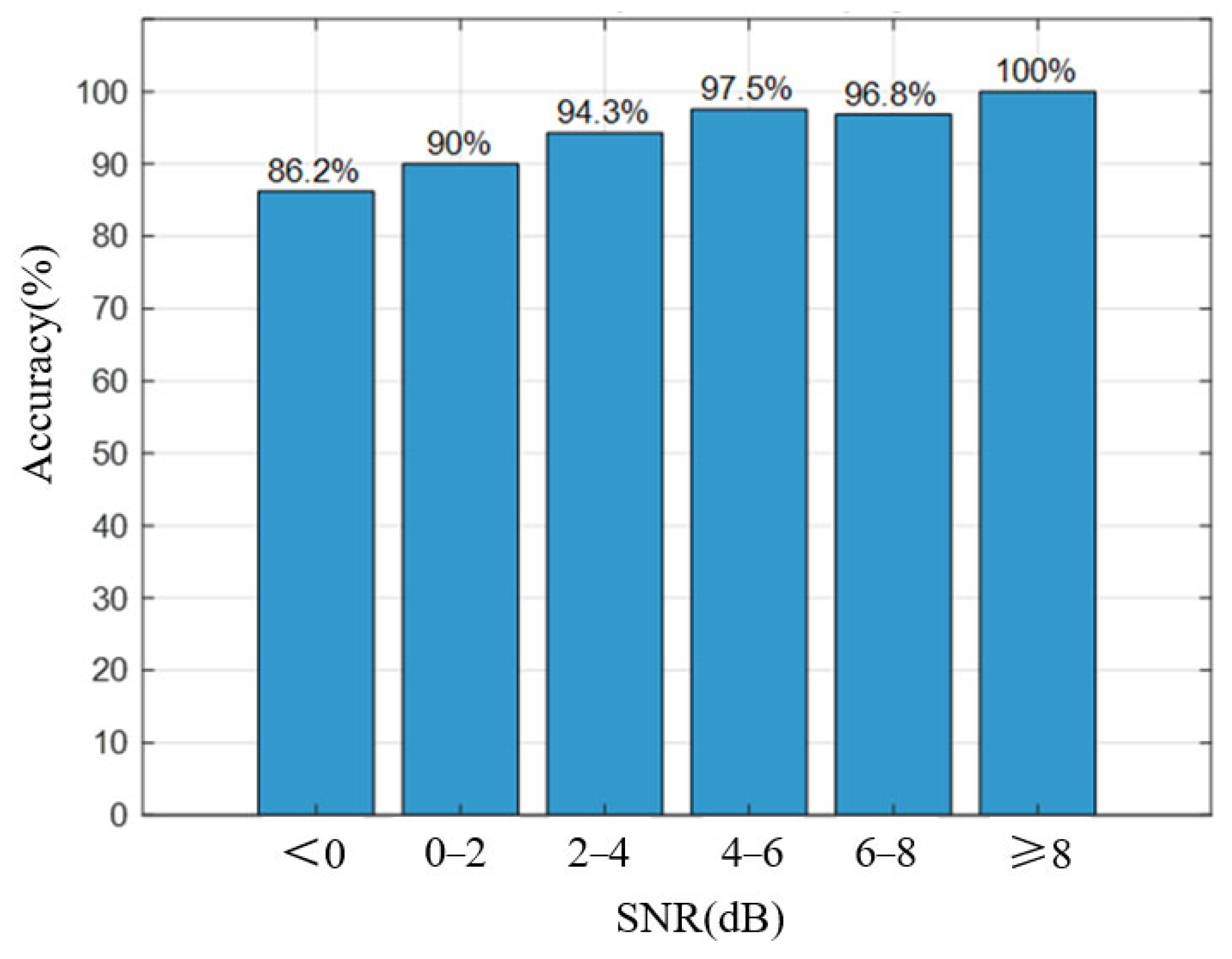
This study achieved motion target trajectory association for GNSS-S radar by integrating amplitude statistical characteristics with polarization scattering characteristics. Field experiments validated its effectiveness and reliability in tracking multiple moving vessels under low signal-to-noise ratio conditions. First, the paper outlines the system architecture and operational principles of GNSS-S radar. Subsequently, amplitude and polarization characteristics are extracted from target echo signals. Utilizing machine learning algorithms, target signals are associated with these features. Finally, a Kalman filter is successfully employed to track target trajectories. Compared to conventional image processing feature extraction methods, this approach requires only basic preprocessing of echo signals, offering greater simplicity and reliability. Suitable for low-resolution radar data with minimal system requirements, it provides an innovative technical pathway for challenges such as vessel tracking and maritime surveillance in complex ocean environments.
Future research will focus on multi-station GNSS-S systems, integrating multistation data to achieve three-dimensional trajectory tracking of moving vessels.




 ,
,